

Integral Valorization of Pineapple (Ananas comosus L.) By-Products through a Green Chemistry Approach towards Added Value Ingredients
Open accessThe DOI matches its Crossref record; 44 of the 46 references it cites were found in a registry or an index.
Abstract
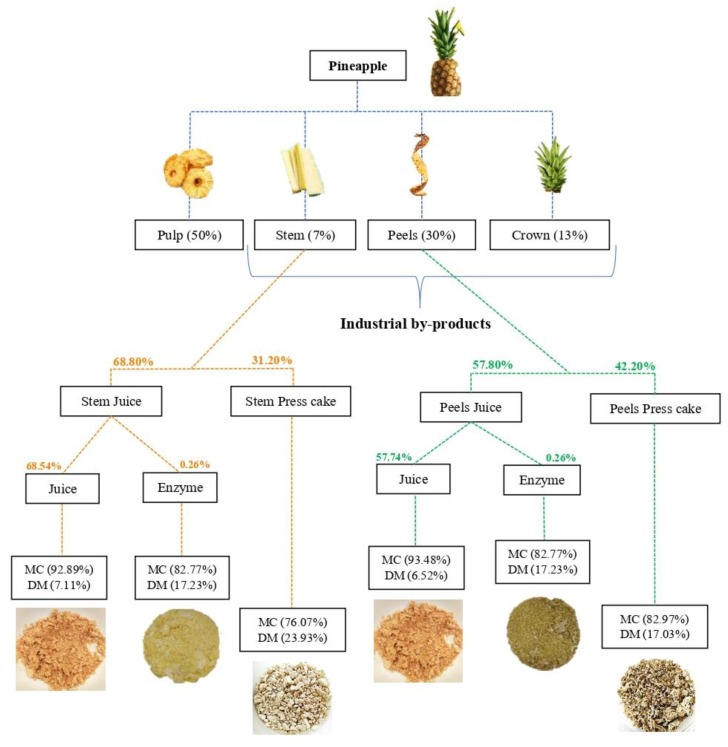
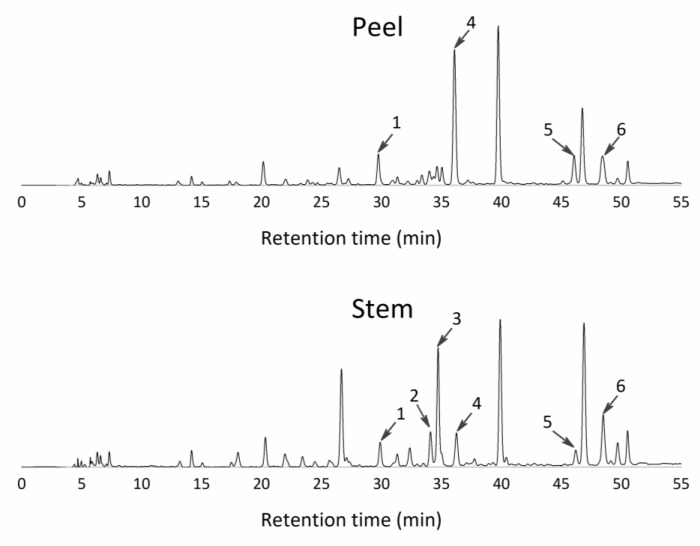
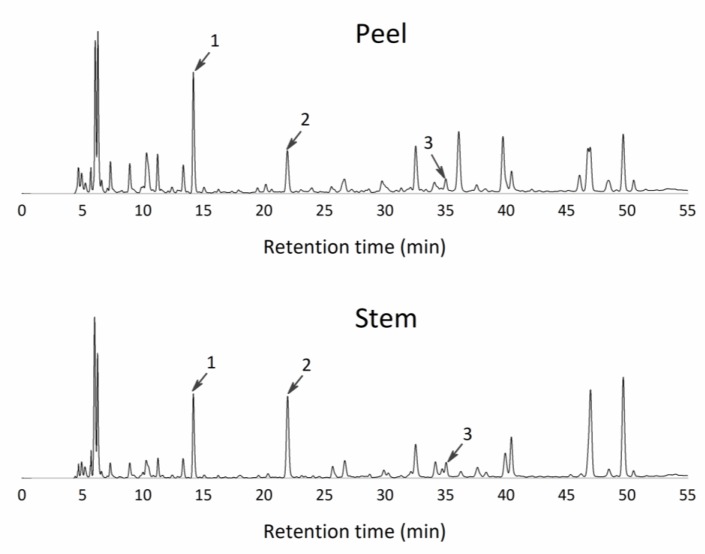
Industrial by-products are produced every day through fruit processing industries. Pineapple is not an exception; when processed, around 60% (w/w) of its weight are peels, stem, trimmings, and crown, the only used fruit part for human consumption. Due to high concerns of sustainability in the food system and negative high impact of human practice in the environment, a strategy has to be developed. Therefore, a green chemistry approach was applied to pineapple by-products to make an integrated valorization by the extraction of bioactive molecules. Two pineapple by-products (peels and stems) were studied, applying a green chemistry approach, which means the non-use of organic solvents or extreme methodologies. A subdivision of each by-product was done by the application of a juice machine. The peels and stems in the fresh state were ground separately, creating two fractions for each by-product—a juice and a wet pulp (press cake). The press cake was characterized, dried, and ground to create a fine powder flour. To the juice, a precipitation methodology with polysaccharides was applied, which allowed the bromelain separation (developing of an enzymatic fraction) from the fruit juice. The enzymatic extract was freeze-dried, and the juice was spray-dried, developing two more fine powders. Thus, three new ingredients were produced from each by-product, creating a total of six new ingredients. Overall, the enzymatic fractions represented around 0.26% (w/w) of pineapple weight. Pineapple stem juice represented 4.8% (w/w), and peel juice represented 17.3% (w/w). Pineapple stem flour represented 3.1% (w/w), and peel flour represented 11.4% (w/w) of the total pineapple weight. To valorize the by-products juices, a full characterization was performed of bioactive molecules and biological activities. When comparing the two juices, the peel juice showed lower content of total phenolic compounds, lower antioxidant capacity, and lower content of vitamin C. The different phenolic compounds were identified by HPLC analysis in the two pineapple by-products juices. However, the same compounds in both juices were quantified (chlorogenic, caffeic, and ferulic acids). On the other hand, the by-products flours had a high content of insoluble dietary fiber (IDF), mainly cellulose and hemicellulose. Therefore, the approach applied in this work opens the door to the production of green products, as a result of by-products valorization. This could be applied not only in the food industry but also in the nutraceutical and cosmetic industries.
Overview
The claims and statistics of this paper haven’t been checked yet.
Free: it reads the open-access text and checks the first 5 claims that cite a source we can check. Create a free account to check every claim.
Integrity signals
Registry
Cites
Statistics
Figures
Verification
Claims the paper makes
The claims and statistics of this paper haven’t been checked yet.
Free: it reads the open-access text and checks the first 5 claims that cite a source we can check. Create a free account to check every claim.
Claims other papers make about this one
Each is checked against this paper’s own text: does it say what the citing paper says it does?
The source backs part of the claim, not all of it — or backs it for a different population, condition or comparison.
In the citing paper
“Similarly to the case of mango leaves, approximately 60% of the mass of each pineapple ( Ananas comosus L.) is discarded. In 2016, more than 435,000 tons of pineapple waste were generated. Its barks and stems, however, can be used to produce extracts with bioactive compounds, whose polysaccharides could be separated by precipitation. An enzyme of interest is bromelain, which shows anti”
From Innovative Approaches to an Eco-Friendly Cosmetic Industry: A Review of Sustainable Ingredients (2024) · cites this paper as [100]
Experimental — accuracy not yet measured
Self-check
Percentages, sums and reported differences re-computed from the paper’s own numbers.
The self-check needs the paper’s full text.
Citations
Cites
Colorimetric Method for Determination of Sugars and Related Substances
DuBois, M., Gilles, K. A., Hamilton, J. K., Rebers, P. A., & Smith, F. (1956) · Analytical Chemistry · doi:10.1021/ac60111a017 · Cited by 52,269 · cited 1×
“[17], using glucose (Sigma-Aldrich, St.”
Antioxidant activity applying an improved ABTS radical cation decolorization assay
Re, R., Pellegrini, N., Proteggente, A., Pannala, A., Yang, M., & Rice-Evans, C. (1999) · Free Radical Biology and Medicine · doi:10.1016/s0891-5849(98)00315-3 · Cited by 26,165
Official Methods of Analysis of the Association of Official Analytical Chemists
(1971) · Journal of Pharmaceutical Sciences · doi:10.1002/jps.2600600253 · Cited by 6,387 · cited 3×
“Dry weight was determined at 105 °C for 24 h; the method was performed according to the Association of Official Analytical Chemists (AOAC) [16].”
MethodInfluentialExtending Applicability of the Oxygen Radical Absorbance Capacity (ORAC−Fluorescein) Assay
Dávalos, A., Gómez-Cordovés, C., & Bartolomé, B. (2004) · Journal of Agricultural and Food Chemistry · doi:10.1021/jf0305231 · Cited by 1,207
Rapid Determination of Polyphenols and Vitamin C in Plant-Derived Products
Georgé, S., Brat, P., Alter, P., & Amiot, M. J. (2005) · Journal of Agricultural and Food Chemistry · doi:10.1021/jf048396b · Cited by 804 · cited 4×
“[34], who reported that th application of high tempera ure (above 80 ◦C) led to elimination of vitamin C, obtaining more accurate results for total phenolic compounds.”
BackgroundInfluentialGao, X., Ohlander, M., Jeppsson, N., Björk, L., & Trajkovski, V. (2000) · Journal of Agricultural and Food Chemistry · doi:10.1021/jf991072g · Cited by 691
Bromelain: biochemistry, pharmacology and medical use
Maurer, H. R. (2001) · Cellular and Molecular Life Sciences · doi:10.1007/pl00000936 · Cited by 674 · cited 1×
“Likewise, bromelain finds its place in the pharmaceutical, cosmetic, and nutraceutical industries, given its anti-inflammatory, joint support, and digestive aid properties [4,5] Other molecules present in pineapple by-products have a relevant impact when strategically applied.”
BackgroundBioactive compounds and antioxidant activity of fresh exotic fruits from northeastern Brazil
Almeida, M. M. B., de Sousa, P. H. M., Arriaga, Â. M. C., do Prado, G. M., Magalhães, C. E. D. C., Maia, G. A., & de Lemos, T. L. G. (2011) · Food Research International · doi:10.1016/j.foodres.2011.03.051 · Cited by 490 · cited 1×
“[32] presented lower values of temperature to do the methanolic extraction, as described by Georgé, et al.”
MethodQuantification of bioactive compounds in pulps and by-products of tropical fruits from Brazil
Silva, L. M. R. D., Figueiredo, E. A. T. D., Ricardo, N. M. P. S., Vieira, I. G. P., Figueiredo, R. W. D., Brasil, I. M., & Gomes, C. L. (2014) · Food Chemistry · doi:10.1016/j.foodchem.2013.08.001 · Cited by 475
Martínez, R., Torres, P., Meneses, M. A., Figueroa, J. G., Pérez-Álvarez, J. A., & Viuda-Martos, M. (2012) · Food Chemistry · doi:10.1016/j.foodchem.2012.05.057 · Cited by 453 · cited 2×
“The dietary fiber is associated with colorants, antioxidants, and other positive effects molecules that can have a synergetic health effect [45,46].”
Background
Research works printed but not linked: 1
- Omojasola P.F. Jilani O.P. Ibiyemi S. Cellulase production by some fungi cultured on pineapple waste Nat. Sci. 2008 6 64 79
Cited by
Items 101–171 of 171
Hawanis, H. S. N., Ilyas, R. A., Ahmad, M. H., Xin, C. H., Mahadi, N. K. I., Atiqah, A., Kaur, K., Sapuan, S. M., Muhammad, D., Saharudin, M. S., et al. (2025) · International Journal of Biological Macromolecules · doi:10.1016/j.ijbiomac.2025.147531 · Cited by 4
Optimization of bromelain isolation from honi pineapple crown
Susanti, S., Rizqiati, H., Lisandi, I. F., Nuryanto, N., & Arifan, F. (2022) · International Journal of Food Studies · doi:10.7455/ijfs/11.2.2022.a3 · Cited by 4
Valenzuela-Cobos, J. D., Pérez-Martínez, S., Fiallos-Cárdenas, M., & Guevara-Viejó, F. (2024) · Applied Sciences · doi:10.3390/app142311426 · Cited by 4
Green Synthesis of Multi-Functional Carbon Dots and their Applications
Maheshwari, S., Verma, A., & Singh, A. (2025) · Current Topics in Chemistry · doi:10.2174/0129504023374533250304072612 · Cited by 3
Zhu, X., Healy, L. E., Sullivan, C., Sun, D., Tiwari, U., Curtin, J. F., & Tiwari, B. K. (2023) · Elsevier eBooks · doi:10.1016/b978-0-323-91739-1.00021-0 · Cited by 3
Lignocellulosic resources: A Key Player in the Transition to a Circular Bioeconomy
Espinosa, E. (2023) · Materials research foundations · doi:10.21741/9781644902639-11 · Cited by 4
Lopes, L. E. S., Barroso, S. D. S., Caldas, J. K. M., de Vasconcelos, P. R. L., Canuto, K. M., Dariva, C., Santos, K. S., Severino, P. B., Cardoso, J. C., Souto, E. B., et al. (2024) · Journal of Traditional and Complementary Medicine · doi:10.1016/j.jtcme.2024.01.003 · Cited by 4
Dough extrusion of apple and cereal by-products flours: A path to healthier breakfast cereals
Santos, D., Lopes‐da‐Silva, J. A., & Pintado, M. (2025) · Food and Bioproducts Processing · doi:10.1016/j.fbp.2025.06.014 · Cited by 2
Self-citationSylla, A., Degraeve, P., Traoré, L., & Oulahal, N. (2026) · Cogent Food & Agriculture · doi:10.1080/23311932.2026.2631271 · Cited by 2
Boteju, P. D. N., Senanayake, C. M., & Jayathunge, K. G. L. R. (2026) · Sustainable Food Technology · doi:10.1039/d5fb00591d · Cited by 2
Todee, B., Srirattanaprasit, N., Prombandachok, J., Kammoon, P., Ruengsuk, A., Namnouad, P., Depijan, M., Sangtawesin, T., Kamonsutthipaijit, N., Tantirungrotechai, J., et al. (2026) · Carbohydrate Polymers · doi:10.1016/j.carbpol.2026.125546 · Cited by 2
Prospecção Científica e Tecnológica sobre Abacaxi (Ananas Comosus)
de Moura, L. G. M., & de Vasconcelos, A. F. F. (2022) · Cadernos de Prospecção · doi:10.9771/cp.v15i1.36413 · Cited by 2
FLOR DE BANANEIRA: RESÍDUO OU UM ALIMENTO COM ALTOS BENEFÍCIOS NUTRICIONAIS
Melz, T. C., & Rossi, R. C. (2023) · doi:10.22533/at.ed.80823171013 · Cited by 2
Ogunlade-Anibasa, G. O., & Mann, K. (2023) · International Journal of Plant & Soil Science · doi:10.9734/ijpss/2023/v35i214006 · Cited by 2
Regulations and standards for add-value components application in the food industry
Pacheco, F. C., dos Santos, F. R., Pacheco, A. F. C., do Vale, R. T. R., & Paiva, P. H. C. (2024) · Elsevier eBooks · doi:10.1016/b978-0-443-13842-3.00012-5 · Cited by 3
Pereira, R., Velasco, C., Gómez‐García, R., Dias, J. P., Pintado, M., & Valente, L. M. P. (2024) · Animal Feed Science and Technology · doi:10.1016/j.anifeedsci.2024.116061 · Cited by 2
Self-citationHuang, P., Chen, Y., Chen, C.-H., Fan, H., Hsieh, C., Tain, Y., Tsai, W., Shih, M., & Hou, C. (2024) · International Journal of Biological Macromolecules · doi:10.1016/j.ijbiomac.2024.138843 · Cited by 3
Agro-food wastes: new sources of antioxidants
Vilas-Boas, A. A., Campos, D. A., Oliveira, A. S., & Pintado, M. (2022) · Elsevier eBooks · doi:10.1016/b978-0-323-85253-1.00020-4 · Cited by 2
Self-citationInterplay between probiotics and prebiotics for human nutrition and health
Voss, G. B., Machado, D., Barbosa, J. C., Campos, D. A., Gomes, A., & Pintado, M. (2022) · Elsevier eBooks · doi:10.1016/b978-0-323-89908-6.00027-3 · Cited by 2
Self-citationGarcía-Rivero, M., Membrillo-Venegas, I. D. L. L., & Martínez-Trujillo, M. A. (2024) · Waste and Biomass Valorization · doi:10.1007/s12649-024-02543-y · Cited by 2
“The intact pineapple peel contains simple sugars, structural carbohydrates, different types of fiber (soluble and insoluble dietary fiber) [58], as well as active compounds such as bromelain, phenolic compounds, ferulic acid, vitamins A and C [59].”
Carbon Quantum Dots: Green Catalysts for Organic Synthesis
Maheshwari, S., Verma, A., & Singh, A. (2025) · Current Microwave Chemistry · doi:10.2174/0122133356368085250304074014 · Cited by 1
Anticorrosive activity and chemical fingerprinting of pineapple byproducts
Freire, A. A. D. F., de Sampaio, M. T. G., Wuillda, A. C. J. D. S., Pereira, A., da Silva, M. V., Ignácio, M. D. C., Ponzio, E. A., & Costa, F. D. N. (2025) · Discover Electrochemistry. · doi:10.1007/s44373-025-00060-8 · Cited by 1
“2, which compares the corrosion rates in the absence (CR) and presence (CR inh ) of the inhibitor [24, 36].”
Ugbogu, E. A., Iweala, E., Ukachukwu, C. E., Babayo, C., Dania, O. E., Israel, C. L., Omonhinmin, C. A., Cleanclay, W. D., & Okoro, B. C. (2026) · Pharmacological Research - Natural Products · doi:10.1016/j.prenap.2026.100550 · Cited by 1
Valorization of Pineapple Waste: Functional and Biotechnological Applications-A Comprehensive Review
Khan, R. (2026) · Current Food Science and Technology Reports · doi:10.1007/s43555-026-00077-z · Cited by 2
“A study by Ferreira et al. [82] found that Pearl pineapple has 85 mg of gallic acid/100 g, while Smooth Cayenne pineapple contains 71 mg of gallic acid/100 g. Similarly, Campos et al. [25 ] identified phenolic compounds such as ferulic acids and caffeic acid in pine - apple peel and stem flours.”
A Comprehensive Review of Pineapple Peel Extract as a Sustainable Engineering Material
Wollur, C., Satish, S., Manahala, A. K. H., Mudlappa, C. B., Jayarama, M., & H, H. K. (2026) · Drewno Prace Naukowe Doniesienia Komunikaty = Wood Research Papers Reports Announcements · doi:10.53502/wood-216578 · Cited by 1
Production of Fermented Vinegar Drink From Hang Rice With Pineapple Peel Syrup
Romsomsa, N., Tiapasert, N., Jittimanee, K., Paungkrathok, C., Meesilp, N., & Thaiwong, N. (2026) · ASEAN Journal of Scientific and Technological Reports · doi:10.55164/ajstr.v29i4.262439 · Cited by 1
“Campos et al. [73] and Lourenço et al. [57] confirmed that pineapple peel extract possesses higher phenolic levels than stem extract, with 11.10 ± 0.01 mg GAE/g dry extract.”
InfluentialEsquivel, P., Jiménez, V. M., Bäumer, V., Nagypál, J., Bach, P., Patz, C. D., Ludwig, M., Schweiggert, R. M., & Steingass, C. B. (2026) · Food & Function · doi:10.1039/d5fo05382j · Cited by 1
Santos, N. T., Carillo, V. R. R., Idulsa, R. N. P., Melencion, M. G., Intong, R. L., & Gutierrez, W. M. (2026) · Agriculture and Natural Resources · doi:10.34044/j.anres.2026.60.2.05 · Cited by 1
Impact of Bromelain‐Enriched Pineapple Stem Marination and Sous Vide Processing on Goose Breast Meat
Yerlikaya, S., Erdem, N., Gökmen, S., & Poçan, H. B. (2026) · Journal of Food Process Engineering · doi:10.1111/jfpe.70628 · Cited by 1
Mariani, Y., Yusro, F., Yanti, H., & Setyawati, D. (2026) · PengabdianMu Jurnal Ilmiah Pengabdian kepada Masyarakat · doi:10.33084/pengabdianmu.v11i3.11313 · Cited by 1
Hien, T. T., Binh, H. Q., Лонг, Т. Б., Mười, N. V., & Trúc, T. T. (2022) · Materials Today Proceedings · doi:10.1016/j.matpr.2022.01.054 · Cited by 1
da Silva, R. O., Noma, C., dos Santos, S. E. B., Bellini, J. R., da Silva, V. C., da Silva, C. E. F., & Brum, F. B. (2023) · Concilium · doi:10.53660/clm-1895-2m82 · Cited by 1
Agognon, P., Sêdami, A. B., Magloire, G. A. N., & Kpadonou, D. (2023) · African Scientific Journal · doi:10.5281/zenodo.8409768 · Cited by 1
Noumbissi, B. M. N., Miégoué, E., Nguema, N. A. J., Ngouopo, N. M., Nounamo, L. W. E., Kwayep, C. N., & Tendonkeng, F. (2024) · Open Journal of Animal Sciences · doi:10.4236/ojas.2024.144022 · Cited by 1
Fruit and Vegetable Powder as a Functional Food Supplement
Kurčubić, V., Miletić, N. M., Stajić, S. B., & Petković, M. M. (2025) · Food engineering series · doi:10.1007/978-3-031-96610-1_7 · Cited by 1
Separation and purification processes for biorefinery
Tian, X., Xu, Y., Zhu, X., Wan, J., & Zhao, L. (2025) · Elsevier eBooks · doi:10.1016/b978-0-443-28810-4.00014-1 · Cited by 1
Tagnonnanon, F. E., Cledjo, P., & Adrien, D.-Y. (2026) · Revue Internationale de la Recherche Scientifique (Revue-IRS) · doi:10.5281/zenodo.19374768 · Cited by 1
Empleo de ácido giberélico en alcachofa de semilla
Miguel, A. (2001) · Agrícola vergel: Fruticultura, horticultura, floricultura
Use of Pineapple Peel as a Source of Bioactive Compounds for the Manufacture of Hydrogels
Robles, L. E. R., Ricardo, M. A., & Maeda, I. B. (2023) · LACCEI International Multi-Conference for Engineering, Education and Technology (LACCEI) · doi:10.18687/laccei2023.1.1.212 · Cited by 1
Viebig, R. F., de Oliveira, H. C. N., Bazanelli, A. P., Morimoto, J. M., & Nacif, M. D. A. L. (2023) · doi:10.22533/at.ed.8082317107 · Cited by 2
MONTEPULCIANO: A TRADICIONAL UVA ITALIANA QUE ESTÁ GANHANDO ESPAÇO EM SOLO BRASILEIRO
Melz, T. C., & Rossi, R. C. (2023) · doi:10.22533/at.ed.80823171014
Silva, D. V. D. C., & da Silva, E. A. B. (2023) · doi:10.22533/at.ed.8082317105
Ferreira, J. T. C., & da Silva, T. A. (2023) · doi:10.22533/at.ed.80823171011
SUPLEMENTAÇÃO DE CREATINA EM IDOSOS
Ramos, M. K. A. D. S., de Amorim, N. N., & Nascimento, V. S. D. V. (2023) · doi:10.22533/at.ed.8082317108
PRINCIPAIS DISTÚRBIOS NUTRICIONAIS NA INFÂNCIA
Filho, L. C. G., Souza, E. B. D. C., Santos, J. C. S., Filho, S. A. G., Batista, J. O. B., Mendes, D. S., Oliveira, G. G. P., Saddi, I. F., Barbosa, É. R., Filho, J. A. D. C., et al. (2023) · doi:10.22533/at.ed.80823171015
Alimentos e nutrição: Promoção da saúde e equipe multiprofissional 3
Brasil, C. C. B. (2023) · doi:10.22533/at.ed.808231710
Santos, A. P., da Silva, F. A. V., Eleutério, T. P., & de Souza, A. A. (2023) · doi:10.22533/at.ed.8082317102
de Lima, S. Y. V., Correia, A. L. D. S., SOUSA, B. V. D., Pereira, J. V. C., Pires, M. G. S., & Cardoso, V. E. D. S. C. (2023) · doi:10.22533/at.ed.8082317101
DEPRESSÃO SOB UM VIÉS NUTRICIONAL
do Nascimento, A. E. T., & Takaoka, R. A. (2023) · doi:10.22533/at.ed.8082317104
Brandão, M. D. S., & da Silva, T. A. (2023) · doi:10.22533/at.ed.80823171012
POLÍTICAS PÚBLICAS E A FUNÇÃO SOCIAL DAS ESCOLAS
Cardoso, B. D. V., Silva, R. S. D. O., Silva, Y. L. M., Pinto, N. A. V. F., de Oliveira, P. A. P., Silva, C. S. D. O. E., & Dias, O. V. (2023) · doi:10.22533/at.ed.8082317106
O COMER DESORDENADO ORIENTADO PARA A MUSCULATURA: UMA REVISÃO
Ferro, J. L. C., & Santos, G. R. (2023) · doi:10.22533/at.ed.8082317103
ESTABILIDADE DE PASTA DE AMENDOIM - USO DE LECITINA E β-CICLODEXTRINA
dos Santos, G. A. L., Gatto, N., Weber, C. I., & Lucchetta, L. (2023) · doi:10.22533/at.ed.8082317109
Pérez, A. C. (2025) · Digital Repository (Polytechnic University of Cartagena) · doi:10.31428/10317/18616
Gaytán-Lara, A. C., Cortés-Ferré, H. E., Ramírez‐Jiménez, A. K., Dufoo‐Hurtado, E., Villamiel, M., & Gaytán‐Martínez, M. (2025) · Foods · doi:10.3390/foods14233987
“In addition, the soluble protein fractions in pineapple pulp are highly susceptible to enzymatic hydrolysis, as previously reported for pineapple byproducts [61], which may further explain the minimal residual protein detected at the intestinal stage.”
Ibiyeye, D. E., Adedipe, O. J., Ariwoola, O. S., Afolabi, T. R., Okanlawon, F. B., Ogunbamowo, P. O., & Roberts, A. E. (2026) · Journal of Bioresource Management · doi:10.35691/jbm.5202.0017
Delval, M. H. (2023) · Research Repository (Delft University of Technology)
Catane, K. L.-L., Anuevo, G., Choresca, C., Özdemir, K. Y., & Pedroso, F. (2025) · Journal of Food Technology Research · doi:10.18488/jftr.v12i4.4602
“Moreover, fresh pineapple peels are characterized by their composition of soluble and insoluble dietary fibers, predominantly cellulose and hemicellulose (Campos, Ribeiro, Teixeira, Pastrana, & Pintado, 2020).”
การพัฒนาผลิตภัณฑ์ซอสผัดไทยจากสับปะรด
สัตย์ซื่อ, น. (2026) · KKU Science Journal · doi:10.14456/kkuscij.2026.18
Davu, G., Ayar, A., & Ay, E. B. (2026) · Journal of Food Measurement & Characterization · doi:10.1007/s11694-026-04238-5
“The valorization of pineapple peel within a circular economy framework therefore offers significant opportuni - ties for sustainable waste management and the development of value-added functional ingredients [3– 5 ].”
InfluentialDewi, R., Hayati, L., Rini, A. S., Hamzah, Y., Nasir, Z., & Linggawati, A. (2026) · AIP conference proceedings · doi:10.1063/5.0328729
Hafiz, N. A., Zainurin, A. S. A., Hashib, S. A., Osman, M. S., So’aib, M. S., Lenggoro, I. W., & Bakar, N. F. A. (2026) · AIP conference proceedings · doi:10.1063/5.0334620
Neto, G. J. D. S., Leite, T. C. C., Cavalcanti, M. T., Pedrosa, G. T. D. S., Alves, R. D. N., de Sena, A. R., & Gonçalves, M. C. (2026) · Journal of the Science of Food and Agriculture · doi:10.1002/jsfa.70751
Pengaruh Metode Pasteurisasi terhadap Karakteristik Kimia dan Sensori Tepache
Amos, A., Nurimansyah, N., Zulfahmi, A. N., Martanto, M., & Assrorudin, A. (2026) · Jurnal Riset, Inovasi, Teknologi & Terapan. · doi:10.30811/ristera.v4i2.9557
Setyarsih, W., Alfan, M. W. N., Fitriana, Tukiran, Purnama, E. R., Nerito, P., Alam, R. S., & Rohmawati, L. (2026) · Current Applied Science and Technology · doi:10.55003/cast.2026.269361
Analysis of the potential for utilization of pineapple crop residues in Colombia
Moreno, I., & Mora-Herrera, D. Y. (2026) · Ingeniería y Competitividad · doi:10.25100/iyc.v28i2.15694
Deep Learning-Based System for Pineapple Eye Scanning and Extraction Using YOLOv8n and GRBL
Franco, R., Gonzales, J., Nieves, A., Carrizales, J., Figueroa, J., & Malpartida, E. A. S. (2026) · International Conference on Image and Graphics Processing (ICIGP) · doi:10.1109/icigp68997.2026.11619721
Espinosa, L. D. C., Crizel, T. D. M., de Souza, P., Varesano, G. R., Corrêa, A. N. R., Köhn, C. R., Brandelli, A., Flôres, S. H., & Rios, A. D. O. (2026) · Journal of Food Science · doi:10.1111/1750-3841.71331
“In line with this, Campos et al. ( 2020 ) identified chlorogenic acid in pineapple residues, which was also detected in the present study.”
Boada, M. J. B., Pérez-Cuesta, A. M., Peñafiel-Bonilla, N. J., & Cortez, M. M. Q. (2026) · Revista JRG de Estudos Acadêmicos · doi:10.55892/jrg.v9i21.3729
Integrating functional foods and by-products into daily life: Practical approaches
Kwiatkowska, I., & Formanowicz, D. (2026) · Elsevier eBooks · doi:10.1016/b978-0-443-34071-0.00015-4
Francis, D. V., Kishorkumar, M., Thanka, P. P., Neumann, E. G., & Kurup, S. S. (2026) · Frontiers in Sustainable Food Systems · doi:10.3389/fsufs.2026.1946242
Metadata
- Authors
- Campos, D. A., Ribeiro, T. B., Teixeira, J. A., Pastrana, L., & Pintado, M. M.
- Affiliations
- Universidade Católica Portuguesa (PT)
- Universidade do Minho Centro de Engenharia Biológica (PT)
- International Iberian Nanotechnology Laboratory (PT)
- CBQF–Centro de Biotecnologia e Química Fina–Laboratório Associado, Escola Superior de Biotecnologia, Univerisdade Católica Portuguesa, Rua Diogo Botelho 1327, 4169-005 Porto, Portugal
- Venue
- Foods
- Publisher
- MDPI AG
- Published
- 2020-01-07
- Volume
- 9
- Issue
- 1
- Pages
- 60
- ISSN
- 2304-8158 (ISSN-L)
- PMC
- PMC7022615
- OpenAlex
- W3000289368
- Semantic Scholar
- afefadc43d3bf614db14a93c8eecec8390aed42a
- Cited by
- 154
- References
- 46
- Citations by year
- 2026: 15 · 2025: 21 · 2024: 19 · 2023: 37 · 2022: 31 · 2021: 22 · 2020: 8
- FWCI
- 7.94
- Type
- journal article
- Language
- en
- Open access
- gold
- dx.doi.org
- Licence
- Locations
- Foods (publishedVersion, cc-by)
- Europe PMC (PubMed Central) (publishedVersion, cc-by)
- PubMed Central (publishedVersion, cc-by)
- PubMed (publishedVersion)
- DOAJ (DOAJ: Directory of Open Access Journals) (submittedVersion, cc-by-sa)
- Portuguese National Funding Agency for Science, Research and Technology (RCAAP Project by FCT) (submittedVersion, cc-by)
- Portuguese National Funding Agency for Science, Research and Technology (RCAAP Project by FCT) (submittedVersion, other-oa)
- Portuguese National Funding Agency for Science, Research and Technology (RCAAP Project by FCT) (submittedVersion, cc-by-nc-nd)
- Funders
- Fundação para a Ciência e a Tecnologia (UID/Multi/50016/2019)
- FP7 People: Marie-Curie Actions (FP/-PEOPLE-2013-IRSES PEOPLE)
- Topics
- Life Sciences › Biochemistry, Genetics and Molecular Biology › Molecular Biology › Pineapple and bromelain studies
- Life Sciences › Agricultural and Biological Sciences › Food Science › Agricultural and Biological Research
- Health Sciences › Medicine › Biochemistry (medical) › Phytochemicals and Antioxidant Activities
- Keywords
- pineapple by-products, pineapple peel, pineapple stem, fruit processing waste valorization, green chemistry, polysaccharide precipitation, phenolic compounds, antioxidant capacity, vitamin C, insoluble dietary fiber, cellulose, hemicellulose, spray drying, freeze-drying, bioactive compounds, functional food ingredients
About these checks
Registry, retraction, Cites and statistics results are computed, not judged, with one exception: a printed reference that no index lists is read once by a model before it counts as a citation error. Claims are extracted by a model and kept only when their quote appears verbatim in the text; each cited source is then checked, with a model’s help, for whether it says what the claim relies on. Those verdicts can be wrong — read the claim’s quote and the cited source before relying on one.
Statistics and arithmetic are recomputed, not judged.
Confidence bands are shown only for fields calibrated on our annotated test set. None is calibrated yet, so no band is shown.
What counts as a claim ›How we measure confidence ›How we check this ›
Are you an author, or do you see a problem with this page? Request a review
Data sources
Bibliographic data: Semantic Scholar, OpenAlex, Crossref.
Contains information from the Semantic Scholar Academic Graph Datasets, made available under the ODC Attribution License (ODC-BY 1.0).
Semantic Scholar’s data is described in: Kinney, R., et al. (2023). The Semantic Scholar Open Data Platform. arXiv:2301.10140.
