

Integral Valorization of Pineapple (Ananas comosus L.) By-Products through a Green Chemistry Approach towards Added Value Ingredients
Open accessThe DOI matches its Crossref record; 44 of the 46 references it cites were found in a registry or an index.
Abstract
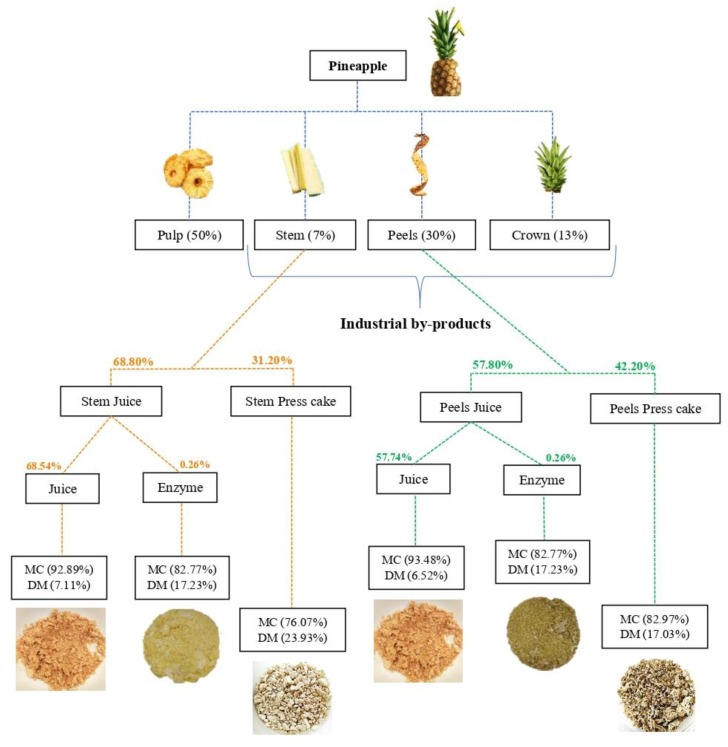
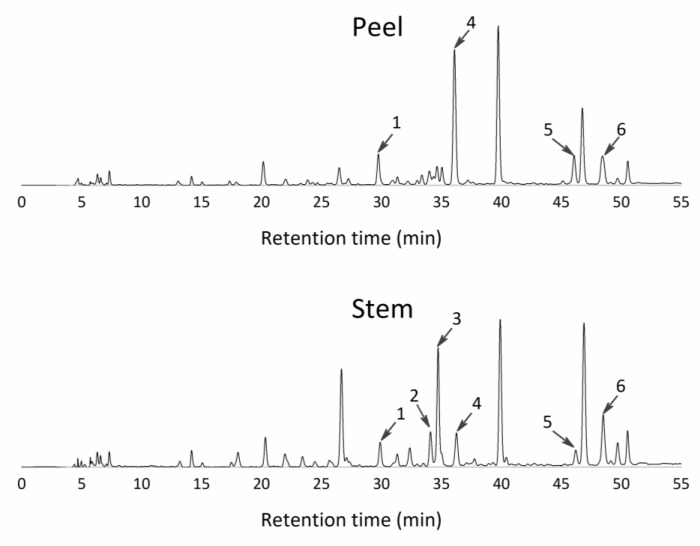
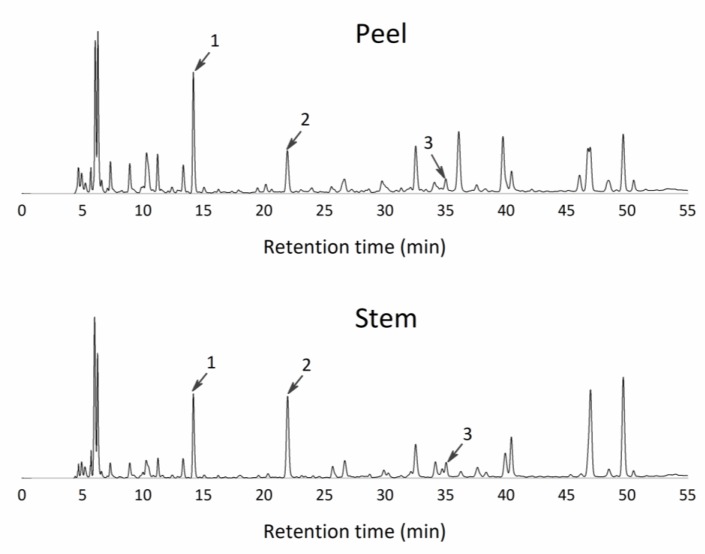
Industrial by-products are produced every day through fruit processing industries. Pineapple is not an exception; when processed, around 60% (w/w) of its weight are peels, stem, trimmings, and crown, the only used fruit part for human consumption. Due to high concerns of sustainability in the food system and negative high impact of human practice in the environment, a strategy has to be developed. Therefore, a green chemistry approach was applied to pineapple by-products to make an integrated valorization by the extraction of bioactive molecules. Two pineapple by-products (peels and stems) were studied, applying a green chemistry approach, which means the non-use of organic solvents or extreme methodologies. A subdivision of each by-product was done by the application of a juice machine. The peels and stems in the fresh state were ground separately, creating two fractions for each by-product—a juice and a wet pulp (press cake). The press cake was characterized, dried, and ground to create a fine powder flour. To the juice, a precipitation methodology with polysaccharides was applied, which allowed the bromelain separation (developing of an enzymatic fraction) from the fruit juice. The enzymatic extract was freeze-dried, and the juice was spray-dried, developing two more fine powders. Thus, three new ingredients were produced from each by-product, creating a total of six new ingredients. Overall, the enzymatic fractions represented around 0.26% (w/w) of pineapple weight. Pineapple stem juice represented 4.8% (w/w), and peel juice represented 17.3% (w/w). Pineapple stem flour represented 3.1% (w/w), and peel flour represented 11.4% (w/w) of the total pineapple weight. To valorize the by-products juices, a full characterization was performed of bioactive molecules and biological activities. When comparing the two juices, the peel juice showed lower content of total phenolic compounds, lower antioxidant capacity, and lower content of vitamin C. The different phenolic compounds were identified by HPLC analysis in the two pineapple by-products juices. However, the same compounds in both juices were quantified (chlorogenic, caffeic, and ferulic acids). On the other hand, the by-products flours had a high content of insoluble dietary fiber (IDF), mainly cellulose and hemicellulose. Therefore, the approach applied in this work opens the door to the production of green products, as a result of by-products valorization. This could be applied not only in the food industry but also in the nutraceutical and cosmetic industries.
Overview
The claims and statistics of this paper haven’t been checked yet.
Free: it reads the open-access text and checks the first 5 claims that cite a source we can check. Create a free account to check every claim.
Integrity signals
Registry
Cites
Statistics
Figures
Verification
Claims the paper makes
The claims and statistics of this paper haven’t been checked yet.
Free: it reads the open-access text and checks the first 5 claims that cite a source we can check. Create a free account to check every claim.
Claims other papers make about this one
Each is checked against this paper’s own text: does it say what the citing paper says it does?
The source backs part of the claim, not all of it — or backs it for a different population, condition or comparison.
In the citing paper
“Similarly to the case of mango leaves, approximately 60% of the mass of each pineapple ( Ananas comosus L.) is discarded. In 2016, more than 435,000 tons of pineapple waste were generated. Its barks and stems, however, can be used to produce extracts with bioactive compounds, whose polysaccharides could be separated by precipitation. An enzyme of interest is bromelain, which shows anti”
From Innovative Approaches to an Eco-Friendly Cosmetic Industry: A Review of Sustainable Ingredients (2024) · cites this paper as [100]
Experimental — accuracy not yet measured
Self-check
Percentages, sums and reported differences re-computed from the paper’s own numbers.
The self-check needs the paper’s full text.
Citations
Cites
Colorimetric Method for Determination of Sugars and Related Substances
DuBois, M., Gilles, K. A., Hamilton, J. K., Rebers, P. A., & Smith, F. (1956) · Analytical Chemistry · doi:10.1021/ac60111a017 · Cited by 52,269 · cited 1×
“[17], using glucose (Sigma-Aldrich, St.”
Antioxidant activity applying an improved ABTS radical cation decolorization assay
Re, R., Pellegrini, N., Proteggente, A., Pannala, A., Yang, M., & Rice-Evans, C. (1999) · Free Radical Biology and Medicine · doi:10.1016/s0891-5849(98)00315-3 · Cited by 26,165
Official Methods of Analysis of the Association of Official Analytical Chemists
(1971) · Journal of Pharmaceutical Sciences · doi:10.1002/jps.2600600253 · Cited by 6,387 · cited 3×
“Dry weight was determined at 105 °C for 24 h; the method was performed according to the Association of Official Analytical Chemists (AOAC) [16].”
MethodInfluentialExtending Applicability of the Oxygen Radical Absorbance Capacity (ORAC−Fluorescein) Assay
Dávalos, A., Gómez-Cordovés, C., & Bartolomé, B. (2004) · Journal of Agricultural and Food Chemistry · doi:10.1021/jf0305231 · Cited by 1,207
Rapid Determination of Polyphenols and Vitamin C in Plant-Derived Products
Georgé, S., Brat, P., Alter, P., & Amiot, M. J. (2005) · Journal of Agricultural and Food Chemistry · doi:10.1021/jf048396b · Cited by 804 · cited 4×
“[34], who reported that th application of high tempera ure (above 80 ◦C) led to elimination of vitamin C, obtaining more accurate results for total phenolic compounds.”
BackgroundInfluentialGao, X., Ohlander, M., Jeppsson, N., Björk, L., & Trajkovski, V. (2000) · Journal of Agricultural and Food Chemistry · doi:10.1021/jf991072g · Cited by 691
Bromelain: biochemistry, pharmacology and medical use
Maurer, H. R. (2001) · Cellular and Molecular Life Sciences · doi:10.1007/pl00000936 · Cited by 674 · cited 1×
“Likewise, bromelain finds its place in the pharmaceutical, cosmetic, and nutraceutical industries, given its anti-inflammatory, joint support, and digestive aid properties [4,5] Other molecules present in pineapple by-products have a relevant impact when strategically applied.”
BackgroundBioactive compounds and antioxidant activity of fresh exotic fruits from northeastern Brazil
Almeida, M. M. B., de Sousa, P. H. M., Arriaga, Â. M. C., do Prado, G. M., Magalhães, C. E. D. C., Maia, G. A., & de Lemos, T. L. G. (2011) · Food Research International · doi:10.1016/j.foodres.2011.03.051 · Cited by 490 · cited 1×
“[32] presented lower values of temperature to do the methanolic extraction, as described by Georgé, et al.”
MethodQuantification of bioactive compounds in pulps and by-products of tropical fruits from Brazil
Silva, L. M. R. D., Figueiredo, E. A. T. D., Ricardo, N. M. P. S., Vieira, I. G. P., Figueiredo, R. W. D., Brasil, I. M., & Gomes, C. L. (2014) · Food Chemistry · doi:10.1016/j.foodchem.2013.08.001 · Cited by 475
Martínez, R., Torres, P., Meneses, M. A., Figueroa, J. G., Pérez-Álvarez, J. A., & Viuda-Martos, M. (2012) · Food Chemistry · doi:10.1016/j.foodchem.2012.05.057 · Cited by 453 · cited 2×
“The dietary fiber is associated with colorants, antioxidants, and other positive effects molecules that can have a synergetic health effect [45,46].”
Background
Research works printed but not linked: 1
- Omojasola P.F. Jilani O.P. Ibiyemi S. Cellulase production by some fungi cultured on pineapple waste Nat. Sci. 2008 6 64 79
Cited by
Mohd Ali, M., Hashim, N., Abd Aziz, S., & Lasekan, O. (2020) · Food Research International · doi:10.1016/j.foodres.2020.109675 · Cited by 312
Management of Fruit Industrial By-Products—A Case Study on Circular Economy Approach
Campos, D. A., Gómez-García, R., Vilas-Boas, A. A., Madureira, A. R., & Pintado, M. M. (2020) · Molecules · doi:10.3390/molecules25020320 · Cited by 331
“However, more recently, several works have described the high content of phenolic compounds and vitamin C in pineapple by-products and the possible production of antioxidant extracts from pineapple juices or the possible production of pineapple functional flours from pineapple stems and cores, due to the high content…”
BackgroundSelf-citationValorisation of food agro-industrial by-products: From the past to the present and perspectives
Gómez-García, R., Campos, D. A., Aguilar, C. N., Madureira, A. R., & Pintado, M. (2021) · Journal of Environmental Management · doi:10.1016/j.jenvman.2021.113571 · Cited by 215
Self-citationHamzah, A. F. A., Hamzah, M. H., Man, H. C., Jamali, N. S., Izhar, S., & Ismail, M. H. (2021) · Agronomy · doi:10.3390/agronomy11112221 · Cited by 195
“Among the number of varieties that exist, Smooth Cayenne is the most marketed variety [29].”
BackgroundSantos, D., Lopes‐da‐Silva, J. A., & Pintado, M. (2021) · LWT · doi:10.1016/j.lwt.2021.112707 · Cited by 163
Self-citationSarangi, P. K., Singh, T. A., Singh, N. J., Shadangi, K. P., Srivastava, R. K., Singh, A. K., Chandel, A. K., Pareek, N., & Vivekanand, V. (2022) · Bioresource Technology · doi:10.1016/j.biortech.2022.127085 · Cited by 139
Gómez‐García, R., Campos, D. A., Oliveira, A. L. S., Aguilar, C. N., Madureira, A. R., & Pintado, M. (2020) · Food Chemistry · doi:10.1016/j.foodchem.2020.127579 · Cited by 122
Self-citationSilvestri, C., Silvestri, L., Forcina, A., Bona, G. D., & Falcone, D. (2021) · Journal of Cleaner Production · doi:10.1016/j.jclepro.2021.126137 · Cited by 107
An Overview of Agro-Waste Management in Light of the Water-Energy-Waste Nexus
El-Ramady, H. R., Brevik, E. C., Bayoumi, Y. A., Shalaby, T., El-Mahrouk, M. E., Taha, N. A., Elbasiouny, H., Elbehiry, F., Amer, M. M., Abdalla, N. A., et al. (2022) · Sustainability · doi:10.3390/su142315717 · Cited by 110
Total and Sustainable Valorisation of Olive Pomace Using a Fractionation Approach
Ribeiro, T. B., Oliveira, A. L. S., Costa, C., Nunes, J., Vicente, A. A., & Pintado, M. (2020) · Applied Sciences · doi:10.3390/app10196785 · Cited by 104
Self-citationInnovative Approaches to an Eco-Friendly Cosmetic Industry: A Review of Sustainable Ingredients
Sasounian, R., Martinez, R. M., Lopes, A. M., Giarolla, J., Rosado, C., Magalhães, W. V., Velasco, M. V. R., & Baby, A. R. (2024) · Clean Technologies · doi:10.3390/cleantechnol6010011 · Cited by 96
“The fibers of the juice contain polyphenols, which are useful in cosmetic production [100].”
BackgroundTeshome, E., Teka, T. A., Nandasiri, R., Rout, J. R., Harouna, D. V., Astatkie, T., & Urugo, M. M. (2023) · Sustainability · doi:10.3390/su15107840 · Cited by 76
Bansod, S. P., Parikh, J. K., & Sarangi, P. K. (2023) · Environmental Research · doi:10.1016/j.envres.2023.115237 · Cited by 70
Lourenço, S. C., Campos, D. A., Gómez‐García, R., Pintado, M., Oliveira, M. C., Santos, D. I., Corrêa‐Filho, L. C., Moldão‐Martins, M., & Alves, V. D. (2021) · Foods · doi:10.3390/foods10061255 · Cited by 80
“The HPLC analysis of phenolic compounds from the extracts, and of those encapsulated by spray drying, was performed on a Waters e2695 separations module system interfaced with the Photodiode array UV/Vis detector (PDA 190–600 nm), according to the method described by [44].”
MethodSelf-citationMala, T., Piayura, S., & Itthivadhanapong, P. (2024) · Future Foods · doi:10.1016/j.fufo.2024.100322 · Cited by 69
Closing the loop: technological innovations in food waste valorisation for global sustainability
Dhiman, S., Thakur, B., Kaur, S., Ahuja, M., Gantayat, S., Sarkar, S., Singh, R., & Tripathi, M. (2025) · Discover Sustainability · doi:10.1007/s43621-025-01073-4 · Cited by 72
Pineapple (Ananas comosus L.) By-Products Valorization: Novel Bio Ingredients for Functional Foods
Santos, D. I., Martins, C. F., Amaral, R. A., Brito, L., Saraiva, J. A., Vicente, A. A., & Moldão‐Martins, M. (2021) · Molecules · doi:10.3390/molecules26113216 · Cited by 73
“(2020) [29] conducted a study with the solid fraction (press cake) of PS and obtained 38.”
BackgroundResultInfluentialFood waste and by-product valorization as an integrated approach with zero waste: Future challenges
Ribeiro, T. B., Voss, G. B., Coelho, M. C., & Pintado, M. (2022) · Elsevier eBooks · doi:10.1016/b978-0-323-91001-9.00017-7 · Cited by 88
Self-citationGarcía‐Villegas, A., Rojas-García, A., Villegas-Aguilar, M. D. C., Fernández-Moreno, P., Fernández‐Ochoa, Á., Cádiz‐Gurrea, M. D. L. L., Arraéz-Román, D., & Segura‐Carretero, A. (2022) · Antioxidants · doi:10.3390/antiox11020203 · Cited by 64
“In recent years, bromelain has managed to be a molecule of high value thanks to its numerous biotechnological applications: beer clarification, gluten degradation in bakery, meat tenderization, improvement of the properties of cheese, anti-browning agent, alcohol production or its usefulness against chemical catalysts…”
BackgroundSantos, D., Pintado, M., & Lopes‐da‐Silva, J. A. (2022) · Trends in Food Science & Technology · doi:10.1016/j.tifs.2022.05.010 · Cited by 62
Self-citationde Oliveira, F. L., Arruda, T. Y. P., Morzelle, M. C., Pereira, A. P. A., & Neves, S. J. F. (2022) · Food Research International · doi:10.1016/j.foodres.2022.111841 · Cited by 58
Polanía, A. M., Ramírez‐Toro, C., Londoño‐Hernández, L., Bolívar, G., Ascacio, J. A., & Aguilar, C. N. (2022) · Journal of Food Measurement & Characterization · doi:10.1007/s11694-022-01627-4 · Cited by 55
“[35] where there were found the compounds present in liquid residues of pineapple peels, they reported chlorogenic acid, caffeic acid, syringaldehyde and ferulic acid.”
BackgroundMicrowave-Assisted Extraction of Phenolic Compounds from Pineapple Peel Using Deep Eutectic Solvents
Vargas-Serna, C. L., Ochoa-Martínez, C. I., & Pasos, C. V. (2022) · Horticulturae · doi:10.3390/horticulturae8090791 · Cited by 49
Doan, H. V., Lumsangkul, C., Hoseinifar, S. H., Tongsiri, S., Chitmanat, C., Musthafa, M. S., El‐Haroun, E., & Ringø, E. (2021) · Fish & Shellfish Immunology · doi:10.1016/j.fsi.2021.06.008 · Cited by 52
Volpe, M., Luz, F. C., Saha, N., Reza, M. T., Mosonik, M. C., Volpe, R., & Messineo, A. (2021) · Biomass Conversion and Biorefinery · doi:10.1007/s13399-021-01816-z · Cited by 50
Nutritional Composition and Therapeutic Potential of Pineapple Peel – A Comprehensive Review
Mehraj, M., Das, S., Feroz, F., Wani, A. W., Dar, S. Q., Kumar, S., Wani, A. K., & Farid, A. (2024) · Chemistry & Biodiversity · doi:10.1002/cbdv.202400315 · Cited by 46
Valorization of pineapple waste as novel source of nutraceuticals and biofunctional compounds
Polanía, A. M., Londoño‐Hernández, L., Ramírez‐Toro, C., Bolívar, G., & Aguilar, C. N. (2022) · Biomass Conversion and Biorefinery · doi:10.1007/s13399-022-02811-8 · Cited by 50
“, [51] analyzed the phenolic compounds presents in pineapple waste by HPLC, eight compounds were found in the liquid fraction of the pineapple stem, but only two were quantifiable: p-hydroxybenzoic acid and ferulic acid.”
BackgroundProperties of Fermented Beverages from Food Wastes/By-Products
Alexandre, E. M. C., Aguiar, N. F. B., Voss, G. B., & Pintado, M. (2023) · Beverages · doi:10.3390/beverages9020045 · Cited by 46
Self-citationBaidhe, E., Kigozi, J. B., Mukisa, I. M., Muyanja, C., Namubiru, L., & Kitarikawe, B. (2020) · Environmental Challenges · doi:10.1016/j.envc.2020.100012 · Cited by 48
The prospect of fruit wastes in bioethanol production: A review
Mgeni, S. T., Mero, H. R., Mtashobya, L., & Emmanuel, J. (2024) · Heliyon · doi:10.1016/j.heliyon.2024.e38776 · Cited by 32
Fruit bioactive compounds: Effect on lactic acid bacteria and on intestinal microbiota
Borgonovi, T. F., Virgolin, L. B., Janzantti, N. S., Casarotti, S. N., & Penna, A. L. B. (2022) · Food Research International · doi:10.1016/j.foodres.2022.111809 · Cited by 42
Fissore, A., Marengo, M., Santoro, V., Grillo, G., Oliaro-Bosso, S., Cravotto, G., Piaz, F. D., & Adinolfi, S. (2023) · Processes · doi:10.3390/pr11072064 · Cited by 30
“Bromelain preparations have also been extensively used in the nutraceutical and cosmeceutical sectors and in the food industry for beer manufacture, meat tenderization, gluten degradation in baking, or improvement of cheese properties [9,10].”
BackgroundGómez‐García, R., Sánchez-Gutiérrez, M., Costa, C. M., Vilas-Boas, A. A., Campos, D. A., Aguilar, C. N., Madureira, A. R., & Pintado, M. (2022) · Food Research International · doi:10.1016/j.foodres.2022.111045 · Cited by 40
Self-citationBanerjee, S., Munagala, M., Shastri, Y., Ranganathan, V., Patti, A. F., & Arora, A. (2022) · ACS Engineering Au · doi:10.1021/acsengineeringau.1c00028 · Cited by 41
Sarangi, P. K., Srivastava, R. K., Sahoo, U. K., Singh, A. K., Parikh, J. K., Bansod, S. P., Parsai, G., Luqman, M., Shadangi, K. P., Diwan, D., et al. (2023) · Chemosphere · doi:10.1016/j.chemosphere.2023.140833 · Cited by 37
Paz-Arteaga, S. L., Cadena, E. M., Gómez‐García, R., Serna‐Cock, L., Aguilar, C. N., & Torres‐León, C. (2024) · Sustainability · doi:10.3390/su16167236 · Cited by 35
“…pineapple peel, and Kringel et al. [26], Roda & Lambri [27], Moreno-Gonz á lez & Ottens [28], Ong et al. [29], Campos et al. [30], Campos et al. [31], Rico et al. [7] and Banerjee et al. [32] reported some applications and extraction methods of added-value compounds using pineapple by-products…”
Sarkar, T., Salauddin, M., Pati, S., Sheikh, H. I., & Chakraborty, R. (2021) · Journal of Food Processing and Preservation · doi:10.1111/jfpp.15233 · Cited by 38
Valorization of tropical fruit‐processing wastes and byproducts for biofuel production
Gebre, G. D., Gebremariam, S. N., Keneni, Y. G., & Marchetti, J. M. (2023) · Biofuels Bioproducts and Biorefining · doi:10.1002/bbb.2531 · Cited by 38
“114 A recent study by Aili Hamzah et al ., 115 and Roda and Lambri 113 attested that pineapple processing, transportation, and storage generate about 80% of waste and byproducts, which are simply discarded despite having potential benefits if properly valorized.”
BackgroundMetabolomics for Agricultural Waste Valorization: Shifting Toward a Sustainable Bioeconomy
Khaksar, G., Sirijan, M., Suntichaikamolkul, N., & Sirikantaramas, S. (2022) · Frontiers in Plant Science · doi:10.3389/fpls.2022.938480 · Cited by 36
Banerjee, S., Vijayaraghavan, R. K., Patti, A. F., & Arora, A. (2021) · Waste and Biomass Valorization · doi:10.1007/s12649-021-01542-7 · Cited by 37
Gavahian, M., & Chu, R. (2022) · Foods · doi:10.3390/foods11142015 · Cited by 31
“It has been indicated that dealing with pineapple processing by-products, which are more than 60% of its total weight, is a critical environmental and economic concern [4].”
BackgroundAn Upcycling Approach from Fruit Processing By-Products: Flour for Use in Food Products
Benvenutti, L., Moura, F. M., Zanghelini, G., Barrera, C., Seguí, L., & Zielinski, A. A. F. (2025) · Foods · doi:10.3390/foods14020153 · Cited by 34
“The other half corresponds to by-products such as the peel (30%), stem (7%), and crown (13%), which are typically discarded during production and consumption [83].”
Evaluation of chlorogenic acid accumulation in cultivated and wild apples
Liao, L., Zhang, W., Zhang, B., Cai, Y., Gao, L., Ogutu, C. O., Sun, J., Zheng, B., Wang, L., Li, L., et al. (2021) · Journal of Food Composition and Analysis · doi:10.1016/j.jfca.2021.104156 · Cited by 31
Araújo-Rodrigues, H., Santos, D., Campos, D. A., Guerreiro, S., Ratinho, M., Rodrigues, I. M. M. A., & Pintado, M. (2021) · Foods · doi:10.3390/foods10102301 · Cited by 30
“[22] was carried out with some alterations.”
Self-citationPhytochemical constituents and proximate analysis of dry pineapple peels
Owoeye, T. F., Akinlabu, D. K., Ajayi, O. O., Afolalu, S. A., Popoola, J. O., & Ajani, O. O. (2022) · IOP Conference Series Earth and Environmental Science · doi:10.1088/1755-1315/993/1/012027 · Cited by 39
Campos, D. A., Gómez‐García, R., Oliveira, D., & Madureira, A. R. (2021) · Gut Microbiome · doi:10.1017/gmb.2021.5 · Cited by 33
“have been shown to positively modulate gut microbiota, with especial impact on Bifidobacterium and Lactobacillus bacteria (Campos et al., 2020), (Ribeiro et al.”
BackgroundSelf-citationEngineered, environmentally friendly leather-like bio-based materials
Liu, X., Zhang, X., Wang, X., Yue, O., & Jiang, H. (2024) · Trends in biotechnology · doi:10.1016/j.tibtech.2024.11.006 · Cited by 37
Starch extracted from pineapple (Ananas comosus) plant stem as a source for amino acids production
Chu, P. H., Jenol, M. A., Phang, L. Y., Ibrahim, M. F., Prasongsuk, S., Bankeeree, W., Punnapayak, H., Lotrakul, P., & Abd‐Aziz, S. (2021) · Chemical and Biological Technologies in Agriculture · doi:10.1186/s40538-021-00227-6 · Cited by 31
“Increasing pineapple production leads to massive amount of waste products generated from the industry, as they were disposed in landfills or burnt for energy production and these might pollute the environment if not handled properly [1, 2].”
BackgroundValdés, A., Martínez, M. I. D., Landete, M., Moya, S. P., & Sanahuja, A. B. (2021) · Antioxidants · doi:10.3390/antiox10111767 · Cited by 29
“Traditionally, trying to avoid a negative impact of residues on the environment, these pineapple byproducts are usually used for animal feed, disposed of as waste in landfills, or burned for energy production [9].”
BackgroundResultTotal phenolic compound and its antioxidant activity of by-product from pineapple
Lasunon, P., Phonkerd, N., Tettawong, P., & Sengkhamparn, N. (2022) · Food Research · doi:10.26656/fr.2017.6(4).453 · Cited by 28
“Campos et al. (2020) reported that the pineapple peel extracts contained total phenolic content higher than pineapple stem extracts.”
BackgroundMethodInfluentialSustainable Collagen Blends with Different Ionic Liquids for Resistive Touch Sensing Applications
Andonegi, M., Correia, D. M., Pereira, N. M., Salado, M., Costa, C. M., Lanceros-Méndez, S., de la Caba, K., & Guerrero, P. (2023) · ACS Sustainable Chemistry & Engineering · doi:10.1021/acssuschemeng.3c00052 · Cited by 30
Tsegay, Z. T., Tewolde‐Berhan, S., & Mulaw, G. (2024) · Journal of Food Quality · doi:10.1155/2024/5518577 · Cited by 30
“Te stem liquid fraction contains a signifcant concentration of total vitamin C (188.9 mg/ 100 g) compared to the peel liquid fraction (29.1 mg/100 g) [53].”
InfluentialAraújo-Rodrigues, H., Santos, D., Campos, D. A., Ratinho, M., Rodrigues, I. M. M. A., & Pintado, M. (2021) · Horticulturae · doi:10.3390/horticulturae7070185 · Cited by 26
“These differences may be due to the different tomato species studied, or even due to the different extraction methodologies (different solvents, different times of residency and different proportions of sample and solvent) employed, leading to different extraction profiles of phenolic compounds and consequent antioxid…”
BackgroundSelf-citationSustainable and Environmentally Friendly Essential Oils Extracted from Pineapple Waste
(2021) · Biointerface Research in Applied Chemistry · doi:10.33263/briac125.68336844 · Cited by 26
“antitumoral, antiviral, antimutagenic, and cardioprotective effects [9-15].”
Comparison of Phenolic and Volatile Compounds in MD2 Pineapple Peel and Core
Nordin, N. L., Sulaiman, R., Bakar, J., & Adzahan, N. M. (2023) · Foods · doi:10.3390/foods12112233 · Cited by 28
Ariwaodo, C. A., & Olaniyan, O. F. (2024) · Food Chemistry Advances · doi:10.1016/j.focha.2024.100634 · Cited by 28
A Green Approach towards Native Collagen Scaffolds: Environmental and Physicochemical Assessment
Andonegi, M., Irastorza, A., Izeta, A., Cabezudo, S., de la Caba, K., & Guerrero, P. (2020) · Polymers · doi:10.3390/polym12071597 · Cited by 24
“Environmental concerns have brought a special interest in natural and renewable materials in terms of sustainability [1,2].”
BackgroundGavahian, M., & Chu, R. (2021) · Journal of Food Process Engineering · doi:10.1111/jfpe.13825 · Cited by 23
Sánchez-Gutiérrez, M., Gómez‐García, R., Carrasco, E., Bascón-Villegas, I., Rodríguez, A., & Pintado, M. (2022) · Journal of Functional Foods · doi:10.1016/j.jff.2022.105025 · Cited by 23
Self-citationValorization applications of pineapple and papaya byproducts in food industry.
Oliver-Simancas, R., Labrador-Fernández, L., Abellán-Diéguez, C., García-Villegas, A., del Caro, A., Leyva-Jiménez, F., & Alañón, M. E. (2024) · Comprehensive Reviews in Food Science and Food Safety · doi:10.1111/1541-4337.13359 · Cited by 20
An, Q., Ren, J., Jia, X., Zhang, N., Fan, G., Pan, S., Zhang, Z., & Cao, S. (2025) · Food Hydrocolloids · doi:10.1016/j.foodhyd.2025.111442 · Cited by 25
Antioxidant Properties of Soybean Oil Supplemented with Ginger and Turmeric Powders
Tinello, F., Zannoni, S., & Lante, A. (2020) · Applied Sciences · doi:10.3390/app10238438 · Cited by 22
“In this regard, previous research works associated the antioxidant activity of agro-food products and wastes with their phenolic composition [6,17,22,25,27,28].”
BackgroundNitisuk, P., Wanyo, P., Chamsai, T., & Charoenjit, K. (2025) · Sustainable Food Technology · doi:10.1039/d4fb00371c · Cited by 20
Recovery of bioactive compounds from pineapple waste through high-pressure technologies
Maia, F. D. A., & Fasolin, L. H. (2024) · The Journal of Supercritical Fluids · doi:10.1016/j.supflu.2024.106455 · Cited by 21
Gómez‐García, R., Vilas-Boas, A. A., Oliveira, A. L. S., Amorim, M., Teixeira, J. A., Pastrana, L. M., Pintado, M. M., & Campos, D. A. (2022) · Foods · doi:10.3390/foods11010126 · Cited by 20
“[32] reported that the major responsible sources for antioxidant activity in pineapple juices were typically compounds usually found in pineapple juice, sinapoylglutathione, glutamyl-S-sinapyl-cysteine conjugate, and caffeoylquinic acid, identified through UPLC-MS.”
BackgroundSelf-citationOhale, P. E., Ejimofor, M. I., Onu, C. E., Abonyi, M. N., & Ohale, N. J. (2022) · Environmental Advances · doi:10.1016/j.envadv.2022.100340 · Cited by 20
Effect of Galangal Essential Oil Emulsion on Quality Attributes of Cloudy Pineapple Juice
Zhou, W., Sun, Y., Zou, L., Zhou, L., & Liu, W. (2021) · Frontiers in Nutrition · doi:10.3389/fnut.2021.751405 · Cited by 19
Polanía, A. M., Londoño‐Hernández, L., Ramírez, C., & Bolívar, G. (2022) · Fermentation · doi:10.3390/fermentation8070314 · Cited by 19
Gbenga-Fabusiwa, F. J., Jeff-Agboola, Y. A., Ololade, Z. S., Akinrinmade, R., & Agbaje, D. O. (2022) · African Journal of Food Science · doi:10.5897/ajfs2021.2138 · Cited by 26
“Campos et al. (2020) reported that the pineapple peel is rich in bioactive molecules which could be a good raw material for development of a sustainable process for fruit by-product valorization.”
BackgroundWaste Valorization towards Industrial Products through Chemo- and Enzymatic- Hydrolysis
Szopa, D., Skrzypczak, D., Izydorczyk, G., Chojnacka, K., Moustakas, K. G., & Witek‐Krowiak, A. (2023) · Bioengineered · doi:10.1080/21655979.2023.2184480 · Cited by 18
Venkidasamy, B., Samynathan, R., Ramasamy, P., Kumar, S., Thiruvengadam, M., Khayrullin, M., Shariati, M. A., Nile, A. S., & Nile, S. H. (2024) · Food Bioscience · doi:10.1016/j.fbio.2024.104533 · Cited by 25
Kumar, A., Naroju, S. P., Langthasa, M., Behera, I., Tyagi, S., Sharma, N., & Gautam, R. K. (2023) · Environmental Advances · doi:10.1016/j.envadv.2023.100379 · Cited by 19
Gómez‐García, R., Vilas-Boas, A. A., Machado, M., Campos, D. A., Aguilar, C. N., Madureira, A. R., & Pintado, M. (2022) · Food Bioscience · doi:10.1016/j.fbio.2022.101726 · Cited by 22
Self-citationBertan, F. A. B., Ronning, E. D. S. P., Marchioro, M. L. K., Oldoni, T. L. C., Dekker, R. F. H., & da Cunha, M. A. A. (2022) · Scientific Reports · doi:10.1038/s41598-022-23968-2 · Cited by 18
Suwannasing, W., Tanamool, V., Singhaboot, P., & Kaewkannetra, P. (2023) · Polymers · doi:10.3390/polym15153297 · Cited by 15
“It is mainly anufactur d on a c mmer ial scale in the form of canned fruits, juices, c ncentrates, jams, and frozen products [4,5].”
BackgroundEffects of bromelain on the quality of smoked salted duck
Ye, Z., Zhang, J., Lorenzo, J. M., Zhang, M., & Zhang, W. (2021) · Food Science & Nutrition · doi:10.1002/fsn3.2422 · Cited by 14
“As a conveniently available material, bromelain has attracted more and more attention in the fields of medicine, biotechnology, and food due to its exploitable characteristics (Campos et al., 2020).”
BackgroundPratiwi, L., Swasti, Y. R., & Pranata, F. S. (2023) · Food Research · doi:10.26656/fr.2017.7(3).796 · Cited by 13
Pereira, R., Basto, A., Pintado, M., Valente, L. M. P., & Velasco, C. (2025) · Antioxidants · doi:10.3390/antiox14030333 · Cited by 13
“Specifically, pineapple is a tropical fruit known for its sweet and tangy flavor that offers several health benefits, including antioxidant properties, which are highly modulated by its richness in various antioxidant polyphenolic compounds, including flavonoids and phenolic acids [35].”
Self-citationShafaghatlonbar, M., & Bagherzade, G. (2023) · Journal of Organometallic Chemistry · doi:10.1016/j.jorganchem.2023.122758 · Cited by 12
Nordin, N. L., Sulaiman, R., Adzahan, N. M., & Bakar, J. (2023) · Biomass Conversion and Biorefinery · doi:10.1007/s13399-023-03903-9 · Cited by 11
“According to Campos et al. [7], pineapple processing produced 60% (w/w) of waste with an estimated 360 M € economic losses.”
BackgroundLocal pineapple waste as potential bio-ingredient
Rahman, S. A., Suhaimi, M., Uswatun, H. Z., Koh, S. P., & Shukor, M. Y. A. (2023) · Food Research · doi:10.26656/fr.2017.6(s3).002 · Cited by 13
Pujapanda, R., Hamid, H., Bashir, O., Shams, R., Dash, K. K., Gökşen, G., Shaikh, A. M., & Kovács, B. (2025) · Discover Food · doi:10.1007/s44187-025-00504-5 · Cited by 9
“According to Campos et al. [102], pineapple stem juice contains chlorogenic acid (1.31 mg/L), p-hydroxybenzoic acid (0.82 mg/L), ferulic acid (0.52 mg/L), and pine-apple peel juice contains chlorogenic acid (0.85 mg/L), caffeic acid (13.08 mg/L), and ferulic acid (1.69 mg/L); however, Lourenço et…”
InfluentialEgidio, M., Casalino, L., Biasio, F. D., Paolo, M. D., Gómez‐García, R., Pintado, M., Sardo, A., & Marrone, R. (2024) · Antibiotics · doi:10.3390/antibiotics13100932 · Cited by 11
“…method to test the antimicrobial properties of four fennel hydroalcoholic extracts (liquid fraction used directly, LF; liquid fraction concentrated, LF*; solid fraction, SF; and pellet fraction, PF) at different concentrations (38.7 mg DE/mL for LF, 160 mg DE/mL for LF*, 110 mg DE/mL for SF, and…”
MethodInfluentialSelf-citationLatchoumane, L., Alary, K., Minier, J., Davrieux, F., Lugan, R., Chillet, M., & Roger, J. (2022) · Frontiers in Analytical Science · doi:10.3389/frans.2022.867527 · Cited by 9
Evaluation of the Amazonian fruit Ambelania acida : Chemical and nutritional studies
Corrêa, P. G., Moura, L. G. S., Amaral, A. C. F., de Almeida, M. M. H., Souza, F. D. C. D. A., Aguiar, J. P. L., Aleluia, R. L., & Silva, J. R. D. A. (2023) · Journal of Food Science · doi:10.1111/1750-3841.16455 · Cited by 9
Rajesh, R. O., Shruthy, N. S., Akhila, S., Godan, T. K., Dileep, N. R., de Carvalho, J. C., Vandenberghe, L. P. D. S., Soccol, C. R., Sindhu, R., & Binod, P. (2023) · Bioresource Technology · doi:10.1016/j.biortech.2023.129545 · Cited by 9
Bioactive Potential of Olive Leaf By-Product Throughout In Vitro Gastrointestinal Digestion
Sánchez-Gutiérrez, M., Gómez‐García, R., Carrasco, E., Rodríguez, A., & Pintado, M. (2025) · Foods · doi:10.3390/foods14040563 · Cited by 9
“With minor modifications, the method described by Campos et al. [40] was used to determine the polyphenolic profile of OL acquired in each phase of the GIT using high-performance liquid chromatography with a diode-array detector (HPLC-DAD).”
InfluentialSelf-citationEmerging techniques for valorization of fruit processing waste and sustainable utilization: A review
Boruah, B., & Ray, S. (2025) · Food and Humanity · doi:10.1016/j.foohum.2025.100920 · Cited by 9
Facile Synthesis of Glycerol Carbonate Using Green Catalysts Derived from Pineapple Peels
Topool, B., Charoenchaitrakool, M., & Sudsakorn, K. (2023) · Topics in Catalysis · doi:10.1007/s11244-023-01800-z · Cited by 8
“These peels are usually dried before selling in a large quantity at a very low price to be used as animal feeds [22, 23].”
BackgroundPrebiotic potential of olive leaf by-product throughout in vitro human colon fermentation
Sánchez-Gutiérrez, M., Gómez‐García, R., Manuela, P., Rodríguez, A., & Carrasco, E. (2025) · Food Bioscience · doi:10.1016/j.fbio.2025.106659 · Cited by 8
Ibrahim, S. A., Alhamd, S. J., Ali, S., Abbas, M. N., Ibrahim, T. A., & Alsarayreh, A. A. (2025) · Al-Qadisiyah Journal for Engineering Sciences · doi:10.30772/qjes.2024.149956.1244 · Cited by 7
The use of agro-industrial waste towards a sustainable circular economy: A systematic review
Carrillo-Rodríguez, L. A., Romero, M. C., & Larrahondo, J. A. G. (2025) · Detritus · doi:10.31025/2611-4135/2025.19491 · Cited by 8
Casas-Rodríguez, A. D., Contreras, S. A. C., González-Martínez, D. W., Meléndez-Rentería, N. P., Galindo, A. S., Morales-Martínez, T. K., Ascacio‐Valdés, J. A., & Sepúlveda, L. (2025) · Processes · doi:10.3390/pr13082500 · Cited by 6
Mgeni, S. T., Emmanuel, J. K., & Mtashobya, L. A. (2025) · Natural Product Communications · doi:10.1177/1934578x251348402 · Cited by 6
“37”
Free amino acid profile of orange and pineapple juices as a marker of geographical origin
Horváthová, J., Tobolková, B., Kopuncová, M., Polovka, M., Durec, J., & Hrouzková, S. (2025) · Journal of Food Composition and Analysis · doi:10.1016/j.jfca.2025.108311 · Cited by 6
Adrizal, A., HIDAYAT, N., Heryandi, Y., & Mahata, M. E. (2021) · Online Journal of Animal and Feed Research · doi:10.51227/ojafr.2021.23 · Cited by 6
Susanti, S., Rizqiati, H., Pratama, Y., Arifan, F., & Reza, S. (2022) · IOP Conference Series Earth and Environmental Science · doi:10.1088/1755-1315/977/1/012029 · Cited by 6
Antibacterial and Phytochemical Analysis of Ethanolic Extract of Ananas comosus (Pineapple) Peel
Jaisinghani, R., & Patil, R. P. (2025) · Environment and Ecology · doi:10.60151/envec/udcg2579 · Cited by 5
Heryandi, Y., Yanti Putri, N. O. V. A., Adrizal, A., & Mahata, M. E. (2020) · Revista Brasileira de Saúde e Produção Animal · doi:10.1590/s1519-99402121372020 · Cited by 4
Vivar‐Vera, M. D. L. Á., Navarro‐Cortez, R. O., Hernández‐Santos, B., Ramírez‐Rivera, E. D. J., Torruco‐Uco, J. G., Ramírez‐Figueroa, E., Amador‐Mendoza, A., Cruz‐Cabrera, I., & Rodríguez‐Miranda, J. (2023) · Journal of Food Science · doi:10.1111/1750-3841.16716 · Cited by 4
Metadata
- Authors
- Campos, D. A., Ribeiro, T. B., Teixeira, J. A., Pastrana, L., & Pintado, M. M.
- Affiliations
- Universidade Católica Portuguesa (PT)
- Universidade do Minho Centro de Engenharia Biológica (PT)
- International Iberian Nanotechnology Laboratory (PT)
- CBQF–Centro de Biotecnologia e Química Fina–Laboratório Associado, Escola Superior de Biotecnologia, Univerisdade Católica Portuguesa, Rua Diogo Botelho 1327, 4169-005 Porto, Portugal
- Venue
- Foods
- Publisher
- MDPI AG
- Published
- 2020-01-07
- Volume
- 9
- Issue
- 1
- Pages
- 60
- ISSN
- 2304-8158 (ISSN-L)
- PMC
- PMC7022615
- OpenAlex
- W3000289368
- Semantic Scholar
- afefadc43d3bf614db14a93c8eecec8390aed42a
- Cited by
- 154
- References
- 46
- Citations by year
- 2026: 15 · 2025: 21 · 2024: 19 · 2023: 37 · 2022: 31 · 2021: 22 · 2020: 8
- FWCI
- 7.94
- Type
- journal article
- Language
- en
- Open access
- gold
- dx.doi.org
- Licence
- Locations
- Foods (publishedVersion, cc-by)
- Europe PMC (PubMed Central) (publishedVersion, cc-by)
- PubMed Central (publishedVersion, cc-by)
- PubMed (publishedVersion)
- DOAJ (DOAJ: Directory of Open Access Journals) (submittedVersion, cc-by-sa)
- Portuguese National Funding Agency for Science, Research and Technology (RCAAP Project by FCT) (submittedVersion, cc-by)
- Portuguese National Funding Agency for Science, Research and Technology (RCAAP Project by FCT) (submittedVersion, other-oa)
- Portuguese National Funding Agency for Science, Research and Technology (RCAAP Project by FCT) (submittedVersion, cc-by-nc-nd)
- Funders
- Fundação para a Ciência e a Tecnologia (UID/Multi/50016/2019)
- FP7 People: Marie-Curie Actions (FP/-PEOPLE-2013-IRSES PEOPLE)
- Topics
- Life Sciences › Biochemistry, Genetics and Molecular Biology › Molecular Biology › Pineapple and bromelain studies
- Life Sciences › Agricultural and Biological Sciences › Food Science › Agricultural and Biological Research
- Health Sciences › Medicine › Biochemistry (medical) › Phytochemicals and Antioxidant Activities
- Keywords
- pineapple by-products, pineapple peel, pineapple stem, fruit processing waste valorization, green chemistry, polysaccharide precipitation, phenolic compounds, antioxidant capacity, vitamin C, insoluble dietary fiber, cellulose, hemicellulose, spray drying, freeze-drying, bioactive compounds, functional food ingredients
About these checks
Registry, retraction, Cites and statistics results are computed, not judged, with one exception: a printed reference that no index lists is read once by a model before it counts as a citation error. Claims are extracted by a model and kept only when their quote appears verbatim in the text; each cited source is then checked, with a model’s help, for whether it says what the claim relies on. Those verdicts can be wrong — read the claim’s quote and the cited source before relying on one.
Statistics and arithmetic are recomputed, not judged.
Confidence bands are shown only for fields calibrated on our annotated test set. None is calibrated yet, so no band is shown.
What counts as a claim ›How we measure confidence ›How we check this ›
Are you an author, or do you see a problem with this page? Request a review
Data sources
Bibliographic data: Semantic Scholar, OpenAlex, Crossref.
Contains information from the Semantic Scholar Academic Graph Datasets, made available under the ODC Attribution License (ODC-BY 1.0).
Semantic Scholar’s data is described in: Kinney, R., et al. (2023). The Semantic Scholar Open Data Platform. arXiv:2301.10140.
