

Integral Valorization of Pineapple (Ananas comosus L.) By-Products through a Green Chemistry Approach towards Added Value Ingredients
Open accessThe DOI matches its Crossref record; 44 of the 46 references it cites were found in a registry or an index.
Abstract
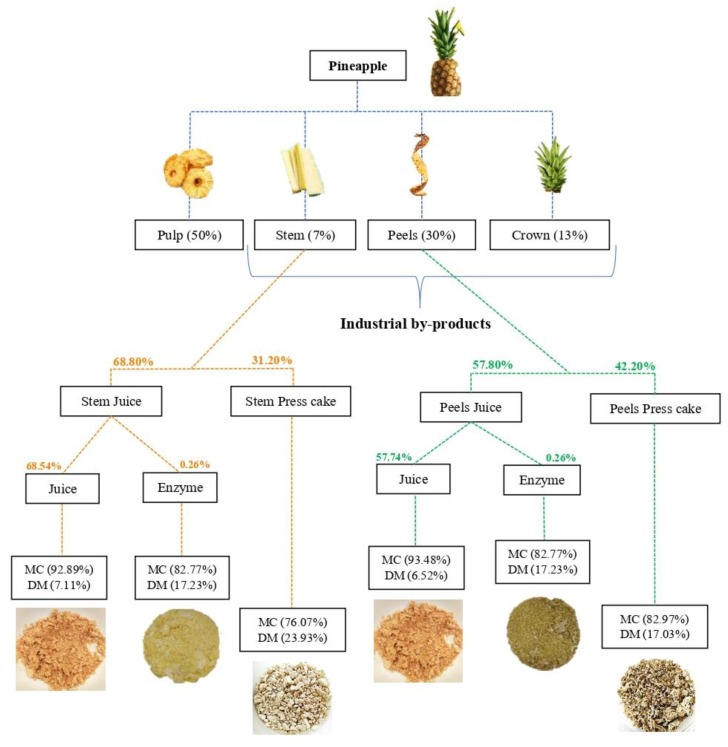
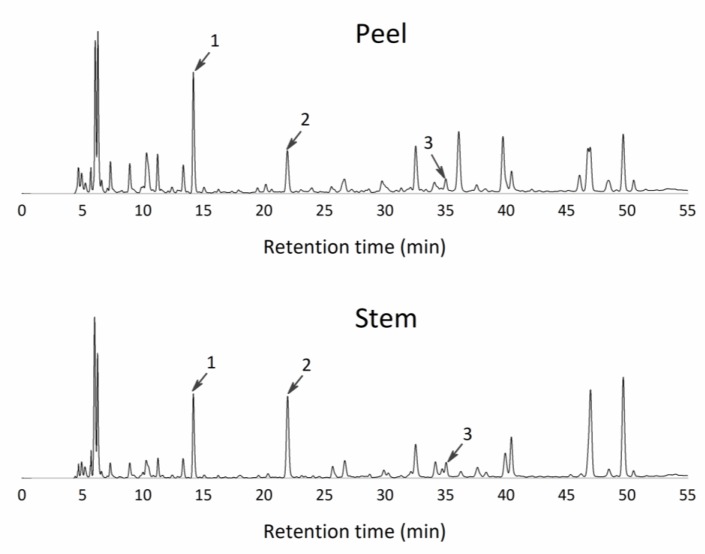
Industrial by-products are produced every day through fruit processing industries. Pineapple is not an exception; when processed, around 60% (w/w) of its weight are peels, stem, trimmings, and crown, the only used fruit part for human consumption. Due to high concerns of sustainability in the food system and negative high impact of human practice in the environment, a strategy has to be developed. Therefore, a green chemistry approach was applied to pineapple by-products to make an integrated valorization by the extraction of bioactive molecules. Two pineapple by-products (peels and stems) were studied, applying a green chemistry approach, which means the non-use of organic solvents or extreme methodologies. A subdivision of each by-product was done by the application of a juice machine. The peels and stems in the fresh state were ground separately, creating two fractions for each by-product—a juice and a wet pulp (press cake). The press cake was characterized, dried, and ground to create a fine powder flour. To the juice, a precipitation methodology with polysaccharides was applied, which allowed the bromelain separation (developing of an enzymatic fraction) from the fruit juice. The enzymatic extract was freeze-dried, and the juice was spray-dried, developing two more fine powders. Thus, three new ingredients were produced from each by-product, creating a total of six new ingredients. Overall, the enzymatic fractions represented around 0.26% (w/w) of pineapple weight. Pineapple stem juice represented 4.8% (w/w), and peel juice represented 17.3% (w/w). Pineapple stem flour represented 3.1% (w/w), and peel flour represented 11.4% (w/w) of the total pineapple weight. To valorize the by-products juices, a full characterization was performed of bioactive molecules and biological activities. When comparing the two juices, the peel juice showed lower content of total phenolic compounds, lower antioxidant capacity, and lower content of vitamin C. The different phenolic compounds were identified by HPLC analysis in the two pineapple by-products juices. However, the same compounds in both juices were quantified (chlorogenic, caffeic, and ferulic acids). On the other hand, the by-products flours had a high content of insoluble dietary fiber (IDF), mainly cellulose and hemicellulose. Therefore, the approach applied in this work opens the door to the production of green products, as a result of by-products valorization. This could be applied not only in the food industry but also in the nutraceutical and cosmetic industries.
Overview
The claims and statistics of this paper haven’t been checked yet.
Free: it reads the open-access text and checks the first 5 claims that cite a source we can check. Create a free account to check every claim.
Integrity signals
Registry
Cites
Statistics
Figures
Verification
Claims the paper makes
The claims and statistics of this paper haven’t been checked yet.
Free: it reads the open-access text and checks the first 5 claims that cite a source we can check. Create a free account to check every claim.
Claims other papers make about this one
Each is checked against this paper’s own text: does it say what the citing paper says it does?
The source backs part of the claim, not all of it — or backs it for a different population, condition or comparison.
In the citing paper
“Similarly to the case of mango leaves, approximately 60% of the mass of each pineapple ( Ananas comosus L.) is discarded. In 2016, more than 435,000 tons of pineapple waste were generated. Its barks and stems, however, can be used to produce extracts with bioactive compounds, whose polysaccharides could be separated by precipitation. An enzyme of interest is bromelain, which shows anti”
From Innovative Approaches to an Eco-Friendly Cosmetic Industry: A Review of Sustainable Ingredients (2024) · cites this paper as [100]
Experimental — accuracy not yet measured
Self-check
Percentages, sums and reported differences re-computed from the paper’s own numbers.
The self-check needs the paper’s full text.
Citations
Cites
Colorimetric Method for Determination of Sugars and Related Substances
DuBois, M., Gilles, K. A., Hamilton, J. K., Rebers, P. A., & Smith, F. (1956) · Analytical Chemistry · doi:10.1021/ac60111a017 · Cited by 52,269 · cited 1×
“[17], using glucose (Sigma-Aldrich, St.”
Antioxidant activity applying an improved ABTS radical cation decolorization assay
Re, R., Pellegrini, N., Proteggente, A., Pannala, A., Yang, M., & Rice-Evans, C. (1999) · Free Radical Biology and Medicine · doi:10.1016/s0891-5849(98)00315-3 · Cited by 26,165
Official Methods of Analysis of the Association of Official Analytical Chemists
(1971) · Journal of Pharmaceutical Sciences · doi:10.1002/jps.2600600253 · Cited by 6,387 · cited 3×
“Dry weight was determined at 105 °C for 24 h; the method was performed according to the Association of Official Analytical Chemists (AOAC) [16].”
MethodInfluentialExtending Applicability of the Oxygen Radical Absorbance Capacity (ORAC−Fluorescein) Assay
Dávalos, A., Gómez-Cordovés, C., & Bartolomé, B. (2004) · Journal of Agricultural and Food Chemistry · doi:10.1021/jf0305231 · Cited by 1,207
Rapid Determination of Polyphenols and Vitamin C in Plant-Derived Products
Georgé, S., Brat, P., Alter, P., & Amiot, M. J. (2005) · Journal of Agricultural and Food Chemistry · doi:10.1021/jf048396b · Cited by 804 · cited 4×
“[34], who reported that th application of high tempera ure (above 80 ◦C) led to elimination of vitamin C, obtaining more accurate results for total phenolic compounds.”
BackgroundInfluentialGao, X., Ohlander, M., Jeppsson, N., Björk, L., & Trajkovski, V. (2000) · Journal of Agricultural and Food Chemistry · doi:10.1021/jf991072g · Cited by 691
Bromelain: biochemistry, pharmacology and medical use
Maurer, H. R. (2001) · Cellular and Molecular Life Sciences · doi:10.1007/pl00000936 · Cited by 674 · cited 1×
“Likewise, bromelain finds its place in the pharmaceutical, cosmetic, and nutraceutical industries, given its anti-inflammatory, joint support, and digestive aid properties [4,5] Other molecules present in pineapple by-products have a relevant impact when strategically applied.”
BackgroundBioactive compounds and antioxidant activity of fresh exotic fruits from northeastern Brazil
Almeida, M. M. B., de Sousa, P. H. M., Arriaga, Â. M. C., do Prado, G. M., Magalhães, C. E. D. C., Maia, G. A., & de Lemos, T. L. G. (2011) · Food Research International · doi:10.1016/j.foodres.2011.03.051 · Cited by 490 · cited 1×
“[32] presented lower values of temperature to do the methanolic extraction, as described by Georgé, et al.”
MethodQuantification of bioactive compounds in pulps and by-products of tropical fruits from Brazil
Silva, L. M. R. D., Figueiredo, E. A. T. D., Ricardo, N. M. P. S., Vieira, I. G. P., Figueiredo, R. W. D., Brasil, I. M., & Gomes, C. L. (2014) · Food Chemistry · doi:10.1016/j.foodchem.2013.08.001 · Cited by 475
Martínez, R., Torres, P., Meneses, M. A., Figueroa, J. G., Pérez-Álvarez, J. A., & Viuda-Martos, M. (2012) · Food Chemistry · doi:10.1016/j.foodchem.2012.05.057 · Cited by 453 · cited 2×
“The dietary fiber is associated with colorants, antioxidants, and other positive effects molecules that can have a synergetic health effect [45,46].”
BackgroundAntioxidant capacity of the Spanish Mediterranean diet
Saura-Calixto, F., & Goñi, I. (2006) · Food Chemistry · doi:10.1016/j.foodchem.2004.11.033 · Cited by 371 · cited 1×
“The antioxidant capacity of fruits and by-products may change, depending on their content of vitamin C, vitamin E, carotenoids, flavonoids, and other polyphenols [36].”
BackgroundTotal phenolics, flavonoids and antioxidant activity of tropical fruit pineapple
Hossain, M. A., & Rahman, S. M. M. (2011) · Food Research International · doi:10.1016/j.foodres.2010.11.036 · Cited by 333 · cited 2×
“Moreover, Hossain and Rahman [38] described the different amounts of polyphenols extracted from pineapple peel with different solvents; methanol was the best solvent, and water was the worst since presented a yield of extraction of ca.”
BackgroundInfluentialPineapple wastes: A potential source for bromelain extraction
Ketnawa, S., Chaiwut, P., & Rawdkuen, S. (2012) · Food and Bioproducts Processing · doi:10.1016/j.fbp.2011.12.006 · Cited by 264 · cited 1×
“Pineapple and its by-products (peels, core, stems, trimming, and crowns) contain several biomolecules of commercial interest, being the enzymes (mainly bromelain) among the most recognized [3].”
BackgroundZAPATA, S., & DUFOUR, J. (1992) · Journal of Food Science · doi:10.1111/j.1365-2621.1992.tb05527.x · Cited by 245 · cited 2×
“Ascorbic acid (AA) and dehydroascorbic acid (DHAA) contents on pineapple by-product liquid fraction and hot aqueous extract were assessed through HPLC-DAD (diode array detector) (Water Series 600, Amherst, MA, USA), as described by Zapata and DUFOUR [23].”
MethodLombardi-Boccia, G., Lucarini, M., Lanzi, S., Aguzzi, A., & Cappelloni, M. (2004) · Journal of Agricultural and Food Chemistry · doi:10.1021/jf0344690 · Cited by 235 · cited 1×
“[26] who found differences on total mineral content between the same fruits and by-products because of the type of soil used for cultivation.”
BackgroundSelani, M. M., Brazaca, S. G. C., dos Santos Dias, C. T., Ratnayake, W. S., Flores, R. A., & Bianchini, A. (2014) · Food Chemistry · doi:10.1016/j.foodchem.2014.04.076 · Cited by 197
Major Polyphenolics in Pineapple Peels and their Antioxidant Interactions
Li, T., Shen, P., Liu, W., Liu, C., Liang, R., Yan, N., & Chen, J. (2014) · International Journal of Food Properties · doi:10.1080/10942912.2012.732168 · Cited by 179 · cited 1×
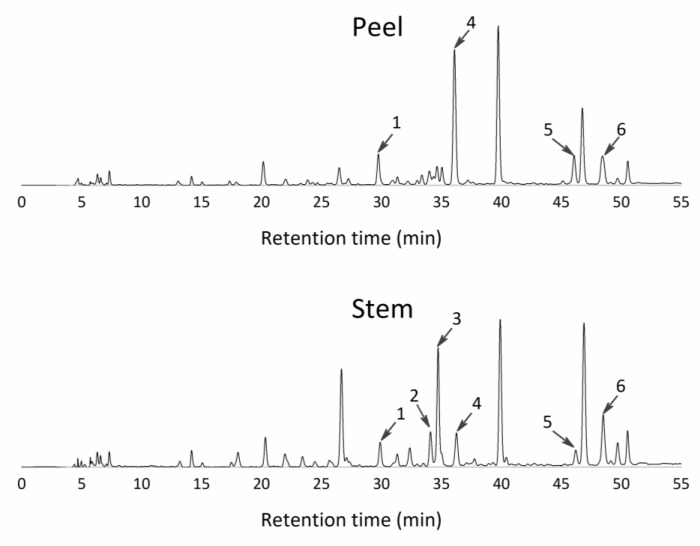
“[37] identified and quantified four peaks in methanolic extracts of pineapple peels—gallic acid, catechin, epicatechin, and ferulic acid.”
BackgroundProestos, C., Loukatos, P., & Komaitis, M. (2007) · Food Chemistry · doi:10.1016/j.foodchem.2007.06.048 · Cited by 145 · cited 1×
“using ultrapure water and absolute ethanol [18,19].”
Continuous ethanol production from pineapple cannery waste using immobilized yeast cells
Nigam, J. N. (2000) · Journal of Biotechnology · doi:10.1016/s0168-1656(00)00246-7 · Cited by 141
Connolly, M. L., Lovegrove, J. A., & Tuohy, K. M. (2010) · Journal of Functional Foods · doi:10.1016/j.jff.2010.05.001 · Cited by 129
Assessment of fruit juice authenticity using UPLC–QToF MS: A metabolomics approach
Jandrić, Z., Roberts, D. P. T., Rathor, M. N., Abrahim, A., Islam, M. D., & Cannavan, A. (2013) · Food Chemistry · doi:10.1016/j.foodchem.2013.10.014 · Cited by 127 · cited 1×
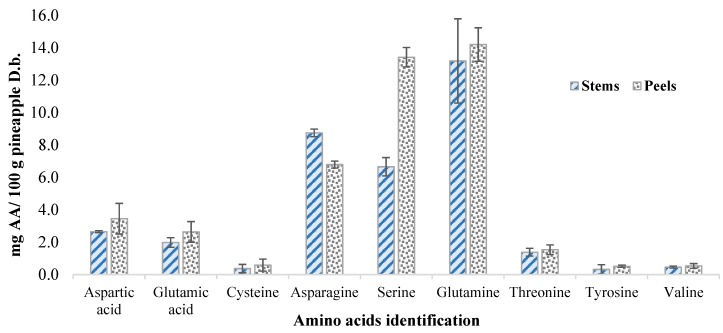
“[42] as usual amino acids presented on pineapple.”
BackgroundPineapple Shell as a Source of Dietary Fiber with Associated Polyphenols
Larrauri, J. A., Rupérez, P., & Calixto, F. S. (1997) · Journal of Agricultural and Food Chemistry · doi:10.1021/jf970450j · Cited by 123 · cited 2×
“Larrauri, Rupérez, and Calixto [29] studied differences between free and bounded polyphenols in pineapple by-products, showing that a high percentage of polyphenols were bounded with the dietary fiber from pineapple, and the total content of polyphenols was higher, as well as the antioxidant capacity of the tested sam…”
BackgroundFood uses of pineapple waste and by‐products: a review
Roda, A., & Lambri, M. (2019) · International Journal of Food Science & Technology · doi:10.1111/ijfs.14128 · Cited by 116 · cited 2×
“Moreover, pineapple byproducts have been studied as a low-cost substrate for the production of various organic acids, especially citric, lactic, and ferulic acids, using fermentation technology due to the commercial value of these products in the market since they are widely used in food, pharmaceutical, and beverage…”
BackgroundFabiani, A., Versari, A., Parpinello, G. P., Castellari, M., & Galassi, S. (2002) · Journal of Chromatographic Science · doi:10.1093/chromsci/40.1.14 · Cited by 115 · cited 1×
“Amino acids affect the quality of foods, but also are useful markers to define fruit juice genuineness [30].”
BackgroundCoscueta, E. R., Amorim, M. M., Voss, G. B., Nerli, B. B., Picó, G. A., & Pintado, M. E. (2016) · Food Chemistry · doi:10.1016/j.foodchem.2015.11.068 · Cited by 94 · cited 1×
“This discrepancy between the presented results of ABTS and ORAC, where ABTS presents lower values of equivalents, was expected since both methods present different reaction mechanisms [35].”
ResultSelf-citationContinuous ethanol production from pineapple cannery waste
Nigam, J. N. (1999) · Journal of Biotechnology · doi:10.1016/s0168-1656(99)00106-6 · Cited by 86
Difonzo, G., Vollmer, K., Caponio, F., Pasqualone, A., Carle, R., & Steingass, C. B. (2018) · Food Control · doi:10.1016/j.foodcont.2018.09.015 · Cited by 82
Díaz-Vela, J., Totosaus, A., Cruz-Guerrero, A. E., & Pérez‐Chabela, M. D. L. (2013) · International Journal of Food Science & Technology · doi:10.1111/ijfs.12113 · Cited by 80 · cited 1×
“The dietary fiber is associated with colorants, antioxidants, and other positive effects molecules that can have a synergetic health effect [45,46].”
BackgroundRoda, A., Faveri, D. M. D., Giacosa, S., Dordoni, R., & Lambri, M. (2015) · Journal of Cleaner Production · doi:10.1016/j.jclepro.2015.07.019 · Cited by 73
Huang, Y., Chow, C., & Fang, Y.-J. (2020) · Journal of Food and Drug Analysis · doi:10.38212/2224-6614.2179 · Cited by 73 · cited 2×
“The flours produced from the press cake present a viable option for food industries for the production of reduced calories and dietary fiber-enriched meals [27,47].”
BackgroundPurification and Characterization of a Proteinase from Pineapple Fruit, Fruit Bromelain FA21
YAMADA, F., Takahashi, N., & Murachi, T. (1976) · The Journal of Biochemistry · doi:10.1093/oxfordjournals.jbchem.a131176 · Cited by 65 · cited 1×
“Likewise, bromelain finds its place in the pharmaceutical, cosmetic, and nutraceutical industries, given its anti-inflammatory, joint support, and digestive aid properties [4,5] Other molecules present in pineapple by-products have a relevant impact when strategically applied.”
BackgroundSteingass, C. B., Jutzi, M., Müller, J., Carle, R., & Schmarr, H. (2015) · Analytical and Bioanalytical Chemistry · doi:10.1007/s00216-015-8475-y · Cited by 57 · cited 5×
“Also, a non-phenolic compound was identified—1-(1H-Pyrrole-2-carboxyl)-glucuronosyl glycerol—with a mass profile that matches with that reported by Steingass, Jutzi, Müller, Carle, and Schmarr [40].”
ResultInfluentialCampos, D. A., Madureira, A. R., Sarmento, B. F. C. C., Gomes, A., & Pintado, M. (2015) · Food Research International · doi:10.1016/j.foodres.2015.10.025 · Cited by 53 · cited 1×
“[24], and changes in the original method were applied to better separate the pineapple phenolic compounds.”
MethodSelf-citationOptimization of bromelain isolation from pineapple byproducts by polysaccharide complex formation
Campos, D. A., Coscueta, E. R., Valetti, N. W., Pastrana, L. M., Teixeira, J. A., Picó, G. A., & Pintado, M. (2018) · Food Hydrocolloids · doi:10.1016/j.foodhyd.2018.09.009 · Cited by 46
Self-citationMonforte, A. R., Martins, S. I. F. S., & Ferreira, A. C. S. (2017) · Journal of Agricultural and Food Chemistry · doi:10.1021/acs.jafc.7b00264 · Cited by 43 · cited 1×
“[25], using positive ionization mode with spectra acquired over a range from m/z 20 to 1000.”
MethodBioactive compounds and antioxidant capacities of phulae and nanglae pineapple
Ampa, K., Suthiluk, P., Theppakorn, T., SRILAONG, V., & Setha, S. (2009) · Asian Journal of Food and Agro-Industry · Cited by 39
Value added processing and utilization of pineapple by‐products
Dorta, E., & Sogi, D. S. (2016) · Wiley eBooks · doi:10.1002/9781118967355.ch11 · Cited by 34
Grape, apple and pineapple juice characterisation and detection of mixtures
Dizy, M., Martín-Álvarez, P. J., Cabezudo, M. D., & Polo, M. C. (1992) · Journal of the Science of Food and Agriculture · doi:10.1002/jsfa.2740600109 · Cited by 29 · cited 1×
“[31] reported the number of free amino acids in fruit juices, with a higher concentration of free amino acids for commercial pineapple juices.”
BackgroundSteingass, C. B., Glock, M. P., Lieb, V. M., & Carle, R. (2017) · Food Research International · doi:10.1016/j.foodres.2017.06.030 · Cited by 27 · cited 1×
“[41], while the presence of both amino acids was corroborated by Jandrić, et al.”
BackgroundPhenolic profiles of pineapple fruits (Ananas comosus L. Merrill) Influence of the origin of suckers
Salomé, Y. S. E., Kouakou, H., Kouakou, K. L., Kouadio, J. Y., Kouamé, P. L., & Mérillon, J. (2011) · Université Virtuelle de Côte d'Ivoire · doi:10.71655/uvcibv.0724n-k3f75 · Cited by 22
Nadzirah, K. Z., Zainal, S., Noriham, A., Normah, I., & Roha, A. M. S. (2012) · APCBEE Procedia · doi:10.1016/j.apcbee.2012.11.022 · Cited by 21 · cited 1×
“The most important enzyme of pineapple is stem bromelain, which is present mainly in stem and core [28].”
BackgroundSimas, F. F., de Souza, L. M., Wagner, R., Pereira, G. C. Z., Barraza, R. R., Wendel, C. F., Sassaki, G. L., Iacomini, M., & Gorin, P. A. J. (2013) · Carbohydrate Polymers · doi:10.1016/j.carbpol.2012.12.059 · Cited by 21
Isolation of polysaccharides from pineapple fruit pulp and their enzymatic liquifaction
Mohammad, G. (2010) · Cited by 10
The EU's Path Toward Sustainable Development Goals – Responsible Consumption and ProductionPreprint
Sznida, E. (2018) · SSRN Electronic Journal · doi:10.2139/ssrn.3292067 · Cited by 9 · cited 1×
“Throughout the pineapple production and consumption chain, several tons of by-products are produced, which, in most cases, are discarded as waste [1].”
Research works printed but not linked: 1
- Omojasola P.F. Jilani O.P. Ibiyemi S. Cellulase production by some fungi cultured on pineapple waste Nat. Sci. 2008 6 64 79
Cited by
Mohd Ali, M., Hashim, N., Abd Aziz, S., & Lasekan, O. (2020) · Food Research International · doi:10.1016/j.foodres.2020.109675 · Cited by 312
Management of Fruit Industrial By-Products—A Case Study on Circular Economy Approach
Campos, D. A., Gómez-García, R., Vilas-Boas, A. A., Madureira, A. R., & Pintado, M. M. (2020) · Molecules · doi:10.3390/molecules25020320 · Cited by 331
“However, more recently, several works have described the high content of phenolic compounds and vitamin C in pineapple by-products and the possible production of antioxidant extracts from pineapple juices or the possible production of pineapple functional flours from pineapple stems and cores, due to the high content…”
BackgroundSelf-citationValorisation of food agro-industrial by-products: From the past to the present and perspectives
Gómez-García, R., Campos, D. A., Aguilar, C. N., Madureira, A. R., & Pintado, M. (2021) · Journal of Environmental Management · doi:10.1016/j.jenvman.2021.113571 · Cited by 215
Self-citationHamzah, A. F. A., Hamzah, M. H., Man, H. C., Jamali, N. S., Izhar, S., & Ismail, M. H. (2021) · Agronomy · doi:10.3390/agronomy11112221 · Cited by 195
“Among the number of varieties that exist, Smooth Cayenne is the most marketed variety [29].”
BackgroundSantos, D., Lopes‐da‐Silva, J. A., & Pintado, M. (2021) · LWT · doi:10.1016/j.lwt.2021.112707 · Cited by 163
Self-citation
Metadata
- Authors
- Campos, D. A., Ribeiro, T. B., Teixeira, J. A., Pastrana, L., & Pintado, M. M.
- Affiliations
- Universidade Católica Portuguesa (PT)
- Universidade do Minho Centro de Engenharia Biológica (PT)
- International Iberian Nanotechnology Laboratory (PT)
- CBQF–Centro de Biotecnologia e Química Fina–Laboratório Associado, Escola Superior de Biotecnologia, Univerisdade Católica Portuguesa, Rua Diogo Botelho 1327, 4169-005 Porto, Portugal
- Venue
- Foods
- Publisher
- MDPI AG
- Published
- 2020-01-07
- Volume
- 9
- Issue
- 1
- Pages
- 60
- ISSN
- 2304-8158 (ISSN-L)
- PMC
- PMC7022615
- OpenAlex
- W3000289368
- Cited by
- 154
- References
- 46
- Citations by year
- 2026: 15 · 2025: 21 · 2024: 19 · 2023: 37 · 2022: 31 · 2021: 22 · 2020: 8
- FWCI
- 7.94
- Type
- journal article
- Language
- en
- Open access
- gold
- dx.doi.org
- Licence
- Locations
- Foods (publishedVersion, cc-by)
- Europe PMC (PubMed Central) (publishedVersion, cc-by)
- PubMed Central (publishedVersion, cc-by)
- PubMed (publishedVersion)
- DOAJ (DOAJ: Directory of Open Access Journals) (submittedVersion, cc-by-sa)
- Portuguese National Funding Agency for Science, Research and Technology (RCAAP Project by FCT) (submittedVersion, cc-by)
- Portuguese National Funding Agency for Science, Research and Technology (RCAAP Project by FCT) (submittedVersion, other-oa)
- Portuguese National Funding Agency for Science, Research and Technology (RCAAP Project by FCT) (submittedVersion, cc-by-nc-nd)
- Funders
- Fundação para a Ciência e a Tecnologia (UID/Multi/50016/2019)
- FP7 People: Marie-Curie Actions (FP/-PEOPLE-2013-IRSES PEOPLE)
- Topics
- Life Sciences › Biochemistry, Genetics and Molecular Biology › Molecular Biology › Pineapple and bromelain studies
- Life Sciences › Agricultural and Biological Sciences › Food Science › Agricultural and Biological Research
- Health Sciences › Medicine › Biochemistry (medical) › Phytochemicals and Antioxidant Activities
- Keywords
- pineapple by-products, pineapple peel, pineapple stem, fruit processing waste valorization, green chemistry, polysaccharide precipitation, phenolic compounds, antioxidant capacity, vitamin C, insoluble dietary fiber, cellulose, hemicellulose, spray drying, freeze-drying, bioactive compounds, functional food ingredients
About these checks
Registry, retraction, Cites and statistics results are computed, not judged, with one exception: a printed reference that no index lists is read once by a model before it counts as a citation error. Claims are extracted by a model and kept only when their quote appears verbatim in the text; each cited source is then checked, with a model’s help, for whether it says what the claim relies on. Those verdicts can be wrong — read the claim’s quote and the cited source before relying on one.
Statistics and arithmetic are recomputed, not judged.
Confidence bands are shown only for fields calibrated on our annotated test set. None is calibrated yet, so no band is shown.
What counts as a claim ›How we measure confidence ›How we check this ›
Are you an author, or do you see a problem with this page? Request a review
Data sources
Bibliographic data: Semantic Scholar, OpenAlex, Crossref.
Contains information from the Semantic Scholar Academic Graph Datasets, made available under the ODC Attribution License (ODC-BY 1.0).
Semantic Scholar’s data is described in: Kinney, R., et al. (2023). The Semantic Scholar Open Data Platform. arXiv:2301.10140.
