

Effectiveness of Expressive Writing in Kidney Transplanted Patients: A Randomized Controlled Trial Study
Open accessThe DOI matches its Crossref record; 42 of the 48 references it cites were found in a registry or an index; 8 of the 17 sources its claims cite were checked for support.
Abstract
The present study aimed to assess the effectiveness of an expressive writing (EW) intervention on psychological and physiological variables after kidney transplant. The final sample of 26 were randomly assigned to an expressive writing group (EWG) and control group (CG). Outcomes were focused on depression, anxiety, alexithymia, empathy, resilience, locus of control, creatinine, CDK-EPI, and azotemia. Depressive symptoms and alexithymia levels decreased in the EWG, with better adherence. Resilience declined over time in both groups. The EWG showed a significantly higher CDK-EPI, indicating better renal functioning. EW seems an effective intervention to improve the psychological health of transplanted patients, with a possible effect on renal functioning. These findings open the possibility of planning brief psychological interventions aimed at processing emotional involvement, in order to increase adherence, the acceptance of the organ, and savings in healthcare costs. © 2022 by the authors.
Overview
CoChat Summary
TL;DR
This randomized controlled trial tested a 3-day expressive writing intervention in kidney transplant patients and found short-term improvements in depressive symptoms, alexithymia, adherence, and some renal function markers. The benefits were less clear by 3 months, when groups tended to look more similar.
Key findings
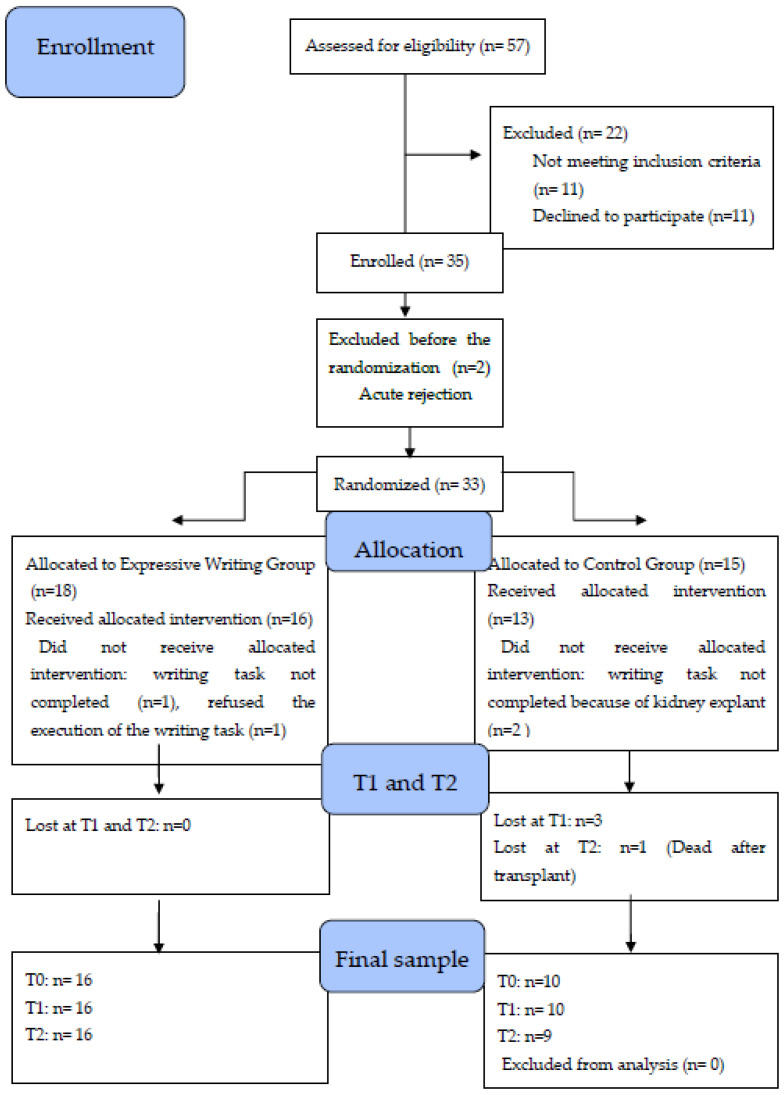
- The final sample was 26 kidney transplant patients, randomized to EWG (n = 16) and CG (n = 10); the mean age was 48.6 ± 14.4 years.
- At T1 (day of discharge), the expressive writing group showed a significant reduction in depressive symptoms on BDI-II and in alexithymia on TAS-20-F2; both groups also had lower empathy scores on IRI-Perspective Thinking and IRI-Personal Distress.
- At T2 (3 months), the expressive writing group showed increased empathy on IRI-Personal Distress, and resilience on CD-RISC-control had decreased in both groups.
- For adherence, the EWG distribution changed from Yes: 9 / No: 7 at T0 to Yes: 4 / No: 12 at T2, and this was reported as significantly different from equal distribution (χ2(1) = 4.0, p = 0.045).
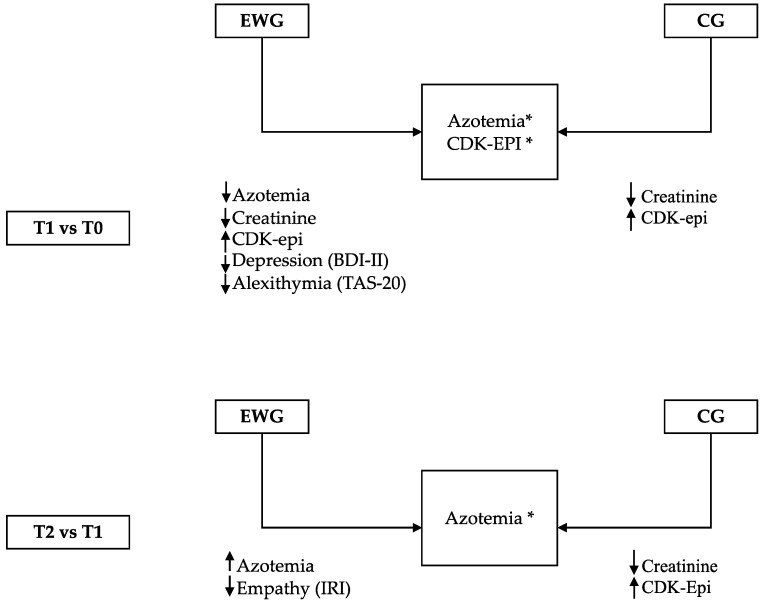
- For renal function, CDK-EPI increased and creatinine decreased over time; the EWG had higher CDK-EPI at T1 than the CG, and lower azotemia at T1. The abstract states the EWG showed a significantly higher CDK-EPI, indicating better renal functioning.
Methods
- Design: Parallel-group, double-blind randomized controlled trial with two groups: expressive writing and neutral writing control; conducted according to CONSORT guidelines and registered as NCT04486417.
- Sample/data: 57 renal-transplant patients were contacted at Policlinico Umberto I, Rome, between March 2018 and March 2019; after refusals, exclusions, rejection before randomization, and dropout, 26 remained. Eligible patients were over 18, able to read/write, and excluded for severe psychopathology or cognitive impairment.
- Analysis: Repeated-measures ANOVA with planned comparisons for psychological variables, adherence, renal function, and health expenditure; chi-square tests for dichotomous adherence and patient characteristics.
Limitations
- The paper states the study was limited by a small cohort and a high dropout rate, making the sample size insufficient for a relevant effect size and limiting generalizability.
- The paper states the adherence measure was very basic and that validated instruments for perceived pharmacological adherence remain lacking.
- The paper states that randomized treatment assignment did not allow personalization of the psychological intervention.
- Evident from the text: the final sample was 26, and the paper itself notes the statistical evidence was weak owing to the small sample size.
Model-written summary. Check it against the paper before relying on it.
Integrity signals
Registry
Cites
Statistics
Figures
Verification
Claims the paper makes
5 Valid · 0 Not valid · 5 Not checked · 43 Own results and interpretations
The cited sources support only part of this claim — read each source’s verdict below.
In the paper
“In kidney transplanted patients, adherence to immunosuppressive therapy is of importance, to reduce the risk of rejection [8].”
§ Effectiveness of Expressive Writing in Kidney Transplanted Patients: A Randomized Controlled Trial Study > 1. Introduction
What the sources say
- Partly supportedcites [8] Ladin K. Daniels A. Osani M. Bannuru R.R. Is social support associated with post-transplant medication adherence and outcomes? A systematic review and meta-analysis Transplant. Rev. 2018 32 16 28 10.1016/j.trre.2017.04.001 PMC5658266 28495070 sourceExperimental — accuracy not yet measured
The Results (Medication Adherence; page unavailable) include kidney transplant recipients, and the Discussion (page unavailable) links coping with medication side effects and maintaining the graft. The paper does not state that adherence to immunosuppressive therapy reduces rejection risk specifically in kidney transplant recipients. (LLM, conf=0.78)
plainstates a cause- Asserted: passes — The authors put it forward as true.
- Checkable: passes — It can be checked against evidence.
- Load-bearing: passes — The paper’s conclusions depend on it.
- Based: passes — The paper gives a reason why it holds.
- Partly supported
The cited sources support only part of this claim — read each source’s verdict below.
In the paper
“This technique has also been proven effective in patients with chronic diseases and cancer, to reduce and manage psychophysical symptoms [14,15].”
§ Effectiveness of Expressive Writing in Kidney Transplanted Patients: A Randomized Controlled Trial Study > 1. Introduction
What the sources say
- Partly supportedcites [14] Narayanan S. Milbury K. Wagner R. Cohen L. Religious Coping in Cancer: A Quantitative Analysis of Expressive Writing Samples from Patients with Renal Cell Carcinoma J. Pain Symptom Manag. 2020 60 737 745.e3 10.1016/j.jpainsymman.2020.04.029 32387140 PMC7508963 sourceExperimental — accuracy not yet measured
The Results report that renal cell carcinoma patients who wrote more about private religious engagement had lower cancer-related symptoms during follow-up. But the Methods say this analysis included only the expressive-writing arm, so it does not establish that expressive writing itself reduced symptoms compared with neutral writing. The paper also does not establish effectiveness across chronic diseases or for psychophysical symptoms generally. (LLM, conf=0.84)
- Partly supportedcites [15] Usichenko T. Wenzel A. Klausenitz C. Petersmann A. Hesse T. Neumann N. Hahnenkamp K. Auricular stimulation vs. expressive writing for exam anxiety in medical students-A randomized crossover investigation PLoS ONE 2020 15 e0238307 10.1371/journal.pone.0238307 32853281 PMC7451547 sourceExperimental — accuracy not yet measured
The Introduction reports that expressive writing reduced depressive symptoms in people taking stressful exams, but it does not report effectiveness in patients with chronic diseases or cancer. The Discussion says expressive writing had no effect on anxiety or exam performance in this trial of medical students. Our copy therefore supports a narrower claim about depressive symptoms in exam-takers, not the claimed patient groups or range of symptoms. (LLM, conf=0.78)
boostedstates a cause- Asserted: passes — The authors put it forward as true.
- Checkable: passes — It can be checked against evidence.
- Load-bearing: passes — The paper’s conclusions depend on it.
- Based: passes — The paper gives a reason why it holds.
- Partly supported
A result the paper reports from its own data — it cites no other source for it, so there is none to check. The quote shows it is in the paper.
In the paper
“Interestingly, at T2, only the EWG had increased empathy levels on the “Personal Distress” subscale.”
§ Effectiveness of Expressive Writing in Kidney Transplanted Patients: A Randomized Controlled Trial Study > 3. Results > 3.1. Psychological Variables
plain- Asserted: passes — The authors put it forward as true.
- Checkable: passes — It can be checked against evidence.
- Load-bearing: unclear — It is unclear whether the paper’s conclusions depend on it.
- Based: passes — The paper gives a reason why it holds.
A result the paper reports from its own data — it cites no other source for it, so there is none to check. The quote shows it is in the paper.
In the paper
“The time factor was significant for CDK-EPI (T1 > T0; T2 > T1), creatinine (T1 < T0; T2 < T1), and azotemia (T2 < T1) (Table 3).”
§ Effectiveness of Expressive Writing in Kidney Transplanted Patients: A Randomized Controlled Trial Study > 3. Results > 3.3. Biological Variables
plainstates an association- Asserted: passes — The authors put it forward as true.
- Checkable: passes — It can be checked against evidence.
- Load-bearing: passes — The paper’s conclusions depend on it.
- Based: passes — The paper gives a reason why it holds.
A result the paper reports from its own data — it cites no other source for it, so there is none to check. The quote shows it is in the paper.
In the paper
“Depressive symptoms and alexithymia levels decreased in the EWG, with better adherence.”
- Also stated in: § 3.1. Psychological Variables · plain
“At T1, the planned comparisons showed that the EWG had a significant reduction in depressive symptoms on BDI-II and levels of alexithymia, as seen in TAS-20-F2.”
- Also stated in: § 4. Discussion · plain
“A main finding of the present study was that the depressive symptoms and alexithymia (in the subscale “describe your emotions”) decreased only in the expressive writing group at T1.”
§ Effectiveness of Expressive Writing in Kidney Transplanted Patients: A Randomized Controlled Trial Study > Abstract
plainstates a cause- Asserted: passes — The authors put it forward as true.
- Checkable: passes — It can be checked against evidence.
- Load-bearing: passes — The paper’s conclusions depend on it.
- Based: passes — The paper gives a reason why it holds.
- Also stated in: § 3.1. Psychological Variables · plain
26 more claims
Create a free account to see all 53 claims and every source verdict.
- It may state two separate claims as one. 12
- Probably not a substantial claim. 11
- The quote only partly states this claim. 1
Statistics recomputed
Every reported test result, recomputed from its test statistic and degrees of freedom. A result shows as not adding up only once an independent check has confirmed it.
- ConsistentF(1, 22) = 0.6reported p = .45 · recomputed p = .447
“F (1,22) = 0.6, p = .45”
- Consistentχ²(1) = 0.3reported p = .61 · recomputed p = .584
“χ2 (1) = 0.3, p = .61”
- Consistentχ²(1) = 0.1reported p = .8 · recomputed p = .752
“χ2 (1) = 0.1, p = .80”
- Consistentχ²(1) = 4reported p = .045 · recomputed p = .046
“χ2 (1) = 4.0, p = .045”
- Consistentχ²(1) = 0reported p = 1 · recomputed p = 1.000
“χ2 (1) = 0.0, p = 1.000”
2 more recomputed tests
Create a free account to see every test the Stats check recomputed.
Self-check
Percentages, sums and reported differences re-computed from the paper’s own numbers.
Rated major: it would touch a result — a value a result rests on, reported and recomputed p-values on opposite sides of the significance level, two passages that conflict with no sign which is right, or a cited work retracted before this paper was published.
In the paper
“with a significance level of α = 0.05, β = 0.02 and power (1-β) = 80%.”
§ Effectiveness of Expressive Writing in Kidney Transplanted Patients: A Randomized Controlled Trial Study > 2. Materials and Methods > 2.2. Participants
Reported 80 · recomputed 98
Citations
Cites
An inventory for measuring clinical anxiety: Psychometric properties.
Beck, A. T., Epstein, N., Brown, G., & Steer, R. A. (1988) · Journal of Consulting and Clinical Psychology · doi:10.1037/0022-006x.56.6.893 · Cited by 14,407 · cited 8×
“BDI-II = Beck Depression Inventory II, STAI-Y1 e STAI-Y2 = State Trait Anxiety Inventory 1 (trait) e 2 (state), TAS-20 = Toronto Alexi- thymia Scale 20 (TAS-20-F2 = Difficulty Describing Feelings), IRI = Interpersonal Reactivity Index (IRI-PT = Perspective-Taking IRI-PD = Personal Distress), CD-RISC = Connor–Davidson…”
MethodInfluentialDevelopment of a new resilience scale: The Connor-Davidson Resilience Scale (CD-RISC)
Connor, K. M., & Davidson, J. R. T. (2003) · Depression and Anxiety · doi:10.1002/da.10113 · Cited by 11,793 · cited 8×
“BDI-II = Beck Depression Inventory II, STAI-Y1 e STAI-Y2 = State Trait Anxiety Inventory 1 (trait) e 2 (state), TAS-20 = Toronto Alexi- thymia Scale 20 (TAS-20-F2 = Difficulty Describing Feelings), IRI = Interpersonal Reactivity Index (IRI-PT = Perspective-Taking IRI-PD = Personal Distress), CD-RISC = Connor–Davidson…”
MethodInfluentialMeasuring individual differences in empathy: Evidence for a multidimensional approach.
Davis, M. H. (1983) · Journal of Personality and Social Psychology · doi:10.1037/0022-3514.44.1.113 · Cited by 10,272
Bagby, R. M., Parker, J. D. A., & Taylor, G. J. (1994) · Journal of Psychosomatic Research · doi:10.1016/0022-3999(94)90005-1 · Cited by 5,293 · cited 6×
“BDI-II = Beck Depression Inventory II, STAI-Y1 e STAI-Y2 = State Trait Anxiety Inventory 1 (trait) e 2 (state), TAS-20 = Toronto Alexi- thymia Scale 20 (TAS-20-F2 = Difficulty Describing Feelings), IRI = Interpersonal Reactivity Index (IRI-PT = Perspective-Taking IRI-PD = Personal Distress), CD-RISC = Connor–Davidson…”
MethodInfluentialState-Trait Anxiety Inventory for Adults
Spielberger, C. D. (2012) · PsycTESTS Dataset · doi:10.1037/t06496-000 · Cited by 3,479
Development and validation of the Health Locus of Control (HLC) Scale.
Wallston, B. S., Wallston, K. A., Kaplan, G. D., & Maides, S. A. (1976) · Journal of Consulting and Clinical Psychology · doi:10.1037//0022-006x.44.4.580 · Cited by 1,248 · cited 2×
“All participants were invited to complete the following questionnaires at times T0, T1, and T2: Beck Depression Inventory-II (BDI-II) [18]; State Trait Anxiety Inventory I and II (STAIY1–STAI-Y2) [19]; Toronto Alexithymia Scale 20 (TAS-20) [20]; Interpersonal Reactivity Index (IRI) [21]; Connor-Davidson Resilience Sca…”
MethodDisclosure of trauma and immune response to a hepatitis B vaccination program.
Petrie, K. J., Booth, R. J., Pennebaker, J. W., & Davison, K. P. (1995) · Journal of Consulting and Clinical Psychology · doi:10.1037//0022-006x.63.5.787 · Cited by 398
Impact of Health Literacy on Medication Adherence: A Systematic Review and Meta-analysis
Zhang, N. J., Terry, A., & McHorney, C. A. (2014) · Annals of Pharmacotherapy · doi:10.1177/1060028014526562 · Cited by 324
Baker, R. J., Mark, P. B., Patel, R. K., Stevens, K. K., & Palmer, N. (2017) · BMC Nephrology · doi:10.1186/s12882-017-0553-2 · Cited by 211 · cited 1×
“Adherence is described as the correct management, conforming to the prescribed anti-rejection drug (immunosuppressive) therapy, maintaining regularity in visiting the pre-established check-ups at the transplant center, and prompt reporting of any complications [4,7].”
BackgroundTowards a classification of alexithymia: Primary, secondary and organic
Messina, A., Beadle, J. N., & Paradiso, S. (2014) · Giornale italiano di psicopatologia/Journal of psychopathology/Italian journal of psychopathology · Cited by 146
Ladin, K., Daniels, A., Osani, M., & Bannuru, R. R. (2018) · Transplantation Reviews · doi:10.1016/j.trre.2017.04.001 · Cited by 111 · cited 1×
“In kidney transplanted patients, adherence to immunosuppressive therapy is of importance, to reduce the risk of rejection [8].”
BackgroundExpressive writing interventions in cancer patients: a systematic review
Merz, E. L., Fox, R. S., & Malcarne, V. L. (2014) · Health Psychology Review · doi:10.1080/17437199.2014.882007 · Cited by 108
Viau, A., Bienaimé, F., Lukas, K., Todkar, A. P., Knoll, M., Yakulov, T. A., Hofherr, A., Kretz, O., Helmstädter, M., Reichardt, W., et al. (2018) · The EMBO Journal · doi:10.15252/embj.201798615 · Cited by 104 · cited 1×
“Chemokines and cytokines act by regulating the function of T lymphocytes, which exert a direct cytotoxic effect through the release of TNF (tumor necrosis factor), which eventually can lead to ischemia in the transplanted tissues and subsequent rejection [38,39].”
BackgroundZachariae, R., & O'Toole, M. S. (2015) · Psycho-Oncology · doi:10.1002/pon.3802 · Cited by 88 · cited 2×
“The association between the presence of an expressive writing intervention and kidney functionality was also suggested by a recent study, which described the effect of expressive writing on the immune system [16].”
BackgroundStilley, C. S., DiMartini, A. F., de Vera, M. E., Flynn, W. B., King, J., Sereika, S., Tarter, R. E., Dew, M. A., & Rathnamala, G. (2010) · Progress in Transplantation · doi:10.1177/152692481002000110 · Cited by 75 · cited 1×
“Several studies have highlighted the role of adherence to treatment on the postoperative course in different transplantation procedures [9], with special emphasis on the association of lower adherence levels with an increase in healthcare costs [10].”
BackgroundQian, J., Zhou, X., Sun, X., Wu, M., Sun, S., & Yu, X. (2020) · Psychiatry Research · doi:10.1016/j.psychres.2020.112933 · Cited by 68 · cited 1×
“Coherently, a recent meta-analysis that analyzed over 140 studies based on expressive writing found that studies with less than 1-month follow-up had larger psychological health effects than studies with a longer follow-up period (≥1 month) [31].”
BackgroundExpressive writing to improve resilience to trauma: A clinical feasibility trial
Glass, O., Dreusicke, M., Evans, J., Bechard, E., & Wolever, R. Q. (2019) · Complementary Therapies in Clinical Practice · doi:10.1016/j.ctcp.2018.12.005 · Cited by 64
Chemokine receptor‐dependent alloresponses
Hancock, W. W. (2003) · Immunological Reviews · doi:10.1046/j.1600-065x.2003.00084.x · Cited by 63 · cited 1×
“Chemokines and cytokines act by regulating the function of T lymphocytes, which exert a direct cytotoxic effect through the release of TNF (tumor necrosis factor), which eventually can lead to ischemia in the transplanted tissues and subsequent rejection [38,39].”
BackgroundVukčević Marković, M., Bjekić, J., & Priebe, S. (2020) · Frontiers in Psychology · doi:10.3389/fpsyg.2020.587282 · Cited by 56
Zheng, D. J., Lu, X., Schore, R. J., Balsamo, L. M., Devidas, M., Winick, N. J., Raetz, E. A., Loh, M. L., Carroll, W. L., Sung, L., et al. (2017) · Cancer · doi:10.1002/cncr.31085 · Cited by 55 · cited 1×
“Regarding alexithymia, the results are debatable, with studies focusing on the role of alexithymia as a moderator of the effects of expressive writing with positive or negative outcomes [28,29], rather than on the effect of expressive writing on alexithymia levels.”
ResultStilley, C. S., DiMartini, A., de Vera, M. E., et al. (2010) · Progress in Transplantation · doi:10.7182/prtr.20.1.c903845857104k83 · Cited by 54
CD4+CD25+ T Regulatory Cells in Transplantation Tolerance: 25 Years On
Hall, B. M. (2016) · Transplantation · doi:10.1097/tp.0000000000001436 · Cited by 53 · cited 1×
“CD-4 type T-lymphocytes, also known as T-helper cells, seem to have a role in the immune response during the acceptance of a new transplanted organ [36].”
BackgroundAdherence profiles in kidney transplant patients: Causes and consequences
Villeneuve, C., Rousseau, A., Rerolle, J.-P., Couzi, L., Kamar, N., Essig, M., Etienne, I., Westeel, P.-F., Büchler, M., Esposito, L., et al. (2020) · Patient Education and Counseling · doi:10.1016/j.pec.2019.08.002 · Cited by 53 · cited 1×
“Younger age, depression and anxiety, using avoidance as an adaptation strategy, and the inability to communicate emotions and emotional dysregulation represent some of the factors predisposing to poor medication adherence in transplant patients [3,11,12].”
BackgroundCalia, R., Lai, C., Aceto, P., Luciani, M., Camardese, G., Lai, S., Fantozzi, C., Pietroni, V., Salerno, M. P., Spagnoletti, G., et al. (2015) · Physiology & Behavior · doi:10.1016/j.physbeh.2015.02.018 · Cited by 45 · cited 1×
“Hence, the associated stress may result in an adverse post-operative course, particularly in terms of compliance to the follow-up process, medical prescriptions, and the consequential risk of rejection [6].”
BackgroundSelf-citationPossemato, K., Ouimette, P., & Geller, P. A. (2010) · Traumatology · doi:10.1177/1534765609347545 · Cited by 40 · cited 1×
“[13], with its effects on post-traumatic stress symptoms and quality of life.”
BackgroundLai, S., Mecarelli, O., Pulitano, P., Romanello, R., Davì, L., Zarabla, A., Mariotti, A., Carta, M. P., Tasso, G., Poli, L., et al. (2016) · Medicine · doi:10.1097/md.0000000000005191 · Cited by 40
Self-citationEffectiveness of therapy group in women with localized breast cancer
Pérez, A. B., Peris-Juan, C., & Santaballa, A. (2019) · International Journal of Clinical and Health Psychology · doi:10.1016/j.ijchp.2019.02.001 · Cited by 38
Calia, R., Lai, C., Aceto, P., Luciani, M., Camardese, G., Lai, S., Amato, G., Pietroni, V., Salerno, M. P., Pedroso, J. A., et al. (2015) · Renal Failure · doi:10.3109/0886022x.2015.1010989 · Cited by 36
Self-citationSambucini, D., Ciacchella, C., Pellicano, G. R., Zingaretti, G., Pierro, L., Aceto, P., & Lai, C. (2022) · Journal of Psychosomatic Research · doi:10.1016/j.jpsychores.2022.110717 · Cited by 36 · cited 1×
“Several previous studies have evaluated the effect of a psychological intervention on depressive symptoms in transplanted patients, with a significant decline in depressive symptoms [24], specifically in those who performed an expressive writing treatment [25–27].”
BackgroundSelf-citationMuduma, G., Odeyemi, I., Smith-Palmer, J., & Pollock, R. F. (2016) · Advances in Therapy · doi:10.1007/s12325-016-0292-y · Cited by 35 · cited 1×
“Several studies have highlighted the role of adherence to treatment on the postoperative course in different transplantation procedures [9], with special emphasis on the association of lower adherence levels with an increase in healthcare costs [10].”
BackgroundRenzi, A., Solano, L., Trani, M. D., Ginobbi, F., Minutolo, E., & Tambelli, R. (2019) · Psychology and Health · doi:10.1080/08870446.2019.1667500 · Cited by 28 · cited 1×
“Regarding alexithymia, the results are debatable, with studies focusing on the role of alexithymia as a moderator of the effects of expressive writing with positive or negative outcomes [28,29], rather than on the effect of expressive writing on alexithymia levels.”
ResultKuba, K., Weißflog, G., Götze, H., García-Torres, F., Mehnert, A., & Esser, P. (2019) · International Journal of Clinical and Health Psychology · doi:10.1016/j.ijchp.2018.12.001 · Cited by 26 · cited 1×
“A recent review showed how the post-transplant phase is gripped by the fear of rejection, of possible infections, or return to dialysis despite the transplant [40,41].”
BackgroundSambucini, D., Aceto, P., Begotaraj, E., & Lai, C. (2020) · Journal of Immigrant and Minority Health · doi:10.1007/s10903-020-01055-w · Cited by 26
Self-citationCalia, R., Lai, C., Aceto, P., Luciani, M., Saraceni, C., Lai, S., Gargiulo, A., & Citterio, F. (2011) · Transplantation Proceedings · doi:10.1016/j.transproceed.2011.01.158 · Cited by 24
Self-citationUsichenko, T., Wenzel, A., Klausenitz, C., Petersmann, A., Hesse, T., Neumann, N., & Hahnenkamp, K. (2020) · PLOS ONE · doi:10.1371/journal.pone.0238307 · Cited by 24 · cited 1×
“This technique has also been proven effective in patients with chronic diseases and cancer, to reduce and manage psychophysical symptoms [14,15].”
Backgroundthe Department of Anaesthesiology and Intensive Care Medicine, F. P. U. A. G. I., Aceto, P., Perilli, V., Luca, E., Salerno, M. P., Punzo, G., Ceaichisciuc, I., Cataldo, A., Lai, C., Citterio, F., et al. (2019) · Experimental and Clinical Transplantation · doi:10.6002/ect.2018.0225 · Cited by 22
Self-citationSu, G., Liu, Z., Qin, X., Xu, H., Liu, X., Wen, Z., Lindholm, B., Carrero, J. J., Johnson, D. W., Brusselaers, N., et al. (2018) · Nephrology Dialysis Transplantation · doi:10.1093/ndt/gfy216 · Cited by 20 · cited 1×
“A recent review showed how the post-transplant phase is gripped by the fear of rejection, of possible infections, or return to dialysis despite the transplant [40,41].”
BackgroundRomero‐Sanchiz, P., Nogueira‐Arjona, R., Araos, P. F., Serrano, A., Barrios, V., Argente, J., García‐Marchena, N., López-Téllez, A., Rodríguez-Moreno, S., Mayoral, F., et al. (2020) · Scientific Reports · doi:10.1038/s41598-020-57967-y · Cited by 20 · cited 1×
“Another previous study highlighted the efficacy of a psychological intervention in modifying the body’s inflammatory state, as significantly reduced plasma chemokine concentration in patients with moderate and mild depressive symptoms was found [37].”
BackgroundNarayanan, S., Milbury, K., Wagner, R., & Cohen, L. (2020) · Journal of Pain and Symptom Management · doi:10.1016/j.jpainsymman.2020.04.029 · Cited by 17
Emotional management and biological markers of dietetic regimen in chronic kidney disease patients
Lai, C., Aceto, P., Luciani, M., Fazzari, E., Cesari, V., Luciano, S., Fortini, A., Berloco, D., Canulla, F., Bruzzese, V., et al. (2017) · Renal Failure · doi:10.1080/0886022x.2016.1256312 · Cited by 11
Self-citationCalia, R., Lai, C., Aceto, P., Pascolo, G., Lai, S., Romagnoli, J., & Citterio, F. (2017) · Journal of Health Psychology · doi:10.1177/1359105315604378 · Cited by 10
Self-citationPistorio, M. L., De Pasquale, C., Veroux, M., Martinelli, V., Giaquinta, A., & Veroux, P. (2020) · Transplantation Proceedings · doi:10.1016/j.transproceed.2020.03.003 · Cited by 7
Hedayati, A., Noorbala, A. A., & Khatami, S. M. R. (2016) · Iranian Red Crescent Medical Journal · doi:10.5812/ircmj.41048 · Cited by 4
Cited by
Exploring the psychological construct of resilience in kidney transplantation: A scoping review
Le, A., Gaudio, K., Paparella, A. N., Sullivan, M. J. L., McAdams‐DeMarco, M., Cantarovich, M., & Sandal, S. (2025) · Transplantation Reviews · doi:10.1016/j.trre.2025.100938 · Cited by 5
Putra, W. U. C. J., Yulianti, S., & Reza, M. (2023) · Journal of Health and Nutrition Research · doi:10.56303/jhnresearch.v2i1.120 · Cited by 1
Historia de la escritura como herramienta para la práctica de la psiquiatría y la salud mental
Martín, R. P. (2024) · Vertex Revista Argentina de Psiquiatría · doi:10.53680/vertex.v35i163.528
Brunaiova, L., Cermak, S., Koneval, L., Roth, B., & Schneidewind, L. (2025) · Die Urologie · doi:10.1007/s00120-024-02497-y
Liao, Z., Hu, P., Xiao, T., Tang, H., Deng, H., Hao, X., & Yan, J. (2025) · Frontiers in Psychology · doi:10.3389/fpsyg.2025.1722515 · Cited by 2
“While alexithymia, as a personality trait, is relatively stable and difficult to change, research suggests that the emotional difficulties associated with it can be effectively alleviated (Pierro et al., 2022).”
Metadata
- Authors
- Pierro, L., Servidei, G., Pretagostini, R., Stabile, D., Nudo, F., Lai, S., Aceto, P., Poli, L., Fazzari, E., & Lai, C.
- Affiliations
- Sapienza University of Rome (IT)
- Agostino Gemelli University Polyclinic (IT)
- Corresponding author
- Lai, Carlo
- Venue
- Healthcare
- Publisher
- MDPI AG
- Published
- 2022-08-17
- Volume
- 10
- Issue
- 8
- Pages
- 1559
- ISSN
- 2227-9032 (ISSN-L)
- PMC
- PMC9408275
- OpenAlex
- W4292266005
- Cited by
- 8
- References
- 48
- Citations by year
- 2026: 3 · 2025: 3 · 2024: 1 · 2023: 1
- FWCI
- 1.18
- Type
- journal article
- Language
- en
- Open access
- gold
- doi.org
- Licence
- Locations
- Healthcare (publishedVersion, cc-by)
- PubMed Central (publishedVersion, cc-by)
- PubMed (publishedVersion)
- DOAJ (DOAJ: Directory of Open Access Journals) (submittedVersion, cc-by-sa)
- IRIS Research product catalog (Sapienza University of Rome) (submittedVersion, cc-by)
- Topics
- Social Sciences › Psychology › Social Psychology › Mental Health via Writing
- Health Sciences › Medicine › Transplantation › Organ and Tissue Transplantation Research
- Health Sciences › Medicine › Transplantation › Renal Transplantation Outcomes and Treatments
- Keywords
- expressive writing, kidney transplantation, depression, anxiety, alexithymia, resilience, locus of control, empathy, renal function, creatinine, azotemia, psychological intervention
About these checks
Registry, retraction, Cites and statistics results are computed, not judged, with one exception: a printed reference that no index lists is read once by a model before it counts as a citation error. Claims are extracted by a model and kept only when their quote appears verbatim in the text; each cited source is then checked, with a model’s help, for whether it says what the claim relies on. Those verdicts can be wrong — read the claim’s quote and the cited source before relying on one.
The claim verdicts this report counts are experimental: their accuracy is not yet measured.
A language model drew the claims from the paper on 2026-10-11, under version 3 of the claim definition (model deepseek-v4.1-flash, prompt extract-v3).
A second model labelled each claim on 2026-10-11 (model jev-1.13-20260917, definition revision gold-guideline-v0.2).
Cited sources are checked with a language model’s help (gpt-6-sol).
Statistics and arithmetic are recomputed, not judged.
Confidence bands are shown only for fields calibrated on our annotated test set. None is calibrated yet, so no band is shown.
What counts as a claim ›How we measure confidence ›How we check this ›
Are you an author, or do you see a problem with this page? Request a review
Data sources
Bibliographic data: Semantic Scholar, OpenAlex, Crossref.
Contains information from the Semantic Scholar Academic Graph Datasets, made available under the ODC Attribution License (ODC-BY 1.0).
Semantic Scholar’s data is described in: Kinney, R., et al. (2023). The Semantic Scholar Open Data Platform. arXiv:2301.10140.
