

The Risk Factors of Chronic Pain in Victims of Violence: A Scoping Review
Open accessThe DOI matches its Crossref record; 91 of the 92 references it cites were found in a registry or an index; 9 of the 73 sources its claims cite were checked for support.
Abstract
Violent situations are unfortunately very frequent in women and children all over the world. These experiences have long-term consequences for adult physical and psychological health. One of the most reported is chronic pain, defined in various sub-diagnoses and present in all types of violence. Unfortunately, the etiology of this condition is not clear and neither are the predisposing factors. The aim of this scoping review is to examine the literature trends about the probable risk factors of chronic pain in violence victims. Considering a bio-psycho-social model, it is possible to hypothesize the presence of all these aspects. The results will be discussed in the present article.
Overview
CoChat Summary
TL;DR
This scoping review examined literature trends on bio-psycho-social risk factors for chronic pain in victims of violence, including 25 observational studies published 2004–2022. It found psycho-social factors in all included studies and biological factors in 14, with life events and mental health conditions most frequently reported.
Key findings
- Across 25 included studies, all involved psycho-social conditions and 14 also involved biological conditions; life events were present in 100% (IPV in 18 studies, childhood abuse in 3, both in 4), and mental health diseases in 64% (depressive/mood disorder in 13, anxiety in 9, sleep disorder in 6, PTSD in 4).
- Biological risk factors included genitourinary conditions in 40% of studies (urinary tract infections in 5; sexually transmitted/genital infections in 3), cardiovascular symptoms/conditions in 24% (hypertension in 5; heart palpitation in 1), and gastrointestinal disorders in 20% (bowel irregularities in 4; gastroesophageal reflux in 1).
- Psycho-social risk factors also included psychoactive substance use in 36% (drugs and alcohol in 5 each; smoking in 6), life quality conditions in 24%, and personal characteristics in 24% (painful intercourse in 4; age of first sexual intercourse/sex too soon in 2).
- The review reports 14 categories (9 biological, 5 psycho-social) and 65 signs/symptoms/conditions; the most significant categories were life events (25%) and mental health diseases (16%).
Methods
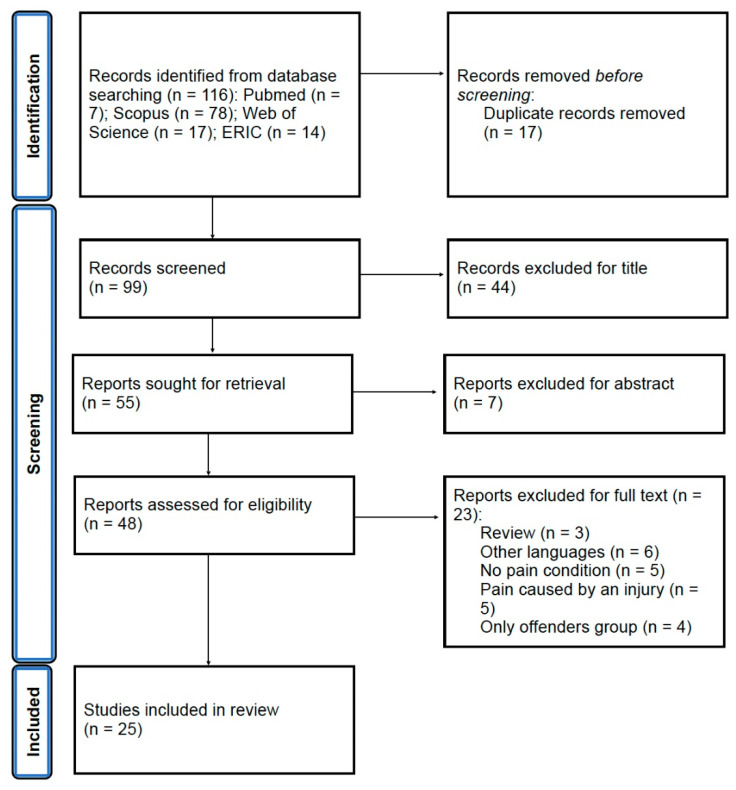
- Scoping review following PRISMA-ScR and PECOS; searched PubMed, Scopus, Web of Science, and ERIC from March to June 2023, with manual reference review and no period restrictions but English/Italian language restriction.
- Included human observational studies (cohort, case-control, cross-sectional) of any age with/without lifetime abuse history, inclusive definitions of abuse and chronic pain; excluded studies without control group, without risk factors, non-English/Italian, and reviews/meta-analyses/commentaries etc.
- Three-stage selection by independent reviewers; quality assessed with JBI checklists (thresholds: cross-sectional ≥5/8, cohort ≥6/11, case-control ≥6/10); 116 records identified, 25 studies included; data extracted into risk-factor tables and synthesized narratively by bio-psycho-social categories.
Limitations
- Stated: as a scoping review, other information sources were excluded and grey literature was not sufficiently analyzed; non-English/Italian exclusion omitted six potentially relevant articles; inclusion of only observational designs may reduce generalizability; included studies were insufficient to fully clarify the research question.
- Stated: future directions require more studies and a systematic review.
- Evident from text: definitions of chronic pain and abuse varied across studies and an inclusive approach was adopted, which may limit comparability; the review reports trends rather than cause–effect associations.
Model-written summary. Check it against the paper before relying on it.
Integrity signals
Registry
Cites
Statistics
Figures
Verification
Claims the paper makes
7 Valid · 0 Not valid · 29 Not checked · 60 Own results and interpretations
The cited sources support only part of this claim — read each source’s verdict below.
In the paper
“The primary outcome is the onset of chronic pain [10], understood as the type of pain or discomfort in the involved area that tends to persist for at least 3 of the past 6 months.”
§ The Risk Factors of Chronic Pain in Victims of Violence: A Scoping Review > 1. Introduction
What the sources say
- Partly supportedcites [10] Uvelli A. Ribaudo C. Gualtieri G. Coluccia A. Ferretti F. The association between violence against women and chronic pain: A systematic review and meta-analysis Res. Sq. 2023 under review 10.21203/rs.3.rs-2981092/v1 PMC11149284 38834977 sourceExperimental — accuracy not yet measured
The definitional clause matches our copy almost verbatim: in 'Criteria for Selection of Studies' the review defines chronic pain as 'whatever typology of pain or discomfort in the involved area which tends to persist for at least 3 of the past 6 months', and chronic pain is the Outcome of its PECOS protocol (Materials & methods), with the Abstract/Results reporting that women with violence experience 'showed increased odds of developing chronic pain' (OR 2.08). What the source does NOT support is the framing of chronic pain as 'the primary outcome' of violent experiences: the Abstract lists depression, PTSD, anxiety, alcoholism and suicidality as consequences alongside multiple pain conditions, and the Discussion explicitly refuses a directional/causal onset claim ('the cause-effect relationship between violence and pain hasn't yet been fully clarified; in some cases, violence is a risk factor, and in others is a consequence... at the moment it is only possible to show that the association... exists'). So the citation supports the definition and the association, but the citing sentence overstates the source by presenting chronic pain onset as the primary consequence. (LLM, conf=0.78)
plainstates a cause- Asserted: passes — The authors put it forward as true.
- Checkable: passes — It can be checked against evidence.
- Load-bearing: passes — The paper’s conclusions depend on it.
- Based: passes — The paper gives a reason why it holds.
- Partly supported
The cited sources support only part of this claim — read each source’s verdict below.
In the paper
“violence doubles the odds of chronic pain onset [10].”
§ The Risk Factors of Chronic Pain in Victims of Violence: A Scoping Review > 1. Introduction
What the sources say
- Partly supportedcites [10] Uvelli A. Ribaudo C. Gualtieri G. Coluccia A. Ferretti F. The association between violence against women and chronic pain: A systematic review and meta-analysis Res. Sq. 2023 under review 10.21203/rs.3.rs-2981092/v1 PMC11149284 38834977 sourceExperimental — accuracy not yet measured
The meta-analysis results report that women with a history of violence had about twice the odds of chronic pain compared with women without such a history (OR 2.08; 95% CI 1.80–2.41). However, the Discussion says the direction of the relationship is unclear and that the review establishes an association, not that violence precedes or causes chronic pain onset. (LLM, conf=0.86)
plainstates a cause- Asserted: passes — The authors put it forward as true.
- Checkable: passes — It can be checked against evidence.
- Load-bearing: unclear — It is unclear whether the paper’s conclusions depend on it.
- Based: passes — The paper gives a reason why it holds.
- Partly supported
The cited sources support only part of this claim — read each source’s verdict below.
In the paper
“Low self-esteem is more of a risk factor for IPV than chronic pain in victims [80]”
§ The Risk Factors of Chronic Pain in Victims of Violence: A Scoping Review > 4. Discussion > 4.1. The Most Common Conditions
What the sources say
- Partly supportedcites [80] Cherrier C. Courtois R. Rusch E. Potard C. Self-esteem, social problem solving and intimate partner violence victimization in emerging adulthood Behav. Sci. 2023 13 327 10.3390/bs13040327 37102841 PMC10135903 sourceExperimental — accuracy not yet measured
The Discussion (section 4.3; page unavailable) links low self-esteem with sexual IPV victimization, supporting part of the claim. The paper does not compare self-esteem with chronic pain as an IPV risk factor, and describes its findings as preliminary associations rather than establishing which factor poses greater risk. (LLM, conf=0.88)
plainstates a cause- Asserted: passes — The authors put it forward as true.
- Checkable: passes — It can be checked against evidence.
- Load-bearing: unclear — It is unclear whether the paper’s conclusions depend on it.
- Based: passes — The paper gives a reason why it holds.
- Partly supported
In the paper
“According to the bio-psycho-social model [43] and what was found in the selected studies, there are three specific categories of risk factors: biological, psychological, and sociological.”
§ The Risk Factors of Chronic Pain in Victims of Violence: A Scoping Review > 3. Results > 3.2. Risk Factors
What the sources say
- Not checked yetcites [43] Engel G.L. The need for a new medical model: A challenge for biomedicine Science 1977 196 129 136 10.1126/science.847460 847460 source
plain- Asserted: passes — The authors put it forward as true.
- Checkable: passes — It can be checked against evidence.
- Load-bearing: passes — The paper’s conclusions depend on it.
- Based: passes — The paper gives a reason why it holds.
A result the paper reports from its own data — it cites no other source for it, so there is none to check. The quote shows it is in the paper.
In the paper
“each of them includes both biological and psycho-social aspects.”
§ The Risk Factors of Chronic Pain in Victims of Violence: A Scoping Review > 3. Results > 3.3. The Impact of Risk Factors in the Studies
plain- Asserted: passes — The authors put it forward as true.
- Checkable: passes — It can be checked against evidence.
- Load-bearing: unclear — It is unclear whether the paper’s conclusions depend on it.
- Based: passes — The paper gives a reason why it holds.
17 more claims
Create a free account to see all 96 claims and to verify the 64 references still open.
- It may state two separate claims as one. 57
- Probably not a substantial claim. 30
- The quote only partly states this claim. 1
Self-check
Percentages, sums and reported differences re-computed from the paper’s own numbers.
Each contradiction between two passages listed here was confirmed by an independent check.
Rated minor: it would not touch a result — a value no result rests on, a p-value that stays on the same side of the significance level, or a conflict that is clerical, resolved elsewhere in the paper, or outside its own findings.
In the paper
§ The Risk Factors of Chronic Pain in Victims of Violence: A Scoping Review > 3. Results > 3.3. The Impact of Risk Factors in the Studies
“each of them includes both biological and psycho-social aspects.”
§ The Risk Factors of Chronic Pain in Victims of Violence: A Scoping Review > 3. Results > 3.3. The Impact of Risk Factors in the Studies
“All 25 studies involve psycho-social conditions, and 14 also involve biological conditions.”
Citations
Cites
The PRISMA 2020 statement: An updated guideline for reporting systematic reviews
Page, M. J., McKenzie, J. E., Bossuyt, P. M., Boutron, I., Hoffmann, T. C., Mulrow, C. D., Shamseer, L., Tetzlaff, J. M., Akl, E. A., Brennan, S. E., et al. (2021) · BMJ · doi:10.1136/bmj.n71 · Cited by 108,283
PRISMA Extension for Scoping Reviews (PRISMA-ScR): Checklist and Explanation
Tricco, A. C., Lillie, E., Zarin, W., O'Brien, K. K., Colquhoun, H., Levac, D., Moher, D., Peters, M. D. J., Horsley, T., Weeks, L., et al. (2018) · Annals of Internal Medicine · doi:10.7326/m18-0850 · Cited by 43,565 · cited 1×
“This search protocol was based on the Preferred Reporting Items for Systematic Reviews and Meta-Analysis extension for Scoping Reviews (PRISMA-ScR) guidelines [44], according to the PECOS (Population, Exposure, Comparison, Outcome, Study Design) guidelines.”
MethodThe Need for a New Medical Model: A Challenge for Biomedicine
Engel, G. L. (1977) · Science · doi:10.1126/science.847460 · Cited by 12,887
Child abuse: Adolescent records vs. adult recall
Femina, D. D., Yeager, C. A., & Lewis, D. O. (1990) · Child Abuse & Neglect · doi:10.1016/0145-2134(90)90033-p · Cited by 8,820
Health consequences of intimate partner violence
Campbell, J. C. (2002) · The Lancet · doi:10.1016/s0140-6736(02)08336-8 · Cited by 4,055 · cited 1×
“It is reported by 48% [11] to 84% [12] of abused women.”
BackgroundBurden and consequences of child maltreatment in high-income countries
Gilbert, R., Widom, C. S., Browne, K., Fergusson, D., Webb, E., & Janson, S. (2009) · The Lancet · doi:10.1016/s0140-6736(08)61706-7 · Cited by 3,876 · cited 2×
“Sexual abuse is experienced by 15–30% of girls and 5–15% of boys [4], and IPV is experienced by 35% of women [5].”
BackgroundPhysical health consequences of physical and psychological intimate partner violence
Coker, A. L. (2000) · Archives of Family Medicine · doi:10.1001/archfami.9.5.451 · Cited by 1,166 · cited 1×
“John and colleagues [92] and Letourneau and colleagues [93] found an association between violence and dysmenorrhea/irregular menstrual cycles, in particular for sexual or physical violence [94], that increases the risk of the onset of pelvic pain [95], but the reasons of this association need further investigations.”
BackgroundDanese, A., Moffitt, T. E., Harrington, H., Milne, B. J., Polanczyk, G., Pariante, C. M., Poulton, R., & Caspi, A. (2009) · Archives of Pediatrics & Adolescent Medicine · doi:10.1001/archpediatrics.2009.214 · Cited by 1,165
Phantom limbs and the concept of a neuromatrix
Melzack, R. (1990) · Trends in Neurosciences · doi:10.1016/0166-2236(90)90179-e · Cited by 808
McCauley, J., Kern, D. E., Kolodner, K., Dill, L., Schroeder, A. F., DeChant, H. K., Ryden, J., Bass, E. B., & Derogatis, L. R. (1995) · Annals of Internal Medicine · doi:10.7326/0003-4819-123-10-199511150-00001 · Cited by 741
Nociception, pain, negative moods, and behavior selection
Baliki, M. N., & Apkarian, A. V. (2015) · Neuron · doi:10.1016/j.neuron.2015.06.005 · Cited by 731
The syntax of immune-neuroendocrine communication
Blalock, J. E. (1994) · Immunology Today · doi:10.1016/0167-5699(94)90205-4 · Cited by 717 · cited 1×
“The nervous system plays a role by detecting threats, signaling dangers, and starting a response to them, the endocrine system causes an arousal response to increase the survival odds thanks to the stress response, and the immune system detects microbial invasion and toxins and initiates complex inflammatory responses…”
BackgroundVon Korff, M., Crane, P., Lane, M., Miglioretti, D. L., Simon, G., Saunders, K., Stang, P., Brandenburg, N., & Kessler, R. (2005) · Pain · doi:10.1016/j.pain.2004.11.010 · Cited by 612
Demyttenaere, K., Bruffaerts, R., Lee, S., Posada-Villa, J., Kovess, V., Angermeyer, M. C., Levinson, D., de Girolamo, G., Nakane, H., Mneimneh, Z., et al. (2007) · Pain · doi:10.1016/j.pain.2007.01.022 · Cited by 608
The association between chronic pain and obesity
Okifuji, A., & Hare, B. (2015) · Journal of Pain Research · doi:10.2147/jpr.s55598 · Cited by 597 · cited 1×
“The pathway through which the severity of abuse leads to obesity is similar to the mechanism by which obesity and chronic pain exacerbate each other [85].”
BackgroundChronic back pain and major depression in the general Canadian population
Currie, S. R., & Wang, J. (2004) · Pain · doi:10.1016/j.pain.2003.09.015 · Cited by 573 · cited 1×
“5 times more likely to experience an episode of depression at 6- and 12-month follow-ups than individuals without chronic pain [27,28], and pain-free individuals with depressive disorder were 4 times more likely to develop chronic pain at 6- and 12 months follow-ups than not depressed individuals [29,30].”
BackgroundPain matrices and neuropathic pain matrices: A review
Garcia-Larrea, L., & Peyron, R. (2013) · Pain · doi:10.1016/j.pain.2013.09.001 · Cited by 566
Pain and Stress in a Systems Perspective: Reciprocal Neural, Endocrine, and Immune Interactions
Chapman, C. R., Tuckett, R. P., & Song, C. W. (2008) · The Journal of Pain · doi:10.1016/j.jpain.2007.09.006 · Cited by 541 · cited 2×
“Chronic pain, as opposed to acute pain, would seem to have little to do with injuries, even if it is still associated with biological processes; in fact, an interaction of sensory, autonomic, endocrine, and immune responses contribute to the nociceptive stimuli perceived [39].”
BackgroundChartier, M. J., Walker, J. R., & Naimark, B. (2010) · Child Abuse & Neglect · doi:10.1016/j.chiabu.2009.09.020 · Cited by 519 · cited 3×
“Authors Sample Study Design Pain Risk Factors Ali et al. (2021) Pakistan [69] 945 F 15–49 y/o Cross-sectional Pelvic pain • Life events (1): IPV • Personal (1): painful intercourse • Hormonal (1): dysmenorrhea • Genitourinary (7): urinary tract infections, genital infections, urinary leakage, genital vescicles/ulcers,…”
BackgroundInfluentialTurner, A. I., Smyth, N., Hall, S. J., Torres, S. J., Hussein, M., Jayasinghe, S. U., Ball, K., & Clow, A. J. (2020) · Psychoneuroendocrinology · doi:10.1016/j.psyneuen.2020.104599 · Cited by 503 · cited 1×
“There could be a link between mental distress and cardiovascular conditions; in fact, hypertension and heart palpitations are both influenced by high stress levels [76,77].”
BackgroundChecking reference lists to find additional studies for systematic reviews
Horsley, T., Dingwall, O., & Sampson, M. (2011) · Cochrane Database of Systematic Reviews · doi:10.1002/14651858.mr000026.pub2 · Cited by 443
Cardiovascular reactivity to stress predicts future blood pressure status
Matthews, K. A., Woodall, K. L., & Allen, M. T. (1993) · Hypertension · doi:10.1161/01.hyp.22.4.479 · Cited by 402 · cited 1×
“There could be a link between mental distress and cardiovascular conditions; in fact, hypertension and heart palpitations are both influenced by high stress levels [76,77].”
BackgroundComorbidity of Fibromyalgia and Psychiatric Disorders
Arnold, L. M., Hudson, J. I., Keck, P. E., Auchenbach, M. B., Javaras, K. N., & Hess, E. V. (2006) · The Journal of Clinical Psychiatry · doi:10.4088/jcp.v67n0807 · Cited by 382
Depression as a risk factor for onset of an episode of troublesome neck and low back pain
Carroll, L. J., Cassidy, D. J., & Côté, P. (2004) · Pain · doi:10.1016/j.pain.2003.10.009 · Cited by 373 · cited 1×
“5 times more likely to experience an episode of depression at 6- and 12-month follow-ups than individuals without chronic pain [27,28], and pain-free individuals with depressive disorder were 4 times more likely to develop chronic pain at 6- and 12 months follow-ups than not depressed individuals [29,30].”
BackgroundHeise (2005) · doi:10.1126/science.1121400 · Cited by 352
Health Outcomes in Women with Physical and Sexual Intimate Partner Violence Exposure
Bonomi, A. E., Anderson, M. L., Rivara, F. P., & Thompson, R. S. (2007) · Journal of Women's Health · doi:10.1089/jwh.2006.0239 · Cited by 298 · cited 6×
“Authors Sample Study Design Pain Risk Factors FitzPatrick et al. (2022) Australia [72] 1507 F 31 y/o Cohort Pelvic pain • Life events (1): IPV • Mental health (2): anxiety and depression disorders • Personal (2): age of first sexual intercourse and painful intercourse • Genitourinary (1): urinary leakage • Weight: obe…”
BackgroundInfluentialLopresti, A. L., & Drummond, P. D. (2013) · Progress in Neuro-Psychopharmacology and Biological Psychiatry · doi:10.1016/j.pnpbp.2013.05.005 · Cited by 231 · cited 1×
“Clear evidence has shown a link between IPV and obesity [81,82], and PTSD and depression have a crucial mediating role in this [83,84].”
BackgroundIntimate Partner Violence in China: National Prevalence, Risk Factors and Associated Health Problems
Parish, W. L., Pan, S., Luo, Y., Wang, T., & Laumann, E. O. (2004) · International Family Planning Perspectives · doi:10.1363/3017404 · Cited by 225
Stress and asthma: Novel insights on genetic, epigenetic, and immunologic mechanisms
Rosenberg, S. L., Miller, G. E., Brehm, J. M., & Celedón, J. C. (2014) · Journal of Allergy and Clinical Immunology · doi:10.1016/j.jaci.2014.07.005 · Cited by 183 · cited 1×
“Previous studies found that several factors contribute to the risk of developing asthma, including obesity, female sex, high levels of family stress, and IPV [86–88], and experimental studies have yielded novel insight into the potential pathways underlying the connection between these conditions and chronic pain, suc…”
BackgroundMore data on major depression as an antecedent risk factor for first onset of chronic back pain
CURRIE, S. R., & WANG, J. (2005) · Psychological Medicine · doi:10.1017/s0033291705004952 · Cited by 176 · cited 1×
“5 times more likely to experience an episode of depression at 6- and 12-month follow-ups than individuals without chronic pain [27,28], and pain-free individuals with depressive disorder were 4 times more likely to develop chronic pain at 6- and 12 months follow-ups than not depressed individuals [29,30].”
BackgroundChronic Pain in Women Survivors of Intimate Partner Violence
Wuest, J., Merritt-Gray, M., Ford-Gilboe, M., Lent, B., Varcoe, C., & Campbell, J. C. (2008) · The Journal of Pain · doi:10.1016/j.jpain.2008.06.009 · Cited by 175 · cited 1×
“The most common diagnosis of victimized are pelvic pain [13], fibromyalgia [14], irritable bowel syndrome/bowel symptoms [15], abdominal pain [16], migraine/headache [17], back pain [18], chest pain [19], and neck pain [20], which tend to become chronic as well as the pain derived from them.”
BackgroundSachs-Ericsson, N., Blazer, D., Plant, E. A., & Arnow, B. (2005) · Health Psychology · doi:10.1037/0278-6133.24.1.32 · Cited by 169
More than military sexual trauma: Interpersonal violence, PTSD, and mental health in women veterans
Kelly, U. A., Skelton, K., Patel, M., & Bradley, B. (2011) · Research in Nursing & Health · doi:10.1002/nur.20453 · Cited by 158
Beyond bruises and broken bones: The joint effects of stress and injuries on battered women’s health
Sutherland, C. A., Bybee, D. I., & Sullivan, C. M. (2002) · American Journal of Community Psychology · doi:10.1023/a:1016317130710 · Cited by 154 · cited 1×
“It is reported by 48% [11] to 84% [12] of abused women.”
BackgroundPsychiatric comorbidities in a community sample of women with fibromyalgia
Raphael, K. G., Janal, M. N., Nayak, S., Schwartz, J. E., & Gallagher, R. M. (2006) · Pain · doi:10.1016/j.pain.2006.04.004 · Cited by 153
Search strategies to identify diagnostic accuracy studies in MEDLINE and EMBASE
Beynon, R., Leeflang, M. M. G., McDonald, S., Eisinga, A., Mitchell, R. L., Whiting, P., & Glanville, J. M. (2013) · Cochrane Database of Systematic Reviews · doi:10.1002/14651858.mr000022.pub3 · Cited by 145
The effect of intimate partner violence and other forms of violence against women on health
Vives-Cases, C., Ruiz-Cantero, M. T., Escriba-Aguir, V., & Miralles, J. J. (2011) · Journal of Public Health · doi:10.1093/pubmed/fdq101 · Cited by 140
Social stress and asthma: The role of corticosteroid insensitivity
Haczku, A., & Panettieri, R. A. (2010) · Journal of Allergy and Clinical Immunology · doi:10.1016/j.jaci.2009.11.005 · Cited by 128
Alonso-Morán, E., Orueta, J. F., Esteban, J. I. F., Axpe, J. M. A., González, M. L. M., Polanco, N. T., Loiola, P. E., Gaztambide, S., & Nuño-Solinis, R. (2014) · BMC Public Health · doi:10.1186/1471-2458-14-1059 · Cited by 110
Mental and Physical Comorbid Conditions and Days in Role Among Persons With Arthritis
Stang, P. E., Brandenburg, N. A., Lane, M. C., Merikangas, K. R., Von Korff, M. R., & Kessler, R. C. (2006) · Psychosomatic Medicine · doi:10.1097/01.psy.0000195821.25811.b4 · Cited by 108
Bosch, J., Weaver, T. L., Arnold, L. D., & Clark, E. M. (2017) · Journal of Interpersonal Violence · doi:10.1177/0886260515599162 · Cited by 105 · cited 1×
“Clear evidence has shown a link between IPV and obesity [81,82], and PTSD and depression have a crucial mediating role in this [83,84].”
BackgroundDomestic violence is associated with adult and childhood asthma prevalence in India
Subramanian, S., Ackerson, L. K., Subramanyam, M. A., & Wright, R. J. (2007) · International Journal of Epidemiology · doi:10.1093/ije/dym007 · Cited by 102
Gynecologic health consequences to victims of interpersonal violence
Letourneau, E. J., Holmes, M., & Chasedunn-Roark, J. (1999) · Women's Health Issues · doi:10.1016/s1049-3867(98)00031-0 · Cited by 90 · cited 1×
“John and colleagues [92] and Letourneau and colleagues [93] found an association between violence and dysmenorrhea/irregular menstrual cycles, in particular for sexual or physical violence [94], that increases the risk of the onset of pelvic pain [95], but the reasons of this association need further investigations.”
BackgroundLiving Victims of Strangulation: A 10-Year Review of Cases in a Metropolitan Community
Shields, L. B. E., Corey, T. S., Weakley-Jones, B., & Stewart, D. (2010) · American Journal of Forensic Medicine & Pathology · doi:10.1097/paf.0b013e3181d3dc02 · Cited by 89 · cited 1×
“The most common diagnosis of victimized are pelvic pain [13], fibromyalgia [14], irritable bowel syndrome/bowel symptoms [15], abdominal pain [16], migraine/headache [17], back pain [18], chest pain [19], and neck pain [20], which tend to become chronic as well as the pain derived from them.”
BackgroundAxis I and Axis II psychiatric disorders in patients with fibromyalgia
Uguz, F., Çiçek, E., Salli, A., Karahan, A. Y., Albayrak, İ., Kaya, N., & Uğurlu, H. (2010) · General Hospital Psychiatry · doi:10.1016/j.genhosppsych.2009.07.002 · Cited by 82
As-Sanie, S., Clevenger, L. A., Geisser, M. E., Williams, D. A., & Roth, R. S. (2014) · American Journal of Obstetrics and Gynecology · doi:10.1016/j.ajog.2013.12.048 · Cited by 79
Ringel, Y., Whitehead, W. E., Toner, B. B., Diamant, N. E., Hu, Y., Jia, H., Bangdiwala, S. I., & Drossman, D. A. (2004) · Gut · doi:10.1136/gut.2003.021725 · Cited by 72 · cited 1×
“The most common diagnosis of victimized are pelvic pain [13], fibromyalgia [14], irritable bowel syndrome/bowel symptoms [15], abdominal pain [16], migraine/headache [17], back pain [18], chest pain [19], and neck pain [20], which tend to become chronic as well as the pain derived from them.”
BackgroundDomestic violence: Prevalence and association with gynaecological symptoms
John, R., Johnson, J. K., Kukreja, S., Found, M., & Lindow, S. W. (2004) · BJOG: An International Journal of Obstetrics & Gynaecology · doi:10.1111/j.1471-0528.2004.00290.x · Cited by 69 · cited 1×
“John and colleagues [92] and Letourneau and colleagues [93] found an association between violence and dysmenorrhea/irregular menstrual cycles, in particular for sexual or physical violence [94], that increases the risk of the onset of pelvic pain [95], but the reasons of this association need further investigations.”
BackgroundFactors associated with the onset of an episode of depressive symptoms in the general population
Carroll, L. J., Cassidy, J. D., & Côté, P. (2003) · Journal of Clinical Epidemiology · doi:10.1016/s0895-4356(03)00118-5 · Cited by 62 · cited 1×
“5 times more likely to experience an episode of depression at 6- and 12-month follow-ups than individuals without chronic pain [27,28], and pain-free individuals with depressive disorder were 4 times more likely to develop chronic pain at 6- and 12 months follow-ups than not depressed individuals [29,30].”
BackgroundChild maltreatment and adult multimorbidity: results from the Canadian Community Health Survey
England-Mason, G., Casey, R., Ferro, M. A., MacMillan, H. L., Tonmyr, L., & González, A. (2018) · Canadian Journal of Public Health · doi:10.17269/s41997-018-0069-y · Cited by 59
The trajectory from mood to obesity
Wurtman, J., & Wurtman, R. (2018) · Current Obesity Reports · doi:10.1007/s13679-017-0291-6 · Cited by 56
Suicidality in Chronic Pain: Predictors of Suicidal Ideation in Fibromyalgia
Triñanes, Y., González‐Villar, A., Gómez‐Perretta, C., & Carrillo‐de‐la‐Peña, M. T. (2015) · Pain Practice · doi:10.1111/papr.12186 · Cited by 54 · cited 2×
“Furthermore, suicidal thoughts are present in 28–48% of the cases [37,38], and violence doubles the odds of chronic pain onset [10].”
BackgroundResultIntimate partner violence and the risk of developing fibromyalgia and chronic fatigue syndrome
Chandan, J. S., Thomas, T., Raza, K., Bradbury-Jones, C., Taylor, J., Bandyopadhyay, S., & Nirantharakumar, K. (2021) · Journal of Interpersonal Violence · doi:10.1177/0886260519888515 · Cited by 53 · cited 1×
“The most common diagnosis of victimized are pelvic pain [13], fibromyalgia [14], irritable bowel syndrome/bowel symptoms [15], abdominal pain [16], migraine/headache [17], back pain [18], chest pain [19], and neck pain [20], which tend to become chronic as well as the pain derived from them.”
BackgroundPsychological consequences and daily life adjustment for victims of intimate partner violence
Cirici Amell, R., Soler, A. R., Cobo, J., & Soldevilla Alberti, J. M. (2023) · The International Journal of Psychiatry in Medicine · doi:10.1177/00912174211050504 · Cited by 46 · cited 1×
“Evidence suggests that these experiences have long-term consequences on adult physical and psychological health [8,9].”
BackgroundCheatle, M. D. (2014) · Pain Physician · doi:10.36076/ppj.2014/17/e359 · Cited by 45
Hassam, T., Kelso, E., Chowdary, P., Yisma, E., Mol, B. W., & Han, A. (2020) · European Journal of Obstetrics & Gynecology and Reproductive Biology · doi:10.1016/j.ejogrb.2020.10.038 · Cited by 45 · cited 1×
“These could be caused by sexual violence, inducing chronic pelvic pain [75].”
BackgroundAssociation Between Intimate Partner Violence, Migraine and Probable Migraine
Cripe, S. M., Sanchez, S. E., Gelaye, B., Sanchez, E., & Williams, M. A. (2011) · Headache: The Journal of Head and Face Pain · doi:10.1111/j.1526-4610.2010.01777.x · Cited by 43 · cited 1×
“The most common diagnosis of victimized are pelvic pain [13], fibromyalgia [14], irritable bowel syndrome/bowel symptoms [15], abdominal pain [16], migraine/headache [17], back pain [18], chest pain [19], and neck pain [20], which tend to become chronic as well as the pain derived from them.”
BackgroundMental Defeat and Suicidality in Chronic Pain: A Prospective Analysis
Themelis, K., Gillett, J. L., Karadag, P., Cheatle, M. D., Giordano, N. A., Balasubramanian, S., Singh, S. P., & Tang, N. K. (2023) · The Journal of Pain · doi:10.1016/j.jpain.2023.06.017 · Cited by 42 · cited 1×
“Also, suicidal thoughts are influenced by stress [79], and their prevalence is in line with studies that showed a bidirectional relationship with chronic pain [37,38].”
ResultFitzPatrick, K. M., Brown, S., Hegarty, K., Mensah, F., & Gartland, D. (2022) · Journal of Interpersonal Violence · doi:10.1177/0886260520934426 · Cited by 41 · cited 5×
“Authors Sample Study Design Pain Risk Factors FitzPatrick et al. (2022) Australia [72] 1507 F 31 y/o Cohort Pelvic pain • Life events (1): IPV • Mental health (2): anxiety and depression disorders • Personal (2): age of first sexual intercourse and painful intercourse • Genitourinary (1): urinary leakage • Weight: obe…”
BackgroundInfluentialPrevalence of fibromyalgia and co-morbid bipolar disorder: A systematic review and meta-analysis
Kudlow, P. A., Rosenblat, J. D., Weissman, C. R., Cha, D. S., Kakar, R., McIntyre, R. S., & Sharma, V. (2015) · Journal of Affective Disorders · doi:10.1016/j.jad.2015.08.030 · Cited by 40
Bussières, A., Hartvigsen, J., Ferreira, M. L., Ferreira, P. H., Hancock, M. J., Stone, L. S., Wideman, T. H., Boruff, J., & Elklit, A. (2020) · Systematic Reviews · doi:10.1186/s13643-020-01474-8 · Cited by 40 · cited 2×
“This evidence is in line with studies that showed a relationship between violence and chronic pain [9,10], and some mental health diagnoses and chronic pain [24–33].”
BackgroundResultGelaye, B., Do, N., Avila, S., Vélez, J. C., Zhong, Q., Sánchez, S. E., Peterlin, B. L., & Williams, M. A. (2016) · Headache The Journal of Head and Face Pain · doi:10.1111/head.12855 · Cited by 39
Hegarty, K., Gunn, J., Chondros, P., & Taft, A. (2008) · British Journal of General Practice · doi:10.3399/bjgp08x299245 · Cited by 34 · cited 5×
“Authors Sample Study Design Pain Risk Factors FitzPatrick et al. (2022) Australia [72] 1507 F 31 y/o Cohort Pelvic pain • Life events (1): IPV • Mental health (2): anxiety and depression disorders • Personal (2): age of first sexual intercourse and painful intercourse • Genitourinary (1): urinary leakage • Weight: obe…”
BackgroundInfluentialUvelli, A., Ribaudo, C., Gualtieri, G., Coluccia, A., & Ferretti, F. (2024) · BMC Women's Health · doi:10.1186/s12905-024-03097-w · Cited by 31
Self-citationWilliams, C. M., Larsen, U., & McCloskey, L. A. (2010) · Violence and Victims · doi:10.1891/0886-6708.25.6.787 · Cited by 29 · cited 6×
“Authors Sample Study Design Pain Risk Factors FitzPatrick et al. (2022) Australia [72] 1507 F 31 y/o Cohort Pelvic pain • Life events (1): IPV • Mental health (2): anxiety and depression disorders • Personal (2): age of first sexual intercourse and painful intercourse • Genitourinary (1): urinary leakage • Weight: obe…”
BackgroundInfluentialLee, N., Massetti, G. M., Perry, E. W., & Self-Brown, S. (2022) · Journal of Interpersonal Violence · doi:10.1177/08862605211056726 · Cited by 27 · cited 1×
“Violence causes increased stress [78], which causes hypertension and heart palpitations that predispose to chronic chest pain [19].”
BackgroundCherrier, C., Courtois, R., Rusch, E., & Potard, C. (2023) · Behavioral Sciences · doi:10.3390/bs13040327 · Cited by 27
Obesity in women who have experienced intimate partner violence
Alhalal, E. (2018) · Journal of Advanced Nursing · doi:10.1111/jan.13797 · Cited by 24 · cited 1×
“Clear evidence has shown a link between IPV and obesity [81,82], and PTSD and depression have a crucial mediating role in this [83,84].”
BackgroundGuček, N. K., & Selič, P. (2018) · International Journal of Environmental Research and Public Health · doi:10.3390/ijerph15020210 · Cited by 23
Posttraumatic Stress Disorder and Intimate Partner Violence in a Women's Headache Center
Gerber, M. R., Fried, L. E., Pineles, S. L., Shipherd, J. C., & Bernstein, C. A. (2012) · Women & Health · doi:10.1080/03630242.2012.684088 · Cited by 22 · cited 6×
“Authors Sample Study Design Pain Risk Factors FitzPatrick et al. (2022) Australia [72] 1507 F 31 y/o Cohort Pelvic pain • Life events (1): IPV • Mental health (2): anxiety and depression disorders • Personal (2): age of first sexual intercourse and painful intercourse • Genitourinary (1): urinary leakage • Weight: obe…”
BackgroundInfluentialMoreno-Ramos, O. A., Lattig, M. C., & González Barrios, A. F. (2013) · Theoretical Biology and Medical Modelling · doi:10.1186/1742-4682-10-59 · Cited by 22
Health consequences of domestic violence against women in Serbia
Mijatović-Jovanović, V., Čanković, S., Milijašević, D., Ukropina, S., Jovanovic, M., & Čanković, D. (2018) · Vojnosanitetski pregled · doi:10.2298/vsp171130054m · Cited by 22 · cited 3×
“Authors Sample Study Design Pain Risk Factors Hegarty et al. (2008) Australia [51] 942 F 16–50 y/o Cross-sectional General chronic pain • Life events (1): IPV • Mental health (3): depression, anxiety, and sleeping disorders • Personal (1): tiredness • Life quality (1): suicidal thoughts • Genitourinary (1): urinary le…”
BackgroundInfluentialSutherland, M. A., Fantasia, H. C., & McClain, N. C. (2011) · Journal of Emergency Nursing · doi:10.1016/j.jen.2011.09.011 · Cited by 20
Young, R. A., Benold, T., Whitham, J., & Burge, S. K. (2011) · The Journal of the American Board of Family Medicine · doi:10.3122/jabfm.2011.05.100298 · Cited by 20 · cited 6×
“Authors Sample Study Design Pain Risk Factors FitzPatrick et al. (2022) Australia [72] 1507 F 31 y/o Cohort Pelvic pain • Life events (1): IPV • Mental health (2): anxiety and depression disorders • Personal (2): age of first sexual intercourse and painful intercourse • Genitourinary (1): urinary leakage • Weight: obe…”
BackgroundInfluentialNakagawa, Y., & Yamada, S. (2023) · The Journal of Pharmacology and Experimental Therapeutics · doi:10.1124/jpet.122.001482 · Cited by 20 · cited 1×
“Skin problems, such as dermatitis, eczema, and rash, are related to stress levels, which worsen them [91].”
BackgroundSexual, physical, verbal/emotional abuse and unexplained chest pain
Eslick, G. D., Koloski, N. A., & Talley, N. J. (2011) · Child Abuse & Neglect · doi:10.1016/j.chiabu.2011.04.007 · Cited by 19 · cited 5×
“Authors Sample Study Design Pain Risk Factors FitzPatrick et al. (2022) Australia [72] 1507 F 31 y/o Cohort Pelvic pain • Life events (1): IPV • Mental health (2): anxiety and depression disorders • Personal (2): age of first sexual intercourse and painful intercourse • Genitourinary (1): urinary leakage • Weight: obe…”
BackgroundInfluentialDomestic violence among Omani women: prevalence, risk factors and help-seeking behaviour
Kendi, A. A. A., Shidhan, N. A., & Kiyumi, M. H. A. (2021) · Eastern Mediterranean Health Journal · doi:10.26719/2021.27.3.242 · Cited by 18
Bo, M., Canavese, A., Magnano, L., Rondana, A., Castagna, P., & Gino, S. (2020) · Journal of Forensic and Legal Medicine · doi:10.1016/j.jflm.2020.102071 · Cited by 17 · cited 1×
“The most common diagnosis of victimized are pelvic pain [13], fibromyalgia [14], irritable bowel syndrome/bowel symptoms [15], abdominal pain [16], migraine/headache [17], back pain [18], chest pain [19], and neck pain [20], which tend to become chronic as well as the pain derived from them.”
BackgroundHalpern, L. R., Shealer, M. L., Cho, R., McMichael, E. B., Rogers, J., Ferguson‐Young, D. C., Mouton, C. P., Tabatabai, M., Southerland, J. H., & Gangula, P. R. (2017) · Journal of the National Medical Association · doi:10.1016/j.jnma.2017.08.001 · Cited by 16 · cited 6×
“Authors Sample Study Design Pain Risk Factors FitzPatrick et al. (2022) Australia [72] 1507 F 31 y/o Cohort Pelvic pain • Life events (1): IPV • Mental health (2): anxiety and depression disorders • Personal (2): age of first sexual intercourse and painful intercourse • Genitourinary (1): urinary leakage • Weight: obe…”
BackgroundInfluentialVictimization, Healthcare Use and Health Maintenance 1
Kendall-Tackett, K. A., & Ness, K. (2000) · Cited by 15
GÜNDÜZ, N., ERZİNCAN, E., & POLAT, A. (2019) · Archives of Rheumatology · doi:10.5606/archrheumatol.2019.7090 · Cited by 15 · cited 3×
“(2019) Turkey [67] 136 F 40 y/o Case-control Fibromyalgia • Life events (2): IPV and parental psychopathology • Mental health (4): history of psychiatric disorder, PTSD, mood, and anxiety disorders • Substances (2): smoking and alcohol”
BackgroundInfluentialInterpersonal violence and painful bladder symptoms in community-dwelling midlife to older women
Raphael, E., Eeden, S. K. V. D., Gibson, C. J., Tonner, C., Thom, D. H., Subak, L. L., & Huang, A. J. (2021) · American Journal of Obstetrics and Gynecology · doi:10.1016/j.ajog.2021.09.017 · Cited by 15
Saito, A., Creedy, D., Cooke, M., & Chaboyer, W. (2013) · Health Care for Women International · doi:10.1080/07399332.2013.794459 · Cited by 14
Exposure to Intimate Partner Violence and Hypertension Outcomes among Young Women in South Africa
Wet, N. D., & Godongwana, M. (2021) · International Journal of Hypertension · doi:10.1155/2021/5519356 · Cited by 14
Zhao, Y., Liu, J., Zhao, Y., Thethi, T., Fonseca, V., & Shi, L. (2012) · Pain Practice · doi:10.1111/j.1533-2500.2011.00494.x · Cited by 10
Grossi, P. K., Bueno, C. H., Silva, M. Á. D. A., Pellizzer, E. P., & Grossi, M. L. (2018) · The International Journal of Prosthodontics · doi:10.11607/ijp.5828 · Cited by 10 · cited 3×
“Of the included studies, 44% are from the United States of America (USA) (11), 12% are from Australia (3), 8% are from Canada (2), and 36% are from other countries (Spain, Thailand, Brazil, Slovenia, Turkey, Serbia, Pakistan, Oman, South Africa).”
BackgroundInfluentialLa violencia de pareja en las pacientes que consultan por dolor torácico en urgencias
Coll‐Vinent, B., Martí, G., Calderón, S., Martínez, B., Céspedes, F., & Fuenzalida, C. (2018) · Medicina de Familia SEMERGEN · doi:10.1016/j.semerg.2018.04.008 · Cited by 8
Prevalence and Predictors of Intimate Partner Violence in a Military Urogynecology Clinic
Lutgendorf, M. A., Snipes, M. A., & O’Boyle, A. L. (2017) · Military Medicine · doi:10.7205/milmed-d-16-00196 · Cited by 7 · cited 6×
“Authors Sample Study Design Pain Risk Factors FitzPatrick et al. (2022) Australia [72] 1507 F 31 y/o Cohort Pelvic pain • Life events (1): IPV • Mental health (2): anxiety and depression disorders • Personal (2): age of first sexual intercourse and painful intercourse • Genitourinary (1): urinary leakage • Weight: obe…”
BackgroundInfluentialAli, T. S., Sami, N., Saeed, A. A., & Ali, P. A. (2020) · Nursing Open · doi:10.1002/nop2.660 · Cited by 6 · cited 3×
“Authors Sample Study Design Pain Risk Factors Ali et al. (2021) Pakistan [69] 945 F 15–49 y/o Cross-sectional Pelvic pain • Life events (1): IPV • Personal (1): painful intercourse • Hormonal (1): dysmenorrhea • Genitourinary (7): urinary tract infections, genital infections, urinary leakage, genital vescicles/ulcers,…”
BackgroundInfluentialKwon, M., & You, S. (2023) · Child Abuse & Neglect · doi:10.1016/j.chiabu.2023.106233 · Cited by 5 · cited 1×
“Child maltreatment is more likely to occur in families afflicted with domestic violence and is associated with re-victimization in adulthood [6,7].”
BackgroundUvelli, A., Ribaudo, C., Gualtieri, G., Coluccia, A., & Ferretti, F. (2023) · doi:10.21203/rs.3.rs-2981092/v1 · Cited by 2
Self-citation
Research works printed but not linked: 1
- Graham-Bermann S.A. Child abuse in the context of domestic violence The APSAC Handbook on Child Maltreatment Myers J.E.B. Berliner L. Briere J. Hendrix C.T. Jenny C. Reid T.A. Sage Publications Thousand Oakes, CA, USA 2002 Volume 1 119 130
Cited by
Uvelli, A., Ribaudo, C., Gualtieri, G., Coluccia, A., & Ferretti, F. (2024) · BMC Women's Health · doi:10.1186/s12905-024-03097-w · Cited by 31
“Unfortunately, the etiology of these conditions isn’t clear [89], despite longitudinal studies showing how pain persists even four years after separation from the abusive partner [90].”
BackgroundSelf-citationUvelli, A., Pugliese, E., Masti, A., Salvo, G., Duranti, C., Gualtieri, G., & Ferretti, F. (2024) · Brain Sciences · doi:10.3390/brainsci14100953 · Cited by 7
“A checklist, based on the scoping review by Uvelli et al. [27], was created to assess risk and protective factors (Table 1).”
BackgroundMethodSelf-citationRisk Factors for Chronic Pain in Women: The Role of Violence Exposure in a Case–Control Study
Uvelli, A., Pugliese, E., & Ferretti, F. (2025) · Life · doi:10.3390/life15060976 · Cited by 3
“Based on the scoping review by Uvelli et al. [31], a specific checklist was created and administered to assess risk factors of chronic pain.”
InfluentialSelf-citationSex and Gender Health Education Tenets
Prasad, J. L., Rojek, M. K., Gordon, S. C., Kaste, L. M., & Halpern, L. R. (2024) · Dental Clinics of North America · doi:10.1016/j.cden.2024.08.008 · Cited by 3
GÖNÜLTAŞ, B. M., Öztürk, M., Başcıllar, M., & Türk, A. (2025) · Journal of Forensic Psychology Research and Practice · doi:10.1080/24732850.2025.2576501 · Cited by 1
“Physically, they may experience sleep disorders (Belleville et al., 2019), chronic pain (Uvelli et al., 2023), and immune system problems (Ayaydin et al., 2016).”
Metadata
- Authors
- Uvelli, A., Duranti, C., Salvo, G., Coluccia, A., Gualtieri, G., & Ferretti, F.
- Affiliations
- University of Siena (IT)
- Azienda Ospedaliera Universitaria Senese (IT)
- Corresponding author
- Uvelli, Allison
- Venue
- Healthcare
- Publisher
- MDPI AG
- Published
- 2023-08-29
- Volume
- 11
- Issue
- 17
- Pages
- 2421
- ISSN
- 2227-9032 (ISSN-L)
- PMC
- PMC10486711
- OpenAlex
- W4386304526
- Cited by
- 10
- References
- 92
- Citations by year
- 2025: 7 · 2024: 3
- FWCI
- 0.50
- Type
- journal article
- Language
- en
- Open access
- gold
- doi.org
- Licence
- Locations
- Healthcare (publishedVersion, cc-by)
- PubMed Central (publishedVersion, cc-by)
- PubMed (publishedVersion)
- Use Siena air (University of Siena) (submittedVersion, cc-by)
- Funders
- University of Siena, Department of Medical Science, Surgery and Neurosciences, Italy
- Topics
- Social Sciences › Health › Intimate Partner and Family Violence
- Social Sciences › Psychology › Clinical Psychology › Child Abuse and Trauma
- Health Sciences › Health Professions › Physical Therapy, Sports Therapy and Rehabilitation › Musculoskeletal pain and rehabilitation
- Keywords
- chronic pain, victims of violence, risk factors, biopsychosocial model, physical violence, psychological trauma, women, children, long-term health effects
About these checks
Registry, retraction, Cites and statistics results are computed, not judged, with one exception: a printed reference that no index lists is read once by a model before it counts as a citation error. Claims are extracted by a model and kept only when their quote appears verbatim in the text; each cited source is then checked, with a model’s help, for whether it says what the claim relies on. Those verdicts can be wrong — read the claim’s quote and the cited source before relying on one.
The claim verdicts this report counts are experimental: their accuracy is not yet measured.
A language model drew the claims from the paper on 2026-10-05, under version 3 of the claim definition (model deepseek-v4.1-flash, prompt extract-v3).
A second model labelled each claim on 2026-10-05 (model jev-1.13-20260917, definition revision gold-guideline-v0.2).
Cited sources are checked with a language model’s help (qwen3.8-omni-flash and gpt-6-sol).
Statistics and arithmetic are recomputed, not judged.
Confidence bands are shown only for fields calibrated on our annotated test set. None is calibrated yet, so no band is shown.
What counts as a claim ›How we measure confidence ›How we check this ›
Are you an author, or do you see a problem with this page? Request a review
Data sources
Bibliographic data: Semantic Scholar, OpenAlex, Crossref.
Contains information from the Semantic Scholar Academic Graph Datasets, made available under the ODC Attribution License (ODC-BY 1.0).
Semantic Scholar’s data is described in: Kinney, R., et al. (2023). The Semantic Scholar Open Data Platform. arXiv:2301.10140.
