

The DOI matches its Crossref record; 189 of the 191 references it cites were found in a registry or an index.
The Evolving Role of CD8+CD28− Immunosenescent T Cells in Cancer Immunology
Open accessAbstract
Functional, tumor-specific CD8+ cytotoxic T lymphocytes drive the adaptive immune response to cancer. Thus, induction of their activity is the ultimate aim of all immunotherapies. Success of anti-tumor immunotherapy is precluded by marked immunosuppression in the tumor microenvironment (TME) leading to CD8+ effector T cell dysfunction. Among the many facets of CD8+ T cell dysfunction that have been recognized—tolerance, anergy, exhaustion, and senescence—CD8+ T cell senescence is incompletely understood. Naïve CD8+ T cells require three essential signals for activation, differentiation, and survival through T-cell receptor, costimulatory receptors, and cytokine receptors. Downregulation of costimulatory molecule CD28 is a hallmark of senescent T cells and increased CD8+CD28− senescent populations with heterogeneous roles have been observed in multiple solid and hematogenous tumors. T cell senescence can be induced by several factors including aging, telomere damage, tumor-associated stress, and regulatory T (Treg) cells. Tumor-induced T cell senescence is yet another mechanism that enables tumor cell resistance to immunotherapy. In this paper, we provide a comprehensive overview of CD8+CD28− senescent T cell population, their origin, their function in immunology and pathologic conditions, including TME and their implication for immunotherapy. Further characterization and investigation into this subset of CD8+ T cells could improve the efficacy of future anti-tumor immunotherapy.
Overview
The claims and statistics of this paper haven’t been checked yet.
Run the check — free, no account needed. It reads the open-access text and checks the sources it cites.
Integrity signals
Registry
Cites
Statistics
Figures
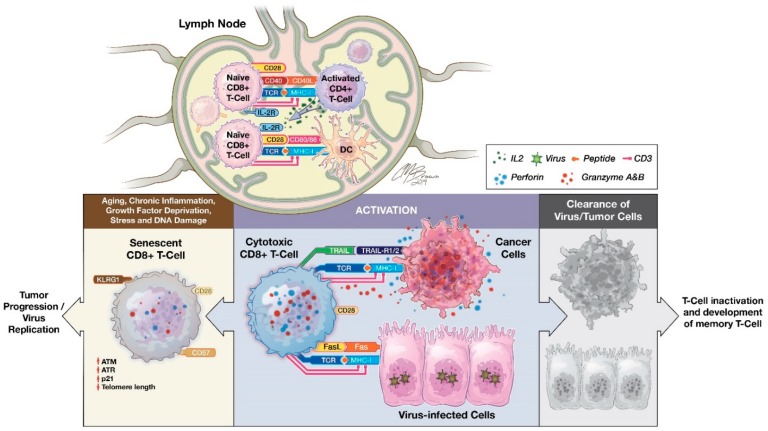
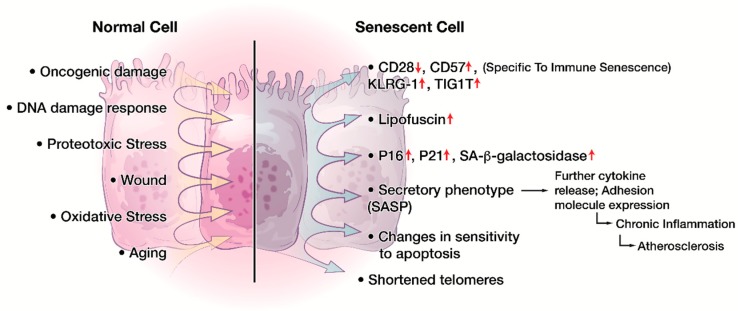
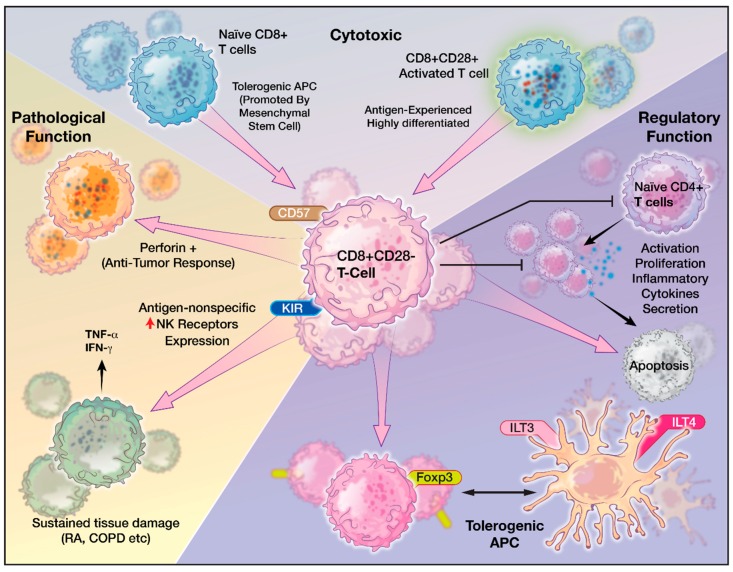
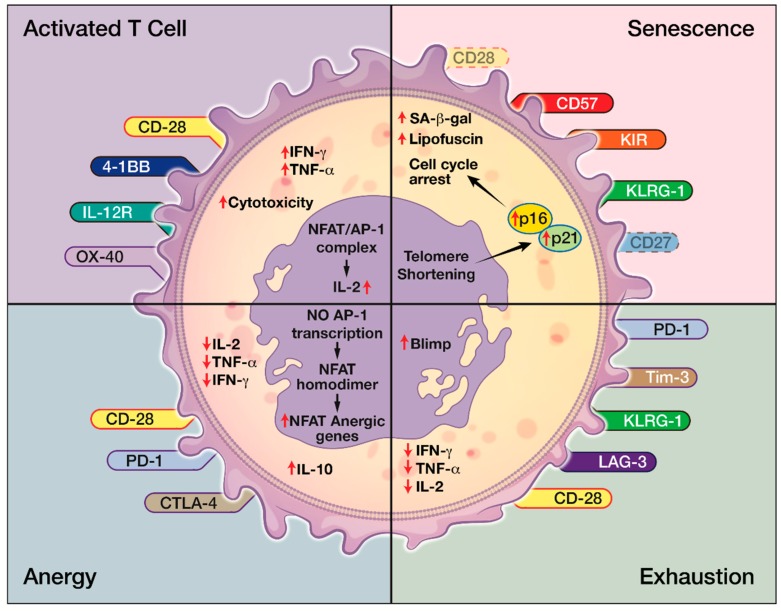
Verification
Claims the paper makes
The claims and statistics of this paper haven’t been checked yet.
Run the check — free, no account needed. It reads the open-access text and checks the sources it cites.
Claims other papers make about this one
Each is checked against this paper’s own text: does it say what the citing paper says it does?
In the citing paper
“Therefore, the T cell phenotype of CD27−CD28−CD57+KLRG-1+ is also an indicator of immunosenescence.”
From Immunosenescence: a key player in cancer development (2020) · cites this paper as [41]
Self-check
Percentages, sums and reported differences re-computed from the paper’s own numbers.
The self-check needs the paper’s full text.
Citations
Cites
PD-1 and PD-L1 Immune Checkpoint Blockade to Treat Breast Cancer
Hartkopf, A. D., Taran, F., Wallwiener, M., Walter, C. B., Krämer, B., Grischke, E., & Brucker, S. Y. (2016) · Breast Care · doi:10.1159/000453569 · Cited by 30,989
Improved Survival with Ipilimumab in Patients with Metastatic Melanoma
Hodi, F. S., O'Day, S. J., McDermott, D. F., Weber, R. W., Sosman, J. A., Haanen, J. B., Gonzalez, R., Robert, C., Schadendorf, D., Hassel, J. C., et al. (2010) · New England Journal of Medicine · doi:10.1056/nejmoa1003466 · Cited by 15,155
The blockade of immune checkpoints in cancer immunotherapy
Pardoll, D. M. (2012) · Nature Reviews Cancer · doi:10.1038/nrc3239 · Cited by 13,838
Safety, activity, and immune correlates of anti–PD-1 antibody in cancer
Topalian, S. L., Hodi, F. S., Brahmer, J. R., Gettinger, S. N., Smith, D. C., McDermott, D. F., Powderly, J. D., Carvajal, R. D., Sosman, J. A., Atkins, M. B., et al. (2012) · New England Journal of Medicine · doi:10.1056/nejmoa1200690 · Cited by 12,628
Safety and activity of anti-PD-L1 antibody in patients with advanced cancer
Brahmer, J. R., Tykodi, S. S., Chow, L. Q. M., Hwu, W.-J., Topalian, S. L., Hwu, P., Drake, C. G., Camacho, L. H., Kauh, J., Odunsi, K., et al. (2012) · New England Journal of Medicine · doi:10.1056/nejmoa1200694 · Cited by 7,945 · cited 1×
“For example, CD8+CD28− T ells directly inhibit Ag-presenting function of DCs by inducing inhibitory receptors, such as imm noglobulin like transcript 3 (ILT3) and ILT4, which leads DCs to be immune tolerant than immunogenic [12 ,126].”
BackgroundType, Density, and Location of Immune Cells Within Human Colorectal Tumors Predict Clinical Outcome
Galon, J., Costes, A., Sanchez-Cabo, F., Kirilovsky, A., Mlecnik, B., Lagorce-Pagès, C., Tosolini, M., Camus, M., Berger, A., Wind, P., et al. (2006) · Science · doi:10.1126/science.1129139 · Cited by 6,516
The future of immune checkpoint therapy
Sharma, P., & Allison, J. P. (2015) · Science · doi:10.1126/science.aaa8172 · Cited by 4,878
Neoantigens in cancer immunotherapy
Schumacher, T. N., & Schreiber, R. D. (2015) · Science · doi:10.1126/science.aaa4971 · Cited by 4,783
Molecular and cellular insights into T cell exhaustion
Wherry, E. J., & Kurachi, M. (2015) · Nature Reviews Immunology · doi:10.1038/nri3862 · Cited by 4,652
Wherry, E. J. (2011) · Nature Immunology · doi:10.1038/ni.2035 · Cited by 4,062
Activation of NK cells and T cells by NKG2D, a receptor for stress-inducible MICA.
Bauer, S., Groh, V., Wu, J., Steinle, A., Phillips, J., Lanier, L., & Spies, T. (1999) · Science · doi:10.1126/science.285.5428.727 · Cited by 3,272
Cellular senescence: from physiology to pathology
Muñoz-Espín, D., & Serrano, M. (2014) · Nature Reviews Molecular Cell Biology · doi:10.1038/nrm3823 · Cited by 2,818
Mechanism-driven biomarkers to guide immune checkpoint blockade in cancer therapy
Topalian, S. L., Taube, J. M., Anders, R. A., & Pardoll, D. M. (2016) · Nature Reviews Cancer · doi:10.1038/nrc.2016.36 · Cited by 2,733
Sato, E., Olson, S. H., Ahn, J., Bundy, B. N., Nishikawa, H., Qian, F., Jungbluth, A. A., Frosina, D., Gnjatic, S., Ambrosone, C. B., et al. (2005) · Proceedings of the National Academy of Sciences · doi:10.1073/pnas.0509182102 · Cited by 2,445
Chimeric Antigen Receptor Therapy
June, C. H., & Sadelain, M. (2018) · New England Journal of Medicine · doi:10.1056/nejmra1706169 · Cited by 2,411
Aptamers as targeted therapeutics: current potential and challenges
Zhou, J., & Rossi, J. J. (2016) · Nature Reviews Drug Discovery · doi:10.1038/nrd.2016.199 · Cited by 2,285
Cytokine Storm in a Phase 1 Trial of the Anti-CD28 Monoclonal Antibody TGN1412
Suntharalingam, G., Perry, M. R., Ward, S., Brett, S. J., Castello-Cortes, A., Brunner, M. D., & Panoskaltsis, N. (2006) · New England Journal of Medicine · doi:10.1056/nejmoa063842 · Cited by 2,164 · cited 1×
“Although, in a phase I trial of systemic administration of CD28 superagonist monoclonal antibodies (mAb) (TGN1412), uncontrolled CD28 signaling led to a potent induction of downstream immune activation independent of TCR-CD3 complex resulting in catastrophic systemic inflammatory syndromes in six volunteer subjects [6…”
BackgroundAn Essential Role for Senescent Cells in Optimal Wound Healing through Secretion of PDGF-AA
Demaria, M., Ohtani, N., Youssef, S. A., Rodier, F., Toussaint, W., Mitchell, J. R., Laberge, R.-M., Vijg, J., Van Steeg, H., Dollé, M. E. T., et al. (2014) · Developmental Cell · doi:10.1016/j.devcel.2014.11.012 · Cited by 2,045
Immune checkpoint inhibitors: recent progress and potential biomarkers
Darvin, P., Toor, S. M., Sasidharan Nair, V., & Elkord, E. (2018) · Experimental & Molecular Medicine · doi:10.1038/s12276-018-0191-1 · Cited by 2,035
Oncogene-induced senescence is part of the tumorigenesis barrier imposed by DNA damage checkpoints
Bartkova, J., Rezaei, N., Liontos, M., Karakaidos, P., Kletsas, D., Issaeva, N., Vassiliou, L.-V. F., Kolettas, E., Niforou, K., Zoumpourlis, V. C., et al. (2006) · Nature · doi:10.1038/nature05268 · Cited by 1,986
The Microenvironmental Landscape of Brain Tumors
Quail, D. F., & Joyce, J. A. (2017) · Cancer Cell · doi:10.1016/j.ccell.2017.02.009 · Cited by 1,924
Porter, D. L., Hwang, W.-T., Frey, N. V., Lacey, S. F., Shaw, P. A., Loren, A. W., Bagg, A., Marcucci, K. T., Shen, A., Gonzalez, V., et al. (2015) · Science Translational Medicine · doi:10.1126/scitranslmed.aac5415 · Cited by 1,729
CD8+ cytotoxic T lymphocytes in cancer immunotherapy: A review
Farhood, B., Najafi, M., & Mortezaee, K. (2018) · Journal of Cellular Physiology · doi:10.1002/jcp.27782 · Cited by 1,701
CD4+ T cells are required for secondary expansion and memory in CD8+ T lymphocytes
Janssen, E. M., Lemmens, E. E., Wolfe, T., Christen, U., von Herrath, M. G., & Schoenberger, S. P. (2003) · Nature · doi:10.1038/nature01441 · Cited by 1,635
CD4+ T cell help in cancer immunology and immunotherapy
Borst, J., Ahrends, T., Bąbała, N., Melief, C. J. M., & Kastenmüller, W. (2018) · Nature Reviews Immunology · doi:10.1038/s41577-018-0044-0 · Cited by 1,585
Baar, M. P., Brandt, R. M. C., Putavet, D. A., Klein, J. D. D., Derks, K. W. J., Bourgeois, B. R. M., Stryeck, S., Rijksen, Y., van Willigenburg, H., Feijtel, D. A., et al. (2017) · Cell · doi:10.1016/j.cell.2017.02.031 · Cited by 1,454
Tumor-Infiltrating CD8+Lymphocytes Predict Clinical Outcome in Breast Cancer
Mahmoud, S., Paish, E. C., Powe, D. G., Macmillan, R. D., Grainge, M. J., Lee, A. H. S., Ellis, I. O., & Green, A. R. (2011) · Journal of Clinical Oncology · doi:10.1200/jco.2010.30.5037 · Cited by 1,411
Powles, T., Durán, I., van der Heijden, M. S., Loriot, Y., Vogelzang, N. J., De Giorgi, U., Oudard, S., Retz, M. M., Castellano, D., Bamias, A., et al. (2018) · The Lancet · doi:10.1016/s0140-6736(17)33297-x · Cited by 1,408
Current state of immunotherapy for glioblastoma
Lim, M. K., Xia, Y., Bettegowda, C., & Weller, M. (2018) · Nature Reviews Clinical Oncology · doi:10.1038/s41571-018-0003-5 · Cited by 1,396
Thommen, D. S., & Schumacher, T. N. (2018) · Cancer Cell · doi:10.1016/j.ccell.2018.03.012 · Cited by 1,351
Schwartz, R. H. (1992) · Cell · doi:10.1016/s0092-8674(05)80055-8 · Cited by 1,293
Senescent cells: an emerging target for diseases of ageing
Childs, B. G., Gluscevic, M., Baker, D. J., Laberge, R.-M., Marquess, D., Dananberg, J., & van Deursen, J. M. (2017) · Nature Reviews Drug Discovery · doi:10.1038/nrd.2017.116 · Cited by 1,284
Cancer immunotherapy: the beginning of the end of cancer?
Farkona, S., Diamandis, E. P., & Blasutig, I. M. (2016) · BMC Medicine · doi:10.1186/s12916-016-0623-5 · Cited by 1,231
Long-Term Survival of Xenogeneic Pancreatic Islet Grafts Induced by CTLA4lg
Lenschow, D. J., Zeng, Y., Thistlethwaite, J. R., MONTAG, A. G., Brady, W., Gibson, M. G., Linsley, P. S., & Bluestone, J. A. (1992) · Science · doi:10.1126/science.1323143 · Cited by 1,121
Brenchley, J. M., Karandikar, N. J., Betts, M. R., Ambrozak, D. R., Hill, B. J., Crotty, L. E., Casazza, J. P., Kuruppu, J., Migueles, S. A., Connors, M., et al. (2003) · Blood · doi:10.1182/blood-2002-07-2103 · Cited by 1,073
Alcorta, D. A., Xiong, Y., Phelps, D., Hannon, G., Beach, D., & Barrett, J. C. (1996) · Proceedings of the National Academy of Sciences · doi:10.1073/pnas.93.24.13742 · Cited by 1,008
Zhang, P., Kishimoto, Y., Grammatikakis, I., Gottimukkala, K., Cutler, R. G., Zhang, S., Abdelmohsen, K., Bohr, V. A., Misra Sen, J., Gorospe, M., et al. (2019) · Nature Neuroscience · doi:10.1038/s41593-019-0372-9 · Cited by 977
Systemic Immunity Is Required for Effective Cancer Immunotherapy
Spitzer, M. H., Carmi, Y., Reticker-Flynn, N. E., Kwek, S. S., Madhireddy, D., Martins, M. M., Gherardini, P. F., Prestwood, T. R., Chabon, J., Bendall, S. C., et al. (2017) · Cell · doi:10.1016/j.cell.2016.12.022 · Cited by 963
CD28 Costimulation: From Mechanism to Therapy
Esensten, J. H., Helou, Y. A., Chopra, G., Weiss, A., & Bluestone, J. A. (2016) · Immunity · doi:10.1016/j.immuni.2016.04.020 · Cited by 937 · cited 4×
“The CD28 costimulatory receptor, a 44-kDa membrane glycoprotein, is expressed on nearly all human T lymphocytes at birth [52].”
BackgroundInfluentialHIV-specific CD8(+) T cells produce antiviral cytokines but are impaired in cytolytic function
Appay, V., Nixon, D. F., Donahoe, S. M., Gillespie, G. M. A., Dong, T., King, A., Ogg, G. S., Spiegel, H. M. L., Conlon, C., Spina, C. A., et al. (2000) · The Journal of Experimental Medicine · doi:10.1084/jem.192.1.63 · Cited by 871
Palucka, A. K., & Coussens, L. M. (2016) · Cell · doi:10.1016/j.cell.2016.01.049 · Cited by 843
Cellular senescence and tumor suppressor gene p16
Rayess, H., Wang, M. B., & Srivatsan, E. S. (2012) · International Journal of Cancer · doi:10.1002/ijc.27316 · Cited by 825
T-cell development and the CD4–CD8 lineage decision
Germain, R. N. (2002) · Nature reviews. Immunology · doi:10.1038/nri798 · Cited by 813
Tolerization of dendritic cells by TS cells: the crucial role of inhibitory receptors ILT3 and ILT4
Chang, C.-C., Ciubotariu, R., Manavalan, J. S., Yuan, J., Colovai, A. I., Piazza, F., Lederman, S. M., Colonna, M., Cortesini, R., Dalla‐Favera, R., et al. (2002) · Nature Immunology · doi:10.1038/ni760 · Cited by 803
Belatacept and Long-Term Outcomes in Kidney Transplantation
Vincenti, F. G., Rostaing, L. P. E., Grinyo, J. M. B., Rice, K. M., Steinberg, S., Gaite, L., Moal, M., Mondragón-Ramírez, G., Kothari, J., Polinsky, M. S., et al. (2016) · New England Journal of Medicine · doi:10.1056/nejmoa1506027 · Cited by 789
How Do Cytotoxic Lymphocytes Kill Cancer Cells?
Martínez‐Lostao, L., Anel, A., & Pardo, J. (2015) · Clinical Cancer Research · doi:10.1158/1078-0432.ccr-15-0685 · Cited by 766
Khan, N., Shariff, N., Cobbold, M., Bruton, R., Ainsworth, J. A., Sinclair, A. J., Nayak, L., & Moss, P. A. H. (2002) · The Journal of Immunology · doi:10.4049/jimmunol.169.4.1984 · Cited by 754
T cell anergy, exhaustion, senescence, and stemness in the tumor microenvironment
Crespo, J., Sun, H., Welling, T. H., Tian, Z., & Zou, W. (2013) · Current Opinion in Immunology · doi:10.1016/j.coi.2012.12.003 · Cited by 752
T-Cell Exhaustion Signatures Vary with Tumor Type and Are Severe in Glioblastoma
Woroniecka, K. I., Chongsathidkiet, P., Rhodin, K. E., Kemeny, H. R., Dechant, C. A., Farber, S. H., Elsamadicy, A. A., Cui, X., Koyama, S., Jackson, C., et al. (2018) · Clinical Cancer Research · doi:10.1158/1078-0432.ccr-17-1846 · Cited by 670
The multifaceted role of CD4+ T cells in CD8+ T cell memory
Laidlaw, B. J., Craft, J. E., & Kaech, S. M. (2016) · Nature Reviews Immunology · doi:10.1038/nri.2015.10 · Cited by 657
CD28− T cells: their role in the age-associated decline of immune function
Weng, N., Akbar, A. N., & Goronzy, J. J. (2009) · Trends in Immunology · doi:10.1016/j.it.2009.03.013 · Cited by 630
Multidimensional communication in the microenvirons of glioblastoma
Broekman, M. L. D., Maas, S. L. N., Abels, E. R., Mempel, T. R., Krichevsky, A. M., & Breakefield, X. O. (2018) · Nature Reviews Neurology · doi:10.1038/s41582-018-0025-8 · Cited by 599
Jurk, D., Wang, C., Miwa, S., Maddick, M., Korolchuk, V., Tsolou, A., Gonos, E. S., Thrasivoulou, C., Jill Saffrey, M., Cameron, K., et al. (2012) · Aging Cell · doi:10.1111/j.1474-9726.2012.00870.x · Cited by 598
CD4 and CD8 T lymphocyte interplay in controlling tumor growth
Ostroumov, D., Fekete-Drimusz, N., Saborowski, M., Kühnel, F., & Woller, N. (2017) · Cellular and Molecular Life Sciences · doi:10.1007/s00018-017-2686-7 · Cited by 566
The Clinical potential of Senolytic Drugs
Kirkland, J. L., Tchkonia, T., Zhu, Y., Niedernhofer, L. J., & Robbins, P. D. (2017) · Journal of the American Geriatrics Society · doi:10.1111/jgs.14969 · Cited by 539
Gene-engineered T cells for cancer therapy
Kershaw, M. H., Westwood, J. A., & Darcy, P. K. (2013) · Nature reviews. Cancer · doi:10.1038/nrc3565 · Cited by 515
Strioga, M., Pasukoniene, V., & Characiejus, D. (2011) · Immunology · doi:10.1111/j.1365-2567.2011.03470.x · Cited by 505
Lineage fate and intense debate: myths, models and mechanisms of CD4- versus CD8-lineage choice
Singer, A., Adoro, S., & Park, J. (2008) · Nature reviews. Immunology · doi:10.1038/nri2416 · Cited by 497
Omuro, A., Vlahovic, G., Lim, M., Sahebjam, S., Baehring, J., Cloughesy, T., Voloschin, A., Ramkissoon, S. H., Ligon, K. L., Latek, R., et al. (2018) · Neuro-Oncology · doi:10.1093/neuonc/nox208 · Cited by 486
Targeting T Cell Co-receptors for Cancer Therapy
Callahan, M. K., Postow, M. A., & Wolchok, J. D. (2016) · Immunity · doi:10.1016/j.immuni.2016.04.023 · Cited by 480
Are senescence and exhaustion intertwined or unrelated processes that compromise immunity?
Akbar, A. N., & Henson, S. M. (2011) · Nature Reviews Immunology · doi:10.1038/nri2959 · Cited by 474 · cited 1×
“There is theoretical concern that reversing the growth arrest by selective blockage of senescent T cells carries a risk of malignancy, which is less of a concern for targeting functionally exhausted T cells [185].”
BackgroundThemeli, M., Kloss, C. C., Ciriello, G., Fedorov, V. D., Perna, F., Gonen, M., & Sadelain, M. (2013) · Nature Biotechnology · doi:10.1038/nbt.2678 · Cited by 473
CD28 extinction in human T cells: altered functions and the program of T‐cell senescence
Vallejo, A. N. (2005) · Immunological Reviews · doi:10.1111/j.0105-2896.2005.00256.x · Cited by 446
Role of NKG2D signaling in the cytotoxicity of activated and expanded CD8+ T cells.
Verneris, M. R., Karami, M., Baker, J., Jayaswal, A., & Negrin, R. (2004) · Blood · doi:10.1182/blood-2003-06-2125 · Cited by 399
Recurrent glioma clinical trial, CheckMate-143: the game is not over yet
Filley, A. C., Henriquez, M. A., & Dey, M. (2017) · Oncotarget · doi:10.18632/oncotarget.21586 · Cited by 399
Self-citationBour‐Jordan, H., Esensten, J. H., Martinez‐Llordella, M., Penaranda, C., Stumpf, M., & Bluestone, J. A. (2011) · Immunological Reviews · doi:10.1111/j.1600-065x.2011.01011.x · Cited by 391
Kmiecik, J., Poli, A., Brons, N. H. C., Waha, A., Eide, G. E., Enger, P. Ø., Zimmer, J., & Chekenya, M. (2013) · Journal of Neuroimmunology · doi:10.1016/j.jneuroim.2013.08.013 · Cited by 389
DNA damage responses and p53 in the aging process
Ou, H.-L., & Schumacher, B. (2018) · Blood · doi:10.1182/blood-2017-07-746396 · Cited by 377
Immunosuppressive mechanisms in glioblastoma: Fig. 1.
Nduom, E. K.-E., Weller, M., & Heimberger, A. B. (2015) · Neuro-Oncology · doi:10.1093/neuonc/nov151 · Cited by 369
Immune checkpoint inhibitors in challenging populations
Johnson, D. B., Sullivan, R. J., & Menzies, A. M. (2017) · Cancer · doi:10.1002/cncr.30642 · Cited by 339
Lohr, J., Ratliff, T., Huppertz, A., Ge, Y., Dictus, C., Ahmadi, R., Grau, S. J., Hiraoka, N., Eckstein, V., Ecker, R., et al. (2011) · Clinical Cancer Research · doi:10.1158/1078-0432.ccr-10-2557 · Cited by 337
Lanna, A., Henson, S. M., Escors, D., & Akbar, A. N. (2014) · Nature Immunology · doi:10.1038/ni.2981 · Cited by 328
Brain Tumor Microenvironment and Host State: Implications for Immunotherapy
Tomaszewski, W. H., Sanchez-Perez, L. A., Gajewski, T. F., & Sampson, J. H. (2019) · Clinical Cancer Research · doi:10.1158/1078-0432.ccr-18-1627 · Cited by 326
Reardon, D. A., Omuro, A., Brandes, A. A., Rieger, J., Wick, A., Sepulveda, J., Phuphanich, S., de Souza, P., Ahluwalia, M. S., Lim, M., et al. (2017) · Neuro-Oncology · doi:10.1093/neuonc/nox036.071 · Cited by 325
T-cell Dysfunction in Glioblastoma: Applying a New Framework
Woroniecka, K. I., Rhodin, K. E., Chongsathidkiet, P., Keith, K. A., & Fecci, P. E. (2018) · Clinical Cancer Research · doi:10.1158/1078-0432.ccr-18-0047 · Cited by 322
High expression of ILT3 and ILT4 is a general feature of tolerogenic dendritic cells
Manavalan, J. S., Rossi, P. C., Vlad, G., Piazza, F., Yarilina, A., Cortesini, R., MANCINI, D. M., & Suciu‐Foca, N. (2003) · Transplant Immunology · doi:10.1016/s0966-3274(03)00058-3 · Cited by 319
Ramos, C. A., Rouce, R. H., Robertson, C. S., Reyna, A., Narala, N., Vyas, G., Mehta, B., Zhang, H., Dakhova, O., Carrum, G., et al. (2018) · Molecular Therapy · doi:10.1016/j.ymthe.2018.09.009 · Cited by 312
Co-stimulatory and Co-inhibitory Pathways in Autoimmunity
Zhang, Q., & Vignali, D. A. A. (2016) · Immunity · doi:10.1016/j.immuni.2016.04.017 · Cited by 308
Engagement of the ICOS pathway markedly enhances efficacy of CTLA-4 blockade in cancer immunotherapy
Fan, X., Quezada, S. A., Sepulveda, M. A., Sharma, P., & Allison, J. P. (2014) · Journal of Experimental Medicine · doi:10.1084/jem.20130590 · Cited by 300
T cell senescence and CAR-T cell exhaustion in hematological malignancies
Kasakovski, D., Xu, L., & Li, Y. (2018) · Journal of Hematology & Oncology · doi:10.1186/s13045-018-0629-x · Cited by 282
Regulatory functions of CD8+CD28– T cells in an autoimmune disease model
Najafian, N., Chitnis, T., Salama, A. D., Zhu, B., Benou, C., Yuan, X., Clarkson, M. R., Sayegh, M. H., & Khoury, S. J. (2003) · Journal of Clinical Investigation · doi:10.1172/jci17935 · Cited by 281
Costimulatory and Coinhibitory Receptor Pathways in Infectious Disease
Attanasio, J., & Wherry, E. J. (2016) · Immunity · doi:10.1016/j.immuni.2016.04.022 · Cited by 267
Tarazona, R., DelaRosa, O., Alonso, C., Ostos, B., Espejo, J., Peña, J., & Solana, R. (2001) · Mechanisms of Ageing and Development · doi:10.1016/s0047-6374(00)00199-8 · Cited by 262
Robust, universal biomarker assay to detect senescent cells in biological specimens
Evangelou, K., Lougiakis, N., Rizou, S. V., Kotsinas, A., Kletsas, D., Muñoz‐Espín, D., Kastrinakis, N. G., Pouli, N., Marakos, P., Townsend, P., et al. (2017) · Aging Cell · doi:10.1111/acel.12545 · Cited by 259 · cited 2×
“Recently, lipofuscin accumulation was lso established as a ha lmark of senescent cells [94].”
BackgroundManavalan, J. S., Kim‐Schulze, S., Scotto, L., Naiyer, A. J., Vlad, G., Colombo, P. C., Marboe, C. C., MANCINI, D. M., Cortesini, R., & Suciu‐Foca, N. (2004) · International Immunology · doi:10.1093/intimm/dxh107 · Cited by 256
Valenzuela, H. (2002) · Clinical Immunology · doi:10.1006/clim.2002.5271 · Cited by 254
The role of inflammation in age-related disease
Howcroft, T. K., Campisi, J., Louis, G. B., Smith, M. T., Wise, B., Wyss-Coray, T., Augustine, A. D., McElhaney, J. E., Kohanski, R., & Sierra, F. (2013) · Aging · doi:10.18632/aging.100531 · Cited by 239
Memory T cell homeostasis and senescence during aging
Akbar, A. N., & Fletcher, J. M. (2005) · Current Opinion in Immunology · doi:10.1016/j.coi.2005.07.019 · Cited by 231
Filaci, G., Fenoglio, D., Fravega, M., Ansaldo, G., Borgonovo, G., Traverso, P., Villaggio, B., Ferrera, A., Kunkl, A., Rizzi, M., et al. (2007) · The Journal of Immunology · doi:10.4049/jimmunol.179.7.4323 · Cited by 229
Regulatory T cells trigger effector T cell DNA damage and senescence caused by metabolic competition
Liu, X., Mo, W., Ye, J., Li, L., Zhang, Y., Hsueh, E. C., Hoft, D. F., & Peng, G. (2018) · Nature Communications · doi:10.1038/s41467-017-02689-5 · Cited by 224
Vallejo, A. N., Weyand, C. M., & Goronzy, J. J. (2004) · Trends in Molecular Medicine · doi:10.1016/j.molmed.2004.01.002 · Cited by 223
CD4+ and CD8+ T cells have opposing roles in breast cancer progression and outcome
Huang, Y., Ma, C., Zhang, Q., Ye, J., Wang, F., Zhang, Y., Hunborg, P., Varvares, M. A., Hoft, D. F., Hsueh, E. C., et al. (2015) · Oncotarget · doi:10.18632/oncotarget.3958 · Cited by 223
Preston, C. C., Maurer, M. J., Oberg, A. L., Visscher, D. W., Kalli, K. R., Hartmann, L. C., Goode, E. L., & Knutson, K. L. (2013) · PLoS ONE · doi:10.1371/journal.pone.0080063 · Cited by 220
Qin, L., Xie, J., Qiu, Z., Cao, W., Jiao, Y., Routy, J., & Li, T. (2016) · Aging · doi:10.18632/aging.100894 · Cited by 218
Senolytics and senostatics as adjuvant tumour therapy
Short, S. C., Fielder, E., Miwa, S., & von Zglinicki, T. (2019) · EBioMedicine · doi:10.1016/j.ebiom.2019.01.056 · Cited by 207
Ye, J., Ma, C., Hsueh, E. C., Eickhoff, C. S., Zhang, Y., Varvares, M. A., Hoft, D. F., & Peng, G. (2013) · The Journal of Immunology · doi:10.4049/jimmunol.1202369 · Cited by 203
Abatacept: A Review in Rheumatoid Arthritis
Blair, H. A., & Deeks, E. D. (2017) · Drugs · doi:10.1007/s40265-017-0775-4 · Cited by 199
Human regulatory T cells induce T-lymphocyte senescence
Ye, J., Huang, X., Hsueh, E. C., Zhang, Q., Ma, C., Zhang, Y., Varvares, M. A., Hoft, D. F., & Peng, G. (2012) · Blood · doi:10.1182/blood-2012-03-416040 · Cited by 198
Sayour, E. J., McLendon, P., McLendon, R., De Leon, G., Reynolds, R., Kresak, J., Sampson, J. H., & Mitchell, D. A. (2015) · Cancer Immunology, Immunotherapy · doi:10.1007/s00262-014-1651-7 · Cited by 196
Sanmamed, M. F., Pastor, F., Sánchez-Paulete, A. R., Perez‐Gracia, J. L., Rodriguez-Ruiz, M. E., Jure‐Kunkel, M., & Melero, I. (2015) · Seminars in Oncology · doi:10.1053/j.seminoncol.2015.05.014 · Cited by 195
The storm has cleared: lessons from the CD28 superagonist TGN1412 trial
Hünig, T. (2012) · Nature Reviews Immunology · doi:10.1038/nri3192 · Cited by 194 · cited 1×
“Investigation of these unexpected serious adverse events have led to better design of clinical trials and appreciation of differences in CD28 expression and regulation between species (critical for transitioning preclinical testing to clinical investigations) [64,65].”
BackgroundThe function and dysfunction of memory CD 8+ T cells in tumor immunity
Reading, J. L., Gálvez‐Cancino, F., Swanton, C., Lladser, Á., Peggs, K. S., & Quezada, S. A. (2018) · Immunological Reviews · doi:10.1111/imr.12657 · Cited by 186
Detection of Senescence-Associated Heterochromatin Foci (SAHF)
Aird, K. M., & Zhang, R. (2012) · Methods in molecular biology · doi:10.1007/978-1-62703-239-1_12 · Cited by 185
Cortesini, R., LeMaoult, J., Ciubotariu, R., & Cortesini, N. S.-F. (2001) · Immunological Reviews · doi:10.1034/j.1600-065x.2001.1820116.x · Cited by 185
Lü, L., Xu, X., Zhang, B., Zhang, R., Ji, H., & Wang, X. (2014) · Journal of Translational Medicine · doi:10.1186/1479-5876-12-36 · Cited by 182
Meloni, F., Morosini, M., Solari, N., Passadore, I., Nascimbene, C., Novo, M., Ferrari, M., Cosentino, M., Marino, F., Pozzi, E., et al. (2006) · Human Immunology · doi:10.1016/j.humimm.2005.11.005 · Cited by 169
Depletion of regulatory T cells by anti-GITR mAb as a novel mechanism for cancer immunotherapy
Coe, D., Begom, S., Addey, C., White, M., Dyson, J., & Chai, J. (2010) · Cancer Immunology Immunotherapy · doi:10.1007/s00262-010-0866-5 · Cited by 168
Cellular senescence induced by CD158d reprograms natural killer cells to promote vascular remodeling
Rajagopalan, S., & Long, E. O. (2012) · Proceedings of the National Academy of Sciences · doi:10.1073/pnas.1208248109 · Cited by 168
TLR8 signaling enhances tumor immunity by preventing tumor‐induced T‐cell senescence
Ye, J., Ma, C., Hsueh, E. C., Dou, J., Mo, W., Liu, S., Han, B., Huang, Y., Zhang, Y., Varvares, M. A., et al. (2014) · EMBO Molecular Medicine · doi:10.15252/emmm.201403918 · Cited by 161
Schaer, D., Budhu, S., Liu, C., Bryson, C. F., Malandro, N., Cohen, A. D., Zhong, H., Yang, X., Houghton, A. N., Merghoub, T., et al. (2013) · Cancer Immunology Research · doi:10.1158/2326-6066.cir-13-0086 · Cited by 160
Senescence and senotherapeutics: a new field in cancer therapy
Myrianthopoulos, V., Evangelou, K., Vasileiou, P. V. S., Cooks, T., Vassilakopoulos, T. P., Pangalis, G. A., Kouloukoussa, M., Kittas, C., Georgakilas, A. G., & Gorgoulis, V. G. (2019) · Pharmacology & Therapeutics · doi:10.1016/j.pharmthera.2018.08.006 · Cited by 160
Erratum: Aptamers as targeted therapeutics: current potential and challenges
Zhou, J., & Rossi, J. J. (2017) · Nature Reviews Drug Discovery · doi:10.1038/nrd.2017.86 · Cited by 160
Watanabe, Y., Katou, F., Ohtani, H., Nakayama, T., Yoshie, O., & Hashimoto, K. (2010) · Oral Surgery Oral Medicine Oral Pathology Oral Radiology and Endodontology · doi:10.1016/j.tripleo.2009.12.015 · Cited by 159
Salminen, A., Kaarniranta, K., & Kauppinen, A. (2019) · Cellular and Molecular Life Sciences · doi:10.1007/s00018-019-03048-x · Cited by 156
Functions of NKG2D in CD8+ T cells: an opportunity for immunotherapy
Prajapati, K., Pérez, C., Plaza-Rojas, L., Burke, B., & Guevara-Patino, J. A. (2018) · Cellular and Molecular Immunology · doi:10.1038/cmi.2017.161 · Cited by 153
Borthwick, N., Lowdell, M. W., Salmon, M., & Akbar, A. N. (2000) · International Immunology · doi:10.1093/intimm/12.7.1005 · Cited by 144
CD28 Negative T Cells: Is Their Loss Our Gain?
Mou, D., Espinosa, J. R., Lo, D. J., & Kirk, A. D. (2014) · American Journal of Transplantation · doi:10.1111/ajt.12937 · Cited by 137
T Cell Exhaustion in Glioblastoma: Intricacies of Immune Checkpoints
Mirzaei, R., Sarkar, S., & Yong, V. W. (2016) · Trends in Immunology · doi:10.1016/j.it.2016.11.005 · Cited by 136
Trial Watch: Immunomodulatory monoclonal antibodies for oncological indications
Buqué, A., Bloy, N., Aranda, F., Castoldi, F., Eggermont, A. M. M., Cremer, I., Fridman, W. H., Fucikova, J. P., Galon, J., Marabelle, A., et al. (2015) · OncoImmunology · doi:10.1080/2162402x.2015.1008814 · Cited by 132
Aging, inflammation, and HIV infection.
Aberg, J. A. (2012) · Europe PMC (PubMed Central) · Cited by 132
Ladomersky, E., Scholtens, D. M., Kocherginsky, M., Hibler, E. A., Bartom, E. T., Otto‐Meyer, S., Zhai, L., Lauing, K. L., Choi, J., Sosman, J. A., et al. (2019) · Frontiers in Pharmacology · doi:10.3389/fphar.2019.00200 · Cited by 130
Fan, Y., Tajima, A., Goh, S. K., Geng, X., Gualtierotti, G., Grupillo, M., Coppola, A., Bertera, S., Rudert, W. A., Banerjee, I., et al. (2015) · Molecular Therapy · doi:10.1038/mt.2015.77 · Cited by 119
Focusing and sustaining the antitumor CTL effector killer response by agonist anti-CD137 mAb
Weigelin, B., Bolaños, E., Teijeira, Á., Martínez‐Forero, I., Labiano, S., Azpilikueta, A., Morales‐Kastresana, A., Quetglas, J. I., Wagena, E., Sánchez-Paulete, A. R., et al. (2015) · Proceedings of the National Academy of Sciences · doi:10.1073/pnas.1506357112 · Cited by 118
Monitoring immune responses in the tumor microenvironment
Wargo, J. A., Reddy, S. M., Reuben, A., & Sharma, P. (2016) · Current Opinion in Immunology · doi:10.1016/j.coi.2016.05.006 · Cited by 116
Ling, A., Edin, S., Wikberg, M. L., Öberg, Å., & Palmqvist, R. (2014) · British Journal of Cancer · doi:10.1038/bjc.2014.161 · Cited by 110
Reuter, M. A., Estrada, P. M. D. R., Buggert, M., Petrovas, C., Ferrando‐Martínez, S., Nguyen, S., Japp, A. S., Ablanedo‐Terrazas, Y., Rivero-Arrieta, A., Kuri-Cervantes, L., et al. (2017) · Cell Reports · doi:10.1016/j.celrep.2017.11.075 · Cited by 109
Homeostasis and the age-associated defect of CD4 T cells
Swain, S. L., Clise-Dwyer, K., & Haynes, L. (2005) · Seminars in Immunology · doi:10.1016/j.smim.2005.05.007 · Cited by 107
T-cell senescence contributes to abnormal glucose homeostasis in humans and mice
Yi, H., Kim, S. Y., Kim, J. T., Lee, Y., Moon, J. S., Kim, M., Kang, Y. E., Joung, K. H., Lee, J. H., Kim, H. J., et al. (2019) · Cell Death and Disease · doi:10.1038/s41419-019-1494-4 · Cited by 102
Rueff, J., Medinger, M., Heim, D. A., Passweg, J. R., & Stern, M. (2014) · Transplantation and Cellular Therapy · doi:10.1016/j.bbmt.2014.03.007 · Cited by 97
Tang, X.-Y., Sun, Y., Zhang, A., Hu, G., Cao, W. W., Wang, D., Zhang, B., & Chen, H. (2016) · BMJ Open · doi:10.1136/bmjopen-2016-013904 · Cited by 95
CD8+ regulatory T cells, their suppressive mechanisms, and regulation in cancer
Wang, R.-F. (2008) · Human Immunology · doi:10.1016/j.humimm.2008.08.276 · Cited by 93
CD8 + CD28 − , suppressive T cells in systemic lupus erythematosus
Virlan, A. T., Yavuz, Ş., Di̇reskeneli̇, H., & Ekşioğlu, E. (2008) · Lupus · doi:10.1177/0961203308089400 · Cited by 86
Paillard, F., Sterkers, G., & Vaquero, C. (1990) · The EMBO Journal · doi:10.1002/j.1460-2075.1990.tb08312.x · Cited by 85
Chen, C., Chen, D., Zhang, Y., Chen, Z., Zhu, W., Zhang, B., Wang, Z., & Le, H. (2013) · International Immunopharmacology · doi:10.1016/j.intimp.2013.12.004 · Cited by 85
Parish, S. T., Wu, J. E., & Effros, R. B. (2010) · Journal of Clinical Immunology · doi:10.1007/s10875-010-9449-7 · Cited by 85
Next Generation CAR T Cells for the Immunotherapy of High-Grade Glioma
Petersen, C. T., & Krenciute, G. (2019) · Frontiers in Oncology · doi:10.3389/fonc.2019.00069 · Cited by 85
Cheng, W., Fu, D., Xu, F., & Zhang, Z. (2018) · Oncogenesis · doi:10.1038/s41389-017-0013-7 · Cited by 80
Controlling T cell senescence in the tumor microenvironment for tumor immunotherapy
Ye, J., & Peng, G. (2015) · OncoImmunology · doi:10.4161/2162402x.2014.994398 · Cited by 78
Preferential Survival of CD8 T and NK Cells Expressing High Levels of CD94
Gunturi, A., Berg, R. E., & Forman, J. (2003) · The Journal of Immunology · doi:10.4049/jimmunol.170.4.1737 · Cited by 78
The Story of CD4+CD28−T Cells Revisited: Solved or Still Ongoing?
Maly, K., & Schirmer, M. (2015) · Journal of Immunology Research · doi:10.1155/2015/348746 · Cited by 77
Multiple effects of CD40–CD40L axis in immunity against infection and cancer
Ara, A., Ahmed, K. A., & Xiang, J. (2018) · ImmunoTargets and Therapy · doi:10.2147/itt.s163614 · Cited by 77
Casado, J. G., Soto, R., DelaRosa, O., Peralbo, E., Muñoz-Villanueva, M. C., Rioja, L. F., Peña, J., Solana, R., & Tarazona, R. (2005) · Cancer Immunology Immunotherapy · doi:10.1007/s00262-005-0682-5 · Cited by 76
Farge, D., Arruda, L. C. M., Brigant, F., Clave, E., Douay, C., Marjanovic, Z., Deligny, C., Maki, G., Gluckman, É., Toubert, A., et al. (2017) · Journal of Hematology & Oncology · doi:10.1186/s13045-016-0388-5 · Cited by 75
CD8+CD28- T cells: not only age-related cells but a subset of regulatory T cells
Chen, X., Liu, Q., & Xiang, A. P. (2018) · Cellular and Molecular Immunology · doi:10.1038/cmi.2017.153 · Cited by 72
Harnessing CD8+ T Cells Under HIV Antiretroviral Therapy
Warren, J. A., Clutton, G., & Goonetilleke, N. P. (2019) · Frontiers in Immunology · doi:10.3389/fimmu.2019.00291 · Cited by 71
Liu, L., Zhao, G., Wu, W., Rong, Y., Jin, D., Wang, D., Lou, W., & Qin, X. (2015) · Cancer Immunology Immunotherapy · doi:10.1007/s00262-015-1775-4 · Cited by 70
Soldevilla, M. M., Villanueva, H., Casares, N., Lasarte, J. J., Bendandi, M., Inogés, S., Cerio, A. L.-D. D., & Pastor, F. (2016) · Oncotarget · doi:10.18632/oncotarget.8095 · Cited by 68
Pratico, E. D., Sullenger, B. A., & Nair, S. K. (2012) · Nucleic Acid Therapeutics · doi:10.1089/nat.2012.0388 · Cited by 67
T Cell Cosignaling Molecules in Transplantation
Ford, M. L. (2016) · Immunity · doi:10.1016/j.immuni.2016.04.012 · Cited by 67
Vieyra-Lobato, M. R., Vela‐Ojeda, J., Montiel‐Cervantes, L. A., López‐Santiago, R., & Moreno-Lafont, M. C. (2018) · Journal of Immunology Research · doi:10.1155/2018/3758713 · Cited by 67
Restoration of Thymus Function with Bioengineered Thymus Organoids
Tajima, A., Pradhan, I., Trucco, M., & Fan, Y. (2016) · Current Stem Cell Reports · doi:10.1007/s40778-016-0040-x · Cited by 65
Gottschalk, C., Mettke, E., & Kurts, C. (2015) · Frontiers in Immunology · doi:10.3389/fimmu.2015.00379 · Cited by 64
Association of Graves’ Disease and Prevalence of Circulating IFN-γ-producing CD28− T Cells
Sun, Z., Zhong, W., Lü, X., Shi, B., Zhu, Y., Chen, L., Zhang, G., & Zhang, X. (2008) · Journal of Clinical Immunology · doi:10.1007/s10875-008-9213-4 · Cited by 64
Seyda, M., Elkhal, A., Quante, M., Falk, C. S., & Tullius, S. G. (2016) · Trends in Immunology · doi:10.1016/j.it.2016.06.004 · Cited by 63
Ahmed, N. M., Brawley, V. S., Hegde, M. G., Bielamowicz, K., Wakefield, A., Ghazi, A., Ashoori, A., Diouf, O., Gerken, C. P., Landi, D. B., et al. (2015) · Journal for ImmunoTherapy of Cancer · doi:10.1186/2051-1426-3-s2-o11 · Cited by 62
Senescence markers: Predictive for response to checkpoint inhibitors
Moreira, A., Groß, S., Kirchberger, M. C., Erdmann, M., Schuler, G., & Heinzerling, L. (2018) · International Journal of Cancer · doi:10.1002/ijc.31763 · Cited by 58
CD8+ T suppressor cells and the ILT3 master switch
Vlad, G., Cortesini, R., & Suciu‐Foca, N. (2008) · Human Immunology · doi:10.1016/j.humimm.2008.08.286 · Cited by 57
Yang, Z., Yang, Z.-Y., Zhang, L.-D., PingBie, Wang, S., Ma, K., Li, X., & Dong, J. (2010) · Human Immunology · doi:10.1016/j.humimm.2010.09.011 · Cited by 56
Lozano, T., Soldevilla, M. M., Casares, N., Villanueva, H., Bendandi, M., Lasarte, J. J., & Pastor, F. (2016) · Biomaterials · doi:10.1016/j.biomaterials.2016.03.007 · Cited by 56
Membrane Rafts in T Cell Activation: A Spotlight on CD28 Costimulation
Zumerle, S., Molon, B., & Viola, A. (2017) · Frontiers in Immunology · doi:10.3389/fimmu.2017.01467 · Cited by 55
Tyrsin, D., Chuvpilo, S. A., Matskevich, A. A., Nemenov, D., Römer, P. S., Tabares, P., & Hünig, T. (2016) · PubMed · Cited by 47
Exploring and exploiting the systemic effects of deregulated replication licensing
Petrakis, T. G., Komseli, E.-S., Papaioannou, M. D., Vougas, K., Polyzos, A., Myrianthopoulos, V., Mikros, E., Trougakos, I. P., Thanos, D., Branzei, D., et al. (2015) · Seminars in Cancer Biology · doi:10.1016/j.semcancer.2015.12.002 · Cited by 46
Fornara, O., Odeberg, J., Wolmer Solberg, N., Tammik, C., Skarman, P., Peredo, I., Stragliotto, G., Rahbar, A., & Söderberg-Nauclér, C. (2015) · OncoImmunology · doi:10.1080/2162402x.2015.1036211 · Cited by 45
Le Page, A., Fortin, C., Garneau, H., Allard, N., Tsvetkova, K., Tan, C. T. Y., Larbi, A., Dupuis, G., & Fülöp, T. (2014) · Cell Communication and Signaling · doi:10.1186/1478-811x-12-2 · Cited by 44
Hodge, G. L., & Hodge, S. J. (2016) · Frontiers in Immunology · doi:10.3389/fimmu.2016.00617 · Cited by 44
Natural killer cells as a promising therapeutic target for cancer immunotherapy
Kim, N., Lee, H. H., Lee, H.-J., Choi, W. S., Lee, J., & Kim, H. S. (2019) · Archives of Pharmacal Research · doi:10.1007/s12272-019-01143-y · Cited by 44
Tumor endothelial cells as a potential target of metronomic chemotherapy
Kim, J. Y., & Kim, Y. (2019) · Archives of Pharmacal Research · doi:10.1007/s12272-018-01102-z · Cited by 43
Al-Chami, E., Tormo, A. J., Pasquin, S., Kanjarawi, R., Ziouani, S., & Rafei, M. (2016) · Aging Cell · doi:10.1111/acel.12440 · Cited by 42
Divide, Conquer, and Sense: CD8+CD28− T Cells in Perspective
Arosa, F. A., Esgalhado, A. J., Padrão, C. A., & Cardoso, E. M. (2017) · Frontiers in Immunology · doi:10.3389/fimmu.2016.00665 · Cited by 42
Kiniry, B. E., Hunt, P. W., Hecht, F. M., Somsouk, M., Deeks, S. G., & Shacklett, B. L. (2018) · The Journal of Immunology · doi:10.4049/jimmunol.1701532 · Cited by 42
Management of Brain Metastases in the New Era of Checkpoint Inhibition
Lauko, A. J., Thapa, B., Venur, V. A., & Ahluwalia, M. S. (2018) · Current Neurology and Neuroscience Reports · doi:10.1007/s11910-018-0877-8 · Cited by 41
Suppressor cells in immunosenescence.
Singhal, S. K., Roder, J., & Duwe, A. K. (1978) · PubMed · Cited by 38
Onyema, O. O., Decoster, L., Njemini, R., Forti, L. N., Bautmans, I., Waele, M. D., & Mets, T. F. (2015) · BMC Cancer · doi:10.1186/s12885-015-2013-3 · Cited by 38
Trial Watch: Immunostimulatory monoclonal antibodies for oncological indications
Cabo, M., Offringa, R., Zitvogel, L., Kroemer, G., Muntasell, A., & Galluzzi, L. (2017) · OncoImmunology · doi:10.1080/2162402x.2017.1371896 · Cited by 37
A non-conserved amino acid variant regulates differential signalling between human and mouse CD28
Porciello, N., Grazioli, P., Campese, A. F., Kunkl, M., Caristi, S., Mastrogiovanni, M., Muscolini, M., Spadaro, F., Favre, C., Nunès, J. A., et al. (2018) · Nature Communications · doi:10.1038/s41467-018-03385-8 · Cited by 35
Differential Down-Regulation Of CD28 By B7-1 And B7-2 Engagement1
Eck, S., Chang, D., Wells, A. D., & Turka, L. A. (1997) · Transplantation · doi:10.1097/00007890-199711270-00025 · Cited by 34
Sahin, A., Sanchez, C., Bullain, S., Waterman, P. R., Weissleder, R., & Carter, B. S. (2018) · PLoS ONE · doi:10.1371/journal.pone.0199414 · Cited by 34
The rationale for the IL‐2‐independent generation of the self‐renewing central memory CD8+ T cells
Fearon, D. T., Carr, J. M., Telaranta, A. I., Carrasco, M. J., & Thaventhiran, J. E. D. (2006) · Immunological Reviews · doi:10.1111/j.0105-2896.2006.00390.x · Cited by 30
New insights on the role of CD8+CD57+T-cells in cancer
Wu, R. C. H., Hwu, P., & Radvanyi, L. G. (2012) · OncoImmunology · doi:10.4161/onci.20307 · Cited by 30
Reprogramming away from the exhausted T cell state
Karagiannis, P., Iriguchi, S., & Kaneko, S. (2015) · Seminars in Immunology · doi:10.1016/j.smim.2015.10.007 · Cited by 30
Emerson, D. A., & Redmond, W. L. (2018) · BioDrugs · doi:10.1007/s40259-018-0277-2 · Cited by 26
Plaumann, J., Engelhardt, M., Awwad, M. H. S., Echchannaoui, H., Amann, E., Raab, M. S., Hillengaß, J., Halama, N., Neuber, B., Müller‐Tidow, C., et al. (2018) · Cancer Immunology Immunotherapy · doi:10.1007/s00262-018-2230-0 · Cited by 24
Telomere length and iPSC re-programming: survival of the longest
Allsopp, R. (2012) · Cell Research · doi:10.1038/cr.2012.6 · Cited by 21
Chronic Infections: A Possible Scenario for Autophagy and Senescence Cross-Talk
Aguilera, M. O., Delgui, L. R., Romano, P. S., & Colombo, M. I. (2018) · Cells · doi:10.3390/cells7100162 · Cited by 20
Adipocyte and leptin accumulation in tumor-induced thymic involution
Lamas, A., Lopez, E., Carrió, R., & Lopez, D. M. (2015) · International Journal of Molecular Medicine · doi:10.3892/ijmm.2015.2392 · Cited by 18
Kaneko, S. (2016) · Methods in molecular biology · doi:10.1007/978-1-4939-3338-9_6 · Cited by 17
Zhu, S., Lin, J., Qiao, G., Xu, Y., & Zou, H. (2015) · Tumor Biology · doi:10.1007/s13277-015-3507-y · Cited by 16
Geng, L., Liu, J., Huang, J., Lin, B., Yu, S., Shen, T. H., Wang, Z., Yang, Z., Zhou, L., & Zheng, S.-S. (2018) · International Journal of Medical Sciences · doi:10.7150/ijms.24042 · Cited by 9
Cited by
Sorted by citations
Immunosenescence: molecular mechanisms and diseases
Liu, Z., Liang, Q., Ren, Y., Guo, C., Ge, X., Wang, L., Cheng, Q., Luo, P., Zhang, Y., & Han, X. (2023) · Signal Transduction and Targeted Therapy · doi:10.1038/s41392-023-01451-2 · Cited by 1,082
Immunosenescence: a key player in cancer development
Lian, J., Yue, Y., Yu, W., & Zhang, Y. (2020) · Journal of Hematology & Oncology · doi:10.1186/s13045-020-00986-z · Cited by 510
SIRT1 is downregulated by autophagy in senescence and ageing
Xu, C., Wang, L., Fozouni, P., Evjen, G., Chandra, V., Jiang, J., Lu, C., Nicastri, M. C., Bretz, C. L., Winkler, J. D., et al. (2020) · Nature Cell Biology · doi:10.1038/s41556-020-00579-5 · Cited by 478
Bao, H., Cao, J., Chen, M., Min, C., Chen, W., Chen, X., Chen, Y., Chen, Y., Chen, Y., Chen, Z., et al. (2023) · Science China Life Sciences · doi:10.1007/s11427-023-2305-0 · Cited by 402
Exercise and the immune system: taking steps to improve responses to cancer immunotherapy
Gustafson, M. P., Wheatley, C. M., Rosenthal, A. C., Gastineau, D. A., Katsanis, E., Johnson, B. D., & Simpson, R. J. (2021) · Journal for ImmunoTherapy of Cancer · doi:10.1136/jitc-2020-001872 · Cited by 166
Metadata
- Authors
- Huff, W. X., Kwon, J. H., Henriquez, M., Fetcko, K., & Dey, M.
- Affiliations
- Indiana University School of Medicine (US)
- University of Illinois Chicago (US)
- Corresponding author
- Dey, Mahua
- Venue
- International Journal of Molecular Sciences
- Publisher
- MDPI AG
- Published
- 2019-06-08
- Volume
- 20
- Issue
- 11
- Pages
- 2810
- ISSN
- 1422-0067 (ISSN-L)
- PMC
- PMC6600236
- OpenAlex
- W2948362628
- Cited by
- 217
- References
- 191
- Citations by year
- 2026: 20 · 2025: 35 · 2024: 48 · 2023: 32 · 2022: 33 · 2021: 31 · 2020: 14 · 2019: 2
- FWCI
- 1.73
- Type
- journal article
- Language
- en
- Open access
- gold
- dx.doi.org
- Licence
- Locations
- International Journal of Molecular Sciences (publishedVersion, cc-by)
- PubMed Central (publishedVersion, cc-by)
- PubMed (publishedVersion)
- DOAJ (DOAJ: Directory of Open Access Journals) (submittedVersion, cc-by-sa)
- IUScholarWorks (Indiana University) (submittedVersion, cc-by-nc-nd)
- Purdue University Indianapolis (Indiana University) (submittedVersion, cc-by-nc-nd)
- PMC
- Funders
- National Institutes of Health (K08NS092895)
- Topics
- Life Sciences › Immunology and Microbiology › Immunology › T-cell and B-cell Immunology
- Health Sciences › Medicine › Oncology › Cancer Immunotherapy and Biomarkers
- Life Sciences › Biochemistry, Genetics and Molecular Biology › Cell Biology › Telomeres, Telomerase, and Senescence
- Keywords
- CD8+CD28- T cells, T cell senescence, CD8+ cytotoxic T lymphocytes, tumor microenvironment, immunosuppression, T cell exhaustion, regulatory T cells, costimulatory molecules, telomere damage, anti-tumor immunotherapy, aging
- MeSH terms
- Immunosenescence, Animals, Humans, Immunotherapy, Neoplasms, CD28 Antigens, CD8-Positive T-Lymphocytes
About these checks
Registry, retraction, Cites and statistics results are computed, not judged, with one exception: a printed reference that no index lists is read once by a model before it counts as a citation error. Claims are extracted by a model and kept only when their quote appears verbatim in the text; each cited source is then checked, with a model’s help, for whether it says what the claim relies on. Those verdicts can be wrong — read the claim’s quote and the cited source before relying on one.
Statistics and arithmetic are recomputed, not judged.
Confidence bands are shown only for fields calibrated on our annotated test set. None is calibrated yet, so no band is shown.
What counts as a claim ›How we measure confidence ›How we check this ›
Are you an author, or do you see a problem with this page? Request a review
