

The DOI matches its Crossref record; 43 of the 43 references it cites were found in a registry or an index.
Antioxidant Activity of Hawaiian Marine Algae
Open accessAbstract
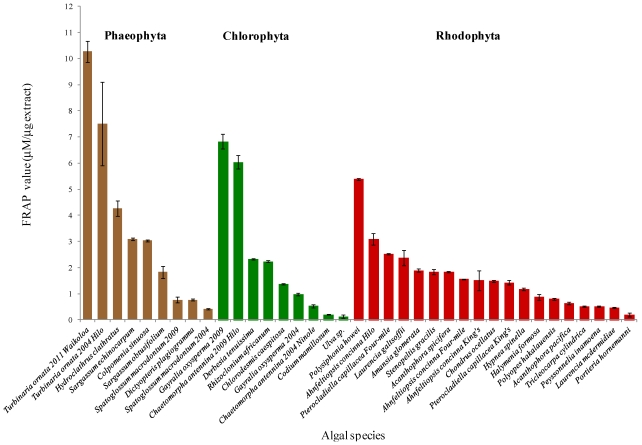
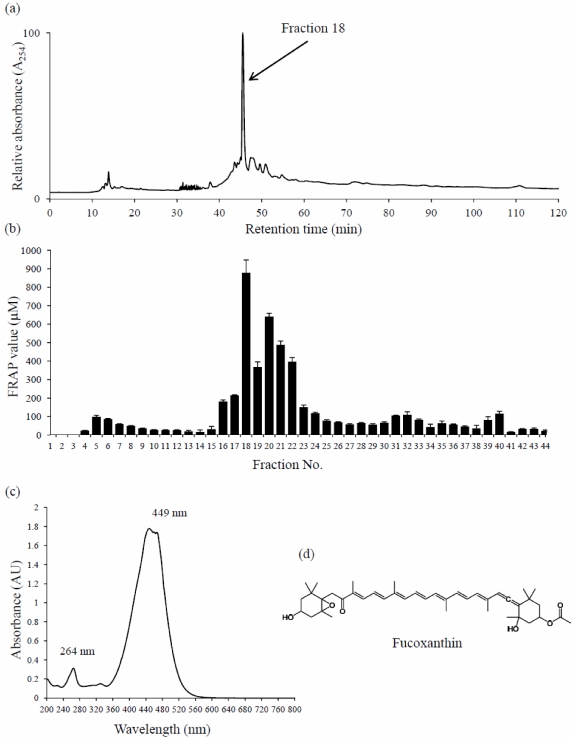
Marine algae are known to contain a wide variety of bioactive compounds, many of which have commercial applications in pharmaceutical, medical, cosmetic, nutraceutical, food and agricultural industries. Natural antioxidants, found in many algae, are important bioactive compounds that play an important role against various diseases and ageing processes through protection of cells from oxidative damage. In this respect, relatively little is known about the bioactivity of Hawaiian algae that could be a potential natural source of such antioxidants. The total antioxidant activity of organic extracts of 37 algal samples, comprising of 30 species of Hawaiian algae from 27 different genera was determined. The activity was determined by employing the FRAP (Ferric Reducing Antioxidant Power) assays. Of the algae tested, the extract of Turbinaria ornata was found to be the most active. Bioassay-guided fractionation of this extract led to the isolation of a variety of different carotenoids as the active principles. The major bioactive antioxidant compound was identified as the carotenoid fucoxanthin. These results show, for the first time, that numerous Hawaiian algae exhibit significant antioxidant activity, a property that could lead to their application in one of many useful healthcare or related products as well as in chemoprevention of a variety of diseases including cancer.
Overview
The claims and statistics of this paper haven’t been checked yet.
Run the check — free, no account needed. It reads the open-access text and checks the sources it cites.
Integrity signals
Registry
Cites
Statistics
Figures
Verification
Claims the paper makes
The claims and statistics of this paper haven’t been checked yet.
Run the check — free, no account needed. It reads the open-access text and checks the sources it cites.
Claims other papers make about this one
Each is checked against this paper’s own text: does it say what the citing paper says it does?
In the citing paper
“However, when attempting to reproduce their synthesis artificially, a decrease in activity with respect to those obtained directly from natural matrices was observed [162].”
From The Potential of Seaweeds as a Source of Functional Ingredients of Prebiotic and Antioxidant Value (2019) · cites this paper as [162]
Self-check
Percentages, sums and reported differences re-computed from the paper’s own numbers.
The self-check needs the paper’s full text.
Citations
Cites
The Ferric Reducing Ability of Plasma (FRAP) as a Measure of “Antioxidant Power”: The FRAP Assay
Benzie, I. F. F., & Strain, J. (1996) · Analytical Biochemistry · doi:10.1006/abio.1996.0292 · Cited by 23,027 · cited 1×
“Antioxidant activity of algal extracts was determined using the ferric reducing antioxidant power (FRAP) assay, modified from the Benzie and Strain protocol [40,41].”
MethodFaulkner, D. J. (1990) · Natural Product Reports · doi:10.1039/np9900700269 · Cited by 4,880
Benzie, I. F. F., & Strain, J. (1999) · Methods in enzymology on CD-ROM/Methods in enzymology · doi:10.1016/s0076-6879(99)99005-5 · Cited by 3,940 · cited 1×
“Antioxidant activity of algal extracts was determined using the ferric reducing antioxidant power (FRAP) assay, modified from the Benzie and Strain protocol [40,41].”
MethodAntioxidant defence mechanisms: From the beginning to the end (of the beginning)
Halliwell, B. B. (1999) · Free Radical Research · doi:10.1080/10715769900300841 · Cited by 1,023 · cited 1×
“By donating an electron, antioxidants neutralize free radicals that would otherwise oxidize biomolecules leading to cell death and tissue damage [6–8].”
BackgroundMetabolites from algae with economical impact
Cardozo, K. H. M., Guaratini, T., Barros, M. P., Falcão, V. D. R., Tonon, Â. P., Lopes, N. P., Campos, S. C. G., Torres, M. A., Souza, A. D. O., Colepicolo, P., et al. (2006) · Comparative Biochemistry and Physiology Part C Toxicology & Pharmacology · doi:10.1016/j.cbpc.2006.05.007 · Cited by 960
Carotenoids in Algae: Distributions, Biosyntheses and Functions
Takaichi, S. (2011) · Marine Drugs · doi:10.3390/md9061101 · Cited by 839
Peng, J., Yuan, J.-P., Wu, C.-F., & Wang, J.-H. (2011) · Marine Drugs · doi:10.3390/md9101806 · Cited by 820
Medicinal and pharmaceutical uses of seaweed natural products: A review
Smit, A. J. (2004) · Journal of Applied Phycology · doi:10.1023/b:japh.0000047783.36600.ef · Cited by 806 · cited 2×
“Algae from the three groupings traditionally known as Chlorophyta (green algae), Rhodophyta (red algae), and Phaeophyta (brown algae) produce compounds with varying bioactivities [4].”
BackgroundOxidative stress and apoptosis: Impact on cancer therapy
Ozben, T. (2007) · Journal of Pharmaceutical Sciences · doi:10.1002/jps.20874 · Cited by 751 · cited 1×
“By donating an electron, antioxidants neutralize free radicals that would otherwise oxidize biomolecules leading to cell death and tissue damage [6–8].”
BackgroundMaeda, H., Hosokawa, M., Sashima, T., Funayama, K., & Miyashita, K. (2005) · Biochemical and Biophysical Research Communications · doi:10.1016/j.bbrc.2005.05.002 · Cited by 647 · cited 1×
“This unique carotenoid was found to possess potent anti-inflammatory, anticancer, anti-obese, anti-diabetic, anti-angiogenic, anti-malarial, and antioxidant activities, as well as protective effects on the liver, blood vessels of the brain, bones, skin, and eyes, including chemoprevention of a variety of diseases incl…”
Background
Cited by
Sorted by citations
Bandeira, M., Giovanela, M., Roesch‐Ely, M., Devine, D. M., & Crespo, J. D. S. (2020) · Sustainable Chemistry and Pharmacy · doi:10.1016/j.scp.2020.100223 · Cited by 570
Blunt, J. W., Copp, B. R., Keyzers, R. A., Munro, M. H. G., & Prinsep, M. R. (2014) · Natural Product Reports · doi:10.1039/c3np70117d · Cited by 496
Exploring the potential of using algae in cosmetics
Wang, H., Chen, C.-C., Huynh, P., & Chang, J. (2014) · Bioresource Technology · doi:10.1016/j.biortech.2014.12.001 · Cited by 509
In vitro antioxidant properties of crude extracts and compounds from brown algae
Balboa, E. M., Conde, E., Moure, A., Falqué, E., & Domínguez, H. (2013) · Food Chemistry · doi:10.1016/j.foodchem.2012.11.026 · Cited by 436
“…0.015 mg/mL; EC50, LP, C = 0.07 mg/mL Zahra et al. (2007) Sargassum echinocarpum (M) Richardson’s Ocean Park (Hawaii), September, 2004 – FRAP = 3 mol/g Kelman et al. (2012) Sargassum hyxtrix (M-NaOH)(M) (NaOH) Gunung Kidul (Indonesia), October 2009 1.21 9.95 EC50, DPPH = 13.86 mg/mL; FICA = 0.84%…”
InfluentialPhytochemical and Potential Properties of Seaweeds and Their Recent Applications: A Review
EL-BELTAGI, H. S., Mohamed, A. A., Mohamed, H. I., Ramadan, K. M. A., Barqawi, A. A., & Mansour, A. T. (2022) · Marine Drugs · doi:10.3390/md20060342 · Cited by 395
Functional properties of carotenoids originating from algae
Christaki, E., Bonos, E., Giannenas, I., & Florou‐Paneri, P. (2013) · Journal of the Science of Food and Agriculture · doi:10.1002/jsfa.5902 · Cited by 346
Marine algal natural products with anti-oxidative, anti-inflammatory, and anti-cancer properties
Lee, J., Hou, M., Huang, H., Chang, F., Yeh, C.-C., Tang, J., & Chang, H. (2013) · Cancer Cell International · doi:10.1186/1475-2867-13-55 · Cited by 334
“Antioxidant activities and bioactive components of marine algae extracts Antioxidant activities have been identified in various marine algae, including red, green, and brown algae species [31], and in their enzymatic extracts [32-34].”
BackgroundThe Potential of Seaweeds as a Source of Functional Ingredients of Prebiotic and Antioxidant Value
Gomez-Zavaglia, A., Prieto Lage, M. A., Jimenez-Lopez, C., Mejuto, J. C., & Simal-Gandara, J. (2019) · Antioxidants · doi:10.3390/antiox8090406 · Cited by 280
An Overview of Potential Seaweed-Derived Bioactive Compounds for Pharmaceutical Applications
Lomartire, S., & Gonçalves, A. M. M. (2022) · Marine Drugs · doi:10.3390/md20020141 · Cited by 304
“A tioxidant compou ds extracted from seaweeds are already available o the market for their health benefits or for their ability to prolong food expiring [84].”
BackgroundZakaria, S. M., & Kamal, S. M. M. (2016) · Food Engineering Reviews · doi:10.1007/s12393-015-9119-x · Cited by 223
Algae Metabolites in Cosmeceutical: An Overview of Current Applications and Challenges
Thiyagarasaiyar, K., Goh, B. H., Jeon, Y., & Yow, Y. (2020) · Marine Drugs · doi:10.3390/md18060323 · Cited by 194
“Turbinaria ornata Fucoxanthin Antioxidant High FRAP value (>10 μM/μg of extract) In vitro [90]”
BackgroundInfluentialMarine bioactive compounds and health promoting perspectives; innovation pathways for drug discovery
Suleria, H. A. R., Gobe, G. C., Masci, P. P., & Osborne, S. A. (2016) · Trends in Food Science & Technology · doi:10.1016/j.tifs.2016.01.019 · Cited by 180
LC-ESI-QTOF-MS/MS Characterization of Seaweed Phenolics and Their Antioxidant Potential
Zhong, B., Robinson, N. A., Warner, R. D., Barrow, C. J., Dunshea, F. R., & Suleria, H. A. R. (2020) · Marine Drugs · doi:10.3390/md18060331 · Cited by 174
Sivagnanam, S., Yin, S., Choi, J., Park, Y., Woo, H., & Chun, B. (2015) · Marine Drugs · doi:10.3390/md13063422 · Cited by 168
“presence of antioxidant constituents could neutralize the linoleate free radical and hence prevent the bleaching of β-carotene [28].”
BackgroundHarnedy, P., & Fitzgerald, R. (2013) · Journal of Applied Phycology · doi:10.1007/s10811-013-0017-4 · Cited by 149
“Ferric reducing antioxidant power (FRAP) activity The FRAP of hydrolysate samples was determined using the method described by Kelman et al. (2012) with some modifications.”
Bhardwaj, M., Sali, V. K., Mani, S., & Vasanthi, H. R. (2020) · Inflammation · doi:10.1007/s10753-020-01179-z · Cited by 178
Natural Antioxidants: Function and Sources
Shebis, Y., Iluz, D., Kinel‐Tahan, Y., Dubinsky, Z., & Yehoshua, Y. (2013) · Food and Nutrition Sciences · doi:10.4236/fns.2013.46083 · Cited by 145
“Studies show that algae play an important supporting role in the prevention of or recovery from a variety of diseases, including cancer [40, 41].”
BackgroundRodrigues, E., Mariutti, L. R. B., & Mercadante, A. Z. (2012) · Marine Drugs · doi:10.3390/md10081784 · Cited by 142
“Recently, fucoxanthin was identified as the main carotenoid being responsible for the high antioxidant capacity of extracts from 27 species of brown seaweeds [3], and this activity was mainly attributed to the allenic bond [36].”
BackgroundPradhan, B., Bhuyan, P. P., Patra, S., Nayak, R., Behera, P. K., Behera, C., Behera, A. K., Ki, J., & Jena, M. (2021) · Biocatalysis and Agricultural Biotechnology · doi:10.1016/j.bcab.2021.102242 · Cited by 136
Metabolites with Antioxidant Activity from Marine Macroalgae
Tziveleka, L., Tammam, M. A., Tzakou, O. A., Roussis, V., & Ioannou, E. (2021) · Antioxidants · doi:10.3390/antiox10091431 · Cited by 132
Lourenço‐Lopes, C., Fraga‐Corral, M., Jiménez-López, C., Pereira, A. G., Garcia‐Oliveira, P., Carpena, M., Prieto, M. A., & Simal‐Gándara, J. (2020) · Resources · doi:10.3390/resources9090101 · Cited by 139
“Hence, new and alternative natural sources of vitamins have been investigated, such as macroalgae [87].”
BackgroundMacroalgae-Derived Ingredients for Cosmetic Industry—An Update
Pimentel, F. B., Alves, R. C., Rodrigues, F., & Oliveira, M. B. P. P. (2017) · Cosmetics · doi:10.3390/cosmetics5010002 · Cited by 122
“This molecule presents a unique structure including allenic, conjugated carbonyl, epoxide, and acetyl groups, and was recently identified as the major bioactive antioxidant carotenoid in 30 Hawaiian macroalgae species [86].”
BackgroundBegum, R., Saurav, H., Mamun-Or-Rashid, A. N. M., Rafiquzzaman, S. M., Ashraf, G. M., Albadrani, G. M., Sayed, A. A., Peluso, I., Abdel‐Daim, M. M., & Uddin, M. S. (2021) · Oxidative Medicine and Cellular Longevity · doi:10.1155/2021/9974890 · Cited by 127
“Among the various natural sources of antioxidants, marine seaweeds and their bioactive compounds are gaining worldwide attention [4, 17] in industry and drugs since 1980 [18].”
BackgroundMayer, A. M. S., Rodrı́guez, A. D., Taglialatela‐Scafati, O., & Fusetani, N. (2017) · Marine Drugs · doi:10.3390/md15090273 · Cited by 98
“ornata [24]; screening of antioxidant activity in 18 cyanobacteria and 23 microalgae cell extracts identified Scenedesmus obliquus strain M2-1, which protected against DNA oxidative damage induced by copper (II)-ascorbic acid [25]; anxiolytic-like effect of a salmon phospholipopeptidic complex composed of polyunsatura…”
BackgroundBioactive compounds by microalgae and potentials for the management of some human disease conditions
Eze, C. N., Chukwu, K. O., Ihim, S. A., Ayoka, T. O., Aduba, C. C., Ndukwe, J. K., Nwaiwu, O., & Onyeaka, H. N. (2023) · AIMS Microbiology · doi:10.3934/microbiol.2023004 · Cited by 110
Lu, X., Sun, H., Zhao, W., Cheng, K., Chen, F., & Liu, B. (2018) · Marine Drugs · doi:10.3390/md16070219 · Cited by 100
“It has been reported to exhibit an array of beneficial biological activities including anti-obesity, anti-diabetes, anti-cancer, anti-allergy, anti-inflammation, anti-oxidation, and anti-osteoporosis [3,4].”
BackgroundJayawardena, T. U., Wang, L., Sanjeewa, K. K. A., Kang, S. I., Lee, J.-S., & Jeon, Y. (2020) · Marine Drugs · doi:10.3390/md18040212 · Cited by 97
“The antioxidant activity of Hawaiian marine algae has been studied by Kelman et al. (2012), providing an extensive report on different marine algal species including red, brown, and green algae [20].”
BackgroundThe cosmetic application of cyanobacterial secondary metabolites
Nowruzi, B., Sarvari, G., & Blanco, S. (2020) · Algal Research · doi:10.1016/j.algal.2020.101959 · Cited by 96
Vega, J., Bonomi‐Barufi, J., Gómez‐Pinchetti, J. L., & Figueroa, F. L. (2020) · Marine Drugs · doi:10.3390/md18120659 · Cited by 94
Olasehinde, T. A., Olaniran, A. O., & Okoh, A. I. (2019) · Marine Drugs · doi:10.3390/md17110609 · Cited by 93
“Much attention has been on marine macroalgae for the development of new drugs, nutraceuticals, and dietary supplements due to their beneficial effects as antioxidant [8], anti-tumor [9], anti-inflammatory [10], antidiabetic [11], anti-hypertensive [12], and antibacterial [13] agents.”
BackgroundAntioxidant properties and total phenolic contents of some tropical seaweeds of the Brazilian coast
Martins, C. D. L., Ramlov, F., Nocchi, N., Gestinari, L. M. D. S., dos Santos, B. F., Bento, L. M., Lhullier, C., Gouvêa, L. P., Bastos, E., Horta, P. A., et al. (2012) · Journal of Applied Phycology · doi:10.1007/s10811-012-9918-x · Cited by 78
“For example, Kelman et al. (2012) determined the antioxidant activity of the crude extract of Amansia sp. by Ferric Reducing Antioxidant Power (FRAP) assay, which also showed satisfactory antioxidant activity.”
BackgroundBeaulieu, L., Sirois, M., & Tamigneaux, É. (2016) · Journal of Applied Phycology · doi:10.1007/s10811-016-0850-3 · Cited by 77
“Ferric ion reducing antioxidant power (FRAP) assay The FRAP of samples was determined using the method described by Kelman et al. (2012).”
MethodFloridoside suppresses pro-inflammatory responses by blocking MAPK signaling in activated microglia
Kim, M., Li, Y.-X., Dewapriya, P., Ryu, B., & Kim, S. (2013) · BMB Reports · doi:10.5483/bmbrep.2013.46.8.237 · Cited by 75
“source of plentiful bioactive metabolites, and marine red algae are an especially well-known source of anti-bacterial and antioxidant metabolites (16, 17).”
BackgroundAzizan, A., Bustamam, M. S. A., Maulidiani, M., Shaari, K., Ismail, I. S., Nagao, N., & Abas, F. (2018) · Marine Drugs · doi:10.3390/md16050154 · Cited by 73
“1H nuclear magnetic resonance (NMR)-based metabolomics have been used widely for un-targeted analysis to evaluate the correlation of the identified metabolites in 1H NMR spectra of plant extracts to their biological activities, such as antioxidant [21], anti-inflammation [22], and antidiabetic [23] activities.”
MethodAntioxidant and cytotoxic activities of three species of tropical seaweeds
Chia, Y. Y., Kanthimathi, M. S., Khoo, K. S., Rajarajeswaran, J., Cheng, H. M., & Yap, W. S. (2015) · BMC Complementary and Alternative Medicine · doi:10.1186/s12906-015-0867-1 · Cited by 74
“ornata which have been reported to be excellent antioxidants for the management of oxidative stress [39].”
BackgroundEl‐Shenody, R. A., Ashour, M., & Ghobara, M. (2019) · Brazilian journal of food technology/Brazilian Journal of Food Technology · doi:10.1590/1981-6723.20318 · Cited by 74
“Seaweeds are being used in the food and cosmetic industries, in agriculture (Kelman et al., 2012; Guiry, 2017) and as a promising source for biofuel production (Gosch et al.”
BackgroundAlgae-derived bioactive molecules for the potential treatment of SARS-CoV-2
Alam, M. A., Parra-Saldivar, R., Bilal, M., Afroze, C. A., Ahmed, M. N., Iqbal, H. M. N., & Xu, J. (2021) · Molecules · doi:10.3390/molecules26082134 · Cited by 69
Antioxidant Properties of two Edible Green Seaweeds From Northern Coasts of the Persian Gulf
Farasat, M., Khavari-Nejad, R. A., Nabavi, S. M. B., & Namjooyan, F. (2013) · Jundishapur Journal of Natural Pharmaceutical Products · doi:10.17795/jjnpp-7736 · Cited by 66
“Seaweeds are known to contain a wide variety of bioactive compounds, many of which have commercial applications in pharmaceutical, medical, cosmetic, food industries and agriculture (6).”
BackgroundDeepak, P., Sowmiya, R., Ramkumar, R., Balasubramani, G., Aiswarya, D., & Perumal, P. (2016) · Artificial Cells Nanomedicine and Biotechnology · doi:10.1080/21691401.2016.1198365 · Cited by 64
“The Turbinaria ornata extract have been reported to have antibacterial (Vijayabaskar and Shiyamala 2011), anticoagulant (Arivuselvan et al. 2011), anti-inflammatory (Ananthi et al. 2011), anti-oxidant properties (Kelman et al. 2012, Chakraborty et al. 2013).”
BackgroundUlagesan, S., Nam, T., & Choi, Y. (2021) · Molecules · doi:10.3390/molecules26216479 · Cited by 61
“Antioxidants may have a positive effect on human health as they can protect the human body against damage by ROS, which attack macromolecules, such as membrane lipids, proteins, and DNA, leading to many health disorders, such as cancer, diabetes mellitus, aging, and neurodegenerative diseases [41,42].”
BackgroundScreening of Chaetomorpha linum Lipidic Extract as a New Potential Source of Bioactive Compounds
Stabili, L., Acquaviva, M. I., Angilè, F., Cavallo, R. A., Cecere, E., Coco, L. D., Fanizzi, F. P., Gerardi, C., Narracci, M., & Petrocelli, A. (2019) · Marine Drugs · doi:10.3390/md17060313 · Cited by 61
“Seaweeds contain a wide range of bioactive compounds, several of which find commercial applications in the pharmaceutical, medical, cosmetic, food industry and in agriculture fields [9].”
BackgroundAntidiabetic and antioxidant activities of brown and red macroalgae from the Persian Gulf
Pirian, K., Moein, S., Sohrabipour, J., Rabiei, R., & Blomster, J. (2017) · Journal of Applied Phycology · doi:10.1007/s10811-017-1152-0 · Cited by 60
A REVIEW ON MARINE ALGAE AND ITS APPLICATIONS
Veluchamy, C., & Palaniswamy, R. (2020) · Asian Journal of Pharmaceutical and Clinical Research · doi:10.22159/ajpcr.2020.v13i3.36130 · Cited by 58
“such as red, green, and brown algae species [14].”
Backgroundde Alencar, D. B., de Carvalho, F. C. T., Rebouças, R. H., dos Santos, D. R., Pires‐Cavalcante, K. M. D. S., Lima, R. L., Baracho, B. M., Bezerra, R. M., Viana, F. A., Vieira, R. H. S. D. F., et al. (2016) · Asian Pacific Journal of Tropical Medicine · doi:10.1016/j.apjtm.2016.03.015 · Cited by 58
Torres, P. B., Chow, F., Furlan, C. M., Mandelli, F., Mercadante, A. Z., & dos Santos, D. Y. A. C. (2014) · Ocean and Coastal Research · doi:10.1590/s1679-87592014068106201 · Cited by 55
“Currently, methanol (KELMAN et al., 2012),”
BackgroundBondu, S., Bonnet, C., Gaubert, J., Deslandes, É., Turgeon, S. L., & Beaulieu, L. (2014) · Journal of Applied Phycology · doi:10.1007/s10811-014-0425-0 · Cited by 52
“The value of EC50 was expressed in terms of mass ratio of sample to DPPH. Ferric ion reducing antioxidant power assay The ferric ion reducing antioxidant power (FRAP) of samples was determined using the method described by Kelman et al. (2012).”
El-Sheekh, M. M., El‐Shenody, R. A., Bases, E., & Shafay, S. M. E. (2020) · Food Science and Technology · doi:10.1590/fst.06120 · Cited by 52
“The percentage of saturated fatty acids (SAFA) of the collected seaweeds could be arranged in the following sequence The present data are in accordance with (Kelman et al., 2012; Ismail et al., 2017), who reported that the antioxidant activity of brown algae was higher than red groups.”
Exploring the Potential of Nannochloropsis sp. Extract for Cosmeceutical Applications
Kim, S. Y., Kwon, Y. M., Kim, K. W., & Kim, J. Y. H. (2021) · Marine Drugs · doi:10.3390/md19120690 · Cited by 55
“Microalgae have also developed chemical defense systems against reactive oxygen species and free radicals by producing various bioactive compounds including a number of secondary metabolites to protect themselves when they are naturally exposed to oxidative stress, which is mainly caused by UV radiation [28,49].”
BackgroundTenorio-Rodríguez, P. A., Murillo-Álvarez, J. I., Campa‐Córdova, Á. I., & Angulo, C. (2017) · Journal of Food Science and Technology · doi:10.1007/s13197-016-2478-3 · Cited by 52
Seaweed Flora of the European North Atlantic and Mediterranean
Pereira, L. (2015) · Springer eBooks · doi:10.1007/978-3-642-53971-8_6 · Cited by 53
Antioxidant marine products in cancer chemoprevention
Park, E.-J., & Pezzuto, J. M. (2013) · Antioxidants & Redox Signaling · doi:10.1089/ars.2013.5235 · Cited by 49
The use of marine-derived bioactive compounds as potential hepatoprotective agents
Nair, D. G., Weiskirchen, R., & Al-Musharafi, S. K. (2014) · Acta Pharmacologica Sinica · doi:10.1038/aps.2014.114 · Cited by 51
Antioxidant, anti-inflammatory and anticancer potential of natural bioactive compounds from seaweeds
Ravi, S., & Devi, K. P. (2019) · Studies in natural products chemistry · doi:10.1016/b978-0-12-817901-7.00005-8 · Cited by 48
Al‐Malki, A. L. (2020) · Saudi Journal of Biological Sciences · doi:10.1016/j.sjbs.2019.12.037 · Cited by 48
“Percentage of cell growth inhibition following exposure to ULNAP was calculated as mentioned (Kelman et al., 2012; Rosaline et al., 2012).”
MethodSrinivasan, M., & Francis, S. P. (2013) · Asian Pacific Journal of Cancer Prevention · doi:10.7314/apjcp.2013.14.4.2213 · Cited by 50
“damage (Kelman et al., 2012).”
A review on marine-based phytochemicals and their application in biomedical research
Khatun, R., Singh, S., Dubey, N. K., & Das, A. P. (2023) · Elsevier eBooks · doi:10.1016/b978-0-443-19143-5.00013-x · Cited by 45
Pro-Apoptotic Activity of French Polynesian Padina pavonica Extract on Human Osteosarcoma Cells
Bernardini, G., Minetti, M., Polizzotto, G., Biazzo, M., & Santucci, A. (2018) · Marine Drugs · doi:10.3390/md16120504 · Cited by 45
“They have been reported to possess several biological activities including anti-oxidant, anti-bacterial and anti-allergic and anti-diabetes, and to be involved in the protection against several human diseases such as cancer, coronary heart disease, inflammatory and neurodegenerative diseases and aging [14,15].”
BackgroundTrentin, R., Custódio, L. M. B., Rodrigues, M. J., Moschin, E., Sciuto, K., Silva, J. P. D., & Moro, I. (2020) · Algal Research · doi:10.1016/j.algal.2020.101980 · Cited by 45
A Review of Marine Algae as a Sustainable Source of Antiviral and Anticancer Compounds
Kumar, A., Soratur, A., Kumar, S., & Maran, B. A. V. (2025) · Macromol—A Journal of Macromolecular Research · doi:10.3390/macromol5010011 · Cited by 43
“Additionally, research on Hawaiian algae revealed that the extract of Turbinaria ornata exhibited the highest antioxidant activity, with fucoxanthin identified as the primary bioactive antioxidant compound [43,46,47].”
Antioxidant Activities of Various Brown Seaweeds from Seribu Islands
Diachanty, S., Nurjanah, N., & Abdullah, A. (2017) · Jurnal Pengolahan Hasil Perikanan Indonesia · doi:10.17844/jphpi.v20i2.18013 · Cited by 43
“…pada beberapa rumput laut seperti P. polysiphonia dan Turbinaria sp., dan memiliki peranan penting terhadap berbagai penyakit, proses penuaan dan memiliki potensi anti-aging, anti inflamasi, anti bakteri, anti jamur, sitotoksik, anti malaria, anti proliferasi serta anti kanker (Kelman et al. 2012).”
BackgroundAntioxidant properties of some filamentous green algae (Chaetomorpha Genus)
Farasat, M., Khavari-Nejad, R. A., Nabavi, S. M. B., & Namjooyan, F. (2013) · Brazilian Archives of Biology and Technology · doi:10.1590/s1516-89132013000600005 · Cited by 42
“Seaweeds are known to contain a wide variety of bioactive compounds, many of which have commercial applications in the pharmaceutical, medical, cosmetic, food industries and agriculture (Kelman et al. 2012).”
BackgroundZatelli, G. A., Philippus, A. C., & Falkenberg, M. B. (2018) · Revista Brasileira de Farmacognosia · doi:10.1016/j.bjp.2018.01.005 · Cited by 43
Phomopsichin A–D; Four New Chromone Derivatives from Mangrove Endophytic Fungus Phomopsis sp. 33#
Huang, M., Li, J., Liu, L., Yin, S., Wang, J., & Lin, Y. (2016) · Marine Drugs · doi:10.3390/md14110215 · Cited by 40
“Radical scavenging effect on OH of compounds 1–5 were carried out according to previously reported methods [29,30].”
MethodPhytochemical profiling of Turbinaria ornata and its antioxidant and anti-proliferative effects
Deepak, P., Sowmiya, R., Balasubramani, G., & Perumal, P. (2017) · Journal of Taibah University Medical Sciences · doi:10.1016/j.jtumed.2017.02.002 · Cited by 40
“A wide range of biological properties of this seaweed, including antibacterial,(12) anti-coagulant,(13) anti-inflammatory(14) and antioxidant properties, have been reported.(15) In addition, studies on fucoidan isolated from Turbinaria spp.”
BackgroundFacile production of seaweed-based biomaterials with antioxidant and anti-inflammatory activities
Guzmán‐Puyol, S., Russo, D., Penna, I., Ceseracciu, L., Palazón, F., Scarpellini, A., Cingolani, R., Bertorelli, R., Bayer, I. S., Heredia‐Guerrero, J. A., et al. (2017) · Algal Research · doi:10.1016/j.algal.2017.08.015 · Cited by 39
Use of algae in strawberry management
Righini, H., Roberti, R., & Baraldi, E. (2018) · Journal of Applied Phycology · doi:10.1007/s10811-018-1478-2 · Cited by 39
“higher antioxidant activity shown by brown algae with respect to green and the red ones (Kelman et al. 2012).”
BackgroundResultDeepak, P., Balasubramanian, B., Park, S., Sowmiya, R., Balasubramani, G., Aiswarya, D., Amutha, V., & Perumal, P. (2018) · South African Journal of Botany · doi:10.1016/j.sajb.2018.11.011 · Cited by 39
Zaharieva, M. M., Zheleva‐Dimitrova, D., Rusinova-Videva, S., Ilieva, Y. E., Brachkova, A., Balabanova, V., Gevrenova, R., Kim, T. C., Kaleva, M. D., Georgieva, A., et al. (2022) · Molecules · doi:10.3390/molecules27020519 · Cited by 39
Transcriptome analysis reveals mechanisms of geroprotective effects of fucoxanthin in Drosophila
Moskalev, A., Shaposhnikov, M. V., Zemskaya, N. V., Belyi, A., Dobrovolskaya, E., Patova, A., Guvatova, Z. G., Lukyanova, E., Snezhkina, A. V., & Kudryavtseva, A. V. (2018) · BMC Genomics · doi:10.1186/s12864-018-4471-x · Cited by 36
“Background Fucoxanthin is a one of the most abundant marine carotenoids, which is widely distributed in brown algae of the genera Alaria, Cladosiphon, Cystoseira, Eisenia, Fucus, Hijikia, Ishige, Kjellmaniella, Laminaria, Myagropsis, Padina, Petalonia, Sargassum, Turbinaria, Undaria and others [1, 2], as well as in di…”
Antioxidant Properties of two Edible Green Seaweeds From Northern Coasts of the Persian Gulf
Farasat, M., Khavari-Nejad, R. A., Nabavi, S. M. B., & Namjooyan, F. (2013) · Jundishapur Journal of Natural Pharmaceutical Products · doi:10.5812/jjnpp.7736 · Cited by 35
Cavaco, M., Duarte, A., Freitas, M. V., Afonso, C., Bernardino, S. M. S. A., Pereira, L., Martins, M., & Mouga, T. (2021) · Foods · doi:10.3390/foods10102394 · Cited by 36
“echinocarpum); green algae such as Gayralia oxysperma and Chaetomorpha antennina; and other red algae such as Wilsonosiphonia howei (formerly Polysiphonia howei), Gymnogongrus durvillei (formerly Ahnfeltiopsis concinna), and Pterocladiella capilacea [111].”
BackgroundOchratoxin A and Kidney Oxidative Stress: The Role of Nutraceuticals in Veterinary Medicine—A Review
Longobardi, C., Ferrara, G., Andretta, E., Montagnaro, S., Damiano, S., & Ciarcia, R. (2022) · Toxins · doi:10.3390/toxins14060398 · Cited by 34
Vinuganesh, A., Kumar, A., Korany, S. M., Alsherif, E. A., Selim, S., Prakash, S., Beemster, G. T. S., & AbdElgawad, H. (2022) · Biomolecules · doi:10.3390/biom12101475 · Cited by 33
Characteristics of Green Seaweeds from Seribu Islands and Sekotong West Nusa Tenggara Antioxidant
Nufus, C., Nurjanah, N., & Abdullah, A. (2017) · Jurnal Pengolahan Hasil Perikanan Indonesia · doi:10.17844/jphpi.v20i3.19819 · Cited by 32
“…senyawa bioaktif yaitu fenol, saponin, tanin, flavonoid, sesquiterpenoid, diterpenoid dan caulerpin yang memiliki aktivitas antioksidan, anti bakteri, anti jamur, anti tumor dan bisa digunakan untuk terapi tekanan darah rendah serta penurun glukosa darah (Kelman et al. 2012; Azhagu et al. 2015).”
BackgroundVasconcelos, J. B., de Vasconcelos, E. R. T. P. P., Urrea‐Victoria, V., Bezerra, P. S., Reis, T. N. V., Cocentino, A. D. L. M., Navarro, D. M. D. A. F., Chow, F., Areces, A. J., & FUJII, M. T. (2018) · Journal of Applied Phycology · doi:10.1007/s10811-018-1556-5 · Cited by 35
Magnusson, M. E., Mata, L., Na, W., Zhao, J., de Nys, R., & Paul, N. A. (2015) · Algal Research · doi:10.1016/j.algal.2015.02.007 · Cited by 30
“Ferric reducing antioxidant power (FRAP) was determined following [19] with minor modifications in the use of Trolox as the standard (7 to 250 μM, R = 0.”
MethodLim, M. W. S., Tan, K. M., Chew, L. Y., Kong, K. W., & Yan, S. W. (2018) · Journal of Aquatic Food Product Technology · doi:10.1080/10498850.2018.1448918 · Cited by 29
“Another study, by Kelman et al. (2012), showed that antioxidant activity of Hawaiian brown algae assayed by FRAP was highest compared to red and green algae.”
BackgroundAyub, A., Rahayu, F., Khamidah, A., Antarlina, S. S., Iswari, K., Supriyadi, K., Mufidah, E., Singh, A., Chopra, C., & Wani, A. K. (2025) · Discover Applied Sciences · doi:10.1007/s42452-025-06916-3 · Cited by 29
“E x t r a c t o r s u pp l e m e n t D N A r e p a i r a n d h i s t o n e m e t h y l a t i o n a s w e ll a s c h e m o - p r e v e n t i v e a c t i v i t i e s , N u t r a c e u t i c a l s , c o s m e t i c s [ 44 , 45 ]”
Seaweed resources of the Hawaiian Islands
McDermid, K. J., Martin, K. J., & Haws, M. C. (2019) · Botanica Marina · doi:10.1515/bot-2018-0091 · Cited by 28
Guo, R., Liu, T., Guo, C., Chen, G., Fan, J., & Zhang, Q. (2022) · BMC Microbiology · doi:10.1186/s12866-022-02728-2 · Cited by 28
Epiphytic marine pigmented bacteria: A prospective source of natural antioxidants
Pawar, R. T., Mohandass, C., Sivaperumal, E., Sabu, E. A., Rajasabapathy, R., & Jagtap, T. G. (2015) · Brazilian Journal of Microbiology · doi:10.1590/s1517-838246120130353 · Cited by 28
“High potent strains and their source Considering the source of the potent strains, the high- est antioxidant producing strain PIGB77 was found to be associated with Sargassum species (Phaeophyta) whereas the other two strains belonged to Chaetomorpha and Ulva spp. (Chlorophyta) (Table 5).”
BackgroundInfluentialNurrochmad, A., Wirasti, W., Dirman, A., Lukitaningsih, E., Rahmawati, A., & Fakhrudin, N. (2018) · INDONESIAN JOURNAL OF PHARMACY · doi:10.14499/indonesianjpharm29iss4pp188 · Cited by 30
“The major bioactive compound that responsible for antioxidant activity in macroalgae was identified as the carotenoid fucoxanthin (Kelman et al., 2012).”
BackgroundAntioxidant activity of Rhodophyceae extracts from Atlantic and Mediterranean Coasts of Morocco
Bouhlal, R. (2013) · African Journal of Plant Science · doi:10.5897/ajps12.048 · Cited by 26
“Seaweeds are considered to be a rich source of antioxidants (Cahyana et al., 1992; Devi et al., 2011; Kelman et al., 2012; Murugan and Iyer, 2012; Kim et al., 2012).”
BackgroundAlgae and Cyanobacteria as Biocontrol Agents of Fungal Plant Pathogens
Righini, H., & Roberti, R. (2019) · Springer eBooks · doi:10.1007/978-3-030-19831-2_9 · Cited by 26
Trentin, R., Custódio, L. M. B., Rodrigues, M. J., Moschin, E., Sciuto, K., Silva, J. P. D., & Moro, I. (2022) · Marine Drugs · doi:10.3390/md20030207 · Cited by 26
“However, these differences can be explained by different causes, including interspecific variations and extrinsic factors, such as light intensity, salinity, and nutrient levels, or by the different tested extracts [45].”
BackgroundAlves, C., Pintéus, S., Rodrigues, A. J., Horta, A., & Pedrosa, R. (2018) · PubMed Central · doi:10.4103/pr.pr_151_16 · Cited by 27
Abdelgeliel, A. S., Ferraris, S., Cochis, A., Vitalini, S., Iriti, M., Mohammed, H., Kumar, A., Cazzola, M., Salem, W., Verné, E., et al. (2019) · Coatings · doi:10.3390/coatings9060394 · Cited by 26
“Amongst them, Padina pavonica is a famous species of Egyptian marine algae that demonstrated antioxidant properties due to its polyphenols content [13,14].”
BackgroundAsparagopsis Genus: What We Really Know About Its Biological Activities and Chemical Composition
Ponte, J. M. S., Seca, A. M. L., & Barreto, M. D. C. (2022) · Molecules · doi:10.3390/molecules27061787 · Cited by 27
“Many algal extracts that have been tested over the years have also displayed pharmacological properties, such as antioxidant activity [19,20], anti-inflammatory activity [19], antimicrobial activity [21], antiviral activity [22], anticancer activity [23], antiprotozoal activity [24] neuroprotective activity [25], amon…”
BackgroundGazali, M., Zamani, N. P., & Nurjanah, N. (2019) · IOP Conference Series Earth and Environmental Science · doi:10.1088/1755-1315/278/1/012029 · Cited by 25
Xu, P., Tan, H., Jin, W., Li, Y., Santhoshkumar, C., Li, P., & Liu, W. (2018) · Journal of Oceanology and Limnology · doi:10.1007/s00343-019-7046-z · Cited by 23
Tao, L., Sun, T., Magnuson, A. D., Qamar, T. R., & Lei, X. G. (2018) · Journal of Nutrition · doi:10.1093/jn/nxy164 · Cited by 23
Characteristics of Turbinaria conoides and Padina Minor As Raw Materials For Healthy Seaweed Salt
Nurjanah, N., Abdullah, A., & Diachanty, S. (2020) · Pharmacognosy Journal · doi:10.5530/pj.2020.12.93 · Cited by 23
Maghraby, Y. R., Farag, M. A., Kontominas, M. G., Shakour, Z. T. A., & Ramadan, A. R. (2022) · ACS Omega · doi:10.1021/acsomega.1c05517 · Cited by 22
Lafeuille, B., Tamigneaux, É., Berger, K., Provencher, V., & Beaulieu, L. (2023) · Foods · doi:10.3390/foods12081736 · Cited by 22
“[58] and adapted from previously described methods [12,55].”
MethodRifna, E. J., Rajauria, G., Dwivedi, M., & Tiwari, B. K. (2023) · International Journal of Biological Macromolecules · doi:10.1016/j.ijbiomac.2023.126887 · Cited by 22
Antioxidant and anti cancer activities of brown and red seaweed extracts from Chilean coasts
Miranda, A., Montoya, M. L., Paz-Araos, M., Mellado, M., Villena, J., Arancibia, P., Madrid, A., & Jara‐Gutiérrez, C. (2018) · Latin American Journal of Aquatic Research · doi:10.3856/vol46-issue2-fulltext-6 · Cited by 22
“1 times higher) than those from Laurencia, Dictyota and Desmarestia reported elsewhere (Matarjun et al., 2008; Zubia et al., 2009a, 2009b; Kelman et al., 2012).”
MethodResultInfluentialYan, K., Liu, Y., Yang, Q., Liu, W., Guo, R., Sui, J.-H., Yan, Z., & Chen, J. (2019) · Ecotoxicology and Environmental Safety · doi:10.1016/j.ecoenv.2019.01.018 · Cited by 24
Zubia, M., Stiger‐Pouvreau, V., Mattio, L., Payri, C. E., & Stewart, H. L. (2020) · Journal of Applied Phycology · doi:10.1007/s10811-020-02188-z · Cited by 23
“Turbinaria ornata from Hawaii exhibited the highest antioxidant activity among 30 species tested (Kelman et al. 2012) and the antioxidant compound was identified as the carotenoid fucoxanthin.”
BackgroundBio-inspired drug delivery systems: A new attempt from bioinspiration to biomedical applications
Ming, L., Wu, H., Fan, Q., Dong, Z., Huang, J., Xiao, Z., Xiao, N., Huang, H., Liu, H., & Li, Z. (2024) · International Journal of Pharmaceutics · doi:10.1016/j.ijpharm.2024.124221 · Cited by 21
Matos, J., Gomes‐Bispo, A., Cardoso, C. L., Afonso, C. M., Campos, A. M., Gomes, R., Fale, P. L. V., Delgado, I. M., Coelho, I., Castanheira, I. P., et al. (2019) · Thalassas An International Journal of Marine Sciences · doi:10.1007/s41208-019-00181-z · Cited by 20
Metadata
- Authors
- Kelman, D., Posner, E. K., McDermid, K. J., Tabandera, N. K., Wright, P. R., & Wright, A. D.
- Affiliations
- University of Hawaii at Hilo (US)
- University of Freiburg (DE)
- Corresponding author
- Wright, Anthony D.
- Venue
- Marine Drugs
- Publisher
- MDPI AG
- Published
- 2012-02-15
- Volume
- 10
- Issue
- 2
- Pages
- 403-416
- ISSN
- 1660-3397 (ISSN-L)
- PMC
- PMC3297004
- OpenAlex
- W2079779859
- Cited by
- 250
- References
- 43
- Citations by year
- 2026: 8 · 2025: 13 · 2024: 12 · 2023: 22 · 2022: 30 · 2021: 24 · 2020: 30 · 2019: 23 · 2018: 21 · 2017: 13 · 2016: 9 · 2015: 13 · 2014: 12 · 2013: 16 · 2012: 4
- FWCI
- 21.08
- Type
- journal article
- Language
- en
- Open access
- gold
- doi.org
- Licence
- Locations
- Marine Drugs (publishedVersion, cc-by)
- PubMed Central (publishedVersion, cc-by)
- PubMed (publishedVersion)
- DOAJ (DOAJ: Directory of Open Access Journals) (submittedVersion, cc-by-sa)
- Topics
- Life Sciences › Agricultural and Biological Sciences › Aquatic Science › Seaweed-derived Bioactive Compounds
- Health Sciences › Medicine › Biochemistry (medical) › Phytochemicals and Antioxidant Activities
- Physical Sciences › Earth and Planetary Sciences › Oceanography › Marine and coastal plant biology
- Keywords
- antioxidant activity, marine algae, Turbinaria ornata, fucoxanthin, carotenoids, bioassay-guided fractionation, oxidative damage, chemoprevention, natural antioxidants
- MeSH terms
- Phaeophyceae, Chlorophyta, Rhodophyta, Antioxidants, Hawaii, Pacific Ocean, Species Specificity, Xanthophylls, Drug Discovery
About these checks
Registry, retraction, Cites and statistics results are computed, not judged, with one exception: a printed reference that no index lists is read once by a model before it counts as a citation error. Claims are extracted by a model and kept only when their quote appears verbatim in the text; each cited source is then checked, with a model’s help, for whether it says what the claim relies on. Those verdicts can be wrong — read the claim’s quote and the cited source before relying on one.
Statistics and arithmetic are recomputed, not judged.
Confidence bands are shown only for fields calibrated on our annotated test set. None is calibrated yet, so no band is shown.
What counts as a claim ›How we measure confidence ›How we check this ›
Are you an author, or do you see a problem with this page? Request a review
