

The DOI matches its Crossref record; 124 of the 124 references it cites were found in a registry or an index.
Immense Essence of Excellence: Marine Microbial Bioactive Compounds
Open accessAbstract
Oceans have borne most of the biological activities on our planet. A number of biologically active compounds with varying degrees of action, such as anti-tumor, anti-cancer, anti-microtubule, anti-proliferative, cytotoxic, photo protective, as well as antibiotic and antifouling properties, have been isolated to date from marine sources. The marine environment also represents a largely unexplored source for isolation of new microbes (bacteria, fungi, actinomycetes, microalgae-cyanobacteria and diatoms) that are potent producers of bioactive secondary metabolites. Extensive research has been done to unveil the bioactive potential of marine microbes (free living and symbiotic) and the results are amazingly diverse and productive. Some of these bioactive secondary metabolites of microbial origin with strong antibacterial and antifungal activities are being intensely used as antibiotics and may be effective against infectious diseases such as HIV, conditions of multiple bacterial infections (penicillin, cephalosporines, streptomycin, and vancomycin) or neuropsychiatric sequelae. Research is also being conducted on the general aspects of biophysical and biochemical properties, chemical structures and biotechnological applications of the bioactive substances derived from marine microorganisms, and their potential use as cosmeceuticals and nutraceuticals. This review is an attempt to consolidate the latest studies and critical research in this field, and to showcase the immense competence of marine microbial flora as bioactive metabolite producers. In addition, the present review addresses some effective and novel approaches of procuring marine microbial compounds utilizing the latest screening strategies of drug discovery.
Overview
The claims and statistics of this paper haven’t been checked yet.
Run the check — free, no account needed. It reads the open-access text and checks the sources it cites.
Integrity signals
Registry
Cites
Statistics
Figures
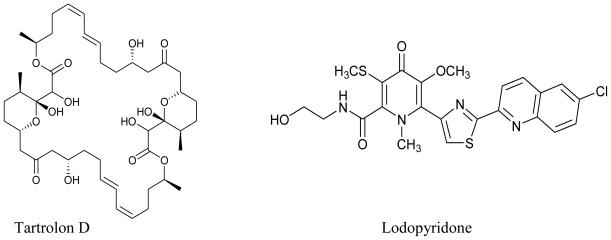
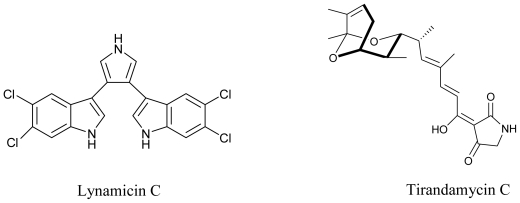
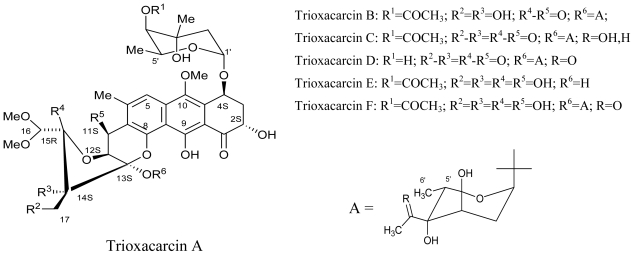
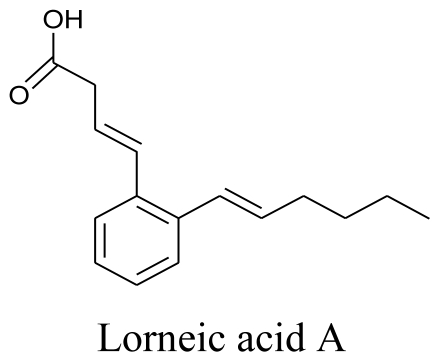
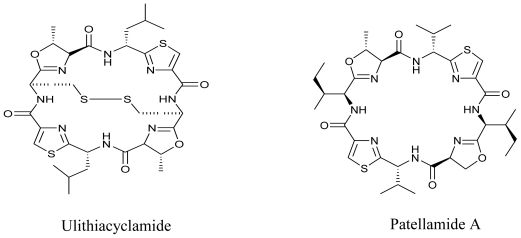
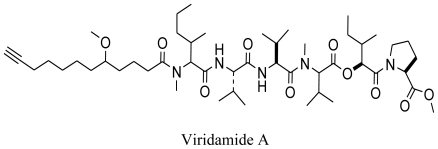
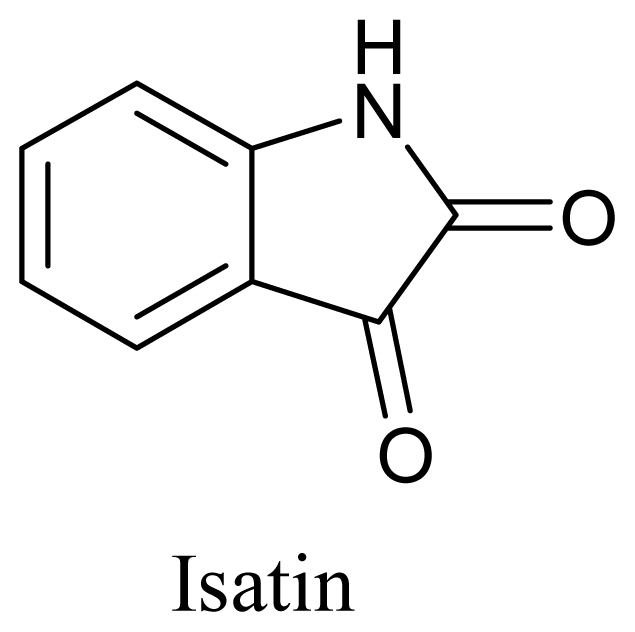
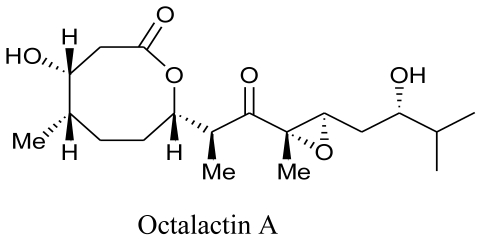
Verification
Claims the paper makes
The claims and statistics of this paper haven’t been checked yet.
Run the check — free, no account needed. It reads the open-access text and checks the sources it cites.
Claims other papers make about this one
Each is checked against this paper’s own text: does it say what the citing paper says it does?
The cited source says what the claim attributes to it.
In the citing paper
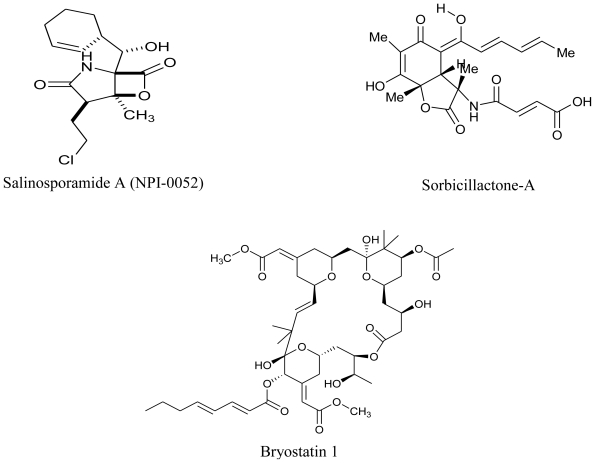
“Salinosporamide A, a novel long-lasting proteasome inhibitor isolated from a marine bacterium Salinispora tropica [230] in phase I clinical trials, has more efficacy against a wider range of hematologic malignancies and many solid tumor models, and less cytotoxicity to normal cells (Figure 8) [101].”
From Marine Natural Products: A Source of Novel Anticancer Drugs (2019) · cites this paper as [101]
The cited source says what the claim attributes to it.
In the citing paper
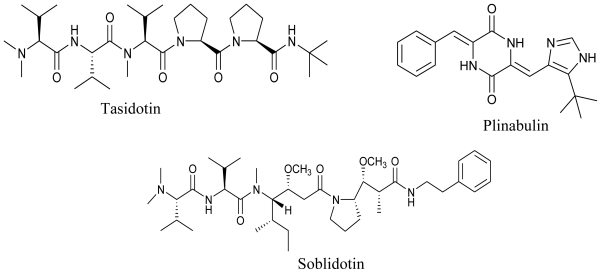
“Tasidotin, Synthadotin (ILX-651), derived from a marine bacterium in phase II clinical trials, and Soblidotin (TZT 1027), the bacterial peptide of marine origin in phase III clinical trials, are promising anticancer agents [101].”
From Marine Natural Products: A Source of Novel Anticancer Drugs (2019) · cites this paper as [101]
The cited source says what the claim attributes to it.
In the citing paper
“Salinosporamide A, a novel long-lasting proteasome inhibitor isolated from a marine bacterium Salinispora tropica [230] in phase I clinical trials, has more efficacy against a wider range of hematologic malignancies and many solid tumor models, and less cytotoxicity to normal cells (Figure 8) [101].”
From Marine Natural Products: A Source of Novel Anticancer Drugs (2019) · cites this paper as [101]
Self-check
Percentages, sums and reported differences re-computed from the paper’s own numbers.
The self-check needs the paper’s full text.
Citations
Cites
1 retracted
Biomedical Compounds from Marine organisms
Jha, R. K., & Zi-rong, X. (2004) · Marine Drugs · doi:10.3390/md203123 · Cited by 324
RetractedFaulkner, D. J. (1990) · Natural Product Reports · doi:10.1039/np9900700269 · Cited by 4,880
Bioactive Microbial Metabolites: A Personal View
Bérdy, J. (2005) · The Journal of Antibiotics · doi:10.1038/ja.2005.1 · Cited by 3,170
Feling, R. H., Buchanan, G. O., Mincer, T. J., Kauffman, C. A., Jensen, P. R., & Fenical, W. (2003) · Angewandte Chemie International Edition · doi:10.1002/anie.200390115 · Cited by 1,057
Marine cyanobacteria—a prolific source of natural products
Burja, A. M., Banaigs, B., Abou-Mansour, E., Grant Burgess, J., & Wright, P. C. (2001) · Tetrahedron · doi:10.1016/s0040-4020(01)00931-0 · Cited by 841
Inagaki, F., Nunoura, T., Nakagawa, S., Teske, A., Lever, M. A., Lauer, A., Suzuki, M., Takai, K., Delwiche, M. E., Colwell, F. S., et al. (2006) · Proceedings of the National Academy of Sciences · doi:10.1073/pnas.0511033103 · Cited by 694
The odyssey of marine pharmaceuticals: a current pipeline perspective
Mayer, A. M. S., Glaser, K. B., Cuevas, C., Jacobs, R. S., Kem, W. R., Little, R. D., McIntosh, J. M., Newman, D. J., Potts, B. C. M., & Shuster, D. E. (2010) · Trends in Pharmacological Sciences · doi:10.1016/j.tips.2010.02.005 · Cited by 669
Bioactive compounds from cyanobacteria and microalgae: an overview
Singh, S., Kate, B. N., & Banerjee, U. C. (2005) · Critical Reviews in Biotechnology · doi:10.1080/07388550500248498 · Cited by 619
Bioactive natural products from marine cyanobacteria for drug discovery
Tan, L. T. (2007) · Phytochemistry · doi:10.1016/j.phytochem.2007.01.012 · Cited by 534
Biosurfactants, bioemulsifiers and exopolysaccharides from marine microorganisms
Satpute, S., Banat, I. M., Dhakephalkar, P. K., Banpurkar, A. G., & Chopade, B. A. (2010) · Biotechnology Advances · doi:10.1016/j.biotechadv.2010.02.006 · Cited by 517
Research works printed but not linked: 5
- (1999). Monsoons to Microbes: Understanding the Ocean's Role in Human Health, The National Academies Press.
- Okami, 1993, The search for bioactive metabolites form marine bacteria, Mar. Biotechnol, 1, 59
- Falch, 1996, What remains of cyanobacteria?, Pharm. i. u. Zeit, 25, 311
- Fusetani, N (2000). Drugs from the Sea, Karger Publishers. · DOI
- Fusetani, N (2000). Drugs from the Sea, Karger Publishers. · DOI
Cited by
Sorted by citations
Items 301–382 of 382
Antifouling activity of microorganisms associated with the marine organisms
Suresh, A., & Immanuel, G. (2023) · Novel Research in Microbiology Journal · doi:10.21608/nrmj.2023.309908 · Cited by 2
Biotechnological potential of secondary metabolites: Current status and future challenges
Khan, S. S., Kour, D., Ramniwas, S., Singh, S., Kumar, S., Kour, S., Sharma, R., Kour, H., Rasool, S., Rustagi, S., et al. (2023) · Journal of Applied Biology & Biotechnology · doi:10.7324/jabb.2023.148341 · Cited by 4
Meroterpenoids from Marine Microorganisms: Potential Scaffolds for New Chemotherapy Leads
Gomes, N. G. M., Buttachon, S., & Kijjoa, A. (2014) · Springer eBooks · doi:10.1007/978-3-319-07145-9_16 · Cited by 2
Krishnan, S., Perumal, P., Mazharbasha, T. A., & Keerthana, R. (2014) · Cited by 2
Okunowo, W. O., Afolabi, L. O., Umunnakwe, I. E., Oyedeji, A. O., & Ilesanmi, J. A. (2016) · Cited by 2
Watty, M., Syahdi, R. R., & Yanuar, A. (2017) · Asian Journal of Pharmaceutical and Clinical Research · doi:10.22159/ajpcr.2017.v10s5.23118 · Cited by 2
Mendoza, A. R. R., Patalinghug, J. M., Canonigo, G., & Yee, J. (2020) · Bacterial Empire · doi:10.36547/be.2020.3.3.46-51 · Cited by 2
Marine Biomaterial Treasure and Biomedical Sciences
Oggu, G. S., Velidandla, S. R., Ealla, K. K. R., Venkatesan, J., Asthana, A., Kim, S., & Bhatnagar, I. (2020) · Encyclopedia of Marine Biotechnology · doi:10.1002/9781119143802.ch50 · Cited by 2
Self-citationGastrointestinal microbiome engineering in prawn breeding
Banu, H. M. V., & Svedha, A. (2024) · Elsevier eBooks · doi:10.1016/b978-0-443-22348-8.00019-2 · Cited by 1
Hu, S., Li, Y., Wan, S., Hu, G., Xiao, Y., Fang, J., & Yu, X. (2025) · Microbial Cell Factories · doi:10.1186/s12934-025-02883-x · Cited by 1
El‐Zahed, M. M., Shata, M. A., & Eissa, A. H. (2026) · Discover Materials · doi:10.1007/s43939-026-00609-3 · Cited by 1
Toluquinol, A Marine Fungus Metabolite, Inhibits Some of the Hallmarks of Cancer
García‐Caballero, M., Medina, M. Á., & Quesada, A. R. (2014) · Springer eBooks · doi:10.1007/978-3-319-07145-9_14 · Cited by 1
Air, Water and Soil: Resources for Drug Discovery
Jesus, L., Esthela, I., Leticia, A., & Pérez-González, G. L. (2013) · InTech eBooks · doi:10.5772/52659 · Cited by 1
Shobaky, E. A., Keyba, H. M., & Moussa, L. A. (2014) · International Journal of Bioassays · doi:10.21746/ijbio.2014.12.009 · Cited by 1
Broad spectrum anti-microbial compounds producing bacteria from coast of Qingdao bays
Khan, M. N. (2015) · Pakistan Journal of Pharmaceutical Sciences · doi:10.36721/pjps/28/2/2015/2615/473-482 · Cited by 1
Zataraín-Palacios, R., Quijano‐Scheggia, S., Gaitán-Hinojosa, M. A., Parra‐Delgado, H., Salas-Marias, N., Dagnino-Acosta, A., Ceballos‐Magaña, S. G., & Muñiz‐Valencia, R. (2020) · Revista Bio Ciencias · doi:10.15741/revbio.07.e988 · Cited by 1
Lin, Z., Cheng, K.-C., Su, H.-J. J., Chang, C., Hsu, J., Hsu, M., Lu, M., & Lin, Y. (2022) · Chemistry of Natural Compounds · doi:10.1007/s10600-022-03765-z · Cited by 1
Marine Microorganisms: New Frontier in Antimicrobial Therapeutics
Mandal, S. (2023) · BENTHAM SCIENCE PUBLISHERS eBooks · doi:10.2174/9789815079609123010005 · Cited by 1
Vinothkumar, N., & Pugalendhi, P. (2023) · Biosciences Biotechnology Research Asia · doi:10.13005/bbra/3069 · Cited by 1
Industrial Aspect of Marine Bioprocessing
Alex, R. A., Augustine, J., & Abraham, J. (2023) · Interdisciplinary biotechnological advances · doi:10.1007/978-981-99-1737-2_4 · Cited by 1
Bioactive Compounds from Aquatic Ecosystem
Puri, S., Mahar, R., & Goswami, G. (2023) · Springer eBooks · doi:10.1007/978-981-99-5018-8_18 · Cited by 2
Fungal diversity and composition in River Nile water polluted with chlorpyrifos insecticide
Mohamed, N., Elfarash, A. E. M., Abdel‐Sater, M. A., & Hassan, E. A. (2024) · Journal of Applied Molecular Biology · doi:10.21608/jamb.2023.217641.1002 · Cited by 1
Marine Natural Products as a Bioresource for Cosmeceuticals
Rasmi, Y., Kırboğa, K. K., Rao, T., Ali, M., & Ahmed, M. Z. (2024) · Royal Society of Chemistry eBooks · doi:10.1039/9781837672288-00223 · Cited by 1
Pharmacological Applications of Marine Metabolites
Asuku, A. O. (2024) · Advances in medical technologies and clinical practice book series · doi:10.4018/979-8-3693-5878-8.ch003 · Cited by 1
Exploring Potentials of Marine Microbiology and Biotechnology in Developing Countries
Odeyemi, O. A. (2013) · Cited by 1
Novel Sources of Antimicrobials
Nirmala, L., & Zyju, D. P. (2017) · Springer eBooks · doi:10.1007/978-981-10-4284-3_13 · Cited by 1
Marine Originated Fused Heterocyclic: Prospective Bioactivity against Cancer
Paliwal, D., Srivastava, S., Sharma, P. K., & Ahmad, I. S. (2019) · Current Traditional Medicine · doi:10.2174/2215083805666190328205729 · Cited by 1
Skariyachan, S., Challapilli, S. B., Packirisamy, S., Sridhar, V. S., & Kumargowda, S. T. (2020) · Environmental Monitoring and Assessment · doi:10.1007/s10661-020-8201-x · Cited by 1
Bioprospecting of Marine Fungi
Devi, P., & Thakur, N. L. (2021) · Springer eBooks · doi:10.1007/978-981-16-3307-2_18 · Cited by 1
Asymmetric Total Synthesis of (2E)-Macrolactin 3
Mohapatra, D. K., Reddy, A. V. V., Choudhury, U. M., & Sarma, A. V. S. (2022) · Synlett · doi:10.1055/a-1957-3966 · Cited by 1
Myrnes, B., Lindberg, D., & Carvajal, A. K. (2014) · NORA - Norwegian Open Research Archives · Cited by 1
Characterization of individual microalgae subparticles and as edible coatingsPreprint
de Oliveira, Á. M. F., Araújo, R. H. C. R., da Silva, T. I., da Cruz, M. D. C. M., dos Santos, V. F., Medeiros, É. A. A., de Sousa, M. M., Alves, K. D. A., Soares, N. D. F. F., de Lima, J. F., et al. (2024) · Research Square · doi:10.21203/rs.3.rs-4818007/v1 · Cited by 1
Cultivable Marine Organisms as a Source of New Products
Kornprobst, J. (2014) · Wiley eBooks · doi:10.1002/9783527683321.ch15
Amazing Abiotic Stress Response of a Novel Strain Bacillus alveiNRC-14Isolated from Egyptian Soil
Abdel-Aziz, S. M., Mouafi, F. E., & Keera, A. A. (2013)
Exploration of antibacterial metabolites producing marine bacteria from Sundarbans, Bangladesh
Sarker, A. K., Haque, M. A., Islam, M. S., Rahman, M. A., & Islam, M. A. U. (2015) · Bangladesh Pharmaceutical Journal · doi:10.3329/bpj.v18i1.23516
Is the Sea an Eldorado for Bioactive Substances?
Tosti, E. (2013) · Journal of Marine Science Research & Development · doi:10.4172/2155-9910.1000e114
Samuel, P., & Sudarmani, D. N. P. (2016)
Maciel, O. M. C. (2016) · Digital Library of Theses and Dissertations (Universidade de São Paulo) · doi:10.11606/d.60.2016.tde-01062016-152033
Secondary Metabolites from Marine Sources: Review
Konuklugil, B. (2016) · Turkiye Klinikleri Journal of Pharmacy Sciences · doi:10.5336/pharmsci.2016-50608
Antimicrobial potential of marine actinobacteria: A review
Manivasagan, P., & Kim, S. (2015) · CRC Press eBooks · doi:10.1201/b19224-4
Self-citationR.Usha, M. K. D. A. (2015) · International Journal of Pharma and Bio Sciences
Marine Microbial Pharmacognosy
Kim, S., & Bhatnagar, I. (2012) · CRC Press eBooks · doi:10.1201/b13868-25
Self-citationEndophytic Actinobacteria from Laminaria ochroleuca: a new source of bioactive compounds
Martins, M. G. S. (2018) · Portuguese National Funding Agency for Science, Research and Technology (RCAAP Project by FCT) · doi:10.34626/t49h-zx89
He, T., Xu, C., & Zhang, X. (2019) · Springer eBooks · doi:10.1007/978-981-13-6198-2_9
Penicillium purpurogenum exerts antitumor effects and ameliorates inflammations in Erlich mice modelPreprint
Teles, A. M., Pontes, L. P. P., Guimarães, S. J. A., Butarelli, A. L. D. A., Silva, G. X., do Nascimento, F. R. F., Bezerra, G. F. D. B., Moragas-Tellis, C. J., da Costa, R. M. G., da Silva, M. A. C. N., et al. (2020) · bioRxiv (Cold Spring Harbor Laboratory) · doi:10.1101/2020.07.02.184291
Review on Marine Sponge: Derived Natural Products and formulations
Ingole, S. R., Tawar, M. G., Bahurupi, A. D., & Burange, P. J. (2019) · American Journal of PharmTech Research · doi:10.46624/ajptr.2019.v9.i3.012
Marine Biopharmaceuticals – A Retrospective of Molecular Mechanisms
Ghori, S. T., Kamali, V., Muralitharan, U., Maikkara, A., & Mahesh, A. (2020) · Wiley eBooks · doi:10.1002/9781119143802.ch122
Gupta, C., & Prakash, D. (2021) · Advances in medical diagnosis, treatment, and care (AMDTC) book series · doi:10.4018/978-1-7998-4453-2.ch004
Synthetic and Biosynthetic Approaches to Marine Natural Products
Barbero, A. (2020) · MDPI eBooks · doi:10.3390/books978-3-03928-467-2
NATURALLY AVAILABLE ANTI-MICROBIAL IN PLANTS: A GENERAL OVERVIEW
Yiasmin, M. N., AL‐Ansi, W., & Hua, X. (2021) · International Journal of Agriculture and Environmental Research · doi:10.51193/ijaer.2021.7109 · Cited by 1
ISOLATION AND SCREENING OF MARINE BACTERIA FOR THEIR POTENTIAL ANTIMICROBIAL PROPERTIES
Gunavathi, Y., Naik, B. K., & Kameswaran, S. (2021) · Journal of Emerging Technologies and Innovative Research
BIOSURFACTANTS FROM MARINE MICROORGANISMS: I. STRUCTURE AND FUNCTIONS
Galkin, B. N., Фіногенова, М. О., Семенець, А. С., Галкін, М. Б., & Filipova, T. O. (2021) · Microbiology&Biotechnology · doi:10.18524/2307-4663.2021.3(53).242877
Therapeutic Application of Microbial Metabolites in Free Radical Induced Tumorigenesis
Chattopadhyay, I. (2022) · Handbook of Oxidative Stress in Cancer: Therapeutic Aspects · doi:10.1007/978-981-16-1247-3_7-1
Novel Nutraceuticals From Marine Resources
Qamar, Z., Syeda, A., Ahmed, M. J., & Qureshi, I. (2022) · Bioresource Technology · doi:10.1002/9781119789444.ch3
Molecular Characterization of Myroides Gitamensis from Fish Samples and Use of Bio Preservatives
Thomas, S., Johney, J., & Ragunathan, R. (2018) · Research Journal of Life Sciences Bioinformatics Pharmaceutical and Chemical Sciences · doi:10.26479/2018.0404.50
Bhowmik, S., Sivamurugan, V., Dhanalakshmi, R. K., Dharani, V., & Ravichandiran, V. (2022) · Current Bioactive Compounds · doi:10.2174/1573407218666220516143742
Pharmaceutical Application of Bioactive Molecules of MicroalgaePreprint
Ekhator, O., Isuman, S., & Ekhator, O. C. (2022) · SSRN Electronic Journal · doi:10.2139/ssrn.4201032
Cyanobacteria as a Source of Novel Bioactive Compounds
Kumar, P., Joshi, A., Abraham, G., Saxena, R., Borkotoky, S., Yadav, R. K., Pandey, A. K., & Tripathi, K. (2022) · Wiley eBooks · doi:10.1002/9781119901198.ch6
Chairmakani, V., & Devendran, G. (2023) · International Journal of Zoological Investigations · doi:10.33745/ijzi.2023.v09ispl1.004
de Oliveira, Á. M. F., Alves, K. D. A., dos Santos, V. F., Medeiros, É. A. A., de Sousa, M. M., Soares, N. D. F. F., de Lima, J. F., Ribeiro, W. S., & Araújo, R. H. C. R. (2023) · SSRN Electronic Journal · doi:10.2139/ssrn.4601187
Potentiality of Marine Ecosystem Bioactive Compounds
Biswas, S., Ghosal, D., Das, T., & Basak, P. (2023) · Marine ecology · doi:10.2174/9789815051995123030010
Bioactive Molecules of Microbial Origin
Ganguly, D., Sengupta, S., Ghosh, S., Sengupta, S., & Goswami, G. (2025) · Sustainable landscape planning and natural resources management · doi:10.1007/978-3-031-76859-0_2
Ealla, K. K. R., Kumari, N., Kim, S., Rawat, N., Mokkapati, A., & Bhatnagar, I. (2025) · Journal of Biosciences · doi:10.1007/s12038-025-00523-5
Self-citationDhandapani, M., & George, D. (2025) · Biosciences Biotechnology Research Asia · doi:10.13005/bbra/3405
Advances and prospects in the field of cosmeceuticals with marine resources
Ganguly, D., & Goswami, G. (2025) · Elsevier eBooks · doi:10.1016/b978-0-443-29843-1.00013-6
Blue-bioeconomy; marine specialized metabolites at the forefront
Diwankara, T., Dissanayake, T., Herath, K. H. I. N. M., & Sanjeewa, K. K. A. (2025) · Elsevier eBooks · doi:10.1016/b978-0-443-29843-1.00011-2
Bioactive Compounds from Algae: Biosynthetic Pathways and Their Applications
Garima, G., Kumar, L., & Bharadvaja, N. (2025) · Sustainable landscape planning and natural resources management · doi:10.1007/978-3-031-85550-4_9
Marine-derived microbial proteins and peptides: A review of their bioactivities and applications
Rao, S. S., Thangam, T., Lavanya, S., Murugan, E., Hasini, D. S., & Parthasarathy, K. (2025) · Elsevier eBooks · doi:10.1016/b978-0-443-26771-0.00025-4
Marine-Based Polysaccharides in Nose-to-Brain Drug Delivery
Maheshwari, S., Singh, A., Verma, A., Ansari, V. A., Akhtar, J., & Prajapati, B. G. (2026) · Springer eBooks · doi:10.1007/978-981-95-4126-3_6
Applications of machine learning in marine microbial products prediction and monitoring
Harihara, J., Deepu, P. G., Musini, A., Raj, J. P., Gowd, B. H. B., & Reddy, K. (2026) · Elsevier eBooks · doi:10.1016/b978-0-443-43836-3.00017-3
Diketopiperazines with In vivo Antimalarial Activity from Sponge-derived Streptomyces sp. 13-12-16
Karthik, L., Kirthi, A. V., Sengupta, A., Keswani, T., Li, Y., Banakar, S., Bhattachariya, A., & Li, Z. (2026) · Marine Biotechnology · doi:10.1007/s10126-026-10587-5
Antimicrobial Potential of Crude Extracts Derived from Red Algae of Gulf of Mannar
Ali‐Seyed, M., Ramakritinan, C. M., Hussein, E. M. M., Yagoub, R. Y., Ali, A. A. Y., & Kannu, K. D. (2026) · Journal of Pure and Applied Microbiology · doi:10.22207/jpam.20.1.67
Marine sources as a treasure trove of antimicrobial agents: a systematic review
Ahamed, M. S., Ahamed, A., Rabbi, I. J., Rahman, A., Shahariar, T., Akhter, M. S., & Rahman, M. A. (2026) · Infection · doi:10.1007/s15010-026-02762-6
Jiang, B., Li, R., & Zhang, G. (2026) · Polymer Bulletin · doi:10.1007/s00289-026-06374-w
Venkatachalam, M. (2017) · theses.fr (ABES) · doi:10.70675/eac14323z2015z44e1z8c0ez3360fdf28c73
Valorisation des activités biologiques de la diatomée marine Haslea ostrearia
Falaise, C. (2019) · theses.fr (ABES) · doi:10.70675/274504eez45aaz44b8za87azf43b48df5f86
Strategic use of microbial culture collections to empower drug discovery
Giordano, A. L. P. L., dos Santos, K. G. A., RODRIGUES, M. V. N., Legabão, B. C., Attili‐Angelis, D., Fantinatti‐Garboggini, F., & Schreiber, A. Z. (2026) · Future Microbiology · doi:10.1080/17460913.2026.2654376 · Cited by 1
Maza, L. J. G., Souza, R. K., da Rosa, D. F., Beys‐da‐Silva, W. O., Santi, L., Schrank, A., Vainstein, M. H., & Macêdo, A. J. (2026) · Frontiers in Natural Products · doi:10.3389/fntpr.2026.1844638
The Biotechnological Applications of Marine Bacteria
Jiang, L., Wright, R., Raudonis, R., BANSKOTA, A. H., Glick, B. R., Mitchell, R. J., Scur, M., Wang, Z., Zhang, W., Zhang, T., et al. (2026) · Biology · doi:10.3390/biology15171546
Pobacilamides A and B, two linear depsipeptides from a marine-derived Bacillus sp. ROA-056
Lee, E.-Y., Kim, D.-A., Lee, J. Y., 이지혜, Choi, B., Paik, M., Kim, H., Lee, S., Lim, K., & Nam, S.-J. (2026) · The Journal of Antibiotics · doi:10.1038/s41429-026-00967-3
Metadata
- Authors
- Bhatnagar, I., & Kim, S.-K.
- Affiliations
- Pukyong National University (KR)
- Corresponding author
- Kim, Se-Kwon
- Venue
- Marine Drugs
- Publisher
- MDPI AG
- Published
- 2010-10-15
- Volume
- 8
- Issue
- 10
- Pages
- 2673-2701
- ISSN
- 1660-3397 (ISSN-L)
- PMC
- PMC2993000
- OpenAlex
- W2029997716
- Cited by
- 384
- References
- 124
- Citations by year
- 2026: 12 · 2025: 13 · 2024: 21 · 2023: 23 · 2022: 28 · 2021: 18 · 2020: 39 · 2019: 26 · 2018: 25 · 2017: 26 · 2016: 32 · 2015: 28 · 2014: 30 · 2013: 23 · 2012: 27
- FWCI
- 2.25
- Type
- journal article
- Language
- en
- Open access
- gold
- doi.org
- Licence
- Locations
- Marine Drugs (publishedVersion, cc-by)
- PubMed Central (publishedVersion, cc-by)
- PubMed (publishedVersion)
- DOAJ (DOAJ: Directory of Open Access Journals) (submittedVersion, cc-by-sa)
- Topics
- Life Sciences › Immunology and Microbiology › Applied Microbiology and Biotechnology › Microbial Natural Products and Biosynthesis
- Life Sciences › Biochemistry, Genetics and Molecular Biology › Biotechnology › Marine Sponges and Natural Products
- Life Sciences › Agricultural and Biological Sciences › Aquatic Science › Seaweed-derived Bioactive Compounds
- Keywords
- marine microorganisms, bioactive secondary metabolites, marine natural products, antibacterial agents, antifungal agents, anticancer agents, marine bacteria, actinomycetes, cyanobacteria, diatoms, microbial symbionts, drug discovery screening, cosmeceuticals, nutraceuticals
- MeSH terms
- Cyanobacteria, Animals, Anti-Bacterial Agents, Antifungal Agents, Antineoplastic Agents, Bacteria, Clinical Trials as Topic, Fungi, Seawater, Symbiosis, Diatoms, Drug Discovery, Microalgae, Aquatic Organisms
About these checks
Registry, retraction, Cites and statistics results are computed, not judged, with one exception: a printed reference that no index lists is read once by a model before it counts as a citation error. Claims are extracted by a model and kept only when their quote appears verbatim in the text; each cited source is then checked, with a model’s help, for whether it says what the claim relies on. Those verdicts can be wrong — read the claim’s quote and the cited source before relying on one.
Statistics and arithmetic are recomputed, not judged.
Confidence bands are shown only for fields calibrated on our annotated test set. None is calibrated yet, so no band is shown.
What counts as a claim ›How we measure confidence ›How we check this ›
Are you an author, or do you see a problem with this page? Request a review
