

Influence of Laser Process Parameters, Liquid Medium, and External Field on the Synthesis of Colloidal Metal Nanoparticles Using Pulsed Laser Ablation in Liquid: A Review
Open accessThe DOI matches its Crossref record; 191 of the 197 references it cites were found in a registry or an index, and 1 are not checked yet; 23 of the 138 sources its claims cite were checked for support.
Abstract
Pulsed laser ablation in liquid, used for nanoparticle synthesis from solid bulk metal targets (a top-down approach), has been a hot topic of research in the past few decades. It is a highly efficient and 'green' fabrication method for producing pure, stable, non-toxic (ligand-free), colloidal nanoparticles, which is often challenging using traditional chemical methods. Due to the short time scale interaction between the laser pulses and the target, it is difficult to achieve complete control on the physical characteristics of metallic nanoparticles. Laser process parameters, liquid environment, and external fields vastly effect the shape and structure of nanoparticles for targeted applications. Past reviews on pulsed laser ablation have focused extensively on synthesising different materials using this technique but little attention has been given to explaining the dependency aspect of the process parameters in fine-tuning the nanoparticle characteristics. In this study, we reviewed the state of the art literature available on this technique, which can help the scientific community develop a comprehensive understanding with special insights into the laser ablation mechanism. We further examined the importance of these process parameters in improving the ablation rate and productivity and analysed the morphology, size distribution, and structure of the obtained nanoparticles. Finally, the challenges faced in nanoparticle research and prospects are presented.
Verified 2026-11-22 · 1 reference not checked yet
Overview
CoChat Summary
TL;DR
This review synthesizes how pulsed laser ablation in liquid (PLAL) parameters, liquid medium, and external fields control colloidal metal nanoparticle size, morphology, and productivity. It concludes that PLAL is a green, ligand-free top-down route, but complete predictive control remains difficult because of complex, short-time-scale laser–matter interactions.
Key findings
- PLAL is presented as a fast, environmentally friendly synthesis method producing pure, stable, ligand-free colloidal nanoparticles; laser parameters, liquid environment, and external fields significantly affect ablation and resulting nanoparticle morphology and size distribution.
- Pulse duration matters: for Ag NPs, femtosecond and picosecond pulses produced diameters of 10–15 nm, whereas nanosecond pulses produced 75–85 nm; the review concludes femtosecond/picosecond pulses were better for nanoparticle generation by reducing thermal interactions.
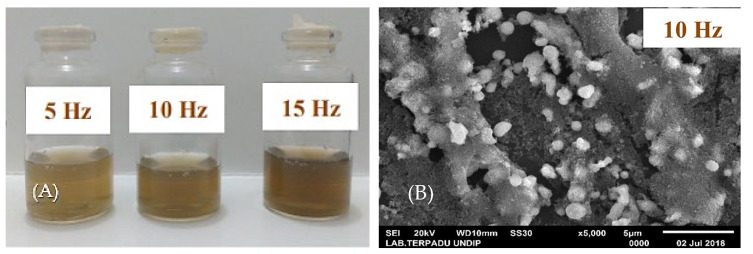
- Parameter-specific effects include Zn NP diameters of 12.1 and 5.6 at PRR values of 10 Hz and 15 Hz; Ag colloid NPs had the smallest mean diameter of 17.54 nm and narrowest distribution of 36.86 nm at 4.2 J/cm²; GaN colloidal NPs were synthesized over 380–1500 J/cm², with mean size and productivity increasing with fluence before fragmentation/agglomeration at higher fluence.
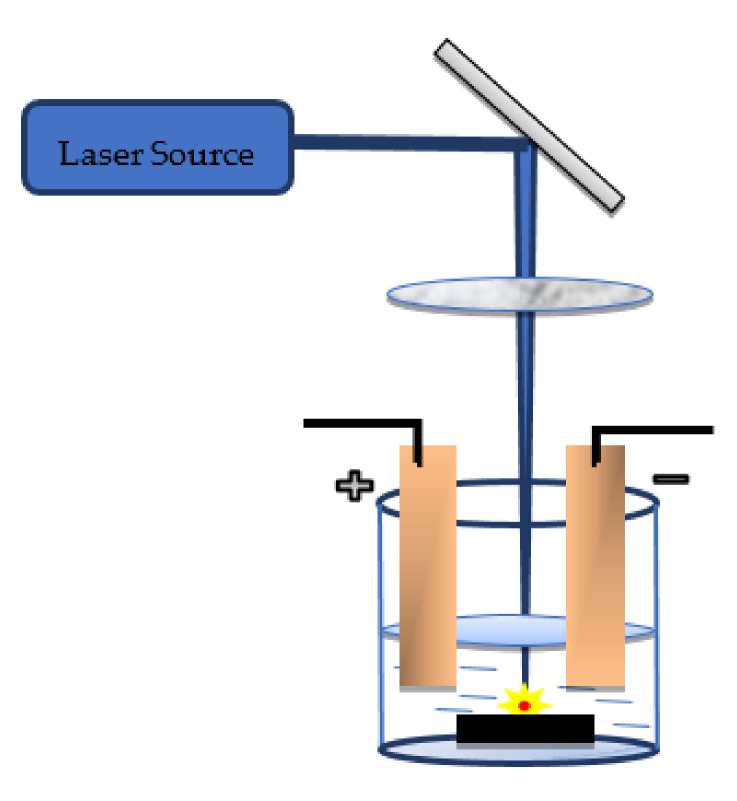
- External fields alter outcomes: magnetic field application increased Ag NP average diameter from 14 nm to 25 nm; electric field application decreased Pt NP size from 20 nm to 9 nm; temperature variation from 0 °C to 60 °C decreased ZnO NP size and increased bandgap energy.
Methods
- Narrative review of state-of-the-art literature on PLAL, covering mechanism, laser process parameters, liquid medium effects, external field-assisted ablation, and bi-metallic nanoparticles.
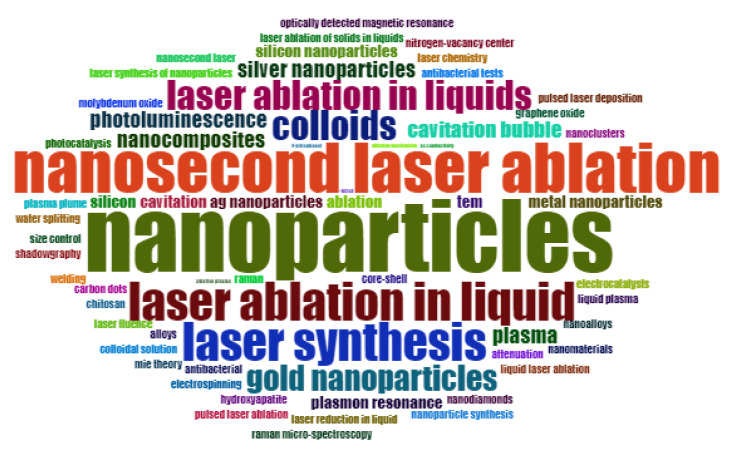
- Bibliometric analysis was performed using RStudio, and a keyword word cloud was generated (Figure 2).
- No primary experimental sample is reported; the paper synthesizes findings from prior studies and presents summary tables such as Table 2 and Table 3.
Limitations
- The paper states that no accurate model exists to optimize laser parameters for desired nanostructures; multiparametric analysis of laser parameters on nanoparticle formation remains to be explored; and deciding which parameter plays a decisive role remains a challenge.
- The paper states that femtosecond and picosecond pulse studies are limited compared with nanosecond studies, and the dynamics of the ultra-short time scale still elude complete understanding.
- Evident from the text: as a review, it does not present new experimental data, and its conclusions depend on the cited literature rather than independent validation.
Model-written summary. Check it against the paper before relying on it.
Integrity signals
Registry
Cites
Statistics
Figures
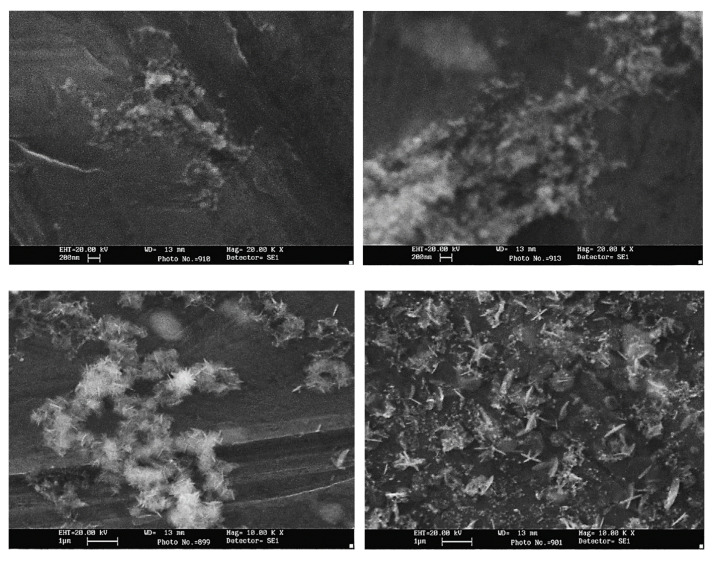
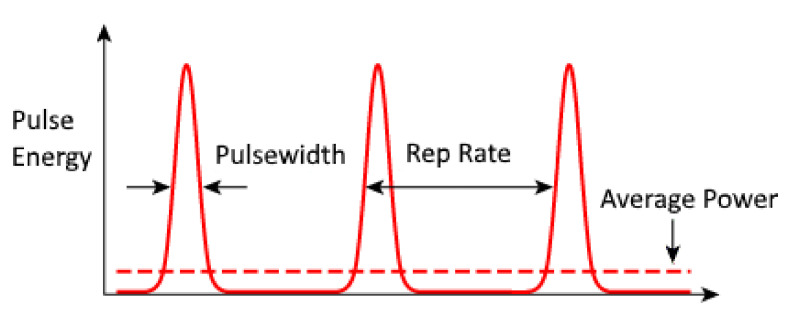
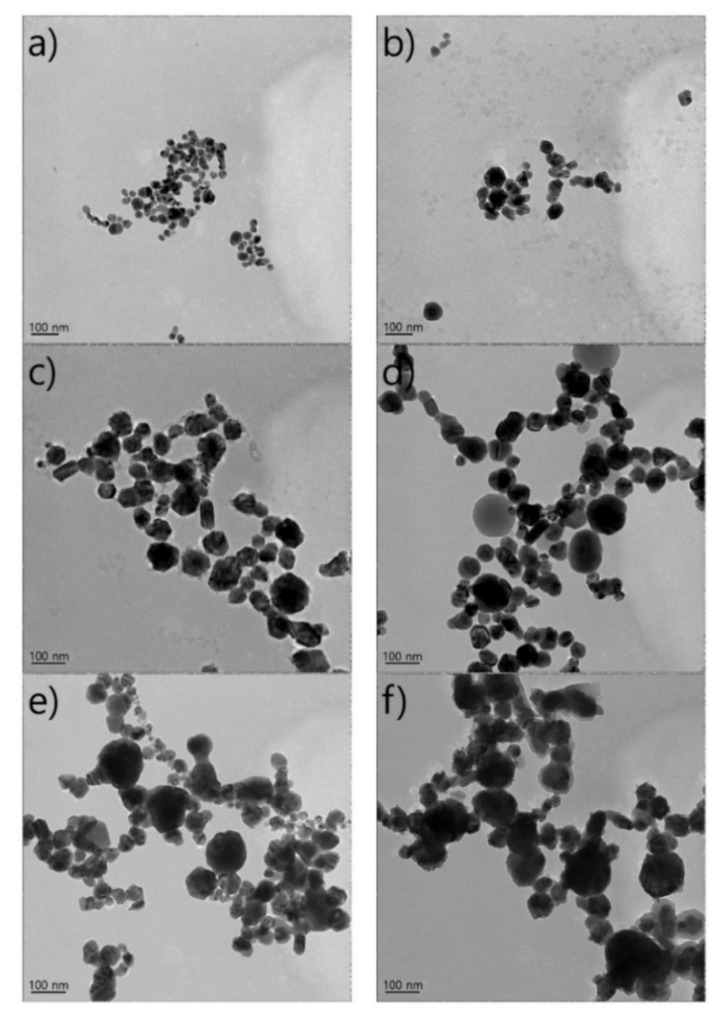
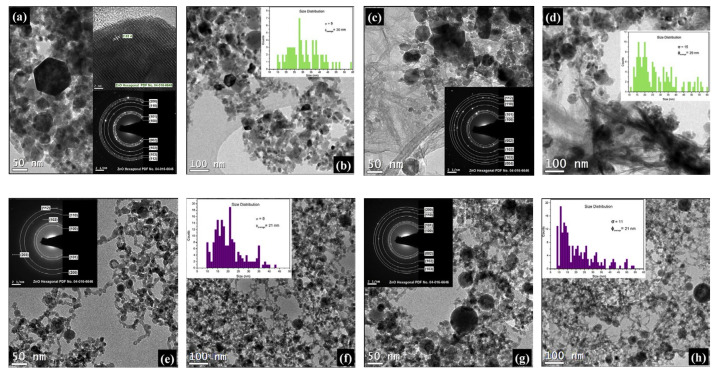
Verification
Claims the paper makes
17 Valid · 16 Not valid · 110 Not checked · 53 Own results and interpretations
The cited sources support only part of this claim — read each source’s verdict below.
In the paper
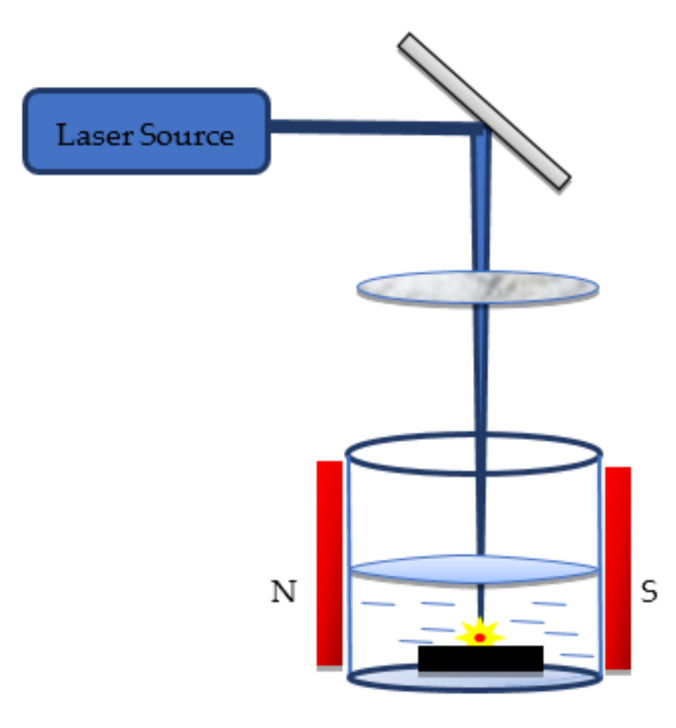
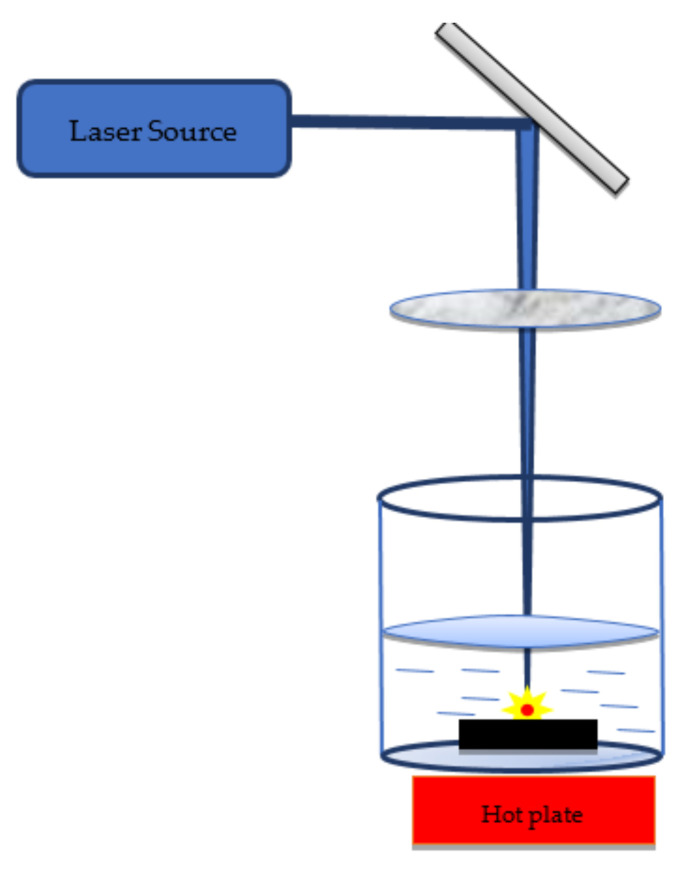
“Recently [73,74,75,76,77,78,79,80,81,82,83,84,85,86,87,88,89,90,91,92,93,94,95,96], research has taken a further step, which involved the application of external magnetic, electric, and temperature fields to examine the impact of light–matter interaction and to achieve shape control on various types of nanocrystals.”
§ Influence of Laser Process Parameters, Liquid Medium, and External Field on the Synthesis of Colloidal Metal Nanoparticles Using Pulsed Laser Ablation in Liquid: A Review > 4. Laser Parameters Influencing the Ablation and Synthesis of Colloidal NPs
What the sources say
- Partly supportedcites [73] Sadrolhosseini A.R. Mahdi M.A. Alizadeh F. Rashid S.A. Laser Ablation Technique for Synthesis of Metal Nanoparticle in Liquid Laser Technology and its Applications IntechOpen London, UK 2019 10.5772/intechopen.80374 sourceExperimental — accuracy not yet measured
Our copy of Sadrolhosseini et al. (2019) addresses only part of what the citing sentence attributes to it: Section 5 ('The effect of thermal properties in laser ablation of metal plate') discusses temperature being controlled during laser ablation via the heat diffusion length relative to the laser spot size, and Sections 3 and 7 discuss light–matter interaction (laser absorption by the plasma plume and by the generated nanoparticles). There is no passage describing the application of an external magnetic field or an external electric field, and no shape-control result: the setup (Section 4) contains only a lens, pulsed laser, liquid container, stirrer and linear positioner, and the Conclusion (Section 12) states the nanoparticles 'were formed in the spherical shape'. The parts of the claim not supported by this source are therefore the external magnetic and electric fields and the achievement of shape control on various types of nanocrystals. (LLM, conf=0.68)
- Could not verifycites [74] Svetlichnyi V.A. Shabalina A.V. Lapin I.N. Goncharova D.A. Metal Oxide Nanoparticle Preparation by Pulsed Laser Ablation of Metallic Targets in Liquid Applications of Laser Ablation—Thin Film Deposition, Nanomaterial Synthesis and Surface Modification InTech Rijeka, Croatia 2016 10.5772/65430 sourceExperimental — accuracy not yet measured
Our copy of the Svetlichnyi et al. (2016) chapter never mentions applying external magnetic, electric or temperature fields to control nanocrystal shape or to probe light–matter interaction; the control levers it discusses are laser pulse parameters, solvent choice and precursors (Introduction; §2.4 Chemical transformations during PLAL), plus target scanning and a magnetic stirrer merely for agitating the liquid (§2.2 General experimental technique). Its closest statements actually frame shape/structure control as an outstanding goal — "three main aims that have not been achieved yet: effective control of structure and dimensional characteristics of nanoparticles obtained" (1. Introduction) — and treat heating only as a process effect or limitation (§2.1; §3 Characterization, hematite formation on heating/irradiation). Searches for "external magnetic/electric/temperature fields", "shape control / morphology", "electric field", "heating the solvent" returned no passage addressing the claim's point, so this source cannot confirm or contradict it (it is one of ~24 references bundled in the citing sentence). (LLM, conf=0.68)
- Could not verifycites [75] Hahn A. Barcikowski S. Chichkov B.N. Influences on Nanoparticle Production during Pulsed Laser Ablation Pulse 2008 40 50 10.2961/jlmn.2008.02.0003 sourceExperimental — accuracy not yet measured
Our copy of Hahn (2008) is scoped entirely to femtosecond/pulsed laser ablation of metals in gaseous and liquid media: the Introduction (p. 1) states 'the influences of the laser pulse energy and the media (air, water) on the particle size distribution and productivity are investigated', with in-situ dodecanethiol conjugation as the secondary topic. No passage in the sections searched (Introduction, Experimental, 3.1 gaseous media, 3.2 liquid media, Summary/Conclusion, References) describes applying an external magnetic, electric or temperature field, nor any shape control of nanocrystals; the only temperature remark is an internal one — 'higher pulse energies might enhance the temperature gradient in the material... higher cooling rates causes smaller particles [9]' (3.1) — which concerns size, not shape, and is credited to another study. Searches run: 'external magnetic field shape control nanocrystals light-matter interaction', 'electric field temperature gradient applied during laser ablation particle shape', 'magnetic field assisted laser ablation anisotropic nanorods shape control', 'plasma shielding nanosecond laser ablation ambient gas pressure particle shape morphology'. (LLM, conf=0.70)
- Not checked — no full text of the sourcecites [76] Menéndez-Manjón A. Wagener P. Barcikowski S. Transfer-Matrix Method for Efficient Ablation by Pulsed Laser Ablation and Nanoparticle Generation in Liquids J. Phys. Chem. C 2011 115 5108 5114 10.1021/jp109370q source
- Not checked — no full text of the sourcecites [77] Sulaiman S.A. Ismail A.K.A.A. Azman M.N.F.N. Scattering Effects in Laser Attenuation System for Measurement of Droplet Number Density Energy Procedia 2014 50 79 86 10.1016/j.egypro.2014.06.010 source
- Not checked — no full text of the sourcecites [78] Seely J.F. Quantum Theory of Inverse Bremsstrahlung Absorption and Pair Production Laser Interaction and Related Plasma Phenomena Springer Boston, MA, USA 1974 835 847 10.1007/978-1-4684-8416-8_20 source
- Partly supportedcites [79] Sasaki K. Takada N. Liquid-phase laser ablation Pure Appl. Chem. 2010 82 1317 1327 10.1351/PAC-CON-09-10-23 sourceExperimental — accuracy not yet measured
The Control of Liquid-Phase Laser Ablation section (pp. 1324–1325) describes investigating pressure and temperature as physical controls, but reports results for changing water pressure. It does not report applying magnetic or electric fields, or achieving nanocrystal shape control with those fields. (LLM, conf=0.84)
- Not checked — no full text of the sourcecites [80] Chichkov B.N. Momma C. Nolte S. von Alvensleben F. Tünnermann A. Femtosecond, picosecond and nanosecond laser ablation of solids Appl. Phys. A 1996 63 109 115 10.1007/BF01567637 source
- Could not verifycites [81] Tsuji T. Okazaki Y. Tsuboi Y. Tsuji M. Nanosecond time-resolved observations of laser ablation of silver in water Jpn. J. Appl. Phys. 2007 46 1533 10.1143/JJAP.46.1533 sourceExperimental — accuracy not yet measured
The paper’s Abstract and study description report time-resolved observations of laser ablation of silver in water and nanoparticle formation in cavitation bubbles. Searches for external magnetic, electric, or temperature fields and shape control found no passage addressing those claims; laser-induced heating is not an externally applied temperature field. Our copy provides no page numbers for these passages. (LLM, conf=0.75)
- Partly supportedcites [82] Huang H. Lai J. Lu J. Li Z. Pulsed laser ablation of bulk target and particle products in liquid for nanomaterial fabrication AIP Adv. 2019 9 015307 10.1063/1.5082695 sourceExperimental — accuracy not yet measured
The Introduction (page unavailable) says laser-assisted nanocrystal fabrication can be controlled by experimental conditions, including the external environment, and that the paper studies laser interactions. It does not report applying external magnetic, electric, or temperature fields to control nanocrystal shape; its temperature analysis concerns cavitation bubbles, not an applied field. (LLM, conf=0.78)
plainstates a cause- Asserted: passes — The authors put it forward as true.
- Checkable: passes — It can be checked against evidence.
- Load-bearing: unclear — It is unclear whether the paper’s conclusions depend on it.
- Based: passes — The paper gives a reason why it holds.
- Partly supported
Every source the paper cites for this claim was checked and supports it.
In the paper
“Furthermore, it was shown that ultrashort pulses resulted in short and homogeneous structures.”
§ Influence of Laser Process Parameters, Liquid Medium, and External Field on the Synthesis of Colloidal Metal Nanoparticles Using Pulsed Laser Ablation in Liquid: A Review > 4. Laser Parameters Influencing the Ablation and Synthesis of Colloidal NPs > 4.2. Pulse Duration (Pulse Width)
What the sources say
- Supportedcites [108] Zhang K. Ivanov D.S. Ganeev R.A. Boltaev G.S. Krishnendu P.S. Singh S.C. Garcia M.E. Zavestovskaya I.N. Guo C. Pulse Duration and Wavelength Effects of Laser Ablation on the Oxidation, Hydrolysis, and Aging of Aluminum Nanoparticles in Water Nanomaterials 2019 9 767 10.3390/nano9050767 PMC6566421 31109104 source
Section 3.2 reports that nanoparticles obtained with ultrashort pulses were remarkably smaller and more homogeneous. This supports the claim’s description of short, homogeneous structures, with “short” understood as smaller particle size. (LLM, conf=0.91)
plainstates a cause- Asserted: passes — The authors put it forward as true.
- Checkable: passes — It can be checked against evidence.
- Load-bearing: unclear — It is unclear whether the paper’s conclusions depend on it.
- Based: passes — The paper gives a reason why it holds.
- Supported
Every source the paper cites for this claim was checked and supports it.
In the paper
“The ablation of aluminium (Al) targets in distilled water was analysed at different pulse durations (i.e., 5 ns, 200 ps, and 30 fs) by Zhang et al. [108].”
§ Influence of Laser Process Parameters, Liquid Medium, and External Field on the Synthesis of Colloidal Metal Nanoparticles Using Pulsed Laser Ablation in Liquid: A Review > 4. Laser Parameters Influencing the Ablation and Synthesis of Colloidal NPs > 4.2. Pulse Duration (Pulse Width)
What the sources say
- Supportedcites [108] Zhang K. Ivanov D.S. Ganeev R.A. Boltaev G.S. Krishnendu P.S. Singh S.C. Garcia M.E. Zavestovskaya I.N. Guo C. Pulse Duration and Wavelength Effects of Laser Ablation on the Oxidation, Hydrolysis, and Aging of Aluminum Nanoparticles in Water Nanomaterials 2019 9 767 10.3390/nano9050767 PMC6566421 31109104 source
The Introduction states that the paper analyzes ablation of Al targets in distilled water using pulses of 5 ns, 200 ps, and 30 fs. The Experimental section confirms that the Al target was irradiated in distilled water at those pulse durations. (LLM, conf=0.95)
plain- Asserted: passes — The authors put it forward as true.
- Checkable: passes — It can be checked against evidence.
- Load-bearing: unclear — It is unclear whether the paper’s conclusions depend on it.
- Based: passes — The paper gives a reason why it holds.
- Supported
The cited sources support only part of this claim — read each source’s verdict below.
In the paper
“Moreover, the suspensions resulted in variations in colour (nanosecond pulses showed a white colour, picosecond pulses showed a light grey colour, and femtosecond pulses showed a brown colour) due to surface plasmon effects.”
§ Influence of Laser Process Parameters, Liquid Medium, and External Field on the Synthesis of Colloidal Metal Nanoparticles Using Pulsed Laser Ablation in Liquid: A Review > 4. Laser Parameters Influencing the Ablation and Synthesis of Colloidal NPs > 4.2. Pulse Duration (Pulse Width)
What the sources say
- Partly supportedcites [108] Zhang K. Ivanov D.S. Ganeev R.A. Boltaev G.S. Krishnendu P.S. Singh S.C. Garcia M.E. Zavestovskaya I.N. Guo C. Pulse Duration and Wavelength Effects of Laser Ablation on the Oxidation, Hydrolysis, and Aging of Aluminum Nanoparticles in Water Nanomaterials 2019 9 767 10.3390/nano9050767 PMC6566421 31109104 sourceExperimental — accuracy not yet measured
Section 3.1 reports the stated colours: milky white for nanosecond pulses, light grey for picosecond pulses, and brown for femtosecond pulses. It links the colour differences to absorption extending into the visible range, but does not attribute them to surface plasmon effects. (LLM, conf=0.88)
plainstates a cause- Asserted: passes — The authors put it forward as true.
- Checkable: passes — It can be checked against evidence.
- Load-bearing: unclear — It is unclear whether the paper’s conclusions depend on it.
- Based: passes — The paper gives a reason why it holds.
- Partly supported
Every source the paper cites for this claim was checked and supports it.
In the paper
“The use of a fundamental wavelength (λ = 1030 nm) yields a much higher ablated mass after the same process time than the second harmonic wavelength (λ = 515 nm).”
§ Influence of Laser Process Parameters, Liquid Medium, and External Field on the Synthesis of Colloidal Metal Nanoparticles Using Pulsed Laser Ablation in Liquid: A Review > 4. Laser Parameters Influencing the Ablation and Synthesis of Colloidal NPs > 4.1. Source and Wavelength of Laser
What the sources say
- Supportedcites [102] Schwenke A. Wagener P. Nolte S. Barcikowski S. Influence of processing time on nanoparticle generation during picosecond-pulsed fundamental and second harmonic laser ablation of metals in tetrahydrofuran Appl. Phys. A 2011 104 77 82 10.1007/s00339-011-6398-9 source
The Conclusions state that, for picosecond ablation of Ag, Zn, or Mg in polyurethane-doped tetrahydrofuran, 1030 nm produced much higher ablated mass after the same processing time than 515 nm. The Results and discussion report the same comparison for all three investigated materials. The claim omits those experimental conditions but accurately paraphrases the reported finding. (LLM, conf=0.95)
plainstates a cause- Asserted: passes — The authors put it forward as true.
- Checkable: passes — It can be checked against evidence.
- Load-bearing: unclear — It is unclear whether the paper’s conclusions depend on it.
- Based: passes — The paper gives a reason why it holds.
- Supported
64 more claims · 2 with their cited sources checked
Create a free account to see all 196 claims and to verify the 32 references still open.
- Probably not a substantial claim. 69
- It may state two separate claims as one. 81
Self-check
Percentages, sums and reported differences re-computed from the paper’s own numbers.
Each contradiction between two passages listed here was confirmed by an independent check.
Rated minor: it would not touch a result — a value no result rests on, a p-value that stays on the same side of the significance level, or a conflict that is clerical, resolved elsewhere in the paper, or outside its own findings.
In the paper
§ Influence of Laser Process Parameters, Liquid Medium, and External Field on the Synthesis of Colloidal Metal Nanoparticles Using Pulsed Laser Ablation in Liquid: A Review > 4. Laser Parameters Influencing the Ablation and Synthesis of Colloidal NPs > 4.2. Pulse Duration (Pulse Width)
“For picosecond pulses, the electron cooling time is passed but not the lattice heating time”
§ Influence of Laser Process Parameters, Liquid Medium, and External Field on the Synthesis of Colloidal Metal Nanoparticles Using Pulsed Laser Ablation in Liquid: A Review > 4. Laser Parameters Influencing the Ablation and Synthesis of Colloidal NPs > 4.2. Pulse Duration (Pulse Width)
“(τe << τp << τL)”
Citations
Cites
Femtosecond, picosecond and nanosecond laser ablation of solids
Chichkov, B. N., Momma, C., Nolte, S., Alvensleben, F., & Tünnermann, A. (1996) · Applied Physics A Materials Science & Processing · doi:10.1007/bf01567637 · Cited by 3,066
Synthesis, characterization, applications, and challenges of iron oxide nanoparticles
Ali, A., Zafar, H., Zia, M., ul Haq, I., Phull, A. R., Ali, J. S., & Hussain, A. (2016) · Nanotechnology, Science and Applications · doi:10.2147/nsa.s99986 · Cited by 1,591
The Advancing of Zinc Oxide Nanoparticles for Biomedical Applications
Jiang, J., Pi, J., & Cai, J. (2018) · Bioinorganic Chemistry and Applications · doi:10.1155/2018/1062562 · Cited by 1,255
Salem, S. S., & Fouda, A. (2021) · Biological Trace Element Research · doi:10.1007/s12011-020-02138-3 · Cited by 1,222
Recent biomedical applications of gold nanoparticles: A review
Elahi, N., Kamali, M., & Baghersad, M. H. (2018) · Talanta · doi:10.1016/j.talanta.2018.02.088 · Cited by 1,174 · cited 1×
“[145] examined PLA of Fe in water that yielded a polycrystalline structure of FeOx NPs, which exhibit magnetic properties and can have biomedical applications [146,147].”
BackgroundLaser ablation in liquids: Applications in the synthesis of nanocrystals
Yang, G. W. (2007) · Progress in Materials Science · doi:10.1016/j.pmatsci.2006.10.016 · Cited by 1,055 · cited 1×
“PLAL has several advantages over other methods, which include reduced reaction time, the avoidance of multistep synthetic procedures, the absence of reducing agents, laboratory safety, low toxicity, and the ease of extraction because the generated NPs are confined within the liquid zone, making it an environment-frien…”
BackgroundIjaz, I., Gilani, E., Nazir, A., & Bukhari, A. (2020) · Green Chemistry Letters and Reviews · doi:10.1080/17518253.2020.1802517 · Cited by 992 · cited 1×
“The chemical method is a bottom-up technique that involves the use of the wetchemistry approach for producing NPs from chemical reactions, which has been a popular synthesis approach for many years [25].”
MethodAdvances in green synthesis of nanoparticles
Gour, A., & Jain, N. K. (2019) · Artificial Cells, Nanomedicine, and Biotechnology · doi:10.1080/21691401.2019.1577878 · Cited by 967 · cited 1×
“, algae, fungi, and yeast), microbes, and natural sources [26].”
BackgroundFiévet, F., Ammar-Merah, S., Brayner, R., Chau, F., Giraud, M., Mammeri, F., Peron, J., Piquemal, J.-Y., Sicard, L., & Viau, G. (2018) · Chemical Society Reviews · doi:10.1039/c7cs00777a · Cited by 629
Unique Roles of Gold Nanoparticles in Drug Delivery, Targeting and Imaging Applications
Kong, F.-Y., Zhang, J.-W., Li, R.-F., Wang, Z.-X., Wang, W.-J., & Wang, W. (2017) · Molecules · doi:10.3390/molecules22091445 · Cited by 615
Research works printed but not linked: 5
- Madkour L.H. A Review: Metal Nanoparticles and Their Safety Processing in Functional Foods J. Chem. Sci. Chem. Eng. 2021 1 18 36
- Bhattacharyya A. Datta P.S. Chaudhuri P. Barik B.R. Nanotechnology-A New Frontier for Food Security in Socio Economic Development Proceedings of the Disaster Risk Vulnerablity Conference Kerala, India 12–14 March 2011 116 120
- Al-Haddad R.M.S. Hamid M.K. Jumaa T. Electric Field Effect on the Synthesis of Nanogold Particles by PLAL Int. J. Chem. Nat. Sci. 2015 3 269 274
- Abbas A.K. Ibrahim I.M. Naser D.K. The Effect of Electric and Magnetic Field on Silver Nanoparticles Prepared by Pulse Laser Ablation Int. J. Sci. Eng. Res. 2016 7 976 980
- Al-Dahash G. Obaid N.M. Majeed H.A. The Effect of Liquid Environment and Magnetic Field on Optical Properties of Pt Nanoparticles Colloidal Prepared by Pulsed Laser Ablation Int. J. Chem. Tech. Res. 2016 9 118 130
Cited by
Rathod, S., Preetam, S., Pandey, C., & Bera, S. P. (2024) · Biotechnology Reports · doi:10.1016/j.btre.2024.e00830 · Cited by 215
“A laser ablation heating method melts and evaporates materials like metals and compounds while creating nanostructures in a high vacuum environment [60].”
MethodRecent Progress in the Application of Palladium Nanoparticles: A Review
Alaqarbeh, M., Adil, S. F., Ghrear, T., Khan, M., Bouachrıne, M., & Al‐Warthan, A. (2023) · Catalysts · doi:10.3390/catal13101343 · Cited by 102
Poonguzhali, R. V., Kumar, Е. R., Srinivas, C., Alshareef, M., Aljohani, M. M., Keshk, A. A., El‐Metwaly, N. M., & Natarajan, A. (2022) · Sensors and Actuators B Chemical · doi:10.1016/j.snb.2022.133036 · Cited by 53
Unlocking the Potential of Silver Nanoparticles: From Synthesis to Versatile Bio-Applications
Almatroudi, A. (2024) · Pharmaceutics · doi:10.3390/pharmaceutics16091232 · Cited by 56
“The manipulation of laser parameters, including wavelength, pulse duration, and energy, allows for the regulation of the size and shape of the nanoparticles [134,135].”
BackgroundManda, A. A., Haladu, S. A., Elsayed, K. A., Gaya, U. I., Alheshibri, M., Baroot, A. F. A., Çevik, E., Ercan, İ., Ercan, F., Kayed, T. S., et al. (2023) · Optics & Laser Technology · doi:10.1016/j.optlastec.2022.109105 · Cited by 42
Laser ablation in liquids: A versatile technique for nanoparticle generation
Shaheen, M. E., & Abdelwahab, A. Y. E. (2025) · Optics & Laser Technology · doi:10.1016/j.optlastec.2025.112705 · Cited by 45
Antimicrobial and Wound Healing Effects of Metal Oxide Nanoparticles-Enriched Wound Dressing
Abbas, S. F., Haider, A. J., & Al-Musawi, S. (2023) · NANO · doi:10.1142/s1793292023300050 · Cited by 30
Jing, H. H., Adnan, M., Patel, M. B., & Sasidharan, S. (2025) · Microchimica Acta · doi:10.1007/s00604-025-07683-z · Cited by 40
Synthesis of Al2O3 Nanoparticles via Laser Ablation for Photodetectors Application
Rasheed, S. A., Nayef, U. M., & Muayad, M. W. (2025) · Plasmonics · doi:10.1007/s11468-025-02898-5 · Cited by 31
Alhajj, M., & Ghoshal, S. K. (2024) · Journal of Molecular Liquids · doi:10.1016/j.molliq.2024.126130 · Cited by 35
Talaikis, M., Mikoliūnaitė, L., Gkouzi, A.-M., Petrikaitė, V., Stankevičius, E., Drabavičius, A., Selskis, A., Juškėnas, R., & Niaura, G. (2023) · ACS Omega · doi:10.1021/acsomega.3c08007 · Cited by 25
Recent advances in molecular dynamics of metal laser-processed nanoparticles: A review
Ming, W., Hu, S., Xie, Z., Zhang, F., Zhang, G., Guo, X., & Huang, H. (2024) · Optics & Laser Technology · doi:10.1016/j.optlastec.2024.110618 · Cited by 23
Flemban, T. H. (2023) · Journal of Experimental Nanoscience · doi:10.1080/17458080.2023.2175817 · Cited by 28
Jawad, K. H., Sabah, T., Hammoud, D., Hasoon, B. A., Jabir, M. S., Ghotekar, S. K., & Swelum, A. A. (2025) · Journal of Drug Delivery Science and Technology · doi:10.1016/j.jddst.2025.106998 · Cited by 30
Attallah, A. H., Abdulwahid, F. S., Abdulrahman, H. J., Haider, A. J., & Ali, Y. A. (2024) · Plasmonics · doi:10.1007/s11468-024-02383-5 · Cited by 28
Heidarinassab, S., Nyabadza, A., Ahad, I. U., & Brabazon, D. (2024) · Optics and Lasers in Engineering · doi:10.1016/j.optlaseng.2024.108341 · Cited by 18
Lanza, G., Betancourth, D., Avila, A. G., Riascos, H., & Pérez, J. (2024) · Kuwait Journal of Science · doi:10.1016/j.kjs.2024.100294 · Cited by 22
da Costa, D. L. M., Fernandes, M. M., Moura, C. G., Miranda, G., Silva, F. S., Carvalho, Ó. S. N., & Madeira, S. (2025) · International Journal of Precision Engineering and Manufacturing-Green Technology · doi:10.1007/s40684-025-00711-6 · Cited by 21
“These results are in line with what is described in the literature in the case of gold [55], zinc [57] and magnesium [58].”
Review of ultrafast laser ablation for sensing and photonic applications
Byram, C., Moram, S. S. B., Banerjee, D., Beeram, R., Rathod, J., & Rao, S. V. (2023) · Journal of Optics · doi:10.1088/2040-8986/acbc31 · Cited by 17
Ahmed, A. M., Halim, M. M., Ahmed, N. M., Rashid, M., & Taha, B. A. (2025) · physica status solidi (a) · doi:10.1002/pssa.202500382 · Cited by 20
Hadi, A. J., Awad, A. T., Nayef, U. M., et al. (2026) · Silicon · doi:10.1007/s12633-025-03600-4 · Cited by 14
“Plasma dynamics, cooling rates, and the stabilization of particles are influenced by liquid properties, including viscosity, surface tension, and chemical reactivity [22–24].”
Podagatlapalli, G. K. (2025) · Discover Nano · doi:10.1186/s11671-025-04235-5 · Cited by 21
Fouad, N., Mahmoud, A., Samad, F. A., El-Salam, Y. A., Ashour, M., Apsari, R., & Mohamed, T. A. (2024) · Physica B Condensed Matter · doi:10.1016/j.physb.2024.416453 · Cited by 15
Kumar, K. R., Rathod, J., Bharathi, M. S. S., Goud, R. S. P., Mahajan, S., Sharma, A., Rao, S. V., & Rao, S. V. S. N. (2024) · Optics Express · doi:10.1364/oe.536840 · Cited by 11
Subhan, A., Mourad, A. I., & Alawadhi, H. (2024) · Optics & Laser Technology · doi:10.1016/j.optlastec.2024.112047 · Cited by 10
Self-citationChoi, J., Baek, S., Lee, J., & Park, S. (2025) · International Journal of Extreme Manufacturing · doi:10.1088/2631-7990/ade836 · Cited by 13
Alhajj, M., Aziz, M., Bakhtiar, H., Hidayat, N., Safwan, M., & Ghoshal, S. K. (2024) · Materials Chemistry and Physics · doi:10.1016/j.matchemphys.2024.130342 · Cited by 8
Javanmard, N., Sovizi, M., & Aliannezhadi, M. (2025) · Scientific Reports · doi:10.1038/s41598-025-20662-x · Cited by 7
Abbasi, S. A., Javed, J., Qayyum, H., Khan, T. M., Ali, D., Iqbal, A., Aal, S. A., & Nazir, N. (2024) · Plasmonics · doi:10.1007/s11468-024-02443-w · Cited by 5
New aspects of femtosecond laser ablation of Si in water: a material perspective
Kumar, K. R., Banerjee, D., Akkanaboina, M., Goud, R. S. P., Anjum, A., Prakash, A. P. G., Pathak, A. P., Rao, S. V., & Rao, S. V. S. N. (2024) · Journal of Physics Condensed Matter · doi:10.1088/1361-648x/ad2f55 · Cited by 5
Kurilova, U. E., Chernikov, A. S., Kochuev, D. A., Volkova, L. S., Voznesenskaya, A. A., Chkalov, R. V., Abramov, D. V., Kazak, A. V., Суетина, И. А., Mezentseva, M. V., et al. (2023) · Journal of Biomedical Photonics & Engineering · doi:10.18287/jbpe23.09.020301 · Cited by 5
Patra, J., Das, P., Nanda, S., Dandapat, M., Tripathy, U., & Adak, A. (2024) · Optics & Laser Technology · doi:10.1016/j.optlastec.2024.111444 · Cited by 6
Simpson, N. G., & Tibbetts, K. M. (2025) · The Journal of Physical Chemistry C · doi:10.1021/acs.jpcc.4c08231 · Cited by 6
Optical nanoparticle synthesis: a comprehensive laser ablation review
Abdalameer, N. K., Majeed, N. F., Buraihi, A. K., & Ali, S. H. (2024) · Journal of Optics · doi:10.1007/s12596-024-02299-7 · Cited by 11
Colloidal Titanium Nitride Nanoparticles by Laser Ablation in Solvents for Plasmonic Applications
Pliatsikas, N., Panos, S., Odutola, T., Kassavetis, S., Papoulia, C., Fekas, I., Arvanitidis, J., Christofilos, D., Pavlidou, E., Gioti, M., et al. (2024) · Nanomaterials · doi:10.3390/nano14141214 · Cited by 5
“The optical penetration ( l a ) of the laser on the target material is a function of the attenuation coefficient (a) given by the equation [46] l a = 1/a (2).”
BackgroundMethodPérez, L. M., Aghoutane, N., Laroze, D., Díaz, P., El-Yadri, M., & Feddi, E. (2023) · Coatings · doi:10.3390/coatings13061098 · Cited by 5
Pulsed Laser Ablation in Liquids for Fabrication of Noble Metal Nanostructures
Lazăr, O. A., Nikolov, A. S., Moise, C. C., & Enăchescu, M. (2024) · IntechOpen eBooks · doi:10.5772/intechopen.111550 · Cited by 8
Mohsin, M. H., Khashan, K. S., & Sulaiman, G. M. (2024) · The European Physical Journal B · doi:10.1140/epjb/s10051-024-00783-4 · Cited by 6
Mahajan, P., & Khanna, V. (2024) · World sustainability series · doi:10.1007/978-3-031-77327-3_14 · Cited by 5
Zhang, H., Qi, X., Liu, C., Chen, X., Teng, C., Luo, Y., Wang, C., Jiang, H., Cui, H., & Dong, J. (2023) · Nanomaterials · doi:10.3390/nano13152201 · Cited by 3
“Upon laser irradiation of the metal target, the radiation is absorbed by the target surface electrons, leading to instantaneous energy transfer to the lattice [10].”
BackgroundInfluentialEloriby, R. A. G., El-sayed, G. O., & Mahmoud, H. I. (2024) · Journal of nano research · doi:10.4028/p-u2fcxj · Cited by 3
“As the plasma expands, it undergoes adiabatic cooling, causing the nucleation and condensation of atoms and the creation of metal nanoparticles [50-52].”
BackgroundEngineering graphene quantum dots via laser ablation for epinephrine sensing
Ricardo, P. C., Vanoni, C. R., Padrão, J., et al. (2025) · Diamond and Related Materials · doi:10.1016/j.diamond.2025.113093 · Cited by 3
Abbas, R., Haleem, A. M., & Kadhim, A. (2023) · Engineering and Technology Journal · doi:10.30684/etj.2023.136922.1329 · Cited by 5
Chowdhury, M., Singh, B. K., Vadnala, S., Dewangan, P., Pal, P., Tripathi, A., & Rawat, R. (2026) · Journal of Nanoparticle Research · doi:10.1007/s11051-026-06549-6 · Cited by 3
“The detailed mechanisms governing nucleation, growth, phase evolution, and compositional redistribution during PLAL, particularly under complex chemical environment’s remain insufficiently understood and continue to be debated [43, 45, 53].”
(2025) · doi:10.1007/s40516-025-00284-x · Cited by 2
“They also highlight the critical role of optimizing pulse numbers to achieve the desired characteristics for thin films, particularly for applications requiring smooth and uniform surfaces [30–31].”
Photoluminescence Enhancement in Erbium Nanoparticles via Controlled Phase Transformation
Almohammed, B., Barba, D. T., Haddad, E. I., Rosei, F., & Vetrone, F. (2026) · Small · doi:10.1002/smll.202511510 · Cited by 3
Tham, A., Siah, K. X., Noor, I. M., Ghazali, I., Tan, S. T., & Tamchek, N. (2024) · Journal of Laser Applications · doi:10.2351/7.0001227 · Cited by 2
Luminescent Erbium-Based Nanoparticles Synthesized by Pulsed Laser Ablation in Liquid
Almohammed, B., Barba, D. T., Haddad, E. I., Nechache, R., Rosei, F., & Vetrone, F. (2025) · The Journal of Physical Chemistry C · doi:10.1021/acs.jpcc.4c07101 · Cited by 3
(2025) · doi:10.1007/s10854-025-14811-1 · Cited by 2
“These results align with previous studies, which have shown that laser pulse parameters significantly influence the morphologic properties of nanoparticles [35, 36].”
Controllable preparation of bare nano-diamonds through femtosecond laser ablation in liquid
Hao, J., Li, S., & Dong, M. (2024) · Colloids and Surfaces A Physicochemical and Engineering Aspects · doi:10.1016/j.colsurfa.2024.135623 · Cited by 2
Mohamod, N. T., Shaker, S. S., Ismail, R. A., & Salih, H. A. (2026) · Lasers in Manufacturing and Materials Processing · doi:10.1007/s40516-026-00341-z · Cited by 2
“This finding indi - cates an improvement in crystallinity due to enhanced atomic mobility and better lat - tice ordering at moderate laser fluence [23].”
Subhan, A., Columbus, S., Karthigaimuthu, D., Francis, D. V., & MOurad, A.-H. I. (2026) · Plasmonics · doi:10.1007/s11468-026-03373-5 · Cited by 2
Self-citationLaser-driven synthesis of functional materials for advanced energy applications: A short review
Lee, E., So, Y., & Mhin, S. (2024) · Journal of Crystal Growth · doi:10.1016/j.jcrysgro.2024.127925 · Cited by 2
Yi, Y., & Kim, H. S. (2024) · Optics & Laser Technology · doi:10.1016/j.optlastec.2024.112390 · Cited by 4
Structural evolution of Ni/NiO nanostructures synthesized by pulsed laser ablation in water
Chowdhury, M., Singh, B. K., Vadnala, S., Tiwari, A., Tripathi, A., & Rawat, R. (2025) · Academia Nano Science Materials Technology · doi:10.20935/acadnano7969 · Cited by 3
Baimler, I. V., Baryshev, A. S., Dikovskaya, A. O., Chevokin, V. K., Уваров, О. В., Astashev, M. E., Gudkov, S. V., & Simakin, A. V. (2024) · Physics · doi:10.3390/physics6020035 · Cited by 1
Pulsed laser−produced nanomaterials in liquids for sensors
Kole, P., Gosavi, D., Naik, P. B., & Naik, B. R. (2024) · Elsevier eBooks · doi:10.1016/b978-0-443-13379-4.00014-6 · Cited by 1
Abbas, H. H., Al‐Jawad, S. M. H., & Yousif, N. A. (2025) · Materials Science and Engineering B · doi:10.1016/j.mseb.2025.118973 · Cited by 1
The Pivotal Role of Nanomaterials in Energy Storage Devices
(2026) · doi:10.1002/slct.202507198 · Cited by 1
Mohamed, A. J., Bi, W., Jiang, Y., Qadir, A., & Zhang, Z. (2026) · Applied Physics A · doi:10.1007/s00339-026-09668-y · Cited by 1
Determine surface plasmon resonance and effect parameters laser ablation on Cu and Zn nanoparticles
Jasim, S. K., Hussan, S. M. A. A., Noori, A. S., & Habeeb, A. A. (2024) · AIP conference proceedings · doi:10.1063/5.0236469 · Cited by 4
Barrat, S., Calvo-Mola, C., Torres‐Costa, V., Horwat, D., & Bruyère, S. (2026) · SSRN Electronic Journal · doi:10.2139/ssrn.6478427
Arabi, M., Panahibakhsh, S., & Aliannezhadi, M. (2026) · Results in Optics · doi:10.1016/j.rio.2026.101129
Shukla, N., Chanderiya, A., Das, R., Mukhanova, E. A., Soldatov, A. V., & Belbekhouche, S. (2025) · Journal of Nanotheranostics · doi:10.3390/jnt6030025
Alfionita, V., Shariffuddin, J. H., Pardede, I., Nurjaman, F., Suharto, S., Sumardi, S., Susanti, D., Rakesh, B., Ayinla, K. I., & Bahfie, F. (2025) · Mineral Processing and Extractive Metallurgy Transactions of the Institutions of Mining and Metallurgy · doi:10.1177/25726641251384362
Laser Ablation - Applications and Modeling
Harooni, M. (2023) · IntechOpen eBooks · doi:10.5772/intechopen.105251 · Cited by 2
Akinnawo, C. A., Fapojuwo, D. P., Ayeleru, F. O., Ololade, Z. S., & Daramola, M. O. (2025) · Elsevier eBooks · doi:10.1016/b978-0-443-33038-4.00036-2
Molina-Prados, S., Sorribes-Paulo, V., Arrufat-Sorli, L., et al. (2026) · HardwareX · doi:10.1016/j.ohx.2026.e00778
Anionic Silver Nanostructures for Improved Biomimetic Attributes: A Comprehensive Review
Bogati, R., Mohite, P. B., Singh, A. K., Chittasupho, C., & Singh, S. K. (2026) · Particle & Particle Systems Characterization · doi:10.1002/ppsc.70110
“This method eliminates the use of chemical reducing agents, which give highly pure and precise control over nanoparticle size, shape, and composition [ 66–68 ].”
Pulsed laser-induced nanostructures in liquids: fundamental understanding of the formation mechanism
Maheskumar, V., Moon, C. J., Park, J., Min, A., Kheawhom, S., & Choi, M. Y. (2024) · Elsevier eBooks · doi:10.1016/b978-0-443-13379-4.00003-1
Muteeb, G., Elsharkawy, R. S., El-Gouhari, A. H., Alghuwainem, G. Y., Aatif, M., & Khafaga, D. S. R. (2026) · Micro & Nano Letters · doi:10.1049/mna2.70020
Hassan, H. J. (2025) · Scientia. Technology, science and society. · doi:10.59324/stss.2025.2(8).02
Arulmani, S., Vigneshwaran, P., & Santhosh, S. (2024) · Elsevier eBooks · doi:10.1016/b978-0-443-13379-4.00004-3
Diamonds: synthesis, functionalization, properties, and their biomedical applications
Elaı̈ssari, A., & Khizar, S. (2025) · Elsevier eBooks · doi:10.1016/b978-0-443-27406-0.00009-5
Ghani, M. E., Gan, K., Niaz, U., Razaly, E. M., Krishnan, G., Salim, A. A., Zainol, F. D., & Aziz, M. S. (2026) · Applied Surface Science · doi:10.1016/j.apsusc.2026.168157
(2025) · doi:10.1007/s11082-025-08424-5
“…al. 2019 ), a physical, surfac-tant-free approach that enables precise control over NP generation by adjusting parameters such as laser energy, pulse number, laser pulse length, which refers to the duration of each pulse, intensity, and volume of the surrounding liquid media (Subhan et al. 2022).”
Mahmood, T. H., Jawad, K. H., & Jabir, M. S. (2026) · AIP conference proceedings · doi:10.1063/5.0319707
Nanomaterials: An Introduction and Historical Overview
Joshi, A. J., Khatri, S. A., & Singh, D. K. (2026) · Engineering materials · doi:10.1007/978-981-95-7912-9_1
Introduction to metal and metal oxide nanomaterials
Gade, A., Ingle, P. U., Ingle, A. P., de Matos, J. M. E., & Rai, M. (2026) · Elsevier eBooks · doi:10.1016/b978-0-443-44123-3.00018-6
Nanoformulations for Safe and Effective Crop Protection
Ali, S., Shakeel, Q., Ajmal, M. S., Qureshi, A. K., Aqueel, M. A., Yasin, M., & Rizwan, M. S. (2025) · Royal Society of Chemistry eBooks · doi:10.1039/9781837677313-00207
Ashour, M., Fouad, N., Lai, N. D., & Mohamed, T. (2026) · Optical and Quantum Electronics · doi:10.1007/s11082-026-09052-3
“The results further demonstrate that increasing the laser fluence from 1.3 to 3.25 J/cm 2 decreases the average size of the TiO 2 NPs from 10.6 ± 4.5 to 4.5 ± 1.5 nm, which is consistent with previous studies (Guillén et al. 2017; Singh et al. 2016; Subhan et al. 2022 ; Kim et al. 2017 ).”
InfluentialKuo, Y.-H., Chen, Y.-Y., Shen, M.-Y., Su, P.-Y., Chu, C., & Hsiao, V. K. S. (2026) · Separation and Purification Technology · doi:10.1016/j.seppur.2026.139714
Abdulnabi, R. K., Ismail, R. A., Nayef, U. M., & Abdulrazzaq, O. A. (2026) · Materials Science and Engineering B · doi:10.1016/j.mseb.2026.119886
Kharphanbuh, S. M., & Nath, A. (2025) · Journal of Laser Applications · doi:10.2351/7.0001732
Alam, F., Nag, M., Judder, M. I., Mandal, S., Shrestha, B., Ghosh, A., Dutta, A., Roy, S., & Islam, M. (2025) · Asian Journal of Chemistry · doi:10.14233/ajchem.2025.34459
Metadata
- Authors
- Subhan, A., Mourad, A.-H. I., & Al-Douri, Y.
- Affiliations
- United Arab Emirates University (AE)
- Bahçeşehir University (TR)
- Corresponding author
- Mourad, Abdel-Hamid Ismail
- Venue
- Nanomaterials
- Publisher
- MDPI AG
- Published
- 2022-06-22
- Volume
- 12
- Issue
- 13
- Pages
- 2144
- ISSN
- 2079-4991 (ISSN-L)
- PMC
- PMC9268572
- OpenAlex
- W4283316521
- Cited by
- 95
- References
- 197
- Citations by year
- 2026: 24 · 2025: 29 · 2024: 28 · 2023: 13 · 2022: 1
- FWCI
- 1.58
- Type
- journal article
- Language
- en
- Open access
- gold
- doi.org
- Licence
- Locations
- Nanomaterials (publishedVersion, cc-by)
- PubMed Central (publishedVersion, cc-by)
- PubMed (publishedVersion)
- DOAJ (DOAJ: Directory of Open Access Journals) (submittedVersion, cc-by-sa)
- Funders
- UAE University (#12R015, #31R238)
- University of Malaya (#12R015, #31R238)
- University of California, Berkeley (#12R015, #31R238)
- Topics
- Physical Sciences › Materials Science › Materials Chemistry › Laser-Ablation Synthesis of Nanoparticles
- Physical Sciences › Materials Science › Electronic, Optical and Magnetic Materials › Gold and Silver Nanoparticles Synthesis and Applications
- Physical Sciences › Physics and Astronomy › Acoustics and Ultrasonics › Ultrasound and Cavitation Phenomena
- Keywords
- pulsed laser ablation in liquid, colloidal metal nanoparticles, laser processing parameters, external fields, nanoparticle morphology, size distribution, ligand-free nanoparticles, green synthesis of nanoparticles, ablation rate, laser ablation mechanism
About these checks
Registry, retraction, Cites and statistics results are computed, not judged, with one exception: a printed reference that no index lists is read once by a model before it counts as a citation error. Claims are extracted by a model and kept only when their quote appears verbatim in the text; each cited source is then checked, with a model’s help, for whether it says what the claim relies on. Those verdicts can be wrong — read the claim’s quote and the cited source before relying on one.
The claim verdicts this report counts are experimental: their accuracy is not yet measured.
A language model drew the claims from the paper on 2026-10-10, under version 3 of the claim definition (model deepseek-v4.1-flash, prompt extract-v3).
A second model labelled each claim on 2026-10-10 (model jev-1.13-20260917, definition revision gold-guideline-v0.2).
Cited sources are checked with a language model’s help (qwen3.8-omni-flash and gpt-6-sol).
Statistics and arithmetic are recomputed, not judged.
Confidence bands are shown only for fields calibrated on our annotated test set. None is calibrated yet, so no band is shown.
What counts as a claim ›How we measure confidence ›How we check this ›
Are you an author, or do you see a problem with this page? Request a review
Data sources
Bibliographic data: Semantic Scholar, OpenAlex, Crossref.
Contains information from the Semantic Scholar Academic Graph Datasets, made available under the ODC Attribution License (ODC-BY 1.0).
Semantic Scholar’s data is described in: Kinney, R., et al. (2023). The Semantic Scholar Open Data Platform. arXiv:2301.10140.
