

Vitamin A Update: Forms, Sources, Kinetics, Detection, Function, Deficiency, Therapeutic Use and Toxicity
Open accessThe DOI matches its Crossref record; 368 of the 389 references it cites were found in a registry or an index; 75 of the 234 sources its claims cite were checked for support.
Abstract
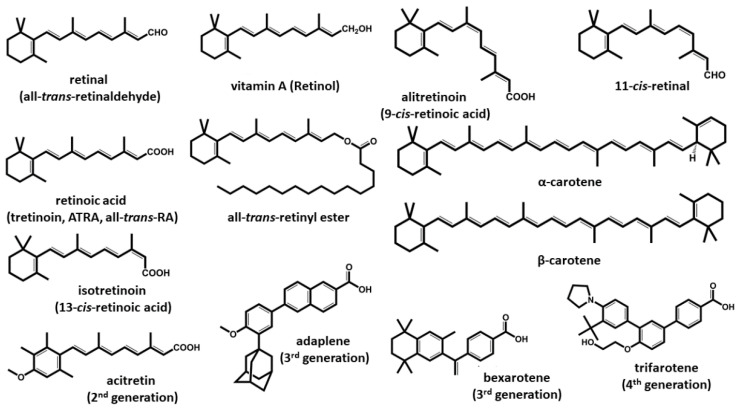
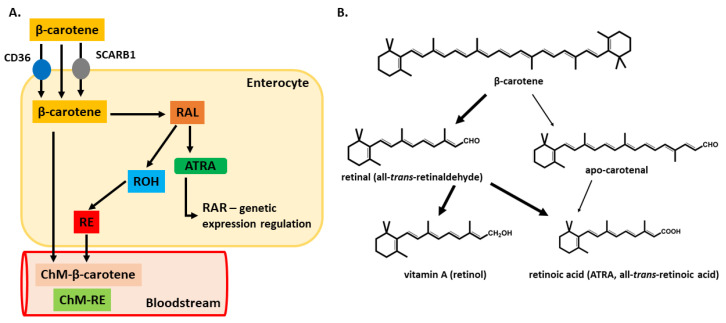
Vitamin A is a group of vital micronutrients widely present in the human diet. Animal-based products are a rich source of the retinyl ester form of the vitamin, while vegetables and fruits contain carotenoids, most of which are provitamin A. Vitamin A plays a key role in the correct functioning of multiple physiological functions. The human organism can metabolize natural forms of vitamin A and provitamin A into biologically active forms (retinol, retinal, retinoic acid), which interact with multiple molecular targets, including nuclear receptors, opsin in the retina.
Overview
CoChat Summary
## TL;DR
This is a narrative review of vitamin A covering its chemical forms, dietary sources, absorption and transport, biological functions, deficiency, therapeutic uses, detection methods, and toxicity. It emphasizes that vitamin A is essential but can be harmful in excess, and that analytical methods must be carefully chosen because endogenous retinoids are present at very low levels.
## Key findings
- Vitamin A comes from animal foods as preformed retinol/retinyl esters and from plants as provitamin A carotenoids; only a few carotenoids are important dietary sources, especially β-carotene, α-carotene, and β-cryptoxanthin.
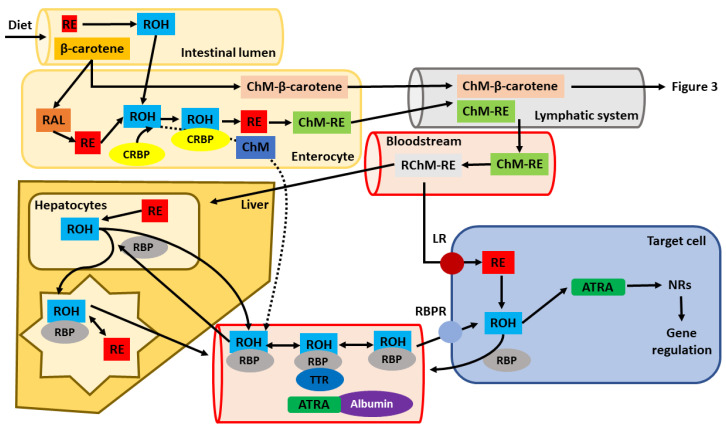
- In the body, retinol is transported mainly by retinol-binding protein (RBP) and transthyretin (TTR); vitamin A is stored largely as retinyl esters in the liver and adipose tissue, and deficiency may take months to appear after intake stops.
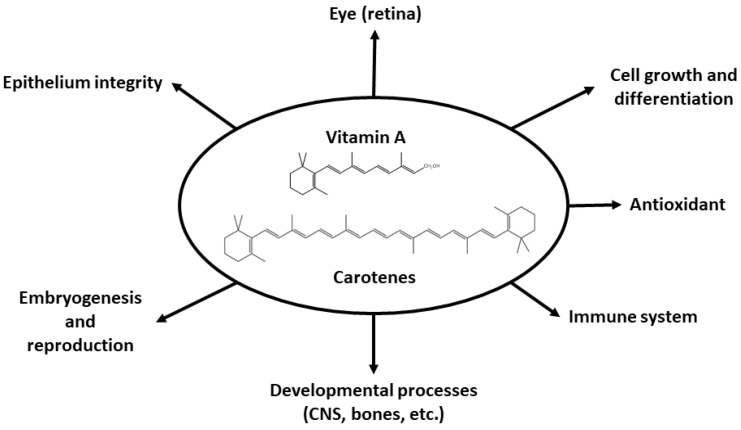
- The review states that vitamin A is involved in vision, gene regulation through nuclear receptors, immune function, epithelial integrity, embryogenesis, bone homeostasis, and other processes; it also notes that ATRA is the major active form of vitamin A.
- Deficiency is linked to night blindness, xerophthalmia, impaired immunity, infections, anemia, developmental problems, and blindness; the paper states that about one-third of the world’s infant population suffers from hypovitaminosis A, around 15% of pregnant women in developing countries are deficient, and vitamin A deficiency causes more than 650,000 child deaths per year in developing countries.
## Methods
- Narrative review article synthesizing previously published literature on vitamin A across sources, pharmacokinetics, function, deficiency, therapy, toxicity, and detection.
- The review draws on reported analytical and biological studies and summarizes findings from dietary, clinical, preclinical, and methodological papers; no original sample was collected.
- For detection methods, it compares instrumental approaches such as (U)HPLC with UV-Vis/DAD, FLD, ECD, MS/MS, SFC, GC-MS, and immunoassays, focusing on sensitivity, specificity, and suitability for endogenous retinoids.
## Limitations
- Not stated in the paper.
- Evident from the text: this is a review, so it does not present original experimental data or a new systematic synthesis with explicit search strategy, inclusion criteria, or risk-of-bias assessment.
- Evident from the text: many conclusions are based on heterogeneous prior studies, and the paper itself notes contradictory findings in areas such as cancer-related effects of retinoids and β-carotene.
Model-written summary. Check it against the paper before relying on it.
Integrity signals
Registry
Cites
Statistics
Figures
Verification
Claims the paper makes
46 Valid · 10 Not valid · 49 Not checked · 36 Own results and interpretations
The cited sources support only part of this claim — read each source’s verdict below.
In the paper
“The vitamin can be provided in the diet either via products of an animal origin in the form of vitamin A (retinol and its close derivatives) or as provitamin A (carotenoids) from vegetables [1].”
§ Vitamin A Update: Forms, Sources, Kinetics, Detection, Function, Deficiency, Therapeutic Use and Toxicity > 1. Introduction and Forms of Vitamin A
What the sources say
- Partly supportedcites [1] D’Ambrosio D.N. Clugston R.D. Blaner W.S. Vitamin A metabolism: An update Nutrients 2011 3 63 103 10.3390/nu3010063 21350678 PMC3042718 sourceExperimental — accuracy not yet measured
Section 2.1 (page not specified) says dietary retinoids arrive either as preformed retinol and retinyl ester or as proretinoid carotenoids. The passages support the two dietary forms but do not specify animal products as the source of the former or vegetables as the source of the latter. (LLM, conf=0.84)
plain- Asserted: passes — The authors put it forward as true.
- Checkable: passes — It can be checked against evidence.
- Load-bearing: unclear — It is unclear whether the paper’s conclusions depend on it.
- Based: passes — The paper gives a reason why it holds.
- Partly supported
Every source the paper cites for this claim was checked and supports it.
In the paper
“Although the term vitamin A is mostly associated with retinol, and retinol is, in fact, the predominant form of retinoids in the human body, the main biologically active molecules are the oxidized derivates 11-cis-retinal and all-trans-retinoid acid (ATRA) [1,2].”
§ Vitamin A Update: Forms, Sources, Kinetics, Detection, Function, Deficiency, Therapeutic Use and Toxicity > 1. Introduction and Forms of Vitamin A
What the sources say
- Supportedcites [1] D’Ambrosio D.N. Clugston R.D. Blaner W.S. Vitamin A metabolism: An update Nutrients 2011 3 63 103 10.3390/nu3010063 21350678 PMC3042718 source
Section 5.3 describes 11-cis-retinoid as required for vision, while Section 2.2 reports that retinoic acid acts through its receptors to regulate gene expression. The paper’s retinoid-binding-protein table identifies both 11-cis-retinal and all-trans-retinoic acid. Together, these passages support the sentence’s characterization of them as major biologically active vitamin A derivatives (page numbers unavailable in our copy). (LLM, conf=0.85)
- Supportedcites [2] Kam R.K. Deng Y. Chen Y. Zhao H. Retinoic acid synthesis and functions in early embryonic development Cell. Biosci. 2012 2 11 10.1186/2045-3701-2-11 22439772 PMC3325842 source
Section 2, “Metabolism of vitamin A and the production of all-trans retinoic acid,” identifies atRA and 11-cis retinal as the key mediators of vitamin A function. Section 2.1 describes the formation of 11-cis retinal by oxidation of 11-cis retinol; section 2.2 describes oxidation in the pathway to atRA. (LLM, conf=0.95)
plain- Asserted: passes — The authors put it forward as true.
- Checkable: passes — It can be checked against evidence.
- Load-bearing: unclear — It is unclear whether the paper’s conclusions depend on it.
- Based: passes — The paper gives a reason why it holds.
- Supported
The cited sources support only part of this claim — read each source’s verdict below.
In the paper
“The values found in individual studies vary considerably, but the highest vitamin A content in the liver is usually reported in pigs [56,57,58,59,60].”
§ Vitamin A Update: Forms, Sources, Kinetics, Detection, Function, Deficiency, Therapeutic Use and Toxicity > 2. Sources of Vitamin A
What the sources say
- Not checked — no full text of the sourcecites [56] Majchrzak D. Fabian E. Elmadfa I. Vitamin A content (retinol and retinyl esters) in livers of different animals Food Chem. 2006 98 704 710 10.1016/j.foodchem.2005.06.035 source
- Not checked — no full text of the sourcecites [57] Álvarez R. Meléndez-Martínez A.J. Vicario I.M. Alcalde M.J. Carotenoid and Vitamin A Contents in Biological Fluids and Tissues of Animals as an Effect of the Diet: A Review Food Rev. Int. 2015 31 319 340 10.1080/87559129.2015.1015139 source
- Not checked — no full text of the sourcecites [58] Ollilainen V. Heinonen M. Linkola E. Varo P. Koivistoinen P. Carotenoids and retinoids in finnish foods: Meat and meat products J. Food Compos. Anal. 1988 1 178 188 10.1016/0889-1575(88)90022-1 2592640 source
- Could not verifycites [59] Darwish W.S. Ikenaka Y. Morshdy A.E. Eldesoky K.I. Nakayama S. Mizukawa H. Ishizuka M. β-carotene and retinol contents in the meat of herbivorous ungulates with a special reference to their public health importance J. Vet. Med. Sci. 2016 78 351 354 10.1292/jvms.15-0287 26498400 PMC4785134 sourceExperimental — accuracy not yet measured
The retinol-results passage (indexed under Abstract; page unavailable) compares rats, sheep and other ungulates, but not pigs. A search for pig, pork, swine and porcine found no passage assessing whether pig liver usually has the highest vitamin A content. (LLM, conf=0.78)
- Partly supportedcites [60] Schweigert F. Buchholz I. Schuhmacher A. Effect of dietary β-carotene on the accumulation of β-carotene and vitamin A in plasma and tissues of gilts Reprod. Nutr. Dev. Reprod. Nutr. Dev. 2001 41 47 55 10.1051/rnd:2001111 11368244 sourceExperimental — accuracy not yet measured
Section 3.2 reports vitamin A concentrations in gilt livers and says they were higher than in the other tissues examined. It does not compare liver concentrations across species, so it cannot establish that pigs usually have the highest liver vitamin A content. (LLM, conf=0.79)
hedged- Asserted: passes — The authors put it forward as true.
- Checkable: passes — It can be checked against evidence.
- Load-bearing: unclear — It is unclear whether the paper’s conclusions depend on it.
- Based: passes — The paper gives a reason why it holds.
The cited sources support only part of this claim — read each source’s verdict below.
In the paper
“Drugs such as estrogens and oral contraceptives have been reported to elevate plasma concentrations of RBP, thereby elevating retinoid blood levels [111].”
§ Vitamin A Update: Forms, Sources, Kinetics, Detection, Function, Deficiency, Therapeutic Use and Toxicity > 3. Vitamin A Pharmacokinetics > 3.2. Other Factors Influencing Vitamin A Pharmacokinetics
What the sources say
- Partly supportedcites [111] Jung U.S. Jeong K.J. Kang J.K. Yi K. Shin J.H. Seo H.S. Kim T. Kim S.H. Hur J.Y. Effects of estrogen receptor alpha and beta on the expression of visfatin and retinol-binding protein 4 in 3T3-L1 adipocytes Int. J. Mol. Med. 2013 32 723 728 10.3892/ijmm.2013.1440 23857051 sourceExperimental — accuracy not yet measured
The Discussion (page not available) reports that estradiol increased RBP4 secretion in cultured 3T3-L1 adipocytes and describes a correlation between plasma RBP and estradiol levels. It does not report that estrogens or oral contraceptives elevate plasma RBP, or that either raises retinoid blood levels; its proposed effect on retinoic acid metabolism is qualified as an expectation. (LLM, conf=0.86)
hedgedstates a cause- Asserted: passes — The authors put it forward as true.
- Checkable: passes — It can be checked against evidence.
- Load-bearing: unclear — It is unclear whether the paper’s conclusions depend on it.
- Based: passes — The paper gives a reason why it holds.
- Partly supported
The cited sources support only part of this claim — read each source’s verdict below.
In the paper
“Although the placenta has been believed to protect the fetus against high-vitamin A intake from pregnant women being over-supplemented with vitamin A, several studies have reported that high vitamin A intake by the mother can lead to teratogenic effects in the developing fetus [117,118,119].”
§ Vitamin A Update: Forms, Sources, Kinetics, Detection, Function, Deficiency, Therapeutic Use and Toxicity > 3. Vitamin A Pharmacokinetics > 3.3. Pharmacokinetics of Vitamin A during Pregnancy
What the sources say
- Supportedcites [117] Bastos Maia S. Rolland Souza A. Costa Caminha M. Lins Da Silva S. Callou Cruz R. Carvalho Dos Santos C. Batista Filho M. Vitamin A and Pregnancy: A Narrative Review Nutrients 2019 11 681 10.3390/nu11030681 PMC6470929 30909386 source
Section 4 reports that high maternal intake of preformed vitamin A during pregnancy may pose a teratogenic risk and describes malformations in children whose mothers consumed high doses. The review distinguishes preformed vitamin A from beta-carotene; it does not suggest that high beta-carotene intake has the same effect. (LLM, conf=0.94)
- Supportedcites [118] Rothman K.J. Moore L.L. Singer M.R. Nguyen U.S. Mannino S. Milunsky A. Teratogenicity of high vitamin A intake N. Engl. J. Med. 1995 333 1369 1373 10.1056/NEJM199511233332101 7477116 source
The Abstract reports a higher prevalence of birth defects among babies whose mothers consumed high amounts of preformed vitamin A and concludes that high intake appears teratogenic. The Discussion likewise describes a potential teratogenic effect, particularly with intake during early pregnancy; it distinguishes preformed vitamin A from beta carotene. (LLM, conf=0.94)
- Not matchedcites [119] Hunt J.R. Teratogenicity of high vitamin A intake N. Engl. J. Med. 1996 334 1197 10.1056/NEJM199605023341814 8602195
We searched by its title and found no matching paper.
plainstates a cause- Asserted: passes — The authors put it forward as true.
- Checkable: passes — It can be checked against evidence.
- Load-bearing: passes — The paper’s conclusions depend on it.
- Based: passes — The paper gives a reason why it holds.
- Supported
68 more claims · 25 with their cited sources checked
Create a free account to see all 141 claims and every source verdict.
- It may state two separate claims as one. 52
- Probably not a substantial claim. 23
Claims other papers make about this one
Each is checked against this paper’s own text: does it say what the citing paper says it does?
The source backs part of the claim, not all of it — or backs it for a different population, condition or comparison.
In the citing paper
“Excessive and prolonged beta-carotene consumption causes yellow-orange discolouration of skin thick areas, such as palms and soles, however this is a benign, reversible condition [1,19].”
From The Role of Vitamin A in Retinal Diseases (2022) · cites this paper as [1]
Experimental — accuracy not yet measuredThe source backs part of the claim, not all of it — or backs it for a different population, condition or comparison.
In the citing paper
“In adults, stores of vitamin A in the body can last around 1 to 2 years while in children stores last much shorter and signs of deficiency develop more rapidly [1].”
From The Role of Vitamin A in Retinal Diseases (2022) · cites this paper as [1]
Experimental — accuracy not yet measuredThe source backs part of the claim, not all of it — or backs it for a different population, condition or comparison.
In the citing paper
“It is crucial for reproduction, growth and development of the embryo, normal brain function, immune system functioning, skeletal development, growth of hair and nails, and epithelial cell RNA synthesis including the conjunctiva and cornea.”
From The Role of Vitamin A in Retinal Diseases (2022) · cites this paper as [1]
Experimental — accuracy not yet measuredThe cited source says what the claim attributes to it.
In the citing paper
“One of the most important vitamin A functions is its involvement in visual phototransduction, where it serves as the crucial part of photopigment, the first molecule in the process of transforming photons of light into electrical signals.”
From The Role of Vitamin A in Retinal Diseases (2022) · cites this paper as [1]
The cited source says what the claim attributes to it.
In the citing paper
“It is essential for several physiological processes.”
From The Role of Vitamin A in Retinal Diseases (2022) · cites this paper as [1]
8 more claims about this paper
Create a free account to see every claim other papers make about this one.
Self-check
Percentages, sums and reported differences re-computed from the paper’s own numbers.
Each contradiction between two passages listed here was confirmed by an independent check.
Rated major: it would touch a result — a value a result rests on, reported and recomputed p-values on opposite sides of the significance level, two passages that conflict with no sign which is right, or a cited work retracted before this paper was published.
In the paper
§ Vitamin A Update: Forms, Sources, Kinetics, Detection, Function, Deficiency, Therapeutic Use and Toxicity > 7. Therapeutic Use of Vitamin A
“Whereas most retinoids are usually available in oral preparations, acitretin is indicated for topical use.”
§ Vitamin A Update: Forms, Sources, Kinetics, Detection, Function, Deficiency, Therapeutic Use and Toxicity > 3. Vitamin A Pharmacokinetics > 3.1. Absorption, Distribution, Metabolism and Elimination
“Etretinate and acitretin, which are second-generation retinoids, are also used in oral form in therapy.”
Citations
Cites
Trumbo (2001) · doi:10.1016/s0002-8223(01)00078-5 · Cited by 4,852
Effects of a combination of beta carotene and vitamin A on lung cancer and cardiovascular disease
Omenn, G. S., Goodman, G. E., Thornquist, M. D., Balmes, J., Cullen, M. R., Glass, A., Keogh, J. P., Meyskens, F. L., Valanis, B., Williams, J. H., et al. (1996) · New England Journal of Medicine · doi:10.1056/nejm199605023341802 · Cited by 3,638
A human retinoic acid receptor which belongs to the family of nuclear receptors
Petkovich, M., Brand, N. J., Krust, A., & Chambon, P. (1987) · Nature · doi:10.1038/330444a0 · Cited by 2,214
Serum retinol binding protein 4 contributes to insulin resistance in obesity and type 2 diabetes
Yang, Q., Graham, T. E., Mody, N., Preitner, F., Peroni, O. D., Zabolotny, J. M., Kotani, K., Quadro, L., & Kahn, B. B. (2005) · Nature · doi:10.1038/nature03711 · Cited by 2,086
The epidemiology of global micronutrient deficiencies
Bailey, R. L., West Jr., K. P., & Black, R. E. (2015) · Annals of Nutrition and Metabolism · doi:10.1159/000371618 · Cited by 2,035
Induction of differentiation of the human promyelocytic leukemia cell line (HL-60) by retinoic acid
Breitman, T. R., Selonick, S. E., & Collins, S. J. (1980) · Proceedings of the National Academy of Sciences · doi:10.1073/pnas.77.5.2936 · Cited by 1,966
Identification of a receptor for the morphogen retinoic acid
Giguere, V., Ong, E. S., Segui, P., & Evans, R. M. (1987) · Nature · doi:10.1038/330624a0 · Cited by 1,965
Lammer, E. J., Chen, D. T., Hoar, R. M., Agnish, N. D., Benke, P. J., Braun, J. T., Curry, C. J., Fernhoff, P. M., Grix, A. W., Lott, I. T., et al. (1985) · New England Journal of Medicine · doi:10.1056/nejm198510033131401 · Cited by 1,942
9-cis retinoic acid is a high affinity ligand for the retinoid X receptor
Heyman, R. A., Mangelsdorf, D. J., Dyck, J. A., Stein, R. B., Eichele, G., Evans, R. M., & Thaller, C. (1992) · Cell · doi:10.1016/0092-8674(92)90479-v · Cited by 1,780
TISSUE CHANGES FOLLOWING DEPRIVATION OF FAT-SOLUBLE A VITAMIN
Wolbach, S. B., & Howe, P. R. (1925) · Journal of Experimental Medicine · doi:10.1084/jem.42.6.753 · Cited by 1,647
Research works printed but not linked: 2
- Seroczynska A. Korzeniewska A. Sztangret-Wisniewska J. Niemirowicz-Szczytt K. Marek G. Relationship between carotenoids content and flower or fruit flesh colour of winter squash (Cucurbita maxima Duch.) Folia Hortic. 2006 18 51 61
- Fedele V. Rubino R. Salvatore C. Manzi P. Marconi S. Pizzoferrato L. Seasonal variation in retinol concentration of goat milk associated with grazing compared to indoor feeding S. Afr. J. Anim. Sci. 2004 34 148 150
Cited by
Items 201–300 of 416
Thymus as Incontrovertible Target of Future Immune Modulatory Therapeutics
Khan, G. J., Imtiaz, A., Wang, W., Duan, H. Q., Cao, H., Zhai, K., & He, N. (2024) · Endocrine Metabolic & Immune Disorders - Drug Targets · doi:10.2174/0118715303283164240126104109 · Cited by 4
Insights into the roles of heat-stable protein derived from egg white in vitamin A stabilisation
Gao, Y., Liu, H., Wang, R., Zang, J., & Lv, C. (2024) · International Journal of Food Science & Technology · doi:10.1111/ijfs.17271 · Cited by 3
Micronutrient Deficiencies in Heart Failure and Relationship with Exocrine Pancreatic Insufficiency
Vijver, M. A. T., Bömer, N., Verdonk, R. C., van der Meer, P., van Veldhuisen, D. J., & Dams, O. C. (2024) · Nutrients · doi:10.3390/nu17010056 · Cited by 6
“While deficiency is rare, an excess of vitamin A typically only arises from overcon-sumption [23].”
Iodine Accumulation and Distribution in Carrots (Daucus carota L.)
Duborská, E., Bujdoš, M., Matúš, P., et al. (2024) · Agronomy · doi:10.3390/agronomy14123015 · Cited by 2
Schulz, K., Bachmann, M., Raila, J., Schmitt, R., Staufenbiel, R., Scholz, H., Wensch-Dorendorf, M., Ptok, S., Weißenborn, A., & Pieper, R. (2025) · npj Science of Food · doi:10.1038/s41538-025-00397-9 · Cited by 5
Dragar, B., Kranjc, S., Čemažar, M., Jesenko, T., Romih, R., Kreft, M. E., Kuret, T., & Zupančič, D. (2025) · Molecular Nutrition & Food Research · doi:10.1002/mnfr.70045 · Cited by 2
Narrative review of micronutrients and fatty acids in bronchopulmonary dysplasia
Curtiss, J., & Miller, A. N. (2025) · Nutrition in Clinical Practice · doi:10.1002/ncp.11327 · Cited by 3
“31 Vitamin A is important for lung development, alveolar growth, and lung repair.”
Marine bioactive compounds: Sustainable sources, green extraction, and healthcare applications
Favas, R., Monteiro, M., Almeida, H., Ferreira, D., Peixoto, A. F., & Silva, A. C. (2025) · Chinese Chemical Letters · doi:10.1016/j.cclet.2025.111482 · Cited by 5
de Vreese, M., Durand, E., Baréa, B., Morvan, D. L., Aleman, C., Lecomte, J., & Villeneuve, P. (2025) · Journal of the American Oil Chemists Society · doi:10.1002/aocs.70000 · Cited by 4
“The biologically active forms of vitamin A include retinol (RO), retinal, and retinoic acid (Carazo et al. 2021) (Figure 1a–c), the all-trans isomers having the highest biological activities and representing two-thirds of natural vitamin A sources.”
Overview of harziane diterpenoids: discovery, bioactivity, total synthesis and biosynthesis
Wu, M., Li, H., & Yang, W. (2025) · Organic & Biomolecular Chemistry · doi:10.1039/d5ob01393c · Cited by 2
Karmeli, S., Chillon, T. S., Sane, R., Schwarz, M., Gröber, U., Hackler, J., Kipp, A. P., & Schomburg, L. (2025) · The Journal of Nutritional Biochemistry · doi:10.1016/j.jnutbio.2025.110142 · Cited by 2
Wang, Z., Duan, H., Cheng, X., Cheng, C., Li, W., Ma, F., He, R., Li, Z., Yang, M., Wang, D., et al. (2025) · Clinica Chimica Acta · doi:10.1016/j.cca.2025.120674 · Cited by 2
α-Mangostin, a safe and natural product as a candidate skin-whitening agent
Li, X., Zhu, X., Wang, B., Sun, J., & Xia, Y. F. (2025) · Scientific Reports · doi:10.1038/s41598-025-31047-5 · Cited by 4
“ATRA is the most biologically active RA, and the skin is one of the primary production sites 34,35 .”
Retinal Degeneration in Alzheimer’s Disease 5xFAD Mice Fed DHA-Enriched Diets
Pinho, M., Ahfaz, H., Carvalho, S., Correia, J., Spínola, M. P., Pestana, J. M., Bandarra, N. M., & Lopes, P. A. (2025) · Cells · doi:10.3390/cells15010008 · Cited by 2
Hypervitaminosis: The deleterious effects of vitamins on the skin
Chen, M., & Driscoll, M. S. (2026) · Clinics in Dermatology · doi:10.1016/j.clindermatol.2026.04.011 · Cited by 2
Clinical safety and tolerability of in vivo gene editing drug ART001 for ATTR amyloidosis
Jiang, Y., Huang, L. H., Qiu, H., Yang, S., Tao, J., Chen, R., & Hao, Y. (2026) · Frontiers in Medicine · doi:10.3389/fmed.2026.1783921 · Cited by 3
“This is consistent with the report that retinyl esters can also be transported to target cells independently of TTR (28).”
Labachevski, B., Labacevska, M. P., Stavridis, I. P., Трајкова, С., Pivkova-Veljanovska, A., Stojanoski, Z., Ridova, N., Zendelovska, D., Petruševska, M., & Balkanov, T. (2023) · Journal of Morphological Sciences · doi:10.55302/jms2361051l · Cited by 2
“Vitamin A is important for proper vision, normal growth (its deficiency causes bone growth delay), reproduction, cellular proliferation, spermatogenesis, and fetal development [9].”
BackgroundThe altered metabolic pathways of diffuse large B-cell lymphoma not otherwise specified
Rodrigues‐Fernandes, C. I., Martins‐Chaves, R. R., Vitório, J. G., et al. (2023) · Leukemia & lymphoma/Leukemia and lymphoma · doi:10.1080/10428194.2023.2234523 · Cited by 2
“These functions include embryogenesis, cellular differentiation and proliferation, and immune function [45,46].”
BackgroundOboh, H. A., Chinma, C. E., Olumese, F. E., Oseren, K., Aluyor, A., Savage, O. T., & Oghosa, O. J. (2023) · International Journal of Nutrition and Food Sciences · doi:10.11648/j.ijnfs.20231206.14 · Cited by 4
Self-Restricted Diet in Pediatric Autism Leading to Vitamin A Deficiency and Severe Photophobia
Dixon, C. J., Ethridge, B. A., Tillman, A. P., & Sugg, J. H. (2024) · Cureus · doi:10.7759/cureus.54618 · Cited by 2
“Greater than 99% of the US population maintains adequate vitamin A intake, thanks to retinol, or its derivatives, being widely available from various animal, plant, and dairy sources [4-6].”
BackgroundLevai, L. D., Tang, E. N., Monono, E. Y., Ndikum, S. B., Eyenga, E. F., Sumbele, S. A., Ngane, B. K., Schneider, J., Birmingham, T., Ndindeng, S. A., et al. (2024) · Journal of Food Measurement & Characterization · doi:10.1007/s11694-024-02505-x · Cited by 3
Prediction of Retinol in Fortified Maize Flour using Fourier Transform - Near Infrared Spectroscopy
Chepkoech, B., Wafula, E., Sila, D. N., & Orina, I. (2024) · Current Research in Nutrition and Food Science Journal · doi:10.12944/crnfsj.12.1.31 · Cited by 3
Alteration of Gene Expression in Pathological Keratinization of the Ocular Surface
Yoshioka, H., Ueta, M., Fukuoka, H., Yokoi, N., Mizushima, K., Naito, Y., Kinoshita, S., & Sotozono, C. (2024) · Investigative Ophthalmology & Visual Science · doi:10.1167/iovs.65.6.37 · Cited by 2
Kesmen, E., Aslıyüksek, H., Kök, A. N., Şenol, C., Özli, S., & Şenol, O. (2024) · Forensic Toxicology · doi:10.1007/s11419-024-00703-2 · Cited by 3
“Vitamin A has three unique chemical compounds, each of which serves a specific purpose in the body: retinol, an alcohol; retinal, an aldehyde; and retinoic acid [43].”
Feng, Y., Li, Y., Chen, S., Hu, N., & Liao, D. (2024) · Frontiers in Nutrition · doi:10.3389/fnut.2024.1469844 · Cited by 2
Yu, C., Liu, K., Yao, W., & Tang, D. (2025) · Frontiers in Nutrition · doi:10.3389/fnut.2025.1492829 · Cited by 3
Wondie, W. T., Zemariam, A. B., Gedefaw, G. D., Lakew, G., Getachew, E., Mengistie, B. A., Shibabaw, A. A., Chereka, A. A., Kitil, G. W., Yirsaw, A. N., et al. (2025) · Frontiers in Public Health · doi:10.3389/fpubh.2025.1496931 · Cited by 7
The Effect of Vitamins, and Minerals on Acne Vulgaris Treatment
Almosilhy, N. A., Ghattas, A. S., & AlEdani, E. M. (2025) · Updates in clinical dermatology · doi:10.1007/978-3-031-83677-0_6 · Cited by 2
Natural Compounds That Target Glioma Stem Cells
Yaroshenko, M., Christoff, M., Ścibiorski, M., Surowiec, K., Jakubowicz-Gil, J., & Sumorek-Wiadro, J. (2025) · NeuroSci · doi:10.3390/neurosci6020052 · Cited by 3
“It plays an important role in the biological processes of growth and proliferation, including embryo development [127,128].”
Daraghmeh, D. N., Salameh, S., Zahdeh, M., Ghanem, R., & Karaman, R. (2025) · Current Drug Metabolism · doi:10.2174/0113892002357565250604075932 · Cited by 5
Sbaffone, M., Ruggieri, M., Sebastiano, M., Mackay, A. R., Zelli, V., Farina, A. R., & Cappabianca, L. A. (2022) · Life · doi:10.3390/life12111762 · Cited by 3
“Animal products such as liver, oil, milk, and eggs are the main dietary sources of vitamin A (as vitamin A esters combine with long-chain fatty acids) [95,96], whereas vegetables and fruits such as carrots, tomatoes, spinach, lettuce, parsley, chilies, apricots, and mango, are sources of provitamin A carotenoids [96].”
BackgroundNorman, A. C., Palmer, D. G., Moran, N. E., Roemmich, J. N., & Casperson, S. L. (2024) · Journal of Nutrition · doi:10.1016/j.tjnut.2024.05.022 · Cited by 2
Liu, M., Fu, J., Zhang, X., Fu, Q., Ji, Y., & Chen, S. (2024) · Frontiers in Nutrition · doi:10.3389/fnut.2024.1387461 · Cited by 2
“With impaired liver function after hepatitis, the storage of retinyl esters may be reduced, as may the ability of retinyl esters to mobilize hydrolysis and dehydroconversion to retinol, which may explain the low serum retinol concentration in patients with impaired liver function (34).”
BackgroundVitamin A and vitamin E in SARS-CoV-2 Infection: a systematic reviewPreprint
Carvalho, M. C. D. C., Silbiger, V. N., Ribeiro, K. D. D. S., & Araujo, J. K. C. P. (2022) · Research Square · doi:10.21203/rs.3.rs-2139276/v1 · Cited by 2
Telomerase Inhibition Potential of Natural Compounds in Leukemia TreatmentPreprint
Bartoszewska, E., Molik, K., Choromańska, A., & Woźniak, M. (2024) · Preprints.org · doi:10.20944/preprints202401.0362.v1 · Cited by 2
Скляров, П. М., Naumenko, S. V., Koshevoy, V., Fedorenko, S. Y., Bilyi, D. D., Vakulyk, V. V., Kolesnyk, J. V., Homych, J. M., & Fedorenko, V. S. (2023) · Theoretical and Applied Veterinary Medicine · doi:10.32819/2023.11014 · Cited by 2
Lipid-Soluble Vitamins: Their Roles in Cardiovascular Health and Diseases
Venn, Z. L., Adu-Agyekum, E., & Bidasee, K. R. (2024) · Advances in biochemistry in health and disease · doi:10.1007/978-3-031-55489-6_5 · Cited by 3
Uso de antioxidantes en pacientes con tuberculosis
Reyes-Lazcano, M. E., Rosete, D., & Guzmán‐Beltrán, S. (2023) · NCT Neumología y Cirugía de Tórax · doi:10.35366/116816 · Cited by 2
Retinoids: Molecular Aspects and Treatment in Premalignant Lesions and Cervical Cancer
Cortés-Malagón, E. M., Gariglio, P., Sierra-Martínez, M., & Bonilla‐Delgado, J. (2024) · Cancer Control · doi:10.1177/10732748241279514 · Cited by 2
The Role of Nutrition in Cancer: From Cellular and Molecular Perspective
Rasaei, N., Ildarabadi, A., Rahmani, F., Shiravi, F., Shoaibinobarian, N., & Tahvildari, A. (2024) · Interdisciplinary cancer research · doi:10.1007/16833_2024_354 · Cited by 2
Metabolic Function of the Adipose Tissue
Deevska, G. M. (2024) · Contemporary Endocrinology · doi:10.1007/978-3-031-72570-8_3 · Cited by 1
Role of Micronutrients in MAFLD
Pršo, A.-M. L., & Krznarić, Ž. (2024) · IntechOpen eBooks · doi:10.5772/intechopen.1008349 · Cited by 1
Liposome Encapsulation: Innovative Vitamin Delivery in Fortified Foods
Koirala, P., Bhandari, Y., & Nirmal, N. P. (2024) · Methods and protocols in food science · doi:10.1007/978-1-0716-4346-4_2 · Cited by 1
Jensen, N., Weiland‐Bräuer, N., Chibani, C. M., & Schmitz, R. A. (2025) · iScience · doi:10.1016/j.isci.2024.111729 · Cited by 5
“37,38 In this process, retinol undergoes enzymatic oxidation to form all-trans retinal, mediated by retinol dehydrogenase (RDH2), which is then further oxidized to produce 9-cis RA by retinal dehydrogenase (RALDH).”
Xu, J.-M., Zhang, L., Yu, D.-N., Zhai, X.-J., & Zhang, R. (2025) · BMC Public Health · doi:10.1186/s12889-025-21920-3 · Cited by 3
“…13 questions (1–6 for vitamin A, 7–13 for vitamin D), with 1 point for correct answers and 0 points for wrong or unclear answers, ranging from 0 to 13 points, answers with correct responses to more than half of the options for the multiple-choice questions [3, 6, 9, 26–29] were regarded as correct.”
Tang, X., Pesola, G. R., Chen, Q., Miller, D., Nagy, L. E., McMullen, M. R., Schwartz, R. E., Tsoy, S., Lim, C., Chikara, S., et al. (2025) · Alcoholism Clinical and Experimental Research · doi:10.1111/acer.70011 · Cited by 6
Abbasi, M., Heath, B., & McGinness, L. (2025) · Nutrients · doi:10.3390/nu17061045 · Cited by 1
“Vitamin A and its derivatives are vital for many physiological functions, including development and immune regulation [47,48].”
Yoshioka, H., Ueta, M., Yokoo, S., Yokoi, N., Mizushima, K., Naito, Y., Kinoshita, S., & Sotozono, C. (2025) · Investigative Ophthalmology & Visual Science · doi:10.1167/iovs.66.5.6 · Cited by 1
“16,23 Thus, it is unclear as to which receptor signaling affects squamous metaplasia.”
Lian, Z., Du, W., Tusup-Han, P.-G., & Zhang, Y.-X. (2025) · Journal of Translational Medicine · doi:10.1186/s12967-025-06666-1 · Cited by 2
“Vitamin A and vitamin D are essential for the maintenance of intralysiological homeostasis, not only in the regulation of the microenvironment and immunity but also in the regulation of cell division and differentiation [24, 61].”
Vitamin A Deficiencies and Impact on Health
Bayır, A. G. (2025) · Springer eBooks · doi:10.1007/978-3-031-32047-7_122-1 · Cited by 1
Emerging Nanonutraceuticals against Obesity
Ni, L., Peng, M., Liang, Y., Ye, X., Zheng, H., Guo, D., Yang, L., Li, X., & Chen, R. (2025) · Small Science · doi:10.1002/smsc.202500116 · Cited by 3
Nutritional and Bioactive Profile of Gitumon: An Indonesian Tradition-al Herbal Beverage
Ali, M. A., Kurniawati, D. M., Noer, E. R., Kusuma, D. W. Y., Rahayu, S., Anggita, G. M., Ahda, Z. Z., Mohamed, A. M. D., Zaw, P. M., Susanto, H., et al. (2025) · The North African Journal of Food and Nutrition Research · doi:10.51745/najfnr.9.20.16-30 · Cited by 2
Hosseini, M. S., Dashti‐Khavidaki, S., Talebian, M., Toosi, M. N., & Safaei, M. (2025) · Clinical Case Reports · doi:10.1002/ccr3.70721 · Cited by 1
Technologies for eggs enrichment with vitamins
Monika, M., Rokade, J. J., Sonale, N. S., et al. (2025) · Elsevier eBooks · doi:10.1016/b978-0-443-34262-2.00009-9 · Cited by 1
Suwanvecho, C., Krčmová, L. K., & Švec, F. (2025) · Methods · doi:10.1016/j.ymeth.2025.08.006 · Cited by 1
Self-citationAguaymanto L.: fitoquímicos y aplicaciones en la salud humana
Ramos, C., Asmat, P., Asencio, P. L., Larco-León, E., Mogollón, P. C., & Hidalgo, M. (2025) · Revista Mexicana de Ciencias Agrícolas · doi:10.29312/remexca.v16i5.3682 · Cited by 1
“A nivel de los frutos, el #- caroteno, actúa como precursor de la vitamina A, que aporta propiedades antioxidantes y el característico color anaranjado a P. peruviana (Carazo et al. , 2021).”
Fan, Z., Zhu, R., Guo, S., Wu, Q., Li, J., Liu, S., Su, Z., & Wu, W. (2025) · Journal of Vascular Surgery · doi:10.1016/j.jvs.2025.12.223 · Cited by 2
Thaitumu, M. N., Gkanali, V., Theodoridis, G., & Gika, H. (2025) · Analytical Science Advances · doi:10.1002/ansa.70044 · Cited by 2
Retinoids in dermatology: from structure to clinical application
Olkhovskaya, K. B., & Vashkevich, A. A. (2025) · Russian Journal of Skin and Venereal Diseases · doi:10.17816/dv678298 · Cited by 1
A multifaceted index for assessing micronutrient malnutrition in population health research
Saif, S., & Badar, R. (2025) · Academia Nutrition and Dietetics · doi:10.20935/acadnutr7941 · Cited by 1
ТОКСИЧНИЙ ВПЛИВ НАДМІРНИХ ДОЗ ВІТАМІНІВ НА ОРГАНІЗМ ЛЮДИНИ
Покотило, В., Fedevych, Y. M., Fartushok, T. V., & Fartushok, N. V. (2025) · ГРААЛЬ НАУКИ · doi:10.36074/grail-of-science.22.08.2025.083 · Cited by 1
Sanchez, J. C., Nusair, O., Kumar, D., & Soleimani, M. (2025) · Journal of International Medical Research · doi:10.1177/03000605251387932 · Cited by 1
Wang, Y., Wang, Y., Yu, L., Xu, D., Fan, L., & Wang, Y. (2025) · LWT · doi:10.1016/j.lwt.2025.118731 · Cited by 1
Vitamin A: Biological Functions and Implications for Muscle Health
Chang, C.-L., Li, J., Shen, Z., & Gao, W. Q. (2025) · Nutrition Reviews · doi:10.1093/nutrit/nuaf223 · Cited by 1
Kobelkova, I. V., Seledkova, Y. A., & Korosteleva, M. M. (2025) · Health Care of the Russian Federation · doi:10.47470/0044-197x-2025-69-6-600-607 · Cited by 1
Lynch, D. H., Arbeeva, L. S., Sumner, S., Rushing, B. R., Batsis, J. A., Nelson, A. E., & Fielding, R. A. (2025) · Metabolites · doi:10.3390/metabo16010009 · Cited by 3
“Both deficiency and excess of retinoids have been implicated in muscle dysfunction [32].”
Vitamins A, E, and C: Mechanisms of Antioxidant Action and Physiological Impact
Koca, F., Yılmaz, E., & Çimen, L. (2025) · Sağlık Bilimleri Dergisi · doi:10.34108/eujhs.1727061 · Cited by 2
Thangaraj, S. V., Ogwara, C. A., & Padmanabhan, V. (2026) · Journal of the Endocrine Society · doi:10.1210/jendso/bvag017 · Cited by 1
“Vitamin A remains understud-ied for environmental exposures, likely due to concerns about increased lung cancer risk from β -carotene (pro–vitamin A) supplements [188, 189] and its potential pro-oxidant effects at high doses given its regulatory role in gene expression [190, 191].”
Fat-Soluble Vitamins: Deficiency and Excess
Tsichlis, J. T., Hauser, B., & Rodriguez, V. A. (2026) · Pediatrics in Review · doi:10.1542/pir.2025-006770 · Cited by 1
Li, C., Deng, S., Zhou, P., Rao, J., Xiang, Y., Xi, L., & Wang, X. (2026) · Frontiers in Nutrition · doi:10.3389/fnut.2026.1737197 · Cited by 1
“Vitamin A has been shown to play critical roles in placental development and nutrient transport in experimental studies (39); deficiency may be associated with altered placental function, though whether this represents a causal mechanism or reflects confounding requires further investigation.”
ATRA-mediated RAR-α activation attenuates acrylamide-induced testicular toxicity
Mokhlis, H. A., Rashed, M. H., Saleh, I. G., Eldeib, M. G., El-Husseiny, A. A., Khidr, E. G., Gomaa, M. H., Gad, H. S., Elnagar, M. R., Mokhtar, M. M., et al. (2026) · Scientific Reports · doi:10.1038/s41598-026-50168-z · Cited by 2
Transthyretin and Vitamin A Metabolism: A Review for the Cardiac Amyloidosis Specialist
Brown, D., Modak, V., Altic, A., Zuwayny, A. A., & Tauras, J. M. (2026) · Journal of Cardiovascular Development and Disease · doi:10.3390/jcdd13050205 · Cited by 2
“The richest food sources of preformed vitamin A are animal-based, for example, liver (especially beef), fish liver oil, and organ meats [10].”
InfluentialVitamin A as an essential nutrient: advances in biosynthesis
Zhang, J. G., Sun, L., Tan, Z., Qi, Q., & Hou, J. (2026) · Current Opinion in Biotechnology · doi:10.1016/j.copbio.2026.103512 · Cited by 1
Manfredini, M., Milandri, M., Barbieri, M., Marchio, T., Ciardo, S., & Longo, C. (2026) · Dermatologic Therapy · doi:10.1155/dth/5796138 · Cited by 1
Laya, A., Koubala, B. B., Pathak, K., & Bueno, V. (2021) · International Journal of Cancer and Clinical Research · doi:10.23937/2378-3419/1410162 · Cited by 1
Grant, W. B. (2022) · Elsevier eBooks · doi:10.1016/b978-0-12-822563-9.00064-0 · Cited by 2
Distribution of Alleles of β-Carotene Hydroxylase 1 Gene in Modern Genotypes of Zea mays L.
Сатарова, Т. М., Деркач, К. В., Cherchel, V. Y., & Dziubetskyi, B. V. (2023) · Cytology and Genetics · doi:10.3103/s0095452723010115 · Cited by 1
“…A, a common precursor for vitamin A synthesis in an animal organism, which is essential for the activity of the nervous, immune, and reproductive systems as well as for vision, skin, and other organs (Abraham et al., 2021; Carazo et al., 2021; Kljak et al., 2021; Von Lintig et al., 2022).”
BackgroundCarences et excès en micronutriments
Metsu, D., Caspar‐Bauguil, S., & Galinier, A. (2023) · Nutrition Clinique et Métabolisme · doi:10.1016/j.nupar.2023.05.002 · Cited by 3
A review on the nutraceuticals of Parkinson's disease
Vella, C., & Blundell, R. A. (2024) · Journal of Food Nutrition and Diet Science · doi:10.55976/fnds.22024124151-65 · Cited by 1
“The UPR controls cellular adaptation in response to stress by increasing the ER's capacity for protein-folding and concurrently lowering the synthetic load [58].”
BackgroundVitamins as Functional Foods and Nutraceuticals
Handu, S., Prakash, B., Jan, S., Habib, M., & Jan, K. (2024) · Springer eBooks · doi:10.1007/978-3-031-59365-9_6 · Cited by 1
Algal Biorefinery to Produce High-Value Carotenoids and Bioenergy
Sarker, N. K., & Kaparaju, P. (2024) · Environmental science and engineering · doi:10.1007/978-3-031-52319-9_2 · Cited by 1
Liu, Q., Shu, P., Song, Q., Huang, Z., Weng, J., Zhang, L., Wang, Y., & Liu, Q. (2024) · Cosmetics · doi:10.3390/cosmetics11060203 · Cited by 3
Li, L., Zhu, S., & Xue, M. (2024) · Journal of Thoracic Disease · doi:10.21037/jtd-24-641 · Cited by 1
“Vitamin A (VA) is the first discovered fat-soluble vitamin, which widely presents in the human diet and is an essential nutrient for maintaining normal functions of the human body (7).”
Fruits and Vegetables as a Source of Nutraceuticals: Twenty-First Century Perspective
Balali, G. I., Opoku, D., Asumang, P., Gobe, V. A. D., Yar, D. D., Aziz, A. A. E., Abdulai, Z., & Cobbinah, E. A. (2025) · Springer eBooks · doi:10.1007/978-981-97-9723-3_17 · Cited by 2
Zhang, Y., Zhang, X., Shi, X., Liao, W., & Lin, J. (2025) · Frontiers in Pharmacology · doi:10.3389/fphar.2025.1594283 · Cited by 7
Studies of All- trans Retinoic Acid Transport in the Eye
Chatterjee, S., Roy, A., Yu, J., Read, A. T., Bentley‐Ford, M. R., Pardue, M. T., Kane, M. A., Finn, M. G., & Ethier, C. R. (2025) · Investigative Ophthalmology & Visual Science · doi:10.1167/iovs.66.6.84 · Cited by 1
Akbar, A., Slotkowski, R., VanOrmer, M., Rapoza, R., Hahka, T. M., Freel, C., Natarajan, S. K., Thoene, M. K., Hanson, C., Anderson‐Berry, A., et al. (2025) · Journal of Renal Nutrition · doi:10.1053/j.jrn.2025.07.006 · Cited by 1
Graulet, B. (2022) · INRAE Productions Animales · doi:10.20870/productions-animales.2022.35.2.7080 · Cited by 3
Estado nutricional de vitamina D e resistência à insulina entre gestantes do Estudo MINA-Brasil
Rodrigues, C. Z. (2021) · Digital Library of Theses and Dissertations (Universidade de São Paulo) · doi:10.11606/d.6.2021.tde-02022022-193931 · Cited by 1
The Nexus of Food Safety and Nutrition
Lambertini, E., Nordhagen, S., DeWaal, C. S., Neufeld, L. M., & McClafferty, B. (2023) · Elsevier eBooks · doi:10.1016/b978-0-12-822521-9.00210-0 · Cited by 1
Studies of all-trans retinoic acid transport in myopigenesisPreprint
Chatterjee, S., Roy, A., Yu, J.-S., Read, A. T., Bentley-Ford, M. R., Pardue, M. T., Kane, M. A., Finn, M., & Ethier, C. (2025) · bioRxiv · doi:10.1101/2025.01.04.631331
“Since atRA is extremely hydrophobic [17], it must bind to one or more carriers for significant transport within aqueous environments [18].”
Varalakshmi, S. D., Choudhari, K. S., Lewis, L. E. S., Koushik, H., Kartha, V. B., & Unnikrishnan, V. K. (2025) · Microchemical Journal · doi:10.1016/j.microc.2025.114595 · Cited by 1
Asghar, M., Yaqoob, M., Siddiqui, M. A., Khan, A., & Ali, S. (2025) · Journal of Analytical Chemistry · doi:10.1134/s1061934825700807 · Cited by 1
Ahmed, M. H., & Taeel, F. D. (2022) · Current Issues in Pharmacy and Medical Sciences · doi:10.2478/cipms-2022-0034
Mans, D. R. A. (2023) · Biochemistry · doi:10.5772/intechopen.110079
Identification of Nutraceuticals and Antioxidant Activity in Low-Cost Broken Rice Varieties
Srisuk, N. (2022) · Journal of Pharmaceutical Negative Results · doi:10.47750/pnr.2022.13.04.210
“On the other hand, red and orange vegetables are documented for their carotenoids (α-carotene, β-carotene, cryptoxanthin, lutein, and lycopene) (Carazo et al., 2021).”
BackgroundPetrova, S. Y., & Albanova, V. I. (2023) · Vestnik dermatologii i venerologii · doi:10.25208/vdv1396
Ray, S. D., Bulakhova, V., Pawa, K., et al. (2023) · Elsevier eBooks · doi:10.1016/b978-0-12-824315-2.01190-8
Muhsin, S. N., Hasan, S. A., & Hassan, M. (2023) · University of Thi-Qar Journal of Science · doi:10.32792/utq/utjsci/v10i1.914 · Cited by 1
Toxicity Profile of Vitamin A: a Review of Current Situation
Cetinkaya, B. D. (2023) · doi:10.59287/pcshs.366
Metadata
- Authors
- Carazo, A., Macáková, K., Matoušová, K., Krčmová, L. K., Protti, M., & Mladěnka, P.
- Affiliations
- Charles University (CZ)
- University Hospital Hradec Králové (CZ)
- University of Bologna (IT)
- Corresponding author
- Carazo, Alejandro
- ORCID
- Venue
- Nutrients
- Publisher
- MDPI AG
- Published
- 2021-05-18
- Volume
- 13
- Issue
- 5
- Pages
- 1703
- ISSN
- 2072-6643 (ISSN-L)
- PMC
- PMC8157347
- OpenAlex
- W3160109639
- Cited by
- 461
- References
- 389
- Citations by year
- 2026: 75 · 2025: 152 · 2024: 120 · 2023: 68 · 2022: 39 · 2021: 7
- FWCI
- 5.96
- Type
- journal article
- Language
- en
- Open access
- gold
- doi.org
- Licence
- Locations
- Nutrients (publishedVersion, cc-by)
- PubMed Central (publishedVersion, cc-by)
- PubMed (publishedVersion)
- Archivio istituzionale della ricerca (Alma Mater Studiorum Università di Bologna) (submittedVersion, cc-by)
- DOAJ (DOAJ: Directory of Open Access Journals) (submittedVersion, cc-by-sa)
- Funders
- ERASMUS+ project strategic partnership (2020-1-CZ01-KA203-078218)
- EFSA-CDN project co-funded by the ERDF (CZ.02.1.01/0.0/0.0/16_019/0000841)
- Topics
- Life Sciences › Biochemistry, Genetics and Molecular Biology › Molecular Biology › Retinoids in leukemia and cellular processes
- Health Sciences › Medicine › Biochemistry (medical) › Antioxidant Activity and Oxidative Stress
- Health Sciences › Medicine › Public Health, Environmental and Occupational Health › Nutrition and Health Studies
- Keywords
- vitamin A, retinol, retinal, retinoic acid, provitamin A, carotenoids, retinyl esters, vitamin A metabolism, vitamin A deficiency, vitamin A toxicity, vitamin A supplementation, nuclear receptors, opsin
- MeSH terms
- Humans, Nutritional Physiological Phenomena, Vitamin A, Vitamin A Deficiency
About these checks
Registry, retraction, Cites and statistics results are computed, not judged, with one exception: a printed reference that no index lists is read once by a model before it counts as a citation error. Claims are extracted by a model and kept only when their quote appears verbatim in the text; each cited source is then checked, with a model’s help, for whether it says what the claim relies on. Those verdicts can be wrong — read the claim’s quote and the cited source before relying on one.
The claim verdicts this report counts are experimental: their accuracy is not yet measured.
A language model drew the claims from the paper on 2026-10-01, under version 3 of the claim definition (model deepseek-v4.1-flash, prompt extract-v3).
A second model labelled each claim on 2026-10-01 (model jev-1.13-20260917, definition revision gold-guideline-v0.2).
Cited sources are checked with a language model’s help (gpt-6-sol).
Statistics and arithmetic are recomputed, not judged.
Confidence bands are shown only for fields calibrated on our annotated test set. None is calibrated yet, so no band is shown.
What counts as a claim ›How we measure confidence ›How we check this ›
Are you an author, or do you see a problem with this page? Request a review
Data sources
Bibliographic data: Semantic Scholar, OpenAlex, Crossref.
Contains information from the Semantic Scholar Academic Graph Datasets, made available under the ODC Attribution License (ODC-BY 1.0).
Semantic Scholar’s data is described in: Kinney, R., et al. (2023). The Semantic Scholar Open Data Platform. arXiv:2301.10140.
