

Vitamin A Update: Forms, Sources, Kinetics, Detection, Function, Deficiency, Therapeutic Use and Toxicity
Open accessThe DOI matches its Crossref record; 369 of the 389 references it cites were found in a registry or an index; 75 of the 234 sources its claims cite were checked for support.
Abstract
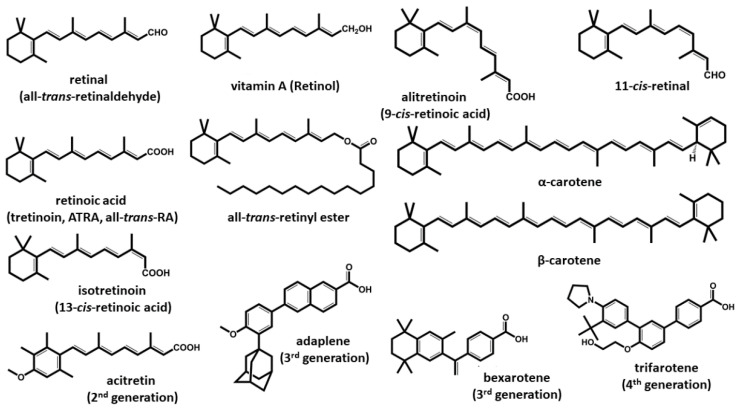
Vitamin A is a group of vital micronutrients widely present in the human diet. Animal-based products are a rich source of the retinyl ester form of the vitamin, while vegetables and fruits contain carotenoids, most of which are provitamin A. Vitamin A plays a key role in the correct functioning of multiple physiological functions. The human organism can metabolize natural forms of vitamin A and provitamin A into biologically active forms (retinol, retinal, retinoic acid), which interact with multiple molecular targets, including nuclear receptors, opsin in the retina.
Overview
CoChat Summary
## TL;DR
This is a narrative review of vitamin A covering its chemical forms, dietary sources, absorption and transport, biological functions, deficiency, therapeutic uses, detection methods, and toxicity. It emphasizes that vitamin A is essential but can be harmful in excess, and that analytical methods must be carefully chosen because endogenous retinoids are present at very low levels.
## Key findings
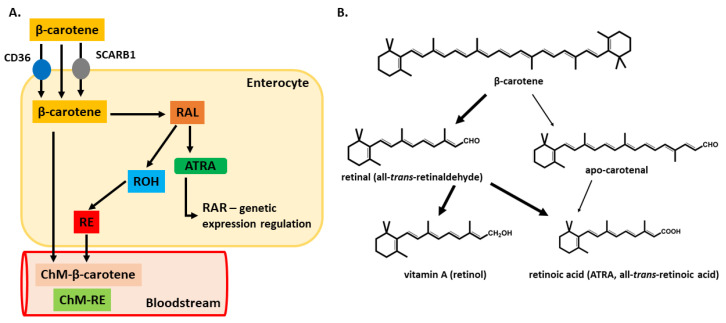
- Vitamin A comes from animal foods as preformed retinol/retinyl esters and from plants as provitamin A carotenoids; only a few carotenoids are important dietary sources, especially β-carotene, α-carotene, and β-cryptoxanthin.
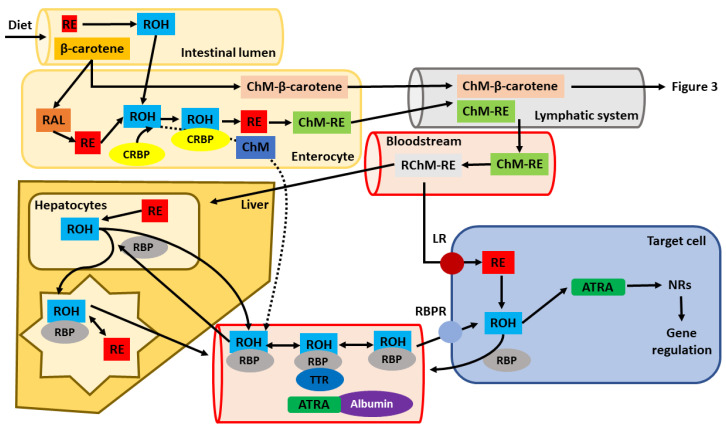
- In the body, retinol is transported mainly by retinol-binding protein (RBP) and transthyretin (TTR); vitamin A is stored largely as retinyl esters in the liver and adipose tissue, and deficiency may take months to appear after intake stops.
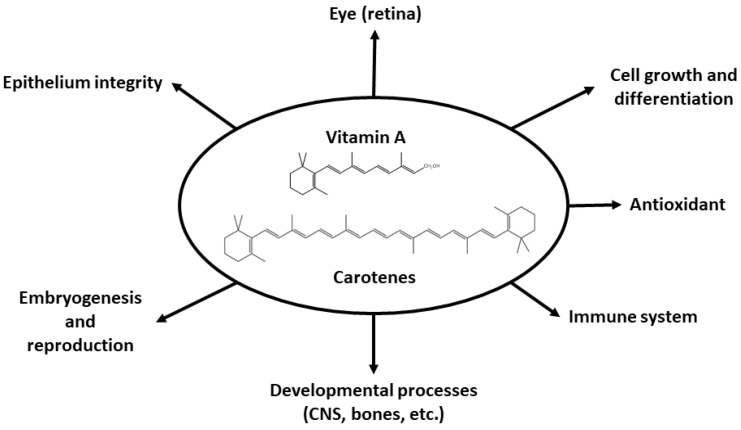
- The review states that vitamin A is involved in vision, gene regulation through nuclear receptors, immune function, epithelial integrity, embryogenesis, bone homeostasis, and other processes; it also notes that ATRA is the major active form of vitamin A.
- Deficiency is linked to night blindness, xerophthalmia, impaired immunity, infections, anemia, developmental problems, and blindness; the paper states that about one-third of the world’s infant population suffers from hypovitaminosis A, around 15% of pregnant women in developing countries are deficient, and vitamin A deficiency causes more than 650,000 child deaths per year in developing countries.
## Methods
- Narrative review article synthesizing previously published literature on vitamin A across sources, pharmacokinetics, function, deficiency, therapy, toxicity, and detection.
- The review draws on reported analytical and biological studies and summarizes findings from dietary, clinical, preclinical, and methodological papers; no original sample was collected.
- For detection methods, it compares instrumental approaches such as (U)HPLC with UV-Vis/DAD, FLD, ECD, MS/MS, SFC, GC-MS, and immunoassays, focusing on sensitivity, specificity, and suitability for endogenous retinoids.
## Limitations
- Not stated in the paper.
- Evident from the text: this is a review, so it does not present original experimental data or a new systematic synthesis with explicit search strategy, inclusion criteria, or risk-of-bias assessment.
- Evident from the text: many conclusions are based on heterogeneous prior studies, and the paper itself notes contradictory findings in areas such as cancer-related effects of retinoids and β-carotene.
Model-written summary. Check it against the paper before relying on it.
Integrity signals
Registry
Cites
Statistics
Figures
Verification
Claims the paper makes
46 Valid · 10 Not valid · 49 Not checked · 36 Own results and interpretations
The cited sources support only part of this claim — read each source’s verdict below.
In the paper
“The vitamin can be provided in the diet either via products of an animal origin in the form of vitamin A (retinol and its close derivatives) or as provitamin A (carotenoids) from vegetables [1].”
§ Vitamin A Update: Forms, Sources, Kinetics, Detection, Function, Deficiency, Therapeutic Use and Toxicity > 1. Introduction and Forms of Vitamin A
What the sources say
- Partly supportedcites [1] Clugston, 2011, Vitamin A metabolism: An update, Nutrients sourceExperimental — accuracy not yet measured
Section 2.1 (page not specified) says dietary retinoids arrive either as preformed retinol and retinyl ester or as proretinoid carotenoids. The passages support the two dietary forms but do not specify animal products as the source of the former or vegetables as the source of the latter. (LLM, conf=0.84)
plain- Asserted: passes — The authors put it forward as true.
- Checkable: passes — It can be checked against evidence.
- Load-bearing: unclear — It is unclear whether the paper’s conclusions depend on it.
- Based: passes — The paper gives a reason why it holds.
- Partly supported
Every source the paper cites for this claim was checked and supports it.
In the paper
“Although the term vitamin A is mostly associated with retinol, and retinol is, in fact, the predominant form of retinoids in the human body, the main biologically active molecules are the oxidized derivates 11-cis-retinal and all-trans-retinoid acid (ATRA) [1,2].”
§ Vitamin A Update: Forms, Sources, Kinetics, Detection, Function, Deficiency, Therapeutic Use and Toxicity > 1. Introduction and Forms of Vitamin A
What the sources say
- Supportedcites [1] Clugston, 2011, Vitamin A metabolism: An update, Nutrients source
Section 5.3 describes 11-cis-retinoid as required for vision, while Section 2.2 reports that retinoic acid acts through its receptors to regulate gene expression. The paper’s retinoid-binding-protein table identifies both 11-cis-retinal and all-trans-retinoic acid. Together, these passages support the sentence’s characterization of them as major biologically active vitamin A derivatives (page numbers unavailable in our copy). (LLM, conf=0.85)
- Supportedcites [2] Kam, 2012, Retinoic acid synthesis and functions in early embryonic development, Cell. Biosci. source
Section 2, “Metabolism of vitamin A and the production of all-trans retinoic acid,” identifies atRA and 11-cis retinal as the key mediators of vitamin A function. Section 2.1 describes the formation of 11-cis retinal by oxidation of 11-cis retinol; section 2.2 describes oxidation in the pathway to atRA. (LLM, conf=0.95)
plain- Asserted: passes — The authors put it forward as true.
- Checkable: passes — It can be checked against evidence.
- Load-bearing: unclear — It is unclear whether the paper’s conclusions depend on it.
- Based: passes — The paper gives a reason why it holds.
- Supported
The cited sources support only part of this claim — read each source’s verdict below.
In the paper
“The values found in individual studies vary considerably, but the highest vitamin A content in the liver is usually reported in pigs [56,57,58,59,60].”
§ Vitamin A Update: Forms, Sources, Kinetics, Detection, Function, Deficiency, Therapeutic Use and Toxicity > 2. Sources of Vitamin A
What the sources say
- Not checked — no full text of the sourcecites [56] Majchrzak, 2006, Vitamin A content (retinol and retinyl esters) in livers of different animals, Food Chem. source
- Not checked — no full text of the sourcecites [57] Vicario, 2015, Carotenoid and Vitamin A Contents in Biological Fluids and Tissues of Animals as an Effect of the Diet: A Review, Food Rev. Int. source
- Not checked — no full text of the sourcecites [58] Ollilainen, 1988, Carotenoids and retinoids in finnish foods: Meat and meat products, J. Food Compos. Anal. source
- Could not verifycites [59] Darwish, 2016, β-carotene and retinol contents in the meat of herbivorous ungulates with a special reference to their public health importance, J. Vet. Med. Sci. sourceExperimental — accuracy not yet measured
The retinol-results passage (indexed under Abstract; page unavailable) compares rats, sheep and other ungulates, but not pigs. A search for pig, pork, swine and porcine found no passage assessing whether pig liver usually has the highest vitamin A content. (LLM, conf=0.78)
- Partly supportedcites [60] Schweigert, 2001, Effect of dietary β-carotene on the accumulation of β-carotene and vitamin A in plasma and tissues of gilts, Reprod. Nutr. Dev. Reprod. Nutr. Dev. sourceExperimental — accuracy not yet measured
Section 3.2 reports vitamin A concentrations in gilt livers and says they were higher than in the other tissues examined. It does not compare liver concentrations across species, so it cannot establish that pigs usually have the highest liver vitamin A content. (LLM, conf=0.79)
hedged- Asserted: passes — The authors put it forward as true.
- Checkable: passes — It can be checked against evidence.
- Load-bearing: unclear — It is unclear whether the paper’s conclusions depend on it.
- Based: passes — The paper gives a reason why it holds.
The cited sources support only part of this claim — read each source’s verdict below.
In the paper
“Drugs such as estrogens and oral contraceptives have been reported to elevate plasma concentrations of RBP, thereby elevating retinoid blood levels [111].”
§ Vitamin A Update: Forms, Sources, Kinetics, Detection, Function, Deficiency, Therapeutic Use and Toxicity > 3. Vitamin A Pharmacokinetics > 3.2. Other Factors Influencing Vitamin A Pharmacokinetics
What the sources say
- Partly supportedcites [111] Jung, 2013, Effects of estrogen receptor alpha and beta on the expression of visfatin and retinol-binding protein 4 in 3T3-L1 adipocytes, Int. J. Mol. Med. sourceExperimental — accuracy not yet measured
The Discussion (page not available) reports that estradiol increased RBP4 secretion in cultured 3T3-L1 adipocytes and describes a correlation between plasma RBP and estradiol levels. It does not report that estrogens or oral contraceptives elevate plasma RBP, or that either raises retinoid blood levels; its proposed effect on retinoic acid metabolism is qualified as an expectation. (LLM, conf=0.86)
hedgedstates a cause- Asserted: passes — The authors put it forward as true.
- Checkable: passes — It can be checked against evidence.
- Load-bearing: unclear — It is unclear whether the paper’s conclusions depend on it.
- Based: passes — The paper gives a reason why it holds.
- Partly supported
The cited sources support only part of this claim — read each source’s verdict below.
In the paper
“Although the placenta has been believed to protect the fetus against high-vitamin A intake from pregnant women being over-supplemented with vitamin A, several studies have reported that high vitamin A intake by the mother can lead to teratogenic effects in the developing fetus [117,118,119].”
§ Vitamin A Update: Forms, Sources, Kinetics, Detection, Function, Deficiency, Therapeutic Use and Toxicity > 3. Vitamin A Pharmacokinetics > 3.3. Pharmacokinetics of Vitamin A during Pregnancy
What the sources say
- Supportedcites [117] Bastos Maia, S., Rolland Souza, A., Costa Caminha, M., Lins Da Silva, S., Callou Cruz, R., Carvalho Dos Santos, C., and Batista Filho, M. (2019). Vitamin A and Pregnancy: A Narrative Review. Nutrients, 11. source
Section 4 reports that high maternal intake of preformed vitamin A during pregnancy may pose a teratogenic risk and describes malformations in children whose mothers consumed high doses. The review distinguishes preformed vitamin A from beta-carotene; it does not suggest that high beta-carotene intake has the same effect. (LLM, conf=0.94)
- Supportedcites [118] Rothman, 1995, Teratogenicity of high vitamin A intake, N. Engl. J. Med. source
The Abstract reports a higher prevalence of birth defects among babies whose mothers consumed high amounts of preformed vitamin A and concludes that high intake appears teratogenic. The Discussion likewise describes a potential teratogenic effect, particularly with intake during early pregnancy; it distinguishes preformed vitamin A from beta carotene. (LLM, conf=0.94)
- Not matchedcites [119] Hunt, 1996, Teratogenicity of high vitamin A intake, N. Engl. J. Med.
We searched by its title and found no matching paper.
plainstates a cause- Asserted: passes — The authors put it forward as true.
- Checkable: passes — It can be checked against evidence.
- Load-bearing: passes — The paper’s conclusions depend on it.
- Based: passes — The paper gives a reason why it holds.
- Supported
68 more claims · 25 with their cited sources checked
Create a free account to see all 141 claims and every source verdict.
- It may state two separate claims as one. 52
- Probably not a substantial claim. 23
Claims other papers make about this one
Each is checked against this paper’s own text: does it say what the citing paper says it does?
The source backs part of the claim, not all of it — or backs it for a different population, condition or comparison.
In the citing paper
“Excessive and prolonged beta-carotene consumption causes yellow-orange discolouration of skin thick areas, such as palms and soles, however this is a benign, reversible condition [1,19].”
From The Role of Vitamin A in Retinal Diseases (2022) · cites this paper as [1]
Experimental — accuracy not yet measuredThe source backs part of the claim, not all of it — or backs it for a different population, condition or comparison.
In the citing paper
“In adults, stores of vitamin A in the body can last around 1 to 2 years while in children stores last much shorter and signs of deficiency develop more rapidly [1].”
From The Role of Vitamin A in Retinal Diseases (2022) · cites this paper as [1]
Experimental — accuracy not yet measuredThe source backs part of the claim, not all of it — or backs it for a different population, condition or comparison.
In the citing paper
“It is crucial for reproduction, growth and development of the embryo, normal brain function, immune system functioning, skeletal development, growth of hair and nails, and epithelial cell RNA synthesis including the conjunctiva and cornea.”
From The Role of Vitamin A in Retinal Diseases (2022) · cites this paper as [1]
Experimental — accuracy not yet measuredThe cited source says what the claim attributes to it.
In the citing paper
“One of the most important vitamin A functions is its involvement in visual phototransduction, where it serves as the crucial part of photopigment, the first molecule in the process of transforming photons of light into electrical signals.”
From The Role of Vitamin A in Retinal Diseases (2022) · cites this paper as [1]
The cited source says what the claim attributes to it.
In the citing paper
“It is essential for several physiological processes.”
From The Role of Vitamin A in Retinal Diseases (2022) · cites this paper as [1]
8 more claims about this paper
Create a free account to see every claim other papers make about this one.
Self-check
Percentages, sums and reported differences re-computed from the paper’s own numbers.
Each contradiction between two passages listed here was confirmed by an independent check.
Rated major: it would touch a result — a value a result rests on, reported and recomputed p-values on opposite sides of the significance level, two passages that conflict with no sign which is right, or a cited work retracted before this paper was published.
In the paper
§ Vitamin A Update: Forms, Sources, Kinetics, Detection, Function, Deficiency, Therapeutic Use and Toxicity > 7. Therapeutic Use of Vitamin A
“Whereas most retinoids are usually available in oral preparations, acitretin is indicated for topical use.”
§ Vitamin A Update: Forms, Sources, Kinetics, Detection, Function, Deficiency, Therapeutic Use and Toxicity > 3. Vitamin A Pharmacokinetics > 3.1. Absorption, Distribution, Metabolism and Elimination
“Etretinate and acitretin, which are second-generation retinoids, are also used in oral form in therapy.”
Citations
Cites
Trumbo (2001) · doi:10.1016/s0002-8223(01)00078-5 · Cited by 4,852
Effects of a combination of beta carotene and vitamin A on lung cancer and cardiovascular disease
Omenn, G. S., Goodman, G. E., Thornquist, M. D., Balmes, J., Cullen, M. R., Glass, A., Keogh, J. P., Meyskens, F. L., Valanis, B., Williams, J. H., et al. (1996) · New England Journal of Medicine · doi:10.1056/nejm199605023341802 · Cited by 3,638
A human retinoic acid receptor which belongs to the family of nuclear receptors
Petkovich, M., Brand, N. J., Krust, A., & Chambon, P. (1987) · Nature · doi:10.1038/330444a0 · Cited by 2,214
Serum retinol binding protein 4 contributes to insulin resistance in obesity and type 2 diabetes
Yang, Q., Graham, T. E., Mody, N., Preitner, F., Peroni, O. D., Zabolotny, J. M., Kotani, K., Quadro, L., & Kahn, B. B. (2005) · Nature · doi:10.1038/nature03711 · Cited by 2,086
The epidemiology of global micronutrient deficiencies
Bailey, R. L., West Jr., K. P., & Black, R. E. (2015) · Annals of Nutrition and Metabolism · doi:10.1159/000371618 · Cited by 2,035
Induction of differentiation of the human promyelocytic leukemia cell line (HL-60) by retinoic acid
Breitman, T. R., Selonick, S. E., & Collins, S. J. (1980) · Proceedings of the National Academy of Sciences · doi:10.1073/pnas.77.5.2936 · Cited by 1,966
Identification of a receptor for the morphogen retinoic acid
Giguere, V., Ong, E. S., Segui, P., & Evans, R. M. (1987) · Nature · doi:10.1038/330624a0 · Cited by 1,965
Lammer, E. J., Chen, D. T., Hoar, R. M., Agnish, N. D., Benke, P. J., Braun, J. T., Curry, C. J., Fernhoff, P. M., Grix, A. W., Lott, I. T., et al. (1985) · New England Journal of Medicine · doi:10.1056/nejm198510033131401 · Cited by 1,942
9-cis retinoic acid is a high affinity ligand for the retinoid X receptor
Heyman, R. A., Mangelsdorf, D. J., Dyck, J. A., Stein, R. B., Eichele, G., Evans, R. M., & Thaller, C. (1992) · Cell · doi:10.1016/0092-8674(92)90479-v · Cited by 1,780
TISSUE CHANGES FOLLOWING DEPRIVATION OF FAT-SOLUBLE A VITAMIN
Wolbach, S. B., & Howe, P. R. (1925) · Journal of Experimental Medicine · doi:10.1084/jem.42.6.753 · Cited by 1,647
Vitamin effects on the immune system: Vitamins A and D take centre stage
Mora, J. R., Iwata, M., & von Andrian, U. H. (2008) · Nature Reviews Immunology · doi:10.1038/nri2378 · Cited by 1,559
Retinoic acid imprints gut-homing specificity on T cells
Iwata, M., Hirakiyama, A., Eshima, Y., Kagechika, H., Kato, C., & Song, S.-Y. (2004) · Immunity · doi:10.1016/j.immuni.2004.08.011 · Cited by 1,541
Nuclear receptor that identifies a novel retinoic acid response pathway
Mangelsdorf, D. J., Ong, E. S., Dyck, J. A., & Evans, R. M. (1990) · Nature · doi:10.1038/345224a0 · Cited by 1,488
Kliewer, S. A., Forman, B. M., Blumberg, B., Ong, E. S., Borgmeyer, U., Mangelsdorf, D. J., Umesono, K., & Evans, R. M. (1994) · Proceedings of the National Academy of Sciences · doi:10.1073/pnas.91.15.7355 · Cited by 1,400
Peroxisome-Proliferator-Activated Receptor δ Activates Fat Metabolism to Prevent Obesity
Wang, Y.-X., Lee, C.-H., Tiep, S., Yu, R. T., Ham, J., Kang, H., & Evans, R. M. (2003) · Cell · doi:10.1016/s0092-8674(03)00269-1 · Cited by 1,296
Krey, G. D., Braissant, O., L’Horset, F., Kalkhoven, E., Perroud, M., Parker, M. G., & Wahli, W. (1997) · Molecular Endocrinology · doi:10.1210/me.11.6.779 · Cited by 1,221
Yu, V. C., Delsert, C., Andersen, B., Holloway, J. M., Devary, O. V., Näär, A. M., Kim, S. Y., Boutin, J.-M., Glass, C. K., & Rosenfeld, M. G. (1991) · Cell · doi:10.1016/0092-8674(91)90301-e · Cited by 1,205
Characterization of three RXR genes that mediate the action of 9-cis retinoic acid.
Mangelsdorf, D. J., Borgmeyer, U., Heyman, R. A., Zhou, J. Y., Ong, E. S., Oro, A. E., Kakizuka, A., & Evans, R. M. (1992) · Genes & Development · doi:10.1101/gad.6.3.329 · Cited by 1,190
Molecular recognition of fatty acids by peroxisome proliferator-activated receptors
Xu, H. E., Lambert, M. H., Montana, V. G., Parks, D. J., Blanchard, S. G., Brown, P. J., Sternbach, D. D., Lehmann, J. M., Wisely, G. B., Willson, T. M., et al. (1999) · Molecular Cell · doi:10.1016/s1097-2765(00)80467-0 · Cited by 1,169
Cawley, S., Bekiranov, S., Ng, H. H., Kapranov, P., Sekinger, E. A., Kampa, D., Piccolboni, A., Sementchenko, V., Cheng, J., Williams, A. J., et al. (2004) · Cell · doi:10.1016/s0092-8674(04)00127-8 · Cited by 1,095
All-trans-Retinoic Acid in Acute Promyelocytic Leukemia
Tallman, M. S., Andersen, J. W., Schiffer, C. A., Appelbaum, F. R., Feusner, J. H., Ogden, A., Shepherd, L., Willman, C., Bloomfield, C. D., Rowe, J. M., et al. (1997) · New England Journal of Medicine · doi:10.1056/nejm199710093371501 · Cited by 1,073
Gene expression regulation by retinoic acid
Balmer, J. E., & Blomhoff, R. (2002) · Journal of Lipid Research · doi:10.1194/jlr.r100015-jlr200 · Cited by 1,039
Identification of a second human retinoic acid receptor
Brand, N., Petkovich, M., Krust, A., Chambon, P., de Thé, H., Marchio, A., Tiollais, P., & Dejean, A. (1988) · Nature · doi:10.1038/332850a0 · Cited by 1,022
Retinoid signaling determines germ cell fate in mice
Bowles, J., Knight, D., Smith, C., Wilhelm, D., Richman, J., Mamiya, S., Yashiro, K., Chawengsaksophak, K., Wilson, M. J., Rossant, J., et al. (2006) · Science · doi:10.1126/science.1125691 · Cited by 1,011
International Union of Pharmacology. LXI. Peroxisome Proliferator-Activated Receptors
Michalik, L., Auwerx, J., Berger, J. P., Chatterjee, V. K., Glass, C. K., Gonzalez, F. J., Grimaldi, P. A., Kadowaki, T., Lazar, M. A., O’Rahilly, S., et al. (2006) · Pharmacological Reviews · doi:10.1124/pr.58.4.5 · Cited by 1,000
Overview of retinoid metabolism and function
Blomhoff, R., & Blomhoff, H. K. (2006) · Journal of Neurobiology · doi:10.1002/neu.20242 · Cited by 947
Retinoic acid regulates sex-specific timing of meiotic initiation in mice
Koubova, J., Menke, D. B., Zhou, Q., Capel, B., Griswold, M. D., & Page, D. C. (2006) · Proceedings of the National Academy of Sciences · doi:10.1073/pnas.0510813103 · Cited by 941
Retinol-binding protein: the transport protein for vitamin A in human plasma
Kanai, M., Raz, A., & Goodman, D. S. (1968) · Journal of Clinical Investigation · doi:10.1172/jci105889 · Cited by 899 · cited 3×
“emphasizing its key role in the absorption process [76].”
BackgroundInfluentialBenson, M. J., Pino-Lagos, K., Rosemblatt, M., & Noelle, R. J. (2007) · The Journal of Experimental Medicine · doi:10.1084/jem.20070719 · Cited by 847
A Membrane Receptor for Retinol Binding Protein Mediates Cellular Uptake of Vitamin A
Kawaguchi, R., Yu, J., Honda, J., Hu, J., Whitelegge, J., Ping, P., Wiita, P., Bok, D., & Sun, H. (2007) · Science · doi:10.1126/science.1136244 · Cited by 836
Structure of the intact PPAR-γ–RXR-α nuclear receptor complex on DNA
Chandra, V., Huang, P., Hamuro, Y., Raghuram, S., Wang, Y., Burris, T. P., & Rastinejad, F. (2008) · Nature · doi:10.1038/nature07413 · Cited by 808
Dietary Factors That Affect the Bioavailability of Carotenoids
van het Hof, K. H., Weststrate, J. A., West, C. E., & Hautvast, J. G. A. J. (2000) · The Journal of Nutrition · doi:10.1093/jn/130.3.503 · Cited by 776 · cited 1×
“Heat treatment has the potential to increase bioavailability [28,29].”
BackgroundThe promise of retinoids to fight against cancer
Altucci, L., & Gronemeyer, H. (2001) · Nature Reviews Cancer · doi:10.1038/35106036 · Cited by 773
Maiani, G., Periago Castón, M. J., Catasta, G., Toti, E., Cambrodón, I. G., Bysted, A., Granado‐Lorencio, F., Olmedilla‐Alonso, B., Knuthsen, P., Valoti, M., et al. (2009) · Molecular Nutrition & Food Research · doi:10.1002/mnfr.200800053 · Cited by 773
Teratogenicity of high vitamin A intake
Rothman, K. J., Moore, L. L., Singer, M. R., Nguyen, U.-S. D. T., Mannino, S., & Milunsky, A. (1995) · New England Journal of Medicine · doi:10.1056/nejm199511233332101 · Cited by 754
Absorption, metabolism, and transport of carotenoids
Parker, R. S. (1996) · The FASEB Journal · doi:10.1096/fasebj.10.5.8621054 · Cited by 744 · cited 3×
“Some of the esters are metabolized back into retinol, and the remaining esters are further transported in association with very-low-density lip- oproteins (VLDL) and low-density lipoproteins (LDL) [89].”
BackgroundInfluentialRetinoic acid in development: Towards an integrated view
Niederreither, K., & Dollé, P. (2008) · Nature Reviews Genetics · doi:10.1038/nrg2340 · Cited by 726
Garg, M., Sharma, N., Sharma, S., Kapoor, P., Kumar, A., Chunduri, V., & Arora, P. (2018) · Frontiers in Nutrition · doi:10.3389/fnut.2018.00012 · Cited by 715
Duvic, M., Hymes, K., Heald, P., Breneman, D., Martin, A. G., Myskowski, P., Crowley, C., Yocum, R. C., & for Members of the Bexarotene Worldwide Study Group (2001) · Journal of Clinical Oncology · doi:10.1200/jco.2001.19.9.2456 · Cited by 706
Schug, T. T., Berry, D. C., Shaw, N. S., Travis, S. N., & Noy, N. (2007) · Cell · doi:10.1016/j.cell.2007.02.050 · Cited by 680
A third human retinoic acid receptor, hRAR-gamma.
Krust, A., Kastner, P., Petkovich, M., Zelent, A., & Chambon, P. (1989) · Proceedings of the National Academy of Sciences · doi:10.1073/pnas.86.14.5310 · Cited by 677
Teow, C. C., Truong, V.-D., McFeeters, R. F., Thompson, R. L., Pecota, K. V., & Yencho, G. C. (2007) · Food Chemistry · doi:10.1016/j.foodchem.2006.09.033 · Cited by 657 · cited 2×
“Convolvulaceae 20–22,600 a [12,18,22,35] Bitter gourd Momordica charantia L.”
BackgroundThe role of carotenoids in the prevention of human pathologies
Tapiero, H., Townsend, D. M., & Tew, K. D. (2004) · Biomedicine & Pharmacotherapy · doi:10.1016/j.biopha.2003.12.006 · Cited by 645
PPAR : a dagger in the heart of the metabolic syndrome
Barish, G. D. (2006) · Journal of Clinical Investigation · doi:10.1172/jci27955 · Cited by 641
Le Douarin, B., Zechel, C., Garnier, J. M., Lutz, Y., Tora, L., Pierrat, P., Heery, D., Gronemeyer, H., Chambon, P., & Losson, R. (1995) · The EMBO Journal · doi:10.1002/j.1460-2075.1995.tb07194.x · Cited by 619
Transport and Storage of Vitamin A
Blomhoff, R., Green, M. H., Berg, T., & Norum, K. R. (1990) · Science · doi:10.1126/science.2218545 · Cited by 611
Role of Vitamin A in the Immune System
Huang, Z., Liu, Y., Qi, G., Brand, D., & Zheng, S. (2018) · Journal of Clinical Medicine · doi:10.3390/jcm7090258 · Cited by 597
A randomized, controlled trial of vitamin A in children with severe measles
Hussey, G. D., & Klein, M. (1990) · New England Journal of Medicine · doi:10.1056/nejm199007193230304 · Cited by 588
Retinoids in the treatment of skin aging: an overview of clinical efficacy and safety
Mukherjee, S., Date, A., Patravale, V., Korting, H. C., Roeder, A., & Weindl, G. (2006) · Clinical Interventions in Aging · doi:10.2147/ciia.2006.1.4.327 · Cited by 580
The acute and chronic toxic effects of vitamin A
Penniston, K. L., & Tanumihardjo, S. A. (2006) · The American Journal of Clinical Nutrition · doi:10.1093/ajcn/83.2.191 · Cited by 577
Stevens, G. A., Bennett, J. E., Hennocq, Q., Lu, Y., De-Regil, L. M., Rogers, L., Danaei, G., Li, G., White, R. A., Flaxman, S. R., et al. (2015) · The Lancet Global Health · doi:10.1016/s2214-109x(15)00039-x · Cited by 572
Vitamin A metabolism: An update
D’Ambrosio, D. N., Clugston, R. D., & Blaner, W. S. (2011) · Nutrients · doi:10.3390/nu3010063 · Cited by 562 · cited 4×
“in fact, the predominant form of retinoids in the human body, the main biologically active molecules are the oxidized derivates 11-cis-retinal and all-trans-retinoid acid (ATRA) [1,2].”
BackgroundInfluentialVitamin A and retinoids in health and disease
Epstein, F. H., & Goodman, D. S. (1984) · New England Journal of Medicine · doi:10.1056/nejm198404193101605 · Cited by 553
Palm oil: Processing, characterization and utilization in the food industry – A review
Mba, O. I., Dumont, M.-J., & Ngadi, M. (2015) · Food Bioscience · doi:10.1016/j.fbio.2015.01.003 · Cited by 540
Prolonged Remissions of Cystic and Conglobate Acne with 13-cis-Retinoic Acid
Peck, G. L., Olsen, T. G., Yoder, F. W., Strauss, J. S., Downing, D. T., Pandya, M., Butkus, D., & Arnaud-Battandier, J. (1979) · New England Journal of Medicine · doi:10.1056/nejm197902153000701 · Cited by 519
International Union of Pharmacology. LXIII. Retinoid X receptors
Germain, P., Chambon, P., Eichele, G., Evans, R. M., Lazar, M. A., Leid, M., De Lera, A. R., Lotan, R., Mangelsdorf, D. J., & Gronemeyer, H. (2006) · Pharmacological Reviews · doi:10.1124/pr.58.4.7 · Cited by 496
Topical Tretinoin Improves Photoaged Skin: A Double-blind Vehicle-Controlled Study
Weiss, J. S. (1988) · JAMA · doi:10.1001/jama.1988.03720040019020 · Cited by 490
Antioxidant potentials of vitamin A and carotenoids and their relevance to heart disease
Palace, V. P., Khaper, N., Qin, Q., & Singal, P. K. (1999) · Free Radical Biology and Medicine · doi:10.1016/s0891-5849(98)00266-4 · Cited by 482
T HE R OLE OF V ITAMIN A IN M AMMALIAN R EPRODUCTION AND E MBRYONIC D EVELOPMENT
Clagett-Dame, M., & DeLuca, H. F. (2002) · Annual Review of Nutrition · doi:10.1146/annurev.nutr.22.010402.102745e · Cited by 461
Vitamin A in Reproduction and Development
Clagett-Dame, M., & Knutson, D. (2011) · Nutrients · doi:10.3390/nu3040385 · Cited by 439
Retinoid signalling in the development of the central nervous system
Maden, M. (2002) · Nature Reviews Neuroscience · doi:10.1038/nrn963 · Cited by 428
Retinoids regulate stem cell differentiation
Gudas, L. J., & Wagner, J. A. (2011) · Journal of Cellular Physiology · doi:10.1002/jcp.22417 · Cited by 395
Retinaldehyde represses adipogenesis and diet-induced obesity
Ziouzenkova, O., Orasanu, G., Sharlach, M., Akiyama, T. E., Berger, J. P., Viereck, J., Hamilton, J. A., Tang, G., Dolnikowski, G. G., Vogel, S., et al. (2007) · Nature Medicine · doi:10.1038/nm1587 · Cited by 381
Barłowska, J., Szwajkowska, M., Litwińczuk, Z., & Król, J. (2011) · Comprehensive Reviews in Food Science and Food Safety · doi:10.1111/j.1541-4337.2011.00163.x · Cited by 378
Retinoic acid biosynthesis and metabolism
Napoli, J. L. (1996) · The FASEB Journal · doi:10.1096/fasebj.10.9.8801182 · Cited by 378
Impact of micronutrient deficiencies on obesity
García, O. P., Long, K. Z., & Rosado, J. L. (2009) · Nutrition Reviews · doi:10.1111/j.1753-4887.2009.00228.x · Cited by 373
Mechanisms involved in the intestinal absorption of dietary vitamin A and provitamin A carotenoids
Harrison, E. H. (2012) · Biochimica et Biophysica Acta (BBA) - Molecular and Cell Biology of Lipids · doi:10.1016/j.bbalip.2011.06.002 · Cited by 365 · cited 2×
“Its absorption is increased if consumed with fatty meals since micelle formation supports the absorption of fat-soluble compounds, such as animal vitamin A in the small intestine [71].”
BackgroundTaxonomy and function of C1 protein kinase C homology domains
Hurley, J. H., Newton, A. C., Parker, P. J., Blumberg, P. M., & Nishizuka, Y. (1997) · Protein Science · doi:10.1002/pro.5560060228 · Cited by 362
Dietary Reference Intakes for The Antioxidant Nutrients
MONSEN, E. R. (2000) · Journal of the American Dietetic Association · doi:10.1016/s0002-8223(00)00189-9 · Cited by 357
Durand, B., Saunders, M., Gaudon, C., Roy, B., Losson, R., & Chambon, P. (1994) · The EMBO Journal · doi:10.1002/j.1460-2075.1994.tb06872.x · Cited by 354
Functional properties of carotenoids originating from algae
Christaki, E., Bonos, E., Giannenas, I., & Florou‐Paneri, P. (2013) · Journal of the Science of Food and Agriculture · doi:10.1002/jsfa.5902 · Cited by 346
Berry, D. C., & Noy, N. (2009) · Molecular and Cellular Biology · doi:10.1128/mcb.01742-08 · Cited by 345
Episkopou, V, Maeda, S., Nishiguchi, S., Shimada, K., Gaitanaris, G. A., Gottesman, M. E., & Robertson, E. J. (1993) · Proceedings of the National Academy of Sciences · doi:10.1073/pnas.90.6.2375 · Cited by 325
Zasada, M., & Budzisz, E. (2019) · Advances in Dermatology and Allergology · doi:10.5114/ada.2019.87443 · Cited by 315
The use of isotretinoin in acne
Layton, A. (2009) · Dermato-Endocrinology · doi:10.4161/derm.1.3.9364 · Cited by 314
Retinoids in cancer therapy and chemoprevention: Promise meets resistance
Freemantle, S. J., Spinella, M. J., & Dmitrovsky, E. (2003) · Oncogene · doi:10.1038/sj.onc.1206936 · Cited by 312
DRAGOVICUZELAC, V, LEVAJ, B., MRKIC, V, BURSAC, D., & BORAS, M. (2007) · Food Chemistry · doi:10.1016/j.foodchem.2006.04.001 · Cited by 311 · cited 2×
“Of course, other factors can also have an effect, such as the method and location of cultivation [19,22].”
BackgroundPPARs: transcriptional effectors of fatty acids and their derivatives
Hihi, A. K., Michalik, L., & Wahli, W. (2002) · Cellular and Molecular Life Sciences · doi:10.1007/s00018-002-8467-x · Cited by 311
Interactions between zinc and vitamin A: an update
Christian, P., & West, K. P. (1998) · The American Journal of Clinical Nutrition · doi:10.1093/ajcn/68.2.435s · Cited by 307 · cited 1×
“In addition to fat, some micronutrients, such as zinc, are also needed for the absorption of the vitamin [73].”
BackgroundNutritional protection against skin damage from sunlight
Sies, H., & Stahl, W. (2004) · Annual Review of Nutrition · doi:10.1146/annurev.nutr.24.012003.132320 · Cited by 307
Retinoic Acid Blocks Adipogenesis by Inhibiting C/EBPβ-Mediated Transcription
Schwarz, E. J., Reginato, M. J., Shao, D., Krakow, S. L., & Lazar, M. A. (1997) · Molecular and Cellular Biology · doi:10.1128/mcb.17.3.1552 · Cited by 302
Class B Scavenger Receptor-Mediated Intestinal Absorption of Dietary β-Carotene and Cholesterol
van Bennekum, A., Werder, M., Thuahnai, S. T., Han, C.-H., Duong, P., Williams, D. L., Wettstein, P., Schulthess, G., Phillips, M. C., & Hauser, H. (2005) · Biochemistry · doi:10.1021/bi0484320 · Cited by 290
Nuclear receptors CAR and PXR: Molecular, functional, and biomedical aspects
di Masi, A., Marinis, E. D., Ascenzi, P., & Marino, M. (2009) · Molecular Aspects of Medicine · doi:10.1016/j.mam.2009.04.002 · Cited by 288
Vitamin A supplements and mortality related to measles: A randomised clinical trial
Barclay, A. J., Foster, A., & Sommer, A. (1987) · BMJ · doi:10.1136/bmj.294.6567.294 · Cited by 285
Retinoic acid synthesis and functions in early embryonic development
Kin Ting Kam, R., Deng, Y., Chen, Y., & Zhao, H. (2012) · Cell & Bioscience · doi:10.1186/2045-3701-2-11 · Cited by 283
Antioxidant and pro-oxidant activities of carotenoids and their oxidation products
Ribeiro, D., Freitas, M., Silva, A. M. S., Carvalho, F., & Fernandes, E. (2018) · Food and Chemical Toxicology · doi:10.1016/j.fct.2018.07.060 · Cited by 280
Exploitation of Dunaliella for β-carotene production
Raja, R., Hemaiswarya, S., & Rengasamy, R. (2007) · Applied Microbiology and Biotechnology · doi:10.1007/s00253-006-0777-8 · Cited by 276 · cited 1×
“Heat treatment has the potential to increase bioavailability [28,29].”
BackgroundRaz, A., & Goodman, D. S. (1969) · Journal of Biological Chemistry · doi:10.1016/s0021-9258(18)93118-2 · Cited by 270
Retinoic acid receptors and cancers
Soprano, D. R., Qin, P., & Soprano, K. J. (2004) · Annual Review of Nutrition · doi:10.1146/annurev.nutr.24.012003.132407 · Cited by 270
Mechanisms of digestion and absorption of dietary vitamin A
Harrison, E. H. (2005) · Annual Review of Nutrition · doi:10.1146/annurev.nutr.25.050304.092614 · Cited by 262 · cited 2×
“Chylomicrons containing r ti l esters formed in he enterocytes eventually reach the bloodstream, from where they can get to the target tissues, mainly the liver, which is the main storage organ of vitamin A in the body [92].”
BackgroundVitamin A and retinoic acid in T cell-related immunity
Ross, A. C. (2012) · The American Journal of Clinical Nutrition · doi:10.3945/ajcn.112.034637 · Cited by 261
Chen, J. Y., Penco, S., Ostrowski, J., Balaguer, P., Pons, M., Starrett, J. E., Reczek, P., Chambon, P., & Gronemeyer, H. (1995) · The EMBO Journal · doi:10.1002/j.1460-2075.1995.tb07102.x · Cited by 255
White, J. A., Ramshaw, H., Taimi, M., Stangle, W., Zhang, A., Everingham, S., Creighton, S., Tam, S.-P., Jones, G., & Petkovich, M. (2000) · Proceedings of the National Academy of Sciences · doi:10.1073/pnas.120161397 · Cited by 248
Lobo, G. P., Hessel, S., Eichinger, A., Noy, N., Moise, A. R., Wyss, A., Palczewski, K., & Von Lintig, J. (2010) · The FASEB Journal · doi:10.1096/fj.09-150995 · Cited by 248
Niederreither, K., Fraulob, V., Garnier, J.-M., Chambon, P., & Dollé, P. (2002) · Mechanisms of Development · doi:10.1016/s0925-4773(01)00561-5 · Cited by 246
Plasma Delivery of Retinoic Acid to Tissues in the Rat
Kurlandsky, S. B., Gamble, M. V., Ramakrishnan, R., & Blaner, W. S. (1995) · Journal of Biological Chemistry · doi:10.1074/jbc.270.30.17850 · Cited by 242
Ma, L., Dou, H.-L., Wu, Y.-Q., Huang, Y.-M., Huang, Y.-B., Xu, X.-R., Zou, Z.-Y., & Lin, X.-M. (2012) · British Journal of Nutrition · doi:10.1017/s0007114511004260 · Cited by 237
The ROR nuclear orphan receptor subfamily: Critical regulators of multiple biological processes
Jetten, A. M., Kurebayashi, S., & Ueda, E. (2001) · Progress in Nucleic Acid Research and Molecular Biology · doi:10.1016/s0079-6603(01)69048-2 · Cited by 232
Ram, S., Mitra, M., Shah, F., Tirkey, S. R., & Mishra, S. (2020) · Journal of Functional Foods · doi:10.1016/j.jff.2020.103867 · Cited by 232
All-trans retinoic acid is a ligand for the orphan nuclear receptor RORβ
Stehlin-Gaon, C., Willmann, D., Zeyer, D., Sanglier, S., Van Dorsselaer, A., Renaud, J.-P., Moras, D., & Schüle, R. (2003) · Nature Structural & Molecular Biology · doi:10.1038/nsb979 · Cited by 231
Vitamin A deficiency produces spatial learning and memory impairment in rats
Cocco, S., Diaz, G., Stancampiano, R., Diana, A., Carta, M., Curreli, R., Sarais, L., & Fadda, F. (2002) · Neuroscience · doi:10.1016/s0306-4522(02)00423-2 · Cited by 231
Meléndez-Martínez, A. J., Stinco, C. M., & Mapelli-Brahm, P. (2019) · Nutrients · doi:10.3390/nu11051093 · Cited by 229
Vitamin A and Pregnancy: A Narrative Review
Bastos Maia, S., Rolland Souza, A. S., Costa Caminha, M. D. F., Lins da Silva, S., Callou Cruz, R. D. S. B. L., Carvalho dos Santos, C., & Batista Filho, M. (2019) · Nutrients · doi:10.3390/nu11030681 · Cited by 228
Smell and taste disorders: a primary care approach.
Bromley, S. M. (2000) · PubMed · Cited by 221
Carotenoids in Cancer Chemoprevention
Nishino, H., Murakoshi, M., Ii, T., Takemura, M., Kuchide, M., Kanazawa, M., Yang Mou, X., Wada, S., Masuda, M., Ohsaka, Y., et al. (2002) · Cancer and Metastasis Reviews · doi:10.1023/a:1021206826750 · Cited by 219
β-Carotene—properties and production methods
Bogacz-Radomska, L., & Harasym, J. (2018) · Food Quality and Safety · doi:10.1093/fqsafe/fyy004 · Cited by 215
Structure and function of hepatic stellate cells
Senoo, H. (2004) · Medical Electron Microscopy · doi:10.1007/s00795-003-0230-3 · Cited by 211
Taimi, M., Helvig, C., Wisniewski, J., Ramshaw, H., White, J., Amad, M., Korczak, B., & Petkovich, M. (2004) · Journal of Biological Chemistry · doi:10.1074/jbc.m308337200 · Cited by 211
Isolation and properties of a human retinol-transporting protein
Peterson, P. A., & Berggård, I. (1971) · Journal of Biological Chemistry · doi:10.1016/s0021-9258(18)62527-x · Cited by 207
Cellular retinol-binding protein from rat liver. Purification and characterization
Ong, D. E., & Chytil, F. (1978) · Journal of Biological Chemistry · doi:10.1016/s0021-9258(17)38178-4 · Cited by 206
Goncalves, A., Roi, S., Nowicki, M., Dhaussy, A., Huertas, A., Amiot, M.-J., & Reboul, E. (2015) · Food Chemistry · doi:10.1016/j.foodchem.2014.09.021 · Cited by 206
Moran, N. E., Mohn, E. S., Hason, N., Erdman, J. W., & Johnson, E. J. (2018) · Advances in Nutrition · doi:10.1093/advances/nmy025 · Cited by 205 · cited 1×
“The conversion rate depends on different factors: their amount, retinol levels in the body and fat content of the diet [79].”
BackgroundEmbryonic development and pattern formation
Morriss‐Kay, G. M., & Sokolova, N. (1996) · The FASEB Journal · doi:10.1096/fasebj.10.9.8801178 · Cited by 203
Action of RORs and their ligands in (patho)physiology
Solt, L. A., & Burris, T. P. (2012) · Trends in Endocrinology & Metabolism · doi:10.1016/j.tem.2012.05.012 · Cited by 197
Carotenoid Esters in Vegetables and Fruits: A Screening with Emphasis on β-Cryptoxanthin Esters
Breithaupt, D. E., & Bamedi, A. (2001) · Journal of Agricultural and Food Chemistry · doi:10.1021/jf001276t · Cited by 193
Blomhoff, R., Helgerud, P., Rasmussen, M., Berg, T., & Norum, K. R. (1982) · Proceedings of the National Academy of Sciences · doi:10.1073/pnas.79.23.7326 · Cited by 190 · cited 3×
“However, before retinyl ester-loaded chylomicrons reach the liver, they undergo several enzymatic reactions, which lead to the formation of chylomicron remnants, which are later taken up by the liver [93].”
BackgroundInfluentialTransthyretin: A multifaceted protein
Vieira, M., & Saraiva, M. J. (2014) · BioMolecular Concepts · doi:10.1515/bmc-2013-0038 · Cited by 185
Rapid effects of retinoic acid on CREB and ERK phosphorylation in neuronal cells
Cañón, E., Cosgaya, J. M., Scsucova, S., & Aranda, A. (2004) · Molecular Biology of the Cell · doi:10.1091/mbc.e04-05-0439 · Cited by 184
Intracellular Signaling by 14-hydroxy-4,14- Retro -Retinol
Buck, J., Derguini, F., Levi, E., Nakanishi, K., & Hämmerling, U. (1991) · Science · doi:10.1126/science.1749937 · Cited by 182
Biofortification of crops for reducing malnutrition
Khush, G. S., Lee, S., Cho, J.-I., & Jeon, J.-S. (2012) · Plant Biotechnology Reports · doi:10.1007/s11816-012-0216-5 · Cited by 180 · cited 1×
“Poaceae 160–3700 a [44] Maize Zea mays L.”
BackgroundTopical Retinoids in Acne Vulgaris: Update on Efficacy and Safety
Thielitz, A., & Gollnick, H. P. M. (2008) · American Journal of Clinical Dermatology · doi:10.2165/0128071-200809060-00003 · Cited by 177
Vitamin A antagonizes calcium response to vitamin D in man
Johansson, S., & Melhus, H. (2001) · Journal of Bone and Mineral Research · doi:10.1359/jbmr.2001.16.10.1899 · Cited by 176
Vitamin A deficiency disorders in children and women
West, K. P. (2003) · Food and Nutrition Bulletin · doi:10.1177/15648265030244s104 · Cited by 175
Vitamin A and the regulation of fat reserves
Bonet, M. L., Ribot, J., Felipe, F., & Palou, A. (2003) · Cellular and Molecular Life Sciences (CMLS) · doi:10.1007/s00018-003-2290-x · Cited by 174
Beydoun, M. A., Chen, X., Jha, K., Beydoun, H. A., Zonderman, A. B., & Canas, J. A. (2018) · Nutrition Reviews · doi:10.1093/nutrit/nuy044 · Cited by 173
Plasma retinol binding protein: structure and function of the prototypic lipocalin
Newcomer, M. E., & Ong, D. E. (2000) · Biochimica et Biophysica Acta (BBA) - Protein Structure and Molecular Enzymology · doi:10.1016/s0167-4838(00)00150-3 · Cited by 169 · cited 1×
“Once in the liver, a portion of retinyl esters are hydrolyzed into retinol, and in this form, they associate with RBP, a highly abundant protein synthesized in hepatocytes, but, which is also present in several other tissues, such as adipose tissue, the lungs, kidneys, eyes and testes [1,94,95].”
BackgroundACNE VULGARIS TREATMENT: THE CURRENT SCENARIO
Rathi, S. (2011) · Indian Journal of Dermatology · doi:10.4103/0019-5154.77543 · Cited by 167
Negi, P. S., & Roy, S. K. (2000) · LWT - Food Science and Technology · doi:10.1006/fstl.2000.0659 · Cited by 164 · cited 1×
“As for conventional heat treatment methods, bleaching and cooking are comparable, maintaining an average of 75% carotenoids, whereas frying is less gentle on carotenoid content but still retains more than one-half of the content [21,25,26].”
BackgroundKarabulut, I., Topcu, A., Duran, A., Turan, S., & Ozturk, B. (2007) · LWT - Food Science and Technology · doi:10.1016/j.lwt.2006.05.001 · Cited by 164
Žnidarčič, D., Ban, D., & Šircelj, H. (2011) · Food Chemistry · doi:10.1016/j.foodchem.2011.05.097 · Cited by 162 · cited 4×
“Asteraceae 6340 a [41] Onion leaf Allium cepa L.”
BackgroundInfluentialThe effect of vitamin A on epithelial integrity
McCullough, F. S. W., Northrop-Clewes, C. A., & Thurnham, D. I. (1999) · Proceedings of the Nutrition Society · doi:10.1017/s0029665199000403 · Cited by 161
Breast-milk vitamin A as an indicator of the vitamin A status of women and infants.
(1995) · Europe PMC (PubMed Central) · Cited by 161
Emerging roles for retinoids in regeneration and differentiation in normal and disease states
Gudas, L. J. (2012) · Biochimica et Biophysica Acta (BBA) - Molecular and Cell Biology of Lipids · doi:10.1016/j.bbalip.2011.08.002 · Cited by 158
Napoli, J. L., & Race, K. R. (1988) · Journal of Biological Chemistry · doi:10.1016/s0021-9258(19)77845-4 · Cited by 157 · cited 2×
“In addition, an alternative cleavage procedure has been described in which β-carotene can be metabolized into β-apo-carotenal (Figure 3) [80,81].”
BackgroundMethodRetinoic Acid Signalling and the Control of Meiotic Entry in the Human Fetal Gonad
Childs, A. J., Cowan, G., Kinnell, H. L., Anderson, R. A., & Saunders, P. T. K. (2011) · PLoS ONE · doi:10.1371/journal.pone.0020249 · Cited by 157
Borel, P., Lietz, G., Goncalves, A., Szabo de Edelenyi, F., Lecompte, S., Curtis, P., Goumidi, L., Caslake, M. J., Miles, E. A., Packard, C., et al. (2013) · The Journal of Nutrition · doi:10.3945/jn.112.172734 · Cited by 156 · cited 1×
“However, further research has demonstrated the involvement of the scavenger receptor class B1 (SCARB1) transporter and the cluster of differentiation 36 (CD36 or SCARB3) proteins, although it is still believed that a portion of carotenoids can be absorbed by passive diffusion [77].”
BackgroundKandlakunta, B., Rajendran, A., & Thingnganing, L. (2008) · Food Chemistry · doi:10.1016/j.foodchem.2007.05.071 · Cited by 155 · cited 1×
“Apiaceae 4350–8840 a [35,38] Pumpkins Cucurbita maxima Duchesne Cucurbitaceae 70–6070 a [12,17,35,38] Cantaloupe Cucumis melo L.”
BackgroundKopsell, D. A., Kopsell, D. E., Lefsrud, M. G., Curran-Celentano, J., & Dukach, L. E. (2004) · HortScience · doi:10.21273/hortsci.39.2.361 · Cited by 154 · cited 1×
“Brassicaceae 1020–10,000 a [12,40] Garden rocket Eruca vesicaria (L.”
BackgroundVitamin A Antagonizes the Action of Vitamin D in Rats
Rohde, C. M., Manatt, M., Clagett‐Dame, M., & DeLuca, H. F. (1999) · Journal of Nutrition · doi:10.1093/jn/129.12.2246 · Cited by 153
Shearer, K. D., Stoney, P. N., Morgan, P. J., & McCaffery, P. J. (2012) · Trends in Neurosciences · doi:10.1016/j.tins.2012.08.005 · Cited by 152
ROR nuclear receptors: Structures, related diseases, and drug discovery
Zhang, Y., Luo, X.-Y., Wu, D.-H., & Xu, Y. (2015) · Acta Pharmacologica Sinica · doi:10.1038/aps.2014.120 · Cited by 151
Vitamin A and Alzheimer's disease
Ono, K., & Yamada, M. (2012) · Geriatrics & Gerontology International · doi:10.1111/j.1447-0594.2011.00786.x · Cited by 151
Liver Retinol Transporter and Receptor for Serum Retinol-binding Protein (RBP4)
Alapatt, P., Guo, F., Komanetsky, S. M., Wang, S., Cai, J., Sargsyan, A., Rodríguez Díaz, E., Bacon, B. T., Aryal, P., & Graham, T. E. (2013) · Journal of Biological Chemistry · doi:10.1074/jbc.m112.369132 · Cited by 150
Carotenoid Supplementation Reduces Erythema in Human Skin After Simulated Solar Radiation Exposure
Lee, J., Jiang, S., Levine, N., & Watson, R. R. (2000) · Proceedings of the Society for Experimental Biology and Medicine · doi:10.1046/j.1525-1373.2000.22323.x · Cited by 149
α-Tocopherol, β-Carotene, and Retinol Enrichment of Chicken Eggs
JIANG, Y. H., McGeachin, R. B., & BAILEY, C. A. (1994) · Poultry Science · doi:10.3382/ps.0731137 · Cited by 147
Comparative assessment of the toxicology of vitamin A and retinoids in man
Biesalski, H. K. (1989) · Toxicology · doi:10.1016/0300-483x(89)90161-3 · Cited by 144
Retinoic Acid as a Modulator of T Cell Immunity
Bono, M., Tejon, G., Flores-Santibañez, F., Fernandez, D., Rosemblatt, M., & Sauma, D. (2016) · Nutrients · doi:10.3390/nu8060349 · Cited by 143
Mounien, L., Tourniaire, F., & Landrier, J.-F. (2019) · Nutrients · doi:10.3390/nu11071562 · Cited by 143
Anti-Apoptotic Effects of Carotenoids in Neurodegeneration
Park, H., Hayden, M. M., Bannerman, S., Jansen, J., & Crowe-White, K. M. (2020) · Molecules · doi:10.3390/molecules25153453 · Cited by 143
Signaling pathways in retinoid chemoprevention and treatment of cancer
Niles, R. M. (2004) · Mutation Research - Fundamental and Molecular Mechanisms of Mutagenesis · doi:10.1016/j.mrfmmm.2004.05.020 · Cited by 141
Retinol-binding protein messenger RNA levels in the liver and in extrahepatic tissues of the rat.
Soprano, D. R., Soprano, K. J., & Goodman, D. S. (1986) · Journal of Lipid Research · doi:10.1016/s0022-2275(20)38843-x · Cited by 140 · cited 1×
“Once in the liver, a portion of retinyl esters are hydrolyzed into retinol, and in this form, they associate with RBP, a highly abundant protein synthesized in hepatocytes, but, which is also present in several other tissues, such as adipose tissue, the lungs, kidneys, eyes and testes [1,94,95].”
BackgroundGenetics and diet regulate vitamin A production via the homeobox transcription factor ISX
Lobo, G. P., Amengual, J., Baus, D., Shivdasani, R. A., Taylor, D., & von Lintig, J. (2013) · Journal of Biological Chemistry · doi:10.1074/jbc.m112.444240 · Cited by 138
Retinoic acid in the immune system
Pino‐Lagos, K., Benson, M. J., & Noelle, R. J. (2008) · Annals of the New York Academy of Sciences · doi:10.1196/annals.1443.017 · Cited by 138
Retinoic acid-gated sequence-specific translational control by RARα
Poon, M. M., & Chen, L. (2008) · Proceedings of the National Academy of Sciences · doi:10.1073/pnas.0807740105 · Cited by 138
Protection from Sunburn with β‐Carotene—A Meta‐analysis†
Köpcke, W., & Krutmann, J. (2008) · Photochemistry and Photobiology · doi:10.1111/j.1751-1097.2007.00253.x · Cited by 137
Carotenoids in Cancer Apoptosis—The Road from Bench to Bedside and Back
Koklesová, L., Líšková, A., Samec, M., Buhrmann, C., Samuel, S. M., Varghese, E., Ashrafizadeh, M., Najafi, M., Shakibaei, M., Büsselberg, D., et al. (2020) · Cancers · doi:10.3390/cancers12092425 · Cited by 137
Retinoic acid syndrome: a review
Patatanian, E., & Thompson, D. F. (2008) · Journal of Clinical Pharmacy and Therapeutics · doi:10.1111/j.1365-2710.2008.00935.x · Cited by 135
(2013) · The Journal of Animal and Plant Sciences · Cited by 132
Vitamin A for treating measles in children
Huiming, Y., Chaomin, W., & Meng, M. (2005) · Cochrane Database of Systematic Reviews · doi:10.1002/14651858.cd001479.pub3 · Cited by 131
The Importance of Vitamin A in Nutrition
Dawson, M. (2000) · Current Pharmaceutical Design · doi:10.2174/1381612003401190 · Cited by 131
Mechanisms Involved in the Intestinal Digestion and Absorption of Dietary Vitamin A
Harrison, E. H., & Hussain, M. M. (2001) · Journal of Nutrition · doi:10.1093/jn/131.5.1405 · Cited by 130
Oral Retinoids in the Treatment of Seborrhoea and Acne
Orfanos, C. E., & Zouboulis, C. C. (1998) · Dermatology · doi:10.1159/000017848 · Cited by 129
Rousseau, E. J., Davison, A. J., & Dunn, B. (1992) · Free Radical Biology and Medicine · doi:10.1016/0891-5849(92)90183-h · Cited by 128
Nutrition Implications for Fetal Alcohol Spectrum Disorder
Young, J. K., Giesbrecht, H., Eskin, M., Aliani, M., & Suh, M. (2014) · Advances in Nutrition · doi:10.3945/an.113.004846 · Cited by 128
Vitamin A for treating measles in children
Huiming, Y., Chaomin, W., & Meng, M. (2005) · Cochrane Database of Systematic Reviews · doi:10.1002/14651858.cd001479.pub2 · Cited by 128
Sources of alpha-, beta-, gamma-, delta- and epsilon-carotenes: a twentieth century review
Barbosa‐Filho, J. M., Alencar, A. A. J., Nunes, X. P., Tomaz, A. C. D. A., Filho, J. G. D. S., de Athayde-Filho, P. F., da Silva, M. S., de Souza, M. F. V., & da Cunha, E. V. L. (2008) · Revista Brasileira de Farmacognosia · doi:10.1590/s0102-695x2008000100023 · Cited by 127 · cited 1×
“These carotenoids have been identified in all groups of photosynthetic organisms, bacteria, fungi, and many animals [10].”
BackgroundThe Composition of Liver Vitamin a Ester and the Synthesis of Vitamin a Ester by Liver Microsomes
Futterman, S., & Andrews, J. S. (1964) · Journal of Biological Chemistry · doi:10.1016/s0021-9258(18)91136-1 · Cited by 125
Aggarwal, S., Kim, S.-W., Cheon, K., Tabassam, F. H., Yoon, J.-H., & Koo, J. S. (2006) · Molecular Biology of the Cell · doi:10.1091/mbc.e05-06-0519 · Cited by 125
Kane, M. A., Folias, A. E., Pingitore, A., Perri, M., Obrochta, K. M., Krois, C. R., Cione, E., Ryu, J. Y., & Napoli, J. L. (2010) · Proceedings of the National Academy of Sciences · doi:10.1073/pnas.1008859107 · Cited by 120
Role of retinoid signaling in the regulation of spermatogenesis
Chung, S. S. W., & Wolgemuth, D. J. (2004) · Cytogenetic and Genome Research · doi:10.1159/000078189 · Cited by 120
Andersson, S. C., Olsson, M. E., Johansson, E., & Rumpunen, K. (2009) · Journal of Agricultural and Food Chemistry · doi:10.1021/jf802599f · Cited by 119
Arnold, S. L. M., Amory, J. K., Walsh, T. J., & Isoherranen, N. (2012) · Journal of Lipid Research · doi:10.1194/jlr.d019745 · Cited by 119
Blomstrand, R., & Werner, B. (1967) · Scandinavian Journal of Clinical and Laboratory Investigation · doi:10.3109/00365516709090648 · Cited by 119
Caire‐Juvera, G., Ritenbaugh, C., Wactawski‐Wende, J., Snetselaar, L., & Chen, Z. (2008) · American Journal of Clinical Nutrition · doi:10.3945/ajcn.2008.26451 · Cited by 118
Cross talk between signaling and vitamin A transport by the retinol-binding protein receptor STRA6
Berry, D. C., O'Byrne, S. M., Vreeland, A. C., Blaner, W. S., & Noy, N. (2012) · Molecular and Cellular Biology · doi:10.1128/mcb.00505-12 · Cited by 116
Multicenter Phase II Study of Oral Bexarotene for Patients With Metastatic Breast Cancer
Esteva, F. J., Glaspy, J., Baidas, S., Laufman, L., Hutchins, L., Dickler, M., Tripathy, D., Cohen, R., DeMichele, A., Yocum, R. C., et al. (2003) · Journal of Clinical Oncology · doi:10.1200/jco.2003.05.068 · Cited by 115
The Alpha-Tocopherol, Beta-Carotene Cancer Prevention Study in Finland
Blumberg, J. (2009) · Nutrition Reviews · doi:10.1111/j.1753-4887.1994.tb01430.x · Cited by 114
Ndawula, J., Kabasa, J., & Byaruhanga, Y. (2004) · African Health Sciences · doi:10.4314/ahs.v4i2.6873 · Cited by 114
Retinoid-induced apoptosis in normal and neoplastic tissues
Nagy, L., Thomazy, V. A., Heyman, R. A., & Davies, P. J. (1998) · Cell Death & Differentiation · doi:10.1038/sj.cdd.4400337 · Cited by 113
Mrass, P., Rendl, M., Mildner, M., Gruber, F., Lengauer, B., Ballaun, C., Eckhart, L., & Tschachler, E. (2004) · Cancer Research · doi:10.1158/0008-5472.can-04-1129 · Cited by 112
The pleiotropic role of vitamin A in regulating mucosal immunity.
Sirisinha, S. (2015) · PubMed · Cited by 107
Reijntjes, S., Gale, E., & Maden, M. (2004) · Developmental Dynamics · doi:10.1002/dvdy.20025 · Cited by 106
The adverse effects of alcohol on vitamin A metabolism
Clugston, R. D., & Blaner, W. S. (2012) · Nutrients · doi:10.3390/nu4050356 · Cited by 105
Retinoic acid and cancer treatment
Chen, M.-C., Hsu, S.-L., Lin, H., & Yang, T.-Y. (2014) · BioMedicine · doi:10.7603/s40681-014-0022-1 · Cited by 105
Retinoyl β-glucuronide: an endogenous compound of human blood
Barua, A., & Olson, J. (1986) · The American Journal of Clinical Nutrition · doi:10.1093/ajcn/43.4.481 · Cited by 104
Gleize, B., Steib, M., André, M., & Reboul, E. (2012) · Food Chemistry · doi:10.1016/j.foodchem.2012.04.043 · Cited by 104
Cellular Vitamin A Binding Proteins
Chytil, F., & Ong, D. E. (1979) · Vitamins & Hormones · doi:10.1016/s0083-6729(08)60980-2 · Cited by 104 · cited 1×
“Once in the enterocyte, retinol binds to a specific protein called cellular retinol-binding protein (CRBP), responsible for the intracellular transport of retinol [74,75].”
BackgroundMiddha, P., Weinstein, S. J., Männistö, S., Albanes, D., & Mondul, A. M. (2019) · Nicotine & Tobacco Research · doi:10.1093/ntr/nty115 · Cited by 104
Murillo, A. G., & Fernández, M. L. (2016) · Advances in Nutrition · doi:10.3945/an.115.009803 · Cited by 103
Ferruzzi, M. G., Sander, L. C., Rock, C. L., & Schwartz, S. J. (1998) · Analytical Biochemistry · doi:10.1006/abio.1997.2484 · Cited by 100
Anhydroretinol: a naturally occurring inhibitor of lymphocyte physiology.
Buck, J., Grün, F., Derguini, F., Chen, Y., Kimura, S., Noy, N., & Hämmerling, U. (1993) · The Journal of experimental medicine · doi:10.1084/jem.178.2.675 · Cited by 100
Effects of Controlled Exposure of Sunlight on Plasma and Skin Levels of β-Carotene
Biesalski, H. K., Hemmes, C., Hopfenmuller, W., Schmid, C., & Gollnick, H. P. M. (1996) · Free Radical Research · doi:10.3109/10715769609088019 · Cited by 100
Spiegler, E., Kim, Y.-K., Wassef, L., Shete, V., & Quadro, L. (2012) · Biochimica et Biophysica Acta (BBA) - Molecular and Cell Biology of Lipids · doi:10.1016/j.bbalip.2011.05.003 · Cited by 100
VITAMIN A DEFICIENCY INCREASES INFLAMMATORY RESPONSES
Wiedermann, U., Chen, X. ‐., Enerbäck, L., Hanson, L. Å., Kahu, H., & Dahlgren, U. I. (1996) · Scandinavian Journal of Immunology · doi:10.1046/j.1365-3083.1996.d01-351.x · Cited by 97
Light-mediated retinoic acid production.
McCaffery, P., Mey, J., & Dräger, U. C. (1996) · Proceedings of the National Academy of Sciences · doi:10.1073/pnas.93.22.12570 · Cited by 95
Carotenoid Pigments in Rosa mosqueta Hips, an Alternative Carotenoid Source for Foods
Hornero‐Méndez, D., & Mínguez‐Mosquera, M. I. (2000) · Journal of Agricultural and Food Chemistry · doi:10.1021/jf991136n · Cited by 94 · cited 1×
“Rosaceae 3600 a [45] Marigold flowers Calendula officinalis L.”
BackgroundVitamin A metabolism in the human intestinal Caco-2 cell line
Quick, T. C., & Ong, D. E. (1990) · Biochemistry · doi:10.1021/bi00502a015 · Cited by 93 · cited 1×
“Retinol uptake can take place via active transport or by passive diffusion [72].”
BackgroundCarotene content of some common and less familiar foods of plant origin
Bhaskarachary, K. (1995) · Food Chemistry · doi:10.1016/0308-8146(95)00029-i · Cited by 93 · cited 8×
“Moringaceae 19,700 a [35] Amaranth Amaranthus gangeticus L.”
BackgroundInfluentialDelivery of retinoid-based therapies to target tissues
Moise, A. R., Noy, N., Palczewski, K., & Blaner, W. S. (2007) · Biochemistry · doi:10.1021/bi7003069 · Cited by 93
Villarroya, F., Iglesias, R., & Giralt, M. (2004) · Current Medicinal Chemistry · doi:10.2174/0929867043455747 · Cited by 92
Research works printed but not linked: 2
- Seroczynska, 2006, Relationship between carotenoids content and flower or fruit flesh colour of winter squash (Cucurbita maxima Duch.), Folia Hortic., 18, 51
- Fedele, 2004, Seasonal variation in retinol concentration of goat milk associated with grazing compared to indoor feeding, S. Afr. J. Anim. Sci., 34, 148
Cited by
A review on the influence of nutraceuticals and functional foods on health
Vignesh, A., Amal, T. C., Sarvalingam, A., & Vasanth, K. (2024) · Food Chemistry Advances · doi:10.1016/j.focha.2024.100749 · Cited by 196
Human Skin Aging and the Anti-Aging Properties of Retinol
Quan, T. (2023) · Biomolecules · doi:10.3390/biom13111614 · Cited by 181
The Role of Vitamin A in Retinal Diseases
Sajovic, J., Meglič, A., Glavač, D., Markelj, Š., Hawlina, M., & Fakin, A. (2022) · International Journal of Molecular Sciences · doi:10.3390/ijms23031014 · Cited by 109
“They are also present in spinach, peas, parsley, pistachios, kale, broccoli and Swiss chard, where green chlorophyll masks the carotenoid pigment [1,10].”
BackgroundInfluentialAshraf, M. V., Khan, S., Misri, S., Gaira, K. S., Rawat, S., Rawat, B., Khan, M. A. H., Shah, A. A., Asgher, M., & Ahmad, S. (2024) · Pharmaceuticals · doi:10.3390/ph17080975 · Cited by 102
The Role of Nutrition on Thyroid Function
Shulhai, A.-M., Rotondo, R., Petraroli, M., Patianna, V. D., Predieri, B., Iughetti, L., Esposito, S., & Street, M. E. (2024) · Nutrients · doi:10.3390/nu16152496 · Cited by 148
“Additionally, vitamin A status appears to modulate the peripheral metabolism of thyroid hormones, including the conversion of T4 to the biologically active T3 hormone [119,125].”
Background
Metadata
- Authors
- Carazo, A., Macáková, K., Matoušová, K., Krčmová, L. K., Protti, M., & Mladěnka, P.
- Affiliations
- Charles University (CZ)
- University Hospital Hradec Králové (CZ)
- University of Bologna (IT)
- Corresponding author
- Carazo, Alejandro
- ORCID
- Venue
- Nutrients
- Publisher
- MDPI AG
- Published
- 2021-05-18
- Volume
- 13
- Issue
- 5
- Pages
- 1703
- ISSN
- 2072-6643 (ISSN-L)
- PMC
- PMC8157347
- OpenAlex
- W3160109639
- Cited by
- 461
- References
- 389
- Citations by year
- 2026: 75 · 2025: 152 · 2024: 120 · 2023: 68 · 2022: 39 · 2021: 7
- FWCI
- 5.96
- Type
- journal article
- Language
- en
- Open access
- gold
- doi.org
- Licence
- Locations
- Nutrients (publishedVersion, cc-by)
- PubMed Central (publishedVersion, cc-by)
- PubMed (publishedVersion)
- Archivio istituzionale della ricerca (Alma Mater Studiorum Università di Bologna) (submittedVersion, cc-by)
- DOAJ (DOAJ: Directory of Open Access Journals) (submittedVersion, cc-by-sa)
- Funders
- ERASMUS+ project strategic partnership (2020-1-CZ01-KA203-078218)
- EFSA-CDN project co-funded by the ERDF (CZ.02.1.01/0.0/0.0/16_019/0000841)
- Topics
- Life Sciences › Biochemistry, Genetics and Molecular Biology › Molecular Biology › Retinoids in leukemia and cellular processes
- Health Sciences › Medicine › Biochemistry (medical) › Antioxidant Activity and Oxidative Stress
- Health Sciences › Medicine › Public Health, Environmental and Occupational Health › Nutrition and Health Studies
- Keywords
- vitamin A, retinol, retinal, retinoic acid, provitamin A, carotenoids, retinyl esters, vitamin A metabolism, vitamin A deficiency, vitamin A toxicity, vitamin A supplementation, nuclear receptors, opsin
- MeSH terms
- Humans, Nutritional Physiological Phenomena, Vitamin A, Vitamin A Deficiency
About these checks
Registry, retraction, Cites and statistics results are computed, not judged, with one exception: a printed reference that no index lists is read once by a model before it counts as a citation error. Claims are extracted by a model and kept only when their quote appears verbatim in the text; each cited source is then checked, with a model’s help, for whether it says what the claim relies on. Those verdicts can be wrong — read the claim’s quote and the cited source before relying on one.
The claim verdicts this report counts are experimental: their accuracy is not yet measured.
A language model drew the claims from the paper on 2026-10-01, under version 3 of the claim definition (model deepseek-v4.1-flash, prompt extract-v3).
A second model labelled each claim on 2026-10-01 (model jev-1.13-20260917, definition revision gold-guideline-v0.2).
Cited sources are checked with a language model’s help (gpt-6-sol).
Statistics and arithmetic are recomputed, not judged.
Confidence bands are shown only for fields calibrated on our annotated test set. None is calibrated yet, so no band is shown.
What counts as a claim ›How we measure confidence ›How we check this ›
Are you an author, or do you see a problem with this page? Request a review
Data sources
Bibliographic data: Semantic Scholar, OpenAlex, Crossref.
Contains information from the Semantic Scholar Academic Graph Datasets, made available under the ODC Attribution License (ODC-BY 1.0).
Semantic Scholar’s data is described in: Kinney, R., et al. (2023). The Semantic Scholar Open Data Platform. arXiv:2301.10140.
