

Vitamin A Update: Forms, Sources, Kinetics, Detection, Function, Deficiency, Therapeutic Use and Toxicity
Open accessThe DOI matches its Crossref record; 368 of the 389 references it cites were found in a registry or an index; 75 of the 234 sources its claims cite were checked for support.
Abstract
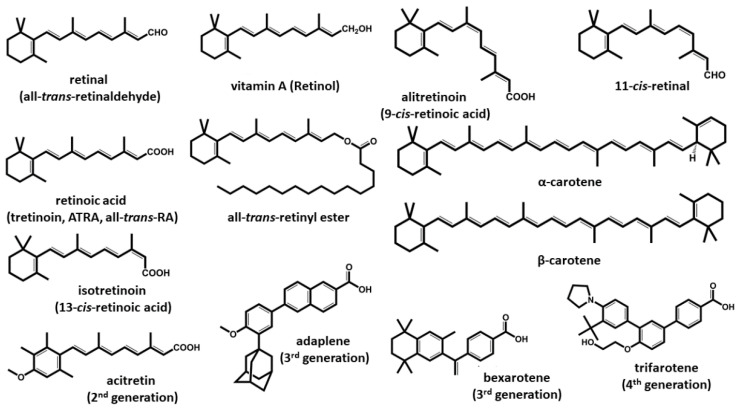
Vitamin A is a group of vital micronutrients widely present in the human diet. Animal-based products are a rich source of the retinyl ester form of the vitamin, while vegetables and fruits contain carotenoids, most of which are provitamin A. Vitamin A plays a key role in the correct functioning of multiple physiological functions. The human organism can metabolize natural forms of vitamin A and provitamin A into biologically active forms (retinol, retinal, retinoic acid), which interact with multiple molecular targets, including nuclear receptors, opsin in the retina.
Overview
CoChat Summary
## TL;DR
This is a narrative review of vitamin A covering its chemical forms, dietary sources, absorption and transport, biological functions, deficiency, therapeutic uses, detection methods, and toxicity. It emphasizes that vitamin A is essential but can be harmful in excess, and that analytical methods must be carefully chosen because endogenous retinoids are present at very low levels.
## Key findings
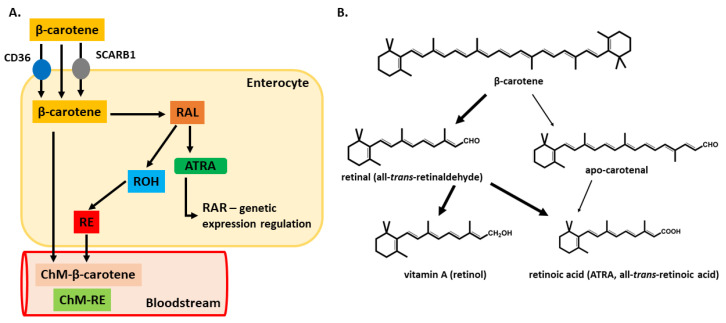
- Vitamin A comes from animal foods as preformed retinol/retinyl esters and from plants as provitamin A carotenoids; only a few carotenoids are important dietary sources, especially β-carotene, α-carotene, and β-cryptoxanthin.
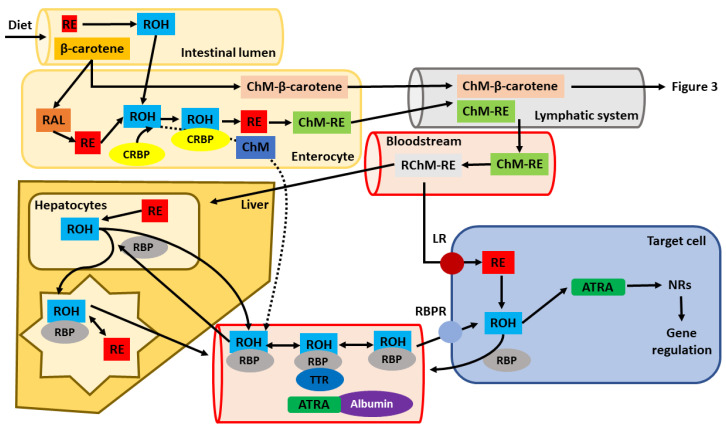
- In the body, retinol is transported mainly by retinol-binding protein (RBP) and transthyretin (TTR); vitamin A is stored largely as retinyl esters in the liver and adipose tissue, and deficiency may take months to appear after intake stops.
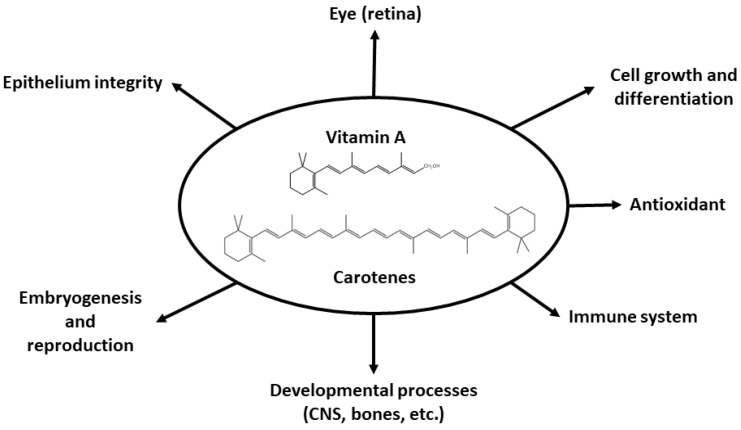
- The review states that vitamin A is involved in vision, gene regulation through nuclear receptors, immune function, epithelial integrity, embryogenesis, bone homeostasis, and other processes; it also notes that ATRA is the major active form of vitamin A.
- Deficiency is linked to night blindness, xerophthalmia, impaired immunity, infections, anemia, developmental problems, and blindness; the paper states that about one-third of the world’s infant population suffers from hypovitaminosis A, around 15% of pregnant women in developing countries are deficient, and vitamin A deficiency causes more than 650,000 child deaths per year in developing countries.
## Methods
- Narrative review article synthesizing previously published literature on vitamin A across sources, pharmacokinetics, function, deficiency, therapy, toxicity, and detection.
- The review draws on reported analytical and biological studies and summarizes findings from dietary, clinical, preclinical, and methodological papers; no original sample was collected.
- For detection methods, it compares instrumental approaches such as (U)HPLC with UV-Vis/DAD, FLD, ECD, MS/MS, SFC, GC-MS, and immunoassays, focusing on sensitivity, specificity, and suitability for endogenous retinoids.
## Limitations
- Not stated in the paper.
- Evident from the text: this is a review, so it does not present original experimental data or a new systematic synthesis with explicit search strategy, inclusion criteria, or risk-of-bias assessment.
- Evident from the text: many conclusions are based on heterogeneous prior studies, and the paper itself notes contradictory findings in areas such as cancer-related effects of retinoids and β-carotene.
Model-written summary. Check it against the paper before relying on it.
Integrity signals
Registry
Cites
Statistics
Figures
Verification
Claims the paper makes
46 Valid · 10 Not valid · 49 Not checked · 36 Own results and interpretations
The cited sources support only part of this claim — read each source’s verdict below.
In the paper
“The vitamin can be provided in the diet either via products of an animal origin in the form of vitamin A (retinol and its close derivatives) or as provitamin A (carotenoids) from vegetables [1].”
§ Vitamin A Update: Forms, Sources, Kinetics, Detection, Function, Deficiency, Therapeutic Use and Toxicity > 1. Introduction and Forms of Vitamin A
What the sources say
- Partly supportedcites [1] D’Ambrosio D.N. Clugston R.D. Blaner W.S. Vitamin A metabolism: An update Nutrients 2011 3 63 103 10.3390/nu3010063 21350678 PMC3042718 sourceExperimental — accuracy not yet measured
Section 2.1 (page not specified) says dietary retinoids arrive either as preformed retinol and retinyl ester or as proretinoid carotenoids. The passages support the two dietary forms but do not specify animal products as the source of the former or vegetables as the source of the latter. (LLM, conf=0.84)
plain- Asserted: passes — The authors put it forward as true.
- Checkable: passes — It can be checked against evidence.
- Load-bearing: unclear — It is unclear whether the paper’s conclusions depend on it.
- Based: passes — The paper gives a reason why it holds.
- Partly supported
Every source the paper cites for this claim was checked and supports it.
In the paper
“Although the term vitamin A is mostly associated with retinol, and retinol is, in fact, the predominant form of retinoids in the human body, the main biologically active molecules are the oxidized derivates 11-cis-retinal and all-trans-retinoid acid (ATRA) [1,2].”
§ Vitamin A Update: Forms, Sources, Kinetics, Detection, Function, Deficiency, Therapeutic Use and Toxicity > 1. Introduction and Forms of Vitamin A
What the sources say
- Supportedcites [1] D’Ambrosio D.N. Clugston R.D. Blaner W.S. Vitamin A metabolism: An update Nutrients 2011 3 63 103 10.3390/nu3010063 21350678 PMC3042718 source
Section 5.3 describes 11-cis-retinoid as required for vision, while Section 2.2 reports that retinoic acid acts through its receptors to regulate gene expression. The paper’s retinoid-binding-protein table identifies both 11-cis-retinal and all-trans-retinoic acid. Together, these passages support the sentence’s characterization of them as major biologically active vitamin A derivatives (page numbers unavailable in our copy). (LLM, conf=0.85)
- Supportedcites [2] Kam R.K. Deng Y. Chen Y. Zhao H. Retinoic acid synthesis and functions in early embryonic development Cell. Biosci. 2012 2 11 10.1186/2045-3701-2-11 22439772 PMC3325842 source
Section 2, “Metabolism of vitamin A and the production of all-trans retinoic acid,” identifies atRA and 11-cis retinal as the key mediators of vitamin A function. Section 2.1 describes the formation of 11-cis retinal by oxidation of 11-cis retinol; section 2.2 describes oxidation in the pathway to atRA. (LLM, conf=0.95)
plain- Asserted: passes — The authors put it forward as true.
- Checkable: passes — It can be checked against evidence.
- Load-bearing: unclear — It is unclear whether the paper’s conclusions depend on it.
- Based: passes — The paper gives a reason why it holds.
- Supported
The cited sources support only part of this claim — read each source’s verdict below.
In the paper
“The values found in individual studies vary considerably, but the highest vitamin A content in the liver is usually reported in pigs [56,57,58,59,60].”
§ Vitamin A Update: Forms, Sources, Kinetics, Detection, Function, Deficiency, Therapeutic Use and Toxicity > 2. Sources of Vitamin A
What the sources say
- Not checked — no full text of the sourcecites [56] Majchrzak D. Fabian E. Elmadfa I. Vitamin A content (retinol and retinyl esters) in livers of different animals Food Chem. 2006 98 704 710 10.1016/j.foodchem.2005.06.035 source
- Not checked — no full text of the sourcecites [57] Álvarez R. Meléndez-Martínez A.J. Vicario I.M. Alcalde M.J. Carotenoid and Vitamin A Contents in Biological Fluids and Tissues of Animals as an Effect of the Diet: A Review Food Rev. Int. 2015 31 319 340 10.1080/87559129.2015.1015139 source
- Not checked — no full text of the sourcecites [58] Ollilainen V. Heinonen M. Linkola E. Varo P. Koivistoinen P. Carotenoids and retinoids in finnish foods: Meat and meat products J. Food Compos. Anal. 1988 1 178 188 10.1016/0889-1575(88)90022-1 2592640 source
- Could not verifycites [59] Darwish W.S. Ikenaka Y. Morshdy A.E. Eldesoky K.I. Nakayama S. Mizukawa H. Ishizuka M. β-carotene and retinol contents in the meat of herbivorous ungulates with a special reference to their public health importance J. Vet. Med. Sci. 2016 78 351 354 10.1292/jvms.15-0287 26498400 PMC4785134 sourceExperimental — accuracy not yet measured
The retinol-results passage (indexed under Abstract; page unavailable) compares rats, sheep and other ungulates, but not pigs. A search for pig, pork, swine and porcine found no passage assessing whether pig liver usually has the highest vitamin A content. (LLM, conf=0.78)
- Partly supportedcites [60] Schweigert F. Buchholz I. Schuhmacher A. Effect of dietary β-carotene on the accumulation of β-carotene and vitamin A in plasma and tissues of gilts Reprod. Nutr. Dev. Reprod. Nutr. Dev. 2001 41 47 55 10.1051/rnd:2001111 11368244 sourceExperimental — accuracy not yet measured
Section 3.2 reports vitamin A concentrations in gilt livers and says they were higher than in the other tissues examined. It does not compare liver concentrations across species, so it cannot establish that pigs usually have the highest liver vitamin A content. (LLM, conf=0.79)
hedged- Asserted: passes — The authors put it forward as true.
- Checkable: passes — It can be checked against evidence.
- Load-bearing: unclear — It is unclear whether the paper’s conclusions depend on it.
- Based: passes — The paper gives a reason why it holds.
The cited sources support only part of this claim — read each source’s verdict below.
In the paper
“Drugs such as estrogens and oral contraceptives have been reported to elevate plasma concentrations of RBP, thereby elevating retinoid blood levels [111].”
§ Vitamin A Update: Forms, Sources, Kinetics, Detection, Function, Deficiency, Therapeutic Use and Toxicity > 3. Vitamin A Pharmacokinetics > 3.2. Other Factors Influencing Vitamin A Pharmacokinetics
What the sources say
- Partly supportedcites [111] Jung U.S. Jeong K.J. Kang J.K. Yi K. Shin J.H. Seo H.S. Kim T. Kim S.H. Hur J.Y. Effects of estrogen receptor alpha and beta on the expression of visfatin and retinol-binding protein 4 in 3T3-L1 adipocytes Int. J. Mol. Med. 2013 32 723 728 10.3892/ijmm.2013.1440 23857051 sourceExperimental — accuracy not yet measured
The Discussion (page not available) reports that estradiol increased RBP4 secretion in cultured 3T3-L1 adipocytes and describes a correlation between plasma RBP and estradiol levels. It does not report that estrogens or oral contraceptives elevate plasma RBP, or that either raises retinoid blood levels; its proposed effect on retinoic acid metabolism is qualified as an expectation. (LLM, conf=0.86)
hedgedstates a cause- Asserted: passes — The authors put it forward as true.
- Checkable: passes — It can be checked against evidence.
- Load-bearing: unclear — It is unclear whether the paper’s conclusions depend on it.
- Based: passes — The paper gives a reason why it holds.
- Partly supported
The cited sources support only part of this claim — read each source’s verdict below.
In the paper
“Although the placenta has been believed to protect the fetus against high-vitamin A intake from pregnant women being over-supplemented with vitamin A, several studies have reported that high vitamin A intake by the mother can lead to teratogenic effects in the developing fetus [117,118,119].”
§ Vitamin A Update: Forms, Sources, Kinetics, Detection, Function, Deficiency, Therapeutic Use and Toxicity > 3. Vitamin A Pharmacokinetics > 3.3. Pharmacokinetics of Vitamin A during Pregnancy
What the sources say
- Supportedcites [117] Bastos Maia S. Rolland Souza A. Costa Caminha M. Lins Da Silva S. Callou Cruz R. Carvalho Dos Santos C. Batista Filho M. Vitamin A and Pregnancy: A Narrative Review Nutrients 2019 11 681 10.3390/nu11030681 PMC6470929 30909386 source
Section 4 reports that high maternal intake of preformed vitamin A during pregnancy may pose a teratogenic risk and describes malformations in children whose mothers consumed high doses. The review distinguishes preformed vitamin A from beta-carotene; it does not suggest that high beta-carotene intake has the same effect. (LLM, conf=0.94)
- Supportedcites [118] Rothman K.J. Moore L.L. Singer M.R. Nguyen U.S. Mannino S. Milunsky A. Teratogenicity of high vitamin A intake N. Engl. J. Med. 1995 333 1369 1373 10.1056/NEJM199511233332101 7477116 source
The Abstract reports a higher prevalence of birth defects among babies whose mothers consumed high amounts of preformed vitamin A and concludes that high intake appears teratogenic. The Discussion likewise describes a potential teratogenic effect, particularly with intake during early pregnancy; it distinguishes preformed vitamin A from beta carotene. (LLM, conf=0.94)
- Not matchedcites [119] Hunt J.R. Teratogenicity of high vitamin A intake N. Engl. J. Med. 1996 334 1197 10.1056/NEJM199605023341814 8602195
We searched by its title and found no matching paper.
plainstates a cause- Asserted: passes — The authors put it forward as true.
- Checkable: passes — It can be checked against evidence.
- Load-bearing: passes — The paper’s conclusions depend on it.
- Based: passes — The paper gives a reason why it holds.
- Supported
68 more claims · 25 with their cited sources checked
Create a free account to see all 141 claims and every source verdict.
- It may state two separate claims as one. 52
- Probably not a substantial claim. 23
Claims other papers make about this one
Each is checked against this paper’s own text: does it say what the citing paper says it does?
The source backs part of the claim, not all of it — or backs it for a different population, condition or comparison.
In the citing paper
“Excessive and prolonged beta-carotene consumption causes yellow-orange discolouration of skin thick areas, such as palms and soles, however this is a benign, reversible condition [1,19].”
From The Role of Vitamin A in Retinal Diseases (2022) · cites this paper as [1]
Experimental — accuracy not yet measuredThe source backs part of the claim, not all of it — or backs it for a different population, condition or comparison.
In the citing paper
“In adults, stores of vitamin A in the body can last around 1 to 2 years while in children stores last much shorter and signs of deficiency develop more rapidly [1].”
From The Role of Vitamin A in Retinal Diseases (2022) · cites this paper as [1]
Experimental — accuracy not yet measuredThe source backs part of the claim, not all of it — or backs it for a different population, condition or comparison.
In the citing paper
“It is crucial for reproduction, growth and development of the embryo, normal brain function, immune system functioning, skeletal development, growth of hair and nails, and epithelial cell RNA synthesis including the conjunctiva and cornea.”
From The Role of Vitamin A in Retinal Diseases (2022) · cites this paper as [1]
Experimental — accuracy not yet measuredThe cited source says what the claim attributes to it.
In the citing paper
“One of the most important vitamin A functions is its involvement in visual phototransduction, where it serves as the crucial part of photopigment, the first molecule in the process of transforming photons of light into electrical signals.”
From The Role of Vitamin A in Retinal Diseases (2022) · cites this paper as [1]
The cited source says what the claim attributes to it.
In the citing paper
“It is essential for several physiological processes.”
From The Role of Vitamin A in Retinal Diseases (2022) · cites this paper as [1]
8 more claims about this paper
Create a free account to see every claim other papers make about this one.
Self-check
Percentages, sums and reported differences re-computed from the paper’s own numbers.
Each contradiction between two passages listed here was confirmed by an independent check.
Rated major: it would touch a result — a value a result rests on, reported and recomputed p-values on opposite sides of the significance level, two passages that conflict with no sign which is right, or a cited work retracted before this paper was published.
In the paper
§ Vitamin A Update: Forms, Sources, Kinetics, Detection, Function, Deficiency, Therapeutic Use and Toxicity > 7. Therapeutic Use of Vitamin A
“Whereas most retinoids are usually available in oral preparations, acitretin is indicated for topical use.”
§ Vitamin A Update: Forms, Sources, Kinetics, Detection, Function, Deficiency, Therapeutic Use and Toxicity > 3. Vitamin A Pharmacokinetics > 3.1. Absorption, Distribution, Metabolism and Elimination
“Etretinate and acitretin, which are second-generation retinoids, are also used in oral form in therapy.”
Citations
Cites
Trumbo (2001) · doi:10.1016/s0002-8223(01)00078-5 · Cited by 4,852
Effects of a combination of beta carotene and vitamin A on lung cancer and cardiovascular disease
Omenn, G. S., Goodman, G. E., Thornquist, M. D., Balmes, J., Cullen, M. R., Glass, A., Keogh, J. P., Meyskens, F. L., Valanis, B., Williams, J. H., et al. (1996) · New England Journal of Medicine · doi:10.1056/nejm199605023341802 · Cited by 3,638
A human retinoic acid receptor which belongs to the family of nuclear receptors
Petkovich, M., Brand, N. J., Krust, A., & Chambon, P. (1987) · Nature · doi:10.1038/330444a0 · Cited by 2,214
Serum retinol binding protein 4 contributes to insulin resistance in obesity and type 2 diabetes
Yang, Q., Graham, T. E., Mody, N., Preitner, F., Peroni, O. D., Zabolotny, J. M., Kotani, K., Quadro, L., & Kahn, B. B. (2005) · Nature · doi:10.1038/nature03711 · Cited by 2,086
The epidemiology of global micronutrient deficiencies
Bailey, R. L., West Jr., K. P., & Black, R. E. (2015) · Annals of Nutrition and Metabolism · doi:10.1159/000371618 · Cited by 2,035
Induction of differentiation of the human promyelocytic leukemia cell line (HL-60) by retinoic acid
Breitman, T. R., Selonick, S. E., & Collins, S. J. (1980) · Proceedings of the National Academy of Sciences · doi:10.1073/pnas.77.5.2936 · Cited by 1,966
Identification of a receptor for the morphogen retinoic acid
Giguere, V., Ong, E. S., Segui, P., & Evans, R. M. (1987) · Nature · doi:10.1038/330624a0 · Cited by 1,965
Lammer, E. J., Chen, D. T., Hoar, R. M., Agnish, N. D., Benke, P. J., Braun, J. T., Curry, C. J., Fernhoff, P. M., Grix, A. W., Lott, I. T., et al. (1985) · New England Journal of Medicine · doi:10.1056/nejm198510033131401 · Cited by 1,942
9-cis retinoic acid is a high affinity ligand for the retinoid X receptor
Heyman, R. A., Mangelsdorf, D. J., Dyck, J. A., Stein, R. B., Eichele, G., Evans, R. M., & Thaller, C. (1992) · Cell · doi:10.1016/0092-8674(92)90479-v · Cited by 1,780
TISSUE CHANGES FOLLOWING DEPRIVATION OF FAT-SOLUBLE A VITAMIN
Wolbach, S. B., & Howe, P. R. (1925) · Journal of Experimental Medicine · doi:10.1084/jem.42.6.753 · Cited by 1,647
Research works printed but not linked: 2
- Seroczynska A. Korzeniewska A. Sztangret-Wisniewska J. Niemirowicz-Szczytt K. Marek G. Relationship between carotenoids content and flower or fruit flesh colour of winter squash (Cucurbita maxima Duch.) Folia Hortic. 2006 18 51 61
- Fedele V. Rubino R. Salvatore C. Manzi P. Marconi S. Pizzoferrato L. Seasonal variation in retinol concentration of goat milk associated with grazing compared to indoor feeding S. Afr. J. Anim. Sci. 2004 34 148 150
Cited by
Items 301–400 of 416
Costa, L. L., Ferreira, R. C., Silva, M. R., et al. (2023) · Revista Científica Multidisciplinar Núcleo do Conhecimento · doi:10.32749/nucleodoconhecimento.com.br/saude/teores-de-nutrientes
Significance of Carotenoids in Traditional Medicines in the Republic of Suriname (South America)
Mans, D. R. A. (2024) · Physiology · doi:10.5772/intechopen.113013 · Cited by 1
Toxic effects of vitamins and dietary supplements
Simić, E., Marinović, D., Stanković, V. V., & Dimitrijev, I. (2023) · Education and Research in Health Sciences · doi:10.5937/erhs2-46762 · Cited by 1
Effect of Vitamin A Deficiency in Thyroid Health
Sah, S. K., Shrestha, B., & Chaudhary, P. K. (2023) · Med Phoenix · doi:10.3126/medphoenix.v8i2.61757
Rachmawati, A. N. (2024) · Journal of Oil Palm Research · doi:10.21894/jopr.2024.0006
Nkwocha, C. C., Felix, J. O., & Ekeanyanwu, R. C. (2024) · Research Square · doi:10.21203/rs.3.rs-3344956/v1 · Cited by 1
Gilles, M. A., Nayah, M. M., Thierry, N. N., Ejoh, A. R., & Mbofung, C. M. (2024) · European Journal of Medical and Health Research · doi:10.59324/ejmhr.2024.2(2).03
Matsuki, Y., Ichihara, K., Itoh, Y., Mori, K., Ihara, H., Maekawa, M., Nishimura, M., Kiuchi, S., Nomura, F., Hashizume, N., et al. (2024) · Clinical Nutrition ESPEN · doi:10.1016/j.clnesp.2024.03.017 · Cited by 1
Bilateral Corneal Perforation Due to Vitamin A Deficiency in a Child with Seizures
Zarrabi, M., Campagna, G. A., Parisky, X., Weiss, I., & Fung, S. S. M. (2024) · Global Pediatrics · doi:10.1016/j.gpeds.2024.100170 · Cited by 1
Suspicion of a hypervitaminosis A during acitretin therapy
Kobzová, M., & Polák, P. (2024) · Vnitřní lékařství · doi:10.36290/vnl.2024.024
Fortifying Dairy Products with Vitamin A Nano-Emulsion
Блинов, А. В., Gvozdenko, A. A., Golik, A. B., Kolodkin, M. A., & Filippov, D. (2024) · Dairy Industry · doi:10.21603/1019-8946-2024-2-2
Stehle, P., & Ellinger, S. (2024) · Springer eBooks · doi:10.1007/978-3-662-68399-6_9
Vitamin A Deficiency and Management
Beulah, A. M., Madhavi, D., Sireesha, G., Niharika, M., & Savalapurapu, B. (2024) · Advances in medical diagnosis, treatment, and care (AMDTC) book series · doi:10.4018/979-8-3693-2947-4.ch008
Microbial Production of Fat-Soluble Vitamins
Nagar, A., Singh, M. P., Priya, K., & Możejko‐Ciesielska, J. (2024) · Springer eBooks · doi:10.1007/978-981-97-4235-6_10
Delik, E., Öztürk, B. E. T., & Kaya, B. (2024) · Environmental Toxicology and Ecology · doi:10.59838/etoxec.1523001 · Cited by 1
Impact of feeding strategies on serum vitamin A levels in preterm infants aged 3-6 monthsPreprint
Li, B., Cao, W., Chen, W., et al. (2024) · Research Square · doi:10.21203/rs.3.rs-4808370/v1
赵, 辰. (2024) · Advances in Clinical Medicine · doi:10.12677/acm.2024.1492421
Vegan, aber Richtig – Darstellung potenziell kritischer Nährstoffe
Kolm, M. (2024) · Springer eBooks · doi:10.1007/978-3-662-68301-9_2
Fat Soluble Vitamins and Macrominerals
Polat, E. (2024) · doi:10.69860/nobel.9786053359173.1
Ren, Q., Wang, Y., Wang, Y., Yuan, H., Liu, Y., Wei, Y., Sun, R., Yang, H., Tian, P., Yang, J., et al. (2024) · Research Square · doi:10.21203/rs.3.rs-4935218/v1
Vitamin A affects urothelial injury and regeneration in cyclophosphamide-induced cystitis
Dragar, B., Kranjc, S., Kuret, T., Jesenko, T., Čemažar, M., Romih, R., Kreft, M. E., & Zupančič, D. (2024) · BIO Web of Conferences · doi:10.1051/bioconf/202412917014
Fan, X., Lai, X., Miao, J., Chen, Q.-X., Chen, J., & Liu, H. (2024) · Food Science & Nutrition · doi:10.1002/fsn3.4552 · Cited by 1
Wang, J., Zhou, Y., Liu, Y., Sang, M., Ding, Y., Li, T., Wang, X., Carvalho, V., Ni, C., Wang, Q., et al. (2024) · BMC Endocrine Disorders · doi:10.1186/s12902-024-01721-2
“Vitamin A (VA) is a dietary and fat-soluble vitamin that is involved in embryonic development, vision, immunity, and reproduction [2].”
BackgroundEFICÁCIA DO ÁCIDO RETINÓICO NO TRATAMENTO REJUVENESCEDOR: UMA REVISÃO DE LITERATURA
Sena, B. D. S., & dos Santos, V. M. (2024) · RECIMA21 - Revista Científica Multidisciplinar · doi:10.47820/recima21.v5i11.5909
Foundation of Nutraceuticals in Preventive Medicine
Pancham, P., Jindal, D., & Singh, M. (2024) · Food bioactive ingredients · doi:10.1007/978-3-031-76481-3_2
Revealing solvent-assisted melting and dissolution behavior of vitamin A acetate
Wan, X., Cao, Y., Gao, Z., Wu, S., & Gong, J. (2025) · Journal of Molecular Liquids · doi:10.1016/j.molliq.2024.126828
(2000) · Time to knit · doi:10.1016/s2211-9698(23)46895-1
Functional foods and immune support: strengthening the body’s defense
Deokar, G. S., Shinde, P. A., Kshirsagar, S. J., Ziora, Z. M., & Nirmal, N. P. (2025) · Elsevier eBooks · doi:10.1016/b978-0-443-28862-3.00011-x · Cited by 2
Functional foods for ocular health and vision
Göz, B., Ersoy, B., & Gulsunoglu‐Konuskan, Z. (2025) · Elsevier eBooks · doi:10.1016/b978-0-443-28862-3.00018-2
Electrosynthesis of 1,4-diene derivatives bearing cyclopentene skeleton
Qiao, Y., Fan, X., Yuan, C., et al. (2025) · iScience · doi:10.1016/j.isci.2025.111976
“Alkene skeleton is ubiquitous in natural products and marketed drugs, 1,2 and makes the further transformations achievable conveniently via a versatile synthetic handle including radical-mediated difunctionalizations, 3,4 cascade cyclizations, 5,6 ‘‘formal’’ cycloadditions 7,8 etc. 9–11 Therefore,…”
An Unusual Cause of Bone Pain in a 3-Year-Old Girl
Squires, S. S., & Faughnan, M. (2025) · Pediatrics in Review · doi:10.1542/pir.2023-006177
The effect of calcium and vitamin A in patients with metabolic-associated fatty liver diseases
Makbol, R. M., kadry, Z. M., Noaman, M. M., et al. (2025) · Beni-Suef University Journal of Basic and Applied Sciences · doi:10.1186/s43088-025-00612-2
“Vitamin A has a significant impact on the metabolism of lipids in the liver [25].”
Rui, W., Pei, H., Ren, J., Zhu, S., Qiao, S., Tan, P. Y., Gong, Y. Y., Yang, M., Huo, J., Ding, G., et al. (2025) · Frontiers in Nutrition · doi:10.3389/fnut.2025.1551754
Wang, W.-G., Yang, M.-J., Sheng, Z.-B., Tao, L.-M., Xu, W., & Zhang, Y. (2025) · Journal of Hazardous Materials · doi:10.1016/j.jhazmat.2025.138085 · Cited by 7
Stipulated notched nutritional blueprint of ameliorating ocular health and prolonged healthy vision
Rani, K. (2025) · Journal of Bacteriology & Mycology Open Access · doi:10.15406/jbmoa.2025.13.00397
Advances in the Research of Retinoic Acid in Asthmatic Airway Inflammation
欧, 阳. (2025) · Journal of Clinical Personalized Medicine · doi:10.12677/jcpm.2025.42292
Tratnjek, L., Janev, A., Kuret, T., & Zupančič, D. (2025) · Food science and nutrition · doi:10.5772/intechopen.1010011
Diglycerides of Natural Phenols and Organic Acids for Enhanced Biological Activities
Hong, J., Han, S., Yeo, H., Boo, C., Kim, H., Kim, E.-B., Lim, B., Jo, Y. J., Hyun, J., Lee, N. H., et al. (2025) · Asian Journal of Organic Chemistry · doi:10.1002/ajoc.202500285
Zinc Supplementation: A Preventive Measure for Zinc Deficiency
Dey, H., Paul, S., & Kaira, M. (2025) · Advances in medical diagnosis, treatment, and care (AMDTC) book series · doi:10.4018/979-8-3693-5355-4.ch006
PEST-containing nuclear protein in eye health and disease: A review
Hussain, W., Jiang, Z.-L., Liu, Y., Wang, J., Yasoob, T. B., Hussain, S. A., Laila, U. E., Wu, D., Ji, X., & Dang, Y. (2025) · Experimental Eye Research · doi:10.1016/j.exer.2025.110451
Gao, J., Xie, Y.-Y., Zang, Y.-C., Tan, K. W., Li, P., Yu, H.-Y., Lian, Z., & Wang, J.-X. (2025) · Frontiers in Global Women s Health · doi:10.3389/fgwh.2025.1568812
Diagnosis of vitamin A deficiency in autism spectrum disorder based on ocular symptoms and findings
Dörtkardeşler, B. E., Akçay, P., Gökçe, Ş., Korkmaz, İ., KURUGÖL, N. Z., & Selver, Ö. B. (2025) · Clinical and Experimental Optometry · doi:10.1080/08164622.2025.2513334
Significance of Different Salts in Nutritional Supplementation After Metabolic and Bariatric Surgery
Palaniappan, R., Siam, M., Khokhare, B., & Krishna, N. (2025) · Springer eBooks · doi:10.1007/978-981-96-5099-6_11
Effect of Retinal on Dictyostelium Cells During Development
Akiyama, K., Tsuchihashi, S., & Morimoto, Y. V. (2025) · Genes to Cells · doi:10.1111/gtc.70037
Apoptosis in the Mammary Gland of Virgin Rats Subchronically Fed With a Vitamin A Deficient Diet
Vasquez-Gomez, M., Filippa, V., Acosta, M., Mohamed, F., Arboccó, F. C. V., Ferrari, C., Jahn, G. A., Giménez, M. S., Ramírez, D. C., & Gomez-Mejiba, S. (2025) · Oxidative Medicine and Cellular Longevity · doi:10.1155/omcl/6334165
“This is comprehensively reviewed in [7].”
InfluentialUnveiling the Nigerian sweet potato; Its nutritional and pharmacological properties
Edo, G. I., Moses, R. J., Ali, A. B. M., Yousif, E., Jikah, A. N., Isoje, E. F., Igbuku, U. A., Akpoghelie, P. O., Owheruo, J. O., Essaghah, A. E. A., et al. (2025) · Food and Humanity · doi:10.1016/j.foohum.2025.100711 · Cited by 2
Antiinflammatory molecules in microalgae
Zubía, E., Ortega, M. J., & Reyes, C. D. L. (2025) · Elsevier eBooks · doi:10.1016/b978-0-443-22080-7.00043-0
Hoy, L.-M., Meier, T., Mierswa, N., Bornemann, M., Naasner, L., Bähre, H., Froese, N., Riehle, C., Mühlfeld, C., & Schipke, J. (2025) · Journal of Nutrition · doi:10.1016/j.tjnut.2025.07.010
“These essential, fat-soluble micronutrients must be consumed with the diet, either as preformed vitamin A from animal sources or as provitamin A from plant-based foods [1].”
Zheng, H., Liu, C., Xu, D., Li, M., & Hong, H. (2025) · Frontiers in Nutrition · doi:10.3389/fnut.2025.1593461
First generation of retinoids in the treatment of breast cancer
Mir, A. A., Masoodi, G., Haq, B. U., & Mir, M. A. (2025) · Elsevier eBooks · doi:10.1016/b978-0-443-36516-4.00007-6 · Cited by 1
Vikhareva, E. V., Slabinskaya, E., Limansky, E., et al. (2025) · Problems of Biological Medical and Pharmaceutical Chemistry · doi:10.29296/25877313-2025-07-05
Sharma, A., Yadav, M., Tiwari, V., Chaudhary, E., Sheoran, B., Krishania, M., Navik, U., & Garg, M. (2025) · International Journal of Advances in Engineering Sciences and Applied Mathematics · doi:10.1007/s12572-025-00403-z
“…are essential for the production of vitamin A (retinol), a micronutrient that is essential for a variety of fundamental processes, including vision [37], immunological responses [38], and reproduction [39]. β-carotene is the most efficacious provitamin A carotenoid as it may be transformed into…”
Gene Editing-Mediated Enhancement of Carotenoid Compounds Accumulation in Common Wheat GrainsPreprint
Guo, Y., Liu, M., Li, M., et al. (2025) · SSRN Electronic Journal · doi:10.2139/ssrn.5356484
Sudden Death in Polar Climes: The Arctic Trek
Bhat, S. (2025) · Springer eBooks · doi:10.1007/978-981-95-0636-1_4
León‐Ruiz, M., Benito‐León, J., & Castañeda-Cabrero, C. (2025) · Brain Sciences · doi:10.3390/brainsci15091019 · Cited by 1
“In 2022, Choi et al. reported a 50-year-old female who developed VAD after bariatric surgery [20].”
Fatigue in inflammatory bowel disease and the role of micronutrients
Rud, C. L., & Bager, P. (2025) · Elsevier eBooks · doi:10.1016/b978-0-443-24080-5.00033-3
de Souza, R. B. D. S., Pessanha, L. D. O., do Nascimento, L. D. S. D. M., Santiago, M. C. P. D. A., Pacheco, S., Gama, P. E., Souza, M. D. C., Ribas, S. A., & Borguini, R. G. (2025) · Journal of Food Composition and Analysis · doi:10.1016/j.jfca.2025.108412
Toffalini, A., Vigolo, N., Sani, E., Paviati, E., Gelati, M., Danese, E., & Zoppini, G. (2025) · PLoS ONE · doi:10.1371/journal.pone.0333407
Perinatal vitamin A excess impacts vitamin A and lipid metabolism in rat offspring
Berthomé, A., Antoine, T., Meiller, L., Govers, R., Guichard, P., Sabran, C., Gonzalez, T., Nowicki, M., Bordat, C., Borel, P., et al. (2025) · Scientific Reports · doi:10.1038/s41598-025-18896-w · Cited by 1
Types of ligands and their function in the food matrices: Chemistry, functionality, and stability
Hanafi, E. K. N. (2025) · Elsevier eBooks · doi:10.1016/b978-0-443-24044-7.00002-x
Drug-Related Rhabdomyolysis: A Real-World FDA Adverse Event Reporting System Database StudyPreprint
Hu, J., Sun, Y., Ma, X., & Qu, H. (2025) · Research Square · doi:10.21203/rs.3.rs-7536398/v1
The anti-aging potential of VA’S new derivatives through metabolomic profiling
Tan, L., Wu, J., Wang, J., Zhang, H., Zhang, W., Gao, A., Zhong, Z., Chen, T.-G., Zhou, B., Han, T., et al. (2025) · Scientific Reports · doi:10.1038/s41598-025-25545-9 · Cited by 1
Hajizadeh, M., Masihpour, N., & Shalil‐Ahmadi, S. (2025) · Health Science Reports · doi:10.1002/hsr2.71546
“Vitamin A, known for its role in epithelial growth and corneal wound healing, presents a promising adjunctive treatment for managing these challenges [14, 15].”
Gene editing-mediated enhancement of carotenoid compounds accumulation in common wheat grainsPreprint
Guo, Y., Liu, M., Li, M., et al. (2025) · Research Square · doi:10.21203/rs.3.rs-8056178/v1
Protective effects of retinoic acid on cadmium toxicity in human proximal tubular epithelial cells
Lee, J. Y., Mori, C., Tokumoto, M., & Satoh, M. (2025) · The Journal of Toxicological Sciences · doi:10.2131/jts.50.717
Sahu, R., Shet, H., Sanghvi, Y. S., et al. (2025) · The Chemical Record · doi:10.1002/tcr.202500161
Afroja, S., Khan, M. S., Nasim, A. S. M., Islam, M., & Hossain, M. M. (2026) · International Journal of Clinical Practice · doi:10.1155/ijcp/5530962
Hikmah, Z., Endaryanto, A., Kusuma, A. R., & Pratiwi, D. (2026) · Current Nutrition & Food Science · doi:10.2174/0115734013418383251125113816 · Cited by 1
Nutritional contents of a traditionally fermented spice: the case of Datta/Qochqocha in Ethiopia
Tesfaye, L., Solomon, A., Aynadis, H., Wondemagegnhu, T., & Zelalem, D. (2025) · PAMJ - One Health · doi:10.11604/pamj-oh.2025.18.20.48356
Fedulova, L., Kibitkina, A. A., Vasilevskaya, E. R., Karabanov, S. Y., & Александрович, У. Д. (2026) · Food systems · doi:10.21323/2618-9771-2025-8-4-479-487
Nutritional regulation of sow reproduction by vitamin A: insights and knowledge gaps
Yankocy, S. R., & Stenhouse, C. (2026) · Porcine Health Management · doi:10.1186/s40813-026-00490-9 · Cited by 1
“When required, the retinyl esters can be hydrolyzed to free retinol, which binds to retinol-binding protein for systemic transport [18, 19].”
Баишникова, И. В., Zaitseva, I., Kalinina, S. N., Панченко, Д. В., & Ilyina, T. N. (2025) · Vestnik Moskovskogo universiteta Seria 16 Biologia · doi:10.55959/msu0137-0952-16-80-4-6
Cellular and molecular determinants of all trans retinoic acid sensitivity in different cancers
Kiełbowski, K., Bakinowska, E., Taghavi, N., Dastghaib, S., & Vakili, S. (2026) · Elsevier eBooks · doi:10.1016/b978-0-443-22305-1.00001-1
Efficiency of all-trans retinoic acid in liver cancer
Allameh, A., Cordani, M., Niayesh‐Mehr, R., Allameh, M., & Sarabandi, S. (2026) · Elsevier eBooks · doi:10.1016/b978-0-443-22305-1.00006-0
Zhou, X., Zhuang, X., Huang, H., Liu, J., & Zhu, Q. (2026) · Frontiers in Public Health · doi:10.3389/fpubh.2026.1727761
Li, F., Ye, X., Tian, P., Zhou, P., & Shen, X. (2026) · Frontiers in Nutrition · doi:10.3389/fnut.2026.1711120
Yuan, H., Wang, Y., Ren, Q., Ji, X., Yang, J., Wang, Y., Liu, Y., Yuanhuan, W., Sun, R., Yang, H., et al. (2026) · Frontiers in Nutrition · doi:10.3389/fnut.2026.1735875
Shao, J., Wang, X., Guo, C., Xing, S., & Sun, H. (2026) · Medicinal Research Reviews · doi:10.1002/med.70050 · Cited by 1
Cao, L., Wang, Z., Li, Y., Yang, C., Fu, H., Tian, Q., Yang, L., & Mao, B. (2026) · PeerJ · doi:10.7717/peerj.21068 · Cited by 1
“The molecule consists of a β -ionone ring and an isoprenoid side chain containing four double bonds, with its distinctive conjugated diene structure (C5-C6 and C7-C8 conjugated double bonds) conferring potent antioxidant properties ( Carazo et al., 2021 ).”
Xiang, X.-L., Chen, H., Yuan, B., Wei, Q., Hu, B., Zhang, D., Ai, D., Yang, T., Chen, J., Li, T., et al. (2026) · Frontiers in Psychiatry · doi:10.3389/fpsyt.2026.1805599
“Vitamin A in fl uences neuronal development through the retinoic acid signaling pathway (4, 5) and has been linked to the pathogenesis of ASD (6, 7).”
Cancalon, M. (2023) · theses.fr (ABES) · doi:10.70675/511d96efze04ez4628z9715z6ce6ccb40201
Sayal, L., Hamadah, O., Chatty, E., et al. (2026) · Cancer Reports · doi:10.1002/cnr2.70559
Баишникова, И. В., Zaitseva, I. A., Kalinina, S. N., Панченко, Д. В., & Ilyina, T. N. (2025) · Moscow University Biological Sciences Bulletin · doi:10.3103/s0096392526600067
Nawathe, V. A., Verma, S., Pal, A., Pawar, D., & Sharma, A. (2026) · Cureus · doi:10.7759/cureus.108032 · Cited by 1
Lipid compounds of West African condiments: Benefits and contributions for human lives
Zio, S., Tarnagda, B., Tapsoba, F., Kagambèga, B., & Savadogo, A. (2026) · Food and Humanity · doi:10.1016/j.foohum.2026.101216
Kinoshita, A., Sato, R., Higuchi, H., Kobayashi, S., Koketsu, K., Watanabe, T., & Takaku, H. (2026) · Microbial Cell Factories · doi:10.1186/s12934-026-03020-y · Cited by 1
“Humans primarily obtain vitamin A through metabolic conversion of dietary carotenoids, known as provitamin A, which are enzymatically cleaved to yield retinoids, such as retinal and retinol [1, 2].”
Encapsulation of Marine Compounds in Lipid Nanoparticles for Healthcare Products
Favas, R., Peixoto, A. F., Almeida, H., & Silva, A. C. (2026) · Springer handbooks · doi:10.1007/978-3-032-01636-2_38
Peng, B., Qiu, J., Huang, Z., et al. (2026) · Frontiers in Plant Science · doi:10.3389/fpls.2026.1820692
Eşbah, M. S., Onal, F. R., & Doğan, G. (2026) · Exploration of Foods and Foodomics · doi:10.37349/eff.2026.1010151
Musculoskeletal Manifestations of Systemic Disease
Buckley, M. M., & Rabinovich, C. E. (2026) · Elsevier eBooks · doi:10.1016/b978-0-443-11980-4.00052-0
Durand, E., de Vreese, M., Aleman, C., Cazals, G., Morvan, D. L., Lecomte, J., & Villeneuve, P. (2026) · European Journal of Lipid Science and Technology · doi:10.1002/ejlt.70122
Si, Y., Zhang, Y., Li, S., Tan, L., & Kong, L. (2026) · Critical Reviews in Food Science and Nutrition · doi:10.1080/10408398.2026.2681147 · Cited by 1
“Carotenoids are categorized as either provita-min A (e.g., beta-carotene and β-cryptoxanthin) or non-provitamin A (lacking a β-ionone ring), such as lutein and lycopene (Carazo et al. 2021).”
Přívratská, N., Matouš, P., Erben, J., Matoušová, K., Šatı́nský, D., Švec, F., & Krčmová, L. K. (2026) · Advances in Sample Preparation · doi:10.1016/j.sampre.2026.100239
Self-citationDegradation Mechanisms, Encapsulation‐Based Stabilization, and Analytical Detection of Vitamin A
Abeywardana, L., Gamage, T. V., Singh, T. K., et al. (2026) · Journal of the American Oil Chemists Society · doi:10.1002/aocs.70119
“The β-carotene content in selected sources can be found in a report by Carazo et al. (2021), with levels typically varying between 1 and 20,600 μg 100 g − 1 .”
Tang, M., Gou, L., Bao, W., Lei, J., Yang, C., Hou, F., Yi, Z. H. O. U., Yuan, Y., Shen, J., Chen, Y., et al. (2026) · Biochimica et Biophysica Acta (BBA) - Molecular and Cell Biology of Lipids · doi:10.1016/j.bbalip.2026.159749
Fiorino, S., Hong, W., de Biase, D., Mastrangelo, L., Maccioni, F., Grottesi, A., Ambrosi, F., Pincigher, L., Lari, F., Bergamini, C., et al. (2026) · Cancers · doi:10.3390/cancers18121932
“RA exhibits a crucial role in modulating oxidative stress via both direct and indirect mechanisms [288,289].”
Evaluating Carotenoids Intake of Pregnant Women: A FFQ-Based Approach to Dietary Patterns
Mitran, A.-M., Popa, A. D., Chiru, C., Mircea, C., Lungu, I. I., Caba, I.-C., Lungu, A., ARSENE, C. C., Gafițanu, D., Crivoi, F., et al. (2026) · Nutrients · doi:10.3390/nu18121999
“However, this conversion process is relatively inefficient in humans and may be influenced by multiple factors, including dietary composition, food matrix, overall vitamin A status, lipid intake, and genetic variability in BCMO1 activity [6,7].”
InfluentialRetinol: Properties, Physiology and Health Effects
Ross, A. C. (2026) · Elsevier eBooks · doi:10.1016/b978-0-443-40344-6.00176-9
Večurkovská, I., Hubková, B., Mašlanková, J., Plavnická, J., Gajdošová, E., & Bobáková, D. F. (2026) · Nutrire · doi:10.1186/s41110-026-00494-z
Retinoid dynamics in immune cells during age-related diseases
Wang, Y., Muslihah, A. T., Fu, M., Dong, X., & Fu, Y. L. (2026) · Cytokine & Growth Factor Reviews · doi:10.1016/j.cytogfr.2026.07.001
Metadata
- Authors
- Carazo, A., Macáková, K., Matoušová, K., Krčmová, L. K., Protti, M., & Mladěnka, P.
- Affiliations
- Charles University (CZ)
- University Hospital Hradec Králové (CZ)
- University of Bologna (IT)
- Corresponding author
- Carazo, Alejandro
- ORCID
- Venue
- Nutrients
- Publisher
- MDPI AG
- Published
- 2021-05-18
- Volume
- 13
- Issue
- 5
- Pages
- 1703
- ISSN
- 2072-6643 (ISSN-L)
- PMC
- PMC8157347
- OpenAlex
- W3160109639
- Cited by
- 461
- References
- 389
- Citations by year
- 2026: 75 · 2025: 152 · 2024: 120 · 2023: 68 · 2022: 39 · 2021: 7
- FWCI
- 5.96
- Type
- journal article
- Language
- en
- Open access
- gold
- doi.org
- Licence
- Locations
- Nutrients (publishedVersion, cc-by)
- PubMed Central (publishedVersion, cc-by)
- PubMed (publishedVersion)
- Archivio istituzionale della ricerca (Alma Mater Studiorum Università di Bologna) (submittedVersion, cc-by)
- DOAJ (DOAJ: Directory of Open Access Journals) (submittedVersion, cc-by-sa)
- Funders
- ERASMUS+ project strategic partnership (2020-1-CZ01-KA203-078218)
- EFSA-CDN project co-funded by the ERDF (CZ.02.1.01/0.0/0.0/16_019/0000841)
- Topics
- Life Sciences › Biochemistry, Genetics and Molecular Biology › Molecular Biology › Retinoids in leukemia and cellular processes
- Health Sciences › Medicine › Biochemistry (medical) › Antioxidant Activity and Oxidative Stress
- Health Sciences › Medicine › Public Health, Environmental and Occupational Health › Nutrition and Health Studies
- Keywords
- vitamin A, retinol, retinal, retinoic acid, provitamin A, carotenoids, retinyl esters, vitamin A metabolism, vitamin A deficiency, vitamin A toxicity, vitamin A supplementation, nuclear receptors, opsin
- MeSH terms
- Humans, Nutritional Physiological Phenomena, Vitamin A, Vitamin A Deficiency
About these checks
Registry, retraction, Cites and statistics results are computed, not judged, with one exception: a printed reference that no index lists is read once by a model before it counts as a citation error. Claims are extracted by a model and kept only when their quote appears verbatim in the text; each cited source is then checked, with a model’s help, for whether it says what the claim relies on. Those verdicts can be wrong — read the claim’s quote and the cited source before relying on one.
The claim verdicts this report counts are experimental: their accuracy is not yet measured.
A language model drew the claims from the paper on 2026-10-01, under version 3 of the claim definition (model deepseek-v4.1-flash, prompt extract-v3).
A second model labelled each claim on 2026-10-01 (model jev-1.13-20260917, definition revision gold-guideline-v0.2).
Cited sources are checked with a language model’s help (gpt-6-sol).
Statistics and arithmetic are recomputed, not judged.
Confidence bands are shown only for fields calibrated on our annotated test set. None is calibrated yet, so no band is shown.
What counts as a claim ›How we measure confidence ›How we check this ›
Are you an author, or do you see a problem with this page? Request a review
Data sources
Bibliographic data: Semantic Scholar, OpenAlex, Crossref.
Contains information from the Semantic Scholar Academic Graph Datasets, made available under the ODC Attribution License (ODC-BY 1.0).
Semantic Scholar’s data is described in: Kinney, R., et al. (2023). The Semantic Scholar Open Data Platform. arXiv:2301.10140.
