

Ultra-Processed Foods and Nutritional Dietary Profile: A Meta-Analysis of Nationally Representative Samples
Open accessThe DOI matches its Crossref record; 58 of the 58 references it cites were found in a registry or an index.
Abstract
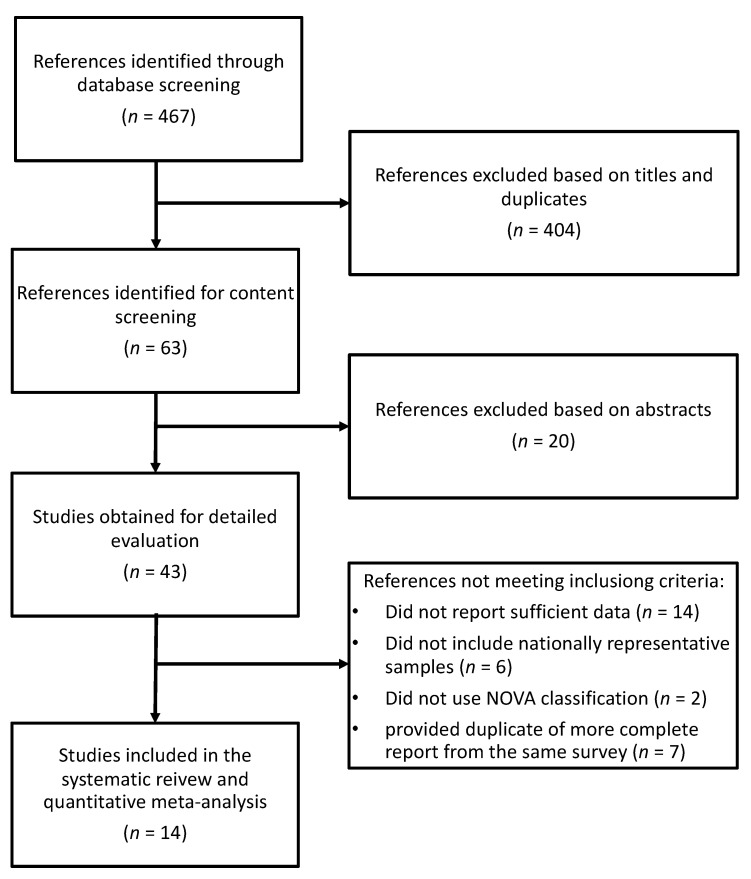
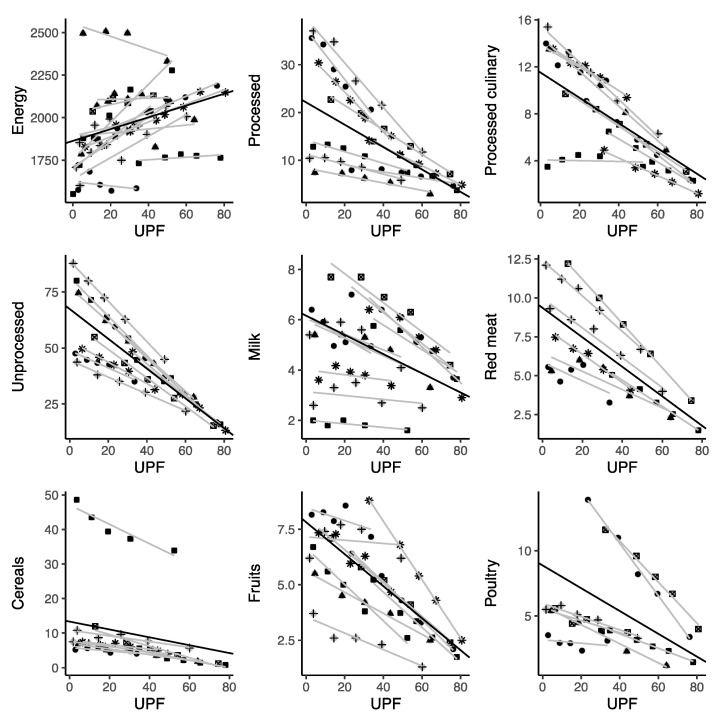
Excessive consumption of ultra-processed foods (UPFs), as described by the NOVA classification system, represents a potential threat to human health. The nutritional composition of UPFs may explain their observed adverse effects. The present study aimed to provide a quantitative meta-analysis of nationally representative surveys on the consumption of UPFs and the dietary/nutrient composition of respondents' diets. A systematic search for relevant studies published prior to July 2021 was conducted via electronic databases. The studies that provided the dietary/nutrient composition of foods categorized according to the NOVA classification system were selected. The association between UPFs and other dietary variables was modelled using ordinary least squares linear regression based on aggregated data extracted from the selected articles. Consumption of UPFs represented up to 80% of total caloric intake in the US and Canada, with confectionery and sugar-sweetened beverages being the most consumed items. When considered in relation to other food groups, an inverse linear relation between UPFs and less-processed foods was evident. Increased UPF intake correlated with an increase in free sugars, total fats, and saturated fats, as well as a decrease in fiber, protein, potassium, zinc, and magnesium, and vitamins A, C, D, E, B12, and niacin. In conclusion, the data indicate that increased UPF consumption negatively affects the nutritional quality of diets.
Overview
The claims and statistics of this paper haven’t been checked yet.
Free: it reads the open-access text and checks the first 5 claims that cite a source we can check. Create a free account to check every claim.
Integrity signals
Registry
Cites
Statistics
Figures
Verification
Claims the paper makes
The claims and statistics of this paper haven’t been checked yet.
Free: it reads the open-access text and checks the first 5 claims that cite a source we can check. Create a free account to check every claim.
Claims other papers make about this one
Each is checked against this paper’s own text: does it say what the citing paper says it does?
The source backs part of the claim, not all of it — or backs it for a different population, condition or comparison.
In the citing paper
“diets rich in ultra-processed foods are associated with markers of poor diet quality, with higher levels of added sugars, saturated fat, and sodium; higher energy density; and lower fibre, protein, and micronutrients.”
From Ultra-processed food exposure and adverse health outcomes: umbrella review of epidemiological meta-analyses (2024) · cites this paper as [6]
Experimental — accuracy not yet measuredThe source backs part of the claim, not all of it — or backs it for a different population, condition or comparison.
In the citing paper
“The aforementioned 13-country meta-analysis predicted that when UPFs represented 15% of total energy intake, the dietary energy share of fruits, vegetables, and legumes (ie, sources of health-protective phytochemicals) was 12•4%.When UPFs represented 75% of total energy intake, that share dropped to 4%. 46”
From Ultra-processed foods and human health: the main thesis and the evidence (2025) · cites this paper as [46]
Experimental — accuracy not yet measuredThe cited source says what the claim attributes to it.
In the citing paper
“For example, UPFs now make up nearly 60 % of daily caloric intake in the US, nearly 50 % in Canada, 42 % in Australia, and 20 % in Brazil (Martini et al. 2021).”
From Corporate concentration and power matter for agency in food systems (2025) · cites this paper as Martini et al. 2021
The cited source says what the claim attributes to it.
In the citing paper
“The consumption of ultra-processed foods is linked to a lower intake of unprocessed or minimally processed fruits, vegetables, legumes, and seafood.”
From Ultra-processed food exposure and adverse health outcomes: umbrella review of epidemiological meta-analyses (2024) · cites this paper as [6]
The cited source says what the claim attributes to it.
In the citing paper
“The 13-country meta-analysis predicted a 34•7 kcal increase (95% CI 14•7-54•7) in total daily energy intake for each 10% increase in UPF share.46”
From Ultra-processed foods and human health: the main thesis and the evidence (2025) · cites this paper as [46]
2 more claims about this paper
Create a free account to see every claim other papers make about this one.
Self-check
Percentages, sums and reported differences re-computed from the paper’s own numbers.
The self-check needs the paper’s full text.
Citations
Cites
von Elm, E., Altman, D. G., Egger, M., Pocock, S. J., Gøtzsche, P. C., Vandenbroucke, J. P., & Initiative, F. T. S. (2007) · PLoS Medicine · doi:10.1371/journal.pmed.0040296 · Cited by 23,020
von Elm, E., Altman, D. G., Egger, M., Pocock, S. J., Gøtzsche, P. C., & Vandenbroucke, J. P. (2008) · Journal of Clinical Epidemiology · doi:10.1016/j.jclinepi.2007.11.008 · Cited by 17,893
Murray, C. J. L., Aravkin, A. Y., Zheng, P., Abbafati, C., Abbas, K. M., Abbasi-Kangevari, M., Abd-Allah, F., Abdelalim, A., Abdollahi, M., Abdollahpour, I., et al. (2020) · The Lancet · doi:10.1016/s0140-6736(20)30752-2 · Cited by 9,854
Self-citationAfshin, A., Sur, P. J., Fay, K. A., Cornaby, L., Ferrara, G., Salama, J. S., Mullany, E. C., Abate, K. H., Abbafati, C., Abebe, Z., et al. (2019) · The Lancet · doi:10.1016/s0140-6736(19)30041-8 · Cited by 5,811
Self-citationStanaway, J. D., Afshin, A., Gakidou, E., Lim, S. S., Abate, D., Abate, K. H., Abbafati, C., Abbasi, N., Abbastabar, H., Abd-Allah, F., et al. (2018) · The Lancet · doi:10.1016/s0140-6736(18)32225-6 · Cited by 4,943
Self-citationUltra-processed foods: What they are and how to identify them
Monteiro, C. A., Cannon, G., Levy, R. B., Moubarac, J.-C., Louzada, M. L., Rauber, F., Khandpur, N., Cediel, G., Neri, D., Martinez-Steele, E., et al. (2019) · Public Health Nutrition · doi:10.1017/s1368980018003762 · Cited by 2,964 · cited 1×
“In addition to these formulation features, most products that are classified as UPFs are highly palatable, convenient, and easily available [10].”
BackgroundBaker, P., Machado, P., Santos, T., Sievert, K., Backholer, K., Hadjikakou, M., Russell, C., Huse, O., Bell, C., Scrinis, G., et al. (2020) · Obesity Reviews · doi:10.1111/obr.13126 · Cited by 1,194 · cited 1×
“Europe, and Australasia than in other regions; however, substantial growth in Latin America, Eastern Europe, North Africa, the Middle East, and Central and Eastern Asia was noted and is projected to continue over the coming years [11].”
BackgroundMartínez Steele, E., Baraldi, L. G., Louzada, M. L. D. C., Moubarac, J.-C., Mozaffarian, D., & Monteiro, C. A. (2016) · BMJ Open · doi:10.1136/bmjopen-2015-009892 · Cited by 838
Dietary quality among men and women in 187 countries in 1990 and 2010: a systematic assessment
Imamura, F., Micha, R., Khatibzadeh, S., Fahimi, S., Shi, P., Powles, J., & Mozaffarian, D. (2015) · The Lancet Global Health · doi:10.1016/s2214-109x(14)70381-x · Cited by 834 · cited 1×
“Diet quality at the global level has experienced a substantial deterioration when considering dietary components such as processed meats, sugar-sweetened beverages, saturated and trans fats, cholesterol, and sodium [39].”
BackgroundConsumption of ultra-processed foods predicts diet quality in Canada
Moubarac, J.-C., Batal, M., Louzada, M. L., Martinez Steele, E., & Monteiro, C. A. (2017) · Appetite · doi:10.1016/j.appet.2016.11.006 · Cited by 649 · cited 1×
“Moubarac, 2017 [24] Canadian Community Health Survey (CCHS) Canada 2004 33,694; 46,5% females 2+ years old (55,1% aged 2–18 years) two 24-h dietary recalls 47.”
Background
Cited by
Items 201–300 of 519
Soltani, M., Ahmadi, M. R., Shateri, Z., Maghsoudi, Z., Rajabzadeh-Dehkordi, M., Askarpour, M., Asadi, A. H., & Nouri, M. (2025) · BMC Research Notes · doi:10.1186/s13104-025-07107-4 · Cited by 9
“Additionally, apart from the higher amounts of sugars, fats, calories, and SFAs, UPFs lack essential nutrients such as fiber, protein, vitamins A, C, D, E, B 3 , and B 12 , as well as minerals like zinc, phosphorus, magnesium, and potassium [48, 49].”
de Sousa, J. M., Bezerra, D. S., de Lima, L. V. P., de Oliveira, P. G., de Oliveira, N. M., de Araújo, E. K. S., Garcia, L. R. S., Dametto, J. F. D. S., & Ribeiro, K. D. D. S. (2025) · International Journal of Environmental Research and Public Health · doi:10.3390/ijerph22040608 · Cited by 10
Thompson, H. J., Lutsiv, T., McGinley, J. N., Fitzgerald, V. K., & Neil, E. S. (2023) · Nutrients · doi:10.3390/nu15092015 · Cited by 8
An appetite for change: shaping consumer choices through food labelling amidst global challenges
Gokani, N., & Grosso, G. (2024) · International Journal of Food Sciences and Nutrition · doi:10.1080/09637486.2024.2329874 · Cited by 8
“Although some limitations of using the current NOVA classification to study UPFs have emerged, https://doi.org/10.1080/09637486.2024.2329874 current evidence suggests that higher intake of UPFs is related to worse diet quality (Martini et al. 2021).”
MethodInfluentialSelf-citationMader, I. (2023) · BMC Psychology · doi:10.1186/s40359-023-01263-7 · Cited by 8
“The consequences of high consumption of processed food include not only a significantly higher calorie intake, but also a lower intake of micronutrients because highly processed foods are characterized by a dramatically lower nutrient content than natural and fresh foods [24].”
BackgroundPerspectives on ultra-processed foods as vehicles for food fortification
Demekas, S., & Rigutto‐Farebrother, J. (2024) · Trends in Food Science & Technology · doi:10.1016/j.tifs.2024.104505 · Cited by 7
Ultra-processed foods: Implications for gastrointestinal health
Singh, A. K., Gandotra, A., Kumar, S., Singh, A., Kochhar, R. K., & Manrai, M. (2025) · World Journal of Gastroenterology · doi:10.3748/wjg.v31.i36.109143 · Cited by 9
“In developed countries, UPFs contribute up to 80% of total caloric intake, with confectionery and sugar-sweetened beverages representing the most frequently consumed categories[18].”
Maugeri, A., Barchitta, M., Favara, G., Lio, R. M. S., Ojeda‐Granados, C., Alonzo, E., Bellavia, D., Bonaccio, M., Nucci, A. D., Donfrancesco, C., et al. (2025) · Nutrients · doi:10.3390/nu17223505 · Cited by 14
“From a nutritional standpoint, UPFs tend to be energy-dense yet nutrient-poor, typically high in saturated and trans fats, added sugars, and salt, while offering minimal amounts of essential nutrients [59].”
Self-citationAburto, T. C., Romieu, I., Stern, M. C., Barquera, S., Corvalán, C., Hallal, P. C., Reynales-Shigematsu, L. M., Barnoya, J., Cavalcante, T. M., Canelo‐Aybar, C., et al. (2023) · Cancer Epidemiology · doi:10.1016/j.canep.2023.102436 · Cited by 13
Monge‐Rojas, R., Vargas-Quesada, R., Previdelli, Á. N., Kovalskys, I., Herrera‐Cuenca, M., Cortés, L. Y., García, M. C. Y., Liria-Domínguez, M. R., Rigotti, A., Fisberg, R. M., et al. (2023) · Food and Nutrition Bulletin · doi:10.1177/03795721231215267 · Cited by 9
“14,49,52,53 Furthermore, as has been reported in several studies, 54-56 the low fruit consumption may be a consequence of its displacement by the consumption of energy-rich and nutrient-poor foods, like ultra-processed foods.”
Angelino, D., Nucci, D., Rabica, F., Rota, C., Dinu, M., Martini, D., & Gianfredi, V. (2024) · International Journal of Food Sciences and Nutrition · doi:10.1080/09637486.2024.2343924 · Cited by 7
“…food, snacks, and sugary drinks, all of which high in calories, thus again supporting the hypothesis the lower nutritional quality of NOVA 4 foods may at least partially explain the association found between the consumption of UPF and the risk of non-communicable diseases (Martini et al. 2021).”
Self-citationMorais, R., Rodrigues, M., Ferreira, F., Barros, R., Padrão, P., Ortigão, M., Tavares, M., & Moreira, P. A. M. (2024) · Children · doi:10.3390/children11091089 · Cited by 13
“Furthermore, UFPs are characterized by their high content of energy, saturated fat, sugar, and sodium, which in large quantities have been demonstrated to exert detrimental effects on health as well as contribute to poor dietary and nutritional quality [11–13].”
BackgroundUltra-processed foods: the good, the bad and the ugly of food processing
Grosso, G. (2024) · International Journal of Food Sciences and Nutrition · doi:10.1080/09637486.2024.2429996 · Cited by 7
“…health outcomes when consumed in excess irrespective of food processing: certain processed foods can also provide essential nutrients, but at population level (and hence the resulting findings from epidemiological studies) the detrimental nutritional profile is striking (Martini et al. 2021).”
Self-citationDietary Phosphorus and Metabolic Health in CKD and ESKD
Cupisti, A., Giannese, D., Cozzolino, M. G., Panichi, V., D’Alessandro, C., & Gallieni, M. A. (2025) · Clinical Journal of the American Society of Nephrology · doi:10.2215/cjn.0000000715 · Cited by 10
Sáenz‐Ravello, G., Matamala, L., dos Santos, N. C. C., Cisternas, P., Gamonal, J. A., Fernández, A., Bello-Escamilla, N., Hernández, M., & Baeza, M. (2022) · Current Oral Health Reports · doi:10.1007/s40496-022-00307-y · Cited by 8
“Among the risk factors associated with NCD are unhealthy lifestyles [2, 3], such as the globally widespread Western diet (WD), which includes highly processed foods rich in saturated fat, snacks and sugary drinks [4].”
Backgroundde Camargo, A. M., Botelho, A. M., de Camargo, Á. M., Dean, M., & Fiates, G. M. R. (2022) · Nutrients · doi:10.3390/nu14183689 · Cited by 8
“UP food consumption has been associated with a poor dietary intake (excess calories from free sugars and unhealthy saturated fats, poor in fibre, and an intake of many micronutrients) [40].”
BackgroundHealth Determinants Associated with the Mediterranean Diet: A Cross-Sectional Study
Onofre, N. S., Izquierdo, J. Q. I., & Trescastro-López, E. M. (2022) · Nutrients · doi:10.3390/nu14194110 · Cited by 9
Akkaya, Z., Sims, W. M., Lynch, J. A., Löffler, M. T., Gassert, F. G., Nevitt, M. C., McCulloch, C. E., Lane, N. E., Pedoia, V., Ziegeler, K., et al. (2025) · Osteoarthritis and Cartilage · doi:10.1016/j.joca.2025.05.011 · Cited by 9
Premenstrual Syndrome, Ultra‐Processed Food Intake, and Food Cravings: A New Perspective
Bodur, M., Ersoy, N., Karademir, E., Özkan, B. N., & Uçar, A. (2025) · Food Science & Nutrition · doi:10.1002/fsn3.70520 · Cited by 11
“The association between increased UPF consumption and increased intakes of energy, added sugars, fat, and saturated fat emphasizes the importance of evaluating UPF consumption in individuals with PMS (Martini et al. 2021).”
Kim, Y., Cho, Y., Koo, B. K., Chen, Z., Sun, Q., & Oh, H. (2025) · European Journal of Epidemiology · doi:10.1007/s10654-025-01297-8 · Cited by 6
“The increased diabetes risk associated with high UPF intake may be partially explained by high energy density and poor nutritional quality of UPFs [25].”
Barata, M. F., Mensink, G., Schienkiewitz, A., Richter, A., & Levy, R. B. (2025) · BMC Public Health · doi:10.1186/s12889-025-25181-y · Cited by 8
Eating out intensity, ultra-processed foods and BMI among Albanian youth
Vincze, F., Muka, T., Eichelmann, F., & Llanaj, E. (2023) · Public Health Nutrition · doi:10.1017/s1368980023002173 · Cited by 7
“However, studies conducted on adults in Europe have shown a dramatic increase in the consumption of UPF in recent years, with UPF potentially contributing up to half of total daily energy intake in many countries (36,37) .”
BackgroundRibeiro, G. J. S., Nobre, L. N., dos Santos, G. R., Moriguchi, E. H., & Pinto, A. D. A. (2024) · Revista Brasileira de Geriatria e Gerontologia · doi:10.1590/1981-22562024027.240020.en · Cited by 7
“In countries such as the United States and Canada, UPF can represent an impressive 80% of total calorie consumption 13 .”
BackgroundBusse, K. R., Dino, M. E., Martin, S. L., Lee, N., Bechayda, S. A., Adair, L. S., & Ammerman, A. S. (2024) · Appetite · doi:10.1016/j.appet.2024.107688 · Cited by 8
Hamel, V., Polsky, J. Y., Nardocci, M., Kirkpatrick, S. I., Vanderlee, L., Hammond, D. G., Garriguet, D., Shanks, C. B., Louzada, M. L. D. C., Robitaille, É., et al. (2024) · Applied Physiology, Nutrition, and Metabolism · doi:10.1139/apnm-2024-0218 · Cited by 9
“…UPF is associated with poor diet quality, non-communicable disease risks, including obesity, diabetes, hypertension, some types of cancer, and other metabolic diseases, and is also responsible for significant environmental degradation (Martini et al. 2021; Anastasiou et al. 2022; Lane et al. 2024).”
Dias, L. R., Baptista, J. A. G., Levy, R. B., & Leite, M. A. (2025) · Ciência & Saúde Coletiva · doi:10.1590/1413-81232025302.07512023 · Cited by 10
Couto, V. D. C. S., Louzada, M. L. D. C., & Jaime, P. C. (2025) · Archives of Endocrinology and Metabolism · doi:10.20945/2359-4292-2024-0142 · Cited by 9
Dez anos do Guia Alimentar para a População Brasileira: história, ciência e política
Jaime, P. C., & Braga, M. B. L. (2025) · Epidemiologia e Serviços de Saúde · doi:10.1590/s2237-96222025v34e20240267.pt · Cited by 6
Ten years of the The Dietary Guidelines for the Brazilian Population: history, science and policy
Jaime, P. C., & Braga, M. B. L. (2025) · Epidemiologia e Serviços de Saúde · doi:10.1590/s2237-96222025v34e20240267.en · Cited by 11
Romeiro, A. C. T., Brito, F. D. S. B., dos Santos, D. M., da Costa, E. S., Curioni, C. C., & Adegboye, A. R. A. (2025) · British Journal Of Nutrition · doi:10.1017/s000711452510411x · Cited by 13
“This trend is consistent with both national and international research (10) .”
InfluentialHägele, F. A., Enderle, J., Rimbach, G. H., & Bosy‐Westphal, A. (2023) · Exploration of Digestive Diseases · doi:10.37349/edd.2023.00023 · Cited by 6
Ultra-Processed Foods—Dietary Foe or Potential Ally?
Nees, S., Lutsiv, T., & Thompson, H. J. (2024) · Nutrients · doi:10.3390/nu16071013 · Cited by 9
“While many UPFs lack health-essential micronutrients, phytochemicals, and dietary fiber [1,2], currently available UPFs can be combined to create meal plans with a higher Healthy Eating Index (HEI) than is commonly consumed in the United States [3].”
BackgroundUltra‐Processed food intake and risk of Helicobacter pylori infection: A case–control study
Ebrahimi, Z., Shateri, Z., Nouri, M., Sikaroudi, M. K., Masoodi, M., Shidfar, F., & Hejazi, M. (2024) · Food Science & Nutrition · doi:10.1002/fsn3.4152 · Cited by 11
“UPFs are typically nutritionally inappropriate due to their composition (Martini et al., 2021).”
BackgroundRole of food processing on human health and current limitations
Grosso, G. (2023) · International Journal of Food Sciences and Nutrition · doi:10.1080/09637486.2023.2182255 · Cited by 6
“…nationally representative samples show that higher intake of NOVA group four UPFs is correlated with lower nutritional quality of the overall diet (Martini et al. 2021), the use of this categorisation for unprocessed and minimally processed foods in relation to health outcomes is rarely explored…”
BackgroundResultSelf-citationCostanzo, G. D., Castelnuovo, A. F. D., Ruggiero, E., Costanzo, S., Esposito, S., Cerletti, C., Donati, M. B., de Gaetano, G., Iacoviello, L., Bonaccio, M., et al. (2025) · International Journal of Food Sciences and Nutrition · doi:10.1080/09637486.2025.2574087 · Cited by 6
“One major concern regarding UPFs is their poor nutritional quality, as they are typically high in saturated fats and low in fibre, protein, key nutrients, and vitamins (Martini et al. 2021).”
Self-citationCattem, M. V. D. O., Machado, F. O., Silva, M. M., Canella, D. S., & Koury, J. C. (2025) · Nutrition · doi:10.1016/j.nut.2025.113066 · Cited by 7
Campbell, J. L., Schofield, G., Tiedt, H. R., & Zinn, C. (2025) · British Journal Of Nutrition · doi:10.1017/s000711452510593x · Cited by 6
Concerns around evidence that food processing should be included in dietary guidance
Robinson, E., & Forde, C. G. (2026) · Nature Medicine · doi:10.1038/s41591-025-04085-9 · Cited by 5
“It would be hard to predict an outcome in which a high-UPF diet did not lead to greater energy intake versus a control condition, given known average nutritional differences between foods and diets higher versus lower in UPFs 2,7,10 .”
Petridi, E., Magriplis, E., Kotopoulou, S., Myrintzou, N., Charidemou, E., Philippou, E., & Zampelas, A. (2026) · Nutrients · doi:10.3390/nu18020272 · Cited by 7
“…of nationally representative surveys showed that an increase in UPF consumption led to an increase in the intake of energy, total and saturated fat, and free sugars, as well as a reduction in intakes of protein, fiber, vitamins A, C, D, E, B12, niacin, potassium, magnesium, and zinc [10].”
Ultra-processed foods, lifestyle management, and cardiovascular diseases
Guasti, L., Bonaccio, M., Abreu, A., Asteggiano, R., Bes‐Rastrollo, M., Christodorescu, R., de Gaetano, G., Ferrini, M., Marques-Vidal, P. M., Pathak, A., et al. (2026) · European Heart Journal · doi:10.1093/eurheartj/ehag226 · Cited by 7
“19 22 Data from two US observational studies have associated increased UPF consumption with lower intake of total flavonoids 23 and with lower urinary enterolignan concentrations.”
Self-citationBacillaceae in Probiotics and Postbiotics: Applications, Functional Traits, Mechanisms and Outlook
Parlindungan, E., Luah, J. E. S., & Wibowo, M. (2026) · Probiotics and Antimicrobial Proteins · doi:10.1007/s12602-026-11073-z · Cited by 5
The validity and utility of Nova and the concept of ultra-processed foods for science and policy
Khandpur, N., Geleijnse, J. M., Kamphuis, C. B. M., Velema, E., Poelman, M. P., Eshuis, R., Djojosoeparto, S. K., Verweij, M. F., & Moran, A. J. (2026) · Nature Food · doi:10.1038/s43016-026-01371-8 · Cited by 9
“https://doi.org/10.1038/s43016-026-01371-8 The imbalanced nutritional composition of an ultra-processed diet has been demonstrated in nationally representative samples across several low-, middle-and high-income contexts 37 .”
InfluentialDifferential association of dietary scores with the risk of type 2 diabetes by metabotype
Deng, Z., Wawro, N., Freuer, D., Peters, A., Heier, M., Meisinger, C., Breuninger, T. A., & Linseisen, J. (2024) · European Journal of Nutrition · doi:10.1007/s00394-024-03411-0 · Cited by 5
“In accordance with previous studies [16, 49], our study suggests that both diet patterns were similar in that they consisted of substantially larger amounts of meat and sugar, along with reduced vegetables and fruits.”
BackgroundResultBarb, J. J., Yang, L., Steele, E. M., Ahmed, A., Medina, P. V., Valencia, E. M., Roberts, A. E., Farmer, N. M., & Wallen, G. R. (2025) · Frontiers in Public Health · doi:10.3389/fpubh.2025.1570832 · Cited by 6
Fulay, A. P., Baylín, A., Wolfson, J. A., Lee, J. M., Steele, E. M., & Leung, C. W. (2025) · Journal of Nutritional Science · doi:10.1017/jns.2025.24 · Cited by 7
Predictors of ultra-processed foods consumption in 4-year-old Spanish children
Gabucio, L. M. C., Collado, L. T., Oncina-Cánovas, A., Fernández‐Tardón, G., Tardón, A., Santa‐Marina, L., Barroeta, Z., Vrijheid, M., Warkentin, S., Llop, S., et al. (2025) · Appetite · doi:10.1016/j.appet.2025.108268 · Cited by 5
Lemmon, B., Musicus, A. A., Grummon, A. H., Hall, M. G., Roberto, C. A., Greenthal, E., & Falbe, J. (2025) · Appetite · doi:10.1016/j.appet.2025.108308 · Cited by 6
Indirect influence of global climate change, mediated by nutrition, on anxiety disorders
Albuquerque, U. P., do Carmo, R. F. R., Gomes, S. M., Gusmão, R. A. F., Jacob, M. C. M., Magalhães, A. R., Silva, M. T. P., da Silva-Maia, J. K., Schiel, N., Júnior, M. D. S., et al. (2025) · Discover Food · doi:10.1007/s44187-025-00622-0 · Cited by 6
“…quality across various populations, leading to higher intakes of sugars, sodium, trans fats, and saturated fats, alongside lower intakes of fiber, proteins, and essential micronutrients such as vitamins A, B-complex, C, D, E, and minerals like iron, selenium, zinc, and magnesium [49, 68, 78].”
Why there is a Need to Priortise Regulation of Ultra-processed Foods and HFSS Foods in India?
Gupta, A. (2024) · Preventive Medicine Research & Reviews · doi:10.4103/pmrr.pmrr_59_23 · Cited by 6
Alimentos ultraprocessados e seus riscos à cultura alimentar e à saúde
Nilson, E. A. F. (2023) · The Journal of the Food and Culture of the Americas · doi:10.35953/raca.v3i2.145 · Cited by 22
Ultra-Processed Food: The Tragedy of the Biological Commons
Campbell, N., Browne, S., Claudy, M., Reilly, K., & Finucane, F. M. (2022) · International Journal of Health Policy and Management · doi:10.34172/ijhpm.2022.7557 · Cited by 6
Sciacca, S., Giudice, A. L., Asmundo, M. G., Cimino, S., Morgia, G., Alshatwi, A. A., Cocci, A., & Russo, G. I. (2023) · Nutrition and Cancer · doi:10.1080/01635581.2023.2279240 · Cited by 5
“…diseases, some researchers pointed out that not all nonanimal products are healthy, while the industry input of processed products (18) and lack of knowledge concerning diet quality (19) may lead to a misunderstanding of dietary guidelines and actually not improving the current situation.”
BackgroundNew Insights into the Interplay Between Simple Sugars and Liver Diseases
Parisse, S., Coltorti, E., Mischitelli, M., Ferri, F., & Corradini, S. G. (2025) · Current Issues in Molecular Biology · doi:10.3390/cimb47060390 · Cited by 5
CAMPBELL, L. C., Thompson, M., Muir, M., Raubenheimer, D., & Holmes, A. J. (2026) · Frontiers in Veterinary Science · doi:10.3389/fvets.2026.1734572 · Cited by 4
“A significant body of human research has focused on macronutrient distribution and quality in mass-produced, long shelf-life products (29– 31).”
Koop, J., Fedde, S., Hägele, F. A., Beunink, C., Müller, M. J., & Bosy‐Westphal, A. (2024) · Public Health Nutrition · doi:10.1017/s1368980024001836 · Cited by 6
“Due to the satiating effect of protein (32) , a lower content of protein in conventional UPF (9,13) , which we also found in our market analysis (NP, protein content: 10·5 % of kcal from protein or 6·2 g protein/100 g), could pose a risk for overconsumption of UPF.”
Enhanced Labeling to Promote Consumption of Nutrient Dense Foods and Healthier Diets
Benbrook, C., & Mesnage, R. (2024) · Foods · doi:10.3390/foods13213377 · Cited by 4
Mendoza-Herrera, K., Barquera, S., & Tobias, D. K. (2025) · Diabetologia · doi:10.1007/s00125-025-06358-x · Cited by 4
“Nonetheless, UPFs, on average, do tend to be higher in nutrients of concern, such as added sugar, salt and saturated fats, than less-processed foods, while being lower in fibre and more energy dense [15, 16].”
System-practice entanglements and the harms of Ultra-Processed Foods
Bennett, J., Broom, A. F., Kenny, K., Sholl, J., & Raubenheimer, D. (2025) · Food Culture & Society · doi:10.1080/15528014.2025.2474269 · Cited by 5
“(Martini et al. 2021).”
Tolstova, N. Y., Machado, P. P., Marchese, L. E., & Livingstone, K. M. (2025) · Nutrients · doi:10.3390/nu17071244 · Cited by 5
“Future research should examine the longitudinal relationships between the contribution of UPFs to plant-based diets and health outcomes.”
MacLean, S., Bolton, K. A., Dickie, S., Woods, J., & Lacy, K. E. (2025) · Nutrients · doi:10.3390/nu17142293 · Cited by 5
“Population-based cross-sectional studies demonstrate that the increasing dietary share of UPFs (often) displaces nutrient-rich, non-UPF consumption [11,27,40,51].”
Tsang, E., Webster, R., Mohammad, S. S., Menezes, M. P., Kothur, K., Tantsis, E. M., Troedson, C., Gupta, S. K., Gill, D. S., Patel, S., et al. (2025) · Clinical Nutrition ESPEN · doi:10.1016/j.clnesp.2025.07.023 · Cited by 5
Costa, C. D. S., Gabe, K. T., dos Santos, F. S., Leite, M. A., Quinta, F. P., Torquato, B. M. D. A., Steele, E. M., Rauber, F., Rezende, L. F. M., Louzada, M. L. D. C., et al. (2025) · BMJ Open · doi:10.1136/bmjopen-2024-095683 · Cited by 5
Ansai, N., Williams, A. M., Emmerich, S. D., Herrick, K., Wambogo, E. A., Steele, E. M., & Ogden, C. L. (2025) · American Journal of Clinical Nutrition · doi:10.1016/j.ajcnut.2025.10.010 · Cited by 4
Plant-Based Nutrition and Supplements for Optimal Athletic Performance
Rosenfeld, R. M., Zinman, S., & Bonnet, J. P. (2025) · American Journal of Lifestyle Medicine · doi:10.1177/15598276251393663 · Cited by 5
“11 12-14 To account for diet quality, investigators are increasingly using food indices to classify plant-based diets healthful or unhealthful, based largely on the amount of UPFs and meat.”
Walker, M. S., Machado, W. D. L., & Feóli, A. M. P. (2026) · Eating Behaviors · doi:10.1016/j.eatbeh.2026.102080 · Cited by 4
Ultraprocessed Food Consumption and Behavioral Outcomes in Canadian Children
Kavanagh, M. E., Chen, Z. H., Tamana, S. K., Moraes, T. J., Simons, E., Turvey, S. E., Subbarao, P., Mandhane, P. J., & Miliku, K. (2026) · JAMA Network Open · doi:10.1001/jamanetworkopen.2026.0434 · Cited by 4
Tanprasertsuk, J., Tate, D. E., Tarr, D. S., & Shmalberg, J. W. (2026) · Frontiers in Veterinary Science · doi:10.3389/fvets.2026.1690420 · Cited by 6
“Greater intake of UPFs is associated with lower dietary quality (23), higher intakes of added sugars and total fats, and lower intakes of fibre, protein, potassium, zinc, magnesium, and vitamins A, C, D, E, B12, and niacin (24).”
Paik, J. M., Kalligeros, M., Zelber‐Sagi, S., Paik, A., Alqahtani, S. A., & Younossi, Z. M. (2026) · JHEP Reports · doi:10.1016/j.jhepr.2026.101888 · Cited by 4
“3,5,6 In high-SDI countries, UPAEI operated upstream through dietary quality markers, particularly sugar kilocalorie share, rather than directly on obesity, consistent with a more mature UPF environment in which dietary composition has already been substantially reshaped and metabolic consequences…”
Dicken, S. J. (2026) · Current Nutrition Reports · doi:10.1007/s13668-026-00775-z · Cited by 6
“Indeed, as defined by the Nova classification, available UPF and typical high-UPF diets are nutritionally poor and low in healthy food [ 33–35 ].”
Hacia una agroindustria alimentaria que nutra y contribuya a la sostenibilidad
Hernández, A., Gutierrez-Soto, B. J., Barrios, Á. N., & Roque, E. S. N. (2023) · Ceiba · doi:10.5377/ceiba.v56i2.17125 · Cited by 4
“…relevante en el contexto actual, donde la malnutrición afecta a millones de personas en todo el mundo y el incremento exponencial del consumo de alimentos ultra procesados que se relaciona con el estilo de vida actual, el consumo frecuente de snacks y sus bajos precios (Martini et al. 2021).”
BackgroundMalamatenios, O., Campbell, J. L., Schofield, G., & Zinn, C. (2024) · Nutrients · doi:10.3390/nu16040536 · Cited by 5
“These results concur with the previous research linking UPFs with high sugar and carbohydrate content, but low fiber [22,38].”
ResultCosta, R. M., Oliveira, A. G., Torres, K. G., de Souza, A. M., Pereira, G. S., & Bezerra, I. W. L. (2024) · International Journal of Environmental Research and Public Health · doi:10.3390/ijerph21070888 · Cited by 7
“The results of our study are in line with the main results reported in the previously mentioned meta-analysis of 14 epidemiological studies based on national surveys [22].”
BackgroundMethodResultInfluentialDinu, M., Angelino, D., Bo’, C. D., Serafini, M., Sofi, F., & Martini, D. (2024) · Trials · doi:10.1186/s13063-024-08470-6 · Cited by 6
“High UPF intake correlates with diets high in calories, free sugars, fat, and saturated fats, coupled with low dietary fiber [9]—a combination associated with an increased risk of cardiometabolic diseases, cerebrovascular diseases, depression, and all-cause mortality [10].”
BackgroundSelf-citationMahmoudi-Zadeh, M., Jalilpiran, Y., Maghsoudi, Z., Nouri, M., & Faghih, S. (2025) · Journal of Health Population and Nutrition · doi:10.1186/s41043-025-00822-5 · Cited by 4
Delgado, J. R., Campoy, C., Martínez, R. G., Mayo, E. G., Gil‐Campos, M., Jiménez, D. G., Ferreiro, S. R., de Pipaón, M. S., & Leis, R. (2022) · Anales de Pediatría · doi:10.1016/j.anpedi.2022.07.004 · Cited by 9
Descrição e avaliação de um escore de consumo de alimentos ultraprocessados para crianças
Pereira, A. M., Costa, C. D. S., Buffarini, R., Vaz, J. D. S., Domingues, M. R., Hallal, P. C., & Motta, J. V. D. S. (2025) · Revista de Saúde Pública · doi:10.11606/s1518-8787.2025059005816 · Cited by 3
“…foods has been associated with a general deterioration in the nutritional quality of diets, since it is directly linked to excess energy consumption and increased consumption of free sugars, total fats, and saturated fats and decreased consumption of fiber, proteins, and vitamins 2,3 .”
Gough, T., Cummings, J. R., Evans, R. K., Hill, S., Jones, A., & Robinson, E. (2025) · Appetite · doi:10.1016/j.appet.2025.108217 · Cited by 4
“UPFs have, for some time, made a relatively large contribution to many national diets, with the proportion of daily energy intake estimated to range from 15 % to 58 %, with the UK being at the higher end of this range at 56.8 % (Martini et al., 2021).”
InfluentialLi, X., Jin, Y., Bandinelli, S., Ferrucci, L., Tanaka, T., & Talegawkar, S. A. (2025) · Geriatrics · doi:10.3390/geriatrics10050123 · Cited by 4
“A comparable reduction in the consumption of cereals and legumes, approximating one serving per week, was also observed [18].”
Influentialde Castro, I. R. R., Schincaglia, R. M., Leite, M. A., Lacerda, E. M. D. A., Normando, P., Bertoni, N., & Kac, G. (2025) · Food Security · doi:10.1007/s12571-025-01563-3 · Cited by 3
“…of nutrients (free sugars, sodium, saturated fat, total fat, and trans-fatty acids) whose excessive consumption is associated with chronic diseases (Pan American Health Organization 2016) and are generally high in energy and low in protein, fiber, and many micronutrients (Martini et al., 2021).”
Cota, B. C., Filgueiras, M. D. S., Juvanhol, L. L., Pereira, P. F., & de Novaes, J. F. (2025) · Nutrition · doi:10.1016/j.nut.2025.113027 · Cited by 3
Abreu, S., Costa, C. D. S., & Martins, M. L. (2025) · Nutrients · doi:10.3390/nu18010090 · Cited by 4
“These results align with evidence from a meta-analysis of nationally representative surveys examining UPF consumption and diet quality, which demonstrated that higher UPF intake is associated with poorer nutritional quality [35].”
Brunstrom, J. M., Schatzker, M., Rogers, P. J., Courville, A. B., Hall, K. D., & Flynn, A. N. (2025) · American Journal of Clinical Nutrition · doi:10.1016/j.ajcnut.2025.101183 · Cited by 3
“First, consistent with previous reports [31,32], the un-processed meals delivered more micronutrients overall.”
Mohit, M., Jamshidi, S., Mahmoudi-Zadeh, M., Elyasi, M., Soltani, M., Hejazi, N., & Masoumi, S. J. (2026) · Scientific Reports · doi:10.1038/s41598-025-33621-3 · Cited by 4
“Also, an increase in the consumption of UPFs can be associated with higher levels of free sugars, total fats, and saturated fats, while simultaneously leading to a reduction in fiber, protein, potassium, zinc, magnesium, and vitamins 30,31 .”
Highly Processed Foods in Binge‐Eating Episodes: The Importance of Improving Food Reporting
Worth, I. A., Fazzino, T. L., Sonneville, K. R., Klump, K. L., & Gearhardt, A. N. (2026) · International Journal of Eating Disorders · doi:10.1002/eat.70069 · Cited by 4
Ultra-processed foods and cardiometabolic risk: from evidence to policy
O’Neill, H. M. (2026) · npj Metabolic Health and Disease · doi:10.1038/s44324-026-00116-2 · Cited by 4
Fretes, G., Corvalán, C., Economos, C. D., Wilson, N. L., & Cash, S. B. (2023) · Public Health Nutrition · doi:10.1017/s1368980023001593 · Cited by 4
“A growing body of literature finds an association between increased consumption of UPF with poor diet quality, increased cardiovascular risk factors such as hypertension and increased risk of obesity and non-communicable diseases (21 – 23) .”
BackgroundProstate Cancer Severity in Relation to Level of Food Processing
Sciacca, S., Giudice, A. L., Asmundo, M. G., Cimino, S., Alshatwi, A. A., Morgia, G., Ferro, M., & Russo, G. I. (2023) · Nutrients · doi:10.3390/nu15184010 · Cited by 3
Bolsa Família e (in)segurança alimentar em município mineiro: Estudo com crianças até sete anos
Alvarenga, A. P., Bernardes, M. S., Veríssimo, M. D. O., Mais, L. A., Serenini, R., Teixeira, L. G., Longo‐Silva, G., & Toloni, M. H. D. A. (2023) · Revista Contexto & Saúde · doi:10.21527/2176-7114.2023.47.13963 · Cited by 3
Turrubiates‐Hernández, F. J., García‐Arellano, S., Herrera-Jiménez, L. E., González-Estévez, G., Márquez‐Sandoval, F., Padilla-Bórquez, D. L., Ceja-Gálvez, H. R., Vega‐Magaña, N., Nicoletti, F., Muñoz-Ríos, G., et al. (2024) · Journal of Clinical Medicine · doi:10.3390/jcm13061538 · Cited by 3
“The intake of such food has been associated with a decreased provision of essential micronutrients for human health, such as vitamin A [32].”
Backgroundde Vos, E. S., Mulders, A. G. M. G. J., Koning, A. H. J., SMIT, H. S., van Rossem, L., & Steegers‐Theunissen, R. P. M. (2024) · Clinical Nutrition · doi:10.1016/j.clnu.2024.09.033 · Cited by 3
Crispim, C. A., Azeredo, C. M., Rinaldi, A. E. M., Alves, A. C., Skene, D. J., & Moreno, C. R. D. C. (2025) · European Journal of Nutrition · doi:10.1007/s00394-025-03633-w · Cited by 5
“Studies have demonstrated that ultra-processed foods contribute to over half of the energy intake in the diets of many high-income countries [2], and it has been rapidly increasing in low-and middle-income countries [3].”
Cabral, D. A. R., Nist, A. N., Fontes, R. M., Bruckner, L. E., Bovo, A. C. D. L., & Bickel, W. K. (2025) · Eating Behaviors · doi:10.1016/j.eatbeh.2025.101972 · Cited by 4
Bonaccio, M., Ruggiero, E., Grosso, G., Castelnuovo, A. F. D., Costanzo, G., Russo, M. D., Formisano, A., Lauria, F., Paladino, N., de Gaetano, G., et al. (2025) · International Journal of Food Sciences and Nutrition · doi:10.1080/09637486.2025.2523393 · Cited by 3
“…being typically nutrient-poor (i.e. low content of fibre, vitamins and other nutrients, while being rich in calories, unhealthy fats and salt) (Martini et al. 2021), UPFs may trigger additional mechanisms unrelated to their nutritional composition, that may under-pin the link between heavy…”
Self-citationBuilding Flavor and Confidence in the Kitchen: A Pilot Virtual Cooking Class on Healthy Snacking
Doxey, R. S., Wolferz, R. H., Stewart, K. L., Goossen, R., & Imber, L. (2022) · American Journal of Lifestyle Medicine · doi:10.1177/15598276221125686 · Cited by 3
“Many purchased foods, especially snacks, are convenience foods, designed to be shelf stable, portable, and hyperpalatable, which often requires additional processing and additives such as salt, sugar, fat, and artificial preservatives.(2,3,4) Conversely, with full control of ingredients and”
BackgroundJung, S., Jang, E., Lee, H., Kim, J. Y., & Park, S. (2023) · Frontiers in Nutrition · doi:10.3389/fnut.2023.1219216 · Cited by 3
YILMAZ, M. S. (2023) · Recep Tayyip Erdoğan Üniversitesi Fen ve Mühendislik Bilimleri Dergisi · doi:10.53501/rteufemud.1321366 · Cited by 5
Franco, L. P., Derakhshandeh‐Rishehri, S., Hua, Y., Nöthlings, U., Wudy, S. A., & Remer, T. (2024) · Journal of the Academy of Nutrition and Dietetics · doi:10.1016/j.jand.2024.02.008 · Cited by 3
Aspects of nutriment in maintaining gum wellbeing:A literature review
Dattani, V., Patel, H., Ahmad, R., Sinha, S., Girdhar, G. A., Shetty, A., Haque, M., Kumar, S., & Chowdhury, K. (2024) · Journal of Applied Pharmaceutical Science · doi:10.7324/japs.2024.1704606786 · Cited by 5
“…fats are common in animal products, e.g., fowls with skin, fatty meats (beef and pork), pork white fat, and full-cream milk products (butter, cheese, and whole milk) [222,223]; vegetable oils (coconut and palm) [224–226] ; and prepackaged or fast foods such as pastries and biscuits [227,228].”
Is there an “optimal” diet for prevention of inflammatory bowel disease?
Yao, C. K., Fitzpatrick, J. A., Machado, P. P., & Staudacher, H. M. (2024) · JGH Open · doi:10.1002/jgh3.70016 · Cited by 5
“67 In summary, higher intakes of UPFs have been linked to increased risk of CD, supported by plausible biological mechanisms.”
BackgroundInfluentialWidłak, P., Malara, M., Tomczyk, Ł., Δανιά, Α., Panagiotakou, G., & Papoulia, G. (2024) · Nutrients · doi:10.3390/nu16223819 · Cited by 3
Metadata
- Authors
- Martini, D., Godos, J., Bonaccio, M., Vitaglione, P., & Grosso, G.
- Affiliations
- University of Milan (IT)
- University of Catania (IT)
- Istituto Neurologico Mediterraneo (IT)
- University of Naples Federico II (IT)
- Corresponding author
- Godos, Justyna
- Venue
- Nutrients
- Publisher
- MDPI AG
- Published
- 2021-09-27
- Volume
- 13
- Issue
- 10
- Pages
- 3390
- ISSN
- 2072-6643 (ISSN-L)
- PMC
- PMC8538030
- OpenAlex
- W3202712388
- Cited by
- 481
- References
- 58
- Citations by year
- 2026: 122 · 2025: 137 · 2024: 113 · 2023: 71 · 2022: 37 · 2021: 1
- FWCI
- 9.89
- Type
- journal article
- Language
- en
- Open access
- gold
- doi.org
- Licence
- Locations
- Nutrients (publishedVersion, cc-by)
- PubMed Central (publishedVersion, cc-by)
- PubMed (publishedVersion)
- Archivio Istituzionale della Ricerca (Universita Degli Studi Di Milano) (submittedVersion, other-oa)
- DOAJ (DOAJ: Directory of Open Access Journals) (submittedVersion, cc-by-sa)
- Topics
- Health Sciences › Medicine › Public Health, Environmental and Occupational Health › Consumer Attitudes and Food Labeling
- Health Sciences › Medicine › Public Health, Environmental and Occupational Health › Nutritional Studies and Diet
- Health Sciences › Nursing › Nutrition and Dietetics › Nutrition, Health and Food Behavior
- Keywords
- ultra-processed foods, NOVA classification, diet quality, nutrient composition, free sugars, saturated fat, dietary fiber, micronutrient intake, confectionery, sugar-sweetened beverages, energy intake
- MeSH terms
- Dietary Sugars, Sugar-Sweetened Beverages, Adolescent, Adult, Energy Intake, Child, Diet, Female, Food Handling, Humans, Male, Nutrition Surveys, Nutritive Value, Fast Foods, Snacks, Food Quality
About these checks
Registry, retraction, Cites and statistics results are computed, not judged, with one exception: a printed reference that no index lists is read once by a model before it counts as a citation error. Claims are extracted by a model and kept only when their quote appears verbatim in the text; each cited source is then checked, with a model’s help, for whether it says what the claim relies on. Those verdicts can be wrong — read the claim’s quote and the cited source before relying on one.
Statistics and arithmetic are recomputed, not judged.
Confidence bands are shown only for fields calibrated on our annotated test set. None is calibrated yet, so no band is shown.
What counts as a claim ›How we measure confidence ›How we check this ›
Are you an author, or do you see a problem with this page? Request a review
Data sources
Bibliographic data: Semantic Scholar, OpenAlex, Crossref.
Contains information from the Semantic Scholar Academic Graph Datasets, made available under the ODC Attribution License (ODC-BY 1.0).
Semantic Scholar’s data is described in: Kinney, R., et al. (2023). The Semantic Scholar Open Data Platform. arXiv:2301.10140.
