

Ultra-Processed Foods and Nutritional Dietary Profile: A Meta-Analysis of Nationally Representative Samples
Open accessThe DOI matches its Crossref record; 58 of the 58 references it cites were found in a registry or an index.
Abstract
Excessive consumption of ultra-processed foods (UPFs), as described by the NOVA classification system, represents a potential threat to human health. The nutritional composition of UPFs may explain their observed adverse effects. The present study aimed to provide a quantitative meta-analysis of nationally representative surveys on the consumption of UPFs and the dietary/nutrient composition of respondents' diets. A systematic search for relevant studies published prior to July 2021 was conducted via electronic databases. The studies that provided the dietary/nutrient composition of foods categorized according to the NOVA classification system were selected. The association between UPFs and other dietary variables was modelled using ordinary least squares linear regression based on aggregated data extracted from the selected articles. Consumption of UPFs represented up to 80% of total caloric intake in the US and Canada, with confectionery and sugar-sweetened beverages being the most consumed items. When considered in relation to other food groups, an inverse linear relation between UPFs and less-processed foods was evident. Increased UPF intake correlated with an increase in free sugars, total fats, and saturated fats, as well as a decrease in fiber, protein, potassium, zinc, and magnesium, and vitamins A, C, D, E, B12, and niacin. In conclusion, the data indicate that increased UPF consumption negatively affects the nutritional quality of diets.
Overview
The claims and statistics of this paper haven’t been checked yet.
Free: it reads the open-access text and checks the first 5 claims that cite a source we can check. Create a free account to check every claim.
Integrity signals
Registry
Cites
Statistics
Figures
Verification
Claims the paper makes
The claims and statistics of this paper haven’t been checked yet.
Free: it reads the open-access text and checks the first 5 claims that cite a source we can check. Create a free account to check every claim.
Claims other papers make about this one
Each is checked against this paper’s own text: does it say what the citing paper says it does?
The source backs part of the claim, not all of it — or backs it for a different population, condition or comparison.
In the citing paper
“diets rich in ultra-processed foods are associated with markers of poor diet quality, with higher levels of added sugars, saturated fat, and sodium; higher energy density; and lower fibre, protein, and micronutrients.”
From Ultra-processed food exposure and adverse health outcomes: umbrella review of epidemiological meta-analyses (2024) · cites this paper as [6]
Experimental — accuracy not yet measuredThe source backs part of the claim, not all of it — or backs it for a different population, condition or comparison.
In the citing paper
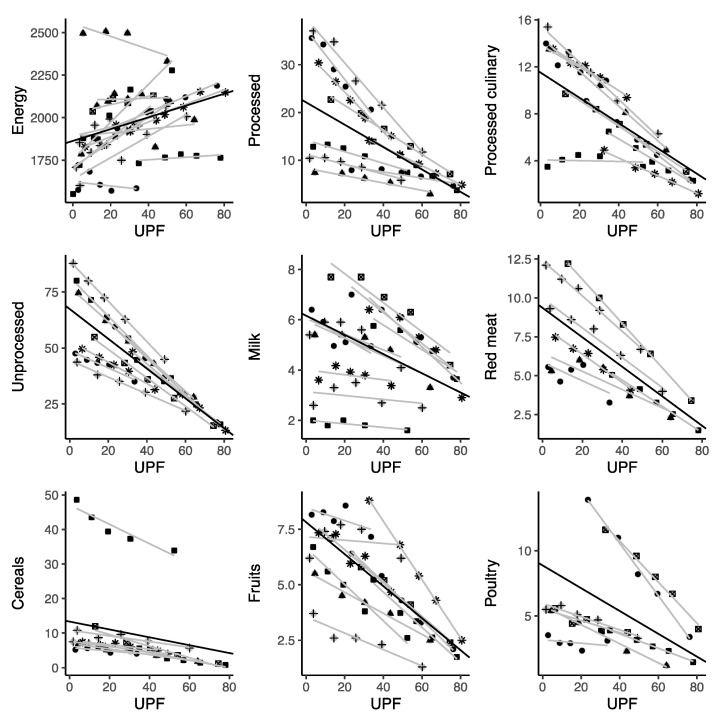
“The aforementioned 13-country meta-analysis predicted that when UPFs represented 15% of total energy intake, the dietary energy share of fruits, vegetables, and legumes (ie, sources of health-protective phytochemicals) was 12•4%.When UPFs represented 75% of total energy intake, that share dropped to 4%. 46”
From Ultra-processed foods and human health: the main thesis and the evidence (2025) · cites this paper as [46]
Experimental — accuracy not yet measuredThe cited source says what the claim attributes to it.
In the citing paper
“For example, UPFs now make up nearly 60 % of daily caloric intake in the US, nearly 50 % in Canada, 42 % in Australia, and 20 % in Brazil (Martini et al. 2021).”
From Corporate concentration and power matter for agency in food systems (2025) · cites this paper as Martini et al. 2021
The cited source says what the claim attributes to it.
In the citing paper
“The consumption of ultra-processed foods is linked to a lower intake of unprocessed or minimally processed fruits, vegetables, legumes, and seafood.”
From Ultra-processed food exposure and adverse health outcomes: umbrella review of epidemiological meta-analyses (2024) · cites this paper as [6]
The cited source says what the claim attributes to it.
In the citing paper
“The 13-country meta-analysis predicted a 34•7 kcal increase (95% CI 14•7-54•7) in total daily energy intake for each 10% increase in UPF share.46”
From Ultra-processed foods and human health: the main thesis and the evidence (2025) · cites this paper as [46]
2 more claims about this paper
Create a free account to see every claim other papers make about this one.
Self-check
Percentages, sums and reported differences re-computed from the paper’s own numbers.
The self-check needs the paper’s full text.
Citations
Cites
von Elm, E., Altman, D. G., Egger, M., Pocock, S. J., Gøtzsche, P. C., Vandenbroucke, J. P., & Initiative, F. T. S. (2007) · PLoS Medicine · doi:10.1371/journal.pmed.0040296 · Cited by 23,020
von Elm, E., Altman, D. G., Egger, M., Pocock, S. J., Gøtzsche, P. C., & Vandenbroucke, J. P. (2008) · Journal of Clinical Epidemiology · doi:10.1016/j.jclinepi.2007.11.008 · Cited by 17,893
Murray, C. J. L., Aravkin, A. Y., Zheng, P., Abbafati, C., Abbas, K. M., Abbasi-Kangevari, M., Abd-Allah, F., Abdelalim, A., Abdollahi, M., Abdollahpour, I., et al. (2020) · The Lancet · doi:10.1016/s0140-6736(20)30752-2 · Cited by 9,854
Self-citationAfshin, A., Sur, P. J., Fay, K. A., Cornaby, L., Ferrara, G., Salama, J. S., Mullany, E. C., Abate, K. H., Abbafati, C., Abebe, Z., et al. (2019) · The Lancet · doi:10.1016/s0140-6736(19)30041-8 · Cited by 5,811
Self-citationStanaway, J. D., Afshin, A., Gakidou, E., Lim, S. S., Abate, D., Abate, K. H., Abbafati, C., Abbasi, N., Abbastabar, H., Abd-Allah, F., et al. (2018) · The Lancet · doi:10.1016/s0140-6736(18)32225-6 · Cited by 4,943
Self-citationUltra-processed foods: What they are and how to identify them
Monteiro, C. A., Cannon, G., Levy, R. B., Moubarac, J.-C., Louzada, M. L., Rauber, F., Khandpur, N., Cediel, G., Neri, D., Martinez-Steele, E., et al. (2019) · Public Health Nutrition · doi:10.1017/s1368980018003762 · Cited by 2,964 · cited 1×
“In addition to these formulation features, most products that are classified as UPFs are highly palatable, convenient, and easily available [10].”
BackgroundBaker, P., Machado, P., Santos, T., Sievert, K., Backholer, K., Hadjikakou, M., Russell, C., Huse, O., Bell, C., Scrinis, G., et al. (2020) · Obesity Reviews · doi:10.1111/obr.13126 · Cited by 1,194 · cited 1×
“Europe, and Australasia than in other regions; however, substantial growth in Latin America, Eastern Europe, North Africa, the Middle East, and Central and Eastern Asia was noted and is projected to continue over the coming years [11].”
BackgroundMartínez Steele, E., Baraldi, L. G., Louzada, M. L. D. C., Moubarac, J.-C., Mozaffarian, D., & Monteiro, C. A. (2016) · BMJ Open · doi:10.1136/bmjopen-2015-009892 · Cited by 838
Dietary quality among men and women in 187 countries in 1990 and 2010: a systematic assessment
Imamura, F., Micha, R., Khatibzadeh, S., Fahimi, S., Shi, P., Powles, J., & Mozaffarian, D. (2015) · The Lancet Global Health · doi:10.1016/s2214-109x(14)70381-x · Cited by 834 · cited 1×
“Diet quality at the global level has experienced a substantial deterioration when considering dietary components such as processed meats, sugar-sweetened beverages, saturated and trans fats, cholesterol, and sodium [39].”
BackgroundConsumption of ultra-processed foods predicts diet quality in Canada
Moubarac, J.-C., Batal, M., Louzada, M. L., Martinez Steele, E., & Monteiro, C. A. (2017) · Appetite · doi:10.1016/j.appet.2016.11.006 · Cited by 649 · cited 1×
“Moubarac, 2017 [24] Canadian Community Health Survey (CCHS) Canada 2004 33,694; 46,5% females 2+ years old (55,1% aged 2–18 years) two 24-h dietary recalls 47.”
Background
Cited by
Items 301–400 of 519
There is more to nutrition and cardiovascular disease than ultra-processing
Benton, D., & Young, H. A. (2024) · The Lancet Regional Health - Europe · doi:10.1016/j.lanepe.2024.101141 · Cited by 3
The Role of Ultra-Processed Foods in Inflammation and Aging
Baltacı, P., & Şengün, N. (2025) · Food science and nutrition · doi:10.5772/intechopen.1009327 · Cited by 4
Shimony, T., Rosenberg, A., Keinan‐Boker, L., & Shahar, D. R. (2025) · Frontiers in Nutrition · doi:10.3389/fnut.2025.1586611 · Cited by 5
Sugar in ultraprocessed foods in Latin American capitals: From dentistry perspective
Angarita‐Díaz, M. D. P., Ramos, R. P. L., Asimbaya, L. M. T., Gómez, A. R., González–Bernal, M. A., & Vicuña-Huaqui, L. A. (2023) · NFS Journal · doi:10.1016/j.nfs.2023.02.001 · Cited by 6
Dietary Pattern and Nutrients Intake on Chronic Diseases
Casas, R. M. (2023) · Nutrients · doi:10.3390/nu15153399 · Cited by 3
Preventing Functional Decline with Age: Biomarkers and Best PracticesPreprint
Halma, M. T. J., & Marik, P. E. (2024) · Preprints.org · doi:10.20944/preprints202403.0667.v1 · Cited by 3
Dufault, R. (2025) · World Journal of Experimental Medicine · doi:10.5493/wjem.v15.i2.101555 · Cited by 3
“Numerous studies show high intake of ultra-processed foods correlate with increased intake of added sugars and fats and decreased intake of fiber, protein, zinc (Zn), calcium, magnesium, potassium, and multiple vitamins[34,35].”
Levacher, V., Batal, M., Giroux, I., Sanou, D., & Blanchet, R. (2025) · Applied Physiology, Nutrition, and Metabolism · doi:10.1139/apnm-2024-0525 · Cited by 2
Diet quality in relation to serum perfluoroalkyl substance concentrations in Canadian preadolescents
Simpson, A., Fisher, M. M., Harrison, S. L., Morisset, A., Borghese, M. M., Braun, J. M., Bouchard, M. F., Saha, T., Panagiotopoulos, C., Booij, L., et al. (2025) · Environmental Research · doi:10.1016/j.envres.2025.121790 · Cited by 3
Aloraini, G. F., McKeown, N. M., Rogers, G. T., Das, S. K., Lichtenstein, A. H., & Jacques, P. F. (2025) · Current Developments in Nutrition · doi:10.1016/j.cdnut.2025.107479 · Cited by 3
Application of Artificial Intelligence to Lipid Nutrition: A Narrative Review
Naumova, E. N., Hsieh, A. T., Ran‐Ressler, R. R., Jang, C. W., Huey, S. L., & Dionisi, F. (2025) · Lipids · doi:10.1002/lipd.70000 · Cited by 2
“Recent literature has indicated that over 70% of the US food supply is “ultra-processed” (Menichetti et al. 2023) and has investigated how lipid components contribute to the overall nutritional profile of processed food and their role in diet-related diseases (Martini et al. 2021).”
Machado, P. P., Livingstone, K. M., Denniss, E., Marchese, L. E., Lawrence, M. A., & McNaughton, S. A. (2025) · Appetite · doi:10.1016/j.appet.2025.108270 · Cited by 4
Bauer, J., Ayala, F. O., Marcadenti, A., Machado, R. H. V., Bersch-Ferreira, Â. C., Moreira, M. F. S., Beretta, M. V., Feóli, A. M. P., & Busnello, F. M. (2025) · International Journal of Environmental Research and Public Health · doi:10.3390/ijerph22081275 · Cited by 4
“Among individuals aged 40 to 69, followed for approximately 5 years, consumption of UPF comprising about 22% of daily calories was associated with a 44% higher risk of developing T2DM compared to those with lower daily consumption [12,13].”
Girgis, H., & Nguyen, S. P. (2025) · Global Health Promotion · doi:10.1177/17579759251370633 · Cited by 3
Lane, M. M., McGuinness, A. J., Mohebbi, M., Lotfaliany, M., Loughman, A., O’Hely, M., O'Neil, A., Batti, J., Kotowicz, M. A., Berk, M., et al. (2025) · Cell Reports Medicine · doi:10.1016/j.xcrm.2025.102417 · Cited by 4
Chow, J. Y., Shahar, S., Haron, H., & Ong, Y. Q. (2025) · Journal of Nutritional Science · doi:10.1017/jns.2025.10039 · Cited by 2
“This finding is a concern, as ultra-processed foods are often high in sugar, saturated fats, and sodium, while often being low in fibre and essential micronutrients (29) .”
Paladino, N., Costanzo, G. D., Ruggiero, E., Castelnuovo, A. F. D., Russo, M. D., Formisano, A., Lauria, F., Currenti, W., Galvano, F., Grosso, G., et al. (2025) · Nutrients · doi:10.3390/nu17233751 · Cited by 3
“The consumption of UPFs has been associated with poor diet quality [4] and with increased risk of adverse health outcomes and mortality across the life course [5–7].”
Self-citationRuggiero, E., Castelnuovo, A. F. D., Costanzo, S., Esposito, S., Costanzo, G. D., Curtis, A. D., Magnacca, S., Cerletti, C., Donati, M. B., de Gaetano, G., et al. (2026) · Nutrition Metabolism and Cardiovascular Diseases · doi:10.1016/j.numecd.2026.104578 · Cited by 2
Self-citationFrom concept to measurement: initial validation of the Ultra-Processed Food Consumption Scale
Mantzios, M., Hussain, M., & Giannou, K. (2026) · Eating and Weight Disorders - Studies on Anorexia Bulimia and Obesity · doi:10.1007/s40519-026-01825-9 · Cited by 2
Garduño-Alanís, A., Salgado, J. C., Contreras‐Manzano, A., Aburto, T. C., Moreno-Aguilar, L. A., Ng, S. W., & Barquera, S. (2026) · Social Science & Medicine · doi:10.1016/j.socscimed.2026.119209 · Cited by 3
Cardoso, B. R., Steele, E. M., Brayner, B., Yuan, X., Bransby, L., Cummins, H., Lim, Y. Y., & Machado, P. P. (2026) · Alzheimer s & Dementia Diagnosis Assessment & Disease Monitoring · doi:10.1002/dad2.70335 · Cited by 5
“In Model 2, the Mediterranean diet score was added to assess its effect on the association, since diet quality has been associated with both UPF consumption 32,33 and worse cogni-tivehealth.”
Public knowledge of ultra-processed foods: Insights from a national survey of Australian adults
Machado, P. P., Denniss, E., Russell, C. G., Khandpur, N., Lacy‐Nichols, J., Russell, C., Gabe, K. T., & McNaughton, S. A. (2026) · Nutrition Journal · doi:10.1186/s12937-026-01345-3 · Cited by 2
“UPFs are now the main source of dietary energy in many high-income countries like Canada, UK and US [3], and their purchases are rapidly growing in several low-and middle-income countries, including highly populated countries such as Indonesia and China [4].”
Food processing in global dietary guidelines: Current status and future directions
Liuim, V., Pellegrini, B., Dinu, M., Lotti, S., Bo’, C. D., Martini, D., & Angelino, D. (2026) · Applied Food Research · doi:10.1016/j.afres.2026.102264 · Cited by 3
Self-citationBlanco, J., Yammine, S. G., Rothwell, J. A., His, M., Biessy, C., Keski‐Rahkonen, P., Chimera, B., Jacobs, I., Nahas, A. A., Cakmak, E. K., et al. (2026) · Critical Reviews in Food Science and Nutrition · doi:10.1080/10408398.2026.2629025 · Cited by 2
“…metabolism of choline, folate, vitamin B12, and methionine (Sanders and Zeisel 2007), suggesting that UPF intake may be deficient in naturally occurring micronutrients and bioactive compounds, as observed in other studies (Martini et al. 2021), despite the presence of synthetic fortification.”
Louie, J. C. Y. (2026) · Clinical Nutrition · doi:10.1016/j.clnu.2026.106769 · Cited by 3
Jensen, M. J., Brown, K. N., Turley, J. M., Graf, M. I., Dyckman, J., Creer, A., & Fullmer, S. (2022) · International Journal of Environmental Research and Public Health · doi:10.3390/ijerph19084846 · Cited by 2
“Previous research suggests that dietary intake may vary significantly from one country to another [10] and may be influenced by income status of the country [11].”
BackgroundReview on ultra-processed food and its health impact
Patra, J. R., Kirthana, C., & Sharma, D. (2022) · International Journal of Pharmacognosy and Life Science · doi:10.33545/27072827.2022.v3.i2a.61 · Cited by 2
Hochverarbeitete Lebensmittel und Gesundheit: Differenzieren statt dämonisieren
Smollich, M., & Wefers, D. (2024) · Aktuelle Ernährungsmedizin · doi:10.1055/a-2302-9323 · Cited by 2
Mendoza-Herrera, K., Monge‐Rojas, R., Vargas-Quesada, R., & Mattei, J. (2025) · Nutrition Research · doi:10.1016/j.nutres.2025.02.002 · Cited by 2
Mekonnen, T. C., Melaku, Y. A., Shi, Z., & Gill, T. K. (2025) · Respiratory Medicine · doi:10.1016/j.rmed.2025.108138 · Cited by 2
Ultra-Processed Food Consumption and Its Role in Obesity and Metabolic Syndrome Development
Khoiriyah, R. A., Firnanda, B. J., Faradisah, H. N., & Fitri, A. (2024) · Proceedings of International Conference on Halal Food and Health Nutrition · doi:10.29080/ichafohn.v2i1.2042 · Cited by 2
Entzündungskrankheiten: Was leistet eine antientzündliche Ernährung?
Geisler, C., Dörge, M., & Laudes, M. (2024) · Aktuelle Ernährungsmedizin · doi:10.1055/a-2157-8898 · Cited by 2
Overview of diet and autoimmune demyelinating optic neuritis: a narrative review
Plafker, S. M., Titcomb, T. J., Zyla, K., Kolakowska, A., & Wahls, T. L. (2023) · Immunometabolism · doi:10.1097/in9.0000000000000022 · Cited by 2
Ribeiro, G. J. S., Nobre, L. N., dos Santos, G. R., Moriguchi, E. H., & Pinto, A. D. A. (2024) · Revista Brasileira de Geriatria e Gerontologia · doi:10.1590/1981-22562024027.240020.pt · Cited by 7
Bonaccio, M., Sharma, S., & Iacoviello, L. (2026) · International Journal of Public Health · doi:10.3389/ijph.2025.1609418 · Cited by 2
“…and has led to higher demand for food items with longer shelf-life and improved palatability ultimately achieving this by adding natural or artificial ingredients which may impact on the nutritional quality of these foods, which are often characterized by high fat, sugar and salt contents [1].”
Self-citationDuru, M., Fardet, A., Thérond, O., & Wallet, F. (2024) · Pour · doi:10.3917/pour.249.0083 · Cited by 1
Liu, Z. (2025) · Theoretical and Natural Science · doi:10.54254/2753-8818/2025.au23542 · Cited by 2
Navigating Evidence on Ultra-Processed Foods and Cancer: A Narrative Review
Vithayathil, S., Walizada, M., Siddi, G., Gumireddy, S. R., Anto, M., Elkashif, I., & Yu, A. K. (2025) · Cureus · doi:10.7759/cureus.96173 · Cited by 3
“The increase in UPF consumption is tied to several features of today’s lifestyles, including extended eating periods, more frequent snacking, dining out more regularly, and the convenience and affordability that UPFs offer [23].”
InfluentialTucker, A. C., Steele, E. M., Caulfield, L. E., Rebholz, C. M., & Wolfson, J. A. (2025) · American Journal of Clinical Nutrition · doi:10.1016/j.ajcnut.2025.11.011 · Cited by 2
“Similarly, prior studies have shown that the majority of UPFs have unfavorable nutritional profiles, which are at least partially responsible for the associations with poor health outcomes [21,41,42].”
Environmental impact of 100% fruit juice consumption and inclusion in sustainable diets in Europe
Godos, J., Scuderi, A., Currenti, W., Micek, A., Rosi, A., Scazzina, F., & Mena, P. R. (2025) · International Journal of Food Sciences and Nutrition · doi:10.1080/09637486.2025.2565340
“This is particularly the case for younger generations, which are exposed to unhealthy, heavily processed alternatives poor in nutrients while rich in sugars (Martini et al. 2021).”
Self-citationLeite, M. A., Rezende, L. F. M., Steele, E. M., Giovannucci, E. L., Zhang, X., & Levy, R. B. (2025) · American Journal of Preventive Medicine · doi:10.1016/j.amepre.2025.108250 · Cited by 2
Rodrigues, K. L., da Silva, A., Pereira, E. N. G. D. S., Castilho, C., Schmidt, M. I., da Fonseca, M. D. J. M., Griep, R. H., & Daliry, A. (2025) · Journal of Affective Disorders · doi:10.1016/j.jad.2025.121061 · Cited by 2
Lemmon, B., Grummon, A. H., Marquez, A., Miller, L. M. S., Au, L. E., Brown, S. D., Wang, A., Powell, L. M., & Falbe, J. (2026) · The Lancet Public Health · doi:10.1016/s2468-2667(26)00027-7 · Cited by 2
Machado, P. P., Mazahery, H., Black, L. J., Tremlett, H. L., Daly, A., Pham, N. M., Tessema, G. A., Zhu, F., Banwell, B., Bar‐Or, A., et al. (2026) · Multiple Sclerosis and Related Disorders · doi:10.1016/j.msard.2026.107159 · Cited by 1
Masciola, F., Moneta, E., Peparaio, M., Nardo, N., Civitelli, E. S., & Sinesio, F. (2026) · International Journal of Gastronomy and Food Science · doi:10.1016/j.ijgfs.2026.101508 · Cited by 1
Almoraie, N. M., & Alomari, W. D. (2026) · Frontiers in Nutrition · doi:10.3389/fnut.2026.1800945 · Cited by 1
“This association is attributed to the high content of saturated fat, trans-fatty acids, refined sugars, as well as additives, little or no fiber, vitamins, and minerals (28, 29).”
Influentialde Oliveira, N. M., Schincaglia, R. M., Carneiro, L. B. V., Lacerda, E. M. D. A., Crispim, S. P., Berti, T. L., dos Santos, I. N., Lepsch, J., Farias, D. R., Alves‐Santos, N. H., et al. (2026) · British Journal Of Nutrition · doi:10.1017/s0007114526107508 · Cited by 1
“…one in Taiwan, Korea and Australia) has shown that an increased UPF intake correlated with a substantial increase in free sugars and total and saturated fats, as well as a decrease in fibre, protein, potassium, Zn, Mg and vitamins A, C, D, E, B 12 and niacin, a result that agrees with ours (10) .”
Rostamian, R., Moabedi, M., Poursalehi, D., Moradmand, Z., Shahdadian, F., Rouhani, P., & Saneei, P. (2026) · Food & Function · doi:10.1039/d5fo05626h · Cited by 1
Zhang, S., Zhuang, X., Jiang, Y., Wang, H., He, X., Zhang, Q., Ji, X., Lü, Y., & Li, F. (2026) · Journal of Neurology · doi:10.1007/s00415-026-13889-9 · Cited by 1
“Combined UPF may activate these pathways through multiple mechanisms, thereby increasing the risk of cognitive injury [33, 34].”
Jiang, Y., Zhang, S., Wang, H., He, X., Jin, Z., Fu, R., Fu, Q., Li, W., Zhu, X., Li, Z., et al. (2026) · Frontiers in Nutrition · doi:10.3389/fnut.2026.1901660 · Cited by 1
“However, amid global food system transformations and the growing availability and consumption of industrially processed foods, UPF intake has risen substantially, increasingly displacing minimally processed foods such as whole grains, legumes, fresh fruits, and vegetables (7, 8).”
Bernardino, M. E., Regalado, J. T., Gazzin, S., Tiribelli, C., & Rosso, N. (2026) · Foods · doi:10.3390/foods15152651 · Cited by 2
“Consequently, treating UPFs as a nutritionally homogeneous category may obscure important differences between products and limit our understanding of the mechanisms underlying their observed associations with disease risk [12].”
Rivera‐Íñiguez, I., Strong, D. R., Rhee, K. E., Eichen, D. M., & Boutelle, K. N. (2026) · Pediatric Obesity · doi:10.1111/ijpo.70143 · Cited by 1
“The widespread availability of ultra-processed foods (UPFs) has magnified the caloric contribution of fats and sugars in to-day's diet [4].”
Barros, A. S., & Queiroz, C. H. D. S. (2025) · Health and Society · doi:10.51249/hs.v5i01.2443 · Cited by 1
Food processing and sustainability: Exploring new multidisciplinary perspectives
Fardet, A., Boland, M., Hoang, H., Delgado, A. M., Halawany-Darson, R., Germond, A., Nedelciu, C. E., Kopsahelis, N., Diemer, A., Baritaux, V., et al. (2025) · Global Food Security · doi:10.1016/j.gfs.2025.100855 · Cited by 2
Arumsari, I., Putri, N. A., Lathifah, S. N. L., Rosalba, G. A. A., Khusun, H., Februhartanty, J., & Aini, R. N. (2025) · Kesmas National Public Health Journal · doi:10.7454/kesmas.v20i2.2134 · Cited by 1
Public Policies, Nutritional Food Security and Sustainable Development Goals in Latin America
Sikos, B. A. A., Silva, Y. L. S., Esquivel, M. A. T. Y., & Urbina, S. M. D. (2025) · Food Science and Technology · doi:10.13189/fst.2025.130207 · Cited by 1
Bussa, M., Ambrogi, F., Edefonti, V. C., O’Flaherty, M., Chavez‐Ugalde, Y., & Colombet, Z. (2025) · Public Health Nutrition · doi:10.1017/s1368980025100840 · Cited by 1
“Whether UPF-based diets are harmful to health simply due to poor nutritional quality, or if the nature and extent of the processing itself have health consequences, remains an ongoing debate that warrants continued research (19,48,49) .”
The Impact of Ultra-Processed Foods on the Risk of Developing Chronic Diseases
Степаненко, Д. С. (2025) · Universal library of medical and health sciences. · doi:10.70315/uloap.ulmhs.2025.0302012 · Cited by 2
Ultra-processed food intake and cognitive decline in older adults
Buis, C., Nicolaou, M., Visser, M., Olthof, M. R., & Wijnhoven, H. A. H. (2026) · European Journal of Nutrition · doi:10.1007/s00394-026-03896-x · Cited by 2
Ultra processed food consumption and nutrients adequacy among cancer survivors in Lebanon
Helou, R. E., Srour, B., Hadla, R., Azar, R. N., Mahfoud, Z. R., Touvier, M., Temraz, S. N., & Jabbour, J. (2026) · BMC Public Health · doi:10.1186/s12889-026-26547-6 · Cited by 1
“A meta-analysis indicated that in the general population, increased consumption of UPFs is associated with lower intakes of fiber, protein, potassium, zinc, magnesium, and vitamins A, C, D, E, B12, and niacin, and an elevated consumption of added sugars, unhealthy fats, and sodium [15].”
Irgat, S. İ., & Bakırhan, H. (2026) · Healthcare · doi:10.3390/healthcare14050575 · Cited by 1
Ulm, C., Hill, F., Mills, S. D., Chelius, C., & Hecht, E. M. (2026) · Child and Adolescent Psychiatry and Mental Health · doi:10.1186/s13034-026-01079-4 · Cited by 2
“Unhealthy foods are typically high in refined carbohydrates, added sugar, saturated fat, sodium, and low in fiber, protein, and most vitamins and minerals [3, 4].”
AlBaloul, A. H. (2026) · Frontiers in Nutrition · doi:10.3389/fnut.2026.1748813 · Cited by 4
“This was consistent with previous findings, where higher UPF intake was associated with lower consumption of fruits, vegetables, whole grains, and lean protein sources (11).”
Torre-Villalvazo, I., Tovar‐Palacio, C., Díaz‐Villaseñor, A., & Palacios‐González, B. (2026) · Receptors · doi:10.3390/receptors5020012 · Cited by 2
“Consequently, ultra-processed diets do not simply provide excess calories; they deliver aberrant molecular signals that chronically reprogram nuclear receptor networks [164,165].”
Ultra-processed food consumption during pregnancy and emotional and behavioral problems in offspring
Becerra‐Tomás, N., Canals, J., Jardí, C., Voltas, N., Hernández‐Martínez, C., & Arija, V. (2026) · European Child & Adolescent Psychiatry · doi:10.1007/s00787-026-03044-0 · Cited by 1
“Increased UPF con - sumption has been linked to lower consumption of protein, fiber, and essential micronutrients such as zinc, magne - sium, and vitamins A, D, E, C, B12, and niacin [48 ].”
Kaur, S., & Chauhan, A. S. (2026) · Public Health Nutrition · doi:10.1017/s1368980026102778 · Cited by 3
“They are low in fibre and micronutrients, under-mining satiety, glycaemic control and cardiometabolic regulation (10) .”
Mendoza, K., Marrero, A., Taméz, M., Espinosa, A., Sotres‐Alvarez, D., McClain, A. C., Cordero, C., Elfassy, T., Perreira, K. M., Mossavar‐Rahmani, Y., et al. (2026) · American Journal of Epidemiology · doi:10.1093/aje/kwag139 · Cited by 1
Hallajzadeh, J., Tanha, P. Y., Azadnia, A., Wong, A., & Moradi, S. (2026) · Nutritional Neuroscience · doi:10.1080/1028415x.2026.2695160 · Cited by 1
Ultra-processed foods and breast cancer: epidemiology, mechanisms, and prognostic implications
Kuang, X., Li, Z., Zhang, F. F., Romanos-Nanclares, A., & Eliassen, A. H. (2026) · Carcinogenesis · doi:10.1093/carcin/bgag062 · Cited by 1
Ultra-processed foods, cancer, and early-onset cancer: a comprehensive review
Zhang, Y., & Giovannucci, E. L. (2026) · Carcinogenesis · doi:10.1093/carcin/bgag068 · Cited by 1
Abar, L., O’Connell, C. P., Hong, H. G., Herrick, K., Kahle, L., Lerman, J., Liao, L. M., Zhang, X., Zhang, X., Zhao, L., et al. (2026) · PLoS Medicine · doi:10.1371/journal.pmed.1005251 · Cited by 1
“While most UPF are energy dense and nutrient poor [11–13], some are not (e.g., whole wheat bread).”
Risk Factors for Type II Diabetes: The Role of Ultra-processed Foods
Oh, H. (2025) · Springer eBooks · doi:10.1007/978-3-031-32047-7_71-1 · Cited by 2
Ferreira, E. D. A., Morikawa, S. Y., Takeda, Y., Ikeda, I., Matsumoto, R. I., Takeuchi, M., Hatta, M., Horikawa, C., KHIN, L. M., Ishiguro, H., et al. (2025) · Journal of Nutrition and Metabolism · doi:10.1155/jnme/5568303 · Cited by 1
“Ultra-processed foods, which are often high in un-healthy fats, sodium, and added sugars, likely contributed to these imbalanced dietary patterns [23].”
Zhang, Z., Chen, L., Lv, L., Li, W., Hou, B., Guan, S., Chen, Z., He, D., Song, H., Sun, W., et al. (2025) · Frontiers in Nutrition · doi:10.3389/fnut.2025.1618943 · Cited by 1
Health impacts of Processed and ultra-processed foods
Tannu, S. I., Hasan, M. N., & Hoque, M. (2025) · Hospital Pharmacology - International Multidisciplinary Journal · doi:10.5937/hpimj2502664t · Cited by 1
Mulrooney, S. L., Lyng, J. G., O’Hara, C., O’Sullivan, A. M., O’Riordan, D., & Gibney, E. R. (2023) · Current Research in Food Science · doi:10.1016/j.crfs.2023.100627 · Cited by 1
“…” categories, however these classification systems have also received criticism that is important to consider (Moradi et al., 2021a, 2021b; Suksatan et al., 2021; Delpino et al., 2022; Martini et al., 2021; Petrus et al., 2021; Gibney et al., 2017; Sadler et al., 2021; Knorr and Augustin, 2021).”
Background4. Avaliação do Estado Nutricional de Idosos
Bielemann, R. M., Costa, C. D. S., & González, M. C. (2024) · Editora FIOCRUZ eBooks · doi:10.7476/9786557081891.0007 · Cited by 1
Cheng, R. K.-H. (2025) · Preprints.org · doi:10.20944/preprints202510.1142.v1 · Cited by 1
Zawahid, B. S. M., Buhari, S. S., Sharoni, S. K. A., & Setiyaningrum, Z. (2023) · Environment-Behaviour Proceedings Journal · doi:10.21834/ebpj.v8i24.4629 · Cited by 1
Processed Foods and Gut Health: A Mini Review of Microbiome Responses
Baspakova, A. M., Zhilisbayeva, K. R., Umbetova, A. A., & Abitova, A. Z. (2023) · Медицинский журнал Западного Казахстана · doi:10.18502/wkmj.v65i4.14683 · Cited by 2
“Understanding the classification of processed foods is pivotal for discerning their potential implications on gut health and overall well-being [8].”
BackgroundOliver, A. (2023) · Depósito Académico Digital Universidad de Navarra (University of Navarra) · doi:10.15581/10171/69220
Rodrigues, C. C. R., Crispim, D., Busnello, F. M., Sahade, V., Correa, D., dos Santos, T. A., Bersch-Ferreira, Â. C., Marcadenti, A., & de Almeida, J. C. (2024) · Nutrition Metabolism and Cardiovascular Diseases · doi:10.1016/j.numecd.2024.01.034 · Cited by 1
Viliod, M. C. D. L. (2024) · Digital Library of Theses and Dissertations (Universidade de São Paulo) · doi:10.11606/d.109.2024.tde-08032024-080317
Ricci, J. M. S. (2024) · Digital Library of Theses and Dissertations (Universidade de São Paulo) · doi:10.11606/d.6.2024.tde-28032024-084049
Canella, D. S., Louzada, M. L. D. C., Oliveira, N., de Azevedo, A. B. C., & Levy, R. B. (2024) · British Journal Of Nutrition · doi:10.1017/s0007114524000813
“However, both countries had a higher consumption of ultra-processed foods compared with Brazil (6) .”
Consumo de alimentos ultraprocessados de vegetarianos britânicos (Pesquisa Nacional do Reino Unido)
Torquato, B. M. D. A. (2024) · Digital Library of Theses and Dissertations (Universidade de São Paulo) · doi:10.11606/d.5.2024.tde-22042024-160319
da Silva, M. A. L., Rodrigues, L. B., Brito, S. A., Lage, L. G., & Louzada, M. L. D. C. (2024) · doi:10.1590/scielopreprints.9349 · Cited by 5
Ultra-processed Foods and Food Addiction
Monteiro, C. A., & Cannon, G. (2024) · Oxford University Press eBooks · doi:10.1093/oso/9780190671051.003.0032 · Cited by 1
Consumption of ultra-processed foods and noncommunicable diseases
Bonilauri, E. (2024) · The Journal of AMD · doi:10.36171/jamd24.27.2.7 · Cited by 1
The relationship of ultra-processed foods with some diseases
Karadoğan, S. R., & Canpolat, E. (2024) · Food and Health · doi:10.3153/fh24029 · Cited by 1
Narayan, R. (2022) · Optician · doi:10.12968/opti.2022.266.6867.18
There is more to nutrition and cardiovascular disease than ultra-processing— authors’ reply
Rauber, F., Louzada, M. L. D. C., Chang, K., Monteiro, C. A., Vamos, E. P., & Levy, R. B. (2024) · The Lancet Regional Health - Europe · doi:10.1016/j.lanepe.2024.101142
Richa, F. T., & Argaheni, N. B. (2024) · Plexus Medical Journal · doi:10.20961/w504wy48
“The article by Wang et al (2021) and Martini et al (2021) reinforces the need for a more holistic and evidence-based approach to reducing consumption of ultra-processed foods and improving diet quality.”
Olishevskyi, V., Babko, E., Bondarenko, Y., Погорілий, Т. М., Євгенійович, Ц. М., & Цюрпита, Д. Є. (2024) · Food Industry · doi:10.24263/2225-2916-2024-36-7
Rovari, G. H., Rezende, A. C. D. P., ANDREÃO, R. D. S. C., PEREIRA, S. N. B., Ferreira, A. L. L., Hassan, B. K., & Baltar, V. T. (2025) · Cadernos de Saúde Pública · doi:10.1590/0102-311xen071724
“The advance of ultra-processed food consumption is a public health issue, mainly because it is associated with a lower nutritional quality of food diet – higher in fat, sugar, and salt – and an increased risk of several NCDs, such as obesity, type 2 diabetes mellitus, and hypertension 19,20,21,22 .”
Cecchini, V., Sjöblom, L., Lagerros, Y. T., & Bonn, S. E. (2025) · Current Developments in Nutrition · doi:10.1016/j.cdnut.2025.107454 · Cited by 3
“Nutritionally, UPFs are energy-dense but lack proteins, dietary fi bers, vitamins, minerals, and bioactive compounds, leading to poor dietary quality [13,14].”
Entzündungskrankheiten: Was leistet eine antientzündliche Ernährung?
Geisler, C., Dörge, M., & Laudes, M. (2025) · Diabetes aktuell · doi:10.1055/a-2563-8623
Edukasi Literasi Gizi : Sehatkah Makanan dan Minuman Kekinian?
Agustina, R., Syafriani, S., & Weken, M. E. (2024) · Jurnal SOLMA · doi:10.22236/solma.v13i3.16461
Felício-Ferreira, L. M., MORAIS, B. L. D., Gonçalves, F. D. F., dos Santos, E. D. S. M., & Garcia-Gomes, A. D. S. (2025) · REVISTA DO INSTITUTO ADOLFO LUTZ · doi:10.53393/rial.2025.v.84.41441
Roselló-Araya, M., Núñez-Rivas, H. P., Blanco‐Metzler, A., Galicia-Cano, L. E., Claro, R. M., Victoria-Restrepo, J. E., Villalobos-Daniel, V. E., & Gomes, F. D. S. (2025) · Revista Panamericana de Salud Pública · doi:10.26633/rpsp.2025.73
Metadata
- Authors
- Martini, D., Godos, J., Bonaccio, M., Vitaglione, P., & Grosso, G.
- Affiliations
- University of Milan (IT)
- University of Catania (IT)
- Istituto Neurologico Mediterraneo (IT)
- University of Naples Federico II (IT)
- Corresponding author
- Godos, Justyna
- Venue
- Nutrients
- Publisher
- MDPI AG
- Published
- 2021-09-27
- Volume
- 13
- Issue
- 10
- Pages
- 3390
- ISSN
- 2072-6643 (ISSN-L)
- PMC
- PMC8538030
- OpenAlex
- W3202712388
- Cited by
- 481
- References
- 58
- Citations by year
- 2026: 122 · 2025: 137 · 2024: 113 · 2023: 71 · 2022: 37 · 2021: 1
- FWCI
- 9.89
- Type
- journal article
- Language
- en
- Open access
- gold
- doi.org
- Licence
- Locations
- Nutrients (publishedVersion, cc-by)
- PubMed Central (publishedVersion, cc-by)
- PubMed (publishedVersion)
- Archivio Istituzionale della Ricerca (Universita Degli Studi Di Milano) (submittedVersion, other-oa)
- DOAJ (DOAJ: Directory of Open Access Journals) (submittedVersion, cc-by-sa)
- Topics
- Health Sciences › Medicine › Public Health, Environmental and Occupational Health › Consumer Attitudes and Food Labeling
- Health Sciences › Medicine › Public Health, Environmental and Occupational Health › Nutritional Studies and Diet
- Health Sciences › Nursing › Nutrition and Dietetics › Nutrition, Health and Food Behavior
- Keywords
- ultra-processed foods, NOVA classification, diet quality, nutrient composition, free sugars, saturated fat, dietary fiber, micronutrient intake, confectionery, sugar-sweetened beverages, energy intake
- MeSH terms
- Dietary Sugars, Sugar-Sweetened Beverages, Adolescent, Adult, Energy Intake, Child, Diet, Female, Food Handling, Humans, Male, Nutrition Surveys, Nutritive Value, Fast Foods, Snacks, Food Quality
About these checks
Registry, retraction, Cites and statistics results are computed, not judged, with one exception: a printed reference that no index lists is read once by a model before it counts as a citation error. Claims are extracted by a model and kept only when their quote appears verbatim in the text; each cited source is then checked, with a model’s help, for whether it says what the claim relies on. Those verdicts can be wrong — read the claim’s quote and the cited source before relying on one.
Statistics and arithmetic are recomputed, not judged.
Confidence bands are shown only for fields calibrated on our annotated test set. None is calibrated yet, so no band is shown.
What counts as a claim ›How we measure confidence ›How we check this ›
Are you an author, or do you see a problem with this page? Request a review
Data sources
Bibliographic data: Semantic Scholar, OpenAlex, Crossref.
Contains information from the Semantic Scholar Academic Graph Datasets, made available under the ODC Attribution License (ODC-BY 1.0).
Semantic Scholar’s data is described in: Kinney, R., et al. (2023). The Semantic Scholar Open Data Platform. arXiv:2301.10140.
