

Ultra-Processed Foods and Nutritional Dietary Profile: A Meta-Analysis of Nationally Representative Samples
Open accessThe DOI matches its Crossref record; 58 of the 58 references it cites were found in a registry or an index.
Abstract
Excessive consumption of ultra-processed foods (UPFs), as described by the NOVA classification system, represents a potential threat to human health. The nutritional composition of UPFs may explain their observed adverse effects. The present study aimed to provide a quantitative meta-analysis of nationally representative surveys on the consumption of UPFs and the dietary/nutrient composition of respondents' diets. A systematic search for relevant studies published prior to July 2021 was conducted via electronic databases. The studies that provided the dietary/nutrient composition of foods categorized according to the NOVA classification system were selected. The association between UPFs and other dietary variables was modelled using ordinary least squares linear regression based on aggregated data extracted from the selected articles. Consumption of UPFs represented up to 80% of total caloric intake in the US and Canada, with confectionery and sugar-sweetened beverages being the most consumed items. When considered in relation to other food groups, an inverse linear relation between UPFs and less-processed foods was evident. Increased UPF intake correlated with an increase in free sugars, total fats, and saturated fats, as well as a decrease in fiber, protein, potassium, zinc, and magnesium, and vitamins A, C, D, E, B12, and niacin. In conclusion, the data indicate that increased UPF consumption negatively affects the nutritional quality of diets.
Overview
The claims and statistics of this paper haven’t been checked yet.
Free: it reads the open-access text and checks the first 5 claims that cite a source we can check. Create a free account to check every claim.
Integrity signals
Registry
Cites
Statistics
Figures
Verification
Claims the paper makes
The claims and statistics of this paper haven’t been checked yet.
Free: it reads the open-access text and checks the first 5 claims that cite a source we can check. Create a free account to check every claim.
Claims other papers make about this one
Each is checked against this paper’s own text: does it say what the citing paper says it does?
The source backs part of the claim, not all of it — or backs it for a different population, condition or comparison.
In the citing paper
“diets rich in ultra-processed foods are associated with markers of poor diet quality, with higher levels of added sugars, saturated fat, and sodium; higher energy density; and lower fibre, protein, and micronutrients.”
From Ultra-processed food exposure and adverse health outcomes: umbrella review of epidemiological meta-analyses (2024) · cites this paper as [6]
Experimental — accuracy not yet measuredThe source backs part of the claim, not all of it — or backs it for a different population, condition or comparison.
In the citing paper
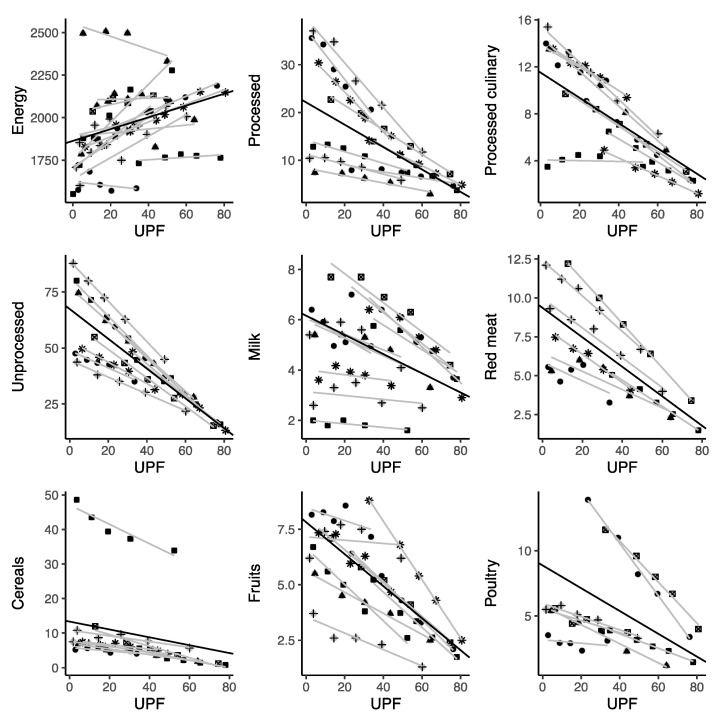
“The aforementioned 13-country meta-analysis predicted that when UPFs represented 15% of total energy intake, the dietary energy share of fruits, vegetables, and legumes (ie, sources of health-protective phytochemicals) was 12•4%.When UPFs represented 75% of total energy intake, that share dropped to 4%. 46”
From Ultra-processed foods and human health: the main thesis and the evidence (2025) · cites this paper as [46]
Experimental — accuracy not yet measuredThe cited source says what the claim attributes to it.
In the citing paper
“For example, UPFs now make up nearly 60 % of daily caloric intake in the US, nearly 50 % in Canada, 42 % in Australia, and 20 % in Brazil (Martini et al. 2021).”
From Corporate concentration and power matter for agency in food systems (2025) · cites this paper as Martini et al. 2021
The cited source says what the claim attributes to it.
In the citing paper
“The consumption of ultra-processed foods is linked to a lower intake of unprocessed or minimally processed fruits, vegetables, legumes, and seafood.”
From Ultra-processed food exposure and adverse health outcomes: umbrella review of epidemiological meta-analyses (2024) · cites this paper as [6]
The cited source says what the claim attributes to it.
In the citing paper
“The 13-country meta-analysis predicted a 34•7 kcal increase (95% CI 14•7-54•7) in total daily energy intake for each 10% increase in UPF share.46”
From Ultra-processed foods and human health: the main thesis and the evidence (2025) · cites this paper as [46]
2 more claims about this paper
Create a free account to see every claim other papers make about this one.
Self-check
Percentages, sums and reported differences re-computed from the paper’s own numbers.
The self-check needs the paper’s full text.
Citations
Cites
von Elm, E., Altman, D. G., Egger, M., Pocock, S. J., Gøtzsche, P. C., Vandenbroucke, J. P., & Initiative, F. T. S. (2007) · PLoS Medicine · doi:10.1371/journal.pmed.0040296 · Cited by 23,020
von Elm, E., Altman, D. G., Egger, M., Pocock, S. J., Gøtzsche, P. C., & Vandenbroucke, J. P. (2008) · Journal of Clinical Epidemiology · doi:10.1016/j.jclinepi.2007.11.008 · Cited by 17,893
Murray, C. J. L., Aravkin, A. Y., Zheng, P., Abbafati, C., Abbas, K. M., Abbasi-Kangevari, M., Abd-Allah, F., Abdelalim, A., Abdollahi, M., Abdollahpour, I., et al. (2020) · The Lancet · doi:10.1016/s0140-6736(20)30752-2 · Cited by 9,854
Self-citationAfshin, A., Sur, P. J., Fay, K. A., Cornaby, L., Ferrara, G., Salama, J. S., Mullany, E. C., Abate, K. H., Abbafati, C., Abebe, Z., et al. (2019) · The Lancet · doi:10.1016/s0140-6736(19)30041-8 · Cited by 5,811
Self-citationStanaway, J. D., Afshin, A., Gakidou, E., Lim, S. S., Abate, D., Abate, K. H., Abbafati, C., Abbasi, N., Abbastabar, H., Abd-Allah, F., et al. (2018) · The Lancet · doi:10.1016/s0140-6736(18)32225-6 · Cited by 4,943
Self-citationUltra-processed foods: What they are and how to identify them
Monteiro, C. A., Cannon, G., Levy, R. B., Moubarac, J.-C., Louzada, M. L., Rauber, F., Khandpur, N., Cediel, G., Neri, D., Martinez-Steele, E., et al. (2019) · Public Health Nutrition · doi:10.1017/s1368980018003762 · Cited by 2,964 · cited 1×
“In addition to these formulation features, most products that are classified as UPFs are highly palatable, convenient, and easily available [10].”
BackgroundBaker, P., Machado, P., Santos, T., Sievert, K., Backholer, K., Hadjikakou, M., Russell, C., Huse, O., Bell, C., Scrinis, G., et al. (2020) · Obesity Reviews · doi:10.1111/obr.13126 · Cited by 1,194 · cited 1×
“Europe, and Australasia than in other regions; however, substantial growth in Latin America, Eastern Europe, North Africa, the Middle East, and Central and Eastern Asia was noted and is projected to continue over the coming years [11].”
BackgroundMartínez Steele, E., Baraldi, L. G., Louzada, M. L. D. C., Moubarac, J.-C., Mozaffarian, D., & Monteiro, C. A. (2016) · BMJ Open · doi:10.1136/bmjopen-2015-009892 · Cited by 838
Dietary quality among men and women in 187 countries in 1990 and 2010: a systematic assessment
Imamura, F., Micha, R., Khatibzadeh, S., Fahimi, S., Shi, P., Powles, J., & Mozaffarian, D. (2015) · The Lancet Global Health · doi:10.1016/s2214-109x(14)70381-x · Cited by 834 · cited 1×
“Diet quality at the global level has experienced a substantial deterioration when considering dietary components such as processed meats, sugar-sweetened beverages, saturated and trans fats, cholesterol, and sodium [39].”
BackgroundConsumption of ultra-processed foods predicts diet quality in Canada
Moubarac, J.-C., Batal, M., Louzada, M. L., Martinez Steele, E., & Monteiro, C. A. (2017) · Appetite · doi:10.1016/j.appet.2016.11.006 · Cited by 649 · cited 1×
“Moubarac, 2017 [24] Canadian Community Health Survey (CCHS) Canada 2004 33,694; 46,5% females 2+ years old (55,1% aged 2–18 years) two 24-h dietary recalls 47.”
Background
Cited by
Lane, M. M., Gamage, E., Du, S., Ashtree, D. N., McGuinness, A. J., Gauci, S., Baker, P., Lawrence, M., Rebholz, C. M., Srour, B., et al. (2024) · BMJ · doi:10.1136/bmj-2023-077310 · Cited by 1,153
“6 This raises the question of whether the associations between exposure to ultra-processed foods and poorer health are due to an overall unhealthy dietary pattern.”
Ultra-processed foods and food additives in gut health and disease
Whelan, K., Bancil, A. S., Lindsay, J. O., & Chassaing, B. (2024) · Nature Reviews Gastroenterology & Hepatology · doi:10.1038/s41575-024-00893-5 · Cited by 292
“Importantly, people with high UPF intake commonly consume lower intakes of dietary fibre and higher intakes of processed meat 13 , both of which are risk factors for CRC 45,46 and are rarely specifically adjusted for in these cohort studies.”
Ultra-processed foods and human health: the main thesis and the evidence
Monteiro, C. A., Louzada, M. L., Steele-Martinez, E., Cannon, G., Andrade, G. C., Baker, P., Bes-Rastrollo, M., Bonaccio, M., Gearhardt, A. N., Khandpur, N., et al. (2025) · The Lancet · doi:10.1016/s0140-6736(25)01565-x · Cited by 339
Self-citationDicken, S. J., & Batterham, R. L. (2021) · Nutrients · doi:10.3390/nu14010023 · Cited by 256
“UPFs tend to be high in saturated fat, added sugar and sodium [47], with meta-analyses demonstrating that diets higher in UPFs tend to contain greater intakes of total energy, free sugars and total and saturated fat, and lower intakes of fibre, protein and some micronutrients [30,48].”
BackgroundInfluentialLow-Grade Inflammation and Ultra-Processed Foods Consumption: A Review
Tristan Asensi, M., Napoletano, A., Sofi, F., & Dinu, M. (2023) · Nutrients · doi:10.3390/nu15061546 · Cited by 257
Grosso, G., Laudisio, D., Frias-Toral, E., Barrea, L., Muscogiuri, G., Savastano, S., & Colao, A. (2022) · Nutrients · doi:10.3390/nu14061137 · Cited by 255
Self-citationTouvier, M., da Costa Louzada, M. L., Mozaffarian, D., Baker, P., Juul, F., & Srour, B. (2023) · BMJ · doi:10.1136/bmj-2023-075294 · Cited by 159
“16 The food ingredients used in ultra-processed foods are on average of poorer quality, and ultra-processed foods also displace minimally processed, nutritious foods such as fruit, vegetables, legumes, nuts, and seeds from the diet and thereby limit intake of plant based bioactive compounds such as…”
BackgroundDicken, S. J., Qamar, S., & Batterham, R. L. (2023) · Nutrition Research Reviews · doi:10.1017/s0954422423000240 · Cited by 176
“…of individual-level UPF intake are not systematic (13,14) , and do not focus on studies that are nationally representative (13) , or consider only age and gender (15) or systematically review nationally representative samples without considering sociodemographic predictors of UPF intake (17) .”
Ultra‐Processed Food and Obesity: What Is the Evidence?
Dicken, S. J., & Batterham, R. L. (2024) · Current Nutrition Reports · doi:10.1007/s13668-024-00517-z · Cited by 133
“High-UPF diets also contain less fruit, vegetables, beans and legumes than low-UPF diets [49].”
BackgroundUltra-processed foods and health: a comprehensive review
Zhang, Y., & Giovannucci, E. L. (2022) · Critical Reviews in Food Science and Nutrition · doi:10.1080/10408398.2022.2084359 · Cited by 146
“…food consumption and intake of less-processed foods has been reported by a range of evidence from different countries (Wang et al. 2021; Juul, Parekh, et al. 2021; Shim et al. 2021b; Juul and Hemmingsson 2015; Polsky, Moubarac, and Garriguet 2020; Marron-Ponce et al. 2018; Martini et al. 2021).”
BackgroundUltra-Processed Food, Reward System and Childhood Obesity
Calcaterra, V., Cena, H., Rossi, V., Santero, S., Bianchi, A., & Zuccotti, G. (2023) · Children · doi:10.3390/children10050804 · Cited by 156
Godos, J., Scazzina, F., Paternò Castello, C., Giampieri, F., Quiles, J. L., Briones Urbano, M., Battino, M., Galvano, F., Iacoviello, L., de Gaetano, G., et al. (2024) · Journal of Translational Medicine · doi:10.1186/s12967-024-05095-w · Cited by 107
“…diet quality from a nutritional point of view; in fact, the NOVA group 4 of UPFs include the whole variety of recreational energy-dense, nutrient-poor foods which are generally rich in sugars (added), sodium, trans-fatty acids, while poor in fiber, protein, and micronutrients in general [224].”
BackgroundSelf-citationAstrup, A., & Monteiro, C. A. (2022) · The American Journal of Clinical Nutrition · doi:10.1093/ajcn/nqac123 · Cited by 100
Monteiro, C. A., & Astrup, A. (2022) · The American Journal of Clinical Nutrition · doi:10.1093/ajcn/nqac122 · Cited by 102
From ultra-processed foods to ultra-processed dietary patterns
Scrinis, G., & Monteiro, C. (2022) · Nature Food · doi:10.1038/s43016-022-00599-4 · Cited by 94
Ultra-Processed Food Intake and Increased Risk of Obesity: A Narrative Review
Monda, A., de Stefano, M. I., Villano, I., Allocca, S., Casillo, M., Messina, A., Monda, V., Moscatelli, F., Dipace, A., Limone, P., et al. (2024) · Foods · doi:10.3390/foods13162627 · Cited by 109
“The list of ingredients present in UPF foods is very long, among which we also find colorants, artificial sweeteners such as aspartame, saccharin, and acesulfame K, and emulsifiers [88,89].”
BackgroundGastaldello, A., Giampieri, F., Giuseppe, R. D., Grosso, G., Baroni, L., & Battino, M. A. (2022) · Trends in Food Science & Technology · doi:10.1016/j.tifs.2022.07.005 · Cited by 111
Self-citationMediterranean Diet and Quality of Life in Adults: A Systematic Review
Godos, J., Guglielmetti, M., Ferraris, C., Frías-Toral, E., Azpíroz, I. D., Lipari, V., Mauro, A. D., Furnari, F., Castellano, S., Galvano, F., et al. (2025) · Nutrients · doi:10.3390/nu17030577 · Cited by 111
Self-citationBonaccio, M., Castelnuovo, A. F. D., Ruggiero, E., Costanzo, S., Grosso, G., Curtis, A. D., Cerletti, C., Donati, M. B., de Gaetano, G., & Iacoviello, L. (2022) · BMJ · doi:10.1136/bmj-2022-070688 · Cited by 106
Self-citationTrês décadas da disponibilidade domiciliar de alimentos segundo a NOVA – Brasil, 1987–2018
Levy, R. B., Andrade, G. C., da Cruz, G. L., Rauber, F., Louzada, M. L. D. C., Claro, R. M., & Monteiro, C. A. (2022) · Revista de Saúde Pública · doi:10.11606/s1518-8787.2022056004570 · Cited by 128
van Zonneveld, S. M., van den Oever, E. J., Haarman, B. C. M., Grandjean, E. L., Nuninga, J. O., van de Rest, O., & Sommer, I. E. (2024) · Nutrients · doi:10.3390/nu16162646 · Cited by 94
“Martini et al. discussed the potential mechanisms by which UPFs might affect gastrointestinal health, including altering the composition of the gut microbiota, damaging the gut’s epithelial barrier, and increasing intestinal permeability [149].”
BackgroundImpacts of Consumption of Ultra-Processed Foods on the Maternal-Child Health: A Systematic Review
de Oliveira, P. G., de Sousa, J. M., Assunção, D. G. F., de Araújo, E. K. S., Bezerra, D. S., Dametto, J. F. D. S., & Ribeiro, K. D. D. S. (2022) · Frontiers in Nutrition · doi:10.3389/fnut.2022.821657 · Cited by 105
“The review included the following five main phases: (1) identification of the research question, (2) identification of relevant studies, (3) selection of studies, (4) data mapping, and (5) comparison, summary and reporting of results.”
BackgroundMethodHenney, A. E., Gillespie, C. S., Alam, U., Hydes, T. J., & Cuthbertson, D. J. (2023) · Nutrients · doi:10.3390/nu15102266 · Cited by 74
“Macronutrient composition: The mac onutrient profile of UPFs is ch ract rised by h gh total fat, saturated fat and free sugar from r fined carbohydrates, as well a low fibre [45].”
BackgroundInfluentialBrichacek, A. L., Florkowski, M. R., Abiona, E., & Frank, K. M. (2024) · Nutrients · doi:10.3390/nu16111738 · Cited by 85
Paula, W. O., Patriota, É. S. O., Gonçalves, V. S. S., & Pizato, N. (2022) · Nutrients · doi:10.3390/nu14153242 · Cited by 90
Beyond ultra-processed: considering the future role of food processing in human health
Forde, C. G. (2023) · Proceedings of The Nutrition Society · doi:10.1017/s0029665123003014 · Cited by 81
Henney, A. E., Gillespie, C. S., Alam, U., Hydes, T., Mackay, C. E., & Cuthbertson, D. J. (2023) · Journal of Neurology · doi:10.1007/s00415-023-12033-1 · Cited by 88
“Micronu-trients relevant include high sodium salt content in UPFs [48, 49].”
BackgroundDinu, M., Asensi, M. T., Pagliai, G., Lotti, S., Martini, D., Colombini, B., & Sofi, F. (2022) · Nutrients · doi:10.3390/nu14102073 · Cited by 77
“Available literature suggests that higher UPF consumption is associated with a lower diet quality, leading to diets high in calories, free sugars, fat, and salt, and low in dietary fiber [3].”
BackgroundSelf-citationUltra-processed food intake and diet carbon and water footprints: a national study in Brazil
Garzillo, J. M. F., Poli, V. F. S., Leite, F. H. M., Steele, E. M., Machado, P. P., Louzada, M. L. D. C., Levy, R. B., & Monteiro, C. A. (2022) · Revista de Saúde Pública · doi:10.11606/s1518-8787.2022056004551 · Cited by 84
Ultra-processed foods and the development of obesity in adults
Harb, A. A., Shechter, A., Koch, P. A., & St‐Onge, M. (2022) · European Journal of Clinical Nutrition · doi:10.1038/s41430-022-01225-z · Cited by 82
“Research shows that UPF consumption is positively associated with added sugar consumption and negatively associated with fiber intake [39, 40].”
BackgroundThe role of ultra-processed food in obesity
Juul, F., Steele, E. M., Parekh, N., & Monteiro, C. A. (2025) · Nature Reviews Endocrinology · doi:10.1038/s41574-025-01143-7 · Cited by 86
“UPF-based diets also tend to be low in plant-based minimally processed foods that are more satiating on a per-calorie basis and are associated with a lower risk of obesity, such as fruits, vegetables, whole grains, nuts and legumes 48,89 .”
InfluentialCorporate concentration and power matter for agency in food systems
Clapp, J., Vriezen, R., Laila, A., Conti, C., Gordon, L., Hicks, C., & Rao, N. (2025) · Food Policy · doi:10.1016/j.foodpol.2025.102897 · Cited by 64
Dicken, S. J., Dahm, C. C., Ibsen, D. B., Olsen, A., Tjønneland, A. M., Hajji-Louati, M., Cadeau, C., Marques, C., Schulze, M. B., Jannasch, F., et al. (2024) · The Lancet Regional Health - Europe · doi:10.1016/j.lanepe.2024.101043 · Cited by 82
“Globally, UPF intake is increasing, 9,10 and constitutes a considerable proportion of dietary intake.”
Relationship between Ultra-Processed Food Consumption and Risk of Diabetes Mellitus: A Mini-Review
Almarshad, M. I., Algonaiman, R., Alharbi, H. F., Almujaydil, M. S., & Barakat, H. (2022) · Nutrients · doi:10.3390/nu14122366 · Cited by 73
Barbaresko, J., Bröder, J., Conrad, J., Szczerba, E., Lang, A., & Schlesinger, S. (2025) · Critical Reviews in Food Science and Nutrition · doi:10.1080/10408398.2024.2317877 · Cited by 60
“Three publications (Lane et al. 2022; Delpino et al. 2023; Lane et al. 2021) conducted meta-analyses for children and adolescents separately, whereas one publication combined data from children/adolescents and adults (Martini et al. 2021).”
InfluentialChavez‐Ugalde, Y., de Vocht, F., Jago, R., Adams, J., Ong, K. K., Forouhi, N. G., Colombet, Z., Ricardo, L. I. C., van Sluijs, E. M. F., & Toumpakari, Z. (2024) · European Journal of Nutrition · doi:10.1007/s00394-024-03458-z · Cited by 75
How and why ultra-processed foods harm human health
Levy, R. B., Barata, M. F., Leite, M. A., & Andrade, G. C. (2023) · Proceedings of The Nutrition Society · doi:10.1017/s0029665123003567 · Cited by 69
Mignogna, C., Costanzo, S., Castelnuovo, A. F. D., Ruggiero, E., Shivappa, N., Hébert, J. R., Esposito, S., Curtis, A. D., Persichillo, M., Cerletti, C., et al. (2022) · Clinical Nutrition · doi:10.1016/j.clnu.2022.08.020 · Cited by 61
Self-citationCanani, R. B., Carucci, L., Coppola, S., D’Auria, E., O’Mahony, L., Roth‐Walter, F., Vassilopoulou, Ε., Agostoni, C. V., Agache, I. O., Akdiş, C. A., et al. (2024) · Pediatric Allergy and Immunology · doi:10.1111/pai.14231 · Cited by 69
“103 Indeed, while the core nutritional content of UPFs is limited in diversity, these foods are typically characterized by the inclusion of a wide variety of chemical compounds, due to the addition of various chemicals and artificial substances to enhance taste, texture, and preservation.”
Lane, M. M., Travica, N., Gamage, E., Marshall, S., Trakman, G., Young, C., Teasdale, S. B., Dissanayaka, T. D., Dawson, S. L., Orr, R., et al. (2024) · Annual Review of Nutrition · doi:10.1146/annurev-nutr-062322-020650 · Cited by 68
González‐Palacios, S., Oncina-Cánovas, A., de la Hera, M. G., Martínez‐González, M. Á., Salas‐Salvadó, J., Corella, D., Schröder, H., Martínez, J. A., Alonso‐Gómez, Á. M., Wärnberǵ, J., et al. (2023) · Atherosclerosis · doi:10.1016/j.atherosclerosis.2023.05.022 · Cited by 58
“The consumption of UPF has dramatically increased in the last decades [6,8,10], and it is associated with lower diet quality [11] and a high consumption of free sugars, total and saturated fats and lower consumption of fibre, proteins, and several minerals and vitamins [12, 13].”
BackgroundGarcía‐Blanco, L., Víctor de la, O., Santiago, S., Pouso, A., Martínez‐González, M. Á., & Martín‐Calvo, N. (2023) · European Journal of Pediatrics · doi:10.1007/s00431-023-05026-9 · Cited by 63
Godos, J., Giampieri, F., Al-Qahtani, W. H., Scazzina, F., Bonaccio, M., & Grosso, G. (2022) · International Journal of Environmental Research and Public Health · doi:10.3390/ijerph191811360 · Cited by 59
“UPFs have been suggested to impact the overall diet quality of populations globally [11].”
BackgroundMethodSelf-citationAnastasiou, K., Baker, P., Hendrie, G. A., Hadjikakou, M., Boylan, S. M., Chaudhary, A., Clark, M., DeClerck, F., Fanzo, J., Fardet, A., et al. (2022) · Global Food Security · doi:10.1016/j.gfs.2023.100688 · Cited by 57
Godos, J., Grosso, G., Ferri, R., Caraci, F., Lanza, G., Al-Qahtani, W. H., Caruso, G., & Castellano, S. (2023) · Experimental Gerontology · doi:10.1016/j.exger.2023.112143 · Cited by 58
Self-citationSullivan, V. K., Appel, L. J., Anderson, C. A. M., Kim, H., Unruh, M. L., Lash, J. P., Trego, M., Sondheimer, J., Dobre, M., Pradhan, N., et al. (2023) · American Journal of Kidney Diseases · doi:10.1053/j.ajkd.2023.01.452 · Cited by 42
Ultra-Processed Foods and Mental Health: Where Do Eating Disorders Fit into the Puzzle?
Wiss, D. A., & LaFata, E. M. (2024) · Nutrients · doi:10.3390/nu16121955 · Cited by 55
“UPFs contribute 90% of added refined sugars [21], contain higher levels of total fat from added saturated fats [32], and are inversely associated with dietary fiber and protein intake [32–34].”
BackgroundHealth impacts of exposure to synthetic chemicals in food
Muncke, J., Touvier, M., Trasande, L., & Scheringer, M. (2025) · Nature Medicine · doi:10.1038/s41591-025-03697-5 · Cited by 58
“88,89,96,113,114,131,195).”
Effect of ultra-processed food consumption on male reproductive and metabolic health
Preston, J. M., Iversen, J., Hufnagel, A., Hjort, L., Taylor, J., Sanchez, C., George, V., Hansen, A. N., Ängquist, L., Hermann, S., et al. (2025) · Cell Metabolism · doi:10.1016/j.cmet.2025.08.004 · Cited by 47
Ultra-Processed Food Consumption and Depressive Symptoms in a Mediterranean Cohort
Godos, J., Bonaccio, M., Al-Qahtani, W. H., Marx, W., Lane, M. M., Leggio, G. M., & Grosso, G. (2023) · Nutrients · doi:10.3390/nu15030504 · Cited by 48
“High UPF consumption has been demonstrated to be characterized by a rise in intake of refined sugars (such as high-fructose corn syrup) and saturated/trans fatty acids, accompanied with lower intake of fiber [7].”
BackgroundSelf-citationSrour, B., Herçberg, S., Galan, P., Monteiro, C. A., de Edelenyi, F. S., Bourhis, L., Fialon, M., Sarda, B., Druesne‐Pecollo, N., Esseddik, Y., et al. (2023) · BMJ Nutrition Prevention & Health · doi:10.1136/bmjnph-2022-000599 · Cited by 54
“While the two dimensions are related (ie, on average, UPF tends to have a worse nutrient profile 32 ), they are not collinear but rather complementary, at the level of food products.”
Foundational Nutrition: Implications for Human Health
Townsend, J. R., Kirby, T. O., Marshall, T. M., Church, D. D., Jajtner, A. R., & Esposito, R. (2023) · Nutrients · doi:10.3390/nu15132837 · Cited by 53
Zhao, L., Clay‐Gilmour, A., Zhang, J., Zhang, X., & Steck, S. E. (2023) · American Journal of Clinical Nutrition · doi:10.1016/j.ajcnut.2023.10.014 · Cited by 48
Du, S., Sullivan, V. K., Fang, M., Appel, L. J., Selvin, E., & Rebholz, C. M. (2024) · Diabetologia · doi:10.1007/s00125-024-06221-5 · Cited by 52
“They are typically energy-dense, easy to digest and absorb, and often contain high levels of salt, added sugar, refined carbohydrates and unhealthy fats [1].”
The impact of caloric availability on eating behavior and ultra-processed food reward
Kelly, A. L., Baugh, M. E., Oster, M. E., & DiFeliceantonio, A. G. (2022) · Appetite · doi:10.1016/j.appet.2022.106274 · Cited by 50
Mottis, G., Kandasamey, P., & Peleg‐Raibstein, D. (2025) · Frontiers in Public Health · doi:10.3389/fpubh.2025.1590083 · Cited by 54
Mesas, A. E., Gonzáléz, A. D., de Andrade, S. M., Martínez‐Vizcaíno, V., López‐Gil, J. F., & Jiménez‐López, E. (2022) · Nutrients · doi:10.3390/nu14245207 · Cited by 51
Angelino, D., Dinu, M., Gandossi, B., Pellegrini, N., & Martini, D. (2023) · Nutrients · doi:10.3390/nu15082013 · Cited by 36
Self-citationDicken, S. J., Batterham, R. L., & Brown, A. (2024) · British Journal of Nutrition · doi:10.1017/s0007114524000096 · Cited by 39
“But, high-UPF diets tend to be nutritionally poorer (11), evident by the 490 partial overlap with the FOPL MTL score.”
The environmental impact of beef and ultra-processed food consumption in Brazil
da Cruz, G. L., Louzada, M. L. D. C., da Silva, J. T., Garzillo, J. M. F., Rauber, F., Rivera, X. C. S., Reynolds, C. J., & Levy, R. B. (2024) · Public Health Nutrition · doi:10.1017/s1368980023002975 · Cited by 47
“…shown that dietary patterns rich in ultra-processed foods are harmful to health, being associated with an increased risk of obesity and non-communicable diseases such as CHD, depression, cancer in general, and all-cause mortality (15 – 17) and deterioration of the nutritional dietary profile (18) .”
BackgroundYang, Z., Li, A., Jiang, Y., Maidaiti, X., Wu, Y., & Jin, Y. (2024) · Scientific Reports · doi:10.1038/s41598-024-72795-0 · Cited by 57
Liang, S., Zhou, Y., Zhang, Q., Yu, S., & Wu, S. (2025) · Systematic Reviews · doi:10.1186/s13643-025-02800-8 · Cited by 44
“Given their low nutritional quality and high energy density, UPFs are typically convenient (ready-to-eat/ heat), affordable, and hyper-palatable meals [3].”
Fardet, A. (2024) · Journal of Food Science · doi:10.1111/1750-3841.17139 · Cited by 41
Canella, D. S., Montera, V. D. S. P., Oliveira, N., Mais, L. A., Andrade, G. C., & Martins, A. P. B. (2023) · Scientific Reports · doi:10.1038/s41598-023-40650-3 · Cited by 44
Valenzuela, R., Farías, C., Muñoz, Y., Zúñiga‐Hernández, J., & Videla, L. A. (2025) · Molecular and Cellular Endocrinology · doi:10.1016/j.mce.2025.112676 · Cited by 40
Ultra-processed foods, dietary diversity and micronutrient intakes in the Australian population
Houshialsadat, Z., Cediel, G., Sattamini, I. F., Scrinis, G., & Machado, P. P. (2023) · European Journal of Nutrition · doi:10.1007/s00394-023-03245-2 · Cited by 38
“This can be explained by the fact that corn and rice are still among the primary food sources and essential ingredients of international and Australian cuisines [40].”
BackgroundTalebi, S., Mehrabani, S., Ghoreishy, S. M., Wong, A., Moghaddam, A., Rahimi-Feyli, P., Amirian, P., Zarpoosh, M., Kermani, M. A. H., & Moradi, S. (2024) · BMC Pregnancy and Childbirth · doi:10.1186/s12884-024-06489-w · Cited by 41
“A higher intake of UPFs is associated with a diminished dietary quality, marked by an increased consumption of sugars and fats, along-side a decrease in fiber, protein, vitamins, and minerals [88, 89].”
BackgroundLouey, J., He, J., Partridge, S. R., & Allman-Farinelli, M. A. (2024) · Obesity Reviews · doi:10.1111/obr.13813 · Cited by 39
Ultra-processed foods consumption is associated with multiple sclerosis severity
Guglielmetti, M., Grosso, G., Ferraris, C., Bergamaschi, R., Tavazzi, E., Malfa, A. L., Wahidah, H. A.-Q., & Tagliabue, A. (2023) · Frontiers in Neurology · doi:10.3389/fneur.2023.1086720 · Cited by 31
Self-citationLockyer, S., Spiro, A., Berry, S. E., He, J., Loth, S., Martinez‐Inchausti, A., Mellor, D. D., Raats, M. M., Sokolović, M., Vijaykumar, S., et al. (2023) · Nutrition Bulletin · doi:10.1111/nbu.12617 · Cited by 33
Zhao, Y., Chen, W., Li, J., Yi, J., Song, X., Ni, Y., Zhu, S. R., Zhang, Z., Xia, L., Zhang, J. D., et al. (2023) · American Journal of Preventive Medicine · doi:10.1016/j.amepre.2023.09.005 · Cited by 35
Nansel, T. R., Cummings, J. R., Burger, K. S., Siega‐Riz, A. M., & Lipsky, L. M. (2022) · Nutrients · doi:10.3390/nu14193933 · Cited by 38
Grosso, G., Busó, P., Mata, A., Abdelkarim, O., Aly, M., Pinilla, J., Fernandez, A., Mendez, R., Álvarez, A., Valdés, N., et al. (2024) · International Journal of Food Sciences and Nutrition · doi:10.1080/09637486.2024.2353065 · Cited by 30
Self-citationIslam, M. R., Rahman, S. M., Rahman, M., Pervin, J., Rahman, A. M., & Ekström, E. (2022) · PLoS ONE · doi:10.1371/journal.pone.0272275 · Cited by 44
“Consumption of UPFs has escalated across the world with their dietary share reaching as high as 57% of the daily energy intake in some settings [7].”
BackgroundKatidi, A., Vlassopoulos, A., Noutsos, S., & Kapsokefalou, M. (2023) · Foods · doi:10.3390/foods12071520 · Cited by 33
Food price trends during the COVID-19 pandemic in Brazil
Andrade, G. C., Caldeira, T. C. M., Mais, L. A., Martins, A. P. B., & Claro, R. M. (2024) · PLoS ONE · doi:10.1371/journal.pone.0303777 · Cited by 30
Consumer Perceptions and Attitudes Towards Ultra-Processed Foods
Ilieva, G., Yankova, T., Ruseva, M., Dzhabarova, Y., Klisarova-Belcheva, S., & Dimitrov, A. (2025) · Applied Sciences · doi:10.3390/app15073739 · Cited by 35
An overview of nutritional profiling in foods: Bioanalytical techniques and useful protocols
Mondal, D. D., Chakraborty, U., Bera, M., Ghosh, S., & Kar, D. (2023) · Frontiers in Nutrition · doi:10.3389/fnut.2023.1124409 · Cited by 29
Conway, R. E., Heuchan, G. N., Heggie, L., Rauber, F., Lowry, N., Hallen, H., & Llewellyn, C. H. (2024) · European Journal of Nutrition · doi:10.1007/s00394-024-03496-7 · Cited by 32
“A negative association was found between UPF and fiber intakes in mid-childhood, in line with observa - tions reported in other child and adult populations [11, 12].”
BackgroundResultInfluentialMengist, B., Lotfaliany, M., Pasco, J. A., Agustini, B., Berk, M., Forbes, M., Lane, M. M., Orchard, S. G., Ryan, J. L., Owen, A. J., et al. (2025) · BMC Medicine · doi:10.1186/s12916-025-04002-4 · Cited by 31
“The possible explanation for this relationship could be due to the fact that UPFs are high in added sugar, saturated and trans-fat, low in micronutrients (minerals and vitamins) and contain non-nutritive components such as additives (flavour-ings, emulsifiers, and sweeteners) [66].”
Bonaccio, M., Castelnuovo, A. F. D., Costanzo, S., Ruggiero, E., Esposito, S., Persichillo, M., Cerletti, C., Donati, M. B., de Gaetano, G., & Iacoviello, L. (2023) · American Journal of Clinical Nutrition · doi:10.1016/j.ajcnut.2023.07.004 · Cited by 33
Self-citationFung, T. T., Rossato, S. L., Chen, Z., Khandpur, N., Rodriguez-Artalejo, F., Willett, W. C., Struijk, E. A., & Lopez-Garcia, E. (2024) · The American Journal of Clinical Nutrition · doi:10.1016/j.ajcnut.2024.05.006 · Cited by 24
Robinson, E., & Johnstone, A. M. (2024) · PLoS Medicine · doi:10.1371/journal.pmed.1004439 · Cited by 26
Rosi, A., Scazzina, F., Giampieri, F., Abdelkarim, O., Aly, M., Pons, J., Vázquez‐Araújo, L., Frías-Toral, E., Cano, S. S., Elío, I., et al. (2024) · Mediterranean Journal of Nutrition and Metabolism · doi:10.1177/1973798x241296440 · Cited by 27
Self-citationUltra-processed foods and incident cardiovascular disease and hypertension in middle-aged women
Pant, A., Gribbin, S., Machado, P. P., Hodge, A. M., Wasfy, J. H., Moran, L., Marschner, S. L., Chow, C. K., & Zaman, S. J. (2023) · European Journal of Nutrition · doi:10.1007/s00394-023-03297-4 · Cited by 28
“This is considered to lead to hypertension, dyslipidaemia, weight gain [6, 7] and adverse health outcomes including diabetes mellitus (DM), CVD, and obesity [8–10].”
BackgroundMalnutrition in patients with obesity: An overview perspective
Cristancho, C., Mogensen, K. M., & Robinson, M. K. (2024) · Nutrition in Clinical Practice · doi:10.1002/ncp.11228 · Cited by 31
Vadiveloo, M. K., Gardner, C. D., Bleich, S. N., Khandpur, N., Lichtenstein, A. H., Otten, J. J., Rebholz, C. M., Singleton, C. R., Vos, M. B., & Wang, S. (2025) · Circulation · doi:10.1161/cir.0000000000001365 · Cited by 69
Dietary Phytoestrogen Intake and Cognitive Status in Southern Italian Older Adults
Giampieri, F., Godos, J., Caruso, G., Owczarek, M., Jurek, J. M., Castellano, S., Ferri, R., Caraci, F., & Grosso, G. (2022) · Biomolecules · doi:10.3390/biom12060760 · Cited by 24
Self-citationMudanças nos marcadores da alimentação durante a pandemia de covid-19 no Brasil
Andrade, G. C., Levy, R. B., Leite, M. A., Rauber, F., Claro, R. M., Coutinho, J. G., & Mais, L. A. (2023) · Revista de Saúde Pública · doi:10.11606/s1518-8787.2023057004659 · Cited by 41
Hafner, E., & Pravst, I. (2024) · Food Frontiers · doi:10.1002/fft2.387 · Cited by 27
“Processed foods constitute a substantial part of the diet in developed countries, and their nutritional composition can vary considerably (Martini et al., 2021).”
BackgroundFactors Affecting Ultra‐Processed Food Consumption: Hedonic Hunger, Food Addiction, and Mood
Çelik, Ö. M., Güler, Ü., & Ekici, E. M. (2025) · Food Science & Nutrition · doi:10.1002/fsn3.70248 · Cited by 29
“Global consumption of UPFs and the percentage of energy coming from UPF consumption are increasing significantly (Zhang and Giovannucci 2023; Martini et al. 2021).”
Mesas, A. E., Girotto, E., Rodrigues, R., Martínez‐Vizcaíno, V., Jiménez‐López, E., & López‐Gil, J. F. (2023) · International Journal of Mental Health and Addiction · doi:10.1007/s11469-023-01038-6 · Cited by 26
Pan, F., Zhang, T., Mao, W., Zhao, F., Luan, D., & Li, J. (2023) · Nutrients · doi:10.3390/nu15184005 · Cited by 25
“In addition, UPFs tend to have a higher content of saturated fat, added sugar, and salt, along with less fiber, micronutrients, and vitamins [14,37].”
BackgroundReasons to avoid ultra-processed foods
Monteiro, C. A., Martínez-Steele, E., & Cannon, G. (2024) · BMJ · doi:10.1136/bmj.q439 · Cited by 22
Morales‐Suárez‐Varela, M., & Rocha-Velasco, O. A. (2024) · Clinical Nutrition ESPEN · doi:10.1016/j.clnesp.2024.12.006 · Cited by 35
Kehoe, L., Buffini, M., McNulty, B. A., Kearney, J. M., Flynn, A., & Walton, J. (2022) · British Journal Of Nutrition · doi:10.1017/s0007114522002781 · Cited by 26
“SSB, confectionery products and processed meats) is associated with poor nutritional quality and an increased risk of negative health outcomes in populations(70).”
Hamułka, J., Czarniecka‐Skubina, E., Gutkowska, K., Drywień, M. E., & Jeruszka-Bielak, M. (2023) · Nutrients · doi:10.3390/nu16010004 · Cited by 25
Beneath the Surface: The Emerging Role of Ultra-Processed Foods in Obesity-Related Cancer
Anastasiou, I. A., Kounatidis, D. C., Vallianou, N. G., Skourtis, A., Dimitriou, K., Tzivaki, I., Tsioulos, G., Rigatou, A., Karampela, Ι., & Dalamaga, Μ. (2025) · Current Oncology Reports · doi:10.1007/s11912-025-01654-6 · Cited by 29
“The NOVA classification system suggests that excessive consumption of UPFs may pose significant health risks [30].”
InfluentialCampos, A. D., Ng, S. W., Duran, A. C., Khandpur, N., Taillie, L. S., Christon, F. O., & Hall, M. G. (2024) · International Journal of Behavioral Nutrition and Physical Activity · doi:10.1186/s12966-024-01664-w · Cited by 23
“While many UPFs are high in nutrients of public health concern (e.g., added sugars, saturated fats, sodium) and low in more beneficial nutrients (e.g., fiber, vitamins, minerals, protein) [12–16], nutrient content and degree of processing represent different product dimensions.”
BackgroundNilson, E. A. F., Ferrari, G., Louzada, M. L. D. C., Levy, R. B., Monteiro, C. A., & Rezende, L. F. M. (2022) · Frontiers in Nutrition · doi:10.3389/fnut.2022.1043620 · Cited by 31
“UPF are associated with an overall deterioration of nutritional quality of the diets (7) and a plethora of other postulated mechanisms associated with the presence of non-sugar sweeteners, emulsifiers and other additives (8), contaminants newly formed during processing or released from synthetic packaging (9, 10), and…”
Background
Metadata
- Authors
- Martini, D., Godos, J., Bonaccio, M., Vitaglione, P., & Grosso, G.
- Affiliations
- University of Milan (IT)
- University of Catania (IT)
- Istituto Neurologico Mediterraneo (IT)
- University of Naples Federico II (IT)
- Corresponding author
- Godos, Justyna
- Venue
- Nutrients
- Publisher
- MDPI AG
- Published
- 2021-09-27
- Volume
- 13
- Issue
- 10
- Pages
- 3390
- ISSN
- 2072-6643 (ISSN-L)
- PMC
- PMC8538030
- OpenAlex
- W3202712388
- Cited by
- 481
- References
- 58
- Citations by year
- 2026: 122 · 2025: 137 · 2024: 113 · 2023: 71 · 2022: 37 · 2021: 1
- FWCI
- 9.89
- Type
- journal article
- Language
- en
- Open access
- gold
- doi.org
- Licence
- Locations
- Nutrients (publishedVersion, cc-by)
- PubMed Central (publishedVersion, cc-by)
- PubMed (publishedVersion)
- Archivio Istituzionale della Ricerca (Universita Degli Studi Di Milano) (submittedVersion, other-oa)
- DOAJ (DOAJ: Directory of Open Access Journals) (submittedVersion, cc-by-sa)
- Topics
- Health Sciences › Medicine › Public Health, Environmental and Occupational Health › Consumer Attitudes and Food Labeling
- Health Sciences › Medicine › Public Health, Environmental and Occupational Health › Nutritional Studies and Diet
- Health Sciences › Nursing › Nutrition and Dietetics › Nutrition, Health and Food Behavior
- Keywords
- ultra-processed foods, NOVA classification, diet quality, nutrient composition, free sugars, saturated fat, dietary fiber, micronutrient intake, confectionery, sugar-sweetened beverages, energy intake
- MeSH terms
- Dietary Sugars, Sugar-Sweetened Beverages, Adolescent, Adult, Energy Intake, Child, Diet, Female, Food Handling, Humans, Male, Nutrition Surveys, Nutritive Value, Fast Foods, Snacks, Food Quality
About these checks
Registry, retraction, Cites and statistics results are computed, not judged, with one exception: a printed reference that no index lists is read once by a model before it counts as a citation error. Claims are extracted by a model and kept only when their quote appears verbatim in the text; each cited source is then checked, with a model’s help, for whether it says what the claim relies on. Those verdicts can be wrong — read the claim’s quote and the cited source before relying on one.
Statistics and arithmetic are recomputed, not judged.
Confidence bands are shown only for fields calibrated on our annotated test set. None is calibrated yet, so no band is shown.
What counts as a claim ›How we measure confidence ›How we check this ›
Are you an author, or do you see a problem with this page? Request a review
Data sources
Bibliographic data: Semantic Scholar, OpenAlex, Crossref.
Contains information from the Semantic Scholar Academic Graph Datasets, made available under the ODC Attribution License (ODC-BY 1.0).
Semantic Scholar’s data is described in: Kinney, R., et al. (2023). The Semantic Scholar Open Data Platform. arXiv:2301.10140.
