

Ultra-Processed Foods and Nutritional Dietary Profile: A Meta-Analysis of Nationally Representative Samples
Open accessThe DOI matches its Crossref record; 58 of the 58 references it cites were found in a registry or an index.
Abstract
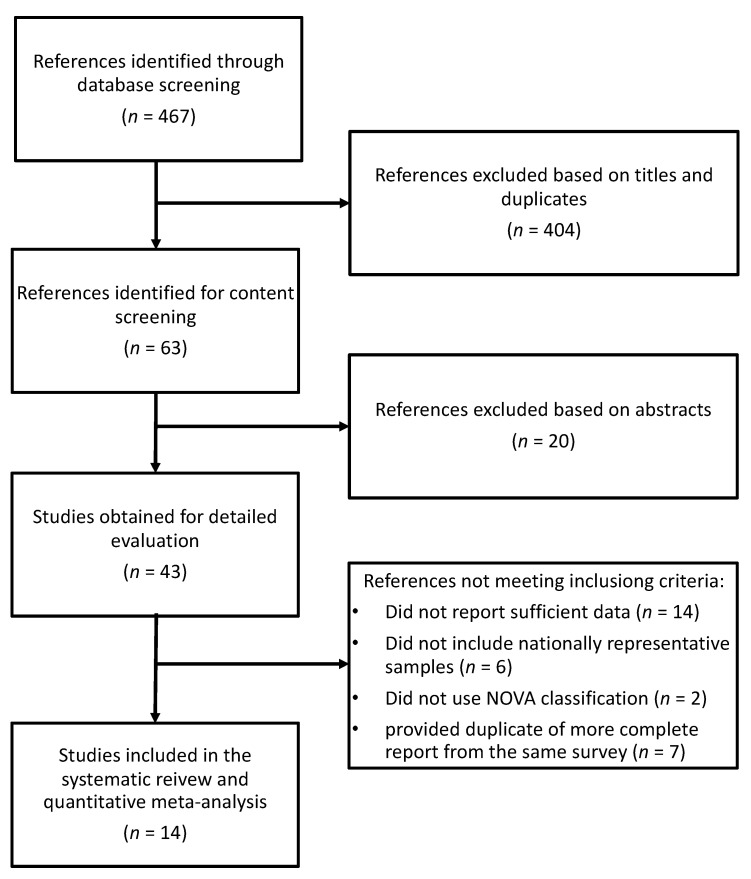
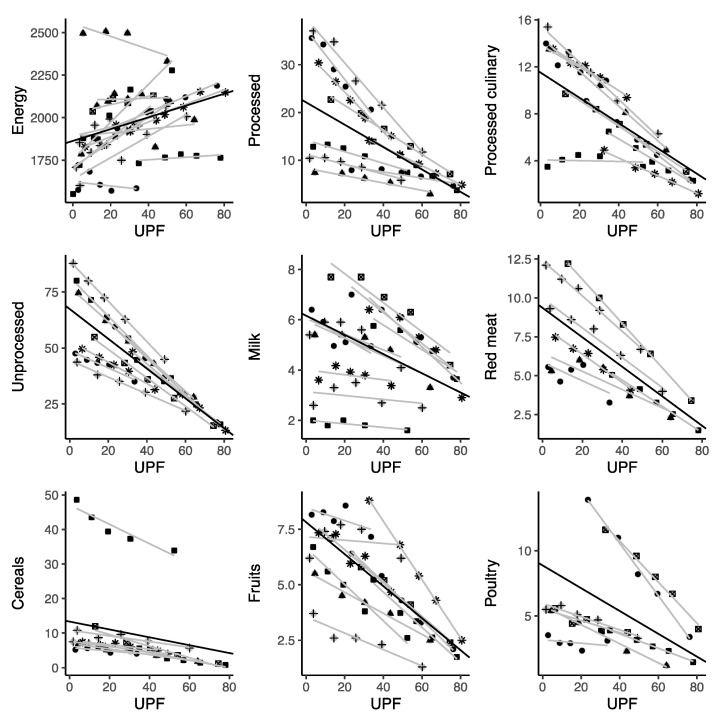
Excessive consumption of ultra-processed foods (UPFs), as described by the NOVA classification system, represents a potential threat to human health. The nutritional composition of UPFs may explain their observed adverse effects. The present study aimed to provide a quantitative meta-analysis of nationally representative surveys on the consumption of UPFs and the dietary/nutrient composition of respondents' diets. A systematic search for relevant studies published prior to July 2021 was conducted via electronic databases. The studies that provided the dietary/nutrient composition of foods categorized according to the NOVA classification system were selected. The association between UPFs and other dietary variables was modelled using ordinary least squares linear regression based on aggregated data extracted from the selected articles. Consumption of UPFs represented up to 80% of total caloric intake in the US and Canada, with confectionery and sugar-sweetened beverages being the most consumed items. When considered in relation to other food groups, an inverse linear relation between UPFs and less-processed foods was evident. Increased UPF intake correlated with an increase in free sugars, total fats, and saturated fats, as well as a decrease in fiber, protein, potassium, zinc, and magnesium, and vitamins A, C, D, E, B12, and niacin. In conclusion, the data indicate that increased UPF consumption negatively affects the nutritional quality of diets.
Overview
The claims and statistics of this paper haven’t been checked yet.
Free: it reads the open-access text and checks the first 5 claims that cite a source we can check. Create a free account to check every claim.
Integrity signals
Registry
Cites
Statistics
Figures
Verification
Claims the paper makes
The claims and statistics of this paper haven’t been checked yet.
Free: it reads the open-access text and checks the first 5 claims that cite a source we can check. Create a free account to check every claim.
Claims other papers make about this one
Each is checked against this paper’s own text: does it say what the citing paper says it does?
The source backs part of the claim, not all of it — or backs it for a different population, condition or comparison.
In the citing paper
“diets rich in ultra-processed foods are associated with markers of poor diet quality, with higher levels of added sugars, saturated fat, and sodium; higher energy density; and lower fibre, protein, and micronutrients.”
From Ultra-processed food exposure and adverse health outcomes: umbrella review of epidemiological meta-analyses (2024) · cites this paper as [6]
Experimental — accuracy not yet measuredThe source backs part of the claim, not all of it — or backs it for a different population, condition or comparison.
In the citing paper
“The aforementioned 13-country meta-analysis predicted that when UPFs represented 15% of total energy intake, the dietary energy share of fruits, vegetables, and legumes (ie, sources of health-protective phytochemicals) was 12•4%.When UPFs represented 75% of total energy intake, that share dropped to 4%. 46”
From Ultra-processed foods and human health: the main thesis and the evidence (2025) · cites this paper as [46]
Experimental — accuracy not yet measuredThe cited source says what the claim attributes to it.
In the citing paper
“For example, UPFs now make up nearly 60 % of daily caloric intake in the US, nearly 50 % in Canada, 42 % in Australia, and 20 % in Brazil (Martini et al. 2021).”
From Corporate concentration and power matter for agency in food systems (2025) · cites this paper as Martini et al. 2021
The cited source says what the claim attributes to it.
In the citing paper
“The consumption of ultra-processed foods is linked to a lower intake of unprocessed or minimally processed fruits, vegetables, legumes, and seafood.”
From Ultra-processed food exposure and adverse health outcomes: umbrella review of epidemiological meta-analyses (2024) · cites this paper as [6]
The cited source says what the claim attributes to it.
In the citing paper
“The 13-country meta-analysis predicted a 34•7 kcal increase (95% CI 14•7-54•7) in total daily energy intake for each 10% increase in UPF share.46”
From Ultra-processed foods and human health: the main thesis and the evidence (2025) · cites this paper as [46]
2 more claims about this paper
Create a free account to see every claim other papers make about this one.
Self-check
Percentages, sums and reported differences re-computed from the paper’s own numbers.
The self-check needs the paper’s full text.
Citations
Cites
von Elm, E., Altman, D. G., Egger, M., Pocock, S. J., Gøtzsche, P. C., Vandenbroucke, J. P., & Initiative, F. T. S. (2007) · PLoS Medicine · doi:10.1371/journal.pmed.0040296 · Cited by 23,020
von Elm, E., Altman, D. G., Egger, M., Pocock, S. J., Gøtzsche, P. C., & Vandenbroucke, J. P. (2008) · Journal of Clinical Epidemiology · doi:10.1016/j.jclinepi.2007.11.008 · Cited by 17,893
Murray, C. J. L., Aravkin, A. Y., Zheng, P., Abbafati, C., Abbas, K. M., Abbasi-Kangevari, M., Abd-Allah, F., Abdelalim, A., Abdollahi, M., Abdollahpour, I., et al. (2020) · The Lancet · doi:10.1016/s0140-6736(20)30752-2 · Cited by 9,854
Self-citationAfshin, A., Sur, P. J., Fay, K. A., Cornaby, L., Ferrara, G., Salama, J. S., Mullany, E. C., Abate, K. H., Abbafati, C., Abebe, Z., et al. (2019) · The Lancet · doi:10.1016/s0140-6736(19)30041-8 · Cited by 5,811
Self-citationStanaway, J. D., Afshin, A., Gakidou, E., Lim, S. S., Abate, D., Abate, K. H., Abbafati, C., Abbasi, N., Abbastabar, H., Abd-Allah, F., et al. (2018) · The Lancet · doi:10.1016/s0140-6736(18)32225-6 · Cited by 4,943
Self-citationUltra-processed foods: What they are and how to identify them
Monteiro, C. A., Cannon, G., Levy, R. B., Moubarac, J.-C., Louzada, M. L., Rauber, F., Khandpur, N., Cediel, G., Neri, D., Martinez-Steele, E., et al. (2019) · Public Health Nutrition · doi:10.1017/s1368980018003762 · Cited by 2,964 · cited 1×
“In addition to these formulation features, most products that are classified as UPFs are highly palatable, convenient, and easily available [10].”
BackgroundBaker, P., Machado, P., Santos, T., Sievert, K., Backholer, K., Hadjikakou, M., Russell, C., Huse, O., Bell, C., Scrinis, G., et al. (2020) · Obesity Reviews · doi:10.1111/obr.13126 · Cited by 1,194 · cited 1×
“Europe, and Australasia than in other regions; however, substantial growth in Latin America, Eastern Europe, North Africa, the Middle East, and Central and Eastern Asia was noted and is projected to continue over the coming years [11].”
BackgroundMartínez Steele, E., Baraldi, L. G., Louzada, M. L. D. C., Moubarac, J.-C., Mozaffarian, D., & Monteiro, C. A. (2016) · BMJ Open · doi:10.1136/bmjopen-2015-009892 · Cited by 838
Dietary quality among men and women in 187 countries in 1990 and 2010: a systematic assessment
Imamura, F., Micha, R., Khatibzadeh, S., Fahimi, S., Shi, P., Powles, J., & Mozaffarian, D. (2015) · The Lancet Global Health · doi:10.1016/s2214-109x(14)70381-x · Cited by 834 · cited 1×
“Diet quality at the global level has experienced a substantial deterioration when considering dietary components such as processed meats, sugar-sweetened beverages, saturated and trans fats, cholesterol, and sodium [39].”
BackgroundConsumption of ultra-processed foods predicts diet quality in Canada
Moubarac, J.-C., Batal, M., Louzada, M. L., Martinez Steele, E., & Monteiro, C. A. (2017) · Appetite · doi:10.1016/j.appet.2016.11.006 · Cited by 649 · cited 1×
“Moubarac, 2017 [24] Canadian Community Health Survey (CCHS) Canada 2004 33,694; 46,5% females 2+ years old (55,1% aged 2–18 years) two 24-h dietary recalls 47.”
Background
Cited by
Items 401–500 of 519
Culturally-Informed Food Insecurity Screening: Evidence From Northern Navajo Medical Center
Benally, T. R., Begay, K., Kim, L., Makadia, P., Fretts, A. M., & Nguyen, C. J. (2025) · Journal of Nutrition Education and Behavior · doi:10.1016/j.jneb.2025.05.201
THE IMPACT OF FOOD ADDITIVES ON YOUTH AND ADOLESCENTS
Ferţu, D. I., Stoleriu, G., Dumitru, C. N., Tudor, S. S., Diaconu, C., & Manolache, N. (2025) · Romanian Journal of Oral Rehabilitation · doi:10.62610/rjor.2025.2.17.27 · Cited by 1
Nakubulwa, S., Nansereko, H., Nalubega, J. F., Naggulu, I. P., Akankwasa, E., Okello, E., & Kavuma, D. (2025) · Student s Journal of Health Research Africa · doi:10.51168/sjhrafrica.v6i9.1940
CARACTERIZACIÓN DE LOS PRODUCTOS MÁS CONSUMIDOS
Rosales, V. X. Q., Salous, A. E., Mora, D. T., & Cervantes, L. M. (2025) · doi:10.22533/at.ed.3482505091
CONCLUSIONES Y RECOMENDACIONES
Rosales, V. X. Q., Salous, A. E., Mora, D. B. T., & Cervantes, L. M. (2025) · doi:10.22533/at.ed.3482505094
Alimentación y sociedad: un estudio sobre el consumo de alimentos en guayaquil
Salous, A. E., Mora, D. T., Cervantes, L. M., & Rosales, V. Q. (2025) · doi:10.22533/at.ed.348250509
TIPO DE CONSUMO POR UBICACIÓN GEOGRÁFICA
Rosales, V. X. Q., Salous, A. E., Mora, D. B. T., & Cervantes, L. M. (2025) · doi:10.22533/at.ed.3482505093
Association between trace metal element levels and ideal cardiovascular health in adolescents
Yang, L., Shi, J., Shen, X., Tang, J. Y., Kasimujiang, A., Dejite, T., Deng, Z., Yang, T., Zheng, Y., Liu, C., et al. (2025) · European journal of medical research · doi:10.1186/s40001-025-03061-w
“Such nutritional profiles can adversely impact diet quality and blood lipid levels, contributing to poorer cardio-vascular outcomes [23].”
Vanderlee, L., Saha, S., Faraj, K., Moubarac, J., Orr, S. K., Weerasinghe, A., Li, Y., & Hobin, E. P. (2025) · Canadian Journal of Public Health · doi:10.17269/s41997-025-01101-w
“Growing evidence indicates that diets high in UPFs are associated with diminished diet quality (Martini et al., 2021), and are a risk factor for a myriad of downstream health outcomes, including obesity, cardiovascular disease, type 2 diabetes, some types of cancer, and overall mortality (Dai et…”
Mendoza, A. M., Villacrés, E., Egas, L., Quelal, M. B., & Peralta, E. (2025) · doi:10.3390/blsf2025050003
What is the Relationship Between Fast Foods, Balanced Diets and Mental Health?
Cha, B. (2025) · American journal of student research. · doi:10.70251/hyjr2348.36413424
Hallajzadeh, J., Tanha, P. Y., Azadnia, A., Wong, A., & Moradi, S. (2025) · BMC Geriatrics · doi:10.1186/s12877-025-06684-0 · Cited by 1
“…such as vegetables, fruits, legumes and lean protein sources, leading to insufficient intake of essential nutrients (such as high-quality protein, vitamin D, magnesium, and omega-3 fatty acids), all of which play critical roles in maintaining muscle integrity and neuromuscular function [3, 38].”
Martins, I. P., Camargo, R. G. M., Ribeiro, E. M. S., & Domene, S. M. Á. (2025) · British Journal Of Nutrition · doi:10.1017/s0007114525105928
“This can be explained by the presence of sweets and highly processed foods, characterised by high energy density and high sugar and trans fat levels (48,49) .”
Shinozaki, N., Murakami, K., Yuan, X., Tajima, R., Matsumoto, M., Asakura, K., Masayasu, S., & Sasaki, S. (2024) · Figshare · doi:10.6084/m9.figshare.26649696
Kébé, S. D., Diouf, A., Sylla, P. M. D. D., Kane, K., dos Santos Costa, C., Leite, F. H. M., Andrade, G. C., Badiane, A., Moubarac, J., Dossou, N. I., et al. (2024) · Figshare · doi:10.6084/m9.figshare.24979497
Obesity and its association with ultra-processed food consumption in older adults in Roraima, Brazil
dos Santos, G. R., Ribeiro, G. J. S., Bim, M. A., Miranda, C. C., Pelegrini, A., & Pinto, A. D. A. (2025) · Revista Facultad Nacional de Salud Pública · doi:10.17533/udea.rfnsp.e358188
Dinu, M., Angelino, D., Bo’, C. D., Serafini, M., Sofi, F., & Martini, D. (2024) · Figshare · doi:10.6084/m9.figshare.27140857
Self-citationShateri, Z., Eskandarzadeh, S., Nouri, M., Jahromi, S. E., Mansouri, F., & Babajafari, S. (2024) · Figshare · doi:10.6084/m9.figshare.24940434
Dawson, P. (2025) · The Conversation · doi:10.64628/aai.armnj9kae
Parel, N. (2025) · Pratiques en nutrition · doi:10.1016/j.pranut.2025.09.004
ULTRA İŞLENMİŞ BESİNLER VE İNFLAMATUVAR BAĞIRSAK HASTALIKLARI
AY, B. M., & Bıyıklı, E. T. (2025) · Bidge Yayınları eBooks · doi:10.70269/10.70269/4271179955
GIDA KATKI MADDELERİN İNTESTİNAL MİKROBİYOTA ÜZERİNE ETKİLERİ
KABALI, S. (2025) · Bidge Yayınları eBooks · doi:10.70269/10.70269/3361837748
KURKUMİN VE GASTROİNTESTİNAL KANSERLER
TEKİN, H. Y., & Bıyıklı, E. T. (2025) · Bidge Yayınları eBooks · doi:10.70269/10.70269/6734726735
RESVERATROLÜN HİPERTANSİYON ÜZERİNE ETKİLERİ
KAÇAR, M. (2025) · Bidge Yayınları eBooks · doi:10.70269/10.70269/4132318887
Beslenme Kaynaklı İnflamasyon ve Bağırsak Sağlığı
ÇAĞLAR, M. Y., TEKİN, H. Y., AY, B. M., KABALI, S., KAÇAR, M., Bıyıklı, E. T., & Bıyıklı, E. T. (2025) · Bidge Yayınları eBooks · doi:10.70269/yhc2f4i966s1
MİKROBİYOTA MODÜLASYONU VE BESLENME TEDAVİLERİ
ÇAĞLAR, M. Y. (2025) · Bidge Yayınları eBooks · doi:10.70269/10.70269/4232565417
Ultra İşlenmiş Besin Tüketimi: Besin Kalitesi ve Sağlık Üzerindeki Potansiyel Riskler
ZENGİN, F. H., & Hasabi, N. R. P. (2025) · Kastamonu Üniversitesi Sağlık Bilimleri Fakültesi Dergisi · doi:10.59778/sbfdergisi.1753100
Yang, Y., Li, L., Pan, H., & Zhang, J. (2026) · BMC Public Health · doi:10.1186/s12889-026-26301-y · Cited by 1
“They are typically high in sugars, unhealthy fats, and purine precursors—components hypothesized to promote uric acid overproduction [4, 7].”
Perceived Determinants of Daily Food Choices among University Students
Bimantara, A. D., & Nurmasitah, S. (2026) · TEKNOBUGA Jurnal Teknologi Busana dan Boga · doi:10.15294/teknobuga.v14i1.42077
“Diets characterized by high consumption of ultra-processed foods, excessive sugar, fat, and sodium intake significantly increase the risk of obesity and metabolic disorders, particularly among individuals of productive age (Martini et al., 2021).”
Entzündungskrankheiten: Was leistet eine antientzündliche Ernährung?
Geisler, C., Dörge, M., & Laudes, M. (2026) · Zahnmedizin up2date · doi:10.1055/a-2688-1167
“25% in Italien und Südkorea [22, 23].”
The Impact of Ultra- Processed Food Consumption on Health in Low- and Middle-Income Countries
(2026) · Frontiers Media SA eBooks · doi:10.3389/978-2-8325-7458-4
Camargo, J. M. [., Nilson, E. A. F., Ferrari, G., & Rezende, L. F. M. (2026) · American Journal of Preventive Medicine · doi:10.1016/j.amepre.2025.108209 · Cited by 1
Garton, K., da Cruz, G. L., & Swinburn, B. A. (2026) · Globalization and Health · doi:10.1186/s12992-026-01203-1 · Cited by 1
“Elevated consumption of UPF is associated with increased intake of free sugars, total and saturated fats, and decreased intake of fibre, protein, potassium, zinc, magnesium, and vitamins A, C, D, E, B12, and niacin [22].”
Price, E. J., Du, M., Barrett, E. M., McKeown, N. M., Batterham, M. J., Zhang, F. F., Martinez, E., & Beck, E. J. (2026) · European Journal of Nutrition · doi:10.1007/s00394-026-03942-8
Gong, X., Chen, Y., Chen, Y., Chen, Z., & Zhang, X. (2026) · Food Reviews International · doi:10.1080/87559129.2026.2645924
The Future of the Obesity Management Landscape: Challenges, Opportunities and Solutions
Miras, A. D., Kokkinos, A. D., Tahrani, A. A., Reynoso, R., Tomaszewski, J., Lingvay, I., Rubino, D., Purnell, J. Q., Hussain, M., Hall, A., et al. (2026) · Obesity Science & Practice · doi:10.1002/osp4.70127
Halma, M., Marik, P. E., Varón, J., & Tuszyński, J. A. (2026) · Annals of Research in Oncology · doi:10.48286/aro.2026.122
Machado-Rodrigues, A. M., Fernandes, H. M., Neto, A. S., dos Santos, E. A., Tur, J. A., Padez, C. M. P., & Rodrigues, D. (2026) · Nutrients · doi:10.3390/nu18071069
“…children and their parents further indicate that less healthy parental lifestyles—including higher screen time and UPF intake—are closely associated with children’s own UPF consumption and sedentary behaviors, reinforcing the pivotal role of familial patterns in shaping obesogenic profiles [13,15].”
LIMA, R. S. P., Sousa, J. D. S., de Sousa, D. J. M., Martins, J. A., Pereira, I. C., Monteiro, R. L., Neres, M. S. D. O., Severo, J. S., da Silva, F. C. C., da Silva, M. T. B., et al. (2026) · International Journal of Molecular Sciences · doi:10.3390/ijms27073173
Atan, R. M., & Yılmaz, H. Ö. (2026) · BMC Nephrology · doi:10.1186/s12882-026-04935-9
Aliments ultra-transformés – définition et risque de maladies non transmissibles
Delarue, J., & Gall, M. L. (2026) · Bulletin de l Académie Nationale de Médecine · doi:10.1016/j.banm.2025.10.015
Oliveira, N., Predes, F., Moura‐Nunes, N., Canella, D. S., & Monteiro, M. C. (2026) · Journal of Food Composition and Analysis · doi:10.1016/j.jfca.2026.109147
Rochette, M., Charest, A., Gigleux, I., Couture, P., Provencher, V., & Lamarche, B. (2026) · Contemporary Clinical Trials · doi:10.1016/j.cct.2026.108323
Suárez, R., Celi, M., Ontaneda, K., Gavilanes, D. J., & Matos, A. (2026) · Frontiers in Nutrition · doi:10.3389/fnut.2026.1807557
Hagerman, C. J., Choo-Kang, D. K., LaFata, E. M., Rohde, P., & Butryn, M. L. (2026) · Contemporary Clinical Trials · doi:10.1016/j.cct.2026.108327
The paradox of privilege: intersectional inequalities in ultra-processed food consumption in BrazilPreprint
Neves, R. G., Machado, K. P., Saes, M. D. O., Moraes, N. G. D. R., Peres, J. K., & Flores, T. R. (2026) · Research Square · doi:10.21203/rs.3.rs-9441587/v1
Shahatah, F. A., Hill, T. R., Fairley, A., Adamson, A., Robinson, L. A., Granic, A., & Watson, A. W. (2026) · BMJ Open · doi:10.1136/bmjopen-2025-107888
“21 Specifically, UPF commonly consumed included sweets (eg, confectionery) and sugar-sweetened beverages (SSB).”
Varela-Esquer, A., Ruíz‐Cruz, S., Alvarado, M. I. E., Márquez‐Ríos, E., Cira‐Chávez, L. A., & Valenzuela‐Melendres, M. (2026) · BIOtecnia · doi:10.18633/biotecnia.v28.2890
Effect of breastfeeding on dietary patterns in early childhood: the CoAlHaS study
Ferro-Larroy, S., Gómez-Acebo, I., Alonso-Molero, J., Llorente-Pelayo, S., Valero-Dominguez, S., Lechosa‐Muñiz, C., Paz‐Zulueta, M., Cabero-Pérez, M. J., & Dierssen‐Sotos, T. (2026) · European Journal of Nutrition · doi:10.1007/s00394-026-03985-x
“Breastfeeding plays a fundamental role in shaping children’s dietary preferences, as maternal diet influences the flavors present in amniotic fluid and breast milk, exposing infants to a range of tastes [3, 4].”
InfluentialUltra-Processed Foods: Impacts on Diet Quality, Health, Consumer Behavior, and Food Systems
(2026) · Frontiers research topics · doi:10.3389/978-2-8325-8086-8
Consumption of ultra-processed foods is associated with cognitive status in elderly patients
Grasso, M., L’Episcopo, F., Olvera-Moreira, M. A., Toscano, G., Muratore, S., Tripodi, M. A., Musso, S., Bentivegna, V., Costanzo, L., Fatati, G., et al. (2026) · Frontiers in Nutrition · doi:10.3389/fnut.2026.1839722
Byczkovski, L. M., Paiva, C. F., Melo, J. D. A., da Costa, J. L. M. N., dos Santos, E. F., & Novello, D. (2026) · Periódicos Brasil Pesquisa Científica · doi:10.36557/2674-9432.2026v5n4p67-88
Assunção, A. M., Páscoa, R., Rodrigues, P., & Teixeira, A. (2026) · Frontiers in Nutrition · doi:10.3389/fnut.2026.1832783
Hidayanti, L., Saraswati, D., & Fikrinnisa, R. (2026) · AgriHealth Journal of Agri-food Nutrition and Public Health · doi:10.20961/agrihealth.v7i1.111066
“Increased UPFs consumption correlated with increased intake of free sugars, total fat, and saturated fat, and decreased fiber, protein, potassium, zinc, and magnesium, as well as vitamins A, C, D, E, B12, and niacin (Martini et al., 2021).”
Idoate-Bayón, A., Hernández, A. Q., Gómez-Taylor, B., Mohedo, J. C., Vacas-Cortés, M., Pérez, M. G., Claramunt, F. E., & Sandri, E. (2026) · Frontiers in Nutrition · doi:10.3389/fnut.2026.1845185
“These products are commonly more energy-dense and contain higher amounts of free sugars, sodium, and saturated or trans fats, while often providing lower levels of dietary fiber, protein, and micronutrients than diets based on minimally processed foods (14, 15).”
Higher ultra-processed food consumption is associated with poor lipid profile in adolescents
Abreu, S., Martins, M. L., Rodrigues, S., Moreira, C. M. M., Lopes, L., Agostinis‐Sobrinho, C., Sousa‐Sá, E., & Santos, R. (2026) · Food and Humanity · doi:10.1016/j.foohum.2026.101311 · Cited by 1
Britto, R. P. D. A., Silva‐Neto, L. G. R., Florêncio, T. M. D. M. T., Bueno, N. B., Clemente, A. P. G., das Chagas, L. A., Callado, G. Y., Júnior, E. A., & Sawaya, A. L. (2026) · JRSM Cardiovascular Disease · doi:10.1177/20480040261461825
de Souza, A. M., Torres, K. G., Costa, R. M., Pereira, G. S., de Morais, C. M. M., Oliveira, A. G., & Bezerra, I. W. L. (2026) · PLoS ONE · doi:10.1371/journal.pone.0349760
Practical tools for interpreting front-of-pack nutrition labeling
Mora‐Plazas, M., López-Ramírez, M. P., & Celis-Rozo, E. E. (2026) · Elsevier eBooks · doi:10.1016/b978-0-443-27440-4.00007-3
Chen, H., Si, L., Zhang, L., Hunter, D. J., Duong, V., Wang, X., Cao, P., Cen, H., Tang, S., Chen, T., et al. (2026) · International Journal of Rheumatic Diseases · doi:10.1111/1756-185x.70733
“Almost 80% of the total energy intake in the typical North American diet is sourced from ultra-processed foods [44].”
Eggs at the family table and their impact on child and adolescent health
López-Sobaler, A. M., Carrasco-Ruiz, M. F., Loria‐Kohen, V., & Salas‐González, M. D. (2026) · Nutrición Hospitalaria · doi:10.20960/nh.06953
Kamalikha, S., Kaur, S., & Chauhan, A. S. (2026) · International Journal of Noncommunicable Diseases · doi:10.4103/jncd.jncd_226_25
The assessment of the intake of NOVA food groups among Jordanian adults
Agraib, L. M., Alkhatib, B. M., Shawabkeh, A. T., & Aslaih, A. S. (2026) · BMC Nutrition · doi:10.1186/s40795-026-01397-y
Yaghi, J., Al-Awwad, N. J., & Tayyem, R. (2026) · Obesities · doi:10.3390/obesities6040045 · Cited by 2
“They are less likely to follow healthy dietary patterns, a Mediterranean diet (MD) or traditional diets that emphasize higher intake of whole grains, fruits, vegetables, and legumes [21,22].”
Yuniarti, M., Rahmiwati, A., & Destriatania, S. (2026) · Journal of Food and Pharmaceutical Sciences · doi:10.22146/jfps.27418
“Intensive promotional efforts targeting children and adolescents further shape dietary preferences and normalize frequent intake of nutrient-poor, energy-dense products [30], [31], [32].”
da Silva, A. C. P., MADALOSSO, A. C., & Willrich, N. M. (2026) · Nutrivisa Revista de Nutrição e Vigilância em Saúde · doi:10.52521/nutrivisa.v13i1.16496
Giampieri, F., Leonardi, A., Costanzo, G. D., Mera, T. A., Rosi, A., Frías-Toral, E., Ammar, A., Zambrano-Villacres, R., Abdelkarim, O., Aly, M., et al. (2026) · Nutrients · doi:10.3390/nu18132128
Self-citationMcHugh, J., Mohammadi, E., Abdulla, N., & Singh, S. (2026) · Research Square · doi:10.21203/rs.3.rs-10210683/v1
Hinnig, P. D. F., Grassi, A. G. F., Chang, K., Vamos, E. P., Levy, R. B., & Rauber, F. (2026) · EClinicalMedicine · doi:10.1016/j.eclinm.2026.104050
“26,27 The protective associations of plant-sourced non-UPF with lower BMI and WC gain may reflect preservation of the natural food matrix, which is rich in fibre and bioactive compounds that enhance satiety, glycaemic control, gut microbiota function, and long-term energy balance.”
Distribution of Sugar Content in Chinese Pre-Packaged Foods
Duan, Y., Yang, J., Wang, J., Wang, Z., & Yang, Y. (2026) · Archiv für Lebensmittelhygiene · doi:10.31083/jfsfq54762
Al-Amoudi, A. A., & Almoraie, N. M. (2026) · Frontiers in Sustainable Food Systems · doi:10.3389/fsufs.2026.1862373
Role of nutrition in the therapy of obesity
Craggs‐Dino, L. (2026) · Advances in pharmacology · doi:10.1016/bs.apha.2026.06.007
Kim, L., Noh, J., Park, E. J., Hwang, C., Lee, W., Yang, J. S., Kim, H., & Jung, S. J. (2026) · Psychiatry Research · doi:10.1016/j.psychres.2026.117336
Maternal cafeteria diet intake influences offspring development in Wistar rats: a pilot study
Quiñones-González, C. A., Morán-Martínez, J., Carranza‐Rosales, P., Macias-Corral, M. A., Guzmán‐Delgado, N. E., Mejía-Bañuelos, R. M., Torres, I. E. C., Ortega-Morales, N. B., & Betancourt‐Martínez, N. D. (2026) · Scientific Reports · doi:10.1038/s41598-026-63118-6
Starska, K. (2026) · Nutrients · doi:10.3390/nu18152421
Robinson, E., Brealey, J., Cummings, J. R., Evans, R. A., Finlay, A. H., Fisher, E., Gough, T., Jones, A., Jutla, M., Morenikeji-Ibilola, E., et al. (2026) · Critical Reviews in Food Science and Nutrition · doi:10.1016/j.appet.2026.108666
Lopes, R. O., de França, R. F., Araújo, M. E. D. O., Farias, L. S., Mendonça, A. K. D. S., & Ribeiro, K. D. D. S. (2026) · Nutrition Reviews · doi:10.1093/nutrit/nuag024 · Cited by 2
Palleres, X. R., Villegas, C., González, F. R., Saldarriaga‐Córdoba, M., Aguilera, O., Martí-Quijal, F. J., Castagnini, J. M., & Barba, F. J. (2026) · Journal of Food Processing and Preservation · doi:10.1155/jfpp/2242107
Magharehabed, Y., Ibrahim, Z., Shiekhtholth, H., & Yusuf, N. (2026) · International Journal of Molecular Sciences · doi:10.3390/ijms27167123 · Cited by 1
“UPFs are industrial formulations with little intact whole food and are rich in saturated fats and sugars, providing the foundation for hyperinsulinemia and IGF-1 mediated acne development [6,7].”
Machado, P. P., Tolstova, N. Y., Lane, M. M., Costa, C. D. S., Steele, E. M., Rauber, F., Levy, R. B., McNaughton, S. A., Lawrence, M. A., Monteiro, C. A., et al. (2026) · Journal of the Academy of Nutrition and Dietetics · doi:10.1016/j.jand.2026.156434
Gürgen, B. N., & ÖRKÜ, Ş. E. (2026) · Preventive Nutrition and Food Science · doi:10.3746/pnf.2026.055
“…between the consumption of UPF and increased intake of unfavorable nutrients, such as total sugars, fats, and sodium, and decreased intake of essential nutrients, such as fiber, protein, vitamins (A, C, D, E, B12, and niacin), and minerals (potassium, zinc, and magnesium) (Martini et al., 2021).”
Ultra-processed food as consumer guidance: a demand-side narrative review
Louie, J. C. Y. (2026) · Trends in Food Science & Technology · doi:10.1016/j.tifs.2026.106024
Mekonnen, T. C., Abebe, Z., Dessie, A. M., Tegegne, T., Ushula, T. W., Dickinson, K. M., Brady, C., Shi, Z., Adams, R., Wu, J. H., et al. (2026) · Critical Reviews in Food Science and Nutrition · doi:10.1080/10408398.2026.2719168
“…typically high in added sugars, sodium, and saturated fats, while low in fiber and protective micronutrients, promoting insulin resistance, endothelial dysfunction, and elevated blood pressure (Mendoza et al., 2024; Rivera et al. 2024; Martini et al. 2021; Godsey et al. 2025; Dicken et al., 2025).”
Impact of ultra-processed food consumption on quality of life of menopausal women
Arora, J., Sood, M., & Ahmed, N. (2026) · International Journal of Basic & Clinical Pharmacology · doi:10.18203/2319-2003.ijbcp20262856
Ultra-processed food intake and male reproductive function: a mini-review
Huang, J. (2026) · Frontiers in Nutrition · doi:10.3389/fnut.2026.1852283
“Characterizing UPF subgroups and regional product composition may clarify whether associations are driven by particular foods rather than the category as a whole (12–14, 39, 40).”
InfluentialVageeshwari, D. (2026) · Fertility Science and Research · doi:10.25259/fsr_62_2025
da Silva, L. P., Steele, E. M., Leite, M. A., Marques, T. D. S., da Silva, E. O., Louzada, M. L. D. C., & Levy, R. B. (2026) · Journal of the Academy of Nutrition and Dietetics · doi:10.1016/j.jand.2026.156837
Cejudo, M. G. J., Coyle, D. H., van Damme, I., Cruijsen, E., Geleijnse, J. M., & Khandpur, N. (2026) · Current Developments in Nutrition · doi:10.1016/j.cdnut.2026.109527
“…UPF diet in this review ( ≥ 75% kcals compared with ≤ 15% kcal) was correlated with a substantial increase in free sugars and total and saturated fats, as well as a (6) 49 (5) 55 (5) 57 (5) Between 4 and 6 d/wk 630 (14) 164 (15) 137 (13) 158 (15) decrease in fiber, protein, cereals, and fruit [12].”
Asrofi, D. A. N., & Astuti, Y. (2026) · Research Square · doi:10.21203/rs.3.rs-10697416/v1
Ultra-processed foods and multiple sclerosis: Evidence, pitfalls and perspectives
Lorefice, L., Fenu, G., Fantola, G., & Żołędziewska, M. (2026) · Multiple Sclerosis Journal · doi:10.1177/13524585261481479
Lotti, S., Martini, D., Angelino, D., Fernández‐Rodríguez, R., Colombini, B., & Dinu, M. (2026) · International Journal of Food Sciences and Nutrition · doi:10.1080/09637486.2026.2729429
“Although estimates cannot be compared directly across studies, as UPF intake is commonly expressed as a percentage of total energy intake, this finding appears broadly consistent with previous evidence suggesting that UPF consumption in Italy tends to be lower than that observed in several Northern European countries…”
Self-citationUltra-processed food consumption and atherosclerosis risk: a prospective cohort study of UK Biobank
Zhao, Y., Li, Y., Liu, X., & Zhao, Y. (2026) · Frontiers in Nutrition · doi:10.3389/fnut.2026.1925613
“Mechanistically, UPFs are characterized by unfavorable nutritional profiles, including high energy density, elevated sodium and sugar content, excessive saturated and trans fatty acids, and diminished fiber and micronutrient levels (13, 14).”
Jomaa, L., Chokor, F. A. Z., Hwalla, N. C., & Nasreddine, L. (2026) · Journal of Nutritional Science · doi:10.1017/jns.2026.10145
İnan, C. M., Yalçıntaş-Kanbur, A., & Tosun, O. (2026) · Clinical Rheumatology · doi:10.1007/s10067-026-08379-2
“Ultra-processed foods are characterized by high levels of added sugars, sodium, saturated and trans fats, and low micronutrient content, a composition that may promote inflammatory processes [33].”
Aké-Canché, B., PERÉZ-BALÁN, R. A., Alcántara, E. J. G., Torres, D. T., & Tomas, L. (2026) · Ibero Ciencias - Revista Científica y Académica · doi:10.63371/ic.v5.n3.a1586
Matzeller, K. L., Hernandez, M. L., Campbell, N. W. C., Melanson, E. L., Frank, D. N., Hendricks, A. E., Krebs, N. F., & Tang, M. (2026) · Nutrients · doi:10.3390/nu18182992
“…with dietary diversity during the complementary feeding period; however, UPFs have been shown to negatively affect the nutritional quality of diets in adults, particularly through decreased consumption of fiber, zinc, and fat-soluble vitamins and increased consumption of free sugars [41].”
Osorio, E. Y., Gugala, Z., Melby, P. C., Ferguson, M. R., & Khanipov, K. (2026) · Nutrients · doi:10.3390/nu18183005
“The replacement of whole foods with energy-dense, ultra-processed products, that are low in essential nutrients, has been implicated in the presence of micronutrient deficiencies among individuals with obesity [36–38].”
Moradi, S., Mehrabani, S., Ranjbar, M., Amirian, P., Zarpoosh, M., Wong, A., Gharibdoost, F., Kavosi, H., & Mohammadi, H. (2026) · Nutrire · doi:10.1186/s41110-026-00539-3
“…analysis found a positive association between UPFs intake and obesity [42], and another meta-analysis linked higher UPFs intake to poorer diet quality, with lower intakes of fiber, protein, zinc, magnesium, vitamins as well as higher intakes of trans fats, saturated fats and free sugars [43 ].”
Metadata
- Authors
- Martini, D., Godos, J., Bonaccio, M., Vitaglione, P., & Grosso, G.
- Affiliations
- University of Milan (IT)
- University of Catania (IT)
- Istituto Neurologico Mediterraneo (IT)
- University of Naples Federico II (IT)
- Corresponding author
- Godos, Justyna
- Venue
- Nutrients
- Publisher
- MDPI AG
- Published
- 2021-09-27
- Volume
- 13
- Issue
- 10
- Pages
- 3390
- ISSN
- 2072-6643 (ISSN-L)
- PMC
- PMC8538030
- OpenAlex
- W3202712388
- Cited by
- 481
- References
- 58
- Citations by year
- 2026: 122 · 2025: 137 · 2024: 113 · 2023: 71 · 2022: 37 · 2021: 1
- FWCI
- 9.89
- Type
- journal article
- Language
- en
- Open access
- gold
- doi.org
- Licence
- Locations
- Nutrients (publishedVersion, cc-by)
- PubMed Central (publishedVersion, cc-by)
- PubMed (publishedVersion)
- Archivio Istituzionale della Ricerca (Universita Degli Studi Di Milano) (submittedVersion, other-oa)
- DOAJ (DOAJ: Directory of Open Access Journals) (submittedVersion, cc-by-sa)
- Topics
- Health Sciences › Medicine › Public Health, Environmental and Occupational Health › Consumer Attitudes and Food Labeling
- Health Sciences › Medicine › Public Health, Environmental and Occupational Health › Nutritional Studies and Diet
- Health Sciences › Nursing › Nutrition and Dietetics › Nutrition, Health and Food Behavior
- Keywords
- ultra-processed foods, NOVA classification, diet quality, nutrient composition, free sugars, saturated fat, dietary fiber, micronutrient intake, confectionery, sugar-sweetened beverages, energy intake
- MeSH terms
- Dietary Sugars, Sugar-Sweetened Beverages, Adolescent, Adult, Energy Intake, Child, Diet, Female, Food Handling, Humans, Male, Nutrition Surveys, Nutritive Value, Fast Foods, Snacks, Food Quality
About these checks
Registry, retraction, Cites and statistics results are computed, not judged, with one exception: a printed reference that no index lists is read once by a model before it counts as a citation error. Claims are extracted by a model and kept only when their quote appears verbatim in the text; each cited source is then checked, with a model’s help, for whether it says what the claim relies on. Those verdicts can be wrong — read the claim’s quote and the cited source before relying on one.
Statistics and arithmetic are recomputed, not judged.
Confidence bands are shown only for fields calibrated on our annotated test set. None is calibrated yet, so no band is shown.
What counts as a claim ›How we measure confidence ›How we check this ›
Are you an author, or do you see a problem with this page? Request a review
Data sources
Bibliographic data: Semantic Scholar, OpenAlex, Crossref.
Contains information from the Semantic Scholar Academic Graph Datasets, made available under the ODC Attribution License (ODC-BY 1.0).
Semantic Scholar’s data is described in: Kinney, R., et al. (2023). The Semantic Scholar Open Data Platform. arXiv:2301.10140.
