

The DOI matches its Crossref record; 3 of the 3 references it cites were found in a registry or an index.
Navigating the Global Regulatory Landscape for Exosome-Based Therapeutics: Challenges, Strategies, and Future Directions
Abstract
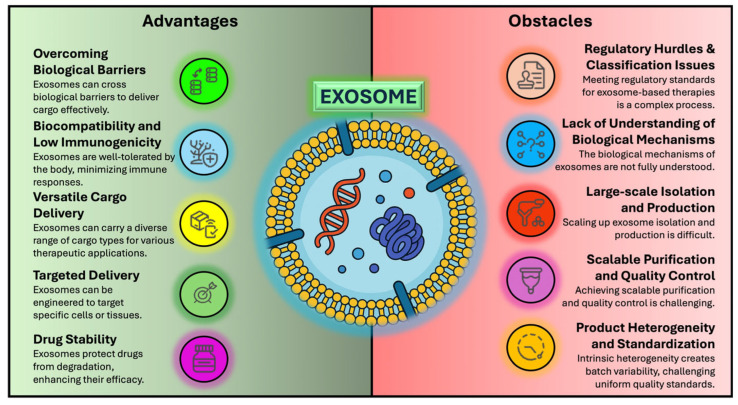
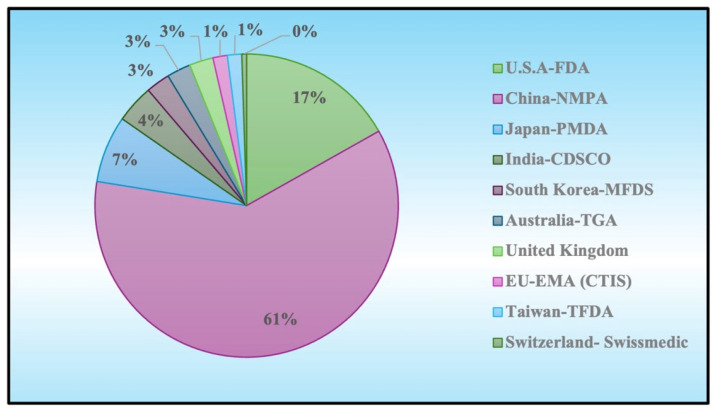
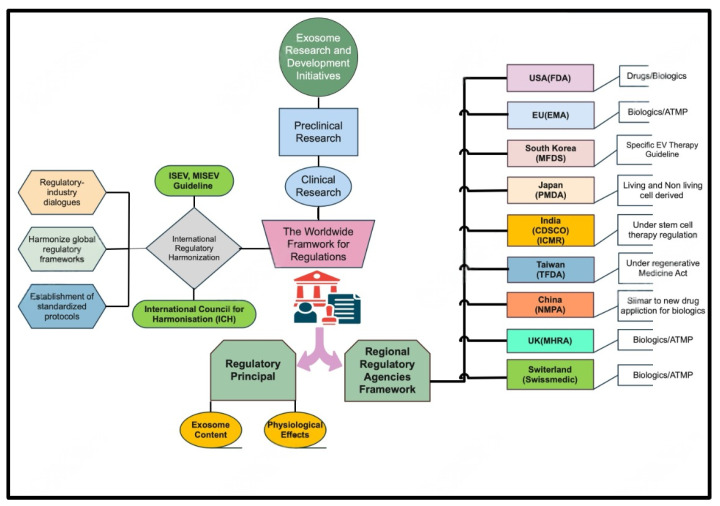
Extracellular vesicle (EV)-based therapies have attracted considerable attention as a novel class of biologics with broad clinical potential. However, their clinical translation is impeded by the fragmented and rapidly evolving regulatory landscape, with significant disparities between the United States, European Union, and key Asian jurisdictions. In this review, we systematically analyze regional guidelines and strategic frameworks governing EV therapeutics, emphasizing critical hurdles in quality control, safety evaluation, and efficacy demonstration. We further explore the implications of EVs’ heterogeneity on product characterization and the emerging direct-to-consumer market for EVs and secretome preparations. Drawing on these insights, in this review, we aim to provide a roadmap for harmonizing regulatory requirements, advancing standardized analytical approaches, and fostering ongoing collaboration among regulatory authorities, industry stakeholders, and academic investigators. Such coordinated efforts are essential to safeguard patient welfare, ensure product consistency, and accelerate the responsible integration of EV-based interventions into clinical practice.
Overview
The claims and statistics of this paper haven’t been checked yet.
Run the check — free, no account needed. It reads the open-access text and checks the sources it cites.
Integrity signals
Registry
Cites
Statistics
Figures
Verification
Claims the paper makes
The claims and statistics of this paper haven’t been checked yet.
Run the check — free, no account needed. It reads the open-access text and checks the sources it cites.
Claims other papers make about this one
Each is checked against this paper’s own text: does it say what the citing paper says it does?
In the citing paper
“Exosome and membrane preparations often exhibit batch-to-batch variability in vesicle size, lipid and protein composition and functional marker expression, and their activity is highly sensitive to isolation methods, storage conditions and freeze thaw cycles.”
From Overcoming tumor microenvironment barriers: transformable and bioinspired nanomedicine strategies for deep tumor penetration (2026) · cites this paper as [71]
In the citing paper
“Despite these impressive preclinical readouts, exosomes, cell-membrane-coated nanoparticles, macrophage-mediated carriers and engineered bacteria remain far from manufacturing and regulatory maturity [71].”
From Overcoming tumor microenvironment barriers: transformable and bioinspired nanomedicine strategies for deep tumor penetration (2026) · cites this paper as [71]
Self-check
Percentages, sums and reported differences re-computed from the paper’s own numbers.
The self-check needs the paper’s full text.
Citations
Cites
The biology , function , and biomedical applications of exosomes
Kalluri, R., & LeBleu, V. S. (2020) · Science · doi:10.1126/science.aau6977 · Cited by 10,770
Chen, Y., Tian, Z., He, L., Liu, C., Wang, N., Rong, L., & Liu, B. (2021) · Stem Cell Research & Therapy · doi:10.1186/s13287-021-02282-0 · Cited by 106 · cited 1×
“Complementary policy efforts should also focus on incentivizing research and development in EV technology through targeted grants and funding, thereby empowering emerging scientists and organizations to contribute meaningfully to this field [111,112].”
Brief summary of the regulatory frameworks of regenerative medicine therapies
Yoon, J., Lee, S., Kim, M. J., & Kim, J.-H. (2025) · Frontiers in Pharmacology · doi:10.3389/fphar.2024.1486812 · Cited by 38
Research works printed but not linked: 75
- Lee, K.W.A., Chan, L.K.W., Hung, L.C., Lam, P.K.W., Park, Y., and Yi, K.H. (2024). Clinical Applications of Exosomes: A Critical Review. Int. J. Mol. Sci., 25. · DOI · Paper page
- Cheng, 2024, Stem cell exosomes: New hope for recovery from diabetic brain hemorrhage, World J. Diabetes, 15, 2264, 10.4239/wjd.v15.i11.2264 · DOI
- Zhou, 2020, Application of Exosomes as Liquid Biopsy in Clinical Diagnosis, Signal Transduct. Target. Ther., 5, 144, 10.1038/s41392-020-00258-9 · DOI · Paper page
- Rezaie, 2022, A Review on Exosomes Application in Clinical Trials: Perspective, Questions, and Challenges, Cell Commun. Signal, 20, 145, 10.1186/s12964-022-00959-4 · DOI
- Chen, Y.F., Luh, F., Ho, Y.S., and Yen, Y. (2024). Exosomes: A review of biologic function, diagnostic and targeted therapy applications, and clinical trials. J. Biomed. Sci., 31. · DOI
- Choudhery, M.S., Arif, T., Mahmood, R., and Harris, D.T. (2024). Stem Cell-Based Acellular Therapy: Insight into Biogenesis, Bioengineering and Therapeutic Applications of Exosomes. Biomolecules, 14. · DOI
- Newton, 2017, Stem cell-derived exosomes: A novel vector for tissue repair and diabetic therapy, J. Mol. Endocrinol., 59, R155, 10.1530/JME-17-0080 · DOI
- Chu, C.-H., Lee, R.P., Wu, W.T., Chen, I.-H., Yeh, K.T., and Wang, C.C. (2024). Advancing Osteoarthritis Treatment: The Therapeutic Potential of Mesenchymal Stem Cell-Derived Exosomes and Biomaterial Integration. Biomedicines, 12. · DOI
- Kar, 2023, Exosome-Based Smart Drug Delivery Tool for Cancer Theranostics, ACS Biomater. Sci. Eng., 9, 577, 10.1021/acsbiomaterials.2c01329 · DOI
- Yong, 2019, Tumor exosome-based nanoparticles are efficient drug carriers for chemotherapy, Nat. Commun., 10, 3838, 10.1038/s41467-019-11718-4 · DOI · Paper page
- Sousa, P., Lopes, B., Sousa, A.C., Moreira, A., Coelho, A., Alvites, R., Alves, N., Geuna, S., and Mauricio, A.C. (2023). Advancements and Insights in Exosome-Based Therapies for Wound Healing: A Comprehensive Systematic Review (2018–June 2023). Biomedicines, 11. · DOI
- Xu, 2020, Exosome-based immunotherapy: A promising approach for cancer treatment, Mol. Cancer, 19, 160, 10.1186/s12943-020-01278-3 · DOI · Paper page
- Fu, 2019, CAR exosomes derived from effector CAR-T cells have potent antitumour effects and low toxicity, Nat. Commun., 10, 4355, 10.1038/s41467-019-12321-3 · DOI
- Wang, 2024, Regulation of exosomes as biologic medicines: Regulatory challenges faced in exosome development and manufacturing processes, Clin. Transl. Sci., 17, e13904, 10.1111/cts.13904 · DOI
- Chen, 2020, Exosomes in clinical trial and their production in compliance with good manufacturing practice, Tzu Chi Med. J., 32, 113, 10.4236/cm.2020.113007 · DOI
- Wiest, E.F., and Zubair, A.C. (2025). Generation of Current Good Manufacturing Practices-Grade Mesenchymal Stromal Cell-Derived Extracellular Vesicles Using Automated Bioreactors. Biology, 14. · DOI
- Nolan, K.J. (2010). Enforcement of Current Good Manufacturing Practices. Pharmaceutical Sciences Encyclopedia, John Wiley & Sons, Inc. · DOI
- Harris, J.R. (2008). Good Manufacturing Practices (GMP) and Related FDA Guidelines. Pharmaceutical Manufacturing Handbook, John Wiley & Sons, Inc. · DOI
- Chu, 2022, Nebulization Therapy with Umbilical Cord Mesenchymal Stem Cell-Derived Exosomes for COVID-19 Pneumonia, Stem Cell Rev. Rep., 18, 2152, 10.1007/s12015-022-10398-w · DOI
- Raghav, A., Khan, Z.A., Upadhayay, V.K., Tripathi, P., Gautam, K.A., Mishra, B.K., Ahmad, J., and Jeong, G.B. (2021). Mesenchymal Stem Cell-Derived Exosomes Exhibit Promising Potential for Treating SARS-CoV-2-Infected Patients. Cells, 10. · DOI
- Antounians, 2021, The Role of Exosomes in the Treatment, Prevention, Diagnosis, and Pathogenesis of COVID-19, Eur. J. Pediatr. Surg., 31, 326, 10.1055/s-0041-1731294 · DOI
- Park, H.S., Cetin, E., Siblini, H., Seok, J., Alkelani, H., Alkhrait, S., Liakath Ali, F., Mousaei Ghasroldasht, M., Beckman, A., and Al-Hendy, A. (2023). Therapeutic Potential of Mesenchymal Stem Cell-Derived Extracellular Vesicles to Treat PCOS. Int. J. Mol. Sci., 24. · DOI
- Lee, B.C., Kang, I., and Yu, K.R. (2021). Therapeutic Features and Updated Clinical Trials of Mesenchymal Stem Cell (MSC)-Derived Exosomes. J. Clin. Med., 10. · DOI
- Zhang, Y., Liu, Q., Zhang, X., Huang, H., Tang, S., Chai, Y., Xu, Z., Li, M., Chen, X., and Liu, J. (2022). Recent advances in exosome-mediated nucleic acid delivery for cancer therapy. J. Nanobiotechnology, 20. · DOI · Paper page
- Lu, Y., Huang, W., Li, M., and Zheng, A. (2023). Exosome-Based Carrier for RNA Delivery: Progress and Challenges. Pharmaceutics, 15. · DOI
- Chew, 2025, Exosomes as promising frontier approaches in future cancer therapy, World J. Gastrointest. Oncol., 17, 100713, 10.4251/wjgo.v17.i1.100713 · DOI
- Sonar, 2024, Clinical trial status of exosomes-based cancer theranostics, Clin. Transl. Discov., 4, e327, 10.1002/ctd2.327 · DOI
- Li, 2021, Therapeutic application of exosomes in ischaemic stroke, Stroke Vasc. Neurol., 6, 483, 10.1136/svn-2020-000419 · DOI
- Jiang, L., Chen, W., Ye, J., and Wang, Y. (2022). Potential Role of Exosomes in Ischemic Stroke Treatment. Biomolecules, 12. · DOI
- Baghaei, 2019, Exosomes as a novel cell-free therapeutic approach in gastrointestinal diseases, J. Cell. Physiol., 234, 9910, 10.1002/jcp.27934 · DOI
- Sharma, A., Yadav, A., Nandy, A., and Ghatak, S. (2024). Insight into the Functional Dynamics and Challenges of Exosomes in Pharmaceutical Innovation and Precision Medicine. Pharmaceutics, 16. · DOI
- Li, X., Corbett, A.L., Taatizadeh, E., Tasnim, N., Little, J.P., Garnis, C., Daugaard, M., Guns, E., Hoorfar, M., and Li, I.T.S. (2019). Challenges and opportunities in exosome research-Perspectives from biology, engineering, and cancer therapy. APL Bioeng., 3. · DOI
- Ren, 2019, Exosomes in perspective: A potential surrogate for stem cell therapy, Odontology, 107, 271, 10.1007/s10266-018-0395-9 · DOI
- Ludwig, N., Whiteside, T.L., and Reichert, T.E. (2019). Challenges in Exosome Isolation and Analysis in Health and Disease. Int. J. Mol. Sci., 20. · DOI
- Martinez-Espinosa, I., Serrato, J.A., and Ortiz-Quintero, B. (2023). The Role of Exosome-Derived microRNA on Lung Cancer Metastasis Progression. Biomolecules, 13. · DOI
- Shaun, 2020, Exosomes as therapeutics and drug delivery vehicles: Global regulatory perspectives, Cell Gene Ther. Insights, 6, 1561, 10.18609/cgti.2020.172 · DOI
- Pawanbir, 2010, Exploratory assessment of the current EU regulatory framework for development of advanced therapies, J. Commer. Biotechnol., 16, 331, 10.1057/jcb.2010.18 · DOI
- Daisuke, 2015, Regulatory Frameworks for Gene and Cell Therapies in Japan, Adv. Exp. Med. Biol., 871, 147, 10.1007/978-3-319-18618-4_8 · DOI
- Lener, 2015, Applying extracellular vesicles based therapeutics in clinical trials—An ISEV position paper, J. Extracell. Vesicles, 4, 30087, 10.3402/jev.v4.30087 · DOI · Paper page
- Batrakova, 2016, Development and regulation of exosome-based therapy products, Wiley Interdiscip. Rev. Nanomed. Nanobiotechnol., 8, 744, 10.1002/wnan.1395 · DOI
- Ma, 2025, Engineering therapeutical extracellular vesicles for clinical translation, Trends Biotechnol., 43, 61, 10.1016/j.tibtech.2024.08.007 · DOI
- Stawarska, A., Bamburowicz-Klimkowska, M., Rundén-Pran, E., Dusinska, M., Cimpan, M.R., Rios-Mondragon, I., and Grudzinski, I.P. (2024). Extracellular Vesicles as Next-Generation Diagnostics and Advanced Therapy Medicinal Products. Int. J. Mol. Sci., 25. · DOI
- Fujita, 2024, The urgent need for clear and concise regulations on exosome-based interventions, Stem Cell Rep., 19, 1517, 10.1016/j.stemcr.2024.09.008 · DOI
- Lysaght, 2017, Accelerating regenerative medicine: The Japanese experiment in ethics and regulation, Regen. Med., 12, 657, 10.2217/rme-2017-0038 · DOI
- Fujita, 2016, Regenerative medicine legislation in Japan for fast provision of cell therapy products, Clin. Pharmacol. Ther., 99, 26, 10.1002/cpt.279 · DOI
- Tsuchiya, 2022, Basic points to consider regarding the preparation of extracellular vesicles and their clinical applications in Japan, Regen. Ther., 21, 19, 10.1016/j.reth.2022.05.003 · DOI
- Chao, 2023, Update on Regulation of Regenerative Medicine in Taiwan, Adv. Exp. Med. Biol., 1430, 211, 10.1007/978-3-031-34567-8_12 · DOI
- Chen, 2017, Cell Therapy Regulation in Taiwan, Cell Transplant., 26, 483, 10.3727/096368916X693293 · DOI
- S, S.K., Joga, R., Srivastava, S., Nagpal, K., Dhamija, I., Grover, P., and Kumar, S. (2024). Regulatory landscape and challenges in CAR-T cell therapy development in the US, EU, Japan, and India. Eur. J. Pharm. Biopharm., 201. · DOI
- Thakur, A., and Rai, D. (2024). Global requirements for manufacturing and validation of clinical grade extracellular vesicles. J. Liq. Biopsy, 6. · DOI
- Asadpour, 2023, Uncovering the gray zone: Mapping the global landscape of direct-to-consumer businesses offering interventions based on secretomes, extracellular vesicles, and exosomes, Stem Cell Res. Ther., 14, 111, 10.1186/s13287-023-03335-2 · DOI
- Bukovac, 2023, The Regulation of Cell Therapy and Gene Therapy Products in Switzerland, Adv. Exp. Med. Biol., 1430, 41, 10.1007/978-3-031-34567-8_3 · DOI
- Queen, 2025, Exosomes for Treating Hair Loss: A Review of Clinical Studies, Dermatol. Surg., 51, 409, 10.1097/DSS.0000000000004480 · DOI
- Ahn, 2022, Manufacturing Therapeutic Exosomes: From Bench to Industry, Mol. Cells, 45, 284, 10.14348/molcells.2022.2033 · DOI
- Maitra, 2024, Targeted therapies for HPV-associated cervical cancer: Harnessing the potential of exosome-based chipsets in combating leukemia and HPV-mediated cervical cancer, J. Med. Virol., 96, e29596, 10.1002/jmv.29596 · DOI
- Willis, G.R., Kourembanas, S., and Mitsialis, S.A. (2017). Toward Exosome-Based Therapeutics: Isolation, Heterogeneity, and Fit-for-Purpose Potency. Front. Cardiovasc. Med., 4. · DOI
- Singh, 2021, Separation of distinct exosome subpopulations: Isolation and characterization approaches and their associated challenges, Analyst, 146, 3731, 10.1039/D1AN00024A · DOI
- Wang, Z., Wang, Q., Qin, F., and Chen, J. (2024). Exosomes: A promising avenue for cancer diagnosis beyond treatment. Front. Cell Dev. Biol., 12. · DOI · Paper page
- Kibria, 2018, Exosomes as a Drug Delivery System in Cancer Therapy: Potential and Challenges, Mol. Pharm., 15, 3625, 10.1021/acs.molpharmaceut.8b00277 · DOI
- Zhang, 2019, Ultrasensitive detection of circulating exosomes with a 3D-nanopatterned microfluidic chip, Nat. Biomed. Eng., 3, 438, 10.1038/s41551-019-0356-9 · DOI
- Gurung, 2021, The exosome journey: From biogenesis to uptake and intracellular signalling, Cell Commun. Signal, 19, 47, 10.1186/s12964-021-00730-1 · DOI
- Pharmaceuticals and Medical Devices Agency (2025, July 24). Clinical Trial Notification (CTN)—Process and Requirements. Available online: https://www.pmda.go.jp/english/review-services/regulatory-info/0016.html.
- Milne, 2016, Prospects for Harmonizing Regulatory Science Programs in Europe, Japan, and the United States to Advance Regenerative Medicine, Ther. Innov. Regul. Sci., 50, 724, 10.1177/2168479016650716 · DOI
- Ndomondo-Sigonda, M., Miot, J., Naidoo, S., Masota, N., Ng’andu, B., Ngum, N., and Kaale, E. (2021). Harmonization of Medical Products Regulation: A Key Factor for Improving Regulatory Capacity in the East African Community. BMC Public Heal., 21. · DOI
- Mullin, 2019, International Conference on Harmonization: Recent Reforms as a Driver of Global Regulatory Harmonization and Innovation in Medical Products, Clin. Pharmacol. Ther., 105, 926, 10.1002/cpt.1289 · DOI
- Rosemann, 2016, The pluralization of the international: Resistance and alter-standardization in regenerative stem cell medicine, Soc. Stud. Sci., 46, 112, 10.1177/0306312715619783 · DOI
- Kleiderman, 2018, Overcoming barriers to facilitate the regulation of multi-centre regenerative medicine clinical trials, Stem Cell Res. Ther., 9, 307, 10.1186/s13287-018-1055-2 · DOI · Paper page
- Ghaffari, K., Moradi-Hasanabad, A., Sobhani-Nasab, A., Javaheri, J., and Ghasemi, A. (2023). Application of cell-derived exosomes in the hematological malignancies therapy. Front. Pharmacol., 14. · DOI
- Li, 2025, Exosomes: Innovative biomarkers leading the charge in non-invasive cancer diagnostics, Theranostics, 15, 5277, 10.7150/thno.113650 · DOI
- Youssef, E., Palmer, D., Fletcher, B., and Vaughn, R. (2025). Exosomes in Precision Oncology and Beyond: From Bench to Bedside in Diagnostics and Therapeutics. Cancers, 17. · DOI
- Das, 2019, Exosome as a Novel Shuttle for Delivery of Therapeutics across Biological Barriers, Mol. Pharm., 16, 24, 10.1021/acs.molpharmaceut.8b00901 · DOI
- Sitbon, 2024, Mesenchymal stromal cell-derived extracellular vesicles therapy openings new translational challenges in immunomodulating acute liver inflammation, J. Transl. Med., 22, 480, 10.1186/s12967-024-05282-9 · DOI
- Jaalouk, D., Prasai, A., Goldberg, D.J., and Yoo, J.Y. (2024). Regulatory Aspects of Regenerative Medicine in the United States and Abroad. Dermatol. Rev., 5. · DOI
- Jafari, N., Zolfi Gol, A., Shahabi Rabori, V., and Saberiyan, M. (2025). Exploring the role of exosomal and non-exosomal non-coding RNAs in Kawasaki disease: Implications for diagnosis and therapeutic strategies against coronary artery aneurysms. Biochem. Biophys. Rep., 42. · DOI
- Vakil, D., Doshi, R., McKinnirey, F., and Sidhu, K. (2023). Stem Cell-Derived Exosomes as New Horizon for Cell-Free Therapeutic Development: Current Status and Prospects, IntechOpen. · DOI
Cited by
Sorted by citations
Sheng, J., Yuan, W., Zhang, M., Chen, Z., Qi, Y., Zhao, Y., & Zhang, S. (2026) · Journal of Nanobiotechnology · doi:10.1186/s12951-026-04028-7 · Cited by 35
Tanaka, M., Araujo, A. C., Valenti, V. E., Guiguer, E. L., Catharin, V. C. S., Gualhardi, C. M., de Souza Bastos Mazuqueli Pereira, E., de Alvares Goulart, R., de Argolo Haber, R. S., de Carvalho, A. C. A., et al. (2026) · International Journal of Molecular Sciences · doi:10.3390/ijms27052370 · Cited by 13
Glioblastoma exosomes reprogramming the tumor microenvironment and evading therapeutic challenges
Tatode, A., Premchandani, T., Chaudhary, A. A., Ali, M. A. M., Qutub, M., Taksande, J., Khan, R., Hussain, U. M., & Umekar, M. (2026) · Molecular Biology Reports · doi:10.1007/s11033-026-11526-2 · Cited by 3
Metadata
- Authors
- Verma, N., & Arora, S.
- Venue
- Pharmaceutics
- Publisher
- MDPI AG
- Published
- 2025-07-30
- Volume
- 17
- Issue
- 8
- Pages
- 990
- ISSN
- 1999-4923
- PMC
- PMC12389065
- Cited by
- 173
- References
- 3
- Language
- en
About these checks
Registry, retraction, Cites and statistics results are computed, not judged, with one exception: a printed reference that no index lists is read once by a model before it counts as a citation error. Claims are extracted by a model and kept only when their quote appears verbatim in the text; each cited source is then checked, with a model’s help, for whether it says what the claim relies on. Those verdicts can be wrong — read the claim’s quote and the cited source before relying on one.
Statistics and arithmetic are recomputed, not judged.
Confidence bands are shown only for fields calibrated on our annotated test set. None is calibrated yet, so no band is shown.
What counts as a claim ›How we measure confidence ›How we check this ›
Are you an author, or do you see a problem with this page? Request a review
