

Distractors associated with reward break through the focus of attention
Open accessThe DOI matches its Crossref record; 42 of the 42 references it cites were found in a registry or an index.
Abstract
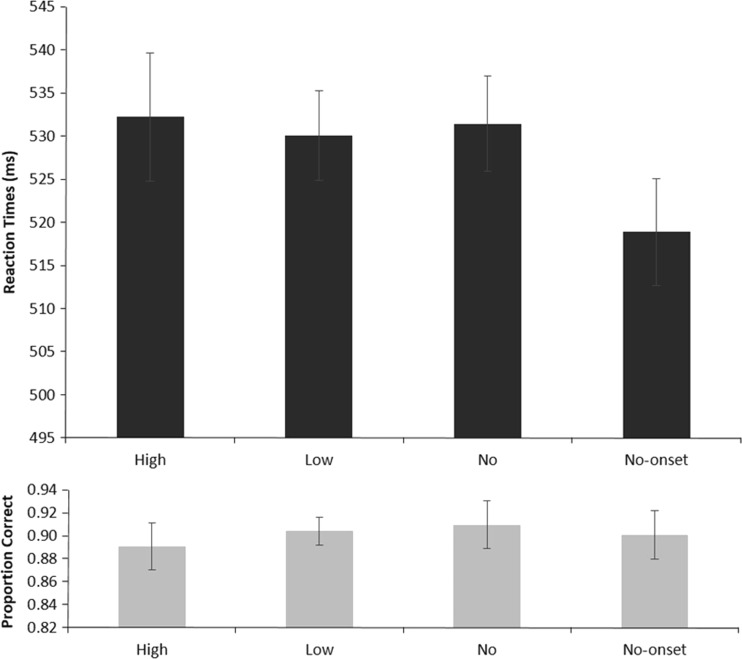
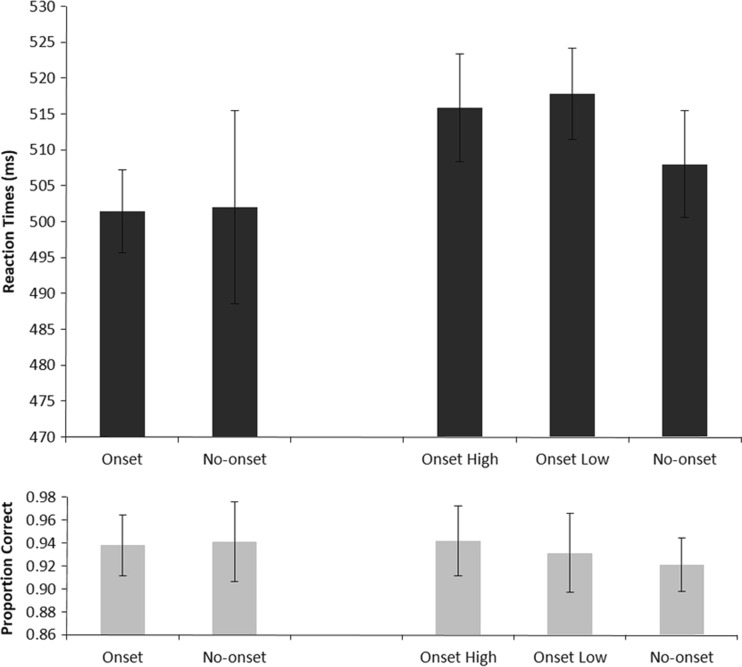
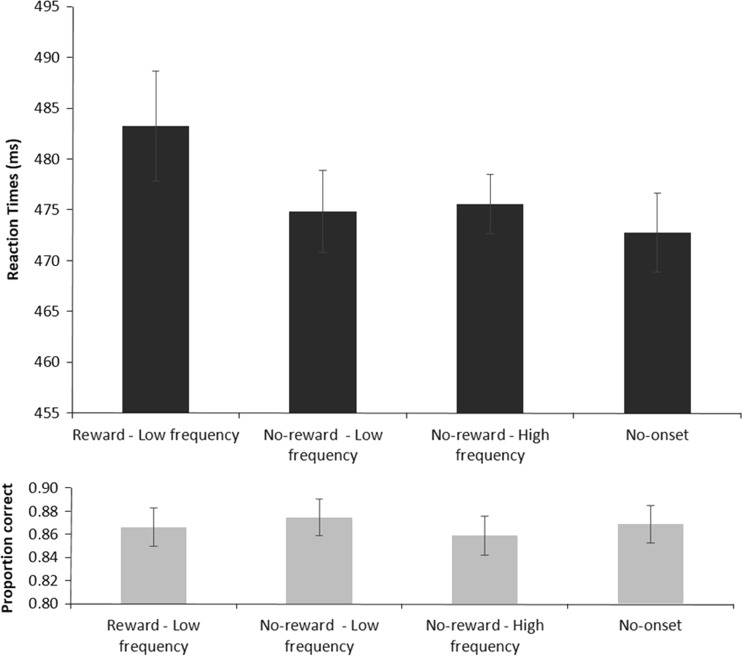
In the present study, we investigated the conditions in which rewarded distractors have the ability to capture attention, even when attention is directed toward the target location. Experiment 1 showed that when the probability of obtaining reward was high, all salient distractors captured attention, even when they were not associated with reward. This effect may have been caused by participants suboptimally using the 100%-valid endogenous location cue. Experiment 2 confirmed this result by showing that salient distractors did not capture attention in a block in which no reward was expected. In Experiment 3, the probability of the presence of a distractor was high, but it only signaled reward availability on a low number of trials. The results showed that those very infrequent distractors that signaled reward captured attention, whereas the distractors (both frequent and infrequent ones) not associated with reward were simply ignored. The latter experiment indicates that even when attention is directed to a location in space, stimuli associated with reward break through the focus of attention, but equally salient stimuli not associated with reward do not.
Overview
The claims and statistics of this paper haven’t been checked yet.
Free: it reads the open-access text and checks the first 5 claims that cite a source we can check. Create a free account to check every claim.
Integrity signals
Registry
Cites
Statistics
Figures
Verification
Claims the paper makes
The claims and statistics of this paper haven’t been checked yet.
Free: it reads the open-access text and checks the first 5 claims that cite a source we can check. Create a free account to check every claim.
Claims other papers make about this one
Each is checked against this paper’s own text: does it say what the citing paper says it does?
The cited source says what the claim attributes to it.
In the citing paper
“Munneke et al. (2016) found that abrupt onset distractors only broke through the focus of spatial attention when they were associated with reward.”
From Selection history: How reward modulates selectivity of visual attention. (2018) · cites this paper as Munneke et al., 2016
The cited source says what the claim attributes to it.
In the citing paper
“When they were not associated with reward, these distractors could simply be ignored”
From Selection history: How reward modulates selectivity of visual attention. (2018) · cites this paper as Munneke et al., 2016
The cited source says what the claim attributes to it.
In the citing paper
“recent studies showed that this is not the case for reward-signaling or previously reward-associated stimuli (e.g., MacLean, Diaz, & Giesbrecht, 2016; Munneke, Belopolsky, & Theeuwes, 2016; Munneke, Hoppenbrouwers, & Theeuwes, 2015; Wang et al., 2015).”
From Selection history: How reward modulates selectivity of visual attention. (2018) · cites this paper as Munneke, Belopolsky, & Theeuwes, 2016
Self-check
Percentages, sums and reported differences re-computed from the paper’s own numbers.
The self-check needs the paper’s full text.
Citations
Cites
Brainard, D. H. (1997) · Spatial Vision · doi:10.1163/156856897x00357 · Cited by 19,702 · cited 2×
“12 (Brainard, 1997; Pelli, 1997) for MATLAB 2014a (MathWorks, Inc.”
MethodInfluentialControl of goal-directed and stimulus-driven attention in the brain
Corbetta, M., & Shulman, G. L. (2002) · Nature Reviews Neuroscience · doi:10.1038/nrn755 · Cited by 12,881 · cited 1×
“These models of attention have been studied extensively and have long been considered the only mechanisms responsible for attentional selection (for reviews of the matter, see Corbetta & Shulman, 2002; Theeuwes, 2010; Theeuwes, Olivers, & Belopolsky, 2010).”
BackgroundThe VideoToolbox software for visual psychophysics: transforming numbers into movies
Pelli, D. G. (1997) · Spatial Vision · doi:10.1163/156856897x00366 · Cited by 11,098 · cited 1×
“All of the stimuli were created and presented using Psychophysics Toolbox 3.0.12 (Brainard, 1997; Pelli, 1997) for MATLAB 2014a (MathWorks, Inc.).”
MethodInfluentialNeural Mechanisms of Selective Visual Attention
Desimone, R., & Duncan, J. (1995) · Annual Review of Neuroscience · doi:10.1146/annurev.ne.18.030195.001205 · Cited by 8,388 · cited 1×
“This competition is resolved (biased) by attention (Desimone, 1998; Desimone & Duncan, 1995).”
BackgroundBergum, B. O., Long, J., & Baddeley, A. (1982) · The American Journal of Psychology · doi:10.2307/1422199 · Cited by 2,226
Confidence Intervals from Normalized Data: A correction to Cousineau (2005)
Morey, R. D. (2008) · Tutorials in Quantitative Methods for Psychology · doi:10.20982/tqmp.04.2.p061 · Cited by 1,997
Voluntary versus automatic control over the mind's eye
Jonides, J. (1981) · Attention and performance · Cited by 1,857
Top-down versus bottom-up attentional control: a failed theoretical dichotomy
Awh, E., Belopolsky, A. V., & Theeuwes, J. (2012) · Trends in Cognitive Sciences · doi:10.1016/j.tics.2012.06.010 · Cited by 1,557 · cited 1×
“…is that associating a stimulus with a reward boosts its representation on an attentional priority map, biasing attention toward * Jaap Munneke Jaap.Munneke@gmail.com 1 Department of Cognitive Psychology, Vrije Universiteit, Amsterdam, The Netherlands selection of this stimulus (Awh et al., 2012).”
BackgroundSelf-citationTop–down and bottom–up control of visual selection
Theeuwes, J. (2010) · Acta Psychologica · doi:10.1016/j.actpsy.2010.02.006 · Cited by 1,385 · cited 8×
“, whether a rewarded salient stimulus breaks through attentional focus, whereas an equally salient but nonrewarded stimulus does 1 Because the salient distractor in the no-reward block always had the same color, it can be argued that the lack of an effect was caused by a suppression of the distractor color, due to neg…”
BackgroundMethodResultInfluentialSelf-citationVoluntary versus automatic control over the mind's eye's movement
Jonides, J. (1981) · Attention and performance · Cited by 1,341
Abrupt visual onsets and selective attention: Voluntary versus automatic allocation.
Yantis, S., & Jonides, J. (1990) · Journal of Experimental Psychology: Human Perception and Performance · doi:10.1037/0096-1523.16.1.121 · Cited by 1,171
Priming of pop-out: I. Role of features
Maljkovic, V., & Nakayama, K. (1994) · Memory & Cognition · doi:10.3758/bf03209251 · Cited by 1,107 · cited 1×
“Clear examples of selection history involve a phenomenon known as priming of pop-out (Maljkovic & Nakayama, 1994, 1996; Theeuwes & Van der Burg, 2007), reflecting the observation that visual search is more efficient when the target-defining feature is repeated on consecutive trials, as compared to…”
BackgroundValue-driven attentional capture
Anderson, B. A., Laurent, P. A., & Yantis, S. (2011) · Proceedings of the National Academy of Sciences · doi:10.1073/pnas.1104047108 · Cited by 1,098 · cited 3×
“…are no longer delivered, the crucial observation is that when the rewarded stimulus is part of the search display (but not the target) it captures attention, even when it is a nonsalient distractor (Anderson et al., 2011; Anderson & Yantis, 2012; Failing & Theeuwes, 2014; Wang, Yu, & Zhou, 2013).”
BackgroundExogenous and endogenous control of attention: The effect of visual onsets and offsets
Theeuwes, J. (1991) · Perception & Psychophysics · doi:10.3758/bf03211619 · Cited by 814 · cited 10×
“…as well as the nonsignificant difference between the no-onset condition and the high-frequency no- reward condition [476 ms; t(23) = 1.284, p = .212], indicates that participants were optimally using the cue, as no capture was observed in these conditions (Theeuwes, 1991; Yantis & Jonides, 1990).”
BackgroundMethodResultInfluentialSelf-citationVisual attention mediated by biased competition in extrastriate visual cortex
Desimone, R. (1998) · Philosophical Transactions of the Royal Society of London. Series B: Biological Sciences · doi:10.1098/rstb.1998.0280 · Cited by 696 · cited 1×
“This competition is resolved (biased) by attention (Desimone, 1998; Desimone & Duncan, 1995).”
BackgroundPriming of pop-out: II. The role of position
Maljkovic, V., & Nakayama, K. (1996) · Perception & Psychophysics · doi:10.3758/bf03206826 · Cited by 524 · cited 1×
“Clear examples of selection history involve a phenomenon known as priming of pop-out (Maljkovic & Nakayama, 1994, 1996; Theeuwes & Van der Burg, 2007), reflecting the observation that visual search is more efficient when the target-defining feature is repeated on consecutive trials, as compared to…”
BackgroundTop-down search strategies cannot override attentional capture
Theeuwes, J. (2004) · Psychonomic Bulletin & Review · doi:10.3758/bf03206462 · Cited by 523 · cited 1×
“Theeuwes and colleagues (Belopolsky & Theeuwes, 2010; Belopolsky et al., 2007; Theeuwes, 1994, 2004) have argued that the lack of attentional capture by salient items is related to the size of the attentional window.”
BackgroundSelf-citationWolfe, J. M., Butcher, S. J., Lee, C., & Hyle, M. (2003) · Journal of Experimental Psychology: Human Perception and Performance · doi:10.1037/0096-1523.29.2.483 · Cited by 490
Le Pelley, M. E., Pearson, D., Griffiths, O., & Beesley, T. (2015) · Journal of Experimental Psychology: General · doi:10.1037/xge0000037 · Cited by 327
Influence of attentional capture on oculomotor control.
Theeuwes, J., Kramer, A. F., Hahn, S., Irwin, D. E., & Zelinsky, G. J. (1999) · Journal of Experimental Psychology: Human Perception and Performance · doi:10.1037/0096-1523.25.6.1595 · Cited by 312 · cited 1×
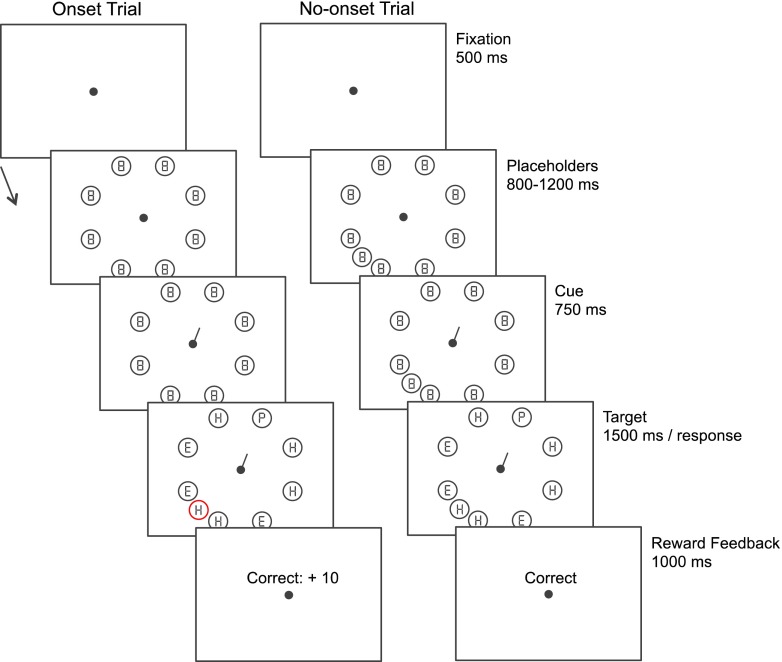
“On no-onset trials, an additional gray circle was present throughout the trial (see Theeuwes et al., 1999, who used a similar procedure).”
MethodSelf-citationEndogenous and Exogenous Control of Visual Selection
Theeuwes, J. (1994) · Perception · doi:10.1068/p230429 · Cited by 273 · cited 11×
“…as well as the nonsignificant difference between the no-onset condition and the high-frequency no- reward condition [476 ms; t(23) = 1.284, p = .212], indicates that participants were optimally using the cue, as no capture was observed in these conditions (Theeuwes, 1991; Yantis & Jonides, 1990).”
BackgroundMethodResultInfluentialSelf-citationPersistence of value-driven attentional capture.
Anderson, B. A., & Yantis, S. (2013) · Journal of Experimental Psychology: Human Perception and Performance · doi:10.1037/a0030860 · Cited by 272 · cited 2×
“…that previously valued stimuli attract attention, regardless of their experimental status (e.g., whether a stimulus is a target or a distractor; Anderson & Yantis, 2013; Bucker, Belopolsky, & Theeuwes, 2015; Bucker, Silvis, Donk, & Theeuwes, 2015; Failing & Theeuwes, 2014; Wang et al., 2013).”
BackgroundMonetary Incentives Enhance Processing in Brain Regions Mediating Top-down Control of Attention
Small, D. M., Gitelman, D., Simmons, K., Bloise, S. M., Parrish, T., & Mesulam, M.-M. (2005) · Cerebral Cortex · doi:10.1093/cercor/bhi063 · Cited by 242
The size of an attentional window modulates attentional capture by color singletons
Belopolsky, A. V., Zwaan, L., Theeuwes, J., & Kramer, A. F. (2007) · Psychonomic Bulletin & Review · doi:10.3758/bf03194124 · Cited by 202 · cited 3×
“Theeuwes and colleagues (Belopolsky & Theeuwes, 2010; Belopolsky et al., 2007; Theeuwes, 1994, 2004) have argued that the lack of attentional capture by salient items is related to the size of the attentional window.”
BackgroundResultSelf-citationValue-driven attentional and oculomotor capture during goal-directed, unconstrained viewing
Anderson, B. A., & Yantis, S. (2012) · Attention, Perception, & Psychophysics · doi:10.3758/s13414-012-0348-2 · Cited by 192 · cited 1×
“…are no longer delivered, the crucial observation is that when the rewarded stimulus is part of the search display (but not the target) it captures attention, even when it is a nonsalient distractor (Anderson et al., 2011; Anderson & Yantis, 2012; Failing & Theeuwes, 2014; Wang, Yu, & Zhou, 2013).”
BackgroundWhat is top-down about contingent capture?
Belopolsky, A. V., Schreij, D., & Theeuwes, J. (2010) · Attention, Perception, & Psychophysics · doi:10.3758/app.72.2.326 · Cited by 191
Self-citationFeature-based attention: it is all bottom-up priming
Theeuwes, J. (2013) · Philosophical Transactions of the Royal Society B: Biological Sciences · doi:10.1098/rstb.2013.0055 · Cited by 168 · cited 1×
“Furthermore, selection history has been shown to underlie attentional effects, previously attributed to top-down control (Belopolsky, Schreij, & Theeuwes, 2010; Wolfe, Butcher, Lee, & Hyle, 2003; see Theeuwes, 2013, for a review).”
BackgroundSelf-citationNo capture outside the attentional window
Belopolsky, A. V., & Theeuwes, J. (2010) · Vision Research · doi:10.1016/j.visres.2010.08.023 · Cited by 153
Self-citationExogenous visual orienting by reward
Failing, M. F., & Theeuwes, J. (2014) · Journal of Vision · doi:10.1167/14.5.6 · Cited by 116 · cited 2×
“…that previously valued stimuli attract attention, regardless of their experimental status (e.g., whether a stimulus is a target or a distractor; Anderson & Yantis, 2013; Bucker, Belopolsky, & Theeuwes, 2015; Bucker, Silvis, Donk, & Theeuwes, 2015; Failing & Theeuwes, 2014; Wang et al., 2013).”
BackgroundSelf-citationA new form of human spatial attention: Automated symbolic orienting
Ristic, J., & Kingstone, A. F. (2012) · Visual Cognition · doi:10.1080/13506285.2012.658101 · Cited by 115 · cited 1×
“Note, however, that some studies (e.g., Ristic & Kingstone, 2012) have shown that overlearned symbols such as arrows and possibly also pointers (as we used here) may result in orienting that is at least partly automatic.”
ResultInteraction between value and perceptual salience in value-driven attentional capture
Wang, L., Yu, H., & Zhou, X. (2013) · Journal of Vision · doi:10.1167/13.3.5 · Cited by 106
Influence of attentional capture on oculomotor control.
Theeuwes, J., Kramer, A. F., Hahn, S., Irwin, D. E., & Zelinsky, G. J. (1999) · Journal of Experimental Psychology: Human Perception and Performance · doi:10.1037//0096-1523.25.6.1595 · Cited by 104
Self-citationNeo, G., & Chua, F. K. (2006) · Perception & Psychophysics · doi:10.3758/bf03193728 · Cited by 102 · cited 1×
“One of the two no-reward colors was presented with the same low frequency (12.5%), allowing for a comparison of reward effects to effects induced by low-frequent stimuli (novelty, oddball; see Neo & Chua, 2006).”
BackgroundInfluentialThe role of spatial and nonspatial information in visual selection.
Theeuwes, J., & Van der Burg, E. (2007) · Journal of Experimental Psychology: Human Perception and Performance · doi:10.1037/0096-1523.33.6.1335 · Cited by 99
Self-citationMotivation and movement: the effect of monetary incentive on performance speed
Mir, P., Trender‐Gerhard, I., Edwards, M. J., Schneider, S. A., Bhatia, K. P., & Jahanshahi, M. (2011) · Experimental Brain Research · doi:10.1007/s00221-011-2583-5 · Cited by 75
On the limits of top-down control of visual selection
Theeuwes, J., & Van der Burg, E. (2011) · Attention, Perception, & Psychophysics · doi:10.3758/s13414-011-0176-9 · Cited by 68
Self-citationHow Attention Changes in Response to Incentives
Sawaki, R., Luck, S. J., & Raymond, J. E. (2015) · Journal of Cognitive Neuroscience · doi:10.1162/jocn_a_00847 · Cited by 57
Auditory and visual capture during focused visual attention.
Koelewijn, T., Bronkhorst, A. W., & Theeuwes, J. (2009) · Journal of Experimental Psychology Human Perception & Performance · doi:10.1037/a0013901 · Cited by 56 · cited 1×
“The interaction between these mechanisms influences the way we perceive the world by selecting stimuli for further processing on the basis of our current goals (top-down) or of the stimulus’s physical saliency in the environment (bottom-up).”
BackgroundSelf-citationReward can modulate attentional capture, independent of top-down set
Munneke, J., Hoppenbrouwers, S. S., & Theeuwes, J. (2015) · Attention, Perception, & Psychophysics · doi:10.3758/s13414-015-0958-6 · Cited by 51 · cited 3×
“A number of possible reasons could explain the discrepancy between the present Experiment 1 and the results of Munneke et al. (2015).”
MethodResultSelf-citationStimulus‐driven capture and contingent capture
Theeuwes, J., Olivers, C. N. L., & Belopolsky, A. (2010) · WIREs Cognitive Science · doi:10.1002/wcs.83 · Cited by 45
Self-citationDistractors that signal reward attract the eyes
Bucker, B., Belopolsky, A. V., & Theeuwes, J. (2015) · Visual Cognition · doi:10.1080/13506285.2014.980483 · Cited by 40
Self-citationReward modulates oculomotor competition between differently valued stimuli
Bucker, B., Silvis, J. D., Donk, M., & Theeuwes, J. (2015) · Vision Research · doi:10.1016/j.visres.2015.01.020 · Cited by 31
Self-citation
Cited by
Selection history: How reward modulates selectivity of visual attention.
Failing, M., & Theeuwes, J. (2018) · Psychonomic Bulletin & Review · doi:10.3758/s13423-017-1380-y · Cited by 345
“For example, Munneke et al. (2016) found that abrupt onset distractors only broke through the focus of spatial attention when they were associated with reward.”
BackgroundSelf-citationThe past, present, and future of selection history
Anderson, B. A., Kim, H., Kim, A. J., Liao, M.-R., Mrkonja, L., Clement, A., & Grégoire, L. (2021) · Neuroscience & Biobehavioral Reviews · doi:10.1016/j.neubiorev.2021.09.004 · Cited by 187
Neurobiology of value-driven attention
Anderson, B. A. (2018) · Current Opinion in Psychology · doi:10.1016/j.copsyc.2018.11.004 · Cited by 151
On the value-dependence of value-driven attentional capture
Anderson, B. A., & Halpern, M. (2017) · Attention Perception & Psychophysics · doi:10.3758/s13414-017-1289-6 · Cited by 106
“Unrewarded control condition Attentional capture by previously unrewarded target features was substantially larger in Sha and Jiang (2016) than in the present study and in several other studies using a similar paradigm (Anderson, 2017 a;”
ResultReward-driven distraction: A meta-analysis.
Rusz, D., Pelley, M. E. L., Kompier, M. A. J., Mait, L., & Bijleveld, E. (2020) · Psychological Bulletin · doi:10.1037/bul0000296 · Cited by 73
“This finding implies that reward-associated distractors are capable of penetrating strong, top-down processes, substantiating findings from previous studies (Munneke et al., 2015, 2016; L. Wang, Duan, Theeuwes, & Zhou, 2014; L. H. Wang et al., 2015).”
Result
Metadata
- Authors
- Munneke, J., Belopolsky, A. V., & Theeuwes, J.
- Affiliations
- Vrije Universiteit Amsterdam (NL)
- Corresponding author
- Munneke, Jaap
- Venue
- Attention, Perception, & Psychophysics
- Published
- 2016-03-01
- Volume
- 78
- Issue
- 7
- Pages
- 2213-2225
- ISSN
- 1943-3921 (ISSN-L)
- 1943-393X
- PMC
- PMC5013144
- OpenAlex
- W2292587922
- Semantic Scholar
- 708c44bc6102d2f193b4797f1cd0a8279e885e81
- Cited by
- 28
- References
- 42
- Citations by year
- 2024: 2 · 2022: 3 · 2021: 3 · 2020: 8 · 2019: 4 · 2018: 3 · 2017: 4
- FWCI
- 2.49
- Type
- journal article
- Language
- en
- Open access
- hybrid
- doi.org
- Locations
- Attention Perception & Psychophysics (publishedVersion, cc-by)
- Europe PMC (PubMed Central) (publishedVersion, cc-by)
- PubMed Central (publishedVersion, cc-by)
- PubMed (publishedVersion)
- Brunel University Research Archive (BURA) (Brunel University London) (submittedVersion)
- VU Research Portal (submittedVersion, other-oa)
- Data Archiving and Networked Services (DANS) (submittedVersion, other-oa)
- Funders
- European Research Council (ERC-2012-AdG – 323413)
- Topics
- Physical Sciences › Computer Science › Computer Vision and Pattern Recognition › Visual Attention and Saliency Detection
- Life Sciences › Neuroscience › Cognitive Neuroscience › Neural and Behavioral Psychology Studies
- Life Sciences › Neuroscience › Cognitive Neuroscience › Visual perception and processing mechanisms
- Keywords
- reward, distractor capture, attentional capture, salience, reward probability, distractor frequency, attentional focus, visual attention
- MeSH terms
- Attentional Bias, Adult, Analysis of Variance, Attention, Eye Movements, Female, Fixation, Ocular, Humans, Male, Reward
About these checks
Registry, retraction, Cites and statistics results are computed, not judged, with one exception: a printed reference that no index lists is read once by a model before it counts as a citation error. Claims are extracted by a model and kept only when their quote appears verbatim in the text; each cited source is then checked, with a model’s help, for whether it says what the claim relies on. Those verdicts can be wrong — read the claim’s quote and the cited source before relying on one.
Statistics and arithmetic are recomputed, not judged.
Confidence bands are shown only for fields calibrated on our annotated test set. None is calibrated yet, so no band is shown.
What counts as a claim ›How we measure confidence ›How we check this ›
Are you an author, or do you see a problem with this page? Request a review
Data sources
Bibliographic data: Semantic Scholar, OpenAlex, Crossref.
Contains information from the Semantic Scholar Academic Graph Datasets, made available under the ODC Attribution License (ODC-BY 1.0).
Semantic Scholar’s data is described in: Kinney, R., et al. (2023). The Semantic Scholar Open Data Platform. arXiv:2301.10140.
