

Selection history: How reward modulates selectivity of visual attention.
Open accessThe DOI matches its Crossref record; 246 of the 251 references it cites were found in a registry or an index; 127 of the 241 sources its claims cite were checked for support.
Abstract
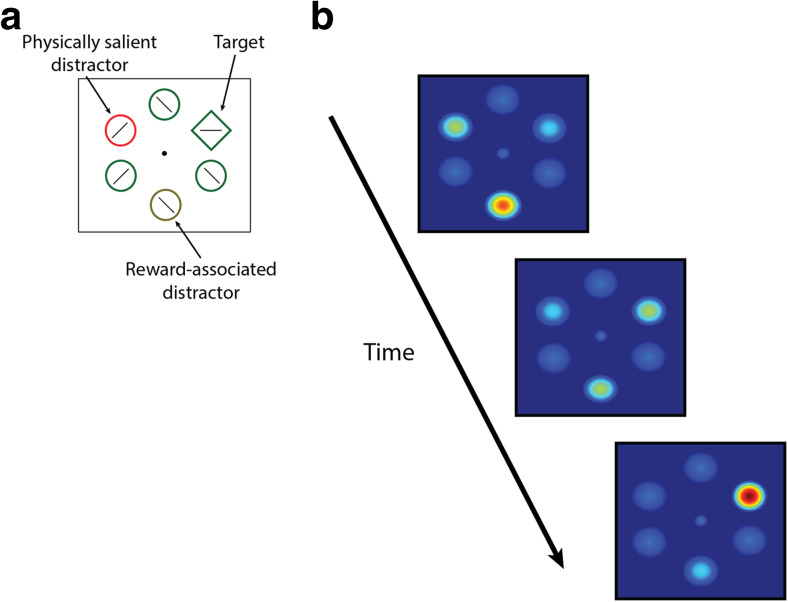
Visual attention enables us to selectively prioritize or suppress information in the environment. Prominent models concerned with the control of visual attention differentiate between goal-directed, top-down and stimulus-driven, bottom-up control, with the former determined by current selection goals and the latter determined by physical salience. In the current review, we discuss recent studies that demonstrate that attentional selection does not need to be the result of top-down or bottom-up processing but, instead, is often driven by lingering biases due to the "history" of former attention deployments. This review mainly focuses on reward-based history effects; yet other types of history effects such as (intertrial) priming, statistical learning and affective conditioning are also discussed. We argue that evidence from behavioral, eye-movement and neuroimaging studies supports the idea that selection history modulates the topographical landscape of spatial "priority" maps, such that attention is biased toward locations having the highest activation on this map.
Overview
CoChat Summary
TL;DR
This review argues that visual attention is shaped not only by top-down goals and bottom-up salience, but also by selection history—persistent biases from past attentional episodes. Reward is the main case reviewed, and the authors conclude that reward-associated stimuli can capture or be suppressed in ways that alter the priority map and influence both covert and overt attention.
Key findings
- The review argues that reward can bias attention beyond strategic control: previously reward-associated stimuli can disrupt performance even when they are non-salient, task-irrelevant, and when avoiding them would be better for reward.
- In intertrial reward priming, Hickey et al. (2010a) found that when participants received a high reward, they were quicker on the next trial if there was no swap between target- and distractor-associated colors, but slower if a swap occurred; with low reward, the pattern reversed.
- Della Libera & Chelazzi (2009) found that, in a training-test design separated by 5 days, distractor shapes associated with high reward as targets in training slowed later responses more than distractors associated with low reward as targets, while shapes associated with high reward as distractors sped later responses.
- The review notes neuroimaging evidence that reward history changes stimulus representation, including elevated activity in visual cortex and reward/attention areas such as basal ganglia, VMPFC, OSC, IPS, FEF, and SC; one cited fMRI study found that less suppression of a reward-associated distractor in OSC was linked to larger performance costs.
- The authors also report that reward can influence temporal attention: in Le Pelley et al. (2017), accuracy dropped significantly when an upright distractor signaled reward compared with when no reward was signaled or the distractor was absent.
Methods
- Narrative review of behavioral, eye-movement, electrophysiological, fMRI, PET, lesion, and pharmacological studies on attention, with emphasis on reward-based selection history and related history effects.
- The paper synthesizes studies using paradigms such as additional singleton search, spatial cueing, training-test designs, RSVP temporal attention, object-based cueing, and fear-conditioning/priming comparisons.
- Main analysis is qualitative/theoretical: the authors compare findings against top-down/bottom-up accounts and argue for a third category, selection history, integrated into a priority-map framework.
Limitations
- The paper explicitly says that several questions remain unresolved, including how reward-based selection history is reflected in the brain, how to model oculomotor effects, how suppression vs prioritization is determined, and how far effects generalize across contexts, tasks, and stimulus features.
- It also notes that many reward studies are hard to interpret because reward manipulations were often congruent with task demands, or because reward-associated stimuli were physically salient or otherwise not fully decoupled from top-down control; this is stated in the paper as a caveat.
- Evident from the text: this is a review, not a new empirical study, so its conclusions depend on the quality and comparability of the cited literature.
Model-written summary of a shortened version of the paper’s full text (it is longer than we read). Check it against the paper before relying on it.
Integrity signals
Registry
Cites
Statistics
Figures
Verification
Claims the paper makes
90 Valid · 7 Not valid · 60 Not checked · 111 Own results and interpretations
The cited sources support only part of this claim — read each source’s verdict below.
In the paper
“In particular, physical salience of a stimulus relative to its immediate surroundings determines how likely it is that this stimulus “grabs,” or captures, attention.”
§ Selection history: How reward modulates selectivity of visual attention > Top-down and bottom-up attentional control
What the sources say
- Not matchedcites Theeuwes, 1991a, 1992, 1994
A range of references, not one source.
- Supportedcites Itti & Koch, 2001 matched to “Computational modelling of visual attention” (2001) source
The Summary says a stimulus’s perceptual saliency depends critically on surrounding context. The opening discussion says conspicuous stimuli can attract attention automatically, and the Saliency section describes attention being drawn toward the most salient location. The paper also recognizes top-down influences, but the claim does not say physical salience is the only influence. (LLM, conf=0.92)
plainstates a cause- Asserted: passes — The authors put it forward as true.
- Checkable: passes — It can be checked against evidence.
- Load-bearing: unclear — It is unclear whether the paper’s conclusions depend on it.
- Based: passes — The paper gives a reason why it holds.
- Not matched
Every source the paper cites for this claim was checked and supports it.
In the paper
“The current review takes the previous paper of Awh et al. (2012) further and discusses recent findings of key behavioral, eye-movement, and neuroimaging studies that demonstrate effects that should be considered to be the result of selection history (i.e., lingering selection biases based on history).”
§ Selection history: How reward modulates selectivity of visual attention > Abstract
What the sources say
- Supportedcites Awh et al., 2012 matched to “Top-down versus bottom-up attentional control: a failed theoretical dichotomy” (2012) source
The citation identifies Awh et al. as the previous paper whose selection-history framework the citing review takes further. In the paper’s “Selection history” section, the authors argue that past selection can bias attention independently of current goals or physical salience. The citing authors’ description of the recent studies their own review discusses is not a finding attributed to Awh et al. (LLM, conf=0.91)
boostedstates a cause- Asserted: passes — The authors put it forward as true.
- Checkable: passes — It can be checked against evidence.
- Load-bearing: passes — The paper’s conclusions depend on it.
- Based: passes — The paper gives a reason why it holds.
- Supported
Every source the paper cites for this claim was checked and supports it.
In the paper
“More specifically, stronger task-set representations (measured as higher classification accuracy) in frontoparietal regions due to incentive reward predicted higher accuracy on the task (Etzel et al., 2015).”
§ Selection history: How reward modulates selectivity of visual attention > Attention and reward > Reward as a motivational incentive
What the sources say
- Supportedcites Etzel et al., 2015 matched to “Reward Motivation Enhances Task Coding in Frontoparietal Cortex” (2016) source
The Relationship with Behavioral Performance section reports that participants with larger incentive-related increases in frontoparietal task-classification accuracy also had larger increases in behavioral accuracy. Its mediation analysis found that the classification-accuracy difference significantly predicted the behavioral-performance difference. (LLM, conf=0.94)
plainstates an association- Asserted: passes — The authors put it forward as true.
- Checkable: passes — It can be checked against evidence.
- Load-bearing: passes — The paper’s conclusions depend on it.
- Based: passes — The paper gives a reason why it holds.
- Supported
Every source the paper cites for this claim was checked and supports it.
In the paper
“Importantly, electrophysiological recordings showed that the N2pc component was also modulated by reward magnitude. The N2pc was earlier and larger in response to high-reward targets compared to low-reward targets.”
§ Selection history: How reward modulates selectivity of visual attention > Attention and reward > Reward as a motivational incentive
What the sources say
- Supportedcites Kiss et al., 2009 matched to “Reward Priority of Visual Target Singletons Modulates Event-Related Potential Signatures of Attentional Selection” (2009) source
The Results (ERP data, N2pc section) report larger N2pc amplitudes for high- than low-reward targets and an earlier onset (187 versus 195 ms). The Results summary explicitly states that the N2pc emerged earlier and had a larger amplitude for high-reward targets. (LLM, conf=0.95)
plainstates an association- Asserted: passes — The authors put it forward as true.
- Checkable: passes — It can be checked against evidence.
- Load-bearing: passes — The paper’s conclusions depend on it.
- Based: passes — The paper gives a reason why it holds.
- Supported
The cited sources support only part of this claim — read each source’s verdict below.
In the paper
“Although initially only demonstrated when both sessions occurred on the same day, subsequent studies showed that such interference can be observed considerably longer—even up to 6 months after the training session (e.g., Anderson & Yantis, 2013).”
§ Selection history: How reward modulates selectivity of visual attention > Attention and reward > Reward history can counteract top-down processes
What the sources say
- Partly supportedcites Anderson & Yantis, 2013 matched to “Attentional bias for nondrug reward is magnified in addiction.” (2013) sourceExperimental — accuracy not yet measured
The Results > Test Phase reports attentional capture by previously reward-associated distractors, supporting the interference part of the claim. The Method > Attentional Capture Task describes training and test phases but does not report a six-month interval between them, so this source does not support the claimed duration. Page numbers are unavailable in our copy. (LLM, conf=0.83)
plainstates a cause- Asserted: passes — The authors put it forward as true.
- Checkable: passes — It can be checked against evidence.
- Load-bearing: passes — The paper’s conclusions depend on it.
- Based: passes — The paper gives a reason why it holds.
- Partly supported
159 more claims · 54 with their cited sources checked
Create a free account to see all 268 claims and to verify the 10 references still open.
- It may state two separate claims as one. 67
- Probably not a substantial claim. 44
- The quote only partly states this claim. 1
Citations
Cites
Control of goal-directed and stimulus-driven attention in the brain
Corbetta, M., & Shulman, G. L. (2002) · Nature Reviews Neuroscience · doi:10.1038/nrn755 · Cited by 12,881 · cited 2×
“…associated with the attentional network and believed to represent a form of priority map (e.g., Balan & Gottlieb, 2006; Bisley & Goldberg, 2010; Corbetta & Shulman, 2002; Gottlieb, Kusunoki, & Goldberg, 1998; Li, 2002; Mazer & Gallant, 2003), most notably area LIP/IPS, frontal eye field (FEF),…”
BackgroundA feature-integration theory of attention.
Treisman, A. M., & Gelade, G. (1980) · Cognitive Psychology · doi:10.1016/0010-0285(80)90005-5 · Cited by 12,366 · cited 1×
“This so-called top-down (also called endogenous or goaldirected) attentional control is thought to be volitional and under the control of the observer at any given point in time (Posner, 1980; Treisman & Gelade, 1980; Theeuwes, 2010; Wolfe, 2007; Yantis, 2000).”
BackgroundPosner, M. I. (1980) · Quarterly Journal of Experimental Psychology · doi:10.1080/00335558008248231 · Cited by 9,670 · cited 2×
“This so-called top-down (also called endogenous or goaldirected) attentional control is thought to be volitional and under the control of the observer at any given point in time (Posner, 1980; Treisman & Gelade, 1980; Theeuwes, 2010; Wolfe, 2007; Yantis, 2000).”
BackgroundNeural Mechanisms of Selective Visual Attention
Desimone, R., & Duncan, J. (1995) · Annual Review of Neuroscience · doi:10.1146/annurev.ne.18.030195.001205 · Cited by 8,388 · cited 3×
“At the heart of the priority map concept lies the idea that its activity profile determines the outcome of the brain’s intrinsically emergent property of competition for neural representation (Desimone, 1998; Desimone & Duncan, 1995).”
BackgroundCarver, C. S., & White, T. L. (1994) · Journal of Personality and Social Psychology · doi:10.1037/0022-3514.67.2.319 · Cited by 7,306 · cited 1×
“…responsiveness (Hickey & Peelen, 2015) as measured by the Barratt Impulsiveness scale (Patton, Stanford, & Barratt, 1995) and BIS/BAS questionnaire (Carver & White, 1994) have been associated with a larger effect of reward on attentional selection, although the contribution of each of these…”
MethodComputational modelling of visual attention
Itti, L., & Koch, C. (2001) · Nature Reviews Neuroscience · doi:10.1038/35058500 · Cited by 4,733 · cited 3×
“Influential theoretical as well as computational models on attentional control assume that all signals driving attention converge on a priority map in the brain (Bisley, 2011; Itti & Koch, 2001; Theeuwes, 2010; Wolfe, 2007; Zelinsky & Bisley, 2015).”
BackgroundA mechanism for cognitive dynamics: neuronal communication through neuronal coherence.
Fries, P. (2005) · Trends in Cognitive Sciences · doi:10.1016/j.tics.2005.08.011 · Cited by 4,284 · cited 1×
“Neuronal synchronization has been proposed as a key mechanism in communicating information from one brain area to another (Fries, 2005) and to play a vital role inmemory (Fell &Axmacher, 2011) as well as attention (Jensen, Gips, Bergmann, & Bonnefond, 2014).”
BackgroundWhat is the role of dopamine in reward: hedonic impact, reward learning, or incentive salience?
Berridge, K. C., & Robinson, T. E. (1998) · Brain Research Reviews · doi:10.1016/s0165-0173(98)00019-8 · Cited by 4,127
Attention and the detection of signals.
Posner, M. I., Snyder, C. R., & Davidson, B. J. (1980) · Journal of Experimental Psychology: General · doi:10.1037/0096-3445.109.2.160 · Cited by 3,778 · cited 2×
“Finding such costs and benefits is considered direct evidence for shifts of spatial attention (Posner & Cohen, 1984; Posner et al., 1980) precluding alternative explanations of interfer-”
BackgroundFears, phobias, and preparedness: toward an evolved module of fear and fear learning
Öhman, A., & Mineka, S. (2001) · Psychological Review · doi:10.1037/0033-295x.108.3.483 · Cited by 3,147 · cited 1×
“In short, there is strong evidence for what has been proposed by major theories on emotion processing (Mathews & Mackintosh, 1998; Öhman & Mineka, 2001): stimuli associated with negative valence have a mandatory and involuntary effect on the allocation of covert and overt attention, which cannot be…”
Background
Cited by
Guided Search 6.0: an updated model of visual search
Wolfe, J. M. (2021) · Psychonomic Bulletin & Review · doi:10.3758/s13423-020-01859-9 · Cited by 703
Progress toward resolving the attentional capture debate
Luck, S. J., Gaspelin, N., Folk, C. L., Remington, R. W., & Theeuwes, J. (2021) · Visual Cognition · doi:10.1080/13506285.2020.1848949 · Cited by 388
Self-citationVisual Selection: Usually Fast and Automatic; Seldom Slow and Volitional
Theeuwes, J. (2018) · Journal of Cognition · doi:10.5334/joc.13 · Cited by 238
Self-citationGoal-driven, stimulus-driven, and history-driven selection
Theeuwes, J. (2019) · Current Opinion in Psychology · doi:10.1016/j.copsyc.2018.12.024 · Cited by 229
Self-citationVisual Search: How Do We Find What We Are Looking For?
Wolfe, J. M. (2020) · Annual Review of Vision Science · doi:10.1146/annurev-vision-091718-015048 · Cited by 229
“The roles of reward and value have been extensively reviewed by Failing & Theeuwes (2017).”
BackgroundThe past, present, and future of selection history
Anderson, B. A., Kim, H., Kim, A. J., Liao, M.-R., Mrkonja, L., Clement, A., & Grégoire, L. (2021) · Neuroscience & Biobehavioral Reviews · doi:10.1016/j.neubiorev.2021.09.004 · Cited by 187
Anticipatory Distractor Suppression Elicited by Statistical Regularities in Visual Search
Wang, B., van Driel, J., Ort, E., & Theeuwes, J. (2019) · Journal of Cognitive Neuroscience · doi:10.1162/jocn_a_01433 · Cited by 163
Self-citationStatistical regularities modulate attentional capture independent of search strategy
Wang, B., & Theeuwes, J. (2018) · Attention Perception & Psychophysics · doi:10.3758/s13414-018-1562-3 · Cited by 161
“Recently, however, it was argued that this classic theoretical dichotomymay no longer hold as often selection cannot be explained by current selection goals or the properties of the environment (Awh, Belopolsky, & Theeuwes, 2012; Failing & Theeuwes, 2017).”
BackgroundSelf-citationDistractor Ignoring: Strategies, Learning, and Passive Filtering
Geng, J. J., Won, B.-Y., & Carlisle, N. B. (2019) · Current Directions in Psychological Science · doi:10.1177/0963721419867099 · Cited by 119
“…RTs and more accurate performance when a salient distractor was located in a predictable “high probability” location compared to an unpredictable “low probability” location (Failing & Theeuwes, 2018; Ferrante et al., 2018; Reder, Weber, Shang, & Vanyukov, 2003; Wang & Theeuwes, 2018a, 2018b).”
Statistical regularities induce spatial as well as feature-specific suppression.
Failing, M., Feldmann‐Wüstefeld, T., Wang, B., Olivers, C. N. L., & Theeuwes, J. (2019) · Journal of Experimental Psychology Human Perception & Performance · doi:10.1037/xhp0000660 · Cited by 95
“…a learned selection bias that is shaped by associations of value, emotion valence, or other statistical regularities and acts independently of other top-down or bottom-up control processes on attentional control (Awh, Belopolsky, & Theeuwes, 2012; Failing & Theeuwes, 2018; Fiser & Aslin, 2002).”
BackgroundSelf-citationTen simple rules to study distractor suppression
Wöstmann, M., Störmer, V. S., Obleser, J., Addleman, D. A., Andersen, . K., Gaspelin, N., Geng, J. J., Luck, S. J., Noonan, M. P., Slagter, H. A., et al. (2022) · Progress in Neurobiology · doi:10.1016/j.pneurobio.2022.102269 · Cited by 105
Self-citationPrioritizing pleasure and pain: attentional capture by reward-related and punishment-related stimuli
Watson, P., Pearson, D., Wiers, R. W. H. J., & Pelley, M. E. L. (2019) · Current Opinion in Behavioral Sciences · doi:10.1016/j.cobeha.2018.12.002 · Cited by 82
Statistical regularities bias overt attention
Wang, B., Samara, I., & Theeuwes, J. (2019) · Attention Perception & Psychophysics · doi:10.3758/s13414-019-01708-5 · Cited by 76
Self-citationPinging the brain to reveal the hidden attentional priority map using encephalography
Duncan, D. H., van Moorselaar, D., & Theeuwes, J. (2023) · Nature Communications · doi:10.1038/s41467-023-40405-8 · Cited by 81
“Furthermore, these fi ndings suggest that ‘ pinging ’ may become a useful tool for the study of both statistical learning as well as intertrial effects, and may be expanded to the study of other selection history effects (e.g. reward-based history effects 66 ).”
BackgroundSelf-citationReward-driven distraction: A meta-analysis.
Rusz, D., Pelley, M. E. L., Kompier, M. A. J., Mait, L., & Bijleveld, E. (2020) · Psychological Bulletin · doi:10.1037/bul0000296 · Cited by 71
“Our introduction starts with a brief overview of existing findings on reward-driven distraction (for recent, comprehensive reviews, see Anderson, 2016a; Failing & Theeuwes, 2018; Le Pelley et al., 2016).”
BackgroundResultInfluentialDissociable Components of Experience-Driven Attention
Kim, H., & Anderson, B. A. (2019) · Current Biology · doi:10.1016/j.cub.2019.01.030 · Cited by 75
Self-explaining roads: What does visual cognition tell us about designing safer roads?
Theeuwes, J. (2021) · Cognitive Research Principles and Implications · doi:10.1186/s41235-021-00281-6 · Cited by 97
“Relative to top-down and bottom-up factors affecting visual selection, recently it was recognized that “selection history” may represent a much more important factor affecting visual selection than previously assumed (Failing and Theeuwes 2018; Theeuwes 2019).”
BackgroundSelf-citationFailing, M., Wang, B., & Theeuwes, J. (2019) · Attention Perception & Psychophysics · doi:10.3758/s13414-019-01704-9 · Cited by 68
Self-citationJiang, Y. V., & Sisk, C. A. (2018) · Current Opinion in Psychology · doi:10.1016/j.copsyc.2018.11.014 · Cited by 74
Learning to suppress a distractor is not affected by working memory load
Gao, Y., & Theeuwes, J. (2019) · Psychonomic Bulletin & Review · doi:10.3758/s13423-019-01679-6 · Cited by 60
Self-citationProactive enhancement and suppression elicited by statistical regularities in visual search.
Huang, C., Donk, M., & Theeuwes, J. (2022) · Journal of Experimental Psychology Human Perception & Performance · doi:10.1037/xhp0001002 · Cited by 68
“In addition to top – down and bottom – up control processes, recently it became clear that these learned expectations control attention much more than previously assumed (Awh et al., 2012; Failing & Theeuwes, 2018; Fiser & Aslin, 2002).”
BackgroundSelf-citationThe capacity of multiple-target search
Ort, E., & Olivers, C. N. L. (2020) · Visual Cognition · doi:10.1080/13506285.2020.1772430 · Cited by 69
Neurochemistry of Visual Attention
Lockhofen, D. E. L., & Mulert, C. (2021) · Frontiers in Neuroscience · doi:10.3389/fnins.2021.643597 · Cited by 87
Delayed disengagement of attention from distractors signalling reward
Watson, P., Pearson, D., Theeuwes, J., Most, S. B., & Pelley, M. E. L. (2019) · Cognition · doi:10.1016/j.cognition.2019.104125 · Cited by 57
Self-citationAttentional Capture and Control
Theeuwes, J. (2024) · Annual Review of Psychology · doi:10.1146/annurev-psych-011624-025340 · Cited by 82
Self-citationOn the relationship between value-driven and stimulus-driven attentional capture
Anderson, B. A., & Kim, H. (2019) · Attention Perception & Psychophysics · doi:10.3758/s13414-019-01670-2 · Cited by 56
Failing, M., & Theeuwes, J. (2019) · Psychonomic Bulletin & Review · doi:10.3758/s13423-019-01672-z · Cited by 53
“It has recently been argued that VSL-induced suppression alters the activity profile on the priority map much like topdown or bottom-up attentional signals (Failing & Theeuwes, 2018; Theeuwes, 2018).”
BackgroundSelf-citationWatson, P., Pearson, D., Most, S. B., Theeuwes, J., Wiers, R. W. H. J., & Pelley, M. E. L. (2019) · PLoS ONE · doi:10.1371/journal.pone.0226284 · Cited by 61
Self-citationGuidance and selection history in hybrid foraging visual search
Wolfe, J. M., Cain, M. S., & Aizenman, A. (2019) · Attention Perception & Psychophysics · doi:10.3758/s13414-018-01649-5 · Cited by 60
Value-driven attentional capture enhances distractor representations in early visual cortex
Itthipuripat, S., Vo, V. A., Sprague, T. C., & Serences, J. T. (2019) · PLoS Biology · doi:10.1371/journal.pbio.3000186 · Cited by 53
Changes in visual cortical processing attenuate singleton distraction during visual searchPreprint
Won, B.-Y., Forloines, M. R., Zhou, Z., & Geng, J. J. (2020) · PsyArXiv (OSF Preprints) · doi:10.1016/j.cortex.2020.08.025 · Cited by 43
Attentional economics links value-modulated attentional capture and decision-making
Pearson, D., Watson, P., Albertella, L., & Pelley, M. E. L. (2022) · Nature Reviews Psychology · doi:10.1038/s44159-022-00053-z · Cited by 53
Capture and Control: Working Memory Modulates Attentional Capture by Reward-Related Stimuli
Watson, P., Pearson, D., Chow, M., Theeuwes, J., Wiers, R. W. H. J., Most, S. B., & Pelley, M. E. L. (2019) · Psychological Science · doi:10.1177/0956797619855964 · Cited by 50
Self-citationHammerschmidt, W., Kagan, I., Kulke, L., & Schacht, A. (2018) · NeuroImage · doi:10.1016/j.neuroimage.2018.06.055 · Cited by 43
Implicit attentional biases in a changing environment
Wang, B., & Theeuwes, J. (2020) · Acta Psychologica · doi:10.1016/j.actpsy.2020.103064 · Cited by 46
“…(Failing, FeldmannWüstefeld, Wang, Olivers, & Theeuwes, 2019; Failing, Wang, & Theeuwes, 2019; Ferrante et al., 2018; Goschy, Bakos, Müller, & Zehetleitner, 2014; Stilwell, Bahle, & Vecera, 2019; Wang & Theeuwes, 2018a, 2018b, 2018c; for reviews, see Failing & Theeuwes, 2018; Theeuwes, 2018).”
Self-citationBachman, M. D., Wang, L., Gamble, M. L., & Woldorff, M. G. (2020) · Journal of Neuroscience · doi:10.1523/jneurosci.1198-19.2020 · Cited by 48
“A rapidly expanding body of research has begun documenting how attention is biased toward reward-associated features, a phenomenon known as value-driven attentional capture (VDAC) (for reviews, see Anderson et al., 2011b; Chelazzi et al., 2013; Failing and Theeuwes, 2018).”
BackgroundInfluentialIndependent effects of statistical learning and top-down attention
Gao, Y., & Theeuwes, J. (2020) · Attention Perception & Psychophysics · doi:10.3758/s13414-020-02115-x · Cited by 41
Self-citationAttentional Selection: Top-Down, Bottom-Up and History-Based Biases
Theeuwes, J., & Failing, M. (2020) · Cambridge University Press eBooks · doi:10.1017/9781108891288 · Cited by 57
Self-citationTankelevitch, L., Spaak, E., Rushworth, M. F. S., & Stokes, M. G. (2020) · Journal of Neuroscience · doi:10.1523/jneurosci.1172-19.2020 · Cited by 41
“, reflecting spatial selection), it is possible that decoding of the cue identities (putatively reflecting visual feature representations) would be modulated by learned value (Anderson, 2016; Failing and Theeuwes, 2018).”
BackgroundInfluentialLearning to suppress a location does not depend on knowing which location
Gao, Y., & Theeuwes, J. (2022) · Attention Perception & Psychophysics · doi:10.3758/s13414-021-02404-z · Cited by 38
“We assume that capture of attention to the location to the distractor is needed for learning to occur (see also Failing & Theeuwes, 2017, for a similar argument).”
BackgroundSelf-citationLearning of social norms can lead to a persistent perceptual bias: A diffusion model approach
Germar, M., & Mojzisch, A. (2019) · Journal of Experimental Social Psychology · doi:10.1016/j.jesp.2019.03.012 · Cited by 44
Proactively location-based suppression elicited by statistical learning
Kong, S., Li, X., Wang, B., & Theeuwes, J. (2020) · PLoS ONE · doi:10.1371/journal.pone.0233544 · Cited by 41
“It was argued that the repeated exposure to stimuli creates (often implicitly) learned selection biases, shaped by the repeated associations of value, emotion valence, or other statistical regularities [3, 6, 7].”
BackgroundSelf-citationNorepinephrine system at the interface of attention and reward
Zhang, Y., Chen, Y., Xin, Y., Peng, B., & Liu, S. (2023) · Progress in Neuro-Psychopharmacology and Biological Psychiatry · doi:10.1016/j.pnpbp.2023.110751 · Cited by 39
Statistical regularities across trials bias attentional selection.
Li, A.-S., & Theeuwes, J. (2020) · Journal of Experimental Psychology Human Perception & Performance · doi:10.1037/xhp0000753 · Cited by 42
“This effect due to VSL has been described as “selection history,” referring to the influence of lingering biases from past selection episodes (Failing & Theeuwes, 2018).”
BackgroundSelf-citationOvert attentional capture by reward-related stimuli overcomes inhibitory suppression.
Pearson, D., Watson, P., Cheng, P., & Pelley, M. E. L. (2020) · Journal of Experimental Psychology Human Perception & Performance · doi:10.1037/xhp0000728 · Cited by 36
Inversion of pop-out for a distracting feature dimension in monkey visual cortex
Klink, P. C., Teeuwen, R. R. M., Lorteije, J. A. M., & Roelfsema, P. R. (2023) · Proceedings of the National Academy of Sciences · doi:10.1073/pnas.2210839120 · Cited by 44
Wolf, C., & Lappe, M. (2021) · Cognitive Neurodynamics · doi:10.1007/s11571-020-09661-y · Cited by 41
Hybrid value foraging: How the value of targets shapes human foraging behavior
Wolfe, J. M., Cain, M. S., & Alaoui-Soce, A. (2017) · Attention Perception & Psychophysics · doi:10.3758/s13414-017-1471-x · Cited by 40
Kim, H., & Anderson, B. A. (2020) · Cognition · doi:10.1016/j.cognition.2020.104554 · Cited by 36
Social Smartphone Apps Do Not Capture Attention Despite Their Perceived High Reward Value
Johannes, N., Dora, J., & Rusz, D. (2019) · Collabra Psychology · doi:10.1525/collabra.207 · Cited by 36
Wyble, B., Flintoft, C. C., Chen, H., Marinov, T. M., Sarkar, A., & Bowman, H. (2020) · Psychological Review · doi:10.1037/rev0000245 · Cited by 37
Does feature intertrial priming guide attention? The jury is still out
Ramgir, A., & Lamy, D. (2021) · Psychonomic Bulletin & Review · doi:10.3758/s13423-021-01997-8 · Cited by 36
Visual Selective Attention P300 Source in Frontal-Parietal Lobe: ERP and fMRI Study
Zhang, Q., Luo, C., Ngetich, R. K., Zhang, J., Jin, Z., & Li, L. (2022) · Brain Topography · doi:10.1007/s10548-022-00916-x · Cited by 45
“Top-down attention takes time and cognitive effort, while bottom-up attention is automatic, fast, and effortless (Failing and Theeuwes 2018).”
BackgroundVisual Selection: Usually Fast and Automatic; Seldom Slow and Volitional; A Reply to Commentaries
Theeuwes, J. (2018) · Journal of Cognition · doi:10.5334/joc.32 · Cited by 34
“In turn, these regularities drive visual selection in an efficient, effortless way above and beyond any top-down and bottom-up processes (Failing & Theeuwes, 2017; Wang & Theeuwes, 2018a, b).”
BackgroundSelf-citationSuppression history of distractor location biases attentional and oculomotor control
Caro, V. D., Theeuwes, J., & Libera, C. D. (2019) · Visual Cognition · doi:10.1080/13506285.2019.1617376 · Cited by 32
Self-citationSpatial suppression due to statistical learning tracks the estimated spatial probability
Lin, R., Li, X., Wang, B., & Theeuwes, J. (2020) · Attention Perception & Psychophysics · doi:10.3758/s13414-020-02156-2 · Cited by 27
Self-citationSelection history in context: Evidence for the role of reinforcement learning in biasing attention
Anderson, B. A., & Britton, M. K. (2019) · Attention Perception & Psychophysics · doi:10.3758/s13414-019-01817-1 · Cited by 38
Contextual Modulation of Emotional Distraction: Attentional Capture and Motivational Significance
Micucci, A., Ferrari, V., Cesarei, A. D., & Codispoti, M. (2019) · Journal of Cognitive Neuroscience · doi:10.1162/jocn_a_01505 · Cited by 27
Prioritization within visual working memory reflects a flexible focus of attention
Sandry, J. D., & Ricker, T. J. (2020) · Attention Perception & Psychophysics · doi:10.3758/s13414-020-02049-4 · Cited by 37
Pelley, M. E. L., Ung, R., Mine, C., Most, S. B., Watson, P., Pearson, D., & Theeuwes, J. (2022) · Attention Perception & Psychophysics · doi:10.3758/s13414-021-02426-7 · Cited by 35
Self-citationKruijne, W., Olivers, C. N. L., & van Rijn, H. (2021) · Journal of Cognitive Neuroscience · doi:10.1162/jocn_a_01705 · Cited by 31
Trichotomy revisited: A monolithic theory of attentional control
Anderson, B. A. (2024) · Vision Research · doi:10.1016/j.visres.2024.108366 · Cited by 28
The diachronic account of attentional selectivity
Zivony, A., & Eimer, M. (2021) · Psychonomic Bulletin & Review · doi:10.3758/s13423-021-02023-7 · Cited by 33
“…may be based on bottom-up saliency (Theeuwes, 2010), top-down goals (Folk, Remington, & Johnston, 1992; Remington & Folk, 1998), selection history (Failing & Theeuwes, 2018), or reward value (Anderson, 2016), and may occur early during perceptual processing (Treisman, 1998) or only after…”
Anderson, B. A., Kim, H., Britton, M. K., & Kim, A. J. (2019) · Psychological Research · doi:10.1007/s00426-019-01212-3 · Cited by 30
Statistical learning affects the time courses of salience-driven and goal-driven selection.
Huang, C., Theeuwes, J., & Donk, M. (2021) · Journal of Experimental Psychology Human Perception & Performance · doi:10.1037/xhp0000781 · Cited by 26
“Even though traditionally contextual cueing was considered an example of top-down attentional control, in more recent conceptualization it is recognized as a prime example of the role of selection history (see Sisk, Remington, & Jiang, 2019; Theeuwes, 2018, 2019 for reviews).”
BackgroundSelf-citationLiegel, N., Schneider, D. A., Wascher, E., & Arnau, S. (2022) · Scientific Reports · doi:10.1038/s41598-022-19158-9 · Cited by 28
Video games as rich environments to foster brain plasticity
Nahum, M., & Bavelier, D. (2020) · Handbook of clinical neurology · doi:10.1016/b978-0-444-63934-9.00010-x · Cited by 31
Kreyenmeier, P., Deubel, H., & Hanning, N. M. (2020) · Cortex · doi:10.1016/j.cortex.2020.09.020 · Cited by 26
Yeo, J.-H., Cho, I.-H., Hwang, G., & Yang, H.-H. (2022) · Educational Technology Research and Development · doi:10.1007/s11423-022-10099-8 · Cited by 30
“Therefore, it is proposed that rewards be provided for students when they read or watch important course content, so that males can (Failing & Theeuwes, 2018).”
BackgroundLearned value modulates the access to visual awareness during continuous flash suppression
Lunghi, C., & Pooresmaeili, A. (2023) · Scientific Reports · doi:10.1038/s41598-023-28004-5 · Cited by 24
Separate and combined effects of action relevance and motivational value on visual working memory
Heuer, A., & Schubö, A. (2018) · Journal of Vision · doi:10.1167/18.5.14 · Cited by 22
Learning to avoid looking: Competing influences of reward on overt attentional selection
Pearson, D., & Pelley, M. E. L. (2020) · Psychonomic Bulletin & Review · doi:10.3758/s13423-020-01770-3 · Cited by 24
Uncertainty modulates value-driven attentional capture
Cho, S. A., & Cho, Y. S. (2020) · Attention Perception & Psychophysics · doi:10.3758/s13414-020-02171-3 · Cited by 28
On the representational nature of value-driven spatial attentional biases
Anderson, B. A., & Kim, H. (2018) · Journal of Neurophysiology · doi:10.1152/jn.00489.2018 · Cited by 19
Proactive suppression can be applied to multiple salient distractors in visual search.
Drisdelle, B. L., & Eimer, M. (2023) · Journal of Experimental Psychology General · doi:10.1037/xge0001398 · Cited by 24
“…suggests that the suppression mechanisms re fl ected by this component are sensitive to differences in salience, with more salient distractors triggering suppression more rapidly and more strongly than distractors that are less salient (see also Failing & Theeuwes, 2018 for a similar conclusion).”
The tremors of interconnected triggers over time: How psychological contract breach can erupt
Wiechers, H. E., Coyle‐Shapiro, J. A., Lub, X. D., & ten Have, S. (2022) · Journal of Organizational Behavior · doi:10.1002/job.2645 · Cited by 27
Reward Modulates Visual Responses in the Superficial Superior Colliculus of Mice
Baruchin, L. J., Alleman, M., & Schröder, S. (2023) · Journal of Neuroscience · doi:10.1523/jneurosci.0089-23.2023 · Cited by 20
“Rewarding experiences powerfully influence visual attention (Chelazzi et al., 2013; Anderson, 2016; Failing and Theeuwes, 2018), which makes it very difficult to disentangle effects of reward versus visual attention on neural activity and behavioral performance (Maunsell, 2004).”
BackgroundThe impact of monetary stimuli on object‐based attention
Zhao, J., Song, F., Zhou, S., Hu, S., Liu, D., Wang, Y., & Kong, F. (2019) · British Journal of Psychology · doi:10.1111/bjop.12418 · Cited by 22
Gains and Losses Affect Learning Differentially at Low and High Attentional Load
Boroujeni, K. B., Watson, M. R., & Womelsdorf, T. (2022) · Journal of Cognitive Neuroscience · doi:10.1162/jocn_a_01885 · Cited by 22
Attentional suppression in time and space.
Xu, Z., Los, S. A., & Theeuwes, J. (2021) · Journal of Experimental Psychology Human Perception & Performance · doi:10.1037/xhp0000925 · Cited by 21
Self-citationDuncan, D. H., van Moorselaar, D., & Theeuwes, J. (2023) · Journal of Cognitive Neuroscience · doi:10.1162/jocn_a_02066 · Cited by 22
“The influence of past experiences on future attentional behavior is known as selection history, a category of phenomena including intertrial priming, reward learning, and statistical learning (Anderson et al., 2021; Failing & Theeuwes, 2018).”
BackgroundSelf-citationDolci, C., Rashal, E., Santandrea, E., Hamed, S. B., Chelazzi, L., Macaluso, E., & Boehler, C. N. (2024) · NeuroImage · doi:10.1016/j.neuroimage.2024.120514 · Cited by 24
“…a new view of the competition among different AC mechanisms assigns a major role in the attentional selection to the lingering biases of SL (Failing and Theeuwes, 2018), affecting the first feed-forward sweep of information (likely through synaptic mechanisms) into the spatial priority map…”
Reward history but not search history explains value-driven attentional capture
Marchner, J. R., & Preuschhof, C. (2018) · Attention Perception & Psychophysics · doi:10.3758/s13414-018-1513-z · Cited by 22
Eating restraint is associated with reduced attentional capture by signals of valuable food reward
Watson, P., Vasudevan, A. V., Pearson, D., & Pelley, M. E. L. (2020) · Appetite · doi:10.1016/j.appet.2020.105050 · Cited by 21
Lawrence, R. K., Edwards, M., Talipski, L. A., & Goodhew, S. C. (2020) · Psychonomic Bulletin & Review · doi:10.3758/s13423-019-01692-9 · Cited by 21
Leganes‐Fonteneau, M., Nikolaou, K., Scott, R. B. Y., & Duka, T. (2019) · Learning & Memory · doi:10.1101/lm.048272.118 · Cited by 18
“These results are in line with the postulate that reward predictive stimuli can modulate attentional processes (Failing and Theeuwes 2017) even in the absence of CA.”
ResultCross-modal integration during value-driven attentional capture
Sanz, L. R. D., Vuilleumier, P. O., & Bourgeois, A. (2018) · Neuropsychologia · doi:10.1016/j.neuropsychologia.2018.10.014 · Cited by 17
Integrated effects of top-down attention and statistical learning during visual search: An EEG study
Dolci, C., Boehler, C. N., Santandrea, E., Dewulf, A., Hamed, S. B., Macaluso, E., Chelazzi, L., & Rashal, E. (2023) · Attention Perception & Psychophysics · doi:10.3758/s13414-023-02728-y · Cited by 21
Womelsdorf, T., Watson, M. R., & Tiesinga, P. H. E. (2021) · Journal of Cognitive Neuroscience · doi:10.1162/jocn_a_01780 · Cited by 24
Inertia in value-driven attention
Liao, M., & Anderson, B. A. (2020) · Learning & Memory · doi:10.1101/lm.052027.120 · Cited by 17
Reward expectation facilitates context learning and attentional guidance in visual search
Bergmann, N., Koch, D. C., & Schubö, A. (2019) · Journal of Vision · doi:10.1167/19.3.10 · Cited by 20
Statistical learning of spatiotemporal regularities dynamically guides visual attention across space
Xu, Z., Theeuwes, J., & Los, S. A. (2022) · Attention Perception & Psychophysics · doi:10.3758/s13414-022-02573-5 · Cited by 20
“…relevant time points (Olson & Chun, 2001; Turk-Browne et al., 2005; Wagener & Hoffmann, 2010; Wang & Theeuwes, 2018a), which is consistent with the selection history component in the taxonomy of attentional control proposed by Awh et al. (2012; see also Failing & Theeuwes, 2018; Theeuwes, 2019).”
ResultSelf-citationStatistical regularities induce spatial as well as feature-specific suppressionPreprint
Failing, M., Feldmann‐Wüstefeld, T., Wang, B., et al. (2019) · doi:10.31234/osf.io/qkzhr · Cited by 16
Self-citationAttention without Constraint: Alpha Lateralization in Uncued Willed Attention
Nadra, J. G., Bengson, J. J., Morales, A. B., & Mangun, G. R. (2023) · eNeuro · doi:10.1523/eneuro.0258-22.2023 · Cited by 18
“…et al., 2016; Theeuwes, 2019; van Moorselaar et al., 2021), reward (Della Libera and Chelazzi, 2009; Peck et al., 2009; Hickey et al., 2010; Failing and Theeuwes, 2018; Meyer et al., 2020), object meaning (Hayes and Henderson, 2021; Peacock et al., 2021; Gayet and Peelen, 2022), and…”
BackgroundGermar, M., Duderstadt, V. H., & Mojzisch, A. (2023) · Cognition · doi:10.1016/j.cognition.2023.105611 · Cited by 21
Representing Variability: How Do We Process the Heterogeneity in the Visual Environment?
Четвериков, А. А., & Kristjansson, A. K. (2024) · Cambridge University Press eBooks · doi:10.1017/9781009396035 · Cited by 16
Pavlovian reward learning elicits attentional capture by reward-associated stimuli
Mine, C., & Saiki, J. (2018) · Attention Perception & Psychophysics · doi:10.3758/s13414-018-1502-2 · Cited by 20
Reward history impacts attentional orienting and inhibitory control on untrained tasks
Meyer, K. N., Sheridan, M. A., & Hopfinger, J. B. (2020) · Attention Perception & Psychophysics · doi:10.3758/s13414-020-02130-y · Cited by 22
“…with reward, a stimulus can be imbued with value such that it receives attentional priority even after the prospect of reward is no longer available, a phenomenon termed value-driven attentional priority (Anderson, Laurent, & Yantis, 2011b; Anderson & Yantis, 2013; Failing & Theeuwes, 2014, 2018).”
BackgroundA rise in prediction error increases attention to irrelevant cues
Torrents‐Rodas, D., Koenig, S., Uengoer, M., & Lachnit, H. (2020) · Biological Psychology · doi:10.1016/j.biopsycho.2020.108007 · Cited by 17
Reward Rapidly Enhances Visual Perception
Cheng, P., Rich, A. N., & Pelley, M. E. L. (2021) · Psychological Science · doi:10.1177/09567976211021843 · Cited by 16
“…of reward relationships with ongoing experience (via trial-by-trial reward feedback) follows previous research investigating the effects of reward associations on visual processing (e.g., Donohue et al., 2016; Failing & Theeuwes, 2018; Hopf et al., 2015; Watson, Pearson, Most, et al., 2019).”
BackgroundMethod
Metadata
- Authors
- Failing, M., & Theeuwes, J.
- Affiliations
- Vrije Universiteit Amsterdam (NL)
- Corresponding author
- Failing, Michel
- Venue
- Psychonomic Bulletin & Review
- Published
- 2017-10-04
- Volume
- 25
- Issue
- 2
- Pages
- 514-538
- ISSN
- 1069-9384 (ISSN-L)
- 1531-5320
- PMC
- PMC5902518
- OpenAlex
- W2761527597
- Semantic Scholar
- a3bcd5ff4e9b5617868b47add59b9f91ac9298c9
- Cited by
- 345
- References
- 251
- Citations by year
- 2026: 26 · 2025: 43 · 2024: 43 · 2023: 36 · 2022: 33 · 2021: 49 · 2020: 53 · 2019: 39 · 2018: 21 · 2017: 2
- FWCI
- 1.77
- Type
- journal article
- Language
- en
- Open access
- hybrid
- doi.org
- Licence
- cc-by
- creativecommons.org/licenses/by/4.0 (tdm)
- creativecommons.org/licenses/by/4.0 (vor)
- Locations
- Psychonomic Bulletin & Review (publishedVersion, cc-by)
- Europe PMC (PubMed Central) (publishedVersion, other-oa)
- PubMed Central (publishedVersion, cc-by)
- PubMed (publishedVersion)
- VU Research Portal (submittedVersion, other-oa)
- Data Archiving and Networked Services (DANS) (submittedVersion, other-oa)
- Funders
- H2020 European Research Council (ERC-2012-AdG-323413)
- Topics
- Physical Sciences › Computer Science › Computer Vision and Pattern Recognition › Visual Attention and Saliency Detection
- Life Sciences › Neuroscience › Cognitive Neuroscience › Visual perception and processing mechanisms
- Life Sciences › Neuroscience › Cognitive Neuroscience › Neural and Behavioral Psychology Studies
- Keywords
- visual attention, selective attention, selection history, reward, top-down control, bottom-up control, attentional bias, priority map, statistical learning, affective conditioning, eye movements
- MeSH terms
- Attention, Eye Movements, Humans, Learning, Motivation, Reward, Visual Perception, Neuroimaging
About these checks
Registry, retraction, Cites and statistics results are computed, not judged, with one exception: a printed reference that no index lists is read once by a model before it counts as a citation error. Claims are extracted by a model and kept only when their quote appears verbatim in the text; each cited source is then checked, with a model’s help, for whether it says what the claim relies on. Those verdicts can be wrong — read the claim’s quote and the cited source before relying on one.
The claim verdicts this report counts are experimental: their accuracy is not yet measured.
A language model drew the claims from the paper on 2026-10-11, under version 3 of the claim definition (model deepseek-v4.1-flash, prompt extract-v3).
A second model labelled each claim on 2026-10-11 (model jev-1.13-20260917, definition revision gold-guideline-v0.2).
Cited sources are checked with a language model’s help (gpt-6-sol).
Statistics and arithmetic are recomputed, not judged.
Confidence bands are shown only for fields calibrated on our annotated test set. None is calibrated yet, so no band is shown.
What counts as a claim ›How we measure confidence ›How we check this ›
Are you an author, or do you see a problem with this page? Request a review
Data sources
Bibliographic data: Semantic Scholar, OpenAlex, Crossref.
Contains information from the Semantic Scholar Academic Graph Datasets, made available under the ODC Attribution License (ODC-BY 1.0).
Semantic Scholar’s data is described in: Kinney, R., et al. (2023). The Semantic Scholar Open Data Platform. arXiv:2301.10140.
