

Selection history: How reward modulates selectivity of visual attention.
Open accessThe DOI matches its Crossref record; 246 of the 251 references it cites were found in a registry or an index; 127 of the 241 sources its claims cite were checked for support.
Abstract
Visual attention enables us to selectively prioritize or suppress information in the environment. Prominent models concerned with the control of visual attention differentiate between goal-directed, top-down and stimulus-driven, bottom-up control, with the former determined by current selection goals and the latter determined by physical salience. In the current review, we discuss recent studies that demonstrate that attentional selection does not need to be the result of top-down or bottom-up processing but, instead, is often driven by lingering biases due to the "history" of former attention deployments. This review mainly focuses on reward-based history effects; yet other types of history effects such as (intertrial) priming, statistical learning and affective conditioning are also discussed. We argue that evidence from behavioral, eye-movement and neuroimaging studies supports the idea that selection history modulates the topographical landscape of spatial "priority" maps, such that attention is biased toward locations having the highest activation on this map.
Overview
CoChat Summary
TL;DR
This review argues that visual attention is shaped not only by top-down goals and bottom-up salience, but also by selection history—persistent biases from past attentional episodes. Reward is the main case reviewed, and the authors conclude that reward-associated stimuli can capture or be suppressed in ways that alter the priority map and influence both covert and overt attention.
Key findings
- The review argues that reward can bias attention beyond strategic control: previously reward-associated stimuli can disrupt performance even when they are non-salient, task-irrelevant, and when avoiding them would be better for reward.
- In intertrial reward priming, Hickey et al. (2010a) found that when participants received a high reward, they were quicker on the next trial if there was no swap between target- and distractor-associated colors, but slower if a swap occurred; with low reward, the pattern reversed.
- Della Libera & Chelazzi (2009) found that, in a training-test design separated by 5 days, distractor shapes associated with high reward as targets in training slowed later responses more than distractors associated with low reward as targets, while shapes associated with high reward as distractors sped later responses.
- The review notes neuroimaging evidence that reward history changes stimulus representation, including elevated activity in visual cortex and reward/attention areas such as basal ganglia, VMPFC, OSC, IPS, FEF, and SC; one cited fMRI study found that less suppression of a reward-associated distractor in OSC was linked to larger performance costs.
- The authors also report that reward can influence temporal attention: in Le Pelley et al. (2017), accuracy dropped significantly when an upright distractor signaled reward compared with when no reward was signaled or the distractor was absent.
Methods
- Narrative review of behavioral, eye-movement, electrophysiological, fMRI, PET, lesion, and pharmacological studies on attention, with emphasis on reward-based selection history and related history effects.
- The paper synthesizes studies using paradigms such as additional singleton search, spatial cueing, training-test designs, RSVP temporal attention, object-based cueing, and fear-conditioning/priming comparisons.
- Main analysis is qualitative/theoretical: the authors compare findings against top-down/bottom-up accounts and argue for a third category, selection history, integrated into a priority-map framework.
Limitations
- The paper explicitly says that several questions remain unresolved, including how reward-based selection history is reflected in the brain, how to model oculomotor effects, how suppression vs prioritization is determined, and how far effects generalize across contexts, tasks, and stimulus features.
- It also notes that many reward studies are hard to interpret because reward manipulations were often congruent with task demands, or because reward-associated stimuli were physically salient or otherwise not fully decoupled from top-down control; this is stated in the paper as a caveat.
- Evident from the text: this is a review, not a new empirical study, so its conclusions depend on the quality and comparability of the cited literature.
Model-written summary of a shortened version of the paper’s full text (it is longer than we read). Check it against the paper before relying on it.
Integrity signals
Registry
Cites
Statistics
Figures
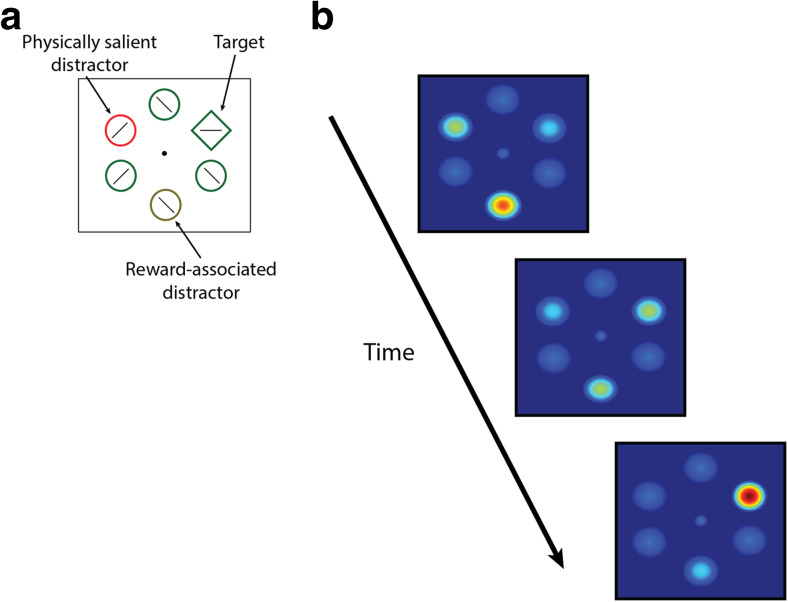
Verification
Claims the paper makes
90 Valid · 7 Not valid · 60 Not checked · 111 Own results and interpretations
The cited sources support only part of this claim — read each source’s verdict below.
In the paper
“In particular, physical salience of a stimulus relative to its immediate surroundings determines how likely it is that this stimulus “grabs,” or captures, attention.”
§ Selection history: How reward modulates selectivity of visual attention > Top-down and bottom-up attentional control
What the sources say
- Not matchedcites Theeuwes, 1991a, 1992, 1994
A range of references, not one source.
- Supportedcites Itti & Koch, 2001 matched to “Computational modelling of visual attention” (2001) source
The Summary says a stimulus’s perceptual saliency depends critically on surrounding context. The opening discussion says conspicuous stimuli can attract attention automatically, and the Saliency section describes attention being drawn toward the most salient location. The paper also recognizes top-down influences, but the claim does not say physical salience is the only influence. (LLM, conf=0.92)
plainstates a cause- Asserted: passes — The authors put it forward as true.
- Checkable: passes — It can be checked against evidence.
- Load-bearing: unclear — It is unclear whether the paper’s conclusions depend on it.
- Based: passes — The paper gives a reason why it holds.
- Not matched
Every source the paper cites for this claim was checked and supports it.
In the paper
“The current review takes the previous paper of Awh et al. (2012) further and discusses recent findings of key behavioral, eye-movement, and neuroimaging studies that demonstrate effects that should be considered to be the result of selection history (i.e., lingering selection biases based on history).”
§ Selection history: How reward modulates selectivity of visual attention > Abstract
What the sources say
- Supportedcites Awh et al., 2012 matched to “Top-down versus bottom-up attentional control: a failed theoretical dichotomy” (2012) source
The citation identifies Awh et al. as the previous paper whose selection-history framework the citing review takes further. In the paper’s “Selection history” section, the authors argue that past selection can bias attention independently of current goals or physical salience. The citing authors’ description of the recent studies their own review discusses is not a finding attributed to Awh et al. (LLM, conf=0.91)
boostedstates a cause- Asserted: passes — The authors put it forward as true.
- Checkable: passes — It can be checked against evidence.
- Load-bearing: passes — The paper’s conclusions depend on it.
- Based: passes — The paper gives a reason why it holds.
- Supported
Every source the paper cites for this claim was checked and supports it.
In the paper
“More specifically, stronger task-set representations (measured as higher classification accuracy) in frontoparietal regions due to incentive reward predicted higher accuracy on the task (Etzel et al., 2015).”
§ Selection history: How reward modulates selectivity of visual attention > Attention and reward > Reward as a motivational incentive
What the sources say
- Supportedcites Etzel et al., 2015 matched to “Reward Motivation Enhances Task Coding in Frontoparietal Cortex” (2016) source
The Relationship with Behavioral Performance section reports that participants with larger incentive-related increases in frontoparietal task-classification accuracy also had larger increases in behavioral accuracy. Its mediation analysis found that the classification-accuracy difference significantly predicted the behavioral-performance difference. (LLM, conf=0.94)
plainstates an association- Asserted: passes — The authors put it forward as true.
- Checkable: passes — It can be checked against evidence.
- Load-bearing: passes — The paper’s conclusions depend on it.
- Based: passes — The paper gives a reason why it holds.
- Supported
Every source the paper cites for this claim was checked and supports it.
In the paper
“Importantly, electrophysiological recordings showed that the N2pc component was also modulated by reward magnitude. The N2pc was earlier and larger in response to high-reward targets compared to low-reward targets.”
§ Selection history: How reward modulates selectivity of visual attention > Attention and reward > Reward as a motivational incentive
What the sources say
- Supportedcites Kiss et al., 2009 matched to “Reward Priority of Visual Target Singletons Modulates Event-Related Potential Signatures of Attentional Selection” (2009) source
The Results (ERP data, N2pc section) report larger N2pc amplitudes for high- than low-reward targets and an earlier onset (187 versus 195 ms). The Results summary explicitly states that the N2pc emerged earlier and had a larger amplitude for high-reward targets. (LLM, conf=0.95)
plainstates an association- Asserted: passes — The authors put it forward as true.
- Checkable: passes — It can be checked against evidence.
- Load-bearing: passes — The paper’s conclusions depend on it.
- Based: passes — The paper gives a reason why it holds.
- Supported
The cited sources support only part of this claim — read each source’s verdict below.
In the paper
“Although initially only demonstrated when both sessions occurred on the same day, subsequent studies showed that such interference can be observed considerably longer—even up to 6 months after the training session (e.g., Anderson & Yantis, 2013).”
§ Selection history: How reward modulates selectivity of visual attention > Attention and reward > Reward history can counteract top-down processes
What the sources say
- Partly supportedcites Anderson & Yantis, 2013 matched to “Attentional bias for nondrug reward is magnified in addiction.” (2013) sourceExperimental — accuracy not yet measured
The Results > Test Phase reports attentional capture by previously reward-associated distractors, supporting the interference part of the claim. The Method > Attentional Capture Task describes training and test phases but does not report a six-month interval between them, so this source does not support the claimed duration. Page numbers are unavailable in our copy. (LLM, conf=0.83)
plainstates a cause- Asserted: passes — The authors put it forward as true.
- Checkable: passes — It can be checked against evidence.
- Load-bearing: passes — The paper’s conclusions depend on it.
- Based: passes — The paper gives a reason why it holds.
- Partly supported
159 more claims · 54 with their cited sources checked
Create a free account to see all 268 claims and to verify the 10 references still open.
- It may state two separate claims as one. 67
- Probably not a substantial claim. 44
- The quote only partly states this claim. 1
Citations
Cites
Control of goal-directed and stimulus-driven attention in the brain
Corbetta, M., & Shulman, G. L. (2002) · Nature Reviews Neuroscience · doi:10.1038/nrn755 · Cited by 12,881 · cited 2×
“…associated with the attentional network and believed to represent a form of priority map (e.g., Balan & Gottlieb, 2006; Bisley & Goldberg, 2010; Corbetta & Shulman, 2002; Gottlieb, Kusunoki, & Goldberg, 1998; Li, 2002; Mazer & Gallant, 2003), most notably area LIP/IPS, frontal eye field (FEF),…”
BackgroundA feature-integration theory of attention.
Treisman, A. M., & Gelade, G. (1980) · Cognitive Psychology · doi:10.1016/0010-0285(80)90005-5 · Cited by 12,366 · cited 1×
“This so-called top-down (also called endogenous or goaldirected) attentional control is thought to be volitional and under the control of the observer at any given point in time (Posner, 1980; Treisman & Gelade, 1980; Theeuwes, 2010; Wolfe, 2007; Yantis, 2000).”
BackgroundPosner, M. I. (1980) · Quarterly Journal of Experimental Psychology · doi:10.1080/00335558008248231 · Cited by 9,670 · cited 2×
“This so-called top-down (also called endogenous or goaldirected) attentional control is thought to be volitional and under the control of the observer at any given point in time (Posner, 1980; Treisman & Gelade, 1980; Theeuwes, 2010; Wolfe, 2007; Yantis, 2000).”
BackgroundNeural Mechanisms of Selective Visual Attention
Desimone, R., & Duncan, J. (1995) · Annual Review of Neuroscience · doi:10.1146/annurev.ne.18.030195.001205 · Cited by 8,388 · cited 3×
“At the heart of the priority map concept lies the idea that its activity profile determines the outcome of the brain’s intrinsically emergent property of competition for neural representation (Desimone, 1998; Desimone & Duncan, 1995).”
BackgroundCarver, C. S., & White, T. L. (1994) · Journal of Personality and Social Psychology · doi:10.1037/0022-3514.67.2.319 · Cited by 7,306 · cited 1×
“…responsiveness (Hickey & Peelen, 2015) as measured by the Barratt Impulsiveness scale (Patton, Stanford, & Barratt, 1995) and BIS/BAS questionnaire (Carver & White, 1994) have been associated with a larger effect of reward on attentional selection, although the contribution of each of these…”
MethodComputational modelling of visual attention
Itti, L., & Koch, C. (2001) · Nature Reviews Neuroscience · doi:10.1038/35058500 · Cited by 4,733 · cited 3×
“Influential theoretical as well as computational models on attentional control assume that all signals driving attention converge on a priority map in the brain (Bisley, 2011; Itti & Koch, 2001; Theeuwes, 2010; Wolfe, 2007; Zelinsky & Bisley, 2015).”
BackgroundA mechanism for cognitive dynamics: neuronal communication through neuronal coherence.
Fries, P. (2005) · Trends in Cognitive Sciences · doi:10.1016/j.tics.2005.08.011 · Cited by 4,284 · cited 1×
“Neuronal synchronization has been proposed as a key mechanism in communicating information from one brain area to another (Fries, 2005) and to play a vital role inmemory (Fell &Axmacher, 2011) as well as attention (Jensen, Gips, Bergmann, & Bonnefond, 2014).”
BackgroundWhat is the role of dopamine in reward: hedonic impact, reward learning, or incentive salience?
Berridge, K. C., & Robinson, T. E. (1998) · Brain Research Reviews · doi:10.1016/s0165-0173(98)00019-8 · Cited by 4,127
Attention and the detection of signals.
Posner, M. I., Snyder, C. R., & Davidson, B. J. (1980) · Journal of Experimental Psychology: General · doi:10.1037/0096-3445.109.2.160 · Cited by 3,778 · cited 2×
“Finding such costs and benefits is considered direct evidence for shifts of spatial attention (Posner & Cohen, 1984; Posner et al., 1980) precluding alternative explanations of interfer-”
BackgroundFears, phobias, and preparedness: toward an evolved module of fear and fear learning
Öhman, A., & Mineka, S. (2001) · Psychological Review · doi:10.1037/0033-295x.108.3.483 · Cited by 3,147 · cited 1×
“In short, there is strong evidence for what has been proposed by major theories on emotion processing (Mathews & Mackintosh, 1998; Öhman & Mineka, 2001): stimuli associated with negative valence have a mandatory and involuntary effect on the allocation of covert and overt attention, which cannot be…”
BackgroundPearce, J. M., & Hall, G. (1980) · Psychological Review · doi:10.1037/0033-295x.87.6.532 · Cited by 3,023 · cited 1×
“This led to theories on how rewards motivate behavior as well as internal states (e.g., Berridge & Robinson, 1998; Mackintosh, 1975; Pearce & Hall, 1980).”
BackgroundComponents of visual orienting
Posner, M. I. (1984) · Attention and performance · Cited by 2,980
A theory of attention: Variations in the associability of stimuli with reinforcement
Mackintosh, N. J. (1975) · Psychological Review · doi:10.1037/h0076778 · Cited by 2,733 · cited 3×
“motivate behavior as well as internal states (e.g., Berridge & Robinson, 1998; Mackintosh, 1975; Pearce & Hall, 1980).”
BackgroundConditioned Reflexes: An Investigation of the Physiological Activity of the Cerebral Cortex.
(1930) · Archives of Neurology And Psychiatry · doi:10.1001/archneurpsyc.1930.02220110256018 · Cited by 2,673
Priming and Human Memory Systems
Tulving, E., & Schacter, D. L. (1990) · Science · doi:10.1126/science.2296719 · Cited by 2,595 · cited 2×
“One widely known influence of memory processes on attentional selection is priming, which describes how a stimulus (feature) that has been repeatedly attended in the recent past is more efficiently selected and identified on the current trial (Maljkovic & Nakayama, 1994; Tulving & Schacter, 1990).”
BackgroundInvoluntary covert orienting is contingent on attentional control settings
Folk, C. L., Remington, R. W., & Johnston, J. C. (1992) · Journal of Experimental Psychology: Human Perception and Performance · doi:10.1037/0096-1523.18.4.1030 · Cited by 2,487 · cited 1×
“In a similar vein, one can explain the idea of contingent capture (e.g., Folk et al., 1992), which states that selection toward a particular stimulus feature critically depends, at any given time, on the perceptual goals held by the observer.”
BackgroundSelective Attention Gates Visual Processing in the Extrastriate Cortex
Moran, J., & Desimone, R. (1985) · Science · doi:10.1126/science.4023713 · Cited by 2,433 · cited 1×
“Later in time, competition can be biased by top-down control—either by prioritizing a spatial location (Moran & Desimone, 1985) or the perceptual feature(s) summarized in an Battentional template^ (Chelazzi, Duncan, Miller, & Desimone, 1998; Reynolds, Chelazzi, & Desimone, 1999).”
BackgroundThe debate over dopamine’s role in reward: the case for incentive salience
Berridge, K. C. (2007) · Psychopharmacology · doi:10.1007/s00213-006-0578-x · Cited by 2,347 · cited 3×
“The interested reader is referred to other reviews discussing the role of dopamine in reward in great detail (e.g., Berridge, 2007; Berridge & Robinson, 1998; Kringelbach & Berridge, 2009; Schultz, 2013, 2016). on attentional selection is often erroneously attributed to topdown volitional control.”
BackgroundTemporary suppression of visual processing in an RSVP task: An attentional blink?
Raymond, J. E., Shapiro, K. L., & Arnell, K. M. (1992) · Journal of Experimental Psychology: Human Perception and Performance · doi:10.1037//0096-1523.18.3.849 · Cited by 2,260
Whalen, P. J., Rauch, S. L., Etcoff, N. L., McInerney, S. C., Lee, M. B., & Jenike, M. A. (1998) · The Journal of Neuroscience · doi:10.1523/jneurosci.18-01-00411.1998 · Cited by 2,205 · cited 1×
“Numerous studies have demonstrated that this is also reflected in attentional control and suggested that neuronal activity associated with threat- or fear-related stimuli is obligatory (Pessoa, McKenna, Gutierrez, & Ungerleider, 2002; Vuilleumier, Armony, Driver, & Dolan, 2001; Whalen et al., 1998).”
BackgroundSelective Attention Gates Visual Processing in the Extrastriate Cortex
Moran, J., & Desimone, R. (2003) · Essential Sources in the Scientific Study of Consciousness · doi:10.7551/mitpress/2834.003.0024 · Cited by 2,144
Contextual Cueing: Implicit Learning and Memory of Visual Context Guides Spatial Attention
Chun, M. M., & Jiang, Y. (1998) · Cognitive Psychology · doi:10.1006/cogp.1998.0681 · Cited by 1,959 · cited 1×
“For example, Chun and Jiang (1998) demonstrated the importance of the context in which the selected stimulus is embedded (see also Chun, 2000).”
BackgroundThe Medial Frontal Cortex and the Rapid Processing of Monetary Gains and Losses
Gehring, W. J., & Willoughby, A. R. (2002) · Science · doi:10.1126/science.1066893 · Cited by 1,884 · cited 1×
“…instance, the behavioral impact of intertrial reward priming has been shown to positively correlate with a midline anterior ERP component, called medial frontal negativity, which has been suggested to reflect the assessment of motivational impact (Gehring & Willoughby, 2002; Hickey et al., 2010a).”
BackgroundNeural correlates of decision variables in parietal cortex
Platt, M. L., & Glimcher, P. W. (1999) · Nature · doi:10.1038/22268 · Cited by 1,721 · cited 1×
“…2014; Dorris & Glimcher, 2004; Ikeda & Hikosaka, 2003; Kobayashi, Lauwereyns, Koizumi, Sakagami, & Hikosaka, 2002; Louie, Grattan, & Glimcher, 2011; Platt & Glimcher, 1999; Peck et al., 2009; Sugrue, Corrado, & Newsome, 2004; Weldon, Patterson, Colligan, Nemeth, & Rizio, 2008; Yasuda & Hikosaka,…”
Effects of Attention and Emotion on Face Processing in the Human Brain
Vuilleumier, P., Armony, J. L., Driver, J., & Dolan, R. J. (2001) · Neuron · doi:10.1016/s0896-6273(01)00328-2 · Cited by 1,664
Perceptual selectivity for color and form
Theeuwes, J. (1992) · Perception & Psychophysics · doi:10.3758/bf03211656 · Cited by 1,649 · cited 7×
“…salient distractors that are otherwise irrelevant for the task at hand can disrupt top-down control and capture attention (Battentional capture^: Theeuwes, 1992; Yantis & Jonides, 1990) as well as our eyes (Boculomotor capture^: Theeuwes, Kramer, Hahn & Irwin, 1998; Theeuwes, Kramer, Hahn,…”
BackgroundMethodInfluentialSelf-citationTemporary suppression of visual processing in an RSVP task: an attentional blink?
Raymond, J. E., Shapiro, K. L., & Arnell, K. M. (1992) · Journal of Experimental Psychology: Human Perception and Performance · doi:10.1037/0096-1523.18.3.849 · Cited by 1,649
The role of phase synchronization in memory processes
Fell, J., & Axmacher, N. (2011) · Nature Reviews Neuroscience · doi:10.1038/nrn2979 · Cited by 1,620
Top-down versus bottom-up attentional control: a failed theoretical dichotomy
Awh, E., Belopolsky, A. V., & Theeuwes, J. (2012) · Trends in Cognitive Sciences · doi:10.1016/j.tics.2012.06.010 · Cited by 1,557 · cited 6×
“The current review takes the previous paper of Awh et al. (2012) further and discusses recent findings of key behavioral, eye-movement, and neuroimaging studies that demonstrate effects that should be considered to be the result of selection history (i.e., lingering selection biases based on…”
BackgroundInfluentialSelf-citationElectrophysiological correlates of feature analysis during visual search
LUCK, S. J., & HILLYARD, S. A. (1994) · Psychophysiology · doi:10.1111/j.1469-8986.1994.tb02218.x · Cited by 1,485 · cited 2×
“…there an enhanced P1 component, which is thought to reflect increased early visual processing in extrastriate cortex without attentional modulation (cf. Hillyard, Vogel, & Luck, 1998; Luck & Hillyard, 1994), but also a larger N2pc in response to the stimulus recently associated with high reward.”
BackgroundResultFeature-based attention influences motion processing gain in macaque visual cortex
Treue, S., & Trujillo, J. C. M. (1999) · Nature · doi:10.1038/21176 · Cited by 1,465 · cited 1×
“According to these models, attention is predominantly spatial (but see feature-based attention accounts, e.g., Maunsell & Treue, 2006; Treue and Trujillo, 1999) and hierarchical in the sense that the specific location with the highest activity on the priority map is most likely to attract attention…”
MethodConditioned reflexes: An investigation of the physiological activity of the cerebral cortex
Pavlov, I. P. (2010) · Annals of neurosciences · doi:10.5214/ans.0972-7531.1017309 · Cited by 1,460
Pashler, H., Johnston, J. C., & Ruthruff, E. (2001) · Annual Review of Psychology · doi:10.1146/annurev.psych.52.1.629 · Cited by 1,428
Pittenger, J. B., Kubovy, M., & Pomerantz, J. R. (1982) · The American Journal of Psychology · doi:10.2307/1422146 · Cited by 1,415
Motivational and emotional controls of cognition
Simon, H. A. (1967) · Psychological Review · doi:10.1037/h0024127 · Cited by 1,410 · cited 1×
“While overt behavior and the processes of learning were initially the focus of research, later, other researchers were trying to understand what internal states accompanied the strengthening of response patterns due to reward (e.g., Simon, 1967).”
ResultAttention and performance X : control of language processes
Bouma, H., & Bouwhuis, D. G. (1984) · TU/e Research Portal · Cited by 1,405
Top–down and bottom–up control of visual selection
Theeuwes, J. (2010) · Acta Psychologica · doi:10.1016/j.actpsy.2010.02.006 · Cited by 1,385 · cited 11×
“Belopolsky and colleagues (Belopolsky, Schreij, & Theeuwes, 2010), for instance, showed that when the attentional set switches randomly from trial to trial, attentional capture by physically salient features (task-relevant and task-irrelevant) cannot be prevented by the observer’s perceptual goals.”
BackgroundMethodInfluentialSelf-citationThe face in the crowd revisited: A threat advantage with schematic stimuli.
Öhman, A., Lundqvist, D., & Esteves, F. (2001) · Journal of Personality and Social Psychology · doi:10.1037/0022-3514.80.3.381 · Cited by 1,366
Competitive Mechanisms Subserve Attention in Macaque Areas V2 and V4
Reynolds, J. H., Chelazzi, L., & Desimone, R. (1999) · The Journal of Neuroscience · doi:10.1523/jneurosci.19-05-01736.1999 · Cited by 1,236
Hillyard, S. A., Vogel, E. K., & Luck, S. J. (1998) · Philosophical Transactions of the Royal Society of London. Series B: Biological Sciences · doi:10.1098/rstb.1998.0281 · Cited by 1,201
Egly, R., Driver, J., & Rafal, R. D. (1994) · Journal of Experimental Psychology General · doi:10.1037//0096-3445.123.2.161 · Cited by 1,173
Abrupt visual onsets and selective attention: Voluntary versus automatic allocation.
Yantis, S., & Jonides, J. (1990) · Journal of Experimental Psychology: Human Perception and Performance · doi:10.1037/0096-1523.16.1.121 · Cited by 1,171 · cited 2×
“…highly focused on a location in space, abrupt onset distractors presented elsewhere in the visual field cease to capture attention (Theeuwes, 1991a; Yantis & Jonides, 1990), which demonstrates that focusing spatial attention may be one of the few top-down sets powerful enough to overcome…”
BackgroundNeural processing of emotional faces requires attention
Pessoa, L., McKenna, M., Gutierrez, E., & Ungerleider, L. G. (2002) · Proceedings of the National Academy of Sciences · doi:10.1073/pnas.172403899 · Cited by 1,155
Overriding stimulus-driven attentional capture
Bacon, W. F., & Egeth, H. E. (1994) · Perception & Psychophysics · doi:10.3758/bf03205306 · Cited by 1,134 · cited 1×
“…we are often in control of how and what we search, bottom-up processes can affect our performance not only independently of top-down processes but even in spite of them (but see Bacon & Egeth, 1994; Folk, Remington, & Johnson, 1992; Leber & Egeth, 2006, for the extant discussion on this matter).”
BackgroundPriming of pop-out: I. Role of features
Maljkovic, V., & Nakayama, K. (1994) · Memory & Cognition · doi:10.3758/bf03209251 · Cited by 1,107 · cited 4×
“Maljkovic and Nakayama (1994), for example, demonstrated the influence of priming in the context of a search task (see also Hillstrom, 2000; Olivers & Humphreys, 2003).”
BackgroundInfluentialAnimal intelligence; experimental studies
Thorndike, E. L. (1911) · doi:10.5962/bhl.title.55072 · Cited by 1,100
Value-driven attentional capture
Anderson, B. A., Laurent, P. A., & Yantis, S. (2011) · Proceedings of the National Academy of Sciences · doi:10.1073/pnas.1104047108 · Cited by 1,098 · cited 5×
“Also, several studies have already shown that even a strong topdown set to select only the task-relevant stimulus cannot overcome the capturing effects of a salient stimulus (Theeuwes, 1991b, 1992, 1994), a stimulus that is primed (Theeuwes, Reimann, & Mortier, 2006; Theeuwes & van der Burg, 2011), or a stimulus assoc…”
BackgroundMethodInfluentialThe representation of visual salience in monkey parietal cortex
Gottlieb, J. P., Kusunoki, M., & Goldberg, M. E. (1998) · Nature · doi:10.1038/35135 · Cited by 1,078
Attention, intention, and priority in the parietal lobe
Bisley, J. W., & Goldberg, M. E. (2010) · Annual Review of Neuroscience · doi:10.1146/annurev-neuro-060909-152823 · Cited by 1,043 · cited 2×
“…that competition for neural representation is a dominant attribute along the entire hierarchy of the visual cortex might also explain why many different areas have been suggested to constitute a priority map (e.g., Balan & Gottlieb, 2006; Bisley & Goldberg, 2010; Li, 2002; Mazer & Gallant, 2003).”
BackgroundDopamine reward prediction-error signalling: A two-component response
Schultz, W. (2016) · Nature Reviews Neuroscience · doi:10.1038/nrn.2015.26 · Cited by 1,036
Matching Behavior and the Representation of Value in the Parietal Cortex
Sugrue, L. P., Corrado, G. S., & Newsome, W. T. (2004) · Science · doi:10.1126/science.1094765 · Cited by 1,030
The N2pc component as an indicator of attentional selectivity
Eimer, M. (1996) · Electroencephalography and Clinical Neurophysiology · doi:10.1016/0013-4694(96)95711-9 · Cited by 1,018 · cited 2×
“Indeed, subsequent to the search display onset, the target-elicited N2pc component, thought to reflect attentional selection and originating in extrastriate visual areas such as V4 (e.g., Eimer, 1996), was smaller on highincentive than on low-incentive trials.”
BackgroundResultMolecular mechanisms of fear learning and memory
Johansen, J. P., Cain, C. K., Ostroff, L. E., & LeDoux, J. E. (2011) · Cell · doi:10.1016/j.cell.2011.10.009 · Cited by 1,012
Feature-based attention in visual cortex
Maunsell, J. H. R., & Treue, S. (2006) · Trends in Neurosciences · doi:10.1016/j.tins.2006.04.001 · Cited by 954 · cited 1×
“According to these models, attention is predominantly spatial (but see feature-based attention accounts, e.g., Maunsell & Treue, 2006; Treue and Trujillo, 1999) and hierarchical in the sense that the specific location with the highest activity on the priority map is most likely to attract attention…”
MethodMotivation and cognitive control: from behavior to neural mechanism
Botvinick, M., & Braver, T. (2015) · Annual Review of Psychology · doi:10.1146/annurev-psych-010814-015044 · Cited by 909 · cited 3×
“…of episodic memory encoding and retrieval (e.g., Patai, Doallo, & Nobre, 2012) and increase adaptation to errors or other cognitive conflict (e.g., Braem, Verguts, Roggeman, & Notebaert, 2012; >Stürmer, Roland Nigbur, & Sommer, 2011; for a more detailed review, see Botvinick & Braver, 2015).”
BackgroundInfluentialJournal of Experimental Psychology: Human Perception and Performance 2000–2005.
Rosenbaum, D. A. (2025) · Journal of Experimental Psychology: Human Perception and Performance · doi:10.1037/xhp0001227 · Cited by 826
Animal Intelligence. Experimental Studies
Thorndike, E. L., & Jelliffe (1912) · The Journal of Nervous and Mental Disease · doi:10.1097/00005053-191205000-00016 · Cited by 817
Exogenous and endogenous control of attention: The effect of visual onsets and offsets
Theeuwes, J. (1991) · Perception & Psychophysics · doi:10.3758/bf03211619 · Cited by 814
Self-citationDopamine neurons and their role in reward mechanisms
Schultz, W. (1997) · Current Opinion in Neurobiology · doi:10.1016/s0959-4388(97)80007-4 · Cited by 766 · cited 1×
“…contributes to neuronal plasticity alongside other neuromodulators, its specific role in reward learning is still a matter of debate (e.g., Aarts, van Holstein, & Cools, 2011; Berridge & Robinson, 1998; Hikosaka, Kim, Yasuda, & Yamamoto, 2014; Roelfsema, van Ooyen, & Watanabe, 2010; Schultz, 1997).”
BackgroundA cognitive model of selective processing in anxiety
Mathews, A., & Mackintosh, B. (1998) · Cognitive Therapy and Research · doi:10.1023/a:1018738019346 · Cited by 756 · cited 1×
“In short, there is strong evidence for what has been proposed by major theories on emotion processing (Mathews & Mackintosh, 1998; Öhman & Mineka, 2001): stimuli associated with negative valence have a mandatory and involuntary effect on the allocation of covert and overt attention, which cannot be…”
BackgroundWolfe, J. M. (2007) · Integrated Models of Cognitive Systems · doi:10.1093/acprof:oso/9780195189193.003.0008 · Cited by 740 · cited 2×
“This so-called top-down (also called endogenous or goaldirected) attentional control is thought to be volitional and under the control of the observer at any given point in time (Posner, 1980; Treisman & Gelade, 1980; Theeuwes, 2010; Wolfe, 2007; Yantis, 2000).”
BackgroundContextual cueing of visual attention
Chun, M. M. (2000) · Trends in Cognitive Sciences · doi:10.1016/s1364-6613(00)01476-5 · Cited by 732
Responses of Neurons in Inferior Temporal Cortex During Memory-Guided Visual Search
Chelazzi, L., Duncan, J., Miller, E. K., & Desimone, R. (1998) · Journal of Neurophysiology · doi:10.1152/jn.1998.80.6.2918 · Cited by 726
Cross-dimensional perceptual selectivity
Theeuwes, J. (1991) · Perception & Psychophysics · doi:10.3758/bf03212219 · Cited by 711 · cited 5×
“…already shown that even a strong topdown set to select only the task-relevant stimulus cannot overcome the capturing effects of a salient stimulus (Theeuwes, 1991b, 1992, 1994), a stimulus that is primed (Theeuwes, Reimann, & Mortier, 2006; Theeuwes & van der Burg, 2011), or a stimulus associated…”
BackgroundMethodInfluentialSelf-citationVisual attention mediated by biased competition in extrastriate visual cortex
Desimone, R. (1998) · Philosophical Transactions of the Royal Society of London. Series B: Biological Sciences · doi:10.1098/rstb.1998.0280 · Cited by 696 · cited 2×
“At the heart of the priority map concept lies the idea that its activity profile determines the outcome of the brain’s intrinsically emergent property of competition for neural representation (Desimone, 1998; Desimone & Duncan, 1995).”
BackgroundStimulus-driven capture and attentional set: Selective search for color and visual abrupt onsets.
Theeuwes, J. (1994) · Journal of Experimental Psychology: Human Perception and Performance · doi:10.1037//0096-1523.20.4.799 · Cited by 684 · cited 2×
“…already shown that even a strong topdown set to select only the task-relevant stimulus cannot overcome the capturing effects of a salient stimulus (Theeuwes, 1991b, 1992, 1994), a stimulus that is primed (Theeuwes, Reimann, & Mortier, 2006; Theeuwes & van der Burg, 2011), or a stimulus associated…”
BackgroundSelf-citationA saliency map in primary visual cortex
Li, Z. (2002) · Trends in Cognitive Sciences · doi:10.1016/s1364-6613(00)01817-9 · Cited by 660 · cited 2×
“…a form of priority map (e.g., Balan & Gottlieb, 2006; Bisley & Goldberg, 2010; Corbetta & Shulman, 2002; Gottlieb, Kusunoki, & Goldberg, 1998; Li, 2002; Mazer & Gallant, 2003), most notably area LIP/IPS, frontal eye field (FEF), and the SC (e.g., Anderson, Leal, et al., 2014; Dorris &…”
BackgroundUpdating dopamine reward signals
Schultz, W. (2013) · Current Opinion in Neurobiology · doi:10.1016/j.conb.2012.11.012 · Cited by 651 · cited 1×
“The interested reader is referred to other reviews discussing the role of dopamine in reward in great detail (e.g., Berridge, 2007; Berridge & Robinson, 1998; Kringelbach & Berridge, 2009; Schultz, 2013, 2016). on attentional selection is often erroneously attributed to topdown volitional control.”
BackgroundOur Eyes do Not Always Go Where we Want Them to Go: Capture of the Eyes by New Objects
Theeuwes, J., Kramer, A. F., Hahn, S., & Irwin, D. E. (1998) · Psychological Science · doi:10.1111/1467-9280.00071 · Cited by 646 · cited 1×
“In eye-movement studies, fast saccades initiated soon after stimulus onset are more likely to be directed toward the salient stimulus (Theeuwes et al., 1998, 1999; van Zoest et al., 2004) or the stimulus associated with reward (Failing et al., 2015; Pearson et al., 2016) or threat (Nissens et al.,…”
BackgroundSelf-citationShapiro, K. L., Raymond, J. E., & Arnell, K. M. (1997) · Trends in Cognitive Sciences · doi:10.1016/s1364-6613(97)01094-2 · Cited by 644
Reward Changes Salience in Human Vision via the Anterior Cingulate
Hickey, C., Chelazzi, L., & Theeuwes, J. (2010) · The Journal of Neuroscience · doi:10.1523/jneurosci.1026-10.2010 · Cited by 606 · cited 11×
“Higher impulsivity (Anderson et al., 2011, 2013) as well as stronger behavioral approach drive (Hickey, Chelazzi, and Theeuwes, 2010b) and reward responsiveness (Hickey & Peelen, 2015) as measured by the Barratt Impulsiveness scale (Patton, Stanford, & Barratt, 1995) and BIS/BAS questionnaire…”
BackgroundMethodInfluentialSelf-citationThe attentional blink: A review of data and theory
Dux, P. E., & Marois, R. (2009) · Attention, Perception & Psychophysics · doi:10.3758/app.71.8.1683 · Cited by 592
Midbrain Dopamine Neurons Signal Preference for Advance Information about Upcoming Rewards
Bromberg-Martin, E. S., & Hikosaka, O. (2009) · Neuron · doi:10.1016/j.neuron.2009.06.009 · Cited by 548 · cited 1×
“Other research suggests that primates strategically search for the reward-associated cue under such circumstances (Bromberg-Martin & Hikosaka, 2009).”
Towards a functional neuroanatomy of pleasure and happiness
Kringelbach, M. L., & Berridge, K. C. (2009) · Trends in Cognitive Sciences · doi:10.1016/j.tics.2009.08.006 · Cited by 522 · cited 1×
“The interested reader is referred to other reviews discussing the role of dopamine in reward in great detail (e.g., Berridge, 2007; Berridge & Robinson, 1998; Kringelbach & Berridge, 2009; Schultz, 2013, 2016). on attentional selection is often erroneously attributed to topdown volitional control.”
BackgroundSawaki, R., & Luck, S. J. (2010) · Attention, Perception, & Psychophysics · doi:10.3758/app.72.6.1455 · Cited by 487
Electrophysiological Evidence of the Capture of Visual Attention
Hickey, C., McDonald, J. J., & Theeuwes, J. (2006) · Journal of Cognitive Neuroscience · doi:10.1162/jocn.2006.18.4.604 · Cited by 475
Self-citationLearning, reward, and decision making
O'Doherty, J. P., Cockburn, J., & Pauli, W. M. (2017) · Annual Review of Psychology · doi:10.1146/annurev-psych-010416-044216 · Cited by 475
On the distinction between visual salience and stimulus-driven attentional capture.
Yantis, S., & Egeth, H. E. (1999) · Journal of Experimental Psychology Human Perception & Performance · doi:10.1037//0096-1523.25.3.661 · Cited by 474 · cited 1×
“…irrelevant for the task at hand can disrupt top-down control and capture attention (Battentional capture^: Theeuwes, 1992; Yantis & Jonides, 1990) as well as our eyes (Boculomotor capture^: Theeuwes, Kramer, Hahn & Irwin, 1998; Theeuwes, Kramer, Hahn, Irwin, & Zelinsky, 1999; Yantis & Egeth, 1999).”
BackgroundCoordination of Voluntary and Stimulus-Driven Attentional Control in Human Cortex
Serences, J. T., Shomstein, S., Leber, A. B., Golay, X., Egeth, H. E., & Yantis, S. (2005) · Psychological Science · doi:10.1111/j.0956-7976.2005.00791.x · Cited by 470
Trappenberg, T. P., Dorris, M. C., Munoz, D. P., & Klein, R. M. (2001) · Journal of Cognitive Neuroscience · doi:10.1162/089892901564306 · Cited by 443
Programming of endogenous and exogenous saccades: Evidence for a competitive integration model.
Godijn, R., & Theeuwes, J. (2002) · Journal of Experimental Psychology: Human Perception and Performance · doi:10.1037//0096-1523.28.5.1039 · Cited by 429 · cited 3×
“For instance, the biased competition model of oculomotor control by Godijn and Theeuwes (2002) assumes that eye-movement control is driven by activity levels within the hierarchical priority map, or saccade map, presumably located in the superior colliculus (SC).”
BackgroundSelf-citationDorris, M. C., & Glimcher, P. W. (2004) · Neuron · doi:10.1016/j.neuron.2004.09.009 · Cited by 427 · cited 1×
“…1998; Li, 2002; Mazer & Gallant, 2003), most notably area LIP/IPS, frontal eye field (FEF), and the SC (e.g., Anderson, Leal, et al., 2014; Dorris & Glimcher, 2004; Ikeda & Hikosaka, 2003; Kobayashi, Lauwereyns, Koizumi, Sakagami, & Hikosaka, 2002; Louie, Grattan, & Glimcher, 2011; Platt…”
Where perception meets memory: A review of repetition priming in visual search tasks
Kristjánsson, Á., & Campana, G. (2010) · Attention, Perception, & Psychophysics · doi:10.3758/app.72.1.5 · Cited by 421 · cited 1×
“Priming is well-documented in terms of its low-level facilitatory effect on perceptual processing (Kristjánsson & Campana, 2010).”
BackgroundThe attention habit: how reward learning shapes attentional selection
Anderson, B. A. (2016) · Annals of the New York Academy of Sciences · doi:10.1111/nyas.12957 · Cited by 405 · cited 5×
“…affects processes related to the processing of time (Failing & Theeuwes, 2016; Hickey & Los, 2015; Rajsic, Perera, & Pratt, 2016) as well as sound (Anderson, 2016c; Asutay & Västfjäll, 2016) and develops differently in distinct subpopulations (Anderson, Faulkner, Rilee, Yantis, & Marvel, 2013;…”
BackgroundInfluentialNeuronal representations of cognitive state: reward or attention?
Maunsell, J. H. R. (2004) · Trends in Cognitive Sciences · doi:10.1016/j.tics.2004.04.003 · Cited by 404 · cited 1×
“…prior to a block of trials, prior to an individual trial, or contingent on the target, the beneficial influence of reward in all these studies can be readily explained in terms of ongoing top-down attentional control processes (Maunsell, 2004; Stănişor, van der Togt, Pennartz, & Roelfsema, 2013).”
BackgroundTemporal coding organized by coupled alpha and gamma oscillations prioritize visual processing
Jensen, O., Gips, B., Bergmann, T. O., & Bonnefond, M. (2014) · Trends in Neurosciences · doi:10.1016/j.tins.2014.04.001 · Cited by 389
Direct Evidence for Active Suppression of Salient-but-Irrelevant Sensory Inputs
Gaspelin, N., Leonard, C. J., & Luck, S. J. (2015) · Psychological Science · doi:10.1177/0956797615597913 · Cited by 388
The attentional blink: Past, present, and future of a blind spot in perceptual awareness
Martens, S., & Wyble, B. (2010) · Neuroscience & Biobehavioral Reviews · doi:10.1016/j.neubiorev.2009.12.005 · Cited by 376 · cited 1×
“…a stimulus should come at a larger cost for subsequent processing of other task-relevant stimuli, particularly since the AB reflects failed attentional suppression during T1 processing (Martens & Wyble, 2010; Taatgen, Juvina, Schipper, Borst, & Martens, 2009; Wyble, Bowman, & Nieuwenstein, 2009).”
BackgroundVisual Selective Attention and the Effects of Monetary Rewards
Libera, C. D., & Chelazzi, L. (2006) · Psychological Science · doi:10.1111/j.1467-9280.2006.01689.x · Cited by 365 · cited 10×
“Young individuals are more prone to distraction by previously reward-associated stimuli than older individuals (Roper et al., 2014), and males demonstrate greater priority for reward-associated locations than females (Della Libera, Calletti, Eštočinová, Chelazzi, & Santandrea, 2017).”
MethodInfluentialReward Reduces Conflict by Enhancing Attentional Control and Biasing Visual Cortical Processing
Padmala, S., & Pessoa, L. (2011) · Journal of Cognitive Neuroscience · doi:10.1162/jocn_a_00011 · Cited by 362 · cited 1×
“…et al., 2005), studies by Pessoa and colleagues demonstrated that incentive reward evoked activity in large distributed brain networks, particularly those associated with attention and dopamine release (Engelmann et al., 2009; Padmala & Pessoa, 2011; for a review, see Pessoa & Engelmann, 2010).”
BackgroundIt’s under control: Top-down search strategies can override attentional capture
Leber, A. B., & Egeth, H. E. (2006) · Psychonomic Bulletin & Review · doi:10.3758/bf03193824 · Cited by 357 · cited 1×
“…we are often in control of how and what we search, bottom-up processes can affect our performance not only independently of top-down processes but even in spite of them (but see Bacon & Egeth, 1994; Folk, Remington, & Johnson, 1992; Leber & Egeth, 2006, for the extant discussion on this matter).”
BackgroundValue-Based Modulations in Human Visual Cortex
Serences, J. T. (2008) · Neuron · doi:10.1016/j.neuron.2008.10.051 · Cited by 355
Rewards teach visual selective attention
Chelazzi, L., Perlato, A., Santandrea, E., & Della Libera, C. (2013) · Vision Research · doi:10.1016/j.visres.2012.12.005 · Cited by 354 · cited 1×
“A distinction between both has been demonstrated in behavioral studies (Della Libera & Chelazzi, 2009; Le Pelley et al., 2015; see also Chelazzi et al., 2013) but, to date, this difference has not been explicitly addressed by any neuroimaging or electrophysiological study.”
BackgroundRewards evoke learning of unconsciously processed visual stimuli in adult humans
Seitz, A. R., Kim, D., & Watanabe, T. (2009) · Neuron · doi:10.1016/j.neuron.2009.01.016 · Cited by 337
The Role of Stimulus-Driven and Goal-Driven Control in Saccadic Visual Selection.
van Zoest, W., Donk, M., & Theeuwes, J. (2004) · Journal of Experimental Psychology: Human Perception and Performance · doi:10.1037/0096-1523.30.4.749 · Cited by 330 · cited 2×
“It is likely, that salience and history-based effects affect selection early in time while topdown processes dominate selection later in time (see also Hickey, van Zoest, & Theeuwes, 2010c; van Zoest et al., 2004).”
BackgroundSelf-citationLearning to Attend and to Ignore Is a Matter of Gains and Losses
Della Libera, C., & Chelazzi, L. (2009) · Psychological Science · doi:10.1111/j.1467-9280.2009.02360.x · Cited by 329 · cited 11×
“Young individuals are more prone to distraction by previously reward-associated stimuli than older individuals (Roper et al., 2014), and males demonstrate greater priority for reward-associated locations than females (Della Libera, Calletti, Eštočinová, Chelazzi, & Santandrea, 2017).”
BackgroundInfluentialAttention and associative learning in humans: An integrative review.
Le Pelley, M. E., Mitchell, C. J., Beesley, T., George, D. N., & Wills, A. J. (2016) · Psychological Bulletin · doi:10.1037/bul0000064 · Cited by 329 · cited 3×
“…during the test session can therefore be understood in terms of an instrumentally conditioned response (cf. Thorndike, 1911) or habitual orienting response instigated by reward (Battentional habit^; see Anderson, 2016a; Le Pelley et al., 2016) that is carried over from the training session.”
BackgroundLe Pelley, M. E., Pearson, D., Griffiths, O., & Beesley, T. (2015) · Journal of Experimental Psychology: General · doi:10.1037/xge0000037 · Cited by 327 · cited 6×
“…(e.g., by depriving them of water: Seitz et al., 2009; or food: Cunningham & Egeth, 2016) suggest that state-dependent fluctuations within a single individual may also affect the 3 Several studies found an effect of reward on saccadic latencies (Le Pelley et al., 2015; Pearson et al., 2015).”
BackgroundResultInfluentialControl of visual cortical signals by prefrontal dopamine
Noudoost, B., & Moore, T. (2011) · Nature · doi:10.1038/nature09995 · Cited by 324 · cited 1×
“Corroborating evidence comes from Noudoost and Moore (2011), who pharmacologically altered the dopamine receptor activity in the FEF of the prefrontal cortex and measured its effect on extrastriate area V4.”
BackgroundDoes Imminent Threat Capture and Hold Attention?
Koster, E. H. W., Crombez, G., Van Damme, S., Verschuere, B., & De Houwer, J. (2004) · Emotion · doi:10.1037/1528-3542.4.3.312 · Cited by 312
Influence of attentional capture on oculomotor control.
Theeuwes, J., Kramer, A. F., Hahn, S., Irwin, D. E., & Zelinsky, G. J. (1999) · Journal of Experimental Psychology: Human Perception and Performance · doi:10.1037/0096-1523.25.6.1595 · Cited by 312 · cited 1×
“In eye-movement studies, fast saccades initiated soon after stimulus onset are more likely to be directed toward the salient stimulus (Theeuwes et al., 1998, 1999; van Zoest et al., 2004) or the stimulus associated with reward (Failing et al., 2015; Pearson et al., 2016) or threat (Nissens et al.,…”
BackgroundSelf-citationReward value-based gain control: divisive normalization in parietal cortex
Louie, K., Grattan, L. E., & Glimcher, P. W. (2011) · Journal of Neuroscience · doi:10.1523/jneurosci.1237-11.2011 · Cited by 308
Kahneman, D. J., Treisman, A., & Burkell, J. (1983) · Journal of Experimental Psychology Human Perception & Performance · doi:10.1037//0096-1523.9.4.510 · Cited by 304
A value-driven mechanism of attentional selection
Anderson, B. A. (2013) · Journal of Vision · doi:10.1167/13.3.7 · Cited by 301 · cited 1×
“…influence on a variety of lowlevel features as well as on more complex stimuli such as faces, objects, or visual scenes (for excellent reviews, see Anderson, 2013, 2016a; Chelazzi, Perlato, Santandrea, & Della Libera, 2013; Le Pelley, Mitchell, Beesley, George, & Wills, 2016; Vuilleumier, 2015).”
BackgroundEngelmann, J. B. (2009) · Frontiers in Human Neuroscience · doi:10.3389/neuro.09.004.2009 · Cited by 300 · cited 2×
“…et al., 2005), studies by Pessoa and colleagues demonstrated that incentive reward evoked activity in large distributed brain networks, particularly those associated with attention and dopamine release (Engelmann et al., 2009; Padmala & Pessoa, 2011; for a review, see Pessoa & Engelmann, 2010).”
BackgroundPerceptual learning rules based on reinforcers and attention
Roelfsema, P. R., van Ooyen, A., & Watanabe, T. (2010) · Trends in Cognitive Sciences · doi:10.1016/j.tics.2009.11.005 · Cited by 281
Embedding reward signals into perception and cognition
Pessoa, L. (2010) · Frontiers in Neuroscience · doi:10.3389/fnins.2010.00017 · Cited by 279 · cited 1×
“…et al., 2005), studies by Pessoa and colleagues demonstrated that incentive reward evoked activity in large distributed brain networks, particularly those associated with attention and dopamine release (Engelmann et al., 2009; Padmala & Pessoa, 2011; for a review, see Pessoa & Engelmann, 2010).”
BackgroundPersistence of value-driven attentional capture.
Anderson, B. A., & Yantis, S. (2013) · Journal of Experimental Psychology: Human Perception and Performance · doi:10.1037/a0030860 · Cited by 272 · cited 1×
“Although initially only demonstrated when both sessions occurred on the same day, subsequent studies showed that such interference can be observed considerably longer— even up to 6 months after the training session (e.g., Anderson & Yantis, 2013).”
ResultThe attentional blink provides episodic distinctiveness: Sparing at a cost.
Wyble, B., Bowman, H., & Nieuwenstein, M. (2009) · Journal of Experimental Psychology: Human Perception and Performance · doi:10.1037/a0013902 · Cited by 271
Raymond, J. E., & O'Brien, J. L. (2009) · Psychological Science · doi:10.1111/j.1467-9280.2009.02391.x · Cited by 268
Repetition effects in visual search
Hillstrom, A. P. (2000) · Perception & Psychophysics · doi:10.3758/bf03206924 · Cited by 267 · cited 1×
“Maljkovic and Nakayama (1994), for example, demonstrated the influence of priming in the context of a search task (see also Hillstrom, 2000; Olivers & Humphreys, 2003).”
BackgroundKiss, M., Driver, J., & Eimer, M. (2009) · Psychological Science · doi:10.1111/j.1467-9280.2009.02281.x · Cited by 267 · cited 2×
“For instance, in Kiss et al. (2009), participants were rewarded for searching for a color singleton while the magnitude of reward depended on the color of that singleton.”
BackgroundResultAttention Is Spontaneously Biased Toward Regularities
Zhao, J., Al-Aidroos, N., & Turk-Browne, N. B. (2013) · Psychological Science · doi:10.1177/0956797612460407 · Cited by 266
A Common Neural Mechanism for Preventing and Terminating the Allocation of Attention
Sawaki, R., Geng, J. J., & Luck, S. J. (2012) · Journal of Neuroscience · doi:10.1523/jneurosci.1864-12.2012 · Cited by 265
Goal-Related Activity in V4 during Free Viewing Visual Search
Mazer, J. A., & Gallant, J. L. (2003) · Neuron · doi:10.1016/s0896-6273(03)00764-5 · Cited by 262 · cited 2×
“…that competition for neural representation is a dominant attribute along the entire hierarchy of the visual cortex might also explain why many different areas have been suggested to constitute a priority map (e.g., Balan & Gottlieb, 2006; Bisley & Goldberg, 2010; Li, 2002; Mazer & Gallant, 2003).”
BackgroundBasal Ganglia Circuits for Reward Value–Guided Behavior
Hikosaka, O., Kim, H. F., Yasuda, M., & Yamamoto, S. (2014) · Annual Review of Neuroscience · doi:10.1146/annurev-neuro-071013-013924 · Cited by 259 · cited 1×
“…as the basal ganglia, more specifically, the rostral and caudal regions of the caudate nucleus in the striatum, and the VMPFC, which directly receives input from the basal ganglia (e.g., Anderson, Kuwabara, et al., 2016, 2017; Hickey & Peelen, 2015; Hikosaka et al., 2014; Vaidya & Fellows, 2015).”
BackgroundThe influence of reward associations on conflict processing in the Stroop task
Krebs, R. M., Boehler, C. N., & Woldorff, M. G. (2010) · Cognition · doi:10.1016/j.cognition.2010.08.018 · Cited by 246
Priming of popout: III. A short-term implicit memory system beneficial for rapid target selection
Maljkovic, V., & Nakayama, K. (2000) · Visual Cognition · doi:10.1080/135062800407202 · Cited by 244 · cited 1×
“Priming between trials, or intertrial priming, occurred for up to eight successive trials, even when participants were unware of repetitions (Maljkovic & Nakayama, 2000), or when they were informed that the target was unlikely to be same between trials (Maljkovic & Nakayama, 1994).”
BackgroundMonetary Incentives Enhance Processing in Brain Regions Mediating Top-down Control of Attention
Small, D. M., Gitelman, D., Simmons, K., Bloise, S. M., Parrish, T., & Mesulam, M.-M. (2005) · Cerebral Cortex · doi:10.1093/cercor/bhi063 · Cited by 242
Reward grabs the eye: Oculomotor capture by rewarding stimuli
Theeuwes, J., & Belopolsky, A. V. (2012) · Vision Research · doi:10.1016/j.visres.2012.07.024 · Cited by 237 · cited 3×
“…high reward relative to those that signaled low reward but no difference in saccadic latencies (Failing et al., 2015; Pearson et al., 2016; see also Theeuwes & Belopolsky, 2012).3 The authors explained this pattern in the context of the competitive integration model (Godijn & Theeuwes, 2002; for a…”
BackgroundSelf-citationReward-Dependent Gain and Bias of Visual Responses in Primate Superior Colliculus
Ikeda, T., & Hikosaka, O. (2003) · Neuron · doi:10.1016/s0896-6273(03)00464-1 · Cited by 233 · cited 1×
“…Mazer & Gallant, 2003), most notably area LIP/IPS, frontal eye field (FEF), and the SC (e.g., Anderson, Leal, et al., 2014; Dorris & Glimcher, 2004; Ikeda & Hikosaka, 2003; Kobayashi, Lauwereyns, Koizumi, Sakagami, & Hikosaka, 2002; Louie, Grattan, & Glimcher, 2011; Platt & Glimcher, 1999; Peck et…”
The what, where, and why of priority maps and their interactions with visual working memory
Zelinsky, G. J., & Bisley, J. W. (2015) · Annals of the New York Academy of Sciences · doi:10.1111/nyas.12606 · Cited by 224 · cited 1×
“Influential theoretical as well as computational models on attentional control assume that all signals driving attention converge on a priority map in the brain (Bisley, 2011; Itti & Koch, 2001; Theeuwes, 2010; Wolfe, 2007; Zelinsky & Bisley, 2015).”
BackgroundGoal-Directed and stimulus-Driven Determinants of Attentional Control
(2000) · Control of Cognitive Processes · doi:10.7551/mitpress/1481.003.0010 · Cited by 224 · cited 1×
“This so-called top-down (also called endogenous or goaldirected) attentional control is thought to be volitional and under the control of the observer at any given point in time (Posner, 1980; Treisman & Gelade, 1980; Theeuwes, 2010; Wolfe, 2007; Yantis, 2000).”
BackgroundThe neural basis of visual attention
Bisley, J. W. (2011) · The Journal of Physiology · doi:10.1113/jphysiol.2010.192666 · Cited by 222 · cited 2×
“converge on a priority map in the brain (Bisley, 2011; Itti & Koch, 2001; Theeuwes, 2010; Wolfe, 2007; Zelinsky & Bisley, 2015).”
BackgroundMotivation sharpens exogenous spatial attention.
Engelmann, J. B., & Pessoa, L. (2007) · Emotion · doi:10.1037/1528-3542.7.3.668 · Cited by 221 · cited 2×
“…strategic processes such as the preparation of an appropriate attentional or oculomotor orienting response (e.g., Bucker & Theeuwes, 2014; Engelmann & Pessoa, 2007; Milstein & Dorris, 2007; Sawaki, Luck, & Raymond, 2015; Small et al., 2005) or facilitating selective attenuation of…”
BackgroundToo much control can hurt: A threaded cognition model of the attentional blink
Taatgen, N. A., Juvina, I., Schipper, M., Borst, J. P., & Martens, S. (2009) · Cognitive Psychology · doi:10.1016/j.cogpsych.2008.12.002 · Cited by 220
Reward modulates attention independently of action value in posterior parietal cortex
Peck, C. J., Jangraw, D. C., Suzuki, M., Efem, R., & Gottlieb, J. (2009) · The Journal of Neuroscience · doi:10.1523/jneurosci.1929-09.2009 · Cited by 219 · cited 2×
“…Dorris & Glimcher, 2004; Ikeda & Hikosaka, 2003; Kobayashi, Lauwereyns, Koizumi, Sakagami, & Hikosaka, 2002; Louie, Grattan, & Glimcher, 2011; Platt & Glimcher, 1999; Peck et al., 2009; Sugrue, Corrado, & Newsome, 2004; Weldon, Patterson, Colligan, Nemeth, & Rizio, 2008; Yasuda & Hikosaka, 2015).”
BackgroundKrebs, R. M., Boehler, C. N., Roberts, K. C., Song, A. W., & Woldorff, M. G. (2012) · Cerebral Cortex · doi:10.1093/cercor/bhr134 · Cited by 212
Striatal Dopamine and the Interface between Motivation and Cognition
Aarts, E., van Holstein, M., & Cools, R. (2011) · Frontiers in Psychology · doi:10.3389/fpsyg.2011.00163 · Cited by 211
Influence of Reward Expectation on Visuospatial Processing in Macaque Lateral Prefrontal Cortex
Kobayashi, S., Lauwereyns, J., Koizumi, M., Sakagami, M., & Hikosaka, O. (2002) · Journal of Neurophysiology · doi:10.1152/jn.00472.2001 · Cited by 206
Neural Mechanisms of Incentive Salience in Naturalistic Human Vision
Hickey, C., & Peelen, M. V. (2015) · Neuron · doi:10.1016/j.neuron.2014.12.049 · Cited by 204 · cited 6×
“…with the physical salience of a stimulus (e.g., Wang et al., 2013), creates plastic changes in stimulus representations (e.g., Hickey et al., 2010a; Hickey & Peelen, 2015), and affects selection as early as traditional manipulations of physical salience (e.g., Bucker, Silvis, et al., 2015; Failing…”
BackgroundMethodInfluentialAltering Spatial Priority Maps via Reward-Based Learning
Chelazzi, L., E to inova, J., Calletti, R., Lo Gerfo, E., Sani, I., Della Libera, C., & Santandrea, E. (2014) · Journal of Neuroscience · doi:10.1523/jneurosci.0277-14.2014 · Cited by 195
Value-driven attentional and oculomotor capture during goal-directed, unconstrained viewing
Anderson, B. A., & Yantis, S. (2012) · Attention, Perception, & Psychophysics · doi:10.3758/s13414-012-0348-2 · Cited by 192 · cited 1×
“Oculomotor capture due to reward-based selection history has been observed when participants are unconstrained where to look at (Anderson & Yantis, 2012; Bucker, Silvis, Donk, & Theeuwes, 2015) or when instructed to search for a target defined by a different feature than the one previously…”
BackgroundWhat is top-down about contingent capture?
Belopolsky, A. V., Schreij, D., & Theeuwes, J. (2010) · Attention, Perception, & Psychophysics · doi:10.3758/app.72.2.326 · Cited by 191
Self-citationReward modulates adaptations to conflict
Braem, S., Verguts, T., Roggeman, C., & Notebaert, W. (2012) · Cognition · doi:10.1016/j.cognition.2012.07.015 · Cited by 175
Attentional capture by signals of threat
Schmidt, L. J., Belopolsky, A. V., & Theeuwes, J. (2015) · Cognition and Emotion · doi:10.1080/02699931.2014.924484 · Cited by 173
Self-citationFeature-based attention: it is all bottom-up priming
Theeuwes, J. (2013) · Philosophical Transactions of the Royal Society B: Biological Sciences · doi:10.1098/rstb.2013.0055 · Cited by 168 · cited 4×
“With respect to the studies concerned with selection biases unrelated to reward, it may be argued that locations within the priority map can be suppressed (Theeuwes, 2013), while specific features within this map cannot.”
BackgroundInfluentialSelf-citationVisual search for featural singletons: No top-down modulation, only bottom-up priming
Theeuwes, J., Reimann, B., & Mortier, K. (2006) · Visual Cognition · doi:10.1080/13506280500195110 · Cited by 166
Self-citationReward Guides Vision when It's Your Thing: Trait Reward-Seeking in Reward-Mediated Visual Priming
Hickey, C., Chelazzi, L., & Theeuwes, J. (2010) · PLoS ONE · doi:10.1371/journal.pone.0014087 · Cited by 164 · cited 11×
“Higher impulsivity (Anderson et al., 2011, 2013) as well as stronger behavioral approach drive (Hickey, Chelazzi, and Theeuwes, 2010b) and reward responsiveness (Hickey & Peelen, 2015) as measured by the Barratt Impulsiveness scale (Patton, Stanford, & Barratt, 1995) and BIS/BAS questionnaire…”
BackgroundMethodInfluentialSelf-citationReward creates oculomotor salience
Hickey, C., & van Zoest, W. (2012) · Current Biology · doi:10.1016/j.cub.2012.02.007 · Cited by 163
Interactions between cognition and motivation during response inhibition
Padmala, S., & Pessoa, L. (2010) · Neuropsychologia · doi:10.1016/j.neuropsychologia.2009.10.017 · Cited by 162 · cited 2×
“…or oculomotor orienting response (e.g., Bucker & Theeuwes, 2014; Engelmann & Pessoa, 2007; Milstein & Dorris, 2007; Sawaki, Luck, & Raymond, 2015; Small et al., 2005) or facilitating selective attenuation of irrelevant distractors (i.e., attentional filtering; Padmala & Pessoa, 2008, 2010).”
BackgroundA unified selection signal for attention and reward in primary visual cortex
Stănişor, L., van der Togt, C., Pennartz, C. M. A., & Roelfsema, P. R. (2013) · Proceedings of the National Academy of Sciences · doi:10.1073/pnas.1300117110 · Cited by 158
An emotion-induced attentional blink elicited by aversively conditioned stimuli.
Smith, S. D., Most, S. B., Newsome, L. A., & Zald, D. H. (2006) · Emotion · doi:10.1037/1528-3542.6.3.523 · Cited by 154
Network Analysis Reveals Increased Integration during Emotional and Motivational Processing
Kinnison, J., Padmala, S., Choi, J.-M., & Pessoa, L. (2012) · Journal of Neuroscience · doi:10.1523/jneurosci.0821-12.2012 · Cited by 153
No capture outside the attentional window
Belopolsky, A. V., & Theeuwes, J. (2010) · Vision Research · doi:10.1016/j.visres.2010.08.023 · Cited by 153 · cited 1×
“…onset distractors presented elsewhere in the visual field cease to capture attention (Theeuwes, 1991a; Yantis & Jonides, 1990), which demonstrates that focusing spatial attention may be one of the few top-down sets powerful enough to overcome distraction (see also Belopolsky & Theeuwes, 2010).”
BackgroundSelf-citationValue-driven attentional priority signals in human basal ganglia and visual cortex
Anderson, B. A., Laurent, P. A., & Yantis, S. (2014) · Brain Research · doi:10.1016/j.brainres.2014.08.062 · Cited by 151
Awareness in contextual cuing with extended and concurrent explicit tests
Smyth, A. C., & Shanks, D. R. (2008) · Memory & Cognition · doi:10.3758/mc.36.2.403 · Cited by 150 · cited 1×
“…appeared in contextual configurations in which they had been selected before, they were more quickly selected than when they appeared in configurations in which they had never been selected—even though participants seemed to be unaware of the contextual relationships (but see Smyth & Shanks, 2008).”
BackgroundThe Neural Underpinnings of How Reward Associations Can Both Guide and Misguide Attention
Krebs, R. M., Boehler, C. N., Egner, T., & Woldorff, M. G. (2011) · Journal of Neuroscience · doi:10.1523/jneurosci.0732-11.2011 · Cited by 148
Affective Learning Enhances Visual Detection and Responses in Primary Visual Cortex
Padmala, S., & Pessoa, L. (2008) · Journal of Neuroscience · doi:10.1523/jneurosci.1233-08.2008 · Cited by 147 · cited 1×
“…or oculomotor orienting response (e.g., Bucker & Theeuwes, 2014; Engelmann & Pessoa, 2007; Milstein & Dorris, 2007; Sawaki, Luck, & Raymond, 2015; Small et al., 2005) or facilitating selective attenuation of irrelevant distractors (i.e., attentional filtering; Padmala & Pessoa, 2008, 2010).”
BackgroundThe Influence of Expected Value on Saccadic Preparation
Milstein, D. M., & Dorris, M. C. (2007) · The Journal of Neuroscience · doi:10.1523/jneurosci.0577-07.2007 · Cited by 138 · cited 2×
“…& Davidson, 1980), that participants had a higher detection sensitivity in blocks in which they were informed that good performance was rewarded compared to blocks in which they knew it was not (see also Engelmann, Damaraju, Padmala, & Pessoa, 2009; Milstein & Dorris, 2007; Small et al., 2005).”
BackgroundKristjansson, A., Sigurjonsdottir, O., & Driver, J. (2010) · Attention, Perception & Psychophysics · doi:10.3758/app.72.5.1229 · Cited by 137 · cited 1×
“This account is supported by observations that reward intertrial priming affects predominantly target representations (e.g., Hickey, Chelazzi, & Theeuwes, 2011; Kristjánsson et al., 2010).”
BackgroundReward Motivation Enhances Task Coding in Frontoparietal Cortex
Etzel, J. A., Cole, M. W., Zacks, J. M., Kay, K. N., & Braver, T. S. (2016) · Cerebral Cortex · doi:10.1093/cercor/bhu327 · Cited by 132 · cited 4×
“Recent evidence shows that these changes in processing may be mediated by an enhancement of endogenous task-set representations in frontoparietal regions (Etzel et al., 2015; Wisniewski et al., 2015), which promotes task performance either more broadly or selectively, depending on the specific task demands.”
BackgroundInfluentialAttentional bias for nondrug reward is magnified in addiction.
Anderson, B. A., Faulkner, M. L., Rilee, J. J., Yantis, S., & Marvel, C. L. (2013) · Experimental and Clinical Psychopharmacology · doi:10.1037/a0034575 · Cited by 131 · cited 8×
“VDAC studies raised this question specifically, as their findings can be equally well accounted for by either of the two conditioning mechanisms.”
BackgroundMethodInfluentialAffective and motivational control of vision
Vuilleumier, P. (2015) · Current Opinion in Neurology · doi:10.1097/wco.0000000000000159 · Cited by 126 · cited 1×
“…influence on a variety of lowlevel features as well as on more complex stimuli such as faces, objects, or visual scenes (for excellent reviews, see Anderson, 2013, 2016a; Chelazzi, Perlato, Santandrea, & Della Libera, 2013; Le Pelley, Mitchell, Beesley, George, & Wills, 2016; Vuilleumier, 2015).”
BackgroundReward prospect rapidly speeds up response inhibition via reactive control
Boehler, C. N., Schevernels, H., Hopf, J., Stoppel, C. M., & Krebs, R. M. (2014) · Cognitive Affective & Behavioral Neuroscience · doi:10.3758/s13415-014-0251-5 · Cited by 124
The emotional attentional blink: what we know so far
McHugo, M., Olatunji, B. O., & Zald, D. H. (2013) · Frontiers in Human Neuroscience · doi:10.3389/fnhum.2013.00151 · Cited by 123
Reward and punishment effects on error processing and conflict control
Stürmer, B. (2011) · Frontiers in Psychology · doi:10.3389/fpsyg.2011.00335 · Cited by 122
The Role of Dopamine in Value-Based Attentional Orienting
Anderson, B. A., Kuwabara, H., Wong, D. F., Gean, E. G., Rahmim, A., Brašić, J. R., George, N., Frolov, B., Courtney, S. M., & Yantis, S. (2016) · Current Biology · doi:10.1016/j.cub.2015.12.062 · Cited by 118
Exogenous visual orienting by reward
Failing, M. F., & Theeuwes, J. (2014) · Journal of Vision · doi:10.1167/14.5.6 · Cited by 116 · cited 1×
“Failing and Theeuwes (2014) expanded the evidence for involuntary attentional orienting toward previously rewardassociated stimuli by demonstrating performance costs and benefits in the context of a spatial cueing experiment.”
BackgroundSelf-citationNeural correlates of reward-driven attentional capture in visual search
Qi, S., Zeng, Q., Ding, C., & Li, H. (2013) · Brain Research · doi:10.1016/j.brainres.2013.07.044 · Cited by 113 · cited 1×
“…earlier findings on intertrial reward priming, in which greater activation of a reward-associated stimulus, indexed by a larger N2pc, was quickly followed by a suppression in the visual response to it (Hickey et al., 2010a; see also Qi et al., 2013; FeldmannWüstefeld, Brandhofer, & Schubö, 2016).”
BackgroundSignals of threat do not capture, but prioritize, attention: A conditioning approach.
Notebaert, L., Crombez, G., Van Damme, S., De Houwer, J., & Theeuwes, J. (2011) · Emotion · doi:10.1037/a0021286 · Cited by 107
Self-citationTwo Words, One Meaning: Evidence of Automatic Co-Activation of Translation Equivalents
Dimitropoulou, M., Duñabeitia, J. A., & Carreiras, M. (2011) · Frontiers in Psychology · doi:10.3389/fpsyg.2011.00188 · Cited by 106
Interaction between value and perceptual salience in value-driven attentional capture
Wang, L., Yu, H., & Zhou, X. (2013) · Journal of Vision · doi:10.1167/13.3.5 · Cited by 106
On the value-dependence of value-driven attentional capture
Anderson, B. A., & Halpern, M. (2017) · Attention Perception & Psychophysics · doi:10.3758/s13414-017-1289-6 · Cited by 106 · cited 1×
“…difference between trials with distinct selection history but not between trials with identical selection history (although a recently published reanalysis of the data and direct replication of the study did find a difference between highreward and low-reward trials; see Anderson & Halpern, 2017).”
ResultCognitive control and counterproductive oculomotor capture by reward-related stimuli
Pearson, D., Donkin, C., Tran, S. C., Most, S. B., & Le Pelley, M. E. (2015) · Visual Cognition · doi:10.1080/13506285.2014.994252 · Cited by 103 · cited 5×
“, 2009; or food: Cunningham & Egeth, 2016) suggest that state-dependent fluctuations within a single individual may also affect the 3 Several studies found an effect of reward on saccadic latencies (Le Pelley et al., 2015; Pearson et al., 2015).”
BackgroundInfluentialValue-driven attentional priority is context specific
Anderson, B. A. (2015) · Psychonomic Bulletin & Review · doi:10.3758/s13423-014-0724-0 · Cited by 99 · cited 2×
“reward-based selection history has been suggested to be highly context-specific (Anderson, 2015).”
BackgroundPopulation Response Profiles in Early Visual Cortex Are Biased in Favor of More Valuable Stimuli
Serences, J. T., & Saproo, S. (2010) · Journal of Neurophysiology · doi:10.1152/jn.01090.2009 · Cited by 99
Target uncertainty does not lead to more distraction by singletons: Intertrial priming does
Pinto, Y., Olivers, C. L., & Theeuwes, J. (2005) · Perception & Psychophysics · doi:10.3758/bf03193640 · Cited by 99 · cited 2×
“For instance, while intertrial priming studies typically show that a recently selected stimulus feature is more likely to be selected again, even if it is a distractor whose suppression was and is the appropriate response (Pinto et al., 2005), other studies suggest that one can learn to suppress a specific stimulus lo…”
BackgroundSelf-citationA competitive integration model of exogenous and endogenous eye movements
Meeter, M., Van der Stigchel, S., & Theeuwes, J. (2010) · Biological Cybernetics · doi:10.1007/s00422-010-0365-y · Cited by 97
Self-citationOculomotor capture by stimuli that signal the availability of reward
Failing, M., Nissens, T., Pearson, D., Le Pelley, M., & Theeuwes, J. (2015) · Journal of Neurophysiology · doi:10.1152/jn.00441.2015 · Cited by 97 · cited 14×
“Indeed, capture also occurs for physically nonsalient and task-irrelevant stimuli when their reward-association is either made explicit or implicitly learned (Bucker & Theeuwes, 2017a; Failing et al., 2015; Failing & Theeuwes, 2017; Le Pelley et al., 2017).”
BackgroundMethodInfluentialSelf-citationIntegration of Exogenous Input into a Dynamic Salience Map Revealed by Perturbing Attention
Balan, P. F., & Gottlieb, J. (2006) · The Journal of Neuroscience · doi:10.1523/jneurosci.1898-06.2006 · Cited by 95 · cited 2×
“…activity has been observed in areas consistently associated with the attentional network and believed to represent a form of priority map (e.g., Balan & Gottlieb, 2006; Bisley & Goldberg, 2010; Corbetta & Shulman, 2002; Gottlieb, Kusunoki, & Goldberg, 1998; Li, 2002; Mazer & Gallant, 2003),…”
BackgroundVisual marking inhibits singleton capture
Olivers, C. N. L., & Humphreys, G. W. (2003) · Cognitive Psychology · doi:10.1016/s0010-0285(03)00003-3 · Cited by 94 · cited 1×
“Maljkovic and Nakayama (1994), for example, demonstrated the influence of priming in the context of a search task (see also Hillstrom, 2000; Olivers & Humphreys, 2003).”
BackgroundPeople look at the object they fear: oculomotor capture by stimuli that signal threat
Nissens, T., Failing, M., & Theeuwes, J. (2017) · Cognition and Emotion · doi:10.1080/02699931.2016.1248905 · Cited by 94 · cited 1×
“…studies, fast saccades initiated soon after stimulus onset are more likely to be directed toward the salient stimulus (Theeuwes et al., 1998, 1999; van Zoest et al., 2004) or the stimulus associated with reward (Failing et al., 2015; Pearson et al., 2016) or threat (Nissens et al., 2016).”
BackgroundSelf-citationMultiple influences of reward on perception and attention
Pessoa, L. (2014) · Visual Cognition · doi:10.1080/13506285.2014.974729 · Cited by 93 · cited 2×
“Consequently, Raymond and O’Brien concluded that recognition is better for stimuli previously coupled to a high probability outcome of earning or losing but only reward-associated stimuli are able to overcome the AB (see also Yokoyama, Padmala, & Pessoa, 2015).”
BackgroundPavlovian reward learning underlies value driven attentional capture
Bucker, B., & Theeuwes, J. (2017) · Attention, Perception, & Psychophysics · doi:10.3758/s13414-016-1241-1 · Cited by 93
Self-citationReward guides attention to object categories in real-world scenes.
Hickey, C., Kaiser, D., & Peelen, M. V. (2015) · Journal of Experimental Psychology: General · doi:10.1037/a0038627 · Cited by 91
Hickey, C., Chelazzi, L., & Theeuwes, J. (2011) · Visual Cognition · doi:10.1080/13506285.2010.503946 · Cited by 89
Self-citationValue associations of irrelevant stimuli modify rapid visual orienting
Rutherford, H. J. V., O’Brien, J. L., & Raymond, J. E. (2010) · Psychonomic Bulletin & Review · doi:10.3758/pbr.17.4.536 · Cited by 84
Heightened attentional capture by threat in veterans with PTSD.
Olatunji, B. O., Armstrong, T., McHugo, M., & Zald, D. H. (2013) · Journal of Abnormal Psychology · doi:10.1037/a0030440 · Cited by 84
Anderson, B. A. (2017) · Social Cognitive and Affective Neuroscience · doi:10.1093/scan/nsw141 · Cited by 80 · cited 5×
“…affects processes related to the processing of time (Failing & Theeuwes, 2016; Hickey & Los, 2015; Rajsic, Perera, & Pratt, 2016) as well as sound (Anderson, 2016c; Asutay & Västfjäll, 2016) and develops differently in distinct subpopulations (Anderson, Faulkner, Rilee, Yantis, & Marvel, 2013;…”
BackgroundInfluentialTask-irrelevant stimulus-reward association induces value-driven attentional capture
Mine, C., & Saiki, J. (2015) · Attention Perception & Psychophysics · doi:10.3758/s13414-015-0894-5 · Cited by 77 · cited 1×
“…on a given trial and even if its selection never resulted in reward (Le Pelley, Pearson, Griffiths, & Beesley, 2015; Pearson, Donkin, Tran, Most, & Le Pelley, 2015; for a conceptually similar approach in the context of a training-test session paradigm, see Mine & Saiki, 2015, Experiment 2).”
BackgroundNeural evidence reveals the rapid effects of reward history on selective attention
MacLean, M. H., & Giesbrecht, B. (2015) · Brain Research · doi:10.1016/j.brainres.2015.02.016 · Cited by 76 · cited 2×
“Converging evidence from another study that demonstrated modulations in the P1 component due to reward-based selection history up to 7 days after the initial training session (MacLean & Giesbrecht, 2015).”
BackgroundResultMotivation and movement: the effect of monetary incentive on performance speed
Mir, P., Trender‐Gerhard, I., Edwards, M. J., Schneider, S. A., Bhatia, K. P., & Jahanshahi, M. (2011) · Experimental Brain Research · doi:10.1007/s00221-011-2583-5 · Cited by 75 · cited 1×
“For instance, incentives have been shown to improve response preparation and inhibition (e.g., Boehler, Schevernels, Hopf, Stoppel, & Krebs, 2014; Mir et al., 2011), enhance the control of episodic memory encoding and retrieval (e.g., Patai, Doallo, & Nobre, 2012) and increase adaptation to errors…”
BackgroundFunctional Connectivity of the Striatum Links Motivation to Action Control in Humans
Harsay, H. A., Cohen, M. X., Oosterhof, N. N., Forstmann, B. U., Mars, R. B., & Ridderinkhof, K. R. (2011) · Journal of Neuroscience · doi:10.1523/jneurosci.5415-10.2011 · Cited by 75 · cited 2×
“…they showed that while those networks were largely segregated during control trials (i.e., they exhibited high within-network connectivity), there was less segregation (i.e., higher between-network connectivity) during reward trials (Harsay et al., 2011; Kinnison, Padmala, Choi, & Pessoa, 2012).”
BackgroundEarly and Late Modulation of Saccade Deviations by Target Distractor Similarity
Mulckhuyse, M., Van der Stigchel, S., & Theeuwes, J. (2009) · Journal of Neurophysiology · doi:10.1152/jn.00068.2009 · Cited by 74
Self-citationReward-Based Transfer From Bottom-Up to Top-Down Search Tasks
Lee, J., & Shomstein, S. (2014) · Psychological Science · doi:10.1177/0956797613509284 · Cited by 70 · cited 1×
“Some studies have shown, however, that learned associations keep affecting selection even when the training and test task are very different (e.g., Chelazzi et al., 2014; Jahfari & Theeuwes, 2016; Lee & Shomstein, 2014; Raymond & O’Brien, 2009).”
BackgroundPerceptual Organization and Attention
Kahneman, D. J., & Henik, A. (2017) · Routledge eBooks · doi:10.4324/9781315512372-7 · Cited by 69
The time course of exogenous and endogenous control of covert attention
Hickey, C., van Zoest, W., & Theeuwes, J. (2010) · Experimental Brain Research · doi:10.1007/s00221-009-2094-9 · Cited by 69 · cited 9×
“…the stimuli involved must receive some attentionally prioritized processing either because they are task-relevant (e.g., Anderson et al., 2011; Theeuwes & Belopolsky, 2012) or stand out from the environment through their physical properties (e.g., Hickey et al., 2010a; Le Pelley et al., 2016).”
BackgroundInfluentialSelf-citationYasuda, M., & Hikosaka, O. (2015) · Journal of Neurophysiology · doi:10.1152/jn.00674.2014 · Cited by 68 · cited 1×
“…Dorris & Glimcher, 2004; Ikeda & Hikosaka, 2003; Kobayashi, Lauwereyns, Koizumi, Sakagami, & Hikosaka, 2002; Louie, Grattan, & Glimcher, 2011; Platt & Glimcher, 1999; Peck et al., 2009; Sugrue, Corrado, & Newsome, 2004; Weldon, Patterson, Colligan, Nemeth, & Rizio, 2008; Yasuda & Hikosaka, 2015).”
On the limits of top-down control of visual selection
Theeuwes, J., & Van der Burg, E. (2011) · Attention, Perception, & Psychophysics · doi:10.3758/s13414-011-0176-9 · Cited by 68 · cited 1×
“…set to select only the task-relevant stimulus cannot overcome the capturing effects of a salient stimulus (Theeuwes, 1991b, 1992, 1994), a stimulus that is primed (Theeuwes, Reimann, & Mortier, 2006; Theeuwes & van der Burg, 2011), or a stimulus associated with reward (Anderson et al., 2011).”
BackgroundSelf-citationThe Role of the Parietal Cortex in the Representation of Task-Reward Associations
Wisniewski, D., Reverberi, C., Momennejad, I., Kahnt, T., & Haynes, J.-D. (2015) · Journal of Neuroscience · doi:10.1523/jneurosci.4882-14.2015 · Cited by 67 · cited 1×
“…shows that these changes in processing may be mediated by an enhancement of endogenous task-set representations in frontoparietal regions (Etzel et al., 2015; Wisniewski et al., 2015), which promotes task performance either more broadly or selectively, depending on the specific task demands.”
BackgroundReward-associated stimuli capture the eyes in spite of strategic attentional set
Hickey, C., & van Zoest, W. (2013) · Vision Research · doi:10.1016/j.visres.2013.09.008 · Cited by 67
The attribution of value-based attentional priority in individuals with depressive symptoms
Anderson, B. A., Leal, S. L., Hall, M. G., Yassa, M. A., & Yantis, S. (2014) · Cognitive, Affective, & Behavioral Neuroscience · doi:10.3758/s13415-014-0301-z · Cited by 65
Nonspatial attentional capture by previously rewarded scene semantics
Failing, M. F., & Theeuwes, J. (2015) · Visual Cognition · doi:10.1080/13506285.2014.990546 · Cited by 65 · cited 3×
“However, there is also evidence that reward generalizes to similar features as the one that has been associated with reward (Failing & Theeuwes, 2015; Anderson, 2017).”
BackgroundSelf-citationPearson, D., Osborn, R., Whitford, T. J., Failing, M., Theeuwes, J., & Le Pelley, M. E. (2016) · Attention, Perception, & Psychophysics · doi:10.3758/s13414-016-1135-2 · Cited by 65 · cited 3×
“…studies, fast saccades initiated soon after stimulus onset are more likely to be directed toward the salient stimulus (Theeuwes et al., 1998, 1999; van Zoest et al., 2004) or the stimulus associated with reward (Failing et al., 2015; Pearson et al., 2016) or threat (Nissens et al., 2016).”
BackgroundSelf-citationDella Libera, C., Perlato, A., & Chelazzi, L. (2011) · PLoS ONE · doi:10.1371/journal.pone.0019460 · Cited by 64
Attentional bias to threat: A perceptual accuracy approach.
Van Damme, S., Crombez, G., & Notebaert, L. (2008) · Emotion · doi:10.1037/a0014149 · Cited by 64
Value-driven attentional capture in the auditory domain
Anderson, B. A. (2015) · Attention Perception & Psychophysics · doi:10.3758/s13414-015-1001-7 · Cited by 64 · cited 5×
“…affects processes related to the processing of time (Failing & Theeuwes, 2016; Hickey & Los, 2015; Rajsic, Perera, & Pratt, 2016) as well as sound (Anderson, 2016c; Asutay & Västfjäll, 2016) and develops differently in distinct subpopulations (Anderson, Faulkner, Rilee, Yantis, & Marvel, 2013;…”
BackgroundInfluentialPotential threat attracts attention and interferes with voluntary saccades.
Schmidt, L. J., Belopolsky, A. V., & Theeuwes, J. (2015) · Emotion · doi:10.1037/emo0000041 · Cited by 63
Self-citationReward-Priming of Location in Visual Search
Hickey, C., Chelazzi, L., & Theeuwes, J. (2014) · PLoS ONE · doi:10.1371/journal.pone.0103372 · Cited by 63
Self-citation
Cited by
Guided Search 6.0: an updated model of visual search
Wolfe, J. M. (2021) · Psychonomic Bulletin & Review · doi:10.3758/s13423-020-01859-9 · Cited by 703
Progress toward resolving the attentional capture debate
Luck, S. J., Gaspelin, N., Folk, C. L., Remington, R. W., & Theeuwes, J. (2021) · Visual Cognition · doi:10.1080/13506285.2020.1848949 · Cited by 388
Self-citationVisual Selection: Usually Fast and Automatic; Seldom Slow and Volitional
Theeuwes, J. (2018) · Journal of Cognition · doi:10.5334/joc.13 · Cited by 238
Self-citationGoal-driven, stimulus-driven, and history-driven selection
Theeuwes, J. (2019) · Current Opinion in Psychology · doi:10.1016/j.copsyc.2018.12.024 · Cited by 229
Self-citationVisual Search: How Do We Find What We Are Looking For?
Wolfe, J. M. (2020) · Annual Review of Vision Science · doi:10.1146/annurev-vision-091718-015048 · Cited by 229
“The roles of reward and value have been extensively reviewed by Failing & Theeuwes (2017).”
Background
Metadata
- Authors
- Failing, M., & Theeuwes, J.
- Affiliations
- Vrije Universiteit Amsterdam (NL)
- Corresponding author
- Failing, Michel
- Venue
- Psychonomic Bulletin & Review
- Published
- 2017-10-04
- Volume
- 25
- Issue
- 2
- Pages
- 514-538
- ISSN
- 1069-9384 (ISSN-L)
- 1531-5320
- PMC
- PMC5902518
- OpenAlex
- W2761527597
- Cited by
- 345
- References
- 251
- Citations by year
- 2026: 26 · 2025: 43 · 2024: 43 · 2023: 36 · 2022: 33 · 2021: 49 · 2020: 53 · 2019: 39 · 2018: 21 · 2017: 2
- FWCI
- 1.77
- Type
- journal article
- Language
- en
- Open access
- hybrid
- doi.org
- Licence
- cc-by
- creativecommons.org/licenses/by/4.0 (tdm)
- creativecommons.org/licenses/by/4.0 (vor)
- Locations
- Psychonomic Bulletin & Review (publishedVersion, cc-by)
- Europe PMC (PubMed Central) (publishedVersion, other-oa)
- PubMed Central (publishedVersion, cc-by)
- PubMed (publishedVersion)
- VU Research Portal (submittedVersion, other-oa)
- Data Archiving and Networked Services (DANS) (submittedVersion, other-oa)
- Funders
- H2020 European Research Council (ERC-2012-AdG-323413)
- Topics
- Physical Sciences › Computer Science › Computer Vision and Pattern Recognition › Visual Attention and Saliency Detection
- Life Sciences › Neuroscience › Cognitive Neuroscience › Visual perception and processing mechanisms
- Life Sciences › Neuroscience › Cognitive Neuroscience › Neural and Behavioral Psychology Studies
- Keywords
- visual attention, selective attention, selection history, reward, top-down control, bottom-up control, attentional bias, priority map, statistical learning, affective conditioning, eye movements
- MeSH terms
- Attention, Eye Movements, Humans, Learning, Motivation, Reward, Visual Perception, Neuroimaging
About these checks
Registry, retraction, Cites and statistics results are computed, not judged, with one exception: a printed reference that no index lists is read once by a model before it counts as a citation error. Claims are extracted by a model and kept only when their quote appears verbatim in the text; each cited source is then checked, with a model’s help, for whether it says what the claim relies on. Those verdicts can be wrong — read the claim’s quote and the cited source before relying on one.
The claim verdicts this report counts are experimental: their accuracy is not yet measured.
A language model drew the claims from the paper on 2026-10-11, under version 3 of the claim definition (model deepseek-v4.1-flash, prompt extract-v3).
A second model labelled each claim on 2026-10-11 (model jev-1.13-20260917, definition revision gold-guideline-v0.2).
Cited sources are checked with a language model’s help (gpt-6-sol).
Statistics and arithmetic are recomputed, not judged.
Confidence bands are shown only for fields calibrated on our annotated test set. None is calibrated yet, so no band is shown.
What counts as a claim ›How we measure confidence ›How we check this ›
Are you an author, or do you see a problem with this page? Request a review
Data sources
Bibliographic data: Semantic Scholar, OpenAlex, Crossref.
Contains information from the Semantic Scholar Academic Graph Datasets, made available under the ODC Attribution License (ODC-BY 1.0).
Semantic Scholar’s data is described in: Kinney, R., et al. (2023). The Semantic Scholar Open Data Platform. arXiv:2301.10140.
