

Selection history: How reward modulates selectivity of visual attention.
Open accessThe DOI matches its Crossref record; 246 of the 251 references it cites were found in a registry or an index; 127 of the 241 sources its claims cite were checked for support.
Abstract
Visual attention enables us to selectively prioritize or suppress information in the environment. Prominent models concerned with the control of visual attention differentiate between goal-directed, top-down and stimulus-driven, bottom-up control, with the former determined by current selection goals and the latter determined by physical salience. In the current review, we discuss recent studies that demonstrate that attentional selection does not need to be the result of top-down or bottom-up processing but, instead, is often driven by lingering biases due to the "history" of former attention deployments. This review mainly focuses on reward-based history effects; yet other types of history effects such as (intertrial) priming, statistical learning and affective conditioning are also discussed. We argue that evidence from behavioral, eye-movement and neuroimaging studies supports the idea that selection history modulates the topographical landscape of spatial "priority" maps, such that attention is biased toward locations having the highest activation on this map.
Overview
CoChat Summary
TL;DR
This review argues that visual attention is shaped not only by top-down goals and bottom-up salience, but also by selection history—persistent biases from past attentional episodes. Reward is the main case reviewed, and the authors conclude that reward-associated stimuli can capture or be suppressed in ways that alter the priority map and influence both covert and overt attention.
Key findings
- The review argues that reward can bias attention beyond strategic control: previously reward-associated stimuli can disrupt performance even when they are non-salient, task-irrelevant, and when avoiding them would be better for reward.
- In intertrial reward priming, Hickey et al. (2010a) found that when participants received a high reward, they were quicker on the next trial if there was no swap between target- and distractor-associated colors, but slower if a swap occurred; with low reward, the pattern reversed.
- Della Libera & Chelazzi (2009) found that, in a training-test design separated by 5 days, distractor shapes associated with high reward as targets in training slowed later responses more than distractors associated with low reward as targets, while shapes associated with high reward as distractors sped later responses.
- The review notes neuroimaging evidence that reward history changes stimulus representation, including elevated activity in visual cortex and reward/attention areas such as basal ganglia, VMPFC, OSC, IPS, FEF, and SC; one cited fMRI study found that less suppression of a reward-associated distractor in OSC was linked to larger performance costs.
- The authors also report that reward can influence temporal attention: in Le Pelley et al. (2017), accuracy dropped significantly when an upright distractor signaled reward compared with when no reward was signaled or the distractor was absent.
Methods
- Narrative review of behavioral, eye-movement, electrophysiological, fMRI, PET, lesion, and pharmacological studies on attention, with emphasis on reward-based selection history and related history effects.
- The paper synthesizes studies using paradigms such as additional singleton search, spatial cueing, training-test designs, RSVP temporal attention, object-based cueing, and fear-conditioning/priming comparisons.
- Main analysis is qualitative/theoretical: the authors compare findings against top-down/bottom-up accounts and argue for a third category, selection history, integrated into a priority-map framework.
Limitations
- The paper explicitly says that several questions remain unresolved, including how reward-based selection history is reflected in the brain, how to model oculomotor effects, how suppression vs prioritization is determined, and how far effects generalize across contexts, tasks, and stimulus features.
- It also notes that many reward studies are hard to interpret because reward manipulations were often congruent with task demands, or because reward-associated stimuli were physically salient or otherwise not fully decoupled from top-down control; this is stated in the paper as a caveat.
- Evident from the text: this is a review, not a new empirical study, so its conclusions depend on the quality and comparability of the cited literature.
Model-written summary of a shortened version of the paper’s full text (it is longer than we read). Check it against the paper before relying on it.
Integrity signals
Registry
Cites
Statistics
Figures
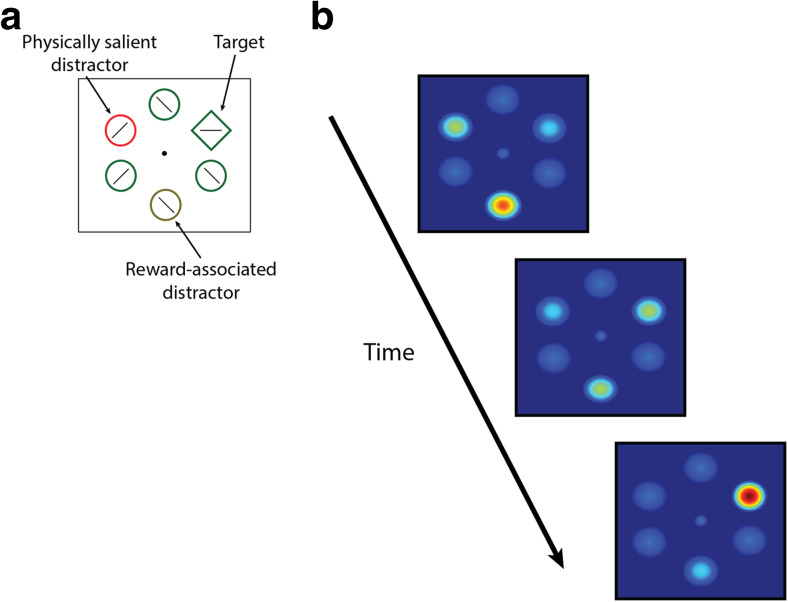
Verification
Claims the paper makes
90 Valid · 7 Not valid · 60 Not checked · 111 Own results and interpretations
The cited sources support only part of this claim — read each source’s verdict below.
In the paper
“In particular, physical salience of a stimulus relative to its immediate surroundings determines how likely it is that this stimulus “grabs,” or captures, attention.”
§ Selection history: How reward modulates selectivity of visual attention > Top-down and bottom-up attentional control
What the sources say
- Not matchedcites Theeuwes, 1991a, 1992, 1994
A range of references, not one source.
- Supportedcites Itti & Koch, 2001 matched to “Computational modelling of visual attention” (2001) source
The Summary says a stimulus’s perceptual saliency depends critically on surrounding context. The opening discussion says conspicuous stimuli can attract attention automatically, and the Saliency section describes attention being drawn toward the most salient location. The paper also recognizes top-down influences, but the claim does not say physical salience is the only influence. (LLM, conf=0.92)
plainstates a cause- Asserted: passes — The authors put it forward as true.
- Checkable: passes — It can be checked against evidence.
- Load-bearing: unclear — It is unclear whether the paper’s conclusions depend on it.
- Based: passes — The paper gives a reason why it holds.
- Not matched
Every source the paper cites for this claim was checked and supports it.
In the paper
“The current review takes the previous paper of Awh et al. (2012) further and discusses recent findings of key behavioral, eye-movement, and neuroimaging studies that demonstrate effects that should be considered to be the result of selection history (i.e., lingering selection biases based on history).”
§ Selection history: How reward modulates selectivity of visual attention > Abstract
What the sources say
- Supportedcites Awh et al., 2012 matched to “Top-down versus bottom-up attentional control: a failed theoretical dichotomy” (2012) source
The citation identifies Awh et al. as the previous paper whose selection-history framework the citing review takes further. In the paper’s “Selection history” section, the authors argue that past selection can bias attention independently of current goals or physical salience. The citing authors’ description of the recent studies their own review discusses is not a finding attributed to Awh et al. (LLM, conf=0.91)
boostedstates a cause- Asserted: passes — The authors put it forward as true.
- Checkable: passes — It can be checked against evidence.
- Load-bearing: passes — The paper’s conclusions depend on it.
- Based: passes — The paper gives a reason why it holds.
- Supported
Every source the paper cites for this claim was checked and supports it.
In the paper
“More specifically, stronger task-set representations (measured as higher classification accuracy) in frontoparietal regions due to incentive reward predicted higher accuracy on the task (Etzel et al., 2015).”
§ Selection history: How reward modulates selectivity of visual attention > Attention and reward > Reward as a motivational incentive
What the sources say
- Supportedcites Etzel et al., 2015 matched to “Reward Motivation Enhances Task Coding in Frontoparietal Cortex” (2016) source
The Relationship with Behavioral Performance section reports that participants with larger incentive-related increases in frontoparietal task-classification accuracy also had larger increases in behavioral accuracy. Its mediation analysis found that the classification-accuracy difference significantly predicted the behavioral-performance difference. (LLM, conf=0.94)
plainstates an association- Asserted: passes — The authors put it forward as true.
- Checkable: passes — It can be checked against evidence.
- Load-bearing: passes — The paper’s conclusions depend on it.
- Based: passes — The paper gives a reason why it holds.
- Supported
Every source the paper cites for this claim was checked and supports it.
In the paper
“Importantly, electrophysiological recordings showed that the N2pc component was also modulated by reward magnitude. The N2pc was earlier and larger in response to high-reward targets compared to low-reward targets.”
§ Selection history: How reward modulates selectivity of visual attention > Attention and reward > Reward as a motivational incentive
What the sources say
- Supportedcites Kiss et al., 2009 matched to “Reward Priority of Visual Target Singletons Modulates Event-Related Potential Signatures of Attentional Selection” (2009) source
The Results (ERP data, N2pc section) report larger N2pc amplitudes for high- than low-reward targets and an earlier onset (187 versus 195 ms). The Results summary explicitly states that the N2pc emerged earlier and had a larger amplitude for high-reward targets. (LLM, conf=0.95)
plainstates an association- Asserted: passes — The authors put it forward as true.
- Checkable: passes — It can be checked against evidence.
- Load-bearing: passes — The paper’s conclusions depend on it.
- Based: passes — The paper gives a reason why it holds.
- Supported
The cited sources support only part of this claim — read each source’s verdict below.
In the paper
“Although initially only demonstrated when both sessions occurred on the same day, subsequent studies showed that such interference can be observed considerably longer—even up to 6 months after the training session (e.g., Anderson & Yantis, 2013).”
§ Selection history: How reward modulates selectivity of visual attention > Attention and reward > Reward history can counteract top-down processes
What the sources say
- Partly supportedcites Anderson & Yantis, 2013 matched to “Attentional bias for nondrug reward is magnified in addiction.” (2013) sourceExperimental — accuracy not yet measured
The Results > Test Phase reports attentional capture by previously reward-associated distractors, supporting the interference part of the claim. The Method > Attentional Capture Task describes training and test phases but does not report a six-month interval between them, so this source does not support the claimed duration. Page numbers are unavailable in our copy. (LLM, conf=0.83)
plainstates a cause- Asserted: passes — The authors put it forward as true.
- Checkable: passes — It can be checked against evidence.
- Load-bearing: passes — The paper’s conclusions depend on it.
- Based: passes — The paper gives a reason why it holds.
- Partly supported
159 more claims · 54 with their cited sources checked
Create a free account to see all 268 claims and to verify the 10 references still open.
- It may state two separate claims as one. 67
- Probably not a substantial claim. 44
- The quote only partly states this claim. 1
Citations
Cites
Control of goal-directed and stimulus-driven attention in the brain
Corbetta, M., & Shulman, G. L. (2002) · Nature Reviews Neuroscience · doi:10.1038/nrn755 · Cited by 12,881 · cited 2×
“…associated with the attentional network and believed to represent a form of priority map (e.g., Balan & Gottlieb, 2006; Bisley & Goldberg, 2010; Corbetta & Shulman, 2002; Gottlieb, Kusunoki, & Goldberg, 1998; Li, 2002; Mazer & Gallant, 2003), most notably area LIP/IPS, frontal eye field (FEF),…”
BackgroundA feature-integration theory of attention.
Treisman, A. M., & Gelade, G. (1980) · Cognitive Psychology · doi:10.1016/0010-0285(80)90005-5 · Cited by 12,366 · cited 1×
“This so-called top-down (also called endogenous or goaldirected) attentional control is thought to be volitional and under the control of the observer at any given point in time (Posner, 1980; Treisman & Gelade, 1980; Theeuwes, 2010; Wolfe, 2007; Yantis, 2000).”
BackgroundPosner, M. I. (1980) · Quarterly Journal of Experimental Psychology · doi:10.1080/00335558008248231 · Cited by 9,670 · cited 2×
“This so-called top-down (also called endogenous or goaldirected) attentional control is thought to be volitional and under the control of the observer at any given point in time (Posner, 1980; Treisman & Gelade, 1980; Theeuwes, 2010; Wolfe, 2007; Yantis, 2000).”
BackgroundNeural Mechanisms of Selective Visual Attention
Desimone, R., & Duncan, J. (1995) · Annual Review of Neuroscience · doi:10.1146/annurev.ne.18.030195.001205 · Cited by 8,388 · cited 3×
“At the heart of the priority map concept lies the idea that its activity profile determines the outcome of the brain’s intrinsically emergent property of competition for neural representation (Desimone, 1998; Desimone & Duncan, 1995).”
BackgroundCarver, C. S., & White, T. L. (1994) · Journal of Personality and Social Psychology · doi:10.1037/0022-3514.67.2.319 · Cited by 7,306 · cited 1×
“…responsiveness (Hickey & Peelen, 2015) as measured by the Barratt Impulsiveness scale (Patton, Stanford, & Barratt, 1995) and BIS/BAS questionnaire (Carver & White, 1994) have been associated with a larger effect of reward on attentional selection, although the contribution of each of these…”
MethodComputational modelling of visual attention
Itti, L., & Koch, C. (2001) · Nature Reviews Neuroscience · doi:10.1038/35058500 · Cited by 4,733 · cited 3×
“Influential theoretical as well as computational models on attentional control assume that all signals driving attention converge on a priority map in the brain (Bisley, 2011; Itti & Koch, 2001; Theeuwes, 2010; Wolfe, 2007; Zelinsky & Bisley, 2015).”
BackgroundA mechanism for cognitive dynamics: neuronal communication through neuronal coherence.
Fries, P. (2005) · Trends in Cognitive Sciences · doi:10.1016/j.tics.2005.08.011 · Cited by 4,284 · cited 1×
“Neuronal synchronization has been proposed as a key mechanism in communicating information from one brain area to another (Fries, 2005) and to play a vital role inmemory (Fell &Axmacher, 2011) as well as attention (Jensen, Gips, Bergmann, & Bonnefond, 2014).”
BackgroundWhat is the role of dopamine in reward: hedonic impact, reward learning, or incentive salience?
Berridge, K. C., & Robinson, T. E. (1998) · Brain Research Reviews · doi:10.1016/s0165-0173(98)00019-8 · Cited by 4,127
Attention and the detection of signals.
Posner, M. I., Snyder, C. R., & Davidson, B. J. (1980) · Journal of Experimental Psychology: General · doi:10.1037/0096-3445.109.2.160 · Cited by 3,778 · cited 2×
“Finding such costs and benefits is considered direct evidence for shifts of spatial attention (Posner & Cohen, 1984; Posner et al., 1980) precluding alternative explanations of interfer-”
BackgroundFears, phobias, and preparedness: toward an evolved module of fear and fear learning
Öhman, A., & Mineka, S. (2001) · Psychological Review · doi:10.1037/0033-295x.108.3.483 · Cited by 3,147 · cited 1×
“In short, there is strong evidence for what has been proposed by major theories on emotion processing (Mathews & Mackintosh, 1998; Öhman & Mineka, 2001): stimuli associated with negative valence have a mandatory and involuntary effect on the allocation of covert and overt attention, which cannot be…”
Background
Cited by
Items 101–200 of 362
Mapping attention across multiple media tasks
Fisher, J. T., Hopp, F. R., & Weber, R. (2022) · Media Psychology · doi:10.1080/15213269.2022.2161576 · Cited by 13
Visual statistical learning requires attention
Duncan, D. H., van Moorselaar, D., & Theeuwes, J. (2024) · Psychonomic Bulletin & Review · doi:10.3758/s13423-024-02605-1 · Cited by 20
Self-citationAttentional set to safety recruits the ventral medial prefrontal cortex
Yao, S., Qi, S., Kendrick, K. M., & Mobbs, D. (2018) · Scientific Reports · doi:10.1038/s41598-018-33953-3 · Cited by 16
The Time Constant of Attentional Control: Short, Medium and Long (Infinite?)
Chelazzi, L., & Santandrea, E. (2018) · Journal of Cognition · doi:10.5334/joc.24 · Cited by 13
Awareness is necessary for attentional biases by location–reward association
Mine, C., Yokoyama, T., & Takeda, Y. (2021) · Attention Perception & Psychophysics · doi:10.3758/s13414-021-02280-7 · Cited by 10
Reward-associated distractors can harm cognitive performance
Rusz, D., Bijleveld, E., & Kompier, M. A. J. (2018) · PLoS ONE · doi:10.1371/journal.pone.0205091 · Cited by 14
“supports the idea that (a) distraction may be reward-driven [15,17] (b) that reward-associated distractors interfere with the active, ongoing maintenance of task relevant information and thus impair cognitive performance.”
BackgroundPredictive attentional bias modification induces stimulus-evoked attentional bias for threat
Gladwin, T. E., Möbius, M., & Becker, E. S. (2019) · Europe’s Journal of Psychology · doi:10.5964/ejop.v15i3.1633 · Cited by 17
Distractor suppression leads to reduced flanker interference
Ivanov, Y., & Theeuwes, J. (2020) · Attention Perception & Psychophysics · doi:10.3758/s13414-020-02159-z · Cited by 13
Self-citationReward-driven attention alters perceived salience
Qin, N., Gu, R., Xue, J., Chen, C., & Zhang, M. (2021) · Journal of Vision · doi:10.1167/jov.21.1.7 · Cited by 15
“This habit can be regarded as the effect of selection history (Anderson, 2016; Awh et al., 2012; Failing & Theeuwes, 2018).”
BackgroundMethodResultInfluentialTesting reward‐cue attentional salience: Attainment and dynamic changes
Tommaso, M. D., & Turatto, M. (2021) · British Journal of Psychology · doi:10.1111/bjop.12537 · Cited by 16
Learning to suppress a location is configuration-dependent
Gao, Y., de Waard, J., & Theeuwes, J. (2023) · Attention Perception & Psychophysics · doi:10.3758/s13414-023-02732-2 · Cited by 9
“…history includes phenomena such as contextual cueing, reward and punishment associated learning, and probability cueing effects (Awh et al., 2012; Failing & Theeuwes, 2018), and these attentional biases cannot be explained by the observer’s current goals nor by the physical salience of the…”
BackgroundSelf-citationTen simple rules to study distractor suppressionPreprint
Wöstmann, M., Störmer, V. S., Obleser, J., et al. (2021) · doi:10.31234/osf.io/vu2k3 · Cited by 12
“In the lab, value-based attention is typically induced using monetary rewards, and studies show enhanced capture by distractors previously associated with monetary reward even when physically inconspicuous (B. A. Anderson, 2016; Failing and Theeuwes, 2018).”
Self-citationThe necessity to choose causes the effects of reward on saccade preparation
Wolf, C., Heuer, A., Schubö, A., & Schütz, A. C. (2017) · Scientific Reports · doi:10.1038/s41598-017-17164-w · Cited by 13
In the hands of the beholder: Wearing a COVID-19 mask is associated with its attractiveness
Dudarev, V., Manaligod, M. G. M., Enns, J. T., & Todd, R. M. (2021) · Quarterly Journal of Experimental Psychology · doi:10.1177/17470218211037128 · Cited by 11
“There is a large literature documenting that visual attention is involuntarily drawn to images of objects that we find emotionally rewarding (Anderson, 2016; Chelazzi et al., 2013; Failing & Theeuwes, 2018).”
BackgroundA saliency-specific and dimension-independent mechanism of distractor suppression
Gong, D., & Theeuwes, J. (2020) · Attention Perception & Psychophysics · doi:10.3758/s13414-020-02142-8 · Cited by 14
Self-citationLavi, S., Shamai‐Leshem, D., Bar‐Haim, Y., & Lazarov, A. (2025) · Journal of Affective Disorders · doi:10.1016/j.jad.2025.01.058 · Cited by 13
A causal role for the right frontal eye fields in value comparison
Mitsumasu, A., Krajbich, I. M., Polanía, R., Ruff, C. C., & Fehr, E. (2021) · eLife · doi:10.7554/elife.67477 · Cited by 14
Demidenko, M. I., Huntley, E. D., Weigard, A. S., Keating, D. P., & Beltz, A. M. (2022) · Journal of Neuroscience Research · doi:10.1002/jnr.25005 · Cited by 11
Differential effects of intra-modal and cross-modal reward value on perception: ERP evidence
Vakhrushev, R., Cheng, F. P.-H., Schacht, A., & Pooresmaeili, A. (2023) · PLoS ONE · doi:10.1371/journal.pone.0287900 · Cited by 11
Tibboel, H., & Liefooghe, B. (2018) · Psychological Research · doi:10.1007/s00426-018-1094-4 · Cited by 12
“(2012; see also Failing & Theeuwes, 2018; Theeuwes, 2018), who suggest that the classical dichotomy of top-down and bottom-up attentional selection does not hold.”
BackgroundReward differentially interacts with physical salience in feature-based attention
Gong, M., & Liu, T. (2018) · Journal of Vision · doi:10.1167/18.11.12 · Cited by 15
“The reward-driven attentional effects have been widely examined in humans and monkeys on a variety of tasks (see reviews, Anderson, 2013, 2016; Chelazzi, Perlato, Santandrea, Della Libera, 2013; Le Pelley, Mitchell, Beesley, George, & Wills, 2016; Failing & Theeuwes, 2017).”
BackgroundWhich search are you on? Adapting to color while searching for shape
Bergmann, N., Tünnermann, J., & Schubö, A. (2019) · Attention Perception & Psychophysics · doi:10.3758/s13414-019-01858-6 · Cited by 8
Visual working-memory capacity load does not modulate distractor processing
Yao, N., Guo, Y., Liu, Y., Shen, M., & Gao, Z. (2020) · Attention Perception & Psychophysics · doi:10.3758/s13414-020-01991-7 · Cited by 10
Emotional arousal enhances the impact of long-term memory in attention
Turkileri, N., Field, D. T., Ellis, J. A., & Sakaki, M. (2021) · Journal of Cognitive Psychology · doi:10.1080/20445911.2021.1883031 · Cited by 13
“Thus, recently proposed theories suggest that attention driven by prior knowledge can be a third category of attentional selection in addition to top-down and bottom-up attention (Anderson, 2013; Awh et al., 2012; Failing & Theeuwes, 2018; Theeuwes, 2019).”
BackgroundMatias, J., Quinton, J., Colomb, M., Normand, A., Izaute, M., & Silvert, L. (2021) · Frontiers in Psychology · doi:10.3389/fpsyg.2021.688157 · Cited by 14
Bergmann, N., Tünnermann, J., & Schubö, A. (2020) · Vision Research · doi:10.1016/j.visres.2020.03.010 · Cited by 12
Pupil size as a robust marker of attentional bias toward nicotine-related stimuli in smokers
Blini, E., & Zorzi, M. (2022) · Psychonomic Bulletin & Review · doi:10.3758/s13423-022-02192-z · Cited by 13
Hertz‐Palmor, N., Rozenblit, D., Lavi, S., Zeltser, J., Kviatek, Y., & Lazarov, A. (2023) · Psychological Medicine · doi:10.1017/s0033291723002519 · Cited by 11
“…among healthy individuals has repeatedly shown that stimuli imbued with a rewarding value can later guide visuospatial attention allocation, even without conscious intent (Anderson, 2016, 2017; Failing & Theeuwes, 2018; Gaspelin, Gaspar, & Luck, 2019; Schwark, Dolgov, Sandry, & Volkman, 2013).”
Target value and prevalence influence visual foraging in younger and older age
Wiegand, I., & Wolfe, J. M. (2021) · Vision Research · doi:10.1016/j.visres.2021.05.001 · Cited by 15
“Over the past years, evidence has accumulated that value and reward influence already relatively early visual perceptual and attentional processes (see Failing & Theeuwes, 2018, for a recent review).”
BackgroundGrahek, I., Schettino, A., Koster, E. H. W., & Andersen, . K. (2021) · Journal of Cognitive Neuroscience · doi:10.1162/jocn_a_01762 · Cited by 9
Punishment-related memory-guided attention: Neural dynamics of perceptual modulation
Suárez‐Suárez, S., Holguín, S. R., Cadaveira, F., Nobre, A. C., & Doallo, S. (2019) · Cortex · doi:10.1016/j.cortex.2019.01.029 · Cited by 12
Revealing Dissociable Attention Biases in Chronic Smokers Through an Individual-Differences Approach
Libera, C. D., Zandonai, T., Zamboni, L., Santandrea, E., Sandri, M. F., Lugoboni, F., Chiamulera, C., & Chelazzi, L. (2019) · Scientific Reports · doi:10.1038/s41598-019-40957-0 · Cited by 13
The confirmation and prevalence biases in visual search reflect separate underlying processes.
Walenchok, S. C., Goldinger, S. D., & Hout, M. C. (2020) · Journal of Experimental Psychology Human Perception & Performance · doi:10.1037/xhp0000714 · Cited by 9
“This appears inconsistent with selection history accounts of visual attention (e.g., Awh, Belopolsky, & Theewues, 2012; Anderson, 2017; Failing & Theeuwes, 2018), which would predict that reward history in the LP condition (i.e., the cue color is almost never correct) would train people to allocate…”
MethodA causal role for the right frontal eye fields in value comparisonPreprint
Krajbich, I. M. (2025) · OSF Preprints (OSF Preprints) · Cited by 8
Long-Term Visual Memory and Its Role in Learning Suppression
Friedman, G. N., Johnson, L., & Williams, Z. M. (2018) · Frontiers in Psychology · doi:10.3389/fpsyg.2018.01896 · Cited by 8
“patterns during visual search (Jiang, 2018), while statistical learning is thought to influence how attention is distributed during visual search experiments (Failing and Theeuwes, 2018; Ferrante et al., 2018).”
BackgroundFerrante, O., Chelazzi, L., & Santandrea, E. (2023) · Cortex · doi:10.1016/j.cortex.2023.08.013 · Cited by 8
“…the individual with the environment, through various forms of experience-dependent plasticity (e.g., Awh et al., 2012; Chelazzi et al., 2013; Chelazzi & Santandrea, 2018; Chun & Jiang, 1998, 2003; Jiang, 2018; Schapiro & Turk-Browne, 2015; Todd & Manaligod, 2018; Theeuwes, 2018, 2019; Wolfe, 2021).”
BackgroundBasel, D., & Lazarov, A. (2022) · CNS Spectrums · doi:10.1017/s1092852922001122 · Cited by 10
“25,26 Thus, exploring alterations in reward-based selection history in OCD may potentially shed much-needed light on mechanisms related to reward functioning in the disorder.”
A systematic exploration of attentional load effects on the C1 ERP component
Qin, N., Crespi, F., Proverbio, A. M., & Pourtois, G. (2023) · Psychophysiology · doi:10.1111/psyp.14301 · Cited by 8
“This suppression may result from prior knowledge or encounter with the distractor, and/or statistical learning that can foster it (Awh et al., 2012; Failing & Theeuwes, 2018; Theeuwes, 2010).”
BackgroundThe role of the vestibular system in value attribution to positive and negative reinforcers
Blini, E., Tilikete, C., Chelazzi, L., Farnè, A., & Hadj‐Bouziane, F. (2020) · Cortex · doi:10.1016/j.cortex.2020.09.004 · Cited by 11
Guiding spatial attention by multimodal reward cues
Hoofs, V., Grahek, I., Boehler, C. N., & Krebs, R. M. (2021) · Attention Perception & Psychophysics · doi:10.3758/s13414-021-02422-x · Cited by 8
Combined influences of strategy and selection history on attentional control
Abbasi, H. A., Kadel, H., Hickey, C., & Schubö, A. (2021) · Psychophysiology · doi:10.1111/psyp.13987 · Cited by 9
Kershner, A. M., & Hollingworth, A. (2022) · Attention Perception & Psychophysics · doi:10.3758/s13414-022-02475-6 · Cited by 11
“…20 years or so, it has become clear that the guidance of attention to relevant objects is driven not only by stimulus salience and top-down templates, but also by the history of previous selective actions, i.e., selection history (Awh et al., 2012; Failing & Theeuwes, 2018; Le Pelley et al., 2016).”
BackgroundReliability of individual differences in distractor suppression driven by statistical learning
Ivanov, Y., Theeuwes, J., & Bogaerts, L. (2023) · Behavior Research Methods · doi:10.3758/s13428-023-02157-7 · Cited by 10
Self-citationImplicitly and explicitly encoded features can guide attention in free viewing
Li, A., Wolfe, J. M., & Chen, Z. (2020) · Journal of Vision · doi:10.1167/jov.20.6.8 · Cited by 9
“The recent history of visual search will shape performance on the next visual search task, even if the history is not relevant (Failing & Theeuwes, 2018; Hillstrom, 2000; Kristjánsson & Campana, 2010; Maljkovic & Nakayama, 1994).”
BackgroundA Precise Quantification of how Prior Experience Informs Current BehaviorPreprint
Kramer, M., Cox, P. H., Mitroff, S. R., et al. (2020) · doi:10.31234/osf.io/t92bm · Cited by 8
Xin, Y., Zhong, X., Zhang, X., Chen, Y., Wei, X., Liu, C., Fu, H., Feng, C., & Zuo, G. (2022) · Healthcare · doi:10.3390/healthcare11010070 · Cited by 9
“, withdrawal), individuals need to quickly inhibit their attentional tendency to ease withdrawal from drugs and physical and psychological (emotional) responses and subsequently remain directed and focused on the goal [7,8].”
BackgroundCarruzzo, F., Giarratana, A. O., del Puppo, L., Kaiser, S., Tobler, P. N., & Kaliuzhna, M. (2023) · Scientific Reports · doi:10.1038/s41598-023-37103-2 · Cited by 12
Placing willed attention in context: a review of attention and free will
Nadra, J. G., & Mangun, G. R. (2023) · Frontiers in Cognition · doi:10.3389/fcogn.2023.1205618 · Cited by 12
Gladwin, T. E., Figner, B., & Vink, M. (2019) · Journal of Cognitive Psychology · doi:10.1080/20445911.2019.1659801 · Cited by 7
“…1997) between the probe location’s stimulus category and an attentional function; the estimated probability of probe locations could be affected (Failing & Theeuwes, 2018); or the experience of correctly responding to the probe could serve to reinforce the shift of attention to the category…”
BackgroundQin, N., Xue, J., Chen, C., & Zhang, M. (2020) · Cognitive Science · doi:10.1111/cogs.12825 · Cited by 10
Exploring the ‘mood congruency’ hypothesis of attention allocation – An eye-tracking study
Hertz‐Palmor, N., Yosef, Y., Hallel, H., Bernat, I., & Lazarov, A. (2023) · Journal of Affective Disorders · doi:10.1016/j.jad.2023.12.004 · Cited by 10
Peciña, M., Chen, J., Lyew, T., Karp, J. F., & Dombrovski, A. Y. (2021) · Biological Psychiatry Cognitive Neuroscience and Neuroimaging · doi:10.1016/j.bpsc.2021.02.009 · Cited by 11
To look or not to look? Reward, selection history, and oculomotor guidance
Preciado, D. F., & Theeuwes, J. (2018) · Journal of Neurophysiology · doi:10.1152/jn.00275.2018 · Cited by 10
Self-citationAttentional Selection: Top-Down, Bottom-Up and History-Based Biases
Theeuwes, J., & Failing, M. (2020) · Cited by 7
Self-citationPelley, M. E. L., Ung, R., Mine, C., et al. (2020) · doi:10.31234/osf.io/tzwyp · Cited by 7
Self-citationPinging the brain to reveal the hidden attentional priority map using encephalographyPreprint
Duncan, D. H., van Moorselaar, D., & Theeuwes, J. (2022) · bioRxiv (Cold Spring Harbor Laboratory) · doi:10.1101/2022.08.23.504931 · Cited by 7
Self-citationReward-driven and memory-driven attentional biases automatically modulate rapid choicePreprint
Pelley, M. E. L., & Newell, B. R. (2023) · PsyArXiv (OSF Preprints) · doi:10.31234/osf.io/cgs98 · Cited by 4
Linguistic Skill and Stimulus-Driven Attention: A Case for Linguistic Relativity
Ansorge, U., Baier, D., & Choi, S. (2022) · Frontiers in Psychology · doi:10.3389/fpsyg.2022.875744 · Cited by 10
“Singleton capture, as we may call this kind of stimulusdriven attention, is not only a consequence of the type of visual information: It can also occur as a consequence of learning (Anderson et al., 2011; Bucker and Theeuwes, 2014; Failing and Theeuwes, 2018).”
BackgroundDoes the visual salience of credit card features affect choice?
Hilchey, M. D., Osborne, M., & Soman, D. (2021) · Behavioural Public Policy · doi:10.1017/bpp.2021.14 · Cited by 6
“…of information, in combination with an individual ’ s capacity for endogenously representing what it is that they are looking for and their experiences with the information, determines what will attract and sustain attention (Awh et al. , 2012; Failing & Theeuwes, 2018; Hilchey & Taylor, 2021).”
BackgroundRenton, A., Painter, D. R., & Mattingley, J. B. (2021) · Journal of Neuroscience · doi:10.1523/jneurosci.0243-21.2021 · Cited by 8
“Indeed, internal biases in the allocation of sensory resources are ubiquitous in visual processing (Appelle, 1972; Yantis, 1993; Theeuwes et al., 2010; Anderson, 2016; Failing and Theeuwes, 2018).”
BackgroundReward Weakened Inhibition of Return (IOR) in the Near Depth Plane
Wang, A., Lu, F., Gao, W.-J., Zhang, T., & Zhang, M. (2022) · Perception · doi:10.1177/03010066211073855 · Cited by 5
Antono, J. E., Vakhrushev, R., & Pooresmaeili, A. (2022) · Frontiers in Human Neuroscience · doi:10.3389/fnhum.2022.1062168 · Cited by 8
“In such scenarios, prioritization of reward cues, through engaging mechanisms such as selective attention or preparation of oculomotor responses, aligns with the goal-driven mechanisms that help agents to maximize their obtained rewards (Chelazzi et al., 2013; Failing and Theeuwes, 2018).”
BackgroundResultGarre-Frutos, F., Ariza, A., & González, F. (2025) · Psychological Research · doi:10.1007/s00426-025-02115-2 · Cited by 10
“The effect of feature-reward associations in the previous study has been explained by reinforcement of the attentional selection of the feature associated with reward (an Attentional Habit; Anderson, 2016; Failing & Theeuwes, 2018).”
Reward history guides focal attention in whisker somatosensory cortex
Ramamurthy, D. L., Rodriguez, L., Cen, C., Li, S., Chen, A., & Feldman, D. E. (2025) · Nature Communications · doi:10.1038/s41467-025-60592-w · Cited by 8
“These results align well with automatic attentional capture by reward history in humans 4 – 17 , which is theorized to represent a categoryof attentionalprocesses often called “ selection history ” 8 – 10 distinct from classical top-down and bottom-up attention.”
Manipulating the reliability of target-color information modulates value-driven attentional capture
Massa, N. B., Crotty, N., Levy, I., & Grubb, M. A. (2024) · Attention Perception & Psychophysics · doi:10.3758/s13414-024-02878-7 · Cited by 7
“Instead, such biases rely on one’s unique history of selection (Anderson et al., 2021; Awh et al., 2012; Failing & Theeuwes, 2018).”
BackgroundThe Impact of Reward Object on Object-Based Attention
Diao, F., Hu, X., Zhang, T., Gao, Y., Zhou, J., Kong, F., & Zhao, J. (2024) · Behavioral Sciences · doi:10.3390/bs14060505 · Cited by 5
“When cues appear on reward objects, both spatial effects and object effects are enhanced, collectively forming priority maps that determine the final attentional selection.”
BackgroundValue-based cognition and drug dependency
Loganathan, K. (2021) · Addictive Behaviors · doi:10.1016/j.addbeh.2021.107070 · Cited by 10
Exploring reward-related attention selectivity deficits in Parkinson’s disease
Pilgrim, M. J. D., Ou, Z.-Y. A., & Sharp, M. E. (2021) · Scientific Reports · doi:10.1038/s41598-021-97526-7 · Cited by 8
Reward History Modulates the Processing of Task-Irrelevant Emotional Faces in a Demanding Task
Chen, N.-X., & Wei, P. (2023) · Brain Sciences · doi:10.3390/brainsci13060874 · Cited by 5
Cortical and subcortical substrates of minutes and days-long object value memory in humans
Farmani, S., Sharifi, K., & Ghazizadeh, A. (2024) · Cerebral Cortex · doi:10.1093/cercor/bhae006 · Cited by 5
Effects of outcome revaluation on attentional prioritisation of reward-related stimuli
Le, J. T., Watson, P., & Pelley, M. E. L. (2024) · Quarterly Journal of Experimental Psychology · doi:10.1177/17470218241236711 · Cited by 6
Neural mechanisms of learned suppression uncovered by probing the hidden attentional priority map
Huang, C., van Moorselaar, D., Foster, J. J., Donk, M., & Theeuwes, J. (2025) · eLife · doi:10.7554/elife.98304.3 · Cited by 18
“In addition to top-down and bottom-up control processes ( Corbetta and Shulman, 2002 ; Desimone and Duncan, 1995 ; Theeuwes, 2010 ), statistical learning plays a crucial role in attentional selection ( Awh et al., 2012 ; Failing and Theeuwes, 2018 ; Theeuwes et al., 2022 ).”
Self-citationThe possibility to make choices modulates feature-based effects of reward
Heuer, A., Wolf, C., Schütz, A. C., & Schubö, A. (2019) · Scientific Reports · doi:10.1038/s41598-019-42255-1 · Cited by 5
Different temporal dynamics of object-based attentional allocation for reward and non-reward objects
Song, F., Zhou, S., Gao, Y., Hu, S., Kong, F., & Zhao, J. (2020) · Journal of Vision · doi:10.1167/jov.20.9.17 · Cited by 6
“More importantly, it has also been demonstrated that rewards strongly influence selective attention by influencing cognitive control (for a review, see Failing & Theeuwes, 2018).”
BackgroundValue-driven effects on perceptual averaging
Munneke, J., Duymaz, İ., & Corbett, J. E. (2022) · Attention Perception & Psychophysics · doi:10.3758/s13414-022-02446-x · Cited by 6
Inhibition continues to guide search under concurrent visual working memory load
Hamblin-Frohman, Z., & Becker, S. I. (2022) · Journal of Vision · doi:10.1167/jov.22.2.8 · Cited by 5
“In recent descriptions of visual search these types of priming effects have been collected under the umbrella term of selection history effects (Awh, Belopolsky, & Theeuwes, 2012; Failing & Theeuwes, 2018).”
BackgroundKattner, E. A., Stanford, T. R., & Salinas, E. (2025) · Journal of Neuroscience · doi:10.1523/jneurosci.0180-25.2025 · Cited by 4
“Lingering biases due to prior history take many forms, depending on past stimuli, past actions, past rewards, etc (Maljkovic and Nakayama, 1994; Failing and Theeuwes, 2018; Jiang and Sisk, 2019; Kim and Anderson, 2019; Anderson et al., 2021).”
A two-level hierarchical framework of visual short-term memory
Yatziv, T., & Kessler, Y. (2018) · Journal of Vision · doi:10.1167/18.9.2 · Cited by 9
Liao, M., Britton, M. K., & Anderson, B. A. (2020) · Vision Research · doi:10.1016/j.visres.2020.06.004 · Cited by 6
Womelsdorf, T., Watson, M. R., & Tiesinga, P. H. E. (2020) · bioRxiv (Cold Spring Harbor Laboratory) · doi:10.1101/2020.09.27.315432 · Cited by 4
“16 Flexible learning can be influenced by target- and distractor- history effects (Le Pelley et al., 2015; Failing and Theeuwes, 2018; Chelazzi et al., 2019; Rusz et al., 2020), which may vary with attentional load.”
BackgroundZhu, H., & Zhang, Y. (2026) · Mental health and physical activity · doi:10.1016/j.mhpa.2026.100757 · Cited by 8
Reward History and Statistical Learning Independently Impact Attention Search: An ERP Study
Zhao, G. W., Wu, R., Wang, H., Chen, J., Li, S., Wang, Q., & Sun, H. (2024) · Brain Sciences · doi:10.3390/brainsci14090874 · Cited by 5
“This association affects how rewards alter the relevance of a stimulus, prioritizing its attentional processing [21].”
BackgroundPashkov, A. A., Filimonova, E., Poptsova, A., Martirosyan, A., Prozorova, P., Moysak, G., & RZAEV, J. A. (2025) · Neurosurgical Review · doi:10.1007/s10143-025-03626-7 · Cited by 5
“An alternative explanation could involve the link between attention and reward processing, as a significant portion of our everyday attentional focus is guided by previously acquired associations with rewards and punishments [56, 57 ].”
Beyond Looking for the Rewarded Target: The Effects of Reward on Attention in Search Tasks
Walle, A., & Druey, M. D. (2021) · Frontiers in Psychology · doi:10.3389/fpsyg.2021.632442 · Cited by 6
Unraveling Disruptions: How Employees Pick Up Signals of Change
Wiechers, H. E., Lub, X. D., Coyle‐Shapiro, J. A., & ten Have, S. (2023) · Group & Organization Management · doi:10.1177/10596011231172658 · Cited by 6
“Past and memory-stored stimuli elicit lingering selection biases (Failing & Theeuwes, 2018), such that interconnected stimuli stand out more quickly in the daily fl ow of stimuli — even if people are unaware of the connection (Kiefer & Brendel, 2006; Naccache et al., 2002).”
InfluentialContext-dependent modulation of spatial attention: prioritizing behaviourally relevant stimuli
Britt, N., Chau, J., & Sun, H. (2025) · Cognitive Research Principles and Implications · doi:10.1186/s41235-025-00612-x · Cited by 5
Li, Y., Cao, H., Allen, C., Wang, X., Erdelez, S., & Shyu, C. (2020) · Scientific Reports · doi:10.1038/s41598-020-77550-9 · Cited by 4
Local and global context repetitions in contextual cueing
Bergmann, N., & Schubö, A. (2021) · Journal of Vision · doi:10.1167/jov.21.10.9 · Cited by 11
“Reward influences attention guidance in contextual cueing Attention, crucial for contextual cueing, is susceptible to reward (for reviews, see Anderson, 2016; Chelazzi, Perlato, Santandrea, & Della Libera, 2013; Failing & Theeuwes, 2018; Theeuwes, 2018).”
BackgroundHallquist, M. N., Hwang, K., Luna, B., & Dombrovski, A. Y. (2024) · Science Advances · doi:10.1126/sciadv.adj2219 · Cited by 5
Uncertainty-modulated attentional capture: Outcome variance increases attentional priorityPreprint
Pearson, D., Chong, A., Garner, K., et al. (2023) · doi:10.31234/osf.io/aenu7 · Cited by 4
Self-citationInteraction of spatial attention and the associated reward value of audiovisual objects
Vakhrushev, R., & Pooresmaeili, A. (2024) · Cortex · doi:10.1016/j.cortex.2024.07.013 · Cited by 5
“Due to the prevalence of such situations, where environmental stimuli should be processed both based on their relevance as well as their reward value, a large body of literature has sought to investigate the underlying mechanisms of selective attention and reward-driven modulation of perception, as well as the interac…”
InfluentialMobile Interface Design Patterns and Attentional Maps
Still, J. D. (2025) · International Journal of Human-Computer Interaction · doi:10.1080/10447318.2025.2462084 · Cited by 3
“Others have focused on capturing the feedback data by examining the acquisition of statistical information across experiences (Awh et al., 2012; Failing & Theeuwes, 2018).”
Value-modulated attentional capture depends on awareness
Garre-Frutos, F., Lupiáñez, J., & Vadillo, M. A. (2025) · Psychonomic Bulletin & Review · doi:10.3758/s13423-025-02734-1 · Cited by 5
“When a stimulus feature is predictive of reward, it biases attention regardless of physical properties or current goals (Awh et al., 2012; Theeuwes, 2018).”
InfluentialFrom learned value to sustained bias: how reward conditioning changes attentional priority
Meyer, K. N., Hopfinger, J. B., Vidrascu, E. M., Boettiger, C. A., Robinson, D. L., & Sheridan, M. A. (2024) · Frontiers in Human Neuroscience · doi:10.3389/fnhum.2024.1354142 · Cited by 5
Reward history modulates perceptual load effects
Matias, J., Quinton, J., Colomb, M., Izaute, M., & Silvert, L. (2020) · Acta Psychologica · doi:10.1016/j.actpsy.2020.103217 · Cited by 6
A Combined Effect of Self and Reward: Relationship of Self- and Reward-Bias on Associative Learning
Wang, L., Qi, Y., Li, L., & Jia, F. (2021) · Frontiers in Psychology · doi:10.3389/fpsyg.2021.647443 · Cited by 3
“On the other hand, rewards can also influence cognitive processing and improve attentional selection (Pessoa and Engelmann, 2010; Chelazzi et al., 2013; Anderson, 2016, 2019; Miendlarzewska et al., 2016; Failing and Theeuwes, 2018).”
BackgroundColor me impressed: A partner's target feature captures visual attention
Dötsch, D., Deffner, D., & Schubö, A. (2021) · Cognition · doi:10.1016/j.cognition.2021.104989 · Cited by 4
Control of Attention in Rhesus Monkeys Measured Using a Flanker Task
Hassett, T. C., & Hampton, R. R. (2022) · Attention Perception & Psychophysics · doi:10.3758/s13414-022-02452-z · Cited by 3
Bulutay, P., Bilir, E., Yıldız, Ş., & Ata, B. (2022) · Journal of Turkish Society of Obstetric and Gynecology · doi:10.4274/tjod.galenos.2021.58046 · Cited by 6
Anticipatory attention is a stable state induced by transient control mechanisms
Noah, S., Meyyappan, S., Ding, M., & Mangun, G. R. (2022) · Frontiers in Human Neuroscience · doi:10.3389/fnhum.2022.965689 · Cited by 3
“The effort involved in deliberately directing processing resources distinguishes endogenous attention from exogenous (bottom-up) attention that is driven by sensory properties such as salience (Itti, 2005; Geng and Mangun, 2009) and meaning (Henderson and Hayes, 2017), and other forms of attention driven by selection…”
Background
Metadata
- Authors
- Failing, M., & Theeuwes, J.
- Affiliations
- Vrije Universiteit Amsterdam (NL)
- Corresponding author
- Failing, Michel
- Venue
- Psychonomic Bulletin & Review
- Published
- 2017-10-04
- Volume
- 25
- Issue
- 2
- Pages
- 514-538
- ISSN
- 1069-9384 (ISSN-L)
- 1531-5320
- PMC
- PMC5902518
- OpenAlex
- W2761527597
- Semantic Scholar
- a3bcd5ff4e9b5617868b47add59b9f91ac9298c9
- Cited by
- 345
- References
- 251
- Citations by year
- 2026: 26 · 2025: 43 · 2024: 43 · 2023: 36 · 2022: 33 · 2021: 49 · 2020: 53 · 2019: 39 · 2018: 21 · 2017: 2
- FWCI
- 1.77
- Type
- journal article
- Language
- en
- Open access
- hybrid
- doi.org
- Licence
- cc-by
- creativecommons.org/licenses/by/4.0 (tdm)
- creativecommons.org/licenses/by/4.0 (vor)
- Locations
- Psychonomic Bulletin & Review (publishedVersion, cc-by)
- Europe PMC (PubMed Central) (publishedVersion, other-oa)
- PubMed Central (publishedVersion, cc-by)
- PubMed (publishedVersion)
- VU Research Portal (submittedVersion, other-oa)
- Data Archiving and Networked Services (DANS) (submittedVersion, other-oa)
- Funders
- H2020 European Research Council (ERC-2012-AdG-323413)
- Topics
- Physical Sciences › Computer Science › Computer Vision and Pattern Recognition › Visual Attention and Saliency Detection
- Life Sciences › Neuroscience › Cognitive Neuroscience › Visual perception and processing mechanisms
- Life Sciences › Neuroscience › Cognitive Neuroscience › Neural and Behavioral Psychology Studies
- Keywords
- visual attention, selective attention, selection history, reward, top-down control, bottom-up control, attentional bias, priority map, statistical learning, affective conditioning, eye movements
- MeSH terms
- Attention, Eye Movements, Humans, Learning, Motivation, Reward, Visual Perception, Neuroimaging
About these checks
Registry, retraction, Cites and statistics results are computed, not judged, with one exception: a printed reference that no index lists is read once by a model before it counts as a citation error. Claims are extracted by a model and kept only when their quote appears verbatim in the text; each cited source is then checked, with a model’s help, for whether it says what the claim relies on. Those verdicts can be wrong — read the claim’s quote and the cited source before relying on one.
The claim verdicts this report counts are experimental: their accuracy is not yet measured.
A language model drew the claims from the paper on 2026-10-11, under version 3 of the claim definition (model deepseek-v4.1-flash, prompt extract-v3).
A second model labelled each claim on 2026-10-11 (model jev-1.13-20260917, definition revision gold-guideline-v0.2).
Cited sources are checked with a language model’s help (gpt-6-sol).
Statistics and arithmetic are recomputed, not judged.
Confidence bands are shown only for fields calibrated on our annotated test set. None is calibrated yet, so no band is shown.
What counts as a claim ›How we measure confidence ›How we check this ›
Are you an author, or do you see a problem with this page? Request a review
Data sources
Bibliographic data: Semantic Scholar, OpenAlex, Crossref.
Contains information from the Semantic Scholar Academic Graph Datasets, made available under the ODC Attribution License (ODC-BY 1.0).
Semantic Scholar’s data is described in: Kinney, R., et al. (2023). The Semantic Scholar Open Data Platform. arXiv:2301.10140.
