

The Glasgow Norms: Ratings of 5,500 words on nine scales
Open accessThe DOI matches its Crossref record; 65 of the 69 references it cites were found in a registry or an index.
Abstract
The Glasgow Norms are a set of normative ratings for 5,553 English words on nine psycholinguistic dimensions: arousal, valence, dominance, concreteness, imageability, familiarity, age of acquisition, semantic size, and gender association. The Glasgow Norms are unique in several respects. First, the corpus itself is relatively large, while simultaneously providing norms across a substantial number of lexical dimensions. Second, for any given subset of words, the same participants provided ratings across all nine dimensions (33 participants/word, on average). Third, two novel dimensions-semantic size and gender association-are included. Finally, the corpus contains a set of 379 ambiguous words that are presented either alone (e.g., toast) or with information that selects an alternative sense (e.g., toast (bread), toast (speech)). The relationships between the dimensions of the Glasgow Norms were initially investigated by assessing their correlations. In addition, a principal component analysis revealed four main factors, accounting for 82% of the variance (Visualization, Emotion, Salience, and Exposure). The validity of the Glasgow Norms was established via comparisons of our ratings to 18 different sets of current psycholinguistic norms. The dimension of size was tested with megastudy data, confirming findings from past studies that have explicitly examined this variable. Alternative senses of ambiguous words (i.e., disambiguated forms), when discordant on a given dimension, seemingly led to appropriately distinct ratings. Informal comparisons between the ratings of ambiguous words and of their alternative senses showed different patterns that likely depended on several factors (the number of senses, their relative strengths, and the rating scales themselves). Overall, the Glasgow Norms provide a valuable resource-in particular, for researchers investigating the role of word recognition in language comprehension.
Overview
The claims and statistics of this paper haven’t been checked yet.
Free: it reads the open-access text and checks the first 5 claims that cite a source we can check. Create a free account to check every claim.
Integrity signals
Registry
Cites
Statistics
Figures
Verification
Claims the paper makes
The claims and statistics of this paper haven’t been checked yet.
Free: it reads the open-access text and checks the first 5 claims that cite a source we can check. Create a free account to check every claim.
Claims other papers make about this one
Each is checked against this paper’s own text: does it say what the citing paper says it does?
The cited source says what the claim attributes to it.
In the citing paper
“Figure 3 shows the mean–SD relationships observed in the Likert judgements of words on three different semantic variables from the Glasgow Norms (Scott et al., 2019): Dominance, Familiarity, and Gender.”
From Rating norms should be calculated from cumulative link mixed effects models (2022) · cites this paper as Scott et al., 2019
Self-check
Percentages, sums and reported differences re-computed from the paper’s own numbers.
The self-check needs the paper’s full text.
Citations
Cites
Statistical Power Analysis for the Behavioral Sciences
Muller, K. (1989) · Technometrics · doi:10.1080/00401706.1989.10488618 · Cited by 99,167
Statistical power analysis for the behavioral sciences
(1990) · Computers, Environment and Urban Systems · doi:10.1016/0198-9715(90)90050-4 · Cited by 65,269
Russell, J. A. (1980) · Journal of Personality and Social Psychology · doi:10.1037/h0077714 · Cited by 16,334 · cited 1×
“In the psycholinguistic literature, emotion is generally represented within a two-dimensional framework (e.g., Osgood, Suci, & Tannenbaum, 1957; Russell, 1980), with greater emotionality associated with higher arousal and extreme valence.”
BackgroundThe application of electronic computers to factor analysis
Kaiser, H. F. (1960) · Educational and Psychological Measurement · doi:10.1177/001316446002000116 · Cited by 12,459 · cited 1×
“Factors with eigenvalues greater than 1 were included in the factor solution (Kaiser, 1960).”
BackgroundOsgood, C. E., Suci, G. J., & Tannenbaum, P. H. (1957) · Cited by 9,433
Harman, H. H. (1960) · Cited by 5,148
Concreteness, imagery, and meaningfulness values for 925 nouns.
Paivio, A., Yuille, J. C., & Madigan, S. A. (1968) · Journal of Experimental Psychology · doi:10.1037/h0025327 · Cited by 2,827
Balota, D. A., Yap, M. J., Hutchison, K. A., Cortese, M. J., Kessler, B., Loftis, B., Neely, J. H., Nelson, D. L., Simpson, G. B., & Treiman, R. (2007) · Behavior Research Methods · doi:10.3758/bf03193014 · Cited by 2,742
Merrifield, P. R., & Harman, H. (1969) · American Educational Research Journal · doi:10.2307/1161864 · Cited by 2,574
Norms of valence, arousal, and dominance for 13,915 English lemmas
Warriner, A. B., Kuperman, V., & Brysbaert, M. (2013) · Behavior Research Methods · doi:10.3758/s13428-012-0314-x · Cited by 1,959
Concreteness ratings for 40 thousand generally known English word lemmas
Brysbaert, M., Warriner, A. B., & Kuperman, V. (2014) · Behavior Research Methods · doi:10.3758/s13428-013-0403-5 · Cited by 1,821
Age-of-acquisition ratings for 30,000 English words
Kuperman, V., Stadthagen-Gonzalez, H., & Brysbaert, M. (2012) · Behavior Research Methods · doi:10.3758/s13428-012-0210-4 · Cited by 1,217
Visual Word Recognition of Single-Syllable Words.
Balota, D. A., Cortese, M. J., Sergent-Marshall, S. D., Spieler, D. H., & Yap, M. J. (2004) · Journal of Experimental Psychology: General · doi:10.1037/0096-3445.133.2.283 · Cited by 925
The representation of abstract words: Why emotion matters.
Kousta, S.-T., Vigliocco, G., Vinson, D. P., Andrews, M., & Del Campo, E. (2011) · Journal of Experimental Psychology: General · doi:10.1037/a0021446 · Cited by 894
Age-of-acquisition, imagery, concreteness, familiarity, and ambiguity measures for 1,944 words
Gilhooly, K. J., & Logie, R. H. (1980) · Behavior Research Methods & Instrumentation · doi:10.3758/bf03201693 · Cited by 868
Handbook of Semantic Word Norms
Underwood, B. J., Toglia, M. P., & Battig, W. F. (1979) · The American Journal of Psychology · doi:10.2307/1421579 · Cited by 669 · cited 1×
“The first three relationships are established in the literature (e.g., Bradley & Lang, 1999; Friendly et al., 1982; Gilhooly & Logie, 1980a; Paivio et al., 1968; Stadthagen-Gonzalez & Davis, 2006; Toglia & Battig, 1978; Warriner et al., 2013).”
BackgroundEmotion words, regardless of polarity, have a processing advantage over neutral words
Kousta, S.-T., Vinson, D. P., & Vigliocco, G. (2009) · Cognition · doi:10.1016/j.cognition.2009.06.007 · Cited by 576
Boroditsky, L., Schmidt, L. A., & Phillips, W. (2003) · Language in Mind · doi:10.7551/mitpress/4117.003.0010 · Cited by 575
Morrison, C. M., Chappell, T. D., & Ellis, A. W. (1997) · The Quarterly Journal of Experimental Psychology Section A · doi:10.1080/027249897392017 · Cited by 528
Jennrich, R. I., & Sampson, P. F. (1966) · Psychometrika · doi:10.1007/bf02289465 · Cited by 482
Context availability and lexical decisions for abstract and concrete words
Schwanenflugel, P. J., Harnishfeger, K. K., & Stowe, R. W. (1988) · Journal of Memory and Language · doi:10.1016/0749-596x(88)90022-8 · Cited by 462
Early emotion word processing: Evidence from event-related potentials
Scott, G. G., O’Donnell, P. J., Leuthold, H., & Sereno, S. C. (2009) · Biological Psychology · doi:10.1016/j.biopsycho.2008.03.010 · Cited by 443
Self-citationWord—nonword classification time
Whaley, C. P. (1978) · Journal of Verbal Learning and Verbal Behavior · doi:10.1016/s0022-5371(78)90110-x · Cited by 398 · cited 1×
“Concrete words are typically recognized faster than abstract words (e.g., Juhasz & Rayner, 2003; Schwanenflugel et al., 1988; Whaley, 1978; Yao et al., 2013, 2018).”
BackgroundBird, H., Franklin, S., & Howard, D. (2001) · Behavior Research Methods, Instruments, & Computers · doi:10.3758/bf03195349 · Cited by 385
Age of Acquisition Effects in Word Reading and Other Tasks
Zevin, J. D., & Seidenberg, M. S. (2002) · Journal of Memory and Language · doi:10.1006/jmla.2001.2834 · Cited by 374
Age-of-Acquisition Effects in Word and Picture Identification.
Juhasz, B. J. (2005) · Psychological Bulletin · doi:10.1037/0033-2909.131.5.684 · Cited by 365 · cited 1×
“Although there are alternative ways of measuring AOA (e.g., Juhasz, 2005; Morrison et al., 1997), it is often assessed by adults providing an estimate of when they first learned a word, in spoken or written form, on a 7-point scale (a series of 2-year periods from 0–12 years and a final 13+ period).”
BackgroundFriendly, M., Franklin, P. E., Hoffman, D., & Rubin, D. C. (1982) · Behavior Research Methods & Instrumentation · doi:10.3758/bf03203275 · Cited by 351
Imageability ratings for 3,000 monosyllabic words
Cortese, M. J., & Fugett, A. (2004) · Behavior Research Methods, Instruments, & Computers · doi:10.3758/bf03195585 · Cited by 328
Altarriba, J., Bauer, L. M., & Benvenuto, C. (1999) · Behavior Research Methods, Instruments, & Computers · doi:10.3758/bf03200738 · Cited by 328
The Bristol norms for age of acquisition, imageability, and familiarity
Stadthagen-Gonzalez, H., & Davis, C. J. (2006) · Behavior Research Methods · doi:10.3758/bf03193891 · Cited by 315
Subjective frequency estimates for 2,938 monosyllabic words
Balota, D. A., Pilotti, M., & Cortese, M. J. (2001) · Memory & Cognition · doi:10.3758/bf03200465 · Cited by 286
Word familiarity and frequency in visual and auditory word recognition.
Connine, C. M., Mullennix, J., Shernoff, E., & Yelen, J. (1990) · Journal of Experimental Psychology: Learning, Memory, and Cognition · doi:10.1037//0278-7393.16.6.1084 · Cited by 260
Juhasz, B. J., & Rayner, K. (2003) · Journal of Experimental Psychology: Learning, Memory, and Cognition · doi:10.1037/0278-7393.29.6.1312 · Cited by 253
Age of acquisition and lexical processing
Johnston, R. A., & Barry, C. (2006) · Visual Cognition · doi:10.1080/13506280544000066 · Cited by 201
Cortese, M. J., & Khanna, M. M. (2007) · Quarterly Journal of Experimental Psychology · doi:10.1080/17470210701315467 · Cited by 199
Extensions of the Paivio, Yuille, and Madigan (1968) norms
Clark, J. M., & Paivio, A. (2004) · Behavior Research Methods, Instruments, & Computers · doi:10.3758/bf03195584 · Cited by 196
Siakaluk, P. D., Pexman, P. M., Aguilera, L., Owen, W. J., & Sears, C. R. (2008) · Cognition · doi:10.1016/j.cognition.2006.12.011 · Cited by 194
Age-of-acquisition effects in reading aloud: Tests of cumulative frequency and frequency trajectory
Zevin, J. D., & Seidenberg, M. S. (2004) · Memory & Cognition · doi:10.3758/bf03195818 · Cited by 166 · cited 1×
“Zevin and Seidenberg (2002, 2004) suggested that our developmental experience with words may be better captured by measures of their cumulative frequency (summed lifetime usage) and frequency trajectory (how usage changes over time).”
BackgroundThe role of age of acquisition and word frequency in reading: Evidence from eye fixation durations
Juhasz, B. J., & Rayner, K. (2006) · Visual Cognition · doi:10.1080/13506280544000075 · Cited by 161
Eye movements and lexical ambiguity resolution: Investigating the subordinate-bias effect.
Sereno, S. C., O'Donnell, P. J., & Rayner, K. (2006) · Journal of Experimental Psychology: Human Perception and Performance · doi:10.1037/0096-1523.32.2.335 · Cited by 146 · cited 1×
“Although ambiguous words typically have a dominant and one or more subordinate senses (Sereno et al., 2006), the relative strengths of these alternative senses can vary substantially, not only across items, but across individuals.”
BackgroundSelf-citationAge of acquisition ratings for 3,000 monosyllabic words
Cortese, M. J., & Khanna, M. M. (2008) · Behavior Research Methods · doi:10.3758/brm.40.3.791 · Cited by 136
Misersky, J., Gygax, P. M., Canal, P., Gabriel, U., Garnham, A., Braun, F., Chiarini, T., Englund, K. T., Hanulíková, A., Öttl, A., et al. (2013) · Behavior Research Methods · doi:10.3758/s13428-013-0409-z · Cited by 133 · cited 2×
“Recent norms have specifically examined gender perception of role nouns across languages (Garnham, Doehren, & Gygax, 2015; Misersky et al., 2014).”
BackgroundEmotion words affect eye fixations during reading.
Scott, G. G., O'Donnell, P. J., & Sereno, S. C. (2012) · Journal of Experimental Psychology: Learning, Memory, and Cognition · doi:10.1037/a0027209 · Cited by 129
Self-citationImageability estimates for 3,000 disyllabic words
Schock, J., Cortese, M. J., & Khanna, M. M. (2011) · Behavior Research Methods · doi:10.3758/s13428-011-0162-0 · Cited by 127
Duffy, S. A., & Keir, J. A. (2004) · Memory & Cognition · doi:10.3758/bf03195846 · Cited by 124
Imageability and age of acquisition effects in disyllabic word recognition
Cortese, M. J., & Schock, J. (2013) · Quarterly Journal of Experimental Psychology · doi:10.1080/17470218.2012.722660 · Cited by 120
Hand-Book of Semantic Word Norms
Keppel, G., Toglia, M. P., Battig, W. F., Barrow, K., Cartwright, D. S., Posnansky, C. J., Pellegrino, J. W., Moore, T. J., & Camilli, G. (1979) · Modern Language Journal · doi:10.2307/324239 · Cited by 120
Kreiner, H., Sturt, P., & Garrod, S. (2007) · Journal of Memory and Language · doi:10.1016/j.jml.2007.09.003 · Cited by 113
Juhasz, B. J., Lai, Y.-H., & Woodcock, M. (2014) · Behavior Research Methods · doi:10.3758/s13428-014-0523-6 · Cited by 107
Taboo, emotionally valenced, and emotionally neutral word norms
Janschewitz, K. (2008) · Behavior Research Methods · doi:10.3758/brm.40.4.1065 · Cited by 100 · cited 2×
“…researchers have evaluated words on the basis of Bcontext availability^ (Schwanenflugel, Harnishfeger, & Stowe, 1988), Bdanger^ and Busefulness^ (Wurm, 2007), Boffensiveness^ and Btabooness^ (Janschewitz, 2008), or Bbody–object interactivity^ (Siakaluk, Pexman, Aguilera, Owen, & Sears, 2008).”
Gilhooly, K. J., & Logie, R. H. (1980) · Behavior Research Methods · doi:10.3758/bf03201694 · Cited by 78 · cited 4×
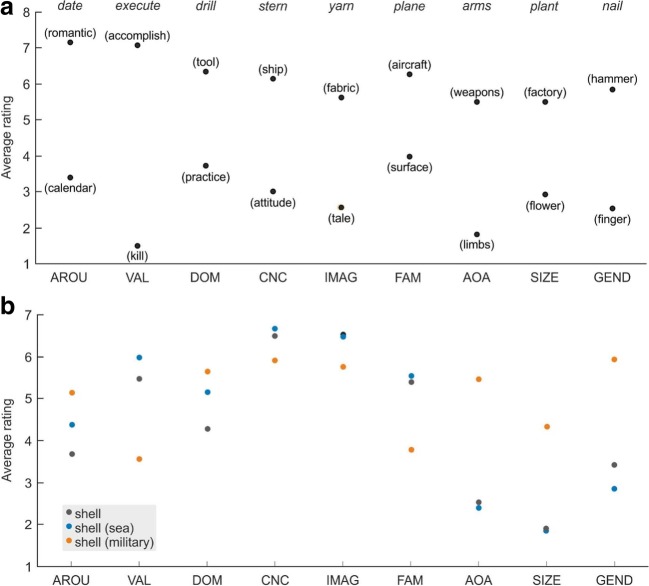
“Gilhooly and Logie (1980a) had participants rate whether or not their words had multiple meanings, resulting in a set of ambiguous words (N = 649) that were then further rated for the relative dominance of alternative senses.”
BackgroundInfluentialEmotion words and categories: evidence from lexical decision
Scott, G. G., O’Donnell, P. J., & Sereno, S. C. (2013) · Cognitive Processing · doi:10.1007/s10339-013-0589-6 · Cited by 58
Self-citationEmotion word processing: does mood make a difference?
Sereno, S. C., Scott, G. G., Yao, B., Thaden, E. J., & O'Donnell, P. J. (2015) · Frontiers in Psychology · doi:10.3389/fpsyg.2015.01191 · Cited by 53
Self-citationWurm, L. H. (2007) · Psychonomic Bulletin & Review · doi:10.3758/bf03193116 · Cited by 51 · cited 3×
“evaluated words on the basis of Bcontext availability^ (Schwanenflugel, Harnishfeger, & Stowe, 1988), Bdanger^ and Busefulness^ (Wurm, 2007), Boffensiveness^ and Btabooness^ (Janschewitz, 2008), or Bbody–object interactivity^ (Siakaluk, Pexman, Aguilera, Owen, & Sears, 2008).”
Differential emotional processing in concrete and abstract words.
Yao, B., Keitel, A., Bruce, G., Scott, G. G., O'Donnell, P. J., & Sereno, S. C. (2018) · Journal of Experimental Psychology Learning Memory and Cognition · doi:10.1037/xlm0000464 · Cited by 44 · cited 4×
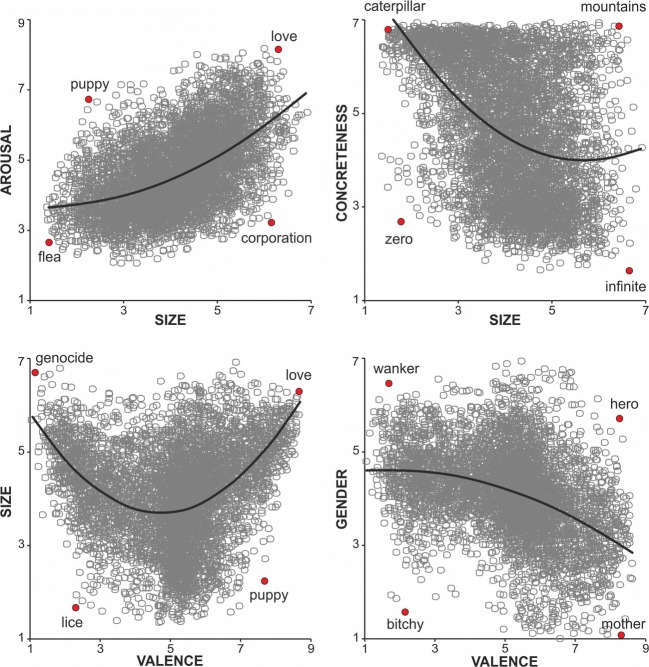
“To assess the effects of SIZE, we attempted to replicate the semantic size effect reported in Sereno et al. (2009) and Yao et al. (2013). We combined our ratings and the lexical decision RT data from the English Lexicon Project (ELP; Balota et al.”
BackgroundMethodResultInfluentialSelf-citationBrysbaert, M. (2017) · Quarterly Journal of Experimental Psychology · doi:10.1080/17470218.2016.1172097 · Cited by 43 · cited 6×
“AROU, VAL, DOM 13,915 18–30 for most items Warriner, Kuperman, and Brysbaert (2013)”
BackgroundInfluentialAge of acquisition estimates for 3,000 disyllabic words
Schock, J., Cortese, M. J., Khanna, M. M., & Toppi, S. (2012) · Behavior Research Methods · doi:10.3758/s13428-012-0209-x · Cited by 42
Short article: Size matters: Bigger is faster
Sereno, S. C., O'Donnell, P. J., & Sereno, M. E. (2009) · Quarterly Journal of Experimental Psychology · doi:10.1080/17470210802618900 · Cited by 41 · cited 3×
“Oftentimes, however, researchers need to use multiple sets of smaller norms to adequately describe the characteristics of their experimental stimuli (e.g., Scott, O’Donnell, & Sereno, 2012; Sereno, O’Donnell, & Sereno, 2009; Sereno, Scott, Yao, Thaden, & O’Donnell, 2015).”
BackgroundSelf-citationChampagne, beer, or coffee? A corpus of gender-related and neutral words
Crawford, J. T., Leynes, P. A., Mayhorn, C. B., & Bink, M. L. (2004) · Behavior Research Methods, Instruments, & Computers · doi:10.3758/bf03195592 · Cited by 34 · cited 3×
“…of FAM and AOA are related in different subjective ways to the objective measure of word frequency, in which the relative number of occurrences of individual words within a substantial corpus (more often written than spoken) are calculated (e.g., the British National Corpus, 2007; Davies, 2004).”
BackgroundMethodTrue gender ratios and stereotype rating norms
Garnham, A., Doehren, S., & Gygax, P. M. (2015) · Frontiers in Psychology · doi:10.3389/fpsyg.2015.01023 · Cited by 28
Semantic Size of Abstract Concepts: It Gets Emotional When You Can’t See It
Yao, B., Vasiljevic, M., Weick, M., Sereno, M. E., O’Donnell, P. J., & Sereno, S. C. (2013) · PLoS ONE · doi:10.1371/journal.pone.0075000 · Cited by 28
Self-citationRichardson, J. T. E. (1976) · Bulletin of the Psychonomic Society · doi:10.3758/bf03337237 · Cited by 25 · cited 1×
“CNC and IMAG, although highly correlated (see, e.g., Paivio, Yuille, & Madigan, 1968), are nevertheless considered to capture distinct semantic aspects of a word (Kousta et al., 2011; Richardson, 1976).”
BackgroundDavies, S. K., Izura, C., Socas, R., & Domínguez, A. (2015) · Behavior Research Methods · doi:10.3758/s13428-015-0579-y · Cited by 23
Participant and Word Gender in Age of Acquisition Effects: The Role of Gender Socialization
Sereno, S. C., & O’Donnell, P. J. (2009) · Sex Roles · doi:10.1007/s11199-009-9649-x · Cited by 16 · cited 3×
“Oftentimes, however, researchers need to use multiple sets of smaller norms to adequately describe the characteristics of their experimental stimuli (e.g., Scott, O’Donnell, & Sereno, 2012; Sereno, O’Donnell, & Sereno, 2009; Sereno, Scott, Yao, Thaden, & O’Donnell, 2015).”
BackgroundSelf-citationAge of acquisition estimates for 1,208 ambiguous and polysemous words
Khanna, M. M., & Cortese, M. J. (2010) · Behavior Research Methods · doi:10.3758/s13428-010-0027-y · Cited by 15
Cited by
Lynott, D., Connell, L., Brysbaert, M., Brand, J., & Carney, J. (2020) · Behavior Research Methods · doi:10.3758/s13428-019-01316-z · Cited by 370
Gender stereotypes are reflected in the distributional structure of 25 languages
Lewis, M. L., & Lupyan, G. (2020) · Nature Human Behaviour · doi:10.1038/s41562-020-0918-6 · Cited by 213
Rating norms should be calculated from cumulative link mixed effects models
Taylor, J. E., Rousselet, G. A., Scheepers, C., & Sereno, S. C. (2022) · Behavior Research Methods · doi:10.3758/s13428-022-01814-7 · Cited by 126
Self-citationSize sound symbolism in the English lexicon
Winter, B., & Perlman, M. (2021) · Glossa a journal of general linguistics · doi:10.5334/gjgl.1646 · Cited by 113
Sound symbolism shapes the English language: The maluma/takete effect in English nouns
Sidhu, D. M., Westbury, C. F., Hollis, G., & Pexman, P. M. (2021) · Psychonomic Bulletin & Review · doi:10.3758/s13423-021-01883-3 · Cited by 104
Metadata
- Authors
- Scott, G. G., Keitel, A., Becirspahic, M., Yao, B., & Sereno, S. C.
- Affiliations
- University of the West of Scotland (GB)
- University of Glasgow (GB)
- University of Manchester (GB)
- Corresponding author
- Sereno, Sara C.
- Venue
- Behavior Research Methods
- Published
- 2018-09-11
- Volume
- 51
- Issue
- 3
- Pages
- 1258-1270
- ISSN
- 1554-351X (ISSN-L)
- 1554-3528
- PMC
- PMC6538586
- OpenAlex
- W2889870962
- Cited by
- 237
- References
- 69
- Citations by year
- 2026: 25 · 2025: 39 · 2024: 43 · 2023: 30 · 2022: 47 · 2021: 28 · 2020: 18 · 2019: 5 · 2018: 1
- FWCI
- 7.74
- Type
- journal article
- Language
- en
- Open access
- hybrid
- doi.org
- Licence
- cc-by
- creativecommons.org/licenses/by/4.0 (tdm)
- Locations
- Behavior Research Methods (publishedVersion, cc-by)
- PubMed Central (publishedVersion, cc-by)
- PubMed (publishedVersion)
- Discovery Research Portal (University of Dundee) (publishedVersion, cc-by)
- The UWS Academic Portal (University of the West of Scotland) (publishedVersion, cc-by-nc-nd)
- Research Explorer (The University of Manchester) (publishedVersion, other-oa)
- ENLIGHTEN (Jurnal Bimbingan dan Konseling Islam) (acceptedVersion, cc-by-sa)
- Lancaster EPrints (Lancaster University) (submittedVersion)
- Funders
- Economic and Social Research Council (RES-062-23-1900)
- Carnegie Trust for the Universities of Scotland (50084)
- Topics
- Life Sciences › Neuroscience › Cognitive Neuroscience › Neurobiology of Language and Bilingualism
- Social Sciences › Psychology › Developmental and Educational Psychology › Reading and Literacy Development
- Social Sciences › Psychology › Experimental and Cognitive Psychology › Categorization, perception, and language
- Keywords
- word ratings, arousal, valence, dominance, concreteness, imageability, familiarity, age of acquisition, gender associations, ambiguous words, word sense disambiguation, word recognition, language comprehension
- MeSH terms
- Adolescent, Adult, Arousal, Emotions, Female, Humans, Male, Psycholinguistics, Semantics, Speech, Recognition, Psychology, Young Adult
About these checks
Registry, retraction, Cites and statistics results are computed, not judged, with one exception: a printed reference that no index lists is read once by a model before it counts as a citation error. Claims are extracted by a model and kept only when their quote appears verbatim in the text; each cited source is then checked, with a model’s help, for whether it says what the claim relies on. Those verdicts can be wrong — read the claim’s quote and the cited source before relying on one.
Statistics and arithmetic are recomputed, not judged.
Confidence bands are shown only for fields calibrated on our annotated test set. None is calibrated yet, so no band is shown.
What counts as a claim ›How we measure confidence ›How we check this ›
Are you an author, or do you see a problem with this page? Request a review
Data sources
Bibliographic data: Semantic Scholar, OpenAlex, Crossref.
Contains information from the Semantic Scholar Academic Graph Datasets, made available under the ODC Attribution License (ODC-BY 1.0).
Semantic Scholar’s data is described in: Kinney, R., et al. (2023). The Semantic Scholar Open Data Platform. arXiv:2301.10140.
