

Testing delayed, gradual, and temporary treatment effects in randomized single-case experiments: A general response function framework
Open accessThe DOI matches its Crossref record; 117 of the 118 references it cites were found in a registry or an index.
Abstract
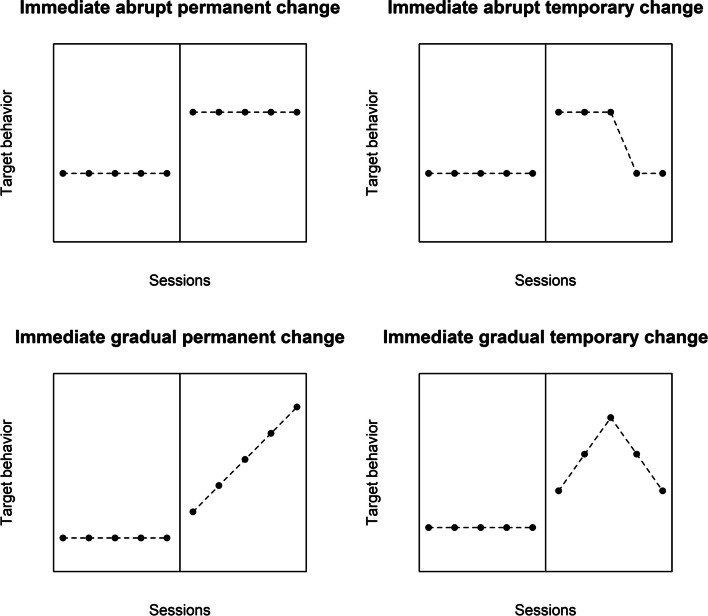
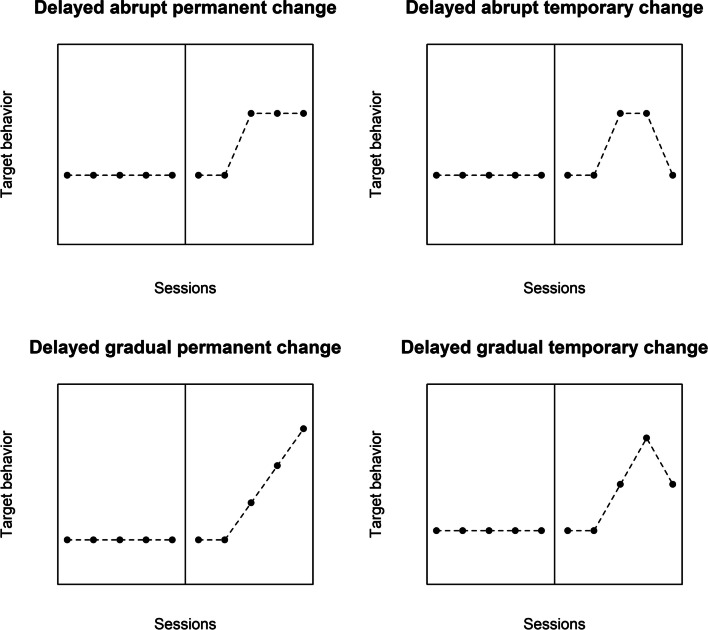
Randomization tests represent a class of significance tests to assess the statistical significance of treatment effects in randomized single-case experiments. Most applications of single-case randomization tests concern simple treatment effects: immediate, abrupt, and permanent changes in the level of the outcome variable. However, researchers are confronted with delayed, gradual, and temporary treatment effects; in general, with “response functions” that are markedly different from single-step functions. We here introduce a general framework that allows specifying a test statistic for a randomization test based on predicted response functions that is sensitive to a wide variety of data patterns beyond immediate and sustained changes in level: different latencies (degrees of delay) of effect, abrupt versus gradual effects, and different durations of the effect (permanent or temporary). There may be reasonable expectations regarding the kind of effect (abrupt or gradual), entailing a different focal data feature (e.g., level or slope). However, the exact amount of latency and the exact duration of a temporary effect may not be known a priori, justifying an exploratory approach studying the effect of specifying different latencies or delayed effects and different durations for temporary effects. We provide illustrations of the proposal with real data, and we present a user-friendly freely available web application implementing it.
Overview
The claims and statistics of this paper haven’t been checked yet.
Free: it reads the open-access text and checks the first 5 claims that cite a source we can check. Create a free account to check every claim.
Integrity signals
Registry
Cites
Statistics
Figures
Verification
Claims the paper makes
The claims and statistics of this paper haven’t been checked yet.
Free: it reads the open-access text and checks the first 5 claims that cite a source we can check. Create a free account to check every claim.
Claims other papers make about this one
Each is checked against this paper’s own text: does it say what the citing paper says it does?
The cited source says what the claim attributes to it.
In the citing paper
“Using test statistics based on predicted response functions for SCED studies is a newly described framework with the purpose of offering statistical analysis for data with nonlinearity and delayed or gradual changes to the primary outcome measure, as is often seen in psychological treatment [60].”
From Internet-Delivered Therapy for Parents With Health Anxiety by Proxy: Protocol for a Single-Case Experimental Design Study (2023) · cites this paper as [60]
Self-check
Percentages, sums and reported differences re-computed from the paper’s own numbers.
The self-check needs the paper’s full text.
Citations
Cites
The ASA Statement on p -Values: Context, Process, and Purpose
Wasserstein, R. L., & Lazar, N. A. (2016) · The American Statistician · doi:10.1080/00031305.2016.1154108 · Cited by 6,306 · cited 2×
“Thus, there have been suggestions (Lakens, 2021) and efforts (Wasserstein et al., 2019; Wasserstein & Lazar, 2016) to promote the correct use and interpretation of p values.”
BackgroundCohen, J. (1994) · American Psychologist · doi:10.1037/0003-066x.49.12.997 · Cited by 4,003 · cited 1×
“P values and null hypothesis statistical testing have been objects of controversy and criticism in the context of social and behavioral sciences (Cohen, 1990, 1994; Gigerenzer, 2004; Nickerson, 2000) and more specifically in the SCED context (Branch, 2014; Perone, 1999).”
BackgroundThe Use of Single-Subject Research to Identify Evidence-Based Practice in Special Education
Horner, R. H., Carr, E. G., Halle, J., McGee, G., Odom, S., & Wolery, M. (2005) · Exceptional Children · doi:10.1177/001440290507100203 · Cited by 3,368 · cited 2×
“…evidence regarding functional relations and informing professional practice in several fields such as education (Kennedy, 2005), special education (Horner et al., 2005), clinical psychological (Morley, 2018), behavioral sciences (Ledford & Gast, 2018), rehabilitation (Tate & Perdices, 2019), and…”
BackgroundStatistical tests, P values, confidence intervals, and power: a guide to misinterpretations
Greenland, S., Senn, S. J., Rothman, K. J., Carlin, J. B., Poole, C., Goodman, S. N., & Altman, D. G. (2016) · European Journal of Epidemiology · doi:10.1007/s10654-016-0149-3 · Cited by 3,200 · cited 1×
“Additionally, it is not clear that suggested alternatives such as effect-size measures and confidence intervals 6 (Wilkinson et al., 1999) are free from misinterpretations and misuses (Cortina & Landis, 2011; Greenland et al., 2016).”
BackgroundMoving to a World Beyond “ p < 0.05”
Wasserstein, R. L., Schirm, A. L., & Lazar, N. A. (2019) · The American Statistician · doi:10.1080/00031305.2019.1583913 · Cited by 2,976 · cited 1×
“Thus, there have been suggestions (Lakens, 2021) and efforts (Wasserstein et al., 2019; Wasserstein & Lazar, 2016) to promote the correct use and interpretation of p values.”
BackgroundStatistical methods in psychology journals: Guidelines and explanations.
Wilkinson, L., & Task Force on Statistical Inference (1999) · American Psychologist · doi:10.1037/0003-066x.54.8.594 · Cited by 2,791 · cited 1×
“Additionally, it is not clear that suggested alternatives such as effect-size measures and confidence intervals 6 (Wilkinson et al., 1999) are free from misinterpretations and misuses (Cortina & Landis, 2011; Greenland et al., 2016).”
BackgroundEdgington, E. S. (2004) · Encyclopedia of Statistical Sciences · doi:10.1002/0471667196.ess2169 · Cited by 2,028
Self-citationThings I have learned (so far).
Cohen, J. (1990) · American Psychologist · doi:10.1037/0003-066x.45.12.1304 · Cited by 1,781
Single-Case Designs for Educational Research
Kennedy, C. H. (2004) · Cited by 1,465
Single-Case Intervention Research Design Standards
Kratochwill, T. R., Hitchcock, J. H., Horner, R. H., Levin, J. R., Odom, S. L., Rindskopf, D. M., & Shadish, W. R. (2013) · Remedial and Special Education · doi:10.1177/0741932512452794 · Cited by 1,331 · cited 1×
“However, all visually analyzed data features (Kratochwill et al., 2013) have been discussed and/or tested as test statistics.”
BackgroundSingle case experimental designs: Strategieṡ for studying behavior change
Matson, J. L. (1985) · Applied Research in Mental Retardation · doi:10.1016/0270-3092(85)90012-8 · Cited by 1,184
Assessing the Clinical or Applied Importance of Behavior Change through Social Validation
Kazdin, A. E. (1977) · Behavior Modification · doi:10.1177/014544557714001 · Cited by 1,117 · cited 1×
“…as it has to be considered together with the effect size (here, the value of the test statistic), visual analysis (to check whether the initial chosen response function represents well the actually observed data pattern), and an assessment of social validity (Horner et al., 2005; Kazdin, 1977).”
BackgroundNull hypothesis significance testing: a review of an old and continuing controversy
Nickerson, R. S. (2000) · Psychological Methods · doi:10.1037/1082-989x.5.2.241 · Cited by 1,090 · cited 1×
“P values and null hypothesis statistical testing have been objects of controversy and criticism in the context of social and behavioral sciences (Cohen, 1990, 1994; Gigerenzer, 2004; Nickerson, 2000) and more specifically in the SCED context (Branch, 2014; Perone, 1999).”
BackgroundGigerenzer, G. (2004) · The Journal of Socio-Economics · doi:10.1016/j.socec.2004.09.033 · Cited by 890 · cited 1×
“P values and null hypothesis statistical testing have been objects of controversy and criticism in the context of social and behavioral sciences (Cohen, 1990, 1994; Gigerenzer, 2004; Nickerson, 2000) and more specifically in the SCED context (Branch, 2014; Perone, 1999).”
BackgroundEffect Size in Single-Case Research: A Review of Nine Nonoverlap Techniques
Parker, R. I., Vannest, K. J., & Davis, J. L. (2011) · Behavior Modification · doi:10.1177/0145445511399147 · Cited by 841 · cited 1×
“For analyzing data collected using SCEDs, several quantitative approaches exist and they have already been discussed extensively in the methodological literature (see Busse et al., 2015; Chen et al., 2015; Gage & Lewis, 2013; Manolov & Solanas, 2018; Parker et al., 2011).”
MethodWicherts, J. M., Veldkamp, C. L. S., Augusteijn, H. E. M., Bakker, M., van Aert, R. C. M., & van Assen, M. A. L. M. (2016) · Frontiers in Psychology · doi:10.3389/fpsyg.2016.01832 · Cited by 754 · cited 1×
“Researcher degrees of freedom when making data analytical decisions (Wicherts et al., 2016) are a reality, when there is no gold standard or a sound basis for specific expectations.”
BackgroundGoldfried, M. R. (1985) · International Handbook of Behavior Modification and Therapy · doi:10.1007/978-1-4615-7278-7_3 · Cited by 687
Ollendick, T. H., & Cerny, J. A. (1981) · Applied Clinical Psychology · doi:10.1007/978-1-4684-1104-1_2 · Cited by 548
Kratochwill, T. R., & Levin, J. R. (2010) · Psychological Methods · doi:10.1037/a0017736 · Cited by 494 · cited 1×
“Rand-omization tests have several advantages in the SCED context (Craig & Fisher, 2019; Jacobs, 2019; Kratochwill & Levin, 2010; Onghena, 1992), including the applicability to all kinds of SCEDs 1 , the absence of parametric assumptions 2 , and the flexibility in choosing the test statistic that…”
Visual analysis in single case experimental design studies: Brief review and guidelines
Lane, J. D., & Gast, D. L. (2014) · Neuropsychological Rehabilitation · doi:10.1080/09602011.2013.815636 · Cited by 450 · cited 2×
“Similarly, the main advantages and disadvantages of nonquantitative visual approaches have also been presented multiple times (Lane & Gast, 2014; Ledford et al., 2018, 2019; Maggin et al., 2018).”
BackgroundMethodA probability-based measure of effect size: Robustness to base rates and other factors.
Ruscio, J. (2008) · Psychological Methods · doi:10.1037/1082-989x.13.1.19 · Cited by 398 · cited 1×
“Using this coefficient is equivalent to computing a mean difference in terms of the p value that would be obtained from the corresponding statistical test (Edgington & Onghena, 2007; Ruscio, 2008).”
MethodKrasny-Pacini, A., & Evans, J. (2018) · Annals of Physical and Rehabilitation Medicine · doi:10.1016/j.rehab.2017.12.002 · Cited by 373 · cited 1×
“Thus, deciding whether the response function should include baseline trends depends on whether spon-taneous improvement prior to the intervention is likely on the basis of theory or frequent in empirical studies (e.g., in rehabilitation; Krasny-Pacini & Evans, 2018).”
BackgroundCEC’s Standards for Classifying the Evidence Base of Practices in Special Education
Cook, B. G., Buysse, V., Klingner, J., Landrum, T. J., McWilliam, R. A., Tankersley, M., & Test, D. W. (2015) · Remedial and Special Education · doi:10.1177/0741932514557271 · Cited by 361 · cited 1×
“One way of integrating the results of several replications (within a participant in a reversal design and across participants in a multiple-baseline design) is to count whether the effect is present in at least 75% of the attempts (Cook et al., 2015; Maggin et al., 2013).”
MethodTate, R. L., Perdices, M., Rosenkoetter, U., Wakim, D., Godbee, K., Togher, L., & McDonald, S. (2013) · Neuropsychological Rehabilitation · doi:10.1080/09602011.2013.824383 · Cited by 358 · cited 3×
“In the context of other methodological guidelines (e.g., Ganz & Ayres, 2018; Maggin et al., 2014; Tate et al., 2013; Wendt & Miller, 2012) not imposing a single best data analytical option, a common suggestion is to combine visual and statistical analysis and to provide justification for the chosen…”
BackgroundFisher, W. W., Kelley, M. E., & Lomas, J. E. (2003) · Journal of Applied Behavior Analysis · doi:10.1901/jaba.2003.36-387 · Cited by 351 · cited 1×
“…2014; Tate et al., 2013; Wendt & Miller, 2012) not imposing a single best data analytical option, a common suggestion is to combine visual and statistical analysis and to provide justification for the chosen approach (Fisher et al., 2003; Har-rington & Velicer, 2015; Houle, 2009; Kazdin, 2020).”
MethodWacker, D., Northup, J., & Cooper, L. (1992) · Behavioral Pediatrics · doi:10.1007/978-1-4612-2774-8_4 · Cited by 321
A standardized mean difference effect size for single case designs
Hedges, L. V., Pustejovsky, J. E., & Shadish, W. R. (2012) · Research Synthesis Methods · doi:10.1002/jrsm.1052 · Cited by 305 · cited 4×
“The original version of the design-comparable effect size by Hedges et al. (2012, 2013) uses moment estimation and assumes lack of trend, whereas the version suggested as preferential by the What Works Clearinghouse (2022) is the one by Pustejovsky et al. (2014), using restricted maximum likelihood…”
MethodInfluentialShadish, W. R., Hedges, L. V., & Pustejovsky, J. E. (2014) · Journal of School Psychology · doi:10.1016/j.jsp.2013.11.005 · Cited by 269 · cited 1×
“This could be understood as the simplest kind of effect, representing also what is quantified in the between-case standardized mean difference (or design-comparable effect size) as described in Hedges et al. (2012, 2013) and Shadish et al. (2014).”
MethodEvaluating educational interventions single-case design for measuring response to intervention
Riley‐Tillman, T. C., & Burns, M. K. (2009) · Cited by 267
Effect size calculations and single subject designs
Olive, M. L., & Smith, B. W. (2005) · Educational Psychology · doi:10.1080/0144341042000301238 · Cited by 220 · cited 1×
“Another option is to use a quantification such as the “mean base-line reduction” that focuses only on the last three measurements of each phase (Olive & Smith, 2005).”
MethodDesign-Comparable Effect Sizes in Multiple Baseline Designs: A General Modeling Framework
Pustejovsky, J. E., Hedges, L. V., & Shadish, W. R. (2014) · Journal of Educational and Behavioral Statistics · doi:10.3102/1076998614547577 · Cited by 213 · cited 1×
“…effect size by Hedges et al. (2012, 2013) uses moment estimation and assumes lack of trend, whereas the version suggested as preferential by the What Works Clearinghouse (2022) is the one by Pustejovsky et al. (2014), using restricted maximum likelihood estimation and allowing for trends.”
MethodA standardized mean difference effect size for multiple baseline designs across individuals
Hedges, L. V., Pustejovsky, J. E., & Shadish, W. R. (2013) · Research Synthesis Methods · doi:10.1002/jrsm.1086 · Cited by 204 · cited 4×
“The original version of the design-comparable effect size by Hedges et al. (2012, 2013) uses moment estimation and assumes lack of trend, whereas the version suggested as preferential by the What Works Clearinghouse (2022) is the one by Pustejovsky et al. (2014), using restricted maximum likelihood…”
MethodInfluentialUsing response ratios for meta-analyzing single-case designs with behavioral outcomes
Pustejovsky, J. E. (2018) · Journal of School Psychology · doi:10.1016/j.jsp.2018.02.003 · Cited by 196 · cited 2×
“In terms of the way in which the final behavioral level is reached, the effect can be abrupt or gradual (Levin et al., 2021; Swan & Pustejovsky, 2018).”
BackgroundMethodFerron, J. M., Bell, B. A., Hess, M. R., Rendina-Gobioff, G., & Hibbard, S. T. (2009) · Behavior Research Methods · doi:10.3758/brm.41.2.372 · Cited by 194 · cited 1×
“Referring to another data analytical option, multilevel models require a minimum number of participants and measurements to ensure the statistical properties of the inferential information they provide (e.g., Ferron et al., 2009, 2010; Moeyaert et al., 2017).”
MethodCustomization of Pain Treatments: Single-Case Design and Analysis
Onghena, P., & Edgington, E. S. (2005) · The Clinical Journal of Pain · doi:10.1097/00002508-200501000-00007 · Cited by 188
Self-citationMaggin, D. M., Briesch, A. M., & Chafouleas, S. M. (2013) · Remedial and Special Education · doi:10.1177/0741932511435176 · Cited by 186 · cited 1×
“One way of integrating the results of several replications (within a participant in a reversal design and across participants in a multiple-baseline design) is to count whether the effect is present in at least 75% of the attempts (Cook et al., 2015; Maggin et al., 2013).”
MethodThe Practical Alternative to the p Value Is the Correctly Used p Value
Lakens, D. (2021) · Perspectives on Psychological Science · doi:10.1177/1745691620958012 · Cited by 175 · cited 3×
“Thus, there have been suggestions (Lakens, 2021) and efforts (Wasserstein et al., 2019; Wasserstein & Lazar, 2016) to promote the correct use and interpretation of p values.”
BackgroundEvaluating single-case research data: A comparison of seven statistical methods
Parker, R. I., & Brossart, D. F. (2003) · Behavior Therapy · doi:10.1016/s0005-7894(03)80013-8 · Cited by 168 · cited 1×
“Some regression-based approaches also do not discriminate well between different magnitudes of effect (Parker & Brossart, 2003).”
BackgroundSingle‐case experimental designs: Characteristics, changes, and challenges
Kazdin, A. E. (2021) · Journal of the Experimental Analysis of Behavior · doi:10.1002/jeab.638 · Cited by 166 · cited 2×
“…2014; Tate et al., 2013; Wendt & Miller, 2012) not imposing a single best data analytical option, a common suggestion is to combine visual and statistical analysis and to provide justification for the chosen approach (Fisher et al., 2003; Har-rington & Velicer, 2015; Houle, 2009; Kazdin, 2020).”
BackgroundMethodSnodgrass, M. R., Chung, M. Y., Meadan, H., & Halle, J. W. (2018) · Research in Developmental Disabilities · doi:10.1016/j.ridd.2018.01.007 · Cited by 163 · cited 1×
“This agrees with the assessment of maintenance in the context of social validation (Snodgrass et al., 2018).”
BackgroundSystematic Use of Visual Analysis for Assessing Outcomes in Single Case Design Studies
Ledford, J. R., Lane, J. D., & Severini, K. E. (2018) · Brain Impairment · doi:10.1017/brimp.2017.16 · Cited by 160 · cited 1×
“Similarly, the main advantages and disadvantages of nonquantitative visual approaches have also been presented multiple times (Lane & Gast, 2014; Ledford et al., 2018, 2019; Maggin et al., 2018).”
BackgroundSingle-case design standards: An update and proposed upgrades
Kratochwill, T. R., Horner, R. H., Levin, J. R., Machalicek, W., Ferron, J. M., & Johnson, A. H. (2021) · Journal of School Psychology · doi:10.1016/j.jsp.2021.10.006 · Cited by 132 · cited 1×
“The Hedges et al. version has been criticized for disregarding trend, and both version can be criticized of requiring necessarily several participants to be computed, have been explicitly discussed (Kratochwill et al., 2021; Maggin et al., 2022).”
BackgroundStatistical Power of Randomization Tests Used with Multiple-Baseline Designs
Ferron, J., & Sentovich, C. (2002) · The Journal of Experimental Education · doi:10.1080/00220970209599504 · Cited by 125 · cited 1×
“…operating characteristics, randomization tests control type I error rates, but the statistical power may not be sufficient for detecting smaller effect sizes (Bouwmeester & Jongerling, 2020; Ferron & Onghena, 1996; Ferron & Sentovich, 2002; Ferron & Ware, 1995; Michiels & Onghena, 2019).”
BackgroundWendt, O., & Miller, B. M. (2012) · Education and Treatment of Children · doi:10.1353/etc.2012.0010 · Cited by 122 · cited 1×
“In the context of other methodological guidelines (e.g., Ganz & Ayres, 2018; Maggin et al., 2014; Tate et al., 2013; Wendt & Miller, 2012) not imposing a single best data analytical option, a common suggestion is to combine visual and statistical analysis and to provide justification for the chosen…”
BackgroundSystematic Protocols for the Visual Analysis of Single-Case Research Data
Wolfe, K., Barton, E. E., & Meadan, H. (2019) · Behavior Analysis in Practice · doi:10.1007/s40617-019-00336-7 · Cited by 119
Synthesizing Single-Case Research to Identify Evidence-Based Practices: Some Brief Reflections
Horner, R. H., & Kratochwill, T. R. (2012) · Journal of Behavioral Education · doi:10.1007/s10864-012-9152-2 · Cited by 117
Comparing Visual and Statistical Analysis in Single-Case Studies Using Published Studies
Harrington, M., & Velicer, W. F. (2015) · Multivariate Behavioral Research · doi:10.1080/00273171.2014.973989 · Cited by 114
Statistical Inference from N= 1 Experiments
Edgington, E. S. (1967) · The Journal of Psychology · doi:10.1080/00223980.1967.10544864 · Cited by 104 · cited 2×
“The usefulness of randomization tests in the SCED context was initially suggested by Edgington (1967, 1996).”
BackgroundMethodLaraway, S., Snycerski, S., Pradhan, S., & Huitema, B. E. (2019) · Perspectives on Behavior Science · doi:10.1007/s40614-019-00193-3 · Cited by 104 · cited 1×
“This is also related to selective reporting (Kratochwill et al., 2018; Laraway et al., 2019; Tincani & Travers, 2022) of the results that present the best fit, even though they could be only one of the instances checked.”
BackgroundRegulated randomization: A potentially sharper analytical tool for the multiple-baseline design.
Koehler, M. J., & Levin, J. R. (1998) · Psychological Methods · doi:10.1037//1082-989x.3.2.206 · Cited by 102 · cited 1×
“…multiple-baseline design, it is possible to decide at random for each tier 3 when the intervention begins, out of a set of possible values, and also to decide at random for which tier the intervention is introduced first (see the Koehler–Levin procedure; Koehler & Levin, 1998; Levin et al., 2018).”
BackgroundTanious, R., & Onghena, P. (2020) · Behavior Research Methods · doi:10.3758/s13428-020-01502-4 · Cited by 102 · cited 1×
“…the test statistic, level differences (e.g., using means) have been most frequently discussed and/ or investigated (e.g., Edgington, 1975; Ferron & Ware, 1995; Onghena, 1992), which is consistent with level being commonly the focus of the data analysis in the SCED context (Tanious & Onghena, 2021).”
MethodSelf-citationOnghena, P. (1992) · Behavioral Assessment · Cited by 101
Self-citationRandomization Tests for One-Subject Operant Experiments
Edgington, E. S. (1975) · The Journal of Psychology · doi:10.1080/00223980.1975.9923926 · Cited by 101 · cited 12×
“…does not consist in suggesting a way of obtaining p values (randomization tests have been suggested several decades ago in the SCED context; Edgington, 1967, 1975), but rather on the representation of different possible data patterns when defining the test statistic in the randomization…”
BackgroundMethodInfluentialA Primer on Single-Case Research Designs: Contemporary Use and Analysis
Ledford, J. R., Barton, E. E., Severini, K. E., & Zimmerman, K. N. (2019) · American Journal on Intellectual and Developmental Disabilities · doi:10.1352/1944-7558-124.1.35 · Cited by 101 · cited 2×
“…tests has to be considered in light of the traditional use of response-guided experimentation and visual analysis (as reviewed Lane & Gast, 2014; Ledford et al., 2019; Maggin et al., 2018), which entails repeatedly assessing multiple data features such as level, trend, imme-diacy, and overlap…”
BackgroundMethodPustejovsky, J. E. (2019) · Psychological Methods · doi:10.1037/met0000179 · Cited by 100 · cited 1×
“The within-case standardized mean difference is affected by potentially irrelevant procedural details of the study’s design (Pustejovsky, 2019), and the interpretation of its values may depend on whether the aim is to increase or reduce the target behavior (Richman et al., 2022).”
BackgroundStatistical inference in behavior analysis: Experimental control is better
Perone, M. (1999) · The Behavior Analyst · doi:10.1007/bf03391988 · Cited by 98 · cited 1×
“P values and null hypothesis statistical testing have been objects of controversy and criticism in the context of social and behavioral sciences (Cohen, 1990, 1994; Gigerenzer, 2004; Nickerson, 2000) and more specifically in the SCED context (Branch, 2014; Perone, 1999).”
BackgroundHeyvaert, M., & Onghena, P. (2014) · Journal of Contextual Behavioral Science · doi:10.1016/j.jcbs.2013.10.002 · Cited by 98 · cited 6×
“…attention should be paid to the definition, calculation, and interpretation of the test statistic that is used to quantify the intervention effect (Heyvaert & Onghena, 2014a), to the importance of randomization for excluding confounding factors and for deriving a valid probabilistic statement…”
BackgroundMethodInfluentialSelf-citationValidity of Randomization Tests for One-Subject Experiments
Edgington, E. S. (1980) · Journal of Educational Statistics · doi:10.2307/1164966 · Cited by 95 · cited 8×
“Although choosing (and reporting publicly) the data analytical approach before data collection has recently been emphasized in the context of SCEDs (Johnson & Cook, 2019; Manolov et al., 2022; Porcino et al., 2020), this emphasis is characteristic in relation to randomization tests for SCEDs (Edgington, 1975, 1980b).”
BackgroundMethodInfluentialFerron, J. M., Farmer, J. L., & Owens, C. M. (2010) · Behavior Research Methods · doi:10.3758/brm.42.4.930 · Cited by 94 · cited 1×
“Referring to another data analytical option, multilevel models require a minimum number of participants and measurements to ensure the statistical properties of the inferential information they provide (e.g., Ferron et al., 2009, 2010; Moeyaert et al., 2017).”
MethodRandomization tests for multiple-baseline designs.
Wampold, B. E., & Worsham, N. L. (1986) · Behavioral Assessment · Cited by 93
Constructing single-case research designs: Logic and options.
(2014) · American Psychological Association eBooks · doi:10.1037/14376-002 · Cited by 91 · cited 1×
“In the multiple-baseline and ABAB designs, the basic effect is computed as many times as there are A-B comparisons (Horner & Odom, 2014) and the aim is to check whether the intervention effect is replicated.”
MethodRandomized single-subject experimental designs
Edgington, E. S. (1996) · Behaviour Research and Therapy · doi:10.1016/0005-7967(96)00012-5 · Cited by 89 · cited 2×
“The usefulness of randomization tests in the SCED context was initially suggested by Edgington (1967, 1996).”
BackgroundMethodMethodological standards in single-case experimental design: Raising the bar
Ganz, J. B., & Ayres, K. M. (2018) · Research in Developmental Disabilities · doi:10.1016/j.ridd.2018.03.003 · Cited by 86 · cited 1×
“In the context of other methodological guidelines (e.g., Ganz & Ayres, 2018; Maggin et al., 2014; Tate et al., 2013; Wendt & Miller, 2012) not imposing a single best data analytical option, a common suggestion is to combine visual and statistical analysis and to provide justification for the chosen…”
BackgroundControlling baseline trend in single-case research.
Parker, R. I., Cryer, J., & Byrns, G. (2006) · School Psychology Quarterly · doi:10.1037/h0084131 · Cited by 82 · cited 1×
“…2014; Ledford et al., 2019; Maggin et al., 2018), which entails repeatedly assessing multiple data features such as level, trend, imme-diacy, and overlap (highlighted by Parker et al., 2006, as a strength of visual analysis) in the course of data collection, regardless of any initial expectations.”
BackgroundMalignant side effects of null-hypothesis significance testing
Branch, M. (2014) · Theory & Psychology · doi:10.1177/0959354314525282 · Cited by 81 · cited 1×
“P values and null hypothesis statistical testing have been objects of controversy and criticism in the context of social and behavioral sciences (Cohen, 1990, 1994; Gigerenzer, 2004; Nickerson, 2000) and more specifically in the SCED context (Branch, 2014; Perone, 1999).”
BackgroundSPIRIT extension and elaboration for n-of-1 trials: SPENT 2019 checklist
Porcino, A. J., Shamseer, L., Chan, A.-W., Kravitz, R. L., Orkin, A., Punja, S., Ravaud, P., Schmid, C. H., & Vohra, S. (2020) · BMJ · doi:10.1136/bmj.m122 · Cited by 81 · cited 2×
“This would also correspond well with the importance of pre-registration in relation to the data analytical plan (Cook et al., 2022; Manolov et al., 2022; Porcino et al., 2020).”
BackgroundResultRandomized single-case AB phase designs: Prospects and pitfalls
Michiels, B., & Onghena, P. (2019) · Behavior Research Methods · doi:10.3758/s13428-018-1084-x · Cited by 77 · cited 2×
“Several possible test statistics have been studied for specific expected effects, including quantifications of immediate effects (Michiels & Onghena, 2019) and delayed effects (Levin et al., 2017).”
BackgroundSelf-citationTate, R. L., & Perdices, M. (2019) · Routledge eBooks · doi:10.4324/9780429488184 · Cited by 76 · cited 2×
“…practice in several fields such as education (Kennedy, 2005), special education (Horner et al., 2005), clinical psychological (Morley, 2018), behavioral sciences (Ledford & Gast, 2018), rehabilitation (Tate & Perdices, 2019), and a variety of other applied settings (Kazdin, 2020, 2021).”
BackgroundA Comparison of Rubrics for Identifying Empirically Supported Practices with Single-Case Research
Maggin, D. M., Briesch, A. M., Chafouleas, S. M., Ferguson, T. D., & Clark, C. R. (2013) · Journal of Behavioral Education · doi:10.1007/s10864-013-9187-z · Cited by 73 · cited 2×
“One way of integrating the results of several replications (within a participant in a reversal design and across participants in a multiple-baseline design) is to count whether the effect is present in at least 75% of the attempts (Cook et al., 2015; Maggin et al., 2013).”
BackgroundMethodComparison of randomization-test procedures for single-case multiple-baseline designs
Levin, J. R., Ferron, J. M., & Gafurov, B. S. (2018) · Developmental Neurorehabilitation · doi:10.1080/17518423.2016.1197708 · Cited by 71
Levin, J. R., Ferron, J. M., & Kratochwill, T. R. (2012) · Journal of School Psychology · doi:10.1016/j.jsp.2012.05.001 · Cited by 70 · cited 1×
“In any case, other analytical alternatives exist for alternation designs (Lanovaz et al., 2019; Manolov & Onghena, 2018), even in the context of randomization tests (Levin et al., 2012; Manolov, 2019).”
BackgroundAnalyzing data from single-case alternating treatments designs.
Manolov, R., & Onghena, P. (2018) · Psychological Methods · doi:10.1037/met0000133 · Cited by 70 · cited 1×
“In any case, other analytical alternatives exist for alternation designs (Lanovaz et al., 2019; Manolov & Onghena, 2018), even in the context of randomization tests (Levin et al., 2012; Manolov, 2019).”
BackgroundSelf-citationMultilevel modeling of single-case data: A comparison of maximum likelihood and Bayesian estimation.
Moeyaert, M., Rindskopf, D., Onghena, P., & Van den Noortgate, W. (2017) · Psychological Methods · doi:10.1037/met0000136 · Cited by 68 · cited 1×
“Referring to another data analytical option, multilevel models require a minimum number of participants and measurements to ensure the statistical properties of the inferential information they provide (e.g., Ferron et al., 2009, 2010; Moeyaert et al., 2017).”
MethodSelf-citationUsing Single‐Case Research Designs to Examine the Effects of Interventions in Special Education
Maggin, D. M., Cook, B. G., & Cook, L. (2018) · Learning Disabilities Research & Practice · doi:10.1111/ldrp.12184 · Cited by 68 · cited 2×
“…in light of the traditional use of response-guided experimentation and visual analysis (as reviewed Lane & Gast, 2014; Ledford et al., 2019; Maggin et al., 2018), which entails repeatedly assessing multiple data features such as level, trend, imme-diacy, and overlap (highlighted by Parker…”
BackgroundPreregistration in Single-Case Design Research
Johnson, A. H., & Cook, B. G. (2019) · Exceptional Children · doi:10.1177/0014402919868529 · Cited by 68 · cited 8×
“Although choosing (and reporting publicly) the data analytical approach before data collection has recently been emphasized in the context of SCEDs (Johnson & Cook, 2019; Manolov et al., 2022; Porcino et al., 2020), this emphasis is characteristic in relation to randomization tests for SCEDs (Edgington, 1975, 1980b).”
MethodInfluentialAnalysis of Effect for Single-Case Design Research
Gage, N. A., & Lewis, T. J. (2013) · Journal of Applied Sport Psychology · doi:10.1080/10413200.2012.660673 · Cited by 67 · cited 1×
“For analyzing data collected using SCEDs, several quantitative approaches exist and they have already been discussed extensively in the methodological literature (see Busse et al., 2015; Chen et al., 2015; Gage & Lewis, 2013; Manolov & Solanas, 2018; Parker et al., 2011).”
MethodThe Power of Randomization Tests for Single-Case Phase Designs
Ferron, J., & Onghena, P. (1996) · The Journal of Experimental Education · doi:10.1080/00220973.1996.9943805 · Cited by 66 · cited 1×
“…operating characteristics, randomization tests control type I error rates, but the statistical power may not be sufficient for detecting smaller effect sizes (Bouwmeester & Jongerling, 2020; Ferron & Onghena, 1996; Ferron & Sentovich, 2002; Ferron & Ware, 1995; Michiels & Onghena, 2019).”
BackgroundSelf-citationPower of a randomization test in a single case multiple baseline AB design
Bouwmeester, S., & Jongerling, J. (2020) · PLoS ONE · doi:10.1371/journal.pone.0228355 · Cited by 66
Maggin, D. M., Barton, E. E., Reichow, B., Lane, K. L., & Shogren, K. A. (2021) · Remedial and Special Education · doi:10.1177/07419325211051317 · Cited by 65 · cited 1×
“The Hedges et al. version has been criticized for disregarding trend, and both version can be criticized of requiring necessarily several participants to be computed, have been explicitly discussed (Kratochwill et al., 2021; Maggin et al., 2022).”
BackgroundAnalyzing Single-Case Data: The Power of Randomization Tests
Ferron, J., & Ware, W. (1995) · The Journal of Experimental Education · doi:10.1080/00220973.1995.9943820 · Cited by 64 · cited 4×
“One noteworthy feature of randomization tests is that the effect size measure (to which a p value is later associated) is to be chosen prior to gathering the data according to the type of intervention effect expected (Ferron & Ware, 1995; Heyvaert & Onghena, 2014b).”
BackgroundMethodInfluentialAnalysis of single-case data: Randomisation tests for measures of effect size
Heyvaert, M., & Onghena, P. (2014) · Neuropsychological Rehabilitation · doi:10.1080/09602011.2013.818564 · Cited by 64 · cited 4×
“Specifically, it is possible to quantify (as a test statistic) a change in slope and a change in variability (Levin et al., 2021), nonoverlap (Heyvaert & Onghena, 2014a), and consistency (Tanious et al., 2019).”
BackgroundMethodInfluentialSelf-citationSingle-Case Methods in Clinical Psychology: A Practical Guide
Morley, S. (2017) · doi:10.4324/9781315412931 · Cited by 63
Randomization tests as alternative analysis methods for behavior‐analytic data
Craig, A. R., & Fisher, W. W. (2019) · Journal of the Experimental Analysis of Behavior · doi:10.1002/jeab.500 · Cited by 56 · cited 1×
“Rand-omization tests have several advantages in the SCED context (Craig & Fisher, 2019; Jacobs, 2019; Kratochwill & Levin, 2010; Onghena, 1992), including the applicability to all kinds of SCEDs 1 , the absence of parametric assumptions 2 , and the flexibility in choosing the test statistic that…”
The Earth Is Not Round (p = .00)
Cortina, J. M., & Landis, R. S. (2011) · Organizational Research Methods · doi:10.1177/1094428110391542 · Cited by 55 · cited 1×
“Additionally, it is not clear that suggested alternatives such as effect-size measures and confidence intervals 6 (Wilkinson et al., 1999) are free from misinterpretations and misuses (Cortina & Landis, 2011; Greenland et al., 2016).”
BackgroundA Priori Justification for Effect Measures in Single-Case Experimental Designs
Manolov, R., Moeyaert, M., & Fingerhut, J. E. (2022) · Perspectives on Behavior Science · doi:10.1007/s40614-021-00282-2 · Cited by 53 · cited 2×
“This would also correspond well with the importance of pre-registration in relation to the data analytical plan (Cook et al., 2022; Manolov et al., 2022; Porcino et al., 2020).”
BackgroundResultSelf-citationA Gradual Effects Model for Single-Case Designs
Swan, D. M., & Pustejovsky, J. E. (2018) · Multivariate Behavioral Research · doi:10.1080/00273171.2018.1466681 · Cited by 52 · cited 1×
“In terms of the way in which the final behavioral level is reached, the effect can be abrupt or gradual (Levin et al., 2021; Swan & Pustejovsky, 2018).”
BackgroundConfidence intervals for single-case effect size measures based on randomization test inversion
Michiels, B., Heyvaert, M., Meulders, A., & Onghena, P. (2016) · Behavior Research Methods · doi:10.3758/s13428-016-0714-4 · Cited by 49 · cited 1×
“…effect (Heyvaert & Onghena, 2014a), to the importance of randomization for excluding confounding factors and for deriving a valid probabilistic statement (Edgington, 1996), and to the possibility of test inversion for deriving randomization-based confidence intervals (Michiels et al., 2017).”
BackgroundSelf-citationLevin, J. R., Ferron, J. M., & Gafurov, B. S. (2017) · Journal of School Psychology · doi:10.1016/j.jsp.2017.02.003 · Cited by 44 · cited 5×
“For readers interested in the application of randomization tests to multiple baseline design, we recommend the following articles by Levin and colleagues (Levin et al., 2017, 2018; Levin & Gafurov, 2019).”
BackgroundMethodInfluentialSingle Case Methods in Clinical Psychology : A Practical Guide
Morley, S. (2017) · Cited by 44
Toward a standard assembly of linear graphs.
Dart, E. H., & Radley, K. C. (2018) · School Psychology Quarterly · doi:10.1037/spq0000269 · Cited by 43 · cited 1×
“Additionally, it is necessary to specify the minimum and maximum values of the score for the time series plot, in order to have a graphical representation with the appropriate Y -axis scale (Dart & Radley, 2018).”
MethodA Theory of the Extinction Burst
Shahan, T. A. (2022) · Perspectives on Behavior Science · doi:10.1007/s40614-022-00340-3 · Cited by 39 · cited 1×
“Similarly, deciding whether the response function should allow for a delayed effect may be related, for instance, to existing evidence of extinction bursts (Katz & Lattal, 2021; Shahan, 2022).”
BackgroundInvestigation of Single-Case Multiple-Baseline Randomization Tests of Trend and Variability
Levin, J. R., Ferron, J. M., & Gafurov, B. S. (2020) · Educational Psychology Review · doi:10.1007/s10648-020-09549-7 · Cited by 38 · cited 6×
“In terms of the way in which the final behavioral level is reached, the effect can be abrupt or gradual (Levin et al., 2021; Swan & Pustejovsky, 2018).”
BackgroundMethodInfluentialBarton, E. E., Meadan, H., & Fettig, A. (2019) · Research in Developmental Disabilities · doi:10.1016/j.ridd.2018.11.001 · Cited by 36
Carter, M. (2013) · Behavior Modification · doi:10.1177/0145445513476609 · Cited by 35 · cited 5×
“This could be understood as the simplest kind of effect, representing also what is quantified in the between-case standardized mean difference (or design-comparable effect size) as described in Hedges et al. (2012, 2013) and Shadish et al. (2014).”
BackgroundMethodInfluentialRandomization tests for changing criterion designs
Onghena, P., Tanious, R., De, T. K., & Michiels, B. (2019) · Behaviour Research and Therapy · doi:10.1016/j.brat.2019.01.005 · Cited by 35 · cited 4×
“Specifically, it is possible to quantify (as a test statistic) a change in slope and a change in variability (Levin et al., 2021), nonoverlap (Heyvaert & Onghena, 2014a), and consistency (Tanious et al., 2019).”
BackgroundMethodInfluentialSelf-citationTanious, R., De, T. K., & Onghena, P. (2019) · Behaviour Research and Therapy · doi:10.1016/j.brat.2019.103414 · Cited by 31 · cited 1×
“Specifically, it is possible to quantify (as a test statistic) a change in slope and a change in variability (Levin et al., 2021), nonoverlap (Heyvaert & Onghena, 2014a), and consistency (Tanious et al., 2019).”
BackgroundSelf-citationAnalytical Options for Single-Case Experimental Designs: Review and Application to Brain Impairment
Manolov, R., & Solanas, A. (2017) · Brain Impairment · doi:10.1017/brimp.2017.17 · Cited by 30 · cited 1×
“For analyzing data collected using SCEDs, several quantitative approaches exist and they have already been discussed extensively in the methodological literature (see Busse et al., 2015; Chen et al., 2015; Gage & Lewis, 2013; Manolov & Solanas, 2018; Parker et al., 2011).”
MethodSelf-citationLevin, J. R., Kratochwill, T. R., & Ferron, J. M. (2019) · Journal of the Experimental Analysis of Behavior · doi:10.1002/jeab.558 · Cited by 30 · cited 1×
“This is because it is possible to select at random the moment of change in phase for an A-B design (i.e., random intervention start point design; Levin et al., 2019), a multiple-baseline design (Levin et al., 2018) or an ABAB design (Onghena, 1992).”
MethodMethods for Assessing Single-Case School-Based Intervention Outcomes
Busse, R. T., McGill, R. J., & Kennedy, K. S. (2014) · Contemporary School Psychology · doi:10.1007/s40688-014-0025-7 · Cited by 28 · cited 1×
“For analyzing data collected using SCEDs, several quantitative approaches exist and they have already been discussed extensively in the methodological literature (see Busse et al., 2015; Chen et al., 2015; Gage & Lewis, 2013; Manolov & Solanas, 2018; Parker et al., 2011).”
MethodWhat is an extinction burst?: A case study in the analysis of transitional behavior
Katz, B. R., & Lattal, K. A. (2020) · Journal of the Experimental Analysis of Behavior · doi:10.1002/jeab.642 · Cited by 28 · cited 2×
“Additionally, delayed effects may still be tolerated when there is an expectation (and previous evidence) of a transition state or an extinction burst (Brogan et al., 2019; Katz & Lattal, 2021).”
BackgroundUsing a Visual Structured Criterion for the Analysis of Alternating-Treatment Designs
Lanovaz, M. J., Cardinal, P., & Francis, M. (2017) · Behavior Modification · doi:10.1177/0145445517739278 · Cited by 26 · cited 1×
“In any case, other analytical alternatives exist for alternation designs (Lanovaz et al., 2019; Manolov & Onghena, 2018), even in the context of randomization tests (Levin et al., 2012; Manolov, 2019).”
BackgroundReplicability and randomization test logic in behavior analysis
Jacobs, K. W. (2019) · Journal of the Experimental Analysis of Behavior · doi:10.1002/jeab.501 · Cited by 26 · cited 2×
“Thus, it is not a population inference, which may not be warranted or of interest when following an idiographic approach (Jacobs, 2019; Onghena et al., 2019).”
BackgroundRandomization tests in single-subject designs: Illustrative examples
Wampold, B. E., & Furlong, M. J. (1981) · Journal of Psychopathology and Behavioral Assessment · doi:10.1007/bf01350836 · Cited by 25
Computing Tools for Implementing Standards for Single-Case Designs
Chen, L.-T., Peng, C.-Y. J., & Chen, M.-E. (2015) · Behavior Modification · doi:10.1177/0145445515603706 · Cited by 24 · cited 1×
“For analyzing data collected using SCEDs, several quantitative approaches exist and they have already been discussed extensively in the methodological literature (see Busse et al., 2015; Chen et al., 2015; Gage & Lewis, 2013; Manolov & Solanas, 2018; Parker et al., 2011).”
MethodMichiels, B., Tanious, R., De, T. K., & Onghena, P. (2020) · Behavior Research Methods · doi:10.3758/s13428-019-01266-6 · Cited by 23 · cited 1×
“For instance, the main quantification could stem from a statistical model such as multilevel models, with the randomization test being used for obtaining the p values (Michiels et al., 2020).”
MethodSelf-citationRandomization Procedures for Changing Criterion Designs
Ferron, J. M., Rohrer, L., & Levin, J. R. (2019) · Behavior Modification · doi:10.1177/0145445519847627 · Cited by 23 · cited 1×
“For changing criterion designs, specific randomization tests have been suggested (Ferron et al., 2019; Onghena et al., 2019; Tanious, 2022).”
MethodOpen Science and Single-Case Design Research
Cook, B. G., Johnson, A. H., Maggin, D. M., Therrien, W. J., Barton, E. E., Lloyd, J. W., Reichow, B., Talbott, E., & Travers, J. C. (2021) · Remedial and Special Education · doi:10.1177/0741932521996452 · Cited by 23 · cited 1×
“This would also correspond well with the importance of pre-registration in relation to the data analytical plan (Cook et al., 2022; Manolov et al., 2022; Porcino et al., 2020).”
ResultBrake, M. T., Stolwijk, N. M., Staal, J. B., & Hooren, B. V. (2022) · European Journal of Sport Science · doi:10.1080/17461391.2022.2042398 · Cited by 22 · cited 1×
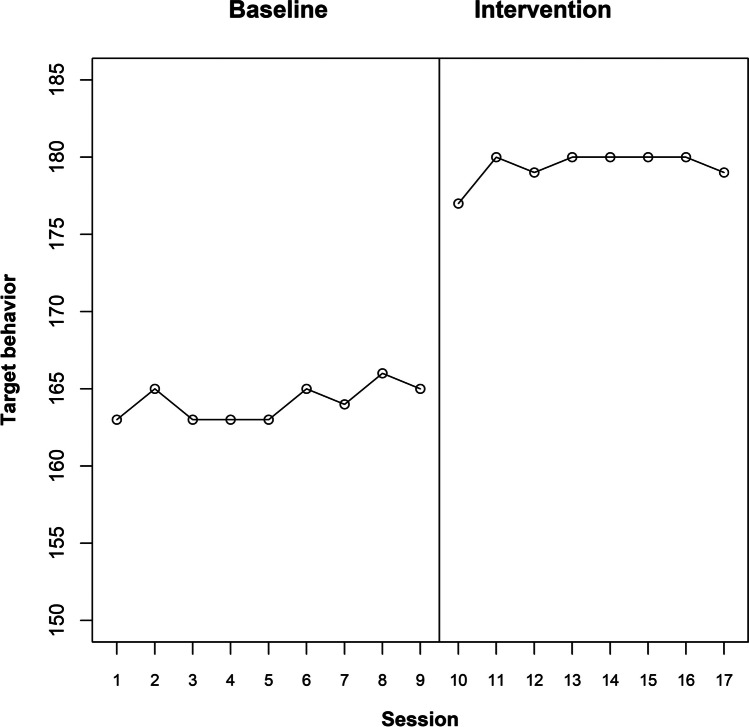
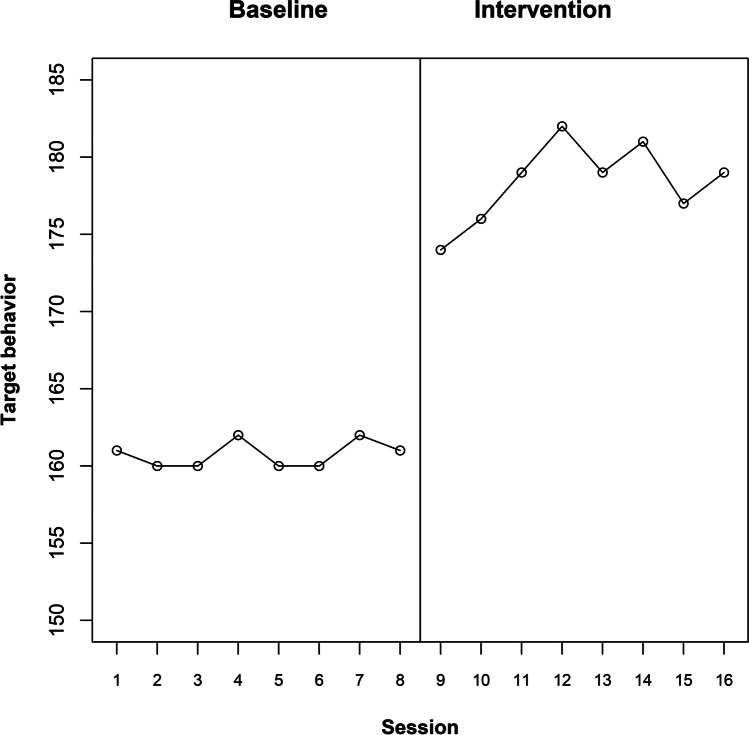
“The data for the illustration were gathered by te Brake et al. (2023), studying the effect of beat frequency to adjust running cadence (steps per minute) in recreational runners, with the aim of increasing this target behavior.”
BackgroundQuestionable Research Practices in Single-Case Experimental Designs: Examples and Possible Solutions
Tincani, M., & Travers, J. C. (2022) · Springer eBooks · doi:10.1007/978-3-031-04968-2_12 · Cited by 22
Defining and assessing immediacy in single‐case experimental designs
Manolov, R., & Onghena, P. (2022) · Journal of the Experimental Analysis of Behavior · doi:10.1002/jeab.799 · Cited by 21 · cited 1×
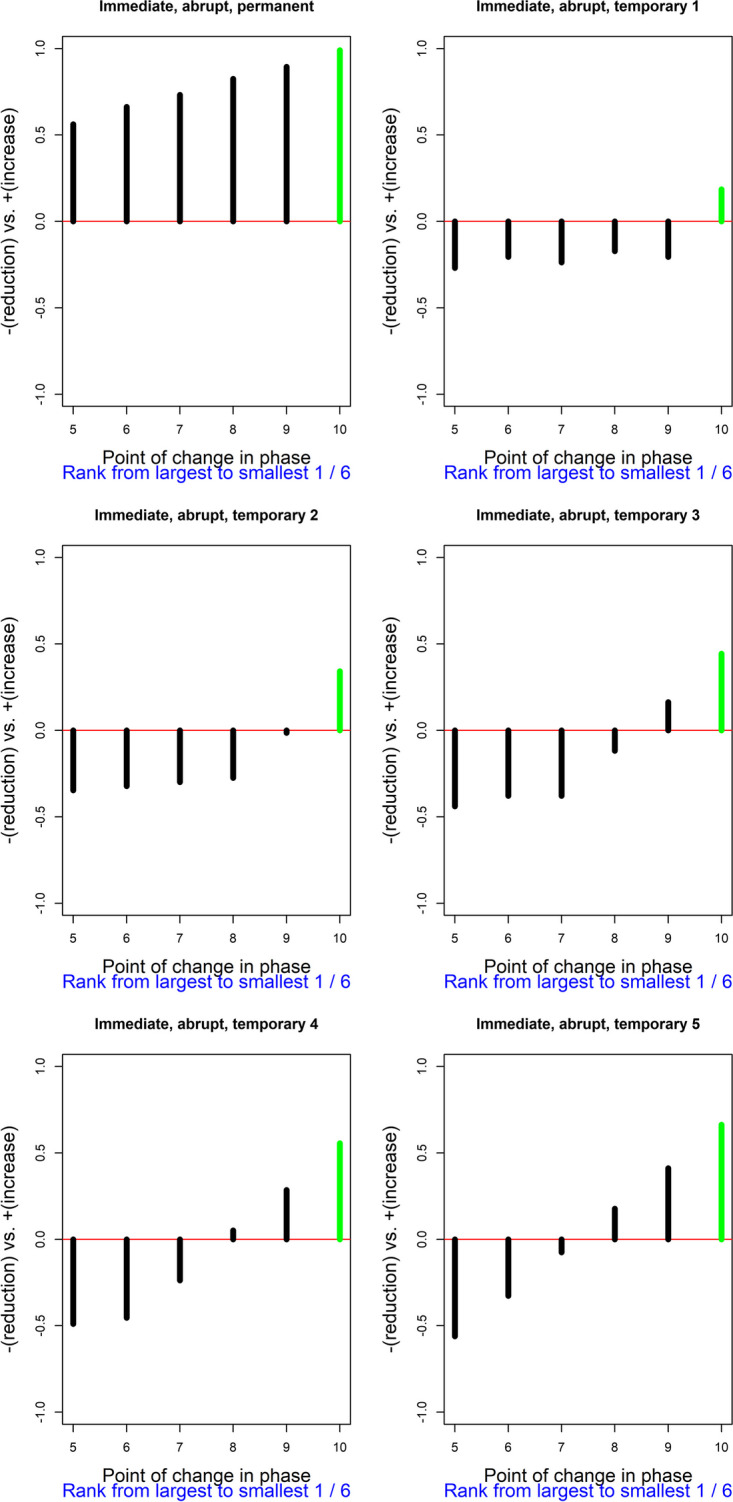
“The response functions represent a general framework that allows, for instance, including the study of immediate effects (see Manolov & Onghena, 2022) as a special case.”
BackgroundSelf-citationTransition States in Single Case Experimental Designs
Brogan, K. M., Rapp, J. T., & Sturdivant, B. R. (2019) · Behavior Modification · doi:10.1177/0145445519839213 · Cited by 16 · cited 2×
“Additionally, delayed effects may still be tolerated when there is an expectation (and previous evidence) of a transition state or an extinction burst (Brogan et al., 2019; Katz & Lattal, 2021).”
BackgroundA Simulation Study on Two Analytical Techniques for Alternating Treatments Designs
Manolov, R. (2018) · Behavior Modification · doi:10.1177/0145445518777875 · Cited by 15 · cited 4×
“It should be noted that the statistical power also depends on the series’ length and the test statistic used (Levin et al., 2021; Michiels et al., 2018), as well as on the randomization scheme (Levin et al., 2018; Manolov, 2019).”
BackgroundMethodInfluentialSelf-citationMichiels, B., Heyvaert, M., & Onghena, P. (2017) · Behavior Research Methods · doi:10.3758/s13428-017-0885-7 · Cited by 14 · cited 2×
“It should be noted that the statistical power also depends on the series’ length and the test statistic used (Levin et al., 2021; Michiels et al., 2018), as well as on the randomization scheme (Levin et al., 2018; Manolov, 2019).”
BackgroundMethodSelf-citationRichman, D. M., Barnard-Brak, L. M., & Watkins, L. (2022) · Journal of Intellectual Disability Research · doi:10.1111/jir.12966 · Cited by 5 · cited 1×
“The within-case standardized mean difference is affected by potentially irrelevant procedural details of the study’s design (Pustejovsky, 2019), and the interpretation of its values may depend on whether the aim is to increase or reduce the target behavior (Richman et al., 2022).”
BackgroundAdditional randomization test procedures for the changing criterion design
Tanious, R. (2022) · Behavioral Interventions · doi:10.1002/bin.1875 · Cited by 4 · cited 1×
“For changing criterion designs, specific randomization tests have been suggested (Ferron et al., 2019; Onghena et al., 2019; Tanious, 2022).”
MethodLevin, J. R., & Gafurov, B. S. (2018) · Developmental Neurorehabilitation · doi:10.1080/17518423.2018.1532970 · Cited by 3 · cited 8×
“For readers interested in the application of randomization tests to multiple baseline design, we recommend the following articles by Levin and colleagues (Levin et al., 2017, 2018; Levin & Gafurov, 2019).”
BackgroundMethodInfluential
Research works printed but not linked: 2
- Kazdin, A. E. (2020). Single-case research designs: Methods for clinical and applied settings (3rd ed.). Oxford University Press.
- Kratochwill TR Levin JR Horner RH Negative results: Conceptual and methodological dimensions in single-case intervention research Remedial and Special Education 2018 34 1 26 38 10.1177/0741932512452794 · DOI · Paper page
Cited by
Ingeman, K., Frostholm, L., Wellnitz, K. B., Wright, K., Frydendal, D. H., Onghena, P., & Rask, C. U. (2023) · JMIR Research Protocols · doi:10.2196/46927 · Cited by 3
“Secondary test statistic: response functions [60] will be used to test the hypothesis of delayed and gradual reduction in anxiety (see the Aim section).”
InfluentialSelf-citationIngeman, K., Frydendal, D. H., Frostholm, L., Bjerre-Nielsen, E., Wellnitz, K. B., Onghena, P., Wright, K. D., & Rask, C. U. (2025) · JMIR Formative Research · doi:10.2196/65396 · Cited by 1
“Second, the original study protocol indicated that response functions [60] would serve as a secondary randomization test statistic.”
Self-citationCarrozzo, E., Zimmermann, G., Bathke, A. C., Neunhäeuserer, D., Niebauer, J., & Kulnik, S. T. (2025) · Biometrical Journal · doi:10.1002/bimj.70045 · Cited by 3
Sharaa, H. A., Bartels, S. L., Onghena, P., Taygar, A. S., Engman, L., Flink, I. K., Petersson, S., Boersma, K., McCracken, L. M., Simons, L. E., et al. (2026) · Digital Health · doi:10.1177/20552076261467865 · Cited by 1
Self-citationUsing Case-Specific Effect Sizes to Complement Visual Analysis in Single-Case Design Research
Ferron, J. M., Kirby, M. S., Lipien, L., Pustejovsky, J. E., Grekov, P., Machalicek, W., & Moeyaert, M. (2026) · Perspectives on Behavior Science · doi:10.1007/s40614-026-00516-1
Metadata
- Authors
- Manolov, R., & Onghena, P.
- Affiliations
- Universitat de Barcelona (ES)
- KU Leuven (BE)
- Corresponding author
- Manolov, Rumen
- Venue
- Behavior Research Methods
- Published
- 2023-09-25
- Volume
- 56
- Issue
- 4
- Pages
- 3915-3936
- ISSN
- 1554-351X (ISSN-L)
- 1554-3528
- PMC
- PMC11133040
- OpenAlex
- W4387010042
- Cited by
- 5
- References
- 118
- Citations by year
- 2026: 2 · 2025: 2 · 2023: 1
- FWCI
- 1.01
- Type
- journal article
- Language
- en
- Open access
- hybrid
- doi.org
- Licence
- cc-by
- creativecommons.org/licenses/by/4.0 (tdm)
- creativecommons.org/licenses/by/4.0 (vor)
- Locations
- Behavior Research Methods (publishedVersion, cc-by)
- PubMed Central (publishedVersion, cc-by)
- PubMed (publishedVersion)
- Lirias (submittedVersion, other-oa)
- Dipòsit Digital de la Universitat de Barcelona (Universitat de Barcelona) (submittedVersion, cc-by)
- Funders
- Universitat de Barcelona
- Topics
- Physical Sciences › Mathematics › Statistics and Probability › Statistical Methods in Clinical Trials
- Physical Sciences › Mathematics › Statistics and Probability › Statistical Methods and Bayesian Inference
- Physical Sciences › Mathematics › Statistics and Probability › Advanced Causal Inference Techniques
- Keywords
- permutation tests, response functions, delayed treatment effect, test statistics, web application
- MeSH terms
- Single-Case Studies as Topic, Data Interpretation, Statistical, Humans, Random Allocation, Research Design, Time Factors, Models, Statistical
About these checks
Registry, retraction, Cites and statistics results are computed, not judged, with one exception: a printed reference that no index lists is read once by a model before it counts as a citation error. Claims are extracted by a model and kept only when their quote appears verbatim in the text; each cited source is then checked, with a model’s help, for whether it says what the claim relies on. Those verdicts can be wrong — read the claim’s quote and the cited source before relying on one.
Statistics and arithmetic are recomputed, not judged.
Confidence bands are shown only for fields calibrated on our annotated test set. None is calibrated yet, so no band is shown.
What counts as a claim ›How we measure confidence ›How we check this ›
Are you an author, or do you see a problem with this page? Request a review
Data sources
Bibliographic data: Semantic Scholar, OpenAlex, Crossref.
Contains information from the Semantic Scholar Academic Graph Datasets, made available under the ODC Attribution License (ODC-BY 1.0).
Semantic Scholar’s data is described in: Kinney, R., et al. (2023). The Semantic Scholar Open Data Platform. arXiv:2301.10140.
