

Historical (1850–2000) gridded anthropogenic and biomass burning emissions of reactive gases and aerosols: methodology and application
Open accessPublished version of a preprint
The DOI matches its Crossref record; 112 of the 113 references it cites were found in a registry or an index.
Abstract
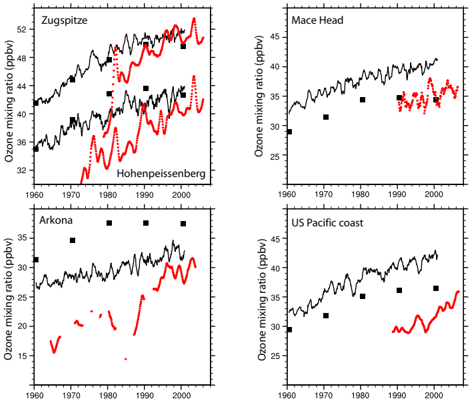
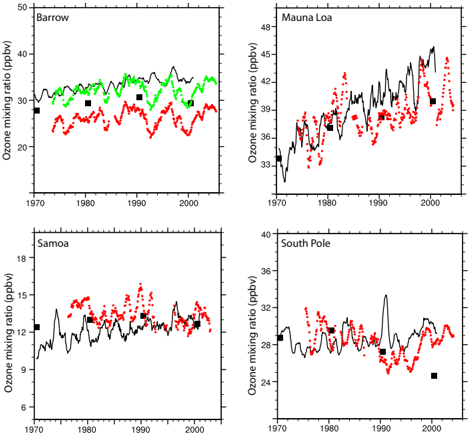
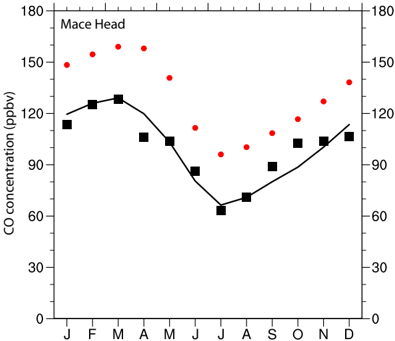
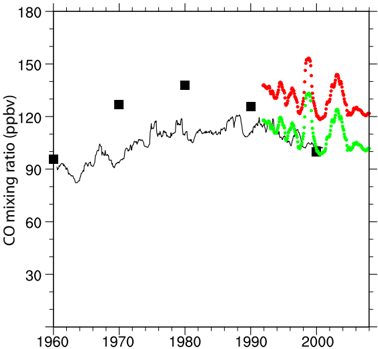
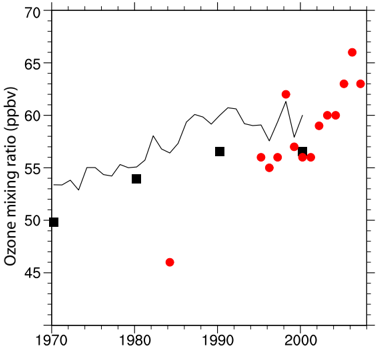
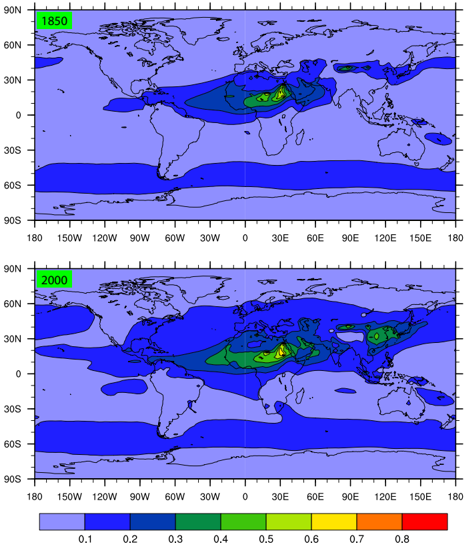
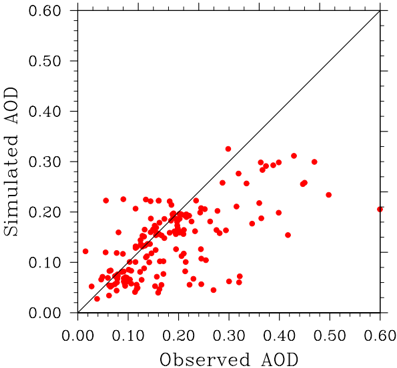
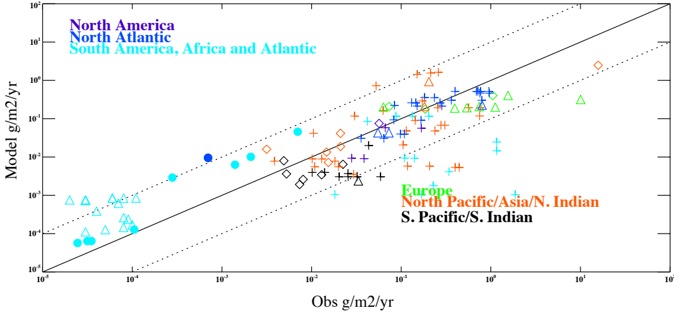
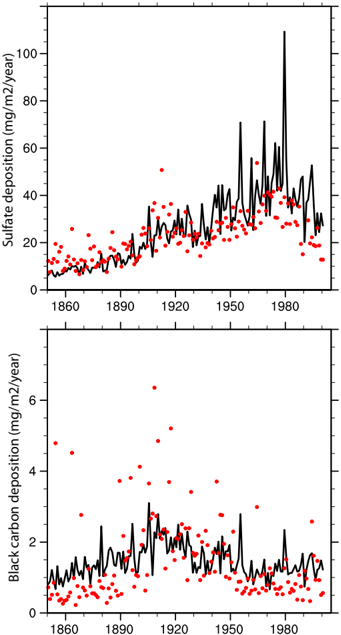
We present and discuss a new dataset of gridded emissions covering the historical period (1850–2000) in decadal increments at a horizontal resolution of 0.5° in latitude and longitude. The primary purpose of this inventory is to provide consistent gridded emissions of reactive gases and aerosols for use in chemistry model simulations needed by climate models for the Climate Model Intercomparison Program #5 (CMIP5) in support of the Intergovernmental Panel on Climate Change (IPCC) Fifth Assessment report (AR5). Our best estimate for the year 2000 inventory represents a combination of existing regional and global inventories to capture the best information available at this point; 40 regions and 12 sectors are used to combine the various sources. The historical reconstruction of each emitted compound, for each region and sector, is then forced to agree with our 2000 estimate, ensuring continuity between past and 2000 emissions. Simulations from two chemistry-climate models are used to test the ability of the emission dataset described here to capture long-term changes in atmospheric ozone, carbon monoxide and aerosol distributions. The simulated long-term change in the Northern mid-latitudes surface and mid-troposphere ozone is not quite as rapid as observed. However, stations outside this latitude band show much better agreement in both present-day and long-term trend. The model simulations indicate that the concentration of carbon monoxide is underestimated at the Mace Head station; however, the long-term trend over the limited observational period seems to be reasonably well captured. The simulated sulfate and black carbon deposition over Greenland is in very good agreement with the ice-core observations spanning the simulation period. Finally, aerosol optical depth and additional aerosol diagnostics are shown to be in good agreement with previously published estimates and observations.
Overview
The claims and statistics of this paper haven’t been checked yet.
Free: it reads the open-access text and checks the first 5 claims that cite a source we can check. Create a free account to check every claim.
Integrity signals
Registry
Cites
Statistics
Figures
Verification
Claims the paper makes
The claims and statistics of this paper haven’t been checked yet.
Free: it reads the open-access text and checks the first 5 claims that cite a source we can check. Create a free account to check every claim.
Claims other papers make about this one
Each is checked against this paper’s own text: does it say what the citing paper says it does?
The source backs part of the claim, not all of it — or backs it for a different population, condition or comparison.
In the citing paper
“No sulfur isotope analyses have been performed for the remaining part of the IAP, but sulfur concentrations in the Greenland ice cores frequently exceed typical levels which were prevalent for the first half of the 20th century during periods of intensive industrial activity and related sulfur emissions across the North Atlantic region 45 (Fig. 6a).”
From Decadal-to-centennial increases of volcanic aerosols from Iceland challenge the concept of a Medieval Quiet Period (2024) · cites this paper as [45]
Experimental — accuracy not yet measured
Self-check
Percentages, sums and reported differences re-computed from the paper’s own numbers.
The self-check needs the paper’s full text.
Citations
Cites
Rayner, N. A., Parker, D. E., Horton, E. B., Folland, C. K., Alexander, L. V., Rowell, D. P., Kent, E. C., & Kaplan, A. (2003) · Journal of Geophysical Research: Atmospheres · doi:10.1029/2002jd002670 · Cited by 10,991 · cited 1×
“Using two chemistry-climate models, we have performed 1850–2009 simulations (transient or time-slice experiments) in order to provide a first-order evaluation of the emissions.”
MethodAERONET—A Federated Instrument Network and Data Archive for Aerosol Characterization
Holben, B. N., Eck, T. F., Slutsker, I., Tanré, D., Buis, J. P., Setzer, A., Vermote, E., Reagan, J. A., Kaufman, Y. J., Nakajima, T., et al. (1998) · Remote Sensing of Environment · doi:10.1016/s0034-4257(98)00031-5 · Cited by 7,743 · cited 1×
“The observed values are based on annually averaged AERONET optical depths (Holben et al., 1998).”
BackgroundHow a century of ammonia synthesis changed the world
Erisman, J. W., Sutton, M. A., Galloway, J., Klimont, Z., & Winiwarter, W. (2008) · Nature Geoscience · doi:10.1038/ngeo325 · Cited by 4,607 · cited 8×
“To extend the non-CO 2 ship emissions backward in time, the 2000 emission totals from Eyring et al. (2010) are scaled with the historical CO2 emission time series from Buhaug et al. (2008) back to 1870.”
BackgroundMethodInfluentialSelf-citationEmission of trace gases and aerosols from biomass burning
Andreae, M. O., & Merlet, P. (2001) · Global Biogeochemical Cycles · doi:10.1029/2000gb001382 · Cited by 3,902 · cited 1×
“The emission factors for these classes were harmonized to those given by Andreae and Merlet (2001, with updates from M. O. Andreae, personal communication, 2008). Emissions from burning of soil organic matter, notably peat soil, which is ignited by fires in the overlying surface vegetation, may strongly influence emis…”
MethodMeehl, G. A., Stocker, T. F., Collins, W. D., Friedlingstein, P., Gaye, A. T., Gregory, J. M., Kitoh, A., Knutti, R., Murphy, J. M., Noda, A., et al. (n.d.) · Bern Open Repository and Information System (University of Bern) · doi:10.48350/25539 · Cited by 3,726
A technology‐based global inventory of black and organic carbon emissions from combustion
Bond, T. C., Streets, D. G., Yarber, K. F., Nelson, S. M., Woo, J., & Klimont, Z. (2004) · Journal of Geophysical Research: Atmospheres · doi:10.1029/2003jd003697 · Cited by 2,393
Self-citationAn inventory of gaseous and primary aerosol emissions in Asia in the year 2000
Streets, D. G., Bond, T. C., Carmichael, G. R., Fernandes, S. D., Fu, Q., He, D., Klimont, Z., Nelson, S. M., Tsai, N. Y., Wang, M. Q., et al. (2003) · Journal of Geophysical Research: Atmospheres · doi:10.1029/2002jd003093 · Cited by 2,038
Self-citationCouplings Between Changes in the Climate System and Biogeochemistry
Denman, K. L., Brasseur, G. P., Chidthaisong, A., Ciais, P., Cox, P. M., Dickinson, R. E., Hauglustaine, D. A., Heinze, C., Holland, E. A., Jacob, D. J., et al. (2007) · HAL · Cited by 2,031
Self-citationAsian emissions in 2006 for the NASA INTEX-B mission
Zhang, Q., Streets, D. G., Carmichael, G. R., He, K. B., Huo, H., Kannari, A., Klimont, Z., Park, I. S., Reddy, S., Fu, J. S., et al. (2009) · Atmospheric Chemistry and Physics · doi:10.5194/acp-9-5131-2009 · Cited by 1,950 · cited 4×
“Although additional information is available in the literature for several regions (e.g., Zhang et al., 2009; Streets et al., 2003, 2006; Klimont et al., 2009; Cofala15 et al., 2007; NARSTO, 2006; Garg et al., 2006), we did not attempt to include those as they were less complete than the…”
BackgroundInfluentialSelf-citationChemical Kinetics and Photochemical Data for Use in Atmospheric Studies, Evaluation Number 18
Burkholder, J. B., Sander, S. P., Abbatt, J. P. D., Barker, J. R., Huie, R. E., Kolb, C. E., Kurylo, M. J., Orkin, V. L., Wilmouth, D. M., & Wine, P. H. (2015) · doi:10.13140/rg.2.1.2504.2806 · Cited by 1,928
Research works printed but not linked: 3
- Chipperfield, M. P., Fioletov, V. E., Bregman, B., Burrows, J., Con- nor, B. J., Haigh, J. D., Harris, N. R. P., Hauchecorne, A., Hood, L. L., Kawa, S. R., Krzy'scin, J. W., Logan, J. A., Muthama, N. J., Polvani, L., Randel, W. J., Sasaki, T., Stähelin, J., Stolarski, R. S., Thomason, L. W., and Zawodny, J. M.: Global Ozone, 2007: Past and Present, Chapter 3 in Scientific Assessment of Ozone Depletion: 2006, World Meteorological Organization, Geneva, Switzerland, Global Ozone Research and Monitoring Project - Report No. 50, 572 pp., 2006.
- Smith, S. J., van Aardenne, J., Klimont, Z., Andres, R., Volke, A., and Delgado Arias, S.: Anthropogenic sulfur dioxide emis- sions: 18502005, Atmos. Chem. Phys. Discuss., 10, 16111- 16151, doi:10.5194/acpd-10-16111-2010, 2010. · DOI
- Vestreng, V., Adams, M., and Goodwin, J.: Inventory review 2004, EMEP Techincal Report MSC-W1/2004, 2004.
Cited by
Items 301–400 of 1,014
Fu, T., Cao, J., Zhang, X. Y., Lee, S., Zhang, Q., Han, Y., Qu, W., Han, Z., Zhang, R., Wang, Y., et al. (2012) · Atmospheric chemistry and physics · doi:10.5194/acp-12-2725-2012 · Cited by 147
Historical total ozone radiative forcing derived from CMIP6 simulations
Skeie, R. B., Myhre, G., Hodnebrog, Ø., Cameron-Smith, P. J., Deushi, M., Hegglin, M. I., Horowitz, L. W., Kramer, R. J., Michou, M., Mills, M. J., et al. (2020) · npj Climate and Atmospheric Science · doi:10.1038/s41612-020-00131-0 · Cited by 138
Self-citationWang, H., Rasch, P. J., Easter, R. C., Singh, B., Zhang, R., Ma, P., Qian, Y., Ghan, S. J., & Beagley, N. (2014) · Journal of Geophysical Research Atmospheres · doi:10.1002/2014jd022297 · Cited by 151
The DACCIWA Project: Dynamics–Aerosol–Chemistry–Cloud Interactions in West Africa
Knippertz, P., Coe, H., Chiu, J.-Y. C., Evans, M. J., Fink, A. H., Kalthoff, N., Liousse, C., Mari, C. H., Allan, R. P., Brooks, B., et al. (2015) · Bulletin of the American Meteorological Society · doi:10.1175/bams-d-14-00108.1 · Cited by 139
“Already anthropogenic pollutants are estimated to have tripled in SWA between 1950 and 2000 (Lamarque et al. 2010) with similar, if not larger, increases expected by 2030 (Liousse et al. 2014).”
Self-citationInternal Variability and Regional Climate Trends in an Observational Large Ensemble
McKinnon, K. A., & Deser, C. (2018) · Journal of Climate · doi:10.1175/jcli-d-17-0901.1 · Cited by 149
“5) scenario thereafter (Lamarque et al. 2010, 2011; Meinshausen et al. 2011).”
Ramaswamy, V., Collins, W. D., Haywood, J., Lean, J. L., Mahowald, N. M., Myhre, G., Naïk, V., Shine, K. P., Soden, B. J., Stenchikov, G. L., et al. (2019) · Meteorological Monographs · doi:10.1175/amsmonographs-d-19-0001.1 · Cited by 163
Self-citationSources, transport and deposition of iron in the global atmosphere
Wang, R., Balkanski, Y. J., Boucher, O., Bopp, L., Chappell, A., Ciais, P., Hauglustaine, D. A., Peñuelas, J., & Tao, S. (2015) · Atmospheric chemistry and physics · doi:10.5194/acp-15-6247-2015 · Cited by 153
“…transportation, and industry) using the emission distribution of black carbon (BC) in each year for the same sector from the MACCity inventory (Lamarque et al., 2010; Granier et al., 2011) as a proxy Gridded emissions from wildfires were estimated from carbon emission data at a resolution of…”
Transient climate and ambient health impacts due to national solid fuel cookstove emissions
Lacey, F. G., Henze, D. K., Lee, C. J., van Donkelaar, A., & Martin, R. V. (2017) · Proceedings of the National Academy of Sciences · doi:10.1073/pnas.1612430114 · Cited by 137
Wu, T., Zhang, F., Zhang, J., Jie, W., Zhang, Y., Wu, F., Li, L., Yan, J., Liu, X., Lu, X., et al. (2020) · Geoscientific Model Development · doi:10.5194/gmd-13-977-2020 · Cited by 137
Aerosol indirect effects in a multi-scale aerosol-climate model PNNL-MMF
Wang, M., Ghan, S. J., Ovchinnikov, M., Liu, X., Easter, R. C., Kassianov, E., Qian, Y., & Morrison, H. (2011) · Atmospheric chemistry and physics · doi:10.5194/acp-11-5431-2011 · Cited by 148
Guieu, C., Aumont, O., Paytan, A., Bopp, L., Law, C. S., Mahowald, N., Achterberg, E. P., Marañón, E., Salihoglu, B., Crise, A., et al. (2014) · Global Biogeochemical Cycles · doi:10.1002/2014gb004852 · Cited by 135
“Atmospheric deposition fluxes for nitrogen were based on published emissions and simulations of the historical time period and Representative Concentration Scenarios (RCPs) [van Vuuren et al., 2011; Lamarque et al., 2010, 2011].”
Self-citationGao, Y., Fu, J. S., Drake, J. B., Lamarque, J.-F., & Liu, Y. (2013) · Atmospheric Chemistry and Physics · doi:10.5194/acp-13-9607-2013 · Cited by 135
Self-citationVariations in global methane sources and sinks during 1910–2010
Ghosh, A., Patra, P. K., Ishijima, K., Umezawa, T., Ito, A., Etheridge, D. M., Sugawara, S., Kawamura, K., Miller, J. B., Dlugokencky, E. J., et al. (2015) · Atmospheric chemistry and physics · doi:10.5194/acp-15-2595-2015 · Cited by 163
Zhao, Y., Saunois, M., Bousquet, P., Lin, X., Berchet, A., Hegglin, M. I., Canadell, J. G., Jackson, R. B., Hauglustaine, D. A., Szopa, S., et al. (2019) · Atmospheric Chemistry and Physics · doi:10.5194/acp-19-13701-2019 · Cited by 134
“…OH N / S ratios to a model overestimation of O 3 and underestimation of CO over the Northern Hemisphere (Naik et al., 2013; Young et al., 2013; Strode et al., 2015), which have also been reported for CCMI 2018) and NO emissions from human activities (Lamarque et al., 2010; Miyazaki et al., 2012).”
BackgroundMethodSpatial and Temporal Trends in Global Emissions of Nitrogen Oxides from 1960 to 2014
Huang, T., Zhu, X., Zhong, Q., Yun, X., Meng, W., Li, B., Ma, J., Zeng, E. Y., & Tao, S. (2017) · Environmental Science & Technology · doi:10.1021/acs.est.7b02235 · Cited by 141
Tropical and Boreal Forest – Atmosphere Interactions: A Review
Artaxo, P. E., Hansson, H., Andreae, M. O., Bäck, J. K., Alves, E. G., Barbosa, H. M. J., Bender, F. A. ‐., Bourtsoukidis, E., Carbone, S., Chi, J., et al. (2022) · Tellus B · doi:10.16993/tellusb.34 · Cited by 167
Global changes in the diurnal cycle of surface ozone
Strode, S. A., Ziemke, J. R., Oman, L. D., Lamsal, L. N., Olsen, M. A., & Liu, J. (2018) · Atmospheric Environment · doi:10.1016/j.atmosenv.2018.11.028 · Cited by 135
“The MACCity emissions (http://accent.aero.jussieu.fr/ MACC_metadata.php) include sector-by-sector linear interpolation of the decadal Atmospheric Chemistry and Climate - Model Inter-comparison Project (ACCMIP) emissions (Lamarque et al., 2010) to each year as well as seasonal scaling.”
MethodLü, Z., Streets, D. G., Zhang, Q., & Wang, S. (2011) · Geophysical Research Letters · doi:10.1029/2011gl049903 · Cited by 132
How shorter black carbon lifetime alters its climate effect
Hodnebrog, Ø., Myhre, G., & Samset, B. H. (2014) · Nature Communications · doi:10.1038/ncomms6065 · Cited by 140
Hamilton, D. S., Moore, J. K., Arneth, A., Bond, T. C., Carslaw, K. S., Hantson, S., Ito, A., Kaplan, J. O., Lindsay, K., Nieradzik, L., et al. (2020) · Global Biogeochemical Cycles · doi:10.1029/2019gb006448 · Cited by 154
Self-citationk-Pmip, P. (2015) · Climate of the past · doi:10.5194/cp-11-1673-2015 · Cited by 141
Anthropogenic combustion iron as a complex climate forcer
Matsui, H., Mahowald, N. M., Moteki, N., Hamilton, D. S., Ohata, S., Yoshida, A., Koike, M., Scanza, R. A., & Flanner, M. G. (2018) · Nature Communications · doi:10.1038/s41467-018-03997-0 · Cited by 128
Self-citationDelayed use of bioenergy crops might threaten climate and food security
Xu, S., Wang, R., Gasser, T., Ciais, P., Peñuelas, J., Balkanski, Y. J., Boucher, O., Janssens, I. A., Sardans, J., Clark, J. H., et al. (2022) · Nature · doi:10.1038/s41586-022-05055-8 · Cited by 150
Soot superaggregates from flaming wildfires and their direct radiative forcing
Chakrabarty, R. K., Beres, N. D., Moosmüller, H., China, S., Mazzoleni, C., Dubey, M. K., Liu, L., & Mishchenko, M. I. (2014) · Scientific Reports · doi:10.1038/srep05508 · Cited by 136
A multi-model study of impacts of climate change on surface ozone in Europe
Langner, J., Engardt, M., Baklanov, A. A., Christensen, J. H., Gauss, M., Geels, C., Hedegaard, G. B., Nuterman, R. B., Simpson, D. M., Soares, J., et al. (2012) · Atmospheric chemistry and physics · doi:10.5194/acp-12-10423-2012 · Cited by 149
Aerosols in the Pre-industrial Atmosphere
Carslaw, K. S., Gordon, H., Hamilton, D. S., Johnson, J. S., Regayre, L. A., Yoshioka, M., & Pringle, K. J. (2017) · Current Climate Change Reports · doi:10.1007/s40641-017-0061-2 · Cited by 129
“The small anthropogenic emissions for 1850 were taken from the Atmospheric Chemistry and Climate Model Intercomparison Project [35].”
Xu, Y., Ramanathan, V., & Washington, W. M. (2016) · Atmospheric chemistry and physics · doi:10.5194/acp-16-1303-2016 · Cited by 138
Kokkola, H., Kühn, T., Laakso, A., Bergman, T., Lehtinen, K. E. J., Mielonen, T., Arola, A., Stadtler, S., Korhonen, H., Ferrachat, S., et al. (2018) · Geoscientific model development · doi:10.5194/gmd-11-3833-2018 · Cited by 156
Self-citationVal Martin, M., Heald, C. L., Lamarque, J.-F., Tilmes, S., Emmons, L. K., & Schichtel, B. A. (2015) · Atmospheric Chemistry and Physics · doi:10.5194/acp-15-2805-2015 · Cited by 125
“Emissions of NOx, NH3, CO, non-methane non-methane volatile organic compounds (VOCs) SO2 and carbonaceous aerosols for anthropogenic activities and biomass burning are provided for 2000 by Lamarque et al. (2010) and for 2050 by the RCP database (van Vuuren et al., 2011, and references therein).”
Self-citationNitrogen isotopes in ice core nitrate linked to anthropogenic atmospheric acidity change
Geng, L., Alexander, B., Cole‐Dai, J., Steig, E. J., Savarino, J., Sofen, E. D., & Schauer, A. J. (2014) · Proceedings of the National Academy of Sciences · doi:10.1073/pnas.1319441111 · Cited by 141
Quantifying PM2.5-meteorology sensitivities in a global climate model
Westervelt, D. M., Horowitz, L. W., Naïk, V., Tai, A. P. K., Fiore, A. M., & Mauzerall, D. L. (2016) · Atmospheric Environment · doi:10.1016/j.atmosenv.2016.07.040 · Cited by 136
Dong, B., Wilcox, L. J., Highwood, E. J., & Sutton, R. T. (2019) · Climate Dynamics · doi:10.1007/s00382-019-04698-0 · Cited by 135
Anthropogenic radiative forcing time series from pre-industrial times until 2010
Skeie, R. B., Berntsen, T. K., Myhre, G., Tanaka, K., Kvalevåg, M. M., & Hoyle, C. R. (2011) · Atmospheric Chemistry and Physics · doi:10.5194/acp-11-11827-2011 · Cited by 126
“6b), however the pre-1972 Arkona data might not be consistent with the later period (Low et al., 1990) due to changes in measurement instruments. In Switzerland, in Arosa (9.7◦ E, 46.8◦ N, 1800 m) O3 measurements were also made 15 in the 1950s. The O3 concentration increased by a factor of 2.2 between 1950s and 1990 (…”
InfluentialA multi-model assessment of the co-benefits of climate mitigation for global air quality
Rao, S., Klimont, Z., Leitao, J., Riahi, K., van Dingenen, R., Reis, L. A., Calvin, K., Dentener, F., Drouet, L., Fujimori, S., et al. (2016) · Environmental Research Letters · doi:10.1088/1748-9326/11/12/124013 · Cited by 124
Self-citationVertical dependence of black carbon, sulphate and biomass burning aerosol radiative forcing
Samset, B. H., & Myhre, G. (2011) · Geophysical Research Letters · doi:10.1029/2011gl049697 · Cited by 126
“While it is not always a good predictor of surface temperature change, in particular for absorbing aerosols such as BC [Hansen et al., 2005; Lohmann et al., 2010], it can be an excellent diagnostic for understanding global RF results from threedimensional aerosol models.”
Trend analysis in aerosol optical depths and pollutant emission estimates between 2000 and 2009
de Meij, A., Pozzer, A., & Lelieveld, J. (2012) · Atmospheric Environment · doi:10.1016/j.atmosenv.2012.01.059 · Cited by 159
Chien, C., Mackey, K. R. M., Dutkiewicz, S., Mahowald, N. M., Prospero, J. M., & Paytan, A. (2016) · Global Biogeochemical Cycles · doi:10.1002/2015gb005334 · Cited by 140
Self-citationDivergent global-scale temperature effects from identical aerosols emitted in different regions
Persad, G. G., & Caldeira, K. (2018) · Nature Communications · doi:10.1038/s41467-018-05838-6 · Cited by 155
Sessions, W. R., Reid, J. S., Benedetti, A., Colarco, P. R., da Silva, A., Lu, C., Sekiyama, T. T., Tanaka, T. Y., Baldasano, J. M., Basart, S., et al. (2015) · Atmospheric chemistry and physics · doi:10.5194/acp-15-335-2015 · Cited by 134
“Anthropogenic emissions come from the ECMWF MACC inventory (Lamarque et al., 2010).”
Regayre, L. A., Johnson, J. S., Yoshioka, M., Pringle, K. J., Sexton, D. M. H., Booth, B. B. B., Lee, L. A., Bellouin, N., & Carslaw, K. S. (2018) · Atmospheric chemistry and physics · doi:10.5194/acp-18-9975-2018 · Cited by 149
Reassessment of pre-industrial fire emissions strongly affects anthropogenic aerosol forcing
Hamilton, D. S., Hantson, S., Scott, C. E., Kaplan, J. O., Pringle, K. J., Nieradzik, L. P., Rap, A., Folberth, G. A., Spracklen, D. V., & Carslaw, K. S. (2018) · Nature Communications · doi:10.1038/s41467-018-05592-9 · Cited by 122
Fiore, A. M., Oberman, J., Lin, M., Zhang, L., Clifton, O. E., Jacob, D. J., Naïk, V., Horowitz, L. W., Pinto, J. P., & Milly, G. P. (2014) · Atmospheric Environment · doi:10.1016/j.atmosenv.2014.07.045 · Cited by 121
“For anthropogenic emissions inventories, GEOS-Chem uses the 2005 National Emissions Inventory for the U.S., while AM3 uses the historical ACCMIP emissions developed in support of IPCC AR5 (Lamarque et al., 2011; Lamarque et al., 2010).”
On the wintertime low bias of Northern Hemisphere carbon monoxide found in global model simulations
Stein, O., Schultz, M. G., Bouarar, I., Clark, H., Huijnen, V., Gaudel, A., George, M., & Clerbaux, C. (2014) · Atmospheric Chemistry and Physics · doi:10.5194/acp-14-9295-2014 · Cited by 121
Self-citationRadiative forcing and climate response to projected 21st century aerosol decreases
Westervelt, D. M., Horowitz, L. W., Naïk, V., Golaz, J., & Mauzerall, D. L. (2015) · Atmospheric chemistry and physics · doi:10.5194/acp-15-12681-2015 · Cited by 135
Huneeus, N., Chevallier, F., & Boucher, O. (2012) · Atmospheric chemistry and physics · doi:10.5194/acp-12-4585-2012 · Cited by 127
Paulot, F., Ginoux, P. A., Cooke, W. F., Donner, L. J., Fan, S., Lin, M., Mao, J., Naïk, V., & Horowitz, L. W. (2016) · Atmospheric chemistry and physics · doi:10.5194/acp-16-1459-2016 · Cited by 140
“Anthropogenic5 emissions of NH3 previously used in AM3 simulations for ACCMIP and CMIP5 are constant throughout the year (Lamarque et al., 2010).”
Wang, R., Balkanski, Y. J., Boucher, O., Ciais, P., Schuster, G. L., Chevallier, F., Samset, B. H., Liu, J., Piao, S. L., Valari, M., et al. (2016) · Journal of Geophysical Research Atmospheres · doi:10.1002/2015jd024326 · Cited by 137
Bisiaux, M. M., Edwards, R., McConnell, J. R., Curran, M. A. J., Van Ommen, T. D., Smith, A. M., Neumann, T. A., Pasteris, D. R., Penner, J. E., & Taylor, K. (2012) · Atmospheric Chemistry and Physics · doi:10.5194/acp-12-4107-2012 · Cited by 119
“Combined with general circulation modelling and rBC emission inventories, these records can provide constraints on the paleo-rBC atmospheric distribution, past biomass burning emissions and climate feedbacks (Lamarque et al., 2010; McConnell, 2010).”
InfluentialSelf-citationOlin, S., Schurgers, G., Lindeskog, M., Wårlind, D., Smith, B., Bodin, P., Holmér, J., & Arneth, A. (2015) · Biogeosciences · doi:10.5194/bg-12-2489-2015 · Cited by 145
Golaz, J., Salzmann, M., Donner, L. J., Horowitz, L. W., Ming, Y., & Zhao, M. (2011) · Journal of Climate · doi:10.1175/2010jcli3945.1 · Cited by 121
“and the mixing length lc varying between 300 m in the boundary layer and 30 m in the free atmosphere. The functional form c(sw) is empirically fitted such that the cloud drop number predicted with ŵ in Eq. (A7) approximately matches the one obtained by integration over a normal distribution of zero mean and sw standar…”
BackgroundInfluentialOwens, M. J., Lockwood, M., Hawkins, E., Usoskin, I., Jones, G. S., Barnard, L., Schurer, A., & Fasullo, J. (2017) · Journal of Space Weather and Space Climate · doi:10.1051/swsc/2017034 · Cited by 117
Quéré, C. L., Moriarty, R., Andrew, R. M., Peters, G. P., Ciais, P., Friedlingstein, P., Stephen D., J., Sitch, S. A., Tans, P. P., Arneth, A., et al. (2015) · Repository for Publications and Research Data (ETH Zurich) · doi:10.3929/ethz-b-000094279 · Cited by 118
Effects of atmospheric conditions on ice nucleation activity of Pseudomonas
Attard, E., Yang, H., Delort, A. M., Amato, P., Pöschl, U., Glaux, C., Koop, T., & Morris, C. E. (2012) · Atmospheric chemistry and physics · doi:10.5194/acp-12-10667-2012 · Cited by 117
Nabat, P., Somot, S., Mallet, M., Michou, M., Sevault, F., Driouech, F., Meloni, D., di Sarra, A. G., Biagio, C. D., Formenti, P., et al. (2015) · Atmospheric chemistry and physics · doi:10.5194/acp-15-3303-2015 · Cited by 137
Nonuniform Contribution of Internal Variability to Recent Arctic Sea Ice Loss
England, M., Jahn, A., & Polvani, L. M. (2019) · Journal of Climate · doi:10.1175/jcli-d-18-0864.1 · Cited by 127
Fortems‐Cheiney, A., Chevallier, F., Pison, I., Bousquet, P., Saunois, M., Szopa, S., Cressot, C., Kurosu, T. P., Chance, K., & Fried, A. (2012) · Atmospheric chemistry and physics · doi:10.5194/acp-12-6699-2012 · Cited by 129
Crippa, M., Janssens-Maenhout, G., Guizzardi, D., Van Dingenen, R., & Dentener, F. (2019) · Atmospheric Chemistry and Physics · doi:10.5194/acp-19-5165-2019 · Cited by 117
DeLang, M. N., Becker, J. S., Chang, K.-L., Serre, M. L., Cooper, O. R., Schultz, M. G., Schröder, S., Lu, X., Zhang, L., Deushi, M., et al. (2021) · Environmental Science & Technology · doi:10.1021/acs.est.0c07742 · Cited by 114
Self-citationDecadal trends in global CO emissions as seen by MOPITT
Yin, Y., Chevallier, F., Ciais, P., Broquet, G., Fortems-Cheiney, A., Pison, I., & Saunois, M. (2015) · Atmospheric Chemistry and Physics · doi:10.5194/acp-15-13433-2015 · Cited by 115
Koch, D. M., Bauer, S. E., Genio, A. D. D., Faluvegi, G., McConnell, J. R., Menon, S., Miller, R. L., Rind, D. H., Ruedy, R. A., Schmidt, G. A., et al. (2011) · Journal of Climate · doi:10.1175/2011jcli3582.1 · Cited by 124
Self-citationAnalysis of a severe prolonged regional haze episode in the Yangtze River Delta, China
Wang, M., Cao, C., Li, G., & Singh, R. P. (2014) · Atmospheric Environment · doi:10.1016/j.atmosenv.2014.11.038 · Cited by 115
The Present and Future of Secondary Organic Aerosol Direct Forcing on Climate
Tsigaridis, K., & Kanakidou, M. (2018) · Current Climate Change Reports · doi:10.1007/s40641-018-0092-3 · Cited by 126
“During CMIP5, OA prognostic calculations included only POA: fossil fuel and biomass burning sources directly inject non-volatile OA in the atmosphere.”
InfluentialDetectable Anthropogenic Shift toward Heavy Precipitation over Eastern China
Ma, S., Zhou, T., Stone, D. A., Polson, D., Dai, A., Stott, P. A., von STORCH, H., Qian, Y., Burke, C., Wu, P., et al. (2017) · Journal of Climate · doi:10.1175/jcli-d-16-0311.1 · Cited by 122
Gutiérrez, C., Somot, S., Nabat, P., Mallet, M., Corre, L., van Meijgaard, E., Perpiñán, Ó., & Gaertner, Μ. A. (2020) · Environmental Research Letters · doi:10.1088/1748-9326/ab6666 · Cited by 137
Hollaway, M. J., Arnold, S. R., Challinor, A. J., & Emberson, L. D. (2012) · Biogeosciences · doi:10.5194/bg-9-271-2012 · Cited by 119
Black carbon and the Himalayan cryosphere: A review
Gertler, C. G., Praveen, P. S., Panday, A. K., Stumm, D., & Shea, J. M. (2015) · Atmospheric Environment · doi:10.1016/j.atmosenv.2015.08.078 · Cited by 126
Naik, V., Horowitz, L. W., Fiore, A. M., Ginoux, P., Mao, J., Aghedo, A. M., & Levy, H. (2013) · Journal of Geophysical Research: Atmospheres · doi:10.1002/jgrd.50608 · Cited by 113
Sigl, M., Abram, N. J., Gabrieli, J., Jenk, T. M., Osmont, D., & Schwikowski, M. (2018) · The Cryosphere · doi:10.5194/tc-12-3311-2018 · Cited by 128
Pacifico, F., Folberth, G., Jones, C., Harrison, S. P., & Collins, W. J. (2012) · Journal of Geophysical Research Atmospheres · doi:10.1029/2012jd018276 · Cited by 129
Ciavarella, A., Christidis, N., Andrews, M., Groenendijk, M., Rostron, J., Elkington, M., Burke, C., Lott, F. C., & Stott, P. A. (2018) · Weather and Climate Extremes · doi:10.1016/j.wace.2018.03.003 · Cited by 112
“Biomass (Lamarque et al., 2010) Direct (SW þ LW) þ 1st (SW and/or LW) and 2nd indirect radiative effects.”
Reddington, C. L. S., Morgan, W. T., Darbyshire, E., de Brito, J. F., Coe, H., Artaxo, P. E., Scott, C. E., Marsham, J. H., & Spracklen, D. V. (2019) · Atmospheric chemistry and physics · doi:10.5194/acp-19-9125-2019 · Cited by 125
Kipling, Z., Stier, P., Johnson, C. E., Mann, G. W., Bellouin, N., Bauer, S. E., Bergman, T., Chin, M., Diehl, T., Ghan, S. J., et al. (2016) · Atmospheric chemistry and physics · doi:10.5194/acp-16-2221-2016 · Cited by 115
“…configuration with cli-matological SST running at N96L38 resolution (1.25 ◦ latitude 1.875 ◦ longitude 38 vertical levels up to 40 km) with UKCA in a standard tropospheric chemistry and aerosol ∼ ∼ Volcanic SO emissions are prescribed SO emissions are prescribed following Lamarque et al. (2010).”
MethodInfluentialLocal biomass burning is a dominant cause of the observed precipitation reduction in southern Africa
Hodnebrog, Ø., Myhre, G., Forster, P. M. D. F., Sillmann, J., & Samset, B. H. (2016) · Nature Communications · doi:10.1038/ncomms11236 · Cited by 124
Karlsson, P. E., Klingberg, J., Engardt, M., Andersson, C., Langner, J., Karlsson, G. P., & Pleijel, H. (2016) · The Science of The Total Environment · doi:10.1016/j.scitotenv.2016.10.061 · Cited by 122
The chemistry–climate model ECHAM6.3-HAM2.3-MOZ1.0
Schultz, M. G., Stadtler, S., Schröder, S., Taraborrelli, D., Franco, B., Krefting, J., Henrot, A., Ferrachat, S., Lohmann, U., Neubauer, D., et al. (2018) · Geoscientific model development · doi:10.5194/gmd-11-1695-2018 · Cited by 128
“Since the HAMMOZ chemical mechanism resembles the CAM-Chem mechanism to a substantial degree, one might expect a better agreement to Lamarque et al. (2012), who report substantially lower values. However, Lamarque et al. (2012) used an ozone threshold of 100 nmol mol−1 for the tropopause definition, whereas all other…”
BackgroundMethodResultInfluentialSelf-citationShort Black Carbon lifetime inferred from a global set of aircraft observations
Lund, M. T., Samset, B. H., Skeie, R. B., Watson‐Parris, D., Katich, J. M., Schwarz, J. P., & Weinzierl, B. (2018) · npj Climate and Atmospheric Science · doi:10.1038/s41612-018-0040-x · Cited by 129
Precipitation in the Karakoram-Himalaya: a CMIP5 view
Palazzi, E., von Hardenberg, J., Terzago, S., & Provenzale, A. (2014) · Climate Dynamics · doi:10.1007/s00382-014-2341-z · Cited by 117
“Unlike CMIP3, only a single aerosol emission inventory was used in CMIP5, covering the historical period from 1850 to 2005 (Lamarque et al. 2010; Smith et al. 2011; Bond et al. 2007; Junker and Liousse 2008; Mieville et al. 2010; Schultz et al. 2008; van der Werf et al. 2006).”
Riddick, S. N., Ward, D. S., Hess, P., Mahowald, N. M., Massad, R. S., & Holland, E. A. (2016) · Biogeosciences · doi:10.5194/bg-13-3397-2016 · Cited by 122
“The impact of increases in nitrogen deposition (NOy and NHx from fossil fuels, fires and agriculture, Lamarque et al., 2010) have been evaluated (Thornton et al., 2007, 2009) and extensively compared to observations (e.g. Thomas et al., 2013).”
ResultSelf-citationAtmospheric responses to the redistribution of anthropogenic aerosols
Wang, Y., Jiang, J. H., & Su, H. (2015) · Journal of Geophysical Research Atmospheres · doi:10.1002/2015jd023665 · Cited by 122
Simulation of tropospheric chemistry and aerosols with the climate model EC-Earth
van Noije, T., Sager, P. L., Segers, A. J., van Velthoven, P. F. J., Krol, M., Hazeleger, W., Williams, A. G., & Chambers, S. D. (2014) · Geoscientific model development · doi:10.5194/gmd-7-2435-2014 · Cited by 131
Bauer, S. E., & Menon, S. (2011) · Journal of Geophysical Research Atmospheres · doi:10.1029/2011jd016816 · Cited by 124
EDGAR-HTAP: a harmonized gridded air pollution emission dataset based on national inventories
Janssens‐Maenhout, G., Crippa, M., Guizzardi, D., Muntean, M., & Schaaf, E. (2012) · doi:10.2788/14069 · Cited by 109
Liu, X., Shi, X., Zhang, K., Jensen, E. J., Gettelman, A., Barahona, D., Nenes, A., & Lawson, P. (2012) · Atmospheric Chemistry and Physics · doi:10.5194/acp-12-12061-2012 · Cited by 108
Mohtar, A. A. A., Latif, M. T., Baharudin, N. H., Ahamad, F., Chung, J. X., Othman, M., & Juneng, L. (2018) · Geoscience Letters · doi:10.1186/s40562-018-0122-y · Cited by 108
Kinne, S. (2019) · Tellus B · doi:10.1080/16000889.2019.1623639 · Cited by 108
“The second (an newer) choice for today’s anthropogenic AOD is based on simulations with AeroCom 2 emissions (as they were prescribed in AeroCom phase2) experiments and suggested for the IPCC5 intercomparison for the years 2005 and 1850 (Lamarque et al., 2010).”
Near‐future forest vulnerability to drought and fire varies across the western United States
Buotte, P. C., Levis, S., Law, B. E., Hudiburg, T. W., Rupp, D. E., & Kent, J. J. (2019) · Global Change Biology · doi:10.1111/gcb.14490 · Cited by 108
“The CLM simulations used the identical concentrations of atmospheric CO2 as the GCM‐derived climate data.”
InfluentialMicrophysical simulations of large volcanic eruptions: Pinatubo and Toba
English, J. M., Toon, O. B., & Mills, M. J. (2013) · Journal of Geophysical Research: Atmospheres · doi:10.1002/jgrd.50196 · Cited by 107
What Caused the Winter Drought in Western Nepal during Recent Years?*,+
Wang, S., Yoon, J., Gillies, R. R., & Cho, C. (2013) · Journal of Climate · doi:10.1175/jcli-d-12-00800.1 · Cited by 119
Mitigating the Climate Impact from Aviation: Achievements and Results of the DLR WeCare Project
Grewe, V., Dahlmann, K., Flink, J., Frömming, C., Ghosh, R., Gierens, K., Heller, R., Hendricks, J., Jöckel, P., Kaufmann, S., et al. (2017) · Aerospace · doi:10.3390/aerospace4030034 · Cited by 106
“Emissions of short-lived gases (NOx, CO, SO2, Non-Methane Volatile Organic Carbons (NMVOC), and NH3) and aerosol species (black (BC) and organic carbon (OC)) from the Coupled Model Intercomparison Project Phase 5 (CMIP5) inventory [123] were used as input to the model.”
Qian, Y., Yan, H., Hou, Z., Johannesson, G., Klein, S. A., Lucas, D. D., Neale, R., Rasch, P. J., Swiler, L. P., Tannahill, J., et al. (2015) · Journal of Advances in Modeling Earth Systems · doi:10.1002/2014ms000354 · Cited by 115
Dreessen, J., Sullivan, J. T., & Delgado, R. (2016) · Journal of the Air & Waste Management Association · doi:10.1080/10962247.2016.1161674 · Cited by 120
“While BC is also sourced from mobile emissions, globally one-third of BC is sourced from biomass burning (Lamarque et al., 2010; U.S. EPA, 2010).”
Li, F., Lawrence, D. M., & Bond‐Lamberty, B. (2017) · Environmental Research Letters · doi:10.1088/1748-9326/aa6685 · Cited by 121
Aerosol radiative effects with MACv2
Kinne, S. (2019) · Atmospheric chemistry and physics · doi:10.5194/acp-19-10919-2019 · Cited by 121
“To illustrate this point, the standard anthropogenic AODf fraction based on a reference year 1850 and CMIP5 emissions (Lamarque et al., 2010) was replaced by an alter- nate approach based on a reference year 1750 and AeroCom emissions (Dentener et al., 2006).”
InfluentialArctic surface temperature change to emissions of black carbon within Arctic or midlatitudes
Sand, M., Berntsen, T. K., Seland, Ø., & Kristjánsson, J. E. (2013) · Journal of Geophysical Research: Atmospheres · doi:10.1002/jgrd.50613 · Cited by 105
How important is organic aerosol hygroscopicity to aerosol indirect forcing?
Liu, X., & Wang, J. (2010) · Environmental Research Letters · doi:10.1088/1748-9326/5/4/044010 · Cited by 116
“The new modal aerosol module (MAM) is based on Easter et al (2004) but includes many updates for aerosol treatment and has a simplified three-mode version added for long-term climate simulations (Liu et al 2010).”
MethodStanelle, T., Bey, I., Raddatz, T., Reick, C., & Tegen, I. (2014) · Journal of Geophysical Research: Atmospheres · doi:10.1002/2014jd022062 · Cited by 105
Myriokefalitakis, S., Daskalakis, N., Mihalopoulos, N., Baker, A. R., Nenes, A., & Kanakidou, M. (2015) · Biogeosciences · doi:10.5194/bg-12-3973-2015 · Cited by 105
The POLARCAT Model Intercomparison Project (POLMIP): overview and evaluation with observations
Emmons, L. K., Arnold, S. R., Monks, S. A., Huijnen, V., Tilmes, S., Law, K. S., Thomas, J. L., Raut, J.-C., Bouarar, I., Turquety, S., et al. (2015) · Atmospheric Chemistry and Physics · doi:10.5194/acp-15-6721-2015 · Cited by 105
ESD Reviews: Climate feedbacks in the Earth system and prospects for their evaluation
Heinze, C., Eyring, V., Friedlingstein, P., Jones, C., Balkanski, Y. J., Collins, W. J., Fichefet, T., Gao, S., Hall, A. D., Ivanova, D., et al. (2019) · Earth System Dynamics · doi:10.5194/esd-10-379-2019 · Cited by 124
“Due to chemical transformations in the atmosphere, it is not only emissions of radiatively active forcing gases or aerosols that must be considered, but emissions of respective precursor gases should be accounted for as well (Hoesly et al., 2018; Lamarque et al., 2010).”
BackgroundSelf-citationZhu, C., Tian, H., & Hao, J. (2019) · Atmospheric Environment · doi:10.1016/j.atmosenv.2019.117061 · Cited by 114
Metadata
- Authors
- Lamarque, J.-F., Bond, T. C., Eyring, V., Granier, C., Heil, A., Klimont, Z., Lee, D., Liousse, C., Mieville, A., Owen, B., Schultz, M. G., Shindell, D., Smith, S. J., Stehfest, E., Van Aardenne, J., Cooper, O. R., Kainuma, M., Mahowald, N., McConnell, J. R., Naik, V., Riahi, K., & van Vuuren, D. P.
- Affiliations
- NSF National Center for Atmospheric Research (US)
- University of Illinois Urbana-Champaign (US)
- Deutsches Zentrum für Luft- und Raumfahrt e. V. (DLR) (DE)
- Centre National de la Recherche Scientifique (FR)
- Forschungszentrum Jülich (DE)
- International Institute for Applied Systems Analysis (AT)
- Manchester Metropolitan University (GB)
- Laboratoire d'Aérologie (FR)
- Goddard Institute for Space Studies (US)
- Joint Global Change Research Institute (US)
- Netherlands Environmental Assessment Agency (NL)
- NOAA Earth System Research Laboratory (US)
- National Institute for Environmental Studies (JP)
- Cornell University (US)
- Desert Research Institute (US)
- ORCID
- Venue
- Atmospheric Chemistry and Physics
- Publisher
- Copernicus GmbH
- Published
- 2010-08-03
- Volume
- 10
- Issue
- 15
- Pages
- 7017-7039
- ISSN
- 1680-7316 (ISSN-L)
- 1680-7324
- OpenAlex
- W2106963750
- Cited by
- 2,105
- References
- 113
- Citations by year
- 2026: 28 · 2025: 60 · 2024: 77 · 2023: 128 · 2022: 137 · 2021: 190 · 2020: 162 · 2019: 143 · 2018: 192 · 2017: 150 · 2016: 166 · 2015: 172 · 2014: 167 · 2013: 139 · 2012: 109
- FWCI
- 70.46
- Type
- journal article
- Language
- en
- Open access
- gold
- doi.org
- Licence
- Locations
- Atmospheric chemistry and physics (publishedVersion, cc-by)
- IIASA PURE (International Institute of Applied Systems Analysis) (submittedVersion, other-oa)
- HAL (submittedVersion, other-oa)
- DOAJ (DOAJ: Directory of Open Access Journals) (submittedVersion, cc-by-sa)
- elib (German Aerospace Center) (submittedVersion)
- JuSER (Forschungszentrum Jülich) (submittedVersion, cc-by)
- JuSER (Forschungszentrum Jülich) (submittedVersion, other-oa)
- Funders
- National Science Foundation
- National Center for Atmospheric Research
- University Corporation for Atmospheric Research
- European Commission
- Topics
- Physical Sciences › Earth and Planetary Sciences › Atmospheric Science › Atmospheric chemistry and aerosols
- Physical Sciences › Environmental Science › Global and Planetary Change › Atmospheric aerosols and clouds
- Physical Sciences › Earth and Planetary Sciences › Atmospheric Science › Atmospheric Ozone and Climate
- Keywords
- anthropogenic emissions, biomass burning emissions, gridded emission inventory, reactive gases, atmospheric aerosols, ozone trends, carbon monoxide, sulfate deposition, black carbon deposition, Greenland ice cores, aerosol optical depth, chemistry-climate model simulations, CMIP5, IPCC AR5
About these checks
Registry, retraction, Cites and statistics results are computed, not judged, with one exception: a printed reference that no index lists is read once by a model before it counts as a citation error. Claims are extracted by a model and kept only when their quote appears verbatim in the text; each cited source is then checked, with a model’s help, for whether it says what the claim relies on. Those verdicts can be wrong — read the claim’s quote and the cited source before relying on one.
Statistics and arithmetic are recomputed, not judged.
Confidence bands are shown only for fields calibrated on our annotated test set. None is calibrated yet, so no band is shown.
What counts as a claim ›How we measure confidence ›How we check this ›
Are you an author, or do you see a problem with this page? Request a review
Data sources
Bibliographic data: Semantic Scholar, OpenAlex, Crossref.
Contains information from the Semantic Scholar Academic Graph Datasets, made available under the ODC Attribution License (ODC-BY 1.0).
Semantic Scholar’s data is described in: Kinney, R., et al. (2023). The Semantic Scholar Open Data Platform. arXiv:2301.10140.
