

Historical (1850–2000) gridded anthropogenic and biomass burning emissions of reactive gases and aerosols: methodology and application
Open accessPublished version of a preprint
The DOI matches its Crossref record; 112 of the 113 references it cites were found in a registry or an index.
Abstract
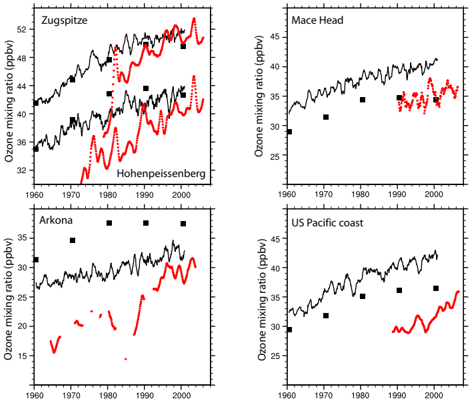
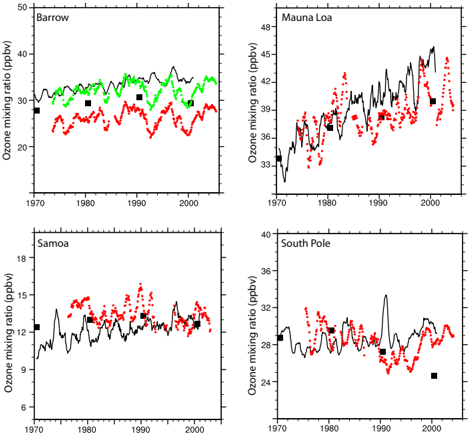
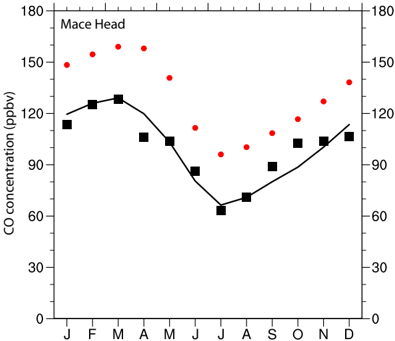
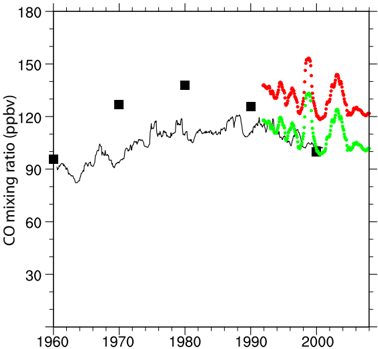
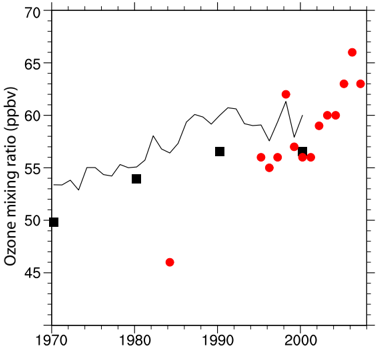
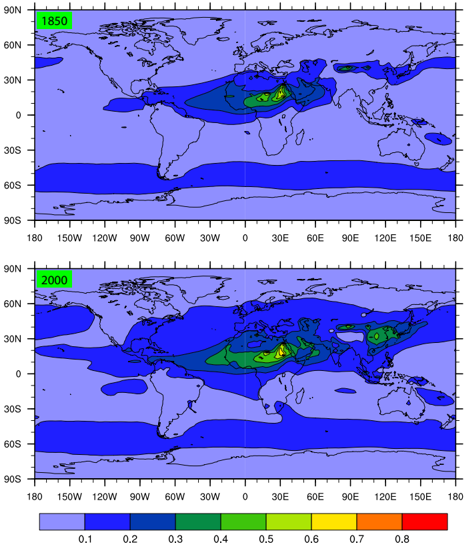
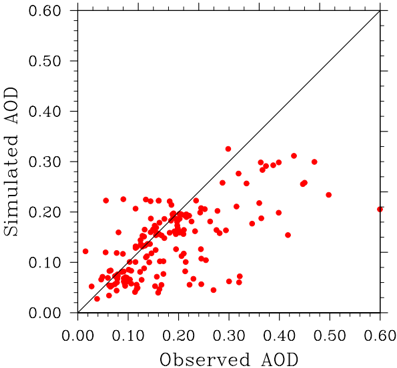
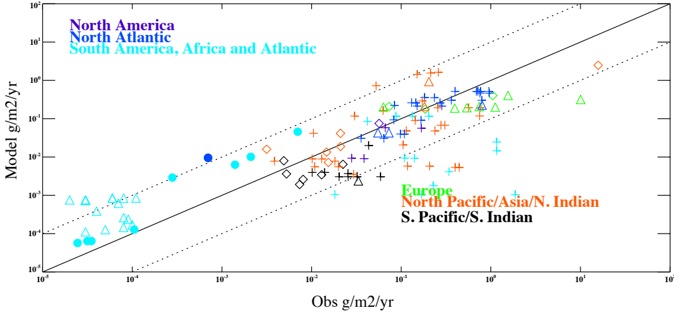
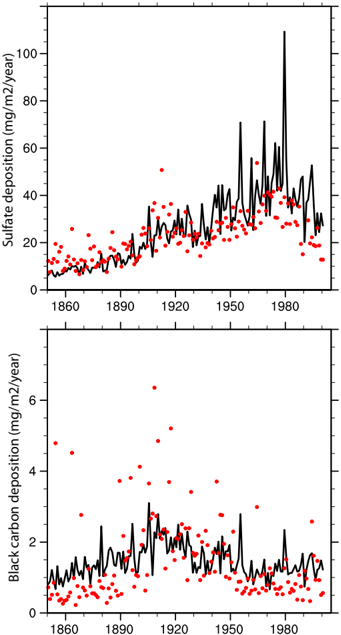
We present and discuss a new dataset of gridded emissions covering the historical period (1850–2000) in decadal increments at a horizontal resolution of 0.5° in latitude and longitude. The primary purpose of this inventory is to provide consistent gridded emissions of reactive gases and aerosols for use in chemistry model simulations needed by climate models for the Climate Model Intercomparison Program #5 (CMIP5) in support of the Intergovernmental Panel on Climate Change (IPCC) Fifth Assessment report (AR5). Our best estimate for the year 2000 inventory represents a combination of existing regional and global inventories to capture the best information available at this point; 40 regions and 12 sectors are used to combine the various sources. The historical reconstruction of each emitted compound, for each region and sector, is then forced to agree with our 2000 estimate, ensuring continuity between past and 2000 emissions. Simulations from two chemistry-climate models are used to test the ability of the emission dataset described here to capture long-term changes in atmospheric ozone, carbon monoxide and aerosol distributions. The simulated long-term change in the Northern mid-latitudes surface and mid-troposphere ozone is not quite as rapid as observed. However, stations outside this latitude band show much better agreement in both present-day and long-term trend. The model simulations indicate that the concentration of carbon monoxide is underestimated at the Mace Head station; however, the long-term trend over the limited observational period seems to be reasonably well captured. The simulated sulfate and black carbon deposition over Greenland is in very good agreement with the ice-core observations spanning the simulation period. Finally, aerosol optical depth and additional aerosol diagnostics are shown to be in good agreement with previously published estimates and observations.
Overview
The claims and statistics of this paper haven’t been checked yet.
Free: it reads the open-access text and checks the first 5 claims that cite a source we can check. Create a free account to check every claim.
Integrity signals
Registry
Cites
Statistics
Figures
Verification
Claims the paper makes
The claims and statistics of this paper haven’t been checked yet.
Free: it reads the open-access text and checks the first 5 claims that cite a source we can check. Create a free account to check every claim.
Claims other papers make about this one
Each is checked against this paper’s own text: does it say what the citing paper says it does?
The source backs part of the claim, not all of it — or backs it for a different population, condition or comparison.
In the citing paper
“No sulfur isotope analyses have been performed for the remaining part of the IAP, but sulfur concentrations in the Greenland ice cores frequently exceed typical levels which were prevalent for the first half of the 20th century during periods of intensive industrial activity and related sulfur emissions across the North Atlantic region 45 (Fig. 6a).”
From Decadal-to-centennial increases of volcanic aerosols from Iceland challenge the concept of a Medieval Quiet Period (2024) · cites this paper as [45]
Experimental — accuracy not yet measured
Self-check
Percentages, sums and reported differences re-computed from the paper’s own numbers.
The self-check needs the paper’s full text.
Citations
Cites
Rayner, N. A., Parker, D. E., Horton, E. B., Folland, C. K., Alexander, L. V., Rowell, D. P., Kent, E. C., & Kaplan, A. (2003) · Journal of Geophysical Research: Atmospheres · doi:10.1029/2002jd002670 · Cited by 10,991 · cited 1×
“Using two chemistry-climate models, we have performed 1850–2009 simulations (transient or time-slice experiments) in order to provide a first-order evaluation of the emissions.”
MethodAERONET—A Federated Instrument Network and Data Archive for Aerosol Characterization
Holben, B. N., Eck, T. F., Slutsker, I., Tanré, D., Buis, J. P., Setzer, A., Vermote, E., Reagan, J. A., Kaufman, Y. J., Nakajima, T., et al. (1998) · Remote Sensing of Environment · doi:10.1016/s0034-4257(98)00031-5 · Cited by 7,743 · cited 1×
“The observed values are based on annually averaged AERONET optical depths (Holben et al., 1998).”
BackgroundHow a century of ammonia synthesis changed the world
Erisman, J. W., Sutton, M. A., Galloway, J., Klimont, Z., & Winiwarter, W. (2008) · Nature Geoscience · doi:10.1038/ngeo325 · Cited by 4,607 · cited 8×
“To extend the non-CO 2 ship emissions backward in time, the 2000 emission totals from Eyring et al. (2010) are scaled with the historical CO2 emission time series from Buhaug et al. (2008) back to 1870.”
BackgroundMethodInfluentialSelf-citationEmission of trace gases and aerosols from biomass burning
Andreae, M. O., & Merlet, P. (2001) · Global Biogeochemical Cycles · doi:10.1029/2000gb001382 · Cited by 3,902 · cited 1×
“The emission factors for these classes were harmonized to those given by Andreae and Merlet (2001, with updates from M. O. Andreae, personal communication, 2008). Emissions from burning of soil organic matter, notably peat soil, which is ignited by fires in the overlying surface vegetation, may strongly influence emis…”
MethodMeehl, G. A., Stocker, T. F., Collins, W. D., Friedlingstein, P., Gaye, A. T., Gregory, J. M., Kitoh, A., Knutti, R., Murphy, J. M., Noda, A., et al. (n.d.) · Bern Open Repository and Information System (University of Bern) · doi:10.48350/25539 · Cited by 3,726
A technology‐based global inventory of black and organic carbon emissions from combustion
Bond, T. C., Streets, D. G., Yarber, K. F., Nelson, S. M., Woo, J., & Klimont, Z. (2004) · Journal of Geophysical Research: Atmospheres · doi:10.1029/2003jd003697 · Cited by 2,393
Self-citationAn inventory of gaseous and primary aerosol emissions in Asia in the year 2000
Streets, D. G., Bond, T. C., Carmichael, G. R., Fernandes, S. D., Fu, Q., He, D., Klimont, Z., Nelson, S. M., Tsai, N. Y., Wang, M. Q., et al. (2003) · Journal of Geophysical Research: Atmospheres · doi:10.1029/2002jd003093 · Cited by 2,038
Self-citationCouplings Between Changes in the Climate System and Biogeochemistry
Denman, K. L., Brasseur, G. P., Chidthaisong, A., Ciais, P., Cox, P. M., Dickinson, R. E., Hauglustaine, D. A., Heinze, C., Holland, E. A., Jacob, D. J., et al. (2007) · HAL · Cited by 2,031
Self-citationAsian emissions in 2006 for the NASA INTEX-B mission
Zhang, Q., Streets, D. G., Carmichael, G. R., He, K. B., Huo, H., Kannari, A., Klimont, Z., Park, I. S., Reddy, S., Fu, J. S., et al. (2009) · Atmospheric Chemistry and Physics · doi:10.5194/acp-9-5131-2009 · Cited by 1,950 · cited 4×
“Although additional information is available in the literature for several regions (e.g., Zhang et al., 2009; Streets et al., 2003, 2006; Klimont et al., 2009; Cofala15 et al., 2007; NARSTO, 2006; Garg et al., 2006), we did not attempt to include those as they were less complete than the…”
BackgroundInfluentialSelf-citationChemical Kinetics and Photochemical Data for Use in Atmospheric Studies, Evaluation Number 18
Burkholder, J. B., Sander, S. P., Abbatt, J. P. D., Barker, J. R., Huie, R. E., Kolb, C. E., Kurylo, M. J., Orkin, V. L., Wilmouth, D. M., & Wine, P. H. (2015) · doi:10.13140/rg.2.1.2504.2806 · Cited by 1,928
Research works printed but not linked: 3
- Chipperfield, M. P., Fioletov, V. E., Bregman, B., Burrows, J., Con- nor, B. J., Haigh, J. D., Harris, N. R. P., Hauchecorne, A., Hood, L. L., Kawa, S. R., Krzy'scin, J. W., Logan, J. A., Muthama, N. J., Polvani, L., Randel, W. J., Sasaki, T., Stähelin, J., Stolarski, R. S., Thomason, L. W., and Zawodny, J. M.: Global Ozone, 2007: Past and Present, Chapter 3 in Scientific Assessment of Ozone Depletion: 2006, World Meteorological Organization, Geneva, Switzerland, Global Ozone Research and Monitoring Project - Report No. 50, 572 pp., 2006.
- Smith, S. J., van Aardenne, J., Klimont, Z., Andres, R., Volke, A., and Delgado Arias, S.: Anthropogenic sulfur dioxide emis- sions: 18502005, Atmos. Chem. Phys. Discuss., 10, 16111- 16151, doi:10.5194/acpd-10-16111-2010, 2010. · DOI
- Vestreng, V., Adams, M., and Goodwin, J.: Inventory review 2004, EMEP Techincal Report MSC-W1/2004, 2004.
Cited by
Items 501–600 of 1,014
Rubin, J. I., Reid, J. S., Hansen, J. A., Anderson, J. G., HOLBEN, B. N., Xian, P., Westphal, D. L., & Zhang, J. (2017) · Journal of Geophysical Research Atmospheres · doi:10.1002/2016jd026067 · Cited by 86
Feinberg, A., Sukhodolov, T., Luo, B.-P., Rozanov, E., Winkel, L. H. E., Peter, T., & Stenke, A. (2019) · Geoscientific Model Development · doi:10.5194/gmd-12-3863-2019 · Cited by 84
“SO2 is emitted from anthropogenic and biomass burning sources according to a gridded emission inventory for the year 2000 (Lamarque et al., 2010; Smith et al., 2011) and from continuous volcanic degassing (Andres and Kasgnoc, 1998; Dentener et al., 2006b).”
Impacts of Wildfire Aerosols on Global Energy Budget and Climate: The Role of Climate Feedbacks
Jiang, Y., Yang, X., Liu, X., Qian, Y., Zhang, K., Wang, M., Li, F., Wang, Y., & Lu, Z. (2020) · Journal of Climate · doi:10.1175/jcli-d-19-0572.1 · Cited by 93
Global organic and inorganic aerosol hygroscopicity and its effect on radiative forcing
Pöhlker, M. L., Pöhlker, C., Quaas, J., Mülmenstädt, J., Pozzer, A., Andreae, M. O., Artaxo, P. E., Block, K., Coe, H., Ervens, B., et al. (2023) · Nature Communications · doi:10.1038/s41467-023-41695-8 · Cited by 106
Gonzalez, P. L. M., Polvani, L. M., Seager, R., & Correa, G. J. P. (2014) · Climate Dynamics · doi:10.1007/s00382-013-1777-x · Cited by 84
“• ‘ozone-only’: only the ozone forcing is transient, as described in Lamarque et al. (2010).”
Lee, Y. C., Shindell, D. T., Faluvegi, G., Wenig, M. O., Lam, Y. F., Ning, Z., Hao, S., & Lai, C. S. (2014) · Tellus B · doi:10.3402/tellusb.v66.23455 · Cited by 90
“Historical emissions from Lamarque et al. (2010) and future emissions from RCP6.”
Self-citationMa, P., Rasch, P. J., Wang, M., Wang, H., Ghan, S. J., Easter, R. C., Gustafson, W. I., Liu, X., Zhang, Y., & Ma, H. (2015) · Geophysical Research Letters · doi:10.1002/2015gl064183 · Cited by 83
Adaptive emission reduction approach to reach any global warming target
Terhaar, J., Frölicher, T. L., Aschwanden, M. T., Friedlingstein, P., & Joos, F. (2022) · Nature Climate Change · doi:10.1038/s41558-022-01537-9 · Cited by 94
Shalaby, A., Zakey, A. S., Tawfik, A. B., Solmon, F., Giorgi, F., Stordal, F., Sillman, S., Zaveri, R. A., & Steiner, A. L. (2012) · Geoscientific model development · doi:10.5194/gmd-5-741-2012 · Cited by 94
“The simulations presented in this manuscript include the MACCity emissions, which is an extension of the ACCMIP emissions dataset for 1990–2010 (Lamarque et al., 2010).”
MethodParameterization‐based uncertainty in future lightning flash density
Clark, S. K., Ward, D. S., & Mahowald, N. M. (2017) · Geophysical Research Letters · doi:10.1002/2017gl073017 · Cited by 100
“We begin with a transient simulation from 1850 to 2000 with historical land cover [Hurtt et al., 2006], and greenhouse gas and aerosol emissions [Lamarque et al., 2010].”
Self-citationQuantifying sources of inter‐model diversity in the cloud albedo effect
Wilcox, L. J., Highwood, E. J., Booth, B. B. B., & Carslaw, K. S. (2015) · Geophysical Research Letters · doi:10.1002/2015gl063301 · Cited by 82
“The majority of CMIP5 models use emissions of anthropogenic aerosols and their precursors from the Lamarque et al. [2010] inventory, and many include at least the cloud albedo effect [ Twomey et al. , 1984].”
BackgroundWespes, C., Emmons, L., Edwards, D. P., Hannigan, J., Hurtmans, D., Saunois, M., Coheur, P.-F., Clerbaux, C., Coffey, M. T., Batchelor, R. L., et al. (2012) · Atmospheric Chemistry and Physics · doi:10.5194/acp-12-237-2012 · Cited by 81
Williams, J. E., van Velthoven, P. F. J., & Brenninkmeijer, C. A. M. (2013) · Atmospheric Chemistry and Physics · doi:10.5194/acp-13-2857-2013 · Cited by 81
Rubin, J. I., Reid, J. S., Hansen, J. A., Anderson, J. G., Collins, N. S., Hoar, T. J., Hogan, T. F., Xian, P., McLay, J., Reynolds, C. A., et al. (2016) · Atmospheric chemistry and physics · doi:10.5194/acp-16-3927-2016 · Cited by 87
“Anthropogenic emissions come from the ECMWF MACC inventory (Lamarque et al., 2010).”
BackgroundDong, B., Sutton, R. T., Chen, W., Liu, X., Lu, R., & Sun, Y. (2016) · Advances in Atmospheric Sciences · doi:10.1007/s00376-016-5247-3 · Cited by 90
Scanza, R. A., Hamilton, D. S., García‐Pando, C. P., Buck, C. S., Baker, A. R., & Mahowald, N. M. (2018) · Atmospheric chemistry and physics · doi:10.5194/acp-18-14175-2018 · Cited by 97
“…SS4 underestimates fine-mode fractional iron solubility, matches this in the coarse mode, and underestimates the combined fine-and coarse-mode solubility with the observational addition, industrial combustion sources in 1850 are considerably lower than present-day emissions (Lamarque et al., 2010).”
BackgroundMethodResultInfluentialSelf-citationCoppola, A. I., Seidel, M., Ward, N. D., Viviroli, D., Nascimento, G. S., Haghipour, N., Revels, B. N., Abiven, S., Jones, M. W., Richey, J. E., et al. (2019) · Nature Communications · doi:10.1038/s41467-019-11543-9 · Cited by 87
Tian, F., Dong, B., Robson, J. I., & Sutton, R. T. (2018) · Climate Dynamics · doi:10.1007/s00382-018-4105-7 · Cited by 85
“The relaxation experiment uses PD anthropogenic green-house gas (GHG) and anthropogenic aerosol (AA) forcing (Lamarque et al. 2010, 2011), but otherwise the atmosphere is not constrained.”
Halogen chemistry reduces tropospheric O 3 radiative forcing
Sherwen, T., Evans, M. J., Carpenter, L. J., Schmidt, J. A., & Mickley, L. J. (2017) · Atmospheric chemistry and physics · doi:10.5194/acp-17-1557-2017 · Cited by 88
Vigouroux, C., Aquino, C. A. B., Bauwens, M., Becker, C., Blumenstock, T., Maziere, M. M. D., García, O., Grutter, M., Guarín, C. A., Hannigan, J. W., et al. (2018) · Atmospheric measurement techniques · doi:10.5194/amt-11-5049-2018 · Cited by 90
Shi, X., Liu, X., & Zhang, K. (2015) · Atmospheric Chemistry and Physics · doi:10.5194/acp-15-1503-2015 · Cited by 80
“, and van 755 Vuuren, D. P.: Historical (1850–2000) gridded anthropogenic and biomass burning 756 emissions of reactive gases and aerosols: methodology and application, Atmos. Chem. 757 Phys., 10, 7017-‐7039, doi:10.5194/acp-‐10-‐7017-‐2010, 2010. 758 Lawson, R. P.: Effects of ice particles shattering on optical c…”
InfluentialCarter, E. M., Archer‐Nicholls, S., Ni, K., Lai, A. M., Niu, H., Secrest, M. H., Sauer, S. M., Schauer, J. J., Ezzati, M., Wiedinmyer, C., et al. (2016) · Environmental Science & Technology · doi:10.1021/acs.est.6b00082 · Cited by 89
Evangeliou, N., Balkanski, Y., Hao, W. M., Petkov, A., Silverstein, R. P., Corley, R., Nordgren, B. L., Urbanski, S. P., Eckhardt, S., Stohl, A., et al. (2016) · Atmospheric Chemistry and Physics · doi:10.5194/acp-16-7587-2016 · Cited by 79
“In contrast, the ACCMIP BC emissions for 2005 (Lamarque et al., 2010) was 15 % lower (e.g. ∼ 7.82 Tg yr−1 compared to 8.13 Tg yr−1).”
InfluentialBlack Carbon and Inorganic Aerosols in Arctic Snowpack
Mori, T., Goto‐Azuma, K., Kondo, Y., Ogawa‐Tsukagawa, Y., Miura, K., Hirabayashi, M., Oshima, N., Koike, M., Kupiainen, K., Moteki, N., et al. (2019) · Journal of Geophysical Research Atmospheres · doi:10.1029/2019jd030623 · Cited by 82
“Emission Flux of BC According to data from MACC/CityZEN EU projects (https://eccad3. sedoo.fr/; Lamarque et al., 2010), the year‐to‐year variability of annual average anthropogenic emission flux of BC (EFBC) was very low during our study period (2012–2016; see Figure 1b for EFBC data for 2013).”
Quantifying air quality co-benefits of climate policy across sectors and regions
Vandyck, T., Keramidas, K., Tchung-Ming, S., Weitzel, M., & Dingenen, R. V. (2020) · Climatic Change · doi:10.1007/s10584-020-02685-7 · Cited by 97
Mega fire emissions in Siberia: potential supply of bioavailable iron from forests to the ocean
Ito, A. (2011) · Biogeosciences · doi:10.5194/bg-8-1679-2011 · Cited by 81
“A more recent modeling study uses an updated emission inventory, but still indicates the underestimates of CO (Lamarque et al., 2010).”
MethodImpact of East Asian Summer Monsoon on Surface Ozone Pattern in China
Li, S., Wang, T., Huang, X., Pu, X., Li, M., Chen, P., Yang, X., & Wang, M. (2018) · Journal of Geophysical Research Atmospheres · doi:10.1002/2017jd027190 · Cited by 79
“The Atmospheric Chemistry and Climate Model Intercomparison Project (ACCMIP) emission inventory (Lamarque et al., 2010) which includes anthropogenic emissions and biomass burning was adopted in the simulations.”
Sampedro, J., Smith, S. J., Arto, I., González‐Eguino, M., Markandya, A., Mulvaney, K. M., Pizarro-Irizar, C., & Dingenen, R. V. (2020) · Environment International · doi:10.1016/j.envint.2020.105513 · Cited by 91
Self-citationTwo hundred fifty years of aerosols and climate: the end of the age of aerosols
Smith, S. J., & Bond, T. C. (2014) · Atmospheric Chemistry and Physics · doi:10.5194/acp-14-537-2014 · Cited by 78
“Historical estimates of BC, OC, and SO2 emissions from open biomass burning (Van der Werf et al., 2006; Schultz et al., 2008; Mieville et al., 2010) and agricultural waste burning are described in Lamarque et al. (2010) and Smith et al. (2011).”
Self-citationWang, M., Xu, B., Cao, J., Tie, X., Wang, H., Zhang, R., Qian, Y., Rasch, P. J., Zhao, S., Wu, G., et al. (2015) · Atmospheric chemistry and physics · doi:10.5194/acp-15-1191-2015 · Cited by 81
“Note that the BC emission inventory (Lamarque et al., 2010) used in CAM5 does not consider seasonal variations in anthropogenic emissions, which is likely to have introduced biases in the quantitative model estimates of seasonal dependence of contributions, but the relative importance of source…”
Zhou, T., Zhang, W., Zhang, L., Zhang, X., Qian, Y., Peng, D., Ma, S., & Dong, B. (2020) · Science China Earth Sciences · doi:10.1007/s11430-019-9613-9 · Cited by 87
Multicentury changes in ocean and land contributions to the climate‐carbon feedback
Randerson, J. T., Lindsay, K., Muñoz, E., Fu, W., Moore, J. K., Hoffman, F. M., Mahowald, N. M., & Doney, S. C. (2015) · Global Biogeochemical Cycles · doi:10.1002/2014gb005079 · Cited by 87
Self-citationArchibald, A. T., Levine, J. G., Abraham, N. L., Cooke, M. C., Edwards, P. M., Heard, D. E., Jenkin, M. E., Karunaharan, A., Pike, R. C., Monks, P. S., et al. (2011) · Geophysical Research Letters · doi:10.1029/2010gl046520 · Cited by 77
Konovalov, I. B., Berezin, E. V., Ciais, P., Broquet, G., Beekmann, M., Hadji‐Lazaro, J., Clerbaux, C., Andreae, M. O., Kaiser, J. W., & Schulze, E. (2014) · Atmospheric chemistry and physics · doi:10.5194/acp-14-10383-2014 · Cited by 95
Contribution of regional sources to atmospheric methane over the Amazon Basin in 2010 and 2011
Wilson, C., Gloor, M. U., Gatti, L. V., Miller, J. B., Monks, S. A., McNorton, J., Bloom, A. A., Basso, L. S., & Chipperfield, M. P. (2016) · Global Biogeochemical Cycles · doi:10.1002/2015gb005300 · Cited by 84
Gaubert, B., Arellano, A. F., Barré, J., Worden, H. M., Emmons, L. K., Tilmes, S., Buchholz, R. R., Vitt, F. M., Raeder, K., Collins, N. S., et al. (2016) · Journal of Geophysical Research Atmospheres · doi:10.1002/2016jd024863 · Cited by 87
Uncertainties and importance of sea spray composition on aerosol direct and indirect effects
Tsigaridis, K., Koch, D. M., & Menon, S. (2012) · Journal of Geophysical Research Atmospheres · doi:10.1029/2012jd018165 · Cited by 76
Wang, Y., Ma, P., Peng, J., Zhang, R., Jiang, J. H., Easter, R. C., & Yung, Y. L. (2018) · Journal of Advances in Modeling Earth Systems · doi:10.1029/2018ms001387 · Cited by 83
“Such a result surprisingly contradicts the ambient chamber Table 1 Numerical Experiment Design Experiment purpose Model configuration Monolayers Emissions Integration time To compare with ambient chamber measurements and to test the effect of monolayer Transient simulations with modified CAM5-Chem nudged by reanalysis…”
Recent Decadal Changes in Heat Waves over China: Drivers and Mechanisms
Su, Q., & Dong, B. (2019) · Journal of Climate · doi:10.1175/jcli-d-18-0479.1 · Cited by 83
Mitigation of Non-CO2 Aviation’s Climate Impact by Changing Cruise Altitudes
Matthes, S., Lim, L. L., Burkhardt, U., Dahlmann, K., Dietmüller, S., Grewe, V., Haslerud, A. S., Hendricks, J., Owen, B., Pitari, G., et al. (2021) · Aerospace · doi:10.3390/aerospace8020036 · Cited by 97
“The present simulations consider anthropogenic nonaviation emissions as background conditions representative for the year 2000 [39].”
Self-citationThe roles of aerosol, water vapor and cloud in future global dimming/brightening
Haywood, J., Bellouin, N., Jones, A., Boucher, O., Wild, M., & Shine, K. P. (2011) · Journal of Geophysical Research Atmospheres · doi:10.1029/2011jd016000 · Cited by 85
“Pathways of well mixed GHG concentrations (CO 2 , CH 4 , N 2 O and halocarbons) are prescribed [ Meinshausen et al. , 2011] as are emissions of aerosols or their precursors for sulphate, fossil ‐ fuel black and organic carbon, and biomass aerosols [ Lamarque et al. , 2010].”
van Vuuren, D. P., Bouwman, L., Smith, S. J., & Dentener, F. J. (2011) · Current Opinion in Environmental Sustainability · doi:10.1016/j.cosust.2011.08.014 · Cited by 97
Self-citationExploring the relationship between surface PM 2.5 and meteorology in Northern India
Schnell, J. L., Naik, V., Horowitz, L. W., Paulot, F., Mao, J., Ginoux, P., Zhao, M., & Ram, K. (2018) · Atmospheric Chemistry and Physics · doi:10.5194/acp-18-10157-2018 · Cited by 75
“The first simulation, denoted as AM4-CMIP5, is driven by emissions developed in support of the CMIP5 30 (Lamarque et al., 2010) and is extended from 2000 to 2016 following the Representative Concentration Pathway 8.”
MethodInfluentialImpacts of aviation fuel sulfur content on climate and human health
Kapadia, Z. Z., Spracklen, D. V., Arnold, S. R., Borman, D. J., Mann, G. W., Pringle, K. J., Monks, S. A., Reddington, C. L., Benduhn, F., Rap, A., et al. (2016) · Atmospheric chemistry and physics · doi:10.5194/acp-16-10521-2016 · Cited by 75
Aerosol emissions and dimming/brightening in Europe: Sensitivity studies with ECHAM5-HAM
Folini, D., & Wild, M. (2011) · Journal of Geophysical Research Atmospheres · doi:10.1029/2011jd016227 · Cited by 79
Environmental Modeling and Methods for Estimation of the Global Health Impacts of Air Pollution
Rao, S., Chirkov, V., Dentener, F. J., Dingenen, R. V., Pachauri, S., Purohit, P., Amann, M. C., Heyes, C., Kinney, P. L., Kolp, P., et al. (2012) · Environmental Modeling & Assessment · doi:10.1007/s10666-012-9317-3 · Cited by 90
“A similar set-up was used as in [20] in terms of representation of air pollutants and emissions for 2005 including open burning are consistent with [22].”
Self-citationTrends and Variability of Global Fire Emissions Due To Historical Anthropogenic Activities
Ward, D. S., Shevliakova, E., Malyshev, S., & Rabin, S. (2018) · Global Biogeochemical Cycles · doi:10.1002/2017gb005787 · Cited by 75
“…to the FC values by minimizing the root-mean-square error: FC ¼ ln ωo=me þ 0:63ð Þ þ 0:47½ DM (2) where DM is the dry matter fuel content (kg), calculated as the total litter carbon divided by 0.45, which is often used as the carbon:DM fuel ratio (e.g., Lamarque et al., 2010; Ward et al., 2012).”
InfluentialO’Sullivan, M., Spracklen, D. V., Batterman, S. A., Arnold, S. R., Gloor, M. U., & Buermann, W. (2019) · Global Biogeochemical Cycles · doi:10.1029/2018gb005922 · Cited by 85
“The model driver data used include nitrogen deposition for the period 1850 – 2000 from simulations based on the Community Atmosphere Model version 3.5 using historical nitrogen emissions (Lamarque et al., 2010).”
InfluentialMarco, A. D., García-Gómez, H., Collalti, A., Khaniabadi, Y. O., Feng, Z., Proietti, C., Sicard, P., Vitale, M., Anav, A., & Paoletti, E. (2022) · Environmental Research · doi:10.1016/j.envres.2022.113048 · Cited by 78
Liu, J., Horowitz, L. W., Fan, S., Carlton, A. G., & Levy, H., II (2012) · Journal of Geophysical Research Atmospheres · doi:10.1029/2012jd017838 · Cited by 75
Bowman, K. W., Shindell, D. T., Worden, H. M., Lamarque, J. F., Young, P. J., Stevenson, D. S., Qu, Z., de la Torre, M., Bergmann, D., Cameron-Smith, P. J., et al. (2013) · Atmospheric Chemistry and Physics · doi:10.5194/acp-13-4057-2013 · Cited by 75
Self-citationINFERNO: a fire and emissions scheme for the UK Met Office's Unified Model
Mangeon, S., Voulgarakis, A., Gilham, R., Harper, A., Sitch, S., & Folberth, G. (2016) · Geoscientific Model Development · doi:10.5194/gmd-9-2685-2016 · Cited by 75
Biocompatible Label-Free Detection of Carbon Black Particles by Femtosecond Pulsed Laser Microscopy
Bové, H., Steuwe, C., Fron, E., Slenders, E., D’Haen, J., Fujita, Y., Uji-i, H., vandeVen, M., Roeffaers, M., & Ameloot, M. (2016) · Nano Letters · doi:10.1021/acs.nanolett.6b00502 · Cited by 74
Is the detection of accelerated sea level rise imminent?
Fasullo, J., Nerem, R. S., & Hamlington, B. D. (2016) · Scientific Reports · doi:10.1038/srep31245 · Cited by 88
Wang, K. (2014) · Scientific Reports · doi:10.1038/srep06144 · Cited by 78
Future projections of surface UV-B in a changing climate
Watanabe, S., Sudo, K., Nagashima, T., Takemura, T., Kawase, H., & Nozawa, T. (2011) · Journal of Geophysical Research · doi:10.1029/2011jd015749 · Cited by 74
Simple emission metrics for climate impacts
Aamaas, B., Peters, G. P., & Fuglestvedt, J. S. (2013) · Earth System Dynamics · doi:10.5194/esd-4-145-2013 · Cited by 74
Global estimates of carbon monoxide emissions from 1960 to 2013
Zhong, Q., Huang, Y., Shen, H., Chen, Y., Chen, H., Huang, T., Zeng, E. Y., & Tao, S. (2016) · Environmental Science and Pollution Research · doi:10.1007/s11356-016-7896-2 · Cited by 90
Navarro, J. C. A., Ekman, A. M. L., Pausata, F. S. R., Lewinschal, A., Varma, V., Seland, Ø., Gauss, M., Iversen, T., Kirkevåg, A., Riipinen, I., et al. (2016) · Journal of Climate · doi:10.1175/jcli-d-16-0466.1 · Cited by 80
In situ continuous visible and near-infrared spectroscopy of an alpine snowpack
Dumont, M., Arnaud, L., Picard, G., Libois, Q., Lejeune, Y., Nabat, P., Voisin, D., & Morin, S. (2017) · The Cryosphere · doi:10.5194/tc-11-1091-2017 · Cited by 88
“Natural aerosols (dust and sea salt) are emitted from the surface depending on surface wind and soil characteristics, while anthropogenic emissions come from external inventories (Lamarque et al., 2010).”
BackgroundInfluentialTarín‐Carrasco, P., İm, U., Geels, C., Palacios-Peña, L., & Jiménez‐Guerrero, P. (2021) · Environment International · doi:10.1016/j.envint.2021.106517 · Cited by 80
Galloway, J. N., & Cowling, E. B. (2021) · AMBIO · doi:10.1007/s13280-020-01464-z · Cited by 92
Derwent, R. G., Manning, A. J., Simmonds, P. G., Spain, T. G., & O’Doherty, S. (2018) · Atmospheric Environment · doi:10.1016/j.atmosenv.2018.02.024 · Cited by 72
Health burdens of surface ozone in the UK for a range of future scenarios
Heal, M. R., Heaviside, C., Doherty, R. M., Vieno, M., Stevenson, D. S., & Vardoulakis, S. (2013) · Environment International · doi:10.1016/j.envint.2013.09.010 · Cited by 84
“Ozone precursor emissions are changing, but with different individual precursor trends in different regions around the world, and consequently the relative ratios in precursor emissions are also changing in different ways in different regions (Royal Society, 2008; AQEG, 2009; Lamarque et al., 2010).”
Chung, C. ‘., Kim, S.-W., Lee, M., Yoon, S., & Lee, S. (2012) · Atmospheric chemistry and physics · doi:10.5194/acp-12-6173-2012 · Cited by 75
Interactions between land use change and carbon cycle feedbacks
Mahowald, N. M., Randerson, J. T., Lindsay, K., Muñoz, E., Doney, S. C., Lawrence, P., Schlunegger, S., Ward, D. S., Lawrence, D. M., & Hoffman, F. M. (2017) · Global Biogeochemical Cycles · doi:10.1002/2016gb005374 · Cited by 88
Self-citationImpacts of stratospheric sulfate geoengineering on tropospheric ozone
Xia, L., Nowack, P. J., Tilmes, S., & Robock, A. (2017) · Atmospheric Chemistry and Physics · doi:10.5194/acp-17-11913-2017 · Cited by 72
A Concept for Multi-Criteria Environmental Assessment of Aircraft Trajectories
Matthes, S., Grewe, V., Dahlmann, K., Frömming, C., Irvine, E. A., Lim, L. L., Linke, F., Lührs, B., Owen, B., Shine, K. P., et al. (2017) · Aerospace · doi:10.3390/aerospace4030042 · Cited by 88
“This model has been extensively used in ICAO-CAEP activities, EU Framework Projects (TRADEOFF [43], QUANTIFY [42] and REACT4C [15] and the Intergovernmental Panel on Climate Change (IPCC) assessment [44].”
Self-citationGeographical and diurnal features of amine‐enhanced boundary layer nucleation
Bergman, T., Laaksonen, A., Korhonen, H., Malila, J., Dunne, E. M., Mielonen, T., Lehtinen, K. E. J., Kühn, T., Arola, A., & Kokkola, H. (2015) · Journal of Geophysical Research Atmospheres · doi:10.1002/2015jd023181 · Cited by 80
Wu, C., Liu, X., Lin, Z., Rhoades, A. M., Ullrich, P. A., Zarzycki, C. M., Lu, Z., & Rahimi, S. (2017) · Journal of Geophysical Research Atmospheres · doi:10.1002/2017jd027008 · Cited by 76
“Historical greenhouse gas concentrations and anthropogenic aerosol and precursor gas emissions are prescribed (Lamarque et al., 2010).”
Malavelle, F. F., Haywood, J., Mercado, L. M., Folberth, G., Bellouin, N., Sitch, S. A., & Artaxo, P. E. (2019) · Atmospheric chemistry and physics · doi:10.5194/acp-19-1301-2019 · Cited by 78
Rowlinson, M. J., Rap, A., Arnold, S. R., Pope, R. J., Chipperfield, M. P., McNorton, J., Forster, P., Gordon, H., Pringle, K. J., Feng, W., et al. (2019) · Atmospheric Chemistry and Physics · doi:10.5194/acp-19-8669-2019 · Cited by 68
Usha, K. H., Nair, V. S., & Babu, S. S. (2020) · Climate Dynamics · doi:10.1007/s00382-020-05222-5 · Cited by 76
Xu, J. F., Chen, J., Zhao, N., Wang, G., Yu, G., Li, H., Huo, J., Lin, Y., Fu, Q., Guo, H., et al. (2020) · Atmospheric chemistry and physics · doi:10.5194/acp-20-7259-2020 · Cited by 73
Hydraulic redistribution by plants and nutrient stoichiometry: Shifts under global change
Sardans, J., & Peñuelas, J. (2014) · Ecohydrology · doi:10.1002/eco.1459 · Cited by 76
“7, 1–20 (2014) into tropical regions (Lamarque et al., 2010).”
Dong, B., Sutton, R. T., Highwood, E. J., & Wilcox, L. J. (2015) · Climate Dynamics · doi:10.1007/s00382-015-2671-5 · Cited by 72
“Figure 1 shows the annual mean emissions of SO 2 in 2000 (Lamarque et al. 2010).”
BackgroundInfluentialSimulating the mid-Pliocene Warm Period with the CCSM4 model
Rosenbloom, N. A., Otto‐Bliesner, B. L., Brady, E. C., & Lawrence, P. (2013) · Geoscientific model development · doi:10.5194/gmd-6-549-2013 · Cited by 70
“Aerosol concentrations are specified from a historical CCSM chemistry run with prescribed emissions (Lamarque et al., 2010), plus a low-level background component to account for volcanic activity (Gent et al., 2011).”
BackgroundImproved modelling of atmospheric ammonia over Denmark using the coupled modelling system DAMOS
Geels, C., Andersen, H. V., Skjøth, C. A., Christensen, J. H., Ellermann, T., Løfstrøm, P., Gyldenkærne, S., Brandt, J. G., Hansen, K. M., Frohn, L. M., et al. (2012) · Biogeosciences · doi:10.5194/bg-9-2625-2012 · Cited by 78
“5, PM10 and TSP) are based on a combination of the EMEP (European Monitoring and Evaluation Programme; Mareckova et al., 2008) and RCP (Representative Concentration Pathways; Lamarque et al., 2010) emission inventories.”
Zhao, C., Liu, X., Qian, Y., Yoon, J., Hou, Z., Lin, G., McFarlane, S. A., Wang, H., Yang, B., Ma, P., et al. (2013) · Atmospheric chemistry and physics · doi:10.5194/acp-13-10969-2013 · Cited by 75
Pollution and its Impacts on the South American Cryosphere
Molina, L. T., Gallardo, L., Andrade, M. F., Baumgardner, D. G., Borbor-Cordova, M. J., Bórquez, R., Casassa, G., Cereceda-Balic, F. J., Dawidowski, L. E., Garreaud, R., et al. (2015) · Earth s Future · doi:10.1002/2015ef000311 · Cited by 81
Comparison and evaluation of anthropogenic emissions of SO 2 and NO x over China
Li, M., Klimont, Z., Zhang, Q., Martin, R. V., Zheng, B., Heyes, C., Cofała, J., Zhang, Y., & He, K. (2018) · Atmospheric chemistry and physics · doi:10.5194/acp-18-3433-2018 · Cited by 71
Self-citationNaidja, L., Ali-Khodja, H., & Khardi, S. (2018) · Environmental Science and Pollution Research · doi:10.1007/s11356-018-1715-x · Cited by 80
Lund, M. T., Myhre, G., Søvde, O. A., Skeie, R. B., Griesfeller, J., Platt, S. M., Kumar, R., Myhre, C. L., & Schulz, M. (2018) · Geoscientific model development · doi:10.5194/gmd-11-4909-2018 · Cited by 83
New methods for assessing electron storage capacity and redox reversibility of biochar
Xin, D., Xian, M., & Chiu, P. C. (2018) · Chemosphere · doi:10.1016/j.chemosphere.2018.10.080 · Cited by 69
Mahmood, R., von Salzen, K., Norman, A., Galí, M., & Levasseur, M. (2019) · Atmospheric chemistry and physics · doi:10.5194/acp-19-6419-2019 · Cited by 74
“Monthly mean surface seawater DMS concentrations in hisCont are specified according to the climatology of Lana et al. (2011) [hereafter referred to as L10].”
InfluentialA likely increase in fine particulate matter and premature mortality under future climate change
Park, S., Allen, R. J., & Lim, C.-H. (2020) · Air Quality Atmosphere & Health · doi:10.1007/s11869-019-00785-7 · Cited by 86
Haszpra, T., Herein, M., & Bódai, T. (2020) · Earth System Dynamics · doi:10.5194/esd-11-267-2020 · Cited by 81
“Between 1920 and 2005 the CESM-LE simulations follow the CMIP5 historical experimental design (Taylor et al., 2012; Lamarque et al., 2010), while after 2005 to 2100 they follow the RCP8.”
Zonal mean and shift modes of historical climate response to evolving aerosol distribution
Kang, S. M., Xie, S., Deser, C., & Xiang, B. (2021) · 中国科学通报:英文版 · doi:10.1016/j.scib.2021.07.013 · Cited by 76
“S1 online) as aerosol emissions from North America and Europe have declined due to air quality regulations while emissions from Asia have continued to increase [10].”
On the role of plant volatiles in anthropogenic global climate change
Unger, N. (2014) · Geophysical Research Letters · doi:10.1002/2014gl061616 · Cited by 79
Cirrus cloud susceptibility to the injection of ice nuclei in the upper troposphere
Storelvmo, T., & Herger, N. (2014) · Journal of Geophysical Research: Atmospheres · doi:10.1002/2013jd020816 · Cited by 69
Impact of the representation of marine stratocumulus clouds on the anthropogenic aerosol effect
Neubauer, D., Lohmann, U., Hoose, C., & Frontoso, M. G. (2014) · Atmospheric Chemistry and Physics · doi:10.5194/acp-14-11997-2014 · Cited by 69
Radu, O., van den Berg, M., Klimont, Z., Deetman, S., Janssens‐Maenhout, G., Muntean, M., Heyes, C., Dentener, F. J., & van Vuuren, D. P. (2016) · Atmospheric Environment · doi:10.1016/j.atmosenv.2016.05.021 · Cited by 74
Self-citationEhn, M., Berndt, T., Wildt, J., & Mentel, T. F. (2017) · International Journal of Chemical Kinetics · doi:10.1002/kin.21130 · Cited by 78
Future challenges of representing land-processes in studies on land-atmosphere interactions
Arneth, A., Mercado, L. M., Kattge, J., & Booth, B. B. B. (2012) · Biogeosciences · doi:10.5194/bg-9-3587-2012 · Cited by 71
Cloud, precipitation and radiation responses to large perturbations in global dimethyl sulfide
Fiddes, S. L., Woodhouse, M. T., Nicholls, Z., Lane, T. P., & Schofield, R. (2018) · Atmospheric chemistry and physics · doi:10.5194/acp-18-10177-2018 · Cited by 85
Millet, D. B., Alwe, H. D., Chen, X., Deventer, M. J., Griffis, T. J., Holzinger, R., Bertman, S. B., Rickly, P. S., Stevens, P. S., Léonardis, T., et al. (2018) · ACS Earth and Space Chemistry · doi:10.1021/acsearthspacechem.8b00061 · Cited by 81
High Resolution Urban Air Quality Modeling by Coupling CFD and Mesoscale Models: a Review
Kadaverugu, R., Sharma, A., Matli, C., & Biniwale, R. B. (2019) · Asia-Pacific Journal of Atmospheric Sciences · doi:10.1007/s13143-019-00110-3 · Cited by 76
Stable atmospheric methane in the 2000s: key-role of emissions from natural wetlands
Pison, I., Ringeval, B., Bousquet, P., Prigent, C., & Papa, F. (2013) · Atmospheric Chemistry and Physics · doi:10.5194/acp-13-11609-2013 · Cited by 66
Hodnebrog, Ø., Dalsøren, S. B., & Myhre, G. (2018) · Atmospheric Science Letters · doi:10.1002/asl.804 · Cited by 78
“2 inventory only provides total NMVOC emissions per sector (e.g., transportation, industry) and disaggregation into individual species (e.g., ethane, propane) emissions was based on the emissions reported by (Lamarque et al., 2010).”
A simple model of global aerosol indirect effects
Ghan, S. J., Smith, S. J., Wang, M., Zhang, K., Pringle, K. J., Carslaw, K. S., Pierce, J. R., Bauer, S. E., & Adams, P. J. (2013) · Journal of Geophysical Research Atmospheres · doi:10.1002/jgrd.50567 · Cited by 77
Self-citation
Metadata
- Authors
- Lamarque, J.-F., Bond, T. C., Eyring, V., Granier, C., Heil, A., Klimont, Z., Lee, D., Liousse, C., Mieville, A., Owen, B., Schultz, M. G., Shindell, D., Smith, S. J., Stehfest, E., Van Aardenne, J., Cooper, O. R., Kainuma, M., Mahowald, N., McConnell, J. R., Naik, V., Riahi, K., & van Vuuren, D. P.
- Affiliations
- NSF National Center for Atmospheric Research (US)
- University of Illinois Urbana-Champaign (US)
- Deutsches Zentrum für Luft- und Raumfahrt e. V. (DLR) (DE)
- Centre National de la Recherche Scientifique (FR)
- Forschungszentrum Jülich (DE)
- International Institute for Applied Systems Analysis (AT)
- Manchester Metropolitan University (GB)
- Laboratoire d'Aérologie (FR)
- Goddard Institute for Space Studies (US)
- Joint Global Change Research Institute (US)
- Netherlands Environmental Assessment Agency (NL)
- NOAA Earth System Research Laboratory (US)
- National Institute for Environmental Studies (JP)
- Cornell University (US)
- Desert Research Institute (US)
- ORCID
- Venue
- Atmospheric Chemistry and Physics
- Publisher
- Copernicus GmbH
- Published
- 2010-08-03
- Volume
- 10
- Issue
- 15
- Pages
- 7017-7039
- ISSN
- 1680-7316 (ISSN-L)
- 1680-7324
- OpenAlex
- W2106963750
- Cited by
- 2,105
- References
- 113
- Citations by year
- 2026: 28 · 2025: 60 · 2024: 77 · 2023: 128 · 2022: 137 · 2021: 190 · 2020: 162 · 2019: 143 · 2018: 192 · 2017: 150 · 2016: 166 · 2015: 172 · 2014: 167 · 2013: 139 · 2012: 109
- FWCI
- 70.46
- Type
- journal article
- Language
- en
- Open access
- gold
- doi.org
- Licence
- Locations
- Atmospheric chemistry and physics (publishedVersion, cc-by)
- IIASA PURE (International Institute of Applied Systems Analysis) (submittedVersion, other-oa)
- HAL (submittedVersion, other-oa)
- DOAJ (DOAJ: Directory of Open Access Journals) (submittedVersion, cc-by-sa)
- elib (German Aerospace Center) (submittedVersion)
- JuSER (Forschungszentrum Jülich) (submittedVersion, cc-by)
- JuSER (Forschungszentrum Jülich) (submittedVersion, other-oa)
- Funders
- National Science Foundation
- National Center for Atmospheric Research
- University Corporation for Atmospheric Research
- European Commission
- Topics
- Physical Sciences › Earth and Planetary Sciences › Atmospheric Science › Atmospheric chemistry and aerosols
- Physical Sciences › Environmental Science › Global and Planetary Change › Atmospheric aerosols and clouds
- Physical Sciences › Earth and Planetary Sciences › Atmospheric Science › Atmospheric Ozone and Climate
- Keywords
- anthropogenic emissions, biomass burning emissions, gridded emission inventory, reactive gases, atmospheric aerosols, ozone trends, carbon monoxide, sulfate deposition, black carbon deposition, Greenland ice cores, aerosol optical depth, chemistry-climate model simulations, CMIP5, IPCC AR5
About these checks
Registry, retraction, Cites and statistics results are computed, not judged, with one exception: a printed reference that no index lists is read once by a model before it counts as a citation error. Claims are extracted by a model and kept only when their quote appears verbatim in the text; each cited source is then checked, with a model’s help, for whether it says what the claim relies on. Those verdicts can be wrong — read the claim’s quote and the cited source before relying on one.
Statistics and arithmetic are recomputed, not judged.
Confidence bands are shown only for fields calibrated on our annotated test set. None is calibrated yet, so no band is shown.
What counts as a claim ›How we measure confidence ›How we check this ›
Are you an author, or do you see a problem with this page? Request a review
Data sources
Bibliographic data: Semantic Scholar, OpenAlex, Crossref.
Contains information from the Semantic Scholar Academic Graph Datasets, made available under the ODC Attribution License (ODC-BY 1.0).
Semantic Scholar’s data is described in: Kinney, R., et al. (2023). The Semantic Scholar Open Data Platform. arXiv:2301.10140.
