

Historical (1850–2000) gridded anthropogenic and biomass burning emissions of reactive gases and aerosols: methodology and application
Open accessPublished version of a preprint
The DOI matches its Crossref record; 112 of the 113 references it cites were found in a registry or an index.
Abstract
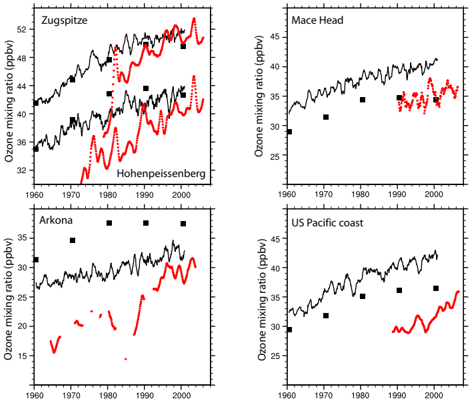
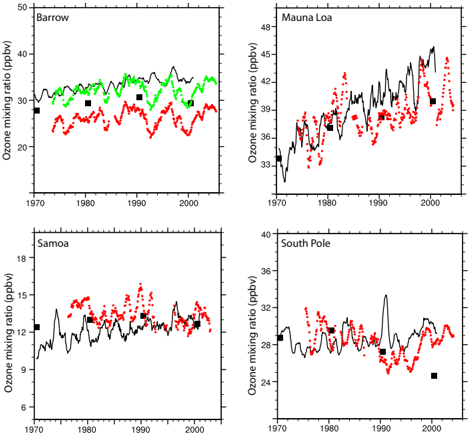
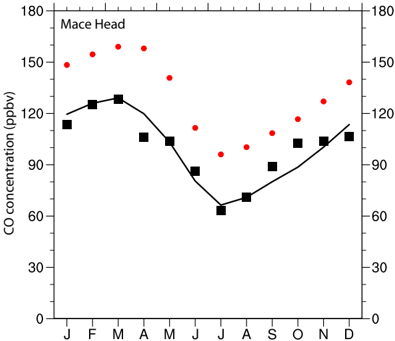
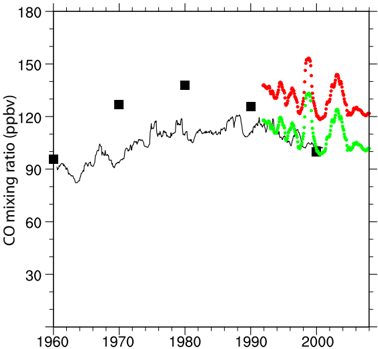
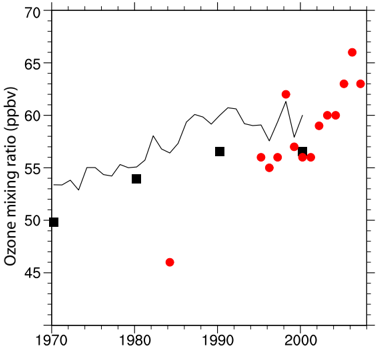
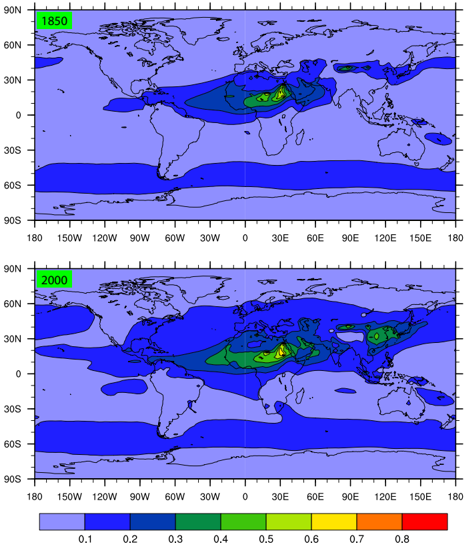
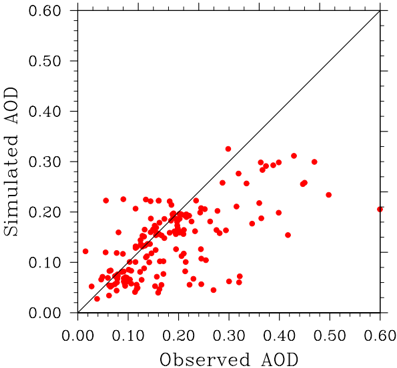
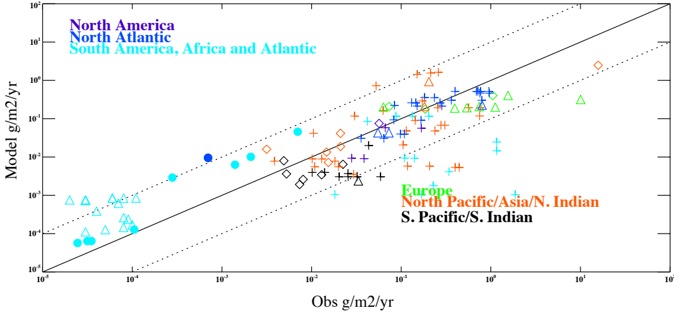
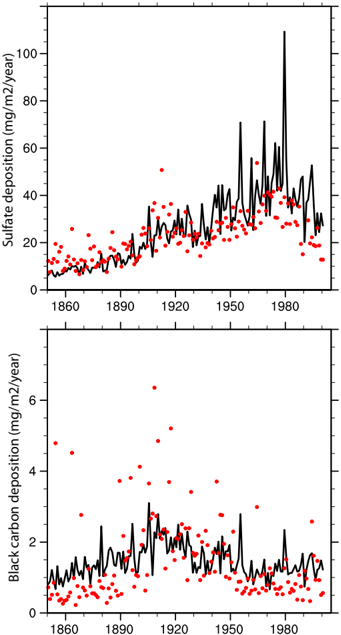
We present and discuss a new dataset of gridded emissions covering the historical period (1850–2000) in decadal increments at a horizontal resolution of 0.5° in latitude and longitude. The primary purpose of this inventory is to provide consistent gridded emissions of reactive gases and aerosols for use in chemistry model simulations needed by climate models for the Climate Model Intercomparison Program #5 (CMIP5) in support of the Intergovernmental Panel on Climate Change (IPCC) Fifth Assessment report (AR5). Our best estimate for the year 2000 inventory represents a combination of existing regional and global inventories to capture the best information available at this point; 40 regions and 12 sectors are used to combine the various sources. The historical reconstruction of each emitted compound, for each region and sector, is then forced to agree with our 2000 estimate, ensuring continuity between past and 2000 emissions. Simulations from two chemistry-climate models are used to test the ability of the emission dataset described here to capture long-term changes in atmospheric ozone, carbon monoxide and aerosol distributions. The simulated long-term change in the Northern mid-latitudes surface and mid-troposphere ozone is not quite as rapid as observed. However, stations outside this latitude band show much better agreement in both present-day and long-term trend. The model simulations indicate that the concentration of carbon monoxide is underestimated at the Mace Head station; however, the long-term trend over the limited observational period seems to be reasonably well captured. The simulated sulfate and black carbon deposition over Greenland is in very good agreement with the ice-core observations spanning the simulation period. Finally, aerosol optical depth and additional aerosol diagnostics are shown to be in good agreement with previously published estimates and observations.
Overview
The claims and statistics of this paper haven’t been checked yet.
Free: it reads the open-access text and checks the first 5 claims that cite a source we can check. Create a free account to check every claim.
Integrity signals
Registry
Cites
Statistics
Figures
Verification
Claims the paper makes
The claims and statistics of this paper haven’t been checked yet.
Free: it reads the open-access text and checks the first 5 claims that cite a source we can check. Create a free account to check every claim.
Claims other papers make about this one
Each is checked against this paper’s own text: does it say what the citing paper says it does?
The source backs part of the claim, not all of it — or backs it for a different population, condition or comparison.
In the citing paper
“No sulfur isotope analyses have been performed for the remaining part of the IAP, but sulfur concentrations in the Greenland ice cores frequently exceed typical levels which were prevalent for the first half of the 20th century during periods of intensive industrial activity and related sulfur emissions across the North Atlantic region 45 (Fig. 6a).”
From Decadal-to-centennial increases of volcanic aerosols from Iceland challenge the concept of a Medieval Quiet Period (2024) · cites this paper as [45]
Experimental — accuracy not yet measured
Self-check
Percentages, sums and reported differences re-computed from the paper’s own numbers.
The self-check needs the paper’s full text.
Citations
Cites
Rayner, N. A., Parker, D. E., Horton, E. B., Folland, C. K., Alexander, L. V., Rowell, D. P., Kent, E. C., & Kaplan, A. (2003) · Journal of Geophysical Research: Atmospheres · doi:10.1029/2002jd002670 · Cited by 10,991 · cited 1×
“Using two chemistry-climate models, we have performed 1850–2009 simulations (transient or time-slice experiments) in order to provide a first-order evaluation of the emissions.”
MethodAERONET—A Federated Instrument Network and Data Archive for Aerosol Characterization
Holben, B. N., Eck, T. F., Slutsker, I., Tanré, D., Buis, J. P., Setzer, A., Vermote, E., Reagan, J. A., Kaufman, Y. J., Nakajima, T., et al. (1998) · Remote Sensing of Environment · doi:10.1016/s0034-4257(98)00031-5 · Cited by 7,743 · cited 1×
“The observed values are based on annually averaged AERONET optical depths (Holben et al., 1998).”
BackgroundHow a century of ammonia synthesis changed the world
Erisman, J. W., Sutton, M. A., Galloway, J., Klimont, Z., & Winiwarter, W. (2008) · Nature Geoscience · doi:10.1038/ngeo325 · Cited by 4,607 · cited 8×
“To extend the non-CO 2 ship emissions backward in time, the 2000 emission totals from Eyring et al. (2010) are scaled with the historical CO2 emission time series from Buhaug et al. (2008) back to 1870.”
BackgroundMethodInfluentialSelf-citationEmission of trace gases and aerosols from biomass burning
Andreae, M. O., & Merlet, P. (2001) · Global Biogeochemical Cycles · doi:10.1029/2000gb001382 · Cited by 3,902 · cited 1×
“The emission factors for these classes were harmonized to those given by Andreae and Merlet (2001, with updates from M. O. Andreae, personal communication, 2008). Emissions from burning of soil organic matter, notably peat soil, which is ignited by fires in the overlying surface vegetation, may strongly influence emis…”
MethodMeehl, G. A., Stocker, T. F., Collins, W. D., Friedlingstein, P., Gaye, A. T., Gregory, J. M., Kitoh, A., Knutti, R., Murphy, J. M., Noda, A., et al. (n.d.) · Bern Open Repository and Information System (University of Bern) · doi:10.48350/25539 · Cited by 3,726
A technology‐based global inventory of black and organic carbon emissions from combustion
Bond, T. C., Streets, D. G., Yarber, K. F., Nelson, S. M., Woo, J., & Klimont, Z. (2004) · Journal of Geophysical Research: Atmospheres · doi:10.1029/2003jd003697 · Cited by 2,393
Self-citationAn inventory of gaseous and primary aerosol emissions in Asia in the year 2000
Streets, D. G., Bond, T. C., Carmichael, G. R., Fernandes, S. D., Fu, Q., He, D., Klimont, Z., Nelson, S. M., Tsai, N. Y., Wang, M. Q., et al. (2003) · Journal of Geophysical Research: Atmospheres · doi:10.1029/2002jd003093 · Cited by 2,038
Self-citationCouplings Between Changes in the Climate System and Biogeochemistry
Denman, K. L., Brasseur, G. P., Chidthaisong, A., Ciais, P., Cox, P. M., Dickinson, R. E., Hauglustaine, D. A., Heinze, C., Holland, E. A., Jacob, D. J., et al. (2007) · HAL · Cited by 2,031
Self-citationAsian emissions in 2006 for the NASA INTEX-B mission
Zhang, Q., Streets, D. G., Carmichael, G. R., He, K. B., Huo, H., Kannari, A., Klimont, Z., Park, I. S., Reddy, S., Fu, J. S., et al. (2009) · Atmospheric Chemistry and Physics · doi:10.5194/acp-9-5131-2009 · Cited by 1,950 · cited 4×
“Although additional information is available in the literature for several regions (e.g., Zhang et al., 2009; Streets et al., 2003, 2006; Klimont et al., 2009; Cofala15 et al., 2007; NARSTO, 2006; Garg et al., 2006), we did not attempt to include those as they were less complete than the…”
BackgroundInfluentialSelf-citationChemical Kinetics and Photochemical Data for Use in Atmospheric Studies, Evaluation Number 18
Burkholder, J. B., Sander, S. P., Abbatt, J. P. D., Barker, J. R., Huie, R. E., Kolb, C. E., Kurylo, M. J., Orkin, V. L., Wilmouth, D. M., & Wine, P. H. (2015) · doi:10.13140/rg.2.1.2504.2806 · Cited by 1,928
Research works printed but not linked: 3
- Chipperfield, M. P., Fioletov, V. E., Bregman, B., Burrows, J., Con- nor, B. J., Haigh, J. D., Harris, N. R. P., Hauchecorne, A., Hood, L. L., Kawa, S. R., Krzy'scin, J. W., Logan, J. A., Muthama, N. J., Polvani, L., Randel, W. J., Sasaki, T., Stähelin, J., Stolarski, R. S., Thomason, L. W., and Zawodny, J. M.: Global Ozone, 2007: Past and Present, Chapter 3 in Scientific Assessment of Ozone Depletion: 2006, World Meteorological Organization, Geneva, Switzerland, Global Ozone Research and Monitoring Project - Report No. 50, 572 pp., 2006.
- Smith, S. J., van Aardenne, J., Klimont, Z., Andres, R., Volke, A., and Delgado Arias, S.: Anthropogenic sulfur dioxide emis- sions: 18502005, Atmos. Chem. Phys. Discuss., 10, 16111- 16151, doi:10.5194/acpd-10-16111-2010, 2010. · DOI
- Vestreng, V., Adams, M., and Goodwin, J.: Inventory review 2004, EMEP Techincal Report MSC-W1/2004, 2004.
Cited by
Items 201–300 of 1,014
Human land-use-driven reduction of forest volatiles cools global climate
Unger, N. (2014) · Nature Climate Change · doi:10.1038/nclimate2347 · Cited by 197
Terrestrial nitrogen–carbon cycle interactions at the global scale
Zaehle, S. (2013) · Philosophical Transactions of the Royal Society B: Biological Sciences · doi:10.1098/rstb.2013.0125 · Cited by 196
Simpson, I. R., Bacmeister, J., Neale, R. B., Hannay, C., Gettelman, A., Garcia, R. R., Lauritzen, P. H., Marsh, D. R., Mills, M. J., Medeiros, B., et al. (2020) · Journal of Geophysical Research: Atmospheres · doi:10.1029/2020jd032835 · Cited by 194
“The initial state is that of a single realization that was branched from an 1850s control simulation and run until 1920 under historical forcings (Lamarque et al., 2010).”
Sharma, S., Ishizawa, M., Chan, D., Lavoué, D., Andrews, E., Eleftheriadis, K., & Maksyutov, S. (2013) · Journal of Geophysical Research: Atmospheres · doi:10.1029/2012jd017774 · Cited by 193
Exposure to ambient black carbon derived from a unique inventory and high-resolution model
Wang, R., Tao, S., Balkanski, Y., Ciais, P., Boucher, O., Liu, J., Piao, S., Shen, H., Vuolo, M. R., Valari, M., et al. (2014) · Proceedings of the National Academy of Sciences · doi:10.1073/pnas.1318763111 · Cited by 192
Messina, P., Lathière, J., Sindelarova, K., Vuichard, N., Granier, C., Ghattas, J., Cozic, A., & Hauglustaine, D. A. (2016) · Atmospheric Chemistry and Physics · doi:10.5194/acp-16-14169-2016 · Cited by 192
Self-citationClimate, health, agricultural and economic impacts of tighter vehicle-emission standards
Shindell, D., Faluvegi, G., Walsh, M., Anenberg, S. C., Van Dingenen, R., Muller, N. Z., Austin, J., Koch, D., & Milly, G. (2011) · Nature Climate Change · doi:10.1038/nclimate1066 · Cited by 190
Self-citationSolazzo, E., Bianconi, R., Pirovano, G., Matthias, V., Vautard, R., Moran, M. D., Wyat Appel, K., Bessagnet, B., Brandt, J., Christensen, J. H., et al. (2012) · Atmospheric Environment · doi:10.1016/j.atmosenv.2012.02.045 · Cited by 190
Rapid Adjustments Cause Weak Surface Temperature Response to Increased Black Carbon Concentrations
Stjern, C. W., Samset, B. H., Myhre, G., Forster, P. M., Hodnebrog, Ø., Andrews, T., Boucher, O., Faluvegi, G., Iversen, T., Kasoar, M., et al. (2017) · Journal of Geophysical Research: Atmospheres · doi:10.1002/2017jd027326 · Cited by 189
Self-citationWeng, H., Lin, J., Martin, R., Millet, D. B., Jaeglé, L., Ridley, D., Keller, C., Li, C., Du, M., & Meng, J. (2020) · Scientific Data · doi:10.1038/s41597-020-0488-5 · Cited by 188
Cross-track Infrared Sounder (CrIS) satellite observations of tropospheric ammonia
Shephard, M. W., & Cady-Pereira, K. E. (2015) · Atmospheric Measurement Techniques · doi:10.5194/amt-8-1323-2015 · Cited by 188
Lindsay, K., Bonan, G. B., Doney, S. C., Hoffman, F. M., Lawrence, D. M., Long, M. C., Mahowald, N. M., Keith Moore, J., Randerson, J. T., & Thornton, P. E. (2014) · Journal of Climate · doi:10.1175/jcli-d-12-00565.1 · Cited by 188
“In the PROG experiments, they use the prognostic three-dimensional atmospheric CO2 tracers.”
BackgroundMethodInfluentialSelf-citationEckhardt, S., Quennehen, B., Olivié, D. J. L., Berntsen, T. K., Cherian, R., Christensen, J. H., Collins, W., Crepinsek, S., Daskalakis, N., Flanner, M., et al. (2015) · Atmospheric Chemistry and Physics · doi:10.5194/acp-15-9413-2015 · Cited by 187
“The proxies used in GAINS are consistent with those applied within the RCP (representative concentration pathway) projections as described in Lamarque et al. (2010) and as further developed within the Global Energy Assessment project (GEA, 2012 .”
Self-citationImproved Diurnal Cycle of Precipitation in E3SM With a Revised Convective Triggering Function
Xie, S., Wang, Y., Lin, W., Ma, H., Tang, Q., Tang, S., Zheng, X., Golaz, J., Zhang, G. J., & Zhang, M. (2019) · Journal of Advances in Modeling Earth Systems · doi:10.1029/2019ms001702 · Cited by 187
“Eleven‐year AMIP‐style climatology runs with present‐day forcing from the Intergovernmental Panel on Climate Change (IPCC) AR5 emission data set (Lamarque et al., 2010) for year 2000 are conducted using present‐day emissions along with climatological sea surface temperature and sea ice prescribed…”
Is atmospheric phosphorus pollution altering global alpine Lake stoichiometry?
Brahney, J., Mahowald, N., Ward, D. S., Ballantyne, A. P., & Neff, J. C. (2015) · Global Biogeochemical Cycles · doi:10.1002/2015gb005137 · Cited by 185
Self-citationShrivastava, M., Easter, R. C., Liu, X., Zelenyuk, A., Singh, B., Zhang, K., Ma, P., Chand, D., Ghan, S., Jimenez, J. L., et al. (2015) · Journal of Geophysical Research: Atmospheres · doi:10.1002/2014jd022563 · Cited by 186
Aerosol Absorption: Progress Towards Global and Regional Constraints
Samset, B. H., Stjern, C. W., Andrews, E., Kahn, R. A., Myhre, G., Schulz, M., & Schuster, G. L. (2018) · Current Climate Change Reports · doi:10.1007/s40641-018-0091-4 · Cited by 186
“meteorological year (2006) using identical emissions (year 2000, [11]).”
Global Sulfur Dioxide Emissions and the Driving Forces
Zhong, Q., Shen, H., Yun, X., Chen, Y., Ren, Y., Xu, H., Shen, G., Du, W., Meng, J., Li, W., et al. (2020) · Environmental Science & Technology · doi:10.1021/acs.est.9b07696 · Cited by 184
Ubiquitous atmospheric production of organic acids mediated by cloud droplets
Franco, B., Blumenstock, T., Cho, C., Clarisse, L., Clerbaux, C., Coheur, P.-F., De Mazière, M., De Smedt, I., Dorn, H.-P., Emmerichs, T., et al. (2021) · Nature · doi:10.1038/s41586-021-03462-x · Cited by 184
Reviews and syntheses: Arctic fire regimes and emissions in the 21st century
McCarty, J. L., Aalto, J., Paunu, V.-V., Arnold, S. R., Eckhardt, S., Klimont, Z., Fain, J. J., Evangeliou, N., Venäläinen, A., Tchebakova, N. M., et al. (2021) · Biogeosciences · doi:10.5194/bg-18-5053-2021 · Cited by 183
“2; Kaiser et al., 2012), Global Fire Emissions Database version 2 (GFEDv2; van der Werf et al., 2006), GFEDv3 (van der Werf et al., 2010), the Global Inventory for Chemistry-Climate studies (GICC; Mieville et al., 2010), MACCity (Lamarque et al., 2010), and the Fire Inventory from NCAR (FINNv1.”
Self-citationScientific assessment of background ozone over the U.S.: Implications for air quality management
Jaffe, D. A., Cooper, O. R., Fiore, A. M., Henderson, B. H., Tonnesen, G. S., Russell, A. G., Henze, D. K., Langford, A. O., Lin, M., & Moore, T. (2018) · Elementa: Science of the Anthropocene · doi:10.1525/elementa.309 · Cited by 182
Self-citationThe Met Office Unified Model Global Atmosphere 4.0 and JULES Global Land 4.0 configurations
Walters, D. N., Williams, K. D., Boutle, I. A., Bushell, A. C., Edwards, J. M., Field, P. R., Lock, A. P., Morcrette, C. J., Stratton, R. A., Wilkinson, J. M., et al. (2014) · Geoscientific Model Development · doi:10.5194/gmd-7-361-2014 · Cited by 183
Evaluation of factors controlling long-range transport of black carbon to the Arctic
Liu, J., Fan, S., Horowitz, L. W., & Levy, H. (2011) · Journal of Geophysical Research · doi:10.1029/2010jd015145 · Cited by 182
Arctic climate sensitivity to local black carbon
Flanner, M. G. (2013) · Journal of Geophysical Research: Atmospheres · doi:10.1002/jgrd.50176 · Cited by 183
Kriegler, E., Riahi, K., Bauer, N., Schwanitz, V. J., Petermann, N., Bosetti, V., Marcucci, A., Otto, S., Paroussos, L., Rao, S., et al. (2015) · Technological Forecasting and Social Change · doi:10.1016/j.techfore.2013.09.021 · Cited by 181
“Note that for the climate simulations, emissions were harmonized to the same base year using inventories from [59,60].”
Self-citationAerosol Deposition Impacts on Land and Ocean Carbon Cycles
Mahowald, N. M., Scanza, R., Brahney, J., Goodale, C. L., Hess, P. G., Moore, J. K., & Neff, J. (2017) · Current Climate Change Reports · doi:10.1007/s40641-017-0056-z · Cited by 181
Self-citationSilva, R. A., Adelman, Z., Fry, M. M., & West, J. J. (2016) · Environmental Health Perspectives · doi:10.1289/ehp177 · Cited by 181
“Rising anthropogenic emissions of air pollutants and their precursors have significantly increased ambient air pollution in many parts of the world (Cooper et al. 2014; Lamarque et al. 2010; Naik et al. 2013; Stevenson et al. 2013).”
The Copenhagen Accord for limiting global warming: Criteria, constraints, and available avenues
Ramanathan, V., & Xu, Y. (2010) · Proceedings of the National Academy of Sciences · doi:10.1073/pnas.1002293107 · Cited by 180
“Worldwide SO2 emissions increased from about 10 million tons of sulfur per year (Mt S/yr) to a peak of 65–70 Mt S/yr in the early 1980s and have been declining since then to about 55 Mt S/yr as of 2000 (30).”
Kato, E., Kinoshita, T., Ito, A., Kawamiya, M., & Yamagata, Y. (2013) · Journal of Land Use Science · doi:10.1080/1747423x.2011.628705 · Cited by 180
“…ecosystems as grassland (savannah), tropical forest, and extra-tropical forest based on Andreae and Merlet (2001) with the updated values used in IPCC AR5 historical emission database (Lamarque et al. 2010) is applied to evaluate each trace gas and aerosol (BC, CH4, CO, CO2, NMHC, NOX, OC, PM2.”
InfluentialRasmussen, D. J., Fiore, A. M., Naik, V., Horowitz, L. W., McGinnis, S. J., & Schultz, M. G. (2012) · Atmospheric Environment · doi:10.1016/j.atmosenv.2011.11.021 · Cited by 179
“Briefly, AM3 is driven with observed sea surface temperatures and sea ice (Rayner et al., 2003) and aerosol and O 3 precursor emissions from the Atmospheric Chemistry and Climate Model Intercomparison Project (ACCMIP) historical dataset (Lamarque et al., 2010).”
Self-citationAkherati, A., He, Y., Coggon, M. M., Koss, A. R., Hodshire, A. L., Sekimoto, K., Warneke, C., de Gouw, J., Yee, L., Seinfeld, J. H., et al. (2020) · Environmental Science & Technology · doi:10.1021/acs.est.0c01345 · Cited by 178
Deser, C., Phillips, A. S., Simpson, I. R., Rosenbloom, N., Coleman, D., Lehner, F., Pendergrass, A. G., DiNezio, P., & Stevenson, S. (2020) · Journal of Climate · doi:10.1175/jcli-d-20-0123.1 · Cited by 177
Burrows, S. M., Maltrud, M., Yang, X., Zhu, Q., Jeffery, N., Shi, X., Ricciuto, D., Wang, S., Bisht, G., Tang, J., et al. (2020) · Journal of Advances in Modeling Earth Systems · doi:10.1029/2019ms001766 · Cited by 176
“After the simulations had already progressed significantly, it was discovered that the ocean biogeochemistry model was using a different nitrogen deposition data set (Lamarque et al., 2010) than the land model.”
Black carbon emissions from biomass and fossil fuels in rural India
Rehman, I. H., Ahmed, T., Praveen, P. S., Kar, A., & Ramanathan, V. (2011) · Atmospheric Chemistry and Physics · doi:10.5194/acp-11-7289-2011 · Cited by 176
“We also compared the OC/BC ratio observed in this study with the gridded biomass burning BC and OC emission data (Lamarque et al., 2010) used in current climate models for the grid (26–27◦ N, 81–82◦ E).”
Trend in Global Black Carbon Emissions from 1960 to 2007
Wang, R., Tao, S., Shen, H., Huang, Y., Chen, H., Balkanski, Y., Boucher, O., Ciais, P., Shen, G., Li, W., et al. (2014) · Environmental Science & Technology · doi:10.1021/es5021422 · Cited by 174
Logan, J. A., Staehelin, J., Megretskaia, I. A., Cammas, J. ‐., Thouret, V., Claude, H., De Backer, H., Steinbacher, M., Scheel, H. ‐., Stübi, R., et al. (2012) · Journal of Geophysical Research: Atmospheres · doi:10.1029/2011jd016952 · Cited by 173
Estimating the climate significance of halogen-driven ozone loss in the tropical marine troposphere
Saiz-Lopez, A., Lamarque, J.-F., Kinnison, D. E., Tilmes, S., Ordóñez, C., Orlando, J. J., Conley, A. J., Plane, J. M. C., Mahajan, A. S., Sousa Santos, G., et al. (2012) · Atmospheric Chemistry and Physics · doi:10.5194/acp-12-3939-2012 · Cited by 173
Self-citationZhang, R., Wang, H., Qian, Y., Rasch, P. J., Easter, R. C., Ma, P.-L., Singh, B., Huang, J., & Fu, Q. (2015) · Atmospheric Chemistry and Physics · doi:10.5194/acp-15-6205-2015 · Cited by 172
Mann, G. W., Carslaw, K. S., Reddington, C. L., Pringle, K. J., Schulz, M., Asmi, A., Spracklen, D. V., Ridley, D. A., Woodhouse, M. T., Lee, L. A., et al. (2014) · Atmospheric Chemistry and Physics · doi:10.5194/acp-14-4679-2014 · Cited by 172
“their influence on size-resolved number concentration is accounted for”
BackgroundSheng, J., Weisenstein, D. K., Luo, B., Rozanov, E., Stenke, A., Anet, J., Bingemer, H., & Peter, T. (2015) · Journal of Geophysical Research: Atmospheres · doi:10.1002/2014jd021985 · Cited by 169
The social cost of atmospheric release
Shindell, D. T. (2015) · Climatic Change · doi:10.1007/s10584-015-1343-0 · Cited by 166
“(2011), including open biomass burning emissions (Lamarque et al. 2010)), a level small enough that it is a marginal change (Fig.”
BackgroundSelf-citationLimitations of passive remote sensing to constrain global cloud condensation nuclei
Stier, P. (2016) · Atmospheric Chemistry and Physics · doi:10.5194/acp-16-6595-2016 · Cited by 170
“For all other compounds, emission strength, distribution, and height are based on the AEROCOM aerosol model inter-comparison (http://aerocom.met.no) Phase II ACCMIP-MACCity emission inventory (Lamarque et al., 2010) for the year 2000.”
Aerosols in atmospheric chemistry and biogeochemical cycles of nutrients
Kanakidou, M., Myriokefalitakis, S., & Tsigaridis, K. (2018) · Environmental Research Letters · doi:10.1088/1748-9326/aabcdb · Cited by 170
The CLoud–Aerosol–Radiation Interaction and Forcing: Year 2017 (CLARIFY-2017) measurement campaign
Haywood, J. M., Abel, S. J., Barrett, P. A., Bellouin, N., Blyth, A., Bower, K. N., Brooks, M., Carslaw, K., Che, H., Coe, H., et al. (2021) · Atmospheric Chemistry and Physics · doi:10.5194/acp-21-1049-2021 · Cited by 170
The influence of anthropogenic aerosol on multi-decadal variations of historical global climate
Wilcox, L. J., Highwood, E. J., & Dunstone, N. J. (2013) · Environmental Research Letters · doi:10.1088/1748-9326/8/2/024033 · Cited by 169
Urban flux measurements reveal a large pool of oxygenated volatile organic compound emissions
Karl, T., Striednig, M., Graus, M., Hammerle, A., & Wohlfahrt, G. (2018) · Proceedings of the National Academy of Sciences · doi:10.1073/pnas.1714715115 · Cited by 169
Van Dingenen, R., Dentener, F., Crippa, M., Leitao, J., Marmer, E., Rao, S., Solazzo, E., & Valentini, L. (2018) · Atmospheric Chemistry and Physics · doi:10.5194/acp-18-16173-2018 · Cited by 167
“As base simulation emissions we use the communitygenerated Representative Concentration Pathway (RCP) pollutant emissions for the year 2000 at 1◦× 1◦ resolution, prepared for the IPCC Fifth Assessment (Lamarque et al., 2010).”
Radiative effect and climate impacts of brown carbon with the Community Atmosphere Model (CAM5)
Brown, H., Liu, X., Feng, Y., Jiang, Y., Wu, M., Lu, Z., Wu, C., Murphy, S., & Pokhrel, R. (2018) · Atmospheric Chemistry and Physics · doi:10.5194/acp-18-17745-2018 · Cited by 168
“The emissions consist of daily BC, POM, and sulfur dioxide (SO 2 ) emissions from GFED 3.1 (Giglio et al., 2013), vertical distribution of fire emissions based on the AeroCom protocol (Detener et al., 2006), and anthropogenic aerosol and precursor gas emissions from IPCC AR5 (Lamarque et al., 2010).”
InfluentialExplaining Extreme Events of 2017 from a Climate Perspective
Herring, S. C., Christidis, N., Hoell, A., Hoerling, M. P., & Stott, P. A. (2019) · Bulletin of the American Meteorological Society · doi:10.1175/bams-explainingextremeevents2017.1 · Cited by 168
Amplification of Arctic warming by past air pollution reductions in Europe
Acosta Navarro, J. C., Varma, V., Riipinen, I., Seland, Ø., Kirkevåg, A., Struthers, H., Iversen, T., Hansson, H.-C., & Ekman, A. M. L. (2016) · Nature Geoscience · doi:10.1038/ngeo2673 · Cited by 167
Global oceanic emission of ammonia: Constraints from seawater and atmospheric observations
Paulot, F., Jacob, D. J., Johnson, M. T., Bell, T. G., Baker, A. R., Keene, W. C., Lima, I. D., Doney, S. C., & Stock, C. A. (2015) · Global Biogeochemical Cycles · doi:10.1002/2015gb005106 · Cited by 166
Delivery of anthropogenic bioavailable iron from mineral dust and combustion aerosols to the ocean
Ito, A., & Shi, Z. (2016) · Atmospheric Chemistry and Physics · doi:10.5194/acp-16-85-2016 · Cited by 165
Decreased monsoon precipitation in the Northern Hemisphere due to anthropogenic aerosols
Polson, D., Bollasina, M., Hegerl, G. C., & Wilcox, L. J. (2014) · Geophysical Research Letters · doi:10.1002/2014gl060811 · Cited by 163
Comparing proxy and model estimates of hydroclimate variability and change over the Common Era
PAGES Hydro2k Consortium (2017) · Climate of the Past · doi:10.5194/cp-13-1851-2017 · Cited by 164
Emission inventories for ships in the arctic based on satellite sampled AIS data
Winther, M., Christensen, J. H., Plejdrup, M. S., Ravn, E. S., Eriksson, Ó. F., & Kristensen, H. O. (2014) · Atmospheric Environment · doi:10.1016/j.atmosenv.2014.03.006 · Cited by 163
Sigl, M., Toohey, M., McConnell, J. R., Cole-Dai, J., & Severi, M. (2022) · Earth System Science Data · doi:10.5194/essd-14-3167-2022 · Cited by 162
Self-citationThe impact of residential combustion emissions on atmospheric aerosol, human health, and climate
Butt, E. W., Rap, A., Schmidt, A., Scott, C. E., Pringle, K. J., Reddington, C. L., Richards, N. A. D., Woodhouse, M. T., Ramirez-Villegas, J., Yang, H., et al. (2016) · Atmospheric Chemistry and Physics · doi:10.5194/acp-16-873-2016 · Cited by 162
Aerosol Effects on Climate via Mixed-Phase and Ice Clouds
Storelvmo, T. (2017) · Annual Review of Earth and Planetary Sciences · doi:10.1146/annurev-earth-060115-012240 · Cited by 163
Koffi, B., Schulz, M., Bréon, F., Dentener, F., Steensen, B. M., Griesfeller, J., Winker, D., Balkanski, Y., Bauer, S. E., Bellouin, N., et al. (2016) · Journal of Geophysical Research: Atmospheres · doi:10.1002/2015jd024639 · Cited by 161
“…to AeroCom I (see section 4.2. and Tables 4a and 4b) might be at least partly due to differences in the seasonality of the emissions from Diehl et al. [2012] and Lamarque et al. [2010] compared to Dentener et al. [2006], in particular if injection height assumptions are coupled to emissions.”
InfluentialCMIP5 historical simulations (1850–2012) with GISS ModelE2
Miller, R. L., Schmidt, G. A., Nazarenko, L. S., Tausnev, N., Bauer, S. E., DelGenio, A. D., Kelley, M., Lo, K. K., Ruedy, R., Shindell, D. T., et al. (2014) · Journal of Advances in Modeling Earth Systems · doi:10.1002/2013ms000266 · Cited by 160
Self-citationInteractive ozone and methane chemistry in GISS-E2 historical and future climate simulations
Shindell, D. T., Pechony, O., Voulgarakis, A., Faluvegi, G., Nazarenko, L., Lamarque, J.-F., Bowman, K., Milly, G., Kovari, B., Ruedy, R., et al. (2013) · Atmospheric Chemistry and Physics · doi:10.5194/acp-13-2653-2013 · Cited by 159
Self-citationMIROC4h—A New High-Resolution Atmosphere-Ocean Coupled General Circulation Model
T. SAKAMOTO, T., KOMURO, Y., NISHIMURA, T., ISHII, M., TATEBE, H., SHIOGAMA, H., HASEGAWA, A., TOYODA, T., MORI, M., SUZUKI, T., et al. (2012) · Journal of the Meteorological Society of Japan. Ser. II · doi:10.2151/jmsj.2012-301 · Cited by 158
Rapid increase in atmospheric iodine levels in the North Atlantic since the mid-20th century
Cuevas, C. A., Maffezzoli, N., Corella, J. P., Spolaor, A., Vallelonga, P., Kjær, H. A., Simonsen, M., Winstrup, M., Vinther, B. M., Horvat, C., et al. (2018) · Nature Communications · doi:10.1038/s41467-018-03756-1 · Cited by 175
Self-citationGlobal impact of smoke aerosols from landscape fires on climate and the Hadley circulation
Tosca, M. G., Randerson, J. T., & Zender, C. S. (2013) · Atmospheric Chemistry and Physics · doi:10.5194/acp-13-5227-2013 · Cited by 157
Pathways to bridge the biophysical realism gap in ecosystem services mapping approaches
Lavorel, S., Bayer, A. D., Bondeau, A., Lautenbach, S., Ruiz‐Frau, A., Schulp, C. J. E., Seppelt, R., Verburg, P. H., Teeffelen, A. J. A. V., Vannier, C., et al. (2016) · Ecological Indicators · doi:10.1016/j.ecolind.2016.11.015 · Cited by 182
Kelly, J. M., Doherty, R. M., O’Connor, F. M., & Mann, G. W. (2018) · Atmospheric chemistry and physics · doi:10.5194/acp-18-7393-2018 · Cited by 170
Social, Economic, and Ethical Concepts and Methods
Change, I. P. O. C. (2015) · Cambridge University Press eBooks · doi:10.1017/cbo9781107415416.009 · Cited by 172
Impact on short-lived climate forcers increases projected warming due to deforestation
Scott, C. E., Monks, S. A., Spracklen, D. V., Arnold, S. R., Forster, P. M. D. F., Rap, A., Äijälä, M., Artaxo, P. E., Carslaw, K. S., Chipperfield, M. P., et al. (2018) · Nature Communications · doi:10.1038/s41467-017-02412-4 · Cited by 185
Li, F., Val Martin, M., Andreae, M. O., Arneth, A., Hantson, S., Kaiser, J. W., Lasslop, G., Yue, C., Bachelet, D., Forrest, M., et al. (2019) · Atmospheric Chemistry and Physics · doi:10.5194/acp-19-12545-2019 · Cited by 156
Revisiting enteric methane emissions from domestic ruminants and their δ13CCH4 source signature
Chang, J., Peng, S., Ciais, P., Saunois, M., Dangal, S. R. S., Herrero, M., Havlík, P., Tian, H., & Bousquet, P. (2019) · Nature Communications · doi:10.1038/s41467-019-11066-3 · Cited by 156
Laj, P., Bigi, A., Rose, C., Andrews, E. J., Myhre, C. L., Coen, M. C., Lin, Y., Wiedensohler, A., Schulz, M., OGREN, J. A., et al. (2020) · Atmospheric measurement techniques · doi:10.5194/amt-13-4353-2020 · Cited by 174
“…key data needed for assessing aerosol impact on climate but are difficult to obtain with precision, and there are discrepancies amongst different estimates even for key aerosol climate forcers like black carbon (Granier et al., 2011; Klimont et al., 2017; Lamarque et al., 2010; Wang et al., 2014).”
Modelling future changes in surface ozone: a parameterized approach
Wild, O., Fiore, A. M., Shindell, D. T., Doherty, R. M., Collins, W. J., Dentener, F. J., Schultz, M. G., Gong, S., MacKenzie, I. A., Zeng, G., et al. (2012) · Atmospheric Chemistry and Physics · doi:10.5194/acp-12-2037-2012 · Cited by 152
“Previous studies have found similar results (e.g.Lamarque et al., 2010), suggesting that natural sources and changes in climate may have contributed significantly to surface O3 change.”
Self-citationMyhre, G., Aas, W., Cherian, R., Collins, W., Faluvegi, G., Flanner, M., Forster, P., Hodnebrog, Ø., Klimont, Z., Lund, M. T., et al. (2017) · Atmospheric Chemistry and Physics · doi:10.5194/acp-17-2709-2017 · Cited by 154
“Global mean emissions for NO x , SO 2 , BC and OC for ECLIPSE (Klimont et al., 2016), data applied in Coupled Model Intercomparison Project (CMIP5) (Lamarque et al., 2010), and Community Emissions Data System (CEDS) to be used in CMIP6 (Hoesly et al., 2017) over the period 1990–2015. face…”
Self-citationJiang, Y., Liu, X., Yang, X., & Wang, M. (2013) · Atmospheric Environment · doi:10.1016/j.atmosenv.2012.12.039 · Cited by 158
Reddington, C. L. S., Spracklen, D. V., Artaxo, P. E., Ridley, D. A., Rizzo, L. V., & Arana, A. (2016) · Atmospheric chemistry and physics · doi:10.5194/acp-16-11083-2016 · Cited by 180
Human activities aggravate nitrogen-deposition pollution to inland water over China
Gao, Y., Zhou, F., Ciais, P., Miao, C., Yang, T., Jia, Y., Zhou, X., Klaus, B. B., Yang, T., & Yu, G. (2019) · National Science Review · doi:10.1093/nsr/nwz073 · Cited by 168
“Thenegative bias in theNdeposition over East Asia is likely due to underestimation in the emissions of reactiveN in this region from theACCMIP inventory [71,72], which was used in that study.”
Household Light Makes Global Heat: High Black Carbon Emissions From Kerosene Wick Lamps
Lam, N. L., Chen, Y., Weyant, C., Venkataraman, C., Sadavarte, P., Johnson, M. A., Smith, K. R., Brem, B. T., Arineitwe, J., Ellis, J. E., et al. (2012) · Environmental Science & Technology · doi:10.1021/es302697h · Cited by 152
“as described in Lamarque et al. (2011). 48 The exception is kerosene lamps, which are based on results from”
Self-citationAerosol and ozone changes as forcing for climate evolution between 1850 and 2100
Szopa, S., Balkanski, Y., Schulz, M., Bekki, S., Cugnet, D., Fortems-Cheiney, A., Turquety, S., Cozic, A., Déandreis, C., Hauglustaine, D., et al. (2013) · Climate Dynamics · doi:10.1007/s00382-012-1408-y · Cited by 151
Breider, T. J., Mickley, L. J., Jacob, D. J., Ge, C., Wang, J., Sulprizio, M. P., Croft, B., Ridley, D. A., McConnell, J. R., Sharma, S., et al. (2017) · Journal of Geophysical Research Atmospheres · doi:10.1002/2016jd025321 · Cited by 168
Self-citationComparison of emissions inventories of anthropogenic air pollutants and greenhouse gases in China
Saikawa, E., Kim, H., Zhong, M., Avramov, A., Zhao, Y., Janssens‐Maenhout, G., Kurokawa, J.-I., Klimont, Z., Wagner, F., Naïk, V., et al. (2017) · Atmospheric chemistry and physics · doi:10.5194/acp-17-6393-2017 · Cited by 169
“The differences for the other species are smaller, although it is clear that Lamarque et al. (2010) estimates much lower emissions for both NOx and SO2, compared to others (Fig.”
Self-citationLand Use Change Impacts on Air Quality and Climate
Heald, C. L., & Spracklen, D. V. (2015) · Chemical Reviews · doi:10.1021/cr500446g · Cited by 171
Nusbaumer, J., Wong, T. E., Bardeen, C., & Noone, D. (2017) · Journal of Advances in Modeling Earth Systems · doi:10.1002/2016ms000839 · Cited by 170
Technical Note: On the use of nudging for aerosol–climate model intercomparison studies
Zhang, K., Wan, H., Liu, X., Ghan, S. J., Kooperman, G. J., Ma, P.-L., Rasch, P. J., Neubauer, D., & Lohmann, U. (2014) · Atmospheric Chemistry and Physics · doi:10.5194/acp-14-8631-2014 · Cited by 146
“For the anthropogenic and biomass burning emissions of aerosols and precursor gases, the year 2000 and 1850 fluxes of Lamarque et al. (2010) were used for the present-day (PD) and pre-industrial (PI) simulations, respectively.”
Energy Pathways for Sustainable Development
Riahi, K., Dentener, F., Gielen, D., Grubler, A., Jewell, J., Klimont, Z., Krey, V., McCollum, D., Pachauri, S., Rao, S., et al. (2012) · Global Energy Assessment (GEA) · doi:10.1017/cbo9780511793677.023 · Cited by 131
Self-citationQuantifying the range of the dust direct radiative effect due to source mineralogy uncertainty
Li, L., Mahowald, N. M., Miller, R. L., García‐Pando, C. P., Klose, M., Hamilton, D. S., Ageitos, M. G., Ginoux, P. A., Balkanski, Y. J., Green, R. O., et al. (2021) · Atmospheric chemistry and physics · doi:10.5194/acp-21-3973-2021 · Cited by 196
Self-citationEDGAR v4.3.2 Global Atlas of the three major Greenhouse Gas Emissions for the period 1970–2012
Janssens-Maenhout, G., Crippa, M., Guizzardi, D., Muntean, M., Schaaf, E., Dentener, F., Bergamaschi, P., Pagliari, V., Olivier, J. G. J., Peters, J. A. H. W., et al. (2017) · doi:10.5194/essd-2017-79 · Cited by 148
Bellouin, N., Mann, G. W., Woodhouse, M. T., Johnson, C., Carslaw, K. S., & Dalvi, M. (2013) · Atmospheric chemistry and physics · doi:10.5194/acp-13-3027-2013 · Cited by 173
“Because the AeroCom Hindcast dataset of aerosol and precursor emissions used so far in this study only covers the period 1980 to 2006, doublecall simulations use years 1850 and 2000 of the CMIP5 historical emission datasets (Lamarque et al., 2010).”
Bartók, B., Wild, M., Folini, D., Lüthi, D., Kotlarski, S., Schär, C., Vautard, R., Jerez, S., & Imecs, Z. (2016) · Climate Dynamics · doi:10.1007/s00382-016-3471-2 · Cited by 167
Yang, J., Kang, S., Ji, Z., & Chen, D. (2018) · Journal of Geophysical Research Atmospheres · doi:10.1002/2017jd027282 · Cited by 152
“Distribution and variation of BC in snow and ice are determined by the levels and sources of atmospheric BC, with over 60% of atmospheric BC originating from anthropogenic activities (Bond et al., 2007; Lamarque et al., 2010).”
Increasing Arabian dust activity and the Indian summer monsoon
Solmon, F., Nair, V. S., & Mallet, M. (2015) · Atmospheric chemistry and physics · doi:10.5194/acp-15-8051-2015 · Cited by 145
Source apportionment of black carbon during winter in Beijing
Liu, Y., Yan, C., & Zheng, M. (2017) · The Science of The Total Environment · doi:10.1016/j.scitotenv.2017.11.053 · Cited by 152
Nah, T., Guo, H., Sullivan, A. P., Chen, Y., Tanner, D. J., Nenes, A., Russell, A. G., Ng, N. L., Huey, L. G., & Weber, R. J. (2018) · Atmospheric chemistry and physics · doi:10.5194/acp-18-11471-2018 · Cited by 166
Dong, B., Sutton, R. T., & Shaffrey, L. (2016) · Climate Dynamics · doi:10.1007/s00382-016-3158-8 · Cited by 157
“…in anthropogenic GHG concentrations (11 % increase in CO 2 , 18 % increase in CH 4 , and 6 % increase in N 2 O) and significant changes in AAer precursor emissions (Lamarque et al. 2010) with European and North American sulphur dioxide emissions decreased while Asian emissions increased (Fig.”
Li, B., Ho, S. S. H., Li, X., Guo, L., Chen, A., Hu, L., Yang, Y., Chen, D., Lin, A., & Fang, X. (2021) · Environment International · doi:10.1016/j.envint.2021.106710 · Cited by 156
Lee, Y. H., Lamarque, J.-F., Flanner, M. G., Jiao, C., Shindell, D. T., Berntsen, T., Bisiaux, M. M., Cao, J., Collins, W. J., Curran, M., et al. (2013) · Atmospheric Chemistry and Physics · doi:10.5194/acp-13-2607-2013 · Cited by 143
Self-citationNabat, P., Somot, S., Mallet, M., Chiapello, I., Morcrette, J., Solmon, F., Szopa, S., Dulac, F., Collins, W. J., Ghan, S. J., et al. (2013) · Atmospheric measurement techniques · doi:10.5194/amt-6-1287-2013 · Cited by 157
“The 1850–2100 period is covered, including a historical period (1850–2000) with reference aerosol emissions (Lamarque et al., 2010), and a future projection ac- cording to the representative concentration pathway (RCP 4.5) projection for greenhouse gases emissions (Thomson et al., 2011).”
InfluentialSelf-citationThe possible role of local air pollution in climate change in West Africa
Knippertz, P., Evans, M. J., Field, P. R., Fink, A. H., Liousse, C., & Marsham, J. H. (2015) · Nature Climate Change · doi:10.1038/nclimate2727 · Cited by 153
Self-citationvan Zelm, R., Preiss, P., van Goethem, T., Van Dingenen, R., & Huijbregts, M. (2016) · Atmospheric Environment · doi:10.1016/j.atmosenv.2016.03.044 · Cited by 141
Importance of tropospheric volcanic aerosol for indirect radiative forcing of climate
Schmidt, A., Carslaw, K. S., Mann, G. W., Rap, A., Pringle, K. J., Spracklen, D. V., Wilson, M., & Forster, P. M. (2012) · Atmospheric Chemistry and Physics · doi:10.5194/acp-12-7321-2012 · Cited by 140
Bollasina, M. A., Ming, Y., Ramaswamy, V., Schwarzkopf, M. D., & Naïk, V. (2014) · Geophysical Research Letters · doi:10.1002/2013gl058183 · Cited by 140
Metadata
- Authors
- Lamarque, J.-F., Bond, T. C., Eyring, V., Granier, C., Heil, A., Klimont, Z., Lee, D., Liousse, C., Mieville, A., Owen, B., Schultz, M. G., Shindell, D., Smith, S. J., Stehfest, E., Van Aardenne, J., Cooper, O. R., Kainuma, M., Mahowald, N., McConnell, J. R., Naik, V., Riahi, K., & van Vuuren, D. P.
- Affiliations
- NSF National Center for Atmospheric Research (US)
- University of Illinois Urbana-Champaign (US)
- Deutsches Zentrum für Luft- und Raumfahrt e. V. (DLR) (DE)
- Centre National de la Recherche Scientifique (FR)
- Forschungszentrum Jülich (DE)
- International Institute for Applied Systems Analysis (AT)
- Manchester Metropolitan University (GB)
- Laboratoire d'Aérologie (FR)
- Goddard Institute for Space Studies (US)
- Joint Global Change Research Institute (US)
- Netherlands Environmental Assessment Agency (NL)
- NOAA Earth System Research Laboratory (US)
- National Institute for Environmental Studies (JP)
- Cornell University (US)
- Desert Research Institute (US)
- ORCID
- Venue
- Atmospheric Chemistry and Physics
- Publisher
- Copernicus GmbH
- Published
- 2010-08-03
- Volume
- 10
- Issue
- 15
- Pages
- 7017-7039
- ISSN
- 1680-7316 (ISSN-L)
- 1680-7324
- OpenAlex
- W2106963750
- Cited by
- 2,105
- References
- 113
- Citations by year
- 2026: 28 · 2025: 60 · 2024: 77 · 2023: 128 · 2022: 137 · 2021: 190 · 2020: 162 · 2019: 143 · 2018: 192 · 2017: 150 · 2016: 166 · 2015: 172 · 2014: 167 · 2013: 139 · 2012: 109
- FWCI
- 70.46
- Type
- journal article
- Language
- en
- Open access
- gold
- doi.org
- Licence
- Locations
- Atmospheric chemistry and physics (publishedVersion, cc-by)
- IIASA PURE (International Institute of Applied Systems Analysis) (submittedVersion, other-oa)
- HAL (submittedVersion, other-oa)
- DOAJ (DOAJ: Directory of Open Access Journals) (submittedVersion, cc-by-sa)
- elib (German Aerospace Center) (submittedVersion)
- JuSER (Forschungszentrum Jülich) (submittedVersion, cc-by)
- JuSER (Forschungszentrum Jülich) (submittedVersion, other-oa)
- Funders
- National Science Foundation
- National Center for Atmospheric Research
- University Corporation for Atmospheric Research
- European Commission
- Topics
- Physical Sciences › Earth and Planetary Sciences › Atmospheric Science › Atmospheric chemistry and aerosols
- Physical Sciences › Environmental Science › Global and Planetary Change › Atmospheric aerosols and clouds
- Physical Sciences › Earth and Planetary Sciences › Atmospheric Science › Atmospheric Ozone and Climate
- Keywords
- anthropogenic emissions, biomass burning emissions, gridded emission inventory, reactive gases, atmospheric aerosols, ozone trends, carbon monoxide, sulfate deposition, black carbon deposition, Greenland ice cores, aerosol optical depth, chemistry-climate model simulations, CMIP5, IPCC AR5
About these checks
Registry, retraction, Cites and statistics results are computed, not judged, with one exception: a printed reference that no index lists is read once by a model before it counts as a citation error. Claims are extracted by a model and kept only when their quote appears verbatim in the text; each cited source is then checked, with a model’s help, for whether it says what the claim relies on. Those verdicts can be wrong — read the claim’s quote and the cited source before relying on one.
Statistics and arithmetic are recomputed, not judged.
Confidence bands are shown only for fields calibrated on our annotated test set. None is calibrated yet, so no band is shown.
What counts as a claim ›How we measure confidence ›How we check this ›
Are you an author, or do you see a problem with this page? Request a review
Data sources
Bibliographic data: Semantic Scholar, OpenAlex, Crossref.
Contains information from the Semantic Scholar Academic Graph Datasets, made available under the ODC Attribution License (ODC-BY 1.0).
Semantic Scholar’s data is described in: Kinney, R., et al. (2023). The Semantic Scholar Open Data Platform. arXiv:2301.10140.
