

Historical (1850–2000) gridded anthropogenic and biomass burning emissions of reactive gases and aerosols: methodology and application
Open accessPublished version of a preprint
The DOI matches its Crossref record; 112 of the 113 references it cites were found in a registry or an index.
Abstract
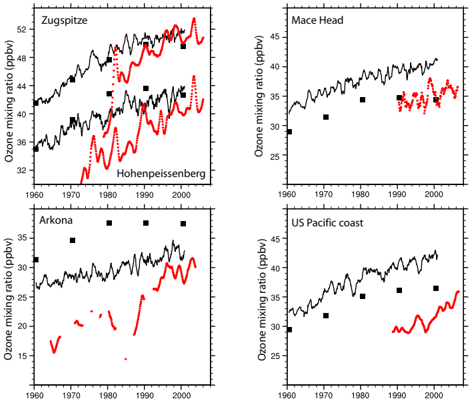
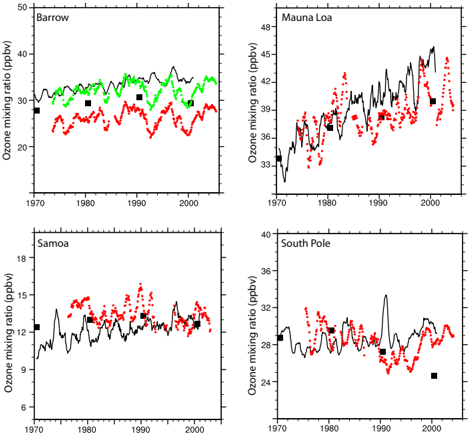
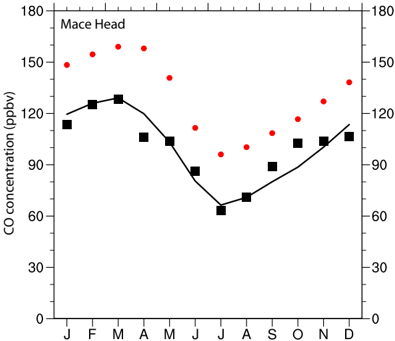
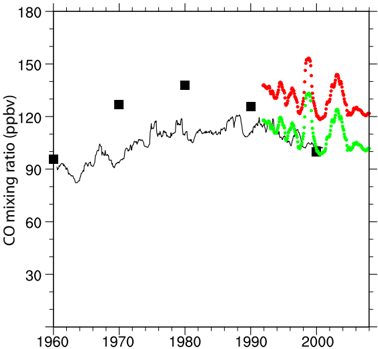
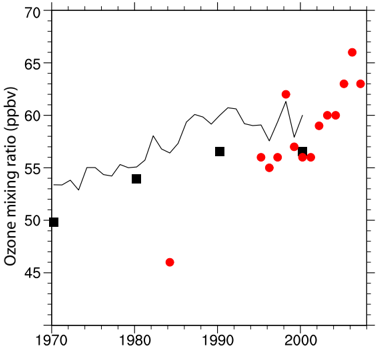
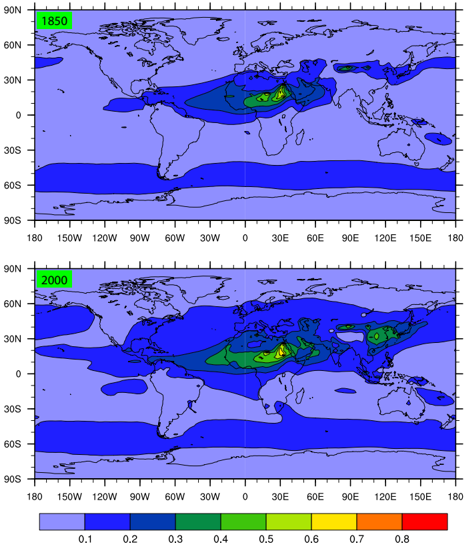
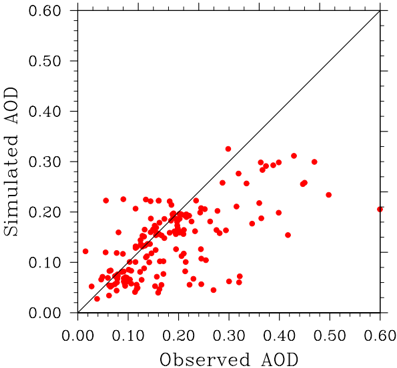
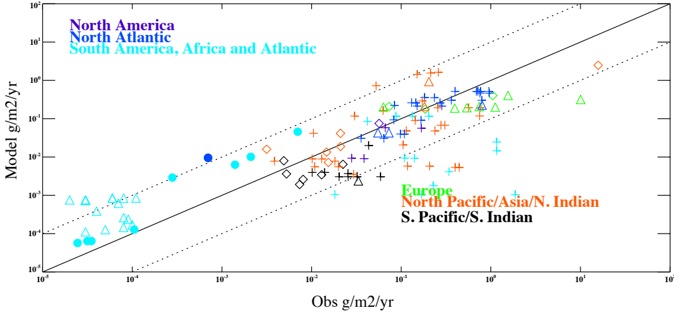
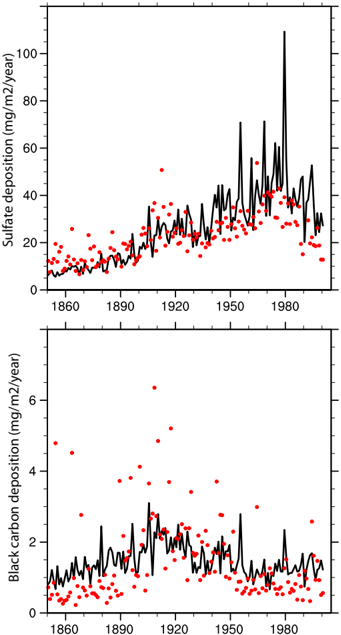
We present and discuss a new dataset of gridded emissions covering the historical period (1850–2000) in decadal increments at a horizontal resolution of 0.5° in latitude and longitude. The primary purpose of this inventory is to provide consistent gridded emissions of reactive gases and aerosols for use in chemistry model simulations needed by climate models for the Climate Model Intercomparison Program #5 (CMIP5) in support of the Intergovernmental Panel on Climate Change (IPCC) Fifth Assessment report (AR5). Our best estimate for the year 2000 inventory represents a combination of existing regional and global inventories to capture the best information available at this point; 40 regions and 12 sectors are used to combine the various sources. The historical reconstruction of each emitted compound, for each region and sector, is then forced to agree with our 2000 estimate, ensuring continuity between past and 2000 emissions. Simulations from two chemistry-climate models are used to test the ability of the emission dataset described here to capture long-term changes in atmospheric ozone, carbon monoxide and aerosol distributions. The simulated long-term change in the Northern mid-latitudes surface and mid-troposphere ozone is not quite as rapid as observed. However, stations outside this latitude band show much better agreement in both present-day and long-term trend. The model simulations indicate that the concentration of carbon monoxide is underestimated at the Mace Head station; however, the long-term trend over the limited observational period seems to be reasonably well captured. The simulated sulfate and black carbon deposition over Greenland is in very good agreement with the ice-core observations spanning the simulation period. Finally, aerosol optical depth and additional aerosol diagnostics are shown to be in good agreement with previously published estimates and observations.
Overview
The claims and statistics of this paper haven’t been checked yet.
Free: it reads the open-access text and checks the first 5 claims that cite a source we can check. Create a free account to check every claim.
Integrity signals
Registry
Cites
Statistics
Figures
Verification
Claims the paper makes
The claims and statistics of this paper haven’t been checked yet.
Free: it reads the open-access text and checks the first 5 claims that cite a source we can check. Create a free account to check every claim.
Claims other papers make about this one
Each is checked against this paper’s own text: does it say what the citing paper says it does?
The source backs part of the claim, not all of it — or backs it for a different population, condition or comparison.
In the citing paper
“No sulfur isotope analyses have been performed for the remaining part of the IAP, but sulfur concentrations in the Greenland ice cores frequently exceed typical levels which were prevalent for the first half of the 20th century during periods of intensive industrial activity and related sulfur emissions across the North Atlantic region 45 (Fig. 6a).”
From Decadal-to-centennial increases of volcanic aerosols from Iceland challenge the concept of a Medieval Quiet Period (2024) · cites this paper as [45]
Experimental — accuracy not yet measured
Self-check
Percentages, sums and reported differences re-computed from the paper’s own numbers.
The self-check needs the paper’s full text.
Citations
Cites
Rayner, N. A., Parker, D. E., Horton, E. B., Folland, C. K., Alexander, L. V., Rowell, D. P., Kent, E. C., & Kaplan, A. (2003) · Journal of Geophysical Research: Atmospheres · doi:10.1029/2002jd002670 · Cited by 10,991 · cited 1×
“Using two chemistry-climate models, we have performed 1850–2009 simulations (transient or time-slice experiments) in order to provide a first-order evaluation of the emissions.”
MethodAERONET—A Federated Instrument Network and Data Archive for Aerosol Characterization
Holben, B. N., Eck, T. F., Slutsker, I., Tanré, D., Buis, J. P., Setzer, A., Vermote, E., Reagan, J. A., Kaufman, Y. J., Nakajima, T., et al. (1998) · Remote Sensing of Environment · doi:10.1016/s0034-4257(98)00031-5 · Cited by 7,743 · cited 1×
“The observed values are based on annually averaged AERONET optical depths (Holben et al., 1998).”
BackgroundHow a century of ammonia synthesis changed the world
Erisman, J. W., Sutton, M. A., Galloway, J., Klimont, Z., & Winiwarter, W. (2008) · Nature Geoscience · doi:10.1038/ngeo325 · Cited by 4,607 · cited 8×
“To extend the non-CO 2 ship emissions backward in time, the 2000 emission totals from Eyring et al. (2010) are scaled with the historical CO2 emission time series from Buhaug et al. (2008) back to 1870.”
BackgroundMethodInfluentialSelf-citationEmission of trace gases and aerosols from biomass burning
Andreae, M. O., & Merlet, P. (2001) · Global Biogeochemical Cycles · doi:10.1029/2000gb001382 · Cited by 3,902 · cited 1×
“The emission factors for these classes were harmonized to those given by Andreae and Merlet (2001, with updates from M. O. Andreae, personal communication, 2008). Emissions from burning of soil organic matter, notably peat soil, which is ignited by fires in the overlying surface vegetation, may strongly influence emis…”
MethodMeehl, G. A., Stocker, T. F., Collins, W. D., Friedlingstein, P., Gaye, A. T., Gregory, J. M., Kitoh, A., Knutti, R., Murphy, J. M., Noda, A., et al. (n.d.) · Bern Open Repository and Information System (University of Bern) · doi:10.48350/25539 · Cited by 3,726
A technology‐based global inventory of black and organic carbon emissions from combustion
Bond, T. C., Streets, D. G., Yarber, K. F., Nelson, S. M., Woo, J., & Klimont, Z. (2004) · Journal of Geophysical Research: Atmospheres · doi:10.1029/2003jd003697 · Cited by 2,393
Self-citationAn inventory of gaseous and primary aerosol emissions in Asia in the year 2000
Streets, D. G., Bond, T. C., Carmichael, G. R., Fernandes, S. D., Fu, Q., He, D., Klimont, Z., Nelson, S. M., Tsai, N. Y., Wang, M. Q., et al. (2003) · Journal of Geophysical Research: Atmospheres · doi:10.1029/2002jd003093 · Cited by 2,038
Self-citationCouplings Between Changes in the Climate System and Biogeochemistry
Denman, K. L., Brasseur, G. P., Chidthaisong, A., Ciais, P., Cox, P. M., Dickinson, R. E., Hauglustaine, D. A., Heinze, C., Holland, E. A., Jacob, D. J., et al. (2007) · HAL · Cited by 2,031
Self-citationAsian emissions in 2006 for the NASA INTEX-B mission
Zhang, Q., Streets, D. G., Carmichael, G. R., He, K. B., Huo, H., Kannari, A., Klimont, Z., Park, I. S., Reddy, S., Fu, J. S., et al. (2009) · Atmospheric Chemistry and Physics · doi:10.5194/acp-9-5131-2009 · Cited by 1,950 · cited 4×
“Although additional information is available in the literature for several regions (e.g., Zhang et al., 2009; Streets et al., 2003, 2006; Klimont et al., 2009; Cofala15 et al., 2007; NARSTO, 2006; Garg et al., 2006), we did not attempt to include those as they were less complete than the…”
BackgroundInfluentialSelf-citationChemical Kinetics and Photochemical Data for Use in Atmospheric Studies, Evaluation Number 18
Burkholder, J. B., Sander, S. P., Abbatt, J. P. D., Barker, J. R., Huie, R. E., Kolb, C. E., Kurylo, M. J., Orkin, V. L., Wilmouth, D. M., & Wine, P. H. (2015) · doi:10.13140/rg.2.1.2504.2806 · Cited by 1,928
Research works printed but not linked: 3
- Chipperfield, M. P., Fioletov, V. E., Bregman, B., Burrows, J., Con- nor, B. J., Haigh, J. D., Harris, N. R. P., Hauchecorne, A., Hood, L. L., Kawa, S. R., Krzy'scin, J. W., Logan, J. A., Muthama, N. J., Polvani, L., Randel, W. J., Sasaki, T., Stähelin, J., Stolarski, R. S., Thomason, L. W., and Zawodny, J. M.: Global Ozone, 2007: Past and Present, Chapter 3 in Scientific Assessment of Ozone Depletion: 2006, World Meteorological Organization, Geneva, Switzerland, Global Ozone Research and Monitoring Project - Report No. 50, 572 pp., 2006.
- Smith, S. J., van Aardenne, J., Klimont, Z., Andres, R., Volke, A., and Delgado Arias, S.: Anthropogenic sulfur dioxide emis- sions: 18502005, Atmos. Chem. Phys. Discuss., 10, 16111- 16151, doi:10.5194/acpd-10-16111-2010, 2010. · DOI
- Vestreng, V., Adams, M., and Goodwin, J.: Inventory review 2004, EMEP Techincal Report MSC-W1/2004, 2004.
Cited by
Items 401–500 of 1,014
Undorf, S., Polson, D., Bollasina, M. A., Ming, Y., Schurer, A., & Hegerl, G. C. (2018) · Journal of Geophysical Research: Atmospheres · doi:10.1029/2017jd027711 · Cited by 104
“Throughout the twentieth century, the fraction of global-aerosol loading due to Asian sources has been growing and eventually outweighed the hitherto dominant contribution from North American and European sources (Lamarque et al., 2010).”
Changing atmospheric acidity as a modulator of nutrient deposition and ocean biogeochemistry
Baker, A. R., Kanakidou, M., Nenes, A., Myriokefalitakis, S., Croot, P. L., Duce, R. A., Gao, Y., Guieu, C., Ito, A., Jickells, T. D., et al. (2021) · Science Advances · doi:10.1126/sciadv.abd8800 · Cited by 122
“2 of 9 The atmospheric supply of available nutrients to the ocean has therefore changed in magnitude and distribution as a consequence of global industrialization and will continue to evolve over time with economic development and changes in regulatory emissions frameworks (21, 23).”
Self-citationA negative feedback between anthropogenic ozone pollution and enhanced ocean emissions of iodine
Prados‐Román, C., Cuevas, C. A., Fernández, R. P., Kinnison, D. E., Lamarque, J., & Saiz‐Lopez, A. (2015) · Atmospheric chemistry and physics · doi:10.5194/acp-15-2215-2015 · Cited by 103
Self-citationMicrophysical process rates and global aerosol–cloud interactions
Gettelman, A., Morrison, H., Terai, C. R., & Wood, R. (2013) · Atmospheric chemistry and physics · doi:10.5194/acp-13-9855-2013 · Cited by 108
Revell, L. E., Tummon, F., Stenke, A., Sukhodolov, T., Coulon, A., Rozanov, E., Garny, H., Grewe, V., & Peter, T. (2015) · Atmospheric Chemistry and Physics · doi:10.5194/acp-15-5887-2015 · Cited by 103
“…a MEGAN (Model of Emissions of Gases and Aerosols from Nature; Guenther et al., 2006) run), while the biomass burning emissions follow those described by Lamarque et al. (2010) until 2000, ) is identical to REF-C2, except that non-methane ozone precursor emissions are held constant at 1960 levels.”
Guth, J., Josse, B., Marécal, V., Joly, M., & Hamer, P. (2016) · Geoscientific model development · doi:10.5194/gmd-9-137-2016 · Cited by 103
“At the global scale, the IPCC/AR5 emissions are used, representative of the year 2000, for the anthropogenic species and biomass burning emissions (Lamarque et al., 2010).”
MethodWinstrup, M., Vallelonga, P., Kjær, H. A., Fudge, T. J., Lee, J. E., Riis, M. H., Edwards, R., Bertler, N. A. N., Blunier, T., Brook, E. J., et al. (2019) · Climate of the past · doi:10.5194/cp-15-751-2019 · Cited by 125
“Southern hemispheric fossil fuel emissions have increased since the l950s (Lamarque et al., 2010) but are believed to be a minor contributor to total black carbon deposition in Antarctica (Bauer et al., 2013).”
Isotopic constraint on the twentieth-century increase in tropospheric ozone
Yeung, L. Y., Murray, L. T., Martinerie, P., Witrant, E., Hu, H., Banerjee, A., Orsi, A., & Chappellaz, J. (2019) · Nature · doi:10.1038/s41586-019-1277-1 · Cited by 102
Zhou, L., Bao, Q., Liu, Y., Wu, G., Wang, W., Wang, X., He, B., Yu, H., & Li, J. (2015) · Journal of Advances in Modeling Earth Systems · doi:10.1002/2014ms000349 · Cited by 105
Olin, S., Lindeskog, M., Pugh, T. A. M., Schurgers, G., Wårlind, D., Mishurov, M., Zaehle, S., Stocker, B. D., Smith, B., & Arneth, A. (2015) · Earth System Dynamics · doi:10.5194/esd-6-745-2015 · Cited by 118
Nicely, J. M., Canty, T. P., Manyin, M., Oman, L. D., Salawitch, R. J., Steenrod, S. D., Strahan, S. E., & Strode, S. A. (2018) · Journal of Geophysical Research: Atmospheres · doi:10.1029/2018jd028388 · Cited by 101
“, 2006) for 1997–2008, with the two data sets harmonized to avoid an unphysical jump (Lamarque et al., 2010).”
InfluentialThe compact Earth system model OSCAR v2.2: description and first results
Gasser, T., Ciais, P., Boucher, O., Quilcaille, Y., Tortora, M., Bopp, L., & Hauglustaine, D. (2017) · Geoscientific Model Development · doi:10.5194/gmd-10-271-2017 · Cited by 101
“Those of CH4 can be based on EDGAR, ACCMIP (Lamarque et al., 2010) or EPA (2012). Those of N2O can be based on EDGAR or EPA. Those of all hydrofluorocarbons (HFCs), perfluorocarbons (PFCs), sulfur hexafluoride (SF6) and nitrogen trifluoride (NF3) are based on EDGAR, while those of ozone depleting substances (ODSs) are…”
InfluentialBates, K. H., Jacob, D. J., Wang, S., Hornbrook, R. S., Apel, E. C., Kim, M. J., Millet, D. B., Wells, K. C., Chen, X., Brewer, J. F., et al. (2021) · Journal of Geophysical Research Atmospheres · doi:10.1029/2020jd033439 · Cited by 122
Crippa, M., Solazzo, E., Guizzardi, D., Dingenen, R. V., & Leip, A. (2022) · Nature Food · doi:10.1038/s43016-022-00615-7 · Cited by 116
Allen, R. J., Evan, A. T., & Booth, B. B. B. (2015) · Journal of Climate · doi:10.1175/jcli-d-15-0148.1 · Cited by 101
How Will Air Quality Change in South Asia by 2050?
Kumar, R., Barth, M. C., Pfister, G. G., Delle Monache, L., Lamarque, J. F., Archer‐Nicholls, S., Tilmes, S., Ghude, S. D., Wiedinmyer, C., Naja, M., et al. (2018) · Journal of Geophysical Research: Atmospheres · doi:10.1002/2017jd027357 · Cited by 101
“The CAM-Chem simulations, initialized with an 1850–2000 CAM-Chem simulation, have been conducted for the period of 2000–2100 for all the RCP scenarios with tropospheric and stratospheric chemistry on a 1.9° × 2.5° grid and a time step of 30 min (Lamarque et al., 2010).”
InfluentialSelf-citationSpurious Late Historical‐Era Warming in CESM2 Driven by Prescribed Biomass Burning Emissions
Fasullo, J., Lamarque, J., Hannay, C., Rosenbloom, N. A., Tilmes, S., DeRepentigny, P., Jahn, A., & Deser, C. (2022) · Geophysical Research Letters · doi:10.1029/2021gl097420 · Cited by 112
“The stronger SWsfc decrease in CESM2 versus CESM1 from 1950 151 to 1990 is consistent with differences generally between CMIP6 and CMIP5, which have been 152 shown to be attributable to the combined influences of model sensitivity and contrasts in aerosol 153 and greenhouse gas forcings (Smith and Forster 2021).”
BackgroundMethodInfluentialSelf-citationMicrophysical simulations of sulfur burdens from stratospheric sulfur geoengineering
English, J. M., Toon, O. B., & Mills, M. J. (2012) · Atmospheric Chemistry and Physics · doi:10.5194/acp-12-4775-2012 · Cited by 101
“OCS is specified with a constant surface concentration of 510 pptv. SO2 is specified from a two-dimensional monthly mean surface emissions dataset (Lamarque et al., 2010; Smith et al., 2011).”
McKinnon, K. A., Poppick, A., Dunn‐Sigouin, E., & Deser, C. (2017) · Journal of Climate · doi:10.1175/jcli-d-16-0905.1 · Cited by 108
Kirkevåg, A., Grini, A., Olivié, D., Seland, Ø., Alterskjær, K., Hummel, M., Karset, I. H. H., Lewinschal, A., Liu, X., Makkonen, R., et al. (2018) · Geoscientific model development · doi:10.5194/gmd-11-3945-2018 · Cited by 121
“Our model estimates are also very close to one standard deviation away from the multi-model estimate for the period 1850–2000 in Boucher et al. (2013), which is given as -1.08 ± 0.32 W m-2, based on results from CMIP5 and ACCMIP (Atmospheric Chemistry and Climate Model Intercomparison Project) models.”
InfluentialAllen, R. J., Norris, J. R., & Wild, M. (2013) · Journal of Geophysical Research Atmospheres · doi:10.1002/jgrd.50426 · Cited by 109
“Both GISS p2 and p3 use the CMIP5 [Lamarque et al., 2010] emissions inventory.”
Dhomse, S. S., Emmerson, K. M., Mann, G. W., Bellouin, N., Carslaw, K. S., Chipperfield, M. P., Hommel, R., Abraham, N. L., Telford, P., Braesicke, P., et al. (2014) · Atmospheric Chemistry and Physics · doi:10.5194/acp-14-11221-2014 · Cited by 99
Ginot, P., Dumont, M., Lim, S., Patris, N., Taupin, J. D., Wagnon, P., Gilbert, A., Arnaud, Y., Marinoni, A., Bonasoni, P., et al. (2014) · The Cryosphere · doi:10.5194/tc-8-1479-2014 · Cited by 101
“Using the ECCAD portal (http://eccad.sedoo.fr) and the MAC- City (MACC/CityZEN EU projects) inventories (Granier et al., 2011; Lamarque et al., 2010; Diehl et al., 2012; Van der Werf et al., 2006), we calculated the temporal variability of anthropogenic and natural emissions for the area of…”
MethodAerosols at the poles: an AeroCom Phase II multi-model evaluation
Sand, M., Samset, B. H., Balkanski, Y. J., Bauer, S. E., Bellouin, N., Berntsen, T. K., Bian, H., Chin, M., Diehl, T., Easter, R. C., et al. (2017) · Atmospheric chemistry and physics · doi:10.5194/acp-17-12197-2017 · Cited by 108
Self-citationLower tropospheric ozone over India and its linkage to the South Asian monsoon
Lu, X. H., Zhang, L., Liu, X., Gao, M. C., Zhao, Y., & Shao, J. (2018) · Atmospheric chemistry and physics · doi:10.5194/acp-18-3101-2018 · Cited by 109
Dalsøren, S. B., Myhre, G., Hodnebrog, Ø., Myhre, C. L., Stohl, A., Pisso, I., Schwietzke, S., Höglund-Isaksson, L., Helmig, D., Reimann, S., et al. (2018) · Nature Geoscience · doi:10.1038/s41561-018-0073-0 · Cited by 109
Thum, T., Caldararu, S., Engel, J., Kern, M., Pallandt, M., Schnur, R., Yu, L., & Zaehle, S. (2019) · Geoscientific model development · doi:10.5194/gmd-12-4781-2019 · Cited by 122
Temporal and spatial trends of residential energy consumption and air pollutant emissions in China
Zhu, D., Tao, S., Wang, R., Shen, H., Huang, Y., Shen, G., Wang, B., Li, W., Zhang, Y., Chen, H., et al. (2013) · Applied Energy · doi:10.1016/j.apenergy.2013.01.040 · Cited by 102
“However, the acquisition, production, and utilization of energy have great adverse impacts on environment by emitting pollutants, greenhouse gases, and heat [1].”
Potential climate forcing of land use and land cover change
Ward, D. S., Mahowald, N. M., & Kloster, S. (2014) · Atmospheric Chemistry and Physics · doi:10.5194/acp-14-12701-2014 · Cited by 98
Self-citationMeyerholt, J., Zaehle, S., & Smith, M. J. (2016) · Biogeosciences · doi:10.5194/bg-13-1491-2016 · Cited by 110
The ACCESS coupled model: documentation of core CMIP5 simulations and initial results
Dix, M., Vohralik, P., Bi, D., Rashid, H., Marsland, S., O’Farrell, S. P., Uotila, P. J., Hirst, T., Kowalczyk, E., Sullivan, A., et al. (2013) · Australian Meteorological and Oceanographic Journal · doi:10.1071/es13006 · Cited by 110
Legrand, M., McConnell, J. R., Preunkert, S., Arienzo, M. M., Chellman, N. J., Gleason, K. E., Sherwen, T., Evans, M. J., & Carpenter, L. J. (2018) · Proceedings of the National Academy of Sciences · doi:10.1073/pnas.1809867115 · Cited by 108
Self-citationSun, J., Zhang, K., Wan, H., Ma, P., Tang, Q., & Zhang, S. (2019) · Journal of Advances in Modeling Earth Systems · doi:10.1029/2019ms001831 · Cited by 106
“The anthropogenic emissions of aerosols and their precursors were taken from the World Climate Research Programme (WCRP) Coupled Model Intercomparison Project-Phase 5 (CMIP5; Lamarque et al., 2010).”
The importance of vertical velocity variability for estimates of the indirect aerosol effects
West, R. E. L., Stier, P., Jones, A., Johnson, C. E., Mann, G. W., Bellouin, N., Partridge, D. G., & Kipling, Z. (2014) · Atmospheric chemistry and physics · doi:10.5194/acp-14-6369-2014 · Cited by 97
Long-term trends in total inorganic nitrogen and sulfur deposition in the US from 1990 to 2010
Zhang, Y., Mathur, R., Bash, J. O., Hogrefe, C., Xing, J., & Roselle, S. J. (2018) · Atmospheric chemistry and physics · doi:10.5194/acp-18-9091-2018 · Cited by 106
Righi, M., Hendricks, J., & Sausen, R. (2013) · Atmospheric chemistry and physics · doi:10.5194/acp-13-9939-2013 · Cited by 96
The Mediterranean summertime ozone maximum: global emission sensitivities and radiative impacts
Richards, N. A. D., Arnold, S. R., Chipperfield, M. P., Miles, G., Rap, A., Siddans, R., Monks, S. A., & Hollaway, M. J. (2013) · Atmospheric Chemistry and Physics · doi:10.5194/acp-13-2331-2013 · Cited by 96
“Anthropogenic emissions are taken from IPCC AR5 2000 emissions set (Lamarque et al., 2010).”
Contributions of World Regions to the Global Tropospheric Ozone Burden Change From 1980 to 2010
Zhang, Y., West, J. J., Emmons, L. K., Flemming, J., Jonson, J. E., Lund, M. T., Sekiya, T., Sudo, K., Gaudel, A., Chang, K., et al. (2021) · Geophysical Research Letters · doi:10.1029/2020gl089184 · Cited by 104
“Global anthropogenic emissions of all short-lived species including ozone precursors, aerosols, and aerosol precursors, from all anthropogenic sectors including biomass burning, ships and aircraft, are from ACCMIP for 1980 (Lamarque et al., 2010) and RCP8.”
Schumacher, D. L., Singh, J., Hauser, M., Fischer, E. M., Wild, M., & Seneviratne, S. I. (2024) · Communications Earth & Environment · doi:10.1038/s43247-024-01332-8 · Cited by 135
“58), in turn based on a reconstructed aerosol emission inventory 60 up to 2009, and thereafter using emission scenarios (speci fi cally RCP2 .6; ref.”
Leonardi, S., Gentilesca, T., Guerrieri, R., Ripullone, F., Magnani, F., Mencuccini, M., van Noije, T., & Borghetti, M. (2012) · Global Change Biology · doi:10.1111/j.1365-2486.2012.02757.x · Cited by 111
“In the ozone, there is normally a positive correlation with N deposition because NOx stimulates chemical production of O3; for sulfur, the correlation strength depends on the component of interest (Lamar- que et al., 2010).”
InfluentialHuijnen, V., Pozzer, A., Arteta, J., Brasseur, G. P., Bouarar, I., Chabrillat, S., Christophe, Y., Doumbia, T., Flemming, J., Guth, J., et al. (2019) · Geoscientific model development · doi:10.5194/gmd-12-1725-2019 · Cited by 110
“Aircraft NO emissions are 1.8 Tg NO yr−1 , following Lamarque et al. (2010).”
InfluentialMeskhidze, N., Xu, J., Gantt, B., Zhang, Y., Nenes, A., Ghan, S. J., Liu, X., Easter, R. C., & Zaveri, R. A. (2011) · Atmospheric chemistry and physics · doi:10.5194/acp-11-11689-2011 · Cited by 109
Hassler, B., McDonald, B. C., Frost, G. J., Borbon, A., Carslaw, D. C., Civerolo, K., Granier, C., Monks, P. S., Monks, S., Parrish, D. D., et al. (2016) · Geophysical Research Letters · doi:10.1002/2016gl069894 · Cited by 93
Self-citationAnthropogenic aerosol indirect effects in cirrus clouds
Penner, J. E., Zhou, C., Garnier, A., & Mitchell, D. L. (2018) · Journal of Geophysical Research Atmospheres · doi:10.1029/2018jd029204 · Cited by 94
“In addition, the emissions that we use for open biomass burning are not just those from anthropogenic activities, since they are primarily based on satellite data that captures both anthropogenic and natural sources of open fires (Lamarque et al., 2010).”
European atmosphere in 2050, a regional air quality and climate perspective under CMIP5 scenarios
Colette, A., Bessagnet, B., Vautard, R., Szopa, S., Rao, S., Schucht, S., Klimont, Z., Menut, L., Clain, G., Meleux, F., et al. (2013) · Atmospheric Chemistry and Physics · doi:10.5194/acp-13-7451-2013 · Cited by 94
“The emissions (CH4, SO2, NOx (nitrogen oxides), CO, NMVOC (non-methane volatile organic compounds), black (BC) and organic carbon, PPM (fine primary particulate matter)) are subsequently spatialised on a 0.5◦ geographical grid using ACCMIP emission data for the year 2000 (Lamarque et al., 2010).”
MethodInfluentialSelf-citationDevelopment of a global aerosol model using a two‐dimensional sectional method: 1. Model design
Matsui, H. (2017) · Journal of Advances in Modeling Earth Systems · doi:10.1002/2017ms000936 · Cited by 106
Aouizerats, B., van der Werf, G. R., Balasubramanian, R., & Betha, R. (2015) · Atmospheric chemistry and physics · doi:10.5194/acp-15-363-2015 · Cited by 98
Qian, Y., Wang, H., Zhang, R., Flanner, M. G., & Rasch, P. J. (2014) · Environmental Research Letters · doi:10.1088/1748-9326/9/6/064001 · Cited by 102
Modeling study on the transport of summer dust and anthropogenic aerosols over the Tibetan Plateau
Liu, Y., Sato, Y., Jia, R., Xie, Y., Huang, J., & Nakajima, T. (2015) · Atmospheric chemistry and physics · doi:10.5194/acp-15-12581-2015 · Cited by 93
“The emission inventory data of anthropogenic black carbon and SO2 are based on Lamarque et al. (2010), and the other inventories (i.e., biomass burning and volcanoes) are the same as those used by Takemura et al. (2005).”
Projected Future Changes in Vegetation in Western North America in the Twenty-First Century
Jiang, X., Rauscher, S. A., Ringler, T. D., Lawrence, D. M., Williams, A. P., Allen, C. D., Steiner, A. L., Cai, D. M., & McDowell, N. G. (2013) · Journal of Climate · doi:10.1175/jcli-d-12-00430.1 · Cited by 93
Black carbon in the atmosphere and snow, from pre-industrial times until present
Skeie, R. B., Berntsen, T., Myhre, G., Pedersen, C. A., Ström, J., Gerland, S., & Ogren, J. A. (2011) · Atmospheric Chemistry and Physics · doi:10.5194/acp-11-6809-2011 · Cited by 93
“There are even larger uncertainties in the biomass burning emissions, especially in the pre-satellite era (Lamarque et al., 2010).”
BackgroundMethodShen, L., Mickley, L. J., & Murray, L. T. (2017) · Atmospheric chemistry and physics · doi:10.5194/acp-17-4355-2017 · Cited by 100
Influence of winter precipitation on spring phenology in boreal forests
Yun, J., Jeong, S., Ho, C.-H., Park, C., Park, H., & Kim, J. (2018) · Global Change Biology · doi:10.1111/gcb.14414 · Cited by 97
Large uncertainties in global hydroxyl projections tied to fate of reactive nitrogen and carbon
Murray, L. T., Fiore, A. M., Shindell, D. T., Naïk, V., & Horowitz, L. W. (2021) · Proceedings of the National Academy of Sciences · doi:10.1073/pnas.2115204118 · Cited by 93
Self-citationA model study of the impact of source gas changes on the stratosphere for 1850–2100
Fleming, E. L., Jackman, C. H., Stolarski, R. S., & Douglass, A. R. (2011) · Atmospheric Chemistry and Physics · doi:10.5194/acp-11-8515-2011 · Cited by 93
Wang, H., Xie, S., & Liu, Q. (2016) · Journal of Climate · doi:10.1175/jcli-d-16-0106.1 · Cited by 97
Global organic carbon emissions from primary sources from 1960 to 2009
Huang, Y., Shen, H., Chen, Y., Zhong, Q., Chen, H., Wang, R., Shen, G., Liu, J., Li, B., & Tao, S. (2015) · Atmospheric Environment · doi:10.1016/j.atmosenv.2015.10.017 · Cited by 103
Turnock, S. T., Spracklen, D. V., Carslaw, K. S., Mann, G. W., Woodhouse, M. T., Forster, P. M. D. F., Haywood, J., Johnson, C. E., Dalvi, M., Bellouin, N., et al. (2015) · Atmospheric chemistry and physics · doi:10.5194/acp-15-9477-2015 · Cited by 114
Megacities and climate change – A brief overview
Folberth, G., Butler, T. M., Collins, W. J., & Rumbold, S. T. (2014) · Environmental Pollution · doi:10.1016/j.envpol.2014.09.004 · Cited by 104
Hamilton, D. S., Scanza, R. A., Feng, Y. W., Guinness, J., Kok, J. F., Li, L., Liu, X., Rathod, S., Wan, J., Wu, M., et al. (2019) · Geoscientific model development · doi:10.5194/gmd-12-3835-2019 · Cited by 116
Self-citationBadía, A., Jorba, O., Voulgarakis, A., Dabdub, D., García‐Pando, C. P., Hilboll, A., Ageitos, M. G., & Janjic, Z. I. (2017) · Geoscientific model development · doi:10.5194/gmd-10-609-2017 · Cited by 105
Significant Increase of Aromatics-Derived Secondary Organic Aerosol during Fall to Winter in China
Ding, X., Zhang, Y.-Q., He, Q., Yu, Q., Wang, J., Shen, R.-Q., Song, W., Wang, Y., & Wang, X. (2017) · Environmental Science & Technology · doi:10.1021/acs.est.6b06408 · Cited by 97
The effect of South American biomass burning aerosol emissions on the regional climate
Thornhill, G. D., Ryder, C. L., Highwood, E. J., Shaffrey, L., & Johnson, B. T. T. (2018) · Atmospheric chemistry and physics · doi:10.5194/acp-18-5321-2018 · Cited by 97
Ten years of CO emissions as seen from Measurements of Pollution in the Troposphere (MOPITT)
Fortems-Cheiney, A., Chevallier, F., Pison, I., Bousquet, P., Szopa, S., Deeter, M. N., & Clerbaux, C. (2011) · Journal of Geophysical Research · doi:10.1029/2010jd014416 · Cited by 91
“…emissions with several global and regional inventories that correspond to year 2000: (1) the one proposed for the IPCC fifth assessment report AR5 [Lamarque et al., 2010]; (2) the REanalysis of the TROpospheric chemical composition (RETRO) inventory [Pulles et al., 2007], developed by The…”
Telford, P. J., Abraham, N. L., Archibald, A. T., Braesicke, P., Dalvi, M., Morgenstern, O., O’Connor, F. M., Richards, N. A. D., & Pyle, J. A. (2013) · Geoscientific model development · doi:10.5194/gmd-6-161-2013 · Cited by 91
“The emissions are taken from a sum of anthropogenic and natural emissions, with anthropogenic and biomass burning emissions taken from Lamarque et al. (2010) using data for the year 2000.”
Microphysical simulations of new particle formation in the upper troposphere and lower stratosphere
English, J. M., Toon, O. B., Mills, M. J., & Yu, F. (2011) · Atmospheric Chemistry and Physics · doi:10.5194/acp-11-9303-2011 · Cited by 91
Wårlind, D., Smith, B., Hickler, T., & Arneth, A. (2014) · Biogeosciences · doi:10.5194/bg-11-6131-2014 · Cited by 111
Malyshev, S. L., Shevliakova, E., Stouffer, R. J., & Pacala, S. W. (2015) · Journal of Climate · doi:10.1175/jcli-d-14-00586.1 · Cited by 97
Reconciliation of halogen-induced ozone loss with the total-column ozone record
Shepherd, T. G., Plummer, D. A., Scinocca, J., Hegglin, M. I., Fioletov, V., Reader, M. C., Remsberg, E. E., von Clarmann, T., & Wang, H. J. (2014) · Nature Geoscience · doi:10.1038/ngeo2155 · Cited by 90
Stratospheric impact on tropospheric ozone variability and trends: 1990–2009
Hess, P. G., & Zbinden, R. (2013) · Atmospheric Chemistry and Physics · doi:10.5194/acp-13-649-2013 · Cited by 90
Adverse effects of increasing drought on air quality via natural processes
Wang, Y., Xie, Y., Dong, W., Ming, Y., Wang, J., & Shen, L. (2017) · Atmospheric chemistry and physics · doi:10.5194/acp-17-12827-2017 · Cited by 100
Major Impact of Dust Deposition on the Productivity of the Arabian Sea
Guieu, C., Azhar, M. A., Aumont, O., Mahowald, N. M., Lévy, M., Éthé, C., & Lachkar, Z. (2019) · Geophysical Research Letters · doi:10.1029/2019gl082770 · Cited by 97
“For nitrogen, the chemistry version was included, which considers ozone and organic compounds for preindustrial, current and future simulations (Lamarque et al., 2010).”
Self-citationThe Arctic response to remote and local forcing of black carbon
Sand, M., Berntsen, T. K., Kay, J. E., Lamarque, J. F., Seland, Ø., & Kirkevåg, A. (2013) · Atmospheric Chemistry and Physics · doi:10.5194/acp-13-211-2013 · Cited by 91
Self-citationVariability of fire carbon emissions in equatorial Asia and its nonlinear sensitivity to El Niño
Yin, Y., Ciais, P., Chevallier, F., van der Werf, G. R., Fanin, T., Broquet, G., Boesch, H., Cozic, A., Hauglustaine, D., Szopa, S., et al. (2016) · Geophysical Research Letters · doi:10.1002/2016gl070971 · Cited by 87
Kanaya, Y., Yamaji, K., Miyakawa, T., Taketani, F., Zhu, C., Choi, Y., Komazaki, Y., Ikeda, K., Kondo, Y., & Klimont, Z. (2020) · Atmospheric chemistry and physics · doi:10.5194/acp-20-6339-2020 · Cited by 105
Self-citationSkowron, A., Lee, D. S., De León, R. R., Lim, L. L., & Owen, B. (2021) · Nature Communications · doi:10.1038/s41467-020-20771-3 · Cited by 88
Self-citationKawase, H., Nagashima, T., Sudo, K., & Nozawa, T. (2011) · Geophysical Research Letters · doi:10.1029/2010gl046402 · Cited by 88
Future air quality in Europe: a multi-model assessment of projected exposure to ozone
Colette, A., Granier, C., Hodnebrog, Ø., Jakobs, H. J., Maurizi, A., Nyiri, A., Rao, S., Amann, M. C., Bessagnet, B., d'Angiola, A., et al. (2012) · Atmospheric chemistry and physics · doi:10.5194/acp-12-10613-2012 · Cited by 95
Self-citationPollution trends over Europe constrain global aerosol forcing as simulated by climate models
Cherian, R., Quaas, J., Salzmann, M., & Wild, M. (2014) · Geophysical Research Letters · doi:10.1002/2013gl058715 · Cited by 88
Søvde, O. A., Matthes, S., Skowron, A., Iachetti, D., Lim, L., Owen, B., Hodnebrog, Ø., Di Genova, G., Pitari, G., Lee, D. S., et al. (2014) · Atmospheric Environment · doi:10.1016/j.atmosenv.2014.06.049 · Cited by 88
“The anthropogenic (non-aviation) and biomass burning surface emissions are taken from Lamarque et al. (2010), while the biogenic surface emissions are taken from POET (Granier et al., 2005).”
Self-citationMonks, S. A., Arnold, S. R., Hollaway, M. J., Pope, R. J., Wilson, C., Feng, W., Emmerson, K. M., Kerridge, B. J., Latter, B. G., Miles, G. M., et al. (2017) · Geoscientific model development · doi:10.5194/gmd-10-3025-2017 · Cited by 105
“Aircraft emissions of NOx are based on estimated aircraft movements for the year 20 2002 (Lamarque et al., 2010) and were calculated for the European QUANTIFY project (http://www.”
MethodA Mineralogy‐Based Anthropogenic Combustion‐Iron Emission Inventory
Rathod, S., Hamilton, D. S., Mahowald, N. M., Klimont, Z., Corbett, J. J., & Bond, T. C. (2020) · Journal of Geophysical Research Atmospheres · doi:10.1029/2019jd032114 · Cited by 105
“14 of 35 S6), especially from regions with relatively lower PM control measures (Bond et al., 2007; Hoesly et al., 2018; Lamarque et al., 2010; Sun et al., 2019).”
Self-citationSkeie, R. B., Hodnebrog, Ø., & Myhre, G. (2023) · Communications Earth & Environment · doi:10.1038/s43247-023-00969-1 · Cited by 117
Bauer, S. E., Bausch, A. R., Nazarenko, L., Tsigaridis, K., Xu, B., Edwards, R., Bisiaux, M. M., & McConnell, J. (2013) · Journal of Geophysical Research Atmospheres · doi:10.1002/jgrd.50612 · Cited by 97
Self-citationThe multi-scale aerosol-climate model PNNL-MMF: model description and evaluation
Wang, M., Ghan, S. J., Easter, R. C., Ovchinnikov, M., Liu, X., Kassianov, E., Qian, Y., Gustafson, W. I., Larson, V. E., Schanen, D. P., et al. (2011) · Geoscientific model development · doi:10.5194/gmd-4-137-2011 · Cited by 88
Biomass burning related ozone damage on vegetation over the Amazon forest: a model sensitivity study
Pacifico, F., Folberth, G. A., Sitch, S., Haywood, J. M., Rizzo, L. V., Malavelle, F. F., & Artaxo, P. (2015) · Atmospheric Chemistry and Physics · doi:10.5194/acp-15-2791-2015 · Cited by 88
The chemical transport model Oslo CTM3
Søvde, O. A., Prather, M. J., Isaksen, I. S. A., Berntsen, T. K., Stordal, F., Zhu, X., Holmes, C. D., & Hsu, J. (2012) · Geoscientific Model Development · doi:10.5194/gmd-5-1441-2012 · Cited by 88
Projections of future summertime ozone over the U.S.
Pfister, G. G., Walters, S., Lamarque, J. ‐., Fast, J., Barth, M. C., Wong, J., Done, J., Holland, G., & Bruyère, C. L. (2014) · Journal of Geophysical Research Atmospheres · doi:10.1002/2013jd020932 · Cited by 87
“5o grid and a 30 minute timestep, starting from initial conditions generated from an equivalent 1850-2000 simulation [Lamarque et al., 2010].”
Self-citationLin, C., Zhao, C., Liu, X., Lin, N., & Chen, W. (2014) · Tellus B · doi:10.3402/tellusb.v66.23733 · Cited by 94
“For example, Lamarque et al. (2010) found an OC/BC ratio ranging from 5 to 10.”
Global atmospheric budget of simple monocyclic aromatic compounds
Cabrera-Perez, D., Taraborrelli, D., Sander, R., & Pozzer, A. (2016) · Atmospheric chemistry and physics · doi:10.5194/acp-16-6931-2016 · Cited by 104
“Biomass burning presents a large source of VOCs for the atmosphere (Lamarque et al., 2010).”
Matsui, H., & Mahowald, N. M. (2017) · Journal of Advances in Modeling Earth Systems · doi:10.1002/2017ms000937 · Cited by 100
Self-citationModeling emissions for three-dimensional atmospheric chemistry transport models
Matthias, V., Arndt, J. A., Aulinger, A., Bieser, J., van der Gon, H. D., Kranenburg, R., Kuenen, J. J. P., Neumann, D., Pouliot, G., & Quante, M. (2018) · Journal of the Air & Waste Management Association · doi:10.1080/10962247.2018.1424057 · Cited by 101
“References: 1, Granier et al. 2011; 2, Diehl et al. 2012; 3, Lamarque et al. 2010; 4, Van Der Werf et al. 2006; 5, Van Vuuren et al. 2011; 6, Olivier et al. 1995; 7, Janssens-Maenhout et al., 2011; 8, Olivier et al. 2002; 9, Crippa et al. 2016 10, Klimont et al. 2017; 11, Janssens-Maenhout et al.…”
Aghedo, A. M., Bowman, K. W., Worden, H. M., Kulawik, S. S., Shindell, D. T., Lamarque, J., Faluvegi, G., Parrington, M., Jones, D. B. A., & Rast, S. (2011) · Journal of Geophysical Research Atmospheres · doi:10.1029/2010jd014243 · Cited by 92
“[19] Year 2000 emissions were used from the data set assembled for the IPCC fifth assessment report simulations [Lamarque et al., 2010].”
Self-citationAnenberg, S. C., Talgo, K., Arunachalam, S., Dolwick, P., Jang, C. J., & West, J. J. (2011) · Atmospheric chemistry and physics · doi:10.5194/acp-11-7253-2011 · Cited by 104
Lin, M., Horowitz, L. W., Cooper, O. R., Tarasick, D., Conley, S., Iraci, L. T., Johnson, B., Leblanc, T., Petropavlovskikh, I., & Yates, E. L. (2015) · Geophysical Research Letters · doi:10.1002/2015gl065311 · Cited by 86
Self-citationOn the characteristics of aerosol indirect effect based on dynamic regimes in global climate models
Zhang, S., Wang, M., Ghan, S. J., Ding, A., Wang, H., Zhang, K., Neubauer, D., Lohmann, U., Ferrachat, S., Takemura, T., et al. (2016) · Atmospheric chemistry and physics · doi:10.5194/acp-16-2765-2016 · Cited by 92
Self-citationJiang, Y., Lu, Z., Liu, X., Qian, Y., Zhang, K., Wang, Y., & Yang, X. (2016) · Atmospheric chemistry and physics · doi:10.5194/acp-16-14805-2016 · Cited by 91
“Anthropogenic aerosol and precursor gas emissions are from the IPCC AR5 data set (Lamarque et al., 2010).”
Changes in black carbon emissions over Europe due to COVID-19 lockdowns
Evangeliou, N., Platt, S. M., Eckhardt, S., Myhre, C. L., Laj, P., Alados‐Arboledas, L., Backman, J., Brem, B. T., Fiebig, M., Flentje, H., et al. (2021) · Atmospheric chemistry and physics · doi:10.5194/acp-21-2675-2021 · Cited by 91
“2 from http://edgar.jrc. ec.europa.eu/methodology.php# (Janssens-Maenhout et al., 2015), ACCMIP version 5 from http://accent.aero.jussieu.fr/ACCMIP_ metadata.php (Lamarque et al., 2010) and PKU from http:// Atmos.”
Voulgarakis, A., Marlier, M. E., Faluvegi, G., Shindell, D. T., Tsigaridis, K., & Mangeon, S. (2015) · Journal of Geophysical Research: Atmospheres · doi:10.1002/2014jd022926 · Cited by 84
Self-citationAtmospheric black carbon and sulfate concentrations in Northeast Greenland
Maßling, A., Nielsen, I. E., Kristensen, D. K., Christensen, J. H., Sørensen, L. L., Jensen, B., Nguyen, Q., Nøjgaard, J. K., Glasius, M., & Skov, H. (2015) · Atmospheric chemistry and physics · doi:10.5194/acp-15-9681-2015 · Cited by 95
Metadata
- Authors
- Lamarque, J.-F., Bond, T. C., Eyring, V., Granier, C., Heil, A., Klimont, Z., Lee, D., Liousse, C., Mieville, A., Owen, B., Schultz, M. G., Shindell, D., Smith, S. J., Stehfest, E., Van Aardenne, J., Cooper, O. R., Kainuma, M., Mahowald, N., McConnell, J. R., Naik, V., Riahi, K., & van Vuuren, D. P.
- Affiliations
- NSF National Center for Atmospheric Research (US)
- University of Illinois Urbana-Champaign (US)
- Deutsches Zentrum für Luft- und Raumfahrt e. V. (DLR) (DE)
- Centre National de la Recherche Scientifique (FR)
- Forschungszentrum Jülich (DE)
- International Institute for Applied Systems Analysis (AT)
- Manchester Metropolitan University (GB)
- Laboratoire d'Aérologie (FR)
- Goddard Institute for Space Studies (US)
- Joint Global Change Research Institute (US)
- Netherlands Environmental Assessment Agency (NL)
- NOAA Earth System Research Laboratory (US)
- National Institute for Environmental Studies (JP)
- Cornell University (US)
- Desert Research Institute (US)
- ORCID
- Venue
- Atmospheric Chemistry and Physics
- Publisher
- Copernicus GmbH
- Published
- 2010-08-03
- Volume
- 10
- Issue
- 15
- Pages
- 7017-7039
- ISSN
- 1680-7316 (ISSN-L)
- 1680-7324
- OpenAlex
- W2106963750
- Cited by
- 2,105
- References
- 113
- Citations by year
- 2026: 28 · 2025: 60 · 2024: 77 · 2023: 128 · 2022: 137 · 2021: 190 · 2020: 162 · 2019: 143 · 2018: 192 · 2017: 150 · 2016: 166 · 2015: 172 · 2014: 167 · 2013: 139 · 2012: 109
- FWCI
- 70.46
- Type
- journal article
- Language
- en
- Open access
- gold
- doi.org
- Licence
- Locations
- Atmospheric chemistry and physics (publishedVersion, cc-by)
- IIASA PURE (International Institute of Applied Systems Analysis) (submittedVersion, other-oa)
- HAL (submittedVersion, other-oa)
- DOAJ (DOAJ: Directory of Open Access Journals) (submittedVersion, cc-by-sa)
- elib (German Aerospace Center) (submittedVersion)
- JuSER (Forschungszentrum Jülich) (submittedVersion, cc-by)
- JuSER (Forschungszentrum Jülich) (submittedVersion, other-oa)
- Funders
- National Science Foundation
- National Center for Atmospheric Research
- University Corporation for Atmospheric Research
- European Commission
- Topics
- Physical Sciences › Earth and Planetary Sciences › Atmospheric Science › Atmospheric chemistry and aerosols
- Physical Sciences › Environmental Science › Global and Planetary Change › Atmospheric aerosols and clouds
- Physical Sciences › Earth and Planetary Sciences › Atmospheric Science › Atmospheric Ozone and Climate
- Keywords
- anthropogenic emissions, biomass burning emissions, gridded emission inventory, reactive gases, atmospheric aerosols, ozone trends, carbon monoxide, sulfate deposition, black carbon deposition, Greenland ice cores, aerosol optical depth, chemistry-climate model simulations, CMIP5, IPCC AR5
About these checks
Registry, retraction, Cites and statistics results are computed, not judged, with one exception: a printed reference that no index lists is read once by a model before it counts as a citation error. Claims are extracted by a model and kept only when their quote appears verbatim in the text; each cited source is then checked, with a model’s help, for whether it says what the claim relies on. Those verdicts can be wrong — read the claim’s quote and the cited source before relying on one.
Statistics and arithmetic are recomputed, not judged.
Confidence bands are shown only for fields calibrated on our annotated test set. None is calibrated yet, so no band is shown.
What counts as a claim ›How we measure confidence ›How we check this ›
Are you an author, or do you see a problem with this page? Request a review
Data sources
Bibliographic data: Semantic Scholar, OpenAlex, Crossref.
Contains information from the Semantic Scholar Academic Graph Datasets, made available under the ODC Attribution License (ODC-BY 1.0).
Semantic Scholar’s data is described in: Kinney, R., et al. (2023). The Semantic Scholar Open Data Platform. arXiv:2301.10140.
