

Physical and chemical characterization of biochars derived from different agricultural residues
Open accessPublished version of a preprint
The DOI matches its Crossref record; 55 of the 55 references it cites were found in a registry or an index.
Abstract
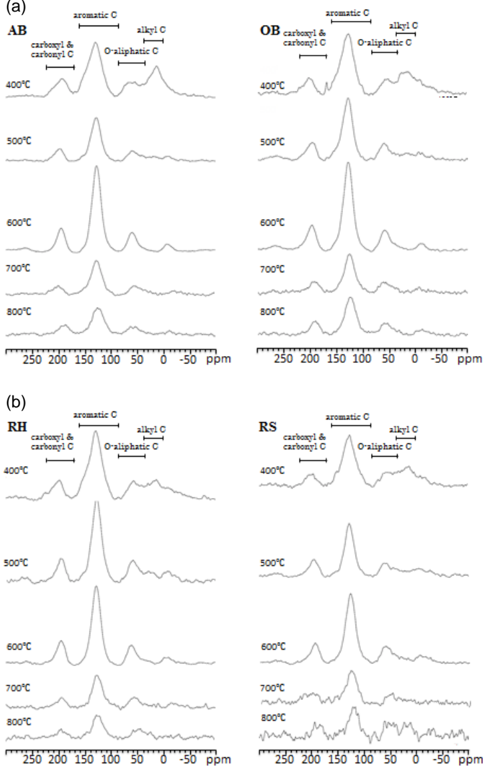
Biochar is widely recognized as an efficient tool for carbon sequestration and soil fertility. The understanding of its chemical and physical properties, which are strongly related to the type of the initial material used and pyrolysis conditions, is crucial to identify the most suitable application of biochar in soil. A selection of organic wastes with different characteristics (e.g., rice husk (RH), rice straw (RS), wood chips of apple tree (Malus pumila) (AB), and oak tree (Quercus serrata) (OB)) were pyrolyzed at different temperatures (400, 500, 600, 700, and 800 °C) in order to optimize the physicochemical properties of biochar as a soil amendment. Low-temperature pyrolysis produced high biochar yields; in contrast, high-temperature pyrolysis led to biochars with a high C content, large surface area, and high adsorption characteristics. Biochar obtained at 600 °C leads to a high recalcitrant character, whereas that obtained at 400 °C retains volatile and easily labile compounds. The biochar obtained from rice materials (RH and RS) showed a high yield and unique chemical properties because of the incorporation of silica elements into its chemical structure. The biochar obtained from wood materials (AB and OB) showed high carbon content and a high absorption character.
Overview
The claims and statistics of this paper haven’t been checked yet.
Free: it reads the open-access text and checks the first 5 claims that cite a source we can check. Create a free account to check every claim.
Integrity signals
Registry
Cites
Statistics
Figures
Verification
Claims the paper makes
The claims and statistics of this paper haven’t been checked yet.
Free: it reads the open-access text and checks the first 5 claims that cite a source we can check. Create a free account to check every claim.
Claims other papers make about this one
Each is checked against this paper’s own text: does it say what the citing paper says it does?
The source backs part of the claim, not all of it — or backs it for a different population, condition or comparison.
In the citing paper
“Higher temperatures, such as above 500 °C, produce biochar with a high C content, lower volatile matter, higher pH, large specific surface area and higher micropore volume.”
From Comparing straw, compost, and biochar regarding their suitability as agricultural soil amendments to affect soil structure, nutrient leaching, microbial communities, and the fate of pesticides (2021) · cites this paper as Jindo et al., 2014
Experimental — accuracy not yet measuredThe cited source says what the claim attributes to it.
In the citing paper
“The pyrolysis temperature is strongly correlated with changes in the structure and physicochemical properties of biochar”
From Biochar physicochemical properties: pyrolysis temperature and feedstock kind effects (2020) · cites this paper as Jindo et al. 2014
Self-check
Percentages, sums and reported differences re-computed from the paper’s own numbers.
The self-check needs the paper’s full text.
Citations
Cites
Characteristics of hemicellulose, cellulose and lignin pyrolysis
Yang, H., Yan, R., Chen, H., Lee, D. H., & Zheng, C. (2007) · Fuel · doi:10.1016/j.fuel.2006.12.013 · Cited by 8,155 · cited 1×
“Yang et al. (2007) and Khodadad et al. (2011) found that the biochar derived from wood Biogeosciences, 11, 6613–6621, 2014 www.biogeosciences.net/11/6613/2014/ Fig.”
BackgroundBiochar effects on soil biota – A review
Lehmann, J., Rillig, M. C., Thies, J., Masiello, C. A., Hockaday, W. C., & Crowley, D. (2011) · Soil Biology and Biochemistry · doi:10.1016/j.soilbio.2011.04.022 · Cited by 5,074
The forms of alkalis in the biochar produced from crop residues at different temperatures
Yuan, J.-H., Xu, R.-K., & Zhang, H. (2011) · Bioresource Technology · doi:10.1016/j.biortech.2010.11.018 · Cited by 2,029
Lehmann, J. (2007) · Frontiers in Ecology and the Environment · doi:10.1890/1540-9295(2007)5[381:bitb]2.0.co;2 · Cited by 1,714
Beesley, L., Moreno-Jiménez, E., Gomez-Eyles, J. L., Harris, E., Robinson, B., & Sizmur, T. (2011) · Environmental Pollution · doi:10.1016/j.envpol.2011.07.023 · Cited by 1,610 · cited 2×
“In addition to the studies on the use of biochar for carbon sequestration, a number of reports have focused on alternative applications of biochar for the improvement of soil fertility, plant growth, and decontamination of pollutants such as pesticides, heavy metals, and hydrocarbons (Beesley et al., 2011; Cabrera et…”
BackgroundPositive and negative carbon mineralization priming effects among a variety of biochar-amended soils
Zimmerman, A. R., Gao, B., & Ahn, M.-Y. (2011) · Soil Biology and Biochemistry · doi:10.1016/j.soilbio.2011.02.005 · Cited by 1,438
Review of the stability of biochar in soils: predictability of O:C molar ratios
Spokas, K. A. (2010) · Carbon Management · doi:10.4155/cmt.10.32 · Cited by 1,160
Characterization of biochars to evaluate recalcitrance and agronomic performance
Enders, A., Hanley, K., Whitman, T., Joseph, S., & Lehmann, J. (2012) · Bioresource Technology · doi:10.1016/j.biortech.2012.03.022 · Cited by 1,113 · cited 3×
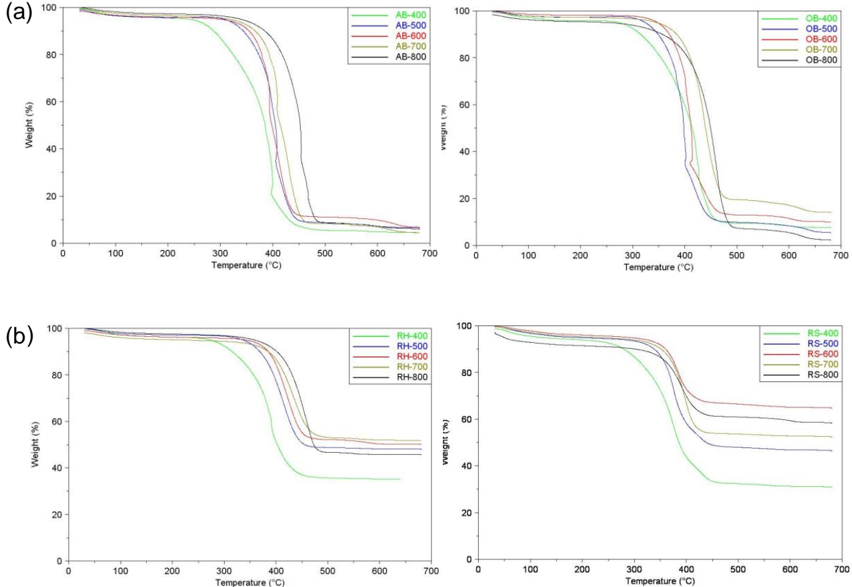
“Among the different biochar types, woody biochars (AB and OB) showed a larger change in the volatile content from 400 to 800 ◦C than non-woody biochars (RS and RH), as previously observed (Enders et al., 2012).”
BackgroundResultInfluentialEffect of Low-Temperature Pyrolysis Conditions on Biochar for Agricultural Use
Gaskin, J. W., Steiner, C., Harris, K., Das, K. C., & Bibens, B. (2008) · Transactions of the ASABE · doi:10.13031/2013.25409 · Cited by 1,015
Characterisation and evaluation of biochars for their application as a soil amendment
Singh, B., Singh, B. P., & Cowie, A. L. (2010) · Soil Research · doi:10.1071/sr10058 · Cited by 991 · cited 2×
“that of wood (Eucalyptus) biochar (Singh et al., 2010), while the treatment of soil with woodchip biochar results in higher saturated hydraulic conductivities than that treated with manure-based biochar (Lei and Zhang, 2012).”
Background
Cited by
Items 201–300 of 958
Gezahegn, A., Selassie, Y. G., Agegnehu, G., Addisu, S., Mihretie, F. A., Kohira, Y., & Sato, S. (2024) · Biomass Conversion and Biorefinery · doi:10.1007/s13399-024-05338-2 · Cited by 55
Performance, microstructure and carbon sequestration potential of agro biochar based cement mortars
Bhagat, T. S., & Pancharathi, R. K. (2024) · Cement and Concrete Composites · doi:10.1016/j.cemconcomp.2024.105867 · Cited by 55
Characterization of metal binding sites onto biochar using rare earth elements as a fingerprint
Pourret, O., & Houben, D. (2018) · Heliyon · doi:10.1016/j.heliyon.2018.e00543 · Cited by 56
PALM KERNEL SHELL BIOCHAR PRODUCTION, CHARACTERISTICS AND CARBON SEQUESTRATION POTENTIAL
Kong, S. H. (2019) · Journal of Oil Palm Research · doi:10.21894/jopr.2019.0041 · Cited by 55
Hadroug, S., Jellali, S., Leahy, J. J., Kwapińska, M., Jeguirim, M., Hamdi, H., & Kwapiński, W. (2019) · Water · doi:10.3390/w11112271 · Cited by 55
Hussain, N., Chantrapromma, S., Suwunwong, T., & Phoungthong, K. (2020) · Materials Research Express · doi:10.1088/2053-1591/abae27 · Cited by 54
Das, S. K., Choudhury, B. U., Hazarika, S., Mishra, V. K., & Laha, R. (2023) · Biomass Conversion and Biorefinery · doi:10.1007/s13399-023-04165-1 · Cited by 53
Chauhan, P. K., Upadhyay, S. K., Rajput, V. D., Dwivedi, P., Minkina, T., & Wong, M. H. (2024) · Environmental Geochemistry and Health · doi:10.1007/s10653-023-01823-1 · Cited by 53
Sangani, M. F., Abrishamkesh, S., & Owens, G. (2020) · Bioresource Technology · doi:10.1016/j.biortech.2020.123157 · Cited by 53
Omara, P., Aula, L., Oyebiyi, F. B., Eickhoff, E. M., Carpenter, J., & Raun, W. R. (2020) · Agronomy · doi:10.3390/agronomy10091241 · Cited by 53
Wang, Q., Chu, D., Luo, C., Lai, Z., Shang, S., Rahimi, S., & Mu, J. (2022) · Industrial Crops and Products · doi:10.1016/j.indcrop.2022.114827 · Cited by 53
Andrzejewski, J., Misra, M., & Mohanty, A. K. (2018) · Journal of Applied Polymer Science · doi:10.1002/app.46449 · Cited by 52
Hussain, R., Garg, A., & Ravi, K. (2020) · Bulletin of Engineering Geology and the Environment · doi:10.1007/s10064-020-01846-3 · Cited by 52
Rego, F., Xiang, H., Yang, Y., Ordovás, J. L., Chong, K., Wang, J., & Bridgwater, A. V. (2021) · Journal of Analytical and Applied Pyrolysis · doi:10.1016/j.jaap.2021.105378 · Cited by 52
Aysu, T., Maroto‐Valer, M. M., & Sanna, A. (2016) · Bioresource Technology · doi:10.1016/j.biortech.2016.02.050 · Cited by 51
Boostani, H. R., Hardie, A. G., Najafi‐Ghiri, M., & Khalili, D. (2017) · International Journal of Environmental Science and Technology · doi:10.1007/s13762-017-1544-3 · Cited by 51
Majee, S., Halder, G., Mandal, D. D., Tiwari, O. N., & Mandal, T. (2021) · Journal of Hazardous Materials · doi:10.1016/j.jhazmat.2021.125046 · Cited by 51
Boni, M. R., Chiavola, A., & Marzeddu, S. (2020) · Water Air & Soil Pollution · doi:10.1007/s11270-020-04496-z · Cited by 50
Hussain, R., Ghosh, K. K., & Ravi, K. (2020) · Geoderma · doi:10.1016/j.geoderma.2020.114836 · Cited by 50
Kumar, A. N., Dissanayake, P. D., Mašek, O., Priya, A., Lin, C. S. K., Ok, Y. S., & Kim, S. (2021) · Renewable and Sustainable Energy Reviews · doi:10.1016/j.rser.2021.111371 · Cited by 50
Shah, A. U. R., Imdad, A., Sadiq, A., Malik, R. A., Alrobei, H., & Badruddin, I. A. (2023) · Polymers · doi:10.3390/polym15081827 · Cited by 49
A Review on Biochar as an Adsorbent for Pb(II) Removal from Water
Kumkum, P., & Kumar, S. (2024) · Biomass · doi:10.3390/biomass4020012 · Cited by 50
Global insights into biochar: Production, sustainable applications, and market dynamics
Singh, R., Goyal, A., & Sinha, S. (2025) · Biomass and Bioenergy · doi:10.1016/j.biombioe.2025.107663 · Cited by 49
Adsorption characteristics of phenol and heavy metals on biochar from Hizikia fusiformis
Shin, W.-S. (2017) · Environmental Earth Sciences · doi:10.1007/s12665-017-7125-4 · Cited by 49
Walkiewicz, A., Калиниченко, К. В., Kubaczyński, A., Brzezińska, M., & Bieganowski, A. (2020) · Applied Soil Ecology · doi:10.1016/j.apsoil.2020.103711 · Cited by 49
Suwunwong, T., Hussain, N., Chantrapromma, S., & Phoungthong, K. (2020) · Materials Research Express · doi:10.1088/2053-1591/ab6767 · Cited by 48
Effect of pyrolysis time and temperature on the characterization of biochars derived from biomass
Suman, S., & Gautam, S. (2017) · Energy Sources, Part A: Recovery, Utilization, and Environmental Effects · doi:10.1080/15567036.2016.1276650 · Cited by 42
Water hyacinth conversion to biochar for soil nutrient enhancement in improving agricultural product
Kassa, Y., Amare, A., Nega, T., Alem, T., Gedefaw, M., Chala, B., Freyer, B., Waldmann, B., Fentie, T., Mulu, T., et al. (2025) · Scientific Reports · doi:10.1038/s41598-024-84729-x · Cited by 47
Yavari, S., Malakahmad, A., Sapari, N., & Yavari, S. (2017) · Journal of Environmental Management · doi:10.1016/j.jenvman.2017.02.035 · Cited by 48
Choudhary, T. K., Khan, K. S., Hussain, Q., Ahmad, M., & Ashfaq, M. (2019) · Arabian Journal of Geosciences · doi:10.1007/s12517-019-4735-z · Cited by 47
Specifically designed magnetic biochar from waste wood for arsenic removal
Chen, C.-K., Chen, J., Nguyen, N.-T., Le, T.-T., Nguyen, N. C., & Chang, C.-T. (2021) · Sustainable Environment Research · doi:10.1186/s42834-021-00100-z · Cited by 47
Soil Nitrogen Sorption Using Charcoal and Wood Ash
Hamidi, N. H., Ahmed, O. H., Omar, L., & Ch’ng, H. Y. (2021) · Agronomy · doi:10.3390/agronomy11091801 · Cited by 47
Hussain, R., Ghosh, K. K., Garg, A., & Ravi, K. (2020) · Geotechnical and Geological Engineering · doi:10.1007/s10706-020-01549-2 · Cited by 46
Mondal, A. K., Hinkley, C., Krishnan, L., Ravi, N. M., Akter, F., Ralph, P. J., & Kuzhiumparambil, U. (2024) · RSC Sustainability · doi:10.1039/d4su00008k · Cited by 47
Properties of Biochar Prepared from Acacia Wood and Coconut Shell for Soil Amendment
Pituya, P., Sriburi, T., & Wijitkosum, S. (2017) · Engineering Journal · doi:10.4186/ej.2017.21.3.63 · Cited by 46
Achieng', G. O., Kowenje, C. O., Lalah, J. O., & Ojwach, S. O. (2019) · Water Science & Technology · doi:10.2166/wst.2020.040 · Cited by 46
Oh, S., & Nguyen, T. A. (2022) · Journal of environmental chemical engineering · doi:10.1016/j.jece.2022.107386 · Cited by 46
Raza, S. T., Rong, L., Rene, E. R., Ali, Z., Iqbal, H., Sahito, Z. A., & Chen, Z. (2024) · Environmental Technology & Innovation · doi:10.1016/j.eti.2024.103722 · Cited by 45
Guo, J., Zhou, H., Jia, L., Wang, Y., & Fan, M. (2025) · Agricultural Water Management · doi:10.1016/j.agwat.2025.109483 · Cited by 45
Ahmed, F., Arthur, E., Plauborg, F., Razzaghi, F., Sørensen, K. K., & Andersen, M. N. (2017) · Journal of Agronomy and Crop Science · doi:10.1111/jac.12252 · Cited by 46
Optimization of process and properties of biochar from cabbage waste by response surface methodology
Pradhan, S., Shahbaz, M., Abdelaal, A. H., Al‐Ansari, T. A., Mackey, H. R., & McKay, G. (2020) · Biomass Conversion and Biorefinery · doi:10.1007/s13399-020-01101-5 · Cited by 44
Zhang, G., Na, L., Luo, Y., Zhang, H., Su, L., Oh, K., & Cheng, H. (2020) · Materials · doi:10.3390/ma14010035 · Cited by 44
Esmaeelnejad, L., Shorafa, M., Gorji, M., & Hosseini, S. M. (2016) · Spanish Journal of Agricultural Research · doi:10.5424/sjar/2016142-9190 · Cited by 41
Wijitkosum, S. (2023) · Journal of Human, Earth, and Future · doi:10.28991/hef-2023-04-04-07 · Cited by 43
Biochars Immobilize Lead and Copper in Naturally Contaminated Soil
Salam, A., Bashir, S., Khan, I., Rizwan, M. S., Chhajro, M. A., Feng, X., Zhu, J., & Hu, H. (2018) · Environmental Engineering Science · doi:10.1089/ees.2018.0086 · Cited by 44
Najmudeen, T. M., Febna, M. A. A., Rojith, G., & Zacharia, P. U. (2019) · Journal of Coastal Research · doi:10.2112/si86-033.1 · Cited by 43
Enhancement the rhodamine 6G adsorption property on Fe3O4-composited biochar derived from rice husk
Suwunwong, T., Patho, P., Choto, P., & Phoungthong, K. (2020) · Materials Research Express · doi:10.1088/2053-1591/ab6b58 · Cited by 43
Bona, D., Beggio, G., Weil, T., Scholz, M., Bertolini, S., Grandi, L., Baratieri, M., Schievano, A., Silvestri, S., & Pivato, A. (2020) · Journal of Environmental Management · doi:10.1016/j.jenvman.2020.110633 · Cited by 43
Brickler, C. A., Wu, Y., Li, S., Anandhi, A., & Chen, G. (2021) · Sustainability · doi:10.3390/su13042359 · Cited by 44
Anand, A., Gautam, S., & Ram, L. C. (2023) · Fuel · doi:10.1016/j.fuel.2023.127483 · Cited by 43
Tala, W., & Chantara, S. (2019) · Environmental Science and Pollution Research · doi:10.1007/s11356-019-04473-y · Cited by 42
Investigating biochar-amended soil as a potential lightweight material for embankments
Hussain, R., & Ravi, K. (2022) · Ecological Engineering · doi:10.1016/j.ecoleng.2022.106645 · Cited by 42
Campos, P., & De la Rosa, J. M. (2020) · Sustainability · doi:10.3390/su12156025 · Cited by 36
Sharma, G. K., Jena, R. K., Hota, S., Kumar, A., Ray, P., Fagodiya, R. K., Malav, L. C., Yadav, K. K., Gupta, D. K., Khan, S. A., et al. (2020) · Springer eBooks · doi:10.1007/978-3-030-40997-5_6 · Cited by 41
Behnam, H., & Firouzi, A. F. (2022) · Biomass Conversion and Biorefinery · doi:10.1007/s13399-021-02108-2 · Cited by 40
Biochar - Productive Technologies, Properties and Applications
Bartoli, M., Giorcelli, M., & Tagliaferro, A. (2022) · IntechOpen eBooks · doi:10.5772/intechopen.100763 · Cited by 40
Hadj-Otmane, C., Ouakouak, A., Touahra, F., Grabi, H., Martín, J., & Bilal, M. (2022) · Biomass Conversion and Biorefinery · doi:10.1007/s13399-022-03127-3 · Cited by 40
PILOT SCALE BIOCHAR PRODUCTION FROM PALM KERNEL SHELL (PKS) IN A FIXED BED ALLOTHERMAL REACTOR
Haryati, Z. (2018) · Journal of Oil Palm Research · doi:10.21894/jopr.2018.0043 · Cited by 40
De-ashed biochar enhances nitrogen retention in manured soil and changes soil microbial dynamics
Ibrahim, M. M., Hu, K., Tong, C., Xing, S., Zou, S., & Mao, Y. (2020) · Geoderma · doi:10.1016/j.geoderma.2020.114589 · Cited by 39
Morales, L. T., Baas-López, J. M., Barbosa, R., Pacheco, D., & Escobar, B. (2021) · International Journal of Hydrogen Energy · doi:10.1016/j.ijhydene.2021.04.094 · Cited by 39
Catalytic microwave pyrolysis of oil palm fiber (OPF) for the biochar production
Hossain, M. A., Ganesan, P. B., Sandaran, S. C., Rozali, S., & Krishnasamy, S. (2017) · Environmental Science and Pollution Research · doi:10.1007/s11356-017-0241-6 · Cited by 39
Lee, M.-E., Park, J. H., & Chung, J. W. (2017) · International Journal of Environmental Research and Public Health · doi:10.3390/ijerph14121528 · Cited by 40
Wang, H., Shao, T., Zhou, Y., Long, X., & Rengel, Z. (2023) · Heliyon · doi:10.1016/j.heliyon.2023.e13698 · Cited by 38
Jatuwong, K., Aiduang, W., Kiatsiriroat, T., Kamopas, W., & Lumyong, S. (2025) · Life · doi:10.3390/life15020284 · Cited by 38
Suman, S., & Gautam, S. (2018) · InTech eBooks · doi:10.5772/intechopen.73833 · Cited by 38
Wani, I., Kumar, H., Rangappa, S. M., Peng, L., Siengchin, S., & Kushvaha, V. (2020) · Journal of Hazardous Toxic and Radioactive Waste · doi:10.1061/(asce)hz.2153-5515.0000561 · Cited by 38
Hussain, R., & Ravi, K. (2021) · Journal of Hydrology · doi:10.1016/j.jhydrol.2021.127040 · Cited by 38
Improved bioreduction of nitrobenzene by black carbon/biochar derived from crop residues
Liu, L., Liu, G., Zhou, J., Wang, J., Jin, R., & Wang, A. (2016) · RSC Advances · doi:10.1039/c6ra11671j · Cited by 38
Taherymoosavi, S., Joseph, S. D., Pace, B., & Munroe, P. R. (2017) · Journal of Analytical and Applied Pyrolysis · doi:10.1016/j.jaap.2017.11.020 · Cited by 37
Kosolsaksakul, P., Oliver, I. W., & Graham, M. C. (2018) · Journal of Environmental Management · doi:10.1016/j.jenvman.2018.03.044 · Cited by 38
Gutiérrez, J., Rubio-Clemente, A., & Pérez, J. F. (2020) · Industrial Crops and Products · doi:10.1016/j.indcrop.2020.113123 · Cited by 37
Bouhia, Y., Hafidi, M., Ouhdouch, Y., Zeroual, Y., & Lyamlouli, K. (2023) · Agronomy · doi:10.3390/agronomy13010249 · Cited by 38
Uusitalo, V., & Leino, M. (2019) · Journal of Cleaner Production · doi:10.1016/j.jclepro.2019.04.175 · Cited by 37
Kaur, A., & Singh, R. (2024) · Clean Technologies and Environmental Policy · doi:10.1007/s10098-024-02749-7 · Cited by 33
Gusiatin, Z. M., Kurkowski, R., Brym, S., & Wiśniewski, D. (2016) · Environmental Science and Pollution Research · doi:10.1007/s11356-016-7335-4 · Cited by 36
Characterization the potential of biochar from cow and pig manure for geoecology application
Gunamantha, I. M., & Widana, G. A. B. (2018) · IOP Conference Series Earth and Environmental Science · doi:10.1088/1755-1315/131/1/012055 · Cited by 36
Samal, B., Vanapalli, K. R., Dubey, B., Bhattacharya, J., Chandra, S., & Medha, I. (2021) · Energy · doi:10.1016/j.energy.2021.121050 · Cited by 37
Jaiswal, R. K., Soren, S., & Jha, G. (2023) · Environmental Technology & Innovation · doi:10.1016/j.eti.2023.103184 · Cited by 36
Lee, J. W., Hawkins, B., Kidder, M. K., Evans, B. R., Buchanan, A. C., & Day, D. M. (2016) · Bioresources and Bioprocessing · doi:10.1186/s40643-016-0092-x · Cited by 36
Emergence of carbonaceous material for hydrogen storage: an overview
Soni, K., Panwar, N. L., & Lanjekar, P. R. (2024) · Clean Energy · doi:10.1093/ce/zkae041 · Cited by 36
Optimizing high performance biochar from sugarcane bagasse and corncob via vacuum pyrolysis
Divyangkumar, N., & Panwar, N. L. (2025) · Energy 360. · doi:10.1016/j.energ.2025.100014 · Cited by 37
López-Cano, I., Cayuela, M. L., Mondini, C., Takaya, C. A., Ross, A. B., & Sanchez-Monedero, M. A. (2018) · Sustainability · doi:10.3390/su10072265 · Cited by 35
Self-citationCarbon content determines the aggregation of biochar colloids from various feedstocks
Li, Q., Zhang, X., Mao, M., Wang, X., & Shang, J. (2023) · The Science of The Total Environment · doi:10.1016/j.scitotenv.2023.163313 · Cited by 35
Preparation of hydrothermal carbon acid catalyst from defatted rice bran
Wataniyakul, P., Boonnoun, P., Quitain, A. T., Kida, T., Laosiripojana, N., & Shotipruk, A. (2018) · Industrial Crops and Products · doi:10.1016/j.indcrop.2018.03.002 · Cited by 35
Properties of biochar derived from spent mushroom substrates
Zhao, Z., Ibrahim, M. M., Wang, X., Xing, S., Heiling, M., Hood-Nowotny, R. C., Tong, C., & Mao, Y. (2019) · BioResources · doi:10.15376/biores.14.3.5254-5277 · Cited by 34
Li, C., Xiong, Y., Zou, J., Li, D., Ren, P., & Huang, G. (2021) · Vadose Zone Journal · doi:10.1002/vzj2.20105 · Cited by 34
Surface morphology properties of biochar feedstock for soil amendment
Zaitun, Z., Halim, A., Sa’dah, Y., & Cahyadi, R. (2022) · IOP Conference Series Earth and Environmental Science · doi:10.1088/1755-1315/951/1/012034 · Cited by 34
Chen, T., Zhang, N., Zhao, X., Hu, X., & Ding, Z. (2018) · Environmental Science and Pollution Research · doi:10.1007/s11356-018-3789-x · Cited by 34
Assessment of the pulmonary toxic potential of nano-tobacco stem-pyrolyzed biochars
Dong, C., Lung, S. C., Chen, C. W., Lee, J. S., Chen, Y. C., Wang, W. C. V., Chen, C. J., Hung, C., & Lin, C. (2019) · Environmental Science Nano · doi:10.1039/c8en00968f · Cited by 33
Biochar-filled plastics: Effect of feedstock on thermal and mechanical properties
Hernandez-Charpak, Y. D., Trabold, T. A., Lewis, C. L., & Diaz, C. (2022) · Biomass Conversion and Biorefinery · doi:10.1007/s13399-022-02340-4 · Cited by 33
Vahidi, M. J., Sayyari‐Zahan, M. H., Azarmi-Atajan, F., & Parsa, Z. (2022) · Soil and Tillage Research · doi:10.1016/j.still.2022.105345 · Cited by 34
Gondek, K., Mierzwa–Hersztek, M., Baran, A., Szostek, M., Pieniążek, R., Pieniążek, M., Stanek-Tarkowska, J., & Noga, T. (2016) · Waste and Biomass Valorization · doi:10.1007/s12649-016-9621-2 · Cited by 33
Application of Biochar for Soil Physical Improvement
Guo, M. (2015) · SSSA special publication series · doi:10.2136/sssaspecpub63.2014.0039.5 · Cited by 33
Cybulak, M., SOKOŁOWSKA, Z., & Boguta, P. (2021) · Scientific Reports · doi:10.1038/s41598-021-85239-w · Cited by 33
Collett, C., Mašek, O., Razali, N. A., & McGregor, J. (2020) · Catalysts · doi:10.3390/catal10091067 · Cited by 33
Jatuwong, K., Aiduang, W., Kiatsiriroat, T., Kamopas, W., & Lumyong, S. (2024) · Microbiology Research · doi:10.3390/microbiolres15010027 · Cited by 32
Nayak, P., Nandipamu, T. M. K., Chaturvedi, S., Dhyani, V. C., & Chandra, S. (2024) · Journal of soil science and plant nutrition · doi:10.1007/s42729-024-02052-w · Cited by 32
The Production of Pyrolytic Biochar for Addition in Value-Added Composite Material
Cuthbertson, D. (2018) · Scholarship@Western (Western University) · Cited by 33
Makavana, J. M., Sarsavadia, P. N., & Chauhan, P. M. (2020) · International Research Journal of Pure and Applied Chemistry · doi:10.9734/irjpac/2020/v21i1330236 · Cited by 32
Dhanavath, K. N., Shah, K. V., Satyavathi, B., Bhargava, S. K., & Parthasarathy, R. (2017) · Journal of environmental chemical engineering · doi:10.1016/j.jece.2017.07.034 · Cited by 32
Metadata
- Authors
- Jindo, K., Mizumoto, H., Sawada, Y., Sanchez-Monedero, M. A., & Sonoki, T.
- Affiliations
- Consejo Superior de Investigaciones Científicas (ES)
- Hirosaki University (JP)
- Institute of Industrial Science, The University of Tokyo (JP)
- Corresponding author
- Jindo, K.
- Venue
- Biogeosciences
- Publisher
- Copernicus GmbH
- Published
- 2014-12-01
- Volume
- 11
- Issue
- 23
- Pages
- 6613-6621
- ISSN
- 1726-4170 (ISSN-L)
- 1726-4189
- OpenAlex
- W2144553596
- Cited by
- 822
- References
- 54
- Citations by year
- 2026: 64 · 2025: 80 · 2024: 83 · 2023: 87 · 2022: 82 · 2021: 98 · 2020: 116 · 2019: 72 · 2018: 64 · 2017: 43 · 2016: 25 · 2015: 8
- FWCI
- 13.15
- Type
- journal article
- Language
- en
- Open access
- gold
- doi.org
- Licence
- Locations
- Biogeosciences (publishedVersion, cc-by)
- DIGITAL.CSIC (Spanish National Research Council (CSIC)) (submittedVersion, cc-by)
- DOAJ (DOAJ: Directory of Open Access Journals) (submittedVersion, cc-by-sa)
- Funders
- Japan Society for the Promotion of Science
- Consejo Superior de Investigaciones Científicas
- Topics
- Physical Sciences › Energy › Fuel Technology › Thermochemical Biomass Conversion Processes
- Life Sciences › Agricultural and Biological Sciences › Soil Science › Soil Carbon and Nitrogen Dynamics
- Physical Sciences › Environmental Science › Water Science and Technology › Adsorption and biosorption for pollutant removal
- Keywords
- biochar, agricultural residues, pyrolysis temperature, rice husk, rice straw, oak wood chips, soil amendment, carbon sequestration, biochar yield, surface area, adsorption, recalcitrant carbon, silica incorporation, organic waste valorization
About these checks
Registry, retraction, Cites and statistics results are computed, not judged, with one exception: a printed reference that no index lists is read once by a model before it counts as a citation error. Claims are extracted by a model and kept only when their quote appears verbatim in the text; each cited source is then checked, with a model’s help, for whether it says what the claim relies on. Those verdicts can be wrong — read the claim’s quote and the cited source before relying on one.
Statistics and arithmetic are recomputed, not judged.
Confidence bands are shown only for fields calibrated on our annotated test set. None is calibrated yet, so no band is shown.
What counts as a claim ›How we measure confidence ›How we check this ›
Are you an author, or do you see a problem with this page? Request a review
Data sources
Bibliographic data: Semantic Scholar, OpenAlex, Crossref.
Contains information from the Semantic Scholar Academic Graph Datasets, made available under the ODC Attribution License (ODC-BY 1.0).
Semantic Scholar’s data is described in: Kinney, R., et al. (2023). The Semantic Scholar Open Data Platform. arXiv:2301.10140.
