

Evidence for greater oxygen decline rates in the coastal ocean than in the open ocean
Open accessPublished version of a preprint
The DOI matches its Crossref record; 72 of the 72 references it cites were found in a registry or an index.
Abstract
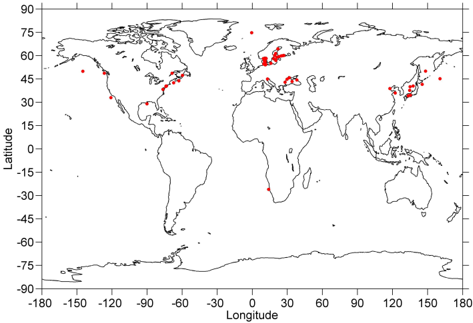
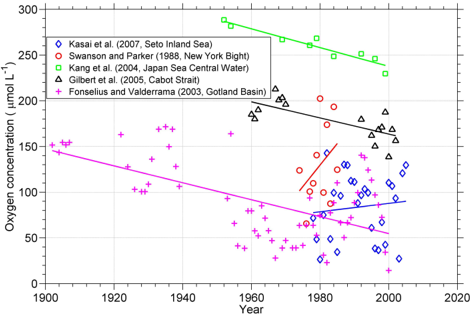
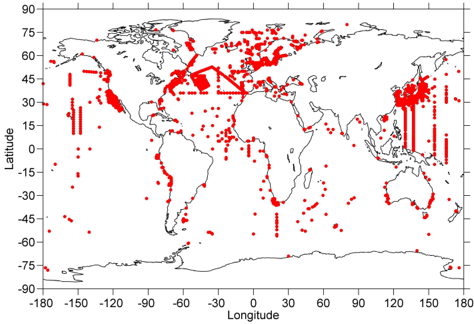
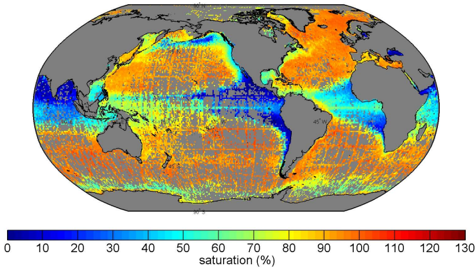
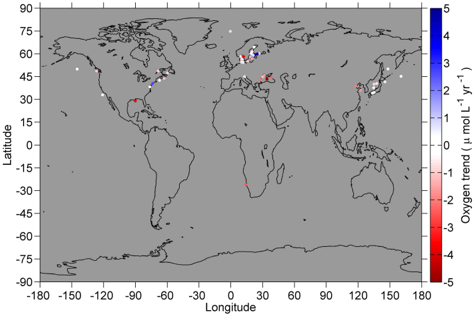
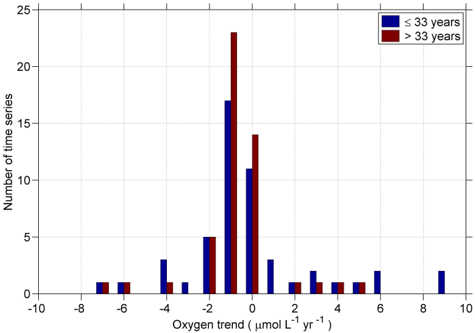
In the global ocean, the number of reported hypoxic sites (oxygen <30% saturation) is on the rise both near the coast and in the open ocean. But unfortunately, most of the papers on hypoxia only present oxygen data from one or two years, so that we often lack a long-term perspective on whether oxygen levels at these locations are decreasing, steady or increasing. Consequently, we cannot rule out the possibility that many of the newly reported hypoxic areas were hypoxic in the past, and that the increasing number of hypoxic areas partly reflects increased research and monitoring efforts. Here we address this shortcoming by computing oxygen concentration trends in the global ocean from published time series and from time series that we calculated using a global oxygen database. Our calculations reveal that median oxygen decline rates are more severe in a 30 km band near the coast than in the open ocean (>100 km from the coast). Percentages of oxygen time series with negative oxygen trends are also greater in the coastal ocean than in the open ocean. Finally, a significant difference between median published oxygen trends and median trends calculated from raw oxygen data suggests the existence of a publication bias in favor of negative trends in the open ocean.
Overview
The claims and statistics of this paper haven’t been checked yet.
Free: it reads the open-access text and checks the first 5 claims that cite a source we can check. Create a free account to check every claim.
Integrity signals
Registry
Cites
Statistics
Figures
Verification
Claims the paper makes
The claims and statistics of this paper haven’t been checked yet.
Free: it reads the open-access text and checks the first 5 claims that cite a source we can check. Create a free account to check every claim.
Claims other papers make about this one
Each is checked against this paper’s own text: does it say what the citing paper says it does?
The source backs part of the claim, not all of it — or backs it for a different population, condition or comparison.
In the citing paper
“Large amounts of organic matter associated with algal blooms can stimulate microbial respiration that depletes dissolved oxygen and produces CO 2 , promoting hypoxia (Fig. 1; Diaz and Rosenberg, 2008;Gilbert et al., 2010;Breitburg et al., 2018) and acidification (Fig. 1; Cai et al., 2011;Waldbusser et al., 2011;Wallace et al., 2014;Baumann et al., 2015).”
From Harmful algal blooms: A climate change co-stressor in marine and freshwater ecosystems (2020) · cites this paper as Gilbert et al., 2010
Experimental — accuracy not yet measuredThe cited source says what the claim attributes to it.
In the citing paper
“In coastal aquatic systems, reported deoxygenation rates integrated over a decade or longer exceed those of the open ocean (Gilbert et al., 2010).”
From Warming and hypoxia reduce the performance and survival of northern bay scallops (Argopecten irradians irradians) amid a fishery collapse (2023) · cites this paper as Gilbert et al., 2010
Self-check
Percentages, sums and reported differences re-computed from the paper’s own numbers.
The self-check needs the paper’s full text.
Citations
Cites
(1999) · Wiley eBooks · doi:10.1002/9783527613984 · Cited by 7,730
Spreading dead zones and consequences for marine ecosystems
Diaz, R. J., & Rosenberg, R. (2008) · Science · doi:10.1126/science.1156401 · Cited by 6,626 · cited 2×
“Several studies suggest that oxygen levels are generally decreasing both in the coastal ocean (Dı́az and Rosenberg, 2008) and in the deep ocean (Keeling and Garcia, 2002).”
BackgroundSelf-citation(1982) · International Geophysics · doi:10.1016/s0074-6142(08)x6002-4 · Cited by 4,853 · cited 1×
“Due to the effect of Earth’s rotation, river plumes generally veer to the right (left) of river mouths in the Northern (Southern) Hemisphere, and then tend to flow parallel to the coastline within about one internal Rossby radius of deformation (Gill , 1982).”
BackgroundThe Pacific Decadal Oscillation
Mantua, N. J., & Hare, S. R. (2002) · Journal of Oceanography · doi:10.1023/a:1015820616384 · Cited by 2,773 · cited 2×
“Interdecadal changes in ocean ventilation can be caused b large scale changes in atmospheric and oceanic circulation patterns associated with the North Atlantic Oscillation (Johnson and Gruber, 2007), the Arctic Oscillation (Cui and Senjyu, 2010), the Pacific Decadal Oscillation (Frölisher et al., 2009) or the Southe…”
BackgroundCoastal marine eutrophication: A definition, social causes, and future concerns
Nixon, S. W. (1995) · Ophelia · doi:10.1080/00785236.1995.10422044 · Cited by 2,672 · cited 2×
“At some coastal sites, eutrophication ( Nixon, 1995) from nearby rivers appears to be the main cause of hypoxia ( Kemp et al.”
BackgroundENSO as an Integrating Concept in Earth Science
McPhaden, M. J., Zebiak, S. E., & Glantz, M. H. (2006) · Science · doi:10.1126/science.1132588 · Cited by 2,110
Ocean Deoxygenation in a Warming World
Keeling, R. F., Körtzinger, A., & Gruber, N. (2010) · Annual Review of Marine Science · doi:10.1146/annurev.marine.010908.163855 · Cited by 1,712 · cited 1×
“A greater level of observation and finer resolution models are needed to understand how and why oxygen appears to be changing at such a rapid rate at global scales (Keeling et al., 2010).”
BackgroundA global, self‐consistent, hierarchical, high‐resolution shoreline database
Wessel, P., & Smith, W. H. F. (1996) · Journal of Geophysical Research: Solid Earth · doi:10.1029/96jb00104 · Cited by 1,575 · cited 2×
“We evaluated distance from the coast for each station by using GSHHS (Global Self-consistent, Hierarchical, Highresolution Shoreline) shapefiles version 1.3 (Wessel and Smith, 1996), together with the functionsdeg2kmand distancefrom the Matlab mapping toolbox version 2.7.2.”
BackgroundMethodInfluentialGeographical Variability of the First Baroclinic Rossby Radius of Deformation
Chelton, D. B., deSzoeke, R. A., Schlax, M. G., El Naggar, K., & Siwertz, N. (1998) · Journal of Physical Oceanography · doi:10.1175/1520-0485(1998)028<0433:gvotfb>2.0.co;2 · Cited by 1,541
Expanding Oxygen-Minimum Zones in the Tropical Oceans
Stramma, L., Johnson, G. C., Sprintall, J., & Mohrholz, V. (2008) · Science · doi:10.1126/science.1153847 · Cited by 1,516 · cited 2×
“There are early indications that this may already be detectable (Stramma et al., 2008; Johnson and Gruber, 2007; Stramma et al., 2010), but interdecadal changes in ocean circulation could have played a role in these trends (Frölisher et al., 2009).”
Background
Research works printed but not linked: 1
- 16. Garcia, H. E., Locarnini, R. A., Boyer, T. P., and Antonov, J. I.: World Ocean Atlas 2005: Dissolved oxygen, apparent oxygen utilization, and oxygen saturation, Vol. 3 of NOAA Atlas NESDIS 63, US Government Printing Office, Washington, DC, 2006.
Cited by
Declining oxygen in the global ocean and coastal waters
Breitburg, D., Levin, L. A., Oschlies, A., Grégoire, M., Chavez, F. P., Conley, D. J., Garçon, V., Gilbert, D., Gutiérrez, D., Isensee, K., et al. (2018) · Science · doi:10.1126/science.aam7240 · Cited by 3,253
“The current rate of oxygen decline in coastal areas exceeds that of the open ocean ( 60 ), however, likely reflecting the combined effects of increased warming of shallow water and higher concentrations of nutrients.”
Self-citationMultiple stressors of ocean ecosystems in the 21st century: projections with CMIP5 models
Bopp, L., Resplandy, L., Orr, J. C., Doney, S. C., Dunne, J. P., Gehlen, M., Halloran, P., Heinze, C., Ilyina, T., Séférian, R., et al. (2013) · Biogeosciences · doi:10.5194/bg-10-6225-2013 · Cited by 1,649
“Reduced oceanic O 2 concentrations have been reported for coastal areas in response to human-induced eutrophication (Gilbert et al., 2010), and for the open ocean as a consequence of two major processes: a warming-induced reduction in solubility and increased stratification/reduced ventilation (Helm…”
BackgroundDynamics and distribution of natural and human-caused hypoxia
Rabalais, N. N., Díaz, R. J., Levin, L. A., Turner, R. E., Gilbert, D., & Zhang, J. (2010) · Biogeosciences · doi:10.5194/bg-7-585-2010 · Cited by 1,265
“There is evidence for a higher proportion of declining oxygen trends near coastlines ( <30 km distance) than in the open ocean, most probably due to runoff of nutrients in the coastal region (Gilbert et al., 2009).”
BackgroundSelf-citationAcidification of subsurface coastal waters enhanced by eutrophication
Cai, W.-J., Hu, X., Huang, W.-J., Murrell, M. C., Lehrter, J. C., Lohrenz, S. E., Chou, W.-C., Zhai, W., Hollibaugh, J. T., Wang, Y., et al. (2011) · Nature Geoscience · doi:10.1038/ngeo1297 · Cited by 1,203
“Microbial consumption of this organic matter lowers oxygen levels in the wate”
BackgroundHarmful algal blooms: A climate change co-stressor in marine and freshwater ecosystems
Griffith, A. W., & Gobler, C. J. (2020) · Harmful Algae · doi:10.1016/j.hal.2019.03.008 · Cited by 598
Warming up, turning sour, losing breath: ocean biogeochemistry under global change
Gruber, N. (2011) · Philosophical Transactions of the Royal Society A: Mathematical, Physical and Engineering Sciences · doi:10.1098/rsta.2011.0003 · Cited by 588
Zhang, J., Gilbert, D., Gooday, A. J., Levin, L., Naqvi, S. W. A., Middelburg, J. J., Scranton, M., Ekau, W., Peña, A., Dewitte, B., et al. (2010) · Biogeosciences · doi:10.5194/bg-7-1443-2010 · Cited by 483
“Recent data syntheses by Gilbert et al. (2009) indicate that the number of negative trend oxygen records for ocean waters has significantly increased in the 1976–2000 period relative to 1951–1975.”
BackgroundInfluentialSelf-citationEkau, W., Auel, H., Pörtner, H.-O., & Gilbert, D. (2010) · Biogeosciences · doi:10.5194/bg-7-1669-2010 · Cited by 459
Self-citationTemporal responses of coastal hypoxia to nutrient loading and physical controls
Kemp, W. M., Testa, J. M., Conley, D. J., Gilbert, D., & Hagy, J. D. (2009) · Biogeosciences · doi:10.5194/bg-6-2985-2009 · Cited by 443
“Depletion of dissolved oxygen from coastal waters is a widespread phenomenon that appears to be growing globally (Dı́az and Rosenberg, 2008; Gilbert et al., 2009; Rabalais and Gilbert, 2009).”
BackgroundSelf-citationBiogeochemical Controls on Coastal Hypoxia
Fennel, K., & Testa, J. M. (2019) · Annual Review of Marine Science · doi:10.1146/annurev-marine-010318-095138 · Cited by 416
“Temperature has increased by approximately 1.65◦C over the past 80 years, which could also have contributed to the observed oxygen decline of 1 mmol m−3 y−1 (Gilbert et al. 2010).”
BackgroundInfluentialEutrophication-Driven Deoxygenation in the Coastal Ocean
Rabalais, N., Cai, W.-J., Carstensen, J., Conley, D., Fry, B., Hu, X., Quiñones-Rivera, Z., Rosenberg, R., Slomp, C., Turner, E., et al. (2014) · Oceanography · doi:10.5670/oceanog.2014.21 · Cited by 391
Self-citationVAQUER-SUNYER, R., & DUARTE, C. M. (2011) · Global Change Biology · doi:10.1111/j.1365-2486.2010.02343.x · Cited by 288
“…(2010) provided evidence for a global oxygen decline in ocean waters, rates of oxygen decline tend to be greater in coastal waters compared with open ocean ones (Gilbert et al., 2010), consistent with observations around the world (Gilbert et al., 2005; Bograd et al., 2008; Diaz & Rosenberg, 2008).”
ResultManifestation, Drivers, and Emergence of Open Ocean Deoxygenation
Levin, L. A. (2018) · Annual Review of Marine Science · doi:10.1146/annurev-marine-121916-063359 · Cited by 283
Global nitrogen and phosphorus in urban waste water based on the Shared Socio-economic pathways
van Puijenbroek, P. J. T. M., Beusen, A. H. W., & Bouwman, A. F. (2019) · Journal of Environmental Management · doi:10.1016/j.jenvman.2018.10.048 · Cited by 276
“Impacts are not restricted to fresh water, since coastal seas are also affected by eutrophication, ultimately leading to harmful algal blooms and hypoxia due to the decay of algal biomass (Diaz and Rosenberg, 2008; Kemp et al., 2009; Gilbert et al., 2010).”
BackgroundSunda, W. G., & Cai, W.-J. (2012) · Environmental Science & Technology · doi:10.1021/es300626f · Cited by 250
Impacts of Global Change on Ocean Dissolved Organic Carbon (DOC) Cycling
Lønborg, C., Carreira, C., Jickells, T., & Álvarez-Salgado, X. A. (2020) · Frontiers in Marine Science · doi:10.3389/fmars.2020.00466 · Cited by 226
Hypoxia by degrees: Establishing definitions for a changing ocean
Hofmann, A. F., Peltzer, E. T., Walz, P. M., & Brewer, P. G. (2011) · Deep Sea Research Part I: Oceanographic Research Papers · doi:10.1016/j.dsr.2011.09.004 · Cited by 188
System controls of coastal and open ocean oxygen depletion
Pitcher, G. C., Aguirre-Velarde, A., Breitburg, D., Cardich, J., Carstensen, J., Conley, D. J., Dewitte, B., Engel, A., Espinoza-Morriberón, D., Flores, G., et al. (2021) · Progress in Oceanography · doi:10.1016/j.pocean.2021.102613 · Cited by 174
Self-citationIntroduction to Environmental and Economic Consequences of Hypoxia
Díaz, R. J., & Rosenberg, R. (2011) · International Journal of Water Resources Development · doi:10.1080/07900627.2010.531379 · Cited by 176
“Recently there have been a series of summary and review articles that have examined the key factors leading to the development of low DO and the subsequent environmental consequences (Dı́az & Rosenberg, 2008; Rabalais & Gilbert, 2008; Vaquer-Sunyer & Duarte, 2008; Keeling et al., 2010; Gilbert et al., 2010; Gooday et…”
BackgroundModeling dissolved oxygen dynamics and hypoxia
Peña, M. A., Katsev, S., Oguz, T., & Gilbert, D. (2010) · Biogeosciences · doi:10.5194/bg-7-933-2010 · Cited by 167
“, 2009), reliable detection of a negative, global, oxygen trend remains a challenge (Gilbert et al., 2009).”
BackgroundSelf-citationDevlin, M. J., & Brodie, J. (2023) · Springer textbooks in earth sciences, geography and environment · doi:10.1007/978-3-031-10127-4_4 · Cited by 233
Global environmental predictors of benthic marine biogeographic structure
Belanger, C. L., Jablonski, D., Roy, K., Berke, S. K., Krug, A. Z., & Valentine, J. W. (2012) · Proceedings of the National Academy of Sciences · doi:10.1073/pnas.1212381109 · Cited by 165
Ecosystem impacts of hypoxia: thresholds of hypoxia and pathways to recovery
Steckbauer, A., Duarte, C. M., Carstensen, J., Vaquer‐Sunyer, R., & Conley, D. J. (2011) · Environmental Research Letters · doi:10.1088/1748-9326/6/2/025003 · Cited by 187
“30 km band near the coast (Gilbert et al 2009), where shallow and enclosed bays with soft substrate, receiving riverine inputs and showing high stratification are most likely to experience hypoxia (Stachowitsch and Avcin 1988).”
BackgroundWang, B., Chen, J., Jin, H., Li, H., Huang, D., & Cai, W. (2017) · Limnology and Oceanography · doi:10.1002/lno.10517 · Cited by 158
Carbon on the Northwest European Shelf: Contemporary Budget and Future Influences
Legge, O. J., Johnson, M. T., Hicks, N., Jickells, T. D., Diesing, M., Aldridge, J., Andrews, J. E., Artioli, Y., Bakker, D. C. E., Burrows, M. T., et al. (2020) · Frontiers in Marine Science · doi:10.3389/fmars.2020.00143 · Cited by 177
Testa, J. M., Li, Y., Lee, Y., Li, M. H., Brady, D. C., Toro, D. M. D., Kemp, W. M., & Fitzpatrick, J. J. (2014) · Journal of Marine Systems · doi:10.1016/j.jmarsys.2014.05.018 · Cited by 161
Grégoire, M., Garcon, V. C., Garcia, H. E., Breitburg, D. L., Isensee, K., Oschlies, A., Telszewski, M., Barth, A., Bittig, H. C., Carstensen, J., et al. (2021) · Frontiers in Marine Science · doi:10.3389/fmars.2021.724913 · Cited by 154
Self-citationRapid coastal deoxygenation due to ocean circulation shift in the northwest Atlantic
Claret, M., Galbraith, E. D., Palter, J. B., Bianchi, D., Fennel, K., Gilbert, D., & Dunne, J. P. P. (2018) · Nature Climate Change · doi:10.1038/s41558-018-0263-1 · Cited by 155
Self-citationBouwman, L., Beusen, A. H. W., Overbeek, C. C., Bureau, D., Pawlowski, M., & Glibert, P. M. (2013) · Reviews in Fisheries Science · doi:10.1080/10641262.2013.790340 · Cited by 140
Large Projected Decline in Dissolved Oxygen in a Eutrophic Estuary Due to Climate Change
Ni, W., Li, M. H., Ross, A. C., & Najjar, R. G. (2019) · Journal of Geophysical Research Oceans · doi:10.1029/2019jc015274 · Cited by 129
“In estuaries and coastal oceans, the depletion of oxygen in bottom water has occurred at faster rates than the open ocean (Gilbert et al., 2010) and has been traditionally attributed to nutrient and organic matter loading from the surrounding watershed and rivers (Fennel & Testa, 2019; Kemp et al.,…”
BackgroundLi, W., Fang, H., Qin, G., Tan, X., Huang, Z., Zeng, F., Du, H., & Li, S. (2020) · The Science of The Total Environment · doi:10.1016/j.scitotenv.2020.139099 · Cited by 124
Zhao, Y., Liu, J., Uthaipan, K., Song, X., Xu, Y., He, B., Liu, H., Jianping Gan, A., & Dai, M. (2020) · Limnology and Oceanography · doi:10.1002/lno.11393 · Cited by 127
Acidification of Lower St. Lawrence Estuary Bottom Waters
Mucci, A. O., Starr, M., Gilbert, D., & Sundby, B. (2011) · ATMOSPHERE-OCEAN · doi:10.1080/07055900.2011.599265 · Cited by 145
“, California Current, Benguela Current) and near-shore (Diaz and Rosenberg, 2008; Gilbert et al., 2010) is increasingly being reported.”
BackgroundSelf-citationPopova, E. E., Yool, A., Byfield, V., Cochrane, K. L., Coward, A. C., Salim, S. S., Gasalla, M. A., Henson, S., Hobday, A. J., Pecl, G. T., et al. (2016) · Global Change Biology · doi:10.1111/gcb.13247 · Cited by 120
Soothsaying DOM: A Current Perspective on the Future of Oceanic Dissolved Organic Carbon
Wagner, S., Schubotz, F., Kaiser, K., Hallmann, C., Waska, H., Rossel, P. E., Hansman, R. L., Elvert, M., Middelburg, J. J., Engel, A., et al. (2020) · Frontiers in Marine Science · doi:10.3389/fmars.2020.00341 · Cited by 112
Oxygen trends over five decades in the North Atlantic
Stendardo, I., & Gruber, N. (2012) · Journal of Geophysical Research: Oceans · doi:10.1029/2012jc007909 · Cited by 94
Challenges associated with modeling low-oxygen waters in Chesapeake Bay: a multiple model comparison
Irby, I. D., Friedrichs, M. A. M., Friedrichs, C. T., Bever, A. J., Hood, R. R., Lanerolle, L. W. J., Li, M. H., Linker, L. C., Scully, M. E., Sellner, K. G., et al. (2016) · Biogeosciences · doi:10.5194/bg-13-2011-2016 · Cited by 108
“…have highlighted an accelerated rise in the number and spatial extent of hypoxic, as well as anoxic (DO concentrations < 0.2 mgL−1), events in the bay since the 1950s, primarily attributed to increased anthropogenic nutrient input (Hagy et al., 2004; Kemp et al., 2005; Gilbert et al., 2010).”
BackgroundInfluentialCoastal Hypoxia and the Importance of Benthic Macrofauna Communities for Ecosystem Functioning
Gammal, J., Norkko, J., Pilditch, C. A., & Norkko, A. M. (2016) · Estuaries and Coasts · doi:10.1007/s12237-016-0152-7 · Cited by 106
“Hypoxia (oxygen concentration < 2 mg l) is a pressing threat globally, especially in coastal areas and often results from a combination of nutrient loading and stratification of the water column ( Rabalais et al. 2002; Diaz and Rosenberg 2008; Gilbert et al. 2010; Carstensen et al. 2014).”
BackgroundDead Zones: Oxygen Depletion in Coastal Ecosystems
Altieri, A. H., & Díaz, R. J. (2018) · Elsevier eBooks · doi:10.1016/b978-0-12-805052-1.00021-8 · Cited by 120
Self-citationDeriving optical metrics of coastal phytoplankton biomass from ocean colour
Craig, S. E., Jones, C. T., Li, W. K. W., Lazin, G., Horne, E. P. W., Caverhill, C. M., & Cullen, J. J. (2012) · Remote Sensing of Environment · doi:10.1016/j.rse.2011.12.007 · Cited by 99
“…population lived within 100 km of coastlines, making them especially vulnerable to the effects of anthropogenic influence (Diaz & Rosenberg, 2008; Gilbert et al., 2010; Rabalais et al., 2010; Walsh et al., 2009; Zhang et al., 2010). jonesc@mathstat.dal.ca mar.dfo-mpo.gc.ca (G. Lazin),…”
Biogeochemical and environmental drivers of coastal hypoxia
Caballero-Alfonso, Á. M., Carstensen, J., & Conley, D. J. (2014) · Journal of Marine Systems · doi:10.1016/j.jmarsys.2014.04.008 · Cited by 99
Recently Accelerated Oxygen Consumption Rates Amplify Deoxygenation in the Baltic Sea
Meier, H. E. M., Väli, G., Naumann, M., Eilola, K., & Frauen, C. (2018) · Journal of Geophysical Research Oceans · doi:10.1029/2017jc013686 · Cited by 94
Ciavatta, S., Kay, S., Saux-Picart, S., Butenschön, M., & Allen, J. I. (2016) · Journal of Geophysical Research Oceans · doi:10.1002/2015jc011496 · Cited by 88
“…anthropic pressures, implying trends in coastal eutrophication [Cloern, 2001], fluctuations of shelf uptake of CO2 [Borges, 2011], and expansion of poorly oxygenated shelf floor areas threatening fishes and benthic communities [Diaz and Rosenberg, 2008; Gilbert et al., 2010; Rabalais et al., 2014].”
BackgroundThe effect of hypoxia on fish schooling
Domenici, P., Steffensen, J. F., & Marras, S. (2017) · Philosophical Transactions of the Royal Society B Biological Sciences · doi:10.1098/rstb.2016.0236 · Cited by 91
Meier, H. E. M., Dieterich, C., & Gröger, M. (2021) · Communications Earth & Environment · doi:10.1038/s43247-021-00115-9 · Cited by 93
“6) and (5) the unknown mean SLR estimated from low, medium and high scenarios (yellow line) (Eq.”
BackgroundTemporal Changes in the Causes of the Observed Oxygen Decline in the St. Lawrence Estuary
Jutras, M., Dufour, C. O., Mucci, A. O., Cyr, F., & Gilbert, D. (2020) · Journal of Geophysical Research Oceans · doi:10.1029/2020jc016577 · Cited by 96
Self-citationThomas, Y., Flye‐Sainte‐Marie, J., Chabot, D., Aguirre‐Velarde, A., Marques, G. M., & Pecquerie, L. (2018) · Journal of Sea Research · doi:10.1016/j.seares.2018.05.001 · Cited by 92
“Due to these human-induced processes, hypoxia tends to increase faster in the coastal ocean, compared to the open ocean (Gilbert et al., 2010).”
BackgroundThe world’s largest coastal deoxygenation zone is not anthropogenically driven
Gupta, G. V. M., Jyothibabu, R., Ramu, C. V., Reddy, A. Y., Balachandran, K. K., Sudheesh, V., Kumar, S., Chari, N. V. H. K., Bepari, K. F., Marathe, P. H., et al. (2021) · Environmental Research Letters · doi:10.1088/1748-9326/abe9eb · Cited by 80
Stable nitrogen isotopes in coastal macroalgae: Geographic and anthropogenic variability
Viana, I. G., & Bode, A. (2012) · The Science of The Total Environment · doi:10.1016/j.scitotenv.2012.11.065 · Cited by 79
“The latter, a 31 problem first limited to enclosed or semi enclosed water bodies, is now being observed in 32 most coastal areas (Cloern, 2001; Druon et al., 2004; Gilbert et al., 2009; Valiela et al., 33 2000).”
BackgroundSpecies range shifts along multistressor mosaics in estuarine environments under future climate
Lauchlan, S. S., & Nagelkerken, I. (2019) · Fish and Fisheries · doi:10.1111/faf.12412 · Cited by 80
Changes in the Adriatic oceanographic properties induced by the Eastern Mediterranean Transient
Vilibić, I., Matijević, S., Šepić, J., & Kušpilić, G. (2012) · Biogeosciences · doi:10.5194/bg-9-2085-2012 · Cited by 77
Chu, J. W. F., & Tunnicliffe, V. (2015) · Global Change Biology · doi:10.1111/gcb.12898 · Cited by 84
“Compared to open ocean, coastal zones are losing oxygen at a faster rate because of the concomitant local effects of eutrophication (Diaz & Rosenberg, 2008; Levin et al., 2009; Gilbert et al., 2010).”
BackgroundHall, E. R., Wickes, L., Burnett, L. E., Scott, G. I., Hernandez, D., Yates, K. K., Barbero, L., Reimer, J. J., Baalousha, M., Mintz, J., et al. (2020) · Frontiers in Marine Science · doi:10.3389/fmars.2020.00548 · Cited by 76
“These extreme conditions are primarily a function of respiratory CO2 from the metabolism of microbes and other marine organisms (Cochran and Burnett, 1996; Gilbert et al., 2010).”
BackgroundOxygen Saturation Surrounding Deep Water Formation Events in the Labrador Sea From Argo‐O2 Data
Wolf, M., Hamme, R. C., Gilbert, D., Yashayaev, I., & Thierry, V. (2018) · Global Biogeochemical Cycles · doi:10.1002/2017gb005829 · Cited by 76
Self-citationPitcher, G. C., & Probyn, T. A. (2011) · Harmful Algae · doi:10.1016/j.hal.2011.07.001 · Cited by 75
“Rates of oxygen decline are considered to be greatest in coastal regions (Gilbert et al., 2010) and evidence for eutrophication as an important causal factor is increasing (Conley et al.”
BackgroundHudon, C., Gagnon, P., Rondeau, M., Hébert, S., Gilbert, D., Hill, B., Patoine, M., & Starr, M. (2017) · Biogeochemistry · doi:10.1007/s10533-017-0371-4 · Cited by 78
Self-citationSimulated Global Coastal Ecosystem Responses to a Half‐Century Increase in River Nitrogen Loads
Liu, X., Stock, C. A. A., Dunne, J. P. P., Lee, M., Shevliakova, E., Malyshev, S. L., & Milly, P. C. D. (2021) · Geophysical Research Letters · doi:10.1029/2021gl094367 · Cited by 69
“, 2013; IPCC, 2019), leading to alterations to coastal environments often manifested as eutrophication, acidification, and deoxygenation (Doney, 2010; Gilbert et al., 2010; Orr et al., 2005).”
BackgroundJohannessen, S. C., Masson, D., & Macdonald, R. W. (2014) · Limnology and Oceanography · doi:10.4319/lo.2014.59.1.0211 · Cited by 67
Villate, F., Iriarte, A., Uriarte, I., Intxausti, L., & de la Sota, A. (2013) · Marine Pollution Bulletin · doi:10.1016/j.marpolbul.2013.03.010 · Cited by 69
“Overall, DO levels have been shown to be declining in the marine environment, both in the open ocean and in coastal and estuarine areas (Keeling and García, 2002; Diaz and Rosenberg, 2008; Gilbert et al., 2010; Li et al., 2011).”
BackgroundWhite, M. M., McCorkle, D. C., Mullineaux, L. S., & Cohen, A. L. (2013) · PLoS ONE · doi:10.1371/journal.pone.0061065 · Cited by 75
“Acidification of coastal waters is affected by atmospheric CO2 levels, but it is also strongly impacted by eutrophication [2,10–12], mixing and circulation [11,51], and input of fresh water [10,12].”
BackgroundHypoxia in the Lower St. Lawrence Estuary: How physics controls spatial patterns
Lefort, S., Gratton, Y., Mucci, A. O., Dadou, I., & Gilbert, D. (2012) · Journal of Geophysical Research Atmospheres · doi:10.1029/2011jc007751 · Cited by 64
Self-citationMulti-decadal warming of Atlantic water and associated decline of dissolved oxygen in a deep fjord
Aksnes, D. L., Aure, J., Johansen, P.-O., Johnsen, G. H., & Salvanes, A. G. V. (2019) · Estuarine Coastal and Shelf Science · doi:10.1016/j.ecss.2019.106392 · Cited by 69
“The open ocean, but also coastal waters, have lost oxygen over the past 50 years (Gilbert et al., 2010; Schmidtko et al., 2017, Oschlies et al., 2017), in particular along continental margins and enclosed seas (Diaz and Rosenberg, 2008; Gilly et al.”
BackgroundBever, A. J., Friedrichs, M. A. M., Friedrichs, C. T., Scully, M. E., & Lanerolle, L. W. J. (2013) · Journal of Geophysical Research Oceans · doi:10.1002/jgrc.20331 · Cited by 65
Gutknecht, E., Dadou, I., Marchesiello, P., Cambon, G., Vu, B. L., Sudre, J., Garcon, V. C., Machu, É., Rixen, T., Kock, A., et al. (2013) · Biogeosciences · doi:10.5194/bg-10-4117-2013 · Cited by 69
Climate warming and heatwaves accelerate global lake deoxygenation
Zhang, Y., Shi, K., Woolway, R. I., Wang, X., & Zhang, Y. (2025) · Science Advances · doi:10.1126/sciadv.adt5369 · Cited by 82
Tomasetti, S. J., Hallinan, B. D., Tettelbach, S. T., Volkenborn, N., Doherty, O. W., Allam, B., & Gobler, C. J. (2023) · Global Change Biology · doi:10.1111/gcb.16575 · Cited by 58
“In coastal aquatic systems, reported deoxygenation rates integrated over a decade or longer exceed those of the open ocean (Gilbert et al., 2010).”
BackgroundIdentifying areas prone to coastal hypoxia – the role of topography
Virtanen, E., Norkko, A. M., Sandman, A. N., & Viitasalo, M. (2019) · Biogeosciences · doi:10.5194/bg-16-3183-2019 · Cited by 62
Wakelin, S. L., Artioli, Y., Holt, J., Butenschön, M., & Blackford, J. C. (2020) · Progress In Oceanography · doi:10.1016/j.pocean.2020.102400 · Cited by 58
Anthropogenic eutrophication and stratification strength control hypoxia in the Yangtze Estuary
Sheng, H., Darby, S. E., Zhao, N., Liu, D., Kettner, A. J., Lu, X., Yang, Y., Gao, J., Zhao, Y., & Wang, Y. P. (2024) · Communications Earth & Environment · doi:10.1038/s43247-024-01403-w · Cited by 56
“Thus, the risk of hypoxia in the world ’ s large estuaries and shelves is now recognized as being driven by a more complex, but as yet poorly understood, interplay between climate variabilityandhumanactivitiesthanothercoastaloropenoceansystems 6,12 .”
Monteiro, P. M. S., Dewitte, B., Scranton, M. I., Paulmier, A., & van der Plas, A. K. (2011) · Environmental Research Letters · doi:10.1088/1748-9326/6/2/025002 · Cited by 62
Brennan, C. E., Blanchard, H., & Fennel, K. (2016) · PLoS ONE · doi:10.1371/journal.pone.0167411 · Cited by 59
Laurent, A., Fennel, K., & Kuhn, A. M. (2021) · Biogeosciences · doi:10.5194/bg-18-1803-2021 · Cited by 54
“…gyres, is particularly challenging to global ocean circulation models and highly sensitive to climate-induced modifications of the large-scale circulation, which are thought to be responsible for a multidecadal deoxygenation trend in the region (Claret et al., 2018; Gilbert et al., 2005, 2010).”
BackgroundLink, H., Chaillou, G., Forest, A., Piepenburg, D., & Archambault, P. (2013) · Biogeosciences · doi:10.5194/bg-10-5911-2013 · Cited by 62
“Bottom water oxygen concentration of shelf waters changes on such time scales (Gilbert et al., 2010), as does iron oxide (Hensen et al., 2006) and manganese oxide concentration (Gobeil et al., 2001; Katsev et al., 2006) in sediments.”
BackgroundDestruction and reinstatement of coastal hypoxia in the South China Sea off the Pearl River estuary
Zhao, Y., Uthaipan, K., Lu, Z., Li, Y., Liu, J., Liu, H., Jianping Gan, A., Meng, F., & Dai, M. (2021) · Biogeosciences · doi:10.5194/bg-18-2755-2021 · Cited by 51
Andrews, O. D., Bindoff, N. L., Halloran, P. R., Ilyina, T., & Le Quéré, C. (2013) · Biogeosciences · doi:10.5194/bg-10-1799-2013 · Cited by 44
“Interactive Discussion D iscssion P aper | D iscssion P aper | D iscssion P aper | D iscssion P aper | more acute [O2] decreases in the coastal ocean (Gilbert et al., 2010).”
BackgroundNielsen, M., Ravensbeck, L., & Nielsen, R. (2014) · Marine Policy · doi:10.1016/j.marpol.2014.01.003 · Cited by 50
Aguzzi, J., Costa, C., Robert, K., Matabos, M., Antonucci, F., Juniper, S. K., & Menesatti, P. (2011) · Sensors · doi:10.3390/s111110534 · Cited by 56
“Growing hypoxia in response to climate change and eutrophication is a major threat to coastal areas and continental slopes [62].”
BackgroundImpacts of Low Oxygen on Marine Life: Neglected, but a Crucial Priority for Research
Borges, F. O., Sampaio, E., Santos, C. P., & Rosa, R. (2022) · Biological Bulletin · doi:10.1086/721468 · Cited by 51
“Hypoxic events have been increasing in the past decades, suggesting that hypoxia is becoming increasingly widespread (Diaz and Rosemberg, 2008; Gilbert et al., 2010; Breitburg et al., 2018).”
BackgroundShen, Y., You, W., Luo, X., Lu, Y., Huang, M., & Ke, C. (2023) · Reviews in Fish Biology and Fisheries · doi:10.1007/s11160-023-09793-4 · Cited by 49
“The coastal waters with dissolved oxygen concentrations below the threshold are also called “dead zones”, where the declining rates of dissolved oxygen are higher than in the open ocean (Gilbert et al. 2010) driven by anthropogenic activities.”
BackgroundVariable coastal hypoxia exposure and drivers across the southern California Current
Low, N. H. N., Micheli, F., Aguilar, J. D., Arce, D. R., Boch, C. A., Bonilla, J. C., Bracamontes, M. Á., Leo, G. A. D., Díaz, E. L., Enríquez, E., et al. (2021) · Scientific Reports · doi:10.1038/s41598-021-89928-4 · Cited by 49
Iriarte, A., Villate, F., Uriarte, I., Alberdi, L., & Intxausti, L. (2014) · Estuaries and Coasts · doi:10.1007/s12237-014-9870-x · Cited by 48
“2010) sites and the extension and intensity of coastal and estuarine hypoxia appear to be on the rise (Diaz and Rosenberg 2008; VaquerSunyer and Duarte 2008; Gilbert et al. 2010), and DO depletion has become one of the most serious environmental problems of these ecosystems worldwide (Rabalais et al.”
BackgroundInfluentialChanging Nutrients, Oxygen and Phytoplankton in the East China Sea
Chen, J., Li, D., Jin, H., Jiang, Z., Wang, B., Wu, B., Hao, Q., & Sun, X. (2020) · Atmosphere, earth, ocean & space · doi:10.1007/978-981-15-4886-4_10 · Cited by 47
Cook, D. G., Wells, R. M. G., & Herbert, N. A. (2011) · Journal of Experimental Biology · doi:10.1242/jeb.057091 · Cited by 45
“Metabolic demand for oxygen has therefore necessitated adequate functional designs that are challenged further by increasingly prevalent episodes of environmental hypoxia (Diaz and Rosenberg, 2008; Gilbert et al., 2010), with negative effects manifested from the cellular level through to the scale of populations (for…”
BackgroundCook, D. G., & Herbert, N. A. (2012) · Journal of Experimental Marine Biology and Ecology · doi:10.1016/j.jembe.2011.12.006 · Cited by 47
Linking nutrient loading and oxygen in the coastal ocean: A new global scale model
Reed, D. C., & Harrison, J. A. (2016) · Global Biogeochemical Cycles · doi:10.1002/2015gb005303 · Cited by 48
Fisheries, low oxygen and climate change: how much do we really know?
Townhill, B. L., Pinnegar, J. K., Righton, D. A., & Metcalfe, J. D. (2016) · Journal of Fish Biology · doi:10.1111/jfb.13203 · Cited by 51
Hernández‐Miranda, E., Veas, R., Labra, F. A., Salamanca, M. A., & Quiñones, R. A. (2012) · Marine Environmental Research · doi:10.1016/j.marenvres.2012.04.004 · Cited by 48
“As global warming and eutrophication increasingly reduce the oxygen concentration of the world oceans (e.g. Justic et al., 1996; Keeling and Garcia, 2002; Gilbert et al., 2010; Stramma et al., 2010), development of hypoxia in coastal ecosystems has been recognized as an important system-level perturbation affecting ec…”
BackgroundMukherjee, J., Wong, K. K. W., Chandramouli, K., Qian, P., Leung, P. T. Y., Wu, R. S. S., & Thiyagarajan, V. (2013) · Journal of Experimental Biology · doi:10.1242/jeb.094516 · Cited by 49
“Coastal hypoxia events are expected to increase as a consequence of regional and global climate change (Gilbert et al., 2010; Peña et al., 2010).”
BackgroundDiagnosing transit times on the northwestern North Atlantic continental shelf
Rutherford, K., & Fennel, K. (2018) · Ocean science · doi:10.5194/os-14-1207-2018 · Cited by 42
“The region has experienced rapid oxygen loss over past decades both on the Scotian Shelf (Gilbert et al., 2010) and in bottom waters in the Lower St.”
Relative importance of pelagic and sediment respiration in causing hypoxia in a deep estuary
Bourgault, D., Cyr, F., Galbraith, P. S., & Pelletier, É. (2012) · Journal of Geophysical Research Atmospheres · doi:10.1029/2012jc007902 · Cited by 42
Jakubowska, M., & Normant, M. (2014) · Marine and Freshwater Behaviour and Physiology · doi:10.1080/10236244.2014.986865 · Cited by 46
“The increasing eutrophication process is, however, the main cause of oxygen deficiency, yet another threat to marine organisms (Gilbert et al. 2010; *Corresponding author.”
BackgroundTemporal and spatial evolution of bottom-water hypoxia in the St Lawrence estuarine system
Jutras, M., Mucci, A. O., Chaillou, G., Nesbitt, W. A., & Wallace, D. W. R. (2023) · Biogeosciences · doi:10.5194/bg-20-839-2023 · Cited by 41
Dissolved Oxygen Concentration Interlaboratory Comparison: What Can We Learn?
Näykki, T., Jalukse, L., Helm, I., & Leito, I. (2013) · Water · doi:10.3390/w5020420 · Cited by 48
“A similar decision was made in a recent study of DO decline rates in coastal oceans [6].”
BackgroundSoto, E. H., Quiroga, E., Ganga, B., & Alarcón, G. (2016) · Marine Biodiversity · doi:10.1007/s12526-016-0479-0 · Cited by 42
“There is also evidence for a higher proportion of declining oxygen trends near coastlines than in the open ocean, most probably due to run-off of nutrients in the coastal region (Gilbert et al. 2009).”
BackgroundBerelson, W. M., McManus, J., Severmann, S., & Rollins, N. E. (2019) · Marine Chemistry · doi:10.1016/j.marchem.2019.01.004 · Cited by 40
Agriculture's impact on aquaculture: Hypoxia and eutrophication in marine waters
OECD, & Díaz, R. J. (2010) · OECD eBooks · doi:10.1787/9789264088726-20-en · Cited by 40
“While there is a general long-term trend of declining oxygen in coastal waters, the decline is greatest within 30 km of the coastline (Gilbert et al., 2009).”
BackgroundSelf-citationTemporal and spatial distribution of hypoxic/seasonal anoxic zone in Amvrakikos Gulf, Western Greece
Kountoura, K., & Zacharias, I. (2011) · Estuarine Coastal and Shelf Science · doi:10.1016/j.ecss.2011.05.014 · Cited by 34
A new indicator of hypoxia tolerance in abalone, developed based on heart rate fluctuations
Chen, N., Shen, Y., Yu, F. G., Luo, X., You, W., & Ke, C. (2019) · Aquaculture · doi:10.1016/j.aquaculture.2019.734903 · Cited by 35
Asteman, I. P., & Nordberg, K. (2013) · Journal of Sea Research · doi:10.1016/j.seares.2013.02.001 · Cited by 34
Observed and projected global warming pressure on coastal hypoxia
Whitney, M. M. (2022) · Biogeosciences · doi:10.5194/bg-19-4479-2022 · Cited by 35
“The calculated global median rate is several times faster than the median rate of −0.2 mmol m−3 per decade observed in offshore (> 100 km https://doi.org/10.5194/bg-19-4479-2022 Biogeosciences, 19, 4479–4497, 2022 from the coast) upper-ocean (0–300 m) waters for 1976–2000 (Gilbert et al., 2010).”
BackgroundInfluential
Metadata
- Authors
- Gilbert, D., Rabalais, N. N., Díaz, R. J., & Zhang, J.
- Affiliations
- Fisheries and Oceans Canada (CA)
- Louisiana Universities Marine Consortium (US)
- William & Mary (US)
- State Key Laboratory of Estuarine and Coastal Research (CN)
- Venue
- Biogeosciences
- Publisher
- Copernicus GmbH
- Published
- 2010-07-26
- Volume
- 7
- Issue
- 7
- Pages
- 2283-2296
- ISSN
- 1726-4170 (ISSN-L)
- 1726-4189
- OpenAlex
- W2149105527
- Cited by
- 306
- References
- 70
- Citations by year
- 2026: 14 · 2025: 19 · 2024: 18 · 2023: 39 · 2022: 33 · 2021: 22 · 2020: 16 · 2019: 18 · 2018: 17 · 2017: 12 · 2016: 16 · 2015: 8 · 2014: 14 · 2013: 20 · 2012: 17
- FWCI
- 13.83
- Type
- journal article
- Language
- en
- Open access
- gold
- doi.org
- Licence
- Locations
- Biogeosciences (publishedVersion, cc-by)
- Civil War Book Review (submittedVersion)
- W&M Publish (College of William & Mary) (submittedVersion, cc-by)
- DOAJ (DOAJ: Directory of Open Access Journals) (submittedVersion, cc-by-sa)
- Funders
- Fisheries and Oceans Canada
- Topics
- Physical Sciences › Earth and Planetary Sciences › Oceanography › Marine Plankton and Biogeochemistry
- Physical Sciences › Earth and Planetary Sciences › Oceanography › Oceanographic and Atmospheric Processes
- Physical Sciences › Earth and Planetary Sciences › Oceanography › Marine Biology and Ecology Research
- Keywords
- ocean deoxygenation, hypoxia, coastal waters, open ocean, publication bias
About these checks
Registry, retraction, Cites and statistics results are computed, not judged, with one exception: a printed reference that no index lists is read once by a model before it counts as a citation error. Claims are extracted by a model and kept only when their quote appears verbatim in the text; each cited source is then checked, with a model’s help, for whether it says what the claim relies on. Those verdicts can be wrong — read the claim’s quote and the cited source before relying on one.
Statistics and arithmetic are recomputed, not judged.
Confidence bands are shown only for fields calibrated on our annotated test set. None is calibrated yet, so no band is shown.
What counts as a claim ›How we measure confidence ›How we check this ›
Are you an author, or do you see a problem with this page? Request a review
Data sources
Bibliographic data: Semantic Scholar, OpenAlex, Crossref.
Contains information from the Semantic Scholar Academic Graph Datasets, made available under the ODC Attribution License (ODC-BY 1.0).
Semantic Scholar’s data is described in: Kinney, R., et al. (2023). The Semantic Scholar Open Data Platform. arXiv:2301.10140.
