

The DOI matches its Crossref record; 14 of the 14 references it cites were found in a registry or an index.
RNA-programmed genome editing in human cells
Open accessAbstract
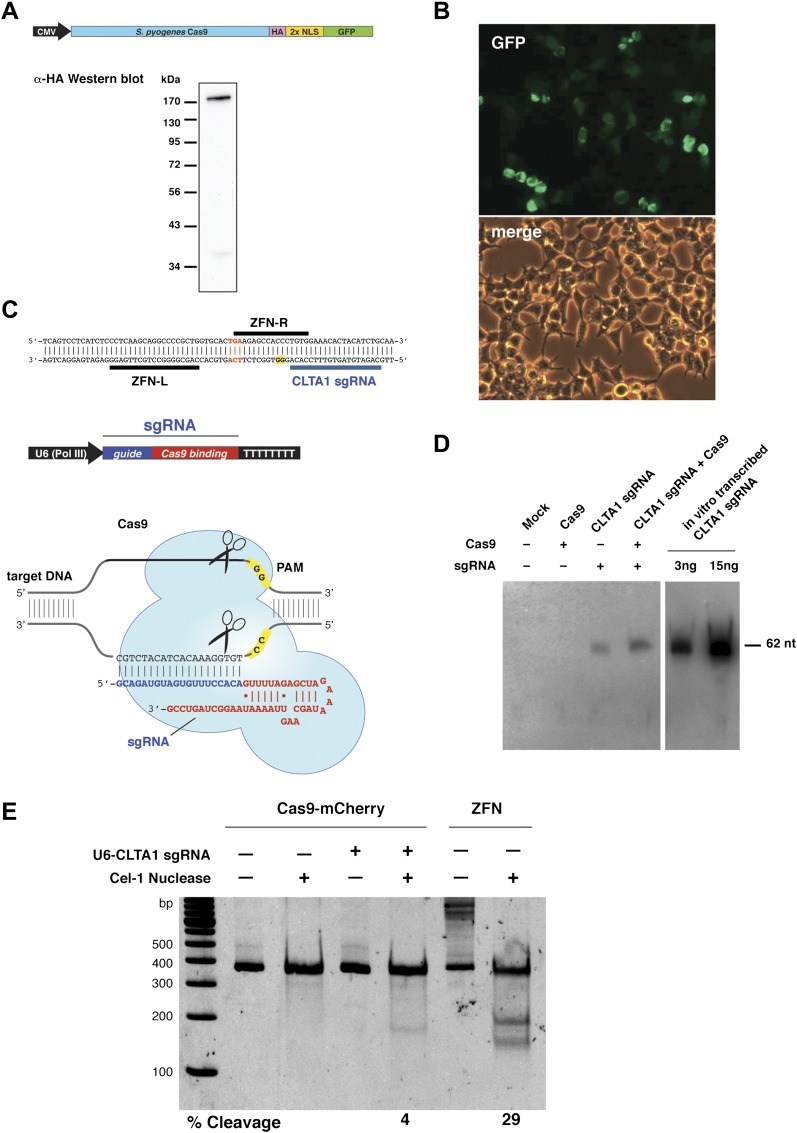
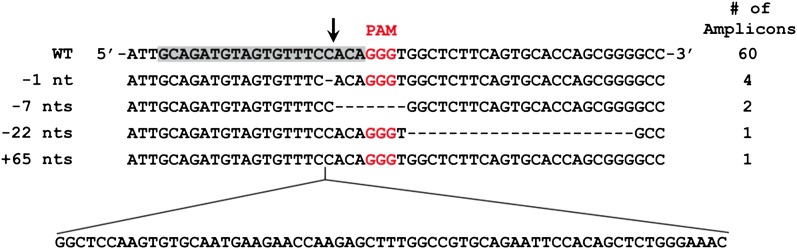
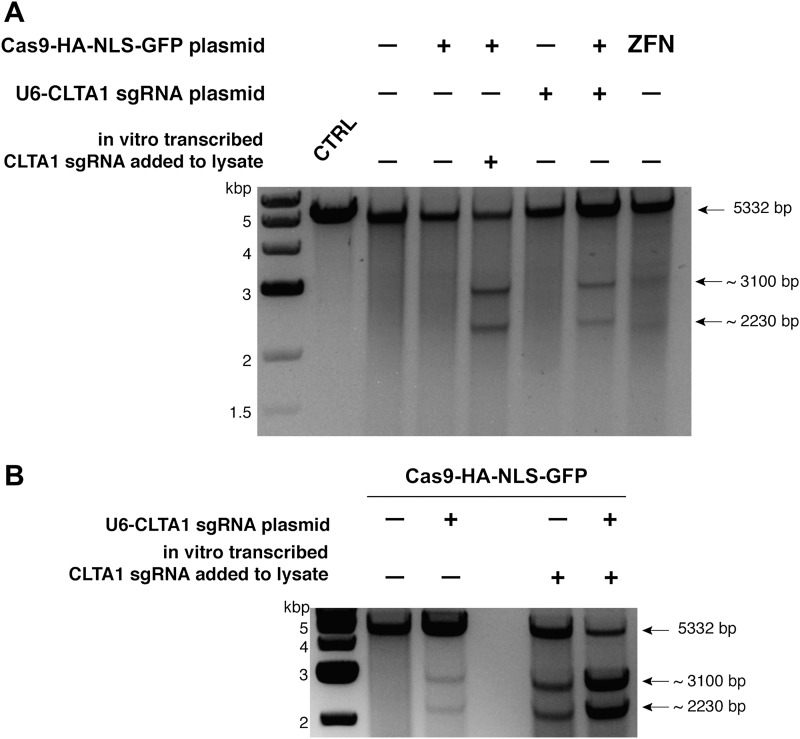
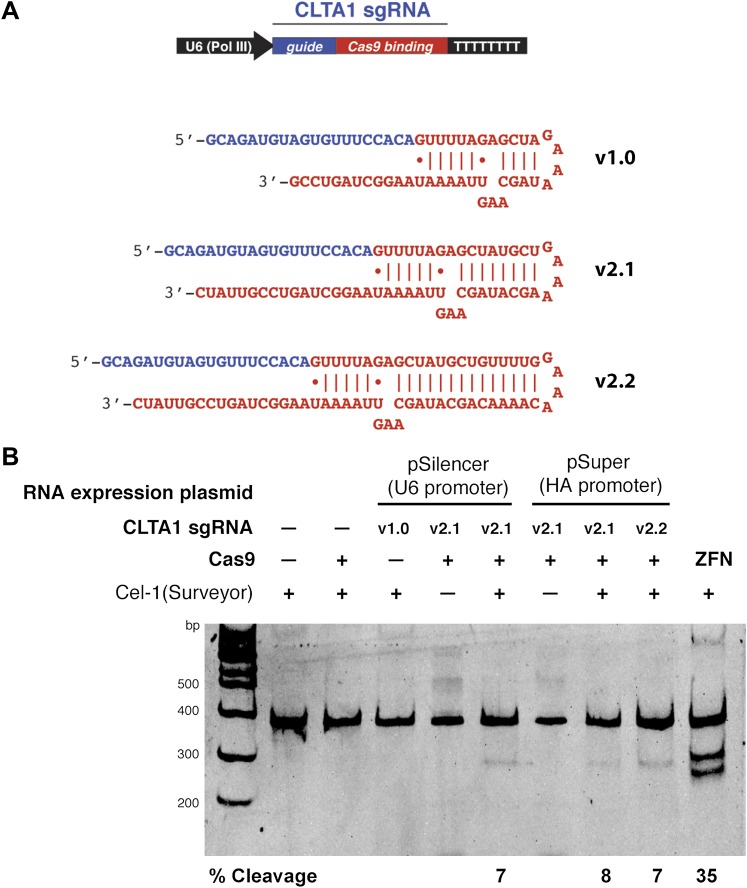
Type II CRISPR immune systems in bacteria use a dual RNA-guided DNA endonuclease, Cas9, to cleave foreign DNA at specific sites. We show here that Cas9 assembles with hybrid guide RNAs in human cells and can induce the formation of double-strand DNA breaks (DSBs) at a site complementary to the guide RNA sequence in genomic DNA. This cleavage activity requires both Cas9 and the complementary binding of the guide RNA. Experiments using extracts from transfected cells show that RNA expression and/or assembly into Cas9 is the limiting factor for Cas9-mediated DNA cleavage. In addition, we find that extension of the RNA sequence at the 3' end enhances DNA targeting activity in vivo. These results show that RNA-programmed genome editing is a facile strategy for introducing site-specific genetic changes in human cells.DOI:http://dx.doi.org/10.7554/eLife.00471.001.
Overview
The claims and statistics of this paper haven’t been checked yet.
Run the check — free, no account needed. It reads the open-access text and checks the sources it cites.
Integrity signals
Registry
Cites
Statistics
Figures
Verification
Claims the paper makes
The claims and statistics of this paper haven’t been checked yet.
Run the check — free, no account needed. It reads the open-access text and checks the sources it cites.
Claims other papers make about this one
Each is checked against this paper’s own text: does it say what the citing paper says it does?
The source backs part of the claim, not all of it — or backs it for a different population, condition or comparison.
In the citing paper
“In January 2013, almost simultaneously, five research articles authored by different research teams appeared, all reporting that they had achieved the goal.”
From CRISPR–Cas9: A History of Its Discovery and Ethical Considerations of Its Use in Genome Editing (2022) · cites this paper as [36]
Experimental — accuracy not yet measuredThe cited source says what the claim attributes to it.
In the citing paper
“Also in January 2013, similar publications came out from the laboratories of Jennifer Doudna (Berkeley College, USA) [36], Jin-Soo Kim (Seoul University, South Korea) [37] and J. Keith Joung (Harvard School of Medicine, USA) [38].”
From CRISPR–Cas9: A History of Its Discovery and Ethical Considerations of Its Use in Genome Editing (2022) · cites this paper as [36]
In the citing paper
“Recently, the CRISPR/Cas system has been successfully applied to human cells19,20,21,22 and several model organisms for genome editing.23,24,25,26”
From The CRISPR/Cas9 system facilitates clearance of the intrahepatic HBV templates in vivo (2014) · cites this paper as [22]
In the citing paper
“Clustered regularly interspaced short palindromic repeat (CRISPR)/Cas9 is a naturally occurring bacterial immune system that uses a novel nuclease system to protect bacteria from phage infection (6-9), and it has recently been harnessed for a variety of genome-engineering applications (10)(11)(12)(13)(14)(15)(16)(17).”
From RNA-guided endonuclease provides a therapeutic strategy to cure latent herpesviridae infection (2014) · cites this paper as [12]
Self-check
Percentages, sums and reported differences re-computed from the paper’s own numbers.
The self-check needs the paper’s full text.
Citations
Cites
A Programmable Dual-RNA–Guided DNA Endonuclease in Adaptive Bacterial Immunity
Jinek, M., Chylinski, K., Fonfara, I., Hauer, M., Doudna, J. A., & Charpentier, E. (2012) · Science · doi:10.1126/science.1225829 · Cited by 17,116
Self-citationGasiunas, G., Barrangou, R., Horvath, P., & Siksnys, V. (2012) · Proceedings of the National Academy of Sciences · doi:10.1073/pnas.1208507109 · Cited by 2,769
CRISPR RNA Maturation by Trans-Encoded Small RNA and Host Factor RNase III
Deltcheva, E., Chylinski, K., Sharma, C. M., Gonzales, K., Chao, Y., Pirzada, Z. A., Eckert, M. R., Vogel, J., & Charpentier, E. (2011) · Nature · doi:10.1038/nature09886 · Cited by 2,563
Genome editing with engineered zinc finger nucleases
Urnov, F. D., Rebar, E. J., Holmes, M. C., Zhang, H. S., & Gregory, P. D. (2010) · Nature Reviews Genetics · doi:10.1038/nrg2842 · Cited by 2,285
RNA-guided genetic silencing systems in bacteria and archaea
Wiedenheft, B., Sternberg, S. H., & Doudna, J. A. (2012) · Nature · doi:10.1038/nature10886 · Cited by 1,851
Self-citationAn improved zinc-finger nuclease architecture for highly specific genome editing
Miller, J. C., Holmes, M. C., Wang, J., Guschin, D. Y., Lee, Y.-L., Rupniewski, I., Beausejour, C. M., Waite, A. J., Wang, N. S., Kim, K. A., et al. (2007) · Nature Biotechnology · doi:10.1038/nbt1319 · Cited by 1,051
TAL effectors: customizable proteins for DNA targeting
Bogdanove, A. J., & Voytas, D. F. (2011) · Science · doi:10.1126/science.1204094 · Cited by 984
CRISPR-Cas Systems in Bacteria and Archaea: Versatile Small RNAs for Adaptive Defense and Regulation
Bhaya, D., Davison, M., & Barrangou, R. (2011) · Annual Review of Genetics · doi:10.1146/annurev-genet-110410-132430 · Cited by 914
The Streptococcus thermophilus CRISPR/Cas system provides immunity in Escherichia coli
Sapranauskas, R., Gasiūnas, G., Fremaux, C., Barrangou, R., Horvath, P., & Šikšnys, V. (2011) · Nucleic Acids Research · doi:10.1093/nar/gkr606 · Cited by 835
CRISPR-based adaptive immune systems
Terns, M. P., & Terns, R. M. (2011) · Current Opinion in Microbiology · doi:10.1016/j.mib.2011.03.005 · Cited by 461
Mutation detection using Surveyor™ nuclease
Qiu, P., Shandilya, H., D'Alessio, J. M., O’Connor, K. C., Durocher, J. A., & Gerard, G. F. (2004) · BioTechniques · doi:10.2144/04364pf01 · Cited by 299
Rapid and efficient clathrin-mediated endocytosis revealed in genome-edited mammalian cells
Doyon, J. B., Zeitler, B., Cheng, J. C., Cheng, A. T., Cherone, J. M., Santiago, Y., Lee, A. H., Vo, T. D., Doyon, Y., Miller, J. C., et al. (2011) · Nature Cell Biology · doi:10.1038/ncb2175 · Cited by 227
Mechanism of substrate selection by a highly specific CRISPR endoribonuclease
Sternberg, S. H., Haurwitz, R. E., & Doudna, J. A. (2012) · RNA · doi:10.1261/rna.030882.111 · Cited by 158
RNA-polymerase III-driven expression cassettes in human gene therapy.
Medina, M. F. C., & Joshi, S. (1999) · PubMed · Cited by 24
Cited by
Sorted by citations
Genome engineering using the CRISPR-Cas9 system
Ran, F. A., Hsu, P. D., Wright, J., Agarwala, V., Scott, D. A., & Zhang, F. (2013) · Nature Protocols · doi:10.1038/nprot.2013.143 · Cited by 11,133
The new frontier of genome engineering with CRISPR-Cas9
Doudna, J. A., & Charpentier, E. (2014) · Science · doi:10.1126/science.1258096 · Cited by 7,062
Self-citationDevelopment and Applications of CRISPR-Cas9 for Genome Engineering
Hsu, P. D., Lander, E. S., & Zhang, F. (2014) · Cell · doi:10.1016/j.cell.2014.05.010 · Cited by 5,762
Repurposing CRISPR as an RNA-Guided Platform for Sequence-Specific Control of Gene Expression
Qi, L. S., Larson, M. H., Gilbert, L. A., Doudna, J. A., Weissman, J. S., Arkin, A. P., & Lim, W. A. (2013) · Cell · doi:10.1016/j.cell.2013.02.022 · Cited by 5,016
“While our paper was under review, several very recent studies reported the use of wild-type Cas9/CRISPR for targeted genome editing in diverse organisms (Mali et al., 2013; Cong et al., 2013; Jinek et al., 2013; Jiang et al., 2013; Hwang et al., 2013; Cho et al., 2013).”
BackgroundOptimized sgRNA design to maximize activity and minimize off-target effects of CRISPR-Cas9
Doench, J. G., Fusi, N., Sullender, M., Hegde, M., Vaimberg, E. W., Donovan, K. F., Smith, I., Tothova, Z., Wilen, C., Orchard, R., et al. (2016) · Nature Biotechnology · doi:10.1038/nbt.3437 · Cited by 4,637
Metadata
- Authors
- Jinek, M., East, A., Cheng, A., Lin, S., Ma, E., & Doudna, J.
- Affiliations
- Howard Hughes Medical Institute, University of California, Berkeley, Berkeley, United States
- University of California, Berkeley (US)
- Howard Hughes Medical Institute (US)
- Corresponding author
- Doudna, Jennifer
- Venue
- eLife
- Publisher
- eLife Sciences Publications, Ltd
- Published
- 2013-01-29
- Volume
- 2
- Pages
- e00471-e00471
- ISSN
- 2050-084X (ISSN-L)
- PMC
- PMC3557905
- OpenAlex
- W2153344788
- Cited by
- 2,098
- References
- 14
- Citations by year
- 2026: 36 · 2025: 83 · 2024: 104 · 2023: 123 · 2022: 174 · 2021: 159 · 2020: 191 · 2019: 181 · 2018: 196 · 2017: 203 · 2016: 226 · 2015: 174 · 2014: 153 · 2013: 95
- FWCI
- 96.82
- Type
- journal article
- Language
- en
- Open access
- gold
- doi.org
- Licence
- Locations
- eLife (publishedVersion, cc-by)
- Europe PMC (PubMed Central) (publishedVersion, cc-by)
- PubMed Central (publishedVersion, cc-by)
- PubMed (publishedVersion)
- Zurich Open Repository and Archive (University of Zurich) (acceptedVersion, other-oa)
- OSTI OAI (U.S. Department of Energy Office of Scientific and Technical Information) (submittedVersion)
- DOAJ (DOAJ: Directory of Open Access Journals) (submittedVersion)
- eScholarship (California Digital Library) (submittedVersion)
- eScholarship (California Digital Library) (submittedVersion, cc-by)
- Zurich Open Repository and Archive (University of Zurich) (submittedVersion, other-oa)
- Zurich Open Repository and Archive (University of Zurich)
- Funders
- Howard Hughes Medical Institute
- National Institutes of Health
- Topics
- Life Sciences › Biochemistry, Genetics and Molecular Biology › Molecular Biology › CRISPR and Genetic Engineering
- Life Sciences › Biochemistry, Genetics and Molecular Biology › Molecular Biology › RNA regulation and disease
- Life Sciences › Biochemistry, Genetics and Molecular Biology › Molecular Biology › RNA Interference and Gene Delivery
- Keywords
- CRISPR/Cas9, Cas9, DNA double-strand breaks, site-specific DNA cleavage, DNA targeting, human cells, genome editing
- MeSH terms
- Humans, RNA, RNA Editing, Clustered Regularly Interspaced Short Palindromic Repeats
About these checks
Registry, retraction, Cites and statistics results are computed, not judged, with one exception: a printed reference that no index lists is read once by a model before it counts as a citation error. Claims are extracted by a model and kept only when their quote appears verbatim in the text; each cited source is then checked, with a model’s help, for whether it says what the claim relies on. Those verdicts can be wrong — read the claim’s quote and the cited source before relying on one.
Statistics and arithmetic are recomputed, not judged.
Confidence bands are shown only for fields calibrated on our annotated test set. None is calibrated yet, so no band is shown.
What counts as a claim ›How we measure confidence ›How we check this ›
Are you an author, or do you see a problem with this page? Request a review
