

The DOI matches its Crossref record; 77 of the 77 references it cites were found in a registry or an index; 1 of the 50 sources its claims cite were checked for support.
Metabolic reprogramming during neuronal differentiation from aerobic glycolysis to neuronal oxidative phosphorylation
Open accessAbstract
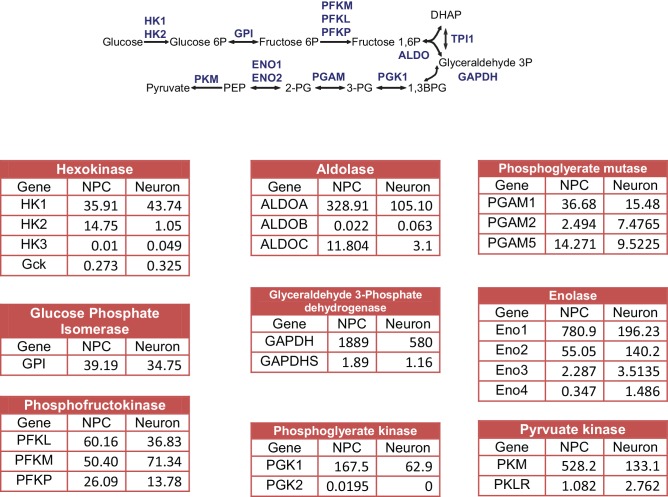
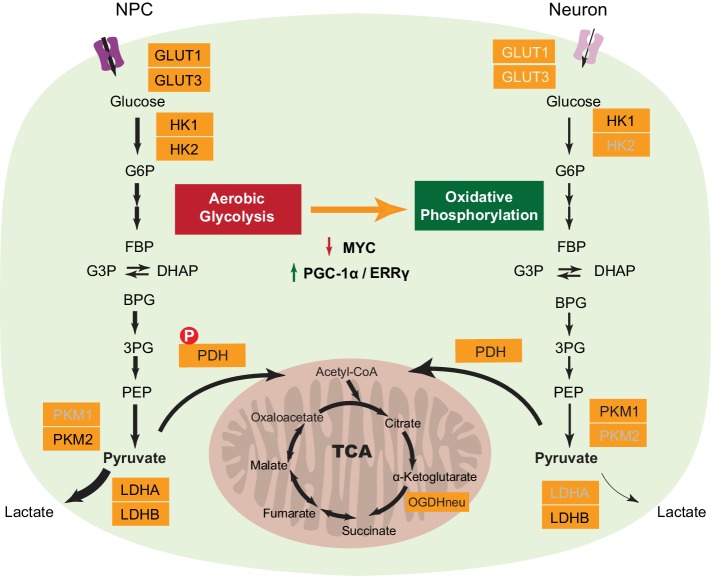
How metabolism is reprogrammed during neuronal differentiation is unknown. We found that the loss of hexokinase (HK2) and lactate dehydrogenase (LDHA) expression, together with a switch in pyruvate kinase gene splicing from PKM2 to PKM1, marks the transition from aerobic glycolysis in neural progenitor cells (NPC) to neuronal oxidative phosphorylation. The protein levels of c-MYC and N-MYC, transcriptional activators of the HK2 and LDHA genes, decrease dramatically. Constitutive expression of HK2 and LDHA during differentiation leads to neuronal cell death, indicating that the shut-off aerobic glycolysis is essential for neuronal survival. The metabolic regulators PGC-1α and ERRγ increase significantly upon neuronal differentiation to sustain the transcription of metabolic and mitochondrial genes, whose levels are unchanged compared to NPCs, revealing distinct transcriptional regulation of metabolic genes in the proliferation and post-mitotic differentiation states. Mitochondrial mass increases proportionally with neuronal mass growth, indicating an unknown mechanism linking mitochondrial biogenesis to cell size.
Overview
AI snapshot
Written from the paper’s full text.
TL;DR
Neuronal differentiation from human NPCs is marked by shutting off aerobic glycolysis and shifting to oxidative phosphorylation, with loss of HK2/LDHA, PKM2-to-PKM1 splicing, and decreased c-MYC/N-MYC. Constitutive HK2/LDHA expression kills differentiating neurons, while increased PGC-1α/ERRγ maintain rather than increase metabolic and mitochondrial gene expression.
Key findings
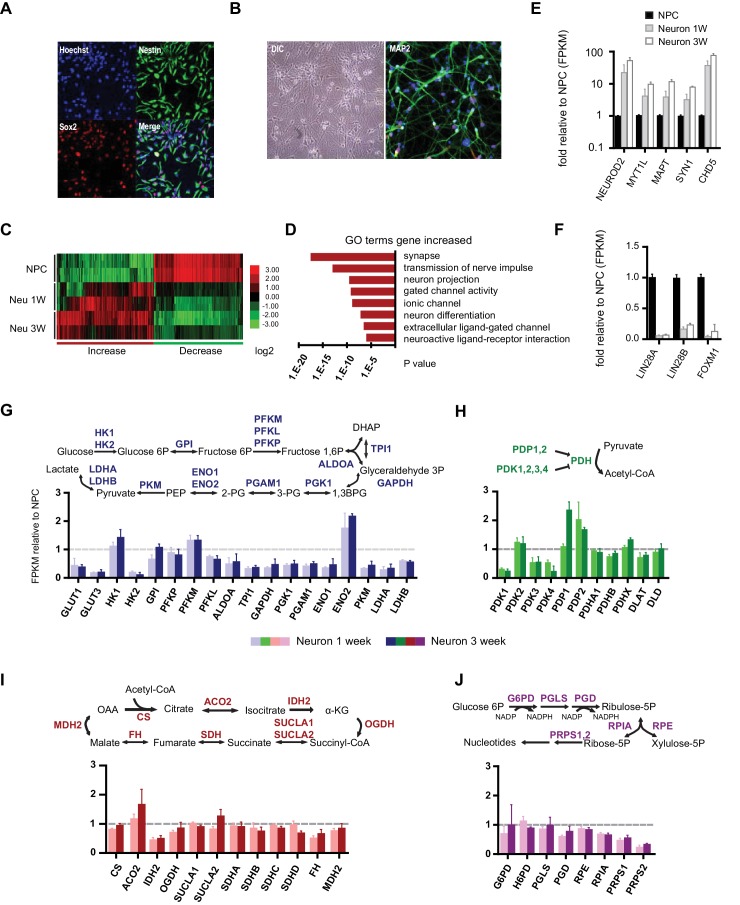
- Differentiation from NPCs to neurons involves loss of HK2 and LDHA protein, a PKM splice switch from PKM2 to PKM1, and a neuron-specific OGDH splice form lacking a Ca²⁺-binding motif; c-MYC and N-MYC protein levels fall by ~70% and ~85%, respectively.
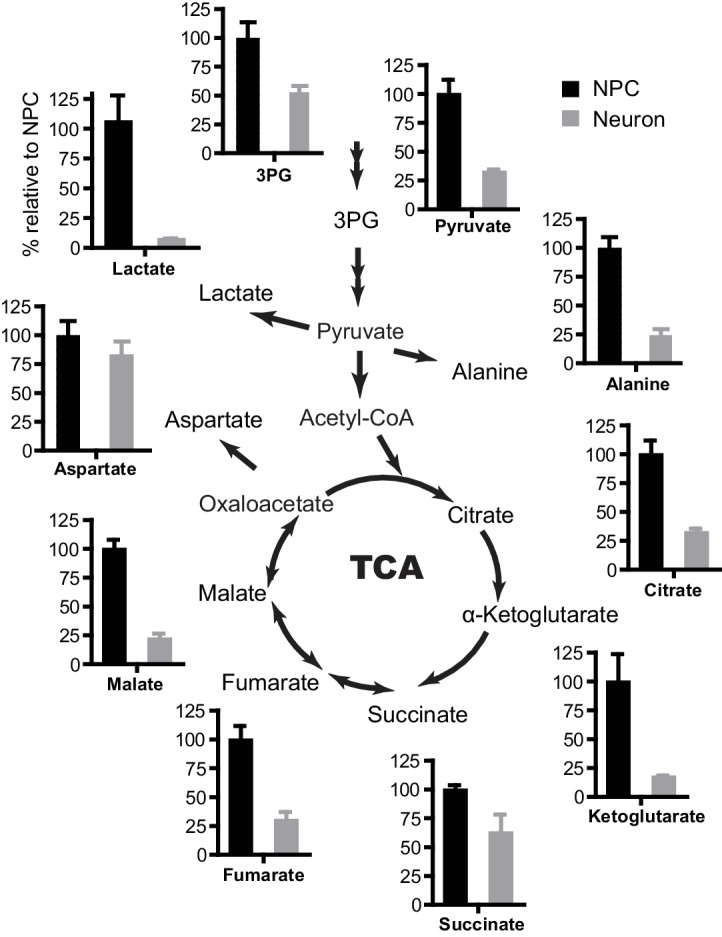
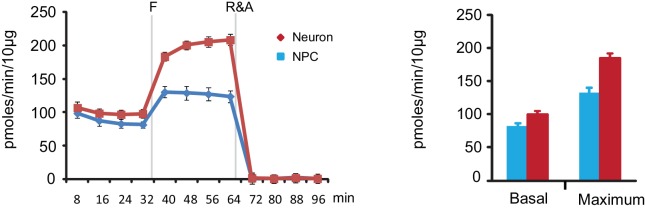
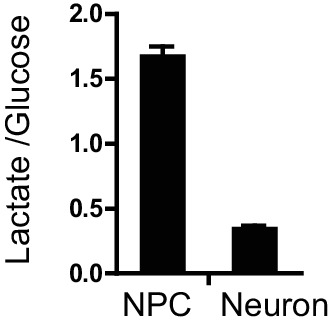
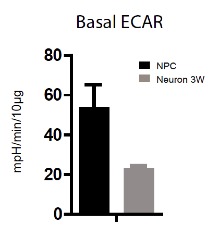
- Neurons show lower glycolytic/TCA metabolite levels and higher oxidative capacity: basal and maximum OCR rise from ~82 and 130 pmoles/min/10 µg in NPCs to ~98 and 183 in 3-week neurons, while lactate/glucose ratio falls from ~1.61 to ~0.35.
- Constitutive HK2 and LDHA expression during differentiation causes neuronal death: ~40% condensed nuclei versus ~6% in controls, with ~40% GFAP-positive glial cells versus ~4% in controls; extra pyruvate (5 mM) rescues neuronal death but not glial increase.
- PGC-1α and ERRγ increase ~3–4 fold and ~2.8–3.4 fold, respectively, and are required to maintain expression of glycolysis, TCA, and mitochondrial respiratory complex genes, even though most mitochondrial gene expression is unchanged versus NPCs; mtDNA copy number and protein mass both increase ~4-fold by 3 weeks.
Methods
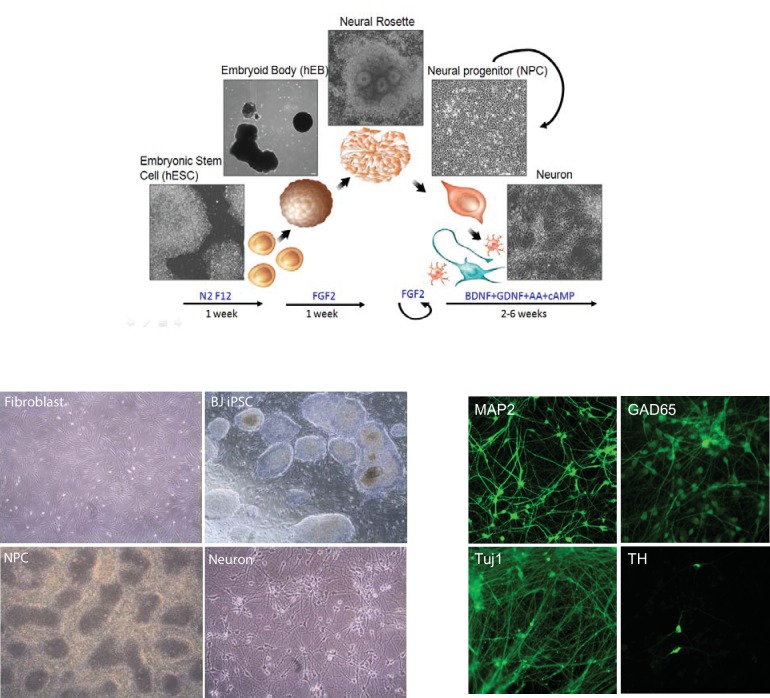
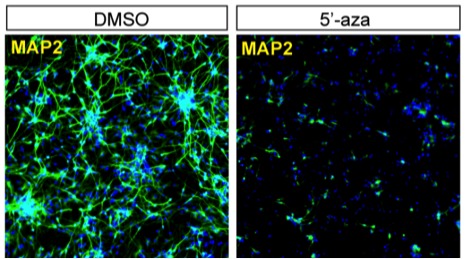
- Human BJ iPSC-derived NPCs were differentiated for 1–3 weeks and validated by Sox2/Nestin and MAP2 staining; RNA-seq was performed on two NPC lines with duplicates, and data were mapped with STAR and quantified by FPKM.
- Metabolic profiling used GC-MS for glycolytic/TCA metabolites, Seahorse for OCR, lactate assays, immunoblotting/immunostaining, RT-PCR, ChIP for c-MYC/N-MYC binding, and lenti-shRNA knockdowns of HK2, LDHA, PGC-1α, or ERRγ.
- Direct neuronal conversion from fibroblasts was tested with PTB knockdown or Ngn2/Ascl1 overexpression; mouse neuroprogenitor differentiation and published mouse astrocyte/neuron RNA-seq were used for conservation checks.
Limitations
- The paper states that expression levels of metabolic enzymes do not completely reflect biochemical/physiological activities, and post-translational modifications were not explored.
- The paper notes that mitochondrial structure, dynamics, and matrix calcium were not investigated, and that protein degradation may also downregulate key metabolic enzymes.
- Evident from the text: the main differentiation model relies on human BJ iPSC-derived NPCs, with some key findings validated in mouse cells; 3-week cultures were used as developing neurons, and rare glial cells emerge later, so longer-term neuronal populations were not the primary focus.
Model-written summary. Check it against the paper before relying on it.
Integrity signals
Registry
Cites
Statistics
Figures
Verification
Claims the paper makes
63 Own result · 40 Not checked yet · 39 Own interpretation · 6 Own method · 6 No basis given · 1 Supported
A result the paper reports from its own data — it cites no other source for it, so there is none to check. The quote shows it is in the paper.
In the paper
“The metabolic regulators PGC-1α and ERRγ increase significantly upon neuronal differentiation”
§ Metabolic reprogramming during neuronal differentiation from aerobic glycolysis to neuronal oxidative phosphorylation > Abstract
plaindirect- Asserted: passes — The authors put it forward as true.
- Checkable: passes — It can be checked against evidence.
- Load-bearing: passes — The paper’s conclusions depend on it.
- Based: passes — The paper gives a reason why it holds.
A result the paper reports from its own data — it cites no other source for it, so there is none to check. The quote shows it is in the paper.
In the paper
“Mitochondrial mass increases proportionally with neuronal mass growth”
§ Metabolic reprogramming during neuronal differentiation from aerobic glycolysis to neuronal oxidative phosphorylation > Abstract
plaindirect- Asserted: passes — The authors put it forward as true.
- Checkable: passes — It can be checked against evidence.
- Load-bearing: unclear — It is unclear whether the paper’s conclusions depend on it.
- Based: passes — The paper gives a reason why it holds.
A result the paper reports from its own data — it cites no other source for it, so there is none to check. The quote shows it is in the paper.
In the paper
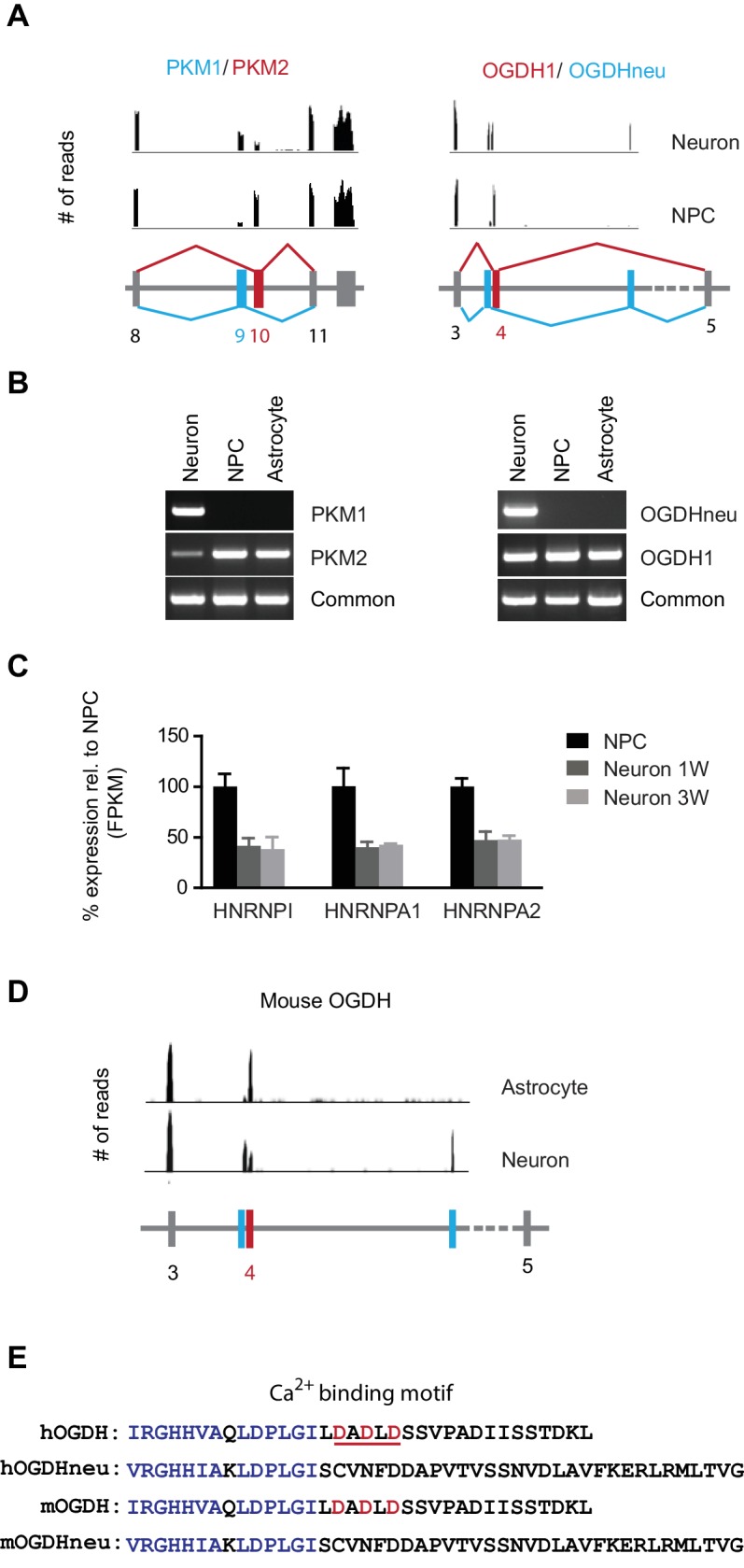
“a switch in pyruvate kinase gene splicing from PKM2 to PKM1”
- Also stated in: § Neuron-specific splicing of PKM and OGDH · plain
“NPCs mainly expressed PKM2, whereas neurons expressed PKM1”
§ Metabolic reprogramming during neuronal differentiation from aerobic glycolysis to neuronal oxidative phosphorylation > Abstract
plaindirect- Asserted: passes — The authors put it forward as true.
- Checkable: passes — It can be checked against evidence.
- Load-bearing: passes — The paper’s conclusions depend on it.
- Based: passes — The paper gives a reason why it holds.
- Also stated in: § Neuron-specific splicing of PKM and OGDH · plain
A result the paper reports from its own data — it cites no other source for it, so there is none to check. The quote shows it is in the paper.
In the paper
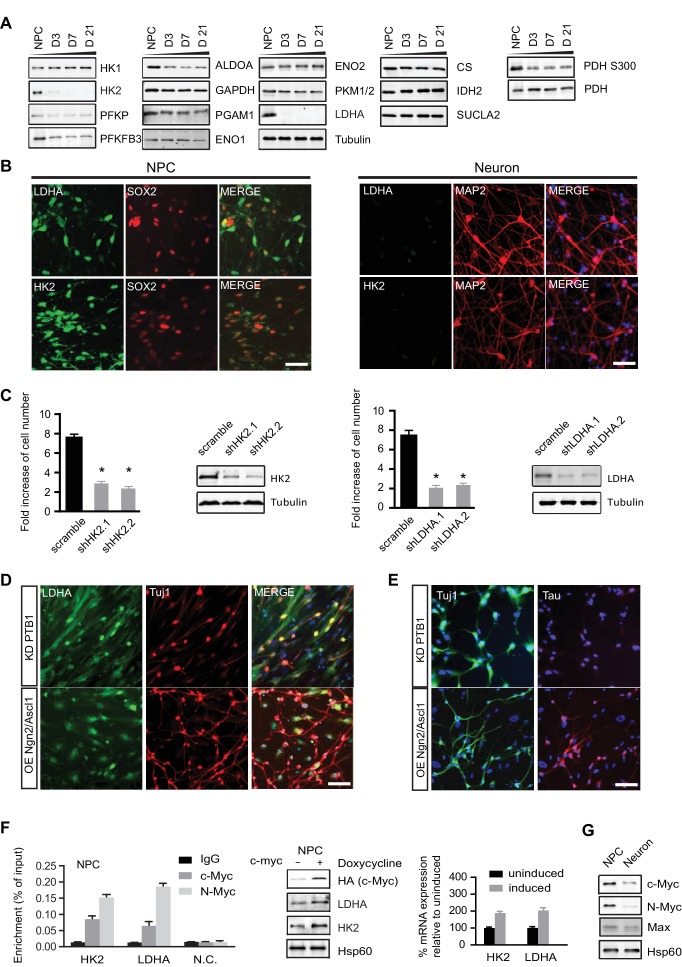
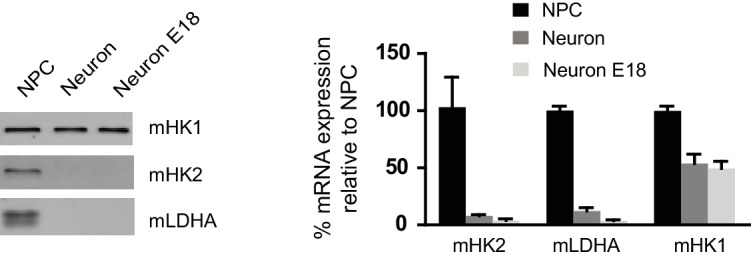
“We found that the loss of hexokinase (HK2) and lactate dehydrogenase (LDHA) expression”
- Also stated in: § HK2 and LDHA were off during neuronal differentiation · plain
“HK2 and LDHA mRNAs were about 15% and 25% of those in NPCs, but strikingly, both proteins almost completely disappeared upon differentiation”
§ Metabolic reprogramming during neuronal differentiation from aerobic glycolysis to neuronal oxidative phosphorylation > Abstract
plaindirect- Asserted: passes — The authors put it forward as true.
- Checkable: passes — It can be checked against evidence.
- Load-bearing: passes — The paper’s conclusions depend on it.
- Based: passes — The paper gives a reason why it holds.
- Also stated in: § HK2 and LDHA were off during neuronal differentiation · plain
The paper states this without a source or data behind it here, so there is nothing to check it against. The quote shows it is in the paper.
In the paper
“whose levels are unchanged compared to NPCs”
§ Metabolic reprogramming during neuronal differentiation from aerobic glycolysis to neuronal oxidative phosphorylation > Abstract
plain- Asserted: passes — The authors put it forward as true.
- Checkable: passes — It can be checked against evidence.
- Load-bearing: passes — The paper’s conclusions depend on it.
- Based: passes — The paper gives a reason why it holds.
A result the paper reports from its own data — it cites no other source for it, so there is none to check. The quote shows it is in the paper.
In the paper
“Constitutive expression of HK2 and LDHA during differentiation leads to neuronal cell death”
§ Metabolic reprogramming during neuronal differentiation from aerobic glycolysis to neuronal oxidative phosphorylation > Abstract
plaindirect- Asserted: passes — The authors put it forward as true.
- Checkable: passes — It can be checked against evidence.
- Load-bearing: passes — The paper’s conclusions depend on it.
- Based: passes — The paper gives a reason why it holds.
A result the paper reports from its own data — it cites no other source for it, so there is none to check. The quote shows it is in the paper.
In the paper
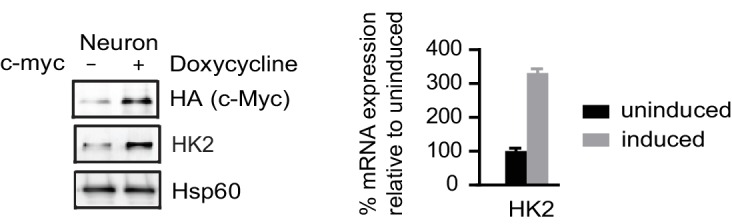
“The protein levels of c-MYC and N-MYC, transcriptional activators of the HK2 and LDHA genes, decrease dramatically.”
- Also stated in: § HK2 and LDHA were off during neuronal differentiation · plain
“Both c-MYC and N-MYC protein levels decreased significantly, by ~70% and ~85% respectively, once NPCs differentiated into neurons”
§ Metabolic reprogramming during neuronal differentiation from aerobic glycolysis to neuronal oxidative phosphorylation > Abstract
plaindirect- Asserted: passes — The authors put it forward as true.
- Checkable: passes — It can be checked against evidence.
- Load-bearing: passes — The paper’s conclusions depend on it.
- Based: passes — The paper gives a reason why it holds.
- Also stated in: § HK2 and LDHA were off during neuronal differentiation · plain
A result the paper reports from its own data — it cites no other source for it, so there is none to check. The quote shows it is in the paper.
In the paper
“After 3 weeks of differentiation, a majority (~85%) of cells expressed the neuronal marker MAP2”
§ Metabolic reprogramming during neuronal differentiation from aerobic glycolysis to neuronal oxidative phosphorylation > Result > Transcription profiling of neuronal differentiation from human NPCs
plain- Asserted: passes — The authors put it forward as true.
- Checkable: passes — It can be checked against evidence.
- Load-bearing: passes — The paper’s conclusions depend on it.
- Based: passes — The paper gives a reason why it holds.
A result the paper reports from its own data — it cites no other source for it, so there is none to check. The quote shows it is in the paper.
In the paper
“the levels of citrate synthase (CS), isocitrate dehydrogenase (IDH2) and succinyl-CoA ligase β subunit (SUCLA2) were constant during differentiation”
§ Metabolic reprogramming during neuronal differentiation from aerobic glycolysis to neuronal oxidative phosphorylation > Result > HK2 and LDHA were off during neuronal differentiation
plain- Asserted: passes — The authors put it forward as true.
- Checkable: passes — It can be checked against evidence.
- Load-bearing: passes — The paper’s conclusions depend on it.
- Based: passes — The paper gives a reason why it holds.
A result the paper reports from its own data — it cites no other source for it, so there is none to check. The quote shows it is in the paper.
In the paper
“The basal and maximum OCRs of NPCs were ~82 and 130 (pmoles/min/10 µg), whereas those in 3-week differentiated neurons were ~98 and 183, significantly higher than in NPCs”
§ Metabolic reprogramming during neuronal differentiation from aerobic glycolysis to neuronal oxidative phosphorylation > Result > Glycolytic and TCA metabolites and oxygen consumption rate in NPCs and neurons
plain- Asserted: passes — The authors put it forward as true.
- Checkable: passes — It can be checked against evidence.
- Load-bearing: passes — The paper’s conclusions depend on it.
- Based: passes — The paper gives a reason why it holds.
- Probably not a substantial claim. 17
- It may state two separate claims as one. 43
- The quote only partly states this claim. 1
Every source the paper cites for this claim was checked and supports it.
In the paper
“PGC-1α knockout mice show obvious neurodegenerative pathology (Lin et al., 2004)”
§ Metabolic reprogramming during neuronal differentiation from aerobic glycolysis to neuronal oxidative phosphorylation > Introduction
What the sources say
- Supportedcites Lin et al., 2004 source
The section “Striatal Degeneration in PGC-1α Null Mouse Brain” (pp. 9–10) reports striking spongiform lesions in knockout mice, predominantly in the striatum, along with gliosis and loss of striatal nerve fibers. It concludes that loss of PGC-1α leads to neuronal degeneration in specific brain areas, supporting the claim of obvious neurodegenerative pathology. (LLM, conf=0.94)
plaindirect- Asserted: passes — The authors put it forward as true.
- Checkable: passes — It can be checked against evidence.
- Load-bearing: fails — The paper’s conclusions may not depend on it.
- Based: passes — The paper gives a reason why it holds.
Probably not a substantial claim. The paper’s conclusions may not depend on it.
- Supported
In the paper
“OGDH, a key enzyme in the TCA cycle, has a novel and conserved neuronal splicing shift, resulting in the loss of a calcium binding motif.”
- Also stated in: § Neuron-specific splicing of PKM and OGDH · plain
“a stretch of 34 amino acids in OGDH1, containing a Ca2+-binding motif (Armstrong et al., 2014), is replaced by 45 amino acids specific to OGDHneu”
§ Metabolic reprogramming during neuronal differentiation from aerobic glycolysis to neuronal oxidative phosphorylation > Introduction
What the sources say
- Not checked yetcites Armstrong et al., 2014
plaindirect- Asserted: passes — The authors put it forward as true.
- Checkable: passes — It can be checked against evidence.
- Load-bearing: passes — The paper’s conclusions depend on it.
- Based: passes — The paper gives a reason why it holds.
It may state two separate claims as one.
- Also stated in: § Neuron-specific splicing of PKM and OGDH · plain
A result the paper reports from its own data — it cites no other source for it, so there is none to check. The quote shows it is in the paper.
In the paper
“the levels of 3-phosphoglyerate (3PG) and pyruvate in neurons dropped to ~52% and 32% of those in NPCs”
§ Metabolic reprogramming during neuronal differentiation from aerobic glycolysis to neuronal oxidative phosphorylation > Result > Glycolytic and TCA metabolites and oxygen consumption rate in NPCs and neurons
plain- Asserted: passes — The authors put it forward as true.
- Checkable: passes — It can be checked against evidence.
- Load-bearing: passes — The paper’s conclusions depend on it.
- Based: passes — The paper gives a reason why it holds.
It may state two separate claims as one.
A result the paper reports from its own data — it cites no other source for it, so there is none to check. The quote shows it is in the paper.
In the paper
“citrate was ~32% of that in NPCs, α-ketoglutarate was ~17%, fumarate was ~30%, and malate was ~22%; succinate was relatively higher, at ~62%”
§ Metabolic reprogramming during neuronal differentiation from aerobic glycolysis to neuronal oxidative phosphorylation > Result > Glycolytic and TCA metabolites and oxygen consumption rate in NPCs and neurons
plain- Asserted: passes — The authors put it forward as true.
- Checkable: passes — It can be checked against evidence.
- Load-bearing: passes — The paper’s conclusions depend on it.
- Based: passes — The paper gives a reason why it holds.
It may state two separate claims as one.
A result the paper reports from its own data — it cites no other source for it, so there is none to check. The quote shows it is in the paper.
In the paper
“HK2 and LDHA mRNAs were about 15% and 25% of those in NPCs, but strikingly, both proteins almost completely disappeared upon differentiation”
§ Metabolic reprogramming during neuronal differentiation from aerobic glycolysis to neuronal oxidative phosphorylation > Result > HK2 and LDHA were off during neuronal differentiation
plaindirect- Asserted: passes — The authors put it forward as true.
- Checkable: passes — It can be checked against evidence.
- Load-bearing: passes — The paper’s conclusions depend on it.
- Based: passes — The paper gives a reason why it holds.
It may state two separate claims as one.
A result the paper reports from its own data — it cites no other source for it, so there is none to check. The quote shows it is in the paper.
In the paper
“both HK2 and LDHA mRNA levels dropped, falling to ~8.5% and ~11% of the level in NPCs, respectively, and, consistently, their protein levels were also greatly decreased”
§ Metabolic reprogramming during neuronal differentiation from aerobic glycolysis to neuronal oxidative phosphorylation > Result > HK2 and LDHA were off during neuronal differentiation
plaincorrelational- Asserted: passes — The authors put it forward as true.
- Checkable: passes — It can be checked against evidence.
- Load-bearing: passes — The paper’s conclusions depend on it.
- Based: passes — The paper gives a reason why it holds.
It may state two separate claims as one.
A result the paper reports from its own data — it cites no other source for it, so there is none to check. The quote shows it is in the paper.
In the paper
“OGDHneu splicing is conserved in mouse neurons, whereas mouse astrocytes, like human astrocytes, only expressed OGDH1”
§ Metabolic reprogramming during neuronal differentiation from aerobic glycolysis to neuronal oxidative phosphorylation > Result > Neuron-specific splicing of PKM and OGDH
plain- Asserted: passes — The authors put it forward as true.
- Checkable: passes — It can be checked against evidence.
- Load-bearing: passes — The paper’s conclusions depend on it.
- Based: passes — The paper gives a reason why it holds.
It may state two separate claims as one.
A result the paper reports from its own data — it cites no other source for it, so there is none to check. The quote shows it is in the paper.
In the paper
“OGDH in NPCs (OGDH1) uses exon 4, whereas the isoform in neurons, here called OGDHneu, uses two adjacent exons”
§ Metabolic reprogramming during neuronal differentiation from aerobic glycolysis to neuronal oxidative phosphorylation > Result > Neuron-specific splicing of PKM and OGDH
plain- Asserted: passes — The authors put it forward as true.
- Checkable: passes — It can be checked against evidence.
- Load-bearing: passes — The paper’s conclusions depend on it.
- Based: passes — The paper gives a reason why it holds.
It may state two separate claims as one.
A result the paper reports from its own data — it cites no other source for it, so there is none to check. The quote shows it is in the paper.
In the paper
“Most of the down-regulated genes were cell cycle related, whereas up-regulated genes were enriched in neuronal function pathways”
§ Metabolic reprogramming during neuronal differentiation from aerobic glycolysis to neuronal oxidative phosphorylation > Result > Transcription profiling of neuronal differentiation from human NPCs
plaincorrelational- Asserted: passes — The authors put it forward as true.
- Checkable: passes — It can be checked against evidence.
- Load-bearing: unclear — It is unclear whether the paper’s conclusions depend on it.
- Based: passes — The paper gives a reason why it holds.
It may state two separate claims as one.
A result the paper reports from its own data — it cites no other source for it, so there is none to check. The quote shows it is in the paper.
In the paper
“the ratio was ~1.61 lactate/glucose for NPCs, while in neurons, it was ~0.35”
§ Metabolic reprogramming during neuronal differentiation from aerobic glycolysis to neuronal oxidative phosphorylation > Result > Glycolytic and TCA metabolites and oxygen consumption rate in NPCs and neurons
plain- Asserted: passes — The authors put it forward as true.
- Checkable: passes — It can be checked against evidence.
- Load-bearing: passes — The paper’s conclusions depend on it.
- Based: passes — The paper gives a reason why it holds.
It may state two separate claims as one.
A result the paper reports from its own data — it cites no other source for it, so there is none to check. The quote shows it is in the paper.
In the paper
“TCA genes remained at the same level during differentiation; an exception was isocitrate dehydrogenase, IDH2, the mitochondrial isoform of IDH, which dropped nearly 50%”
§ Metabolic reprogramming during neuronal differentiation from aerobic glycolysis to neuronal oxidative phosphorylation > Result > Gene expression of glycolysis and TCA enzymes during neuronal differentiation
plain- Asserted: passes — The authors put it forward as true.
- Checkable: passes — It can be checked against evidence.
- Load-bearing: unclear — It is unclear whether the paper’s conclusions depend on it.
- Based: passes — The paper gives a reason why it holds.
It may state two separate claims as one.
A result the paper reports from its own data — it cites no other source for it, so there is none to check. The quote shows it is in the paper.
In the paper
“Except for PDK2, RNA levels of the other three PDKs declined significantly during neuronal differentiation; in contrast, PDP1 RNA levels increased ~2.5 fold at 3 weeks of differentiation”
§ Metabolic reprogramming during neuronal differentiation from aerobic glycolysis to neuronal oxidative phosphorylation > Result > Gene expression of glycolysis and TCA enzymes during neuronal differentiation
plaincorrelational- Asserted: passes — The authors put it forward as true.
- Checkable: passes — It can be checked against evidence.
- Load-bearing: passes — The paper’s conclusions depend on it.
- Based: passes — The paper gives a reason why it holds.
It may state two separate claims as one.
A result the paper reports from its own data — it cites no other source for it, so there is none to check. The quote shows it is in the paper.
In the paper
“Both approaches generated Tuj1-positive neurons after 3 weeks of transduction.”
§ Metabolic reprogramming during neuronal differentiation from aerobic glycolysis to neuronal oxidative phosphorylation > Result > LDHA is down-regulated in neurons directly converted from fibroblasts
plaindirect- Asserted: passes — The authors put it forward as true.
- Checkable: passes — It can be checked against evidence.
- Load-bearing: passes — The paper’s conclusions depend on it.
- Based: passes — The paper gives a reason why it holds.
It may state two separate claims as one.
A result the paper reports from its own data — it cites no other source for it, so there is none to check. The quote shows it is in the paper.
In the paper
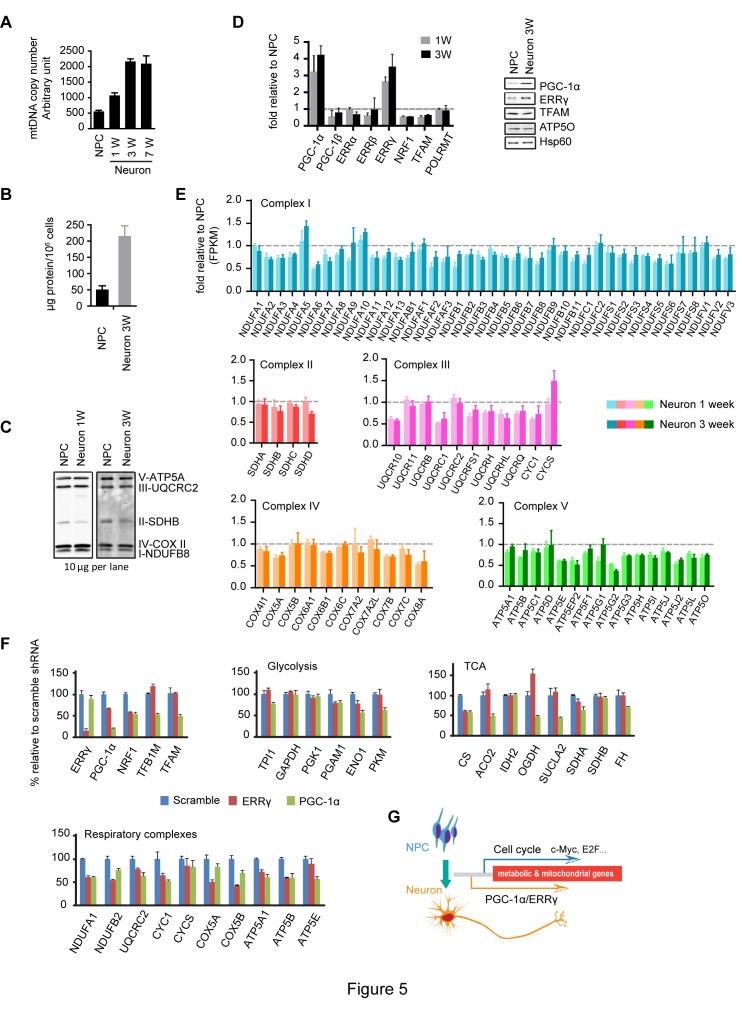
“no significant difference was found between NPCs and neurons at 1 and 3 weeks, except for SDHB of complex II, which was consistently ~50% lower in neurons (Figure 5C).”
§ Metabolic reprogramming during neuronal differentiation from aerobic glycolysis to neuronal oxidative phosphorylation > Result > Increased neuronal PGC-1α/ERRγ maintained the transcription of glycolysis, TCA and mitochondrial genes
plain- Asserted: passes — The authors put it forward as true.
- Checkable: passes — It can be checked against evidence.
- Load-bearing: passes — The paper’s conclusions depend on it.
- Based: passes — The paper gives a reason why it holds.
It may state two separate claims as one.
A result the paper reports from its own data — it cites no other source for it, so there is none to check. The quote shows it is in the paper.
In the paper
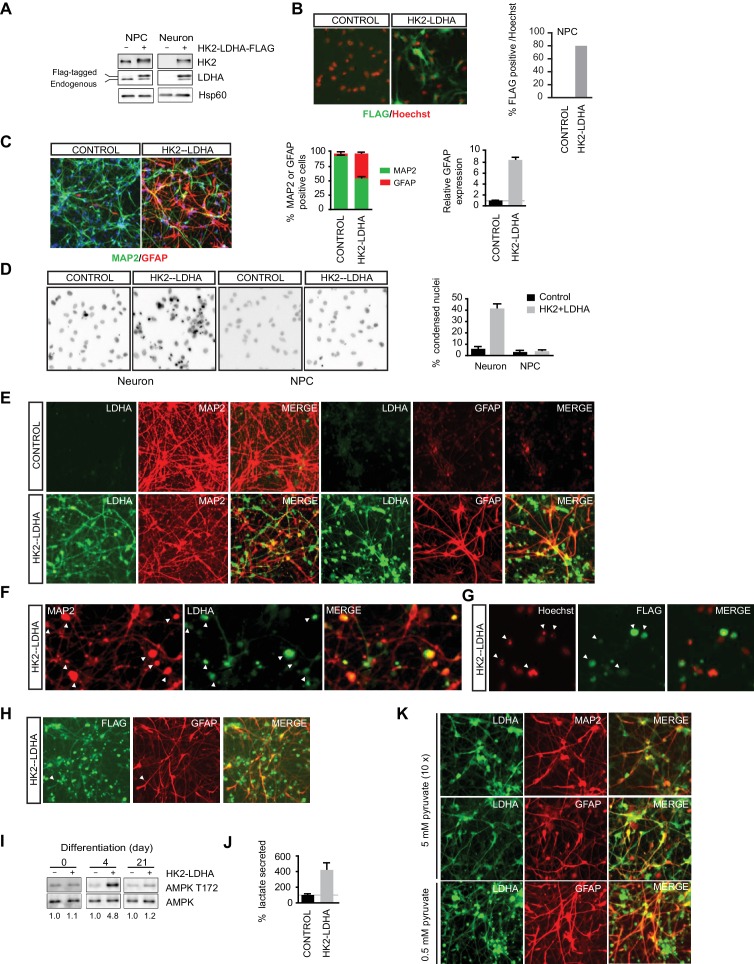
“Indeed, AMPK pT172 was clearly increased at day 4 of neuronal differentiation compared to control, but the phosphorylation returned to a level comparable to control at day 21, when extensive cell death had already occurred (Figure 4I).”
§ Metabolic reprogramming during neuronal differentiation from aerobic glycolysis to neuronal oxidative phosphorylation > Result > Shutoff of aerobic glycolysis is critical for neuronal differentiation
boostedcorrelational- Asserted: passes — The authors put it forward as true.
- Checkable: passes — It can be checked against evidence.
- Load-bearing: passes — The paper’s conclusions depend on it.
- Based: passes — The paper gives a reason why it holds.
It may state two separate claims as one.
A result the paper reports from its own data — it cites no other source for it, so there is none to check. The quote shows it is in the paper.
In the paper
“after the first week, the neuronal mtDNA copy number doubled compared to NPCs, and at 3 weeks was increased to ~four fold.”
§ Metabolic reprogramming during neuronal differentiation from aerobic glycolysis to neuronal oxidative phosphorylation > Result > Increased neuronal PGC-1α/ERRγ maintained the transcription of glycolysis, TCA and mitochondrial genes
plaindirect- Asserted: passes — The authors put it forward as true.
- Checkable: passes — It can be checked against evidence.
- Load-bearing: passes — The paper’s conclusions depend on it.
- Based: passes — The paper gives a reason why it holds.
It may state two separate claims as one.
A result the paper reports from its own data — it cites no other source for it, so there is none to check. The quote shows it is in the paper.
In the paper
“The LDHA signal was clearly detected in GFAP-positive cells with anti-LDHA antibody (Figure 4E) or anti-FLAG antibody staining (Figure 4H), but there was no colocalization with MAP2, a neuronal marker.”
§ Metabolic reprogramming during neuronal differentiation from aerobic glycolysis to neuronal oxidative phosphorylation > Result > Shutoff of aerobic glycolysis is critical for neuronal differentiation
boosted- Asserted: passes — The authors put it forward as true.
- Checkable: passes — It can be checked against evidence.
- Load-bearing: passes — The paper’s conclusions depend on it.
- Based: passes — The paper gives a reason why it holds.
It may state two separate claims as one.
A result the paper reports from its own data — it cites no other source for it, so there is none to check. The quote shows it is in the paper.
In the paper
“We found that PGC-1α was required to maintain the levels of ENO1 and PKM in glycolysis; CS, ACO2, OGDH and SUCLA2 in TCA cycle; TFAM and TFBM1 in mtDNA replication and transcription, and NRF1 (nuclear respiratory factor-1), a key transcription factor that activates nuclear genes encoding respiratory complex subunits (Figure 5F).”
§ Metabolic reprogramming during neuronal differentiation from aerobic glycolysis to neuronal oxidative phosphorylation > Result > Increased neuronal PGC-1α/ERRγ maintained the transcription of glycolysis, TCA and mitochondrial genes
plaindirect- Asserted: passes — The authors put it forward as true.
- Checkable: passes — It can be checked against evidence.
- Load-bearing: passes — The paper’s conclusions depend on it.
- Based: passes — The paper gives a reason why it holds.
It may state two separate claims as one.
A result the paper reports from its own data — it cites no other source for it, so there is none to check. The quote shows it is in the paper.
In the paper
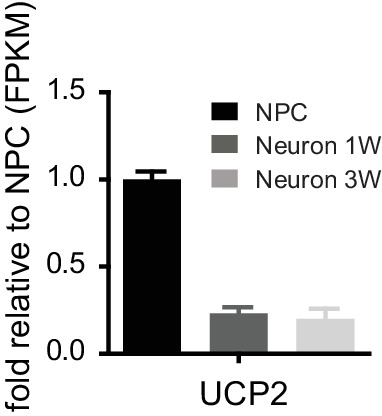
“We found that during neuronal differentiation, UCP2 expression levels dropped significantly, and in 3-week neurons the UCP2 level was only 20% of that in NPCs (Figure 5—figure supplement 1)”
§ Metabolic reprogramming during neuronal differentiation from aerobic glycolysis to neuronal oxidative phosphorylation > Discussion > Molecular changes that define the neuronal energy preference for oxidative phosphorylation
plaincorrelational- Asserted: passes — The authors put it forward as true.
- Checkable: passes — It can be checked against evidence.
- Load-bearing: passes — The paper’s conclusions depend on it.
- Based: passes — The paper gives a reason why it holds.
It may state two separate claims as one.
The paper states this without a source or data behind it here, so there is nothing to check it against. The quote shows it is in the paper.
In the paper
“Surprisingly, even though neurons rely on oxidative phosphorylation to generate energy; the expression of TCA and mitochondrial genes is not increased.”
§ Metabolic reprogramming during neuronal differentiation from aerobic glycolysis to neuronal oxidative phosphorylation > Discussion > Molecular changes that define the neuronal energy preference for oxidative phosphorylation
plain- Asserted: passes — The authors put it forward as true.
- Checkable: passes — It can be checked against evidence.
- Load-bearing: passes — The paper’s conclusions depend on it.
- Based: passes — The paper gives a reason why it holds.
It may state two separate claims as one.
- Rests on an assumption: Neurons rely on mitochondrial oxidative phosphorylation to meet energy demand.
In the paper
“deletion of lactate dehydrogenase A (LDHA) impairs maintenance and proliferation of hematopoietic stem and progenitor cells (Wang et al., 2014)”
§ Metabolic reprogramming during neuronal differentiation from aerobic glycolysis to neuronal oxidative phosphorylation > Introduction
What the sources say
- Not checked yetcites Wang et al., 2014
plaindirect- Asserted: passes — The authors put it forward as true.
- Checkable: passes — It can be checked against evidence.
- Load-bearing: fails — The paper’s conclusions may not depend on it.
- Based: passes — The paper gives a reason why it holds.
Probably not a substantial claim. The paper’s conclusions may not depend on it.
A conclusion the paper draws from its own results — it cites no other source for it, so there is none to check. The quote shows it is in the paper.
In the paper
“indicating an unknown mechanism linking mitochondrial biogenesis to cell size”
§ Metabolic reprogramming during neuronal differentiation from aerobic glycolysis to neuronal oxidative phosphorylation > Abstract
hedgedcorrelational- Asserted: passes — The authors put it forward as true.
- Checkable: passes — It can be checked against evidence.
- Load-bearing: fails — The paper’s conclusions may not depend on it.
- Based: passes — The paper gives a reason why it holds.
Probably not a substantial claim. The paper’s conclusions may not depend on it.
In the paper
“A pioneering study using embryonic Xenopus retina revealed that neural progenitor cells (NPCs) are less reliant on oxidative phosphorylation for ATP production than are non-dividing differentiated neurons, and the transition from glycolysis to oxidative phosphorylation is tightly coupled to neuronal differentiation”
§ Metabolic reprogramming during neuronal differentiation from aerobic glycolysis to neuronal oxidative phosphorylation > Introduction
What the sources say
- Not checked yetcites Agathocleous et al., 2012
plaincorrelational- Asserted: passes — The authors put it forward as true.
- Checkable: passes — It can be checked against evidence.
- Load-bearing: passes — The paper’s conclusions depend on it.
- Based: passes — The paper gives a reason why it holds.
It may state two separate claims as one.
A conclusion the paper draws from its own results — it cites no other source for it, so there is none to check. The quote shows it is in the paper.
In the paper
“marks the transition from aerobic glycolysis in neural progenitor cells (NPC) to neuronal oxidative phosphorylation”
§ Metabolic reprogramming during neuronal differentiation from aerobic glycolysis to neuronal oxidative phosphorylation > Abstract
plaincorrelational- Asserted: passes — The authors put it forward as true.
- Checkable: passes — It can be checked against evidence.
- Load-bearing: passes — The paper’s conclusions depend on it.
- Based: passes — The paper gives a reason why it holds.
It may state two separate claims as one.
- Rests on an assumption: Neurons rely on oxidative phosphorylation to meet energy demands.
What the paper did — it cites no source for this, so there is none to check. The quote shows it is in the paper.
In the paper
“Only high-quality NPC lines containing more than 90% Sox2 and Nestin double-positive cells were used for experiments.”
§ Metabolic reprogramming during neuronal differentiation from aerobic glycolysis to neuronal oxidative phosphorylation > Result > Transcription profiling of neuronal differentiation from human NPCs
plain- Asserted: passes — The authors put it forward as true.
- Checkable: passes — It can be checked against evidence.
- Load-bearing: passes — The paper’s conclusions depend on it.
- Based: passes — The paper gives a reason why it holds.
Probably not a substantial claim.
None of the sources cited for this claim have been checked yet.
In the paper
“The drastic decreases in HK2 and LDHA, the two key enzymes supporting aerobic glycolysis (DeBerardinis and Thompson, 2012; Dang, 2012), are consistent with neurons not having high flux aerobic glycolysis and exhibiting low lactate production.”
§ Metabolic reprogramming during neuronal differentiation from aerobic glycolysis to neuronal oxidative phosphorylation > Result > HK2 and LDHA were off during neuronal differentiation
What the sources say
- Not checked yetcites DeBerardinis and Thompson, 2012
- Not checked yetcites Dang, 2012
plaincorrelational- Asserted: passes — The authors put it forward as true.
- Checkable: passes — It can be checked against evidence.
- Load-bearing: passes — The paper’s conclusions depend on it.
- Based: passes — The paper gives a reason why it holds.
It may state two separate claims as one.
In the paper
“MYC, a key transcription factor associated with cell cycle progression, directly activates HK2 and LDHA transcription, and the promoter regions of HK2 and LDHA contain MYC binding sites (5'-CACGTG-3'), also known as E box (Kim et al., 2004).”
§ Metabolic reprogramming during neuronal differentiation from aerobic glycolysis to neuronal oxidative phosphorylation > Result > HK2 and LDHA were off during neuronal differentiation
What the sources say
- Not checked yetcites Kim et al., 2004
plaindirect- Asserted: passes — The authors put it forward as true.
- Checkable: passes — It can be checked against evidence.
- Load-bearing: passes — The paper’s conclusions depend on it.
- Based: passes — The paper gives a reason why it holds.
It may state two separate claims as one.
In the paper
“Denton et al. (2016) also detected this splice form of OGDH in the whole brain tissue and pancreatic islets, calling it LS1, and, importantly, they confirmed that LS1 isoform is insensitive to Ca2+.”
§ Metabolic reprogramming during neuronal differentiation from aerobic glycolysis to neuronal oxidative phosphorylation > Result > Neuron-specific splicing of PKM and OGDH
What the sources say
- Not checked yetcites Denton et al., 2016
boosted- Asserted: passes — The authors put it forward as true.
- Checkable: passes — It can be checked against evidence.
- Load-bearing: passes — The paper’s conclusions depend on it.
- Based: passes — The paper gives a reason why it holds.
It may state two separate claims as one.
What the paper did — it cites no source for this, so there is none to check. The quote shows it is in the paper.
In the paper
“The median sequencing read yield for each sample was ~35 million 100-base reads, of which ~85% were mapped.”
§ Metabolic reprogramming during neuronal differentiation from aerobic glycolysis to neuronal oxidative phosphorylation > Result > Transcription profiling of neuronal differentiation from human NPCs
plain- Asserted: passes — The authors put it forward as true.
- Checkable: passes — It can be checked against evidence.
- Load-bearing: fails — The paper’s conclusions may not depend on it.
- Based: passes — The paper gives a reason why it holds.
Probably not a substantial claim. The paper’s conclusions may not depend on it. It may state two separate claims as one.
In the paper
“overexpression of PGC-1α in cardiac cells triggers the upregulation of hundreds of genes in glycolysis, TCA and mitochondrial respiratory complexes (Rowe et al., 2010).”
§ Metabolic reprogramming during neuronal differentiation from aerobic glycolysis to neuronal oxidative phosphorylation > Result > Increased neuronal PGC-1α/ERRγ maintained the transcription of glycolysis, TCA and mitochondrial genes
What the sources say
- Not checked yetcites Rowe et al., 2010
plaindirect- Asserted: passes — The authors put it forward as true.
- Checkable: passes — It can be checked against evidence.
- Load-bearing: fails — The paper’s conclusions may not depend on it.
- Based: passes — The paper gives a reason why it holds.
Probably not a substantial claim. The paper’s conclusions may not depend on it.
A conclusion the paper draws from its own results — it cites no other source for it, so there is none to check. The quote shows it is in the paper.
In the paper
“The results suggest that neurons cannot tolerate constitutive HK2 and LDHA expression and die during differentiation.”
§ Metabolic reprogramming during neuronal differentiation from aerobic glycolysis to neuronal oxidative phosphorylation > Result > Shutoff of aerobic glycolysis is critical for neuronal differentiation
hedgeddirect- Asserted: passes — The authors put it forward as true.
- Checkable: passes — It can be checked against evidence.
- Load-bearing: passes — The paper’s conclusions depend on it.
- Based: passes — The paper gives a reason why it holds.
It may state two separate claims as one.
A conclusion the paper draws from its own results — it cites no other source for it, so there is none to check. The quote shows it is in the paper.
In the paper
“It appears that although mitochondrial mass increases on a per cell basis, mitochondrial density remains largely unchanged during neuronal differentiation.”
§ Metabolic reprogramming during neuronal differentiation from aerobic glycolysis to neuronal oxidative phosphorylation > Result > Increased neuronal PGC-1α/ERRγ maintained the transcription of glycolysis, TCA and mitochondrial genes
hedged- Asserted: passes — The authors put it forward as true.
- Checkable: passes — It can be checked against evidence.
- Load-bearing: unclear — It is unclear whether the paper’s conclusions depend on it.
- Based: passes — The paper gives a reason why it holds.
It may state two separate claims as one.
In the paper
“A transcriptional circuit, including PGC-1 family coactivators, estrogen-related receptors (ERRs) and nuclear respiratory factor (NRF), is responsible for the transcription of metabolic and mitochondrial genes in multiple tissues, such as heart and skeletal muscle (Scarpulla et al., 2012).”
§ Metabolic reprogramming during neuronal differentiation from aerobic glycolysis to neuronal oxidative phosphorylation > Result > Increased neuronal PGC-1α/ERRγ maintained the transcription of glycolysis, TCA and mitochondrial genes
What the sources say
- Not checked yetcites Scarpulla et al., 2012 source
plaindirect- Asserted: passes — The authors put it forward as true.
- Checkable: passes — It can be checked against evidence.
- Load-bearing: fails — The paper’s conclusions may not depend on it.
- Based: passes — The paper gives a reason why it holds.
Probably not a substantial claim. The paper’s conclusions may not depend on it.
In the paper
“c-MYC and N-MYC redundantly promote neural progenitor cell proliferation in the developing brain, with the brains of double knockout mice exhibiting profoundly impaired growth (Wey and Knoepfler, 2010).”
§ Metabolic reprogramming during neuronal differentiation from aerobic glycolysis to neuronal oxidative phosphorylation > Result > HK2 and LDHA were off during neuronal differentiation
What the sources say
- Not checked yetcites Wey and Knoepfler, 2010
plaindirect- Asserted: passes — The authors put it forward as true.
- Checkable: passes — It can be checked against evidence.
- Load-bearing: unclear — It is unclear whether the paper’s conclusions depend on it.
- Based: passes — The paper gives a reason why it holds.
It may state two separate claims as one.
In the paper
“Functional induced neurons (iN) can be generated directly from fibroblasts by forced expression of neural specific transcription factors, a process also called transdifferentiation (Vierbuchen et al., 2010).”
§ Metabolic reprogramming during neuronal differentiation from aerobic glycolysis to neuronal oxidative phosphorylation > Result > LDHA is down-regulated in neurons directly converted from fibroblasts
What the sources say
- Not checked yetcites Vierbuchen et al., 2010 source
plaindirect- Asserted: passes — The authors put it forward as true.
- Checkable: passes — It can be checked against evidence.
- Load-bearing: passes — The paper’s conclusions depend on it.
- Based: passes — The paper gives a reason why it holds.
Probably not a substantial claim.
In the paper
“PGC-1α is induced in the neonatal mouse heart concurrent with the increase of mitochondrial energy-producing capacity (Lehman et al., 2000).”
§ Metabolic reprogramming during neuronal differentiation from aerobic glycolysis to neuronal oxidative phosphorylation > Result > Increased neuronal PGC-1α/ERRγ maintained the transcription of glycolysis, TCA and mitochondrial genes
What the sources say
- Not checked yetcites Lehman et al., 2000 source
plaincorrelational- Asserted: passes — The authors put it forward as true.
- Checkable: passes — It can be checked against evidence.
- Load-bearing: fails — The paper’s conclusions may not depend on it.
- Based: passes — The paper gives a reason why it holds.
Probably not a substantial claim. The paper’s conclusions may not depend on it.
In the paper
“PGC-1α not only stimulates the induction of NRF1, but also binds to and coactivates the transcriptional function of NRF1 in muscle cells (Wu et al., 1999).”
§ Metabolic reprogramming during neuronal differentiation from aerobic glycolysis to neuronal oxidative phosphorylation > Result > Increased neuronal PGC-1α/ERRγ maintained the transcription of glycolysis, TCA and mitochondrial genes
What the sources say
- Not checked yetcites Wu et al., 1999
plaindirect- Asserted: passes — The authors put it forward as true.
- Checkable: passes — It can be checked against evidence.
- Load-bearing: fails — The paper’s conclusions may not depend on it.
- Based: passes — The paper gives a reason why it holds.
Probably not a substantial claim. The paper’s conclusions may not depend on it. It may state two separate claims as one.
None of the sources cited for this claim have been checked yet.
In the paper
“UCP2 is critical for maintaining stem cell glycolytic metabolism, and its level decreases during differentiation (Zhang et al., 2011; Yu et al., 2013).”
§ Metabolic reprogramming during neuronal differentiation from aerobic glycolysis to neuronal oxidative phosphorylation > Discussion > Molecular changes that define the neuronal energy preference for oxidative phosphorylation
What the sources say
- Not checked yetcites Zhang et al., 2011
- Not checked yetcites Yu et al., 2013
plaindirect- Asserted: passes — The authors put it forward as true.
- Checkable: passes — It can be checked against evidence.
- Load-bearing: passes — The paper’s conclusions depend on it.
- Based: passes — The paper gives a reason why it holds.
It may state two separate claims as one.
In the paper
“MILS neurons also have very low expression of HK2 and LDHA, and do not exhibit a significant increase in mitochondrial density (Zheng et al., 2016).”
§ Metabolic reprogramming during neuronal differentiation from aerobic glycolysis to neuronal oxidative phosphorylation > Discussion > Molecular changes that define the neuronal energy preference for oxidative phosphorylation
What the sources say
- Not checked yetcites Zheng et al., 2016
plain- Asserted: passes — The authors put it forward as true.
- Checkable: passes — It can be checked against evidence.
- Load-bearing: passes — The paper’s conclusions depend on it.
- Based: passes — The paper gives a reason why it holds.
It may state two separate claims as one.
In the paper
“The critical role of LDHA in aerobic glycolysis has been proven in cancer cells, and LDHA depletion greatly decreases aerobic glycolysis and increases mitochondrial OXPHOS activity (Fantin et al., 2006).”
§ Metabolic reprogramming during neuronal differentiation from aerobic glycolysis to neuronal oxidative phosphorylation > Discussion > Molecular changes that define the neuronal energy preference for oxidative phosphorylation
What the sources say
- Not checked yetcites Fantin et al., 2006
boosteddirect- Asserted: passes — The authors put it forward as true.
- Checkable: passes — It can be checked against evidence.
- Load-bearing: passes — The paper’s conclusions depend on it.
- Based: passes — The paper gives a reason why it holds.
It may state two separate claims as one.
A conclusion the paper draws from its own results — it cites no other source for it, so there is none to check. The quote shows it is in the paper.
In the paper
“It appears that neurons cannot use aerobic glycolysis or mitochondrial biogenesis to compensate for energy shortage.”
§ Metabolic reprogramming during neuronal differentiation from aerobic glycolysis to neuronal oxidative phosphorylation > Discussion > Molecular changes that define the neuronal energy preference for oxidative phosphorylation
hedgedSingle case- Asserted: passes — The authors put it forward as true.
- Checkable: passes — It can be checked against evidence.
- Load-bearing: passes — The paper’s conclusions depend on it.
- Based: passes — The paper gives a reason why it holds.
It may state two separate claims as one.
In the paper
“The A4 isozyme kinetically favors the conversion from pyruvate to lactate, while the B4 isozyme prefer converting lactate to pyruvate (Cahn et al., 1962).”
§ Metabolic reprogramming during neuronal differentiation from aerobic glycolysis to neuronal oxidative phosphorylation > Discussion > Molecular changes that define the neuronal energy preference for oxidative phosphorylation
What the sources say
- Not checked yetcites Cahn et al., 1962
plaindirect- Asserted: passes — The authors put it forward as true.
- Checkable: passes — It can be checked against evidence.
- Load-bearing: passes — The paper’s conclusions depend on it.
- Based: passes — The paper gives a reason why it holds.
It may state two separate claims as one.
In the paper
“In an iPSC-based disease model of maternally inherited Leign syndrome (MILS), an early childhood neurodegenerative disease due to ATP synthase defect, we found that MILS neurons but not their NPCs show severe energy deficiency; MILS NPCs generate more lactate than healthy control NPCs.”
§ Metabolic reprogramming during neuronal differentiation from aerobic glycolysis to neuronal oxidative phosphorylation > Discussion > Molecular changes that define the neuronal energy preference for oxidative phosphorylation
What the sources say
- Not checked yetcites Zheng et al., 2016
plain- Asserted: passes — The authors put it forward as true.
- Checkable: passes — It can be checked against evidence.
- Load-bearing: passes — The paper’s conclusions depend on it.
- Based: passes — The paper gives a reason why it holds.
It may state two separate claims as one.
A conclusion the paper draws from its own results — it cites no other source for it, so there is none to check. The quote shows it is in the paper.
In the paper
“Glucose transporter levels dramatically decrease in neurons, which limits glucose uptake and the production of glycolytic pyruvate.”
§ Metabolic reprogramming during neuronal differentiation from aerobic glycolysis to neuronal oxidative phosphorylation > Discussion > Shut-off of aerobic glycolysis is critical for neuronal differentiation
plaindirect- Asserted: passes — The authors put it forward as true.
- Checkable: passes — It can be checked against evidence.
- Load-bearing: passes — The paper’s conclusions depend on it.
- Based: passes — The paper gives a reason why it holds.
It may state two separate claims as one.
A conclusion the paper draws from its own results — it cites no other source for it, so there is none to check. The quote shows it is in the paper.
In the paper
“Fourth, the decrease in expression of PDKs and the increase in PDPs may result in more active pyruvate dehydrogenase complexes (PDC), as demonstrated by decreased phosphorylation at Ser 300 of PDH E1 alpha protein (PDHA1), promoting pyruvate entry into the TCA cycle.”
§ Metabolic reprogramming during neuronal differentiation from aerobic glycolysis to neuronal oxidative phosphorylation > Discussion > Molecular changes that define the neuronal energy preference for oxidative phosphorylation
hedgedconditional- Asserted: passes — The authors put it forward as true.
- Checkable: passes — It can be checked against evidence.
- Load-bearing: passes — The paper’s conclusions depend on it.
- Based: passes — The paper gives a reason why it holds.
It may state two separate claims as one.
In the paper
“mitochondrial structure (cristae organization and size), dynamics (fusion and fission) and calcium concentration in the mitochondrial matrix are all involved in mitochondrial energy metabolism (Mishra and Chan, 2014).”
§ Metabolic reprogramming during neuronal differentiation from aerobic glycolysis to neuronal oxidative phosphorylation > Discussion > Molecular changes that define the neuronal energy preference for oxidative phosphorylation
What the sources say
- Not checked yetcites Mishra and Chan, 2014
plaincorrelational- Asserted: passes — The authors put it forward as true.
- Checkable: passes — It can be checked against evidence.
- Load-bearing: fails — The paper’s conclusions may not depend on it.
- Based: passes — The paper gives a reason why it holds.
Probably not a substantial claim. The paper’s conclusions may not depend on it. It may state two separate claims as one.
A conclusion the paper draws from its own results — it cites no other source for it, so there is none to check. The quote shows it is in the paper.
In the paper
“Third, the decreased expression of HK2, and the GLUT1 and GLUT3 glucose transporters reduce glucose entry, terminating high flux glycolysis.”
§ Metabolic reprogramming during neuronal differentiation from aerobic glycolysis to neuronal oxidative phosphorylation > Discussion > Molecular changes that define the neuronal energy preference for oxidative phosphorylation
plaindirect- Asserted: passes — The authors put it forward as true.
- Checkable: passes — It can be checked against evidence.
- Load-bearing: passes — The paper’s conclusions depend on it.
- Based: passes — The paper gives a reason why it holds.
It may state two separate claims as one.
What the paper did — it cites no source for this, so there is none to check. The quote shows it is in the paper.
In the paper
“For each time point, two experimental duplicates were used for each independent NPC line and its differentiated neurons.”
§ Metabolic reprogramming during neuronal differentiation from aerobic glycolysis to neuronal oxidative phosphorylation > Materials and methods > RNA sequencing
plain- Asserted: passes — The authors put it forward as true.
- Checkable: passes — It can be checked against evidence.
- Load-bearing: fails — The paper’s conclusions may not depend on it.
- Based: passes — The paper gives a reason why it holds.
Probably not a substantial claim. The paper’s conclusions may not depend on it.
In the paper
“in a high-throughput screen to identify small molecules interfering with mitochondrial abundance, hundreds of compounds were found to be capable of changing the cellular mitochondrial content; the majority of them also change cell size accordingly (Kitami et al., 2012)”
§ Metabolic reprogramming during neuronal differentiation from aerobic glycolysis to neuronal oxidative phosphorylation > Discussion > Metabolic and mitochondrial gene transcription control in proliferating and post-mitotic differentiated cells
What the sources say
- Not checked yetcites Kitami et al., 2012
plaincorrelational- Asserted: passes — The authors put it forward as true.
- Checkable: passes — It can be checked against evidence.
- Load-bearing: passes — The paper’s conclusions depend on it.
- Based: passes — The paper gives a reason why it holds.
It may state two separate claims as one.
What the paper did — it cites no source for this, so there is none to check. The quote shows it is in the paper.
In the paper
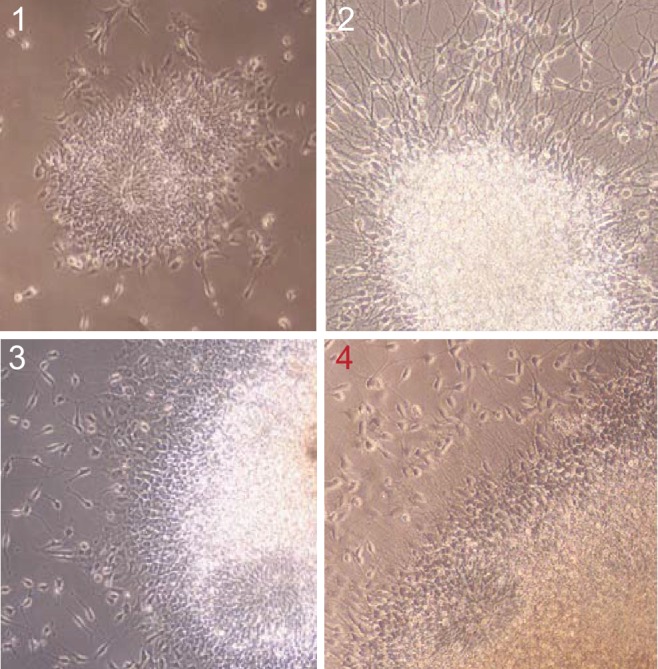
“This step is critical for the purity of NPCs; only colonies (type 4) showing sufficient maturity as described in Figure 1—figure supplement 2 were picked.”
§ Metabolic reprogramming during neuronal differentiation from aerobic glycolysis to neuronal oxidative phosphorylation > Materials and methods > Establishment of NPCs and neuronal differentiation
boosteddirect- Asserted: passes — The authors put it forward as true.
- Checkable: passes — It can be checked against evidence.
- Load-bearing: passes — The paper’s conclusions depend on it.
- Based: passes — The paper gives a reason why it holds.
Probably not a substantial claim.
None of the sources cited for this claim have been checked yet.
In the paper
“blocking neuronal oxidative utilization of lactate affects neuronal survival and even memory formation (Suzuki et al., 2011; Lee et al., 2012).”
§ Metabolic reprogramming during neuronal differentiation from aerobic glycolysis to neuronal oxidative phosphorylation > Discussion > Shut-off of aerobic glycolysis is critical for neuronal differentiation
What the sources say
plaindirect- Asserted: passes — The authors put it forward as true.
- Checkable: passes — It can be checked against evidence.
- Load-bearing: passes — The paper’s conclusions depend on it.
- Based: passes — The paper gives a reason why it holds.
It may state two separate claims as one.
In the paper
“c-MYC activation in the myocardium of adult mice induces mitochondrial biogenesis and glycolysis but reduces PGC-1α level (Ahuja et al., 2010).”
§ Metabolic reprogramming during neuronal differentiation from aerobic glycolysis to neuronal oxidative phosphorylation > Discussion > Metabolic and mitochondrial gene transcription control in proliferating and post-mitotic differentiated cells
What the sources say
- Not checked yetcites Ahuja et al., 2010
plaindirect- Asserted: passes — The authors put it forward as true.
- Checkable: passes — It can be checked against evidence.
- Load-bearing: fails — The paper’s conclusions may not depend on it.
- Based: passes — The paper gives a reason why it holds.
Probably not a substantial claim. The paper’s conclusions may not depend on it. It may state two separate claims as one.
What the paper did — it cites no source for this, so there is none to check. The quote shows it is in the paper.
In the paper
“RNA-seq experiments were performed with two NPC lines established from independent iPSC clones.”
§ Metabolic reprogramming during neuronal differentiation from aerobic glycolysis to neuronal oxidative phosphorylation > Materials and methods > RNA sequencing
plain- Asserted: passes — The authors put it forward as true.
- Checkable: passes — It can be checked against evidence.
- Load-bearing: fails — The paper’s conclusions may not depend on it.
- Based: passes — The paper gives a reason why it holds.
Probably not a substantial claim. The paper’s conclusions may not depend on it.
What the paper did — it cites no source for this, so there is none to check. The quote shows it is in the paper.
In the paper
“only samples with RIN greater than 8.5 were used for library preparation.”
§ Metabolic reprogramming during neuronal differentiation from aerobic glycolysis to neuronal oxidative phosphorylation > Materials and methods > RNA sequencing
plain- Asserted: passes — The authors put it forward as true.
- Checkable: passes — It can be checked against evidence.
- Load-bearing: fails — The paper’s conclusions may not depend on it.
- Based: passes — The paper gives a reason why it holds.
Probably not a substantial claim. The paper’s conclusions may not depend on it.
In the paper
“E2F also upregulates mitochondrial genes, a function conserved from flies to mammals (Ambrus et al., 2013).”
§ Metabolic reprogramming during neuronal differentiation from aerobic glycolysis to neuronal oxidative phosphorylation > Discussion > Metabolic and mitochondrial gene transcription control in proliferating and post-mitotic differentiated cells
What the sources say
- Not checked yetcites Ambrus et al., 2013
plaindirect- Asserted: passes — The authors put it forward as true.
- Checkable: passes — It can be checked against evidence.
- Load-bearing: fails — The paper’s conclusions may not depend on it.
- Based: passes — The paper gives a reason why it holds.
Probably not a substantial claim. The paper’s conclusions may not depend on it. It may state two separate claims as one.
A conclusion the paper draws from its own results — it cites no other source for it, so there is none to check. The quote shows it is in the paper.
In the paper
“indicating that glycolytic pyruvate deficiency is a major cause of death.”
§ Metabolic reprogramming during neuronal differentiation from aerobic glycolysis to neuronal oxidative phosphorylation > Discussion > Shut-off of aerobic glycolysis is critical for neuronal differentiation
hedgeddirect- Asserted: passes — The authors put it forward as true.
- Checkable: passes — It can be checked against evidence.
- Load-bearing: passes — The paper’s conclusions depend on it.
- Based: passes — The paper gives a reason why it holds.
The quote only partly states this claim.
The paper relies on this without support.
Little is known about the molecular basis of neurons' preference for oxidative phosphorylation or neuronal metabolic responses to energy crisis and their implications for disease progression.
“Little is known about the molecular basis of neurons’ preference for oxidative phosphorylation, or neuronal metabolic responses to the energy crisis and their implications for disease progression.”
The paper relies on this without support.
Neurons rely on oxidative phosphorylation to meet energy demands.
“Neurons rely on oxidative phosphorylation to meet energy demands.”
The paper relies on this without support.
Neurons rely on mitochondrial oxidative phosphorylation to meet energy demand.
“Neurons rely on mitochondrial oxidative phosphorylation to meet energy demand.”
The paper relies on this without support.
Aerobic glycolysis diverts pyruvate from mitochondrial oxidative phosphorylation for energy production by converting it into secreted lactate.
“As aerobic glycolysis diverts pyruvate from mitochondrial oxidative phosphorylation for energy production by converting it into secreted lactate”
The paper relies on this without support.
HK1 is still expressed in neurons.
“HK1 is still expressed in neurons”
The paper relies on this without support.
In proliferating NPCs, mitochondria are used for generation of biosynthetic precursors and mitochondria themselves have to be duplicated for daughter cells.
“mitochondria are used for generation of biosynthetic precursors in these proliferating cells, and mitochondria themselves have to be duplicated for daughter cells.”
The paper relies on this without support.
The expression levels of metabolic enzymes alone do not completely reflect their biochemical/physiological activities.
“the expression levels of metabolic enzymes alone do not completely reflect their biochemical/physiological activities”
Claims other papers make about this one
Each is checked against this paper’s own text: does it say what the citing paper says it does?
In the citing paper
“In multiple tissue contexts, adult stem cells have been found to primarily engage in aerobic glycolysis.”
From Regulation and function of the mammalian tricarboxylic acid cycle (2023) · cites this paper as [205]
In the citing paper
“Upon lineage commitment and differentiation, however, cells increase their oxidation of pyruvate in the TCA cycle and display enhanced OXPHOS (203, 204, 205).”
From Regulation and function of the mammalian tricarboxylic acid cycle (2023) · cites this paper as [205]
Self-check
Percentages, sums and reported differences re-computed from the paper’s own numbers.
Each contradiction between two passages listed here was confirmed by an independent check.
Rated minor: it would not touch a result — a value no result rests on, a p-value that stays on the same side of the significance level, or a conflict that is clerical, resolved elsewhere in the paper, or outside its own findings.
In the paper
§ Metabolic reprogramming during neuronal differentiation from aerobic glycolysis to neuronal oxidative phosphorylation > Result > HK2 and LDHA were off during neuronal differentiation
“BJ NPC cells at passage 3 were infected with lenti-shRNAs targeting HK2 or LDHA.”
§ Metabolic reprogramming during neuronal differentiation from aerobic glycolysis to neuronal oxidative phosphorylation > Result > HK2 and LDHA were off during neuronal differentiation
“NPCs at early passage (P2) were seeded in 24-well plates one day before infection.”
Rated minor: it would not touch a result — a value no result rests on, a p-value that stays on the same side of the significance level, or a conflict that is clerical, resolved elsewhere in the paper, or outside its own findings.
In the paper
§ Metabolic reprogramming during neuronal differentiation from aerobic glycolysis to neuronal oxidative phosphorylation > Result > Transcription profiling of neuronal differentiation from human NPCs
“(G, H, I and J) Relative expression levels of the key metabolic genes in glycolysis, tricarboxylic acid cycle (TCA), pyruvate dehydrogenase (PDH) complex and pentose phosphate pathway.”
§ Metabolic reprogramming during neuronal differentiation from aerobic glycolysis to neuronal oxidative phosphorylation > Result > Gene expression of glycolysis and TCA enzymes during neuronal differentiation
“Expression of the genes encoding the subunits of PDC itself, including PDHA1, PDHB, PDHX, DLAT, and DLD, showed no significant changes (Figure 1H).”
Citations
Cites
STAR: ultrafast universal RNA-seq aligner
Dobin, A., Davis, C. A., Schlesinger, F., Drenkow, J., Zaleski, C., Jha, S., Batut, P., Chaisson, M., & Gingeras, T. R. (2013) · Bioinformatics · doi:10.1093/bioinformatics/bts635 · Cited by 51,709 · cited 3×
“RNA-seq reactions were done on an Illumina HiSeq 2500 system (Illumina, San Diego, CA) and the sequenced reads were mapped to an annotated human genome (version GRch37/hg19) using STAR (Dobin et al., 2013).”
BackgroundMethodUnderstanding the Warburg Effect: The Metabolic Requirements of Cell Proliferation
Vander Heiden, M. G., Cantley, L. C., & Thompson, C. B. (2009) · Science · doi:10.1126/science.1160809 · Cited by 16,197 · cited 1×
“Most cancer cells use aerobic glycolysis to generate energy, a phenomenon called the Warburg effect, in which a large fraction of glycolytic pyruvate is converted into lactate (Vander Heiden et al., 2009).”
BackgroundTrapnell, C., Williams, B. A., Pertea, G., Mortazavi, A., Kwan, G., van Baren, M. J., Salzberg, S. L., Wold, B. J., & Pachter, L. (2010) · Nature Biotechnology · doi:10.1038/nbt.1621 · Cited by 15,556
Robinson, J. T., Thorvaldsdóttir, H., Winckler, W., Guttman, M., Lander, E. S., Getz, G., & Mesirov, J. P. (2011) · Nature Biotechnology · doi:10.1038/nbt.1754 · Cited by 15,390 · cited 3×
“…whether changes in alternative mRNA splicing occurred in glycolysis, TCA and mitochondrial respiratory complex genes during neuronal differentiation, the distributions of exonic RNA-seq reads were manually compared between NPCs and neurons using Integrative Genomics Viewer (Robinson et al., 2011).”
MethodInfluentialTrapnell, C., Roberts, A., Goff, L. A., Pertea, G. M., Kim, D., Kelley, D. R., Pimentel, H., Salzberg, S. L., Rinn, J. L., & Pachter, L. S. (2012) · Nature Protocols · doi:10.1038/nprot.2012.016 · Cited by 12,145 · cited 1×
“The sequencing reads were mapped to a human reference genome by STAR and assembled with Cufflinks (Dobin et al., 2013; Trapnell et al., 2012).”
MethodMitochondrial Dysfunction and Oxidative Stress in Neurodegenerative Diseases
Lin, M. T., & Beal, M. F. (2006) · Nature · doi:10.1038/nature05292 · Cited by 6,455
Zhang, Y., Chen, K., Sloan, S. A., Bennett, M. L., Scholze, A. R., O'Keeffe, S., Phatnani, H. P., Guarnieri, P., Caneda, C., Ruderisch, N., et al. (2014) · The Journal of Neuroscience · doi:10.1523/jneurosci.1860-14.2014 · Cited by 4,875 · cited 2×
“This result was consistent with a recent finding that mouse neurons exclusively expressed PKM1, whereas astrocytes only expressed PKM2 (Zhang et al., 2014).”
ResultWu, Z., Puigserver, P., Andersson, U., Zhang, C., Adelmant, G., Mootha, V., Troy, A., Cinti, S., Lowell, B., Scarpulla, R. C., et al. (1999) · Cell · doi:10.1016/s0092-8674(00)80611-x · Cited by 4,139 · cited 2×
“PGC-1a not only stimulates the induction of NRF1, but also binds to and coactivates the transcriptional function of NRF1 in muscle cells (Wu et al., 1999).”
BackgroundChronic systemic pesticide exposure reproduces features of Parkinson's disease
Betarbet, R. S., Sherer, T., MacKenzie, G. M., Garcia‐Osuna, M., Panov, A. V., & Greenamyre, J. T. (2000) · Nature Neuroscience · doi:10.1038/81834 · Cited by 3,770 · cited 1×
“For example, chronic exposure of the brain to the lipophilic pesticide rotenone causes dopaminergic neuron degeneration (Betarbet et al., 2000).”
BackgroundHypoxia-inducible factors in physiology and medicine
Semenza, G. L. (2012) · Cell · doi:10.1016/j.cell.2012.01.021 · Cited by 3,645 · cited 1×
“Moreover, under low oxygen condition, the transcription of glycolytic genes is upregu- lated by hypoxia-inducible factor (HIF), and increased glycolytic ATP produced by enhanced glyco- lytic flux can partially supply cellular energy demands (Iyer et al., 1998; Seagroves et al., 2001; Semenza, 2012).”
Background
Cited by
Sorted by citations
Items 501–600 of 666
Shahannaz, D. C., & Sugiura, T. (2026) · Biomolecules · doi:10.3390/biom16030467 · Cited by 2
“Adult cardiomyocyte mitochondria are enlarged, densely cristae-rich, and distributed throughout the sarcomere, optimizing ATP delivery for contractile function [6,36–40].”
Never in Mitosis Kinase 2 regulation of metabolism is required for neural differentiation
Spice, D. M., Cooper, T. T., Lajoie, G., & Kelly, G. M. (2022) · Cellular Signalling · doi:10.1016/j.cellsig.2022.110484 · Cited by 2
Kopsidas, C. A., Lowe, C. C., McDaniel, D. P., Zhou, X., & Feng, Y. (2024) · iScience · doi:10.1016/j.isci.2024.110199 · Cited by 2
Policastro, P. F., Schneider, C. A., Winkler, C. W., et al. (2024) · Journal of Virology · doi:10.1128/jvi.00300-24 · Cited by 2
“This resembles the metabolic shift observed in neurogenesis with human neural stem cells (71, 72).”
Lei, C., Wang, J., Wang, J., et al. (2024) · Neurochemistry International · doi:10.1016/j.neuint.2024.105901 · Cited by 2
Han, D., He, J., & Huang, Q. (2013) · PubMed · Cited by 2
Kim, J.-C., Hwang, S.-N., & Kim, S.-Y. (2019) · Neuroscience · doi:10.1016/j.neuroscience.2019.11.015 · Cited by 2
Askandar, I. M., Shumaila, S., Rehman, A. U., Ahmad, S. F., Singh, P. K., Kumar, B., & Daman, S. (2020) · bioRxiv (Cold Spring Harbor Laboratory) · doi:10.1101/2020.08.06.239129 · Cited by 2
“Moreover, metabolic changes are crucial in determining cellular fate and differentiation (25, 26).”
BackgroundRetrograde mitochondrial transport is essential for mitochondrial homeostasis in neuronsPreprint
Mandal, A., Pinter, K. L., Mosqueda, N., Beirl, A. J., Lomash, R. M., Won, S., Kindt, K. S., & Drerup, C. M. (2019) · bioRxiv (Cold Spring Harbor Laboratory) · doi:10.1101/683243 · Cited by 2
Iwata, R., & Vanderhaeghen, P. (2020) · bioRxiv (Cold Spring Harbor Laboratory) · doi:10.1101/2020.02.07.938985 · Cited by 2
A Multi-Omics Approach to Visualize Early Neuronal Differentiation in 4DPreprint
SAMARA, A. A., Spildrejorde, M., Sharma, A., Falck, M., Leithaug, M., Modafferi, S., Bjørnstad, P. M., Acharya, G., Gervin, K., Lyle, R., et al. (2022) · bioRxiv (Cold Spring Harbor Laboratory) · doi:10.1101/2022.02.01.478732 · Cited by 2
“…(e.g., KRT18), pluripotency maintenance (POU5F1), suppression of pluripotency (NR6A1) (Wang et al., 2016), metabolic reprogramming (LDHA) (Zheng et al., 2016), or spatiotemporally regulated cortical TFs and cell cycle related genes (LHX2, CDKN1C) (Chou and Tole, 2019; Laukoter et al.,…”
BackgroundNAD Depletion Mediates Cytotoxicity in Human Neurons With Autophagy DeficiencyPreprint
Sun, C., Seranova, E., Cohen, M. A., et al. (2022) · SSRN Electronic Journal · doi:10.2139/ssrn.4052958 · Cited by 2
Sun, Z., Zhu, H., He, X., Lendemeijer, B., Wang, Z., Fan, J., Sun, Y., Zhang, Z., Markx, S., Kushner, S. A., et al. (2025) · bioRxiv (Cold Spring Harbor Laboratory) · doi:10.1101/2025.03.26.645419 · Cited by 3
Rukh, S., Meechan, D. W., Siggins, C., Erwin, Z. D., Baldo, G., Peck, A., Maynard, T. M., & LaMantia, A. (2025) · bioRxiv (Cold Spring Harbor Laboratory) · doi:10.1101/2025.05.12.653556 · Cited by 2
Organelle communication networks rewire to support lipid metabolism during neuronal differentiationPreprint
Zanellati, M. C., Coman, Z., Bhowmik, D., Hsu, C.-H., Basundra, R., Rhoads, S. N., Mfulama, N. R., Ehrmann, B. M., Deshmukh, M., & Cohen, S. (2026) · bioRxiv (Cold Spring Harbor Laboratory) · doi:10.64898/2026.02.10.704675 · Cited by 3
“Previous research has established that organelles undergo significant remodeling during neuronal differentiation [1, 3-6 , 8 At the level of interactions, we reveal a progressive increase in organelle connectivity and higher-order contacts as neurons differentiate.”
Ishikawa, V. N., Gontijo, G. M., Ichikawa, A. I. T., Bubna, P., Conter, F. D. S., de Queiroz, A. C. M., Picchia, R. D., Nunes, B. M. M., & Cardillo, I. C. P. (2023) · International Journal of Nutrology · doi:10.54448/ijn23224 · Cited by 1
“However, increasing evidence suggests that metabolism during quiescence, activation, and differentiation may vary between tissues, integrating signaling cues and metabolic inputs from both the niche and the organism as a whole, primarily by signaling from nutrients and the gut microbiota [15,16] .”
BackgroundPaladino, D. M., Vidoto, J. A. F., Lopes, R. B., Idalgo, F. A., Cicareli, Á. J., & Kassis, E. N. (2024) · MedNEXT Journal of Medical and Health Sciences · doi:10.54448/mdnt24s108 · Cited by 1
Effects of the nerve agent VX on hiPSC-derived motor neurons
Schaefers, C., Schmeißer, W., John, H., Worek, F., Rein, T., Rothmiller, S., & Schmidt, A. (2024) · Archives of Toxicology · doi:10.1007/s00204-024-03708-3 · Cited by 2
“…the IncuCyte ® testing method might be due to the downregulation of glycolysis during NPC differentiation into MN which might cause a lack of NADH (Maffezzini et al. 2020; Zheng et al. 2016) being essential for the reduction of XTT to detectable formazan (Berridge et al. 2005; McGaw et al. 2014).”
MethodMitochondrial DNA copy number and neurocognitive outcomes in children
Tung, P. W., Bloomquist, T. R., Baccarelli, A., Herbstman, J. B., Rauh, V., Perera, F. P., Goldsmith, J., Margolis, A. E., & Kupsco, A. J. (2024) · Pediatric Research · doi:10.1038/s41390-024-03653-y · Cited by 1
“14,15 Another proposed mechanism by which impaired mitochondrial function in fl uences disease is through modulations to the mitochondrial genome.”
Credico, A. D., Gaggi, G., Bibbò, S., et al. (2024) · International Journal of Molecular Sciences · doi:10.3390/ijms252413598 · Cited by 1
Cho, J., Bae, S., Jeon, J., Transfeld, J. L., Lee, C., Nott, A., Gao, F., & Seo, J. (2025) · iScience · doi:10.1016/j.isci.2025.112446 · Cited by 1
“23,24 A recent study using hiPSC showed that increasing energy metabolism by supplementing TCA cycle precursors and essential amino acids facilitated neuronal maturation.”
Singh, K., & Berg, T. (2025) · Methods in molecular biology · doi:10.1007/978-1-0716-4654-0_7 · Cited by 1
Neuronal branching in stem cell models of mitochondrial and neurological diseases
Lickfett, S., Menacho, C., Cambridge, S. B., & Prigione, A. (2025) · Stem Cells · doi:10.1093/stmcls/sxaf050 · Cited by 2
Chen, F., Zhao, Y., Ge, H., et al. (2025) · Journal of the Science of Food and Agriculture · doi:10.1002/jsfa.70128 · Cited by 1
“55 Pyruvate serves as a precursor for a variety of fl avor substances and plays a signi fi cant role in the metabolic pathway.”
Self-citationDiez-Pinel, G., Muratore, A., Ruhrberg, C., & Canu, G. (2026) · Journal of Developmental Biology · doi:10.3390/jdb14010004 · Cited by 1
“Previous studies of pluripotent stem cells and neuronal progenitors showed that their differentiation is associated with metabolic reprogramming, whereby differentiating progenitors switch from glycolysis to oxidative phosphorylation [50–52].”
Lin, N., Chang, H.-H., Hsieh, C.-Y., Chang, H.-L., Ho, W.-L., Liu, Y.-L., Wu, P., Yeh, C., Huang, M., & Wen-Ming, H. (2026) · Molecular and Cellular Pediatrics · doi:10.1186/s40348-026-00218-3 · Cited by 1
“Consistent with this, Thiamet G promoted neurite outgrowth similar to retinoic acid, aligning with studies showing that O-GlcNAcylation can shift metabolism from glycolysis to oxidative phosphorylation (OXPHOS) to support differentiation [44, 45].”
Baggiani, M., Desbats, M. A., Naef, V., Giacich, M., Galatolo, D., Mero, S., Zampieri, S., Cappello, V., Valentino, A., Salviati, L., et al. (2026) · Cell Death and Disease · doi:10.1038/s41419-026-08476-9 · Cited by 2
“Accordingly, in vitro HPDL 3D-differentiation showed that patient-derived cortical organoids exhibited a reduced growth, reminding the most severe micro-cephalic cases reported in infants, even if in other cases Fig.”
Sterben, S. P., Anamala, C. C., Kansakar, S. B. S., Koduri, V., & Liaudanskaya, V. (2026) · Advanced Science · doi:10.1002/advs.202508815 · Cited by 1
“This resembles patterns observed in human stem cell-derived neurons, where a developmental switch from glycolysis to oxidative metabolism is essential for neuronal differentiation, dendritic growth, and synaptic activity [ 18, 37 , 38 ].”
Implantable microelectrode biosensors for monitoring neurometabolic markers
Fernandes, E., Ledo, A., & Barbosa, R. M. (2026) · Bioelectrochemistry · doi:10.1016/j.bioelechem.2026.109286 · Cited by 3
Dutta, S., Surma, M. L., Chen, J., Anbarasu, K., Meng, J., Wang, N., & Das, A. (2026) · Communications Medicine · doi:10.1038/s43856-026-01528-3 · Cited by 3
NMR metabolomics assessment of neural commitment of human dental pulp-derived stem cells
Chirico, M., Pisanu, M. E., Mari, E., Manganelli, V., Pulcini, F., Lancia, L., Benedetto, R. D., Monache, S. D., Iorio, E., & Mattei, V. (2026) · Frontiers in Molecular Biosciences · doi:10.3389/fmolb.2026.1735166 · Cited by 1
“…is orchestrated by key regulators such as AMP-activated protein kinase (AMPK), the mammalian target of rapamycin (mTOR), and PGC-1α, which collectively promote mitochondrial biogenesis and function (Agostini et al., 2016; Zheng et al., 2016; Yan et al., 2021; Hu et al., 2016; Wanet et al. 2015).”
Shen, H. M., Huang, Y., Cook, K. M., & Hau, E. K. C. (2026) · Cancers · doi:10.3390/cancers18142186 · Cited by 1
Mil, J., Soto, J. A., Krall, A. S., Peloggia, J., Frigui, S., Fong, O. S., Sathe, L., Matulionis, N., Day, F., Stiles, L., et al. (2026) · Cell · doi:10.1016/j.cell.2026.07.023 · Cited by 11
Cao, Y. (2026) · Frontiers in Cell and Developmental Biology · doi:10.3389/fcell.2026.1843646 · Cited by 1
“…al., 2021; Domazet-Loso et al., 2007) Dependent on activation of ancestral regulatory networks (Bussey et al., 2017; Domazet-Loso and Tautz, 2010; (Zheng et al., 2016; Intlekofer and Finley, 2019) Unicellular origin (Cao, 2022; Xu et al., 2021) Resulting from loss of original cell identity and…”
Kang, M., Cho, J., Kim, T., et al. (2020) · Oxidative Medicine and Cellular Longevity · doi:10.1155/2020/5963037 · Cited by 1
“Constitutive expression of the core glycolytic genes, HK2 and LDHA, was found to induce neuronal cell death, suggesting that blockade of glycolytic fl ux is critical for proper neuronal di ff erentiation and survival [9].”
Zhu, L., Lai, C., Zhou, C.-W., Chen, H.-Y., Liu, Z., Guo, Z., Man, H., Du, H., Lu, Y., Hu, F., et al. (2024) · Cell Discovery · doi:10.1038/s41421-024-00706-8 · Cited by 1
“3d, e), indicating that transient Pkm2 mediation only changed social competition, but not hierarchy.”
BackgroundWalter‐Manucharyan, M., Martin, M., Pfützner, J., Markert, F., Rödel, G., Deußen, A., Hermann, A., & Storch, A. (2024) · Development Growth & Differentiation · doi:10.1111/dgd.12946 · Cited by 1
“…process of stem cells into their differentiated derivatives — as observed in our fetal NSC model — is associated with a switch from anaerobic energy production to oxidative phosphorylation (Agathocleous et al., 2012; Homem et al., 2014; Wanet et al., 2015; Xavier et al., 2016; Zheng et al., 2016).”
Lichtarge, J., Cappuccio, G., Pati, S., Dei-Ampeh, A. K., Sing, S., Ma, L., Liu, Z., & Maletić‐Savatić, M. (2025) · Frontiers in Neuroscience · doi:10.3389/fnins.2024.1520982 · Cited by 2
“Our data support a model in which glycolysis sustains stemness, while the transition to OXPHOS is closely linked to neuronal differentiation (Agathocleous et al., 2012; Zheng et al., 2016; Bifari et al., 2020).”
Self-citationOrganoids as 3D Models for Studying Exogenous Mitochondrial Transplantation
Eş, İ., & Ülger, Ö. (2025) · Advances in experimental medicine and biology · doi:10.1007/5584_2025_857 · Cited by 1
Meleshina, A. V., Rodimova, S. A., Dashinimaev, E. B., Artyuhov, A., Mescheryakova, N., Kashina, A. V., Kryukov, E., Elagin, V. V., Reunov, D. G., Vorotelyak, E. A., et al. (2020) · Neural Imaging and Sensing · doi:10.1117/12.2544797 · Cited by 1
Bioenergetic Profiling of Human Pluripotent Stem Cells
Inak, G., Henke, M., & Prigione, A. (2021) · Methods in molecular biology · doi:10.1007/978-1-0716-1270-5_24 · Cited by 1
Energetic substrate availability regulates synchronous activity in an excitatory neural networkPreprint
Tourigny, D. S., Karim, M. K. A., Echeveste, R., et al. (2018) · bioRxiv (Cold Spring Harbor Laboratory) · doi:10.1101/363671 · Cited by 1
Dutta, A., Karanth, S. S., Bhattacharya, M., Liput, M., Augustyniak, J., Cheung, M., Stachowiak, E. K., & Stachowiak, M. K. (2020) · bioRxiv (Cold Spring Harbor Laboratory) · doi:10.1101/2020.06.09.143313 · Cited by 1
Cassiano, L. M. G., Oliveira, M. S., Pioline, J., Salim, A. C. M., & Coimbra, R. S. (2022) · Research Square · doi:10.21203/rs.3.rs-1363569/v1 · Cited by 1
Griffiths, K. K., Wang, A., Wang, L., et al. (2018) · SSRN Electronic Journal · doi:10.2139/ssrn.3287782 · Cited by 1
Gilbert‐Jaramillo, J., Purnama, U., Molnár, Z., & James, W. (2022) · bioRxiv (Cold Spring Harbor Laboratory) · doi:10.1101/2022.08.24.505080 · Cited by 1
Lawrence, R. E., Shoemaker, S. R., Deal, A., et al. (2022) · bioRxiv (Cold Spring Harbor Laboratory) · doi:10.1101/2022.12.22.521453 · Cited by 1
Feng, M. S., Kettelberger, M. R., & Bestman, J. E. (2023) · bioRxiv (Cold Spring Harbor Laboratory) · doi:10.1101/2023.07.31.547741 · Cited by 1
“…that regulate mitochondrial biogenesis and oxidative metabolism (Scarpulla et al., 2012) and it is highly expressed during neuron differentiation (Zheng et al., 2016) where it regulates mitochondrial genes and mitochondrial respiration levels (Cowell et al., 2009) (Rosenkranz et al., 2021;…”
BackgroundCaveolin-1 Autonomously Regulates Hippocampal Neurogenesis Via Mitochondrial DynamicsPreprint
Stephen, T. K. L., Cofresi, L. A., Quiroz, E., Owusu-Ansah, K., Ibrahim, Y., Qualls, E., Marshall, J., Li, W., Shetti, A., Bonds, J. A., et al. (2023) · SSRN Electronic Journal · doi:10.2139/ssrn.4529645 · Cited by 1
Caveolin-1 Regulates Neurogenesis and Learning and Memory by Modulation of Mitochondrial DynamicsPreprint
Stephen, T. K. L., Patel, D., Cofresi, L. A., Quiroz, E., Owusu-Ansah, K., Ibrahim, Y., Qualls, E., Marshall, J., Li, W., Kumar, P., et al. (2023) · bioRxiv (Cold Spring Harbor Laboratory) · doi:10.1101/2023.09.23.558792 · Cited by 1
Progressive Myoclonus Epilepsy
Tegelberg, S., Joensuu, T. H., & Lehesjoki, A. (2024) · doi:10.1093/med/9780197549469.003.0051 · Cited by 1
Yildiz, U., Claringbould, A., Marttinen, M., Campos-Fornés, V., Lamprousi, M., Saraswat, M., Saver, M., Bunina, D., Dorrity, M. W., Zaugg, J. B., et al. (2025) · bioRxiv (Cold Spring Harbor Laboratory) · doi:10.1101/2025.06.13.659629 · Cited by 1
Turkalj, E. M., Kuljanishvili, M., Kang, G., Liu, I., Ghent, C. M., Soriano, C. W., Keyhanvar, N., Brody, D., Oldham, M., & Vissers, C. B. (2025) · bioRxiv (Cold Spring Harbor Laboratory) · doi:10.1101/2025.07.13.664555 · Cited by 1
“Human neural progenitors have high metabolic demands during early development ( 33 ) and may be particularly sensitive to perturbations in mitochondrial function.”
Hsu, C.-H., Kinrade, A. J., Zanellati, M. C., & Cohen, S. (2026) · bioRxiv (Cold Spring Harbor Laboratory) · doi:10.64898/2026.02.13.705749 · Cited by 2
Tauroursodeoxycholic Acid Drives Mitochondrial Bioenergetics Toward Neural Stem Cell Proliferation
Fernandes, M. S. B. (2017) · Portuguese National Funding Agency for Science, Research and Technology (RCAAP Project by FCT)
Developing a neural implant to enable controlled alterations to brain architecture
Weir, N. (2019) · Nottingham Trent University's Institutional Repository (Nottingham Trent Repository)
Rowe, M. R. (2020) · Open Access Victoria University of Wellington | Te Herenga Waka (Figshare) · doi:10.26686/wgtn.17145686.v1 · Cited by 2
Tissue repair and stress responses of aged skin epidermis
Wong, W. (2020) · Digital Repository Service (Northeastern University) · doi:10.17760/d20383670
Minh, G. L., & Reginato, M. J. (2021) · Elsevier eBooks · doi:10.1016/b978-0-12-820472-6.00038-4
Functions and dynamics of axonal mitochondria in development
Gallo, G. (2021) · Elsevier eBooks · doi:10.1016/b978-0-12-817986-4.00006-7
Mostafavi, S., Balafkan, N., Pettersen, I. K. N., Nido, G. S., Siller, R., Tzoulis, C., Sullivan, G. J., & Bindoff, L. A. (2021) · bioRxiv (Cold Spring Harbor Laboratory) · doi:10.1101/2021.07.07.451436
“A reduction of both mtDNA and mitochondria mass was previously found in the very early stage of ectoderm differentiation, but both started to increase from NPC onward (Birket et al., 2011; Lees et al., 2018; Zheng et al., 2016).”
BackgroundMethodResultInfluentialCiarpella, F., Zamfir, R. G., Campanelli, A., Ren, E., Pedrotti, G., Bottani, E., Caron, D., Chio, M. D., Dolci, S., Ahtiainen, A., et al. (2021) · SSRN Electronic Journal · doi:10.2139/ssrn.3867731
Autophagy promotes cell survival by maintaining NAD(H) levelsPreprint
Sedlackova, L., Kataura, T., Seranova, E., Sun, C., Otten, E. G., Cohen, M. A., Chipara, M., Palhegyi, A. M., Shapira, D., Scialò, F., et al. (2021) · Research Square · doi:10.21203/rs.3.rs-659023/v1
Inferring Cell Cycle Phases From a Partially Temporal Network of Protein InteractionsPreprint
Lucas, M., Morris, A., Townsend-Teague, A., et al. (2021) · SSRN Electronic Journal · doi:10.2139/ssrn.3900712
Characterisation of the ghrelinergic system in human models of neurodegenerative diseases
Carisi, M. C. (2021) · Cronfa (Swansea University) · doi:10.23889/suthesis.58915
The Oncogenic Role of γ-Aminobutyrate Aminotransferase in Human Tumor: A Pan-Cancer AnalysisPreprint
Wang, X., jie, Y., Li, Z., et al. (2022) · Research Square · doi:10.21203/rs.3.rs-1177474/v1
Appiah, B., Fullio, C. L., Haffner, C., Zeis, P., Treppner, M., Bovio, P. P., Cheffer, A., Bertani, I., Binder, H., Grün, D., et al. (2022) · bioRxiv (Cold Spring Harbor Laboratory) · doi:10.1101/2022.04.08.487591
“, 2003) and specific metabolic signatures (Lange et al., 2016; Zheng et al., 2016; Journiac et al., 2020) as potential molecular regulators of the AP division mode.”
BackgroundInfluentialLi, Z., Lui, K. N.-C., Lau, S.-T., et al. (2022) · Research Square · doi:10.21203/rs.3.rs-1433241/v1
Rocha, M. S., de Aquino, L. L., de Oliveira, C. P., Salviano, J. L., Patrício, L. R., dos Santos, T. R., Lopes, V. B., Dias, W. C., Rodrigues, Á. T. D. S., & Filho, I. J. Z. (2022) · International Journal of Nutrology · doi:10.54448/ijn22s101
A Multi-Omics Approach to Visualize Early Neuronal Differentiation in 4DPreprint
SAMARA, A. A., Spildrejorde, M., Sharma, A., et al. (2022) · SSRN Electronic Journal · doi:10.2139/ssrn.4048383
Das, H., Prateeksha, P., Naidu, P., et al. (2022) · Research Square · doi:10.21203/rs.3.rs-2129477/v1
Leite, D. G. (2022) · International Journal of Nutrology · doi:10.54448/ijn22309
“In this sense, it is suspected that the quiescent state of stem cells is characterized by an inherently glycolytic metabolism, followed by a transition to favor mitochondrial oxidative phosphorylation during differentiation [12-15].”
BackgroundSports nutrology and gut microbiota
Diniz, L. V. L. (2023) · International Journal of Nutrology · doi:10.54448/ijn23109 · Cited by 1
de Mello, Á. A., & Kassis, E. N. (2023) · MedNEXT Journal of Medical and Health Sciences · doi:10.54448/mdnt23s217
“characterized by glycolytic metabolism, followed by a transition to favor mitochondrial oxidative phosphorylation during differentiation [10-13].”
BackgroundBowles, K. R., Pugh, D. A., Pedicone, C., et al. (2023) · SSRN Electronic Journal · doi:10.2139/ssrn.4499064
Junqueira, R. A. C., & Pinto, A. C. (2023) · International Journal of Nutrology · doi:10.54448/ijn23233
“Metabolic homeostasis encompasses the interactions between diet, GM, and cellular enzymatic processes that generate the chemical pathways for perfect physiological and immunological functioning [20-24].”
BackgroundChanges in the Rat Hippocampal Neurogenic Niche under Hypoxic Exposure
Fedorova, E. N., Воронков, Д. Н., Egorova, A. V., Baranich, T. I., Glinkina, V. V., Germanova, E. L., Lukyanova, L. D., & Sukhorukov, V. S. (2023) · Journal of Evolutionary Biochemistry and Physiology · doi:10.1134/s0022093023040075
“defines hypoxia as an important regulatory factor [7] the study of which can be instrumental, e.”
BackgroundInfluentialPal, A., Großmann, D., Glaß, H., Zimyanin, V. L., Günther, R., Catinozzi, M., Boeckers, T. M., Sterneckert, J. L., Storkebaum, E., Petri, S., et al. (2023) · bioRxiv (Cold Spring Harbor Laboratory) · doi:10.1101/2023.09.20.558653
Ignorance is bliss: Inhibition of proteomic stress sensing improves direct neuronal conversion
Traxler, L., Borgogno, O., & Mertens, J. (2024) · Neuron · doi:10.1016/j.neuron.2024.03.004
Self-citationCHANGES IN THE NEUROGENIC NICHE OF THE RAT HIPPOCAMPUS UNDER HYPOXIC EXPOSURE
Fedorova, E. N., Воронков, Д. Н., Egorova, A. V., Baranich, T. I., Glinkina, V. V., Germanova, E. L., Lukyanova, L. D., & Sukhorukov, V. S. (2023) · Журнал эволюционной биохимии и физиологии · doi:10.31857/s0044452923040022
Targeting Metabotropic Glutamate Receptor 7 Promotes NeurogenesisPreprint
Zhao, J., Wang, Y., Fang, J., et al. (2024) · Research Square · doi:10.21203/rs.3.rs-4391337/v1
Zhao, J., Wang, Y., Fang, J., et al. (2024) · Research Square · doi:10.21203/rs.3.rs-4462305/v1
Воронков, Д. Н., Egorova, A. V., Fedorova, E. N., Stavrovskaya, A. V., Lebedeva, O. S., Olshanskiy, A. S., Podoprigora, V. V., & Sukhorukov, V. S. (2024) · Journal of Evolutionary Biochemistry and Physiology · doi:10.1134/s0022093024030062 · Cited by 1
“At later stages of neuronal differentiation, mitofusin expres(cid:2) sion in human iPSC-derived NPCs rises as neurons mature, while its knockout leads to a delay in the formation of phenotypically mature neurons [9, 19].”
Age-related energetic reprogramming in glial cells: possible correlations with Parkinson’s disease
Chu, B., Xiang, H., Wang, H., Lin, Y.-T., Li, R., Hu, J. R., & Qian, H. (2024) · Ageing and Neurodegenerative Diseases · doi:10.20517/and.2024.11
A cleaved cytosolic FOXG1 promotes excitatory neurogenesis by enhancing mitochondrial translationPreprint
Bruce, H., Adamson, K., Goncalves, G., Halpern, M. E., Monfries, C. A. L., Suleyman, O., Almagro, L. O., Hamid, F., Long, K. R., & Houart, C. (2024) · bioRxiv (Cold Spring Harbor Laboratory) · doi:10.1101/2024.08.13.607559 · Cited by 2
Single-Molecule Barcoding Technology for Single-Cell GenomicsPreprint
García-Bassets, I., Mo, G., Xia, Y., Wu, T.-C., Mekuria, I., Mikhaylova, V., Rzepka, M., Kawamura, T., Chang, P. L., Paasch, A., et al. (2024) · bioRxiv (Cold Spring Harbor Laboratory) · doi:10.1101/2024.08.13.607508
“…opposite direction of the metabolic change that we would be observing, i.e., high expression of glycolytic genes and low expression of mitochondrial genes) is essential for neuronal differentiation, and that signs of cell stress would represent a homeostatic state in the early human brain 54,64 .”
BackgroundKerna, N. A., Carsrud, N. D. V., Roberson, R., Ngwu, D. C., Holets, H. M., Flores, J. V., Pruitt, K. D., Nwokorie, U., McKee, D., Chawla, S., et al. (2024) · European journal of ecology, biology and agriculture. · doi:10.59324/ejeba.2024.1(3).13
Zahiri, J., Mirzaie, M., Duan, K., Xiao, Y., Aamodt, C., Yang, X., Nazari, S., Andreason, C., Lopez, L., Barnes, C. C., et al. (2024) · medRxiv · doi:10.1101/2024.09.17.24313857 · Cited by 2
The spectrum of human Hsp60 genetic variants and associated chaperonopathies
Vitale, A. M., Cappello, F., de Macario, E. C., & Macario, A. J. L. (2024) · Elsevier eBooks · doi:10.1016/b978-0-443-23996-0.00003-1
Mitochondrial dynamics and metabolic remodeling in xenograft of IPSC-derived human neural precursors
Воронков, Д. Н., Egorova, A. V., Fedorova, E. N., Stavrovskaya, A. V., Lebedeva, O. S., Olshanskiy, A. S., Podoprigora, V. V., & Sukhorukov, V. S. (2024) · Журнал эволюционной биохимии и физиологии · doi:10.31857/s0044452924030107
WWOX deficiency impairs neurogenesis and neuronal function in human organoidsPreprint
Steinberg, D. J., Zonca, A., Abdellatif, D., Rosh, I., Kustanovich, I. M., Hidmi, O., Maroun, K., Stern, S., Dávila-Velderrain, J., & Aqeilan, R. I. (2024) · bioRxiv (Cold Spring Harbor Laboratory) · doi:10.1101/2024.12.22.630016
Tang, Z., Lu, H., Yang, X., et al. (2025) · Biochemistry and Biophysics Reports · doi:10.1016/j.bbrep.2025.101917
“For instance, astrocytes primarily rely on anaerobic glycolysis to generate ATP, while neurons utilize oxidative phosphorylation to meet their higher metabolic demands [25 – 27].”
Adaptive Clonal Expansion Shapes Brain DevelopmentPreprint
Muzio, G. D., Benedetto, S., Wang, L.-C., Weber, L., van der Hoeven, F., Armstrong, B., Lu, H.-J., Berlanda, J., Körber, V., Claudino, N., et al. (2025) · bioRxiv (Cold Spring Harbor Laboratory) · doi:10.1101/2025.03.04.641452 · Cited by 1
“As NSPCs shift from aerobic to oxidative metabolism during cell fate transitions 36 , low oxidative phosphorylation suggested a delay in the cell fate transition process.”
Koo, K., Choi, J., Nam, Y.-K., Kim, H. J., Kim, C., Jeong, S.-H., Jang, H., Lim, K., Lim, B.-C., Kim, T.-H., et al. (2025) · bioRxiv (Cold Spring Harbor Laboratory) · doi:10.1101/2025.04.16.647364
HPDL is critical in human cortical development via regulation of mitochondrial functional propertiesPreprint
Baggiani, M., Desbats, M. A., Naef, V., Giacich, M., Galatolo, D., Mero, S., Zampieri, S., Cappello, V., Valentino, A., Salviati, L., et al. (2025) · bioRxiv (Cold Spring Harbor Laboratory) · doi:10.1101/2025.04.28.651017
“37 Conversely, SPG83-derived neurons displayed reduced staining ( Fig.”
McDonald, D. W., Chugh, N., Sava, R., & Duennwald, M. L. (2025) · Research Square · doi:10.21203/rs.3.rs-6448360/v1
Sánchez-Huerta, K., García-Juárez, A. K., Colmenero-Rodríguez, L. D., García-Martínez, Y., & Pacheco-Rosado, J. (2025) · Cells · doi:10.3390/cells14141112
“The change from proliferative activity to neuronal differentiation is associated with a switch from glycolytic to oxidative phosphorylation for energy needs [25,68,69].”
Metadata
- Authors
- Zheng, X., Boyer, L., Jin, M., Mertens, J., Kim, Y., Ma, L., Ma, L., Hamm, M., Gage, F. H., & Hunter, T.
- Affiliations
- Salk Institute for Biological Studies (US)
- Laboratory of Genetics, Salk Institute, La Jolla, United States
- Corresponding author
- Gage, Fred H
- Hunter, Tony
- Venue
- eLife
- Publisher
- eLife Sciences Publications, Ltd
- Published
- 2016-06-10
- Volume
- 5
- ISSN
- 2050-084X (ISSN-L)
- PMC
- PMC4963198
- OpenAlex
- W2416068580
- Semantic Scholar
- fbed50febe18cd07bb8e0c7a00e748286b5070dc
- Cited by
- 671
- References
- 77
- Citations by year
- 2026: 82 · 2025: 76 · 2024: 84 · 2023: 81 · 2022: 74 · 2021: 85 · 2020: 65 · 2019: 49 · 2018: 39 · 2017: 33 · 2016: 1
- FWCI
- 20.80
- Type
- journal article
- Language
- en
- Open access
- gold
- doi.org
- Licence
- Locations
- eLife (publishedVersion, cc-by)
- Europe PMC (PubMed Central) (publishedVersion, cc-by)
- PubMed Central (publishedVersion, cc-by)
- PubMed (publishedVersion)
- DOAJ (DOAJ: Directory of Open Access Journals) (submittedVersion, cc-by-sa)
- Funders
- California Institute for Regenerative Medicine (TR2-01778)
- Salk Pioneer postdoctoral fellowship
- The G. Harold and Leila Y. Mathers Foundation
- JPB Foundation
- Leona M. and Harry B. Helmsley Charitable Trust (#2012-PG-MED002)
- National Institutes of Health (CA14195, CA80100, CA82683)
- Topics
- Life Sciences › Neuroscience › Developmental Neuroscience › Neurogenesis and neuroplasticity mechanisms
- Life Sciences › Biochemistry, Genetics and Molecular Biology › Cancer Research › Cancer, Hypoxia, and Metabolism
- Life Sciences › Biochemistry, Genetics and Molecular Biology › Molecular Biology › Metabolism, Diabetes, and Cancer
- Keywords
- metabolic reprogramming, neuronal differentiation, aerobic glycolysis, oxidative phosphorylation, hexokinase 2, LDHA, c-Myc, MYCN, PGC-1α, estrogen-related receptor gamma, mitochondrial biogenesis, neural progenitor cells, neuronal cell death, mitochondrial mass
- MeSH terms
- Aerobiosis, Cell Differentiation, Cells, Cultured, Glycolysis, Humans, Metabolism, Oxidative Phosphorylation, Gene Expression Regulation, Developmental, Neural Stem Cells
About these checks
Registry, retraction, Cites and statistics results are computed, not judged, with one exception: a printed reference that no index lists is read once by a model before it counts as a citation error. Claims are extracted by a model and kept only when their quote appears verbatim in the text; each cited source is then checked, with a model’s help, for whether it says what the claim relies on. Those verdicts can be wrong — read the claim’s quote and the cited source before relying on one.
A language model drew the claims from the paper on 2026-10-09, under version 3 of the claim definition (model deepseek-v4.1-flash, prompt extract-v3).
A second model labelled each claim on 2026-10-09 (model jev-1.13-20260917, definition revision gold-guideline-v0.2).
Cited sources are checked with a language model’s help (gpt-6-sol).
Statistics and arithmetic are recomputed, not judged.
Confidence bands are shown only for fields calibrated on our annotated test set. None is calibrated yet, so no band is shown.
What counts as a claim ›How we measure confidence ›How we check this ›
Are you an author, or do you see a problem with this page? Request a review
