

The DOI matches its Crossref record; 87 of the 88 references it cites were found in a registry or an index.
Trisomy 21 consistently activates the interferon response
Open accessAbstract
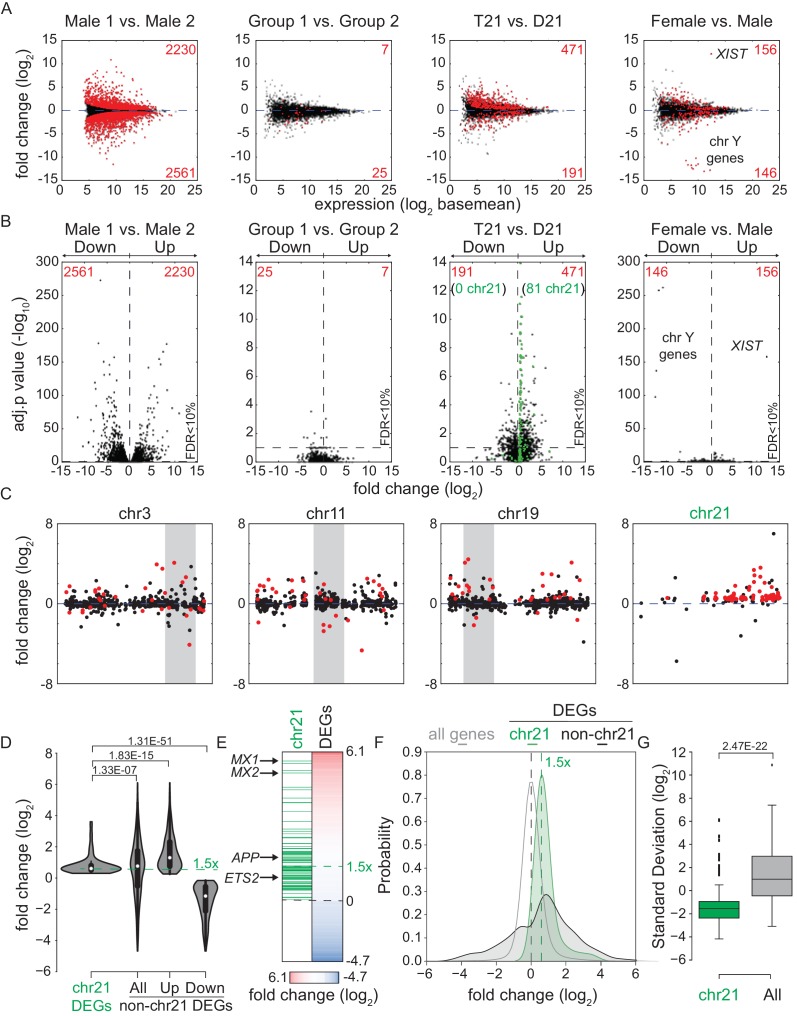
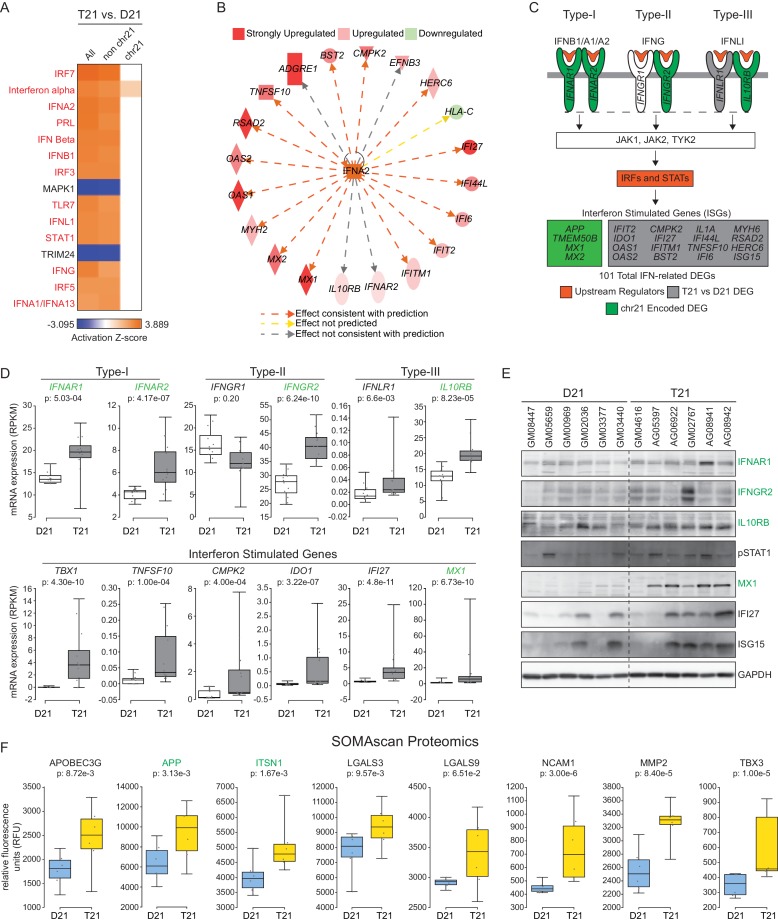
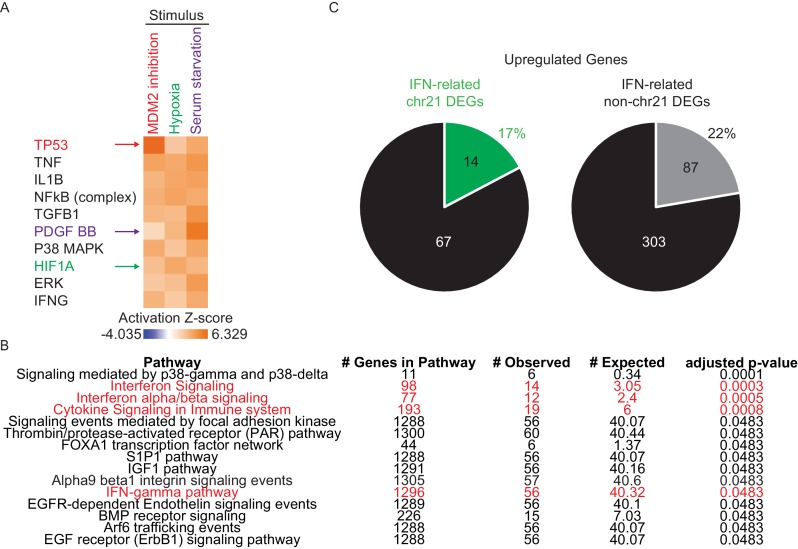
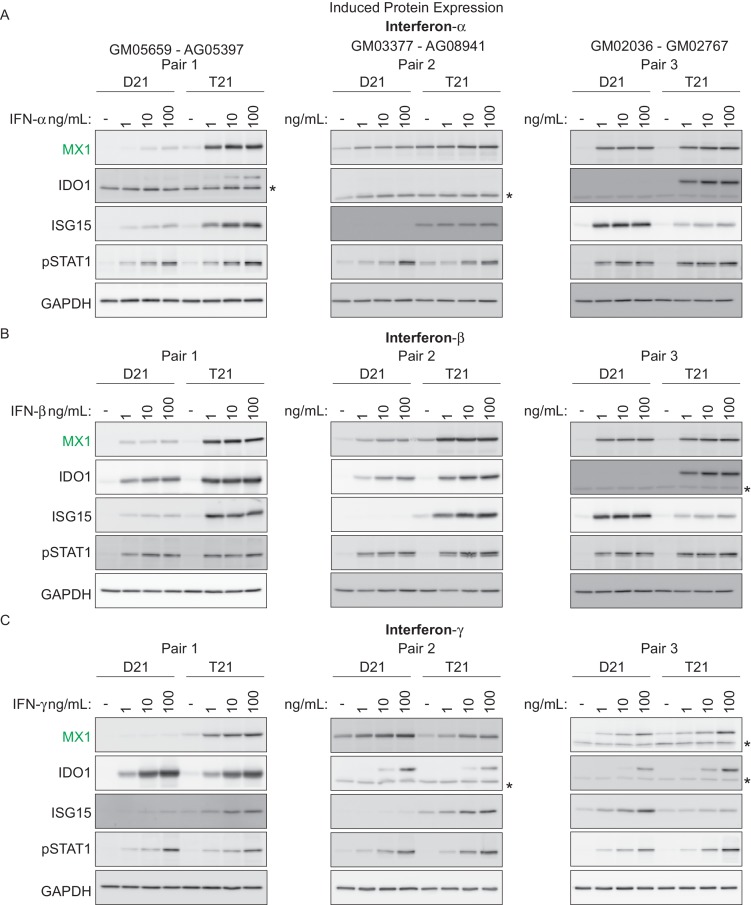
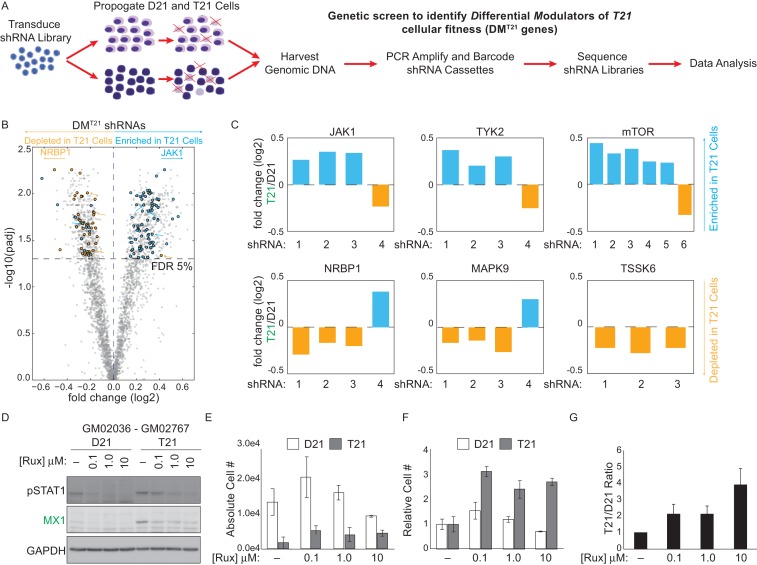
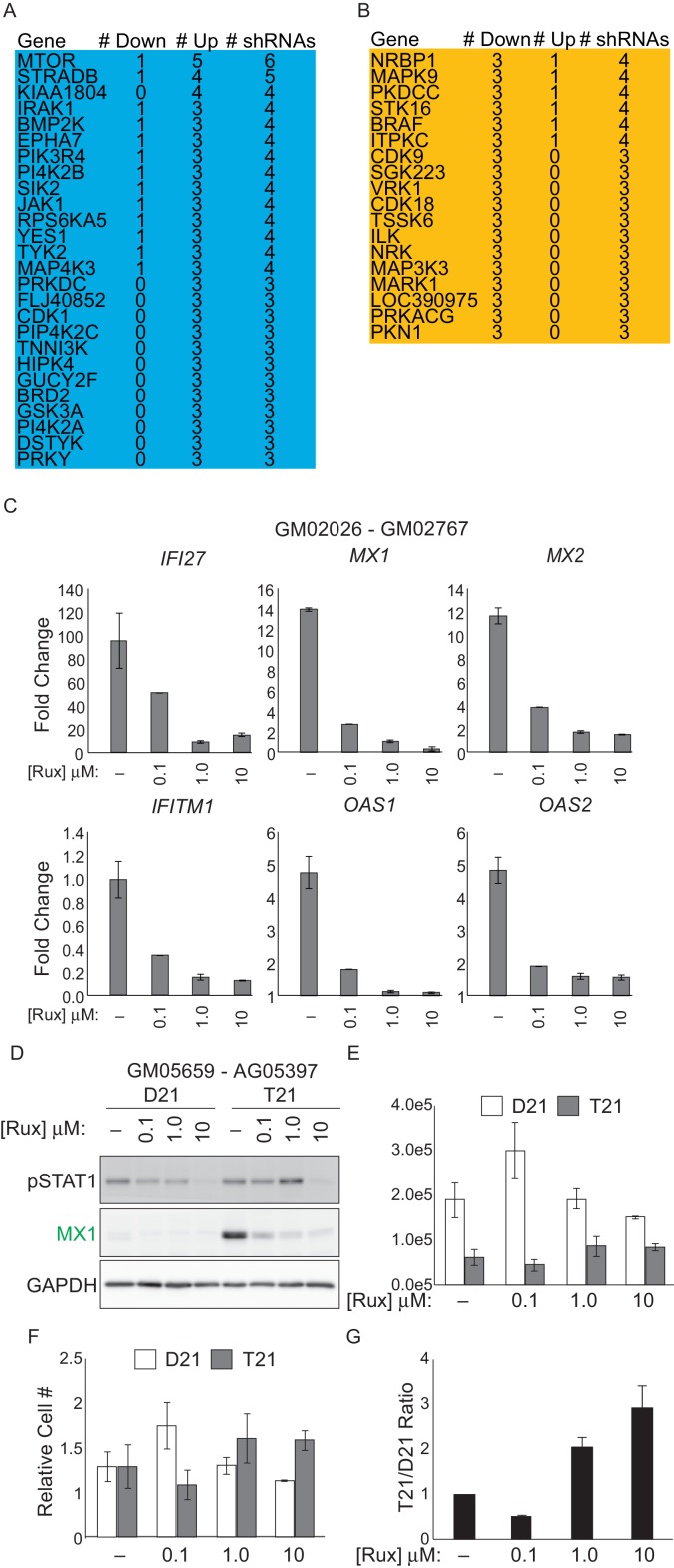
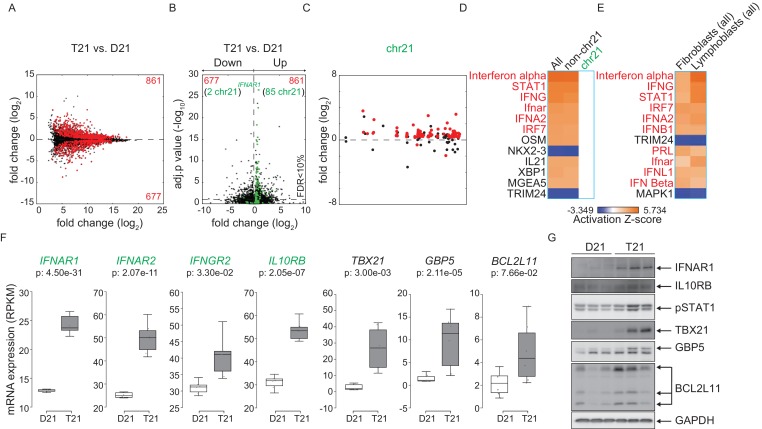
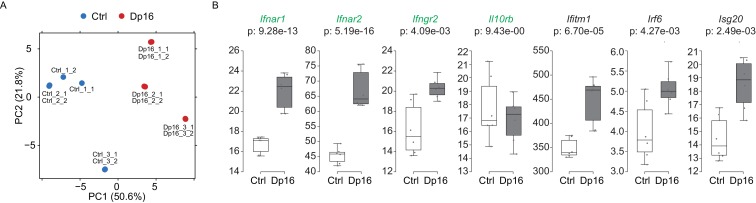
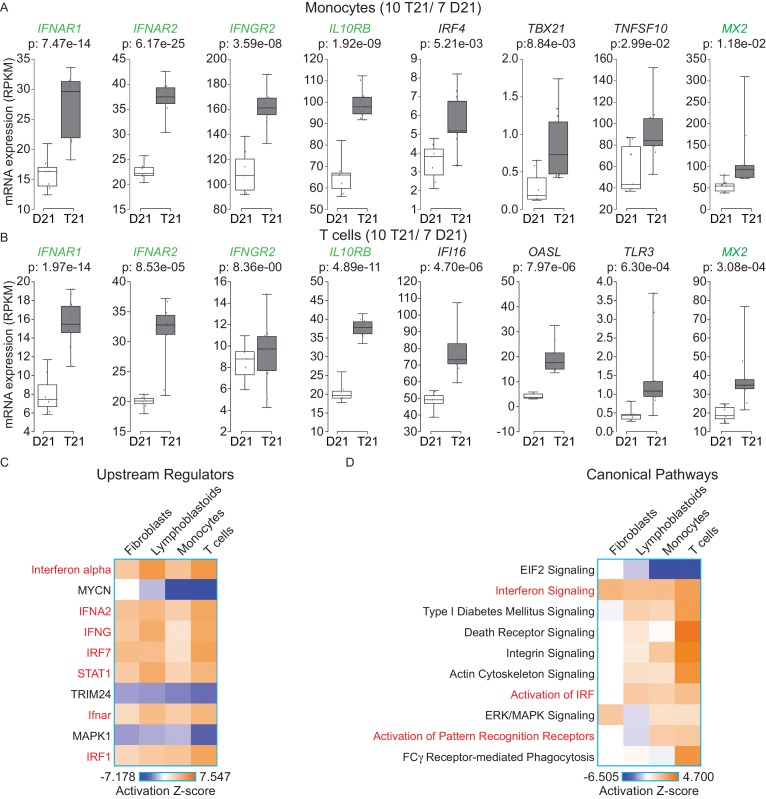
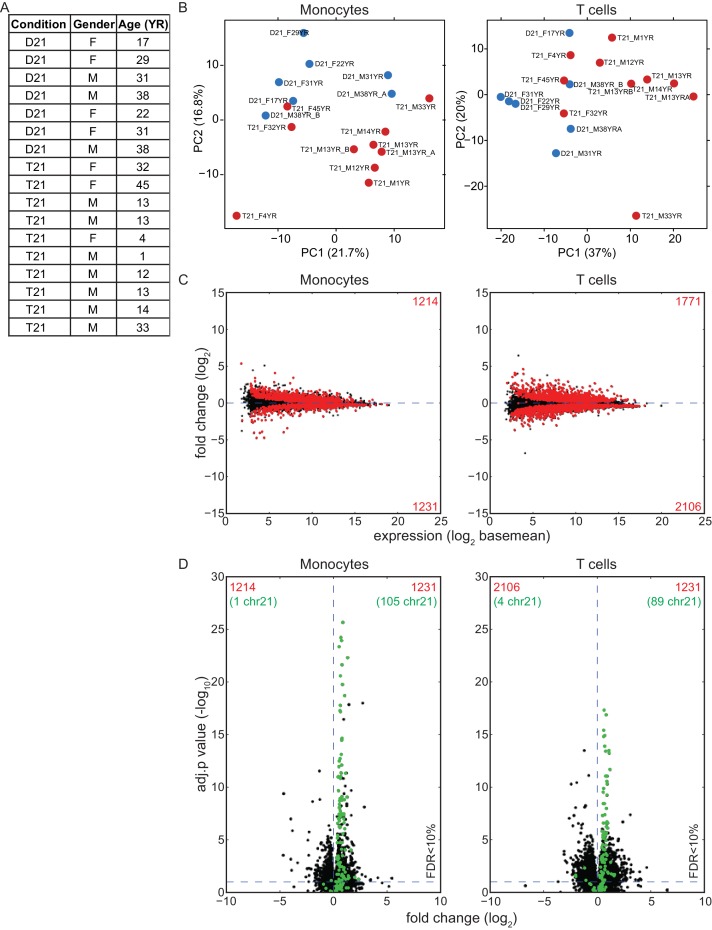
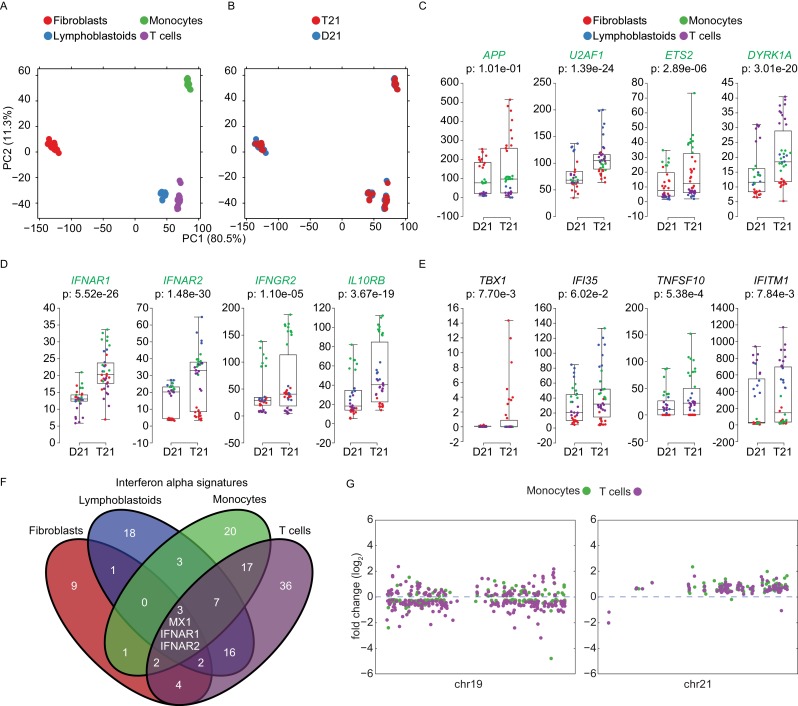
Although it is clear that trisomy 21 causes Down syndrome, the molecular events acting downstream of the trisomy remain ill defined. Using complementary genomics analyses, we identified the interferon pathway as the major signaling cascade consistently activated by trisomy 21 in human cells. Transcriptome analysis revealed that trisomy 21 activates the interferon transcriptional response in fibroblast and lymphoblastoid cell lines, as well as circulating monocytes and T cells. Trisomy 21 cells show increased induction of interferon-stimulated genes and decreased expression of ribosomal proteins and translation factors. An shRNA screen determined that the interferon-activated kinases JAK1 and TYK2 suppress proliferation of trisomy 21 fibroblasts, and this defect is rescued by pharmacological JAK inhibition. Therefore, we propose that interferon activation, likely via increased gene dosage of the four interferon receptors encoded on chromosome 21, contributes to many of the clinical impacts of trisomy 21, and that interferon antagonists could have therapeutic benefits.
Overview
The claims and statistics of this paper haven’t been checked yet.
Run the check — free, no account needed. It reads the open-access text and checks the sources it cites.
Integrity signals
Registry
Cites
Statistics
Figures
Verification
Claims the paper makes
The claims and statistics of this paper haven’t been checked yet.
Run the check — free, no account needed. It reads the open-access text and checks the sources it cites.
Claims other papers make about this one
Each is checked against this paper’s own text: does it say what the citing paper says it does?
The source backs part of the claim, not all of it — or backs it for a different population, condition or comparison.
In the citing paper
“Notably, both individuals with DS and mouse models of DS experience constitutive hyperactivation of interferon (IFN) signaling with signs of chronic inflammation and immune dysregulation,30,31,32,33,34,35,36,37,38,39,40 that could exacerbate the neuroinflammatory response.”
From Interferon signaling modulates Down syndrome-associated Alzheimer’s disease pathology in a mouse model (2025) · cites this paper as [36]
Experimental — accuracy not yet measuredThe cited source says what the claim attributes to it.
In the citing paper
“we reported the results of transcriptome analyses of four different cell types obtained from people with and without T21, which demonstrated that T21 causes widespread alterations in gene expression across the genome”
From Trisomy 21 causes changes in the circulating proteome indicative of chronic autoinflammation (2017) · cites this paper as [17]
The cited source says what the claim attributes to it.
In the citing paper
“including, most prominently, consistent activation of the interferon transcriptional response17”
From Trisomy 21 causes changes in the circulating proteome indicative of chronic autoinflammation (2017) · cites this paper as [17]
The cited source says what the claim attributes to it.
In the citing paper
“However, unbiased analyses using omics technology have recently revealed that T21 impacts gene expression across the genome39,74,143,156–159.”
From Consequences of trisomy 21 for brain development in Down syndrome (2024) · cites this paper as [159]
The cited source says what the claim attributes to it.
In the citing paper
“people with DS present an increased IFN signaling likely driven by triplication of four of the six IFN receptors encoded on HSA21,36 rather than by massive elevation of the IFN ligands themselves as seen in interferonopathies,80 and this has been associated with chronic immune dysregulation.”
From Interferon signaling modulates Down syndrome-associated Alzheimer’s disease pathology in a mouse model (2025) · cites this paper as [36]
The cited source says what the claim attributes to it.
In the citing paper
“Accumulating evidence supports the classification of DS as a multisystem interferonopathy (62, 63, 75).”
From Molecular and cellular processes disrupted in the early postnatal Down syndrome prefrontal cortex (2026) · cites this paper as [62]
The cited source says what the claim attributes to it.
In the citing paper
“Given the dysregulated interferon signaling observed across multiple Ts21 organ systems (62, 63), we characterized the expression of interferon receptors, along with downstream interferon response genes.”
From Molecular and cellular processes disrupted in the early postnatal Down syndrome prefrontal cortex (2026) · cites this paper as [62]
The cited source says what the claim attributes to it.
In the citing paper
“our RNA-Seq analyses, combined with previously published RNA-Seq data (Letourneau et al., 2014;Sullivan et al., 2016), showed transcript levels for the analyzed acid hydrolases to be comparable in 2N and DS fibroblasts”
From Lysosomal Dysfunction in Down Syndrome Is APP-Dependent and Mediated by APP-βCTF (C99) (2019) · cites this paper as Sullivan et al., 2016
Self-check
Percentages, sums and reported differences re-computed from the paper’s own numbers.
The self-check needs the paper’s full text.
Citations
Cites
Moderated estimation of fold change and dispersion for RNA-seq data with DESeq2
Love, M. I., Huber, W., & Anders, S. (2014) · Genome Biology · doi:10.1186/s13059-014-0550-8 · Cited by 95,106
The Sequence Alignment/Map format and SAMtools
Li, H., Handsaker, B., Wysoker, A., Fennell, T., Ruan, J., Homer, N., Marth, G., Abecasis, G., Durbin, R., & 1000 Genome Project Data Processing Subgroup (2009) · Bioinformatics · doi:10.1093/bioinformatics/btp352 · Cited by 62,041
HTSeq—a Python framework to work with high-throughput sequencing data
Anders, S., Pyl, P. T., & Huber, W. (2015) · Bioinformatics · doi:10.1093/bioinformatics/btu638 · Cited by 21,464
Kim, D., Pertea, G., Trapnell, C., Pimentel, H., Kelley, R., & Salzberg, S. L. (2013) · Genome Biology · doi:10.1186/gb-2013-14-4-r36 · Cited by 12,668
Causal analysis approaches in Ingenuity Pathway Analysis
Krämer, A., Green, J., Pollard, J., & Tugendreich, S. (2014) · Bioinformatics · doi:10.1093/bioinformatics/btt703 · Cited by 5,724
RSeQC: quality control of RNA-seq experiments
Wang, L., Wang, S., & Li, W. (2012) · Bioinformatics · doi:10.1093/bioinformatics/bts356 · Cited by 2,753
A diverse range of gene products are effectors of the type I interferon antiviral response
Schoggins, J. W., Wilson, S. J., Panis, M., Murphy, M. Y., Jones, C. T., Bieniasz, P. D., & Rice, C. M. (2011) · Nature · doi:10.1038/nature09907 · Cited by 2,412
WebGestalt: an integrated system for exploring gene sets in various biological contexts
Zhang, B., Kirov, S. A., & Snoddy, J. R. (2005) · Nucleic Acids Research · doi:10.1093/nar/gki475 · Cited by 1,803
WEB-based GEne SeT AnaLysis Toolkit (WebGestalt): update 2013
Wang, J., Duncan, D. T., Shi, Z., & Zhang, B. (2013) · Nucleic Acids Research · doi:10.1093/nar/gkt439 · Cited by 1,512
Type I interferons in anticancer immunity
Zitvogel, L., Galluzzi, L., Kepp, O., Smyth, M. J., & Kroemer, G. (2015) · Nature Reviews Immunology · doi:10.1038/nri3845 · Cited by 1,305
Cited by
Sorted by citations
Antonarakis, S. E., Skotko, B. G., Rafii, M. S., Strydom, A., Pape, S. E., Bianchi, D. W., Sherman, S. L., & Reeves, R. H. (2020) · Nature Reviews Disease Primers · doi:10.1038/s41572-019-0143-7 · Cited by 964
Interferons and Proinflammatory Cytokines in Pregnancy and Fetal Development
Yockey, L. J., & Iwasaki, A. (2018) · Immunity · doi:10.1016/j.immuni.2018.07.017 · Cited by 588
Watanabe, M., Buth, J. E., Vishlaghi, N., de la Torre-Ubieta, L., Taxidis, J., Khakh, B. S., Coppola, G., Pearson, C. A., Yamauchi, K., Gong, D., et al. (2017) · Cell Reports · doi:10.1016/j.celrep.2017.09.047 · Cited by 401
Santaguida, S., Richardson, A., Iyer, D., M’Saad, O., Zasadil, L. M., Knouse, K. A., Wong, Y. L., Rhind, N., Desai, A. B., & Amon, A. (2017) · Developmental Cell · doi:10.1016/j.devcel.2017.05.022 · Cited by 367
Bradley, K. C., Finsterbusch, K., Schnepf, D., Crotta, S., Llorian, M., Davidson, S., Fuchs, S. Y., Staeheli, P., & Wack, A. (2019) · Cell Reports · doi:10.1016/j.celrep.2019.05.105 · Cited by 313
Down syndrome and the complexity of genome dosage imbalance
Antonarakis, S. E. (2016) · Nature Reviews Genetics · doi:10.1038/nrg.2016.154 · Cited by 314
Cystathionine-β-synthase: Molecular Regulation and Pharmacological Inhibition
Zuhra, K., Augsburger, F., Majtán, T., & Szabó, C. (2020) · Biomolecules · doi:10.3390/biom10050697 · Cited by 252
Trisomy 21 causes changes in the circulating proteome indicative of chronic autoinflammation
Sullivan, K. D., Evans, D., Pandey, A., Hraha, T. H., Smith, K. P., Markham, N., Rachubinski, A. L., Wolter-Warmerdam, K., Hickey, F., Espinosa, J. M., et al. (2017) · Scientific Reports · doi:10.1038/s41598-017-13858-3 · Cited by 228
Self-citationCellular Stress Associated with Aneuploidy
Zhu, J., Tsai, H.-J., Gordon, M. R., & Li, R. (2018) · Developmental Cell · doi:10.1016/j.devcel.2018.02.002 · Cited by 227
The diverse consequences of aneuploidy
Chunduri, N. K., & Štorchová, Z. (2018) · Nature Cell Biology · doi:10.1038/s41556-018-0243-8 · Cited by 220
Araya, P., Waugh, K. A., Sullivan, K. D., Núñez, N. G., Roselli, E., Smith, K. P., Granrath, R. E., Rachubinski, A. L., Enriquez Estrada, B., Butcher, E. T., et al. (2019) · Proceedings of the National Academy of Sciences · doi:10.1073/pnas.1908129116 · Cited by 179
Self-citationJin, M., Xu, R., Wang, L., Alam, M. M., Ma, Z., Zhu, S., Martini, A. C., Jadali, A., Bernabucci, M., Xie, P., et al. (2022) · Cell Stem Cell · doi:10.1016/j.stem.2022.06.007 · Cited by 174
Lysosomal Dysfunction in Down Syndrome Is APP-Dependent and Mediated by APP-βCTF (C99)
Jiang, Y., Sato, Y., Im, E., Berg, M., Bordi, M., Darji, S., Kumar, A., Mohan, P. S., Bandyopadhyay, U., Diaz, A., et al. (2019) · The Journal of Neuroscience · doi:10.1523/jneurosci.0578-19.2019 · Cited by 166
Translational and clinical advances in JAK-STAT biology: The present and future of jakinibs
Gadina, M., Johnson, C., Schwartz, D. M., Bonelli, M. M., Hasni, S., Kanno, Y., Changelian, P. S., Laurence, A. D. J., & O’Shea, J. J. (2018) · Journal of Leukocyte Biology · doi:10.1002/jlb.5ri0218-084r · Cited by 162
IFITM proteins inhibit placental syncytiotrophoblast formation and promote fetal demise
Buchrieser, J., Degrelle, S. A., Couderc, T., Nevers, Q., Disson, O., Manet, C., Donahue, D. A., Porrot, F., Hillion, K.-H., Perthame, É., et al. (2019) · Science · doi:10.1126/science.aaw7733 · Cited by 173
Waugh, K. A., Araya, P., Pandey, A., Jordan, K. R., Smith, K. P., Granrath, R. E., Khanal, S., Butcher, E. T., Estrada, B. E., Rachubinski, A. L., et al. (2019) · Cell Reports · doi:10.1016/j.celrep.2019.10.038 · Cited by 150
Self-citationEffects of aneuploidy on cell behaviour and function
Li, R., & Zhu, J. (2022) · Nature Reviews Molecular Cell Biology · doi:10.1038/s41580-021-00436-9 · Cited by 147
Immune Dysregulation in Children With Down Syndrome
Huggard, D., Doherty, D. G., & Molloy, E. J. (2020) · Frontiers in Pediatrics · doi:10.3389/fped.2020.00073 · Cited by 144
Systematic proteome and proteostasis profiling in human trisomy 21 fibroblast cells
Liu, Y., Borel, C., Li, L., Müller, T., Williams, E. G., Germain, P.-L., Buljan, M., Sajic, T., Boersema, P. J., Shao, W., et al. (2017) · Nature Communications · doi:10.1038/s41467-017-01422-6 · Cited by 141
Trisomy 21 activates the kynurenine pathway via increased dosage of interferon receptors
Powers, R. K., Culp‐Hill, R., Ludwig, M. P., Smith, K. P., Waugh, K. A., Minter, R., Tuttle, K. D., Lewis, H. C., Rachubinski, A. L., Granrath, R. E., et al. (2019) · Nature Communications · doi:10.1038/s41467-019-12739-9 · Cited by 141
Self-citationPinto, B., Morelli, G., Rastogi, M., Savardi, A., Fumagalli, A., Petretto, A., Bartolucci, M., Varea, E., Catelani, T., Contestabile, A., et al. (2020) · Neuron · doi:10.1016/j.neuron.2020.09.010 · Cited by 135
Clonal hematopoiesis: Mutation-specific adaptation to environmental change
Florez, M. A., Tran, B. T., Wathan, T. K., DeGregori, J., Pietras, E. M., & King, K. Y. (2022) · Cell Stem Cell · doi:10.1016/j.stem.2022.05.006 · Cited by 129
Self-citationDown Syndrome and COVID-19: A Perfect Storm?
Espinosa, J. M. (2020) · Cell Reports Medicine · doi:10.1016/j.xcrm.2020.100019 · Cited by 130
Self-citationAutoimmunity in Down’s syndrome via cytokines, CD4 T cells and CD11c+ B cells
Malle, L., Patel, R. S., Martín-Fernández, M., Stewart, O., Philippot, Q., Buta, S., Richardson, A., Barcessat, V., Taft, J. D., Bastard, P., et al. (2023) · Nature · doi:10.1038/s41586-023-05736-y · Cited by 132
Waugh, K. A., Minter, R., Baxter, J., Chi, C., Galbraith, M. D., Tuttle, K. D., Eduthan, N. P., Kinning, K. T., Andrysik, Z., Araya, P., et al. (2023) · Nature Genetics · doi:10.1038/s41588-023-01399-7 · Cited by 117
Self-citationWhat people with Down Syndrome can teach us about cardiopulmonary disease
Colvin, K. L., & Yeager, M. E. (2017) · European Respiratory Review · doi:10.1183/16000617.0098-2016 · Cited by 114
Interferons in health and disease
Boehmer, D. F. R., & Zanoni, I. (2025) · Cell · doi:10.1016/j.cell.2025.06.044 · Cited by 112
Autoimmune Thyroid Disease in Specific Genetic Syndromes in Childhood and Adolescence
Kyritsi, E. M., & Kanaka‐Gantenbein, C. (2020) · Frontiers in Endocrinology · doi:10.3389/fendo.2020.00543 · Cited by 101
Galbraith, M. D., Rachubinski, A. L., Smith, K. P., Araya, P., Waugh, K. A., Enriquez-Estrada, B., Worek, K., Granrath, R. E., Kinning, K. T., Paul Eduthan, N., et al. (2023) · Science Advances · doi:10.1126/sciadv.adg6218 · Cited by 88
Self-citationKong, X., Worley, L., Rinchai, D., Bondet, V., Jithesh, P. V., Goulet, M., Nonnotte, E., Rebillat, A. S., Conte, M., Mircher, C., et al. (2020) · Journal of Clinical Immunology · doi:10.1007/s10875-020-00803-9 · Cited by 86
Laurent, A. P., Kotecha, R. S., & Malinge, S. (2020) · Leukemia · doi:10.1038/s41375-020-0854-5 · Cited by 82
Down syndrome, accelerated aging and immunosenescence
Gensous, N., Bacalini, M. G., Franceschi, C., & Garagnani, P. (2020) · Seminars in Immunopathology · doi:10.1007/s00281-020-00804-1 · Cited by 81
Exosomal biomarkers in Down syndrome and Alzheimer's disease
Hamlett, E. D., Ledreux, A., Potter, H., Chial, H. J., Patterson, D., Espinosa, J. M., Bettcher, B. M., & Granholm, A. (2017) · Free Radical Biology and Medicine · doi:10.1016/j.freeradbiomed.2017.08.028 · Cited by 80
Self-citationThe human inactive X chromosome modulates expression of the active X chromosome
Roman, A. K. S., Godfrey, A. K., Skaletsky, H., Bellott, D. W., Groff, A. F., Harris, H. L., Blanton, L. V., Hughes, J. F., Brown, L. G., Phou, S., et al. (2023) · Cell Genomics · doi:10.1016/j.xgen.2023.100259 · Cited by 82
Yim, A., Koti, P. S., Bonnard, A., Marchianò, F., Dürrbaum, M., García-Pérez, C., Villaveces, J. M., Gamal, S., Cardone, G., Perocchi, F., et al. (2019) · Nucleic Acids Research · doi:10.1093/nar/gkz1128 · Cited by 75
JAK1 Inhibition Blocks Lethal Immune Hypersensitivity in a Mouse Model of Down Syndrome
Tuttle, K. D., Waugh, K. A., Araya, P., Minter, R., Orlicky, D. J., Ludwig, M., Andrysik, Z., Burchill, M. A., Tamburini, B. A. J., Sempeck, C., et al. (2020) · Cell Reports · doi:10.1016/j.celrep.2020.108407 · Cited by 72
Self-citationHaas, O. A. (2019) · Frontiers in Immunology · doi:10.3389/fimmu.2018.03136 · Cited by 70
Binstadt, B. A., & Nigrovic, P. A. (2022) · Arthritis & Rheumatology · doi:10.1002/art.42137 · Cited by 70
Consequences of aneuploidy in human fibroblasts with trisomy 21
Hwang, S., Cavaliere, P., Li, R., Zhu, L. J., Dephoure, N., & Torres, E. M. (2021) · Proceedings of the National Academy of Sciences · doi:10.1073/pnas.2014723118 · Cited by 67
Human life within a narrow range: The lethal ups and downs of type I interferons
Crow, Y. J., & Casanova, J. (2024) · Science Immunology · doi:10.1126/sciimmunol.adm8185 · Cited by 72
Abraham, C. G., Ludwig, M. P., Andrysík, Z., Pandey, A., Joshi, M. U., Galbraith, M. D., Sullivan, K. D., & Espinosa, J. M. (2018) · Cell Reports · doi:10.1016/j.celrep.2018.08.058 · Cited by 66
Self-citationDeep immune phenotyping reveals similarities between aging, Down syndrome, and autoimmunity
Lambert, K., Moo, K. G., Arnett, A., Goel, G., Hu, A., Flynn, K. J., Speake, C., Wiedeman, A. E., Gersuk, V. H., Linsley, P. S., et al. (2022) · Science Translational Medicine · doi:10.1126/scitranslmed.abi4888 · Cited by 64
Trisomy of a Down Syndrome Critical Region Globally Amplifies Transcription via HMGN1 Overexpression
Mowery, C. T., Reyes, J. M., Cabal‐Hierro, L., Higby, K. J., Karlin, K. L., Wang, J. H., Kimmerling, R. J., Cejas, P., Lim, K., Li, H., et al. (2018) · Cell Reports · doi:10.1016/j.celrep.2018.10.061 · Cited by 65
Gadina, M., Chisolm, D. A., Philips, R. L., McInness, I. B., Changelian, P. S., & O’Shea, J. J. (2020) · The Journal of Immunology · doi:10.4049/jimmunol.1901477 · Cited by 67
Regulation of human interferon signaling by transposon exonization
Pasquesi, G. I. M., Allen, H. L., Ivancevic, A. M., Barbachano-Guerrero, A., Joyner, O., Guo, K., Simpson, D. M., Gapin, K., Horton, I., Nguyen, L. L., et al. (2024) · Cell · doi:10.1016/j.cell.2024.11.016 · Cited by 67
Illouz, T., Biragyn, A., Iulita, M. F., Aguilar, L. F., Dierssen, M., Toma, I. D., Antonarakis, S. E., Yu, E. Y., Hérault, Y., Potier, M., et al. (2021) · Frontiers in Immunology · doi:10.3389/fimmu.2021.621440 · Cited by 65
Trisomy 21 Represses Cilia Formation and Function
Galati, D. F., Sullivan, K. D., Pham, A. T., Espinosa, J. M., & Pearson, C. G. (2018) · Developmental Cell · doi:10.1016/j.devcel.2018.07.008 · Cited by 59
Self-citationFunctional genomics atlas of synovial fibroblasts defining rheumatoid arthritis heritability
Ge, X. J., Frank‐Bertoncelj, M., Klein, K., McGovern, A., Kuret, T., Houtman, M., Burja, B., Micheroli, R., Shi, C., Marks, M., et al. (2021) · Genome biology · doi:10.1186/s13059-021-02460-6 · Cited by 64
Diacylglycerol kinase control of protein kinase C
Mérida, I., Arranz‐Nicolás, J., Rodríguez‐Rodríguez, C., & Ávila‐Flores, A. (2019) · Biochemical Journal · doi:10.1042/bcj20180620 · Cited by 61
Integrated Quantitative Transcriptome Maps of Human Trisomy 21 Tissues and Cells
Pelleri, M. C., Cattani, C., Vitale, L., Antonaros, F., Strippoli, P., Locatelli, C., Cocchi, G., Piovesan, A., & Caracausi, M. (2018) · Frontiers in Genetics · doi:10.3389/fgene.2018.00125 · Cited by 61
Lewis, M., Anderson, B. R., Fremed, M. A., Argenio, M., Krishnan, U., Weller, R. J., Levasseur, S. M., Sommer, R. J., Lytrivi, I. D., BACHA, E. A., et al. (2020) · Journal of the American Heart Association · doi:10.1161/jaha.120.017580 · Cited by 59
Interferon-Driven Immune Dysregulation in Down Syndrome: A Review of the Evidence
Chung, H., Green, P. H. R., Wang, T. C., & Kong, X. (2021) · Journal of Inflammation Research · doi:10.2147/jir.s280953 · Cited by 59
Santoro, J. D., Partridge, R., Tanna, R., Pagarkar, D., Khoshnood, M. M., Rehmani, M., Kammeyer, R., Gombolay, G. Y., Fisher, K. S., Conravey, A., et al. (2022) · Journal of Neurodevelopmental Disorders · doi:10.1186/s11689-022-09446-w · Cited by 55
Chiang, J.-C., Jiang, J., Newburger, P. E., & Lawrence, J. B. (2018) · Nature Communications · doi:10.1038/s41467-018-07630-y · Cited by 55
Inborn Errors of Adaptive Immunity in Down Syndrome
Verstegen, R. H. J., & Kusters, M. (2020) · Journal of Clinical Immunology · doi:10.1007/s10875-020-00805-7 · Cited by 57
Seroconversion stages COVID19 into distinct pathophysiological states
Galbraith, M. D., Kinning, K. T., Sullivan, K. D., Baxter, R. M., Araya, P., Jordan, K. R., Russell, S., Smith, K. P., Granrath, R. E., Shaw, J. R., et al. (2021) · eLife · doi:10.7554/elife.65508 · Cited by 50
Self-citationAicardi goutières syndrome is associated with pulmonary hypertension
Adang, L. A., Frank, D. B., Gilani, A., Takanohashi, A., Ulrick, N., Collins, A. R., Cross, Z., Galambos, C., Helman, G., Kanaan, U. B., et al. (2018) · Molecular Genetics and Metabolism · doi:10.1016/j.ymgme.2018.09.004 · Cited by 53
Szabó, C. (2020) · FEBS Journal · doi:10.1111/febs.15214 · Cited by 53
Network analysis of Down syndrome and SARS-CoV-2 identifies risk and protective factors for COVID-19
Toma, I. D., & Dierssen, M. (2021) · Scientific Reports · doi:10.1038/s41598-021-81451-w · Cited by 50
Ebstein, F., Küry, S., Papendorf, J. J., & Krüger, E. (2021) · Frontiers in Molecular Neuroscience · doi:10.3389/fnmol.2021.733012 · Cited by 53
Janus kinase inhibition in Down syndrome: 2 cases of therapeutic benefit for alopecia areata
Rachubinski, A. L., Estrada, B. E., Norris, D., Dunnick, C. A., Boldrick, J. C., & Espinosa, J. M. (2019) · JAAD Case Reports · doi:10.1016/j.jdcr.2019.02.007 · Cited by 51
Self-citationPulmonary hypertension in children with Down syndrome
Bush, D. S., Galambos, C., & Ivy, D. D. (2020) · Pediatric Pulmonology · doi:10.1002/ppul.24687 · Cited by 51
IGF1 deficiency integrates stunted growth and neurodegeneration in Down syndrome
Araya, P., Kinning, K. T., Coughlan, C., Smith, K. P., Granrath, R. E., Enriquez-Estrada, B. A., Worek, K., Sullivan, K. D., Rachubinski, A. L., Wolter-Warmerdam, K., et al. (2022) · Cell Reports · doi:10.1016/j.celrep.2022.111883 · Cited by 50
Self-citationMultivalent Chromatin Engagement and Inter-domain Crosstalk Regulate MORC3 ATPase
Andrews, F. H., Tong, Q., Sullivan, K. D., Cornett, E. M., Zhang, Y., Ali, M., Ahn, J., Pandey, A., Guo, A. H., Strahl, B. D., et al. (2016) · Cell Reports · doi:10.1016/j.celrep.2016.08.050 · Cited by 52
Self-citationKrivega, M., Stiefel, C. M., Karbassi, S., Andersen, L. L., Chunduri, N. K., Donnelly, N., Pichlmair, A., & Štorchová, Z. (2021) · Communications Biology · doi:10.1038/s42003-021-02278-9 · Cited by 49
Lung disease manifestations in Down syndrome
Danopoulos, S., Deutsch, G. H., Dumortier, C., Mariani, T. J., & Alam, D. A. (2021) · American Journal of Physiology-Lung Cellular and Molecular Physiology · doi:10.1152/ajplung.00434.2020 · Cited by 55
Laufer, B. I., Hwang, H., Ciernia, A. V., Mordaunt, C. E., & LaSalle, J. M. (2019) · Epigenetics · doi:10.1080/15592294.2019.1609867 · Cited by 45
Malle, L., Martín-Fernández, M., Buta, S., Richardson, A., Bush, D. S., & Bogunovic, D. (2022) · Immunity · doi:10.1016/j.immuni.2022.09.007 · Cited by 48
Increased dosage of DYRK1A leads to congenital heart defects in a mouse model of Down syndrome
Lana‐Elola, E., Aoidi, R., Llorian, M., Gibbins, D., Buechsenschuetz, C. L., Bussi, C., Flynn, H. R., Gilmore, T., Watson-Scales, S., Hansen, M. H., et al. (2024) · Science Translational Medicine · doi:10.1126/scitranslmed.add6883 · Cited by 48
Dendritic spine pathology and thrombospondin-1 deficits in Down syndrome
Torres, M. D., Garcı́a, O., Tang, C. G., & Busciglio, J. A. (2017) · Free Radical Biology and Medicine · doi:10.1016/j.freeradbiomed.2017.09.025 · Cited by 49
Gonzales, P. K., Roberts, C. M., Fonte, V., Jacobsen, C., Stein, G. H., & Link, C. D. (2018) · PLOS ONE · doi:10.1371/journal.pone.0194581 · Cited by 45
Genomic instability as a driver and suppressor of anti-tumor immunity
Requesens, M., Foijer, F., Nijman, H. W., & de Bruyn, M. (2024) · Frontiers in Immunology · doi:10.3389/fimmu.2024.1462496 · Cited by 45
Breaking down the cellular responses to type I interferon neurotoxicity in the brain
Viengkhou, B., & Hofer, M. J. (2023) · Frontiers in Immunology · doi:10.3389/fimmu.2023.1110593 · Cited by 41
Linder, S. J., Bernasocchi, T., Martínez-Pastor, B., Sullivan, K. D., Galbraith, M. D., Lewis, C. A., Ferrer, C. M., Boon, R., da Silveira, G. G., Cho, H. M., et al. (2023) · Nature Metabolism · doi:10.1038/s42255-023-00919-3 · Cited by 40
Self-citationPecze, L., Randi, E. B., & Szabó, C. (2020) · Molecular Medicine · doi:10.1186/s10020-020-00225-8 · Cited by 43
Ahmed, M. M., Johnson, N. R., Boyd, T. D., Coughlan, C. M., Chial, H. J., & Potter, H. (2021) · Frontiers in Aging Neuroscience · doi:10.3389/fnagi.2021.718426 · Cited by 42
Pulmonary Hypertension in the Population with Down Syndrome
Bush, D. S., & Ivy, D. D. (2022) · Cardiology and Therapy · doi:10.1007/s40119-021-00251-5 · Cited by 39
The immune system in Down Syndrome: Autoimmunity and severe infections
Ramba, M., & Bogunovic, D. (2023) · Immunological Reviews · doi:10.1111/imr.13296 · Cited by 42
Trisomy 21 Is a Cause of Permanent Neonatal Diabetes That Is Autoimmune but Not HLA Associated
Johnson, M. B., Franco, E. D., Greeley, S. A. W., Letourneau, L. R., Gillespie, K. M., Wakeling, M. N., Ellard, S., Flanagan, S. E., Patel, K. A., Hattersley, A. T., et al. (2019) · Diabetes · doi:10.2337/db19-0045 · Cited by 39
Down syndrome and type I interferon: not so simple
Malle, L., & Bogunovic, D. (2021) · Current Opinion in Immunology · doi:10.1016/j.coi.2021.06.006 · Cited by 38
Consequences of chromosome gain: A new view on trisomy syndromes
Krivega, M., Stiefel, C. M., & Štorchová, Z. (2022) · The American Journal of Human Genetics · doi:10.1016/j.ajhg.2022.10.014 · Cited by 40
Villani, E. R., Carfì, A., Paola, A. D., Palmieri, L., Donfrancesco, C., Noce, C. L., Taruscio, D., Meli, P., Salerno, P., Kodra, Y., et al. (2020) · American Journal of Medical Genetics Part A · doi:10.1002/ajmg.a.61867 · Cited by 37
Stagni, F., & Bartesaghi, R. (2022) · Frontiers in Cellular Neuroscience · doi:10.3389/fncel.2022.903729 · Cited by 33
Ebstein, F., Küry, S., Most, V., Rosenfelt, C., Scott-Boyer, M.-P., van Woerden, G. M., Besnard, T., Papendorf, J. J., Studencka-Turski, M., Wang, T., et al. (2023) · Science Translational Medicine · doi:10.1126/scitranslmed.abo3189 · Cited by 36
Red blood cell metabolism in Down syndrome: hints on metabolic derangements in aging
Culp‐Hill, R., Zheng, C., Reisz, J. A., Smith, K. P., Rachubinski, A. L., Nemkov, T. G., Butcher, E. T., Granrath, R. E., Hansen, K. C., Espinosa, J. M., et al. (2017) · Blood Advances · doi:10.1182/bloodadvances.2017011957 · Cited by 36
Self-citationAstrocytes in Down Syndrome Across the Lifespan
Ponroy Bally, B., & Murai, K. K. (2021) · Frontiers in Cellular Neuroscience · doi:10.3389/fncel.2021.702685 · Cited by 35
Panagaki, T., Randi, E. B., & Szabó, C. (2020) · Biomolecules · doi:10.3390/biom10040653 · Cited by 35
Down syndrome is an oxidative phosphorylation disorder
Bayona‐Bafaluy, M. P., Garrido-Pérez, N., Meade, P., Iglesias, E., Jiménez-Salvador, I., Montoya, J., Martínez‐Cué, C., & Ruiz‐Pesini, E. (2021) · Redox Biology · doi:10.1016/j.redox.2021.101871 · Cited by 33
Deep Intronic Mutation in SERPING1 Caused Hereditary Angioedema Through Pseudoexon Activation
Hujová, P., Souček, P., Grodecká, L., Grombiříková, H., Ravčuková, B., Kuklı́nek, P., Hakl, R., Litzman, J., & Freiberger, T. (2020) · Journal of Clinical Immunology · doi:10.1007/s10875-020-00753-2 · Cited by 32
Guedj, F., Siegel, A. E., Pennings, J. L. A., Alsebaa, F., Massingham, L. J., Tantravahi, U., & Bianchi, D. W. (2020) · The American Journal of Human Genetics · doi:10.1016/j.ajhg.2020.10.001 · Cited by 31
JAK inhibition for treatment of psoriatic arthritis in Down syndrome
Pham, A. T., Rachubinski, A. L., Enriquez-Estrada, B., Worek, K., Griffith, M., & Espinosa, J. M. (2021) · Rheumatology · doi:10.1093/rheumatology/keab203 · Cited by 32
Self-citationGlial interference: impact of type I interferon in neurodegenerative diseases
Roy, E. R., & Cao, W. (2022) · Molecular Neurodegeneration · doi:10.1186/s13024-022-00583-3 · Cited by 31
FDA-Approved Kinase Inhibitors in Preclinical and Clinical Trials for Neurological Disorders
Lui, A., Vanleuven, J., Perekopskiy, D., Liu, D., Xu, D., Alzayat, O., Elgokhy, T., Do, T., Gann, M., Martin, R. M., et al. (2022) · Pharmaceuticals · doi:10.3390/ph15121546 · Cited by 36
JAK inhibition decreases the autoimmune burden in Down syndrome
Rachubinski, A. L., Wallace, E., Gurnee, E., Enriquez-Estrada, B. A., Worek, K. R., Smith, K. P., Araya, P., Waugh, K. A., Granrath, R. E., Britton, E., et al. (2024) · eLife · doi:10.7554/elife.99323 · Cited by 32
Self-citationDown Syndrome patients with COVID-19 pneumonia: A high-risk category for unfavourable outcome
Vita, S., Bari, V. D., Corpolongo, A., Goletti, D., Espinosa, J. M., Petracca, S., Palmieri, F., Nicastri, E., Abbonizio, Agrati, C., et al. (2020) · International Journal of Infectious Diseases · doi:10.1016/j.ijid.2020.11.188 · Cited by 31
Self-citationChi, C., Knight, W. E., Riching, A. S., Zhang, Z., Tatavosian, R., Zhuang, Y., Moldovan, R., Rachubinski, A. L., Gao, D., Xu, H., et al. (2023) · iScience · doi:10.1016/j.isci.2023.107012 · Cited by 30
Self-citationDown Syndrome and Autoimmune Disease
Hom, B. M., Boyd, N. K., Vogel, B. N., Nishimori, N. A., Khoshnood, M. M., Jafarpour, S., Nagesh, D., & Santoro, J. D. (2024) · Clinical Reviews in Allergy & Immunology · doi:10.1007/s12016-024-08996-2 · Cited by 39
CNS disease associated with enhanced type I interferon signalling
Crow, Y. J. (2024) · The Lancet Neurology · doi:10.1016/s1474-4422(24)00263-1 · Cited by 32
Toma, I. D., Sierra, C., & Dierssen, M. (2021) · PLoS Computational Biology · doi:10.1371/journal.pcbi.1009317 · Cited by 28
Choroid plexus defects in Down syndrome brain organoids enhance neurotropism of SARS-CoV-2
Shaker, M. R., Slonchak, A., Al-mhanawi, B., Morrison, S. D., Sng, J. D. J., Cooper-White, J. J., Khromykh, A. A., & Wolvetang, E. J. (2024) · Science Advances · doi:10.1126/sciadv.adj4735 · Cited by 34
Metadata
- Authors
- Sullivan, K. D., Lewis, H. C., Hill, A. A., Pandey, A., Jackson, L. P., Cabral, J. M., Smith, K. P., Liggett, L. A., Gomez, E. B., Galbraith, M. D., DeGregori, J., & Espinosa, J. M.
- Affiliations
- Howard Hughes Medical Institute (US)
- University of Colorado Anschutz (US)
- Linda Crnic Institute for Down Syndrome, University of Colorado School of Medicine, Aurora, United States
- Corresponding author
- Sullivan, Kelly D
- ORCID
- Venue
- eLife
- Publisher
- eLife Sciences Publications, Ltd
- Published
- 2016-07-29
- Volume
- 5
- ISSN
- 2050-084X (ISSN-L)
- PMC
- PMC5012864
- OpenAlex
- W2487528628
- Cited by
- 362
- References
- 88
- Citations by year
- 2026: 50 · 2025: 41 · 2024: 58 · 2023: 40 · 2022: 40 · 2021: 42 · 2020: 36 · 2019: 21 · 2018: 14 · 2017: 16 · 2016: 3
- FWCI
- 17.85
- Type
- journal article
- Language
- en
- Open access
- gold
- doi.org
- Licence
- Locations
- eLife (publishedVersion, cc-by)
- PubMed Central (publishedVersion, cc-by)
- PubMed (publishedVersion)
- DOAJ (DOAJ: Directory of Open Access Journals) (submittedVersion, cc-by-sa)
- Funders
- University of Colorado (Linda Crnic Institute for Down Syndrome)
- Howard Hughes Medical Institute
- National Institutes of Health (R01CA117907, P30CA046934-27)
- National Science Foundation (MCB-1243522)
- Anna and John J. Sie Foundation
- Topics
- Health Sciences › Medicine › Public Health, Environmental and Occupational Health › Down syndrome and intellectual disability research
- Life Sciences › Immunology and Microbiology › Immunology › interferon and immune responses
- Life Sciences › Biochemistry, Genetics and Molecular Biology › Genetics › Genetic and Clinical Aspects of Sex Determination and Chromosomal Abnormalities
- Keywords
- Down syndrome, interferon signaling, interferon-stimulated genes, gene dosage, interferon receptor, JAK1, TYK2, ribosomal proteins, translation (biology), cell proliferation, shRNA screen, JAK inhibition, transcriptome
- MeSH terms
- Cells, Cultured, Down Syndrome, Fibroblasts, Humans, Immunity, Innate, Interferons, Monocytes, T-Lymphocytes, Gene Expression Profiling
About these checks
Registry, retraction, Cites and statistics results are computed, not judged, with one exception: a printed reference that no index lists is read once by a model before it counts as a citation error. Claims are extracted by a model and kept only when their quote appears verbatim in the text; each cited source is then checked, with a model’s help, for whether it says what the claim relies on. Those verdicts can be wrong — read the claim’s quote and the cited source before relying on one.
Statistics and arithmetic are recomputed, not judged.
Confidence bands are shown only for fields calibrated on our annotated test set. None is calibrated yet, so no band is shown.
What counts as a claim ›How we measure confidence ›How we check this ›
Are you an author, or do you see a problem with this page? Request a review
