

The DOI matches its Crossref record; 151 of the 152 references it cites were found in a registry or an index.
A connectome of a learning and memory center in the adult Drosophila brain
Open accessAbstract
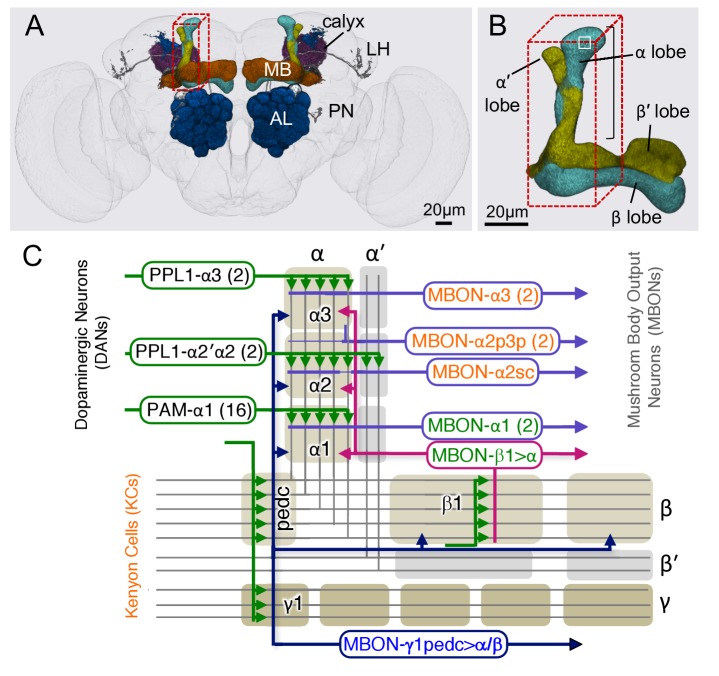
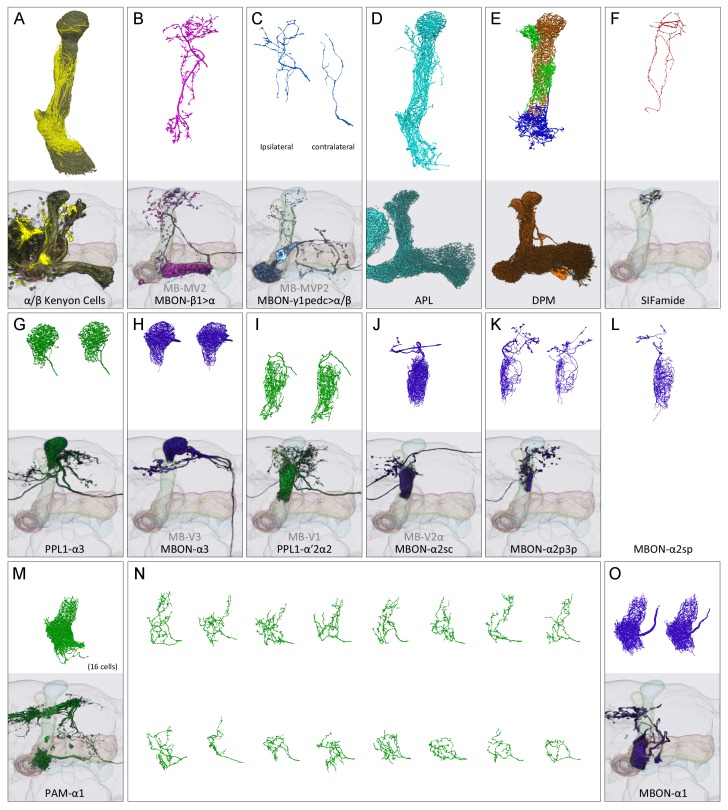
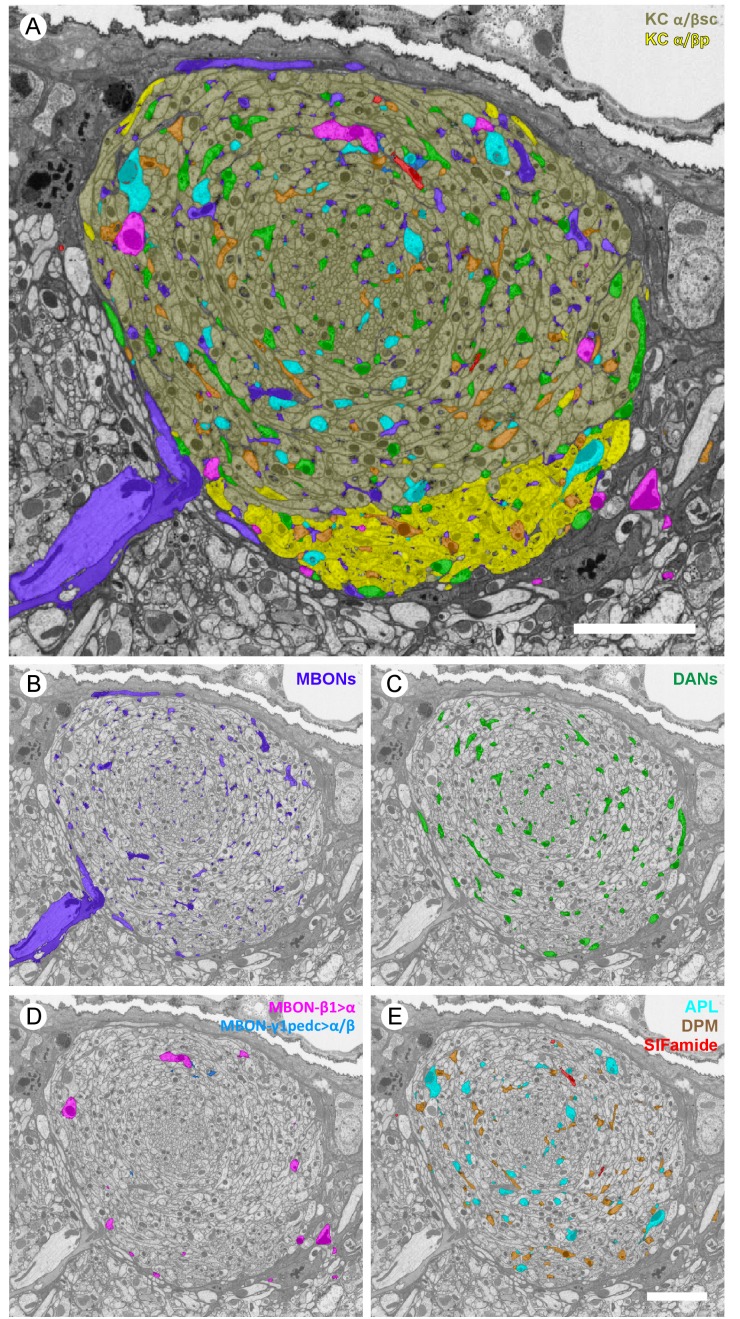
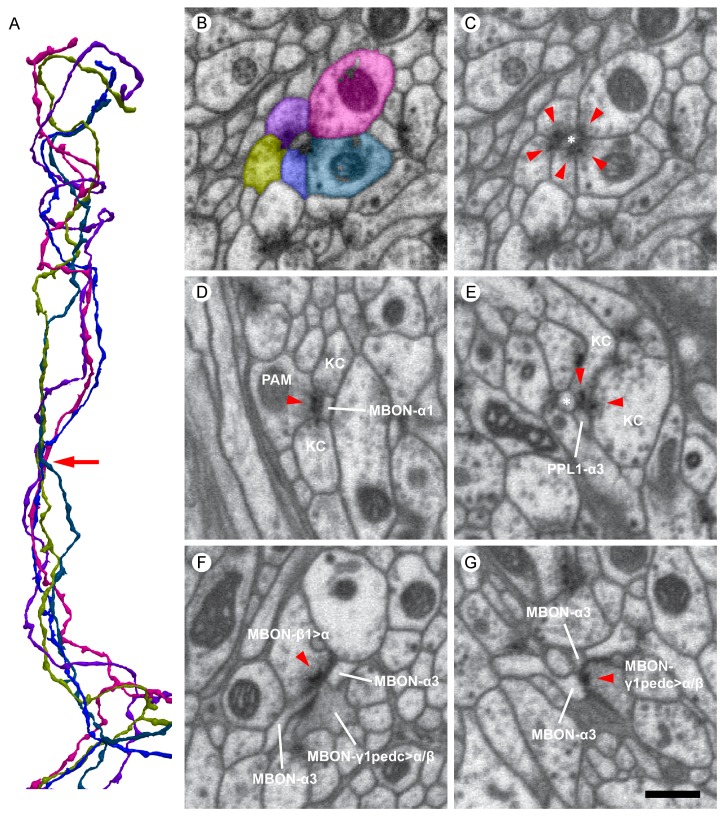
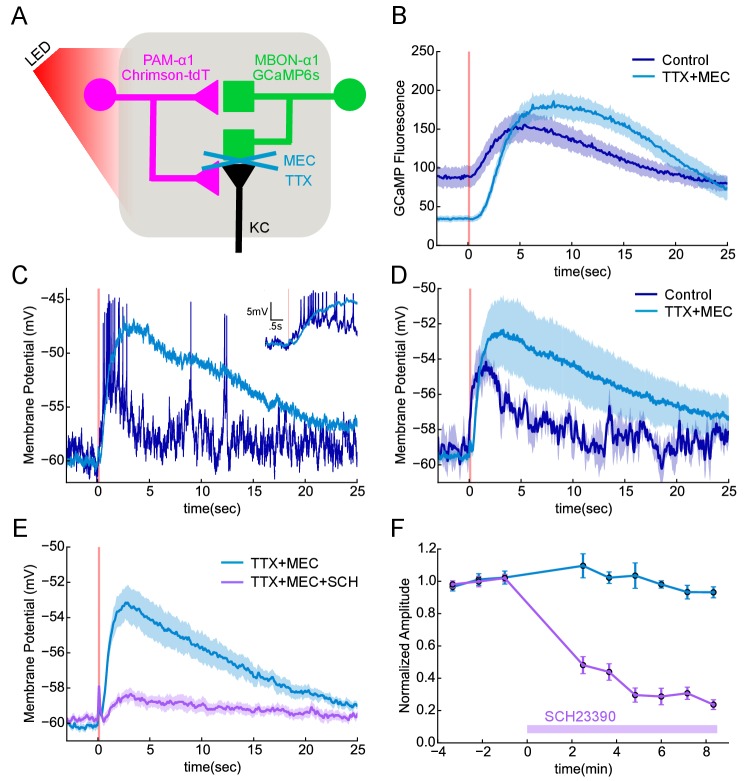
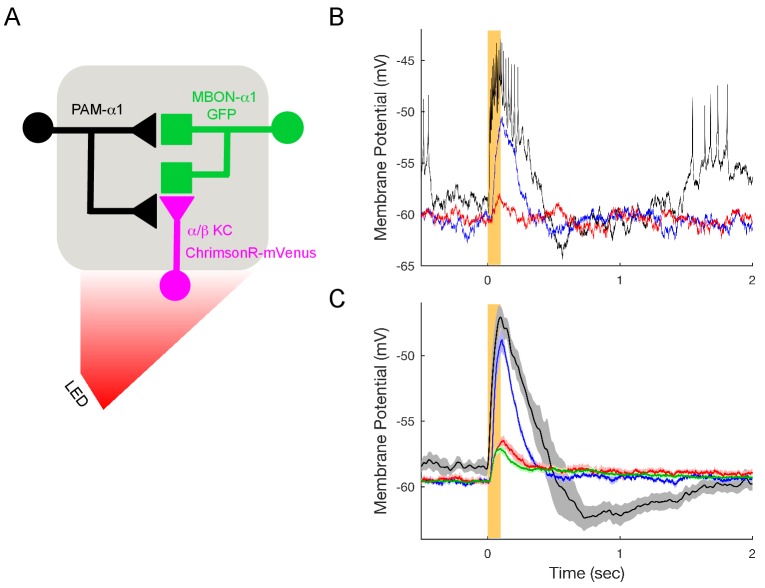
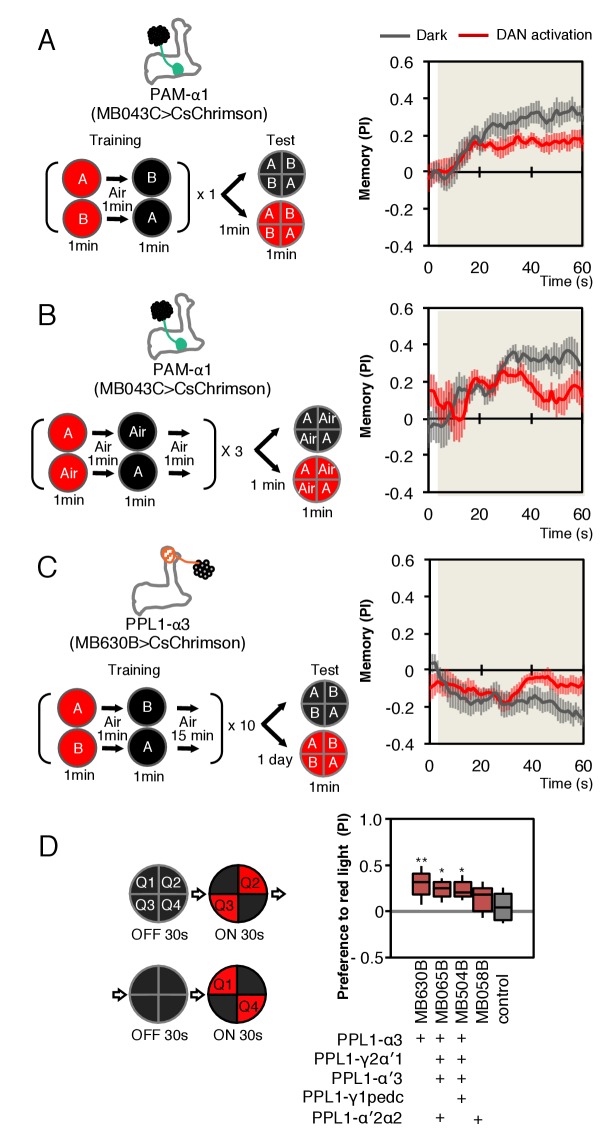
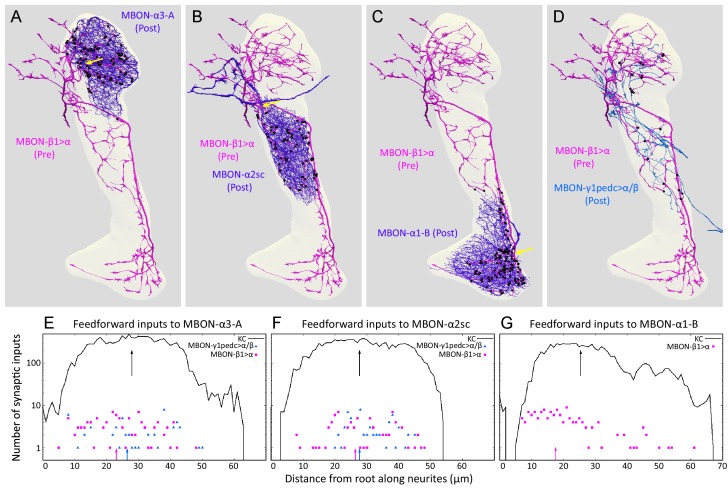
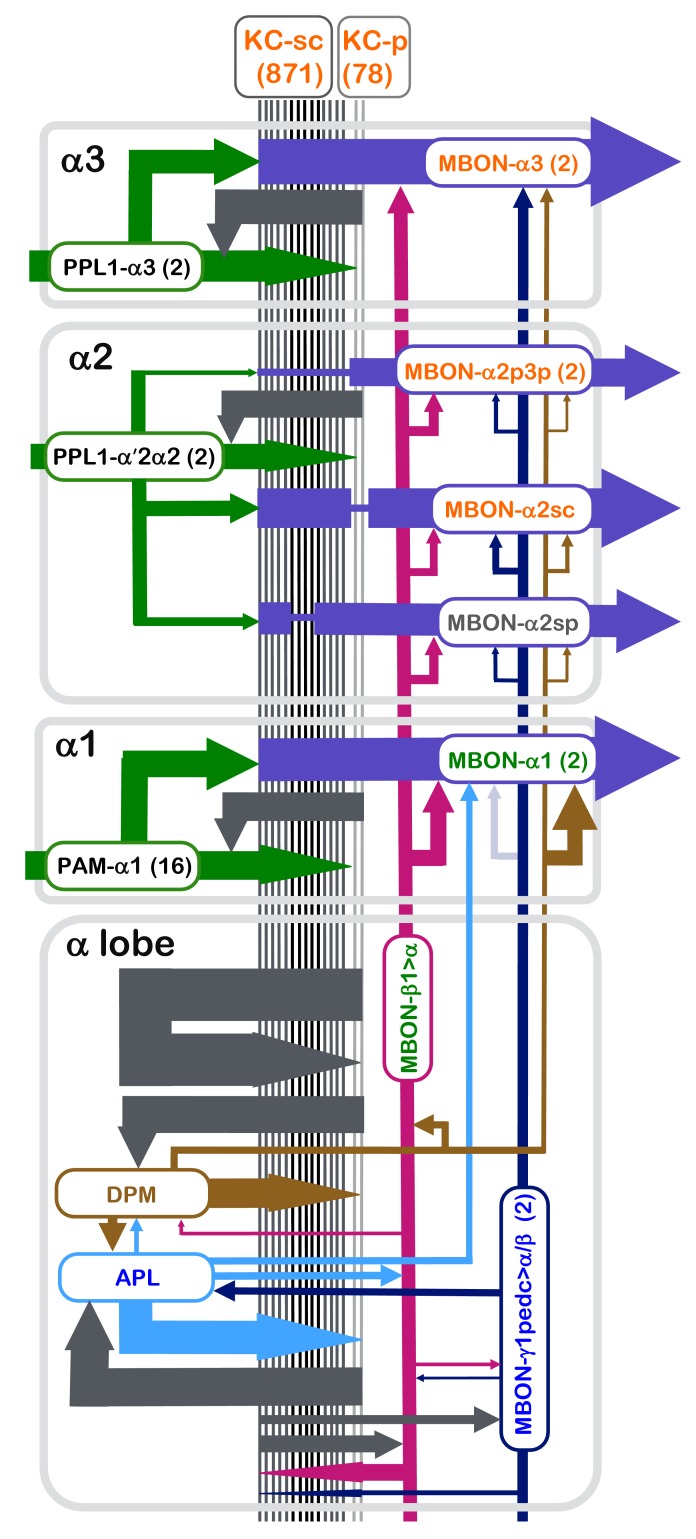
Understanding memory formation, storage and retrieval requires knowledge of the underlying neuronal circuits. In Drosophila, the mushroom body (MB) is the major site of associative learning. We reconstructed the morphologies and synaptic connections of all 983 neurons within the three functional units, or compartments, that compose the adult MB’s α lobe, using a dataset of isotropic 8 nm voxels collected by focused ion-beam milling scanning electron microscopy. We found that Kenyon cells (KCs), whose sparse activity encodes sensory information, each make multiple en passant synapses to MB output neurons (MBONs) in each compartment. Some MBONs have inputs from all KCs, while others differentially sample sensory modalities. Only 6% of KC>MBON synapses receive a direct synapse from a dopaminergic neuron (DAN). We identified two unanticipated classes of synapses, KC>DAN and DAN>MBON. DAN activation produces a slow depolarization of the MBON in these DAN>MBON synapses and can weaken memory recall.
Overview
The claims and statistics of this paper haven’t been checked yet.
Run the check — free, no account needed. It reads the open-access text and checks the sources it cites.
Integrity signals
Registry
Cites
Statistics
Figures
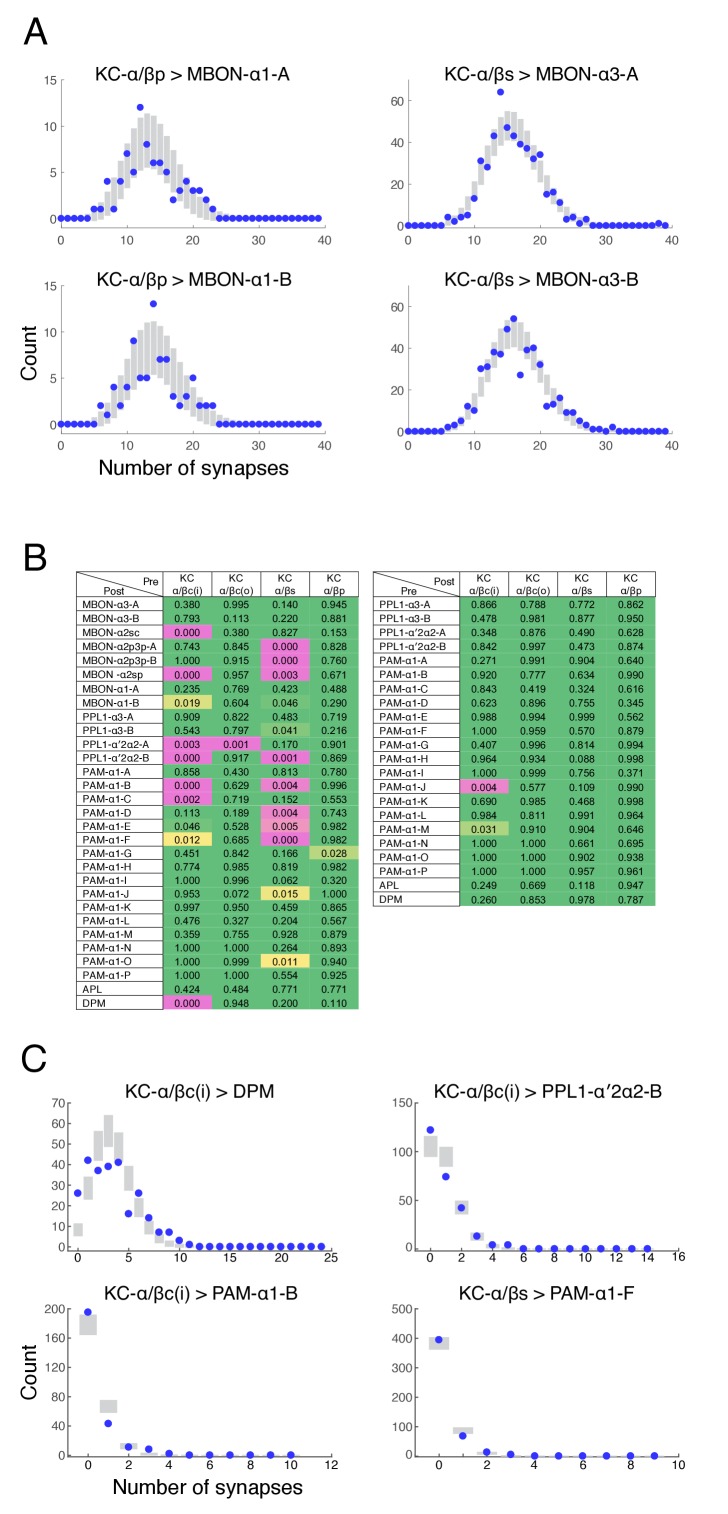
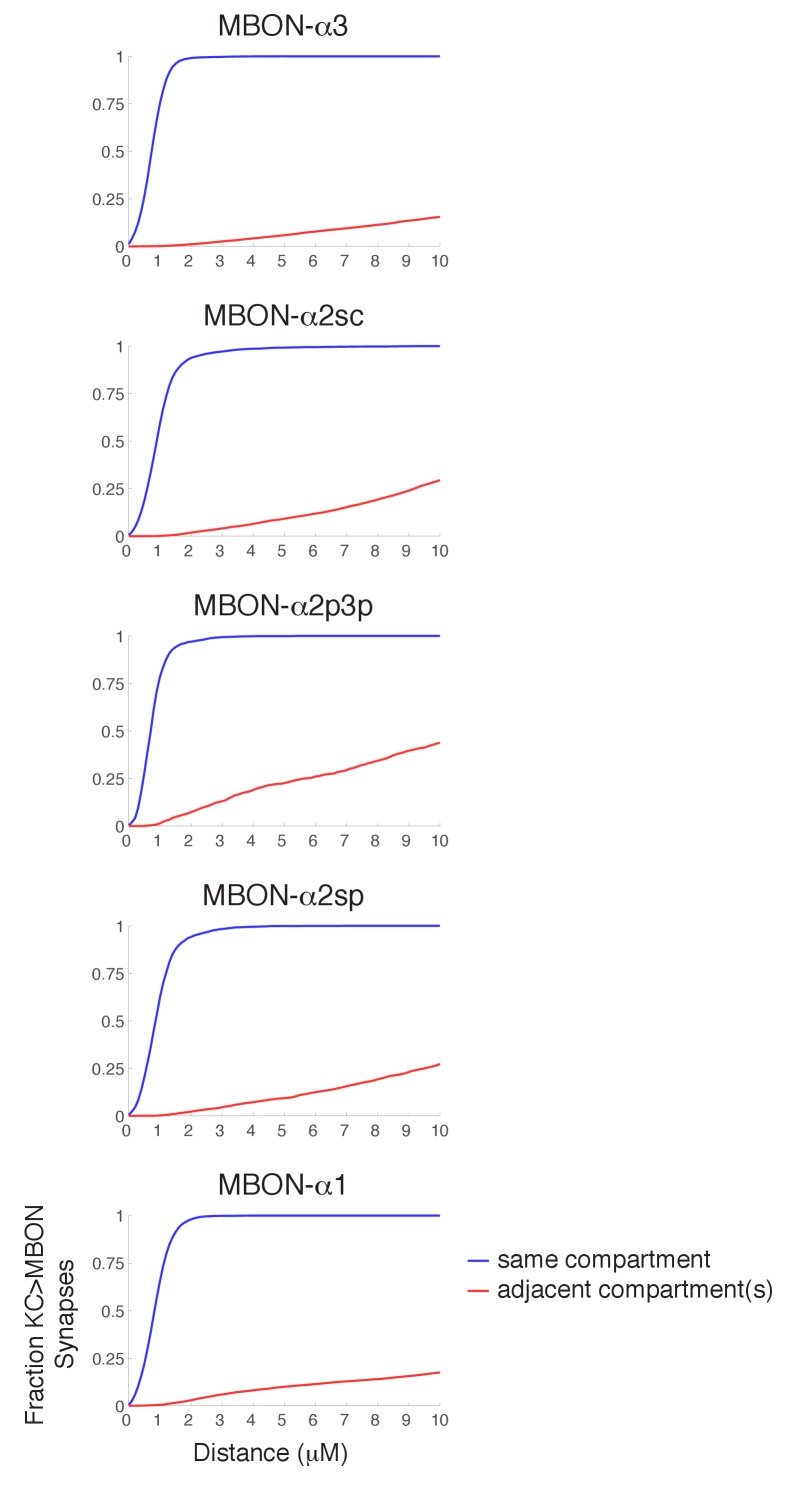
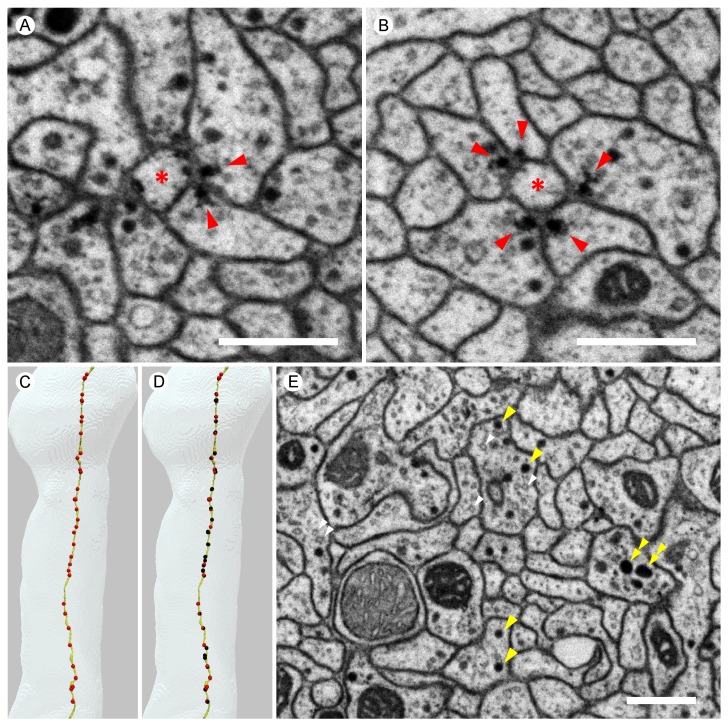
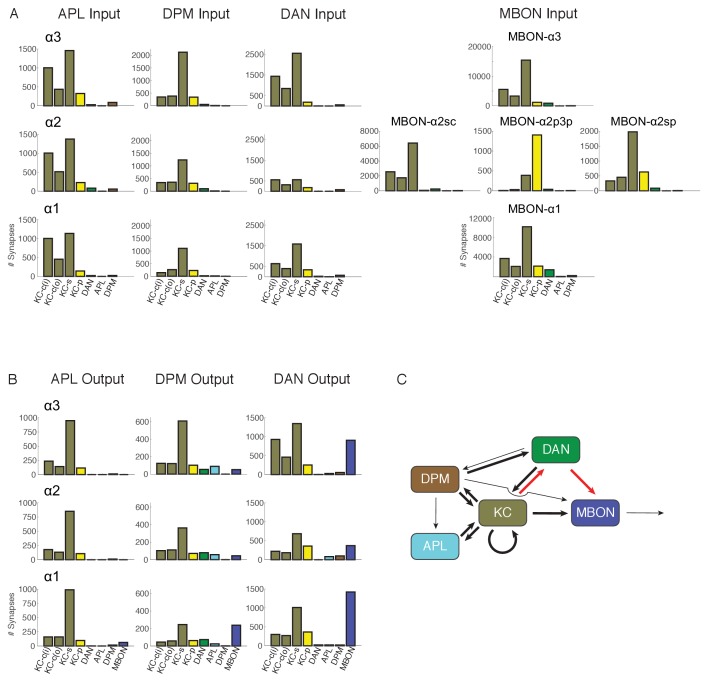
Verification
Claims the paper makes
The claims and statistics of this paper haven’t been checked yet.
Run the check — free, no account needed. It reads the open-access text and checks the sources it cites.
Claims other papers make about this one
Each is checked against this paper’s own text: does it say what the citing paper says it does?
The cited source says what the claim attributes to it.
In the citing paper
“For example, the MBs are known to be a centre for learning and memory in the fly brain32.”
From Network statistics of the whole-brain connectome of Drosophila (2024) · cites this paper as [32]
The cited source says what the claim attributes to it.
In the citing paper
“This appears to be explained by certain connections (especially KC to KC connections, which are predominantly arranged with an unusual rosette configuration along axons and of which the functional significance is poorly understood121) being much more prevalent in the hemibrain than in FlyWire (Extended Data Fig. 7d).”
From Whole-brain annotation and multi-connectome cell typing of Drosophila (2024) · cites this paper as [121]
The cited source says what the claim attributes to it.
In the citing paper
“Previous dense reconstructions have demonstrated that existing catalogs of cell types are incomplete, even in well-covered regions (Takemura et al., 2017).”
From A connectome and analysis of the adult Drosophila central brain (2020) · cites this paper as Takemura et al., 2017
The cited source says what the claim attributes to it.
In the citing paper
“Previous reconstructions were either dense in much smaller EM volumes (such as Meinertzhagen and O'Neil, 1991; Helmstaedter et al., 2013; Takemura et al., 2017) or sparse in larger volumes (such as Eichler et al., 2017 or Zheng et al., 2018).”
From A connectome and analysis of the adult Drosophila central brain (2020) · cites this paper as Takemura et al., 2017
The cited source says what the claim attributes to it.
In the citing paper
“Two previous connectomics efforts are available as well (a seven-column optic lobe reconstruction [Takemura et al., 2015] and the alpha lobe of the mushroom body [Takemura et al., 2017]).”
From A connectome and analysis of the adult Drosophila central brain (2020) · cites this paper as Takemura et al., 2017
The cited source says what the claim attributes to it.
In the citing paper
“The least tightly bound large motif is a cell that connects either to or from (but not both) all cells of a given type, as shown in Figure 22(c). Examples include the mushroom body output neurons (Takemura et al., 2017). This is a very common motif, found in many regions. We find more than 500 examples of this in the fly’s brain.”
From A connectome and analysis of the adult Drosophila central brain (2020) · cites this paper as Takemura et al., 2017
The check wasn’t confident either way, so it gives no verdict — never disputed.
In the citing paper
“Broadcasters include a large number of Mi1 and Tm3 neurons—excitatory cells in the ME known to have key roles in the motion detection circuit32,40.”
From Network statistics of the whole-brain connectome of Drosophila (2024) · cites this paper as [32]
Experimental — accuracy not yet measured
Self-check
Percentages, sums and reported differences re-computed from the paper’s own numbers.
The self-check needs the paper’s full text.
Citations
Cites
Fiji: an open-source platform for biological-image analysis
Schindelin, J., Arganda-Carreras, I., Frise, E., Kaynig, V., Longair, M., Pietzsch, T., Preibisch, S., Rueden, C., Saalfeld, S., Schmid, B., et al. (2012) · Nature Methods · doi:10.1038/nmeth.2019 · Cited by 66,890
Lecture Notes in Computer Science 1205
(1999) · Industrial Robot the international journal of robotics research and application · doi:10.1108/ir.1999.04926fae.001 · Cited by 39,228
Rescorla, R. A. (1972) · Medical Entomology and Zoology · Cited by 7,268
Predictive reward signal of dopamine neurons
Schultz, W. (1998) · Journal of Neurophysiology · doi:10.1152/jn.1998.80.1.1 · Cited by 4,564
Independent optical excitation of distinct neural populations
Klapoetke, N. C., Murata, Y., Kim, S. S., Pulver, S. R., Birdsey-Benson, A., Cho, Y. K., Morimoto, T. K., Chuong, A. S., Carpenter, E. J., Tian, Z., et al. (2014) · Nature Methods · doi:10.1038/nmeth.2836 · Cited by 2,344
Neuronal circuits for fear and anxiety
Tovote, P., Fadok, J. P., & Lüthi, A. (2015) · Nature Reviews Neuroscience · doi:10.1038/nrn3945 · Cited by 1,786
Molecular Biology of Learning: Modulation of Transmitter Release
Kandel, E. R., & Schwartz, J. H. (1982) · Science · doi:10.1126/science.6289442 · Cited by 1,551
Spatiotemporal Rescue of Memory Dysfunction in Drosophila
McGuire, S. E., Le, P. T., Osborn, A. J., Matsumoto, K., & Davis, R. L. (2003) · Science · doi:10.1126/science.1089035 · Cited by 1,318
Mushroom body memoir: from maps to models
Heisenberg, M. (2003) · Nature Reviews Neuroscience · doi:10.1038/nrn1074 · Cited by 1,286
Strausfeld, N. J. (1976) · Springer eBooks · doi:10.1007/978-3-642-66179-2 · Cited by 1,277
Research works printed but not linked: 5
- Eichler, 2017, The complete wiring diagram of the larval Drosophila mushroom body, Nature
- Qin, 2012, Gamma neurons mediate dopaminergic input during aversive olfactory memory formation in Drosophila, Current Biology, 22, 608, 10.1016/j.cub.2012.02.014 · DOI
- Rescorla, 1972, Classical Conditioning II, 64
- Schürmann, 1974, [On the functional anatomy of the corpora pedunculata in insects (author's transl)], Experimental Brain Research, 19, 406
- Yu, 2005, Drosophila DPM neurons form a delayed and branch-specific memory trace after olfactory classical conditioning, Cell, 123, 945, 10.1016/j.cell.2005.09.037 · DOI
Cited by
Sorted by citations
Items 201–300 of 369
Fruit flies can learn non-elemental olfactory discriminations
Durrieu, M., Wystrach, A., Arrufat, P., Giurfa, M., & Isabel, G. (2020) · Proceedings of the Royal Society B Biological Sciences · doi:10.1098/rspb.2020.1234 · Cited by 15
Interplay between metabolic energy regulation and memory pathways in Drosophila
Sgammeglia, N., & Sprecher, S. G. (2022) · Trends in Neurosciences · doi:10.1016/j.tins.2022.04.007 · Cited by 15
The Fruit Fly Brain Observatory: From Structure to FunctionPreprint
Ukani, N. H., Yeh, C.-H., Tomkins, A., Zhou, Y., Florescu, D., Ortiz, C. L., Huang, Y.-C., Wang, C.-T., Türkcan, M. K., Liu, T., et al. (2019) · bioRxiv (Cold Spring Harbor Laboratory) · doi:10.1101/580290 · Cited by 15
Differential expression of ITP and ITPL indicate multiple functions in the silkworm Bombyx mori
Klöcklerová, V., Gáliková, Z., Roller, L., & Žitňan, D. (2023) · Cell and Tissue Research · doi:10.1007/s00441-023-03752-y · Cited by 13
Hierarchical Modular Structure of the Drosophila Connectome
Kunin, A. B., Guo, J., Bassler, K. E., Pitkow, X., & Josić́, K. (2023) · Journal of Neuroscience · doi:10.1523/jneurosci.0134-23.2023 · Cited by 13
Ryvkin, J., Bentzur, A., Zer-Krispil, S., & Shohat-Ophir, G. (2018) · Frontiers in Physiology · doi:10.3389/fphys.2018.00327 · Cited by 13
Selective suppression and recall of long-term memories in Drosophila
Siegenthaler, D., Escribano, B., Bräuler, V., & Pielage, J. (2019) · PLoS Biology · doi:10.1371/journal.pbio.3000400 · Cited by 14
Horiuchi, J. (2019) · Genes Brain & Behavior · doi:10.1111/gbb.12567 · Cited by 13
Mechanisms underlying homeostatic plasticity in the Drosophila mushroom body in vivo
Apostolopoulou, A. A., & Lin, A. C. (2020) · Proceedings of the National Academy of Sciences · doi:10.1073/pnas.1921294117 · Cited by 12
Rounds, J. C., Corgiat, E. B., Ye, C., Behnke, J. A., Kelly, S. M., Corbett, A. H., & Moberg, K. H. (2021) · Genetics · doi:10.1093/genetics/iyab175 · Cited by 12
Effects of stochastic coding on olfactory discrimination in flies and mice
Srinivasan, S., Daste, S., Modi, M. N., Turner, G. C., Fleischmann, A., & Navlakha, S. (2023) · PLoS Biology · doi:10.1371/journal.pbio.3002206 · Cited by 12
Self-citationEchoVPR: Echo State Networks for Visual Place Recognition
Özdemir, A., Scerri, M., Barron, A. B., Philippides, A. O., Mangan, M., Vasilaki, E., & Manneschi, L. (2022) · IEEE Robotics and Automation Letters · doi:10.1109/lra.2022.3150505 · Cited by 12
Srinivasan, S., Greenspan, R. J., Stevens, C. F., & Grover, D. (2018) · Journal of Neuroscience · doi:10.1523/jneurosci.0153-18.2018 · Cited by 12
What do the mushroom bodies do for the insect brain? Twenty-five years of progressPreprint
Fiala, A., & Kaun, K. R. (2024) · Learning & Memory · doi:10.1101/lm.053827.123 · Cited by 14
Reducing Catastrophic Forgetting With Associative Learning: A Lesson From Fruit Flies
Shen, Y., Dasgupta, S., & Navlakha, S. (2023) · Neural Computation · doi:10.1162/neco_a_01615 · Cited by 11
Schulz, J., Franz, H. R., Deimel, S. H., & Widmann, A. (2024) · Frontiers in Physiology · doi:10.3389/fphys.2024.1363943 · Cited by 11
Roussou, I. G., Papanikolopoulou, K., Savakis, C., & Skoulakis, E. M. C. (2019) · Journal of Neuroscience · doi:10.1523/jneurosci.0633-19.2019 · Cited by 11
Optogenetics: Illuminating neuronal circuits of memory formation
Ehmann, N., & Pauls, D. (2020) · Journal of Neurogenetics · doi:10.1080/01677063.2019.1708352 · Cited by 12
Building and integrating brain-wide maps of nervous system function in invertebrates
Kramer, T. S., & Flavell, S. W. (2024) · Current Opinion in Neurobiology · doi:10.1016/j.conb.2024.102868 · Cited by 9
Modulations of microbehaviour by associative memory strength in Drosophila larvae
Thane, M., Viswanathan, V., Meyer, T. C., Paisios, E., & Schleyer, M. H. (2019) · PLoS ONE · doi:10.1371/journal.pone.0224154 · Cited by 14
A novel Drosophila model for neurodevelopmental disorders associated with Shwachman–Diamond syndrome
Takai, A., Chiyonobu, T., Ueoka, I., Tanaka, R., Tozawa, T., Yoshida, H., Morimoto, M., Hosoi, H., & Yamaguchi, M. (2020) · Neuroscience Letters · doi:10.1016/j.neulet.2020.135449 · Cited by 11
Gerber, B., König, C., Fendt, M., Andreatta, M., Romanos, M., Pauli, P., & Yarali, A. (2019) · Current Opinion in Behavioral Sciences · doi:10.1016/j.cobeha.2018.12.001 · Cited by 11
Bio-Inspired Architectures Substantially Reduce the Memory Requirements of Neural Network Models
Dalgaty, T., Miller, J. P., Vianello, E., & Casas, J. (2021) · Frontiers in Neuroscience · doi:10.3389/fnins.2021.612359 · Cited by 11
Multilevel feedback architecture for adaptive regulation of learning in the insect brainPreprint
Eschbach, C., Fushiki, A., Winding, M., Schneider-Mizell, C. M., Shao, M., Arruda, R., Eichler, K., Valdés-Alemán, J., Ohyama, T., Thum, A. S., et al. (2019) · bioRxiv (Cold Spring Harbor Laboratory) · doi:10.1101/649731 · Cited by 11
Identifying Inputs to Visual Projection Neurons in Drosophila Lobula by Analyzing Connectomic Data
Tanaka (田中涼介), R., & Clark, D. A. (2022) · eneuro · doi:10.1523/eneuro.0053-22.2022 · Cited by 10
Hiramatsu, S., Saito, K., Kondo, S., Katow, H., Yamagata, N., Wu, C., & Tanimoto, H. (2024) · eLife · doi:10.7554/elife.98358 · Cited by 11
Neural Control of Naturalistic Behavior Choices
Asinof, S. K., & Card, G. M. (2024) · Annual Review of Neuroscience · doi:10.1146/annurev-neuro-111020-094019 · Cited by 10
Sleep benefits different stages of memory in Drosophila
Marquand, K., Roselli, C., Cervantes-Sandoval, I., & Boto, T. (2023) · Frontiers in Physiology · doi:10.3389/fphys.2023.1087025 · Cited by 8
Synaptic Spinules in the Olfactory Circuit of Drosophila melanogaster
Gruber, L., Rybak, J., Hansson, B. S., & Cantera, R. (2018) · Frontiers in Cellular Neuroscience · doi:10.3389/fncel.2018.00086 · Cited by 10
Endotaxis: A neuromorphic algorithm for mapping, goal-learning, navigation, and patrolling
Zhang, T., Rosenberg, M., Jing, Z., Perona, P., & Meister, M. (2023) · eLife · doi:10.7554/elife.84141 · Cited by 18
A neural circuit arbitrates between perseverance and withdrawal in hungry DrosophilaPreprint
Sayın, S., Backer, J. D., Wosniack, M. E., Lewis, L., Siju, K. P., Frisch, L. M., Schlegel, P., Edmondson-Stait, A. J., Sharifi, N., Fisher, C. B., et al. (2018) · bioRxiv (Cold Spring Harbor Laboratory) · doi:10.1101/259119 · Cited by 9
Efficient Simulation of 3D Reaction-Diffusion in Models of Neurons and Networks
McDougal, R. A., Conte, C., Eggleston, L., Newton, A. J. H., & Galijasevic, H. (2022) · Frontiers in Neuroinformatics · doi:10.3389/fninf.2022.847108 · Cited by 8
Flexible specificity of memory in Drosophila depends on a comparison between choices
Modi, M. N., Rajagopalan, A. E., Rouault, H., Aso, Y., & Turner, G. C. (2023) · eLife · doi:10.7554/elife.80923 · Cited by 12
Self-citationNamiki, S., & Kanzaki, R. (2019) · Scientific Reports · doi:10.1038/s41598-019-53318-8 · Cited by 8
Collins, L. T. (2019) · Biological Cybernetics · doi:10.1007/s00422-019-00810-z · Cited by 8
Woitkuhn, J., Ender, A., Beuschel, C. B., Maglione, M., Matkovic, T., Huang, S., Lehmann, M., Geiger, J. R. P., & Sigrist, S. J. (2020) · Journal of Neurogenetics · doi:10.1080/01677063.2019.1710146 · Cited by 7
Sensory encoding and memory in the mushroom body: signals, noise, and variabilityPreprint
Parnas, M., Manoim, J. E., & Lin, A. C. (2024) · Learning & Memory · doi:10.1101/lm.053825.123 · Cited by 9
Dvořáček, J., Bednářová, A., Krishnan, N., & Kodrík, D. (2022) · Neuroscience & Biobehavioral Reviews · doi:10.1016/j.neubiorev.2022.104570 · Cited by 7
Optogenetically induced reward and ‘frustration’ memory in larval Drosophila melanogaster
Thoener, J., Weiglein, A., Gerber, B., & Schleyer, M. H. (2022) · Journal of Experimental Biology · doi:10.1242/jeb.244565 · Cited by 7
A non-canonical on-demand dopaminergic transmission underlying olfactory aversive learning
Saitoe, M., Naganos, S., Miyashita, T., Matsuno, M., & Ueno, K. (2021) · Neuroscience Research · doi:10.1016/j.neures.2021.12.008 · Cited by 7
Semaphorin 1a-mediated dendritic wiring of the Drosophila mushroom body extrinsic neurons
Lin, C.-H., Senapati, B., Chen, W., Bansal, S., & Lin, S. (2022) · Proceedings of the National Academy of Sciences · doi:10.1073/pnas.2111283119 · Cited by 7
Takakura, M., Lam, Y. H., Nakagawa, R., Ng, M. Y., Hu, X., Bhargava, P., Alia, A. G. M., Gu, Y., Wang, Z., Ota, T., et al. (2023) · Proceedings of the National Academy of Sciences · doi:10.1073/pnas.2304851120 · Cited by 8
Beyond prediction error: 25 years of modeling the associations formed in the insect mushroom bodyPreprint
Webb, B. H. (2024) · Learning & Memory · doi:10.1101/lm.053824.123 · Cited by 7
Sen, E., El-Keredy, A., Jacob, N., Mancini, N., Asnaz, G., Widmann, A., Gerber, B., & Thoener, J. (2024) · Learning & Memory · doi:10.1101/lm.053726.122 · Cited by 7
Future avenues inDrosophilamushroom body researchPreprint
Chan, I. C. W., Chen, N., Hernandez, J., Meltzer, H., Park, A., & Stahl, A. (2024) · Learning & Memory · doi:10.1101/lm.053863.123 · Cited by 7
Autoencoder networks extract latent variables and encode these variables in their connectomes
Farrell, M., Recanatesi, S., Reid, R. C., Mihalaş, Ş., & Shea‐Brown, E. (2020) · Neural Networks · doi:10.1016/j.neunet.2021.03.010 · Cited by 6
The cellular architecture of memory modules in Drosophila supports stochastic input integration
Hafez, O. A., Escribano, B., Ziegler, R. L., Hirtz, J. J., Niebur, E., & Pielage, J. (2023) · eLife · doi:10.7554/elife.77578 · Cited by 7
A Soma Segmentation Benchmark in Full Adult Fly Brain
Liu, X., Hu, B., Li, M., Huang, W., Zhang, Y., & Xiong, Z. (2023) · IEEE Computer Society Conference on Computer Vision and Pattern Recognition/Proceedings - IEEE Computer Society Conference on Computer Vision and Pattern Recognition/Proceedings · doi:10.1109/cvpr52729.2023.00715 · Cited by 6
Collins, L. T. (2018) · OSF Preprints (OSF Preprints) · Cited by 7
An open-access volume electron microscopy atlas of whole cells and tissuesPreprint
Xu, C. S., Pang, S., Shtengel, G. E., Müller, A., Ritter, A. T., Hoffman, H. K., Takemura, S.-Y., Lu, Z., Pasolli, H. A., Iyer, N., et al. (2020) · bioRxiv (Cold Spring Harbor Laboratory) · doi:10.1101/2020.11.13.382457 · Cited by 6
Self-citationEndotaxis: A neuromorphic algorithm for mapping, goal-learning, navigation, and patrollingPreprint
Zhang, T., Rosenberg, M., Jing, Z., Perona, P., & Meister, M. (2021) · bioRxiv (Cold Spring Harbor Laboratory) · doi:10.1101/2021.09.24.461751 · Cited by 6
SegNeuron: 3D Neuron Instance Segmentation in Any EM Volume with a Generalist Model
Zhang, Y.-C. S. L.-G., Guo, J., Zhai, H., Liu, J., & Han, H. (2024) · Lecture notes in computer science · doi:10.1007/978-3-031-72111-3_55 · Cited by 5
Flexible neural connectivity under constraints on total connection strength
Ocker, G. K., & Buice, M. A. (2020) · PLoS Computational Biology · doi:10.1371/journal.pcbi.1008080 · Cited by 5
Pipkin, J. E., Bushong, E. A., Ellisman, M. H., & Kristan, W. B. (2018) · Frontiers in Neuroanatomy · doi:10.3389/fnana.2018.00095 · Cited by 5
TokenUnify: Scaling Up Autoregressive Pretraining for Neuron Segmentation
Chen, Y., Shi, H. Z., Liu, X., Shi, T., Zhang, R., Liu, D., Xiong, Z., & Wu, F. (2025) · IEEE/CVF International Conference on Computer Vision (ICCV) · doi:10.1109/iccv51701.2025.01263 · Cited by 5
A graph network model for neural connection prediction and connection strength estimation
Yuan, Y., Liu, J., Zhao, P., Wang, W., Gu, X., Rong, Y., Lai, T., Chen, Y., Xin, K., Niu, X., et al. (2022) · Journal of Neural Engineering · doi:10.1088/1741-2552/ac69bd · Cited by 5
Poppinga, H., Çoban, B., Meltzer, H., Mayseless, O., Widmann, A., Schuldiner, O., & Fiala, A. (2022) · Open Biology · doi:10.1098/rsob.220096 · Cited by 5
Neurogenetic dissection of the Drosophila innate olfactory processing centerPreprint
Dolan, M.-J., Frechter, S., Bates, A. S., Dan, C., Huoviala, P., Roberts, R. J. V., Schlegel, P., Dhawan, S., Tabano, R., Dionne, H., et al. (2018) · bioRxiv (Cold Spring Harbor Laboratory) · doi:10.1101/404277 · Cited by 5
Self-citationLearning with reward prediction errors in a model of the Drosophila mushroom bodyPreprint
Bennett, J., Philippides, A. O., & Nowotny, T. (2019) · bioRxiv (Cold Spring Harbor Laboratory) · doi:10.1101/776401 · Cited by 5
Hacking brain development to test models of sensory codingPreprint
Ahmed, M., Rajagopalan, A. E., Pan, Y., Li, Y., Williams, D. L., Pedersen, E. A., Thakral, M., Previero, A., Close, K. C., Christoforou, C. P., et al. (2023) · bioRxiv (Cold Spring Harbor Laboratory) · doi:10.1101/2023.01.25.525425 · Cited by 5
Self-citationSexually dimorphic mechanisms of VGLUT-mediated protection from dopaminergic neurodegenerationPreprint
Buck, S. A., Rubin, S. A., Kunkhyen, T., Treiber, C. D., Xue, X., Fenno, L. E., Mabry, S. J., Sundar, V. R., Yang, Z., Shah, D., et al. (2023) · bioRxiv (Cold Spring Harbor Laboratory) · doi:10.1101/2023.10.02.560584 · Cited by 5
Learning with sparse reward in a gap junction network inspired by the insect mushroom body
Wei, T., Guo, Q., & Webb, B. (2024) · PLOS Computational Biology · doi:10.1371/journal.pcbi.1012086 · Cited by 4
“For the most part, these KC-KC connections occur between KC axons where they converge onto a single MBON post-synaptic density, sometimes forming ‘rosettes’ with a set of KC synapses surrounding the MBON [14, 19].”
Functional dissection of a neuronal brain circuit mediating higher-order associative learning
Rachad, E. Y., Deimel, S. H., Epple, L., Gadgil, Y. V., Jürgensen, A.-M., Springer, M., Lin, C.-H., Nawrot, M. P., Lin, S., & Fiala, A. (2025) · Cell Reports · doi:10.1016/j.celrep.2025.115593 · Cited by 5
Arginine kinase interacts with 2MIT and is involved in Drosophila melanogaster short-term memory
Bozzato, A., Romoli, O., Polo, D., Baggio, F., Mazzotta, G. M., Triolo, G., Myers, M. P., & Sandrelli, F. (2020) · Journal of Insect Physiology · doi:10.1016/j.jinsphys.2020.104118 · Cited by 4
Wilson, A. M., & Babadi, M. (2023) · Patterns · doi:10.1016/j.patter.2023.100693 · Cited by 4
Closed-loop experiments on the BrainScaleS-2 architecture
Schreiber, K., Wunderlich, T. C., Pehle, C., Petrovici, M. A., Schemmel, J., & Meier, K. (2020) · Neuro Inspired Computational Elements Conference (NICE) · doi:10.1145/3381755.3381776 · Cited by 4
Armour, E. M., Thomas, C. M., Greco, G., Bhatnagar, A., & Elefant, F. (2023) · Molecular and Cellular Neuroscience · doi:10.1016/j.mcn.2023.103888 · Cited by 3
Hong, J., & Pavlic, T. P. (2021) · arXiv (Cornell University) · doi:10.48550/arxiv.2109.06663 · Cited by 6
Hiramatsu, S., Saito, K., Kondo, S., Katow, H., Yamagata, N., Wu, C., & Tanimoto, H. (2024) · eLife · doi:10.7554/elife.98358.1 · Cited by 5
Roles of feedback and feed-forward networks of dopamine subsystems: insights fromDrosophilastudiesPreprint
Davidson, A. M., & Hige, T. (2024) · Learning & Memory · doi:10.1101/lm.053807.123 · Cited by 4
Self-citationMancini, N., Thoener, J., Tafani, E., Pauls, D., Mayseless, O., Strauch, M., Eichler, K., Champion, A. S., Kobler, O., Weber, D., et al. (2023) · Journal of Neuroscience · doi:10.1523/jneurosci.2310-22.2023 · Cited by 6
Lancaster, C. L., Yalamanchili, P. S., Goldy, J. N., Leung, S. W., Corbett, A. H., & Moberg, K. H. (2024) · Molecular Biology of the Cell · doi:10.1091/mbc.e24-04-0150 · Cited by 3
Analysis Tools for Large Connectomes
Scheffer, L. K. (2018) · Frontiers in Neural Circuits · doi:10.3389/fncir.2018.00085 · Cited by 3
Self-citationChang, I. Y.-T., Rahman, M. M., Harned, A., Cohen‐Fix, O., & Narayan, K. (2020) · Methods in cell biology · doi:10.1016/bs.mcb.2020.09.009 · Cited by 5
wde, calpA, if, dap160, and poe genes knock down Drosophila models exhibit neurofunctional deficit
Haddadi, M., & Ataei, R. (2022) · Gene · doi:10.1016/j.gene.2022.146499 · Cited by 2
Drug effect and addiction research with insects – From Drosophila to collective reward in honeybees
Dvořáček, J., & Kodrík, D. (2022) · Neuroscience & Biobehavioral Reviews · doi:10.1016/j.neubiorev.2022.104816 · Cited by 3
Wang, D., Zhao, T., Zheng, N., & Gong, Z. (2019) · International Joint Conference on Artificial Intelligence · doi:10.24963/ijcai.2019/664 · Cited by 3
Self-citationMinimal circuit motifs for second-order conditioning in the insect mushroom body
Jürgensen, A.-M., Schmitt, F. J., & Nawrot, M. P. (2024) · Frontiers in Physiology · doi:10.3389/fphys.2023.1326307 · Cited by 3
Huang, G. B., Yang, H., Takemura, S.-Y., Rivlin, P. K., & Plaza, S. M. (2020) · arXiv (Cornell University) · doi:10.48550/arxiv.2012.12175 · Cited by 3
Self-citationPribbenow, C., Chen, Y., Heim, M. ‐., Laber, D., Reubold, S., Reynolds, E., Balles, I. S., Suárez-Grimalt, R., Rauch, C., Rösner, J., et al. (2021) · bioRxiv (Cold Spring Harbor Laboratory) · doi:10.1101/2021.07.01.450776 · Cited by 3
Algorithmic insights on continual learning from fruit fliesPreprint
Shen, Y., Dasgupta, S., & Navlakha, S. (2021) · arXiv (Cornell University) · doi:10.48550/arxiv.2107.07617 · Cited by 13
Pribbenow, C., & Owald, D. (2024) · Learning & Memory · doi:10.1101/lm.053919.124 · Cited by 4
Drosophila gustatory projections are segregated by taste modality and connectivity
Engert, S., Sterne, G. R., Bock, D. D., & Scott, K. (2021) · bioRxiv (Cold Spring Harbor Laboratory) · doi:10.1101/2021.12.08.471796 · Cited by 38
Sitaula, A., Kaur, K., Mogharrabi, A., Olsen, L., & Zarin, A. A. (2026) · PNAS Nexus · doi:10.1093/pnasnexus/pgag173 · Cited by 2
Importin-α2 mediates brain development, learning and memory consolidation inDrosophila
Serway, C. N., Dunkelberger, B. S., Padre, D. D., Nolan, N. W. C., Georges, S. J., Freer, S. M., Andres, A. J., & de Belle, J. S. (2020) · Journal of Neurogenetics · doi:10.1080/01677063.2019.1709184 · Cited by 2
Tuning Synaptic Connections Instead of Weights by Genetic Algorithm in Spiking Policy Network
Zhang, D., Zhang, T., Jia, S., Wang, Q., & Xu, B. (2024) · Machine Intelligence Research · doi:10.1007/s11633-023-1481-1 · Cited by 4
Shi, R., Wang, W., Li, Z., He, L., Sheng, K., Ма, Л., Du, K., Jiang, T., & Huang, T. (2022) · Frontiers in Computational Neuroscience · doi:10.3389/fncom.2022.842760 · Cited by 2
Neural circuitry of dialects through social learning in DrosophilaPreprint
Kacsoh, B. Z., Bozler, J., Hodge, S., & Bosco, G. (2019) · bioRxiv (Cold Spring Harbor Laboratory) · doi:10.1101/511857 · Cited by 2
Hong, J., & Pavlic, T. P. (2021) · arXiv (Cornell University) · doi:10.48550/arxiv.2108.07554 · Cited by 2
Joyce, J., Norman-Tenazas, R., Rivlin, P. K., Hwang, G. M., Western, I., Zhang, K., Gray-Roncal, W., & Robinson, B. S. (2024) · bioRxiv (Cold Spring Harbor Laboratory) · doi:10.1101/2024.01.10.574960 · Cited by 1
Self-citationToshima, N., Behrad, A., Behnke, F., Kaushik, G., Weiglein, A., Strauch, M., Thoener, J., Kobler, O., Wang, M. L. M., Dörr, M., et al. (2025) · eLife · doi:10.7554/elife.106148.1 · Cited by 2
Rivlin, P. K., Robinette, M. S., Matelsky, J., & Wester, B. A. (2025) · bioRxiv (Cold Spring Harbor Laboratory) · doi:10.1101/2025.09.22.677863 · Cited by 2
Self-citationA dopamine circuit regulates locomotor initiation and persistence in DrosophilaPreprint
Wen, X., Connors, K. E., Snell, C. C., McGrath, R., Mehta, A., & Hattori, D. (2025) · bioRxiv (Cold Spring Harbor Laboratory) · doi:10.1101/2025.11.18.689052 · Cited by 2
Mating status-dependent dopaminergic modulation of auditory sensory neurons in Drosophila
Yamakoshi, H., Horigome, M., Yamamoto, S., Iwanami, S., Iwami, S., Tanaka, R., Ishikawa, Y., & Kamikouchi, A. (2025) · iScience · doi:10.1016/j.isci.2025.113232 · Cited by 1
Dual roles of Drosophila reward-encoding dopamine neurons in regulating innate and learned behaviors
Lozada-Perdomo, F. V., Chen, Y., Jacobs, R. V., Yeo, J., Yang, M., Bhalerao, J., & Devineni, A. V. (2025) · iScience · doi:10.1016/j.isci.2025.113817 · Cited by 7
A voltage-dependent switch underlies efficient yet specific learning and memory
Manoim, J. E., Tunç, I., Tauber, M., Wolkovitz, I., Ahdut-Hacohen, R., Rozenfeld, E., Nawrot, M. P., Ben-Chaim, Y., & Parnas, M. (2026) · Current Biology · doi:10.1016/j.cub.2026.01.014 · Cited by 1
Reward taste conditioning in Drosophila melanogaster
Yang, S., Bae, Y. J., & Masek, P. (2026) · Journal of Experimental Biology · doi:10.1242/jeb.251090 · Cited by 1
Neuromodulators in the mosquito olfactory system
Rout, K., Kannan, K. R., & Gupta, N. (2026) · Current Opinion in Neurobiology · doi:10.1016/j.conb.2026.103200 · Cited by 1
The world of the identified or digital neuron
Meinertzhagen, I. A. (2018) · Journal of Neurogenetics · doi:10.1080/01677063.2018.1474214 · Cited by 1
Metadata
- Authors
- Takemura, S.-Y., Aso, Y., Hige, T., Wong, A., Lu, Z., Xu, C. S., Rivlin, P. K., Hess, H., Zhao, T., Parag, T., Berg, S., Huang, G., Katz, W., Olbris, D. J., Plaza, S., Umayam, L., Aniceto, R., Chang, L.-A., Lauchie, S., Ogundeyi, O., Ordish, C., Shinomiya, A., Sigmund, C., Takemura, S., Tran, J., Turner, G. C., Rubin, G. M., & Scheffer, L. K.
- Affiliations
- Howard Hughes Medical Institute (US)
- Corresponding author
- Takemura, Shin-ya
- Scheffer, Louis K
- ORCID
- Takemura, Shin-ya
- Aso, Yoshinori
- Hige, Toshihide
- Wong, Allan
- Lu, Zhiyuan
- Xu, C Shan
- Rivlin, Patricia K
- Hess, Harald
- Zhao, Ting
- Berg, Stuart
- Huang, Gary
- Katz, William
- Olbris, Donald J
- Plaza, Stephen
- Umayam, Lowell
- Aniceto, Roxanne
- Lauchie, Shirley
- Ogundeyi, Omotara
- Ordish, Christopher
- Shinomiya, Aya
- Takemura, Satoko
- Tran, Julie
- Turner, Glenn C
- Rubin, Gerald M
- Scheffer, Louis K
- Venue
- eLife
- Publisher
- eLife Sciences Publications, Ltd
- Published
- 2017-07-18
- Volume
- 6
- ISSN
- 2050-084X (ISSN-L)
- PMC
- PMC5550281
- OpenAlex
- W2737808707
- Cited by
- 367
- References
- 152
- Citations by year
- 2026: 16 · 2025: 18 · 2024: 44 · 2023: 32 · 2022: 35 · 2021: 47 · 2020: 59 · 2019: 54 · 2018: 53 · 2017: 8
- FWCI
- 23.30
- Type
- journal article
- Language
- en
- Open access
- gold
- doi.org
- Licence
- Locations
- eLife (publishedVersion, cc-by)
- PubMed Central (publishedVersion, cc-by)
- PubMed (publishedVersion)
- DOAJ (DOAJ: Directory of Open Access Journals) (submittedVersion, cc-by-sa)
- Funders
- Howard Hughes Medical Institute
- Topics
- Life Sciences › Neuroscience › Cellular and Molecular Neuroscience › Neurobiology and Insect Physiology Research
- Life Sciences › Neuroscience › Cellular and Molecular Neuroscience › Neuroscience and Neuropharmacology Research
- Life Sciences › Neuroscience › Cognitive Neuroscience › Memory and Neural Mechanisms
- Keywords
- mushroom body, Kenyon cells, dopaminergic neurons, synaptic connectivity, memory retrieval, associative learning, Drosophila, connectome, neuronal morphology, sensory modality specificity
- MeSH terms
- Animals, Drosophila, Learning, Memory, Mushroom Bodies, Connectome
About these checks
Registry, retraction, Cites and statistics results are computed, not judged, with one exception: a printed reference that no index lists is read once by a model before it counts as a citation error. Claims are extracted by a model and kept only when their quote appears verbatim in the text; each cited source is then checked, with a model’s help, for whether it says what the claim relies on. Those verdicts can be wrong — read the claim’s quote and the cited source before relying on one.
Statistics and arithmetic are recomputed, not judged.
Confidence bands are shown only for fields calibrated on our annotated test set. None is calibrated yet, so no band is shown.
What counts as a claim ›How we measure confidence ›How we check this ›
Are you an author, or do you see a problem with this page? Request a review
