

The DOI matches its Crossref record; 65 of the 65 references it cites were found in a registry or an index; 23 of the 45 sources its claims cite were checked for support.
Sex differences in cognitive decline among US adults
Open accessAbstract
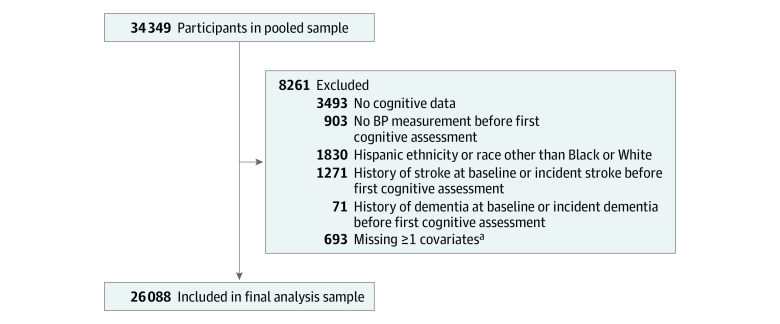
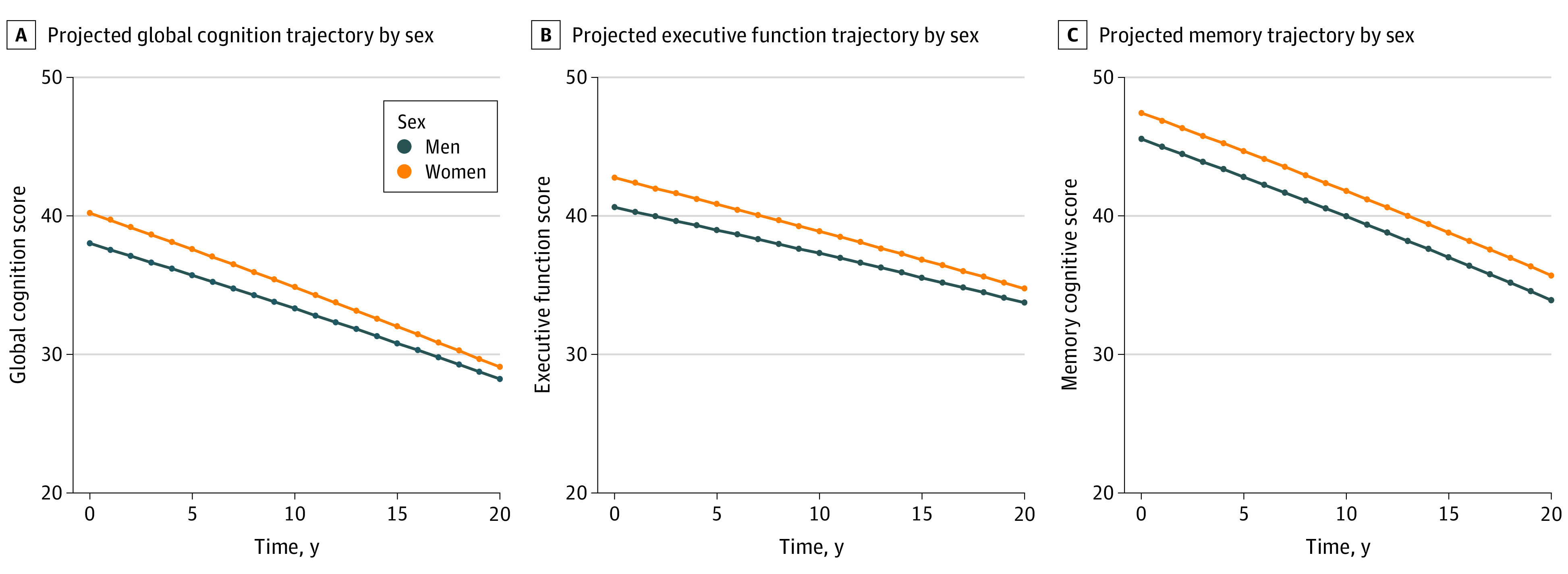
Importance: Sex differences in dementia risk are unclear, but some studies have found greater risk for women. Objective: To determine associations between sex and cognitive decline in order to better understand sex differences in dementia risk. Design, Setting, and Participants: This cohort study used pooled analysis of individual participant data from 5 cohort studies for years 1971 to 2017: Atherosclerosis Risk in Communities Study, Coronary Artery Risk Development in Young Adults Study, Cardiovascular Health Study, Framingham Offspring Study, and Northern Manhattan Study. Linear mixed-effects models were used to estimate changes in each continuous cognitive outcome over time by sex. Data analysis was completed from March 2019 to October 2020. Exposure: Sex. Main Outcomes and Measures: The primary outcome was change in global cognition. Secondary outcomes were change in memory and executive function. Outcomes were standardized as t scores (mean [SD], 50 [10]); a 1-point difference represents a 0.1-SD difference in cognition. Results: Among 34 349 participants, 26 088 who self-reported Black or White race, were free of stroke and dementia, and had covariate data at or before the first cognitive assessment were included for analysis. Median (interquartile range) follow-up was 7.9 (5.3-20.5) years. There were 11 775 (44.7%) men (median [interquartile range] age, 58 [51-66] years at first cognitive assessment; 2229 [18.9%] Black) and 14 313 women (median [interquartile range] age, 58 [51-67] years at first cognitive assessment; 3636 [25.4%] Black). Women had significantly higher baseline performance than men in global cognition (2.20 points higher; 95% CI, 2.04 to 2.35 points; P < .001), executive function (2.13 points higher; 95% CI, 1.98 to 2.29 points; P < .001), and memory (1.89 points higher; 95% CI, 1.72 to 2.06 points; P < .001). Compared with men, women had significantly faster declines in global cognition (-0.07 points/y faster; 95% CI, -0.08 to -0.05 points/y; P < .001) and executive function (-0.06 points/y faster; 95% CI, -0.07 to -0.05 points/y; P < .001). Men and women had similar declines in memory (-0.004 points/y faster; 95% CI, -0.023 to 0.014; P = .61). Conclusions and Relevance: The results of this cohort study suggest that women may have greater cognitive reserve but faster cognitive decline than men, which could contribute to sex differences in late-life dementia.
Overview
AI snapshot
Written from the paper’s full text.
TL;DR
In a pooled analysis of 26,088 US adults from 5 cohorts, women had higher baseline global cognition, executive function, and memory than men but faster declines in global cognition and executive function, not memory. The authors conclude women may have greater cognitive reserve but faster later-life cognitive decline.
Key findings
- Among 26,088 participants (14,313 women, 11,775 men), women had higher baseline scores than men: global cognition +2.20 points (95% CI, 2.04-2.35), executive function +2.13 points (95% CI, 1.98-2.29), and memory +1.89 points (95% CI, 1.72-2.06); all P < .001.
- Women had faster adjusted declines than men in global cognition (difference in slope −0.07 points/y; 95% CI, −0.08 to −0.05; P < .001) and executive function (−0.06 points/y; 95% CI, −0.07 to −0.05; P < .001), but not memory (−0.004 points/y; 95% CI, −0.023 to 0.014; P = .61).
- The authors estimate that if causal, these differences correspond to 5 to 6 years of cognitive aging; women reached a 0.5-SD decline threshold 4.72 years faster for global cognition, 1.97 years faster for executive function, and 0.24 years faster for memory.
- Sensitivity analyses including post-stroke observations, kidney function and myocardial infarction, APOE ε4, and within-cohort analyses showed similar results, with little heterogeneity across cohorts.
Methods
- Pooled individual participant data from 5 prospective US cohorts (ARIC, CARDIA, CHS, FOS, NOMAS; 1971-2017); included adults without dementia or stroke at baseline and with at least 1 cognitive assessment and 1 blood pressure measurement, yielding 26,088 participants.
- Cognitive tests were co-calibrated using item response theory into global cognition, memory, and executive function factor scores on a t-score metric (mean 50, SD 10) at first assessment; primary outcome was change in global cognition, with memory and executive function as secondary outcomes.
- Linear mixed-effects models estimated sex differences in baseline and slope, including sex × follow-up time and covariates such as age, race, education, cohort, vascular risk factors, time-dependent cumulative mean systolic blood pressure, and hypertension treatment, with random intercepts and slopes; complete-case analysis excluded 693 of 26,781 participants (2.59%) with missing covariates.
Limitations
- Stated: the study could not adjust for educational quality, literacy, other socioeconomic factors, or depressive symptoms; selective attrition could bias decline estimates; clinical impact was inferred by equating slopes with aging rather than directly measured; it did not study incident dementia, adjust for baseline cognition, or identify a specific age interval of greatest risk; secondary outcomes had smaller samples and fewer assessments; data were lacking on instrumental activities of daily living, family history of dementia, and hormone replacement therapy; possible immortal cohort bias and regression to the mean were noted; fixed cohort effects may produce conservative estimates.
- Evident from the text: the observational cohort design cannot establish causality, and exclusion of participants reporting race other than Black or White and exclusion of Hispanic ethnicity from NOMAS limit generalizability; residual confounding by unmeasured factors remains possible.
Model-written summary. Check it against the paper before relying on it.
Integrity signals
Registry
Cites
Statistics
Figures
Verification
Claims the paper makes
15 Own method · 15 Own result · 13 Own interpretation · 6 Supported · 6 Partly supported · 5 No full text of the sources · 4 Supported so far · 4 Sources not found · 1 Mixed support · 1 Not checked yet · accuracy not yet measured
The sources with a verdict support this claim; the rest weren’t checked yet, have no full text we could read, or their verdicts aren’t rated yet.
In the paper
“Studies have consistently found evidence of sex differences in baseline cognitive functioning with women demonstrating stronger verbal cognitive skills than men, but men demonstrating stronger visuospatial skills than women (eg, mental rotations).31,43”
§ Sex Differences in Cognitive Decline Among US Adults > Discussion
What the sources say
- Supportedcites [31] McCarrey AC, An Y, Kitner-Triolo MH, Ferrucci L, Resnick SM. Sex differences in cognitive trajectories in clinically normal older adults. Psychol Aging. 2016; 31(2): 166- 175. doi: 10.1037/pag0000070 26796792 PMC4783196 source
The Results (Verbal learning and memory) report that women outperformed men at baseline on all three verbal-learning and memory measures. The Discussion also reports higher performance by women on tests of verbal learning, memory, and fluent language production. (LLM, conf=0.93)
- Not checked — no full text of the sourcecites [43] Miller DI, Halpern DF. The new science of cognitive sex differences. Trends Cogn Sci. 2014; 18(1): 37- 45. doi: 10.1016/j.tics.2013.10.011 24246136 source
boostedcorrelational- Asserted: passes — The authors put it forward as true.
- Checkable: passes — It can be checked against evidence.
- Load-bearing: unclear — It is unclear whether the paper’s conclusions depend on it.
- Based: passes — The paper gives a reason why it holds.
- Supported
The sources with a verdict support this claim; the rest weren’t checked yet, have no full text we could read, or their verdicts aren’t rated yet.
In the paper
“We required participants to have 1 or more assessments of cognition and 1 or more measurements of blood pressure (BP) at or before the first measurement of cognition because BP is a risk factor for cognitive decline11,18 and varies by sex.18,19”
§ Sex Differences in Cognitive Decline Among US Adults > Methods > Study Design, Participants, and Measurements
What the sources say
- Not checked — no full text of the sourcecites [11] Levine DA, Gross AL, Briceño EM,. Association between blood pressure and later-life cognition among Black and White individuals. JAMA Neurol. 2020; 77(7): 810- 819. doi: 10.1001/jamaneurol.2020.0568 32282019 PMC7154952 source
- Supportedcites [18] Levine DA, Galecki AT, Langa KM,. Blood pressure and cognitive decline over 8 years in middle-aged and older Black and White Americans. Hypertension. 2019; 73(2): 310- 318. doi: 10.1161/HYPERTENSIONAHA.118.12062 30624986 PMC6450556 source
The Abstract and Discussion report that higher systolic BP was associated with faster decline in global cognition, particularly in older adults. This supports describing systolic BP as a risk factor for cognitive decline; the paper reports an association, not proof of causation. Page numbers were not provided in our copy. (LLM, conf=0.91)
plaindirect- Asserted: passes — The authors put it forward as true.
- Checkable: passes — It can be checked against evidence.
- Load-bearing: passes — The paper’s conclusions depend on it.
- Based: passes — The paper gives a reason why it holds.
The sources with a verdict support this claim; the rest weren’t checked yet, have no full text we could read, or their verdicts aren’t rated yet.
In the paper
“Studies have consistently found evidence of sex differences in baseline cognitive functioning with women demonstrating stronger verbal cognitive skills than men, but men demonstrating stronger visuospatial skills than women (eg, mental rotations).31,43”
§ Sex Differences in Cognitive Decline Among US Adults > Discussion
What the sources say
- Supportedcites [31] McCarrey AC, An Y, Kitner-Triolo MH, Ferrucci L, Resnick SM. Sex differences in cognitive trajectories in clinically normal older adults. Psychol Aging. 2016; 31(2): 166- 175. doi: 10.1037/pag0000070 26796792 PMC4783196 source
The Results (Visuospatial abilities) report that men scored 15.0 points higher than women on the Card Rotations Test at baseline. The Discussion identifies this as a male advantage in visuospatial ability and notes that the test requires mental rotation skills. (LLM, conf=0.94)
- Not checked — no full text of the sourcecites [43] Miller DI, Halpern DF. The new science of cognitive sex differences. Trends Cogn Sci. 2014; 18(1): 37- 45. doi: 10.1016/j.tics.2013.10.011 24246136 source
boostedcorrelational- Asserted: passes — The authors put it forward as true.
- Checkable: passes — It can be checked against evidence.
- Load-bearing: unclear — It is unclear whether the paper’s conclusions depend on it.
- Based: passes — The paper gives a reason why it holds.
- Supported
Every source the paper cites for this claim was checked and supports it.
In the paper
“While we adjusted for educational years, we could not adjust for educational quality, literacy, other socioeconomic factors,10 or depressive symptoms, because not all cohorts had these data at or before the first cognitive assessment.”
§ Sex Differences in Cognitive Decline Among US Adults > Discussion > Strengths and Limitations
What the sources say
- Supportedcites [10] Yaffe K, Falvey C, Harris TB,; Health ABC Study. Effect of socioeconomic disparities on incidence of dementia among biracial older adults: prospective study. BMJ. 2013; 347: f7051. doi: 10.1136/bmj.f7051 24355614 PMC3898154 source
The citation is attached to the mention of educational quality, literacy, and other socioeconomic factors, not to the citing authors’ explanation of why they could not adjust for them. The source’s Demographic and socioeconomic characteristics section lists literacy, income, and financial adequacy measures; its Comparison with other studies section discusses literacy as a possible reflection of educational quality. The source does not say that its own study lacked these data. (LLM, conf=0.88)
plain- Asserted: passes — The authors put it forward as true.
- Checkable: passes — It can be checked against evidence.
- Load-bearing: unclear — It is unclear whether the paper’s conclusions depend on it.
- Based: passes — The paper gives a reason why it holds.
- Supported
Every source the paper cites for this claim was checked and supports it.
In the paper
“Women also appear to have lower gray matter volume,50”
§ Sex Differences in Cognitive Decline Among US Adults > Discussion
What the sources say
- Supportedcites [50] Gennatas ED, Avants BB, Wolf DH,. Age-related effects and sex differences in gray matter density, volume, mass, and cortical thickness from childhood to young adulthood. J Neurosci. 2017; 37(20): 5065- 5073. doi: 10.1523/JNEUROSCI.3550-16.2017 28432144 PMC5444192 source
The section on whole-brain sex differences reports that females had lower total gray matter volume than males. The finding comes from a cohort aged 8–23, so the evidence is specifically for that age range. (LLM, conf=0.93)
hedgedcorrelational- Asserted: passes — The authors put it forward as true.
- Checkable: passes — It can be checked against evidence.
- Load-bearing: unclear — It is unclear whether the paper’s conclusions depend on it.
- Based: passes — The paper gives a reason why it holds.
- Supported
The cited sources support only part of this claim — read each source’s verdict below.
In the paper
“Our findings suggest that women are at risk for delayed identification of cognitive decline, yet more rapid trajectory of decline, suggesting increased risk of dementia and disability compared with men, consistent with research showing that women with mild cognitive impairment or AD have faster cognitive decline than men.32,33”
§ Sex Differences in Cognitive Decline Among US Adults > Conclusions
What the sources say
- Partly supportedcites [32] Tschanz JT, Corcoran CD, Schwartz S,. Progression of cognitive, functional, and neuropsychiatric symptom domains in a population cohort with Alzheimer dementia: the Cache County Dementia Progression study. Am J Geriatr Psychiatry. 2011; 19(6): 532- 542. doi: 10.1097/JGP.0b013e3181faec23 21606896 PMC3101372 sourceExperimental — accuracy not yet measured
The Results (Association between Predictors and Rate of Change, MMSE) report that women with Alzheimer dementia declined cognitively faster than men. The paper studies people with AD, not mild cognitive impairment, so it does not support that part of the attributed claim. (LLM, conf=0.87)
- Partly supportedcites [33] Lin KA, Choudhury KR, Rathakrishnan BG, Marks DM, Petrella JR, Doraiswamy PM; Alzheimer’s Disease Neuroimaging Initiative. Marked gender differences in progression of mild cognitive impairment over 8 years. Alzheimers Dement (N Y). 2015; 1(2): 103- 110. doi: 10.1016/j.trci.2015.07.001 26451386 PMC4593067 sourceExperimental — accuracy not yet measured
The Conclusions and Discussion report faster cognitive decline in women than men with mild cognitive impairment. The study does not establish the same comparison among people already diagnosed with Alzheimer's disease, so the “or AD” portion is unsupported by this source. (LLM, conf=0.87)
hedgedcorrelational- Asserted: passes — The authors put it forward as true.
- Checkable: passes — It can be checked against evidence.
- Load-bearing: passes — The paper’s conclusions depend on it.
- Based: passes — The paper gives a reason why it holds.
- Partly supported
The cited sources support only part of this claim — read each source’s verdict below.
In the paper
“However, studies suggest that socioeconomic factors tend to influence initial cognitive scores (ie, intercepts) rather than the change in cognitive scores over time (slopes).55,56”
§ Sex Differences in Cognitive Decline Among US Adults > Discussion > Strengths and Limitations
What the sources say
- Not checked — no full text of the sourcecites [55] Jorm AF, Rodgers B, Henderson AS,. Occupation type as a predictor of cognitive decline and dementia in old age. Age Ageing. 1998; 27(4): 477- 483. doi: 10.1093/ageing/27.4.477 9884005 source
- Partly supportedcites [56] Zahodne LB, Glymour MM, Sparks C,. Education does not slow cognitive decline with aging: 12-year evidence from the Victoria longitudinal study. J Int Neuropsychol Soc. 2011; 17(6): 1039- 1046. doi: 10.1017/S1355617711001044 21923980 PMC3285821 sourceExperimental — accuracy not yet measured
The Results section reports that higher education was associated with better baseline performance in all four cognitive domains but was unrelated to rates of decline. This supports the intercept-versus-slope distinction for education, but the paper does not establish it for socioeconomic factors generally. (LLM, conf=0.85)
hedgedcorrelational- Asserted: passes — The authors put it forward as true.
- Checkable: passes — It can be checked against evidence.
- Load-bearing: unclear — It is unclear whether the paper’s conclusions depend on it.
- Based: passes — The paper gives a reason why it holds.
A result the paper reports from its own data — it cites no other source for it, so there is none to check. The quote shows it is in the paper.
In the paper
“women, compared with men, had higher baseline performance in global cognition, executive function, and memory.”
- Also stated in: § Changes in Executive Function and Memory · plain
“Women had significantly higher baseline performance than men in executive function (2.13 points higher; 95% CI, 1.98 to 2.29 points; P < .001) and memory (1.89 points higher; 95% CI, 1.72 to 2.06 points; P < .001) (Table 2).”
- Also stated in: § Change in Global Cognition · plain
“2.13 (1.98 to 2.29) | <.001”
§ Sex Differences in Cognitive Decline Among US Adults > Abstract > Findings
plaincorrelationaln = 24 ·- Asserted: passes — The authors put it forward as true.
- Checkable: passes — It can be checked against evidence.
- Load-bearing: unclear — It is unclear whether the paper’s conclusions depend on it.
- Based: passes — The paper gives a reason why it holds.
- Also stated in: § Changes in Executive Function and Memory · plain
A result the paper reports from its own data — it cites no other source for it, so there is none to check. The quote shows it is in the paper.
In the paper
“women, compared with men, had higher baseline performance in global cognition, executive function, and memory.”
- Also stated in: § Change in Global Cognition · plain
“Women had significantly higher baseline performance than men in global cognition (2.20 points higher; 95% CI, 2.04 to 2.35 points; P < .001) (Table 2).”
- Also stated in: § Discussion · plain
“Among 26 088 individuals pooled from 5 prospective cohort studies, women had higher baseline performance than men in global cognition, executive function, and memory.”
§ Sex Differences in Cognitive Decline Among US Adults > Abstract > Findings
plaincorrelational- Asserted: passes — The authors put it forward as true.
- Checkable: passes — It can be checked against evidence.
- Load-bearing: passes — The paper’s conclusions depend on it.
- Based: passes — The paper gives a reason why it holds.
- Also stated in: § Change in Global Cognition · plain
A result the paper reports from its own data — it cites no other source for it, so there is none to check. The quote shows it is in the paper.
In the paper
“There was little heterogeneity in the associations between sex and cognitive decline across cohorts (eTable 6 in the Supplement).”
§ Sex Differences in Cognitive Decline Among US Adults > Results > Sensitivity Analysis
plain- Asserted: passes — The authors put it forward as true.
- Checkable: passes — It can be checked against evidence.
- Load-bearing: unclear — It is unclear whether the paper’s conclusions depend on it.
- Based: passes — The paper gives a reason why it holds.
- Probably not a substantial claim. 25
- It may state two separate claims as one. 16
- The quote only partly states this claim. 1
Some cited sources support this claim and some don’t — read each source’s verdict below.
In the paper
“Experts have defined clinically meaningful cognitive decline as a decline in cognitive function of 0.5 or more SDs from baseline cognitive scores.36,37,38”
§ Sex Differences in Cognitive Decline Among US Adults > Discussion
What the sources say
- Partly supportedcites [36] Wolinsky FD, Unverzagt FW, Smith DM, Jones R, Stoddard A, Tennstedt SL. The ACTIVE cognitive training trial and health-related quality of life: protection that lasts for 5 years. J Gerontol A Biol Sci Med Sci. 2006; 61(12): 1324- 1329. doi: 10.1093/gerona/61.12.1324 17234829 sourceExperimental — accuracy not yet measured
The HRQoL section defines a clinically relevant decline as a drop of 0.50 SD from baseline on an SF-36 health-related quality-of-life scale. It does not define that threshold for cognitive function or cognitive scores; page numbers are unavailable in our copy. (LLM, conf=0.88)
- Disputedcites [37] Rossetti HC, Munro Cullum C, Hynan LS, Lacritz LH. The CERAD neuropsychologic battery total score and the progression of Alzheimer’s disease. Alzheimer Dis Assoc Disord. 2010; 24(2): 138- 142. doi: 10.1097/WAD.0b013e3181b76415 20505431 PMC2920638 sourceExperimental — accuracy not yet measured
The Methods define meaningful cognitive change using a Reliable Change Index (RCI) based on test–retest data, not a decline of 0.5 or more standard deviations from baseline. The Discussion specifies a threshold of at least ±10.51 CERAD points under the RCI’s 90% confidence interval. The available passages do not give page numbers. (LLM, conf=0.86)
Checked by a reasoning model — may be wrong.
- Not checked — no full text of the sourcecites [38] Unger JM, van Belle G, Heyman A; Consortium to Establish a Registry for Alzheimer’s Disease. Cross-sectional versus longitudinal estimates of cognitive change in nondemented older people: a CERAD study. J Am Geriatr Soc. 1999; 47(5): 559- 563. doi: 10.1111/j.1532-5415.1999.tb02570.x 10323649 source
plain- Asserted: passes — The authors put it forward as true.
- Checkable: passes — It can be checked against evidence.
- Load-bearing: passes — The paper’s conclusions depend on it.
- Based: passes — The paper gives a reason why it holds.
Probably not a substantial claim.
- Partly supported
The cited sources support only part of this claim — read each source’s verdict below.
In the paper
“Declines in global cognition and executive function markedly raise the risk of death, dementia, and functional disability.39,40,41”
§ Sex Differences in Cognitive Decline Among US Adults > Discussion
What the sources say
- Not checked — no full text of the sourcecites [39] Bennett HP, Corbett AJ, Gaden S, Grayson DA, Kril JJ, Broe GA. Subcortical vascular disease and functional decline: a 6-year predictor study. J Am Geriatr Soc. 2002; 50(12): 1969- 1977. doi: 10.1046/j.1532-5415.2002.50608.x 12473008 source
- Partly supportedcites [40] Clark LJ, Gatz M, Zheng L, Chen Y-L, McCleary C, Mack WJ. Longitudinal verbal fluency in normal aging, preclinical, and prevalent Alzheimer’s disease. Am J Alzheimers Dis Other Demen. 2009; 24(6): 461- 468. doi: 10.1177/1533317509345154 19759254 PMC2824246 sourceExperimental — accuracy not yet measured
The Results (page unavailable) report faster declines in verbal fluency among participants who subsequently developed Alzheimer’s disease than among cognitively normal participants, supporting a narrower link with dementia. The paper does not establish that declines in global cognition or executive function raise the risk of death or functional disability, nor does it quantify a marked increase in risk. (LLM, conf=0.83)
- Partly supportedcites [41] Cosentino S, Scarmeas N, Albert SM, Stern Y. Verbal fluency predicts mortality in Alzheimer disease. Cogn Behav Neurol. 2006; 19(3): 123- 129. doi: 10.1097/01.wnn.0000213912.87642.3d 16957489 PMC2441850 sourceExperimental — accuracy not yet measured
The Results (p. 1) link lower verbal fluency at Alzheimer disease diagnosis with higher mortality, supporting part of the executive-function and death claim. But the study examined scores at diagnosis, not cognitive declines; its mortality model found no significant association for global cognition (Table 3, p. 4). It did not assess the risk of developing dementia or functional disability. (LLM, conf=0.88)
boosteddirect- Asserted: passes — The authors put it forward as true.
- Checkable: passes — It can be checked against evidence.
- Load-bearing: passes — The paper’s conclusions depend on it.
- Based: passes — The paper gives a reason why it holds.
Probably not a substantial claim. It may state two separate claims as one.
The cited sources support only part of this claim — read each source’s verdict below.
In the paper
“We required participants to have 1 or more assessments of cognition and 1 or more measurements of blood pressure (BP) at or before the first measurement of cognition because BP is a risk factor for cognitive decline11,18 and varies by sex.18,19”
§ Sex Differences in Cognitive Decline Among US Adults > Methods > Study Design, Participants, and Measurements
What the sources say
- Partly supportedcites [18] Levine DA, Galecki AT, Langa KM,. Blood pressure and cognitive decline over 8 years in middle-aged and older Black and White Americans. Hypertension. 2019; 73(2): 310- 318. doi: 10.1161/HYPERTENSIONAHA.118.12062 30624986 PMC6450556 sourceExperimental — accuracy not yet measured
The Introduction (page unavailable) says men are more likely than women to have high blood pressure before age 50, with the disparity narrowing and reversing at older ages. That supports a sex difference in high blood pressure, but the passage does not establish that systolic blood pressure specifically varies by sex. (LLM, conf=0.78)
- Supportedcites [19] Ji H, Kim A, Ebinger JE,. Sex differences in blood pressure trajectories over the life course. JAMA Cardiol. 2020; 5(3): 19- 26. doi: 10.1001/jamacardio.2019.5306 31940010 PMC6990675 source
The Results report sex differences in blood-pressure trajectories, including systolic BP: women had faster age-related increases than men, and the difference persisted after adjustment for clinical covariates. This supports the attributed claim that systolic BP varies by sex. (LLM, conf=0.94)
plaincorrelational- Asserted: passes — The authors put it forward as true.
- Checkable: passes — It can be checked against evidence.
- Load-bearing: fails — The paper’s conclusions may not depend on it.
- Based: passes — The paper gives a reason why it holds.
Probably not a substantial claim. The paper’s conclusions may not depend on it.
- Partly supported
Every source the paper cites for this claim was checked and supports it.
In the paper
“Our findings are consistent with studies showing that women with mild cognitive impairment or AD have faster decline in global cognition than men.32,33”
§ Sex Differences in Cognitive Decline Among US Adults > Discussion
What the sources say
- Supportedcites [32] Tschanz JT, Corcoran CD, Schwartz S,. Progression of cognitive, functional, and neuropsychiatric symptom domains in a population cohort with Alzheimer dementia: the Cache County Dementia Progression study. Am J Geriatr Psychiatry. 2011; 19(6): 532- 542. doi: 10.1097/JGP.0b013e3181faec23 21606896 PMC3101372 source
The Results (Association between Predictors and Rate of Change) report that women with Alzheimer dementia declined faster than men on the MMSE, a measure of global cognition. The paper supports the AD part of the citing sentence; it does not study mild cognitive impairment. (LLM, conf=0.92)
- Supportedcites [33] Lin KA, Choudhury KR, Rathakrishnan BG, Marks DM, Petrella JR, Doraiswamy PM; Alzheimer’s Disease Neuroimaging Initiative. Marked gender differences in progression of mild cognitive impairment over 8 years. Alzheimers Dement (N Y). 2015; 1(2): 103- 110. doi: 10.1016/j.trci.2015.07.001 26451386 PMC4593067 source
The Conclusions report that women with mild cognitive impairment declined faster than men on ADAS-Cog, a measure of cognitive performance. This source supports the MCI portion of the sentence; the separate reference to patients with AD is not attributed specifically to it. (LLM, conf=0.92)
plaincorrelational- Asserted: passes — The authors put it forward as true.
- Checkable: passes — It can be checked against evidence.
- Load-bearing: fails — The paper’s conclusions may not depend on it.
- Based: passes — The paper gives a reason why it holds.
Probably not a substantial claim. The paper’s conclusions may not depend on it.
- Supported
The cited sources support only part of this claim — read each source’s verdict below.
In the paper
“Recent studies suggest that women develop greater neurofibrillary degeneration, brain parenchymal loss, and cognitive decline.52,53,54”
§ Sex Differences in Cognitive Decline Among US Adults > Discussion
What the sources say
- Not checked — no full text of the sourcecites [52] Barnes LL, Wilson RS, Bienias JL, Schneider JA, Evans DA, Bennett DA. Sex differences in the clinical manifestations of Alzheimer disease pathology. Arch Gen Psychiatry. 2005; 62(6): 685- 691. doi: 10.1001/archpsyc.62.6.685 15939846 source
- Supportedcites [53] Filon JR, Intorcia AJ, Sue LI,. Gender differences in Alzheimer Disease: brain atrophy, histopathology burden, and cognition. J Neuropathol Exp Neurol. 2016; 75(8): 748- 754. doi: 10.1093/jnen/nlw047 27297671 PMC7299435 source
The Discussion states that females develop more neurofibrillary tangles and suffer greater AD-related loss of brain parenchyma and cognitive function. The Results also report higher Braak stages in females with AD, supporting the comparison with males. The claim’s tentative wording is consistent with the paper’s conclusion. (LLM, conf=0.94)
- Partly supportedcites [54] Liesinger AM, Graff-Radford NR, Duara R,. Sex and age interact to determine clinicopathologic differences in Alzheimer’s disease. Acta Neuropathol. 2018; 136(6): 873- 885. doi: 10.1007/s00401-018-1908-x 30219939 PMC6280837 sourceExperimental — accuracy not yet measured
The Discussion (page unavailable) reports more severe hippocampal neurofibrillary tangles in women and cites neuroimaging findings of faster hippocampal atrophy. That supports a regional form of tissue loss, not greater brain-wide parenchymal loss. The Discussion and Results on clinical findings (pages unavailable) explicitly say that the rate of cognitive decline did not differ between women and men. (LLM, conf=0.91)
hedgedcorrelational- Asserted: passes — The authors put it forward as true.
- Checkable: passes — It can be checked against evidence.
- Load-bearing: fails — The paper’s conclusions may not depend on it.
- Based: passes — The paper gives a reason why it holds.
Probably not a substantial claim. The paper’s conclusions may not depend on it. It may state two separate claims as one.
The cited sources support only part of this claim — read each source’s verdict below.
In the paper
“It is known that women have a greater prevalence of Alzheimer disease (AD) than men, at least partly because women live longer.1,2,3”
§ Sex Differences in Cognitive Decline Among US Adults > Introduction
What the sources say
- Not checked — no full text of the sourcecites [1] Alzheimer's Association. 2020 Alzheimer's Disease facts and figures. Alzheimers Dement. 2020; 16(3): 391- 460. doi: 10.1002/alz.12068 source
- Partly supportedcites [2] Chêne G, Beiser A, Au R,. Gender and incidence of dementia in the Framingham Heart Study from mid-adult life. Alzheimers Dement. 2015; 11(3): 310- 320. doi: 10.1016/j.jalz.2013.10.005 24418058 PMC4092061 sourceExperimental — accuracy not yet measured
The Results (§4.2; page unavailable) report a higher lifetime risk of AD in women than men. The Discussion (§5; page unavailable) suggests that women’s longer life expectancy partly explains that difference, alongside selective survival among men. The paper does not establish the claimed difference in AD prevalence specifically; its prevalence statement concerns dementia in the oldest-old. (LLM, conf=0.84)
- Not checked — no full text of the sourcecites [3] Hebert LE, Scherr PA, McCann JJ, Beckett LA, Evans DA. Is the risk of developing Alzheimer’s disease greater for women than for men? Am J Epidemiol. 2001; 153(2): 132- 136. doi: 10.1093/aje/153.2.132 11159157 source
boostedconditional- Asserted: passes — The authors put it forward as true.
- Checkable: passes — It can be checked against evidence.
- Load-bearing: unclear — It is unclear whether the paper’s conclusions depend on it.
- Based: passes — The paper gives a reason why it holds.
It may state two separate claims as one.
Every source the paper cites for this claim was checked and supports it.
In the paper
“A 2016 study31 of older adults in Baltimore (mean ages 64-70 years) found that men had steeper rates of decline on 4 of 12 cognitive tests (mental status [Mini Mental State Examination], perceptuomotor speed and integration, visual memory, and visuospatial ability) but no sex differences in declines on 8 of 12 cognitive tests (verbal learning and memory, object recognition and semantic retrieval,”
§ Sex Differences in Cognitive Decline Among US Adults > Discussion
What the sources say
- Supportedcites [31] McCarrey AC, An Y, Kitner-Triolo MH, Ferrucci L, Resnick SM. Sex differences in cognitive trajectories in clinically normal older adults. Psychol Aging. 2016; 31(2): 166- 175. doi: 10.1037/pag0000070 26796792 PMC4783196 source
The Abstract identifies participants in the Baltimore Longitudinal Study of Aging with mean baseline ages of 64.1–69.7 years. The Discussion reports faster decline for men on four measures; the Results identify visual memory as one of them, alongside the mental-status, perceptuomotor, and visuospatial measures described in the Abstract. The remaining eight of the twelve measures showed no significant sex difference in decline in the primary analyses. (LLM, conf=0.92)
plain- Asserted: passes — The authors put it forward as true.
- Checkable: passes — It can be checked against evidence.
- Load-bearing: unclear — It is unclear whether the paper’s conclusions depend on it.
- Based: passes — The paper gives a reason why it holds.
It may state two separate claims as one.
- Supported
Every source the paper cites for this claim was checked and supports it.
In the paper
“Previous studies31 have shown that women have higher initial scores on most types of cognitive tests except those measuring visuospatial ability.”
§ Sex Differences in Cognitive Decline Among US Adults > Discussion
What the sources say
- Supportedcites [31] McCarrey AC, An Y, Kitner-Triolo MH, Ferrucci L, Resnick SM. Sex differences in cognitive trajectories in clinically normal older adults. Psychol Aging. 2016; 31(2): 166- 175. doi: 10.1037/pag0000070 26796792 PMC4783196 source
The Introduction reports prior studies finding higher average performance for women on reasoning, verbal ability, and memory tests, while men performed better on spatial tests. The Discussion describes generally higher baseline performance for women across cognitive domains, with a male advantage on tests with a visuospatial component. Page numbers were not available in our copy. (LLM, conf=0.88)
plaincorrelational- Asserted: passes — The authors put it forward as true.
- Checkable: passes — It can be checked against evidence.
- Load-bearing: fails — The paper’s conclusions may not depend on it.
- Based: passes — The paper gives a reason why it holds.
Probably not a substantial claim. The paper’s conclusions may not depend on it.
- Supported
The sources with a verdict support this claim; the rest weren’t checked yet, have no full text we could read, or their verdicts aren’t rated yet.
In the paper
“Selective attrition of cognitively impaired participants could underestimate the rate of cognitive decline57 or not.58”
§ Sex Differences in Cognitive Decline Among US Adults > Discussion > Strengths and Limitations
What the sources say
- Not checked — no full text of the sourcecites [57] Euser SM, Schram MT, Hofman A, Westendorp RGJ, Breteler MMB. Measuring cognitive function with age: the influence of selection by health and survival. Epidemiology. 2008; 19(3): 440- 447. doi: 10.1097/EDE.0b013e31816a1d31 18414086 source
- Supportedcites [58] Salthouse TA. Selectivity of attrition in longitudinal studies of cognitive functioning. J Gerontol B Psychol Sci Soc Sci. 2014; 69(4): 567- 574. doi: 10.1093/geronb/gbt046 23733858 PMC4049149 source
The Discussion (page unavailable) supports the “or not” qualification: despite selective attrition, estimated cognitive change was similar for returning and nonreturning participants. The paper limits this finding to its moderately healthy adult sample and an assumption about missing data; it does not claim that attrition can never bias estimates. (LLM, conf=0.91)
hedgedconditional- Asserted: passes — The authors put it forward as true.
- Checkable: passes — It can be checked against evidence.
- Load-bearing: fails — The paper’s conclusions may not depend on it.
- Based: passes — The paper gives a reason why it holds.
Probably not a substantial claim. The paper’s conclusions may not depend on it. It may state two separate claims as one.
Every source the paper cites for this claim was checked and supports it.
In the paper
“Evidence suggests that dementia incidence in Europe and the US has declined over the past 25 years, but declines were less in women than in men.61”
§ Sex Differences in Cognitive Decline Among US Adults > Conclusions
What the sources say
- Supportedcites [61] Wolters FJ, Chibnik LB, Waziry R, Twenty-seven-year time trends in dementia incidence in Europe and the United States. Neurology. 2020; 95(5): e519- e531. doi: 10.1212/WNL.0000000000010022 32611641 PMC7455342 source
The Abstract Results report a 13% decline in dementia incidence per decade, with a larger decline in men (24%) than women (8%). The Discussion describes this as a trend over the past 25 years in cohorts from Europe and the United States. (LLM, conf=0.94)
hedgedcorrelational- Asserted: passes — The authors put it forward as true.
- Checkable: passes — It can be checked against evidence.
- Load-bearing: unclear — It is unclear whether the paper’s conclusions depend on it.
- Based: passes — The paper gives a reason why it holds.
It may state two separate claims as one.
- Supported
A result the paper reports from its own data — it cites no other source for it, so there is none to check. The quote shows it is in the paper.
In the paper
“Results were similar in analyses including participants’ cognitive observations after the time of incident stroke, adding glomerular filtration rate and history of myocardial infarction as covariates, and adding APOE ε4 and APOE ε4 × time variables as covariates (eTables 3-5 in the Supplement).”
§ Sex Differences in Cognitive Decline Among US Adults > Results > Sensitivity Analysis
plain- Asserted: passes — The authors put it forward as true.
- Checkable: passes — It can be checked against evidence.
- Load-bearing: unclear — It is unclear whether the paper’s conclusions depend on it.
- Based: passes — The paper gives a reason why it holds.
It may state two separate claims as one.
A result the paper reports from its own data — it cites no other source for it, so there is none to check. The quote shows it is in the paper.
In the paper
“Our results of sex differences in cognitive decline were consistent across most cohorts.”
- Also stated in: § Strengths and Limitations · plain
“Our findings were consistent across cohorts.”
§ Sex Differences in Cognitive Decline Among US Adults > Discussion
plain- Asserted: passes — The authors put it forward as true.
- Checkable: passes — It can be checked against evidence.
- Load-bearing: passes — The paper’s conclusions depend on it.
- Based: passes — The paper gives a reason why it holds.
The quote only partly states this claim.
- Also stated in: § Strengths and Limitations · plain
A result the paper reports from its own data — it cites no other source for it, so there is none to check. The quote shows it is in the paper.
In the paper
“However, evidence against this explanation is that women in our study had faster declines in global cognition and executive function despite having higher initial levels of these measures.”
§ Sex Differences in Cognitive Decline Among US Adults > Discussion
plaincorrelational- Asserted: passes — The authors put it forward as true.
- Checkable: passes — It can be checked against evidence.
- Load-bearing: passes — The paper’s conclusions depend on it.
- Based: passes — The paper gives a reason why it holds.
It may state two separate claims as one.
A conclusion the paper draws from its own results — it cites no other source for it, so there is none to check. The quote shows it is in the paper.
In the paper
“These findings suggest that women may have greater cognitive reserve but faster cognitive decline than men.”
- Also stated in: § Discussion · hedged
“Our results provide evidence suggesting that women have greater cognitive reserve but faster cognitive decline than men, independent of sex differences in cardiovascular risk factors and educational years.”
§ Sex Differences in Cognitive Decline Among US Adults > Abstract > Meaning
hedgedcorrelational- Asserted: passes — The authors put it forward as true.
- Checkable: passes — It can be checked against evidence.
- Load-bearing: passes — The paper’s conclusions depend on it.
- Based: passes — The paper gives a reason why it holds.
It may state two separate claims as one.
- Also stated in: § Discussion · hedged
What the paper did — it cites no source for this, so there is none to check. The quote shows it is in the paper.
In the paper
“We performed a complete case analysis, excluding a small number of participants (693 of 26 781 [2.59%]) from the analytical data set that had missing values in covariates.”
§ Sex Differences in Cognitive Decline Among US Adults > Methods > Statistical Analysis
plain- Asserted: passes — The authors put it forward as true.
- Checkable: passes — It can be checked against evidence.
- Load-bearing: fails — The paper’s conclusions may not depend on it.
- Based: passes — The paper gives a reason why it holds.
Probably not a substantial claim. The paper’s conclusions may not depend on it.
- Rests on an assumption: Missing covariate data are missing completely at random, so complete case analysis does not bias the results.
What the paper did — it cites no source for this, so there is none to check. The quote shows it is in the paper.
In the paper
“We evaluated model assumptions by inspecting residual plots.”
§ Sex Differences in Cognitive Decline Among US Adults > Methods > Statistical Analysis
plain- Asserted: passes — The authors put it forward as true.
- Checkable: passes — It can be checked against evidence.
- Load-bearing: fails — The paper’s conclusions may not depend on it.
- Based: passes — The paper gives a reason why it holds.
Probably not a substantial claim. The paper’s conclusions may not depend on it.
In the paper
“memory decline is the clinical hallmark of AD, a common cause of dementia,1”
§ Sex Differences in Cognitive Decline Among US Adults > Discussion
What the sources say
- Not checked — no full text of the sourcecites [1] Alzheimer's Association. 2020 Alzheimer's Disease facts and figures. Alzheimers Dement. 2020; 16(3): 391- 460. doi: 10.1002/alz.12068 source
plain- Asserted: passes — The authors put it forward as true.
- Checkable: passes — It can be checked against evidence.
- Load-bearing: fails — The paper’s conclusions may not depend on it.
- Based: passes — The paper gives a reason why it holds.
Probably not a substantial claim. The paper’s conclusions may not depend on it. It may state two separate claims as one.
What the paper did — it cites no source for this, so there is none to check. The quote shows it is in the paper.
In the paper
“By pooling 5 large, high-quality cohorts, we had longitudinal cognitive assessments and vascular risk factor measurements in a large number of Black and White individuals who were young, middle-aged, and older-aged to estimate cognitive trajectories in men and women.”
§ Sex Differences in Cognitive Decline Among US Adults > Discussion > Strengths and Limitations
plain- Asserted: passes — The authors put it forward as true.
- Checkable: passes — It can be checked against evidence.
- Load-bearing: passes — The paper’s conclusions depend on it.
- Based: passes — The paper gives a reason why it holds.
It may state two separate claims as one.
What the paper did — it cites no source for this, so there is none to check. The quote shows it is in the paper.
In the paper
“Most participants completed 2 or more cognitive assessments (22 364 participants [85.7%]).”
§ Sex Differences in Cognitive Decline Among US Adults > Results
plainn = 364- Asserted: passes — The authors put it forward as true.
- Checkable: passes — It can be checked against evidence.
- Load-bearing: fails — The paper’s conclusions may not depend on it.
- Based: passes — The paper gives a reason why it holds.
Probably not a substantial claim. The paper’s conclusions may not depend on it.
In the paper
“For each outcome, all available cognitive observations were used in the primary analysis except observations after the time of first cohort-adjudicated incident stroke during follow-up, because incident stroke alters the cognitive trajectory.17”
§ Sex Differences in Cognitive Decline Among US Adults > Methods > Statistical Analysis
What the sources say
- Not checked — no full text of the sourcecites [17] Levine DA, Galecki AT, Langa KM,. Trajectory of cognitive decline after incident stroke. JAMA. 2015; 314(1): 41- 51. doi: 10.1001/jama.2015.6968 26151265 PMC4655087 source
plaindirect- Asserted: passes — The authors put it forward as true.
- Checkable: passes — It can be checked against evidence.
- Load-bearing: passes — The paper’s conclusions depend on it.
- Based: passes — The paper gives a reason why it holds.
Probably not a substantial claim.
None of the sources cited for this claim have been checked yet.
In the paper
“cognitive tests have been validated in Black and White participants20,21 and are consistent with the Vascular Cognitive Impairment Harmonization Standards.22”
§ Sex Differences in Cognitive Decline Among US Adults > Methods > Cognitive Function Assessments
What the sources say
- Not matchedcites [20] Ferraro F. Minority and Cross-Cultural Aspects of Neuropsychological Assessment (Studies on Neuropsychology, Neurology and Cognition). Swets & Zeitlinger; 2002.
Couldn’t be matched to a paper in Crossref, so it can’t be checked.
- Not checked — no full text of the sourcecites [21] Lucas JA, Ivnik RJ, Smith GE,. Mayo’s older African Americans normative studies: norms for Boston Naming Test, controlled oral word association, category fluency, animal naming, token test, WRAT-3 reading, trail making test, stroop test, and judgment of line orientation. Clin Neuropsychol. 2005; 19(2): 243- 269. doi: 10.1080/13854040590945337 16019707 source
- Not checked — no full text of the sourcecites [22] Hachinski V, Iadecola C, Petersen RC,. National Institute of Neurological Disorders and Stroke-Canadian Stroke Network vascular cognitive impairment harmonization standards. Stroke. 2006; 37(9): 2220- 2241. doi: 10.1161/01.STR.0000237236.88823.47 16917086 source
plain- Asserted: passes — The authors put it forward as true.
- Checkable: passes — It can be checked against evidence.
- Load-bearing: passes — The paper’s conclusions depend on it.
- Based: passes — The paper gives a reason why it holds.
It may state two separate claims as one.
- Not matched
In the paper
“Diagnosis of the clinical syndrome of dementia/neurocognitive disorder requires cognitive decline by history and objective measurement.42”
§ Sex Differences in Cognitive Decline Among US Adults > Discussion
What the sources say
- Not checked — no full text of the sourcecites [42] Del Barrio V. Diagnostic and statistical manual of mental disorders. 5th ed. 2016. doi: 10.1016/B978-0-12-809324-5.05530-9 source
plain- Asserted: passes — The authors put it forward as true.
- Checkable: passes — It can be checked against evidence.
- Load-bearing: passes — The paper’s conclusions depend on it.
- Based: passes — The paper gives a reason why it holds.
Probably not a substantial claim.
What the paper did — it cites no source for this, so there is none to check. The quote shows it is in the paper.
In the paper
“Following a prespecified analysis plan, we compared participant characteristics by sex using a Wilcoxon rank sum test or χ2 test as appropriate.”
§ Sex Differences in Cognitive Decline Among US Adults > Methods > Statistical Analysis
plain- Asserted: passes — The authors put it forward as true.
- Checkable: passes — It can be checked against evidence.
- Load-bearing: fails — The paper’s conclusions may not depend on it.
- Based: passes — The paper gives a reason why it holds.
Probably not a substantial claim. The paper’s conclusions may not depend on it.
What the paper did — it cites no source for this, so there is none to check. The quote shows it is in the paper.
In the paper
“Heterogeneity of the association of sex with cognitive decline between cohorts might have affected the statistical validity of the summary estimate of the effect in the pooled cohort.”
§ Sex Differences in Cognitive Decline Among US Adults > Discussion > Strengths and Limitations
hedgedconditional- Asserted: passes — The authors put it forward as true.
- Checkable: passes — It can be checked against evidence.
- Load-bearing: fails — The paper’s conclusions may not depend on it.
- Based: passes — The paper gives a reason why it holds.
Probably not a substantial claim. The paper’s conclusions may not depend on it.
In the paper
“Estimating the potential clinical impact of sex differences in cognitive decline by correlating it with decline due to aging is a common approach, but it does not directly measure clinical impact, and a clinically meaningful change might vary by an individual’s age, educational quality, race, and baseline cognition.59”
§ Sex Differences in Cognitive Decline Among US Adults > Discussion > Strengths and Limitations
What the sources say
- Not checked — no full text of the sourcecites [59] Stein J, Luppa M, Luck T,. The assessment of changes in cognitive functioning: age-, education-, and gender-specific reliable change indices for older adults tested on the CERAD-NP battery: results of the German Study on Ageing, Cognition, and Dementia in Primary Care Patients (AgeCoDe). Am J Geriatr Psychiatry. 2012; 20(1): 84- 97. doi: 10.1097/JGP.0b013e318209dd08 22183013 source
hedged- Asserted: passes — The authors put it forward as true.
- Checkable: passes — It can be checked against evidence.
- Load-bearing: fails — The paper’s conclusions may not depend on it.
- Based: passes — The paper gives a reason why it holds.
Probably not a substantial claim. The paper’s conclusions may not depend on it. It may state two separate claims as one.
What the paper did — it cites no source for this, so there is none to check. The quote shows it is in the paper.
In the paper
“it is valid to answer the research question quantifying sex differences in cognitive trajectories through study follow-up.”
§ Sex Differences in Cognitive Decline Among US Adults > Discussion > Strengths and Limitations
plain- Asserted: passes — The authors put it forward as true.
- Checkable: fails — It may be too vague to check against evidence.
- Load-bearing: passes — The paper’s conclusions depend on it.
- Based: passes — The paper gives a reason why it holds.
Probably not a substantial claim. It may be too vague to check against evidence.
- The authors state this as an assumption: Participants' postmortem cognitive data are missing at random.
What the paper did — it cites no source for this, so there is none to check. The quote shows it is in the paper.
In the paper
“Using a fixed effect for cohorts might have produced conservative estimates of sex effects on cognitive slopes.”
§ Sex Differences in Cognitive Decline Among US Adults > Discussion > Strengths and Limitations
hedgedconditional- Asserted: passes — The authors put it forward as true.
- Checkable: passes — It can be checked against evidence.
- Load-bearing: fails — The paper’s conclusions may not depend on it.
- Based: fails — The paper may give no reason why it holds.
Probably not a substantial claim. The paper’s conclusions may not depend on it. The paper may give no reason why it holds.
What the paper did — it cites no source for this, so there is none to check. The quote shows it is in the paper.
In the paper
“By design, we did not adjust for baseline cognition.”
§ Sex Differences in Cognitive Decline Among US Adults > Discussion > Strengths and Limitations
plain- Asserted: passes — The authors put it forward as true.
- Checkable: passes — It can be checked against evidence.
- Load-bearing: passes — The paper’s conclusions depend on it.
- Based: passes — The paper gives a reason why it holds.
Probably not a substantial claim.
A conclusion the paper draws from its own results — it cites no other source for it, so there is none to check. The quote shows it is in the paper.
In the paper
“Women may also have greater need for serial cognitive assessment to allow for earlier detection of cognitive decline.”
§ Sex Differences in Cognitive Decline Among US Adults > Conclusions
hedgedconditional- Asserted: passes — The authors put it forward as true.
- Checkable: fails — It may be too vague to check against evidence.
- Load-bearing: passes — The paper’s conclusions depend on it.
- Based: passes — The paper gives a reason why it holds.
Probably not a substantial claim. It may be too vague to check against evidence.
What the paper did — it cites no source for this, so there is none to check. The quote shows it is in the paper.
In the paper
“We did not have information on participants’ instrumental activities of daily living, family history of dementia, and hormone replacement therapy use.”
§ Sex Differences in Cognitive Decline Among US Adults > Discussion > Strengths and Limitations
plain- Asserted: passes — The authors put it forward as true.
- Checkable: passes — It can be checked against evidence.
- Load-bearing: unclear — It is unclear whether the paper’s conclusions depend on it.
- Based: passes — The paper gives a reason why it holds.
It may state two separate claims as one.
A conclusion the paper draws from its own results — it cites no other source for it, so there is none to check. The quote shows it is in the paper.
In the paper
“Our findings suggest that women are at risk for delayed identification of cognitive decline, yet more rapid trajectory of decline, suggesting increased risk of dementia and disability compared with men, consistent with research showing that women with mild cognitive impairment or AD have faster cognitive decline than men.32,33”
§ Sex Differences in Cognitive Decline Among US Adults > Conclusions
hedgedcorrelational- Asserted: passes — The authors put it forward as true.
- Checkable: passes — It can be checked against evidence.
- Load-bearing: passes — The paper’s conclusions depend on it.
- Based: passes — The paper gives a reason why it holds.
It may state two separate claims as one.
A conclusion the paper draws from its own results — it cites no other source for it, so there is none to check. The quote shows it is in the paper.
In the paper
“These results suggest that women have greater cognitive reserve but faster later-life cognitive decline than men.”
§ Sex Differences in Cognitive Decline Among US Adults > Conclusions
hedgedcorrelational- Asserted: passes — The authors put it forward as true.
- Checkable: passes — It can be checked against evidence.
- Load-bearing: passes — The paper’s conclusions depend on it.
- Based: passes — The paper gives a reason why it holds.
It may state two separate claims as one.
What the paper did — it cites no source for this, so there is none to check. The quote shows it is in the paper.
In the paper
“We also did not study any particular age interval associated with greatest risk of sex-related cognitive decline.”
§ Sex Differences in Cognitive Decline Among US Adults > Discussion > Strengths and Limitations
plain- Asserted: passes — The authors put it forward as true.
- Checkable: passes — It can be checked against evidence.
- Load-bearing: fails — The paper’s conclusions may not depend on it.
- Based: passes — The paper gives a reason why it holds.
Probably not a substantial claim. The paper’s conclusions may not depend on it.
A conclusion the paper draws from its own results — it cites no other source for it, so there is none to check. The quote shows it is in the paper.
In the paper
“Women may thus have greater needs for caregiving and functional support resources, particularly given women’s longer life expectancy compared with men.”
§ Sex Differences in Cognitive Decline Among US Adults > Conclusions
hedgedconditional- Asserted: passes — The authors put it forward as true.
- Checkable: fails — It may be too vague to check against evidence.
- Load-bearing: passes — The paper’s conclusions depend on it.
- Based: passes — The paper gives a reason why it holds.
Probably not a substantial claim. It may be too vague to check against evidence.
What the paper did — it cites no source for this, so there is none to check. The quote shows it is in the paper.
In the paper
“Smaller sample size and fewer cognitive assessments might have reduced precision of estimates of cognitive decline in executive function and memory (ie, the secondary outcomes).”
§ Sex Differences in Cognitive Decline Among US Adults > Discussion > Strengths and Limitations
hedgedconditional- Asserted: passes — The authors put it forward as true.
- Checkable: passes — It can be checked against evidence.
- Load-bearing: fails — The paper’s conclusions may not depend on it.
- Based: passes — The paper gives a reason why it holds.
Probably not a substantial claim. The paper’s conclusions may not depend on it.
What the paper did — it cites no source for this, so there is none to check. The quote shows it is in the paper.
In the paper
“We did not study incident dementia because some cohort studies lacked this information.”
§ Sex Differences in Cognitive Decline Among US Adults > Discussion > Strengths and Limitations
plain- Asserted: passes — The authors put it forward as true.
- Checkable: passes — It can be checked against evidence.
- Load-bearing: passes — The paper’s conclusions depend on it.
- Based: passes — The paper gives a reason why it holds.
Probably not a substantial claim.
What the paper did — it cites no source for this, so there is none to check. The quote shows it is in the paper.
In the paper
“Women might have had a greater likelihood of regressing to a lower value than men at follow-up because they had higher baseline cognitive function than men.”
§ Sex Differences in Cognitive Decline Among US Adults > Discussion > Strengths and Limitations
hedgedconditional- Asserted: passes — The authors put it forward as true.
- Checkable: passes — It can be checked against evidence.
- Load-bearing: fails — The paper’s conclusions may not depend on it.
- Based: fails — The paper may give no reason why it holds.
Probably not a substantial claim. The paper’s conclusions may not depend on it. The paper may give no reason why it holds.
The paper relies on this without support.
Missing covariate data are missing completely at random, so complete case analysis does not bias the results.
“We performed a complete case analysis, excluding a small number of participants (693 of 26 781 [2.59%]) from the analytical data set that had missing values in covariates.”
The authors state this as an assumption.
Participants' postmortem cognitive data are missing at random.
“the assumption that participants’ postmortem cognitive data are missing at random”
Claims other papers make about this one
Each is checked against this paper’s own text: does it say what the citing paper says it does?
The cited source says what the claim attributes to it.
In the citing paper
“Sex differences are important to investigate because women have faster cognitive decline than do men in global cognition and executive function.12”
From Associations between social connections and cognition: a global collaborative individual participant data meta-analysis (2022) · cites this paper as [12]
Self-check
Percentages, sums and reported differences re-computed from the paper’s own numbers.
Each contradiction between two passages listed here was confirmed by an independent check.
Rated major: it would touch a result — a value a result rests on, reported and recomputed p-values on opposite sides of the significance level, two passages that conflict with no sign which is right, or a cited work retracted before this paper was published.
In the paper
§ Sex Differences in Cognitive Decline Among US Adults > Discussion
“If the observed sex differences in declines in global cognition and executive function are causal, then they would be clinically significant, equivalent to 5 to 6 years of cognitive aging.”
§ Sex Differences in Cognitive Decline Among US Adults > Results > Change in Global Cognition
“| Change in slope per 10-y increase in age at first cognitive assessment, per y | −0.12 (−0.13 to −0.11) | <.001 | −0.028 (−0.034 to 0.022) | <.001 | −0.16 (−0.18 to −0.15) | <.001 |”
Rated minor: it would not touch a result — a value no result rests on, a p-value that stays on the same side of the significance level, or a conflict that is clerical, resolved elsewhere in the paper, or outside its own findings.
In the paper
§ Sex Differences in Cognitive Decline Among US Adults > Methods > Statistical Analysis
“| General cognitive performance | 3 (2-5) | 3 (2-5) | <.001 |”
§ Sex Differences in Cognitive Decline Among US Adults > Methods > Cognitive Function Assessments
“Cognitive factor score outcomes, estimated using the regression-based method in Mplus,25,26 were set to a t score metric (mean [SD] score, 50 [10]) at a participant’s first cognitive assessment”
Rated minor: it would not touch a result — a value no result rests on, a p-value that stays on the same side of the significance level, or a conflict that is clerical, resolved elsewhere in the paper, or outside its own findings.
In the paper
§ Sex Differences in Cognitive Decline Among US Adults > Results > Change in Global Cognition
“−0.028 (−0.034 to 0.022)”
§ Sex Differences in Cognitive Decline Among US Adults > Results > Change in Global Cognition
“−0.028 (−0.034 to 0.022) | <.001”
Citations
Cites
Toprak, Ö., Kurt, H., Sarı, Y., Şarkış, C., Us, H., & Kırık, A. (2017) · Kidney & Blood Pressure Research · doi:10.1159/000468530 · Cited by 29,772
A New Equation to Estimate Glomerular Filtration Rate
Levey, A. S., Stevens, L. A., Schmid, C. H., Zhang, Y. (., Castro, A. F., Feldman, H. I., Kusek, J. W., Eggers, P., Van Lente, F., Greene, T., et al. (2009) · Annals of Internal Medicine · doi:10.7326/0003-4819-150-9-200905050-00006 · Cited by 25,603
2016 Alzheimer's disease facts and figures
Alzheimer's Association (2016) · Alzheimer's & Dementia · doi:10.1016/j.jalz.2016.03.001 · Cited by 5,069
The Cardiovascular Health Study: design and rationale.
Fried, L. P., Borhani, N. O., Enright, P., Furberg, C. D., Gardin, J. M., Kronmal, R. A., Kuller, L. H., Manolio, T. A., Mittelmark, M. B., Newman, A., et al. (1991) · Annals of Epidemiology · doi:10.1016/1047-2797(91)90005-w · Cited by 3,652
THE ATHEROSCLEROSIS RISK IN COMMUNIT (ARIC) STUDY: DESIGN AND OBJECTIVES
THE ARIC INVESTIGATORS (1989) · American Journal of Epidemiology · doi:10.1093/oxfordjournals.aje.a115184 · Cited by 3,510
(1989) · PubMed · Cited by 3,139
ESTIMATION OF LATENT ABILITY USING A RESPONSE PATTERN OF GRADED SCORES1
Samejima, F. (1968) · ETS Research Bulletin Series · doi:10.1002/j.2333-8504.1968.tb00153.x · Cited by 2,670
2020 Alzheimer's disease facts and figures
(2020) · Alzheimer's & Dementia · doi:10.1002/alz.12068 · Cited by 2,353
Estimation of Latent Ability Using a Response Pattern of Graded Scores
Samejima, F. (1969) · Psychometrika · doi:10.1007/bf03372160 · Cited by 2,194
Hachinski, V., Iadecola, C., Petersen, R. C., Breteler, M. M., Nyenhuis, D. L., Black, S. E., Powers, W. J., DeCarli, C., Merino, J. G., Kalaria, R. N., et al. (2006) · Stroke · doi:10.1161/01.str.0000237236.88823.47 · Cited by 1,722
Research works printed but not linked: 2
- Ferraro, 2002, Minority and Cross-Cultural Aspects of Neuropsychological Assessment (Studies on Neuropsychology, Neurology and Cognition).
- Muthen, 2017, Mplus User’s Guide
Cited by
Sorted by citations
Duara, R., & Barker, W. (2022) · Neurotherapeutics · doi:10.1007/s13311-022-01185-z · Cited by 187
“AD between men and women have also been attributed to social, health, and biological factors such as sex hormones [106].”
InfluentialSamtani, S., Mahalingam, G., Lam, B. C. P., Lipnicki, D. M., Lima-Costa, M. F., Blay, S. L., Castro-Costa, E., Shifu, X., Guerchet, M., Preux, P.-M., et al. (2022) · The Lancet Healthy Longevity · doi:10.1016/s2666-7568(22)00199-4 · Cited by 151
“12 One study reported that increased memory decline was associated with baseline social isolation (ie, a combination of living situation, frequency of social contact, and membership of community or religious groups at baseline) for men and accumulated social isolation (ie, social isolation across…”
Vascular Dementia and Underlying Sex Differences
Akhter, F., Persaud, A., Zaokari, Y., Zhao, Z., & Zhu, D. (2021) · Frontiers in Aging Neuroscience · doi:10.3389/fnagi.2021.720715 · Cited by 119
Tsiknia, A. A., Edland, S. D., Sundermann, E. E., Reas, E. T., Brewer, J. B., Galasko, D. R., Banks, S. J., & Initiative, A. D. N. (2022) · Molecular Psychiatry · doi:10.1038/s41380-022-01675-8 · Cited by 98
Porcher, L., Bruckmeier, S., Burbano, S. D., Finnell, J. E., Gorny, N., Klett, J., Wood, S. K., & Kelly, M. P. (2021) · Journal of Neuroinflammation · doi:10.1186/s12974-021-02252-6 · Cited by 83
“[81] and higher rates of Alzheimer’s disease [82].”
Metadata
- Authors
- Levine, D. A., Gross, A. L., Briceño, E. M., Tilton, N., Giordani, B. J., Sussman, J. B., Hayward, R. A., Burke, J. F., Hingtgen, S., Elkind, M. S. V., Manly, J. J., Gottesman, R. F., Gaskin, D. J., Sidney, S., Sacco, R. L., Tom, S. E., Wright, C. B., Yaffe, K., & Galecki, A. T.
- Affiliations
- University of Michigan (US)
- Johns Hopkins University (US)
- Columbia University (US)
- Kaiser Permanente (US)
- University of Miami (US)
- National Institute of Neurological Disorders and Stroke (US)
- University of California, San Francisco (US)
- Cognitive Health Services Research Program, Department of Internal Medicine, University of Michigan, Ann Arbor
- Corresponding author
- Levine, Deborah A.
- ORCID
- Venue
- JAMA Network Open
- Publisher
- American Medical Association (AMA)
- Published
- 2021-02-25
- Volume
- 4
- Issue
- 2
- Pages
- e210169
- ISSN
- 2574-3805 (ISSN-L)
- PMC
- PMC7907956
- OpenAlex
- W3130349791
- Semantic Scholar
- d6f141c296f99c0674780c9134c8ab6402b0d0b3
- Cited by
- 440
- References
- 65
- Citations by year
- 2026: 69 · 2025: 125 · 2024: 85 · 2023: 83 · 2022: 58 · 2021: 20
- FWCI
- 38.83
- Type
- journal article
- Language
- en
- Open access
- gold
- doi.org
- Licence
- cc-by
- Locations
- JAMA Network Open (publishedVersion, cc-by)
- PubMed (publishedVersion)
- PubMed Central (submittedVersion, cc-by)
- Funders
- National Institutes of Health (5k01ag050699-05, 2p30ag024824-21)
- National Institute on Aging (P30AG053760, K01-AG050699, K01AG050723, P30-AG024824, R01AG063887, RF1 AG054443, R01AG051827, P30AG066507)
- National Institute of Neurological Disorders and Stroke (R01 NS029993, R01 NS102715, R37NS029993)
- Topics
- Health Sciences › Medicine › Psychiatry and Mental health › Dementia and Cognitive Impairment Research
- Health Sciences › Medicine › Endocrinology, Diabetes and Metabolism › Menopause: Health Impacts and Treatments
- Social Sciences › Psychology › Experimental and Cognitive Psychology › Cognitive Abilities and Testing
- Keywords
- sex differences, cognitive decline, dementia risk, women, memory, executive function, global cognition, aging, Black women, racial disparities, cognitive aging, cohort studies, individual patient data meta-analysis, Framingham Offspring Study, Coronary Artery Risk Development in Young Adults Study, Cardiovascular Health Study, Northern Manhattan Study, Atherosclerosis Risk in Communities Study, middle-aged and older adults
- MeSH terms
- Aged, Female, Humans, Male, Memory, Middle Aged, Risk, Sex Factors, Time Factors, United States, Cohort Studies, Executive Function, Cognitive Reserve, Cognitive Dysfunction
About these checks
Registry, retraction, Cites and statistics results are computed, not judged, with one exception: a printed reference that no index lists is read once by a model before it counts as a citation error. Claims are extracted by a model and kept only when their quote appears verbatim in the text; each cited source is then checked, with a model’s help, for whether it says what the claim relies on. Those verdicts can be wrong — read the claim’s quote and the cited source before relying on one.
A language model drew the claims from the paper on 2026-10-18, under version 3 of the claim definition (model deepseek-v4.1-flash, prompt extract-v3).
A second model labelled each claim on 2026-10-18 (model jev-1.13-20260917, definition revision gold-guideline-v0.2).
Cited sources are checked with a language model’s help (gpt-6-sol).
Statistics and arithmetic are recomputed, not judged.
Confidence bands are shown only for fields calibrated on our annotated test set. None is calibrated yet, so no band is shown.
What counts as a claim ›How we measure confidence ›How we check this ›
Are you an author, or do you see a problem with this page? Request a review
