

Seasonal Drought Prediction: Advances, Challenges, and Future Prospects
Open accessThe DOI matches its Crossref record; 388 of the 388 references it cites were found in a registry or an index.
Abstract
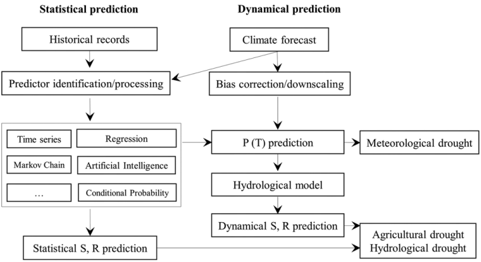
Drought prediction is of critical importance to early warning for drought managements. This review provides a synthesis of drought prediction based on statistical, dynamical, and hybrid methods. Statistical drought prediction is achieved by modeling the relationship between drought indices of interest and a suite of potential predictors, including large‐scale climate indices, local climate variables, and land initial conditions. Dynamical meteorological drought prediction relies on seasonal climate forecast from general circulation models (GCMs), which can be employed to drive hydrological models for agricultural and hydrological drought prediction with the predictability determined by both climate forcings and initial conditions. Challenges still exist in drought prediction at long lead time and under a changing environment resulting from natural and anthropogenic factors. Future research prospects to improve drought prediction include, but are not limited to, high‐quality data assimilation, improved model development with key processes related to drought occurrence, optimal ensemble forecast to select or weight ensembles, and hybrid drought prediction to merge statistical and dynamical forecasts.
Overview
The claims and statistics of this paper haven’t been checked yet.
Free: it reads the open-access text and checks the first 5 claims that cite a source we can check. Create a free account to check every claim.
Integrity signals
Registry
Cites
Statistics
Figures
Verification
Claims the paper makes
The claims and statistics of this paper haven’t been checked yet.
Free: it reads the open-access text and checks the first 5 claims that cite a source we can check. Create a free account to check every claim.
Claims other papers make about this one
Each is checked against this paper’s own text: does it say what the citing paper says it does?
The cited source says what the claim attributes to it.
In the citing paper
“Skillful drought predictions with sufficient lead time remain a challenge, due to multiple driving factors across different spatial and temporal scales (Hao et al., 2018) and the complex nature of drought.”
From Artificial intelligence for climate prediction of extremes: State of the art, challenges, and future perspectives (2024) · cites this paper as Hao et al., 2018
Self-check
Percentages, sums and reported differences re-computed from the paper’s own numbers.
The self-check needs the paper’s full text.
Citations
Cites
(1993) · Cited by 7,699
An Introduction to Categorical Data Analysis
Agresti, A. (2007) · Wiley Series in Probability and Statistics · doi:10.1002/0470114754 · Cited by 6,689
Investigating soil moisture–climate interactions in a changing climate: A review
Seneviratne, S. I., Corti, T., Davin, E. L., Hirschi, M., Jaeger, E. B., Lehner, I., Orlowsky, B., & Teuling, A. J. (2010) · Earth-Science Reviews · doi:10.1016/j.earscirev.2010.02.004 · Cited by 5,638 · cited 2×
“…may lead to increased sensible heat flux contributing to a positive feedback between high temperature and drought (Durre et al., 2000; Fischer et al., 2007; Hao, Hao, Singh & Ouyang, 2017; Koster et al., 2009; Lyon & Dole, 1995; Mueller & Seneviratne, 2012; Seneviratne et al., 2010).”
BackgroundThe Global Land Data Assimilation System
Rodell, M., Houser, P. R., Jambor, U., Gottschalck, J., Mitchell, K., Meng, C.-J., Arsenault, K., Cosgrove, B., Radakovich, J., Bosilovich, M., et al. (2004) · Bulletin of the American Meteorological Society · doi:10.1175/bams-85-3-381 · Cited by 5,614 · cited 3×
“…(LDAS) have been developed in recent decades, such as the NLDAS in the United States (Mitchell et al., 2004; Xia, Peters-Lidard, et al., 2014; Xia, Ek, et al., 2014) and the Global Land Data Assimilation System (GLDAS) (Rodell et al., 2004), and they play an important role in drought early warning.”
BackgroundMishra, A. K., & Singh, V. P. (2010) · Journal of Hydrology · doi:10.1016/j.jhydrol.2010.07.012 · Cited by 5,436 · cited 2×
“…of univariate and multivariate drought indicators based on individual or multiple hydroclimatic variables have been developed in past decades (Hao & Singh, 2015; Hayes et al., 2011; Mishra & Singh, 2010; Zargar et al., 2011), such as the Standardized Precipitation Index (SPI) (McKee et al., 1993).”
BackgroundSelf-citationRobust Responses of the Hydrological Cycle to Global Warming
Held, I. M., & Soden, B. J. (2006) · Journal of Climate · doi:10.1175/jcli3990.1 · Cited by 4,959
Drought under global warming: a review
Dai, A. (2011) · WIREs Climate Change · doi:10.1002/wcc.81 · Cited by 3,523 · cited 3×
“Other factors, such as land surface interactions or feedbacks (e.g., reduced soil moisture and increased temperature) may also contribute to the atmospheric anomaly or occurrence of meteorological drought (Dai, 2011; Fernando et al., 2016; Kam, Sheffield, & Wood, 2014b; Koster & Suarez, 1995).”
BackgroundGlobal warming and changes in drought
Trenberth, K. E., Dai, A., van der Schrier, G., Jones, P. D., Barichivich, J., Briffa, K. R., & Sheffield, J. (2014) · Nature Climate Change · doi:10.1038/nclimate2067 · Cited by 3,382 · cited 1×
“Global warming from natural and anthropogenic factors has accelerated the hydrological cycle, resulting in more extremes, including drought, and a strong tendency of the wet areas getting wetter and dry areas getting drier (Dai, 2011; Held & Soden, 2006; Seager et al., 2010; Trenberth et al., 2014).”
BackgroundThe NCEP Climate Forecast System Version 2
Saha, S., Moorthi, S., Wu, X., Wang, J., Nadiga, S., Tripp, P., Behringer, D., Hou, Y.-T., Chuang, H.-Y., Iredell, M., et al. (2014) · Journal of Climate · doi:10.1175/jcli-d-12-00823.1 · Cited by 3,354 · cited 5×
“There are large uncertainties in the precipitation forecast, and skillful climate forecast beyond the 1month lead is still a prevailing challenge (Mcevoy et al., 2015; Saha et al., 2014; Weisheimer et al., 2009; Wood et al., 2015; Yuan et al., 2013).”
BackgroundMethodInfluentialChow, V. T. (2010) · Cited by 3,340
Research works printed but not linked: 12
- 10.1175/1520-0442(2004)017 · doi:10.1175/1520-0442(2004)017
- 10.1175/1520-0442(2002)015 · doi:10.1175/1520-0442(2002)015
- 10.1175/1520-0442(2001)014 · doi:10.1175/1520-0442(2001)014
- 10.1175/1525-7541(2000)001 · doi:10.1175/1525-7541(2000)001
- 10.1175/1520-0442(1995)008 · doi:10.1175/1520-0442(1995)008
- Milly, P., Julio, B., Malin, F., Robert, M., Zbigniew, W., Dennis, P., & Ronald, J. (2007). Stationarity is dead. Ground Water News & Views, 4, 6-8.
- 10.1175/1520-0442(2004)017 · doi:10.1175/1520-0442(2004)017
- Sheffield, J., Wood, E., Lettenmaier, D., & Lipponen, A. (2008). Experimental drought monitoring for Africa. GEWEX News, 8(3), 4-6.
- 10.1175/1525-7541(2003)004 · doi:10.1175/1525-7541(2003)004 · Paper page
- WCRP (2015). Workshop on understanding, modeling and predicting weather and climate extremes, WCRP Report. No.10/2016.
- 10.1175/1520-0442(2004)017 · doi:10.1175/1520-0442(2004)017
- 10.1175/1525-7541(2002)003 · doi:10.1175/1525-7541(2002)003
Cited by
Items 101–200 of 640
Seasonal droughts and the risk of childhood undernutrition in Ethiopia
Dimitrova, A. (2021) · World Development · doi:10.1016/j.worlddev.2021.105417 · Cited by 68
Unravelling the origin of the atmospheric moisture deficit that leads to droughts
Gimeno‐Sotelo, L., Sorí, R., Nieto, R., Vicente-Serrano, S. M., & Gimeno, L. (2024) · Nature Water · doi:10.1038/s44221-023-00192-4 · Cited by 59
Towards interpreting machine learning models for predicting soil moisture droughts
Huang, F., Zhang, Y., Zhang, Y., Nourani, V., Li, Q., Li, L., & Shangguan, W. (2023) · Environmental Research Letters · doi:10.1088/1748-9326/acdbe0 · Cited by 59
“According to physical knowledge about land-atmosphere interaction, these dominant features are linked to SM. VPD represents atmospheric aridity, and affects the efficiency of plant respiration both directly and indirectly leading to SM fluctuations (Hao et al 2018, Liu et al 2020).”
BackgroundResultDrought and heat affect common bean minerals and human diet—What we know and where to go
Losa, A., Vorster, J., Cominelli, E., Sparvoli, F., Paolo, D., Sala, T., Ferrari, M., Carbonaro, M., Marconi, S., Camilli, E., et al. (2021) · Food and Energy Security · doi:10.1002/fes3.351 · Cited by 63
Spatiotemporal characteristics and forecasting of short-term meteorological drought in China
Zhang, Q., Miao, C., Gou, J., & Zheng, H. (2023) · Journal of Hydrology · doi:10.1016/j.jhydrol.2023.129924 · Cited by 59
Zellou, B., Moçayd, N. E., & Bergou, E. H. (2023) · Natural hazards and earth system sciences · doi:10.5194/nhess-23-3543-2023 · Cited by 59
Effect of drought and season on arbuscular mycorrhizal fungi in a subtropical secondary forest
Maitra, P., Zheng, Y., Chen, L., Wang, Y., Ji, N., Lü, P., Gan, H., Li, X., Sun, X., Zhou, X., et al. (2019) · Fungal ecology · doi:10.1016/j.funeco.2019.04.005 · Cited by 60
Santika, T., Budiharta, S., Law, E. A., Dennis, R., Dohong, A., Struebig, M. J., Medrilzam, Gunawan, H., Meijaard, E., & Wilson, K. A. (2020) · Global Environmental Change · doi:10.1016/j.gloenvcha.2020.102129 · Cited by 63
“The main reason is the difficulty in forecasting drought conditions early in any given year, despite advancement in weather prediction and dynamic modelling technology (Hao et al. 2018).”
BackgroundSingh, A., Reager, J. T., & Behrangi, A. (2021) · Hydrology and earth system sciences · doi:10.5194/hess-25-511-2021 · Cited by 59
“Hao et al. (2018) reviewed different kinds of drought and the prediction methods, based on statistical, dynamical and hybrid methods.”
MethodCreating Climate-Resilient Crops by Increasing Drought, Heat, and Salt Tolerance
Sugumar, T., Shen, G., Smith, J., & Zhang, H. (2024) · Plants · doi:10.3390/plants13091238 · Cited by 55
“…affects crop yield, hydrological drought that occurs when there is a water deficit in surface or subsurface water reservoirs following meteorological drought, and socio-economic drought that arises when supply cannot meet the demands of economic goods due to the water deficit [3].”
BackgroundPlanetary Health: Safeguarding Human Health and the Environment in the Anthropocene
Haines, A., & Frumkin, H. (2021) · Cambridge University Press eBooks · doi:10.1017/9781108698054 · Cited by 65
Improving Drought Modeling Using Hybrid Random Vector Functional Link Methods
Adnan, R. M., Mostafa, R. R., Islam, A. R. M. T., Gorgij, A. D., Kuriqi, A., & Kişi, Ö. (2021) · Water · doi:10.3390/w13233379 · Cited by 55
Gupta, A., & Karthikeyan, L. (2024) · Earth s Future · doi:10.1029/2024ef004674 · Cited by 62
“Few studies suggest that antecedent meteorological conditions, such as AT, PRE, PET, WS and VPD, as well as prevailing land conditions, such as SM and land surface temperature, are crucial for SMD prediction (AghaKouchak, 2014; Chatterjee et al., 2022; Hao et al., 2018).”
Anghileri, D., Monhart, S., Zhou, C., Bogner, K., Castelletti, A. F., Burlando, P., & Zappa, M. (2019) · Water Resources Research · doi:10.1029/2019wr025280 · Cited by 54
“Different research initiatives focus nowadays on the subseasonal time horizon for hydrometeorological forecasts (Hao et al., 2018; Robertson et al., 2015; Vitart et al., 2017; Vitart & Robertson, 2018; Yuan et al., 2015).”
BackgroundInter-seasonal connection of typical European heatwave patterns to soil moisture
Felsche, E., Böhnisch, A., & Ludwig, R. (2023) · npj Climate and Atmospheric Science · doi:10.1038/s41612-023-00330-5 · Cited by 57
Decreasing dynamic predictability of global agricultural drought with warming climate
Wu, H., Su, X., Huang, S., Singh, V. P., Zhou, S., Tan, X., & Hu, X. (2025) · Nature Climate Change · doi:10.1038/s41558-025-02289-y · Cited by 89
“From the development mechanism of drought, the initial conditions of meteorological, land surface, land–atmosphere feedback and ocean– land teleconnection provide important contributions to drought pre-dictability at the seasonal scale 72 .”
Self-citationSub seasonal streamflow forecast assessment at large-scale basins
Quedi, E. S., & Fan, F. M. (2020) · Journal of Hydrology · doi:10.1016/j.jhydrol.2020.124635 · Cited by 53
Han, J., & Singh, V. P. (2020) · Journal of Water and Climate Change · doi:10.2166/wcc.2020.239 · Cited by 52
Self-citationDetecting global irrigated areas by using satellite and reanalysis products
Zohaib, M., Kim, H., & Choi, M. (2019) · The Science of The Total Environment · doi:10.1016/j.scitotenv.2019.04.365 · Cited by 49
Hartick, C., Furusho‐Percot, C., Goergen, K., & Kollet, S. J. (2020) · Water Resources Research · doi:10.1029/2020wr027828 · Cited by 48
“ever, predictions from climate models alone do not generally produce accurate results (Hao et al., 2018; Yuan et al., 2015b).”
BackgroundA new agricultural drought index for monitoring the water stress of winter wheat
Wu, D., Li, Z., Zhu, Y., Li, X., Wu, Y., & Fang, S. (2020) · Agricultural Water Management · doi:10.1016/j.agwat.2020.106599 · Cited by 48
Multi-scale approach for different type of drought in temperate climatic conditions
Minea, I., Iosub, M., & Boicu, D. (2021) · Natural Hazards · doi:10.1007/s11069-021-04985-2 · Cited by 49
Yu, J., Zou, L., Xia, J., Dou, M., Liu, H., & Zuo, L. (2023) · Journal of Hydrology · doi:10.1016/j.jhydrol.2023.130057 · Cited by 47
Deng, S., Tan, X., Liu, B., Yang, F. Y., & Yan, T. (2022) · The Science of The Total Environment · doi:10.1016/j.scitotenv.2022.157427 · Cited by 46
Multi-timescale drought prediction using new hybrid artificial neural network models
Banadkooki, F. B., Singh, V. P., & Ehteram, M. (2021) · Natural Hazards · doi:10.1007/s11069-021-04550-x · Cited by 48
Self-citationLSTM-CM: a hybrid approach for natural drought prediction based on deep learning and climate models
Vo, T. Q., Kim, S., Nguyen, D. H., & Bae, D. (2023) · Stochastic Environmental Research and Risk Assessment · doi:10.1007/s00477-022-02378-w · Cited by 50
“Due to the bias of physical models, postprocessing techniques and multimodel ensemble techniques are often used to increase the accuracy of forecasts (Hao et al. 2018).”
BackgroundMethodTuğrul, T., & Hınıs, M. A. (2024) · Acta Geophysica · doi:10.1007/s11600-024-01399-z · Cited by 48
“Although it is not easy to predict all challenging natural events, droughts are routinely observed and predicted using variety of drought indicators (DI) on a monthly or seasonal timescale (Hao et al. 2018).”
Wassie, S. B., Mengistu, D. A., & Berlie, A. B. (2022) · Environmental Monitoring and Assessment · doi:10.1007/s10661-022-10455-4 · Cited by 48
“Drought is a normal recurring feature of climatic phenomenon (Mishra & Singh, 2010; Mpelasoka et al., 2018) occurring almost in all parts of the world (Hao et al., 2018) and all types of climate regimes (Dai, 2011; Wilhite et al., 2014).”
BackgroundKang, H., & Sridhar, V. (2018) · Sustainability · doi:10.3390/su10061799 · Cited by 44
“A myriad of studies have evaluated monthly to seasonal forecasting techniques; such investigations were limited to lead times of 1–3 months [38], and a longer lead time drought prediction approach was not available [39].”
BackgroundOertel, M., Meza, F. J., & Gironás, J. (2019) · Hydrological Processes · doi:10.1002/hyp.13596 · Cited by 43
Rainfall Forecast and Drought Analysis for Recent and Forthcoming Years in India
Poornima, S., Pushpalatha, M., Jana, R. B., & Patti, L. A. (2023) · Water · doi:10.3390/w15030592 · Cited by 43
Estimation of a trend of meteorological and hydrological drought over Qinhuai River Basin
Abro, M. I., Elahi, E., Chand, R., Zhu, D., Muhammad, J., Daudpoto, M. R., Soomro, A. M., & Khaskheli, M. A. (2021) · Theoretical and Applied Climatology · doi:10.1007/s00704-021-03870-z · Cited by 43
“Drought is a terrible natural hazard (Hao et al. 2018; Spinoni et al. 2019; Xu et al. 2019), and it has a complex nature in terms of impacts on human activities and the environment.”
BackgroundNunno, F. D., & Granata, F. (2023) · Stochastic Environmental Research and Risk Assessment · doi:10.1007/s00477-023-02390-8 · Cited by 43
“Among these, the physical-based models, which consider the physical processes between the atmosphere and land surface (Hao et al. 2018), and data-driven models, which analyze the relationships between the time series considering the exogenous factors as predictors (Dikshit et al. 2021), were widely…”
BackgroundMultiscale spatiotemporal meteorological drought prediction: A deep learning approach
Zhang, J.-L., Huang, X., & Sun, Y.-Z. (2024) · Advances in Climate Change Research · doi:10.1016/j.accre.2024.04.003 · Cited by 43
The potential of machine learning for weather index insurance
Cesarini, L., Figueiredo, R., Monteleone, B., & Martina, M. L. V. (2021) · Natural hazards and earth system sciences · doi:10.5194/nhess-21-2379-2021 · Cited by 46
Bueechi, E., Fischer, M., Crocetti, L., Trnka, M., Grlj, A., Zappa, L., & Dorigo, W. A. (2023) · Agricultural and Forest Meteorology · doi:10.1016/j.agrformet.2023.109596 · Cited by 45
Forecasting of meteorological drought using ensemble and machine learning models
Pande, C. B., Sidek, L. M., Varade, A. M., Elkhrachy, I., Radwan, N., Tolche, A. D., & Elbeltagi, A. (2024) · Environmental Sciences Europe · doi:10.1186/s12302-024-00975-w · Cited by 46
“Several studies have employed ANN-based models, which have proved usefulness in predicting droughts within a 12-month lead time [13, 15, 29, 35, 55].”
MethodMonhart, S., Zappa, M., Spirig, C., Schär, C., & Bogner, K. (2019) · Hydrology and earth system sciences · doi:10.5194/hess-23-493-2019 · Cited by 44
“Nowadays, different research initiatives (Hao et al., 2018; Robertson et al., 2015; Vitart et al., 2017; Vitart and Robertson, 2018) set their focus on the assessment of predictability within this lead-time horizon.”
Hydrological drought class early warning using support vector machines and rough sets
Kolachian, R., & Saghafian, B. (2021) · Environmental Earth Sciences · doi:10.1007/s12665-021-09536-3 · Cited by 41
Simeone, C. E., Hammond, J. C., Archfield, S. A., Broman, D., Condon, L. E., Eldardiry, H., OLSON, C. G., & Steyaert, J. C. (2024) · Geophysical Research Letters · doi:10.1029/2024gl109476 · Cited by 42
“…responses, we leveraged prior studies investigating streamflow drought that used multiple approaches (Sarailidis et al., 2019) and thresholds (Hao et al., 2018) to quantify low‐storage anomalies, as no single method universally captures anomalous deviations below normal hydrological…”
Yuan, M., Gan, G., Bu, J., Su, Y., Ma, H., Liu, X., Zhang, Y., & Gao, Y. (2025) · Journal of Hydrology · doi:10.1016/j.jhydrol.2025.132757 · Cited by 43
Jordan, T. E., Lohman, R. B., Tapia, L., Pfeiffer, M., Scott, C., Amundson, R., Godfrey, L., & Riquelme, R. (2019) · Remote Sensing of Environment · doi:10.1016/j.rse.2019.111544 · Cited by 40
Ke, B., Nguyen, H., Bui, X.-N., & Costache, R. D. (2021) · Natural Resources Research · doi:10.1007/s11053-021-09890-w · Cited by 40
Toward a Robust, Impact‐Based, Predictive Drought Metric
Hobeichi, S., Abramowitz, G., Evans, J. P., & Ukkola, A. (2022) · Water Resources Research · doi:10.1029/2021wr031829 · Cited by 43
Hydrological Droughts of 2017–2018 Explained by the Bayesian Reconstruction of GRACE(‐FO) Fields
Mo, S., Zhong, Y., Forootan, E., Shi, X., Feng, W., Yin, X., & Wu, J. (2022) · Water Resources Research · doi:10.1029/2022wr031997 · Cited by 43
“Drought is an event of prolonged water shortages and usually associated with long-standing (months or even years) and devastating impacts on ecosystem, agriculture, and society (Hao et al., 2018; X. He, Estes, et al., 2019; Van Loon, 2015).”
Backgroundgym-DSSAT: a crop model turned into a Reinforcement Learning environmentPreprint
Gautron, R., Padrón, E. J., Preux, P., Bigot, J., Maillard, O.-A., & Emukpere, D. (2022) · arXiv (Cornell University) · doi:10.48550/arxiv.2207.03270 · Cited by 40
“Weather forecasts remain highly uncertain beyond 1-month lead time (Hao et al., 2018).”
BackgroundMaity, R., Khan, M. I., Sarkar, S., Dutta, R., Maity, S. S., Pal, M., & Chanda, K. (2021) · Journal of Water and Climate Change · doi:10.2166/wcc.2021.062 · Cited by 39
Benchmarking of drought and climate indices for agricultural drought monitoring in Argentina
Araneda-Cabrera, R. J., Bermúdez, M., & Puertas, J. (2021) · The Science of The Total Environment · doi:10.1016/j.scitotenv.2021.148090 · Cited by 38
The Combined Impacts of ENSO and IOD on Global Seasonal Droughts
Yin, H., Wu, Z., Fowler, H. J., Blenkinsop, S., He, H., & Li, Y. (2022) · Atmosphere · doi:10.3390/atmos13101673 · Cited by 38
Konkathi, P., & Karthikeyan, L. (2023) · Remote Sensing of Environment · doi:10.1016/j.rse.2023.113933 · Cited by 37
Dikshit, A., Pradhan, B., Matin, S. S., Beydoun, G., Santosh, M., Park, H., & Maulud, K. N. A. (2024) · Geoscience Frontiers · doi:10.1016/j.gsf.2024.101815 · Cited by 40
Hao, Y., Yuan, X., & Zhang, M. (2024) · Agricultural and Forest Meteorology · doi:10.1016/j.agrformet.2024.110258 · Cited by 38
Heidari, H., Arabi, M., Ghanbari, M., & Warziniack, T. (2020) · Water · doi:10.3390/w12061522 · Cited by 40
“Socioeconomic drought refers to the condition when water demand exceeds water supply [6,8,9].”
BackgroundDrought risk assessment and mapping for the Murray–Darling Basin, Australia
Dunne, A., & Kuleshov, Y. (2022) · Natural Hazards · doi:10.1007/s11069-022-05576-5 · Cited by 37
“Monthly risk assessments allow to identify rapid changes in the drought hazard index at sub-seasonal time scale, which may represent a flash drought (Hao et al. 2018; Parker et al. 2021).”
BackgroundMushtaq, M. A., Ateeq, M. F., Ikram, M., Alam, S. M., Kaleem, M. M., Ashraf, M. A., Asim, M., Almutairi, K. F., Seleiman, M. F., & Shireen, F. (2025) · Plant Stress · doi:10.1016/j.stress.2025.100953 · Cited by 36
Sabut, A., & Mishra, A. (2026) · Water Resources Research · doi:10.1029/2025wr041987 · Cited by 39
Li, C., Zhang, X., Yin, G., Xu, Y., & Hao, F. (2022) · Remote Sensing · doi:10.3390/rs14143307 · Cited by 36
Evaluation of ECMWF-SEAS5 Seasonal Temperature and Precipitation Predictions over South America
Ferreira, G. W. D. S., Reboita, M. S., & Drumond, A. R. D. M. (2022) · Climate · doi:10.3390/cli10090128 · Cited by 39
Hao, Z., & Chen, Y. (2024) · Science China Earth Sciences · doi:10.1007/s11430-023-1201-y · Cited by 38
“…occurrence of droughts across multiple regions; while different types of droughts occur simultaneously or successively in the same region (Hao et al., 2018; Muthuvel et al., 2023), or the same type of drought events repeatedly affecting the same region within a certain period of time…”
Self-citationShahfahad, Talukdar, S., Ali, R., Nguyen, K.-A., Naikoo, M. W., Liou, Y., Islam, A. R. M. T., Mallick, J., & Rahman, A. (2022) · Environmental Monitoring and Assessment · doi:10.1007/s10661-022-10028-5 · Cited by 38
“This finding is similar to earlier research conducted in other regions of the world (Hao et al., 2018; Liang et al., 2017; Patel et al., 2012; Sun et al., 2008).”
ResultNguyen-Duc, P., Nguyen, H. D., Nguyen, Q., Phan‐Van, T., & Pham‐Thanh, H. (2024) · Earth Science Informatics · doi:10.1007/s12145-024-01414-3 · Cited by 36
“ENSO and IOD were chosen as drivers of rainfall based on previous studies (Hao et al. 2018).”
Earth observation for drought risk financing in pastoral systems of sub-Saharan Africa
Fava, F. P., & Vrieling, A. (2020) · Current Opinion in Environmental Sustainability · doi:10.1016/j.cosust.2020.09.006 · Cited by 34
“HSNP, Table 1), the implementation of forecasts into IBDRF instruments ischallenging given the forecasts’ large uncertainty at local scales and longer time lags [69].”
BackgroundDrought responses of traditional and modern wheats in different phenological stages
Cevat, E. S. E. R., Soylu, S., & Özkan, H. (2023) · Field Crops Research · doi:10.1016/j.fcr.2023.109201 · Cited by 36
He, Q., Wang, M., Liu, K., & Wang, B. (2024) · Geography and sustainability · doi:10.1016/j.geosus.2024.08.007 · Cited by 65
Disasa, K. N., Yan, H., Zhang, J., Wang, G., Zhang, C., Zhang, D., Wang, B., & Hao, B. (2025) · Journal of Hydrology · doi:10.1016/j.jhydrol.2025.134571 · Cited by 42
Araneda-Cabrera, R. J., Bermúdez, M., & Puertas, J. (2021) · Journal of Hydrology Regional Studies · doi:10.1016/j.ejrh.2021.100938 · Cited by 41
Jiang, W., & Luo, J. (2022) · Journal of Intelligent & Fuzzy Systems · doi:10.3233/jifs-212748 · Cited by 41
RetractedAhady, A. B., Klopries, E., Schüttrumpf, H., & Wolf, S. (2025) · Water · doi:10.3390/w17152248 · Cited by 38
Raha, S., & Gayen, S. K. (2020) · SN Applied Sciences · doi:10.1007/s42452-020-2730-3 · Cited by 31
Chang, H., He, G., Wang, Q., Li, H., Zhai, J., Dong, Y., Zhao, Y., & Zhao, J. (2021) · Journal of Hydrology · doi:10.1016/j.jhydrol.2021.126248 · Cited by 31
High Resolution Forecasting of Summer Drought in the Western United States
Abolafia‐Rosenzweig, R., He, C., Chen, F., Ikeda, K., Schneider, T. L., & Rasmussen, R. (2023) · Water Resources Research · doi:10.1029/2022wr033734 · Cited by 33
“One factor that affects drought predictability is the persistence of drought, where drought predictability is expected to decrease in areas with relatively weak drought persistence (Hao et al., 2018).”
BackgroundMulti-scale planning model for robust urban drought response
Zaniolo, M., Fletcher, S. M., & Mauter, M. S. (2023) · Environmental Research Letters · doi:10.1088/1748-9326/acceb5 · Cited by 31
“While previous work has explored how to predict the onset of an upcoming drought [60, 61], further research is needed to advance our ability to predict the persistence, frequency, and especially intensity of future droughts.”
BackgroundThe role of spatial scale in drought monitoring and early warning systems: a review
Mardian, J. (2022) · Environmental Reviews · doi:10.1139/er-2021-0102 · Cited by 33
Prediction of DEDI index for meteorological drought with the VMD-CBiLSTM hybrid model
Su, T., Liu, D., Cui, X.-Y., Dou, X.-S., Lei, B., Cheng, X., Yuan, M., & Chen, R.-J. (2024) · Journal of Hydrology · doi:10.1016/j.jhydrol.2024.131805 · Cited by 28
Gebrechorkos, S. H., Pan, M., Beck, H. E., & Sheffield, J. (2022) · Water Resources Research · doi:10.1029/2021wr031480 · Cited by 32
“The higher prediction skill for precipitation and droughts in these regions is due to the strong teleconnection with El Niño–Southern Oscillation (Hao et al., 2018; Pozzi et al., 2013).”
BackgroundXu, Y., Zhang, X., Hao, Z., Hao, F., & Li, C. (2022) · The Science of The Total Environment · doi:10.1016/j.scitotenv.2022.155472 · Cited by 30
Self-citationAchite, M., Katipoğlu, O. M., Jehanzaib, M., Elshaboury, N., Kartal, V., & Ali, S. (2023) · Atmosphere · doi:10.3390/atmos14091447 · Cited by 32
Essenfelder, A. H., Larosa, F., Mazzoli, P., Bagli, S., Broccoli, D., Luzzi, V., Myšiak, J., Mercogliano, P., & Valle, F. D. (2020) · Atmosphere · doi:10.3390/atmos11121305 · Cited by 30
“Even if important advancements have been achieved at the sub-seasonal time horizon (i.e., a week to a month of forecast) [21–25], challenges remain for the seasonal lead-times (i.e., one to six months of forecast) [26–28], particularly in highly variable rainfall dominated catchments [29].”
BackgroundZhu, S., Xu, Z., Luo, X., Liu, X., Wang, R., Zhang, M., & Huo, Z. (2020) · International Journal of Environmental Science and Technology · doi:10.1007/s13762-020-02862-2 · Cited by 29
“The dynamical methods can be used for drought prediction based on the physical processes of the atmosphere, ocean, and land surface (Hao et al. 2018).”
MethodHao, Y., Baik, J., Sseguya, F., & Choi, M. (2021) · Stochastic Environmental Research and Risk Assessment · doi:10.1007/s00477-021-02137-3 · Cited by 30
“To reduce drought risk and prevent drought under global climate change and global warming (Trenberth et al. 2014), several research contributions have been made in the fields of drought monitoring (Aadhar and Mishra 2017; West et al. 2019) and prediction (AghaKouchak 2015; Hao et al. 2014, 2018).”
BackgroundHow Exceptional Was the 2015–2019 Central American Drought?
Anderson, T. G., McKinnon, K. A., Pons, D., & Anchukaitis, K. J. (2023) · Geophysical Research Letters · doi:10.1029/2023gl105391 · Cited by 29
“Analysis of subseasonal variations – as indicated by the strong July-August deficits – is critical for understanding the complexity and het-331 erogeneity among individual drought events and their drivers in order to ultimately re-332 duce impacts as events unfold (Hao et al., 2018).”
BackgroundMa, F., Luo, L., Ye, A., & Duan, Q. (2018) · Hydrology and earth system sciences · doi:10.5194/hess-22-5697-2018 · Cited by 29
“…drought remains one of the least understood natural hazards that are affected by many contributing factors, including meteorological anomalies, land-atmosphere interaction and human activities (Van Loon et al., 2016a, b), which makes accurate drought prediction a challenge (Hao et al., 2018).”
Real-Time Prediction of Areas Susceptible to Flash Drought Development
Chen, L. G., Hartman, A. T., Pugh, B., Gottschalck, J., & Miskus, D. (2020) · Atmosphere · doi:10.3390/atmos11101114 · Cited by 28
“The advantage of using a threshold method with binary outcomes is that it can further be used to generate probabilistic forecasts with logistic regression [18,25].”
MethodForecasting of Drought: A Case Study of Water-Stressed Region of Pakistan
Kumar, P., Shah, S. F., Uqaili, M. A., Kumar, L., & Zafar, R. F. (2021) · Atmosphere · doi:10.3390/atmos12101248 · Cited by 30
“Thus, the significance of drought prediction advances from the reduction of drought effects [24].”
BackgroundAn event-oriented database of meteorological droughts in Europe based on spatio-temporal clustering
Cammalleri, C., Navarro, J. C. A., Bavera, D., Diaz, V., Ciollo, C. D., Maetens, W., Magni, D., Masante, D., Spinoni, J., & Toreti, A. (2023) · Scientific Reports · doi:10.1038/s41598-023-30153-6 · Cited by 33
Exogenous moisture deficit fuels drought risks across China
Wang, G., Zhang, Q., POKHREL, Y. N., Farinotti, D., Wang, J., Singh, V. P., & Xu, C. (2023) · npj Climate and Atmospheric Science · doi:10.1038/s41612-023-00543-8 · Cited by 27
Self-citationA Novel Fusion-Based Methodology for Drought Forecasting
Zhang, H., Loáiciga, H. A., & Sauter, T. (2024) · Remote Sensing · doi:10.3390/rs16050828 · Cited by 32
Three Paradoxes Related to Potential Evapotranspiration in a Warming Climate
Wang, K., Bai, P., & Liu, X. (2025) · Current Climate Change Reports · doi:10.1007/s40641-025-00203-4 · Cited by 30
“The most important reason is that worldwide dryland assessment as well as drought monitoring and warning have been built on these metrics, which have long histories of successful use and will continue to be used [20, 69].”
Stochastic time-series models for drought assessment in the Gaza Strip (Palestine)
Al-Najjar, H., Çeribaşı, G., Doğan, E., Abualtayef, M., Qahman, K., & Shaqfa, A. (2020) · Journal of Water and Climate Change · doi:10.2166/wcc.2020.330 · Cited by 27
Solving transparency in drought forecasting using attention models
Dikshit, A., Pradhan, B., Assiri, M. E., Almazroui, M., & Park, H. (2022) · The Science of The Total Environment · doi:10.1016/j.scitotenv.2022.155856 · Cited by 30
Zhou, R., Wang, J., Tang, C. J., Zhang, Y. P., Chen, X., Li, X., Shi, Y., Wang, L., Xiao, H. B., & Shi, Z. (2022) · Agriculture Ecosystems & Environment · doi:10.1016/j.agee.2022.108286 · Cited by 27
A New Multi-Objective Genetic Programming Model for Meteorological Drought Forecasting
Reihanifar, M., Mehr, A. D., Tür, R., Ahmed, A. T., Abualigah, L., & Dąbrowska, D. (2023) · Water · doi:10.3390/w15203602 · Cited by 35
ENSO and IOD contributions to seasonal meteorological droughts over the Yangtze River basin
Yin, H., Fowler, H. J., Blenkinsop, S., Wu, Z., He, H., & Li, Y. (2023) · International Journal of Climatology · doi:10.1002/joc.8311 · Cited by 27
“…2011a), persistent large-scale circulation anomalies (Jiang et al., 2022; Jin et al., 2013; Liu & Zhou, 2021; Sun & Yang, 2012) and teleconnec-tions (Chen & Zhai, 2015; Huang & Huang, 2012), and tropical ocean thermal anomalies are the main natural contributors to YRB drought (Hao et al., 2018).”
BackgroundKalura, P., Pandey, A., Chowdary, V. M., & Raju, P. V. (2021) · Journal of the Indian Society of Remote Sensing · doi:10.1007/s12524-021-01413-7 · Cited by 28
Rust, W., Bloomfield, J. P., Cuthbert, M. O., Corstanje, R., & Holman, I. (2021) · Hydrological Processes · doi:10.1002/hyp.14099 · Cited by 27
“Water resource forecasting generally centres on understanding hydrological variability over coming months or years, so that water managers can prepare for extremes such as droughts or floods (Chang & Guo, 2020; Hao et al., 2018).”
BackgroundAgricultural drought severity in NE Italy: Variability, bias, and future scenarios
Sofia, G., Zaccone, C., & Tarolli, P. (2023) · International Soil and Water Conservation Research · doi:10.1016/j.iswcr.2023.07.003 · Cited by 26
Could climate change exacerbate droughts in Bangladesh in the future?
Rahman, M., Tumon, M. S. H., Islam, M. M., Chen, N., Pham, Q. B., Ullah, K., Ahammed, S. J., Liza, S. N., Aziz, M. A., Chakma, S., et al. (2023) · Journal of Hydrology · doi:10.1016/j.jhydrol.2023.130096 · Cited by 26
Building Capacity for a User-Centred Integrated Early Warning System for Drought in Papua New Guinea
Bhardwaj, J., Kuleshov, Y., Chua, Z., Watkins, A., Choy, S., & Sun, Q. C. (2021) · Remote Sensing · doi:10.3390/rs13163307 · Cited by 26
“A promising input for the inclusion of probabilistic forecasting into a drought I ‐ EWS would be the sub ‐ seasonal to seasonal forecasts generated by national meteorological agencies [35].”
BackgroundAdvance drought prediction through rainfall forecasting with hybrid deep learning model
Gupta, B. B., Gaurav, A., Attar, R. W., Arya, V., Bansal, S., Alhomoud, A., & Chui, K. T. (2024) · Scientific Reports · doi:10.1038/s41598-024-80099-6 · Cited by 26
Drought Demise Attribution Over CONUS
Wu, J., & Dirmeyer, P. A. (2020) · Journal of Geophysical Research Atmospheres · doi:10.1029/2019jd031255 · Cited by 25
“Land atmospheric feedback (LAF) can affect the severity and duration of extreme precipitation events (Hao et al., 2018).”
Background
Metadata
- Authors
- Hao, Z., Singh, V. P., & Xia, Y.
- Affiliations
- Beijing Normal University (CN)
- Texas A&M University (US)
- NOAA National Centers for Environmental Prediction (US)
- Corresponding author
- Hao, Zengchao
- Venue
- Reviews of Geophysics
- Publisher
- American Geophysical Union (AGU)
- Published
- 2018-01-27
- Volume
- 56
- Issue
- 1
- Pages
- 108-141
- ISSN
- 0096-1043 (ISSN-L)
- 8755-1209
- 1944-9208
- OpenAlex
- W2784184607
- Semantic Scholar
- e7b1812d8fae2df8f1600e9086c7696ff060c3a8
- Cited by
- 607
- References
- 384
- Citations by year
- 2026: 68 · 2025: 99 · 2024: 97 · 2023: 80 · 2022: 89 · 2021: 81 · 2020: 52 · 2019: 28 · 2018: 12
- FWCI
- 25.31
- Type
- journal article
- Language
- en
- Open access
- hybrid
- doi.org
- Licence
- Locations
- Reviews of Geophysics (publishedVersion, cc-by-nc-nd)
- NOAA Institutional Repository (submittedVersion)
- Funders
- National Natural Science Foundation of China (41601014)
- Topics
- Physical Sciences › Environmental Science › Global and Planetary Change › Hydrology and Drought Analysis
- Physical Sciences › Environmental Science › Global and Planetary Change › Climate variability and models
- Physical Sciences › Environmental Science › Water Science and Technology › Hydrology and Watershed Management Studies
- Keywords
- drought forecasting, drought indices, global climate models, hydrological drought, agricultural drought, climate indices, data assimilation, ensemble forecasting, drought early warning, climate change impacts on drought
About these checks
Registry, retraction, Cites and statistics results are computed, not judged, with one exception: a printed reference that no index lists is read once by a model before it counts as a citation error. Claims are extracted by a model and kept only when their quote appears verbatim in the text; each cited source is then checked, with a model’s help, for whether it says what the claim relies on. Those verdicts can be wrong — read the claim’s quote and the cited source before relying on one.
Statistics and arithmetic are recomputed, not judged.
Confidence bands are shown only for fields calibrated on our annotated test set. None is calibrated yet, so no band is shown.
What counts as a claim ›How we measure confidence ›How we check this ›
Are you an author, or do you see a problem with this page? Request a review
Data sources
Bibliographic data: Semantic Scholar, OpenAlex, Crossref.
Contains information from the Semantic Scholar Academic Graph Datasets, made available under the ODC Attribution License (ODC-BY 1.0).
Semantic Scholar’s data is described in: Kinney, R., et al. (2023). The Semantic Scholar Open Data Platform. arXiv:2301.10140.
