

Seasonal Drought Prediction: Advances, Challenges, and Future Prospects
Open accessThe DOI matches its Crossref record; 388 of the 388 references it cites were found in a registry or an index.
Abstract
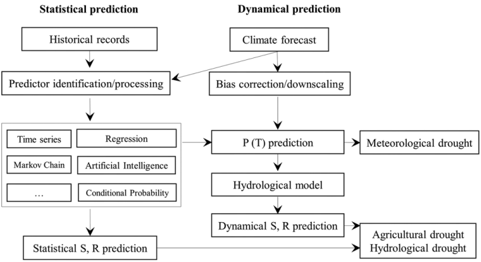
Drought prediction is of critical importance to early warning for drought managements. This review provides a synthesis of drought prediction based on statistical, dynamical, and hybrid methods. Statistical drought prediction is achieved by modeling the relationship between drought indices of interest and a suite of potential predictors, including large‐scale climate indices, local climate variables, and land initial conditions. Dynamical meteorological drought prediction relies on seasonal climate forecast from general circulation models (GCMs), which can be employed to drive hydrological models for agricultural and hydrological drought prediction with the predictability determined by both climate forcings and initial conditions. Challenges still exist in drought prediction at long lead time and under a changing environment resulting from natural and anthropogenic factors. Future research prospects to improve drought prediction include, but are not limited to, high‐quality data assimilation, improved model development with key processes related to drought occurrence, optimal ensemble forecast to select or weight ensembles, and hybrid drought prediction to merge statistical and dynamical forecasts.
Overview
The claims and statistics of this paper haven’t been checked yet.
Free: it reads the open-access text and checks the first 5 claims that cite a source we can check. Create a free account to check every claim.
Integrity signals
Registry
Cites
Statistics
Figures
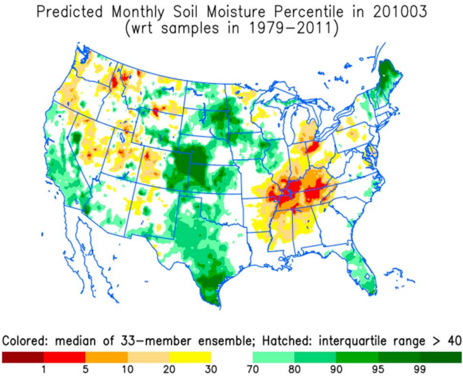
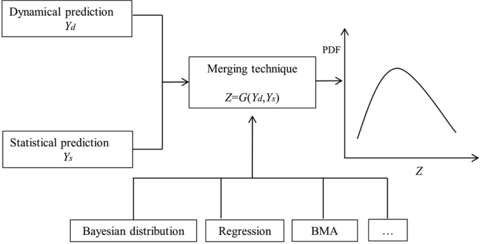
Verification
Claims the paper makes
The claims and statistics of this paper haven’t been checked yet.
Free: it reads the open-access text and checks the first 5 claims that cite a source we can check. Create a free account to check every claim.
Claims other papers make about this one
Each is checked against this paper’s own text: does it say what the citing paper says it does?
The cited source says what the claim attributes to it.
In the citing paper
“Skillful drought predictions with sufficient lead time remain a challenge, due to multiple driving factors across different spatial and temporal scales (Hao et al., 2018) and the complex nature of drought.”
From Artificial intelligence for climate prediction of extremes: State of the art, challenges, and future perspectives (2024) · cites this paper as Hao et al., 2018
Self-check
Percentages, sums and reported differences re-computed from the paper’s own numbers.
The self-check needs the paper’s full text.
Citations
Cites
(1993) · Cited by 7,699
An Introduction to Categorical Data Analysis
Agresti, A. (2007) · Wiley Series in Probability and Statistics · doi:10.1002/0470114754 · Cited by 6,689
Investigating soil moisture–climate interactions in a changing climate: A review
Seneviratne, S. I., Corti, T., Davin, E. L., Hirschi, M., Jaeger, E. B., Lehner, I., Orlowsky, B., & Teuling, A. J. (2010) · Earth-Science Reviews · doi:10.1016/j.earscirev.2010.02.004 · Cited by 5,638 · cited 2×
“…may lead to increased sensible heat flux contributing to a positive feedback between high temperature and drought (Durre et al., 2000; Fischer et al., 2007; Hao, Hao, Singh & Ouyang, 2017; Koster et al., 2009; Lyon & Dole, 1995; Mueller & Seneviratne, 2012; Seneviratne et al., 2010).”
BackgroundThe Global Land Data Assimilation System
Rodell, M., Houser, P. R., Jambor, U., Gottschalck, J., Mitchell, K., Meng, C.-J., Arsenault, K., Cosgrove, B., Radakovich, J., Bosilovich, M., et al. (2004) · Bulletin of the American Meteorological Society · doi:10.1175/bams-85-3-381 · Cited by 5,614 · cited 3×
“…(LDAS) have been developed in recent decades, such as the NLDAS in the United States (Mitchell et al., 2004; Xia, Peters-Lidard, et al., 2014; Xia, Ek, et al., 2014) and the Global Land Data Assimilation System (GLDAS) (Rodell et al., 2004), and they play an important role in drought early warning.”
BackgroundMishra, A. K., & Singh, V. P. (2010) · Journal of Hydrology · doi:10.1016/j.jhydrol.2010.07.012 · Cited by 5,436 · cited 2×
“…of univariate and multivariate drought indicators based on individual or multiple hydroclimatic variables have been developed in past decades (Hao & Singh, 2015; Hayes et al., 2011; Mishra & Singh, 2010; Zargar et al., 2011), such as the Standardized Precipitation Index (SPI) (McKee et al., 1993).”
BackgroundSelf-citationRobust Responses of the Hydrological Cycle to Global Warming
Held, I. M., & Soden, B. J. (2006) · Journal of Climate · doi:10.1175/jcli3990.1 · Cited by 4,959
Drought under global warming: a review
Dai, A. (2011) · WIREs Climate Change · doi:10.1002/wcc.81 · Cited by 3,523 · cited 3×
“Other factors, such as land surface interactions or feedbacks (e.g., reduced soil moisture and increased temperature) may also contribute to the atmospheric anomaly or occurrence of meteorological drought (Dai, 2011; Fernando et al., 2016; Kam, Sheffield, & Wood, 2014b; Koster & Suarez, 1995).”
BackgroundGlobal warming and changes in drought
Trenberth, K. E., Dai, A., van der Schrier, G., Jones, P. D., Barichivich, J., Briffa, K. R., & Sheffield, J. (2014) · Nature Climate Change · doi:10.1038/nclimate2067 · Cited by 3,382 · cited 1×
“Global warming from natural and anthropogenic factors has accelerated the hydrological cycle, resulting in more extremes, including drought, and a strong tendency of the wet areas getting wetter and dry areas getting drier (Dai, 2011; Held & Soden, 2006; Seager et al., 2010; Trenberth et al., 2014).”
BackgroundThe NCEP Climate Forecast System Version 2
Saha, S., Moorthi, S., Wu, X., Wang, J., Nadiga, S., Tripp, P., Behringer, D., Hou, Y.-T., Chuang, H.-Y., Iredell, M., et al. (2014) · Journal of Climate · doi:10.1175/jcli-d-12-00823.1 · Cited by 3,354 · cited 5×
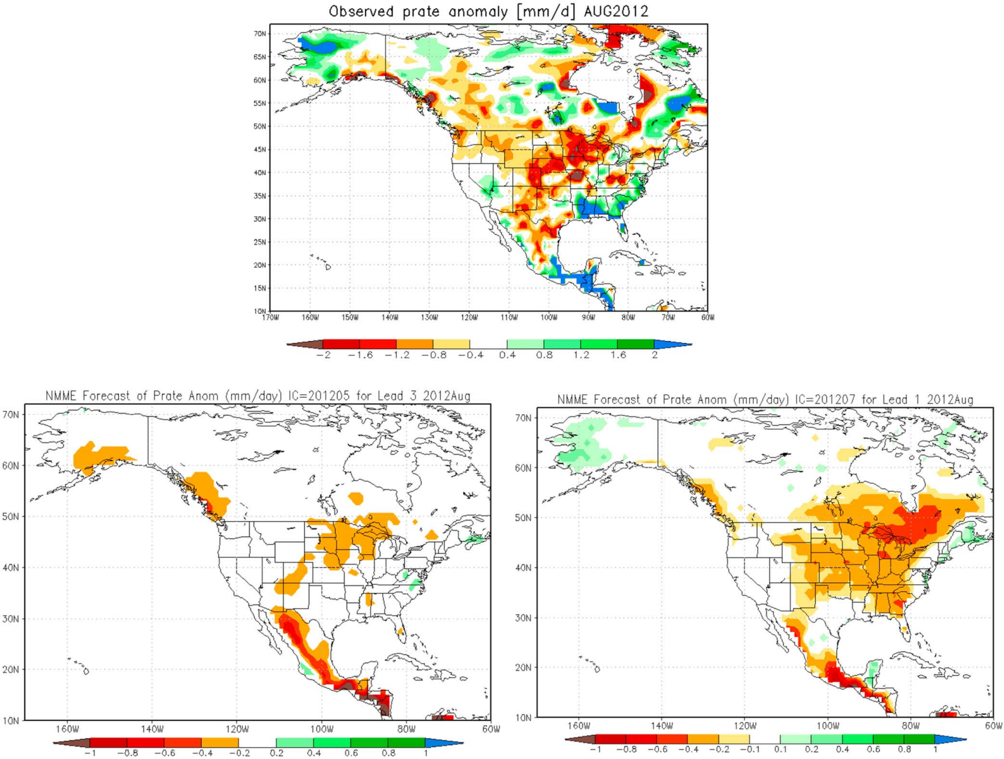
“There are large uncertainties in the precipitation forecast, and skillful climate forecast beyond the 1month lead is still a prevailing challenge (Mcevoy et al., 2015; Saha et al., 2014; Weisheimer et al., 2009; Wood et al., 2015; Yuan et al., 2013).”
BackgroundMethodInfluentialChow, V. T. (2010) · Cited by 3,340
Research works printed but not linked: 12
- 10.1175/1520-0442(2004)017 · doi:10.1175/1520-0442(2004)017
- 10.1175/1520-0442(2002)015 · doi:10.1175/1520-0442(2002)015
- 10.1175/1520-0442(2001)014 · doi:10.1175/1520-0442(2001)014
- 10.1175/1525-7541(2000)001 · doi:10.1175/1525-7541(2000)001
- 10.1175/1520-0442(1995)008 · doi:10.1175/1520-0442(1995)008
- Milly, P., Julio, B., Malin, F., Robert, M., Zbigniew, W., Dennis, P., & Ronald, J. (2007). Stationarity is dead. Ground Water News & Views, 4, 6-8.
- 10.1175/1520-0442(2004)017 · doi:10.1175/1520-0442(2004)017
- Sheffield, J., Wood, E., Lettenmaier, D., & Lipponen, A. (2008). Experimental drought monitoring for Africa. GEWEX News, 8(3), 4-6.
- 10.1175/1525-7541(2003)004 · doi:10.1175/1525-7541(2003)004 · Paper page
- WCRP (2015). Workshop on understanding, modeling and predicting weather and climate extremes, WCRP Report. No.10/2016.
- 10.1175/1520-0442(2004)017 · doi:10.1175/1520-0442(2004)017
- 10.1175/1525-7541(2002)003 · doi:10.1175/1525-7541(2002)003
Cited by
Items 401–500 of 640
Sustainability nexus analytics, informatics, and data (AID): Drought
Huning, L. S., Bateni, S. M., Hayes, M. J., Ho, S., Jayasinghe, S., Kumar, R., Lima, C., Love, C. A., Madani, K., Markonis, Y., et al. (2024) · Sustainability Nexus Forum · doi:10.1007/s00550-024-00546-w · Cited by 4
“1) (e.g., AghaKouchak et al. 2015a, 2023; Balti et al. 2020; Hao et al. 2017, 2018; Alahacoon and Edirisinghe 2022).”
Yin, H., Wu, Z., & He, H. (2025) · Journal of Hydrology Regional Studies · doi:10.1016/j.ejrh.2025.102231 · Cited by 4
Spatial Drought Patterns in East Africa
Haile, G. G., Tang, Q., & Baniya, B. (2022) · Cambridge University Press eBooks · doi:10.1017/9781108787291.005 · Cited by 4
Analysis of the Drought Impact as an Extreme Climatic Event in Sudan
Hussien, A. (2024) · Journal of Geoscience and Environment Protection · doi:10.4236/gep.2024.126003 · Cited by 4
“In areas that depend heavily on agriculture, drought is a complicated phenomenon that affects socioeconomic and agricultural activities in major ways (Hao et al., 2018).”
Wambua, R. M. (2019) · International Journal of Applied Geospatial Research · doi:10.4018/ijagr.2019100102 · Cited by 4
Stochastic model for crop water stress during agricultural droughts
Mukherjee, D. (2019) · Engineering Reports · doi:10.1002/eng2.12081 · Cited by 4
“(3) Average WSP-sum: Average Crop-water Stress.”
BackgroundFactors responsible for consecutive deficit Indian monsoons during 2014 and 2015
Pradhan, M., Rao, S. A., & Srivastava, A. (2021) · Theoretical and Applied Climatology · doi:10.1007/s00704-020-03486-9 · Cited by 4
“Evolution of various categories of drought, e.g., meteorological, agricultural, hydrological, and socio-economic, results from the interaction between different contributing factors like precipitation, temperature, soil moisture, and runoff/stream-flow (Hao et al. 2018).”
BackgroundA Place‐Based Approach to Drought Forecasting in South‐Central Oklahoma
McPherson, R. A., Corporal-Lodangco, I. L., & Richman, M. B. (2022) · Earth and Space Science · doi:10.1029/2022ea002315 · Cited by 4
“Several statistical models have been used to predict drought, including those using conditional probabilities, Markov Chains, time series, regressions, and artificial intelligence (Hao et al., 2018).”
MethodAbiotic stress tolerance in wheat (Triticum aestivum L.): Molecular breeding perspectives
Gahlaut, V., Gautam, T., & Wani, S. H. (2022) · Elsevier eBooks · doi:10.1016/b978-0-323-85243-2.00001-5 · Cited by 4
Multiple Markov Chains for Categorial Drought Prediction on the U.S. Drought Monitor at Weekly Scale
Cao, J., Guan, F., Zhang, X., Nam, W., Leng, G., Gao, H., Ye, Q., Gu, X., Zeng, J., Zhang, X., et al. (2023) · Journal of Applied Meteorology and Climatology · doi:10.1175/jamc-d-23-0061.1 · Cited by 4
A Regimes‐Based Approach to Identifying Seasonal State‐Dependent Prediction Skill
Shackelford, K., DeMott, C. A., van Leeuwen, P. J., & Barnes, E. A. (2025) · Journal of Geophysical Research Atmospheres · doi:10.1029/2024jd042917 · Cited by 3
“…prediction problems, such as the timing and intensity of the Asian monsoon (e.g., Kim et al., 2012), regional droughts and heat waves (e.g., Hao et al., 2018), cold air outbreaks (e.g., Albers et al., 2022), and more straightforward problems like single location precipitation and…”
A Tale of Two Unprecedented Droughts in Southeast Asia: Physical Drivers and Impending Future Risks
Ma, S., Peng, X. J., Liu, X., Wei, Z., Niu, Z., Zhao, W., Pan, M., & He, X. (2025) · Earth s Future · doi:10.1029/2025ef005971 · Cited by 3
“However, the specific causes and predictability of individual drought events remain elusive (Hao et al., 2018; Kiem et al., 2016), due to the complex interactions of climate factors and distinct regional characteristics.”
Mahmoudi, P., Jafari, P., Ghaemi, A., Jian, J., Firoozi, F., & Yang, J. (2025) · Earth Systems and Environment · doi:10.1007/s41748-025-00925-3 · Cited by 3
“…nonlinear systems without a priori assumptions about the underlying data structure (Hussain et al. 2025; Pradhan et al. 2024; Nandgude et al. 2023; Zellou et al. 2023; Prodhan et al. 2022; Dikshit et al. 2022; Hao et al. 2018; Fatima et al. 2025; Ilyas et al. 2025 ; Katipoğlu & Sarıgöl 2023).”
Zhou, K., Shi, X., Li, J., Zhang, T., & Feng, P. (2025) · Agricultural Water Management · doi:10.1016/j.agwat.2025.110035 · Cited by 3
Zhou, K., Li, J., Zhang, T., Shi, X., & Feng, P. (2026) · Journal of Hydrology · doi:10.1016/j.jhydrol.2026.135078 · Cited by 4
Zhang, T., Ren, L., Dong, Z., Cui, C., Wang, W., Li, Z., Han, Y., Peng, Y., & Yang, J. (2024) · Ecological Indicators · doi:10.1016/j.ecolind.2024.112715 · Cited by 3
Edris, S. G., McGovern, A., Basara, J. B., Christian, J. I., Furtado, J. C., Olayiwola, H., & Xiao, X. (2025) · Artificial Intelligence for the Earth Systems · doi:10.1175/aies-d-24-0068.1 · Cited by 3
Edris, S. G., McGovern, A., Basara, J. B., Christian, J. I., Furtado, J. C., Olayiwola, H., & Xiao, X. (2025) · Artificial Intelligence for the Earth Systems · doi:10.1175/aies-d-24-0069.1 · Cited by 4
Tang, W., Kumar, R., Méndez, A. D. M., Ahafianyo, F., Akinsanola, A. A., Ameko, A., Dekker, M., Fu, R., Gaubert, B., Hagos, S., et al. (2025) · Bulletin of the American Meteorological Society · doi:10.1175/bams-d-24-0118.1 · Cited by 4
Faizi, M. A., Maryono, M., & Hermawan, F. (2023) · Journal of Bioresources and Environmental Sciences · doi:10.14710/jbes.2024.19776 · Cited by 3
Xu, H., Wu, Z., He, H., Chen, R., & Wu, X. (2023) · Water · doi:10.3390/w15183286 · Cited by 3
郝, 增., & 陈, 阳. (2024) · SCIENTIA SINICA Terrae · doi:10.1360/sste-2023-0060 · Cited by 5
Zhang, W., Xu, P., Liu, C., Fang, H., Qiu, J., & Zhang, C. (2024) · Water · doi:10.3390/w16071064 · Cited by 3
Mohammadi, M., Bazrafshan, O., & Zamanı, H. (2025) · Natural Hazards · doi:10.1007/s11069-025-07539-y · Cited by 6
“Drought forecasting presents a significant challenge in hydrology and climatology due to its complex nature and spatiotemporal variability (Hao et al. 2018).”
Eslami, Z., Shirvani, A., & Granata, F. (2025) · Meteorological Applications · doi:10.1002/met.70082 · Cited by 3
Environmental Healthcare Assessment via Daily-Scale Drought Monitoring
Yuan, H., Huang, Q., Lu, Q., Hai-yan, Y., & Lu, W. J. (2022) · Journal of Healthcare Engineering · doi:10.1155/2022/5010760 · Cited by 3
“In general, meteorological drought is considered to be the source of other type of drought [8].”
BackgroundRetractedA Review of Methods used to Monitor and Predict DroughtsPreprint
Hamarash, H. R., Rasul, A., & Hamad, R. (2022) · Preprints.org · doi:10.20944/preprints202208.0539.v1 · Cited by 3
Land surface temperature and related issues
Veysi, S., & Galehban, E. (2024) · Elsevier eBooks · doi:10.1016/b978-0-443-15341-9.00017-4 · Cited by 2
Lekshmi, G. V., Pillai, P. A., & Suneeth, K. V. (2024) · Climate Dynamics · doi:10.1007/s00382-024-07284-1 · Cited by 2
“Drought prediction generally indicates the prediction of the severity of drought, but the complexity resulting from diverse origins and occurrence at different spatio-temporal scales presents a major challenge (Hao et al. 2018 ).”
Noh, S., Felix, M. L., Oh, S., & Jung, K. (2024) · KSCE Journal of Civil Engineering · doi:10.1007/s12205-024-0160-2 · Cited by 2
“In 2015, the Boryeong Dam in South Korea experienced prolonged water scarcity and intensified dam destructive impact of drought on local communities and establish corresponding emergency plans , timely and accurate prediction methods (Hao et al., 2018).”
Examine the Role of Indo-Pacific Sea Surface Temperatures in Recent Meteorological Drought in Sudan
Mohammed, A. H. A., Zhang, X., & Alriah, M. A. A. (2024) · Atmosphere · doi:10.3390/atmos15101194 · Cited by 2
Hierarchical multimodel ensemble probabilistic forecasts for precipitation over East Asia
Ji, L., Zhi, X., Luo, Q., & Ji, Y. (2025) · Meteorological Applications · doi:10.1002/met.70035 · Cited by 2
“In the context of persistent global warming, reliable and accurate precipitation forecasts hold immense importance for disaster prevention and mitigation, such as flood early warning and drought prediction (Hao et al., 2018; Jiang et al., 2023; Lavaysse et al., 2020).”
Mi, Q., Huo, Z., Li, M., Zhang, L., Kong, R., Zhang, F., Wang, Y., & Huo, Y. (2025) · Agronomy · doi:10.3390/agronomy15030679 · Cited by 2
Wu, S., Chen, X., Huang, J., Yuan, Y., Zhou, H., & Jiang, L. (2025) · Water · doi:10.3390/w17071099 · Cited by 2
Ren, K., Ming, T., Fang, W., Wang, F., Qu, J., & Guo, W. (2025) · Natural Hazards · doi:10.1007/s11069-025-07317-w · Cited by 2
“Understanding the mechanism of meteorological droughts is essential for improving prediction (Hao et al. 2018; Fung et al. 2020) and management strategies (Kikon and Deka 2022), especially as the frequency and intensity of droughts are anticipated to increase in many regions due to the projected…”
Dandapat, A. K., Panda, P. K., Sankalp, S., & Jothiman, M. (2025) · Discover Applied Sciences · doi:10.1007/s42452-025-07310-9 · Cited by 2
“This study assessed 13 CMIP6 climate models for their ability to simulate mean, maximum, and minimum temperatures across seven homogeneous regions of India during annual and summer (JJA) seasons, using CRU observational data for comparison [48].”
Zhang, L., Rubin, H. J., Chien, R., Fu, J. S., Rastogi, D., Kao, S., & Ashfaq, M. (2025) · Environmental Research Letters · doi:10.1088/1748-9326/adf4f9 · Cited by 4
“However, limitations such as temporal uncertainties and energy balance closure issues may introduce biases in drought index calculations (Hao et al 2018a).”
Summer Drought Predictability in the Euro-Mediterranean Region in Seasonal Forecasts
Cerato, G., Bellomo, K., & von Hardenberg, J. (2025) · Journal of Hydrometeorology · doi:10.1175/jhm-d-25-0039.1 · Cited by 2
Tang, Y., Zeng, S., Yang, Y., Sun, T., Liu, X., & Hu, C. (2025) · Journal of Hydrology Regional Studies · doi:10.1016/j.ejrh.2025.103010 · Cited by 2
Hu, J., Deng, C., Zhang, Q., & Pang, A. (2025) · Journal of Hydrology · doi:10.1016/j.jhydrol.2025.134816 · Cited by 2
Polat, A. B., Alumert, E., & Akçay, Ö. (2026) · Environmental Monitoring and Assessment · doi:10.1007/s10661-025-14895-6 · Cited by 2
“…per month, (2) computational efficiency enabling rapid scenario testing, (3) physical constraint integration preventing extrapolation beyond realistic parameter ranges, and (4) methodological consistency with operational drought early warning systems (Hao et al., 2018; Sheffield et al., 2012).”
InfluentialChoursi, S. K., Erfanian, M., Abghari, H., Miryaghoubzadeh, M., & Javan, K. (2026) · Water Cycle · doi:10.1016/j.watcyc.2026.02.002 · Cited by 3
Leščešen, I., Josić, M., Гњато, С., Petrović, A. M., & Bajtek, Z. (2026) · Sustainability · doi:10.3390/su18062678 · Cited by 3
AI and Machine Learning for Drought Prediction and Mitigation
Tayyaba, S., Puppala, H., Arora, M. K., Khatter, K., & Tamvada, J. P. (2026) · Studies in systems, decision and control · doi:10.1007/978-3-032-20714-2_5 · Cited by 2
SEAS5-BCSD: a bias-corrected and downscaled global seasonal forecast reference dataset for 1981–2024
Weber, J. N., Lorenz, C., Schober, T. C., Wiegels, R., & Kunstmann, H. G. (2026) · Earth system science data · doi:10.5194/essd-18-5259-2026 · Cited by 2
“One likely reason for this skill deficit is the low signal-to-noise ratio in dry regions: the absolute differences between dry and very dry conditions are small, making them more difficult to predict accurately (Hao et al., 2018).”
Park, H., & Lee, D. K. (2019) · Korean Society of Hazard Mitigation · doi:10.9798/kosham.2019.19.1.45 · Cited by 2
“또한, 현재의 물 환경 상태는 가뭄이 시작될 때의 토양수분 초기값에 해당하므로 수개월 뒤 토양수분상태를 좌우하게 된다(Hao et al., 2018).”
Ebrahimi, P. (2021) · Elsevier eBooks · doi:10.1016/b978-0-323-89861-4.00039-7 · Cited by 2
Heidari, H. (2022) · Journal of Earth and Environmental Sciences Research · doi:10.47363/jeesr/2022(4)171 · Cited by 2
Xin, C., Teng, C., & Samad, A. (2023) · Journal of Tropical Life Science · doi:10.11594/jtls.13.02.19 · Cited by 2
“The severity of drought is complex and depends on different factors like the frequency of rainfall, soil moisture and evaporation rate [4, 5].”
BackgroundViet, L. V. (2024) · Environmental Research Communications · doi:10.1088/2515-7620/ad3529 · Cited by 3
Raczyński, K., & Dyer, J. L. (2024) · Journal of Hydroinformatics · doi:10.2166/hydro.2024.229 · Cited by 2
Kathiresan, P. K., Pushpam, R., & Subramanian, S. (2024) · Vegetos · doi:10.1007/s42535-024-00958-5 · Cited by 2
The Role of Meteorology in The Mining Chain in Northern Brazil
Ferreira, D. B. D. S., Paes, A. P., da Costa, C. P. W., Tedeschi, R. G., Júnior, R. O. D. S., Nascimento, W. R., Neto, A. V. N., Kuhn, P., Franco, V. D. S., Jesus, E. D. S., et al. (2024) · European journal of applied sciences · doi:10.14738/aivp.123.17165 · Cited by 2
Auliana, N. H., Sunusi, N., & Herdiani, E. T. (2024) · AIMS environmental science · doi:10.3934/environsci.2024034 · Cited by 2
Dynamical systems-inspired machine learning methods for drought prediction
Watford, A., Bauch, C. T., & Anand, M. (2024) · Ecological Informatics · doi:10.1016/j.ecoinf.2024.102889 · Cited by 3
Meteorolojik Kuraklığın Buğday Verimindeki Etkisinin Değerlendirilmesi: Kızılırmak Havzası Örneği
Öz, F. Y., Özelkan, E., Demirel, K., & Tatlı, H. (2025) · Türk Tarım ve Doğa Bilimleri Dergisi · doi:10.30910/turkjans.1598132 · Cited by 2
Drought exacerbates herbicide use: Evidence from rural China
Fu, C., Xu, R., Xu, X., & Zhang, L. (2025) · Journal of Cleaner Production · doi:10.1016/j.jclepro.2025.145703 · Cited by 2
Huang, Y., Zhang, X., Xu, J., & Li, Y. (2025) · Hydrological Processes · doi:10.1002/hyp.70175 · Cited by 2
“The water storage influences the catchment's response to subsequent precipitation, suggesting that the catchment retains some form of historical information (Hao et al. 2018).”
Wang, Q., Su, X., Wu, H., Xiao, Y., & Yang, Y. (2025) · Journal of Hydrology Regional Studies · doi:10.1016/j.ejrh.2025.102653 · Cited by 6
Hammond, J. C., Goodling, P., Diaz, J., Corson-Dosch, H. R., Heldmyer, A. J., Hamshaw, S. D., McShane, R. R., Ross, J. C., Sando, R., Simeone, C. E., et al. (2026) · Frontiers in Water · doi:10.3389/frwa.2025.1709138 · Cited by 6
Ma, T., Liang, Y., Sunde, M. G., Lau, M. K., Liu, B., Wu, M. M., & He, H. S. (2021) · International Journal of Climatology · doi:10.1002/joc.7005 · Cited by 2
George, J., Lang, M., Hordo, M., Metslaid, S., Post, P., & Tamm, T. (2020) · Forestry Studies / Metsanduslikud Uurimused · doi:10.2478/fsmu-2020-0017 · Cited by 3
“Projecting drought occurrence in the future is a difficult task due to the fact that stochasticity plays a significant role (Hao et al., 2018) and because temperature alone is not driving drought occurrence (Eamus et al., 2013).”
BackgroundKim, S., Kim, J., & Bae, D. (2022) · Water · doi:10.3390/w14071108 · Cited by 2
The sensitivity of meteorological drought index towards El Nino-Southern Oscillation
Koem, S., Lahay, R. J., & Nasib, S. K. (2022) · IOP Conference Series Earth and Environmental Science · doi:10.1088/1755-1315/1089/1/012005 · Cited by 2
“For this reason, many have endeavored to develop a method for predicting drought that takes into account the variables of hydroclimatic, such as precipitation, soil moisture, streams, snows, groundwater, evapotranspiration, and vegetation [5].”
Methodأستثنائية جفاف الموسم المطري 2021-2022 في العراق وعلاقته بالدورة العامة للغلاف الجوي
Muslih, K. D. (2022) · Al-Adab Journal · doi:10.31973/aj.v3i143.3978 · Cited by 2
Remote Sensing Applications in Drought Monitoring and Prediction
Sharma, A., Bejagam, V., & Goyal, M. K. (2022) · Disaster Resilience and Green Growth · doi:10.1007/978-981-19-0725-8_5 · Cited by 2
Raza, M. A., Almazah, M. M. A., Al-Ansari, N. A., Hussain, I., Alduais, F. S., & Naser, M. A. (2023) · Complexity · doi:10.1155/2023/8260317 · Cited by 6
Liu, Z., He, H., Wu, Z., Lu, G., & Yin, H. (2020) · doi:10.5194/esd-2019-81 · Cited by 2
Malloy, K., & Kirtman, B. P. (2022) · doi:10.1002/essoar.10512931.1 · Cited by 2
Islam, M. S., & Shafiq, U. F. B. (2023) · IUBAT Review · doi:10.3329/iubatr.v6i1.67230 · Cited by 1
“The most difficulty of forecasting and valid prediction of drought in relation to scale, magnitude and locations ahead of time, is a serious weakness (Khadr, 2016; Hao et al., 2018; Kreibich et al., 2019).”
BackgroundSalomi, R., Vignesh, P. P., & Bharathkumar, S. (2024) · Environmental and Experimental Biology · doi:10.22364/eeb.22.02 · Cited by 2
“Unfavourable water level conditions cause reduced metabolic activity of rice and it gives poor or no grain-yield due to the intensity of drought, which depends on frequency of rainfall, evaporation and soil moisture (Hao et al. 2018; Oladosu, et al. 2019).”
BackgroundSatellite-Based Monitoring of Drought at the Watershed Scale
Nones, M. (2024) · GeoPlanet: earth and planetary sciences · doi:10.1007/978-3-031-56093-4_22 · Cited by 1
Comparison of meteorological drought in the dry and wet zones of Sri Lanka
Herath, C., Zhou, W., & Wang, J. (2024) · Ecological Frontiers · doi:10.1016/j.ecofro.2024.10.002 · Cited by 1
Zarei, N., Latifi, H., & Ahmadabadian, A. H. (2025) · Horticulture Environment and Biotechnology · doi:10.1007/s13580-025-00689-9 · Cited by 1
“Despite these immense opportunities, significant challenges in modeling agricultural drought in arid regions persist because of the complex interactions among various factors, such as temperature, human activities, precipitation, evaporation, and transpiration (Hao et al. 2018).”
Eguagie-Suyi, P., Dada, B. M., & Okogbue, E. C. (2025) · Journal of Atmospheric Science Research · doi:10.30564/jasr.v8i2.8220 · Cited by 2
Subseasonal to Seasonal (S2S) Prediction Algorithms Using Hybrid Machine Learning Techniques
Kim, H., Zhou, S., Bienkowski, A., & Pattipati, K. R. (2025) · Artificial Intelligence for the Earth Systems · doi:10.1175/aies-d-23-0108.1 · Cited by 1
Tayyaba, S., Puppala, H., & Arora, M. K. (2025) · Environmental Monitoring and Assessment · doi:10.1007/s10661-025-14324-8 · Cited by 2
“Droughts can be categorized into meteorological, hydrological, agricultural, and socio-economic types (Hao et al., 2018).”
Clancy, K., & Payne, B. (2025) · Open Journal of Modern Hydrology · doi:10.4236/ojmh.2025.154017 · Cited by 1
Badar, Z., Ahmad, I., Almanjahie, I. M., & Alshahrani, F. (2025) · Stochastic Environmental Research and Risk Assessment · doi:10.1007/s00477-025-03094-x · Cited by 1
Li, S., & Du, J. (2025) · Plant Direct · doi:10.1002/pld3.70109 · Cited by 1
“The intensification of global warming has resulted in the increased frequency of extreme climate events, such as droughts (Asadnabizadeh 2020; Hao et al. 2018).”
Skilful seasonal predictions of droughts in the Mediterranean region
Monte, T. D., Alessandri, A., Cherchi, A., & Gaetani, M. (2025) · Climate Dynamics · doi:10.1007/s00382-025-07872-9 · Cited by 1
“The lack of skill in predicting precipitation over the Euro-Mediterranean domain has been reported in previous literature (Mishra et al. 2018; Sánchez-García et al. 2018), and a low precipitation skill over Europe has been ascribed to a weak influence from ENSO over these areas (Doblas-Reyes et al. 2013).”
Classifying Drought Severity in Northern Iran Using Machine Learning and Integrated Climate Indices
Dehghani, F., & Molavi‐Arabshahi, M. (2025) · International Journal of Climatology · doi:10.1002/joc.70188 · Cited by 1
“Additionally, traditional models may lack adaptability to new climate trends, leading to reduced forecasting accuracy (Aghakouchak et al. 2022; Hao et al. 2018).”
Mondol, M. N., Hasan, M. F., Tania, M. J., Basak, U., Hossain, M. T., Touhiduzzaman, S., Akhtaruzzaman, A., & Islam, M. A. (2025) · Earth Systems and Environment · doi:10.1007/s41748-025-00943-1 · Cited by 3
“Static parameters (e.g., soil texture, geology) and socio-economic parameters (e.g., number of tube wells) provide essential baseline conditions but often contribute minimally to explaining seasonal variance in drought prediction (Hao et al. 2018 ; Mulroe et al. 2023).”
Huang, Y., Yuan, W., Zhang, L., Yang, P., Huang, L., Ma, J., Zhang, Z., & Wang, H. (2025) · Plant Stress · doi:10.1016/j.stress.2025.101206 · Cited by 1
Ran, Y., Wang, Z., Chen, M., Chen, X., Hu, J., Li, C. J., Liang, Z., Yong, Z., & Yang, Y. (2025) · Earth Systems and Environment · doi:10.1007/s41748-025-00992-6 · Cited by 2
“For example, the standardized dry and hot index (Hao et al. 2018a), the compound event magnitude index (Guo et al. 2023), as well as the standardized compound drought and heat index (Li et al. 2021).”
The evolution of drought characteristics in semi-arid Africa over the last four decades
Afamondji, K. M. C., Estácio, Á. B. S., Mohsine, I., Karmouda, N., Bouramtane, T., Tahiri, M., Kacimi, I., Tweed, S. O., & Leblanc, M. J. (2026) · Journal of Hydrology Regional Studies · doi:10.1016/j.ejrh.2025.103087 · Cited by 7
“This limitation has profound implications for drought early warning systems, many of which still rely primarily on precipitation-based indices (Sheffield et al., 2012; Hao et al., 2018).”
Sun, W.-J., Lin, Z., chen, C., Zhang, J., Liang, M., Wu, Y. M., Yan, H., Li, J., & Li, T. (2026) · Journal of Hydrology Regional Studies · doi:10.1016/j.ejrh.2025.103071 · Cited by 2
Haider, H., Hussain, M. A., Jaffry, A. H., Abbas, F., Khalid, M. B., Farooq, A., Zainab, I., & Zahid, M. B. (2025) · Big Data In Water Resources Engineering (BDWRE) · doi:10.26480/bdwre.01.2025.07.18 · Cited by 1
Astsatryan, H. V., Abrahamyan, R., Gevorgyan, A., Panyan, H., & Furtado, K. (2026) · Journal of the Bulgarian Geographical Society · doi:10.3897/jbgs.e169740 · Cited by 1
Gualdi, S., García‐Serrano, J., Ardilouze, C., Terzago, S., Torralba, V., Badi, W., Batté, L., Driouech, F., Fröhlich, K., Camino, E. R., et al. (2026) · International Journal of Climatology · doi:10.1002/joc.70274 · Cited by 2
“…al. 2012; Seo et al. 2019), several early studies following the second phase of the Global Land– Atmosphere Coupling Experiment (Koster et al. 2010, 2011) suggest that a realistic initialization of the land component in seasonal prediction systems during boreal spring significantly improves the…”
Luintel, N., Bueechi, E., Poděbradská, M., Trnka, M., Dolák, L., Kalin, K. C., Labudová, L., Řehoř, J., Lončar-Petrinjak, I., Gregorič, G., et al. (2026) · Regional Environmental Change · doi:10.1007/s10113-026-02536-8 · Cited by 1
“…variables — precipitation, evapotranspiration, soil moisture, river discharge, ground-water level, and vegetation indices — using data from in-situ stations, satellite remote sensing, and climate models, among others (AghaKouchak et al. 2015; Hao et al. 2018; Liu et al. 2016; Crocetti et al. 2020).”
Mulberry Drought Diagnosis: Integrating Proximal Sensing and Metabolomics for Remote Monitoring
Yang, L., Li, C., Gao, H., Hong, Z., He, Y., & Huang, L. (2026) · Plants · doi:10.3390/plants15050741 · Cited by 1
“Drought is a severe abiotic stressor that decreases agricultural production and threat-ens food security, the social economy, human lives, and political stability [1,2].”
Gualdi, S., Camino, E. R., Guisado, E. R., Toreti, A., Pasqui, M., Ardilouze, C., Badi, W., Batté, L., Driouech, F., Fröhlich, K., et al. (2026) · International Journal of Climatology · doi:10.1002/joc.70300 · Cited by 2
“A common cate-gorisation clustered these approaches into three main groups: statistical models, dynamic models and hybrid statistical-dynamic models (Hao et al. 2018; Torres-Vázquez et al. 2023; Zellou et al. 2023).”
Zarei, A. R., & Mahmoudi, M. R. (2026) · Water Resources Management · doi:10.1007/s11269-026-04559-6 · Cited by 1
“Furthermore, Hao et al. (2018) addressed issues related to seasonal drought prediction, proposing that a synthesis model combining statistical, dynamical, and hybrid methods yields better performance.”
Fan, J., Wang, T., Feng, Y., Wei, S., & Liu, W. (2026) · Atmosphere · doi:10.3390/atmos17050478 · Cited by 1
Villalba-Barrios, A. F., Coronado-Hernández, Ó. E., Arrieta-Pastrana, A., & Pérez‐Sánchez, M. (2026) · Physics and Chemistry of the Earth Parts A/B/C · doi:10.1016/j.pce.2026.104578 · Cited by 1
GeoAI-Based multi-model framework for spatiotemporal drought modeling in arid environments
Alruzuq, A. (2026) · International Journal of Remote Sensing · doi:10.1080/01431161.2026.2689555 · Cited by 1
“This growing trend underscores the critical importance of timely and accurate drought monitoring as a foundation for sustainable resource management and long-term climate adaptation (Nikolova et al. 2024; Hao, Singh, and Xia 2018).”
Zhang, Y., Hao, Z., 庞, 宇., & Wu, G. (2026) · Journal of Geophysical Research Atmospheres · doi:10.1029/2025jd045918 · Cited by 1
Self-citationQuantifying drivers and compound effects of multivariate drought heat events in global river basins
Feng, X., Gao, W., Wang, Z., Wu, X., Zhao, Y., Feng, J., Peñuelas, J., & Sardans, J. (2026) · Atmospheric Research · doi:10.1016/j.atmosres.2026.109195 · Cited by 1
Deep Learning LSTM-Based Model for Predicting SPI and SPEI Drought Indices
Fattahi, M. H., Derikvand, T., & Rahmani, F. M. (2026) · Natural Hazards Review · doi:10.1061/nhrefo.nheng-2561 · Cited by 1
Metadata
- Authors
- Hao, Z., Singh, V. P., & Xia, Y.
- Affiliations
- Beijing Normal University (CN)
- Texas A&M University (US)
- NOAA National Centers for Environmental Prediction (US)
- Corresponding author
- Hao, Zengchao
- Venue
- Reviews of Geophysics
- Publisher
- American Geophysical Union (AGU)
- Published
- 2018-01-27
- Volume
- 56
- Issue
- 1
- Pages
- 108-141
- ISSN
- 0096-1043 (ISSN-L)
- 8755-1209
- 1944-9208
- OpenAlex
- W2784184607
- Semantic Scholar
- e7b1812d8fae2df8f1600e9086c7696ff060c3a8
- Cited by
- 607
- References
- 384
- Citations by year
- 2026: 68 · 2025: 99 · 2024: 97 · 2023: 80 · 2022: 89 · 2021: 81 · 2020: 52 · 2019: 28 · 2018: 12
- FWCI
- 25.31
- Type
- journal article
- Language
- en
- Open access
- hybrid
- doi.org
- Licence
- Locations
- Reviews of Geophysics (publishedVersion, cc-by-nc-nd)
- NOAA Institutional Repository (submittedVersion)
- Funders
- National Natural Science Foundation of China (41601014)
- Topics
- Physical Sciences › Environmental Science › Global and Planetary Change › Hydrology and Drought Analysis
- Physical Sciences › Environmental Science › Global and Planetary Change › Climate variability and models
- Physical Sciences › Environmental Science › Water Science and Technology › Hydrology and Watershed Management Studies
- Keywords
- drought forecasting, drought indices, global climate models, hydrological drought, agricultural drought, climate indices, data assimilation, ensemble forecasting, drought early warning, climate change impacts on drought
About these checks
Registry, retraction, Cites and statistics results are computed, not judged, with one exception: a printed reference that no index lists is read once by a model before it counts as a citation error. Claims are extracted by a model and kept only when their quote appears verbatim in the text; each cited source is then checked, with a model’s help, for whether it says what the claim relies on. Those verdicts can be wrong — read the claim’s quote and the cited source before relying on one.
Statistics and arithmetic are recomputed, not judged.
Confidence bands are shown only for fields calibrated on our annotated test set. None is calibrated yet, so no band is shown.
What counts as a claim ›How we measure confidence ›How we check this ›
Are you an author, or do you see a problem with this page? Request a review
Data sources
Bibliographic data: Semantic Scholar, OpenAlex, Crossref.
Contains information from the Semantic Scholar Academic Graph Datasets, made available under the ODC Attribution License (ODC-BY 1.0).
Semantic Scholar’s data is described in: Kinney, R., et al. (2023). The Semantic Scholar Open Data Platform. arXiv:2301.10140.
