

Seasonal Drought Prediction: Advances, Challenges, and Future Prospects
Open accessThe DOI matches its Crossref record; 388 of the 388 references it cites were found in a registry or an index.
Abstract
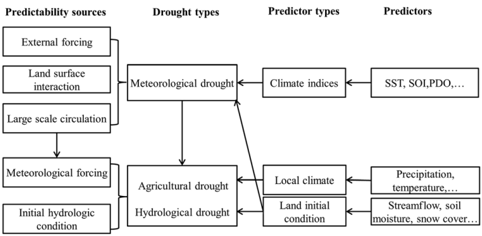
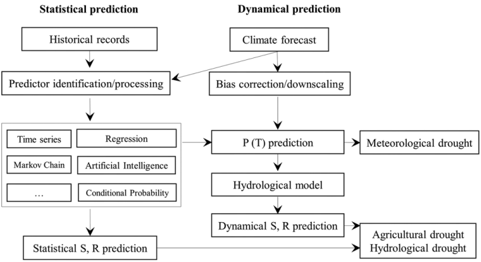
Drought prediction is of critical importance to early warning for drought managements. This review provides a synthesis of drought prediction based on statistical, dynamical, and hybrid methods. Statistical drought prediction is achieved by modeling the relationship between drought indices of interest and a suite of potential predictors, including large‐scale climate indices, local climate variables, and land initial conditions. Dynamical meteorological drought prediction relies on seasonal climate forecast from general circulation models (GCMs), which can be employed to drive hydrological models for agricultural and hydrological drought prediction with the predictability determined by both climate forcings and initial conditions. Challenges still exist in drought prediction at long lead time and under a changing environment resulting from natural and anthropogenic factors. Future research prospects to improve drought prediction include, but are not limited to, high‐quality data assimilation, improved model development with key processes related to drought occurrence, optimal ensemble forecast to select or weight ensembles, and hybrid drought prediction to merge statistical and dynamical forecasts.
Overview
The claims and statistics of this paper haven’t been checked yet.
Free: it reads the open-access text and checks the first 5 claims that cite a source we can check. Create a free account to check every claim.
Integrity signals
Registry
Cites
Statistics
Figures
Verification
Claims the paper makes
The claims and statistics of this paper haven’t been checked yet.
Free: it reads the open-access text and checks the first 5 claims that cite a source we can check. Create a free account to check every claim.
Claims other papers make about this one
Each is checked against this paper’s own text: does it say what the citing paper says it does?
The cited source says what the claim attributes to it.
In the citing paper
“Skillful drought predictions with sufficient lead time remain a challenge, due to multiple driving factors across different spatial and temporal scales (Hao et al., 2018) and the complex nature of drought.”
From Artificial intelligence for climate prediction of extremes: State of the art, challenges, and future perspectives (2024) · cites this paper as Hao et al., 2018
Self-check
Percentages, sums and reported differences re-computed from the paper’s own numbers.
The self-check needs the paper’s full text.
Citations
Cites
(1993) · Cited by 7,699
An Introduction to Categorical Data Analysis
Agresti, A. (2007) · Wiley Series in Probability and Statistics · doi:10.1002/0470114754 · Cited by 6,689
Investigating soil moisture–climate interactions in a changing climate: A review
Seneviratne, S. I., Corti, T., Davin, E. L., Hirschi, M., Jaeger, E. B., Lehner, I., Orlowsky, B., & Teuling, A. J. (2010) · Earth-Science Reviews · doi:10.1016/j.earscirev.2010.02.004 · Cited by 5,638 · cited 2×
“…may lead to increased sensible heat flux contributing to a positive feedback between high temperature and drought (Durre et al., 2000; Fischer et al., 2007; Hao, Hao, Singh & Ouyang, 2017; Koster et al., 2009; Lyon & Dole, 1995; Mueller & Seneviratne, 2012; Seneviratne et al., 2010).”
BackgroundThe Global Land Data Assimilation System
Rodell, M., Houser, P. R., Jambor, U., Gottschalck, J., Mitchell, K., Meng, C.-J., Arsenault, K., Cosgrove, B., Radakovich, J., Bosilovich, M., et al. (2004) · Bulletin of the American Meteorological Society · doi:10.1175/bams-85-3-381 · Cited by 5,614 · cited 3×
“…(LDAS) have been developed in recent decades, such as the NLDAS in the United States (Mitchell et al., 2004; Xia, Peters-Lidard, et al., 2014; Xia, Ek, et al., 2014) and the Global Land Data Assimilation System (GLDAS) (Rodell et al., 2004), and they play an important role in drought early warning.”
BackgroundMishra, A. K., & Singh, V. P. (2010) · Journal of Hydrology · doi:10.1016/j.jhydrol.2010.07.012 · Cited by 5,436 · cited 2×
“…of univariate and multivariate drought indicators based on individual or multiple hydroclimatic variables have been developed in past decades (Hao & Singh, 2015; Hayes et al., 2011; Mishra & Singh, 2010; Zargar et al., 2011), such as the Standardized Precipitation Index (SPI) (McKee et al., 1993).”
BackgroundSelf-citationRobust Responses of the Hydrological Cycle to Global Warming
Held, I. M., & Soden, B. J. (2006) · Journal of Climate · doi:10.1175/jcli3990.1 · Cited by 4,959
Drought under global warming: a review
Dai, A. (2011) · WIREs Climate Change · doi:10.1002/wcc.81 · Cited by 3,523 · cited 3×
“Other factors, such as land surface interactions or feedbacks (e.g., reduced soil moisture and increased temperature) may also contribute to the atmospheric anomaly or occurrence of meteorological drought (Dai, 2011; Fernando et al., 2016; Kam, Sheffield, & Wood, 2014b; Koster & Suarez, 1995).”
BackgroundGlobal warming and changes in drought
Trenberth, K. E., Dai, A., van der Schrier, G., Jones, P. D., Barichivich, J., Briffa, K. R., & Sheffield, J. (2014) · Nature Climate Change · doi:10.1038/nclimate2067 · Cited by 3,382 · cited 1×
“Global warming from natural and anthropogenic factors has accelerated the hydrological cycle, resulting in more extremes, including drought, and a strong tendency of the wet areas getting wetter and dry areas getting drier (Dai, 2011; Held & Soden, 2006; Seager et al., 2010; Trenberth et al., 2014).”
BackgroundThe NCEP Climate Forecast System Version 2
Saha, S., Moorthi, S., Wu, X., Wang, J., Nadiga, S., Tripp, P., Behringer, D., Hou, Y.-T., Chuang, H.-Y., Iredell, M., et al. (2014) · Journal of Climate · doi:10.1175/jcli-d-12-00823.1 · Cited by 3,354 · cited 5×
“There are large uncertainties in the precipitation forecast, and skillful climate forecast beyond the 1month lead is still a prevailing challenge (Mcevoy et al., 2015; Saha et al., 2014; Weisheimer et al., 2009; Wood et al., 2015; Yuan et al., 2013).”
BackgroundMethodInfluentialChow, V. T. (2010) · Cited by 3,340
Research works printed but not linked: 12
- 10.1175/1520-0442(2004)017 · doi:10.1175/1520-0442(2004)017
- 10.1175/1520-0442(2002)015 · doi:10.1175/1520-0442(2002)015
- 10.1175/1520-0442(2001)014 · doi:10.1175/1520-0442(2001)014
- 10.1175/1525-7541(2000)001 · doi:10.1175/1525-7541(2000)001
- 10.1175/1520-0442(1995)008 · doi:10.1175/1520-0442(1995)008
- Milly, P., Julio, B., Malin, F., Robert, M., Zbigniew, W., Dennis, P., & Ronald, J. (2007). Stationarity is dead. Ground Water News & Views, 4, 6-8.
- 10.1175/1520-0442(2004)017 · doi:10.1175/1520-0442(2004)017
- Sheffield, J., Wood, E., Lettenmaier, D., & Lipponen, A. (2008). Experimental drought monitoring for Africa. GEWEX News, 8(3), 4-6.
- 10.1175/1525-7541(2003)004 · doi:10.1175/1525-7541(2003)004 · Paper page
- WCRP (2015). Workshop on understanding, modeling and predicting weather and climate extremes, WCRP Report. No.10/2016.
- 10.1175/1520-0442(2004)017 · doi:10.1175/1520-0442(2004)017
- 10.1175/1525-7541(2002)003 · doi:10.1175/1525-7541(2002)003
Cited by
Items 201–300 of 640
Elbeltagi, A., Althobiani, F., Kamruzzaman, M., Shaid, S., Roy, D. K., Deb, L., Islam, M. M., Kundu, P. K., & Rahman, M. M. (2022) · Water · doi:10.3390/w14111764 · Cited by 25
Huang, Z., Wei, W., Han, Y., Ding, S., & Tang, K. Y. (2022) · International Journal of Environmental Research and Public Health · doi:10.3390/ijerph19159315 · Cited by 25
“At this stage, scholars mainly focus on ecological environment protection [11], resources and environment [12], water resources utilization [13], sustainable development [14], human settlements [15], industrial structure [16,17], urban agglomeration construction [18,19], public service [20–22] urbanization [23], etc.”
BackgroundEvaluation of Subseasonal Drought Forecast Skill over the Coastal Western United States
Su, L., Cao, Q., Shukla, S., Pan, M., & Lettenmaier, D. P. (2023) · Journal of Hydrometeorology · doi:10.1175/jhm-d-22-0103.1 · Cited by 27
“Drought forecast systems in this context would be especially useful (Arsenault et al 2020; Carrão et al 2018; Hao et al 2018).”
BackgroundGhozat, A., Sharafati, A., Asadollah, S. B. H. S., & Motta, D. (2023) · Computers and Electronics in Agriculture · doi:10.1016/j.compag.2023.107946 · Cited by 26
An improved adaptive neuro-fuzzy inference system for hydrological drought prediction in Algeria
Achite, M., Gül, E., Elshaboury, N., Jehanzaib, M., Mohammadi, B., & Mehr, A. D. (2023) · Physics and Chemistry of the Earth Parts A/B/C · doi:10.1016/j.pce.2023.103451 · Cited by 28
Jin, N., Shi, Y., Niu, W., & He, L. (2023) · Journal of Hydrology · doi:10.1016/j.jhydrol.2023.130454 · Cited by 25
Increasing drought sensitivity of plant photosynthetic phenology and physiology
Wang, Y., Tian, D., Xiao, J., Li, X., & Niu, S. (2024) · Ecological Indicators · doi:10.1016/j.ecolind.2024.112469 · Cited by 24
Ultrafast humidity sensor and transient humidity detections in high dynamic environments
Liu, F., Hong, J., Chen, X., Ding, X., Li, S., Yu, X., Lu, J., Zhao, X., Tang, K., Xie, C., et al. (2025) · Communications Engineering · doi:10.1038/s44172-025-00342-4 · Cited by 26
Yang, X., Zhang, L., Wang, Y., Singh, V. P., Xu, C., Ren, L., Zhang, M., Liu, Y., Jiang, S. S., & Yuan, F. (2020) · Water · doi:10.3390/w12010230 · Cited by 24
“However, single climate models do not accurately simulate changes in temperature and precipitation in a given region due to less-than-accurate calculation methods, discretization of numerical values, and inability to account for heterogeneity within the grid cells [7].”
BackgroundSelf-citationPhysiological responses of black locust‐rhizobia symbiosis to water stress
Yuan, H. Y., Hu, B., Liu, Z., Sun, H., Zhou, M., & Rennenberg, H. (2022) · Physiologia Plantarum · doi:10.1111/ppl.13641 · Cited by 26
Investigating the Role of Snow Water Equivalent on Streamflow Predictability during Drought
Modi, P. A., Small, E. E., Kasprzyk, J. R., & Livneh, B. (2022) · Journal of Hydrometeorology · doi:10.1175/jhm-d-21-0229.1 · Cited by 29
“…forecast year still poses challenges, especially for longer lead times (∼3–6 months), due to the inherent unpredictable variability in the atmosphere as well as complex interactions between natural and anthropogenic factors that combine to limit anticipation of future droughts (Hao et al. 2018).”
BackgroundInfluentialSorí, R., Gimeno‐Sotelo, L., Nieto, R., Liberato, M. L. R., Stojanovic, M., Pérez‐Alarcón, A., Fernández‐Alvarez, J. C., & Gimeno, L. (2022) · The Science of The Total Environment · doi:10.1016/j.scitotenv.2022.160288 · Cited by 27
Kheyruri, Y., Sharafati, A., & Neshat, A. (2023) · Stochastic Environmental Research and Risk Assessment · doi:10.1007/s00477-023-02465-6 · Cited by 26
Zheng, H., & Ding, M. (2024) · Ecological Informatics · doi:10.1016/j.ecoinf.2024.102862 · Cited by 24
Flood-Drought Hazard Assessment for a Flat Clayey Deposit in the Canadian Prairies
Akhter, A., & Azam, S. (2019) · Journal of Environmental Informatics Letters · doi:10.3808/jeil.201900002 · Cited by 24
Enhancing Research-to-Operations in Hydrological Forecasting: Innovations across Scales and Horizons
Pechlivanidis, I. G., Du, Y., Bennett, J., Boucher, M., Chang, A. Y.-Y., Crochemore, L., Dasgupta, A., Baldassarre, G. D., Luterbacher, J., Pappenberger, F., et al. (2025) · Bulletin of the American Meteorological Society · doi:10.1175/bams-d-24-0322.1 · Cited by 27
Allen-Dumas, M. R., Xu, H., Kurte, K. R., & Rastogi, D. (2021) · Frontiers in Water · doi:10.3389/frwa.2020.562304 · Cited by 26
“Droughts are high-impact weather hazards that affect agriculture, economy, ecosystem, water supply, and human lives (Hao et al., 2018).”
BackgroundSubseasonal Meteorological Drought Development over the Central United States during Spring
Jong, B., Newman, M., & Hoell, A. (2022) · Journal of Climate · doi:10.1175/jcli-d-21-0435.1 · Cited by 23
Liu, Y., Zhu, Y., Ren, L., Singh, V. P., & Yuan, S. (2023) · Environmental Research Letters · doi:10.1088/1748-9326/acfccb · Cited by 24
“With the shifts of affected water bodies, changes of drought characteristics are also apparent during the propagation process, manifested as extended drought duration and enhanced drought severity (Van Loon 2015, Hao et al 2018, Zhang et al 2022a, 2022b).”
BackgroundSelf-citationXie, L., Li, Y., Biswas, A., Wu, S., & Song, X. (2024) · Journal of Environmental Management · doi:10.1016/j.jenvman.2024.121730 · Cited by 23
Beklioğlu, M., Bucak, T., Levi, E. E., Erdoğan, Ş., Özen, A., Filiz, N., Bezirci, G., Çakıroğlu, A. İ., Tavşanoğlu, Ü. N., Gökçe, D., et al. (2020) · Inland Waters · doi:10.1080/20442041.2020.1746599 · Cited by 24
Dutta, R., & Maity, R. (2020) · Water Resources Research · doi:10.1029/2020wr027086 · Cited by 23
“…of knowledge on the inherent dependence structure often forces to consider the entire pool of the influencing variables, which leads to dimensionality issues in the modeling (Hao et al., 2018; Kim & Park, 2015; Maity & Kashid, 2011; Phatak et al., 2011; Prasad et al., 2010; Traveria et al., 2010).”
BackgroundDrought Prediction Method Based on an Improved CEEMDAN-QR-BL Model
Liu, Y., & Li-hu, W. (2021) · IEEE Access · doi:10.1109/access.2020.3048745 · Cited by 23
“Mechanism-driven models are often realised by modelling the relationship between drought indicators and potential drought factors [1].”
BackgroundDutta, R., & Maity, R. (2021) · Journal of Hydrology · doi:10.1016/j.jhydrol.2021.126958 · Cited by 23
Vázquez, M. Á. T., Halifa‐Marín, A., Montávez, J. P., & Turco, M. (2023) · Weather and Climate Extremes · doi:10.1016/j.wace.2023.100558 · Cited by 23
Recovery of ecosystem carbon and water fluxes after drought in China
Hao, Y., & Choi, M. (2023) · Journal of Hydrology · doi:10.1016/j.jhydrol.2023.129766 · Cited by 23
Balti, H., Abbes, A. B., Sang, Y., Mellouli, N., & Farah, I. R. (2023) · Computers & Geosciences · doi:10.1016/j.cageo.2023.105435 · Cited by 24
Revisiting the composite drought index for improving drought monitoring
Faiz, M. A., Zhang, L.-L., Liu, D., Ma, N., Li, M., Zhaoqiang, Z., Baig, F., Li, T., & Cui, S. (2025) · Journal of Hydrology · doi:10.1016/j.jhydrol.2025.132707 · Cited by 22
Selenium Application Improves Drought Tolerance during Reproductive Phase of Rice
Patnaik, G. P., Monisha, V., Thavaprakaash, N., Djanaguiraman, M., Sachin, S., Kannamreddy, V., Girwani, T., Jeeva, M., Monicaa, M., Patnaik, L., et al. (2023) · Sustainability · doi:10.3390/su15032730 · Cited by 21
Lv, B., Hao, Z., Ma, Q., Yang, C., Zhang, X., Fu, Y. H., & Hao, F. (2024) · Journal of Hydrology · doi:10.1016/j.jhydrol.2024.130827 · Cited by 22
Self-citationHoumma, I. H., Mansouri, L. E., Hadria, R., Emran, A., & Chehbouni, A. (2020) · Geocarto International · doi:10.1080/10106049.2020.1844314 · Cited by 21
Bhardwaj, J., Kuleshov, Y., Watkins, A., Aitkenhead, I., & Asghari, A. (2021) · Natural Hazards · doi:10.1007/s11069-021-04575-2 · Cited by 21
Forecasting Next Year's Global Land Water Storage Using GRACE Data
Li, F., Kusche, J., Sneeuw, N., Siebert, S., Gerdener, H., Wang, Z., Chao, N., Chen, G., & Tian, K. (2024) · Geophysical Research Letters · doi:10.1029/2024gl109101 · Cited by 23
“The meteorological forecasts are being used as input to global hydrological models to forecast changes in land water storage and for example, drought indicators (Arsenault et al., 2020; Hao et al., 2018).”
Climatological spatial scales of meteorological droughts in China and associated climate variability
Zhou, H. Q., Zhou, W., Liu, Y., Huang, J., Yuan, Y., & Liu, Y. (2022) · Journal of Hydrology · doi:10.1016/j.jhydrol.2022.129056 · Cited by 20
The Influence of Wildfire Climate on Wildfire Incidence: The Case of Portugal
Pereira, M., Gonçalves, N. J., & Amraoui, M. (2024) · Fire · doi:10.3390/fire7070234 · Cited by 21
“These forecasts should be used with caution as confidence is lower in mid-latitudes than in tropical regions [127], but they provide useful and valuable indications of the trend in meteorological/climatic wildfire danger.”
BackgroundXing, Z., Wei, J., Li, Y., Zhang, X., Ma, M., Yi, P., Ju, Q., Laux, P., & Kunstmann, H. G. (2024) · Atmospheric Research · doi:10.1016/j.atmosres.2024.107603 · Cited by 21
“For example, SST anomalies (SSTA) in the tropical Pacific Ocean, i.e., EI Ni ˜ no-Southern Oscillation (ENSO), has been recognized as one of the dominated drivers of climate extremes in different regions across the globe (Hao et al., 2018; Hermanson et al., 2017; Sordo et al., 2008).”
InfluentialSpatiotemporal Multivariate Weather Prediction Network Based on CNN-Transformer
Wu, R., Liang, Y., Lin, L., & Zhang, Z. (2024) · Sensors · doi:10.3390/s24237837 · Cited by 24
“Within the framework of Digital Earth, climate prediction is of great significance in supporting scientific research and decision-making [2], enhancing the ability to cope with natural disasters [3], addressing global climate change [4,5], and ultimately improving agricultural production [6,7].”
Xiong, Z., Zhang, Z., Gui, H., Chen, X., Hu, S., Gao, L., He, Y., Qiu, J., & Xin, Q. (2025) · IEEE Transactions on Geoscience and Remote Sensing · doi:10.1109/tgrs.2025.3543611 · Cited by 28
“Drought forecasting is one of the main strategies for disaster mitigation [2].”
Zhang, X., Qu, Y., Ma, M., Liu, H., Su, Z., Lv, J., Peng, J. X., Leng, G., He, X., & Di, C. (2020) · Remote Sensing · doi:10.3390/rs12030376 · Cited by 22
Additive effects of temperature and water availability on pregnancy in a viviparous lizard
Brusch, G. A., Gavira, R. S. B., Viton, R., Dupoué, A., Leroux‐Coyau, M., Meylan, S., Galliard, J. L., & Lourdais, O. (2020) · Journal of Experimental Biology · doi:10.1242/jeb.228064 · Cited by 21
“In many environments, precipitation is already unevenly distributed throughout the year or water is rare, and water availability can therefore be limited during periods of reproductive investment (Hao et al., 2018).”
BackgroundPathania, A., & Gupta, V. (2025) · Environmental Modelling & Software · doi:10.1016/j.envsoft.2025.106394 · Cited by 23
Mao, X., Zheng, J., Lu, B., Wang, R., Han, W., & Harris, P. (2025) · Journal of Hydrology · doi:10.1016/j.jhydrol.2025.133483 · Cited by 19
Novel Deep Learning Transformer Model for Short to Sub‐Seasonal Streamflow Forecast
Ambika, A. K., Tayal, K., Mishra, V. K., & Lu, D. (2025) · Geophysical Research Letters · doi:10.1029/2025gl116707 · Cited by 20
“For example, short to sub‐seasonal forecasts (1‐ to 30‐day) can help in water supply management and early system warming for drought (Hao et al., 2018), flood control (Shah et al., 2017), and optimizing hydropower generation (Turner et al., 2017, 2020).”
Aridification in a farming-pastoral ecotone of northern China from 2 perspectives: Climate and soil
Zhang, G., Chen, X., Zhou, Y., Jiang, L., Jin, Y., Wei, Y., Li, Y., Pan, Z., & An, P. (2021) · Journal of Environmental Management · doi:10.1016/j.jenvman.2021.114070 · Cited by 19
Global land drought hubs confounded by teleconnection hotspots in equatorial oceans
Chauhan, T. A., Chandel, V., & Ghosh, S. (2024) · npj Climate and Atmospheric Science · doi:10.1038/s41612-023-00558-1 · Cited by 20
Graf, M., Arnault, J., Fersch, B., & Kunstmann, H. G. (2021) · Hydrological Processes · doi:10.1002/hyp.14332 · Cited by 19
“A better understanding of the feedback between both variables can enhance the skill of weather and climate models, as for example in medium range forecasting or drought prediction (Hao et al., 2018).”
BackgroundKowal, K., Slater, L. J., García‐López, A. A., & Loon, A. F. V. (2022) · International Journal of Climatology · doi:10.1002/joc.7969 · Cited by 18
Effective Deep Learning Seasonal Prediction Model for Summer Drought Over China
Liu, W., Huang, Y., & Wang, H. (2024) · Earth s Future · doi:10.1029/2023ef004409 · Cited by 18
“Drought forecasting currently still focuses on traditional statistical methods, which quickly lose the forecasting skills as the number of days increases (Hao et al., 2018).”
BackgroundMa, T., Liang, Y., Lau, M. K., Liu, B., Wu, M. M., & He, H. S. (2021) · Atmospheric Research · doi:10.1016/j.atmosres.2021.105797 · Cited by 19
Ensemble stationary-based support vector regression for drought prediction under changing climate
Bazrkar, M. H., & Chu, X. (2021) · Journal of Hydrology · doi:10.1016/j.jhydrol.2021.127059 · Cited by 18
Translational research progress and challenges for developing drought resilient rice
Saini, D. K., Bardhan, K., Somayanda, I. M., Bahuguna, R. N., & Jagadish, S. V. K. (2025) · Plant Stress · doi:10.1016/j.stress.2025.100751 · Cited by 18
Development of category-based scoring support vector regression (CBS-SVR) for drought prediction
Bazrkar, M. H., & Chu, X. (2022) · Journal of Hydroinformatics · doi:10.2166/hydro.2022.104 · Cited by 18
A Novel Standardized Drought and Flood Potential Index Based on Reconstructed Daily GRACE Data
Xiong, J., Guo, S., Abhishek, A., Li, J., & Yin, J. (2022) · Journal of Hydrometeorology · doi:10.1175/jhm-d-22-0011.1 · Cited by 17
Zhou, H. Q., Zhou, W., Liu, Y., Yuan, Y., Huang, J., & Liu, Y. (2020) · Journal of Hydrometeorology · doi:10.1175/jhm-d-19-0183.1 · Cited by 17
Ogunrinde, A. T., Oguntunde, P. G., Fasinmirin, J. T., & Akinwumiju, A. S. (2020) · Engineering Reports · doi:10.1002/eng2.12194 · Cited by 19
“Hao et al 68 high-lighted that the major advancement in severe/extreme drought prediction started with the discovery of teleconnections between SST anomalies and hydroclimatic variables of regions.”
Liu, L., Gao, C., Zhu, Z., Zhang, S., & Tang, X. (2024) · Climate Dynamics · doi:10.1007/s00382-024-07322-y · Cited by 17
“With projections indicating increased drought risk and severity in many regions, there is urgent demand to implement preventive measures to minimize the impacts of droughts (Carrão et al. 2018; Cook et al. 2018; Hao et al. 2018; Yao et al. 2020).”
Aryal, Y. N., & Zhu, J. (2021) · Theoretical and Applied Climatology · doi:10.1007/s00704-021-03704-y · Cited by 16
Skill and lead time of vegetation drought impact forecasts based on soil moisture observations
Li, Y., van Dijk, A. I. J. M., Tian, S., & Renzullo, L. J. (2023) · Journal of Hydrology · doi:10.1016/j.jhydrol.2023.129420 · Cited by 18
Basin-Scale Daily Drought Prediction Using Convolutional Neural Networks in Fenhe River Basin, China
Chen, Z., Wang, G., Wei, X., Liu, Y., Duan, Z., Hu, Y., & Jiang, H. (2024) · Atmosphere · doi:10.3390/atmos15020155 · Cited by 16
“Drought prediction is essential to effectively mitigate the impacts of drought [39].”
BackgroundLesinger, K., Tian, D., & Wang, H. (2024) · Journal of Hydrometeorology · doi:10.1175/jhm-d-23-0124.1 · Cited by 20
Meester, J. D., & Willems, P. (2024) · The Science of The Total Environment · doi:10.1016/j.scitotenv.2024.172685 · Cited by 16
Simeone, C. E., Foks, S. S., Towler, E., Hodson, T., & Over, T. M. (2024) · Water · doi:10.3390/w16202996 · Cited by 18
Pradhan, B., Elias, P. J., & Almazroui, M. (2024) · Earth Systems and Environment · doi:10.1007/s41748-024-00507-9 · Cited by 17
“Most of the studies in the literature analyze the model results in terms of intensity values (Hao et al. 2018 ); with a few examining them in terms of drought characteristics (Hao et al. 2016 ).”
Soil moisture dominates gross primary productivity variation during severe droughts in Central Asia
Yu, T., Jiapaer, G., Bao, A., Yuan, Y., Bao, J., & de Voorde, T. V. (2025) · Ecological Informatics · doi:10.1016/j.ecoinf.2025.103076 · Cited by 16
Prediction of monthly dry days with machine learning algorithms: a case study in Northern Bangladesh
Osmani, S. A., Kim, J., Jun, C., Sumon, M. W., Baik, J., & Lee, J. (2022) · Scientific Reports · doi:10.1038/s41598-022-23436-x · Cited by 17
“A study on different lead times phenomena among different drought studies admitted the challenges on lead time forecasting 61 .”
BackgroundWu, J., Yao, H., Wang, G., Chen, X., Yuan, X., Zhou, Y., & Zhang, D. (2022) · Journal of Hydrology · doi:10.1016/j.jhydrol.2022.128939 · Cited by 16
Fernando, N., Chakraborty, S., Fu, R., & Mace, R. E. (2019) · Climate Services · doi:10.1016/j.cliser.2019.100133 · Cited by 16
A probability distribution for hydrological drought duration
Song, S., Singh, V. P., Song, X., & Kang, Y. (2021) · Journal of Hydrology · doi:10.1016/j.jhydrol.2021.126479 · Cited by 16
Self-citationHao, Y., Hao, Z., Feng, S., Wu, X., Zhang, X., & Hao, F. (2021) · Journal of Hydrology · doi:10.1016/j.jhydrol.2021.126729 · Cited by 16
Self-citationSeed size, an imperative trait for seed vigor and drought tolerance in rice
Albert, D., Vijayaraghavareddy, P., & Sreeman, S. (2023) · Cereal Research Communications · doi:10.1007/s42976-023-00403-4 · Cited by 15
“Climate models predict that the severity and duration of drought events will lead to significant yield loss in major crops (Schar et al. 2004; Hao et al. 2018).”
Parajuli, A., Parajuli, R., Banjara, M., Bhusal, A., Dahal, D., & Kalra, A. (2024) · Climate · doi:10.3390/cli12110190 · Cited by 16
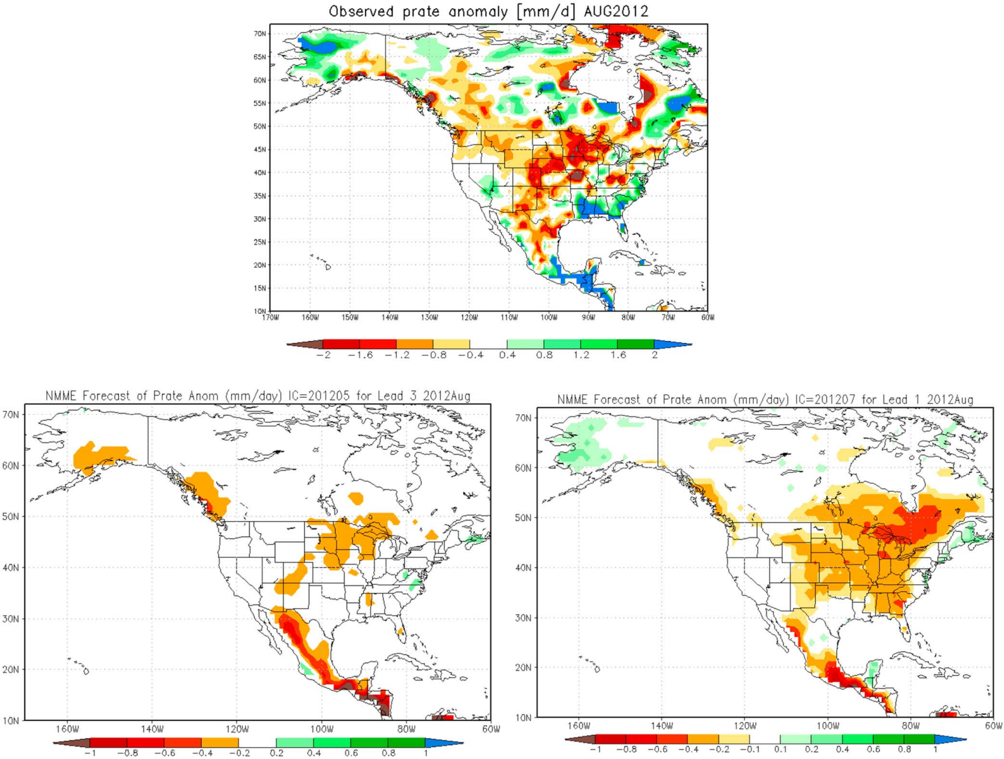
“The drought in Texas in 2011, the U.S. Central Great Plains drought in 2012, and the California drought have caused extreme losses to society, agriculture, and ecosystems, significantly impacting water supply and crop production [2,3].”
Moghaddasi, M., Moradi, M., Ghaleni, M. M., & Yaseen, Z. M. (2025) · Applied Water Science · doi:10.1007/s13201-025-02377-6 · Cited by 16
“On the other side, forecasting drought at the long lead times poses significant challenges among various types of drought studies (Hao et al. 2018).”
Stevens, A., Willett, R. M., Mamalakis, A., Foufoula‐Georgiou, E., Tejedor, A., Randerson, J. T., Smyth, P., & Wright, S. J. (2020) · Journal of Climate · doi:10.1175/jcli-d-20-0079.1 · Cited by 20
Zarekarizi, M., Yan, H., Ahmadalipour, A., & Moradkhani, H. (2021) · Geophysical monograph · doi:10.1002/9781119427339.ch8 · Cited by 15
Internet of things based agricultural drought detection system: case study Southern Somalia
Jimale, A. D., Abdullahi, M. O., & Ahmed, Y. A. (2022) · Bulletin of Electrical Engineering and Informatics · doi:10.11591/eei.v12i1.4117 · Cited by 15
Nafii, A., Taleb, A., Mesbahi, M. E., Ezzaouini, M. A., & Bilali, A. E. (2022) · Water · doi:10.3390/w15010122 · Cited by 15
Development of a Long-Range Hydrological Drought Prediction Framework Using Deep Learning
Khan, M. I., & Maity, R. (2024) · Water Resources Management · doi:10.1007/s11269-024-03735-w · Cited by 17
“The critical challenge in this endeavour lies in advancing long-term predictions, a pivotal facet of effective drought management (Deo et al. 2017; Hao et al. 2018).”
InfluentialDrought-driven declines in water-use efficiency reshape carbon dynamics of a subtropical forest
Mwangi, B. N., Ochieng, W. A., Li, Y., Bruijnzeel, L. A., Liu, J., Zhang, J., Otieno, D. O., Sikuku, L., Yang, M., Suba, V. O., et al. (2025) · Ecological Processes · doi:10.1186/s13717-025-00629-6 · Cited by 14
“…extremes (< 0.15 m 3 m − 3 ) increased threefold post-2010, crossing hydraulic failure thresholds for dominant species like Castanopsis fissa (Hao et al. 2018); (2) drought recovery periods lengthened from 12 to 36 months; and (3) the 1,200 mm/yr precipitation threshold triggered non-linear…”
InfluentialNext-Generation Drought Forecasting: Hybrid AI Models for Climate Resilience
Liu, J., Tie, L., Huang, L., Ren, Y., & He, P. (2025) · Remote Sensing · doi:10.3390/rs17203402 · Cited by 19
An overview of soil moisture drought research in China: Progress and perspective
Wang, A., & Ma, X. (2022) · Atmospheric and Oceanic Science Letters · doi:10.1016/j.aosl.2022.100297 · Cited by 15
Ngwenya, M., & Simatele, M. D. (2024) · Modeling Earth Systems and Environment · doi:10.1007/s40808-023-01937-6 · Cited by 14
“However, recent advancements in climate projections and drought prediction have remained sophisticated and largely limited (Hao et al. 2018), partly due to uncertainties in climate data simulations (Basak et al. 2022).”
Spatiotemporal analysis of compound droughts and heat waves in the Horn of Africa
Alasow, A. A., Hamed, M. M., Rady, M., & Shahid, S. (2024) · International Journal of Climatology · doi:10.1002/joc.8595 · Cited by 15
“The geographical areas exhibiting the highest magnitude and severity of CDHW events were the western regions of Ethiopia and Kenya, indicating a sustained and increasing climate challenge in these regions (Hao et al., 2018b).”
Strengthening Drought Monitoring Module by Ensembling Auxiliary Information Based Varying Estimators
Ali, F., Li, B., & Ali, Z. (2021) · Water Resources Management · doi:10.1007/s11269-021-02888-2 · Cited by 14
“1980), is a major stochastic natural hazards (Hao et al. 2018; Sutanto et al. 2020).”
BackgroundProbabilistic predictions for meteorological droughts based on multi-initial conditions
Vázquez, M. Á. T., Giuseppe, F. D., Dutra, E., Halifa‐Marín, A., Jerez, S., Ramón, J., Montávez, J. P., Doblas-Reyes, F. J., & Turco, M. (2024) · Journal of Hydrology · doi:10.1016/j.jhydrol.2024.131662 · Cited by 14
Enhancing seasonal fire predictions with hybrid dynamical and random forest models
Vázquez, M. Á. T., Herrera, S., Gincheva, A., Halifa‐Marín, A., Cavicchia, L., Giuseppe, F. D., Montávez, J. P., & Turco, M. (2025) · npj natural hazards. · doi:10.1038/s44304-025-00069-4 · Cited by 17
Dehydration enhances innate immunity in a semiaquatic snake from the wet‐dry tropics
Brusch, G. A., Christian, K. A., Brown, G. P., Shine, R., & DeNardo, D. F. (2019) · Journal of Experimental Zoology Part A Ecological and Integrative Physiology · doi:10.1002/jez.2260 · Cited by 13
He, S., Zhang, E., Huo, J., & Yang, M. (2022) · Atmosphere · doi:10.3390/atmos13091531 · Cited by 13
Recent Advances of Deep Learning in Geological Hazard Forecasting
Wang, J., Sun, P., Chen, L., Yang, J., Liu, Z., & Lian, H. (2023) · Computer Modeling in Engineering & Sciences · doi:10.32604/cmes.2023.023693 · Cited by 15
Dong, X., Zhou, Y., Liang, J., Zou, D., Wu, J., & Wang, J. (2023) · Remote Sensing · doi:10.3390/rs15143641 · Cited by 13
A Long Short-Term Memory-Based Prototype Model for Drought Prediction
Villegas-Ch, W. E., & García-Ortiz, J. (2023) · Electronics · doi:10.3390/electronics12183956 · Cited by 13
Li, B., Tan, L., Zhang, X., Qi, J., Marek, G. W., Li, Y., Dong, X., Zhao, W., Chen, T., Feng, P., et al. (2023) · Journal of Hydrology Regional Studies · doi:10.1016/j.ejrh.2023.101547 · Cited by 18
Sung, J. H., Park, J., Jeon, J., & Seo, S. B. (2020) · KSCE Journal of Civil Engineering · doi:10.1007/s12205-020-0494-3 · Cited by 13
“Hao et al. (2018) pointed out the remaining challenges to the projection of future droughts under changing climate and human-made environments.”
BackgroundLin, Z., & Shelton, S. (2020) · Frontiers in Earth Science · doi:10.3389/feart.2020.00306 · Cited by 13
Zhao, S., Fu, R., Zhuang, Y., & Wang, G. (2021) · Journal of Climate · doi:10.1175/jcli-d-20-0824.1 · Cited by 16
Guo, H., Huang, W., Xie, T., & Ma, S. (2023) · Science China Earth Sciences · doi:10.1007/s11430-022-1097-0 · Cited by 12
Luo, J., Huang, S., Wang, Y., Singh, V. P., Liu, J., Huang, Q., Leng, G., Li, J., Wu, H., Zheng, X., et al. (2024) · Journal of Hydrology · doi:10.1016/j.jhydrol.2024.132225 · Cited by 12
Self-citationBrands, S., Iturbide, M., González-Pardo, J., Herrera, S., Bedia, J., Manzanas, R., Rodríguez‐Guisado, E., Beguería, S., Vicente-Serrano, S. M., & Gutiérrez, J. M. (2025) · Climate Services · doi:10.1016/j.cliser.2025.100555 · Cited by 17
Temporally compounding droughts at the global scale: Distribution, propagation, and projection
Zhao, X., Hao, Z., Huang, R., Feng, A., & Singh, V. P. (2025) · Global and Planetary Change · doi:10.1016/j.gloplacha.2025.104905 · Cited by 12
Self-citationHalder, S., Roy, M. B., & Roy, P. K. (2022) · Theoretical and Applied Climatology · doi:10.1007/s00704-022-04165-7 · Cited by 12
“2020) which are regarded as the most relevant parameter for pragmatic simulations (Hao et al. 2018); Raha and Gayen, 2020).”
BackgroundGlobal Seasonal-Scale Meteorological Droughts. Part I: Detection, Metrics, and Inland/Coastal Types
Liu, Z., & Zhou, W. (2023) · Ocean-Land-Atmosphere Research · doi:10.34133/olar.0016 · Cited by 12
Metadata
- Authors
- Hao, Z., Singh, V. P., & Xia, Y.
- Affiliations
- Beijing Normal University (CN)
- Texas A&M University (US)
- NOAA National Centers for Environmental Prediction (US)
- Corresponding author
- Hao, Zengchao
- Venue
- Reviews of Geophysics
- Publisher
- American Geophysical Union (AGU)
- Published
- 2018-01-27
- Volume
- 56
- Issue
- 1
- Pages
- 108-141
- ISSN
- 0096-1043 (ISSN-L)
- 8755-1209
- 1944-9208
- OpenAlex
- W2784184607
- Semantic Scholar
- e7b1812d8fae2df8f1600e9086c7696ff060c3a8
- Cited by
- 607
- References
- 384
- Citations by year
- 2026: 68 · 2025: 99 · 2024: 97 · 2023: 80 · 2022: 89 · 2021: 81 · 2020: 52 · 2019: 28 · 2018: 12
- FWCI
- 25.31
- Type
- journal article
- Language
- en
- Open access
- hybrid
- doi.org
- Licence
- Locations
- Reviews of Geophysics (publishedVersion, cc-by-nc-nd)
- NOAA Institutional Repository (submittedVersion)
- Funders
- National Natural Science Foundation of China (41601014)
- Topics
- Physical Sciences › Environmental Science › Global and Planetary Change › Hydrology and Drought Analysis
- Physical Sciences › Environmental Science › Global and Planetary Change › Climate variability and models
- Physical Sciences › Environmental Science › Water Science and Technology › Hydrology and Watershed Management Studies
- Keywords
- drought forecasting, drought indices, global climate models, hydrological drought, agricultural drought, climate indices, data assimilation, ensemble forecasting, drought early warning, climate change impacts on drought
About these checks
Registry, retraction, Cites and statistics results are computed, not judged, with one exception: a printed reference that no index lists is read once by a model before it counts as a citation error. Claims are extracted by a model and kept only when their quote appears verbatim in the text; each cited source is then checked, with a model’s help, for whether it says what the claim relies on. Those verdicts can be wrong — read the claim’s quote and the cited source before relying on one.
Statistics and arithmetic are recomputed, not judged.
Confidence bands are shown only for fields calibrated on our annotated test set. None is calibrated yet, so no band is shown.
What counts as a claim ›How we measure confidence ›How we check this ›
Are you an author, or do you see a problem with this page? Request a review
Data sources
Bibliographic data: Semantic Scholar, OpenAlex, Crossref.
Contains information from the Semantic Scholar Academic Graph Datasets, made available under the ODC Attribution License (ODC-BY 1.0).
Semantic Scholar’s data is described in: Kinney, R., et al. (2023). The Semantic Scholar Open Data Platform. arXiv:2301.10140.
