

Seasonal Drought Prediction: Advances, Challenges, and Future Prospects
Open accessThe DOI matches its Crossref record; 388 of the 388 references it cites were found in a registry or an index.
Abstract
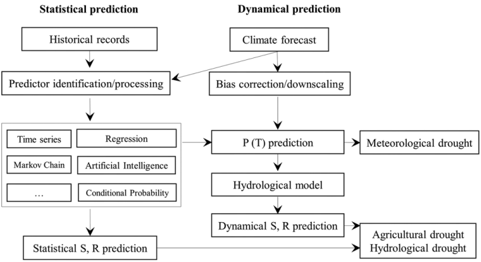
Drought prediction is of critical importance to early warning for drought managements. This review provides a synthesis of drought prediction based on statistical, dynamical, and hybrid methods. Statistical drought prediction is achieved by modeling the relationship between drought indices of interest and a suite of potential predictors, including large‐scale climate indices, local climate variables, and land initial conditions. Dynamical meteorological drought prediction relies on seasonal climate forecast from general circulation models (GCMs), which can be employed to drive hydrological models for agricultural and hydrological drought prediction with the predictability determined by both climate forcings and initial conditions. Challenges still exist in drought prediction at long lead time and under a changing environment resulting from natural and anthropogenic factors. Future research prospects to improve drought prediction include, but are not limited to, high‐quality data assimilation, improved model development with key processes related to drought occurrence, optimal ensemble forecast to select or weight ensembles, and hybrid drought prediction to merge statistical and dynamical forecasts.
Overview
The claims and statistics of this paper haven’t been checked yet.
Free: it reads the open-access text and checks the first 5 claims that cite a source we can check. Create a free account to check every claim.
Integrity signals
Registry
Cites
Statistics
Figures
Verification
Claims the paper makes
The claims and statistics of this paper haven’t been checked yet.
Free: it reads the open-access text and checks the first 5 claims that cite a source we can check. Create a free account to check every claim.
Claims other papers make about this one
Each is checked against this paper’s own text: does it say what the citing paper says it does?
The cited source says what the claim attributes to it.
In the citing paper
“Skillful drought predictions with sufficient lead time remain a challenge, due to multiple driving factors across different spatial and temporal scales (Hao et al., 2018) and the complex nature of drought.”
From Artificial intelligence for climate prediction of extremes: State of the art, challenges, and future perspectives (2024) · cites this paper as Hao et al., 2018
Self-check
Percentages, sums and reported differences re-computed from the paper’s own numbers.
The self-check needs the paper’s full text.
Citations
Cites
(1993) · Cited by 7,699
An Introduction to Categorical Data Analysis
Agresti, A. (2007) · Wiley Series in Probability and Statistics · doi:10.1002/0470114754 · Cited by 6,689
Investigating soil moisture–climate interactions in a changing climate: A review
Seneviratne, S. I., Corti, T., Davin, E. L., Hirschi, M., Jaeger, E. B., Lehner, I., Orlowsky, B., & Teuling, A. J. (2010) · Earth-Science Reviews · doi:10.1016/j.earscirev.2010.02.004 · Cited by 5,638 · cited 2×
“…may lead to increased sensible heat flux contributing to a positive feedback between high temperature and drought (Durre et al., 2000; Fischer et al., 2007; Hao, Hao, Singh & Ouyang, 2017; Koster et al., 2009; Lyon & Dole, 1995; Mueller & Seneviratne, 2012; Seneviratne et al., 2010).”
BackgroundThe Global Land Data Assimilation System
Rodell, M., Houser, P. R., Jambor, U., Gottschalck, J., Mitchell, K., Meng, C.-J., Arsenault, K., Cosgrove, B., Radakovich, J., Bosilovich, M., et al. (2004) · Bulletin of the American Meteorological Society · doi:10.1175/bams-85-3-381 · Cited by 5,614 · cited 3×
“…(LDAS) have been developed in recent decades, such as the NLDAS in the United States (Mitchell et al., 2004; Xia, Peters-Lidard, et al., 2014; Xia, Ek, et al., 2014) and the Global Land Data Assimilation System (GLDAS) (Rodell et al., 2004), and they play an important role in drought early warning.”
BackgroundMishra, A. K., & Singh, V. P. (2010) · Journal of Hydrology · doi:10.1016/j.jhydrol.2010.07.012 · Cited by 5,436 · cited 2×
“…of univariate and multivariate drought indicators based on individual or multiple hydroclimatic variables have been developed in past decades (Hao & Singh, 2015; Hayes et al., 2011; Mishra & Singh, 2010; Zargar et al., 2011), such as the Standardized Precipitation Index (SPI) (McKee et al., 1993).”
BackgroundSelf-citationRobust Responses of the Hydrological Cycle to Global Warming
Held, I. M., & Soden, B. J. (2006) · Journal of Climate · doi:10.1175/jcli3990.1 · Cited by 4,959
Drought under global warming: a review
Dai, A. (2011) · WIREs Climate Change · doi:10.1002/wcc.81 · Cited by 3,523 · cited 3×
“Other factors, such as land surface interactions or feedbacks (e.g., reduced soil moisture and increased temperature) may also contribute to the atmospheric anomaly or occurrence of meteorological drought (Dai, 2011; Fernando et al., 2016; Kam, Sheffield, & Wood, 2014b; Koster & Suarez, 1995).”
BackgroundGlobal warming and changes in drought
Trenberth, K. E., Dai, A., van der Schrier, G., Jones, P. D., Barichivich, J., Briffa, K. R., & Sheffield, J. (2014) · Nature Climate Change · doi:10.1038/nclimate2067 · Cited by 3,382 · cited 1×
“Global warming from natural and anthropogenic factors has accelerated the hydrological cycle, resulting in more extremes, including drought, and a strong tendency of the wet areas getting wetter and dry areas getting drier (Dai, 2011; Held & Soden, 2006; Seager et al., 2010; Trenberth et al., 2014).”
BackgroundThe NCEP Climate Forecast System Version 2
Saha, S., Moorthi, S., Wu, X., Wang, J., Nadiga, S., Tripp, P., Behringer, D., Hou, Y.-T., Chuang, H.-Y., Iredell, M., et al. (2014) · Journal of Climate · doi:10.1175/jcli-d-12-00823.1 · Cited by 3,354 · cited 5×
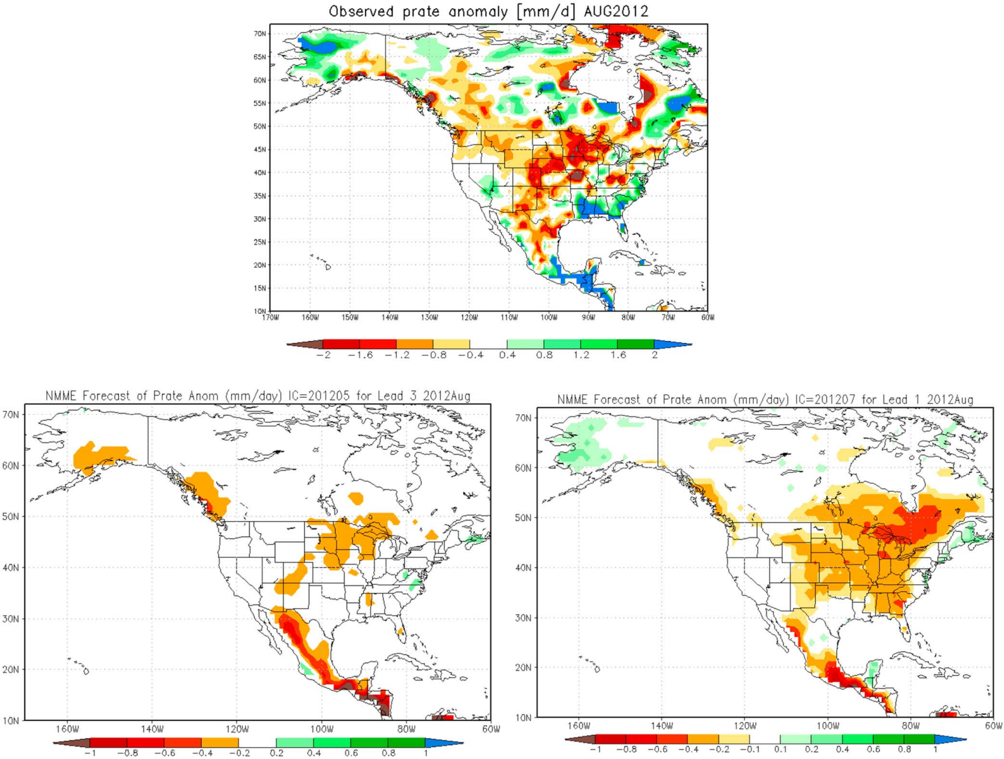
“There are large uncertainties in the precipitation forecast, and skillful climate forecast beyond the 1month lead is still a prevailing challenge (Mcevoy et al., 2015; Saha et al., 2014; Weisheimer et al., 2009; Wood et al., 2015; Yuan et al., 2013).”
BackgroundMethodInfluentialChow, V. T. (2010) · Cited by 3,340
Research works printed but not linked: 12
- 10.1175/1520-0442(2004)017 · doi:10.1175/1520-0442(2004)017
- 10.1175/1520-0442(2002)015 · doi:10.1175/1520-0442(2002)015
- 10.1175/1520-0442(2001)014 · doi:10.1175/1520-0442(2001)014
- 10.1175/1525-7541(2000)001 · doi:10.1175/1525-7541(2000)001
- 10.1175/1520-0442(1995)008 · doi:10.1175/1520-0442(1995)008
- Milly, P., Julio, B., Malin, F., Robert, M., Zbigniew, W., Dennis, P., & Ronald, J. (2007). Stationarity is dead. Ground Water News & Views, 4, 6-8.
- 10.1175/1520-0442(2004)017 · doi:10.1175/1520-0442(2004)017
- Sheffield, J., Wood, E., Lettenmaier, D., & Lipponen, A. (2008). Experimental drought monitoring for Africa. GEWEX News, 8(3), 4-6.
- 10.1175/1525-7541(2003)004 · doi:10.1175/1525-7541(2003)004 · Paper page
- WCRP (2015). Workshop on understanding, modeling and predicting weather and climate extremes, WCRP Report. No.10/2016.
- 10.1175/1520-0442(2004)017 · doi:10.1175/1520-0442(2004)017
- 10.1175/1525-7541(2002)003 · doi:10.1175/1525-7541(2002)003
Cited by
Items 601–640 of 640
Nabavizadeh, M., Rousta, I., Kamal, O., Ólafsson, H., & Krzyszczak, J. (2026) · International Agrophysics · doi:10.31545/intagr/217982
“Moreover, the moderate correlation aligns with earlier findings showing that vegeta - tion-and soil-based drought indices often exhibit delayed or smoothed responses relative to precipitation-based indi - cators (Hao et al ., 2018; McKee et al ., 1993).”
Drought Prediction for Agricultural Planning
Albatayneh, N. A. (2025) · International Conference on Business Intelligence for Technology Innovation (ICBITI) · doi:10.1109/icbiti65527.2025.11501007
“Hao et al.[20] made a synthesis of drought predicting methods which cover statistical, dynamical, and hybrid approaches.”
Understanding and predicting the potential impacts of climatic changes on Savanna ecosystem
Yasin, E. H. E. (2026) · NYME Repository of Dissertations (University of West Hungary) · Cited by 2
Hassani, A., Talebbeydokhti, N., Afzali, S. H., Nikoo, M. R., & Vanda, S. (2026) · SSRN Electronic Journal · doi:10.2139/ssrn.7411710
STANDARDIZED PRECIPITATION INDEX FORECASTING IN NORTH-CENTRAL MEXICO USING TRANSFORMER MODELS
Magallanes‐Quintanar, R., Galvan-Tejada, C. E., Galván-Tejada, J. I., Méndez‐Gallegos, S. D. J., & García-Domínguez, A. (2026) · Agrociencia · doi:10.47163/agrociencia.v60i4.3641
Fredy, M., Li, H., Zeng, J., Tan, A., Henry, K. P., Msafiri, M., Semgomba, D. S., Albert, M., & Mohammed, B. (2026) · Atmospheric Research · doi:10.1016/j.atmosres.2026.109187
Kaiang, Z., Wang, H., Guo, W., Chen, X. S., Liu, Z., Zhao, K., 牛同利, & Huang, L. (2026) · Forests · doi:10.3390/f17070759
A hybrid Prophet–LSTM–BPNN framework for seasonal drought prediction
Shafizadeh‐Moghadam, H., Mor, E., Xu, T., & Homaee, M. (2026) · Artificial Intelligence in Geosciences · doi:10.1016/j.aiig.2026.100251 · Cited by 1
Ma, X., Huang, Y., Zhang, Q., Zhang, B., Zhang, X., Lin, X., Xu, C., & Yao, Y. (2026) · Journal of Climate · doi:10.1175/jcli-d-25-0653.1
Hu, R., Shi, Z. H., & Yuan, S. (2026) · Journal of Hydrology · doi:10.1016/j.jhydrol.2026.135991
Yin, H., Liu, Z., Wu, Z., & He, H. (2026) · Journal of Geophysical Research Atmospheres · doi:10.1029/2026jd047260
Almouctar, M. A. S., Chenal, J., Diop, E. B., Azmi, R., Abdellahi, E. A. S., Hlal, M., Bounabi, M., Ismaili, M., Nifa, K., Lahlouh, A., et al. (2026) · Scientific Reports · doi:10.1038/s41598-026-61854-3
“…spatial and temporal characteristics of drought patterns in the study area highlighted the necessity of using multiple drought indices to fully analyze drought events, as univariate methods may not suffice to depict the multifaceted features of complicated drought processes well 35,36 .”
InfluentialPredicción de sequías en zonas altoandinas de Puno mediante un modelo híbrido LSTM–XGBOOST
Zapana, K. X. C. (2026) · C&T Riqchary Revista de investigación en ciencia y tecnología · doi:10.57166/riqchary/v8.n1.2026.7
A Multimodel Perspective of Droughts in Future Climate and Implications for Irrigation in Malawi
Likoya, E., Bhave, A., Dougill, A. J., & Birch, C. E. (2026) · Journal of Hydrometeorology · doi:10.1175/jhm-d-25-0060.1
Research on drought prediction models by multiple machine learning methods in a semi-arid region
Zhang, Y., Hao, Y., Tian, J., Du, K., & Tian, M. (2026) · Journal of Hydrology Regional Studies · doi:10.1016/j.ejrh.2026.103799
Moist static energy anomalies as precursors of seasonal drought over the Han River basinPreprint
Su, D., jiang, T., Qu, Y., Su, X., & Wu, H. (2026) · SSRN Electronic Journal · doi:10.2139/ssrn.7203433
Probabilistic Deep Learning for Drought Forecasting: Role of Internal Climate VariabilityPreprint
Funk, H., Gruber, C., Kauermann, G., Küchenhoff, H., & Mittermeier, M. (2026) · arXiv (Cornell University) · doi:10.48550/arxiv.2608.01864
“At the same time, drought forecasting remains intrinsically difficult due to coupled land-atmosphere processes and large-scale circulation patterns whose regional variability varies substantially across seasons and regions (Hao et al., 2018; Prodhan et al., 2022).”
Benson, D. M., & DeNardo, D. F. (2026) · Ecological and Evolutionary Physiology · doi:10.1086/743486
Predictability of large-scale extreme droughts from global bias-corrected seasonal forecasts
Weber, J. N., Lorenz, C., Schober, T. C., Dehn, H., Wiegels, R., & Kunstmann, H. G. (2026) · Frontiers in Water · doi:10.3389/frwa.2026.1911791
Hu, F., & Mosalam, K. M. (2026) · Computer-Aided Civil and Infrastructure Engineering · doi:10.1016/j.cacaie.2026.100166
Seasonal ecological quality in China: concurrent and lagged drought responses and dominant factors
Pei, W., Liu, J., Lu, W., Guo, H., Wang, Y., & Chen, Y. (2026) · Frontiers in Plant Science · doi:10.3389/fpls.2026.1850459
Optimal distribution functions for drought characterization across Europe’s climatic gradient
Mohammadi, B., Yang, W., Cheraghalizadeh, M., & Pechlivanidis, I. G. (2026) · Journal of Hydrology Regional Studies · doi:10.1016/j.ejrh.2026.103907
Henry, C. A., Benson, D. M., & DeNardo, D. F. (2026) · Journal of Experimental Zoology Part A Ecological and Integrative Physiology · doi:10.1002/jez.70128
COMPARATIVE EVALUATION OF MACHINE LEARNING-BASED MODELS FOR RAINFALL–RUNOFF PREDICTION
Taşar, B. (2026) · Kahramanmaraş Sütçü İmam Üniversitesi Mühendislik Bilimleri Dergisi · doi:10.17780/ksujes.1894029
Rainfall deficit as a risk phenomenon in the southern region of the Republic of Moldova
ȚURCANU, V., & Domenco, R. (2026) · Scientific Annals of Stefan cel Mare University of Suceava Geography Series · doi:10.4316/georeview.2026.01.02
Zhong, Z., Zhao, Q., Xue, J., Dou, X., Zhao, Y., Wang, J., Liu, J., & Zhao, M. (2026) · Theoretical and Applied Climatology · doi:10.1007/s00704-026-06535-x
“…; Evkaya et al. 2019; Hao et al. 2018 ; Rajsekhar drought events exhibit complex interactions among causes, spatial extent, intensity, and evolution (Zhang et al. 2022 ; Hao et al. 2018 ; Vicente-Serrano et al. 2012), often involving transitions between multiple drought types (Liu et al. 2025b ).”
Nonlinear economic damages from compound heat and drought events
Spiteri, S., Lebouteiller, L., Vorderobermeier, N., Delgado-Téllez, M., & Ceglar, A. (2026) · Environmental Research Letters · doi:10.1088/1748-9326/aea91d
“Prior studies show that European summer extremes, particularly heatwaves and droughts, are predictable at seasonal horizons and have strong impacts on health, energy, and agriculture, while drought types exhibit distinct seasonal patterns [34–36].”
Hydrometeorological and hydrogeological trends and drought dynamics in a cold-humid, coastal region
Motamedi, A., LeRoux, N. K., Hill, A. M. R., Jamieson, R. C., Somers, L., & Kurylyk, B. L. (2026) · Journal of Hydrology · doi:10.1016/j.jhydrol.2026.136507
Delgarm, R. T., Ahmadi, M., & Mousavi, S. J. (2026) · Journal of Hydrology Regional Studies · doi:10.1016/j.ejrh.2026.104019
Das, K. S., Chithra, N. R., & Sridhar, V. (2026) · International Journal of Climatology · doi:10.1002/joc.70628
Yang, Y., Zhang, H., yin, Z., Zhao, X., Liu, Y., Ji, H., & 李质瑊 (2026) · Ecological Processes · doi:10.1186/s13717-026-00756-8
“Beyond drought vulnerability, a preliminary assessment of composite-disaster risk was conducted by integrating heatwave occurrence and drought-stress indicators (Hao et al. 2018).”
Wu, J., Wang, W., Chen, X., Ren, T., Yao, H., Zhou, Y., & Sun, G. (2026) · Water Science Research · doi:10.3724/wsr-0310368
Integration of multi-source hydroclimatic variables for enhanced drought monitoring
Salman, M., Khalefa, M. A. E., Ismael, W. A. A., Hussain, I., & Basheer, A. M. (2026) · Scientific Reports · doi:10.1038/s41598-026-75853-x
Compound and cascading droughts in the Yangtze River Basin: unraveling causal interactions
wu, X., Sun, F., Qian, Z., Yu, Z., & Che, Y. (2026) · Natural Hazards · doi:10.1007/s11069-026-08486-y
“…arise from regional variations in precipitation patterns, runoff generation processes, soil properties, and vegetation distribution, all of which collectively determine the sensitivity of different areas to compound drought (Vicente-Serrano et al. 2010; Van Loon et al. 2015; Hao et al. 2018).”
Interpretable soil moisture drought forecasting using graph attention networks
Tuo, Y., Wirthensohn, M., Ma, H., & Avanzi, F. (2026) · Journal of Hydrology · doi:10.1016/j.jhydrol.2026.136684
Kundu, S., Banerjee, B., & Ghosh, S. (2026) · Earth Systems Resources and Sustainability · doi:10.53941/esrs.2026.100029
Ma, Z., Yue, C., Chen, D., & Sun, Q. (2026) · Agriculture · doi:10.3390/agriculture16212421
Pham, H. T., Nguyen, H. D., Nguyen, B. Q., Nguyen, M. A. L., Le, M., & Xuan, H. (2026) · Advances in Space Research · doi:10.1016/j.asr.2026.11.014
Qiu, Y., Li, Y., Huang, G., Xu, Z., Ma, J., Shen, Z., & Long, M. (2026) · Journal of Hydrology · doi:10.1016/j.jhydrol.2026.136735
Terzi, T. B., & Önöz, B. (2026) · Hydrological Sciences Journal · doi:10.1080/02626667.2026.2758874
Metadata
- Authors
- Hao, Z., Singh, V. P., & Xia, Y.
- Affiliations
- Beijing Normal University (CN)
- Texas A&M University (US)
- NOAA National Centers for Environmental Prediction (US)
- Corresponding author
- Hao, Zengchao
- Venue
- Reviews of Geophysics
- Publisher
- American Geophysical Union (AGU)
- Published
- 2018-01-27
- Volume
- 56
- Issue
- 1
- Pages
- 108-141
- ISSN
- 0096-1043 (ISSN-L)
- 8755-1209
- 1944-9208
- OpenAlex
- W2784184607
- Semantic Scholar
- e7b1812d8fae2df8f1600e9086c7696ff060c3a8
- Cited by
- 607
- References
- 384
- Citations by year
- 2026: 68 · 2025: 99 · 2024: 97 · 2023: 80 · 2022: 89 · 2021: 81 · 2020: 52 · 2019: 28 · 2018: 12
- FWCI
- 25.31
- Type
- journal article
- Language
- en
- Open access
- hybrid
- doi.org
- Licence
- Locations
- Reviews of Geophysics (publishedVersion, cc-by-nc-nd)
- NOAA Institutional Repository (submittedVersion)
- Funders
- National Natural Science Foundation of China (41601014)
- Topics
- Physical Sciences › Environmental Science › Global and Planetary Change › Hydrology and Drought Analysis
- Physical Sciences › Environmental Science › Global and Planetary Change › Climate variability and models
- Physical Sciences › Environmental Science › Water Science and Technology › Hydrology and Watershed Management Studies
- Keywords
- drought forecasting, drought indices, global climate models, hydrological drought, agricultural drought, climate indices, data assimilation, ensemble forecasting, drought early warning, climate change impacts on drought
About these checks
Registry, retraction, Cites and statistics results are computed, not judged, with one exception: a printed reference that no index lists is read once by a model before it counts as a citation error. Claims are extracted by a model and kept only when their quote appears verbatim in the text; each cited source is then checked, with a model’s help, for whether it says what the claim relies on. Those verdicts can be wrong — read the claim’s quote and the cited source before relying on one.
Statistics and arithmetic are recomputed, not judged.
Confidence bands are shown only for fields calibrated on our annotated test set. None is calibrated yet, so no band is shown.
What counts as a claim ›How we measure confidence ›How we check this ›
Are you an author, or do you see a problem with this page? Request a review
Data sources
Bibliographic data: Semantic Scholar, OpenAlex, Crossref.
Contains information from the Semantic Scholar Academic Graph Datasets, made available under the ODC Attribution License (ODC-BY 1.0).
Semantic Scholar’s data is described in: Kinney, R., et al. (2023). The Semantic Scholar Open Data Platform. arXiv:2301.10140.
