

ELISA in the multiplex era: Potentials and pitfalls
Open accessThe DOI matches its Crossref record; 92 of the 92 references it cites were found in a registry or an index.
Abstract
Multiplex immunoassays confer several advantages over widely adopted singleplex immunoassays including increased efficiency at a reduced expense, greater output per sample volume ratios and higher throughput predicating more resolute, detailed diagnostics and facilitating personalised medicine. Nonetheless, to date, relatively few protein multiplex immunoassays have been validated for in vitro diagnostics in clinical/point‐of‐care settings. This review article will outline the challenges, which must be ameliorated prior to the widespread integration of multiplex immunoassays in clinical settings: (i) biomarker validation; (ii) standardisation of immunoassay design and quality control (calibration and quantification); (iii) availability, stability, specificity and cross‐reactivity of reagents; (iv) assay automation and the use of validated algorithms for transformation of raw data into diagnostic results. A compendium of multiplex immunoassays applicable to in vitro diagnostics and a summary of the diagnostic products currently available commercially are included, along with an analysis of the relative states of development for each format (namely planar slide based, suspension and planar/microtitre plate based) with respect to the aforementioned issues.
Overview
The claims and statistics of this paper haven’t been checked yet.
Free: it reads the open-access text and checks the first 5 claims that cite a source we can check. Create a free account to check every claim.
Integrity signals
Registry
Cites
Statistics
Figures
Verification
Claims the paper makes
The claims and statistics of this paper haven’t been checked yet.
Free: it reads the open-access text and checks the first 5 claims that cite a source we can check. Create a free account to check every claim.
Claims other papers make about this one
Each is checked against this paper’s own text: does it say what the citing paper says it does?
The cited source doesn’t support the claim as written.
In the citing paper
“This technology can perform up to 500 bioassays simultaneously from a small quantity of liquid biopsy.”
From Tumor-Induced Inflammatory Cytokines and the Emerging Diagnostic Devices for Cancer Detection and Prognosis (2021) · cites this paper as [129]
Checked by a reasoning model — may be wrong.
Experimental — accuracy not yet measuredThe cited source says what the claim attributes to it.
In the citing paper
“Despite the popularity of the multiplexing assays, only a few have been validated for IVD applications (129).”
From Tumor-Induced Inflammatory Cytokines and the Emerging Diagnostic Devices for Cancer Detection and Prognosis (2021) · cites this paper as [129]
The cited source says what the claim attributes to it.
In the citing paper
“The multiplexed sandwich ELISA came in planar- and microbead-based arrays.”
From Tumor-Induced Inflammatory Cytokines and the Emerging Diagnostic Devices for Cancer Detection and Prognosis (2021) · cites this paper as [129]
Self-check
Percentages, sums and reported differences re-computed from the paper’s own numbers.
The self-check needs the paper’s full text.
Citations
Cites
Continuous cultures of fused cells secreting antibody of predefined specificity
KÖHLER, G., & MILSTEIN, C. (1975) · Nature · doi:10.1038/256495a0 · Cited by 17,229 · cited 1×
“Moreover, the advent of hybridoma technology in the 70s as a means of generating monoclonal antibodies [6] has facilitated the generation of highly robust, antibody-based assays with a proclivity for standardisation and automation.”
BackgroundMET Amplification Leads to Gefitinib Resistance in Lung Cancer by Activating ERBB3 Signaling
Engelman, J. A., Zejnullahu, K., Mitsudomi, T., Song, Y., Hyland, C., Park, J. O., Lindeman, N., Gale, C.-M., Zhao, X., Christensen, J., et al. (2007) · Science · doi:10.1126/science.1141478 · Cited by 4,496
Coactivation of receptor tyrosine kinases affects the response of tumor cells to targeted therapies
Stommel, J. M., Kimmelman, A. C., Ying, H., Nabioullin, R., Ponugoti, A. H., Wiedemeyer, R., Stegh, A. H., Bradner, J. E., Ligon, K. L., Brennan, C., et al. (2007) · Science · doi:10.1126/science.1142946 · Cited by 938
Vanmassenhove, J., Vanholder, R., Nagler, E., & Van Biesen, W. (2013) · Nephrology Dialysis Transplantation · doi:10.1093/ndt/gfs380 · Cited by 377
Quantitative Single Cell Analysis and Sorting
Horan, P. K., & Wheeless, L. L. (1977) · Science · doi:10.1126/science.905822 · Cited by 366 · cited 3×
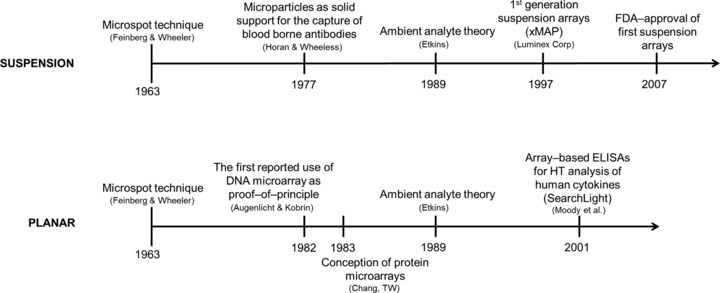
“The origins of suspension immunoassay technology date back to the 1970s when Horan and Wheeless [64] recognised, as part of a review describing some of the diverse applications of flow cytometry, that micro-particles harbouring antigen could constitute a solid support for the capture of blood-borne antibodies; moreove…”
BackgroundInfluentialAntibody-Based Protein Multiplex Platforms: Technical and Operational Challenges
Ellington, A. A., Kullo, I. J., Bailey, K. R., & Klee, G. G. (2010) · Clinical Chemistry · doi:10.1373/clinchem.2009.127514 · Cited by 313 · cited 5×
“Currently, monoclonal antibodies generated by classical hybridoma techniques constitute the most widely utilised capture ligands [66].”
BackgroundInfluentialUpdate on the biomarker core of the Alzheimer's Disease Neuroimaging Initiative subjects
Trojanowski, J. Q., Vandeerstichele, H., Korecka, M., Clark, C. M., Aisen, P. S., Petersen, R. C., Blennow, K., Soares, H., Simon, A., Lewczuk, P., et al. (2010) · Alzheimer's & Dementia · doi:10.1016/j.jalz.2010.03.008 · Cited by 307
Heterophilic antibodies: a problem for all immunoassays.
Boscato, L. M., & Stuart, M. C. (1988) · Clinical Chemistry · doi:10.1093/clinchem/34.1.27 · Cited by 300 · cited 1×
“Heterophile antibodies (those that cross phyla in their reactivity) are present in up to 40% of blood donors, and show low avidity and multispecies specificity [84, 85].”
BackgroundEkins, R. P. (1989) · Journal of Pharmaceutical and Biomedical Analysis · doi:10.1016/0731-7085(89)80079-2 · Cited by 294 · cited 1×
“Ekins devised the ambient analyte theory [8] postulating that miniaturisation of immunoassays (i.”
BackgroundChowdhury, F., Williams, A., & Johnson, P. (2009) · Journal of Immunological Methods · doi:10.1016/j.jim.2008.10.002 · Cited by 284 · cited 1×
“Chowdhury and colleagues [46] reported high intra-assay reproducibility and even comparable inter-assay precision between Luminex and Mesoscale Discovery technologies when measuring high target analyte concentrations, but for measuring low concentrations, interassay variation was variable and analyte dependent.”
Research works printed but not linked: 1
- Guo, A., Zhu, X.‐Y., in: Predki P. (Ed.), Functional Protein Microarrays: Pathways to Discovery, CRC Press, Boca Raton, FL 2006, pp. 60– 61.
Cited by
Items 101–200 of 539
Rizzo, R., Alvaro, M., Danz, N., Napione, L., Descrovi, E., Schmieder, S., Sinibaldi, A., Chandrawati, R., Rana, S., Munzert, P., et al. (2017) · Sensors and Actuators B Chemical · doi:10.1016/j.snb.2017.09.018 · Cited by 35
“However, conventional ELISA tests are time-consuming, require expert personnel and specific laboratory equipment (Tighe et al., 2015).”
Backgrounddel Campo, M., Jongbloed, W., Twaalfhoven, H. A. M., Veerhuis, R., Blankenstein, M. A., & Teunissen, C. E. (2015) · Frontiers in Neurology · doi:10.3389/fneur.2015.00202 · Cited by 34
“Such tests are preferably developed on an automated platform (53, 54), which will strongly reduce variation between centers allowing the establishment of cut-off values.”
BackgroundGaeddert, M., Glaser, K., Chendi, B. H., Sultanli, A., Koeppel, L., MacLean, E. L.-H., Broger, T., & Denkinger, C. M. (2024) · Journal of Clinical Microbiology · doi:10.1128/jcm.00786-24 · Cited by 33
“A 3-marker signature of CALCOCO2, IFITM3, and SAMD9L tested lysed whole blood with ELISA, comparing TB cases in India to asymptomatic contacts from India and the United Kingdom (21).”
InfluentialBiomarkers in high grade serous ovarian cancer
Bates, M., Mohamed, B. M., Lewis, F., O’Toole, S. A., & O’Leary, J. J. (2024) · Biochimica et Biophysica Acta (BBA) - Reviews on Cancer · doi:10.1016/j.bbcan.2024.189224 · Cited by 35
Yi, J., Gao, Z., Guo, Q., Wu, Y., Sun, T., Wang, Y., Zhou, H., Gu, H., Zhao, J., & Xu, H. T. (2022) · Sensors and Actuators B Chemical · doi:10.1016/j.snb.2022.132214 · Cited by 33
Aqueous two-phase systems as multipurpose tools to improve biomarker analysis
Mendes, M. S. M., Rosa, M. E., Ramalho, F., Freire, M. G., & Silva, F. A. E. (2023) · Separation and Purification Technology · doi:10.1016/j.seppur.2023.123875 · Cited by 32
“Although allowing for the detection and quantification of a specific protein in a complex mixture [161], conventional singleplex ELISAs are limited in diagnosing complex pathologies such as oncologic, immunological and neurodegenerative disorders [162].”
BackgroundA critical appraisal of blood-based biomarkers for Alzheimer’s disease
Lista, S., Mapstone, M. E., Caraci, F., Emanuele, E., López‐Ortiz, S., Martín-Hernández, J., Triaca, V., Imbimbo, C., Gabelle, A., Mielke, M. M., et al. (2024) · Ageing Research Reviews · doi:10.1016/j.arr.2024.102290 · Cited by 33
Feichtner, F., Schachner, A., Berger, E., & Heß, M. (2018) · Journal of Immunological Methods · doi:10.1016/j.jim.2018.03.002 · Cited by 31
Yaman, Y. T., Vural, O. A., Bolat, G., & Abacı, S. (2022) · Bioelectrochemistry · doi:10.1016/j.bioelechem.2022.108053 · Cited by 31
Portable Multiplex Optical Assays
Coskun, A. F., Topkaya, S. N., Yetisen, A. K., & Çetin, A. E. (2018) · Advanced Optical Materials · doi:10.1002/adom.201801109 · Cited by 31
Advances in paper-based ELISA techniques: From innovations in devices to emerging applications
Borah, M., & Dutta, H. S. (2024) · TrAC Trends in Analytical Chemistry · doi:10.1016/j.trac.2024.118123 · Cited by 30
Supramolecular chemistry for optical detection and delivery applications in living plants
Balli, M. V., Biedermann, F., Prodi, L., & Picchetti, P. (2025) · Chemical Society Reviews · doi:10.1039/d4cs00500g · Cited by 30
Advances in quantifying apolipoproteins using LC-MS/MS technology: implications for the clinic
van den Broek, I., Sobhani, K., & Eyk, J. E. V. (2017) · Expert Review of Proteomics · doi:10.1080/14789450.2017.1374859 · Cited by 31
Al‐Daghri, N. M., Al‐Hazmi, H., Al-Ajlan, A., Masoud, M. S., Al-Amro, A., Alghamdi, A. A., Alnaami, A. M., Al-Attas, O. S., & Alokail, M. S. (2018) · Saudi Journal of Biological Sciences · doi:10.1016/j.sjbs.2018.01.002 · Cited by 30
Wang, T. Y., Rukundo, J., Mao, Z., & Krylov, S. N. (2024) · ACS Chemical Biology · doi:10.1021/acschembio.4c00259 · Cited by 29
Cayer, D. M., Nazor, K. L., & Schork, N. J. (2016) · Human Molecular Genetics · doi:10.1093/hmg/ddw214 · Cited by 29
A versatile CRISPR/Cas12a-based sensitivity amplifier suitable for commercial HRP-based ELISA kits
Li, Y., Deng, F., & Goldys, E. M. (2021) · Sensors and Actuators B Chemical · doi:10.1016/j.snb.2021.130533 · Cited by 29
Microfluidics for High Throughput Screening of Biological Agents and Therapeutics
Bhusal, A., Yogeshwaran, S., Hosseinabadi, H. G., Çeçen, B., & Miri, A. K. (2024) · Biomedical Materials & Devices · doi:10.1007/s44174-024-00169-1 · Cited by 30
Pont, L., Benavente, F., Barbosa, J., & Sanz‐Nebot, V. (2017) · Talanta · doi:10.1016/j.talanta.2017.03.104 · Cited by 29
Precipitation-based colorimetric multiplex immunoassay in hydrogel particles
Roh, Y. H., Lee, H. J., Kim, J. Y., Kim, H. U., Kim, S. M., & Bong, K. W. (2020) · Lab on a Chip · doi:10.1039/d0lc00325e · Cited by 29
Lin, H., Liu, Q., Zhao, L., Liu, Z., Cui, H., Li, P., Fan, H., & Guo, L. (2023) · International Journal of Molecular Sciences · doi:10.3390/ijms24076090 · Cited by 28
Ostertag, C., Friedman, T. N., Keough, M. B., Kerr, B. J., & Sankar, T. (2023) · PAIN Reports · doi:10.1097/pr9.0000000000001117 · Cited by 29
Fu, M. X., Simmonds, P., Andersson, M. I., & Harvala, H. (2024) · Reviews in Medical Virology · doi:10.1002/rmv.2525 · Cited by 28
Zou, S., Li, J., Lu, S., Li, D., Liu, Y., Zhang, W., Cui, X., Gooding, J. J., Tian, K., & Liu, G. (2024) · Device · doi:10.1016/j.device.2024.100319 · Cited by 28
Guzman, N. A., & Guzman, D. E. (2015) · Journal of Chromatography B · doi:10.1016/j.jchromb.2015.11.026 · Cited by 29
Current and Future Approaches for Monitoring Responses to Anti-complement Therapeutics
Mohebnasab, M., Eriksson, O., Persson, B., Sandholm, K., Mohlin, C., Huber-Lang, M. S., Keating, B. J., Ekdahl, K. N., & Nilsson, B. (2019) · Frontiers in Immunology · doi:10.3389/fimmu.2019.02539 · Cited by 29
Caldeira, F. I. D., Hidalgo, M. A. R., de Carli, M. L., Scarel‐Caminaga, R. M., & Pigossi, S. C. (2021) · Archives of Oral Biology · doi:10.1016/j.archoralbio.2021.105147 · Cited by 28
Gilboa, T., Maley, A. M., Ogata, A. F., Wu, C., & Walt, D. R. (2020) · Advanced Healthcare Materials · doi:10.1002/adhm.202001111 · Cited by 27
Hu, L., Rossetti, M., Bergua, J. F., Parolo, C., Álvarez-Diduk, R., Rivas, L., Idili, A., & Merkoçi, A. (2024) · ACS Applied Materials & Interfaces · doi:10.1021/acsami.4c01744 · Cited by 27
Karanikola, S. N., Krücken, J., Ramünke, S., Waal, T. D. D., Höglund, J., Charlier, J., Weber, C., Müller, E., Kowalczyk, S. J., Kaba, J., et al. (2015) · Parasites & Vectors · doi:10.1186/s13071-015-0924-0 · Cited by 27
Beach, S. R. H., Lei, M., Simons, R. L., Barr, A. B., Simons, L. G., Cutrona, C. E., & Philibert, R. A. (2019) · Journal of Family Psychology · doi:10.1037/fam0000509 · Cited by 27
Laser-induced breakdown spectroscopy as a novel readout method for nanoparticle-based immunoassays
Modlitbová, P., Farka, Z., Pastucha, M., Pořízka, P., Novotný, K., Skládal, P., & Kaiser, J. (2019) · Microchimica Acta · doi:10.1007/s00604-019-3742-9 · Cited by 27
Bead Number Effect in a Magnetic-Beads-Based Digital Microfluidic Immunoassay
Hsu, W., Shih, Y.-T., Lee, M., Huang, H.-Y., & Wu, W.-N. (2022) · Biosensors · doi:10.3390/bios12050340 · Cited by 27
“In order to have good washing efficiency without bead loss in the droplet cutting and washing steps, the electrode size for the transportation and mixing area was 707 × 707 μm2, with a minimum volume ratio of 5:1 [20].”
MethodOptomechanical devices for deep plasma cancer proteomics
Kosaka, P. M., Calleja, M., & Tamayo, J. (2017) · Seminars in Cancer Biology · doi:10.1016/j.semcancer.2017.08.011 · Cited by 27
IL-17 Promotes Nitric Oxide Production in Non-Small-Cell Lung Cancer
Nicola, S., Ridolfi, I., Rolla, G., Filosso, P. L., Giobbe, R., Boita, M., Culla, B., Bucca, C. B., Solidoro, P., & Brussino, L. (2021) · Journal of Clinical Medicine · doi:10.3390/jcm10194572 · Cited by 26
“1 software (Bio‐Rad Laboratories) was used for data analysis [35,36].”
Song, Y., An, Y., Liu, W., Hou, W., Li, X., Lin, B., Zhu, Z., Ge, S., Yang, H., & Yang, C. J. (2017) · Chemical Communications · doi:10.1039/c7cc07231g · Cited by 25
Tieng, F. Y. F., Abu, N., Sukor, S., Azman, Z. A. M., Nadzir, N. M., Lee, L., & Mutalib, N. A. (2020) · Diagnostics · doi:10.3390/diagnostics10070444 · Cited by 26
“In the present study, a multiplex ELISA-based approach was undertaken due to the advantages over conventional screening methods including (1) high throughput, (2) less sample volume requirements (in microlitres), (3) ability to undergo simultaneous screening of numerous analytes in a sample, (4) ability to use specime…”
Antibody developments for metal ions and their applications
Wang, Y., Zhang, C., & Liu, F. (2020) · Food and Agricultural Immunology · doi:10.1080/09540105.2020.1828293 · Cited by 25
“Overall, ELISA is a heterogeneous immunological technique that involves an enzyme – substrate system to quantify the concentration of an antibody or an antigen in the sample, and this mostly is operated in a 96-microwell plate (Berlina et al., 2019; Gao et al., 2020; Tighe et al., 2015).”
Thomas, A., Schänzer, W., & Thevis, M. (2017) · Expert Review of Proteomics · doi:10.1080/14789450.2017.1362338 · Cited by 24
“Here a special focus is set on the inter-laboratory reproducibility of IA-MS assays, which is well established for LBAs.”
BackgroundInfluentialLee, J., Geiss, G. K., Demirkan, G., Vellano, C. P., Filanoski, B., Lu, Y., Ju, Z., Yu, S., Guo, H., Bogatzki, L. Y., et al. (2018) · Molecular & Cellular Proteomics · doi:10.1074/mcp.ra117.000291 · Cited by 24
Protein recognition methods for diagnostics and therapy
Montoya, R., Deckerman, P., & Guler, M. O. (2025) · BBA Advances · doi:10.1016/j.bbadva.2025.100149 · Cited by 24
“Multiplexing is especially valuable in situations where multiple biomarkers need to be measured concurrently, such as in complex diseases like cancer and autoimmune disorders [69].”
Yang, C. T., Ghosh, D., & Beaudry, F. (2017) · Food Additives & Contaminants Part A · doi:10.1080/19440049.2017.1416680 · Cited by 24
“…of the proteins (i.e. epitope), the quality of the detection relies strictly on the specificity of the antibody used so it poses a significant risk of false negatives or positives, and no data mining or molecular information can be derived (Wilson 2013; Solier and Langen 2014; Tighe et al. 2015).”
BackgroundKhan, W. A. (2019) · IntechOpen eBooks · doi:10.5772/intechopen.68834 · Cited by 24
Jiang, H., & Cole, P. A. (2021) · Current Protocols · doi:10.1002/cpz1.14 · Cited by 24
Simultaneous capture and sequential detection of two malarial biomarkers on magnetic microparticles
Markwalter, C. F., Ricks, K. M., Bitting, A. L., Mudenda, L., & Wright, D. W. (2016) · Talanta · doi:10.1016/j.talanta.2016.08.078 · Cited by 24
“Signal is detected using a high-resolution scanner or fluorescence microscope [1].”
BackgroundMethodInfluentialMultiplex Immunoassay Profiling
Stephen, L. L. (2016) · Methods in molecular biology · doi:10.1007/978-1-4939-6730-8_13 · Cited by 24
Immune response biomarkers in human and veterinary research
Llibre, A., & Duffy, D. (2018) · Comparative Immunology Microbiology and Infectious Diseases · doi:10.1016/j.cimid.2018.09.008 · Cited by 23
“In contrast to the use of genetic markers, an estimated 325 proteins can be reliably measured in human plasma by conventional clinical chemistry or Enzyme-Linked ImmunoSorbent Assay (ELISA), with concentrations ranging between 10M and 10M [2].”
BackgroundViral T-cell epitopes – Identification, characterization and clinical application
Schroeder, S. M., Nelde, A., & Walz, J. S. (2023) · Seminars in Immunology · doi:10.1016/j.smim.2023.101725 · Cited by 25
Hendriks, J., Stojanovic, I., Schasfoort, R. B. M., Saris, D. B. F., & Karperien, M. (2018) · Analytical Chemistry · doi:10.1021/acs.analchem.8b00260 · Cited by 23
Point of care molecular cancer diagnostics
Bhaskar, S., Umrao, S., Lee, H., Tibbs, J., Bacon, A. K., Shepherd, S., Ayupova, T., Ciloglu, F. U., Liu, L., Tan, A., et al. (2026) · Lab on a Chip · doi:10.1039/d5lc01014d · Cited by 25
Redefining serological diagnostics with immunoaffinity proteomics
Walter, J., Eludin, Z., & Drabovich, A. P. (2023) · Clinical Proteomics · doi:10.1186/s12014-023-09431-y · Cited by 23
“…for the complete panel of human antibody isotypes and subclasses due to the cross-reactivity of the secondary antibodies, lack of the multiple spectrally-resolved fluorescent labels, and the limited dynamic range resulting in the need to measure multiple dilutions of the same sample [76, 77].”
BackgroundHooe, S. L., Breger, J. C., & Medintz, I. L. (2024) · Molecular Systems Design & Engineering · doi:10.1039/d4me00017j · Cited by 22
Kim, S., Park, J. W., Wark, A. W., Jhung, S. H., & Lee, H. J. (2017) · Analytical Chemistry · doi:10.1021/acs.analchem.7b03837 · Cited by 22
Spectrally encoded microspheres for immunofluorescence analysis
Sankova, N. N., Владимирович, Ш. П., Semeykina, V., Dolgushin, S. A., Odintsova, E. S., & Parkhomchuk, E. V. (2020) · Journal of Applied Polymer Science · doi:10.1002/app.49890 · Cited by 22
Eiden, L., Yamanishi, C. D., Takayama, S., & Dishinger, J. F. (2016) · Analytical Chemistry · doi:10.1021/acs.analchem.6b02960 · Cited by 22
Comparison of Targeted Mass Spectrometry Techniques with an Immunoassay: A Case Study for HSP90α
Güzel, C., Govorukhina, N. I., Stingl, C., Dekker, L. J. M., Boichenko, A. P., van der Zee, A. G. J., Bischoff, R., & Luider, T. M. (2017) · PROTEOMICS - CLINICAL APPLICATIONS · doi:10.1002/prca.201700107 · Cited by 22
Knowledge gaps in late-onset neonatal sepsis in preterm neonates: a roadmap for future research
Kurul, Ş., Fiebig, K., Flint, R. B., Reiss, I. K. M., Küster, H., Simons, S. H. P., Völler, S., & Taal, H. R. (2021) · Pediatric Research · doi:10.1038/s41390-021-01721-1 · Cited by 21
Vasquez, M. M., Hu, C., Roe, D. J., Halonen, M. J., & Guerra, S. (2017) · Statistical Methods in Medical Research · doi:10.1177/0962280217734241 · Cited by 21
“However, precision and validation of measurements from multiplex assays need to be assessed.(1,2) Measurements of serum biomarkers from multiplex assays may have high intra- and inter-assay variability(3) and the corresponding coefficient of variation (CV) may be greater as compared to single biomarker assays.”
The regulatory role of sulfated polysaccharides in facilitating rhBMP-2-induced osteogenesis
Chen, H., Yu, Y., Wang, C., Wang, J., & Liu, C. (2019) · Biomaterials Science · doi:10.1039/c9bm00529c · Cited by 21
One-step, wash-free, bead-based immunoassay employing bound-free phase detection
Johannsen, B., Karpíšek, M., Baumgartner, D., Klein, V., Bostancı, N., Paust, N., Früh, S. M., Zengerle, R., & Mitsakakis, K. (2021) · Analytica Chimica Acta · doi:10.1016/j.aca.2021.338280 · Cited by 21
Characterization of binding interactions of SARS-CoV-2 spike protein and DNA-peptide nanostructures
Kruse, M., Altattan, B., Laux, E., Grasse, N., Heinig, L., Möser, C., Smith, D. M., & Hölzel, R. (2022) · Scientific Reports · doi:10.1038/s41598-022-16914-9 · Cited by 21
Gilbert, M., Livingston, R., Felberg, J., & Bishop, J. J. (2016) · Analytical Biochemistry · doi:10.1016/j.ab.2016.03.008 · Cited by 21
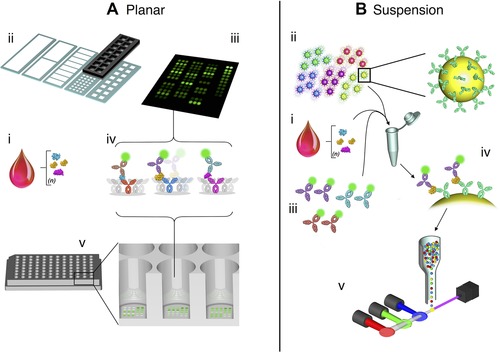
“Multiplex assays have been developed extensively in twodimensional formats, using immunoassay plates or microchips, as well as three-dimensional assays, using bead-based formats [5].”
MethodImmunoassay Techniques Highlighting Biomarkers in Immunogenetic Diseases
Manole, E., Bastian, A. E., Popescu, I. D., Constantin, C., Mihai, S., Gaina, G. F., Codrici, E., & Neagu, M. T. (2019) · IntechOpen eBooks · doi:10.5772/intechopen.75951 · Cited by 21
“Accordingly, validation of novel biomarkers into multiplex immunoassay panels confers an attractive prospect of simultaneous measurement of multiple analytes in a single patient sample, enabling progres-sion monitoring and outcome prediction, even detecting major diseases in its earliest stages [54].”
BackgroundNanoparticle-based colorimetric sensors to detect neurodegenerative disease biomarkers
Fan, Q., Gao, Y., Mazur, F., & Chandrawati, R. (2021) · Biomaterials Science · doi:10.1039/d1bm01226f · Cited by 20
Mwakasungula, S., Rougeron, V., Arnathau, C., Boundenga, L., Miguel, E., Boissière, A., Jiolle, D., Durand, P., Msigwa, A., Mswata, S., et al. (2022) · Molecular Ecology Resources · doi:10.1111/1755-0998.13670 · Cited by 20
“Another aspect that needs to be considered is the problem of cross- reaction with ELISA tests (Tighe et al., 2015), that is the fact that the antigens used can sometimes be recognized by antibodies that were produced for another pathogen (and so another antigen) leading to false positives.”
BackgroundBryan, M. R., Butt, J. N., Ding, Z., Tokranova, N. A., Cady, N. C., Piorek, B. D., Meinhart, C. D., Tice, J. D., & Miller, B. L. (2024) · ACS Sensors · doi:10.1021/acssensors.3c02225 · Cited by 20
Probing the effects of surface hydrophobicity and tether orientation on antibody-antigen binding
Bush, D. B., & Knotts, T. A. (2017) · The Journal of Chemical Physics · doi:10.1063/1.4980083 · Cited by 20
Ivanova, D. L., Fatima, R., & Gigley, J. P. (2016) · Frontiers in Immunology · doi:10.3389/fimmu.2016.00347 · Cited by 20
Meyer, T. C., Schmidt, F., Steinke, J., Bröker, B. M., Völker, U., & Michalik, S. (2019) · Journal of Proteomics · doi:10.1016/j.jprot.2019.103577 · Cited by 19
Sutton, W. J. H., Branham, P. J., Williamson, Y. M., Cooper, H. C., Najjar, F. N., Pierce, C. L., Barr, J. R., & Williams, T. L. (2023) · Vaccine · doi:10.1016/j.vaccine.2023.04.044 · Cited by 20
“It is also impractical to use antibody-based approaches for large-scale quantification of multiple proteins simultaneously [25,26].”
Figueiredo, I. D., Bartenlian, B., van der Rest, G., Pallandre, A., & Halgand, F. (2023) · Proteomes · doi:10.3390/proteomes11020019 · Cited by 19
“In addition, both methods comprise numerous and demanding steps, such as long incubation times, the use of considerable volumes of buffers, and costly reagents [22,34,35].”
BackgroundLi, B., Liu, X.-Y., Gao, D., Ma, Z., Peng, J., Wang, X., & Jiang, Y. (2023) · Sensors and Actuators B Chemical · doi:10.1016/j.snb.2023.134510 · Cited by 19
Dias, J. T., Lama, L., Gantelius, J., & Svahn, H. A. (2016) · Nanoscale · doi:10.1039/c5nr09207h · Cited by 19
Tsypin, M., Asmellash, S. G., Meyer, K. D., Touchet, B., & Röder, H. (2019) · PLoS ONE · doi:10.1371/journal.pone.0226012 · Cited by 20
“The reproducibility of the method compares well with multiplexed techniques, which typically show CVs between> 4% and< 15% [4,6,8], with exception of the aptamer-based SOMAscan assay, which shows median CV about 3–4% [13].”
MethodBender, D. E., Schaettler, M. O., Sheehan, K. C. F., Johanns, T. M., & Dunn, G. P. (2021) · Biomarker Insights · doi:10.1177/11772719211006666 · Cited by 19
McKitterick, N., Bicak, T. C., Świtnicka-Plak, M. A., Cormack, P. A. G., Reubsaet, L., & Halvorsen, T. G. (2021) · Journal of Chromatography A · doi:10.1016/j.chroma.2021.462490 · Cited by 19
“More detailed and inepth biomarker information allows for a greater focus on patientpecific treatments [2] .”
BackgroundNanobody-Based Immunosensor Detection Enhanced by Photocatalytic-Electrochemical Redox Cycling
Trashin, S., Morales-Yánez, F., Shanmugam, S. T., Paredis, L., Carrión, E. N., Sariego, I., Muyldermans, S., Polman, K., Gorun, S. M., & Wael, K. D. (2021) · Analytical Chemistry · doi:10.1021/acs.analchem.1c02876 · Cited by 19
Mujica, M. L., & Ferapontova, E. E. (2026) · Sensors · doi:10.3390/s26041139 · Cited by 18
“Monoclonal antibodies, widely used for the bioanalysis of protein biomarkers of cancer [39,40], often exhibit limited lot-to-lot reproducibility in performance and efficacy, which is inconsistent with their high cost [41,42].”
Wang, Y., Bednarcik, M., Ament, C., Cheever, M. L., Cummings, S., Geng, T., Gunasekara, D. B., Houston, N. L., Kouba, K., Liu, Z., et al. (2024) · Journal of Agricultural and Food Chemistry · doi:10.1021/acs.jafc.3c09188 · Cited by 18
Xia, J., Zhou, Y., Wang, Y., Liu, Y., Chen, Q., Koh, K., Hu, X., & Chen, H. (2024) · Microchimica Acta · doi:10.1007/s00604-024-06470-6 · Cited by 18
“But its low predictive accuracy and susceptibility to false positives can significantly affect clinicians’ diagnoses and may lead to incorrect medication guidance and health monitoring [10, 11].”
Sex Differences in Intestinal P-Glycoprotein Expression in Wistar versus Sprague Dawley Rats
Madla, C. M., Qin, Y., Gavins, F. K. H., Liu, J., Liu, D., Orlu, M., Murdan, S., Mai, Y., & Basit, A. W. (2022) · Pharmaceutics · doi:10.3390/pharmaceutics14051030 · Cited by 19
“One application is the quantification of P-gp drug expression to infer for potential interactions or inhibition [18,43,44].”
BackgroundMethodMultiSero: An Open-Source Multiplex-ELISA Platform for Measuring Antibody Responses to Infection
Byrum, J. R., Waltari, E., Janson, O., Guo, S.-M., Folkesson, J., Chhun, B. B., Vinden, J., Ivanov, I. E., Forst, M. L., Li, H., et al. (2023) · Pathogens · doi:10.3390/pathogens12050671 · Cited by 16
“Furthermore, in terms of experimental workflow, multiplexing increases the amount of information that can be acquired per volume of sera, reducing the amount of time and sera needed per antigen; however, the presence of assay-specific cross-reactivity can be a barrier to deploying highly multiplexed serological assays…”
BackgroundVenomous Arachnid Diagnostic Assays, Lessons from Past Attempts
Dias-Lopes, C., Paiva, A. L. B., Guerra-Duarte, C., Molina, F., & Felicori, L. F. (2018) · Toxins · doi:10.3390/toxins10090365 · Cited by 18
“However, until now, no work has attempted to achieve more sensitive signals with more refined techniques, such as radioimmunoassays or chemiluminescent, fluorescent and dynamic light scattering systems, perhaps due to the need for sophisticated laboratory equipment [67,68].”
BackgroundTowards precision medicine: the role and potential of protein and peptide microarrays
Brambilla, D., Chiari, M., Gori, A., & Cretich, M. (2019) · The Analyst · doi:10.1039/c9an01142k · Cited by 18
Advantages and limitations of nanoparticle labeling for early diagnosis of infection
Laurentius, L. B., Owens, N. A., Park, J., Crawford, A. C., & Porter, M. D. (2016) · Expert Review of Molecular Diagnostics · doi:10.1080/14737159.2016.1205489 · Cited by 18
Microfluidic communicating vessel chip for expedited and automated immunomagnetic assays
Yang, Y., & Zeng, Y. (2018) · Lab on a Chip · doi:10.1039/c8lc00927a · Cited by 17
Magnetic Synthetic Receptors for Selective Clean-Up in Protein Biomarker Quantification
McKitterick, N., Braathen, F., Świtnicka-Plak, M. A., Cormack, P. A. G., Reubsaet, L., & Halvorsen, T. G. (2020) · Journal of Proteome Research · doi:10.1021/acs.jproteome.0c00258 · Cited by 17
Lamy, R., Farber-Katz, S., Vives, F., Ayanoglu, G., Zhao, T., Chen, Y., Laotaweerungsawat, S., Ma, D., Phone, A., Psaras, C., et al. (2020) · Translational Vision Science & Technology · doi:10.1167/tvst.9.10.3 · Cited by 17
Llibre, A., Bondet, V., Rodero, M. P., Hunt, D. P. J., Crow, Y. J., & Duffy, D. (2018) · Journal of Visualized Experiments · doi:10.3791/57421 · Cited by 16
Hogeling, S. M., Cox, M. T., Bradshaw, R., Smith, D. P., & Duckett, C. J. (2019) · Analytical Biochemistry · doi:10.1016/j.ab.2019.03.006 · Cited by 16
“One of the most common techniques used for protein quantification in biological fluids is Enzyme-Linked ImmunoSorbent Assay (ELISA) [8].”
MethodPurification of animal immunoglobulin G ( IgG ) using peptoid affinity ligands
Reese, H. R., Bordelon, T., Odeh, F., Broussard, A., Kormos, C. M., Murphy, A., Shanahan, C. C., & Menegatti, S. (2020) · Biotechnology Progress · doi:10.1002/btpr.2994 · Cited by 16
Proteomic profiles by multiplex microsphere suspension array
Krishnan, V. V., Selvan, S. R., Parameswaran, N., Venkateswaran, N., Luciw, P. A., & Venkateswaran, K. S. (2018) · Journal of Immunological Methods · doi:10.1016/j.jim.2018.07.002 · Cited by 16
Origins and clinical relevance of proteoforms in pediatric malignancies
Lorentzian, A. C., Uzozie, A. C., & Lange, P. F. (2019) · Expert Review of Proteomics · doi:10.1080/14789450.2019.1575206 · Cited by 18
Fluorophore-based host–guest assembly complexes for imaging and therapy
Wu, Q., Lei, Q., Zhong, H.-C., Ren, T., Sun, Y., Zhang, X., & Yuan, L. (2023) · Chemical Communications · doi:10.1039/d2cc06286k · Cited by 16
Mining the Human Proteome: Biomarker Discovery for Human Cancer and Metastases
Yang, J., Roy, R., Jedinak, A., & Moses, M. A. (2015) · The Cancer Journal · doi:10.1097/ppo.0000000000000139 · Cited by 17
“After mixing the beads with the clinical sample, detection antibodies labeled with a reporter dye enable highresolution analysis of specific fluorescent signal via flow cytometry methods.(53) One drawback of the immunoassay approach for biomarker validation is that high-quality, commercially manufactured ELISAs for th…”
MethodThe Use of Antibody Arrays in the Discovery of New Plasma Biomarkers for Endometriosis
Dorien, O., Waelkens, E., Vanhie, A., Peterse, D., Fassbender, A., & D’Hooghe, T. M. (2020) · Reproductive Sciences · doi:10.1007/s43032-019-00081-w · Cited by 16
Lv, T., Liu, J., Li, F., Ma, S., Wei, X., Li, X., Han, C., & Wang, X. (2024) · ACS Applied Materials & Interfaces · doi:10.1021/acsami.4c05638 · Cited by 16
Reduction of Dilution Error in Elisas Using an Internal Standard
Verch, T., Roselle, C., & Shank-Retzlaff, M. L. (2016) · Bioanalysis · doi:10.4155/bio-2016-0053 · Cited by 15
Saboyá-Díaz, M.-I., Castellanos, L. G., Morice, A., Ade, M. P., Rey-Benito, G. J., Cooley, G. M., Scobie, H. M., Wiegand, R. E., Coughlin, M. M., & Martin, D. L. (2023) · Revista Panamericana de Salud Pública · doi:10.26633/rpsp.2023.53 · Cited by 15
“Innovations in laboratory tests have advanced the potential of integrated serosurveillance as a platform via the ability to simultaneously measure antibody responses to multiple pathogens (3,4).”
BackgroundAutoantibody-Based Diagnostic Biomarkers: Technological Approaches to Discovery and Validation
Aziz, F. A., Smith, M., & Blackburn, J. M. (2019) · IntechOpen eBooks · doi:10.5772/intechopen.75200 · Cited by 15
“Miniaturisation allows a high overall sensitivity as analyte measurement is conducted while retaining the highest concentration per unit volume attainable for the given sample, with decreased reaction times due to short diffusion distances [71].”
Background
Metadata
- Authors
- Tighe, P. J., Ryder, R. R., Todd, I., & Fairclough, L. C.
- Affiliations
- University of Nottingham (GB)
- Corresponding author
- Fairclough, Lucy C.
- Venue
- PROTEOMICS – Clinical Applications
- Publisher
- Wiley
- Published
- 2015-03-25
- Volume
- 9
- Issue
- 3-4
- Pages
- 406-422
- ISSN
- 1862-8346 (ISSN-L)
- 1862-8354
- PMC
- PMC6680274
- OpenAlex
- W2136663003
- Semantic Scholar
- e664df4333c34cbf6341682d8fc287a0ef279e2a
- Cited by
- 464
- References
- 92
- Citations by year
- 2026: 58 · 2025: 39 · 2024: 51 · 2023: 35 · 2022: 36 · 2021: 40 · 2020: 48 · 2019: 36 · 2018: 47 · 2017: 35 · 2016: 27 · 2015: 11
- FWCI
- 3.88
- Type
- journal article
- Language
- en
- Open access
- hybrid
- doi.org
- Licence
- Locations
- PROTEOMICS - CLINICAL APPLICATIONS (publishedVersion, cc-by-nc-nd)
- Europe PMC (PubMed Central) (publishedVersion, cc-by-nc-nd)
- PubMed Central (publishedVersion, cc-by-nc-nd)
- PubMed (publishedVersion)
- Repository@Nottingham (University of Nottingham) (publishedVersion, cc-by-nc-nd)
- Repository@Nottingham (University of Nottingham) (submittedVersion, cc-by-nc-nd)
- Nottingham ePrints (University of Nottingham) (submittedVersion, cc-by-nc-nd)
- Topics
- Life Sciences › Biochemistry, Genetics and Molecular Biology › Molecular Biology › Advanced Biosensing Techniques and Applications
- Health Sciences › Health Professions › Medical Laboratory Technology › Clinical Laboratory Practices and Quality Control
- Physical Sciences › Chemistry › Spectroscopy › Advanced Proteomics Techniques and Applications
- Keywords
- multiplex immunoassay, ELISA, in vitro diagnostics, biomarker validation, quality control, reagent specificity, cross-reactivity, assay automation, point-of-care testing, personalized medicine
- MeSH terms
- Enzyme-Linked Immunosorbent Assay, Humans, Immunoassay, Biomarkers
About these checks
Registry, retraction, Cites and statistics results are computed, not judged, with one exception: a printed reference that no index lists is read once by a model before it counts as a citation error. Claims are extracted by a model and kept only when their quote appears verbatim in the text; each cited source is then checked, with a model’s help, for whether it says what the claim relies on. Those verdicts can be wrong — read the claim’s quote and the cited source before relying on one.
Statistics and arithmetic are recomputed, not judged.
Confidence bands are shown only for fields calibrated on our annotated test set. None is calibrated yet, so no band is shown.
What counts as a claim ›How we measure confidence ›How we check this ›
Are you an author, or do you see a problem with this page? Request a review
Data sources
Bibliographic data: Semantic Scholar, OpenAlex, Crossref.
Contains information from the Semantic Scholar Academic Graph Datasets, made available under the ODC Attribution License (ODC-BY 1.0).
Semantic Scholar’s data is described in: Kinney, R., et al. (2023). The Semantic Scholar Open Data Platform. arXiv:2301.10140.
