

ELISA in the multiplex era: Potentials and pitfalls
Open accessThe DOI matches its Crossref record; 92 of the 92 references it cites were found in a registry or an index.
Abstract
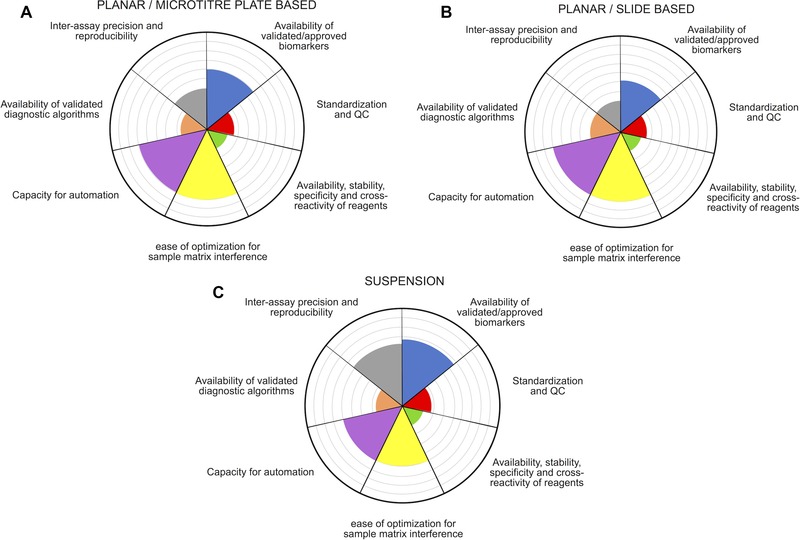
Multiplex immunoassays confer several advantages over widely adopted singleplex immunoassays including increased efficiency at a reduced expense, greater output per sample volume ratios and higher throughput predicating more resolute, detailed diagnostics and facilitating personalised medicine. Nonetheless, to date, relatively few protein multiplex immunoassays have been validated for in vitro diagnostics in clinical/point‐of‐care settings. This review article will outline the challenges, which must be ameliorated prior to the widespread integration of multiplex immunoassays in clinical settings: (i) biomarker validation; (ii) standardisation of immunoassay design and quality control (calibration and quantification); (iii) availability, stability, specificity and cross‐reactivity of reagents; (iv) assay automation and the use of validated algorithms for transformation of raw data into diagnostic results. A compendium of multiplex immunoassays applicable to in vitro diagnostics and a summary of the diagnostic products currently available commercially are included, along with an analysis of the relative states of development for each format (namely planar slide based, suspension and planar/microtitre plate based) with respect to the aforementioned issues.
Overview
The claims and statistics of this paper haven’t been checked yet.
Free: it reads the open-access text and checks the first 5 claims that cite a source we can check. Create a free account to check every claim.
Integrity signals
Registry
Cites
Statistics
Figures
Verification
Claims the paper makes
The claims and statistics of this paper haven’t been checked yet.
Free: it reads the open-access text and checks the first 5 claims that cite a source we can check. Create a free account to check every claim.
Claims other papers make about this one
Each is checked against this paper’s own text: does it say what the citing paper says it does?
The cited source doesn’t support the claim as written.
In the citing paper
“This technology can perform up to 500 bioassays simultaneously from a small quantity of liquid biopsy.”
From Tumor-Induced Inflammatory Cytokines and the Emerging Diagnostic Devices for Cancer Detection and Prognosis (2021) · cites this paper as [129]
Checked by a reasoning model — may be wrong.
Experimental — accuracy not yet measuredThe cited source says what the claim attributes to it.
In the citing paper
“Despite the popularity of the multiplexing assays, only a few have been validated for IVD applications (129).”
From Tumor-Induced Inflammatory Cytokines and the Emerging Diagnostic Devices for Cancer Detection and Prognosis (2021) · cites this paper as [129]
The cited source says what the claim attributes to it.
In the citing paper
“The multiplexed sandwich ELISA came in planar- and microbead-based arrays.”
From Tumor-Induced Inflammatory Cytokines and the Emerging Diagnostic Devices for Cancer Detection and Prognosis (2021) · cites this paper as [129]
Self-check
Percentages, sums and reported differences re-computed from the paper’s own numbers.
The self-check needs the paper’s full text.
Citations
Cites
Continuous cultures of fused cells secreting antibody of predefined specificity
KÖHLER, G., & MILSTEIN, C. (1975) · Nature · doi:10.1038/256495a0 · Cited by 17,229 · cited 1×
“Moreover, the advent of hybridoma technology in the 70s as a means of generating monoclonal antibodies [6] has facilitated the generation of highly robust, antibody-based assays with a proclivity for standardisation and automation.”
BackgroundMET Amplification Leads to Gefitinib Resistance in Lung Cancer by Activating ERBB3 Signaling
Engelman, J. A., Zejnullahu, K., Mitsudomi, T., Song, Y., Hyland, C., Park, J. O., Lindeman, N., Gale, C.-M., Zhao, X., Christensen, J., et al. (2007) · Science · doi:10.1126/science.1141478 · Cited by 4,496
Coactivation of receptor tyrosine kinases affects the response of tumor cells to targeted therapies
Stommel, J. M., Kimmelman, A. C., Ying, H., Nabioullin, R., Ponugoti, A. H., Wiedemeyer, R., Stegh, A. H., Bradner, J. E., Ligon, K. L., Brennan, C., et al. (2007) · Science · doi:10.1126/science.1142946 · Cited by 938
Vanmassenhove, J., Vanholder, R., Nagler, E., & Van Biesen, W. (2013) · Nephrology Dialysis Transplantation · doi:10.1093/ndt/gfs380 · Cited by 377
Quantitative Single Cell Analysis and Sorting
Horan, P. K., & Wheeless, L. L. (1977) · Science · doi:10.1126/science.905822 · Cited by 366 · cited 3×
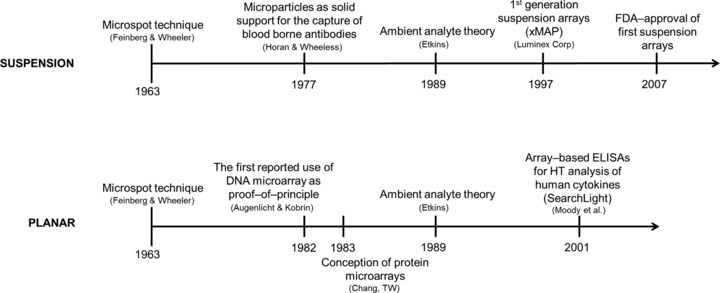
“The origins of suspension immunoassay technology date back to the 1970s when Horan and Wheeless [64] recognised, as part of a review describing some of the diverse applications of flow cytometry, that micro-particles harbouring antigen could constitute a solid support for the capture of blood-borne antibodies; moreove…”
BackgroundInfluentialAntibody-Based Protein Multiplex Platforms: Technical and Operational Challenges
Ellington, A. A., Kullo, I. J., Bailey, K. R., & Klee, G. G. (2010) · Clinical Chemistry · doi:10.1373/clinchem.2009.127514 · Cited by 313 · cited 5×
“Currently, monoclonal antibodies generated by classical hybridoma techniques constitute the most widely utilised capture ligands [66].”
BackgroundInfluentialUpdate on the biomarker core of the Alzheimer's Disease Neuroimaging Initiative subjects
Trojanowski, J. Q., Vandeerstichele, H., Korecka, M., Clark, C. M., Aisen, P. S., Petersen, R. C., Blennow, K., Soares, H., Simon, A., Lewczuk, P., et al. (2010) · Alzheimer's & Dementia · doi:10.1016/j.jalz.2010.03.008 · Cited by 307
Heterophilic antibodies: a problem for all immunoassays.
Boscato, L. M., & Stuart, M. C. (1988) · Clinical Chemistry · doi:10.1093/clinchem/34.1.27 · Cited by 300 · cited 1×
“Heterophile antibodies (those that cross phyla in their reactivity) are present in up to 40% of blood donors, and show low avidity and multispecies specificity [84, 85].”
BackgroundEkins, R. P. (1989) · Journal of Pharmaceutical and Biomedical Analysis · doi:10.1016/0731-7085(89)80079-2 · Cited by 294 · cited 1×
“Ekins devised the ambient analyte theory [8] postulating that miniaturisation of immunoassays (i.”
BackgroundChowdhury, F., Williams, A., & Johnson, P. (2009) · Journal of Immunological Methods · doi:10.1016/j.jim.2008.10.002 · Cited by 284 · cited 1×
“Chowdhury and colleagues [46] reported high intra-assay reproducibility and even comparable inter-assay precision between Luminex and Mesoscale Discovery technologies when measuring high target analyte concentrations, but for measuring low concentrations, interassay variation was variable and analyte dependent.”
Research works printed but not linked: 1
- Guo, A., Zhu, X.‐Y., in: Predki P. (Ed.), Functional Protein Microarrays: Pathways to Discovery, CRC Press, Boca Raton, FL 2006, pp. 60– 61.
Cited by
Items 201–300 of 539
Liu, J., Sun, L., Zhan, H., & Fan, L. (2019) · ACS Applied Bio Materials · doi:10.1021/acsabm.9b00337 · Cited by 15
Semerádtová, A., Štofik, M., Neděla, O., Staněk, O., Slepička, P., Kolská, Z., & Malý, J. (2018) · Colloids and Surfaces B Biointerfaces · doi:10.1016/j.colsurfb.2018.01.048 · Cited by 14
Waltari, E., Carabajal, E., Sanyal, M., Friedland, N., & McCutcheon, K. M. (2020) · Journal of Immunological Methods · doi:10.1016/j.jim.2020.112789 · Cited by 14
Immuno-Nanoparticles for Multiplex Protein Imaging in Cells and Tissues
Lee, H., Gao, X., & Kim, Y. (2018) · BioChip Journal · doi:10.1007/s13206-018-2201-8 · Cited by 14
Inflammatory mediators in saliva and gingival fluid of children with congenital heart defect
Ali, H. M., Mustafa, M., Suliman, S., Elshazali, O. H., Ali, R. W., & Berggreen, E. (2020) · Oral Diseases · doi:10.1111/odi.13313 · Cited by 14
Measuring Influenza A Virus and Peptide Interaction Using Electrically Controllable DNA Nanolevers
Kruse, M., Möser, C., Smith, D. M., Müller‐Landau, H., Rant, U., Hölzel, R., & Bier, F. F. (2021) · Advanced Materials Technologies · doi:10.1002/admt.202101141 · Cited by 14
Lin, X., Wang, G., Ma, L., & Liu, G. (2021) · Frontiers in Bioengineering and Biotechnology · doi:10.3389/fbioe.2021.752514 · Cited by 14
“Compared to other immunoassay methods, ELISA has many advantages, such as being sensitive, specific, and high throughput (Tighe et al., 2015).”
Jain, B., Kumarasamy, J., Gholve, C. S., Kulkarni, S., & Rajan, M. G. R. (2016) · Indian Journal of Clinical Biochemistry · doi:10.1007/s12291-016-0589-2 · Cited by 14
“tions have hindered implementation of MI in clinical settings [14].”
BackgroundVandemoortele, G., Staes, A., Gonnelli, G., Samyn, N., Sutter, D. D., Vandermarliere, E., Timmerman, E., Gevaert, K., Martens, L., & Eyckerman, S. (2016) · Scientific Reports · doi:10.1038/srep27220 · Cited by 14
Zheng, K., Chen, C., Chen, X., Xu, M., Chen, L., Hu, Y., Bai, Y., Liu, B., Yan, C., Wang, H., et al. (2019) · Biosensors and Bioelectronics · doi:10.1016/j.bios.2019.02.030 · Cited by 14
Increasing resolution in stress neurobiology: from single cells to complex group behaviors
Miranda, L., Bordes, J., Gasperoni, S., & López, J. P. (2023) · Stress · doi:10.1080/10253890.2023.2186141 · Cited by 14
“…in multiplex immunoassays can provide a more holistic view of biological markers (e.g. GCs, cytokines, catecholamines, vasopressin, among others), and even distinguish markers related to different types of stressors (e.g. acute versus chronic stress) (Ataallahi et al., 2022, Tighe et al., 2015).”
BackgroundRajan, B. S., Krishnan, K., & Vellaichamy, E. (2021) · Cardiovascular Toxicology · doi:10.1007/s12012-021-09697-4 · Cited by 13
Clinical characteristics and salivary biomarkers of burning mouth syndrome
Kong, M.-S., Kim, M., Kim, Y., Chang, J., & Kho, H. (2024) · Oral Diseases · doi:10.1111/odi.14959 · Cited by 13
Multiplex Technology for Biomarker Immunoassays
Ahsan, H., & Ahmad, R. (2021) · IntechOpen eBooks · doi:10.5772/intechopen.91730 · Cited by 14
Fries-Craft, K. A., Kilburn-Kappeler, L. R., Aldrich, C. G., & Bobeck, E. A. (2023) · Journal of Animal Science · doi:10.1093/jas/skad029 · Cited by 13
“While multiplex assays are more sensitive and prevalent, they require specific biomarker validation and specialized equipment, often limiting the cytokines that can be measured through commercially available multiplex kits (Tighe et al., 2015).”
BackgroundMalbec, R., Kimpston-Burkgren, K., Vandenkoornhuyse, E., Olivier, C., Souplet, V., Audebert, C., Carrillo-Ávila, J. A., Baum, D. H., & Gimenez-Lirola, L. G. (2020) · Journal of Immunological Methods · doi:10.1016/j.jim.2020.112808 · Cited by 13
Velez, G., & Mahajan, V. B. (2020) · iScience · doi:10.1016/j.isci.2020.101667 · Cited by 13
“less-abundant vitreous proteins that might be otherwise missed by unbiased MS methods (Tighe et al., 2015).”
BackgroundComplement multiplex testing: Concept, promises and pitfalls
Prohászka, Z., & Frazer‐Abel, A. A. (2021) · Molecular Immunology · doi:10.1016/j.molimm.2021.10.006 · Cited by 13
Nanoparticle-antibody conjugate-based immunoassays for detection of CKD-associated biomarkers
Chhillar, M., Kukkar, D., Kukkar, P., & Kim, K. (2022) · TrAC Trends in Analytical Chemistry · doi:10.1016/j.trac.2022.116857 · Cited by 13
Rutten, I., Daems, D., Leirs, K., & Lammertyn, J. (2023) · Biosensors · doi:10.3390/bios13010100 · Cited by 13
Palantavida, S., Peng, B., & Sokolov, I. Y. (2017) · Nanoscale · doi:10.1039/c6nr08976c · Cited by 13
Use and reliability of multiplex bead-based assays (Luminex) at Containment Level 4
Dowall, S., Graham, V., Fletcher, T. E., & Hewson, R. (2019) · Methods · doi:10.1016/j.ymeth.2019.02.008 · Cited by 13
Norwood, C., Sabin‐Farrell, R., Malins, S., & Moghaddam, N. G. (2021) · Journal of Clinical Psychology · doi:10.1002/jclp.23112 · Cited by 12
Furuya, H., Sakatani, T., Tanaka, S., Murakami, K., Waldron, R. T., Hogrefe, W. R., & Rosser, C. J. (2024) · Journal of Translational Medicine · doi:10.1186/s12967-023-04811-2 · Cited by 12
“Advantages of multiplex immunoassays include increased efficiency and lower costs versus evaluating multiple analytes individually, and high-throughput capabilities that are further enhanced by using the automated features of modern instrumentation platforms [25].”
Yang, Y., Wang, J., Li, L., Yang, H., Yu, Q., Liao, J. J. S., Ouyang, W., Yu, G., & Ling, L. (2025) · Emerging contaminants · doi:10.1016/j.emcon.2025.100511 · Cited by 12
Biosensing solutions for protein measurement in blood-derived media: a review
Bartnik, K., Janik, M., Koba, M., Rygiel, T. P., Musolf, P., & Smietana, M. J. (2025) · Measurement · doi:10.1016/j.measurement.2025.117756 · Cited by 13
Pan, B., He, Q., Yu, X., Choch, D. D., Lam, K. S., Hammock, B. D., & Sun, G. Z. (2024) · Talanta · doi:10.1016/j.talanta.2024.126634 · Cited by 12
Harink, B., Nguyen, H. Q., Thorn, K. S., & Fordyce, P. M. (2019) · PLoS ONE · doi:10.1371/journal.pone.0203725 · Cited by 12
Psoriasis to Psoriatic Arthritis: The Application of Proteomics Technologies
Qi, F., Tan, Y., Yao, A., Yang, X., & He, Y. (2021) · Frontiers in Medicine · doi:10.3389/fmed.2021.681172 · Cited by 12
Analytical Considerations of Large-Scale Aptamer-Based Datasets for Translational Applications
Jiang, W. M., Jones, J. C., Shankavaram, U. T., Sproull, M. T., Camphausen, K. A., & Krauze, A. V. (2022) · Cancers · doi:10.3390/cancers14092227 · Cited by 12
“Multiplex ELISA [1,18,43,51,52] ELISA 25–50 μL Plasma, serum, tissue/cell, urine, saliva, CSF LOD = 0.”
ImmunoDisk—A Fully Automated Bead-Based Immunoassay Cartridge with All Reagents Pre-Stored
Johannsen, B., Baumgartner, D., Karkossa, L., Paust, N., Karpíšek, M., Bostancı, N., Zengerle, R., & Mitsakakis, K. (2022) · Biosensors · doi:10.3390/bios12060413 · Cited by 12
“Using magnetic particles as a solid phase shortens the incubation duration [41] and simplifies the handling during different assay steps, for example during washing [42].”
Fiber Optic Particle Plasmon Resonance-Based Immunoassay Using a Novel Multi-Microchannel Biochip
Chiang, C.-Y., Chen, C., & Wang, C. (2020) · Sensors · doi:10.3390/s20113086 · Cited by 12
Opportunities and Challenges of Multiplex Assays: A Machine Learning Perspective
Chen, J., & Schwarz, E. (2016) · Methods in molecular biology · doi:10.1007/978-1-4939-6730-8_7 · Cited by 13
The development of microfluidic-based western blotting: Technical advances and future perspectives
Desire, C. T., Arrua, R. D., Strudwick, X. L., Kopecki, Z., Cowin, A. J., & Hilder, E. F. (2023) · Journal of Chromatography A · doi:10.1016/j.chroma.2023.463813 · Cited by 12
Dowling, P., Trollet, C., Négroni, E., Swandulla, D., & Ohlendieck, K. (2024) · Proteomes · doi:10.3390/proteomes12010004 · Cited by 11
“[160–162] Table 1.”
Drainas, A. P., McIlwain, D. R., Dallas, A. E., Chu, T. P., Delgado‐González, A., Baron, M., Angulo‐Ibáñez, M., Trejo, A., Bai, Y., Hickey, J. W., et al. (2025) · Nature Biomedical Engineering · doi:10.1038/s41551-025-01349-0 · Cited by 11
Ren, C., Bobst, C. E., & Kaltashov, I. A. (2019) · Analytical Chemistry · doi:10.1021/acs.analchem.9b00504 · Cited by 11
Serological Profiling for Malaria Surveillance Using a Standard ELISA Protocol
Murungi, L., Kimathi, R., Tuju, J., Kamuyu, G., & Osier, F. H. A. (2019) · Methods in molecular biology · doi:10.1007/978-1-4939-9550-9_6 · Cited by 11
Jayaraman, V., Krishna, K., Yang, Y., Rajasekaran, K., Ou, Y., Wang, T., Bei, K., Krishnamurthy, H. K., Rajasekaran, J. J., Rai, A. J., et al. (2020) · Scientific Reports · doi:10.1038/s41598-020-75036-2 · Cited by 12
Bush, D. B., & Knotts, T. A. (2018) · The Journal of Chemical Physics · doi:10.1063/1.5045356 · Cited by 11
Introduction to immunological techniques in the clinical laboratory
Slieman, T. A., & Leheste, J. R. (2020) · Methods in microbiology · doi:10.1016/bs.mim.2020.01.001 · Cited by 12
Danese, E., Piona, C. A., Rizza, M., Tiziani, E., Pighi, L., Morotti, E., Salvagno, G. L., Mattiuzzi, C., Maffeis, C., & Lippi, G. (2025) · Diagnostics · doi:10.3390/diagnostics15131695 · Cited by 11
“For this reason, most laboratories worldwide are increasingly abandoning this analytical technology and the ELISA has emerged as the primary detection technique due to its quantitative capabilities and straightforward procedure [12,13].”
Enzyme-based biosensors: emerging tools for advanced biomedical applications
Bocina, E., Cocuzza, C., Vincenzi, C., Fino, D., Cauda, V., & Piumetti, M. (2025) · Talanta · doi:10.1016/j.talanta.2025.129241 · Cited by 10
“For example, ELISA and other immunoassays can suffer from cross-reactivity, variability between batches, reduced sensitivity for low-abundance analytes and long assay times due to multiple incubation and washing steps [37,38].”
Ultrasensitive Enzyme-Free Detection of Proteins on Magnetic Beads
Malhotra, K., Hansen, L. L., Han, S., Roth, S., & Walt, D. R. (2026) · Journal of the American Chemical Society · doi:10.1021/jacs.5c19560 · Cited by 13
Chen, M., Ren, A. H., Prassas, I., Soosaipillai, A. R., Lim, B., Fraser, D. D., & Diamandis, E. P. (2021) · The Journal of Applied Laboratory Medicine · doi:10.1093/jalm/jfab004 · Cited by 10
González-Palomo, A. K., García, J. D. C., Saldaña-Villanueva, K., Martínez, F. D. B., Méndez‐Rodríguez, K. B., Quintana, L. E. A., Álvarez, J. C. M., & Vázquez, F. J. P. (2025) · International Archives of Occupational and Environmental Health · doi:10.1007/s00420-024-02116-5 · Cited by 10
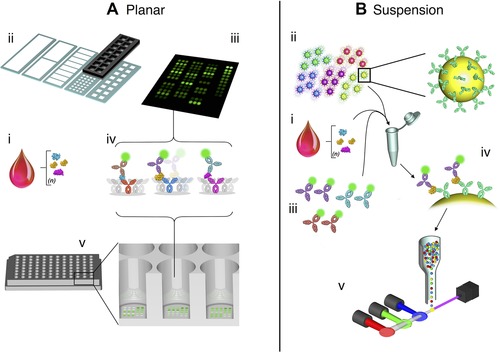
“The beads are detected by size and fluorescence inten - sity to analyze cytokines in an individual manner, and the amount of cytokines is proportional to the fluorescence intensity of the detection antibody (Tighe et al. 2015).”
Biomarkers for early diagnosis of rheumatoid arthritis
Yu, Y., Lei, L., Sun, Y. H., Mei, J., Zhang, Y., Chen, J., Ying, G., & Wu, Y. (2025) · Clinica Chimica Acta · doi:10.1016/j.cca.2025.120288 · Cited by 10
Liu, F., Chen, Z., Shen, Y., Sun, Y., Yang, J., Wang, H., Lei, H., & Xu, Z. (2017) · Food and Agricultural Immunology · doi:10.1080/09540105.2017.1376038 · Cited by 10
Farajpour, N., Lastra, L. S., Sharma, V., & Freedman, K. J. (2021) · Frontiers in Nanotechnology · doi:10.3389/fnano.2021.689584 · Cited by 10
A 3D paper microfluidic device for enzyme‐linked assays: Application to DNA analysis
Toldrà, A., Chondrogiannis, G., & Hamedi, M. M. (2023) · Biotechnology Journal · doi:10.1002/biot.202300143 · Cited by 10
Talha, S. M., Saviranta, P., Hattara, L., Vuorinen, T., Hytönen, J., Khanna, N., & Pettersson, K. S. I. (2015) · Journal of Immunological Methods · doi:10.1016/j.jim.2015.12.007 · Cited by 10
A surface plasmon resonance based approach for measuring response to pneumococcal vaccine
Garrido-Jareño, M., Puchades‐Carrasco, L., Orti-Pérez, L., Sahuquillo-Arce, J. M., Meyer-García, M. D. C., Mollar‐Maseres, J., Lloret-Sos, C., Gil-Brusola, A., López-Hontangas, J. L., Beltrán-Garrido, J. M., et al. (2021) · Scientific Reports · doi:10.1038/s41598-021-85958-0 · Cited by 10
Gurazada, S. G. R., Kennedy, H. M., Braatz, R. D., Mehrman, S. J., Polson, S. W., & Rombel, I. T. (2025) · Biotechnology Advances · doi:10.1016/j.biotechadv.2024.108506 · Cited by 9
“Nevertheless, their foundational contributions were instrumental in early proteomics, revealing useful insights to guide cell development, and they continue to serve as complementary techniques to enhance data generation and analysis (Marcus and Rabilloud, 2020; Tighe et al., 2015).”
Jang, W., Byun, J. W., Choi, J. H., Kim, B., & Bong, K. W. (2025) · Small · doi:10.1002/smll.202503007 · Cited by 9
Saateh, A., Allamehnejad, R., Yang, W., Liu, Y.-C., Tolstonog, G. V., & Altug, H. (2026) · Journal of the American Chemical Society · doi:10.1021/jacs.5c17838 · Cited by 9
Aksoyalp, Z. Ş., Erdoğan, B. R., & Aksun, S. (2023) · EXCLI journal · doi:10.17179/excli2022-5617 · Cited by 9
“Besides these advantages, standardization/validation of the ELISA kit is essential to use as a diagnostic technique due to stability and reagent cross-reactivity problems in the clinical setting (Tighe et al., 2015; Hosseini et al., 2018).”
MethodBoonkaew, S., Teodori, L., Vendelbo, M. H., Kjems, J., & Ferapontova, E. E. (2024) · Analytica Chimica Acta · doi:10.1016/j.aca.2024.343472 · Cited by 9
Liu, Y., Li, J., Wu, T., Chen, B., Hu, J., Xiao, Z., Liang, H., He, S., Hong, H., Chen, S., et al. (2024) · Sensors and Actuators B Chemical · doi:10.1016/j.snb.2024.136331 · Cited by 9
Kazakova, A., Kakkola, L., Ziegler, T. T., Syrjänen, R., Päkkilä, H., Waris, M. E., Soukka, T., & Julkunen, I. (2020) · Vaccine · doi:10.1016/j.vaccine.2020.01.022 · Cited by 9
“The limiting factors of these assays are that they are labor-and time-intensive and especially the HI test requires relatively large sample volumes [14,15].”
Single-Tube Multimarker Assay for Estimating the Risk to Develop Preeclampsia
Ratnik, K., Rull, K., Hanson, E., Kisand, K., & Laan, M. (2020) · The Journal of Applied Laboratory Medicine · doi:10.1093/jalm/jfaa054 · Cited by 9
Chitko-McKown, C. G., Bierman, S. L., Kuehn, L. A., Bennett, G. L., DeDonder, K. D., Apley, M. D., Harhay, G. P., Clawson, M. L., White, B. J., Larson, R. L., et al. (2021) · Veterinary Immunology and Immunopathology · doi:10.1016/j.vetimm.2021.110274 · Cited by 9
Wang, L., Wang, X., Chen, Z., & Liu, S. (2022) · Analytical Chemistry · doi:10.1021/acs.analchem.2c00800 · Cited by 9
Nguyen, T. N. B., Ely, B. A., Pick, D., Patel, M., Xie, H., Kim‐Schulze, S., & Gabbay, V. (2022) · Brain Behavior and Immunity · doi:10.1016/j.bbi.2022.07.163 · Cited by 9
Esmaeili, R., Zhang, M., Sternberg, M., Mapango, C., & Pfeiffer, C. M. (2019) · PLoS ONE · doi:10.1371/journal.pone.0215782 · Cited by 9
A Generalizable Fluorescence Sensor Platform for Sample Preparation‐Free Protein Detection
Wu, H. D., Trinh, T., Li, T., Thapa, S., Lee, R. B., Nguyen, T. T., Petrakian, C. F., Eisenstein, M. S., Schneebeli, S. T., Li, J., et al. (2025) · Advanced Materials · doi:10.1002/adma.202419662 · Cited by 8
Park, S., Jeong, Y., Jang, S., Yang, C.-H., Chu, J.-S., Kang, H., Park, S.-M., Chang, H., & Jun, B. (2026) · Biosensors · doi:10.3390/bios16020129 · Cited by 8
“However, achieving multiplexed and quantitative biomarker detection in point-of-care testing (POCT) settings remains challenging, as conventional immunoassays such as ELISA and chemiluminescent immunoassays require complex instrumentation and trained personnel [15–19].”
Determination of Proinflammatory and Antiinflammatory Cytokines by ELISA Technique
OSMANY, B. M. (2023) · Methods in molecular biology · doi:10.1007/978-1-0716-2903-1_8 · Cited by 8
Song, C.-W., Jang, W., Hong, J., Lim, S. Y., Moon, D. G. R. M., Roh, H. Y., Park, K. H., Bong, K. W., & Han, C. (2025) · Sensors and Actuators B Chemical · doi:10.1016/j.snb.2025.137496 · Cited by 8
Choice of immunoassay to evaluate porcine cytokine levels
Ueland, N. L., Ludviksen, J. K., Hellerud, B. C., Mollnes, T. E., & Skjeflo, E. W. (2020) · Veterinary Immunology and Immunopathology · doi:10.1016/j.vetimm.2020.110129 · Cited by 8
Multiplex Immunoassay Profiling of Serum in Psychiatric Disorders
Stephen, L. L., Schwarz, E., & Guest, P. C. (2017) · Advances in experimental medicine and biology · doi:10.1007/978-3-319-52479-5_10 · Cited by 8
Surface Modification of Polymer Substrates for Biomedical Applications
Slepička, P., Kasálková, N. S., Kolská, Z., & Švorčík, V. (2019) · Wiley eBooks · doi:10.1002/9783527819249.ch14 · Cited by 8
Davis, J. J., Donohue, M. J., Ogunkunle, E. O., Eaton, W. J., Steyer, D. J., & Roper, M. G. (2023) · Analytical and Bioanalytical Chemistry · doi:10.1007/s00216-023-04837-x · Cited by 8
“While multiplexing of immunoassays is possible using suspension or planar formats [7], this is typically not done for islet hormones; instead, separate assays are performed.”
MethodTag-laser induced breakdown spectroscopy (Tag-LIBS): progress and prospects
Safi, A., & Melikechi, N. (2025) · Journal of Analytical Atomic Spectrometry · doi:10.1039/d5ja00216h · Cited by 7
Cao, Y., Li, P., Guo, Z., Yang, Y., Jia, K., Xu, Z., Xu, B., Lin, G., Hu, F., Chen, Z., et al. (2025) · Chemical Engineering Journal · doi:10.1016/j.cej.2025.168938 · Cited by 7
Valente, S., Ciavarella, C., Astolfi, G., Bergantin, E., Curti, N., Buzzi, M., Fontana, L., & Versura, P. (2022) · International Journal of Molecular Sciences · doi:10.3390/ijms231810701 · Cited by 7
Naoumova, J., Olofsson, R., Almståhl, A., & Çevik‐Aras, H. (2023) · Orthodontics and Craniofacial Research · doi:10.1111/ocr.12687 · Cited by 7
Boczar, K. E., Shin, S., deKemp, R. A., Dowlatshahi, D. D., Tavoosi, A., Wiefels, C., Liu, P. X., Lochnan, H. A., MacPherson, P. A., Chong, A., et al. (2023) · BMJ Open · doi:10.1136/bmjopen-2023-074463 · Cited by 7
“23 24–32 Measurements will be made in duplicate.”
BackgroundKhramtsov, P., Бочкова, М. С., Timganova, V. P., Анатольевна, З. С., & Rayev, M. B. B. (2017) · Analytical and Bioanalytical Chemistry · doi:10.1007/s00216-017-0327-5 · Cited by 7
Control of (pre)-analytical aspects in immunoassay measurements of metabolic hormones in rodents
Bielohuby, M., Bidlingmaier, M., & Schwahn, U. (2018) · Endocrine Connections · doi:10.1530/ec-18-0035 · Cited by 7
On the contribution of mass spectrometry-based platforms to the field of personalized oncology
Orlando, E., & Aebersold, R. H. (2018) · TrAC Trends in Analytical Chemistry · doi:10.1016/j.trac.2018.10.018 · Cited by 7
Development of a Linker-Mediated Immunoassay Using Chemically Transitioned Nanosensors
Smith, L. D., Willard, M. C., Smith, J. P., & Cunningham, B. T. (2020) · Analytical Chemistry · doi:10.1021/acs.analchem.9b04518 · Cited by 7
Suppressed immune profile in children with combined type 1 diabetes and celiac disease
Tompa, A., Åkesson, K., Karlsson, S., & Faresjö, M. (2020) · Clinical & Experimental Immunology · doi:10.1111/cei.13454 · Cited by 7
“Recommended intra-and interassay variations for Luminex assays should be ˂ 10% for intra-assay and ˂ 20% for interassay [48].”
Design of Ultrasensitive Electrochemical Aptasensor for Earlier Detection of Hepatitis B Virus
Mohsin, D. H., Mashkour, M. S., Fatemi, F., & Abood, E. S. (2021) · Nano Biomedicine and Engineering · doi:10.5101/nbe.v13i2.p150-164 · Cited by 7
“These immunogenic assays involve electrochemistry immunoassay, enzyme linked immunosorbent assay (ELISA), radioimmunoassay (RIA) , qua r t z c rys t a l mic roba lance (QCM) immunoassay [22], impedimetric immunoassay [23], and chemiluminescence immunoassay [24]; however, using these detection strategies is severely ha…”
MethodRotter, A., Lima, X. T. V., & de Oliveira, Z. N. P. (2021) · International Journal of Dermatology · doi:10.1111/ijd.15640 · Cited by 7
The molecular ICU: a primer on omics, informatics and the future of precision critical care
Nynatten, L. R. V., Raheel, H., Basmaji, J., Slessarev, M., & Fraser, D. D. (2026) · Critical Care · doi:10.1186/s13054-026-06169-5 · Cited by 6
Baral, B. (2024) · Current Research in Biotechnology · doi:10.1016/j.crbiot.2024.100221 · Cited by 6
Proteoforms: Methods of Analysis and Clinical Prospects
Kiseleva, O. I., Лисица, А. В., & Poverennaya, E. V. (2018) · Molecular Biology · doi:10.1134/s0026893318030068 · Cited by 6
Iwamoto, N., Koguchi, Y., Yokoyama, K., Hamada, A., Yonezawa, A., Piening, B., Tran, E., Fox, B. A., Redmond, W. L., & Shimada, T. (2022) · The Analyst · doi:10.1039/d2an01032a · Cited by 6
Flick, K. F., Yip-Schneider, M., Sublette, C. M., Simpson, R. E., Colgate, C. L., Wu, H., Soufi, M., DeWitt, J. M., Mosley, A. L., Ceppa, E. P., et al. (2020) · Pancreas · doi:10.1097/mpa.0000000000001628 · Cited by 6
“that contribute to imprecisions and discrepancies.(30) Additionally, ELISAs are not as sensitive as mass spectrometry, which can detect to the attomole.”
BackgroundA multi-analyte immunoassay for thyroid related analytes
Jain, B., Kumarasamy, J., Gholve, C. S., Kulkarni, S., & Rajan, M. G. R. (2016) · Journal of Immunoassay and Immunochemistry · doi:10.1080/15321819.2016.1250771 · Cited by 6
Measuring Vaccine Responses in the Multiplex Era
Ayling, K., Vedhara, K., & Fairclough, L. C. (2018) · Methods in molecular biology · doi:10.1007/978-1-4939-7828-1_17 · Cited by 6
Self-citationThe Exposome: Pursuing the Totality of Exposure
Kalia, V., Barouki, R., & Miller, G. W. (2019) · Springer eBooks · doi:10.1007/978-981-13-9447-8_1 · Cited by 6
A novel open source tool for ELISA result analysis
Danielak, D., Banach, G., Walaszczyk, J., Romański, M., Bawiec, M. A., Paszkowska, J., Zielińska, M., Sczodrok, J., Staniszewska, M., Hoc, D., et al. (2020) · Journal of Pharmaceutical and Biomedical Analysis · doi:10.1016/j.jpba.2020.113415 · Cited by 6
Shuck, S. C., Nguyen, C., Chan, Y. S., O'Connor, T. R., Ciminera, A. K., Kahn, M., & Termini, J. S. (2020) · Analytical Chemistry · doi:10.1021/acs.analchem.0c00058 · Cited by 5
Biotechnology in Forensic Science: Advancements and Applications
Antil, S., & Vandana, J. (2025) · Journal of Forensic Science and Research · doi:10.29328/journal.jfsr.1001073 · Cited by 5
“The development of multiplex ELISA testing allowed multiple antigens or proteins in the same sample in one go [65].”
Yi, J., Xu, M., Han, L., Dong, Z., Liu, R., Zhang, X., Hu, D., Lu, C., & Yu, X. (2025) · Advanced Science · doi:10.1002/advs.202511535 · Cited by 5
Defining the rules of engagement: B cells, antibodies and cancer control
Nutt, S. L., Tellier, J., & Duarte, J. D. G. (2026) · Cellular and Molecular Immunology · doi:10.1038/s41423-026-01422-x · Cited by 5
“Standard ELISAs typically achieve detection limits in the low pg/ mL range, whereas high-sensitivity ELISAs can reach subpg/mL concentrations, enabling the detection of low-abundance antibodies often present in early-stage disease [99].”
Toward all on chip optical detection in the few molecule regime
Perotto, S., Biagini, C., Hubarevich, A., Tantussi, F., & Angelis, F. D. (2020) · Biosensors and Bioelectronics · doi:10.1016/j.bios.2020.112600 · Cited by 5
Challenges and future prospects of nano-enabled cancer management
Khondakar, K. R., & Kaushik, A. K. (2021) · Elsevier eBooks · doi:10.1016/b978-0-12-818154-6.00001-9 · Cited by 5
Hendriks, J., Schasfoort, R. B. M., Huskens, J., Saris, D. F., & Karperien, M. (2022) · Analytical Biochemistry · doi:10.1016/j.ab.2022.114918 · Cited by 5
“Current biomarker assays lack required sensitivity, dynamic range, multiplexing capacity [2] and essential quality control making them unsuitable for large scale clinical applications [7].”
Background
Metadata
- Authors
- Tighe, P. J., Ryder, R. R., Todd, I., & Fairclough, L. C.
- Affiliations
- University of Nottingham (GB)
- Corresponding author
- Fairclough, Lucy C.
- Venue
- PROTEOMICS – Clinical Applications
- Publisher
- Wiley
- Published
- 2015-03-25
- Volume
- 9
- Issue
- 3-4
- Pages
- 406-422
- ISSN
- 1862-8346 (ISSN-L)
- 1862-8354
- PMC
- PMC6680274
- OpenAlex
- W2136663003
- Semantic Scholar
- e664df4333c34cbf6341682d8fc287a0ef279e2a
- Cited by
- 464
- References
- 92
- Citations by year
- 2026: 58 · 2025: 39 · 2024: 51 · 2023: 35 · 2022: 36 · 2021: 40 · 2020: 48 · 2019: 36 · 2018: 47 · 2017: 35 · 2016: 27 · 2015: 11
- FWCI
- 3.88
- Type
- journal article
- Language
- en
- Open access
- hybrid
- doi.org
- Licence
- Locations
- PROTEOMICS - CLINICAL APPLICATIONS (publishedVersion, cc-by-nc-nd)
- Europe PMC (PubMed Central) (publishedVersion, cc-by-nc-nd)
- PubMed Central (publishedVersion, cc-by-nc-nd)
- PubMed (publishedVersion)
- Repository@Nottingham (University of Nottingham) (publishedVersion, cc-by-nc-nd)
- Repository@Nottingham (University of Nottingham) (submittedVersion, cc-by-nc-nd)
- Nottingham ePrints (University of Nottingham) (submittedVersion, cc-by-nc-nd)
- Topics
- Life Sciences › Biochemistry, Genetics and Molecular Biology › Molecular Biology › Advanced Biosensing Techniques and Applications
- Health Sciences › Health Professions › Medical Laboratory Technology › Clinical Laboratory Practices and Quality Control
- Physical Sciences › Chemistry › Spectroscopy › Advanced Proteomics Techniques and Applications
- Keywords
- multiplex immunoassay, ELISA, in vitro diagnostics, biomarker validation, quality control, reagent specificity, cross-reactivity, assay automation, point-of-care testing, personalized medicine
- MeSH terms
- Enzyme-Linked Immunosorbent Assay, Humans, Immunoassay, Biomarkers
About these checks
Registry, retraction, Cites and statistics results are computed, not judged, with one exception: a printed reference that no index lists is read once by a model before it counts as a citation error. Claims are extracted by a model and kept only when their quote appears verbatim in the text; each cited source is then checked, with a model’s help, for whether it says what the claim relies on. Those verdicts can be wrong — read the claim’s quote and the cited source before relying on one.
Statistics and arithmetic are recomputed, not judged.
Confidence bands are shown only for fields calibrated on our annotated test set. None is calibrated yet, so no band is shown.
What counts as a claim ›How we measure confidence ›How we check this ›
Are you an author, or do you see a problem with this page? Request a review
Data sources
Bibliographic data: Semantic Scholar, OpenAlex, Crossref.
Contains information from the Semantic Scholar Academic Graph Datasets, made available under the ODC Attribution License (ODC-BY 1.0).
Semantic Scholar’s data is described in: Kinney, R., et al. (2023). The Semantic Scholar Open Data Platform. arXiv:2301.10140.
