

ELISA in the multiplex era: Potentials and pitfalls
Open accessThe DOI matches its Crossref record; 92 of the 92 references it cites were found in a registry or an index.
Abstract
Multiplex immunoassays confer several advantages over widely adopted singleplex immunoassays including increased efficiency at a reduced expense, greater output per sample volume ratios and higher throughput predicating more resolute, detailed diagnostics and facilitating personalised medicine. Nonetheless, to date, relatively few protein multiplex immunoassays have been validated for in vitro diagnostics in clinical/point‐of‐care settings. This review article will outline the challenges, which must be ameliorated prior to the widespread integration of multiplex immunoassays in clinical settings: (i) biomarker validation; (ii) standardisation of immunoassay design and quality control (calibration and quantification); (iii) availability, stability, specificity and cross‐reactivity of reagents; (iv) assay automation and the use of validated algorithms for transformation of raw data into diagnostic results. A compendium of multiplex immunoassays applicable to in vitro diagnostics and a summary of the diagnostic products currently available commercially are included, along with an analysis of the relative states of development for each format (namely planar slide based, suspension and planar/microtitre plate based) with respect to the aforementioned issues.
Overview
The claims and statistics of this paper haven’t been checked yet.
Free: it reads the open-access text and checks the first 5 claims that cite a source we can check. Create a free account to check every claim.
Integrity signals
Registry
Cites
Statistics
Figures
Verification
Claims the paper makes
The claims and statistics of this paper haven’t been checked yet.
Free: it reads the open-access text and checks the first 5 claims that cite a source we can check. Create a free account to check every claim.
Claims other papers make about this one
Each is checked against this paper’s own text: does it say what the citing paper says it does?
The cited source doesn’t support the claim as written.
In the citing paper
“This technology can perform up to 500 bioassays simultaneously from a small quantity of liquid biopsy.”
From Tumor-Induced Inflammatory Cytokines and the Emerging Diagnostic Devices for Cancer Detection and Prognosis (2021) · cites this paper as [129]
Checked by a reasoning model — may be wrong.
Experimental — accuracy not yet measuredThe cited source says what the claim attributes to it.
In the citing paper
“Despite the popularity of the multiplexing assays, only a few have been validated for IVD applications (129).”
From Tumor-Induced Inflammatory Cytokines and the Emerging Diagnostic Devices for Cancer Detection and Prognosis (2021) · cites this paper as [129]
The cited source says what the claim attributes to it.
In the citing paper
“The multiplexed sandwich ELISA came in planar- and microbead-based arrays.”
From Tumor-Induced Inflammatory Cytokines and the Emerging Diagnostic Devices for Cancer Detection and Prognosis (2021) · cites this paper as [129]
Self-check
Percentages, sums and reported differences re-computed from the paper’s own numbers.
The self-check needs the paper’s full text.
Citations
Cites
Continuous cultures of fused cells secreting antibody of predefined specificity
KÖHLER, G., & MILSTEIN, C. (1975) · Nature · doi:10.1038/256495a0 · Cited by 17,229 · cited 1×
“Moreover, the advent of hybridoma technology in the 70s as a means of generating monoclonal antibodies [6] has facilitated the generation of highly robust, antibody-based assays with a proclivity for standardisation and automation.”
BackgroundMET Amplification Leads to Gefitinib Resistance in Lung Cancer by Activating ERBB3 Signaling
Engelman, J. A., Zejnullahu, K., Mitsudomi, T., Song, Y., Hyland, C., Park, J. O., Lindeman, N., Gale, C.-M., Zhao, X., Christensen, J., et al. (2007) · Science · doi:10.1126/science.1141478 · Cited by 4,496
Coactivation of receptor tyrosine kinases affects the response of tumor cells to targeted therapies
Stommel, J. M., Kimmelman, A. C., Ying, H., Nabioullin, R., Ponugoti, A. H., Wiedemeyer, R., Stegh, A. H., Bradner, J. E., Ligon, K. L., Brennan, C., et al. (2007) · Science · doi:10.1126/science.1142946 · Cited by 938
Vanmassenhove, J., Vanholder, R., Nagler, E., & Van Biesen, W. (2013) · Nephrology Dialysis Transplantation · doi:10.1093/ndt/gfs380 · Cited by 377
Quantitative Single Cell Analysis and Sorting
Horan, P. K., & Wheeless, L. L. (1977) · Science · doi:10.1126/science.905822 · Cited by 366 · cited 3×
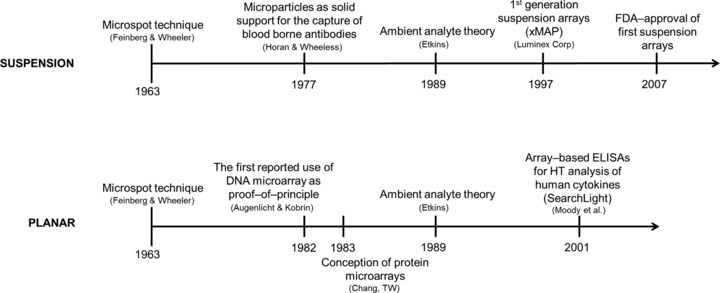
“The origins of suspension immunoassay technology date back to the 1970s when Horan and Wheeless [64] recognised, as part of a review describing some of the diverse applications of flow cytometry, that micro-particles harbouring antigen could constitute a solid support for the capture of blood-borne antibodies; moreove…”
BackgroundInfluentialAntibody-Based Protein Multiplex Platforms: Technical and Operational Challenges
Ellington, A. A., Kullo, I. J., Bailey, K. R., & Klee, G. G. (2010) · Clinical Chemistry · doi:10.1373/clinchem.2009.127514 · Cited by 313 · cited 5×
“Currently, monoclonal antibodies generated by classical hybridoma techniques constitute the most widely utilised capture ligands [66].”
BackgroundInfluentialUpdate on the biomarker core of the Alzheimer's Disease Neuroimaging Initiative subjects
Trojanowski, J. Q., Vandeerstichele, H., Korecka, M., Clark, C. M., Aisen, P. S., Petersen, R. C., Blennow, K., Soares, H., Simon, A., Lewczuk, P., et al. (2010) · Alzheimer's & Dementia · doi:10.1016/j.jalz.2010.03.008 · Cited by 307
Heterophilic antibodies: a problem for all immunoassays.
Boscato, L. M., & Stuart, M. C. (1988) · Clinical Chemistry · doi:10.1093/clinchem/34.1.27 · Cited by 300 · cited 1×
“Heterophile antibodies (those that cross phyla in their reactivity) are present in up to 40% of blood donors, and show low avidity and multispecies specificity [84, 85].”
BackgroundEkins, R. P. (1989) · Journal of Pharmaceutical and Biomedical Analysis · doi:10.1016/0731-7085(89)80079-2 · Cited by 294 · cited 1×
“Ekins devised the ambient analyte theory [8] postulating that miniaturisation of immunoassays (i.”
BackgroundChowdhury, F., Williams, A., & Johnson, P. (2009) · Journal of Immunological Methods · doi:10.1016/j.jim.2008.10.002 · Cited by 284 · cited 1×
“Chowdhury and colleagues [46] reported high intra-assay reproducibility and even comparable inter-assay precision between Luminex and Mesoscale Discovery technologies when measuring high target analyte concentrations, but for measuring low concentrations, interassay variation was variable and analyte dependent.”
Research works printed but not linked: 1
- Guo, A., Zhu, X.‐Y., in: Predki P. (Ed.), Functional Protein Microarrays: Pathways to Discovery, CRC Press, Boca Raton, FL 2006, pp. 60– 61.
Cited by
Items 501–539 of 539
Conception et synthèse de fluorotensioactifs pour des applications en microfluidique en gouttes
Dufossez, R. (2023) · theses.fr (ABES) · doi:10.70675/a6c74651z642fz4b1ez8055zd2e25e3dad9b
Peremin, I., Gajski, G., Gerić, M., & Jakaša, I. (2026) · Advances in clinical chemistry · doi:10.1016/bs.acc.2026.03.003
Molecular Design Strategies of Fluorescent Chemical Probes for Proteomic Research
Zhang, H., Men, Z., Yu, W., Wu, X., Xia, F., & Lou, X. (2026) · Chemistry - A European Journal · doi:10.1002/chem.71030
Managing positive anti-glomerular basement membrane antibodies in the absence of disease
Fulton, J. S., Wood, G., Brown, N., & Bhailis, A. M. D. (2026) · BMJ Case Reports · doi:10.1136/bcr-2025-267273
“17 18 Figure 2 Cross-linking of an anti-GBM antibody produces a true positive signal in singleplex immunoassay.”
Detection of Diagnostic Antibodies in Immune‐Mediated Diseases: A Focus on Antigens and Technologies
Bracci, S., Real‐Fernández, F., Pratesi, F., Nuti, F., Rovero, P., & Papini, A. M. (2026) · ChemBioChem · doi:10.1002/cbic.70354
Alsheikh, R. A., Assami, D., Nasrallah, D., Arabi, A., Hamdan, A., Elhadary, M. R., Elmakaty, I., & Malki, M. I. (2026) · Cancers · doi:10.3390/cancers18091437
“For instance, ELISA and multiplex assays detect protein levels, reflecting post-transcriptional modifications and protein abundance, while RT-qPCR measures mRNA expression, which may not directly correlate with protein levels due to regulatory mechanisms [75,76].”
Jiang, X., Lao, Y., Johnston, J. B., Banerji, V., & Zahedi, R. P. (2026) · Journal of Proteome Research · doi:10.1021/acs.jproteome.6c00197
Herkert, M., & Vogel, N. (2026) · Springer eBooks · doi:10.1007/978-3-662-71782-0_39
Development of a quantum dot based IL-1β nanobody fluorescent immunoassay
Hou, J., Cao, S., Zhao, X., Huang, X., Yang, X., Liu, H., Xie, S., & Lu, X. (2026) · European journal of medical research · doi:10.1186/s40001-026-04482-x
“Despite the widespread use of traditional monoclonal antibodies in ELISA and FLISA detection systems, their practical application faces several challenges, including complicated preparation procedures, prolonged production cycles, high manufacturing costs, and elevated pricing [14, 20].”
In vitro protocols for inducing and assessing endotoxin tolerance in human and murine macrophages
Smith, A. P., Choaji, M., & Creagh, E. M. (2026) · Methods in cell biology · doi:10.1016/bs.mcb.2026.05.013
Advances in Proteomics for Breast Cancer: Bridging Biomarker Discovery and Clinical Application
Ghazi, F., Mobed, A., Alivirdiloo, V., Hajiabbasi, M., Gargari, H. K., Alipourfard, I., Alem, M., Rahimi, F., Amandi, A. F., Habibimoghadam, N., et al. (2026) · Indian Journal of Gynecologic Oncology · doi:10.1007/s40944-026-01133-1
“Invented in the 1970s, ELISA is widely used in laboratory practice to analyze a small number of proteins, but high development costs and the limitations of multiplexing requiring well-characterized antibodies impede its large-scale application applications [22].”
Extraoral Detection of Biomarkers and Pathogens in Saliva: Comprehensive, Panoramic Review
Dyussupova, A., Ilyas, A., Boranova, A., Shevchenko, Y., Terzapulo, X., Seitkali, A., Gaipov, A., Filchakova, O., & Bukasov, R. (2026) · Biosensors · doi:10.3390/bios16060345
Translasyonel Araştırmalarda Hastalık Modelleri ve Analiz Yöntemleri
Alpay, M., Yılmaz, I. T., Özkaraca, M., Mendĭl, A. S., Kaya, Ö., KÖÇKEN, K., Baksi, N., Ekinci, E., Mokhtare, B., Timurkaan, N., et al. (2026) · Akademisyen Kitabevi eBooks · doi:10.37609/akya.4023
Akwelle, R. N., Shey, R. A., Efeti, M. T., Lekeayi, N., Nchanji, G. T., Tangan, Y. A. S., Chick, J. A., Yaah, N. E., Shinyuy, L. M., Shintouo, C. M., et al. (2026) · Health Science Reports · doi:10.1002/hsr2.72702
“This will entail developing an immunoassay platform, likely an ELISA at this early stage (due to its simplicity and throughput) [118], and testing it against comprehensive serum panels (including samples from confirmed Mpox cases across different phases of infection, if possible, vaccinated…”
Jin, E., Go, A., Ha, Y., Lee, C. W., Kim, K. N., Lee, Y., & Lee, M. (2026) · Analytica Chimica Acta · doi:10.1016/j.aca.2026.345898
Bead-Based Multiplex Flow Cytometry Assay for Functional Profiling of CAR T Cells
Jaufmann, J., Foerster-Marniok, A., Pitzka, C., Ridzal, A., Hudecek, M., Luu, M., Quintarelli, C., & Evaristo, C. (2026) · Journal of Visualized Experiments · doi:10.3791/70344
Rapid disease monitoring with resistive-pulse sensing in nanopipettes
Matthews, L. (2025) · University of Birmingham Institutional Research Archive (University of Birmingham)
Beyond total BDNF: The proBDNF/mBDNF balance in substance use disorders
Anema, S. L., Melo, M. M., Ferri, S. L., Gumusoglu, S. B., Blackwell, K. T., & Shen, S. Q. (2026) · Neurobiology of Disease · doi:10.1016/j.nbd.2026.107531
“Ideally, isoform abundance would be measured simultaneously within the same sample to minimize technical variability, which will require the development of new duplexed assays capable of accurately quantifying both isoforms in the same well (Tighe et al., 2015).”
Didarian, R., Gülerman, A., Özalp, V. C., Erel, Ö., & Yildirim, N. (2026) · Applied Biochemistry and Biotechnology · doi:10.1007/s12010-026-05862-z
“These discrepancies can stem from differences in antibody specificity, calibration strategies, detection mechanisms, and matrix effects in complex biological samples [44 , 45].”
Xu, J., Yu, T., Zhao, Z., Liu, Y., Li, Y., Zhang, N., Tang, X., He, X., Han, E., Han, J., et al. (2026) · PLoS neglected tropical diseases · doi:10.1371/journal.pntd.0014570
“Notably, our results high-light that minor methodological adjustments, such as buffer composition or surface chemistry, can significantly improve assay performance [44,46].”
Kan, Q., Liu, Z., Shan, H., Zhu, S., Wang, Z., Yue, Y., & Zhang, J. (2026) · Chemical Engineering Journal · doi:10.1016/j.cej.2026.180352
Modern Immunoassay Methods for The Detection of Rheumatoid Arthritis Biomarkers
Semchenko, D. A., Smirnova, К. S., Nizamova, L. A., Nazarenko, P. E., Martyanova, E. V., Grebenyuk, A. S., Ismatov, A. K., Solovova, M. S., Г, К. Н., Ignatenko, V. E., et al. (2026) · The Russian Archives of Internal Medicine · doi:10.20514/2226-6704-2026-16-2068
Laidlaw, R. F., Innocenti, G., Prinzensteiner, M., Vogl, T., Mbow, M., Yazdanbakhsh, M., & Manurung, M. D. (2026) · iScience · doi:10.1016/j.isci.2026.117252
“ELISAs and peptide arrays allow screening for only 100s to 1,000s of antigens, 11,12 while viral and bacterial pathogens, commensals, and environmental antigens represent an antigen space that is several orders of magnitude larger.”
Antibodies to Non‐HLA Antigens and Their Role in Organ Transplant Rejection
Jaklova, K., Vychytilova, K., Glosová, A., & Slavčev, A. (2026) · International Journal of Immunogenetics · doi:10.1111/iji.70063
“However, this method is limited by its time-intensive nature, large serum volume requirements, and restricted specificity (Tighe et al. 2015 ; Oh and Song 2025 ).”
Microbial and host‐derived biomarkers for the diagnosis and management of peri‐implant diseases
Quach, S. S., Ramanauskaitė, A., Ivanovski, S., Han, P., Schwarz, F., & Cafferata, E. A. (2026) · Periodontology 2000 · doi:10.1111/prd.70083
Multisensor Electronic Platform for High-Resolution HIV-Antigen Detection
Maurina, A. A., Damin, F., Sola, L., Capelli, C., Criscuolo, E., Clementi, N., Chiari, M., Figares, C. D. O., Asamoah, E. A., Zanetto, F., et al. (2026) · IEEE Sensors Journal · doi:10.1109/jsen.2026.3727431
“…with the same biorecognition element to provide redundancy and enable statistical validation, or each IDE could be spotted with a distinct probe to allow for multiplexed detection of di ff erent analytes within a single assay, when cost-e ff ective diagnostics are critical requirements [12], [16].”
Pissarra, M. F., Alpsoy, L., Breyer, M. L., Giossas, V., Jatwani, K., Gkika, K. S., Squire, A., Kuppusamy, M., Oeckinghaus, A., Termathe, M., et al. (2026) · Analytica Chimica Acta · doi:10.1016/j.aca.2026.346265
David, B. E., Madhurantakam, S., Mathew, G., Desai, A. M., Karnam, J. B., Dhamu, V. N., Muthukumar, S., & Prasad, S. (2026) · Biosensors and Bioelectronics · doi:10.1016/j.bios.2026.119230
Domka, W., Misiołek, M., Raj, D. R. J., Bartusik‐Aebisher, D., Myśliwiec, A., & Aebisher, D. (2026) · Biomedicines · doi:10.3390/biomedicines14092103
“However, cross-reactivity and platform-specific differences call for the need for strong validation [121].”
Lee, Y., Wang, Y., Graham, P., Beretov, J., & Ni, J. (2026) · Cancer and Metastasis Reviews · doi:10.1007/s10555-026-10382-7
“Additionally, while digital quantification offers exceptional sensitivity, it often necessitates a trade-off in multiplexing capabilities, as droplet assays are often restricted by spectral limitations or binary enzymatic read-outs (such as ddExoELISA) [148].”
Lin, T., Dakup, P., Schepmoes, A., Fillmore, T., Swensen, A., Kelly, S. S., Zhang, T., Pu, J., Jacobs, J., DeLany, J. P., et al. (2026) · Clinical Proteomics · doi:10.1186/s12014-026-09625-0 · Cited by 1
Qiao, N., Chen, Y., Meng, Y., Yang, X., Wang, X., Zhou, L., Dai, H., Sun, X., & XiuMei, N. (2026) · Frontiers in Microbiology · doi:10.3389/fmicb.2026.1940758
“Instead, LAMP is an established isothermal approach that amplifies nucleic acids in a single step without thermal cycling, however, its primer design can be intricate and its development of a multiplex detection system remains challenging (Tighe et al., 2015; Yang et al., 2024; Xie et al., 2025).”
Karaaslan, Ç., Palomares, Ó., Kilic, B., Mayorga, C., Hoffmann, H., Eberlein, B., Knol, E. F., Fernández‐Santamaría, R., Vitte, J., Izquierdo, E., et al. (2026) · Clinical and Translational Allergy · doi:10.1002/clt2.70210
Multiplex detection of circulating biomarkers for early and progressive stages of colorectal cancer
Prokhorova, M. V., Prokhorova, M. V., & Sekacheva, M. I. (2026) · Science and Innovations in Medicine · doi:10.35693/sim704767
Yu, C., Wang, M., Chen, L., Wang, T., Zhao, Y., Song, H., & Jin, M. (2026) · Frontiers in Veterinary Science · doi:10.3389/fvets.2026.1958789
Comparative analysis of methods used in the identification of human microbiota
Ouna, B. A. (2026) · International Journal of Molecular Biology and Biochemistry · doi:10.33545/26646501.2026.v8.i10a.174
Cai, Y., Liu, Y., Khaled, I., Cressiot, B., Bacri, L., & Pelta, J. (2026) · Journal of the American Chemical Society · doi:10.1021/jacs.6c17884
Cappi, C., Cheshire, M., Saraiva, L. C., Silverman, M. N., Marin, G. L., Rodrigues, A., Belyavskaya, E., Shavitt, R. G., Leckman, J. F., Teixeira, A. L., et al. (2026) · Brain Behavior and Immunity · doi:10.1016/j.bbi.2026.107094
Metadata
- Authors
- Tighe, P. J., Ryder, R. R., Todd, I., & Fairclough, L. C.
- Affiliations
- University of Nottingham (GB)
- Corresponding author
- Fairclough, Lucy C.
- Venue
- PROTEOMICS – Clinical Applications
- Publisher
- Wiley
- Published
- 2015-03-25
- Volume
- 9
- Issue
- 3-4
- Pages
- 406-422
- ISSN
- 1862-8346 (ISSN-L)
- 1862-8354
- PMC
- PMC6680274
- OpenAlex
- W2136663003
- Semantic Scholar
- e664df4333c34cbf6341682d8fc287a0ef279e2a
- Cited by
- 464
- References
- 92
- Citations by year
- 2026: 58 · 2025: 39 · 2024: 51 · 2023: 35 · 2022: 36 · 2021: 40 · 2020: 48 · 2019: 36 · 2018: 47 · 2017: 35 · 2016: 27 · 2015: 11
- FWCI
- 3.88
- Type
- journal article
- Language
- en
- Open access
- hybrid
- doi.org
- Licence
- Locations
- PROTEOMICS - CLINICAL APPLICATIONS (publishedVersion, cc-by-nc-nd)
- Europe PMC (PubMed Central) (publishedVersion, cc-by-nc-nd)
- PubMed Central (publishedVersion, cc-by-nc-nd)
- PubMed (publishedVersion)
- Repository@Nottingham (University of Nottingham) (publishedVersion, cc-by-nc-nd)
- Repository@Nottingham (University of Nottingham) (submittedVersion, cc-by-nc-nd)
- Nottingham ePrints (University of Nottingham) (submittedVersion, cc-by-nc-nd)
- Topics
- Life Sciences › Biochemistry, Genetics and Molecular Biology › Molecular Biology › Advanced Biosensing Techniques and Applications
- Health Sciences › Health Professions › Medical Laboratory Technology › Clinical Laboratory Practices and Quality Control
- Physical Sciences › Chemistry › Spectroscopy › Advanced Proteomics Techniques and Applications
- Keywords
- multiplex immunoassay, ELISA, in vitro diagnostics, biomarker validation, quality control, reagent specificity, cross-reactivity, assay automation, point-of-care testing, personalized medicine
- MeSH terms
- Enzyme-Linked Immunosorbent Assay, Humans, Immunoassay, Biomarkers
About these checks
Registry, retraction, Cites and statistics results are computed, not judged, with one exception: a printed reference that no index lists is read once by a model before it counts as a citation error. Claims are extracted by a model and kept only when their quote appears verbatim in the text; each cited source is then checked, with a model’s help, for whether it says what the claim relies on. Those verdicts can be wrong — read the claim’s quote and the cited source before relying on one.
Statistics and arithmetic are recomputed, not judged.
Confidence bands are shown only for fields calibrated on our annotated test set. None is calibrated yet, so no band is shown.
What counts as a claim ›How we measure confidence ›How we check this ›
Are you an author, or do you see a problem with this page? Request a review
Data sources
Bibliographic data: Semantic Scholar, OpenAlex, Crossref.
Contains information from the Semantic Scholar Academic Graph Datasets, made available under the ODC Attribution License (ODC-BY 1.0).
Semantic Scholar’s data is described in: Kinney, R., et al. (2023). The Semantic Scholar Open Data Platform. arXiv:2301.10140.
