

ELISA in the multiplex era: Potentials and pitfalls
Open accessThe DOI matches its Crossref record; 92 of the 92 references it cites were found in a registry or an index.
Abstract
Multiplex immunoassays confer several advantages over widely adopted singleplex immunoassays including increased efficiency at a reduced expense, greater output per sample volume ratios and higher throughput predicating more resolute, detailed diagnostics and facilitating personalised medicine. Nonetheless, to date, relatively few protein multiplex immunoassays have been validated for in vitro diagnostics in clinical/point‐of‐care settings. This review article will outline the challenges, which must be ameliorated prior to the widespread integration of multiplex immunoassays in clinical settings: (i) biomarker validation; (ii) standardisation of immunoassay design and quality control (calibration and quantification); (iii) availability, stability, specificity and cross‐reactivity of reagents; (iv) assay automation and the use of validated algorithms for transformation of raw data into diagnostic results. A compendium of multiplex immunoassays applicable to in vitro diagnostics and a summary of the diagnostic products currently available commercially are included, along with an analysis of the relative states of development for each format (namely planar slide based, suspension and planar/microtitre plate based) with respect to the aforementioned issues.
Overview
The claims and statistics of this paper haven’t been checked yet.
Free: it reads the open-access text and checks the first 5 claims that cite a source we can check. Create a free account to check every claim.
Integrity signals
Registry
Cites
Statistics
Figures
Verification
Claims the paper makes
The claims and statistics of this paper haven’t been checked yet.
Free: it reads the open-access text and checks the first 5 claims that cite a source we can check. Create a free account to check every claim.
Claims other papers make about this one
Each is checked against this paper’s own text: does it say what the citing paper says it does?
The cited source doesn’t support the claim as written.
In the citing paper
“This technology can perform up to 500 bioassays simultaneously from a small quantity of liquid biopsy.”
From Tumor-Induced Inflammatory Cytokines and the Emerging Diagnostic Devices for Cancer Detection and Prognosis (2021) · cites this paper as [129]
Checked by a reasoning model — may be wrong.
Experimental — accuracy not yet measuredThe cited source says what the claim attributes to it.
In the citing paper
“Despite the popularity of the multiplexing assays, only a few have been validated for IVD applications (129).”
From Tumor-Induced Inflammatory Cytokines and the Emerging Diagnostic Devices for Cancer Detection and Prognosis (2021) · cites this paper as [129]
The cited source says what the claim attributes to it.
In the citing paper
“The multiplexed sandwich ELISA came in planar- and microbead-based arrays.”
From Tumor-Induced Inflammatory Cytokines and the Emerging Diagnostic Devices for Cancer Detection and Prognosis (2021) · cites this paper as [129]
Self-check
Percentages, sums and reported differences re-computed from the paper’s own numbers.
The self-check needs the paper’s full text.
Citations
Cites
Continuous cultures of fused cells secreting antibody of predefined specificity
KÖHLER, G., & MILSTEIN, C. (1975) · Nature · doi:10.1038/256495a0 · Cited by 17,229 · cited 1×
“Moreover, the advent of hybridoma technology in the 70s as a means of generating monoclonal antibodies [6] has facilitated the generation of highly robust, antibody-based assays with a proclivity for standardisation and automation.”
BackgroundMET Amplification Leads to Gefitinib Resistance in Lung Cancer by Activating ERBB3 Signaling
Engelman, J. A., Zejnullahu, K., Mitsudomi, T., Song, Y., Hyland, C., Park, J. O., Lindeman, N., Gale, C.-M., Zhao, X., Christensen, J., et al. (2007) · Science · doi:10.1126/science.1141478 · Cited by 4,496
Coactivation of receptor tyrosine kinases affects the response of tumor cells to targeted therapies
Stommel, J. M., Kimmelman, A. C., Ying, H., Nabioullin, R., Ponugoti, A. H., Wiedemeyer, R., Stegh, A. H., Bradner, J. E., Ligon, K. L., Brennan, C., et al. (2007) · Science · doi:10.1126/science.1142946 · Cited by 938
Vanmassenhove, J., Vanholder, R., Nagler, E., & Van Biesen, W. (2013) · Nephrology Dialysis Transplantation · doi:10.1093/ndt/gfs380 · Cited by 377
Quantitative Single Cell Analysis and Sorting
Horan, P. K., & Wheeless, L. L. (1977) · Science · doi:10.1126/science.905822 · Cited by 366 · cited 3×
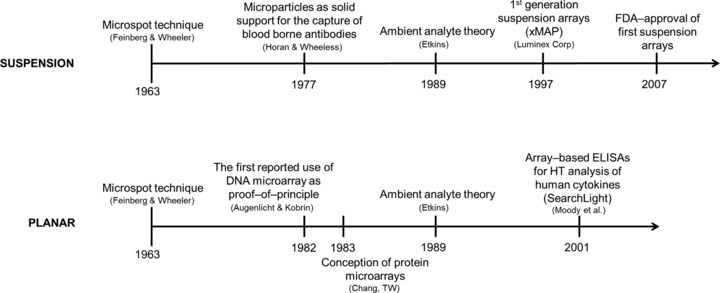
“The origins of suspension immunoassay technology date back to the 1970s when Horan and Wheeless [64] recognised, as part of a review describing some of the diverse applications of flow cytometry, that micro-particles harbouring antigen could constitute a solid support for the capture of blood-borne antibodies; moreove…”
BackgroundInfluentialAntibody-Based Protein Multiplex Platforms: Technical and Operational Challenges
Ellington, A. A., Kullo, I. J., Bailey, K. R., & Klee, G. G. (2010) · Clinical Chemistry · doi:10.1373/clinchem.2009.127514 · Cited by 313 · cited 5×
“Currently, monoclonal antibodies generated by classical hybridoma techniques constitute the most widely utilised capture ligands [66].”
BackgroundInfluentialUpdate on the biomarker core of the Alzheimer's Disease Neuroimaging Initiative subjects
Trojanowski, J. Q., Vandeerstichele, H., Korecka, M., Clark, C. M., Aisen, P. S., Petersen, R. C., Blennow, K., Soares, H., Simon, A., Lewczuk, P., et al. (2010) · Alzheimer's & Dementia · doi:10.1016/j.jalz.2010.03.008 · Cited by 307
Heterophilic antibodies: a problem for all immunoassays.
Boscato, L. M., & Stuart, M. C. (1988) · Clinical Chemistry · doi:10.1093/clinchem/34.1.27 · Cited by 300 · cited 1×
“Heterophile antibodies (those that cross phyla in their reactivity) are present in up to 40% of blood donors, and show low avidity and multispecies specificity [84, 85].”
BackgroundEkins, R. P. (1989) · Journal of Pharmaceutical and Biomedical Analysis · doi:10.1016/0731-7085(89)80079-2 · Cited by 294 · cited 1×
“Ekins devised the ambient analyte theory [8] postulating that miniaturisation of immunoassays (i.”
BackgroundChowdhury, F., Williams, A., & Johnson, P. (2009) · Journal of Immunological Methods · doi:10.1016/j.jim.2008.10.002 · Cited by 284 · cited 1×
“Chowdhury and colleagues [46] reported high intra-assay reproducibility and even comparable inter-assay precision between Luminex and Mesoscale Discovery technologies when measuring high target analyte concentrations, but for measuring low concentrations, interassay variation was variable and analyte dependent.”
de Jager, W., Prakken, B. J., Bijlsma, J. W. J., Kuis, W., & Rijkers, G. T. (2005) · Journal of Immunological Methods · doi:10.1016/j.jim.2005.03.009 · Cited by 258 · cited 1×
“Given an otherwise standardised assay and sample collection procedure, such interfering factors may be beyond the researcher’s ability to control, although there are methods for reducing heterophilic antibody interference [86].”
Validation of Analytic Methods for Biomarkers Used in Drug Development
Chau, C. H., Rixe, O., McLeod, H., & Figg, W. D. (2008) · Clinical Cancer Research · doi:10.1158/1078-0432.ccr-07-4535 · Cited by 241 · cited 2×
“The technical validation of a biomarker within the context of an assay is a complex process that is interdependent on all facets of the respective analytical method including assay sensitivity, specificity, reliability and reproducibility as well as the nature of the biological sample and its integrity [71].”
BackgroundMethodHeterophilic antibody interference in immunometric assays
Bolstad, N., Warren, D. J., & Nustad, K. (2013) · Best Practice & Research Clinical Endocrinology & Metabolism · doi:10.1016/j.beem.2013.05.011 · Cited by 239 · cited 2×
“Reasons for this variation may include heterophilic antibody interference [83]; substantial sensitivity of the target molecule to epitope loss due to denaturation; masking by other sample components; degradation or micro-heterogeneity of the target within the sample.”
BackgroundComparison of Multiplex Immunoassay Platforms
Fu, Q., Zhu, J., & Van Eyk, J. E. (2010) · Clinical Chemistry · doi:10.1373/clinchem.2009.135087 · Cited by 215
Bio-Rad’s Bio-Plex® suspension array system, xMAP technology overview
Houser, B. (2012) · Archives of Physiology and Biochemistry · doi:10.3109/13813455.2012.705301 · Cited by 202
Array-Based ELISAs for High-Throughput Analysis of Human Cytokines
Moody, M. D., Arsdell, S. W. V., Murphy, K. P., Orencole, S. F., & Burns, C. (2001) · BioTechniques · doi:10.2144/01311dd03 · Cited by 187
Apple, F. S., Christenson, R. H., Valdes, R., Andriak, A. J., Berg, A., Duh, S.-H., Feng, Y.-J., Jortani, S. A., Johnson, N. A., Koplen, B., et al. (1999) · Clinical Chemistry · doi:10.1093/clinchem/45.2.199 · Cited by 187 · cited 1×
“Phadia ImmunoCAP R © ISAC + [9–13] INDOOR Biotechnologies IgE–QBATM + [14–16] Bio–Rad Laboratories Bio–Plex R © 2200 Autoimmune and Infectious Disease Panels + [17–21] Whatman FAST Quant R © + [17,22,23,45] Myriad RBM Human MAPs + [24–28] Alere Triage R © Cardiac Panel + [29,30] Arrayit Corporation Pathogen Antigen Mi…”
BackgroundProtein microarrays for diagnostic assays
Hartmann, M., Roeraade, J., Stoll, D., Templin, M. F., & Joos, T. O. (2009) · Analytical and Bioanalytical Chemistry · doi:10.1007/s00216-008-2379-z · Cited by 173 · cited 1×
“Appropriate sample mixing may ‘reset’ the concentration gradient of the analytes around the capture zones to ultimately increase the sensitivity and efficiency of the immunoassay, although such manipulation of small volumes is technically problematic and, for IVD settings, would likely require a high degree of integra…”
BackgroundStudies of the ‘hook’ effect in the one-step sandwich immunoassay
Fernando, S. A., & Wilson, G. S. (1992) · Journal of Immunological Methods · doi:10.1016/0022-1759(92)90104-2 · Cited by 172 · cited 1×
“In addition, if used as a onestep immunoassay, bead-based systems can suffer from loss of signal at high analyte exposure due to the long-established hook effect [82].”
BackgroundSolid-phase and bead-based cytokine immunoassay: A comparison
de Jager, W., & Rijkers, G. T. (2006) · Methods · doi:10.1016/j.ymeth.2005.11.008 · Cited by 170 · cited 1×
“PMT settings have the potential to significantly affect the dynamic range and assay linearity [81].”
BackgroundJuncker, D., Bergeron, S., Laforte, V., & Li, H. (2013) · Current Opinion in Chemical Biology · doi:10.1016/j.cbpa.2013.11.012 · Cited by 164 · cited 2×
“stable and specific) antibodies to generate reliable output data and minimise cross-reactivity [77].”
BackgroundValentin, M., Ma, S., Zhao, A., Legay, F., & Avraméas, A. (2011) · Journal of Pharmaceutical and Biomedical Analysis · doi:10.1016/j.jpba.2011.03.033 · Cited by 147 · cited 1×
“Notably, quality controls are adopted for the establishment of assay range and are therefore distinct from calibration standards; thus, at the very least quality controls utilised to validate an assay should be prepared adopting the cognate sample type (and ideally derived from a discrete trial population) [73].”
BackgroundTranslational genomics: The challenge of developing cancer biomarkers
Brooks, J. D. (2012) · Genome Research · doi:10.1101/gr.124347.111 · Cited by 119
Nolan, J. P., & Mandy, F. F. (2006) · Cytometry Part A · doi:10.1002/cyto.a.20266 · Cited by 117 · cited 1×
“Subsequently, in the 1980s and 1990s, this approach was extended to include antibodies, DNA and lipids [65].”
BackgroundHennig, C., Rink, L., Fagin, U., Jabs, W. J., & Kirchner, H. (2000) · Journal of Immunological Methods · doi:10.1016/s0022-1759(99)00206-9 · Cited by 117 · cited 1×
“Heterophile antibodies (those that cross phyla in their reactivity) are present in up to 40% of blood donors, and show low avidity and multispecies specificity [84, 85].”
BackgroundBinding of cells to matrixes of distinct antibodies coated on solid surface
Chang, T. W. (1983) · Journal of Immunological Methods · doi:10.1016/0022-1759(83)90318-6 · Cited by 116
Identification and validation of genes involved in gastric tumorigenesis
Rajkumar, T., Vijayalakshmi, N., Gopisetty, G., Sabitha, K., Shirley, S., Raja, U. M., & Ramakrishnan, S. (2010) · Cancer Cell International · doi:10.1186/1475-2867-10-45 · Cited by 107
Utility, reliability and reproducibility of immunoassay multiplex kits
Tighe, P. J., Negm, O. H., Todd, I., & Fairclough, L. C. (2013) · Methods · doi:10.1016/j.ymeth.2013.01.003 · Cited by 105 · cited 2×
“Phadia ImmunoCAP R © ISAC + [9–13] INDOOR Biotechnologies IgE–QBATM + [14–16] Bio–Rad Laboratories Bio–Plex R © 2200 Autoimmune and Infectious Disease Panels + [17–21] Whatman FAST Quant R © + [17,22,23,45] Myriad RBM Human MAPs + [24–28] Alere Triage R © Cardiac Panel + [29,30] Arrayit Corporation Pathogen Antigen Mi…”
BackgroundSelf-citationEckstein, N., Servan, K., Girard, L., Cai, D., von Jonquieres, G., Jaehde, U., Kassack, M. U., Gazdar, A. F., Minna, J. D., & Royer, H.-D. (2008) · Journal of Biological Chemistry · doi:10.1074/jbc.m706287200 · Cited by 102
Hansson, M., Mathsson, L., Schlederer, T., Israelsson, L., Matsson, P., Nogueira, L., Jakobsson, P., Lundberg, K., Malmström, V., Serre, G., et al. (2012) · Arthritis Research & Therapy · doi:10.1186/ar4039 · Cited by 101
Plasma Based Markers of [11C] PiB-PET Brain Amyloid Burden
Kiddle, S. J., Thambisetty, M., Simmons, A., Riddoch-Contreras, J., Hye, A., Westman, E., Pike, I., Ward, M., Johnston, C., Lupton, M. K., et al. (2012) · PLoS ONE · doi:10.1371/journal.pone.0044260 · Cited by 100
Pla‐Roca, M., Leulmi, R. F., Tourekhanova, S., Bergeron, S., Laforte, V., Moreau, E., Gosline, S. J. C., Bertos, N., Hallett, M. T., Park, M., et al. (2011) · Molecular & Cellular Proteomics · doi:10.1074/mcp.m111.011460 · Cited by 100 · cited 1×
“The susceptibility of multiplexed sandwich/capturebased assays in a liquid phase to cross-reactivity increases quadratically with the number of targets [68]; thus, if antibody reagents are altered or additional biomarkers are added to the panel, the power of the assay may be undermined and the entire optimisation proc…”
BackgroundHigh-throughput fluorescent multiplex array for indoor allergen exposure assessment
Earle, C. D., King, E. M., Tsay, A., Pittman, K., Saric, B., Vailes, L., Godbout, R., Oliver, K. G., & Chapman, M. D. (2007) · Journal of Allergy and Clinical Immunology · doi:10.1016/j.jaci.2006.11.004 · Cited by 98
Protein microarray technology: how far off is routine diagnostics?
Cretich, M., Damin, F., & Chiari, M. (2013) · The Analyst · doi:10.1039/c3an01619f · Cited by 98 · cited 1×
“This is primarily due to the fact that the higher throughput of multiplex immunoassays necessitates large sets of controls; for planar immunoassays this typically encompasses spotted positive and negative controls, blank areas, spotted detection conjugates, controls for non-specific binding or cross-reactivity assessm…”
BackgroundHarari, O., Cruchaga, C., Kauwe, J. S. K., Ainscough, B. J., Bales, K., Pickering, E. H., Bertelsen, S., Fagan, A. M., Holtzman, D. M., Morris, J. C., et al. (2014) · Biological Psychiatry · doi:10.1016/j.biopsych.2013.11.032 · Cited by 82
Banerji, U., van Doorn, L., Papadatos-Pastos, D., Kristeleit, R., Debnam, P., Tall, M., Stewart, A., Raynaud, F., Garrett, M. D., Toal, M., et al. (2012) · Clinical Cancer Research · doi:10.1158/1078-0432.ccr-11-3165 · Cited by 78
Cloning and screening of sequences expressed in a mouse colon tumor.
Augenlicht, L. H., & Kobrin, D. (1982) · PubMed · Cited by 75
Comparison of three multiplex cytokine analysis systems: Luminex, SearchLight™ and FAST Quant®
Lash, G. E., Scaife, P. J., Innes, B. A., Otun, H. A., Robson, S., Searle, R. F., & Bulmer, J. N. (2006) · Journal of Immunological Methods · doi:10.1016/j.jim.2005.12.007 · Cited by 75
Measurement and Quality Control Issues in Multiplex Protein Assays: A Case Study
Ellington, A. A., Kullo, I. J., Bailey, K. R., & Klee, G. G. (2009) · Clinical Chemistry · doi:10.1373/clinchem.2008.120717 · Cited by 75 · cited 3×
“The failure of one constituent marker to meet quality control specifications may necessitate the rejection of results for all remaining markers on the panel [72].”
BackgroundMethodInfluentialYang, C.-C., Lin, C.-Y., Wang, H.-S., & Lyu, S. (2013) · PLoS ONE · doi:10.1371/journal.pone.0079662 · Cited by 74
Validation of a multiplex electrochemiluminescent immunoassay platform in human and mouse samples
Bastarache, J. A., Koyama, T., Wickersham, N. E., & Ware, L. B. (2014) · Journal of Immunological Methods · doi:10.1016/j.jim.2014.04.006 · Cited by 72
Biomarkers in acute heart failure—state of the art
Maisel, A. S., & Choudhary, R. (2012) · Nature Reviews Cardiology · doi:10.1038/nrcardio.2012.60 · Cited by 70 · cited 1×
“Over the past 20 years, the development of high-throughput technologies for genomic and proteomic analysis has ushered in a novel era of biomarker discovery, which has thus far yielded numerous new markers, many of which maintain an undefined pathophysiological significance and limited practical clinical application […”
BackgroundBoja, E. S., & Rodriguez, H. (2011) · Annals of Laboratory Medicine · doi:10.3343/kjlm.2011.31.2.61 · Cited by 70 · cited 1×
“Device clearance or approval typically rests on the capacity of the sponsor to provide analytical and clinical data demonstrating that device performance is ‘functionally equivalent’ to that of an alternate and well-established technique thereby inferring adequacy with regard to its intended utility [70].”
BackgroundFrampton, J. P., White, J. B. R., Simon, A. B., Tsuei, M., Paczesny, S., & Takayama, S. (2014) · Scientific Reports · doi:10.1038/srep04878 · Cited by 68 · cited 3×
“Continuous flow microspotter systems and other advanced array printing technologies [5] may minimise such issues but require specialised, non-standard laboratory apparatus which, at least as of present, is unrealisable in a majority of clinical and research settings.”
BackgroundMethodInfluentialChemotactic Chemokines Are Important in the Pathogenesis of Irritable Bowel Syndrome
Darkoh, C., Comer, L., Zewdie, G., Harold, S., Snyder, N., & DuPont, H. L. (2014) · PLoS ONE · doi:10.1371/journal.pone.0093144 · Cited by 67
Moncunill, G., Aponte, J. J., Nhabomba, A. J., & Dobaño, C. (2013) · PLoS ONE · doi:10.1371/journal.pone.0052587 · Cited by 67
Lash, G. E., Naruse, K., Robson, A., Innes, B. A., Searle, R. F., Robson, S. C., & Bulmer, J. N. (2011) · Human Reproduction · doi:10.1093/humrep/der198 · Cited by 67
Ramírez, J., Ruíz-Esquide, V., Pomés, I., Celis, R., Cuervo, A. M., Hernández, M. V., Pomés, J., Pablos, J. L., Sanmartí, R., & Cañete, J. D. D. (2014) · Arthritis Research & Therapy · doi:10.1186/ar4431 · Cited by 60
Prosperi, M. C. F., Belgrave, D., Buchan, I., Simpson, A., & Custovic, A. (2014) · Pediatric Allergy and Immunology · doi:10.1111/pai.12139 · Cited by 60
Affinity reagent resources for human proteome detection: Initiatives and perspectives
Stoevesandt, O., & Taussig, M. (2007) · PROTEOMICS · doi:10.1002/pmic.200700155 · Cited by 57 · cited 1×
“At length, continuing initiatives in the USA and Europe are focused on improving the availability and quality of affinity reagents, with the overarching aim of devising standardised collections of comprehensively validated binding molecules for proteomic analyses for the advancement of immunoassay quality standards [7…”
BackgroundBuchegger, P., Sauer, U., Toth-Székély, H., & Preininger, C. (2012) · Sensors · doi:10.3390/s120201494 · Cited by 53 · cited 1×
“Such POC devices might also be of great value for rapid monitoring in intensive care units, or where speed of response is critical, for instance in cases of suspected sepsis [93].”
BackgroundStraface, A. L., Myers, J. H., KIRCHICK, H. J., & Blick, K. E. (2008) · American Journal of Clinical Pathology · doi:10.1309/9ggnmurljwjd88w3 · Cited by 53 · cited 1×
“Phadia ImmunoCAP R © ISAC + [9–13] INDOOR Biotechnologies IgE–QBATM + [14–16] Bio–Rad Laboratories Bio–Plex R © 2200 Autoimmune and Infectious Disease Panels + [17–21] Whatman FAST Quant R © + [17,22,23,45] Myriad RBM Human MAPs + [24–28] Alere Triage R © Cardiac Panel + [29,30] Arrayit Corporation Pathogen Antigen Mi…”
BackgroundIs the Determination of Specific IgE against Components Using ISAC 112 a Reproducible Technique?
Martínez-Aranguren, R., Lizaso, M. T., Goikoetxea, M. J., García, B. E., Cabrera-Freitag, P., Trellez, O., & Sanz, M. L. (2014) · PLoS ONE · doi:10.1371/journal.pone.0088394 · Cited by 52 · cited 1×
“9% for patient samples, with most being below 15%, but up to 40% for a small subset of antigens [88, 89].”
BackgroundAccuracy and reproducibility of a multiplex immunoassay platform: A validation study
Bastarache, J. A., Koyama, T., Wickersham, N. E., Mitchell, D. B., Mernaugh, R. L., & Ware, L. B. (2011) · Journal of Immunological Methods · doi:10.1016/j.jim.2011.01.005 · Cited by 50 · cited 1×
“Additionally, Bastarache and colleagues [74] reported acceptable intra-assay variability but unacceptably high inter-assay variability when assaying identical patients’ samples on different days adopting the Searchlight platform.”
MethodSalmona, M., Mercier‐Delarue, S., Delaugerre, C., Simon, F., & Maylin, S. (2013) · Journal of Clinical Microbiology · doi:10.1128/jcm.02460-13 · Cited by 50
Wakisaka, Y., Ago, T., Kamouchi, M., Kuroda, J., Matsuo, R., Hata, J., Gotoh, S., Isomura, T., Awano, H., Suzuki, K., et al. (2014) · Journal of the Neurological Sciences · doi:10.1016/j.jns.2014.02.031 · Cited by 47
Gómez-Puerta, J. A., Celis, R., Hernández, M. V., Ruíz-Esquide, V., Ramírez, J., Haro, I., Cañete, J. D. D., & Sanmartí, R. (2013) · Arthritis Research & Therapy · doi:10.1186/ar4372 · Cited by 47
Jenko, K. L., Zhang, Y., Kostenko, Y., Fan, Y., Garcia-Rodriguez, C., Lou, J., Marks, J. D., & Varnum, S. M. (2014) · The Analyst · doi:10.1039/c4an01270d · Cited by 46 · cited 1×
“In a further study of sandwich-ELISA style microarrays for biodefense toxin detection, the authors state that over 70 antibody pairs were examined to produce a final set of 10 pairs that gave good accuracy (75–120% recovery) and inter-assay CVs of <20% [90].”
BackgroundGomez, E., Jespersen, D. J., Harring, J. A., & Binnicker, M. J. (2010) · Clinical and Vaccine Immunology · doi:10.1128/cvi.00086-10 · Cited by 46
Nishida, Y., Higaki, Y., Taguchi, N., Hara, M., Nakamura, K., Nanri, H., Imaizumi, T., Sakamoto, T., Horita, M., Shinchi, K., et al. (2014) · Preventive Medicine · doi:10.1016/j.ypmed.2014.04.004 · Cited by 45
Diagnostic challenges for multiplexed protein microarrays
Master, S. R., Bierl, C., & Kricka, L. J. (2006) · Drug Discovery Today · doi:10.1016/j.drudis.2006.09.010 · Cited by 45 · cited 1×
“The greatest degree of complexity subsists whereby individual outputs do not bear any diagnostic significance, but the combined outputs of numerous assays are processed by a pattern-recognition algorithm to yield a single diagnostic result [92].”
BackgroundSimultaneous measurement of multiple ear proteins with multiplex ELISA assays
Trune, D. R., Larrain, B. E., Hausman, F. A., Kempton, J. B., & MacArthur, C. J. (2010) · Hearing Research · doi:10.1016/j.heares.2010.11.009 · Cited by 44
The Journey to Regulation of Protein-Based Multiplex Quantitative Assays
Boja, E. S., Jortani, S. A., Ritchie, J., Hoofnagle, A. N., Težak, Ž., Mansfield, E. A., Keller, P., Rivers, R. C., Rahbar, A. M., Anderson, N. L., et al. (2011) · Clinical Chemistry · doi:10.1373/clinchem.2010.156034 · Cited by 44 · cited 2×
“Taken together, it will likely be difficult for clinical laboratories both to validate these assays on their individual analytical platforms and to demonstrate clinical relevance by performing large-scale preclinical/clinical studies, which may need to involve multiple laboratories [69].”
BackgroundFood allergen sensitization pattern in adults in relation to severity of atopic dermatitis
Röckmann, H., van Geel, M. J., Knulst, A. C., Huiskes, J., Bruijnzeel‐Koomen, C. A., & de Bruin‐Weller, M. S. (2014) · Clinical and Translational Allergy · doi:10.1186/2045-7022-4-9 · Cited by 42
A multi-center ring trial of allergen analysis using fluorescent multiplex array technology
King, E. M., Filep, S., Smith, B., Platts-Mills, T., Hamilton, R. G., Schmechel, D., Sordillo, J. E., Milton, D., van Ree, R., Krop, E. J. M., et al. (2013) · Journal of Immunological Methods · doi:10.1016/j.jim.2012.09.015 · Cited by 41
Berthoud, T. K., Manaca, M. N., Quelhas, D., Aguilar, R., Guinovart, C., Puyol, L., Barbosa, A., Alonso, P. L., & Dobaño, C. (2011) · Malaria Journal · doi:10.1186/1475-2875-10-115 · Cited by 40
Sander, I., Zahradnik, E., Kraus, G., Mayer, S., Neumann, H.-D., Fleischer, C., Brüning, T., & Raulf-Heimsoth, M. (2012) · PLoS ONE · doi:10.1371/journal.pone.0052981 · Cited by 39
Immunogenicity Testing Strategy and Bioanalytical Assays for Antibody–Drug Conjugates
Hoofring, S. A., López, R., Hock, M. B., Kaliyaperumal, A., Patel, S. K., Swanson, S. J., Chirmule, N. B., & Starcevic, M. (2013) · Bioanalysis · doi:10.4155/bio.13.10 · Cited by 38
Serum level of interleukin-6 in Chinese patients with multiple sclerosis
Chen, Y.-C., Yang, X., Miao, L., Liu, Z., Li, W., Zhao, Z., Sun, X., Jiang, G., Chen, S., & Cheng, Q. H. (2012) · Journal of Neuroimmunology · doi:10.1016/j.jneuroim.2012.04.015 · Cited by 36
‘Fit-for-purpose’ validation of SearchLight multiplex ELISAs of angiogenesis for clinical trial use
Backen, A. C., Cummings, J., Mitchell, C. L., Jayson, G. C., Ward, T. H., & Dive, C. (2009) · Journal of Immunological Methods · doi:10.1016/j.jim.2009.01.003 · Cited by 35
Phillips, R. O., Sarfo, F. S., Landier, J., Oldenburg, R., Frimpong, M., Wansbrough-Jones, M. H., Abass, K. M., Thompson, W. A., Forson, M., Fontanet, A. L., et al. (2014) · PLoS neglected tropical diseases · doi:10.1371/journal.pntd.0002786 · Cited by 34
Simultaneous multi-analyte urinary protein assay for bladder cancer detection
Rosser, C. J., Dai, Y. E., Miyake, M., Zhang, G., & Goodison, S. (2014) · BMC Biotechnology · doi:10.1186/1472-6750-14-24 · Cited by 33
Mustafa, A. S., Al-Saidi, F., El-Shamy, A. S. M., & Al‐Attiyah, R. (2011) · Microbiology and Immunology · doi:10.1111/j.1348-0421.2011.00307.x · Cited by 25
Holding, S., Wilson, F., & Spradbery, D. (2014) · Journal of Immunological Methods · doi:10.1016/j.jim.2014.01.002 · Cited by 24
Exploring the temporal development of childhood IgE profiles to allergen components
Önell, A., Hjälle, L., & Borres, M. P. (2012) · Clinical and Translational Allergy · doi:10.1186/2045-7022-2-24 · Cited by 24
Choi, J.-S., Roh, J. Y., & Lee, J.-R. (2014) · Annals of Dermatology · doi:10.5021/ad.2014.26.4.437 · Cited by 23 · cited 1×
“9% for patient samples, with most being below 15%, but up to 40% for a small subset of antigens [88, 89].”
BackgroundImmunologic properties and clinical features of local allergic rhinitis.
Kim, Y. H., Park, C., & Jang, T. Y. (2012) · PubMed · Cited by 22
Does Cytokine Profiling of Aspirate From Jaw Cysts and Tumors Have a Role in Diagnosis?
Kolokythas, A., Karas, M., Sarna, T., Flick, W. G., & Miloro, M. (2011) · Journal of Oral and Maxillofacial Surgery · doi:10.1016/j.joms.2011.04.003 · Cited by 22
Diagnostic value of the ISAC® allergy chip in detecting latex sensitizations
Seyfarth, F., Schliemann, S., Wiegand, C., Hipler, U., & Elsner, P. U. (2013) · International Archives of Occupational and Environmental Health · doi:10.1007/s00420-013-0921-6 · Cited by 22
Multiplexed VeraCode bead-based serological immunoassay for colorectal cancer
Ostendorff, H. P., Awad, A. S., Braunschweiger, K. I., Liu, Z., Wan, Z., Rothschild, K. J., & Lim, M. J. (2013) · Journal of Immunological Methods · doi:10.1016/j.jim.2013.09.013 · Cited by 21 · cited 1×
“Phadia ImmunoCAP R © ISAC + [9–13] INDOOR Biotechnologies IgE–QBATM + [14–16] Bio–Rad Laboratories Bio–Plex R © 2200 Autoimmune and Infectious Disease Panels + [17–21] Whatman FAST Quant R © + [17,22,23,45] Myriad RBM Human MAPs + [24–28] Alere Triage R © Cardiac Panel + [29,30] Arrayit Corporation Pathogen Antigen Mi…”
BackgroundEckels, J., Nathe, C., Nelson, E. K., Shoemaker, S. G., Nostrand, E. V., Yates, N. L., Ashley, V. C., Harris, L. J., Bollenbeck, M., Fong, Y., et al. (2013) · BMC Bioinformatics · doi:10.1186/1471-2105-14-145 · Cited by 19 · cited 1×
“Currently, ascertaining quality control over several assay cycles laboriously involves calculating representative metrics for each standard curve per cycle, plotting the attained metrics and expected ranges on Levey–Jennings charts to define outliers, excluding data from analysis based on quality metrics and identifyi…”
Performance of the BioPlex 2200 Flow Immunoassay in Critical Cases of Serodiagnosis of Toxoplasmosis
Guigue, N., Ménotti, J., Hamane, S., Derouin, F., & GARIN, Y. J. F. (2014) · Clinical and Vaccine Immunology · doi:10.1128/cvi.00624-13 · Cited by 19
Detection of auto-immune antibody and tissue antigens by the `microspot' technique
FEINBERG, J. G., & Wheeler, A. W. (1963) · Journal of Clinical Pathology · doi:10.1136/jcp.16.3.282 · Cited by 18
Brookes, K. E., Cummings, J., Backen, A. C., Greystoke, A., Ward, T. H., Jayson, G. C., & Dive, C. (2010) · British Journal of Cancer · doi:10.1038/sj.bjc.6605661 · Cited by 17
Szczypka, M., Ploch, S., & Obmińska‐Mrukowicz, B. (2012) · Pharmacological Reports · doi:10.1016/s1734-1140(12)70744-2 · Cited by 16
A study of the immune properties of human umbilical cord lining epithelial cells
Cai, Y., Huang, L., Leung, T.-Y., & Burd, A. R. (2013) · Cytotherapy · doi:10.1016/j.jcyt.2013.10.008 · Cited by 15
Effect of treatment on systemic cytokines in head and neck squamous cell carcinoma patients
Green, V. L., Michno, A., Greenman, J., & Stafford, N. D. (2011) · Results in Immunology · doi:10.1016/j.rinim.2011.12.001 · Cited by 15
Smith, T. G., Ellison, J. A., Ma, X., Kuzmina, N. A., Carson, W. C., & Rupprecht, C. E. (2013) · Vaccine · doi:10.1016/j.vaccine.2013.05.081 · Cited by 14
Effects of Ozone Exposure during Microarray Posthybridization Washes and Scanning
Byerly, S., Sundin, K., Raja, R. G., Stanchfield, J., Bejjani, B. A., & Shaffer, L. G. (2009) · Journal of Molecular Diagnostics · doi:10.2353/jmoldx.2009.090009 · Cited by 11 · cited 1×
“Commonly used red fluorescent reporters often show strong ozone sensitivity, resulting in rapid signal loss if adequate precautions are not taken [80].”
BackgroundFlowCytomix analysis forToxoplasma gondiiinfection in pregnant women in central Taiwan
Chou, C. S., Lin, L., Chen, K. M., & Lai, S. (2011) · Journal of Obstetrics and Gynaecology · doi:10.3109/01443615.2011.568073 · Cited by 7
Chaturvedi, S., Dell, E. C., Siegel, D., Brittingham, G. P., & Seetharam, S. (2013) · International Journal of Biological Sciences · doi:10.7150/ijbs.7268 · Cited by 5
Inflammatory mediators and immune response in Mexican adolescents.
Morales, R. V. P., Torres, M. G. Z., Carrillo, B. E. M., Martínez, S. G., Marcos, A., & Valdés‐Ramos, R. (2011) · PubMed · doi:10.1590/s0212-16112011000500029 · Cited by 1
Research works printed but not linked: 1
- Guo, A., Zhu, X.‐Y., in: Predki P. (Ed.), Functional Protein Microarrays: Pathways to Discovery, CRC Press, Boca Raton, FL 2006, pp. 60– 61.
Cited by
Krämer, J., Kang, R., Grimm, L. M., De Cola, L., Picchetti, P., & Biedermann, F. (2022) · Chemical Reviews · doi:10.1021/acs.chemrev.1c00746 · Cited by 449
Precision diagnostics: moving towards protein biomarker signatures of clinical utility in cancer
Borrebaeck, C. A. K. (2017) · Nature Reviews Cancer · doi:10.1038/nrc.2016.153 · Cited by 435
Kartikasari, A. E. R., Huertas, C. S., Mitchell, A., & Plebanski, M. (2021) · Frontiers in Oncology · doi:10.3389/fonc.2021.692142 · Cited by 343
Li, S., Zhang, H., Zhu, M., Kuang, Z., Li, X., Xu, F., Miao, S., Zhang, Z., Lou, X., Li, H., et al. (2023) · Chemical Reviews · doi:10.1021/acs.chemrev.1c00759 · Cited by 309
Highly Sensitive and Multiplexed Protein Measurements
Cohen, L., & Walt, D. R. (2019) · Chemical Reviews · doi:10.1021/acs.chemrev.8b00257 · Cited by 294
Metadata
- Authors
- Tighe, P. J., Ryder, R. R., Todd, I., & Fairclough, L. C.
- Affiliations
- University of Nottingham (GB)
- Corresponding author
- Fairclough, Lucy C.
- Venue
- PROTEOMICS – Clinical Applications
- Publisher
- Wiley
- Published
- 2015-03-25
- Volume
- 9
- Issue
- 3-4
- Pages
- 406-422
- ISSN
- 1862-8346 (ISSN-L)
- 1862-8354
- PMC
- PMC6680274
- OpenAlex
- W2136663003
- Semantic Scholar
- e664df4333c34cbf6341682d8fc287a0ef279e2a
- Cited by
- 464
- References
- 92
- Citations by year
- 2026: 58 · 2025: 39 · 2024: 51 · 2023: 35 · 2022: 36 · 2021: 40 · 2020: 48 · 2019: 36 · 2018: 47 · 2017: 35 · 2016: 27 · 2015: 11
- FWCI
- 3.88
- Type
- journal article
- Language
- en
- Open access
- hybrid
- doi.org
- Licence
- Locations
- PROTEOMICS - CLINICAL APPLICATIONS (publishedVersion, cc-by-nc-nd)
- Europe PMC (PubMed Central) (publishedVersion, cc-by-nc-nd)
- PubMed Central (publishedVersion, cc-by-nc-nd)
- PubMed (publishedVersion)
- Repository@Nottingham (University of Nottingham) (publishedVersion, cc-by-nc-nd)
- Repository@Nottingham (University of Nottingham) (submittedVersion, cc-by-nc-nd)
- Nottingham ePrints (University of Nottingham) (submittedVersion, cc-by-nc-nd)
- Topics
- Life Sciences › Biochemistry, Genetics and Molecular Biology › Molecular Biology › Advanced Biosensing Techniques and Applications
- Health Sciences › Health Professions › Medical Laboratory Technology › Clinical Laboratory Practices and Quality Control
- Physical Sciences › Chemistry › Spectroscopy › Advanced Proteomics Techniques and Applications
- Keywords
- multiplex immunoassay, ELISA, in vitro diagnostics, biomarker validation, quality control, reagent specificity, cross-reactivity, assay automation, point-of-care testing, personalized medicine
- MeSH terms
- Enzyme-Linked Immunosorbent Assay, Humans, Immunoassay, Biomarkers
About these checks
Registry, retraction, Cites and statistics results are computed, not judged, with one exception: a printed reference that no index lists is read once by a model before it counts as a citation error. Claims are extracted by a model and kept only when their quote appears verbatim in the text; each cited source is then checked, with a model’s help, for whether it says what the claim relies on. Those verdicts can be wrong — read the claim’s quote and the cited source before relying on one.
Statistics and arithmetic are recomputed, not judged.
Confidence bands are shown only for fields calibrated on our annotated test set. None is calibrated yet, so no band is shown.
What counts as a claim ›How we measure confidence ›How we check this ›
Are you an author, or do you see a problem with this page? Request a review
Data sources
Bibliographic data: Semantic Scholar, OpenAlex, Crossref.
Contains information from the Semantic Scholar Academic Graph Datasets, made available under the ODC Attribution License (ODC-BY 1.0).
Semantic Scholar’s data is described in: Kinney, R., et al. (2023). The Semantic Scholar Open Data Platform. arXiv:2301.10140.
