

The factorization problem in Jackiw-Teitelboim gravity
Open accessThe DOI matches its Crossref record; 74 of the 74 references it cites were found in a registry or an index.
Abstract
A bstract: In this note we study the 1 + 1 dimensional Jackiw-Teitelboim gravity in Lorentzian signature, explicitly constructing the gauge-invariant classical phase space and the quantum Hilbert space and Hamiltonian. We also semiclassically compute the Hartle-Hawking wave function in two different bases of this Hilbert space. We then use these results to illustrate the gravitational version of the factorization problem of AdS/CFT: the Hilbert space of the two-boundary system tensor-factorizes on the CFT side, which appears to be in tension with the existence of gauge constraints in the bulk. In this model the tension is acute: we argue that JT gravity is a sensible quantum theory, based on a well-defined Lorentzian bulk path integral, which has no CFT dual. In bulk language, it has wormholes but it does not have black hole microstates. It does however give some hint as to what could be added to rectify these issues, and we give an example of how this works using the SYK model. Finally we suggest that similar comments should apply to pure Einstein gravity in 2 + 1 dimensions, which we’d then conclude also cannot have a CFT dual, consistent with the results of Maloney and Witten.
Overview
The claims and statistics of this paper haven’t been checked yet.
Free: it reads the open-access text and checks the first 5 claims that cite a source we can check. Create a free account to check every claim.
Integrity signals
Registry
Cites
Statistics
Figures
Verification
Claims the paper makes
The claims and statistics of this paper haven’t been checked yet.
Free: it reads the open-access text and checks the first 5 claims that cite a source we can check. Create a free account to check every claim.
Claims other papers make about this one
Each is checked against this paper’s own text: does it say what the citing paper says it does?
The source backs part of the claim, not all of it — or backs it for a different population, condition or comparison.
In the citing paper
“The Schwarzian alone is not a consistent quantum mechanics, since the path integral on the circle cannot be interpreted as Tr e -βH for any Hamiltonian H [85,96].”
From Transcending the ensemble: baby universes, spacetime wormholes, and the order and disorder of black hole information (2020) · cites this paper as [85]
Experimental — accuracy not yet measured
Self-check
Percentages, sums and reported differences re-computed from the paper’s own numbers.
The self-check needs the paper’s full text.
Citations
Cites
Anti de Sitter space and holography
Witten, E. (1998) · Advances in Theoretical and Mathematical Physics · doi:10.4310/atmp.1998.v2.n2.a2 · Cited by 13,070 · cited 1×
“n is the sum of these Hamiltonians. From now on we specialize to boundary conditions where there are precisely two asymptotically-AdS boundaries: we are then restricting to spacetimes with topology R [0;1], on which the metric and dilaton obey (2.6) at each asymptotic boundary, and the full Hamiltonian His the sum of…”
BackgroundInfluentialGauge theory correlators from non-critical string theory
Gubser, S. S., Klebanov, I. R., & Polyakov, A. M. (1998) · Physics Letters B · doi:10.1016/s0370-2693(98)00377-3 · Cited by 9,307
Gauge Theory Correlators from Non-Critical String Theory
Gubser, S. S., Klebanov, I. R., & Polyakov, A. M. (1998) · arXiv · doi:10.48550/arxiv.hep-th/9802109 · Cited by 9,307
Gauge Theory Correlators from Non-Critical String Theory
Gubser, S. S., Klebanov, I. R., & Polyakov, A. M. (1998) · CERN Document Server (European Organization for Nuclear Research) · Cited by 6,627
Large N field theories, string theory and gravity
Aharony, O., Gubser, S. S., Maldacena, J., Ooguri, H., & Oz, Y. (2000) · Physics Reports · doi:10.1016/s0370-1573(99)00083-6 · Cited by 5,515
Black hole in three-dimensional spacetime
Bañados, M., Teitelboim, C., & Zanelli, J. (1992) · Physical Review Letters · doi:10.1103/physrevlett.69.1849 · Cited by 3,831 · cited 1×
“• They have two-boundary wormholes, namely the BTZ solution [65], and thus have semiclassical Hartle-Hawking states, whose normalization gives the one-boundary Euclidean path integral with boundary S × S.”
Background2 + 1 dimensional gravity as an exactly soluble system
Witten, E. (1988) · Nuclear Physics B · doi:10.1016/0550-3213(88)90143-5 · Cited by 2,562 · cited 1×
“Here are some features which resemble those of JT gravity: • All UV divergences in their path integrals can be absorbed by simple renormalizations of G and Λ, so they are “secretly renormalizable” [63, 64].”
BackgroundRemarks on the Sachdev-Ye-Kitaev model
Maldacena, J., & Stanford, D. (2016) · Physical Review D · doi:10.1103/physrevd.94.106002 · Cited by 1,852 · cited 3×
“These differences arise because our analysis is not particularly motivated by the SYK model [37–41], while the Schwarzian action on elements of diff(S)/SL(2,R) is particularly well-suited for understanding how the JT theory is embedded in that model [38, 40–44].”
MethodA Stress Tensor for Anti-de Sitter Gravity
Balasubramanian, V., & Kraus, P. (1999) · Communications in Mathematical Physics · doi:10.1007/s002200050764 · Cited by 1,658 · cited 1×
“in terms of which we can define a boundary stress tensor [49]”
BackgroundEternal black holes in anti-de Sitter
Maldacena, J. (2003) · Journal of High Energy Physics · doi:10.1088/1126-6708/2003/04/021 · Cited by 1,555 · cited 1×
“In AdS/CFT however there is another interpretation for this path integral: following [55], we can interpret the unnormalized Hartle-Hawking state as corresponding to the unnormalized thermofield double state |ψβ〉 = ∑”
MethodBlack holes and the butterfly effect
Shenker, S. H., & Stanford, D. (2014) · Journal of High Energy Physics · doi:10.1007/jhep03(2014)067 · Cited by 1,533 · cited 1×
“In particular the strong redshift effects near black hole horizons make physics from the point of view of the outside observer unusually sensitive to gravitational effects there [10–14].”
BackgroundBlack Holes: Complementarity or Firewalls?
Almheiri, A., Marolf, D., Polchinski, J., & Sully, J. (2012) · arXiv · doi:10.48550/arxiv.1207.3123 · Cited by 1,471 · cited 1×
“s. Another interesting question related to the black hole interior and gauge constraints is the following. Say that we believe that a black hole which evolves for a long enough time develops a rewall [23,24]. Where precisely does it form? A naive answer would be at the event horizon, but this is unlikely to actually b…”
BackgroundBlack holes: complementarity or firewalls?
Almheiri, A., Marolf, D., Polchinski, J., & Sully, J. (2013) · Journal of High Energy Physics · doi:10.1007/jhep02(2013)062 · Cited by 1,470 · cited 1×
“s. Another interesting question related to the black hole interior and gauge constraints is the following. Say that we believe that a black hole which evolves for a long enough time develops a rewall [23,24]. Where precisely does it form? A naive answer would be at the event horizon, but this is unlikely to actually b…”
BackgroundCalculation of Partition Functions
Hubbard, J. (1959) · Physical Review Letters · doi:10.1103/physrevlett.3.77 · Cited by 1,433 · cited 1×
“At large N this integral can be done by a version of the Hubbard-Stratonivich transformation [60, 61].”
MethodPath-integral derivation of black-hole radiance
Hartle, J. B., & Hawking, S. W. (1976) · Physical Review D · doi:10.1103/physrevd.13.2188 · Cited by 1,115 · cited 1×
“1 above: these states are labelled by a real parameter β, and are collectively called the Hartle-Hawking state [51, 52].”
BackgroundJackiw, R. (1985) · Nuclear Physics B · doi:10.1016/0550-3213(85)90448-1 · Cited by 1,111 · cited 1×
“The theory we will study is the 1 + 1 dimensional Jackiw-Teitelboim theory of dilaton gravity [30–32], with bulk Lagrangian density”
Conformal symmetry and its breaking in two-dimensional nearly anti-de Sitter space
Maldacena, J., Stanford, D., & Yang, Z. (2016) · Progress of Theoretical and Experimental Physics · doi:10.1093/ptep/ptw124 · Cited by 1,068 · cited 5×
“so evaluating the Euclidean action on this solution one finds [44]”
BackgroundMethodInfluentialGravitation and hamiltonian structure in two spacetime dimensions
Teitelboim, C. (1983) · Physics Letters B · doi:10.1016/0370-2693(83)90012-6 · Cited by 1,064
AdS dual of the critical O(N) vector model
Klebanov, I. R., & Polyakov, A. M. (2002) · Physics Letters B · doi:10.1016/s0370-2693(02)02980-5 · Cited by 997 · cited 1×
“servables to average over it. We are then interested in evaluating the 14Having locality break down at the AdS scale seems to be a common feature of all \exactly solvable" models of AdS/CFT, see [16,59] for other examples. The main advantage of SYK is that there is a parametric limit, low temperature, where the g…”
BackgroundBlack holes: Complementarity or firewalls?
Almheiri, A., Marolf, D., Polchinski, J., & Sully, J. (2013) · eScholarship (California Digital Library) · Cited by 978
Holographic quantum error-correcting codes: toy models for the bulk/boundary correspondence
Pastawski, F., Yoshida, B., Harlow, D., & Preskill, J. (2015) · Journal of High Energy Physics · doi:10.1007/jhep06(2015)149 · Cited by 958 · cited 1×
“servables to average over it. We are then interested in evaluating the 14Having locality break down at the AdS scale seems to be a common feature of all \exactly solvable" models of AdS/CFT, see [16,59] for other examples. The main advantage of SYK is that there is a parametric limit, low temperature, where the g…”
BackgroundSelf-citationHolographic Complexity Equals Bulk Action?
Brown, A. R., Roberts, D. A., Susskind, L., Swingle, B., & Zhao, Y. (2016) · Physical Review Letters · doi:10.1103/physrevlett.116.191301 · Cited by 852 · cited 2×
“The idea that exponentially long The timescale eL is quite natural from the point of view of the proposal that exponentially complex operations should disrupt the structure of spacetime [57] [19–21]: it is the time it takes for the time evolution operator e−iHLt to reach maximal circuit complexity, and is also the tim…”
BackgroundBulk locality and quantum error correction in AdS/CFT
Almheiri, A., Dong, X., & Harlow, D. (2015) · Journal of High Energy Physics · doi:10.1007/jhep04(2015)163 · Cited by 802 · cited 1×
“Gravitational backreaction also provides the mechanism by which the holographic encoding of the higher-dimensional bulk into the lower-dimensional boundary theory breaks down if we try to preserve bulk locality beyond what is allowed by holographic entropy bounds [9, 15–17].”
BackgroundSelf-citationHolography from conformal field theory
Heemskerk, I., Penedones, J., Polchinski, J., & Sully, J. (2009) · Journal of High Energy Physics · doi:10.1088/1126-6708/2009/10/079 · Cited by 787 · cited 1×
“Most discussions of bulk physics in AdS/CFT focus on perturbative fields about a fixed background [1–8].”
BackgroundComputational complexity and black hole horizons
Susskind, L. (2016) · Fortschritte der Physik · doi:10.1002/prop.201500092 · Cited by 767 · cited 2×
“The idea that exponentially long The timescale eL is quite natural from the point of view of the proposal that exponentially complex operations should disrupt the structure of spacetime [57] [19–21]: it is the time it takes for the time evolution operator e−iHLt to reach maximal circuit complexity, and is also the tim…”
BackgroundTime evolution of entanglement entropy from black hole interiors
Hartman, T., & Maldacena, J. (2013) · Journal of High Energy Physics · doi:10.1007/jhep05(2013)014 · Cited by 761 · cited 1×
“It is sometimes said that in the context of the two-sided AdS-Schwarzschild geometry, we can see the interior of the wormhole by evolving both boundary times forward [18–22].”
BackgroundThe spectrum in the Sachdev-Ye-Kitaev model
Polchinski, J., & Rosenhaus, V. (2016) · Journal of High Energy Physics · doi:10.1007/jhep04(2016)001 · Cited by 699 · cited 2×
“These differences arise because our analysis is not particularly motivated by the SYK model [37–41], while the Schwarzian action on elements of diff(S)/SL(2,R) is particularly well-suited for understanding how the JT theory is embedded in that model [38, 40–44].”
MethodJensen, K. (2016) · Physical Review Letters · doi:10.1103/physrevlett.117.111601 · Cited by 695
Models of AdS2 backreaction and holography
Almheiri, A., & Polchinski, J. (2015) · Journal of High Energy Physics · doi:10.1007/jhep11(2015)014 · Cited by 678 · cited 1×
“1) Here Φ0 is a large positive constant, which in a situation where we obtained this theory by dimensional reduction would correspond to the volume in higher-dimensional Planck units of the compact directions [32, 49].”
BackgroundThermo-field dynamics of black holes
Israel, W. (1976) · Physics Letters A · doi:10.1016/0375-9601(76)90178-x · Cited by 662 · cited 1×
“1 above: these states are labelled by a real parameter β, and are collectively called the Hartle-Hawking state [46, 47].”
The soft mode in the Sachdev-Ye-Kitaev model and its gravity dual
Kitaev, A., & Suh, S. J. (2018) · Journal of High Energy Physics · doi:10.1007/jhep05(2018)183 · Cited by 633 · cited 1×
“dened for matrices with both ijand tt0indices. The equations of motion are 3 ij = iJ2G ij @ t0 1i = G ; (5.9) 15We have suppressed details related to renormalization and the iprescription here, see [41] for a discussion of the former in the Euclidean case. { 27 { where we have used matrix notation in the second equati…”
MethodInfluentialAn investigation of AdS2 backreaction and holography
Engelsöy, J., Mertens, T. G., & Verlinde, H. (2016) · Journal of High Energy Physics · doi:10.1007/jhep07(2016)139 · Cited by 622 · cited 3×
“These differences arise because our analysis is not particularly motivated by the SYK model [37–41], while the Schwarzian action on elements of diff(S)/SL(2,R) is particularly well-suited for understanding how the JT theory is embedded in that model [38, 40–44].”
MethodShenker, S. H., & Stanford, D. (2015) · Journal of High Energy Physics · doi:10.1007/jhep05(2015)132 · Cited by 604 · cited 1×
“In particular the strong redshift effects near black hole horizons make physics from the point of view of the outside observer unusually sensitive to gravitational effects there [10–14].”
BackgroundQuantum gravity partition functions in three dimensions
Maloney, A., & Witten, E. (2010) · Journal of High Energy Physics · doi:10.1007/jhep02(2010)029 · Cited by 528 · cited 2×
“ected space. These conjectures are consistent with the results of Maloney and Witten, who computed the one-boundary partition function exactly and saw that it did not have the form of a thermal trace [67].19 There has been a fair bit of worry about how to \x" this, for example by including complex saddle points o…”
BackgroundResultHolographic representation of local bulk operators
Hamilton, A., Kabat, D., Lifschytz, G., & Lowe, D. A. (2006) · Physical Review D · doi:10.1103/physrevd.74.066009 · Cited by 509 · cited 1×
“Most discussions of bulk physics in AdS/CFT focus on perturbative fields about a fixed background [1–8].”
BackgroundJerusalem lectures on black holes and quantum information
Harlow, D. (2016) · Reviews of Modern Physics · doi:10.1103/revmodphys.88.015002 · Cited by 480 · cited 1×
“tion valid in the Jackiw-Teitelboim gravity? 10Here ji R are energy eigenstates of the \right" CFT and i L are their conjugates under a twosided version of CPT which exchanges the two sides, see [56] for more explanation of this. { 22 { The answer to this last question is no. The reason is that the Hilbert space…”
BackgroundSelf-citationShenker, S. H., & Stanford, D. (2014) · Journal of High Energy Physics · doi:10.1007/jhep12(2014)046 · Cited by 473 · cited 1×
“In particular the strong redshift effects near black hole horizons make physics from the point of view of the outside observer unusually sensitive to gravitational effects there [10–14].”
BackgroundThe gravitational shock wave of a massless particle
Dray, T., & 't Hooft, G. (1985) · Nuclear Physics B · doi:10.1016/0550-3213(85)90525-5 · Cited by 442 · cited 1×
“In particular the strong redshift effects near black hole horizons make physics from the point of view of the outside observer unusually sensitive to gravitational effects there [10–14].”
BackgroundThree-Dimensional Gravity Revisited
Witten, E. H. (2007) · arXiv (Cornell University) · doi:10.48550/arxiv.0706.3359 · Cited by 409 · cited 1×
“ere are some features which resemble those of JT gravity:18 All UV divergences in their path integrals can be absorbed by simple renormalizations of Gand , so they are \secretly renormalizable" [63,64]. They have two-boundary wormholes, namely the BTZ solution [65], and thus have semiclassical Hartle-Hawking stat…”
BackgroundFermionic localization of the schwarzian theory
Stanford, D., & Witten, E. (2017) · Journal of High Energy Physics · doi:10.1007/jhep10(2017)008 · Cited by 392 · cited 2×
“ns Foundation \It-from-Qubit" Collaboration and the MIT Department of Physics. The work of DJ is supported in part by NSFCAREER grant PHY-1352084. 19A similar analysis was done for JT gravity in [54], where it was again observed that the result is not consistent with a thermal partition function. 20The reader may…”
BackgroundResultThe Ryu–Takayanagi Formula from Quantum Error Correction
Harlow, D. (2017) · Communications in Mathematical Physics · doi:10.1007/s00220-017-2904-z · Cited by 384
Self-citationAnti De Sitter Space And Holography
Witten, E. (1998) · arXiv · doi:10.48550/arxiv.hep-th/9802150 · Cited by 374 · cited 1×
“n is the sum of these Hamiltonians. From now on we specialize to boundary conditions where there are precisely two asymptotically-AdS boundaries: we are then restricting to spacetimes with topology R [0;1], on which the metric and dilaton obey (2.6) at each asymptotic boundary, and the full Hamiltonian His the sum of…”
BackgroundInfluentialAdS Dynamics from Conformal Field Theory
Banks, T., Douglas, M. R., Horowitz, G. T., & Martinec, E. (1998) · arXiv · doi:10.48550/arxiv.hep-th/9808016 · Cited by 342
Addendum to computational complexity and black hole horizons
Susskind, L. (2016) · Fortschritte der Physik · doi:10.1002/prop.201500093 · Cited by 324
Wormholes, emergent gauge fields, and the weak gravity conjecture
Harlow, D. (2016) · Journal of High Energy Physics · doi:10.1007/jhep01(2016)122 · Cited by 261 · cited 5×
“iant prescription for where (and also how) they form.1 In this paper we will be primarily interested in a third issue raised by considering gravitational physics in AdS/CFT: the factorization problem [27,28]. This is the observation that the presence of gauge constraints in the bulk poses a potential obstacle to the e…”
BackgroundMethodInfluentialSelf-citationFermionic localization of the schwarzian theory
Stanford, D. (2022) · OSTI OAI (U.S. Department of Energy Office of Scientific and Technical Information) · doi:10.1007/jhep10%282017%29008 · Cited by 215
AdS$_{2}$ holography and the SYK model
Sarosi, G. (2018) · Proceedings of XIII Modave Summer School in Mathematical Physics — PoS(Modave2017) · doi:10.22323/1.323.0001 · Cited by 210 · cited 1×
“There has been considerable recent interest in this model, see [37] for a nice review and further references.”
On the dynamics of near-extremal black holes
Nayak, P., Shukla, A., Soni, R. M., Trivedi, S. P., & Vishal, V. (2018) · Journal of High Energy Physics · doi:10.1007/jhep09(2018)048 · Cited by 206 · cited 1×
“1) Here Φ0 is a large positive constant, which in a situation where we obtained this theory by dimensional reduction would correspond to the volume in higher-dimensional Planck units of the compact directions [32, 49].”
BackgroundOn a Method of Calculating Quantum Distribution Functions
Stratonovich, R. L. (1957) · Soviet physics. Doklady · Cited by 192
TASI Lectures on the Emergence of Bulk Physics in AdS/CFT
Harlow, D. (2018) · Proceedings of Theoretical Advanced Study Institute Summer School 2017 "Physics at the Fundamental Frontier" — PoS(TASI2017) · doi:10.22323/1.305.0002 · Cited by 169 · cited 1×
“This has led to much progress in understanding the correspondence, see [9] for a recent review, but sooner or later we will need to confront the fact that the bulk theory is gravitational; in generic states gravitational backreaction cannot be treated as an afterthought.”
BackgroundSelf-citationBulk and transhorizon measurements in AdS/CFT
Heemskerk, I., Marolf, D., Polchinski, J., & Sully, J. (2012) · Journal of High Energy Physics · doi:10.1007/jhep10(2012)165 · Cited by 159 · cited 1×
“Most discussions of bulk physics in AdS/CFT focus on perturbative fields about a fixed background [1–8].”
BackgroundDeconstructing holographic liquids
Nickel, D. M., & Son, D. T. (2011) · New Journal of Physics · doi:10.1088/1367-2630/13/7/075010 · Cited by 154 · cited 2×
“wo boundaries: from now on we will refer to it as the \time shift operator" From this point view, the time shift operator is quite similar to the one-sided \hydrodynamic modes" discussed in [34,35]. We thus have arrived at the following two-dimensional Hamiltonian system: _ = 1 _ h= 0 H= 2 2 h ˚ b : (2.25) T…”
BackgroundMethodInfluentialTASI Lectures on the Emergence of the Bulk in AdS/CFTPreprint
Harlow, D. (2018) · arXiv (Cornell University) · doi:10.48550/arxiv.1802.01040 · Cited by 143 · cited 1×
“This has led to much progress in understanding the correspondence, see [9] for a recent review, but sooner or later we will need to confront the fact that the bulk theory is gravitational; in generic states gravitational backreaction cannot be treated as an afterthought.”
BackgroundSelf-citationLocal Operators in the Eternal Black Hole
Papadodimas, K., & Raju, S. (2015) · Physical Review Letters · doi:10.1103/physrevlett.115.211601 · Cited by 133 · cited 1×
“time evolution is in tension with the semiclassical description of the Hartle-Hawking state was also discussed in [58].”
BackgroundBulk and transhorizon measurements in AdS/CFT
Heemskerk, I., Marolf, D., Polchinski, J., & Sully, J. (2012) · eScholarship (California Digital Library) · Cited by 126
Models of AdS_2 Backreaction and Holography
Almheiri, A., & Polchinski, J. (2014) · arXiv (Cornell University) · doi:10.48550/arxiv.1402.6334 · Cited by 125 · cited 2×
“1) Here Φ0 is a large positive constant, which in a situation where we obtained this theory by dimensional reduction would correspond to the volume in higher-dimensional Planck units of the compact directions [32, 48].”
BackgroundNew Area Law in General Relativity
Bousso, R., & Engelhardt, N. (2015) · Physical Review Letters · doi:10.1103/physrevlett.115.081301 · Cited by 110 · cited 1×
“lls { 2 { form at \the" apparent horizon, but actually apparent horizons are highly non-unique since they depend on a choice of Cauchy slice [25]. The recently studied \holographic screens" [26] also are too non-unique to do the job. If indeed there are rewalls, there should be a gauge-invariant prescription…”
BackgroundQuantum Gravity in Two Dimensions: Exact Solution of the Jackiw Model
Henneaux, M. (1985) · Physical Review Letters · doi:10.1103/physrevlett.54.959 · Cited by 104 · cited 1×
“Previous attempts to quantize Jackiw-Teitelboim gravity with other boundary conditions include [45–47].”
BackgroundThe typical‐state paradox: diagnosing horizons with complexity
Susskind, L. (2016) · Fortschritte der Physik · doi:10.1002/prop.201500091 · Cited by 104 · cited 2×
“The idea that exponentially long The timescale eL is quite natural from the point of view of the proposal that exponentially complex operations should disrupt the structure of spacetime [57] [19–21]: it is the time it takes for the time evolution operator e−iHLt to reach maximal circuit complexity, and is also the tim…”
BackgroundConstruction of bulk fields with gauge redundancy
Heemskerk, I. (2012) · Journal of High Energy Physics · doi:10.1007/jhep09(2012)106 · Cited by 93 · cited 1×
“Most discussions of bulk physics in AdS/CFT focus on perturbative fields about a fixed background [1–8].”
BackgroundConstruction of bulk fields with gauge redundancyPreprint
Heemskerk, I. (2016) · Cited by 78
The ‘time of occurrence’ in quantum mechanics
Srinivas, M. D., & Vijayalakshmi, R. (1981) · Pramana · doi:10.1007/bf02848181 · Cited by 73 · cited 1×
“The argument is trivial: if δ were self-adjoint, then we could exponentiate it to obtain the set of operators e, which we could use to lower the energy as much as we like, contradicting the lower bound on the energy (see [50] for a more rigorous version of this argument).”
BackgroundChaos in the black hole S-matrix
Polchinski, J. (2015) · arXiv (Cornell University) · doi:10.48550/arxiv.1505.08108 · Cited by 72
Black hole boundary conditions and coordinate conditions
Eardley, D. M. (1998) · Physical review. D. Particles, fields, gravitation, and cosmology/Physical review. D. Particles and fields · doi:10.1103/physrevd.57.2299 · Cited by 70 · cited 1×
“illy a trick as this. One might also suggest that rewalls { 2 { form at \the" apparent horizon, but actually apparent horizons are highly non-unique since they depend on a choice of Cauchy slice [25]. The recently studied \holographic screens" [26] also are too non-unique to do the job. If indeed there are r…”
BackgroundOff-shell hydrodynamics from holography
Crossley, M., Glorioso, P., Liu, H., & Wang, Y. (2016) · Journal of High Energy Physics · doi:10.1007/jhep02(2016)124 · Cited by 66 · cited 2×
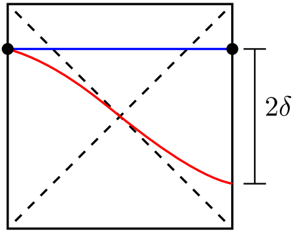
“Thus we can think of δ as measuring the “relative time shift” between the two boundaries: from now on we will refer to it as the “time shift operator” From this point view, the time shift operator is quite similar to the one-sided “hydrodynamic modes” discussed in [34, 35].”
BackgroundMethodConformal symmetry and its breaking in two dimensional Nearly Anti-de-Sitter spacePreprint
MALDACENA, J. M., Stanford, D., & Yang, Z. (2016) · arXiv (Cornell University) · doi:10.48550/arxiv.1606.01857 · Cited by 54 · cited 5×
“so evaluating the Euclidean action on this solution one finds [44]”
BackgroundMethodInfluentialGeometric Microstates for the Three Dimensional Black Hole?Preprint
Maloney, A. (2015) · arXiv (Cornell University) · doi:10.48550/arxiv.1508.04079 · Cited by 47 · cited 1×
“pologically nontrivial black hole geometries, does not have nearly enough states to account for the Bekenstein-Hawking entropy which the normalization of the Hartle-Hawking state would have predicted [66]. 18Another resemblance is that both theories perturbatively have rst-order reformulations as topological gauge the…”
BackgroundBulk reconstruction and the Hartle-Hawking wavefunction
Jafferis, D. L. (2017) · arXiv · doi:10.48550/arxiv.1703.01519 · Cited by 46
Self-citationOn the construction of charged operators inside an eternal black hole
Guica, M., & Jafferis, D. (2017) · SciPost Physics · doi:10.21468/scipostphys.3.2.016 · Cited by 42 · cited 1×
“In this paper we will be primarily interested in a third issue raised by considering gravitational physics in AdS/CFT: the factorization problem [27, 28].”
BackgroundSelf-citationQuantization of the Jackiw-Teitelboim model
Constantinidis, C. P., Piguet, O., & Pérez, A. (2009) · Physical review. D. Particles, fields, gravitation, and cosmology/Physical review. D. Particles and fields · doi:10.1103/physrevd.79.084007 · Cited by 30 · cited 1×
“Previous attempts to quantize Jackiw-Teitelboim gravity with other boundary conditions include [45–47].”
BackgroundOff-shell hydrodynamics from holography
Crossley, M., Glorioso, P., Liu, H., & Wang, Y. (2015) · OSTI OAI (U.S. Department of Energy Office of Scientific and Technical Information) · doi:10.1007/jhep02%282016%29124 · Cited by 28
Stringy effects in scramblingPreprint
Shenker, S. H., & Stanford, D. (2014) · arXiv (Cornell University) · doi:10.48550/arxiv.1412.6087 · Cited by 22 · cited 1×
“In particular the strong redshift effects near black hole horizons make physics from the point of view of the outside observer unusually sensitive to gravitational effects there [10–14].”
BackgroundCovariant phase space quantization of the Jackiw-Teitelboim model of two-dimensional gravity
Navarro-Salas, J., Navarro, M., & Aldaya, V. (1992) · Physics Letters B · doi:10.1016/0370-2693(92)90602-z · Cited by 17
Complexity, action, and black holes
Brown, A. R., Roberts, D. A., Susskind, L., et al. (2015) · DSpace@MIT (Massachusetts Institute of Technology) · doi:10.48550/arxiv.1512.04993 · Cited by 1
Research works printed but not linked: 5
- S.L. Braunstein, S. Pirandola and K. Życzkowski, Better Late than Never: Information Retrieval from Black Holes, Phys. Rev. Lett. 110 (2013) 101301 [arXiv:0907.1190] [INSPIRE]. · arXiv
- K.V. Kuchar, J.D. Romano and M. Varadarajan, Dirac constraint quantization of a dilatonic model of gravitational collapse, Phys. Rev. D 55 (1997) 795 [gr-qc/9608011] [INSPIRE]. · arXiv
- S. Sachdev and J. Ye, Gapless spin fluid ground state in a random, quantum Heisenberg magnet, Phys. Rev. Lett. 70 (1993) 3339 [cond-mat/9212030] [INSPIRE]. · arXiv
- J. Polchinski, String theory. Vol. 1: An introduction to the bosonic string, Cambridge University Press (2007) [INSPIRE].
- D. Harlow and P. Hayden, Quantum Computation vs. Firewalls, JHEP 06 (2013) 085 [arXiv:1301.4504] [INSPIRE]. · arXiv
Cited by
Replica wormholes and the black hole interior
Penington, G., Shenker, S. H., Stanford, D., & Yang, Z. (2019) · arXiv · doi:10.48550/arxiv.1911.11977 · Cited by 809
“29) is the Hartle-Hawking state in the geodesic basis [51].”
BackgroundReplica wormholes and the black hole interior
Penington, G., Shenker, S. H., Stanford, D., & Yang, Z. (2022) · Journal of High Energy Physics · doi:10.1007/jhep03(2022)205 · Cited by 807
“29) is the Hartle-Hawking state in the geodesic basis [51].”
BackgroundJT gravity as a matrix integral
Saad, P., Shenker, S. H., & Stanford, D. (2019) · arXiv · doi:10.48550/arxiv.1903.11115 · Cited by 442
“Several studies have pointed to the importance in JT gravity of surfaces of other topologies [11, 12, 13].”
BackgroundSymmetries in Quantum Field Theory and Quantum Gravity
Harlow, D., & Ooguri, H. (2021) · Communications in Mathematical Physics · doi:10.1007/s00220-021-04040-y · Cited by 395
Self-citationJT gravity and the ensembles of random matrix theory
Stanford, D., & Witten, E. (2020) · Advances in Theoretical and Mathematical Physics · doi:10.4310/atmp.2020.v24.n6.a4 · Cited by 303
“The contribution of a particular topology to the path (1)This has included many different derivations of the exact path integral [12, 13, 14, 15, 16, 17, 18, 19, 20], studies of the Hilbert space structure [21, 18, 22, 23], correlation functions [24, 25, 26], the physical symmetry charges [27], and the on-shell action…”
Background
Metadata
- Authors
- Harlow, D., & Jafferis, D.
- Affiliations
- Massachusetts Institute of Technology (US)
- Harvard University (US)
- Corresponding author
- Harlow, Daniel
- Venue
- Journal of High Energy Physics
- Published
- 2020-02
- Volume
- 2020
- Issue
- 2
- ISSN
- 1029-8479 (ISSN-L)
- OpenAlex
- W2795816826
- Cited by
- 227
- References
- 61
- Citations by year
- 2026: 18 · 2025: 42 · 2024: 33 · 2023: 32 · 2022: 31 · 2021: 32 · 2020: 24
- FWCI
- 13.16
- Type
- journal article
- Language
- en
- Open access
- diamond
- doi.org
- Licence
- cc-by
- creativecommons.org/licenses/by/4.0 (tdm)
- creativecommons.org/licenses/by/4.0 (vor, 26 d)
- Locations
- Journal of High Energy Physics (publishedVersion, cc-by)
- arXiv (Cornell University) (submittedVersion)
- DOAJ (DOAJ: Directory of Open Access Journals) (submittedVersion, cc-by-sa)
- DSpace@MIT (Massachusetts Institute of Technology) (submittedVersion, cc-by-nc)
- arXiv (Cornell University)
- Funders
- Simons Foundation
- Topics
- Physical Sciences › Physics and Astronomy › Nuclear and High Energy Physics › Black Holes and Theoretical Physics
- Physical Sciences › Physics and Astronomy › Nuclear and High Energy Physics › Noncommutative and Quantum Gravity Theories
- Physical Sciences › Physics and Astronomy › Astronomy and Astrophysics › Relativity and Gravitational Theory
- Keywords
- Jackiw-Teitelboim gravity, factorization problem, AdS/CFT correspondence, 1+1 dimensional gravity, Lorentzian signature, classical phase space, quantum Hilbert space, Hamiltonian, Hartle-Hawking wave function, semiclassical quantization, gauge constraints, wormholes, black hole microstates, SYK model
About these checks
Registry, retraction, Cites and statistics results are computed, not judged, with one exception: a printed reference that no index lists is read once by a model before it counts as a citation error. Claims are extracted by a model and kept only when their quote appears verbatim in the text; each cited source is then checked, with a model’s help, for whether it says what the claim relies on. Those verdicts can be wrong — read the claim’s quote and the cited source before relying on one.
Statistics and arithmetic are recomputed, not judged.
Confidence bands are shown only for fields calibrated on our annotated test set. None is calibrated yet, so no band is shown.
What counts as a claim ›How we measure confidence ›How we check this ›
Are you an author, or do you see a problem with this page? Request a review
Data sources
Bibliographic data: Semantic Scholar, OpenAlex, Crossref.
Contains information from the Semantic Scholar Academic Graph Datasets, made available under the ODC Attribution License (ODC-BY 1.0).
Semantic Scholar’s data is described in: Kinney, R., et al. (2023). The Semantic Scholar Open Data Platform. arXiv:2301.10140.
