

Machine learning for the prediction of sepsis: a systematic review and meta-analysis of diagnostic test accuracy
Open accessThe DOI matches its Crossref record; 69 of the 69 references it cites were found in a registry or an index; 40 of the 55 sources its claims cite were checked for support.
Abstract
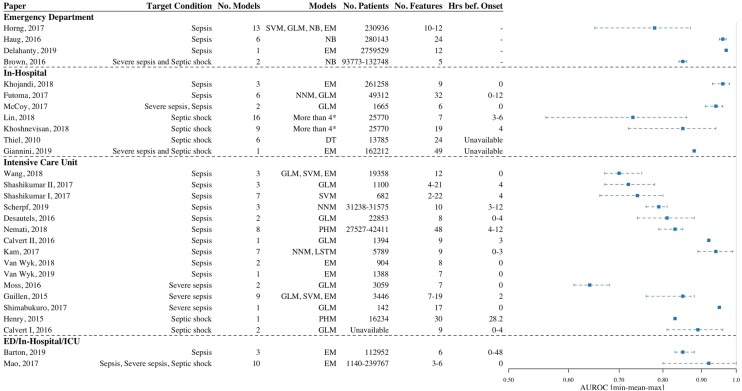
PURPOSE: Early clinical recognition of sepsis can be challenging. With the advancement of machine learning, promising real-time models to predict sepsis have emerged. We assessed their performance by carrying out a systematic review and meta-analysis. METHODS: A systematic search was performed in PubMed, Embase.com and Scopus. Studies targeting sepsis, severe sepsis or septic shock in any hospital setting were eligible for inclusion. The index test was any supervised machine learning model for real-time prediction of these conditions. Quality of evidence was assessed using the Grading of Recommendations Assessment, Development and Evaluation (GRADE) methodology, with a tailored Quality Assessment of Diagnostic Accuracy Studies (QUADAS-2) checklist to evaluate risk of bias. Models with a reported area under the curve of the receiver operating characteristic (AUROC) metric were meta-analyzed to identify strongest contributors to model performance. RESULTS: After screening, a total of 28 papers were eligible for synthesis, from which 130 models were extracted. The majority of papers were developed in the intensive care unit (ICU, n = 15; 54%), followed by hospital wards (n = 7; 25%), the emergency department (ED, n = 4; 14%) and all of these settings (n = 2; 7%). For the prediction of sepsis, diagnostic test accuracy assessed by the AUROC ranged from 0.68-0.99 in the ICU, to 0.96-0.98 in-hospital and 0.87 to 0.97 in the ED. Varying sepsis definitions limit pooling of the performance across studies. Only three papers clinically implemented models with mixed results. In the multivariate analysis, temperature, lab values, and model type contributed most to model performance. CONCLUSION: This systematic review and meta-analysis show that on retrospective data, individual machine learning models can accurately predict sepsis onset ahead of time. Although they present alternatives to traditional scoring systems, between-study heterogeneity limits the assessment of pooled results. Systematic reporting and clinical implementation studies are needed to bridge the gap between bytes and bedside.
Overview
CoChat Summary
TL;DR
This systematic review and meta-analysis of 28 papers and 130 machine learning models found that models retrospectively predict sepsis with AUROC ranges of 0.68–0.99 in the ICU, 0.96–0.98 in-hospital, and 0.87–0.97 in the ED. Between-study heterogeneity, varying sepsis definitions, and scarce prospective/clinical implementation studies limit pooled assessment and evidence on patient outcomes.
Key findings
- From 28 eligible papers, 130 models were extracted; most studies were in the ICU (n = 15; 54%), followed by hospital wards (n = 7; 25%), ED (n = 4; 14%), and all settings (n = 2; 7%). Reported AUROCs for sepsis ranged from 0.68–0.99 in the ICU, 0.96–0.98 in-hospital, and 0.87–0.97 in the ED; septic shock predictions ranged from 0.86–0.94 in-hospital and 0.83–0.96 in the ICU.
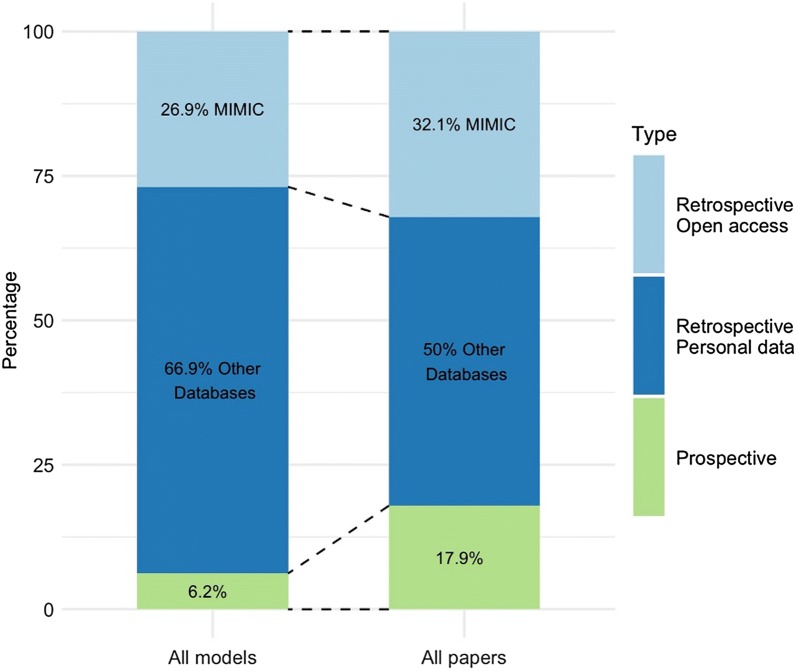
- All studies reported retrospective diagnostic test accuracy; models were prospectively validated in 2 papers (7%) and clinically implemented in 3 papers (11%), with mixed results.
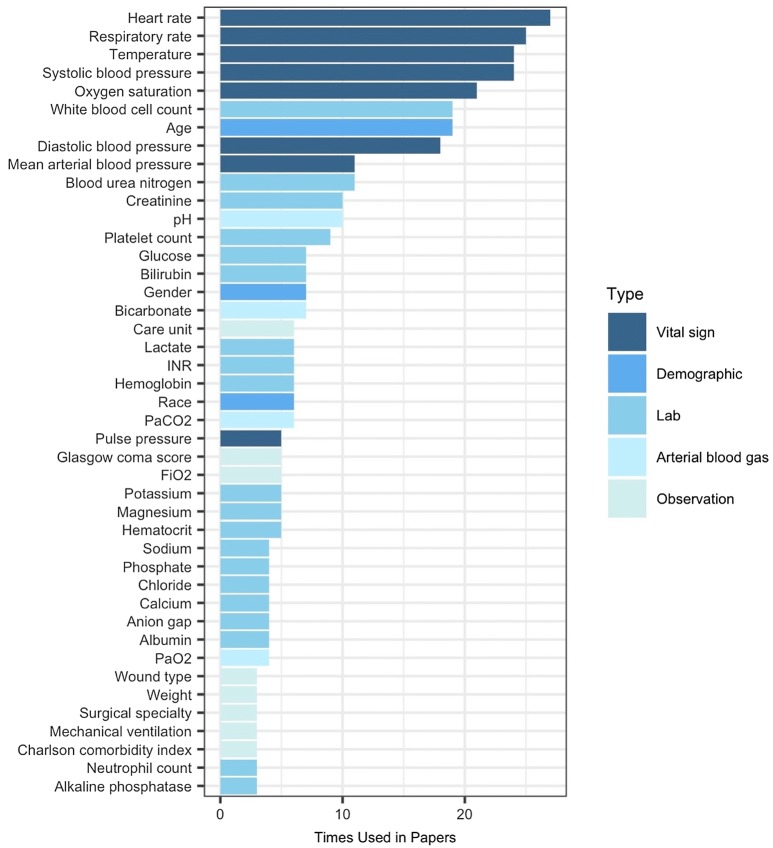
- In the meta-analysis of 111 models, temperature (multivariate coefficient 0.812, p = 0.000), lab values (0.842, p = 0.003), and model type (p = 0.020) contributed most to model performance. Univariate positive contributors included heart rate, respiratory rate, temperature, lab values, arterial blood gas values, and neural networks; negative contributors included the Seymour et al. Sepsis-3 definition, SOFA in the target condition definition, and models other than ensemble methods or neural networks.
- Risk of bias was unclear in 9/28 papers (32%) and high in all others; all papers had unclear risk of bias for the reference standard, and GRADE quality of evidence was low for each hospital setting.
Methods
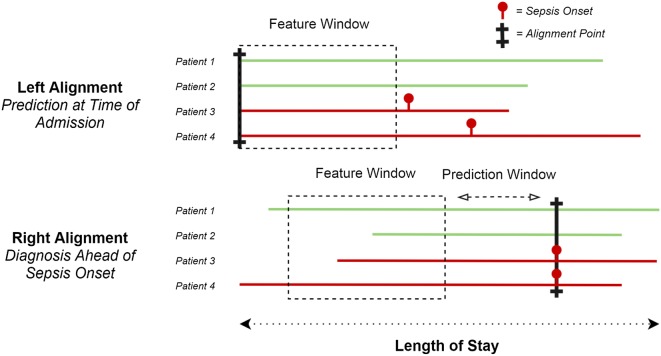
- Systematic review and meta-analysis conducted per PRISMA-DTA, registered on PROSPERO (CRD42019118716). Searches were run in PubMed, Embase.com, and Scopus up to September 13, 2019, for adult patients in any hospital setting, targeting right-aligned supervised machine learning models predicting sepsis, severe sepsis, or septic shock.
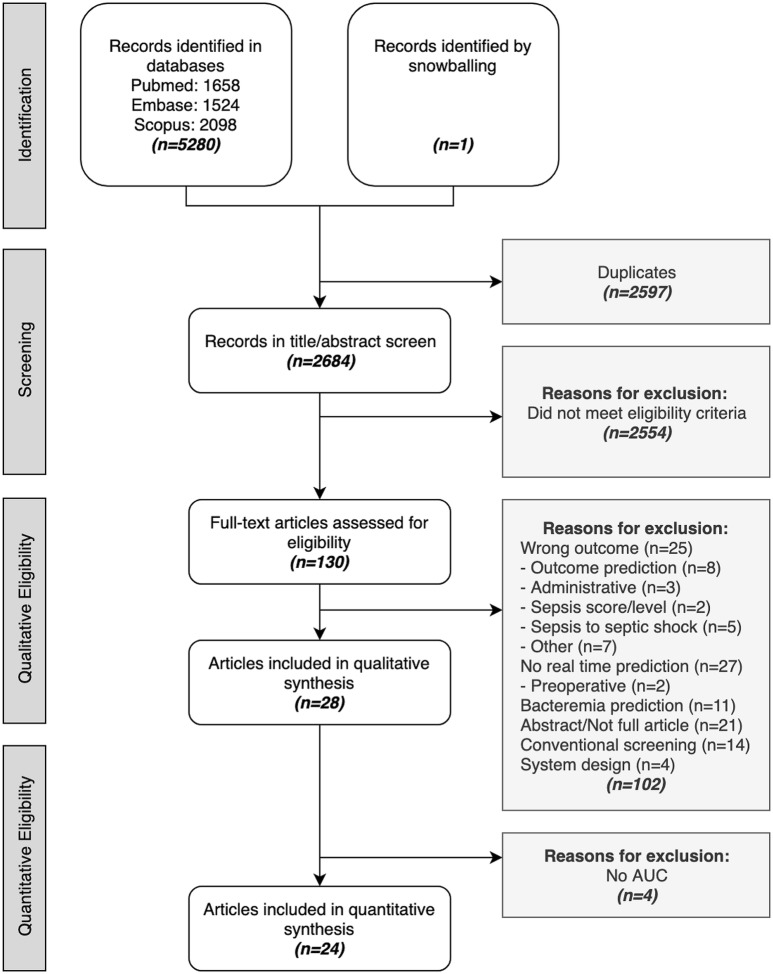
- After screening 2,684 papers, 130 full texts were read and 28 papers met inclusion criteria; 130 models were retrieved. Quality of evidence used GRADE, and risk of bias used a tailored QUADAS-2 checklist combined with an adapted Joanna Briggs Institute checklist.
- Meta-analysis used AUROC as the main metric, logit-transformed; a linear random effect model with a paper-specific random effect accounted for multiple models per paper. After grouping features and removing low-variance or collinear covariates, 39 covariates were analyzed, with backward AIC selection for the multivariate model; analyses were carried out in R.
Limitations
- Paper-stated: AUROC was chosen pragmatically and may underperform with imbalanced datasets; no contingency tables were feasible because necessary data were infrequently reported; few papers reported confidence intervals or standard deviations; heterogeneity in sepsis definitions, settings, and models prevented computing an overall pooled point estimate; there is no gold standard for diagnosing sepsis; high risk of bias and low GRADE evidence.
- Paper-stated: all models were developed in the United States, many used the MIMIC database, and no models were developed or validated in middle- or low-income countries; code was not released by any study, and only one paper reported adhering to a reporting standard.
- Evident from the text: only 3 interventional/implementation studies and 2 prospective validation studies were identified, so clinical impact on patient-relevant outcomes remains uncertain; the review is dominated by retrospective diagnostic accuracy studies.
Model-written summary. Check it against the paper before relying on it.
Integrity signals
Registry
Cites
Statistics
Figures
Verification
Claims the paper makes
18 Valid · 6 Not valid · 7 Not checked · 73 Own results and interpretations
The cited sources support only part of this claim — read each source’s verdict below.
In the paper
“Early clinical recognition of sepsis can be challenging.”
- Also stated in: § Introduction · plain
“early recognition can be difficult due to disease complexity in clinical context [9, 10] and heterogeneity of the septic population [11].”
§ Machine learning for the prediction of sepsis: a systematic review and meta-analysis of diagnostic test accuracy > Abstract > Purpose
What the sources say
- Supportedcites [9] Vincent J-L The clinical challenge of sepsis identification and monitoring PLoS Med 2016 13 e1002022 10.1371/journal.pmed.1002022 27187803 PMC4871479 source
The Introduction—The Clinical Problem states that early diagnosis of sepsis remains a challenge for bedside clinicians. The “Diagnosis” of Infection and Sepsis section also explains that diagnosis is not always straightforward, particularly in critically ill patients with comorbidities and other disease processes. (LLM, conf=0.94)
- Could not verifycites [10] Talisa VB Yende S Seymour CW Angus DC Arguing for adaptive clinical trials in sepsis Front Immunol 2018 9 1502 10.3389/fimmu.2018.01502 30002660 PMC6031704 sourceExperimental — accuracy not yet measured
The Introduction and “Sepsis Is Extremely Heterogeneous” section describe patient heterogeneity as a challenge for developing treatments and conducting trials, not for early clinical recognition. Searches for early recognition and diagnosis found no passage addressing whether clinicians have difficulty recognizing sepsis early. (LLM, conf=0.75)
- Could not verifycites [11] de Grooth H-J Postema J Loer SA Unexplained mortality differences between septic shock trials: a systematic analysis of population characteristics and control-group mortality rates Intensive Care Med 2018 44 311 322 10.1007/s00134-018-5134-8 29546535 PMC5861172 sourceExperimental — accuracy not yet measured
The Conclusion describes septic shock as heterogeneous, and the Discussion addresses differences in trial definitions and populations. Neither section addresses whether early clinical recognition of sepsis is challenging; searches for early recognition and diagnostic difficulty found no passage that does. (LLM, conf=0.72)
plainstates a cause- Asserted: passes — The authors put it forward as true.
- Checkable: passes — It can be checked against evidence.
- Load-bearing: passes — The paper’s conclusions depend on it.
- Based: passes — The paper gives a reason why it holds.
- Also stated in: § Introduction · plain
Every source the paper cites for this claim was checked and supports it.
In the paper
“One clinical validation study in the ED showed the machine learning model outperformed manual scoring by nurses and the SIRS criteria when identifying severe sepsis and septic shock [28], the other study made no comparison [29].”
§ Machine learning for the prediction of sepsis: a systematic review and meta-analysis of diagnostic test accuracy > Results > Study characteristics
What the sources say
- Supportedcites [28] Brown SM Jones J Kuttler KG Prospective evaluation of an automated method to identify patients with severe sepsis or septic shock in the emergency department BMC Emerg Med 2016 16 1 7 10.1186/s12873-016-0095-0 27549755 PMC4994262 source
The Overall model performance section (page unavailable) directly compares the ED model with the triage-nurse identification process and a SIRS-derived rule. The model had higher AUC and sensitivity than both for identifying severe sepsis or septic shock, although its false-positive rate was also higher. The paper describes a nurse identification process rather than a formal manual score. (LLM, conf=0.90)
plainstates a cause- Asserted: passes — The authors put it forward as true.
- Checkable: passes — It can be checked against evidence.
- Load-bearing: unclear — It is unclear whether the paper’s conclusions depend on it.
- Based: passes — The paper gives a reason why it holds.
- Supported
The cited sources support only part of this claim — read each source’s verdict below.
In the paper
“very few papers reported they accept data inquiries [32, 35, 47]”
§ Machine learning for the prediction of sepsis: a systematic review and meta-analysis of diagnostic test accuracy > Discussion > Future directions and academic contribution
What the sources say
- Could not verifycites [32] Shimabukuro DW Barton CW Feldman MD Effect of a machine learning-based severe sepsis prediction algorithm on patient survival and hospital length of stay: a randomised clinical trial BMJ Open Respir Res 2017 4 e000234 10.1136/bmjresp-2017-000234 29435343 PMC5687546 sourceExperimental — accuracy not yet measured
The Methods section describes collecting patient data, but the passages from our copy do not say whether the authors accept inquiries or requests for those data. Searches for data availability, data sharing, and requests to the authors found no such statement. This paper also cannot establish how many papers in the citing document’s set reported accepting inquiries. (LLM, conf=0.70)
- Could not verifycites [35] Horng S Sontag DA Halpern Y Creating an automated trigger for sepsis clinical decision support at emergency department triage using machine learning PLoS One 2017 12 e0174708 10.1371/journal.pone.0174708 28384212 PMC5383046 sourceExperimental — accuracy not yet measured
The Data collection and processing section describes the patient data used in the study, but does not say whether the authors accept inquiries or requests for those data. Searches for data inquiries, availability statements, and access requests found no passage addressing that point; the paper also does not assess how many other papers accept inquiries. (LLM, conf=0.72)
- Supportedcites [47] Brown SM Jones J Kuttler KG Prospective evaluation of an automated method to identify patients with severe sepsis or septic shock in the emergency department BMC Emerg Med 2016 16 31 10.1186/s12873-016-0095-0 27549755 PMC4994262 source
The Data availability section says requests for deidentified data will be processed for qualified researchers with appropriate ethics approval and data-use agreements. This supports citing the paper as an example that accepts data inquiries; the statement that very few papers do so is the citing authors’ assessment of the group. (LLM, conf=0.91)
plain- Asserted: passes — The authors put it forward as true.
- Checkable: passes — It can be checked against evidence.
- Load-bearing: unclear — It is unclear whether the paper’s conclusions depend on it.
- Based: passes — The paper gives a reason why it holds.
- Could not verify
The cited sources support only part of this claim — read each source’s verdict below.
In the paper
“Interventional studies using traditional SIRS and SOFA alarm systems have not shown significant changes in clinical outcomes [48–50].”
§ Machine learning for the prediction of sepsis: a systematic review and meta-analysis of diagnostic test accuracy > Discussion > Clinical model performance
What the sources say
- Could not verifycites [48] Nguyen SQ Mwakalindile E Booth JS Automated electronic medical record sepsis detection in the emergency department PeerJ 2014 2 e343 10.7717/peerj.343 24765577 PMC3994640 sourceExperimental — accuracy not yet measured
The Methods (Selection of subjects) say the SIRS-based alerts were evaluated after the fact and were not communicated to clinicians. The Limitations state that the study assessed detection accuracy, not clinical implementation. Our copy does not report an interventional study of SIRS or SOFA alarms or whether such alarms changed clinical outcomes. (LLM, conf=0.79)
- Not checked — no full text of the sourcecites [49] Nelson JL Smith BL Jared JD Younger JG Prospective trial of real-time electronic surveillance to expedite early care of severe sepsis Ann Emerg Med 2011 57 500 504 10.1016/j.annemergmed.2010.12.008 21227543 source
- Partly supportedcites [50] Hooper MH Weavind L Wheeler AP Randomized trial of automated, electronic monitoring to facilitate early detection of sepsis in the intensive care unit Crit Care Med 2012 40 2096 2101 10.1097/CCM.0b013e318250a887 22584763 PMC4451061 sourceExperimental — accuracy not yet measured
The Abstract (Conclusions) and Results report that this modified-SIRS alert trial did not significantly change measured clinical outcomes, including ICU length of stay and mortality. The cited study tested modified SIRS alerts in one ICU; it does not support the sentence’s reference to SOFA alarm systems. (LLM, conf=0.86)
plain- Asserted: passes — The authors put it forward as true.
- Checkable: passes — It can be checked against evidence.
- Load-bearing: passes — The paper’s conclusions depend on it.
- Based: passes — The paper gives a reason why it holds.
- Could not verify
Every source the paper cites for this claim was checked and supports it.
In the paper
“Many studies use ICD coding, which may be an unreliable instrument to identify septic patients [44, 45].”
§ Machine learning for the prediction of sepsis: a systematic review and meta-analysis of diagnostic test accuracy > Discussion > Heterogeneity and pooled performance
What the sources say
- Supportedcites [44] Fleischmann-Struzek C Thomas-Rüddel DO Schettler A Comparing the validity of different ICD coding abstraction strategies for sepsis case identification in German claims data PLoS One 2018 13 e0198847 10.1371/journal.pone.0198847 30059504 PMC6066203 source
The Introduction says sepsis estimates in the US and several European countries are commonly drawn from studies using ICD codes to identify cases. The Results (Validation of ICD code abstraction strategies) show why that identification may be unreliable: some strategies underestimated cases by up to 3.5-fold, while implicit coding produced substantial false positives. (LLM, conf=0.94)
- Supportedcites [45] Bouza C Lopez-Cuadrado T Amate-Blanco JM Use of explicit ICD9-CM codes to identify adult severe sepsis: impacts on epidemiological estimates Crit Care 2016 20 313 10.1186/s13054-016-1497-9 27716355 PMC5047045 source
The Background says population-based severe-sepsis studies commonly use ICD-9-CM codes, but that coding strategies can bias case identification and some combination algorithms have poor specificity. This supports the hedged concern about using ICD coding to identify septic patients, though the paper specifically examines adult severe sepsis. (LLM, conf=0.88)
hedgedstates a possible cause- Asserted: passes — The authors put it forward as true.
- Checkable: passes — It can be checked against evidence.
- Load-bearing: passes — The paper’s conclusions depend on it.
- Based: passes — The paper gives a reason why it holds.
- Supported
45 more claims · 1 with their cited sources checked
Create a free account to see all 104 claims and to verify the 3 references still open.
- Probably not a substantial claim. 31
- It may state two separate claims as one. 31
Claims other papers make about this one
Each is checked against this paper’s own text: does it say what the citing paper says it does?
The source backs part of the claim, not all of it — or backs it for a different population, condition or comparison.
In the citing paper
“For instance, AI models for sepsis prediction can alert clinicians to septic events hours before clinical signs emerge, enabling timely interventions [5].”
From Expectations of Intensive Care Physicians Regarding an AI-Based Decision Support System for Weaning From Continuous Renal Replacement Therapy: Predevelopment Survey Study (2025) · cites this paper as [5]
Experimental — accuracy not yet measuredThe source backs part of the claim, not all of it — or backs it for a different population, condition or comparison.
In the citing paper
“Two prominent examples relevant to critical care are models using readily available EHR data that can accurately predict clinical deterioration and sepsis hours before they occur [28–33]; these models exemplify real-time CDSS that alert clinicians and prompt evaluation, testing, and interventions [33].”
From Use of artificial intelligence in critical care: opportunities and obstacles (2024) · cites this paper as [32]
Experimental — accuracy not yet measuredThe cited source says what the claim attributes to it.
In the citing paper
“Among studies that reported the performance of sepsis prediction model in the ED, AUROCs ranged from 0.87 to 0.97.17”
From Development and validation of a screening tool for sepsis without laboratory results in the emergency department: a machine learning study (2025) · cites this paper as [17]
The cited source says what the claim attributes to it.
In the citing paper
“Despite the rise in competing models and products for early sepsis detection [5], few machine learning models have been implemented as part of clinical care [6-8].”
From Integrating a Machine Learning System Into Clinical Workflows: Qualitative Study (2020) · cites this paper as [5]
In the citing paper
“A recent systematic review demonstrated that ML models can accurately predict onset of sepsis in ICU patients [17].”
From Moving from bytes to bedside: a systematic review on the use of artificial intelligence in the intensive care unit (2021) · cites this paper as [17]
Self-check
Percentages, sums and reported differences re-computed from the paper’s own numbers.
Each contradiction between two passages listed here was confirmed by an independent check.
Rated minor: it would not touch a result — a value no result rests on, a p-value that stays on the same side of the significance level, or a conflict that is clerical, resolved elsewhere in the paper, or outside its own findings.
In the paper
§ Machine learning for the prediction of sepsis: a systematic review and meta-analysis of diagnostic test accuracy > Discussion > Clinical model performance
“Only one study clinically validated their model and showed that these models outperformed nurse triaging and SIRS criteria in the emergency room [47].”
§ Machine learning for the prediction of sepsis: a systematic review and meta-analysis of diagnostic test accuracy > Results > Study characteristics
“Prospective studies included two clinical validation studies (ED and in-hospital) and three interventional studies (in-hospital and ICU).”
Rated minor: it would not touch a result — a value no result rests on, a p-value that stays on the same side of the significance level, or a conflict that is clerical, resolved elsewhere in the paper, or outside its own findings.
In the paper
§ Machine learning for the prediction of sepsis: a systematic review and meta-analysis of diagnostic test accuracy > Results > Study characteristics
“| Prospective design | 1 | 0.25 | 2 | 0.29 | 1 | 0.07 |”
§ Machine learning for the prediction of sepsis: a systematic review and meta-analysis of diagnostic test accuracy > Results > Study characteristics
“The interventional studies included two pre-post implementation studies (in-hospital) [30, 31] and one ICU randomized controlled trial [32].”
Rated minor: it would not touch a result — a value no result rests on, a p-value that stays on the same side of the significance level, or a conflict that is clerical, resolved elsewhere in the paper, or outside its own findings.
In the paper
“| Data granularity | | | | | | | | 1-hourly values | – | – | 6 | 0.14 | 30 | 0.58 | | > 1/hourly values | – | – | 0 | 0.00 | 18 | 0.35 | | Not described | – | – | 31 | 0.72 | 4 | 0.08 |”
§ Machine learning for the prediction of sepsis: a systematic review and meta-analysis of diagnostic test accuracy > Results > Study characteristics
Reported 43 · recomputed 37
Citations
Cites
R: A Language and Environment for Statistical Computing
R Core Team (2025) · doi:10.32614/r.manuals · Cited by 352,181
The third international consensus definitions for sepsis and septic shock (Sepsis-3).
Singer, M., Deutschman, C. S., Seymour, C. W., Shankar-Hari, M., Annane, D., Bauer, M., Bellomo, R., Bernard, G. R., Chiche, J.-D., Coopersmith, C. M., et al. (2016) · JAMA · doi:10.1001/jama.2016.0287 · Cited by 28,250
QUADAS-2: a revised tool for the quality assessment of diagnostic accuracy studies
Whiting, P. F., Rutjes, A. W. S., Westwood, M. E., Mallett, S., Deeks, J. J., Reitsma, J. B., Leeflang, M. M. G., Sterne, J. A. C., Bossuyt, P. M. M., & the QUADAS-2 Group* (2011) · Annals of Internal Medicine · doi:10.7326/0003-4819-155-8-201110180-00009 · Cited by 14,199
Proceedings of the 24th international conference on Machine learning
(2007) · doi:10.1145/1273496 · Cited by 11,630
He, H., & Garcia, E. A. (2009) · IEEE Transactions on Knowledge and Data Engineering · doi:10.1109/tkde.2008.239 · Cited by 10,359
Surviving Sepsis Campaign: International guidelines for management of sepsis and septic shock: 2016.
Rhodes, A., Evans, L. E., Alhazzani, W., Levy, M. M., Antonelli, M., Ferrer, R., Kumar, A., Sevransky, J. E., Sprung, C. L., Nunnally, M. E., et al. (2017) · Intensive Care Medicine · doi:10.1007/s00134-017-4683-6 · Cited by 6,621
Kumar, A., Roberts, D., Wood, K. E., Light, B., Parrillo, J. E., Sharma, S., Suppes, R., Feinstein, D., Zanotti, S., Taiberg, L., et al. (2006) · Critical Care Medicine · doi:10.1097/01.ccm.0000217961.75225.e9 · Cited by 6,109
Seymour, C. W., Liu, V. X., Iwashyna, T. J., Brunkhorst, F. M., Rea, T. D., Scherag, A., Rubenfeld, G., Kahn, J. M., Shankar-Hari, M., Singer, M., et al. (2016) · JAMA · doi:10.1001/jama.2016.0288 · Cited by 3,939
Fleischmann, C., Scherag, A., Adhikari, N. K. J., Hartog, C. S., Tsaganos, T., Schlattmann, P., Angus, D. C., & Reinhart, K. (2016) · American Journal of Respiratory and Critical Care Medicine · doi:10.1164/rccm.201504-0781oc · Cited by 3,548
McInnes, M. D. F., Moher, D., Thombs, B. D., McGrath, T. A., Bossuyt, P. M., and the PRISMA-DTA Group, Clifford, T., Cohen, J. F., Deeks, J. J., Gatsonis, C., et al. (2018) · JAMA · doi:10.1001/jama.2017.19163 · Cited by 3,210
Research works printed but not linked: 3
- Brown SM Jones J Kuttler KG Prospective evaluation of an automated method to identify patients with severe sepsis or septic shock in the emergency department BMC Emerg Med 2016 16 31 10.1186/s12873-016-0095-0 27549755 PMC4994262 · DOI · Paper page
- Giannini HM Ginestra JC Chivers C A machine learning algorithm to predict severe sepsis and septic shock: development, implementation, and impact on clinical practice Crit Care Med 2019 10.1097/CCM.0000000000003891 31389839 PMC8635476 · DOI · Paper page
- Mao Q Jay M Hoffman JL Multicentre validation of a sepsis prediction algorithm using only vital sign data in the emergency department, general ward and ICU BMJ Open 2018 8 e017833 10.1136/bmjopen-2017-017833 29374661 PMC5829820 · DOI · Paper page
Cited by
Liu, X., Cruz Rivera, S., Moher, D., Calvert, M. J., Denniston, A. K., The SPIRIT-AI and CONSORT-AI Working Group, SPIRIT-AI and CONSORT-AI Steering Group, Chan, A.-W., Darzi, A., Holmes, C., et al. (2020) · Nature Medicine · doi:10.1038/s41591-020-1034-x · Cited by 1,421
Cruz Rivera, S., Liu, X., Chan, A.-W., Denniston, A. K., Calvert, M. J., The SPIRIT-AI and CONSORT-AI Working Group, SPIRIT-AI and CONSORT-AI Steering Group, Darzi, A., Holmes, C., Yau, C., et al. (2020) · Nature Medicine · doi:10.1038/s41591-020-1037-7 · Cited by 933
Liu, X., Rivera, S. C., Moher, D., Calvert, M. J., & Denniston, A. K. (2020) · BMJ · doi:10.1136/bmj.m3164 · Cited by 702
Liu, X., Cruz Rivera, S., Moher, D., Calvert, M. J., Denniston, A. K., Ashrafian, H., Beam, A. L., Chan, A.-W., Collins, G. S., Deeks, A. D. J., et al. (2020) · The Lancet Digital Health · doi:10.1016/s2589-7500(20)30218-1 · Cited by 555
Cruz Rivera, S., Liu, X., Chan, A.-W., Denniston, A. K., Calvert, M. J., Ashrafian, H., Beam, A. L., Collins, G. S., Darzi, A., Deeks, J. J., et al. (2020) · The Lancet Digital Health · doi:10.1016/s2589-7500(20)30219-3 · Cited by 486
Rivera, S. C., Liu, X., Chan, A.-W., Denniston, A. K., & Calvert, M. J. (2020) · BMJ · doi:10.1136/bmj.m3210 · Cited by 463
van de Sande, D., van Genderen, M. E., Huiskens, J., Gommers, D., & van Bommel, J. (2021) · Intensive Care Medicine · doi:10.1007/s00134-021-06446-7 · Cited by 279
“A recent systematic review demonstrated that ML models can accurately predict onset of sepsis in ICU patients [17].”
BackgroundEarly Prediction of Sepsis in the ICU Using Machine Learning: A Systematic Review
Moor, M., Rieck, B., Horn, M., Jutzeler, C. R., & Borgwardt, K. (2021) · Frontiers in Medicine · doi:10.3389/fmed.2021.607952 · Cited by 231
“Machine learning models can naturally handle the wealth and complexity of digital patient data by learning predictive patterns in the data, which in turn can be used to make accurate predictions about which patient is developing sepsis (14, 15).”
BackgroundDeep learning for wireless capsule endoscopy: a systematic review and meta-analysis
Soffer, S., Klang, E., Shimon, O., Nachmias, N., Eliakim, R., Ben-Horin, S., Kopylov, U., & Barash, Y. (2020) · Gastrointestinal Endoscopy · doi:10.1016/j.gie.2020.04.039 · Cited by 207
Human-Centered Design to Address Biases in Artificial Intelligence
Chen, Y., Clayton, E. W., Novak, L. L., Anders, S., & Malin, B. (2023) · Journal of Medical Internet Research · doi:10.2196/43251 · Cited by 199
“This can lead to a scenario where a patient’s condition is not treated appropriately, such that their health status deteriorates [19].”
Integrating a Machine Learning System Into Clinical Workflows: Qualitative Study
Sandhu, S., Lin, A. L., Brajer, N., Sperling, J., Ratliff, W., Bedoya, A. D., Balu, S., O'Brien, C., & Sendak, M. P. (2020) · Journal of Medical Internet Research · doi:10.2196/22421 · Cited by 168
“Despite the rise in competing models and products for early sepsis detection [5], few machine learning models have been implemented as part of clinical care [6-8].”
BackgroundTiming of antibiotic therapy in the ICU
Kollef, M. H., Shorr, A. F., Bassetti, M., Timsit, J.-F., Micek, S. T., Michelson, A. P., & Garnacho-Montero, J. (2021) · Critical Care · doi:10.1186/s13054-021-03787-z · Cited by 161
“Furthermore, these advanced approaches have yielded incremental improvements in sepsis case recognition and prediction when compared to traditional early warning systems [72, 74].”
BackgroundUse of artificial intelligence in critical care: opportunities and obstacles
Pinsky, M. R., Bedoya, A., Bihorac, A., Celi, L., Churpek, M., Economou-Zavlanos, N. J., Elbers, P., Saria, S., Liu, V., Lyons, P. G., et al. (2024) · Critical Care · doi:10.1186/s13054-024-04860-z · Cited by 160
Self-citationSepsis biomarkers and diagnostic tools with a focus on machine learning
Komorowski, M., Green, A., Tatham, K. C., Seymour, C., & Antcliffe, D. (2022) · eBioMedicine · doi:10.1016/j.ebiom.2022.104394 · Cited by 159
“37 For the prediction of sepsis, diagnostic test accuracy assessed by the AUROC ranged from 0.68 to 0.99 in the ICU, to 0.96 – 0.98 in-hospital and 0.87 to 0.97 in the ED.”
BackgroundMethodInfluentialQiu, X., Lei, Y., & Zhou, R. (2023) · Expert Review of Anti-infective Therapy · doi:10.1080/14787210.2023.2237192 · Cited by 200
APPRAISE-AI Tool for Quantitative Evaluation of AI Studies for Clinical Decision Support
Kwong, J. C. C., Khondker, A., Lajkosz, K., McDermott, M. B. A., Frigola, X. B., McCradden, M. D., Mamdani, M., Kulkarni, G. S., & Johnson, A. E. W. (2023) · JAMA Network Open · doi:10.1001/jamanetworkopen.2023.35377 · Cited by 142
Huang, Y., Talwar, A., Chatterjee, S., & Aparasu, R. R. (2021) · BMC Medical Research Methodology · doi:10.1186/s12874-021-01284-z · Cited by 178
“Recent reviews have demonstrated that ML techniques can be applied for prediction of various types of outcomes, including disease diagnosis [22, 23], disease prognosis [24 – 26], or therapeutic outcomes [27, 28].”
BackgroundArtificial intelligence sepsis prediction algorithm learns to say “I don’t know”
Shashikumar, S. P., Wardi, G., Malhotra, A., & Nemati, S. (2021) · npj Digital Medicine · doi:10.1038/s41746-021-00504-6 · Cited by 125
“However, most existing published sepsis prediction models 16,17 are either based on data from a single hospital 5,7 – 10,13,15,18,19 or multiple hospitals from the same healthcare system 11,14 where the care processes are mostly standardized.”
MethodMachine Learning Models for Predicting Neonatal Mortality: A Systematic Review
Mangold, C., Zoretic, S., Thallapureddy, K., Moreira, A., Chorath, K. T., & Moreira, A. G. (2021) · Neonatology · doi:10.1159/000516891 · Cited by 145
Raman, R., Pattnaik, D., Hughes, L., & Nedungadi, P. (2024) · Journal of Innovation & Knowledge · doi:10.1016/j.jik.2024.100517 · Cited by 167
Diagnostic Challenges in Sepsis
Duncan, C. F., Youngstein, T., Kirrane, M., & Lonsdale, D. (2021) · Current Infectious Disease Reports · doi:10.1007/s11908-021-00765-y · Cited by 165
Artificial intelligence in sleep medicine: background and implications for clinicians
Goldstein, C. A., Berry, R. B., Kent, D. T., Kristo, D. A., Seixas, A. A., Redline, S. S., & Westover, M. B. (2020) · Journal of Clinical Sleep Medicine · doi:10.5664/jcsm.8388 · Cited by 159
Anteby, R., Horesh, N., Soffer, S., Zager, Y., Barash, Y., Amiel, I., Rosin, D., Gutman, M., & Klang, E. (2021) · Surgical Endoscopy · doi:10.1007/s00464-020-08168-1 · Cited by 128
Yan, M. Y., Gustad, L. T., & Nytrø, Ø. (2022) · Journal of the American Medical Informatics Association · doi:10.1093/jamia/ocab236 · Cited by 119
“Sepsis definition impact In ML, many studies rely heavily on sepsis definitions and ICDcodes to identify patient cohort datasets for sepsis studies.(9,11,13) Table 4.”
Applications of machine learning in routine laboratory medicine: Current state and future directions
Rabbani, N., Kim, G. Y. E., Suarez, C. J., & Chen, J. H. (2022) · Clinical Biochemistry · doi:10.1016/j.clinbiochem.2022.02.011 · Cited by 118
Islam, K. R., Prithula, J., Kumar, J., Tan, T. L., Reaz, M. B. I., Sumon, M. S. I., & Chowdhury, M. E. H. (2023) · Journal of Clinical Medicine · doi:10.3390/jcm12175658 · Cited by 156
“(2020) [29] demonstrated ML model accuracy in predicting sepsis onset in retrospective cohorts with clinically relevant variables.”
MethodMoor, M., Bennett, N., Plečko, D., Horn, M., Rieck, B., Meinshausen, N., Bühlmann, P., & Borgwardt, K. (2023) · eClinicalMedicine · doi:10.1016/j.eclinm.2023.102124 · Cited by 118
“13,14 In fact, a widely adopted proprietary sepsis prediction model was recently found to perform surprisingly poorly when externally validated.”
BackgroundMethodResultDeepAISE – An interpretable and recurrent neural survival model for early prediction of sepsis
Shashikumar, S. P., Josef, C. S., Sharma, A., & Nemati, S. (2021) · Artificial Intelligence in Medicine · doi:10.1016/j.artmed.2021.102036 · Cited by 109
“…learning (ML) based models for early prediction of sepsis and septic shock have been proposed and have been summarized in detail by Moor et al. [16] and Fleuren et al. [17]; although variations in experimental design and definitions of sepsis make a direct comparison of these methods impractical.”
BackgroundHuang, Y., Li, J., Li, M., & Aparasu, R. R. (2023) · BMC Medical Research Methodology · doi:10.1186/s12874-023-02078-1 · Cited by 134
The epic sepsis model falls short-the importance of external validation
Habib, A. R., Lin, A. L., & Grant, R. W. (2021) · JAMA Internal Medicine · doi:10.1001/jamainternmed.2021.3333 · Cited by 101
Moazemi, S., Vahdati, S., Li, J., Kalkhoff, S., Castano, L. J. V., Dewitz, B., Bibo, R., Sabouniaghdam, P., Tootooni, M. S., Bundschuh, R. A., et al. (2023) · Frontiers in Medicine · doi:10.3389/fmed.2023.1109411 · Cited by 97
Wardi, G., Carlile, M., Holder, A., Shashikumar, S., Hayden, S. R., & Nemati, S. (2021) · Annals of Emergency Medicine · doi:10.1016/j.annemergmed.2020.11.007 · Cited by 96
“29–32 These scoring systems have performed better than the quick SOFA and systemic inflammatory response syndrome for the prediction of adverse events, but their use has been limited by moderate test performance characteristics in septic patients.”
MethodCurrent Evidence and Limitation of Biomarkers for Detecting Sepsis and Systemic Infection
Hung, S.-K., Lan, H.-M., Han, S.-T., Wu, C., & Chen, K. (2020) · Biomedicines · doi:10.3390/biomedicines8110494 · Cited by 104
do Nascimento, I. J. B., Marcolino, M. S., Abdulazeem, H. M., Weerasekara, I., Muscat, N. A., Gonçalves, M. A., & Novillo-Ortiz, D. (2021) · Journal of Medical Internet Research · doi:10.2196/27275 · Cited by 115
“Several studies reported significant improvement in disease diagnosis and event prediction using big data analytics tools, including remarkable enhancement of sepsis prediction using ML techniques [26].”
Soffer, S., Morgenthau, A. S., Shimon, O., Barash, Y., Konen, E., Glicksberg, B. S., & Klang, E. (2021) · Academic Radiology · doi:10.1016/j.acra.2021.05.014 · Cited by 92
Li, F., Wang, S., Gao, Z., Qing, M., Pan, S. L., Liu, Y., & Hu, C. (2025) · Frontiers in Medicine · doi:10.3389/fmed.2024.1510792 · Cited by 122
Evolving Applications of Artificial Intelligence and Machine Learning in Infectious Diseases Testing
Tran, N. K., Albahra, S., May, L., Waldman, S., Crabtree, S., Bainbridge, S., & Rashidi, H. (2021) · Clinical Chemistry · doi:10.1093/clinchem/hvab239 · Cited by 77
Machine learning in predicting antimicrobial resistance: a systematic review and meta-analysis
Tang, R., Luo, R., Tang, S., Song, H., & Chen, X. (2022) · International Journal of Antimicrobial Agents · doi:10.1016/j.ijantimicag.2022.106684 · Cited by 93
Bomrah, S., Uddin, M., Upadhyay, U., Komorowski, M., Priya, J., Dhar, E., Hsu, S., & Syed-Abdul, S. (2024) · Critical Care · doi:10.1186/s13054-024-04948-6 · Cited by 104
“Linked with the subject of our current study, we found three important scoping reviews / meta-analysis that focused on the potentials of ML for sepsis prediction [2, 38,39].”
BackgroundMethodInfluentialSwinckels, L., Bennis, F. C., Ziesemer, K. A., Scheerman, J. F. M., Bijwaard, H., de Keijzer, A., & Bruers, J. J. M. (2024) · Journal of Medical Internet Research · doi:10.2196/48320 · Cited by 112
“Looking into a more mature domain, the diagnostic accuracy of sepsis predictions ranged from between 0.68 and 0.99 in the intensive care unit to between 0.96 and 0.98 in hospital and between 0.87 and 0.97 in the emergency department [55].”
InfluentialLiang, P., & Yu, F. (2022) · Frontiers in Surgery · doi:10.3389/fsurg.2022.857218 · Cited by 101
Pediatric Sepsis Diagnosis, Management, and Sub-phenotypes
Weiss, S. L., & Fitzgerald, J. C. (2023) · PEDIATRICS · doi:10.1542/peds.2023-062967 · Cited by 100
FDA-Authorized AI/ML Tool for Sepsis Prediction: Development and Validation
Bhargava, A., López-Espina, C., Schmalz, L., Khan, S., Watson, G. L., Urdiales, D., Updike, L., Kurtzman, N., Dagan, A., Doodlesack, A., et al. (2024) · NEJM AI · doi:10.1056/aioa2400867 · Cited by 72
Monitoring performance of clinical artificial intelligence in health care: a scoping review
Andersen, E. S., Birk-Korch, J. B., Hansen, R. S., Fly, L. H., Röttger, R., Arcani, D. M. C., Brasen, C. L., Brandslund, I., & Madsen, J. S. (2024) · JBI Evidence Synthesis · doi:10.11124/jbies-24-00042 · Cited by 73
van der Vegt, A. H., Scott, I. A., Dermawan, K., Schnetler, R. J., Kalke, V. R., & Lane, P. J. (2023) · Journal of the American Medical Informatics Association · doi:10.1093/jamia/ocad075 · Cited by 72
Comparing different machine learning techniques for predicting COVID-19 severity
Xiong, Y., Ma, Y., Ruan, L., Li, D., Lu, C. C., & Huang, L. (2022) · Infectious Diseases of Poverty · doi:10.1186/s40249-022-00946-4 · Cited by 81
“Machine learning as an effective and innovative tool has been reported applications in diabetes [11], cardio-vascular diseases [12], cancer [13, 14], sepsis [15], and depression [16], etc., and showed favorable performance.”
MethodMartínez-Millana, A., Saez-Saez, A., Tornero-Costa, R., Muscat, N. A., Traver, V., & Novillo-Ortiz, D. (2022) · International Journal of Medical Informatics · doi:10.1016/j.ijmedinf.2022.104855 · Cited by 82
Survival prediction of patients with sepsis from age, sex, and septic episode number alone
Chicco, D., & Jurman, G. (2020) · Scientific Reports · doi:10.1038/s41598-020-73558-3 · Cited by 79
Kijpaisalratana, N., Sanglertsinlapachai, D., Techaratsami, S., Musikatavorn, K., & Saoraya, J. (2022) · International Journal of Medical Informatics · doi:10.1016/j.ijmedinf.2022.104689 · Cited by 65
Bourcier, S., Klug, J., & Nguyen, L. S. (2021) · World Journal of Gastroenterology · doi:10.3748/wjg.v27.i26.4088 · Cited by 65
Early Detection of Sepsis With Machine Learning Techniques: A Brief Clinical Perspective
Giacobbe, D. R., Signori, A., Del Puente, F., Mora, S., Carmisciano, L., Briano, F., Vena, A., Ball, L., Robba, C., Pelosi, P., et al. (2021) · Frontiers in Medicine · doi:10.3389/fmed.2021.617486 · Cited by 65
“Indeed, these models may continuously update their prediction of sepsis by utilizing the unceasing stream of electronic data from the EMR and/or vital signs monitors (57, 74, 85, 92, 94).”
BackgroundInfluentialEvaluating machine learning models for sepsis prediction: A systematic review of methodologies
Deng, H., Sun, M., Wang, Y., Zeng, J., Yuan, T., Li, T., Li, D.-H., Chen, W., Zhou, P., Wang, Q., et al. (2021) · iScience · doi:10.1016/j.isci.2021.103651 · Cited by 84
The use of machine learning and artificial intelligence within pediatric critical care
Shah, N., Arshad, A., Mazer, M. B., Carroll, C. L., Shein, S. L., & Remy, K. E. (2023) · Pediatric Research · doi:10.1038/s41390-022-02380-6 · Cited by 63
“Specific examples range from sepsis prediction to imaging classification.(79,97,98) During development particular focus needs to be paid to the definitions and scope of the model, and the selection of predictor variables.”
BackgroundKareemi, H., Vaillancourt, C., Rosenberg, H., Fournier, K., & Yadav, K. (2021) · Academic Emergency Medicine · doi:10.1111/acem.14190 · Cited by 72
“42,48 Accordingly, we chose to focus on prediction performance to allow for consistency in search criteria and interpretation of results.”
BackgroundMethodInfluentialLauritsen, S. M., Thiesson, B., Jørgensen, M. J., Riis, A. H., Espelund, U. S., Weile, J. B., & Lange, J. (2021) · npj Digital Medicine · doi:10.1038/s41746-021-00529-x · Cited by 61
“As such, it was recently highlighted that structural heterogeneity of published sepsis prediction models limits pooling of overall performance 4,5 .”
BackgroundEl-Rashidy, N. M., Abuhmed, T., Alarabi, L., El-Bakry, H. M., Abdelrazek, S. M., Ali, F., & El–Sappagh, S. (2021) · Neural Computing and Applications · doi:10.1007/s00521-021-06631-1 · Cited by 66
Persson, I., Östling, A., Arlbrandt, M., Söderberg, J., & Becedas, D. (2021) · JMIR Formative Research · doi:10.2196/28000 · Cited by 58
Prediction of Late-Onset Sepsis in Preterm Infants Using Monitoring Signals and Machine Learning
Cabrera-Quirós, L., Kommers, D. R., Wolvers, M. K., Oosterwijk, L., Arents, N. L., van der Sluijs-Bens, J., Cottaar, E. J. E., Andriessen, P., & van Pul, C. (2021) · Critical Care Explorations · doi:10.1097/cce.0000000000000302 · Cited by 71
Artificial intelligence and telemedicine in anesthesia: potential and problems
Bellini, V., Valente, M., Gaddi, A. V., Pelosi, P. P., & Bignami, E. G. (2022) · Minerva Anestesiologica · doi:10.23736/s0375-9393.21.16241-8 · Cited by 79
Hadweh, P., Niset, A., Salvagno, M., Barajraji, M. A., Hadwe, S. E., Taccone, F. S., & Barrit, S. (2025) · Journal of Clinical Medicine · doi:10.3390/jcm14124026 · Cited by 86
“Several machine learning models have been developed for early sepsis detection, with reported promising lead times of 4–12 h before clinical recognition [72].”
Schweingruber, N., Mader, M. M.-D., Wiehe, A., Röder, F., Göttsche, J., Kluge, S., Westphal, M., Czorlich, P., & Gerloff, C. P. (2022) · Brain · doi:10.1093/brain/awab453 · Cited by 106
“Comparable proximities for the predictions of sepsis were chosen and have already been evaluated in prospective studies to significantly reduce mortality.(41) When implemented in Neuro-ICU, models with different prediction Table 1 Patient characteristics”
MethodMachine learning for the prediction of sepsis-related death: a systematic review and meta-analysis
Zhang, Y., Xu, W., Yang, P. C., & Zhang, A. (2023) · BMC Medical Informatics and Decision Making · doi:10.1186/s12911-023-02383-1 · Cited by 75
“The meta-analysis by Lucas M. Fleuren et al. [23] comprehensively analyzed data from 28 original studies involving 130 models.”
MethodSarno, L. D., Caroselli, A., Tonin, G., Graglia, B., Pansini, V., Causio, F. A., Gatto, A., & Chiaretti, A. (2024) · Biomedicines · doi:10.3390/biomedicines12061220 · Cited by 67
“To provide prompt treatment to more homogeneous patient populations, machine learning models could be explored to accurately identify pre-specified populations [124].”
Host Diagnostic Biomarkers of Infection in the ICU: Where Are We and Where Are We Going?
Heffernan, A. J., & Denny, K. J. (2021) · Current Infectious Disease Reports · doi:10.1007/s11908-021-00747-0 · Cited by 64
O'Reilly, D., McGrath, J., & Martin-Loeches, I. (2024) · Journal of Intensive Medicine · doi:10.1016/j.jointm.2023.10.001 · Cited by 55
“[37] An envisaged case use of a left-sided model would be the identification by the left-sided model of a patient ahead of time likely to develop sepsis ahead of the proposed surgery.”
MethodInfluentialGuo, F., Zhu, X., Wu, Z., Zhu, L., Wu, J., & Zhang, F. (2022) · Journal of Translational Medicine · doi:10.1186/s12967-022-03469-6 · Cited by 68
“Machine learning (ML)- based clinical decision support systems for accurate sepsis recognition have received increasing attention in the latest decade [19–22], with many emerging algorithms for prediction [23–35] and classification [36] of the sepsis risk.”
BackgroundElaborating the potential of Artificial Intelligence in automated CAR-T cell manufacturing
Bäckel, N., Hort, S., Kis, T., Nettleton, D., Egan, J. R., Jacobs, J. J. L., Grunert, D., & Schmitt, R. H. (2023) · Frontiers in Molecular Medicine · doi:10.3389/fmmed.2023.1250508 · Cited by 59
Using artificial intelligence to improve primary care for patients and clinicians.
Sarkar, U., & Bates, D. W. (2024) · JAMA Internal Medicine · doi:10.1001/jamainternmed.2023.7965 · Cited by 52
Nunnally, M., Ferrer, R., Martin, G. S., Martín‐Loeches, I., Machado, F. R., Backer, D. D., Coopersmith, C. M., Deutschman, C. S., Antonelli, M. M., Hellman, J., et al. (2021) · Intensive Care Medicine Experimental · doi:10.1186/s40635-021-00400-z · Cited by 64
Valik, J. K., Ward, L., Tanushi, H., Johansson, A. F., Färnert, A., Mogensen, M. L., Pickering, B. W., Herasevich, V., Dalianis, H., Henriksson, A., et al. (2023) · Scientific Reports · doi:10.1038/s41598-023-38858-4 · Cited by 68
“As shown in the most comprehensive systematic review of machine learning sepsis prediction models to date, most published studies have focused on ICU patients 11 .”
BackgroundResultIntegrating artificial intelligence into healthcare systems: more than just the algorithm
Kwong, J. C. C., Nickel, G., Wang, S., & Kvedar, J. C. (2024) · npj Digital Medicine · doi:10.1038/s41746-024-01066-z · Cited by 72
Early Detection of Septic Shock Onset Using Interpretable Machine Learners
Misra, D., Avula, V., Wolk, D. M., Farag, H. A., Li, J., Mehta, Y. B., Sandhu, R., Karunakaran, B., Kethireddy, S., Zand, R., et al. (2021) · Journal of Clinical Medicine · doi:10.3390/jcm10020301 · Cited by 51
Liu, C., Hung, C.-M., Ko, S.-C., Cheng, K.-C., Chao, C., Sung, M., Hsing, S., Wang, J., Chen, C., Lai, C., et al. (2022) · Frontiers in Medicine · doi:10.3389/fmed.2022.935366 · Cited by 66
Hariton, E., Pavlovic, Z. J., Fanton, M., & Jiang, V. S. (2023) · Fertility and Sterility · doi:10.1016/j.fertnstert.2023.05.148 · Cited by 58
Mollura, M., Lehman, L.-W. H., Mark, R. G., & Barbieri, R. (2021) · Philosophical Transactions of the Royal Society A: Mathematical, Physical and Engineering Sciences · doi:10.1098/rsta.2020.0252 · Cited by 49
“…system and cardiovascular control mechanisms, and a discrete ability of machine learning models in identifying sepsis with clinical data [22], only a few studies have conveyed features extracted from higher resolution signals into Machine Learning (ML) models in order to identify sepsis…”
BackgroundLiu, R., Li, F., Hao, S., Hou, D., Zeng, X., Huang, H., Sethi, G., Guo, J., & Duan, C. (2024) · Pharmacological Research · doi:10.1016/j.phrs.2023.107056 · Cited by 55
Transforming sepsis management: AI-driven innovations in early detection and tailored therapies
Papareddy, P., Lobo, T. J., Holub, M., Bouma, H., Maca, J., Strodthoff, N., & Herwald, H. (2025) · Critical Care · doi:10.1186/s13054-025-05588-0 · Cited by 49
“For instance, a recent meta-analysis has identified several critical factors that contribute positively to sepsis prediction scores [101].”
Multi-Branching Temporal Convolutional Network for Sepsis Prediction
Wang, Z., & Yao, B. (2021) · IEEE Journal of Biomedical and Health Informatics · doi:10.1109/jbhi.2021.3092835 · Cited by 56
Qiao, J., & Cui, L. (2022) · Frontiers in Immunology · doi:10.3389/fimmu.2022.905601 · Cited by 53
Tao, Y., Xu, X., Yang, B., Zhao, H., & Li, Y. (2023) · International Journal of Nanomedicine · doi:10.2147/ijn.s441133 · Cited by 51
Joshi, M., Mecklai, K., Rozenblum, R., & Samal, L. (2022) · JAMIA Open · doi:10.1093/jamiaopen/ooac022 · Cited by 46
“This approach was chosen as qualitative methods can provide “rich descriptions of complex phenomena” typical of healthcare organization and IT implementation.(20) A convenience sample was developed of hospital leaders from various hospitals nationwide with criteria intended to include implementors of CDS tools from 3…”
MethodLeveraging transcriptomics for precision diagnosis: Lessons learned from cancer and sepsis
Tsakiroglou, M., Evans, A. G., & Pirmohamed, M. (2023) · Frontiers in Genetics · doi:10.3389/fgene.2023.1100352 · Cited by 55
“As a proof-ofconcept, machine learning algorithms which classify patients based on routine clinical data have been shown to accurately predict clinical outcomes and sepsis onset (Komorowski et al., 2018; Seymour et al., 2019; Fleuren et al., 2020).”
BackgroundLiu, F., Yao, J. J., Liu, C., & Shou, S. (2023) · BMC Surgery · doi:10.1186/s12893-023-02151-y · Cited by 58
“A systematic review and meta-analysis showed that individual machine learning models can accurately predict sepsis onset ahead of time [37].”
BackgroundBurdick, H., Pino, E., Gabel-Comeau, D., Gu, C., Roberts, J., Le, S., Slote, J., Saber, N., Pellegrini, E., Green‐Saxena, A., et al. (2020) · BMC Medical Informatics and Decision Making · doi:10.1186/s12911-020-01284-x · Cited by 59
“A recent meta-analysis has demonstrated the accuracy of MLAs to predict sepsis and septic shock onset in retrospective studies [23].”
Methodde Hond, A. A. H., Kant, I. M. J., Fornasa, M., Cinà, G., Elbers, P. W. G., Thoral, P. J., Sesmu Arbous, M., & Steyerberg, E. W. (2023) · Critical Care Medicine · doi:10.1097/ccm.0000000000005758 · Cited by 44
Self-citationChen, C., Chen, B., Yang, J., Li, X., Peng, X., Feng, Y., Guo, R., Zou, F., Zhou, S., & Hei, Z. (2023) · Annals of Medicine · doi:10.1080/07853890.2023.2179104 · Cited by 50
“In recent years, ML technology has been widely used in the field of intelligent medicine, which is of great practical and social significance in clinical decision-making, clinical diagnosis, and accurate medical treatment [12,13].”
MethodReal-Time Prediction of Sepsis in Critical Trauma Patients: Machine Learning–Based Modeling Study
Li, J., Xi, F., Yu, W., Sun, C., & Wang, X. (2023) · JMIR Formative Research · doi:10.2196/42452 · Cited by 56
“They were extracted based on an SQL search with Navicat Premium (version 15.0.21; PremiumSoft CyberTech Ltd) [13].”
InfluentialPersson, I., Macura, A., Becedas, D., & Sjövall, F. (2024) · Journal of Critical Care · doi:10.1016/j.jcrc.2023.154400 · Cited by 65
Lin, M.-Y., Li, C.-C., Lin, P.-H., Wang, J.-L., Chan, M.-C., Wu, C.-L., & Chao, W.-C. (2021) · Frontiers in Medicine · doi:10.3389/fmed.2021.663739 · Cited by 45
Amrollahi, F., Shashikumar, S. P., Holder, A. L., & Nemati, S. (2022) · Scientific Reports · doi:10.1038/s41598-022-12497-7 · Cited by 44
Liu, J., Lei, J., Ou, Y., Zhao, Y., Tuo, X., Zhang, B., & Shen, M. (2022) · Clinical and Experimental Medicine · doi:10.1007/s10238-022-00895-0 · Cited by 60
“1 3 there is no widely accepted checklist to assess the quality of diagnostic machine learning papers in the medical environment [80].”
BackgroundThe application of artificial intelligence in the management of sepsis
Yang, J., Hao, S., Huang, J., Chen, T., Liu, R., Zhang, P., Feng, M., He, Y., Xiao, W., Hong, Y., et al. (2023) · Medical Review · doi:10.1515/mr-2023-0039 · Cited by 54
Applying Machine Learning to Blood Count Data Predicts Sepsis with ICU Admission
Steinbach, D., Ahrens, P. C., Schmidt, M., Federbusch, M., Heuft, L., Lübbert, C., Nauck, M. A., Gründling, M., Isermann, B., Gibb, S., et al. (2024) · Clinical Chemistry · doi:10.1093/clinchem/hvae001 · Cited by 52
Hassan, N., Slight, R., Weiand, D., Vellinga, A., Morgan, G., Aboushareb, F., & Slight, S. P. (2021) · International Journal of Medical Informatics · doi:10.1016/j.ijmedinf.2021.104457 · Cited by 42
Ardila, C. M., González‐Arroyave, D., & Tobón, S. (2025) · PLoS ONE · doi:10.1371/journal.pone.0319460 · Cited by 58
“Delpino et al. [53] employed the TRIPOD statement [54] to assess the quality of studies, while Fleuren et al. [55] and Christodoulou et al. [43] utilized the QUADAS-2 criteria [56].”
Luo, X., Li, B., Zhu, R., Tai, Y., Wang, Z., He, Q., Zhao, Y., Bi, X., & Wu, C. (2025) · International Journal of Medical Informatics · doi:10.1016/j.ijmedinf.2025.105874 · Cited by 52
The Japanese Clinical Practice Guidelines for Management of Sepsis and Septic Shock 2024
Shime, N., Nakada, T.-A., Yatabe, T., Yamakawa, K., Aoki, Y., Inoue, S., Iba, T., Ogura, H., Kawai, Y., Kawaguchi, A., et al. (2025) · Journal of Intensive Care · doi:10.1186/s40560-025-00776-0 · Cited by 52
Liu, S., Fu, B., Wang, W., Liu, M., & Sun, X. (2022) · IEEE Journal of Biomedical and Health Informatics · doi:10.1109/jbhi.2022.3171673 · Cited by 53
“In those methods, RNN based models may perform better results in predicting sequential data for sepsis [9].”
MethodArtificial intelligence in the clinical laboratory
Hou, H., Zhang, R., & Li, J. (2024) · Clinica Chimica Acta · doi:10.1016/j.cca.2024.119724 · Cited by 65
A Review of Predictive Analytics Solutions for Sepsis Patients
Teng, A. K., & Wilcox, A. B. (2020) · Applied Clinical Informatics · doi:10.1055/s-0040-1710525 · Cited by 41
Metadata
- Authors
- Fleuren, L. M., Klausch, T. L. T., Zwager, C. L., Schoonmade, L. J., Guo, T., Roggeveen, L. F., Swart, E. L., Girbes, A. R. J., Thoral, P., Ercole, A., Hoogendoorn, M., & Elbers, P. W. G.
- Affiliations
- Amsterdam Cardiovascular Sciences (NL)
- Vrije Universiteit Amsterdam (NL)
- University of Cambridge (GB)
- European Society of Intensive Care Medicine (BE)
- Corresponding author
- Fleuren, Lucas M.
- ORCID
- Venue
- Intensive Care Medicine
- Published
- 2020-01-21
- Volume
- 46
- Issue
- 3
- Pages
- 383-400
- ISSN
- 0342-4642 (ISSN-L)
- 1432-1238
- PMC
- PMC7067741
- OpenAlex
- W2992764683
- Semantic Scholar
- b47dffe8e582aff39c5ee2bd5b6f4628a53641b0
- Cited by
- 755
- References
- 68
- Citations by year
- 2026: 142 · 2025: 142 · 2024: 130 · 2023: 124 · 2022: 118 · 2021: 75 · 2020: 24
- FWCI
- 12.43
- Type
- journal article
- Language
- en
- Open access
- hybrid
- doi.org
- Licence
- cc-by-nc
- creativecommons.org/licenses/by-nc/4.0 (tdm)
- creativecommons.org/licenses/by-nc/4.0 (vor)
- Locations
- Intensive Care Medicine (publishedVersion, cc-by-nc)
- PubMed Central (publishedVersion, cc-by-nc)
- PubMed (publishedVersion)
- Pure Amsterdam UMC (publishedVersion, cc-by)
- Amsterdam UMC (VU Amsterdam) - Institutional Repository (publishedVersion, other-oa)
- VU Research Portal (publishedVersion, other-oa)
- Apollo (University of Cambridge) (submittedVersion)
- Apollo (University of Cambridge) (submittedVersion, cc-by-nc)
- Data Archiving and Networked Services (DANS) (submittedVersion, other-oa)
- Apollo
- Topics
- Health Sciences › Medicine › Critical Care and Intensive Care Medicine › Sepsis Diagnosis and Treatment
- Physical Sciences › Computer Science › Artificial Intelligence › Machine Learning in Healthcare
- Health Sciences › Health Professions › Health Information Management › Artificial Intelligence in Healthcare
- Keywords
- sepsis prediction, machine learning, diagnostic accuracy, septic shock, severe sepsis, area under the curve, intensive care unit, emergency department, sepsis definitions, clinical implementation
- MeSH terms
- Machine Learning, Diagnostic Tests, Routine, Humans, Retrospective Studies, Shock, Septic, Sepsis
About these checks
Registry, retraction, Cites and statistics results are computed, not judged, with one exception: a printed reference that no index lists is read once by a model before it counts as a citation error. Claims are extracted by a model and kept only when their quote appears verbatim in the text; each cited source is then checked, with a model’s help, for whether it says what the claim relies on. Those verdicts can be wrong — read the claim’s quote and the cited source before relying on one.
The claim verdicts this report counts are experimental: their accuracy is not yet measured.
A language model drew the claims from the paper on 2026-10-23, under version 3 of the claim definition (model deepseek-v4.1-flash, prompt extract-v3).
A second model labelled each claim on 2026-10-23 (model jev-1.13-20260917, definition revision gold-guideline-v0.2).
Cited sources are checked with a language model’s help (gpt-6-sol).
Statistics and arithmetic are recomputed, not judged.
Confidence bands are shown only for fields calibrated on our annotated test set. None is calibrated yet, so no band is shown.
What counts as a claim ›How we measure confidence ›How we check this ›
Are you an author, or do you see a problem with this page? Request a review
Data sources
Bibliographic data: Semantic Scholar, OpenAlex, Crossref.
Contains information from the Semantic Scholar Academic Graph Datasets, made available under the ODC Attribution License (ODC-BY 1.0).
Semantic Scholar’s data is described in: Kinney, R., et al. (2023). The Semantic Scholar Open Data Platform. arXiv:2301.10140.
