

Machine learning for the prediction of sepsis: a systematic review and meta-analysis of diagnostic test accuracy
Open accessThe DOI matches its Crossref record; 69 of the 69 references it cites were found in a registry or an index; 40 of the 55 sources its claims cite were checked for support.
Abstract
PURPOSE: Early clinical recognition of sepsis can be challenging. With the advancement of machine learning, promising real-time models to predict sepsis have emerged. We assessed their performance by carrying out a systematic review and meta-analysis. METHODS: A systematic search was performed in PubMed, Embase.com and Scopus. Studies targeting sepsis, severe sepsis or septic shock in any hospital setting were eligible for inclusion. The index test was any supervised machine learning model for real-time prediction of these conditions. Quality of evidence was assessed using the Grading of Recommendations Assessment, Development and Evaluation (GRADE) methodology, with a tailored Quality Assessment of Diagnostic Accuracy Studies (QUADAS-2) checklist to evaluate risk of bias. Models with a reported area under the curve of the receiver operating characteristic (AUROC) metric were meta-analyzed to identify strongest contributors to model performance. RESULTS: After screening, a total of 28 papers were eligible for synthesis, from which 130 models were extracted. The majority of papers were developed in the intensive care unit (ICU, n = 15; 54%), followed by hospital wards (n = 7; 25%), the emergency department (ED, n = 4; 14%) and all of these settings (n = 2; 7%). For the prediction of sepsis, diagnostic test accuracy assessed by the AUROC ranged from 0.68-0.99 in the ICU, to 0.96-0.98 in-hospital and 0.87 to 0.97 in the ED. Varying sepsis definitions limit pooling of the performance across studies. Only three papers clinically implemented models with mixed results. In the multivariate analysis, temperature, lab values, and model type contributed most to model performance. CONCLUSION: This systematic review and meta-analysis show that on retrospective data, individual machine learning models can accurately predict sepsis onset ahead of time. Although they present alternatives to traditional scoring systems, between-study heterogeneity limits the assessment of pooled results. Systematic reporting and clinical implementation studies are needed to bridge the gap between bytes and bedside.
Overview
CoChat Summary
TL;DR
This systematic review and meta-analysis of 28 papers and 130 machine learning models found that models retrospectively predict sepsis with AUROC ranges of 0.68–0.99 in the ICU, 0.96–0.98 in-hospital, and 0.87–0.97 in the ED. Between-study heterogeneity, varying sepsis definitions, and scarce prospective/clinical implementation studies limit pooled assessment and evidence on patient outcomes.
Key findings
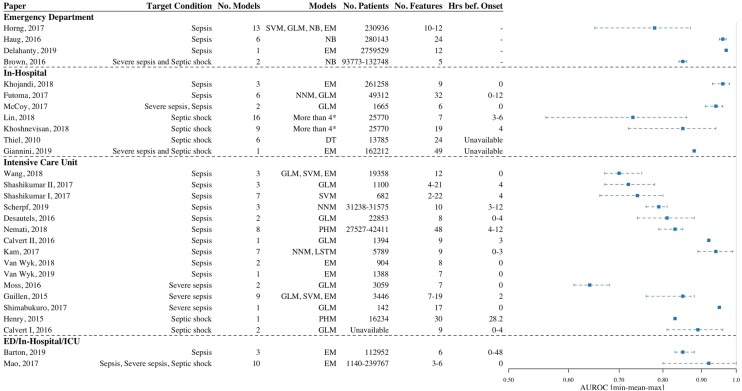
- From 28 eligible papers, 130 models were extracted; most studies were in the ICU (n = 15; 54%), followed by hospital wards (n = 7; 25%), ED (n = 4; 14%), and all settings (n = 2; 7%). Reported AUROCs for sepsis ranged from 0.68–0.99 in the ICU, 0.96–0.98 in-hospital, and 0.87–0.97 in the ED; septic shock predictions ranged from 0.86–0.94 in-hospital and 0.83–0.96 in the ICU.
- All studies reported retrospective diagnostic test accuracy; models were prospectively validated in 2 papers (7%) and clinically implemented in 3 papers (11%), with mixed results.
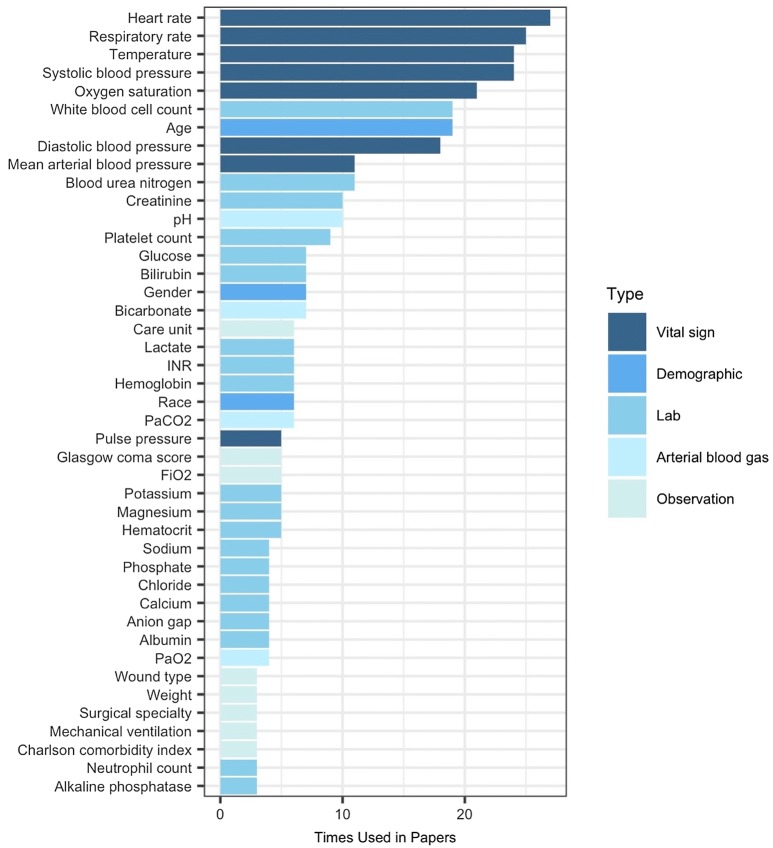
- In the meta-analysis of 111 models, temperature (multivariate coefficient 0.812, p = 0.000), lab values (0.842, p = 0.003), and model type (p = 0.020) contributed most to model performance. Univariate positive contributors included heart rate, respiratory rate, temperature, lab values, arterial blood gas values, and neural networks; negative contributors included the Seymour et al. Sepsis-3 definition, SOFA in the target condition definition, and models other than ensemble methods or neural networks.
- Risk of bias was unclear in 9/28 papers (32%) and high in all others; all papers had unclear risk of bias for the reference standard, and GRADE quality of evidence was low for each hospital setting.
Methods
- Systematic review and meta-analysis conducted per PRISMA-DTA, registered on PROSPERO (CRD42019118716). Searches were run in PubMed, Embase.com, and Scopus up to September 13, 2019, for adult patients in any hospital setting, targeting right-aligned supervised machine learning models predicting sepsis, severe sepsis, or septic shock.
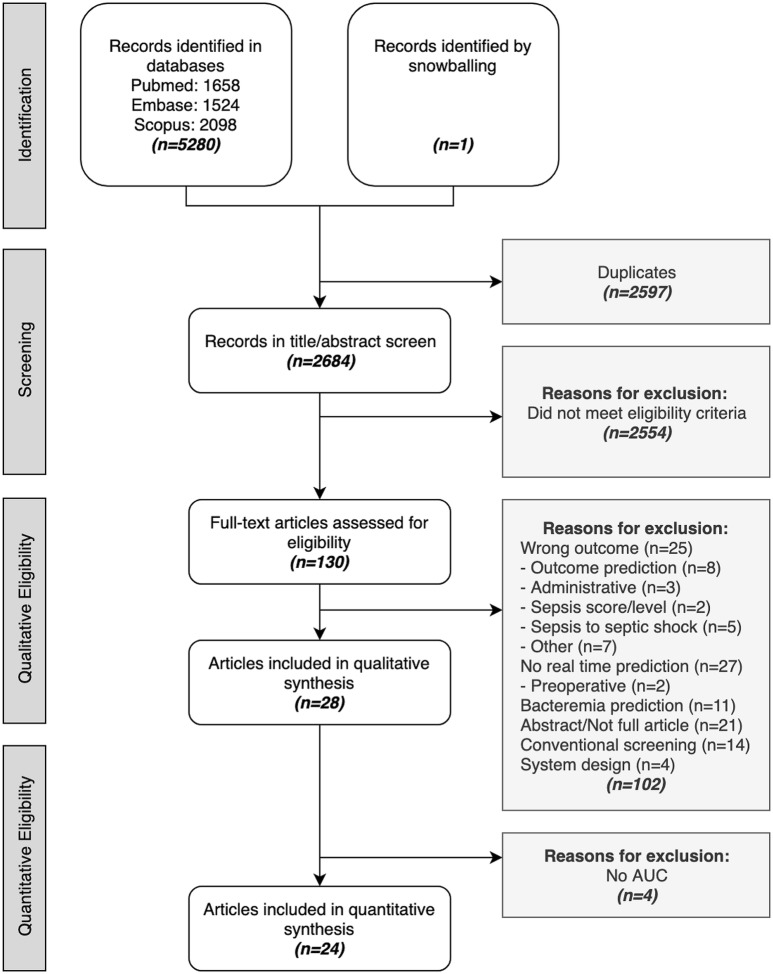
- After screening 2,684 papers, 130 full texts were read and 28 papers met inclusion criteria; 130 models were retrieved. Quality of evidence used GRADE, and risk of bias used a tailored QUADAS-2 checklist combined with an adapted Joanna Briggs Institute checklist.
- Meta-analysis used AUROC as the main metric, logit-transformed; a linear random effect model with a paper-specific random effect accounted for multiple models per paper. After grouping features and removing low-variance or collinear covariates, 39 covariates were analyzed, with backward AIC selection for the multivariate model; analyses were carried out in R.
Limitations
- Paper-stated: AUROC was chosen pragmatically and may underperform with imbalanced datasets; no contingency tables were feasible because necessary data were infrequently reported; few papers reported confidence intervals or standard deviations; heterogeneity in sepsis definitions, settings, and models prevented computing an overall pooled point estimate; there is no gold standard for diagnosing sepsis; high risk of bias and low GRADE evidence.
- Paper-stated: all models were developed in the United States, many used the MIMIC database, and no models were developed or validated in middle- or low-income countries; code was not released by any study, and only one paper reported adhering to a reporting standard.
- Evident from the text: only 3 interventional/implementation studies and 2 prospective validation studies were identified, so clinical impact on patient-relevant outcomes remains uncertain; the review is dominated by retrospective diagnostic accuracy studies.
Model-written summary. Check it against the paper before relying on it.
Integrity signals
Registry
Cites
Statistics
Figures
Verification
Claims the paper makes
18 Valid · 6 Not valid · 7 Not checked · 73 Own results and interpretations
The cited sources support only part of this claim — read each source’s verdict below.
In the paper
“Early clinical recognition of sepsis can be challenging.”
- Also stated in: § Introduction · plain
“early recognition can be difficult due to disease complexity in clinical context [9, 10] and heterogeneity of the septic population [11].”
§ Machine learning for the prediction of sepsis: a systematic review and meta-analysis of diagnostic test accuracy > Abstract > Purpose
What the sources say
- Supportedcites [9] Vincent J-L The clinical challenge of sepsis identification and monitoring PLoS Med 2016 13 e1002022 10.1371/journal.pmed.1002022 27187803 PMC4871479 source
The Introduction—The Clinical Problem states that early diagnosis of sepsis remains a challenge for bedside clinicians. The “Diagnosis” of Infection and Sepsis section also explains that diagnosis is not always straightforward, particularly in critically ill patients with comorbidities and other disease processes. (LLM, conf=0.94)
- Could not verifycites [10] Talisa VB Yende S Seymour CW Angus DC Arguing for adaptive clinical trials in sepsis Front Immunol 2018 9 1502 10.3389/fimmu.2018.01502 30002660 PMC6031704 sourceExperimental — accuracy not yet measured
The Introduction and “Sepsis Is Extremely Heterogeneous” section describe patient heterogeneity as a challenge for developing treatments and conducting trials, not for early clinical recognition. Searches for early recognition and diagnosis found no passage addressing whether clinicians have difficulty recognizing sepsis early. (LLM, conf=0.75)
- Could not verifycites [11] de Grooth H-J Postema J Loer SA Unexplained mortality differences between septic shock trials: a systematic analysis of population characteristics and control-group mortality rates Intensive Care Med 2018 44 311 322 10.1007/s00134-018-5134-8 29546535 PMC5861172 sourceExperimental — accuracy not yet measured
The Conclusion describes septic shock as heterogeneous, and the Discussion addresses differences in trial definitions and populations. Neither section addresses whether early clinical recognition of sepsis is challenging; searches for early recognition and diagnostic difficulty found no passage that does. (LLM, conf=0.72)
plainstates a cause- Asserted: passes — The authors put it forward as true.
- Checkable: passes — It can be checked against evidence.
- Load-bearing: passes — The paper’s conclusions depend on it.
- Based: passes — The paper gives a reason why it holds.
- Also stated in: § Introduction · plain
Every source the paper cites for this claim was checked and supports it.
In the paper
“One clinical validation study in the ED showed the machine learning model outperformed manual scoring by nurses and the SIRS criteria when identifying severe sepsis and septic shock [28], the other study made no comparison [29].”
§ Machine learning for the prediction of sepsis: a systematic review and meta-analysis of diagnostic test accuracy > Results > Study characteristics
What the sources say
- Supportedcites [28] Brown SM Jones J Kuttler KG Prospective evaluation of an automated method to identify patients with severe sepsis or septic shock in the emergency department BMC Emerg Med 2016 16 1 7 10.1186/s12873-016-0095-0 27549755 PMC4994262 source
The Overall model performance section (page unavailable) directly compares the ED model with the triage-nurse identification process and a SIRS-derived rule. The model had higher AUC and sensitivity than both for identifying severe sepsis or septic shock, although its false-positive rate was also higher. The paper describes a nurse identification process rather than a formal manual score. (LLM, conf=0.90)
plainstates a cause- Asserted: passes — The authors put it forward as true.
- Checkable: passes — It can be checked against evidence.
- Load-bearing: unclear — It is unclear whether the paper’s conclusions depend on it.
- Based: passes — The paper gives a reason why it holds.
- Supported
The cited sources support only part of this claim — read each source’s verdict below.
In the paper
“very few papers reported they accept data inquiries [32, 35, 47]”
§ Machine learning for the prediction of sepsis: a systematic review and meta-analysis of diagnostic test accuracy > Discussion > Future directions and academic contribution
What the sources say
- Could not verifycites [32] Shimabukuro DW Barton CW Feldman MD Effect of a machine learning-based severe sepsis prediction algorithm on patient survival and hospital length of stay: a randomised clinical trial BMJ Open Respir Res 2017 4 e000234 10.1136/bmjresp-2017-000234 29435343 PMC5687546 sourceExperimental — accuracy not yet measured
The Methods section describes collecting patient data, but the passages from our copy do not say whether the authors accept inquiries or requests for those data. Searches for data availability, data sharing, and requests to the authors found no such statement. This paper also cannot establish how many papers in the citing document’s set reported accepting inquiries. (LLM, conf=0.70)
- Could not verifycites [35] Horng S Sontag DA Halpern Y Creating an automated trigger for sepsis clinical decision support at emergency department triage using machine learning PLoS One 2017 12 e0174708 10.1371/journal.pone.0174708 28384212 PMC5383046 sourceExperimental — accuracy not yet measured
The Data collection and processing section describes the patient data used in the study, but does not say whether the authors accept inquiries or requests for those data. Searches for data inquiries, availability statements, and access requests found no passage addressing that point; the paper also does not assess how many other papers accept inquiries. (LLM, conf=0.72)
- Supportedcites [47] Brown SM Jones J Kuttler KG Prospective evaluation of an automated method to identify patients with severe sepsis or septic shock in the emergency department BMC Emerg Med 2016 16 31 10.1186/s12873-016-0095-0 27549755 PMC4994262 source
The Data availability section says requests for deidentified data will be processed for qualified researchers with appropriate ethics approval and data-use agreements. This supports citing the paper as an example that accepts data inquiries; the statement that very few papers do so is the citing authors’ assessment of the group. (LLM, conf=0.91)
plain- Asserted: passes — The authors put it forward as true.
- Checkable: passes — It can be checked against evidence.
- Load-bearing: unclear — It is unclear whether the paper’s conclusions depend on it.
- Based: passes — The paper gives a reason why it holds.
- Could not verify
The cited sources support only part of this claim — read each source’s verdict below.
In the paper
“Interventional studies using traditional SIRS and SOFA alarm systems have not shown significant changes in clinical outcomes [48–50].”
§ Machine learning for the prediction of sepsis: a systematic review and meta-analysis of diagnostic test accuracy > Discussion > Clinical model performance
What the sources say
- Could not verifycites [48] Nguyen SQ Mwakalindile E Booth JS Automated electronic medical record sepsis detection in the emergency department PeerJ 2014 2 e343 10.7717/peerj.343 24765577 PMC3994640 sourceExperimental — accuracy not yet measured
The Methods (Selection of subjects) say the SIRS-based alerts were evaluated after the fact and were not communicated to clinicians. The Limitations state that the study assessed detection accuracy, not clinical implementation. Our copy does not report an interventional study of SIRS or SOFA alarms or whether such alarms changed clinical outcomes. (LLM, conf=0.79)
- Not checked — no full text of the sourcecites [49] Nelson JL Smith BL Jared JD Younger JG Prospective trial of real-time electronic surveillance to expedite early care of severe sepsis Ann Emerg Med 2011 57 500 504 10.1016/j.annemergmed.2010.12.008 21227543 source
- Partly supportedcites [50] Hooper MH Weavind L Wheeler AP Randomized trial of automated, electronic monitoring to facilitate early detection of sepsis in the intensive care unit Crit Care Med 2012 40 2096 2101 10.1097/CCM.0b013e318250a887 22584763 PMC4451061 sourceExperimental — accuracy not yet measured
The Abstract (Conclusions) and Results report that this modified-SIRS alert trial did not significantly change measured clinical outcomes, including ICU length of stay and mortality. The cited study tested modified SIRS alerts in one ICU; it does not support the sentence’s reference to SOFA alarm systems. (LLM, conf=0.86)
plain- Asserted: passes — The authors put it forward as true.
- Checkable: passes — It can be checked against evidence.
- Load-bearing: passes — The paper’s conclusions depend on it.
- Based: passes — The paper gives a reason why it holds.
- Could not verify
Every source the paper cites for this claim was checked and supports it.
In the paper
“Many studies use ICD coding, which may be an unreliable instrument to identify septic patients [44, 45].”
§ Machine learning for the prediction of sepsis: a systematic review and meta-analysis of diagnostic test accuracy > Discussion > Heterogeneity and pooled performance
What the sources say
- Supportedcites [44] Fleischmann-Struzek C Thomas-Rüddel DO Schettler A Comparing the validity of different ICD coding abstraction strategies for sepsis case identification in German claims data PLoS One 2018 13 e0198847 10.1371/journal.pone.0198847 30059504 PMC6066203 source
The Introduction says sepsis estimates in the US and several European countries are commonly drawn from studies using ICD codes to identify cases. The Results (Validation of ICD code abstraction strategies) show why that identification may be unreliable: some strategies underestimated cases by up to 3.5-fold, while implicit coding produced substantial false positives. (LLM, conf=0.94)
- Supportedcites [45] Bouza C Lopez-Cuadrado T Amate-Blanco JM Use of explicit ICD9-CM codes to identify adult severe sepsis: impacts on epidemiological estimates Crit Care 2016 20 313 10.1186/s13054-016-1497-9 27716355 PMC5047045 source
The Background says population-based severe-sepsis studies commonly use ICD-9-CM codes, but that coding strategies can bias case identification and some combination algorithms have poor specificity. This supports the hedged concern about using ICD coding to identify septic patients, though the paper specifically examines adult severe sepsis. (LLM, conf=0.88)
hedgedstates a possible cause- Asserted: passes — The authors put it forward as true.
- Checkable: passes — It can be checked against evidence.
- Load-bearing: passes — The paper’s conclusions depend on it.
- Based: passes — The paper gives a reason why it holds.
- Supported
45 more claims · 1 with their cited sources checked
Create a free account to see all 104 claims and to verify the 3 references still open.
- Probably not a substantial claim. 31
- It may state two separate claims as one. 31
Claims other papers make about this one
Each is checked against this paper’s own text: does it say what the citing paper says it does?
The source backs part of the claim, not all of it — or backs it for a different population, condition or comparison.
In the citing paper
“For instance, AI models for sepsis prediction can alert clinicians to septic events hours before clinical signs emerge, enabling timely interventions [5].”
From Expectations of Intensive Care Physicians Regarding an AI-Based Decision Support System for Weaning From Continuous Renal Replacement Therapy: Predevelopment Survey Study (2025) · cites this paper as [5]
Experimental — accuracy not yet measuredThe source backs part of the claim, not all of it — or backs it for a different population, condition or comparison.
In the citing paper
“Two prominent examples relevant to critical care are models using readily available EHR data that can accurately predict clinical deterioration and sepsis hours before they occur [28–33]; these models exemplify real-time CDSS that alert clinicians and prompt evaluation, testing, and interventions [33].”
From Use of artificial intelligence in critical care: opportunities and obstacles (2024) · cites this paper as [32]
Experimental — accuracy not yet measuredThe cited source says what the claim attributes to it.
In the citing paper
“Among studies that reported the performance of sepsis prediction model in the ED, AUROCs ranged from 0.87 to 0.97.17”
From Development and validation of a screening tool for sepsis without laboratory results in the emergency department: a machine learning study (2025) · cites this paper as [17]
The cited source says what the claim attributes to it.
In the citing paper
“Despite the rise in competing models and products for early sepsis detection [5], few machine learning models have been implemented as part of clinical care [6-8].”
From Integrating a Machine Learning System Into Clinical Workflows: Qualitative Study (2020) · cites this paper as [5]
In the citing paper
“A recent systematic review demonstrated that ML models can accurately predict onset of sepsis in ICU patients [17].”
From Moving from bytes to bedside: a systematic review on the use of artificial intelligence in the intensive care unit (2021) · cites this paper as [17]
Self-check
Percentages, sums and reported differences re-computed from the paper’s own numbers.
Each contradiction between two passages listed here was confirmed by an independent check.
Rated minor: it would not touch a result — a value no result rests on, a p-value that stays on the same side of the significance level, or a conflict that is clerical, resolved elsewhere in the paper, or outside its own findings.
In the paper
§ Machine learning for the prediction of sepsis: a systematic review and meta-analysis of diagnostic test accuracy > Discussion > Clinical model performance
“Only one study clinically validated their model and showed that these models outperformed nurse triaging and SIRS criteria in the emergency room [47].”
§ Machine learning for the prediction of sepsis: a systematic review and meta-analysis of diagnostic test accuracy > Results > Study characteristics
“Prospective studies included two clinical validation studies (ED and in-hospital) and three interventional studies (in-hospital and ICU).”
Rated minor: it would not touch a result — a value no result rests on, a p-value that stays on the same side of the significance level, or a conflict that is clerical, resolved elsewhere in the paper, or outside its own findings.
In the paper
§ Machine learning for the prediction of sepsis: a systematic review and meta-analysis of diagnostic test accuracy > Results > Study characteristics
“| Prospective design | 1 | 0.25 | 2 | 0.29 | 1 | 0.07 |”
§ Machine learning for the prediction of sepsis: a systematic review and meta-analysis of diagnostic test accuracy > Results > Study characteristics
“The interventional studies included two pre-post implementation studies (in-hospital) [30, 31] and one ICU randomized controlled trial [32].”
Rated minor: it would not touch a result — a value no result rests on, a p-value that stays on the same side of the significance level, or a conflict that is clerical, resolved elsewhere in the paper, or outside its own findings.
In the paper
“| Data granularity | | | | | | | | 1-hourly values | – | – | 6 | 0.14 | 30 | 0.58 | | > 1/hourly values | – | – | 0 | 0.00 | 18 | 0.35 | | Not described | – | – | 31 | 0.72 | 4 | 0.08 |”
§ Machine learning for the prediction of sepsis: a systematic review and meta-analysis of diagnostic test accuracy > Results > Study characteristics
Reported 43 · recomputed 37
Citations
Cites
R: A Language and Environment for Statistical Computing
R Core Team (2025) · doi:10.32614/r.manuals · Cited by 352,181
The third international consensus definitions for sepsis and septic shock (Sepsis-3).
Singer, M., Deutschman, C. S., Seymour, C. W., Shankar-Hari, M., Annane, D., Bauer, M., Bellomo, R., Bernard, G. R., Chiche, J.-D., Coopersmith, C. M., et al. (2016) · JAMA · doi:10.1001/jama.2016.0287 · Cited by 28,250
QUADAS-2: a revised tool for the quality assessment of diagnostic accuracy studies
Whiting, P. F., Rutjes, A. W. S., Westwood, M. E., Mallett, S., Deeks, J. J., Reitsma, J. B., Leeflang, M. M. G., Sterne, J. A. C., Bossuyt, P. M. M., & the QUADAS-2 Group* (2011) · Annals of Internal Medicine · doi:10.7326/0003-4819-155-8-201110180-00009 · Cited by 14,199
Proceedings of the 24th international conference on Machine learning
(2007) · doi:10.1145/1273496 · Cited by 11,630
He, H., & Garcia, E. A. (2009) · IEEE Transactions on Knowledge and Data Engineering · doi:10.1109/tkde.2008.239 · Cited by 10,359
Surviving Sepsis Campaign: International guidelines for management of sepsis and septic shock: 2016.
Rhodes, A., Evans, L. E., Alhazzani, W., Levy, M. M., Antonelli, M., Ferrer, R., Kumar, A., Sevransky, J. E., Sprung, C. L., Nunnally, M. E., et al. (2017) · Intensive Care Medicine · doi:10.1007/s00134-017-4683-6 · Cited by 6,621
Kumar, A., Roberts, D., Wood, K. E., Light, B., Parrillo, J. E., Sharma, S., Suppes, R., Feinstein, D., Zanotti, S., Taiberg, L., et al. (2006) · Critical Care Medicine · doi:10.1097/01.ccm.0000217961.75225.e9 · Cited by 6,109
Seymour, C. W., Liu, V. X., Iwashyna, T. J., Brunkhorst, F. M., Rea, T. D., Scherag, A., Rubenfeld, G., Kahn, J. M., Shankar-Hari, M., Singer, M., et al. (2016) · JAMA · doi:10.1001/jama.2016.0288 · Cited by 3,939
Fleischmann, C., Scherag, A., Adhikari, N. K. J., Hartog, C. S., Tsaganos, T., Schlattmann, P., Angus, D. C., & Reinhart, K. (2016) · American Journal of Respiratory and Critical Care Medicine · doi:10.1164/rccm.201504-0781oc · Cited by 3,548
McInnes, M. D. F., Moher, D., Thombs, B. D., McGrath, T. A., Bossuyt, P. M., and the PRISMA-DTA Group, Clifford, T., Cohen, J. F., Deeks, J. J., Gatsonis, C., et al. (2018) · JAMA · doi:10.1001/jama.2017.19163 · Cited by 3,210
Research works printed but not linked: 3
- Brown SM Jones J Kuttler KG Prospective evaluation of an automated method to identify patients with severe sepsis or septic shock in the emergency department BMC Emerg Med 2016 16 31 10.1186/s12873-016-0095-0 27549755 PMC4994262 · DOI · Paper page
- Giannini HM Ginestra JC Chivers C A machine learning algorithm to predict severe sepsis and septic shock: development, implementation, and impact on clinical practice Crit Care Med 2019 10.1097/CCM.0000000000003891 31389839 PMC8635476 · DOI · Paper page
- Mao Q Jay M Hoffman JL Multicentre validation of a sepsis prediction algorithm using only vital sign data in the emergency department, general ward and ICU BMJ Open 2018 8 e017833 10.1136/bmjopen-2017-017833 29374661 PMC5829820 · DOI · Paper page
Cited by
Items 201–300 of 752
A scoping review on pediatric sepsis prediction technologies in healthcare
Tennant, R., Graham, J., Kern, J., Mercer, K., Ansermino, J. M., & Burns, C. M. (2024) · npj Digital Medicine · doi:10.1038/s41746-024-01361-9 · Cited by 23
“%] of 27), including Goldstein et al. 47 , Rhodes et al. 48 , Singer et al. 22 , and Weiss et al. 14 , as well as criteria from Eisenberg et al. 49 , Scott et al. 50 , and Sepanski et al. 51 , with modi fi cations (Table 2) 52,53 .”
The Japanese Clinical Practice Guidelines for Management of Sepsis and Septic Shock 2024
Shime, N., Nakada, T., Yatabe, T., Yamakawa, K., Aoki, Y., Inoue, S., Iba, T., Ogura, H., Kawai, Y., Kawaguchi, A., et al. (2025) · Acute Medicine & Surgery · doi:10.1002/ams2.70037 · Cited by 27
How artificial intelligence revolutionizes the world of multiple myeloma
Romero, M. L., Orgueira, A. M., & Saldarriaga, M. M. (2024) · Frontiers in Hematology · doi:10.3389/frhem.2024.1331109 · Cited by 22
Research Progress on Sepsis Diagnosis and Monitoring Based on Omics Technologies: A Review
Jin, X., Shen, H., Zhou, P., Yang, J., Yang, S., Ni, H., Yu, Y., & Zhang, Z. (2025) · Diagnostics · doi:10.3390/diagnostics15222887 · Cited by 21
“These methods effectively analyze complex clinical and multi-omics data, identifying key features and patterns related to disease progression [79,80].”
Artificial Intelligence: A Shifting Paradigm in Cardio-Cerebrovascular Medicine
Abedi, V., Razavi, S., Khan, A., Avula, V., Tompe, A. P., Poursoroush, A., Sadr, A. V., Li, J., & Zand, R. (2021) · Journal of Clinical Medicine · doi:10.3390/jcm10235710 · Cited by 17
Wang, K., Shi, Q., Sun, C., Liu, W., Yau, V., Xu, C., Liu, H., Sun, C., Yin, C., Wei, X., et al. (2023) · Frontiers in Neuroscience · doi:10.3389/fnins.2023.1130831 · Cited by 20
“Similarly, when machine learning (ML) is used with single- or multi-omics medical data, more details can be mined from the data and better diagnostic and prognostic tools can be developed compared to traditional statistical regression models (Bersanelli et al., 2016; Erickson et al., 2017; Dias-Audibert et al., 2020;…”
MethodKe, Y., Yang, R., & Liu, N. (2024) · Journal of Medical Internet Research · doi:10.2196/48330 · Cited by 22
“Additionally, interstudy heterogeneity poses a challenge in comparing results obtained from different ML models applied to the same data sets [52].”
Liu, G., Li, N., Chen, L., Yang, Y., & Zhang, Y. (2021) · Frontiers in Medicine · doi:10.3389/fmed.2021.634197 · Cited by 16
Schaack, D., Weigand, M. A., & Uhle, F. (2021) · PLoS ONE · doi:10.1371/journal.pone.0251800 · Cited by 16
“Besides, the increased availability of clinical routine and intensive care unit (ICU) data lead most previous studies [5] to focus their research on data-intensive resources like vital signs or electronic health record (EHR) data.”
BackgroundMantovani, E. A., Formenti, P., Pastori, S., Roccaforte, V., Gotti, M., Panella, R., Galimberti, A., Costagliola, R., Vetrone, F., Umbrello, M., et al. (2023) · Diagnostics · doi:10.3390/diagnostics13101781 · Cited by 19
“Recently, an increasing number of studies have shown how NEUT-RI was significantly higher in patients with sepsis as compared with patients who were non-septic [32,33].”
ResultZhou, K., Qin, L., Chen, Y., Gao, H., Ling, Y., Qin, Q., Mou, C., Qin, T., & Lu, J. (2025) · BMC Infectious Diseases · doi:10.1186/s12879-025-10974-8 · Cited by 18
“Additionally, ML models often produce multidimensional and complex outputs that can be challenging for clinicians without a data analysis background for intuitive interpretation [14].”
AI in critical care: A roadmap to the future
Workum, J. D., Meyfroidt, G., Bakker, J., Jung, C., Tobin, J. M., Gommers, D., Elbers, P. W. G., van der Hoeven, J. G., & Van Genderen, M. E. (2026) · Journal of Critical Care · doi:10.1016/j.jcrc.2025.155262 · Cited by 17
Self-citationImproving Sepsis Prediction Performance Using Conditional Recurrent Adversarial Networks
Apalak, M., & Kıasaleh, K. (2022) · IEEE Access · doi:10.1109/access.2022.3230324 · Cited by 19
“In [15] and [16], authors have been systematically reviewed and evaluated studies employing machine learning for the prediction of sepsis in the ICU.”
BackgroundWu, Y., Wang, X., Gu, C., Zhu, J., & Fang, Y. (2023) · Age and Ageing · doi:10.1093/ageing/afad182 · Cited by 18
“Machine learning (ML) has shown outstanding performance in disease risk prediction [18, 19].”
Delpino, F. M., Costa, Â. K., do Nascimento, M. C., Moura, H. S. D., dos Santos, H. G., Wichmann, R. M., Filho, A. D. P. C., Arcêncio, R. A., & Nunes, B. P. (2024) · Nutrition Metabolism and Cardiovascular Diseases · doi:10.1016/j.numecd.2024.05.020 · Cited by 23
Yağın, F. H., Aygun, U., Algarni, A., Çolak, C., Al-Hashem, F. H., & Ardigò, L. P. (2024) · Journal of Clinical Medicine · doi:10.3390/jcm13175002 · Cited by 15
“Recent models, both in use and under development, based on patient vital signs and routine clinical and laboratory data, have shown promising results for the early detection and prediction of sepsis [72,73].”
MethodBlythe, R. D., Naicker, S., White, N. M., Donovan, R., Scott, I. A., Mckelliget, A., & McPhail, S. (2024) · BMC Medical Informatics and Decision Making · doi:10.1186/s12911-024-02647-4 · Cited by 19
Prasetyo, A., Purnama, I. K. E., Yuniarno, E. M., et al. (2025) · IEEE Access · doi:10.1109/access.2025.3534803 · Cited by 14
Deep Learning for Identification of Acute Illness and Facial Cues of Illness
Forte, C., Voinea, A., Chichirau, M., Yeshmagambetova, G., Albrecht, L. M., Erfurt, C., Freundt, L. A., Carmo, L. O. E., Henning, R. H., van der Horst, I. C. C., et al. (2021) · Frontiers in Medicine · doi:10.3389/fmed.2021.661309 · Cited by 18
Shi, R., Leng, X., Wu, Y., Zhu, S., Cai, X., & Lu, X. (2023) · Scientific Reports · doi:10.1038/s41598-023-46021-2 · Cited by 19
Liu, X., Huang, Z., Guo, Y., Li, Y., Zhu, J., Wen, J., Gao, Y., & Liu, J. (2025) · Journal of Medical Internet Research · doi:10.2196/71413 · Cited by 13
“However, other factors, such as calcium, which are not typically part of these criteria, also show strong univariate predictors and are included in various ML models for sepsis prediction [14].”
Artificial Intelligence model to predict resistances in Gram-negative bloodstream infections
Bonazzetti, C., Rocchi, E., Toschi, A., Derus, N. R., Sala, C., Pascale, R., Rinaldi, M., Campoli, C., Pasquini, Z. A. I., Tazza, B., et al. (2025) · npj Digital Medicine · doi:10.1038/s41746-025-01696-x · Cited by 15
“Several studies aimed to predict multidrug resistance in patients with GN-BSI in order to guide clinicians in the correct empirical therapy choice, even if they usually addressed a single resistance type or mechanism 6 – 8 .”
Țocu, G., Lisă, E. L., Tutunaru, D., Mihailov, R., Șerban, C., Luțenco, V., Dimofte, F., Guliciuc, M., Chiscop, I., Ștefănescu, B. I., et al. (2025) · Diagnostics · doi:10.3390/diagnostics15172169 · Cited by 23
“…scores used for risk assessment, such as SOFA (Sequential Organ Failure Assessment), qSOFA (quick Sequential Organ Failure Assessment), SIRS (Systemic Inflammatory Response Syndrome), APACHE II (Acute Physiology and Chronic Health Evaluation), and NEWS (National Early Warning Score) [54,55].”
A meta‐analysis of diabetes risk prediction models applied to prediabetes screening
Liu, Y., Yu, S., Feng, W., Mo, H., Hua, Y., Zhang, M., Zhu, Z., Zhang, X., Wu, Z., Zheng, L., et al. (2024) · Diabetes Obesity and Metabolism · doi:10.1111/dom.15457 · Cited by 15
“…(WHO) and the American Diabetes Association (ADA) 11 have developed diagnostic criteria to provide screening guidance for prediabetes, but, given the complexity and challenges involved in early recognition of prediabetes, 12 relying solely on blood glucose values leads to inaccurate results.”
BackgroundYang, M., Peng, Z. Q., van Pul, C., Andriessen, P., Dong, K., Silvertand, D., Li, J., Liu, C., & Long, X. (2024) · Computer Methods and Programs in Biomedicine · doi:10.1016/j.cmpb.2024.108335 · Cited by 18
“…four different expected alarm windows (the time period in which alarms should be triggered preceding the CRASH) for evaluation: [CRASH-12, CRASH], [CRASH-24, CRASH], [CRASH-36, CRASH], and [CRASH-48, CRASH], for clinicians may have different requirements for the time needed to predict sepsis [40].”
MethodCampagner, A., Agnello, L., Carobene, A., Padoan, A., Ben, F. D., Locatelli, M., Plebani, M., Ognibene, A., Lorubbio, M., Vecchi, E. D., et al. (2025) · Journal of Medical Internet Research · doi:10.2196/55492 · Cited by 26
“Indeed, in recent years, ML methods have been increasingly adopted in health care settings [20], including sepsis screening and prediction [21-24].”
Yang, A. C., Ma, W.-M., Chiang, D.-H., Liao, Y.-Z., Lai, H.-Y., Lin, S.-C., Liu, M.-C., Wen, K. X., Lin, T.-H., Tsai, W.-X., et al. (2025) · Intelligence-Based Medicine · doi:10.1016/j.ibmed.2025.100242 · Cited by 23
Alcaraz, J. M. L., Bouma, H., & Strodthoff, N. (2025) · Computers in Biology and Medicine · doi:10.1016/j.compbiomed.2025.110196 · Cited by 13
Huang, B. L., Wang, R., Masino, A. J., & Obstfeld, A. E. (2021) · International Journal of Laboratory Hematology · doi:10.1111/ijlh.13549 · Cited by 20
“18 The results of the models in our study trained on hematology CPD data ranged from an AUC-ROC of 0.61-0.73 which while strong, are not quite as robust as some of those noted above.”
ResultInfluentialValidation of a Machine Learning Model for Early Shock Detection
Pinevich, Y., Amos‐Binks, A., Burris, C., Rule, G. T., Bogojevic, M., Flint, I., Pickering, B. W., Nemeth, C., & Herasevich, V. (2021) · Military Medicine · doi:10.1093/milmed/usab220 · Cited by 13
OnAI-Comp: An Online AI Experts Competing Framework for Early Sepsis Detection
Zhou, A., Beyah, R., & Kamaleswaran, R. (2021) · IEEE Transactions on Computational Biology and Bioinformatics · doi:10.1109/tcbb.2021.3122405 · Cited by 16
“Machine learning methods have long been used to improve predictions for sepsis [8], [9].”
MethodLiu, W. T., Liu, X. Q., Jiang, T., Wang, M. Y., Huang, Y., Huang, Y., Jin, F. Y., Zhao, Q., Wu, Q. Y., Liu, B. C., et al. (2022) · Frontiers in Cardiovascular Medicine · doi:10.3389/fcvm.2022.911987 · Cited by 17
Sun, H., Kang, M., Zhang, H., Jiang, J., & Wang, Q. (2025) · Nursing in Critical Care · doi:10.1111/nicc.70206 · Cited by 17
“While prior research has examined the predictive value of ML in specific clinical contexts—including COVID-19 [16, 17], traumatic brain injury [18], sepsis [19, 20] and emergency care [21]—a systematic evaluation of ML models for all-cause mortality in the general ICU population remains lacking.”
The value of plasma presepsin as a diagnostic and prognostic biomarker for sepsis in Southern China
Wu, J., Zhan, X., Wang, S., Liao, X., Li, L., & Luo, J. (2023) · Inflammation Research · doi:10.1007/s00011-023-01787-z · Cited by 14
“Traditional methods including quick Sequential Organ Failure Assessment (qSOFA) have limitations to accurately predict the onset of sepsis [27].”
MethodSystematic review and network meta-analysis of machine learning algorithms in sepsis prediction
Gao, Y., Wang, C., Shen, J., Wang, Z., Liu, Y., & Chai, Y. (2023) · Expert Systems with Applications · doi:10.1016/j.eswa.2023.122982 · Cited by 16
Diagnostic Performance of Machine Learning-based Models in Neonatal Sepsis: A Systematic Review
Kainth, D., Prakash, S., & Sankar, M. J. (2024) · The Pediatric Infectious Disease Journal · doi:10.1097/inf.0000000000004409 · Cited by 12
Prithula, J., Islam, K. R., Kumar, J., Tan, T. L., Reaz, M. B. I., Rahman, T., Zughaier, S. M., Khan, M. S., Murugappan, M., & Chowdhury, M. E. H. (2024) · Computers in Biology and Medicine · doi:10.1016/j.compbiomed.2024.109284 · Cited by 17
Identification of Risk Factors and Prediction of Sepsis in Pregnancy Using Machine Learning Methods
Kopanitsa, G., Metsker, O., Paskoshev, D. D., & Greschischeva, S. (2021) · Procedia Computer Science · doi:10.1016/j.procs.2021.10.040 · Cited by 15
Barie, P. S., Kao, L. S., Moody, M., & Sawyer, R. G. (2023) · Surgical Infections · doi:10.1089/sur.2022.363 · Cited by 16
“41 Accurate diagnostics are important to conduct studies of alternative therapies of infection, but so too is the opportunity to determine whether uAA, uACC, or umAD might be treatable without antimicrobial therapy.”
Futoma, J., Simons, M. G., Doshi‐Velez, F., & Kamaleswaran, R. (2021) · Critical Care Explorations · doi:10.1097/cce.0000000000000453 · Cited by 15
Future Perspectives in the Diagnosis and Treatment of Sepsis and Septic Shock
Karampela, Ι., & Fragkou, P. C. (2022) · Medicina · doi:10.3390/medicina58070844 · Cited by 14
“Additionally, a machine learning approach using large data sets may improve the performance of currently used screening models for the early and accurate identification of patients with sepsis [18].”
MethodCorrecting for partial verification bias in diagnostic accuracy studies: A tutorial using R
Arifin, W. N., & Yusof, U. K. (2022) · Statistics in Medicine · doi:10.1002/sim.9311 · Cited by 13
“These will reduce to Equations (13) and (14) without covariate.”
Ren, Z., Chen, B., Hong, C., Yuan, J., Deng, J., Chen, Y., Ye, J., & Li, Y. (2023) · Frontiers in Oncology · doi:10.3389/fonc.2023.1289050 · Cited by 13
Fall prediction in a quiet standing balance test via machine learning: Is it possible?
Pennone, J., Aguero, N. F., Martini, D. M., Mochizuki, L., & Suaide, A. A. P. (2024) · PLoS ONE · doi:10.1371/journal.pone.0296355 · Cited by 15
SOFA in sepsis: with or without GCS
Wang, L., Ma, X., Zhou, G., Gao, S., Pan, W., Chen, J., Su, L., He, H., Long, Y., Yin, Z. Q., et al. (2024) · European journal of medical research · doi:10.1186/s40001-024-01849-w · Cited by 17
“With the rise of big data analysis and artificial intelligence technology, the method of machine learning has been widely studied and applied in sepsis patients with massive monitoring data [21–23].”
MethodHernandez, B., Ming, D. K. Y., Rawson, T. M., Bolton, W., Wilson, R. C., Vasikasin, V., Daniels, J., Rodríguez-Manzano, J., Davies, F., Georgiou, P., et al. (2024) · Artificial Intelligence in Medicine · doi:10.1016/j.artmed.2024.103008 · Cited by 23
Thiele, D., Rodseth, R. N., Friedland, R., Berger, F., Mathew, C., Maslo, C., Moll, V., Leithner, C., Storm, C., Krannich, A., et al. (2025) · Journal of Clinical Medicine · doi:10.3390/jcm14020350 · Cited by 21
“Informed Consent Statement: Informed consent was waived by the ethics committee due to the study analyzing retrospective data.”
Sharda, M., Sharma, S., Raikar, S. P., Verhagen, N. B., Wagle, J., Mathur, R., Gowda, S., Kommu, S., Prasad, R., Bhandari, S., et al. (2025) · Cureus · doi:10.7759/cureus.84761 · Cited by 19
“Various ML models were developed for the prediction of various healthcare parameters, including disease diagnosis, prognosis, and outcomes [20-26].”
Yang, D., Kim, J., Yoo, J., Cha, W. C., & Paik, H. (2022) · JMIR Medical Informatics · doi:10.2196/37689 · Cited by 16
Peng, Z. Q., Varisco, G., Liang, R.-H., Kommers, D. R., Cottaar, W., Andriessen, P., van Pul, C., & Long, X. (2022) · Smart Health · doi:10.1016/j.smhl.2022.100335 · Cited by 20
Niemantsverdriet, M. S. A., de Hond, T. A. P., Hoefer, I. E., van Solinge, W. W., Bellomo, D., Oosterheert, J. J., Kaasjager, K. A. H., & Haitjema, S. (2022) · BMC Emergency Medicine · doi:10.1186/s12873-022-00764-9 · Cited by 11
“As some ICU databases are publicly available, many studies already used ML to develop diagnostic models for sepsis in the ICU [10, 11].”
MethodMulti-series Time-aware Sequence Partitioning for Disease Progression Modeling
Yang, X., Zhang, Y., & Chi, M. (2021) · International Joint Conference on Artificial Intelligence · doi:10.24963/ijcai.2021/493 · Cited by 21
Athukorala, V. S., & Ilmini, W. M. K. S. (2026) · BMC Medical Informatics and Decision Making · doi:10.1186/s12911-026-03344-0 · Cited by 10
“Fleuren et al. [30] demonstrated that while predictive models often perform well, transparency regarding the contributing patient factors is critical for clinical trust.”
Park, J., Na, H. J., & Kim, H. (2024) · IEEE Access · doi:10.1109/access.2024.3519219 · Cited by 10
Sepsis Prediction for the General Ward Setting
Yu, S., Gupta, A., Betthauser, K. D., Lyons, P. G., Lai, A. M., Kollef, M. H., Payne, P., & Michelson, A. P. (2022) · Frontiers in Digital Health · doi:10.3389/fdgth.2022.848599 · Cited by 15
Comprehensive diagnostic model for osteosarcoma classification using CT imaging features
Wang, Y., Wang, Z., Zhang, B., & Yang, F. (2024) · Journal of bone oncology · doi:10.1016/j.jbo.2024.100622 · Cited by 12
“This is especially valuable in clinical settings where accurate and reliable diagnostic test models are essential for early disease detection and treatment decisions [31].”
BackgroundUpadhyaya, D. P., Tarabichi, Y., Prantzalos, K., Ayub, S., Kaelber, D. C., & Sahoo, S. S. (2023) · Computers in Biology and Medicine · doi:10.1016/j.compbiomed.2024.109251 · Cited by 15
Artificial Intelligence and Postpartum Hemorrhage
Mathewlynn, S., Soltaninejad, M., & Collins, S. (2024) · Maternal-Fetal Medicine · doi:10.1097/fm9.0000000000000257 · Cited by 11
Tahmasebzadeh, A., Sadeghi, M., Naseripour, M., Mirshahi, R., & Ghaderi, R. (2025) · Photodiagnosis and Photodynamic Therapy · doi:10.1016/j.pdpdt.2025.104528 · Cited by 14
A Standardized Step-by-Step Approach for the Diagnosis and Treatment of Sepsis
Gao, Y., Wang, H., Zhang, Z. J., Pan, C. K., Wang, Y., Zhu, Y. C., Xie, F. J., Han, Q. Y., Zheng, J., Dai, Q. Q., et al. (2022) · Journal of Intensive Care Medicine · doi:10.1177/08850666221085181 · Cited by 13
“Among them, machine learning model has been proved to be accurate for real-time prediction of sepsis onset ahead of time.(5,6) It was clinically confirmed that the incidence of sepsis among patients who were hospitalized at ICUs was higher than that in other wards due to more severity of illness and organ dysfunction…”
BackgroundTang, M., Mu, F., Cui, C., Zhao, J., Lin, R., Sun, K., Guan, Y., & Wang, J. (2023) · Frontiers in Medicine · doi:10.3389/fmed.2022.1043589 · Cited by 11
“As the reference cluster words were sepsis, machine learning, procalcitonin, resuscitation, and precision medicine, it indicated that in recent years, the treatment of sepsis has moved toward precision treatment (46).”
BackgroundShi, X., & Li, J. (2023) · Research in Transportation Business & Management · doi:10.1016/j.rtbm.2023.101031 · Cited by 15
Guris, R. J. D., & Lane-Fall, M. B. (2022) · Current Opinion in Anaesthesiology · doi:10.1097/aco.0000000000001193 · Cited by 10
Cui, R., Hua, W., Qu, K., Yang, H., Tong, Y., Li, Q., Wang, H., Ma, Y., Liu, S., Lin, T. Y., et al. (2021) · Frontiers in Medicine · doi:10.3389/fmed.2021.775047 · Cited by 10
“From the clinical dynamic treatment perspective, real-time predictive models would better fit the clinical applications (16).”
BackgroundSafiya Parvin, A., & Saleena, B. (2023) · ICT Express · doi:10.1016/j.icte.2023.07.007 · Cited by 12
Gao, Y., Wang, C., Dong, W., Li, B., Wang, J., Li, J., Tian, Y., Liu, J., & Wang, Y. (2023) · Clinical Epidemiology · doi:10.2147/clep.s404580 · Cited by 12
“27,28 Luo et al 29 were the first to apply machine learning approaches to predict the Many of the most predictive features (eg, creatinine, eGFR and surgical time) identified in previous work were confirmed in the models presented here.”
BackgroundChinese experts’ consensus on the application of intensive care big data
Su, L., Liu, S., Long, Y., Chen, C., Chen, K., Chen, M., Chen, Y., Cheng, Y., Cui, Y., Ding, Q., et al. (2024) · Frontiers in Medicine · doi:10.3389/fmed.2023.1174429 · Cited by 11
Fuse, Y., Ishii, K., Kanamori, F., Oyama, S., Imaizumi, T., Araki, Y., Yokoyama, K., Takasu, S., Seki, Y., & Saito, R. (2024) · Journal of neurosurgery · doi:10.3171/2024.1.jns232173 · Cited by 11
Li, X., Wang, R., Wu, L., & Chen, D. (2024) · BMC Medical Informatics and Decision Making · doi:10.1186/s12911-024-02623-y · Cited by 11
Zhang, X., Zhang, P., Ren, Q., Li, J., Lin, H., Huang, Y., & Wang, W. T. (2024) · BioFactors · doi:10.1002/biof.2128 · Cited by 11
“65 Furthermore, the high LMS group exhibited substantial activation of the EMT pathway.”
Lessons for local oversight of AI in medicine from the regulation of clinical laboratory testing
Herman, D. S., Reece, J. T., & Weissman, G. (2024) · npj Digital Medicine · doi:10.1038/s41746-024-01369-1 · Cited by 9
Artificial intelligence in airway management: A systematic review and meta-analysis
Abosamak, M. F., Zaki, H. A., Shaban, E. E., Shaban, A., Shaban, A., Hodhod, H., & Ponappan, B. (2025) · Anaesthesia Critical Care & Pain Medicine · doi:10.1016/j.accpm.2025.101589 · Cited by 17
A Hybrid CNN-GRU Model for Real-Time Prediction of Sepsis Clinical Trajectories in the ICU
Hou, G. Y., Hanson, A. C., Schulte, P. J., Lal, A., Dong, Y., Gajic, O., & Zhong, X. (2025) · IEEE Robotics and Automation Letters · doi:10.1109/lra.2025.3595040 · Cited by 9
“Systematic reviews [7], [8] high-light the use of supervised models such as generalized linear models (GLMs), support vector machines (SVMs), random forests (RF), and ensemble methods, alongside deep learning architectureslike GatedRecurrentUnits(GRU),longshort-term memory (LSTM) networks, and…”
Tseng, R. M. W. W., Ong, L. C., Goh, J. H. L., Chen, Y., Chen, T., Lum, E., & Tham, Y.-C. (2026) · npj Digital Medicine · doi:10.1038/s41746-026-02358-2 · Cited by 9
“speci fi c medical specialties 4,10 – 13 .”
A Quantitative Study of Decision Thresholds for Initiation of Antibiotics in Suspected Sepsis
Taylor, S. P., Weissman, G. E., Kowalkowski, M. A., Admon, A. J., SKEWES, S. A., Xia, Y., & Chou, S.-H. (2022) · Medical Decision Making · doi:10.1177/0272989x221121279 · Cited by 10
The artificial intelligence evidence-based medicine pyramid
Bellini, V., Coccolini, F., Forfori, F., & Bignami, E. G. (2023) · World Journal of Critical Care Medicine · doi:10.5492/wjccm.v12.i2.89 · Cited by 9
Intelligent Diagnosis of Engine Failure in Air Vehicles Using the ALFA Dataset
Ferrão, I. G., da Silva, L. M., da Silva, S. A., Dezan, C., Espès, D., & Branco, K. R. L. J. C. (2023) · International Conference on Unmanned Aircraft Systems (ICUAS) · doi:10.1109/icuas57906.2023.10156213 · Cited by 11
“For this study, the precision of the performance indicator Accuracy (ACC) was used [40].”
MethodSilva, M. D., Chadwick, W., & Naidoo, N. (2023) · Scandinavian Journal of Trauma Resuscitation and Emergency Medicine · doi:10.1186/s13049-023-01111-y · Cited by 12
“The in-hospital evidence generally does not favour one specific identification tool [33, 34].”
BackgroundHellali, R., Dagdia, Z. C., Ktaish, A., Zeitouni, K., & Annane, D. (2024) · Computer Methods and Programs in Biomedicine · doi:10.1016/j.cmpb.2024.108017 · Cited by 11
“Authors in [15, 16, 17, 18, 19] conducted a systematic review of machine learning models for sepsis prediction.”
BackgroundUnsupervised learning approach for predicting sepsis onset in ICU patients
Ramos, G., Gjini, E., Coelho, L., & Silveira, M. (2021) · Annual International Conference of the IEEE Engineering in Medicine and Biology Society (EMBC) · doi:10.1109/embc46164.2021.9629559 · Cited by 10
“Researchers have been achieving promising results in predicting septic shock onset ahead of time [4].”
BackgroundChen, Y., Xi, M., Johnson, A. E. W., TOMLINSON, G. A., Campigotto, A. J., Chen, L., & Sung, L. (2022) · International Journal of Medical Informatics · doi:10.1016/j.ijmedinf.2022.104706 · Cited by 11
Yet Another ICU Benchmark: A Flexible Multi-Center Framework for Clinical ML
van de Water, R., Schmidt, H., Elbers, P., Thoral, P., Arnrich, B., & Rockenschaub, P. (2023) · arXiv · doi:10.48550/arxiv.2306.05109 · Cited by 9
Self-citationTemporal convolution attention model for sepsis clinical assistant diagnosis prediction
Li, Y., & Wang, Y. (2023) · Mathematical Biosciences & Engineering · doi:10.3934/mbe.2023595 · Cited by 12
Yuan, Y., Meng, Y., Li, Y., Zhou, J., Wang, J., Jiang, Y., & Ma, L. (2024) · Shock · doi:10.1097/shk.0000000000002335 · Cited by 8
Ohland, P. L. S., Jack, T., Mast, M., Melk, A., Bleich, A., & Talbot, S. R. (2024) · Scientific Reports · doi:10.1038/s41598-024-57712-9 · Cited by 8
“Timely detection and treatment are essential but challenging due to time constraints, limited resources, and complex diagnoses 23–26 .”
BackgroundWu, Y., Cheng, Y., Xiao, Y., Shang, H., & Ou, R. (2025) · Journal of Medical Internet Research · doi:10.2196/59649 · Cited by 9
“We chose combined criteria that had been used in a previous report [14].”
Clinical validation and optimization of machine learning models for early prediction of sepsis
Liu, X., Li, M., Liu, X., Luo, Y., Yang, D. C., Ouyang, H., He, J., Xia, J., & Xiao, F. (2025) · Frontiers in Medicine · doi:10.3389/fmed.2025.1521660 · Cited by 11
Sepsis in silico: definition, development and application of an electronic phenotype for sepsis
Al-Sultani, Z., Inglis, T. J. J., McFadden, B. R., Thomas, E., & Reynolds, M. A. (2025) · Journal of Medical Microbiology · doi:10.1099/jmm.0.001986 · Cited by 10
“Currently, ML algorithms are primarily trained on data labelled using claims-based methods like ICD coding [43].”
Impact of analytical bias on machine learning models for sepsis prediction using laboratory data
Yeşil, M. R., Talli, I., Pelloso, M., Cosma, C., Pangrazzi, E., Plebani, M., Üstündağ, Y., & Padoan, A. (2025) · Clinical Chemistry and Laboratory Medicine (CCLM) · doi:10.1515/cclm-2025-0491 · Cited by 8
Yang, L., Shang, W., Chen, D., Qian, H., Zhang, S., Pan, X., Huang, S., Liu, J., & Chen, D. (2025) · Scientific Reports · doi:10.1038/s41598-025-06463-2 · Cited by 9
“Meta-analysis has proved that machine-learning models show better performance compared with traditional scoring 36 .”
Zhu, L., Chen, Z., Zhang, H., Chen, H., Liu, L., Yu, W., Wu, K., Chen, Y., Tao, X., Yu, Z., et al. (2025) · Nature Communications · doi:10.1038/s41467-025-65365-z · Cited by 15
“…time, and host variability, while routine clinical tests (e.g., activated partial thromboplastin time (APTT), platelet count (PLT), international normalized ratio (INR), and white blood cell count (WBC)) offer fast, affordable, and practical alternatives for assessing sepsis heterogeneity 11,12 .”
Lien, F., Wang, H., Lu, J., Wen, Y.-H., & Chiueh, T. (2020) · Medical Care · doi:10.1097/mlr.0000000000001421 · Cited by 8
“22,26 Moreover, this present study adds to the understanding of how and to what extent the ML approach can improve the performance of predicting patients ’ 2-day mortality of thrombocytopenic patients.”
BackgroundGupta, J., Majumder, A. K., Sengupta, D., Sultana, M., & Bhattacharya, S. (2024) · Journal of Intensive Medicine · doi:10.1016/j.jointm.2024.04.006 · Cited by 10
“Fleuren et al. [ 22 ] pointed out that clinical implementation of individual and ensemble models is currently scarce, even though they tend to outperform biomarkers and traditional scoring criteria such as systemic inflammatory response syndrome (SIRS)/SOFA.”
BackgroundInfluentialJustifying Our Credences in the Trustworthiness of AI Systems: A Reliabilistic Approach
Ferrario, A. (2024) · Science and Engineering Ethics · doi:10.1007/s11948-024-00522-z · Cited by 24
“For instance, X could be a physician who may believe that a medical AI that predicts the onset of sepsis in intensive care patients (Fleuren et al., 2020) is ‘trust-worthy’ and acts on their belief accordingly.”
Considerations for the implementation of machine learning into acute care settings
Bishara, A. M., Maze, E. H., & Maze, M. (2022) · British Medical Bulletin · doi:10.1093/bmb/ldac001 · Cited by 9
Peng, X., Chen, C., Chen, J., Wang, Y., Yang, D., Ma, C., Liu, Z., Zhou, S., & Hei, Z. (2022) · Frontiers in Public Health · doi:10.3389/fpubh.2022.1006955 · Cited by 8
Novel Biomarker Panel for the Diagnosis and Prognosis Assessment of Sepsis Based on Machine Learning
Wu, J., Liang, J., An, S., Zhang, J., Xue, Y., Zeng, Y., Li, L., & Luo, J. (2022) · Biomarkers in Medicine · doi:10.2217/bmm-2022-0433 · Cited by 9
Jiang, M., Pan, C., Li, J., Xu, L., & Li, C.-L. (2023) · Renal Failure · doi:10.1080/0886022x.2022.2151468 · Cited by 7
“Machine learning (ML) has been applied in areas of critical care medicine such as outcome prediction, diagnosis assessment, and treat-ment decision-making [12 – 17].”
MethodSufriyana, H., Wu, Y., & Su, E. C. (2023) · Neural Networks · doi:10.1016/j.neunet.2023.02.020 · Cited by 12
Abu‐Khudir, R., Hafsa, N. E., & Badr, B. E. (2023) · Diagnostics · doi:10.3390/diagnostics13193091 · Cited by 10
Metadata
- Authors
- Fleuren, L. M., Klausch, T. L. T., Zwager, C. L., Schoonmade, L. J., Guo, T., Roggeveen, L. F., Swart, E. L., Girbes, A. R. J., Thoral, P., Ercole, A., Hoogendoorn, M., & Elbers, P. W. G.
- Affiliations
- Amsterdam Cardiovascular Sciences (NL)
- Vrije Universiteit Amsterdam (NL)
- University of Cambridge (GB)
- European Society of Intensive Care Medicine (BE)
- Corresponding author
- Fleuren, Lucas M.
- ORCID
- Venue
- Intensive Care Medicine
- Published
- 2020-01-21
- Volume
- 46
- Issue
- 3
- Pages
- 383-400
- ISSN
- 0342-4642 (ISSN-L)
- 1432-1238
- PMC
- PMC7067741
- OpenAlex
- W2992764683
- Semantic Scholar
- b47dffe8e582aff39c5ee2bd5b6f4628a53641b0
- Cited by
- 755
- References
- 68
- Citations by year
- 2026: 142 · 2025: 142 · 2024: 130 · 2023: 124 · 2022: 118 · 2021: 75 · 2020: 24
- FWCI
- 12.43
- Type
- journal article
- Language
- en
- Open access
- hybrid
- doi.org
- Licence
- cc-by-nc
- creativecommons.org/licenses/by-nc/4.0 (tdm)
- creativecommons.org/licenses/by-nc/4.0 (vor)
- Locations
- Intensive Care Medicine (publishedVersion, cc-by-nc)
- PubMed Central (publishedVersion, cc-by-nc)
- PubMed (publishedVersion)
- Pure Amsterdam UMC (publishedVersion, cc-by)
- Amsterdam UMC (VU Amsterdam) - Institutional Repository (publishedVersion, other-oa)
- VU Research Portal (publishedVersion, other-oa)
- Apollo (University of Cambridge) (submittedVersion)
- Apollo (University of Cambridge) (submittedVersion, cc-by-nc)
- Data Archiving and Networked Services (DANS) (submittedVersion, other-oa)
- Apollo
- Topics
- Health Sciences › Medicine › Critical Care and Intensive Care Medicine › Sepsis Diagnosis and Treatment
- Physical Sciences › Computer Science › Artificial Intelligence › Machine Learning in Healthcare
- Health Sciences › Health Professions › Health Information Management › Artificial Intelligence in Healthcare
- Keywords
- sepsis prediction, machine learning, diagnostic accuracy, septic shock, severe sepsis, area under the curve, intensive care unit, emergency department, sepsis definitions, clinical implementation
- MeSH terms
- Machine Learning, Diagnostic Tests, Routine, Humans, Retrospective Studies, Shock, Septic, Sepsis
About these checks
Registry, retraction, Cites and statistics results are computed, not judged, with one exception: a printed reference that no index lists is read once by a model before it counts as a citation error. Claims are extracted by a model and kept only when their quote appears verbatim in the text; each cited source is then checked, with a model’s help, for whether it says what the claim relies on. Those verdicts can be wrong — read the claim’s quote and the cited source before relying on one.
The claim verdicts this report counts are experimental: their accuracy is not yet measured.
A language model drew the claims from the paper on 2026-10-23, under version 3 of the claim definition (model deepseek-v4.1-flash, prompt extract-v3).
A second model labelled each claim on 2026-10-23 (model jev-1.13-20260917, definition revision gold-guideline-v0.2).
Cited sources are checked with a language model’s help (gpt-6-sol).
Statistics and arithmetic are recomputed, not judged.
Confidence bands are shown only for fields calibrated on our annotated test set. None is calibrated yet, so no band is shown.
What counts as a claim ›How we measure confidence ›How we check this ›
Are you an author, or do you see a problem with this page? Request a review
Data sources
Bibliographic data: Semantic Scholar, OpenAlex, Crossref.
Contains information from the Semantic Scholar Academic Graph Datasets, made available under the ODC Attribution License (ODC-BY 1.0).
Semantic Scholar’s data is described in: Kinney, R., et al. (2023). The Semantic Scholar Open Data Platform. arXiv:2301.10140.
