

Machine learning for the prediction of sepsis: a systematic review and meta-analysis of diagnostic test accuracy
Open accessThe DOI matches its Crossref record; 69 of the 69 references it cites were found in a registry or an index; 40 of the 55 sources its claims cite were checked for support.
Abstract
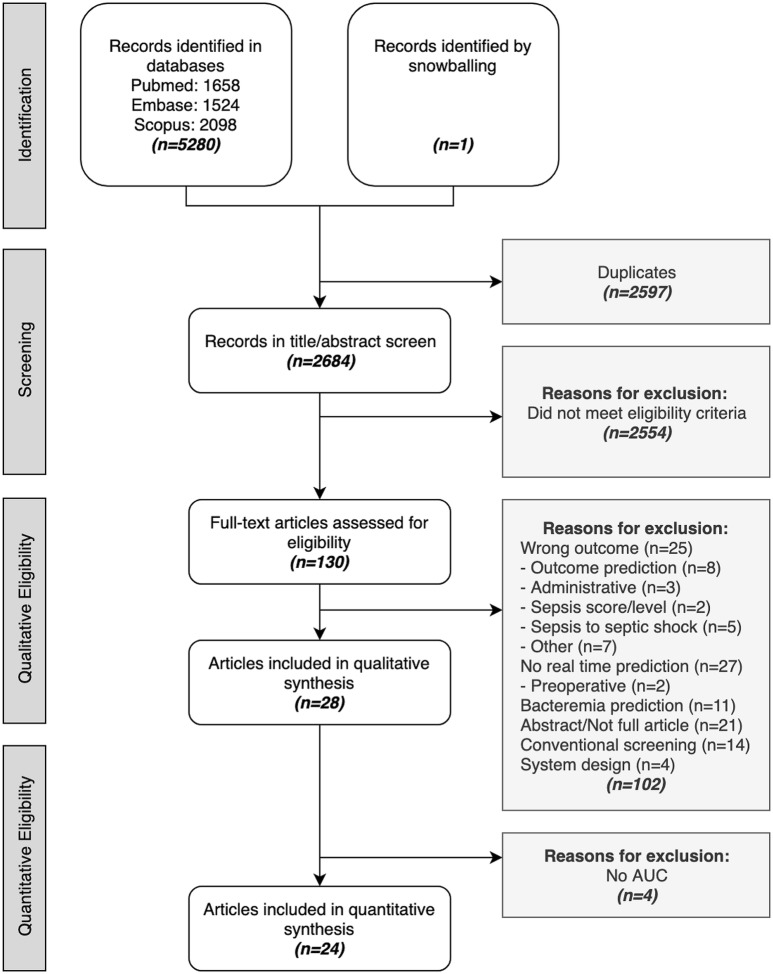
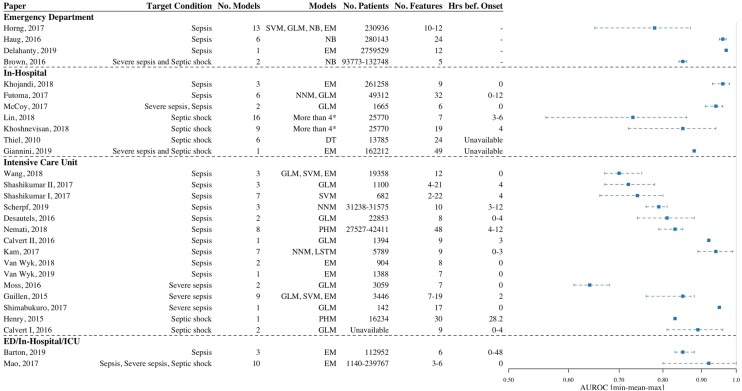
PURPOSE: Early clinical recognition of sepsis can be challenging. With the advancement of machine learning, promising real-time models to predict sepsis have emerged. We assessed their performance by carrying out a systematic review and meta-analysis. METHODS: A systematic search was performed in PubMed, Embase.com and Scopus. Studies targeting sepsis, severe sepsis or septic shock in any hospital setting were eligible for inclusion. The index test was any supervised machine learning model for real-time prediction of these conditions. Quality of evidence was assessed using the Grading of Recommendations Assessment, Development and Evaluation (GRADE) methodology, with a tailored Quality Assessment of Diagnostic Accuracy Studies (QUADAS-2) checklist to evaluate risk of bias. Models with a reported area under the curve of the receiver operating characteristic (AUROC) metric were meta-analyzed to identify strongest contributors to model performance. RESULTS: After screening, a total of 28 papers were eligible for synthesis, from which 130 models were extracted. The majority of papers were developed in the intensive care unit (ICU, n = 15; 54%), followed by hospital wards (n = 7; 25%), the emergency department (ED, n = 4; 14%) and all of these settings (n = 2; 7%). For the prediction of sepsis, diagnostic test accuracy assessed by the AUROC ranged from 0.68-0.99 in the ICU, to 0.96-0.98 in-hospital and 0.87 to 0.97 in the ED. Varying sepsis definitions limit pooling of the performance across studies. Only three papers clinically implemented models with mixed results. In the multivariate analysis, temperature, lab values, and model type contributed most to model performance. CONCLUSION: This systematic review and meta-analysis show that on retrospective data, individual machine learning models can accurately predict sepsis onset ahead of time. Although they present alternatives to traditional scoring systems, between-study heterogeneity limits the assessment of pooled results. Systematic reporting and clinical implementation studies are needed to bridge the gap between bytes and bedside.
Overview
CoChat Summary
TL;DR
This systematic review and meta-analysis of 28 papers and 130 machine learning models found that models retrospectively predict sepsis with AUROC ranges of 0.68–0.99 in the ICU, 0.96–0.98 in-hospital, and 0.87–0.97 in the ED. Between-study heterogeneity, varying sepsis definitions, and scarce prospective/clinical implementation studies limit pooled assessment and evidence on patient outcomes.
Key findings
- From 28 eligible papers, 130 models were extracted; most studies were in the ICU (n = 15; 54%), followed by hospital wards (n = 7; 25%), ED (n = 4; 14%), and all settings (n = 2; 7%). Reported AUROCs for sepsis ranged from 0.68–0.99 in the ICU, 0.96–0.98 in-hospital, and 0.87–0.97 in the ED; septic shock predictions ranged from 0.86–0.94 in-hospital and 0.83–0.96 in the ICU.
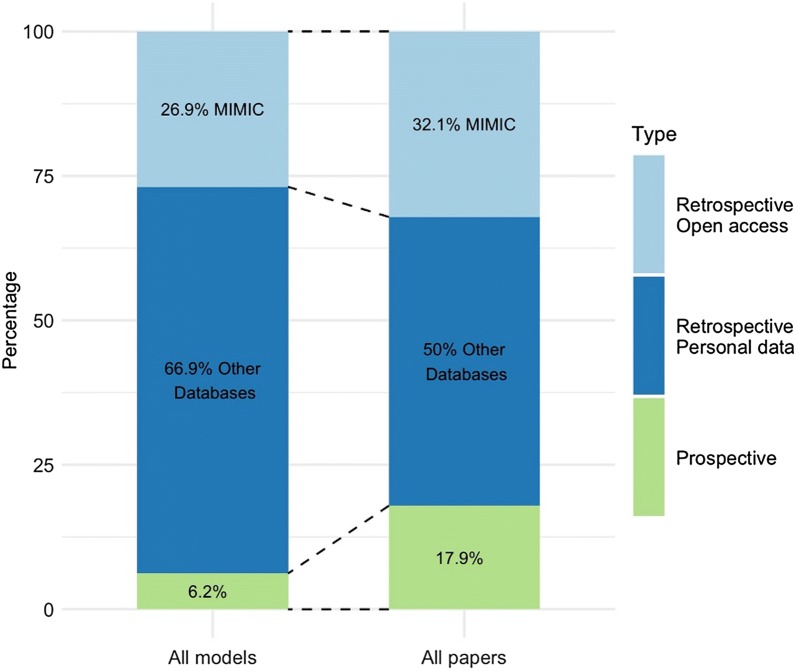
- All studies reported retrospective diagnostic test accuracy; models were prospectively validated in 2 papers (7%) and clinically implemented in 3 papers (11%), with mixed results.
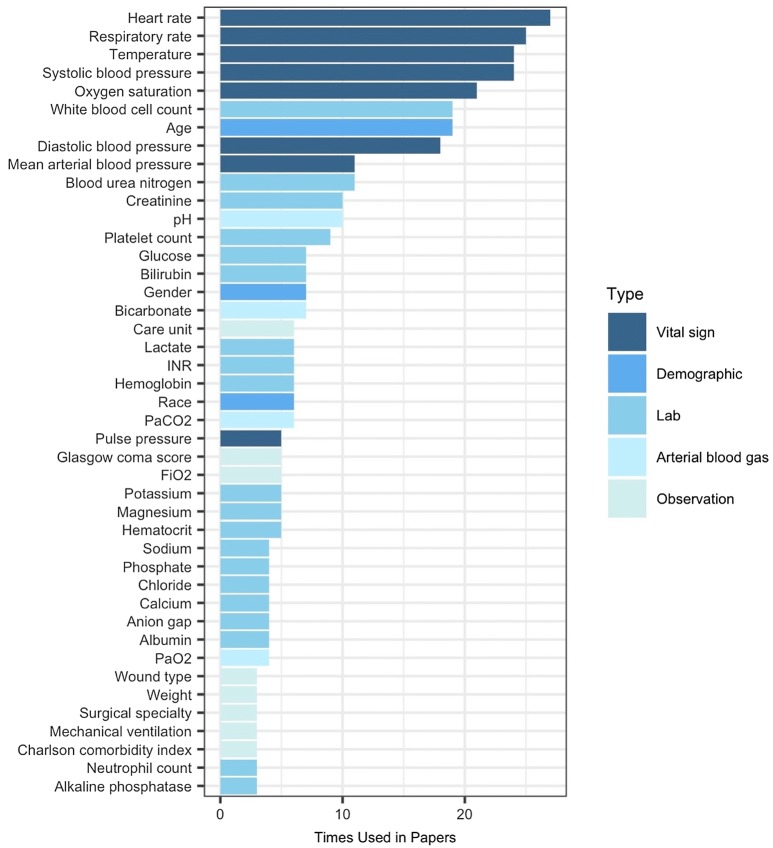
- In the meta-analysis of 111 models, temperature (multivariate coefficient 0.812, p = 0.000), lab values (0.842, p = 0.003), and model type (p = 0.020) contributed most to model performance. Univariate positive contributors included heart rate, respiratory rate, temperature, lab values, arterial blood gas values, and neural networks; negative contributors included the Seymour et al. Sepsis-3 definition, SOFA in the target condition definition, and models other than ensemble methods or neural networks.
- Risk of bias was unclear in 9/28 papers (32%) and high in all others; all papers had unclear risk of bias for the reference standard, and GRADE quality of evidence was low for each hospital setting.
Methods
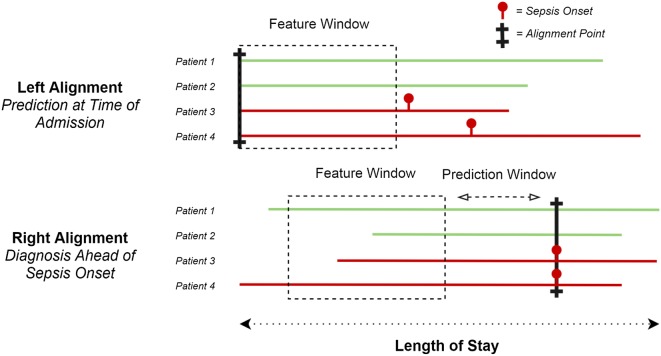
- Systematic review and meta-analysis conducted per PRISMA-DTA, registered on PROSPERO (CRD42019118716). Searches were run in PubMed, Embase.com, and Scopus up to September 13, 2019, for adult patients in any hospital setting, targeting right-aligned supervised machine learning models predicting sepsis, severe sepsis, or septic shock.
- After screening 2,684 papers, 130 full texts were read and 28 papers met inclusion criteria; 130 models were retrieved. Quality of evidence used GRADE, and risk of bias used a tailored QUADAS-2 checklist combined with an adapted Joanna Briggs Institute checklist.
- Meta-analysis used AUROC as the main metric, logit-transformed; a linear random effect model with a paper-specific random effect accounted for multiple models per paper. After grouping features and removing low-variance or collinear covariates, 39 covariates were analyzed, with backward AIC selection for the multivariate model; analyses were carried out in R.
Limitations
- Paper-stated: AUROC was chosen pragmatically and may underperform with imbalanced datasets; no contingency tables were feasible because necessary data were infrequently reported; few papers reported confidence intervals or standard deviations; heterogeneity in sepsis definitions, settings, and models prevented computing an overall pooled point estimate; there is no gold standard for diagnosing sepsis; high risk of bias and low GRADE evidence.
- Paper-stated: all models were developed in the United States, many used the MIMIC database, and no models were developed or validated in middle- or low-income countries; code was not released by any study, and only one paper reported adhering to a reporting standard.
- Evident from the text: only 3 interventional/implementation studies and 2 prospective validation studies were identified, so clinical impact on patient-relevant outcomes remains uncertain; the review is dominated by retrospective diagnostic accuracy studies.
Model-written summary. Check it against the paper before relying on it.
Integrity signals
Registry
Cites
Statistics
Figures
Verification
Claims the paper makes
18 Valid · 6 Not valid · 7 Not checked · 73 Own results and interpretations
The cited sources support only part of this claim — read each source’s verdict below.
In the paper
“Early clinical recognition of sepsis can be challenging.”
- Also stated in: § Introduction · plain
“early recognition can be difficult due to disease complexity in clinical context [9, 10] and heterogeneity of the septic population [11].”
§ Machine learning for the prediction of sepsis: a systematic review and meta-analysis of diagnostic test accuracy > Abstract > Purpose
What the sources say
- Supportedcites [9] Vincent J-L The clinical challenge of sepsis identification and monitoring PLoS Med 2016 13 e1002022 10.1371/journal.pmed.1002022 27187803 PMC4871479 source
The Introduction—The Clinical Problem states that early diagnosis of sepsis remains a challenge for bedside clinicians. The “Diagnosis” of Infection and Sepsis section also explains that diagnosis is not always straightforward, particularly in critically ill patients with comorbidities and other disease processes. (LLM, conf=0.94)
- Could not verifycites [10] Talisa VB Yende S Seymour CW Angus DC Arguing for adaptive clinical trials in sepsis Front Immunol 2018 9 1502 10.3389/fimmu.2018.01502 30002660 PMC6031704 sourceExperimental — accuracy not yet measured
The Introduction and “Sepsis Is Extremely Heterogeneous” section describe patient heterogeneity as a challenge for developing treatments and conducting trials, not for early clinical recognition. Searches for early recognition and diagnosis found no passage addressing whether clinicians have difficulty recognizing sepsis early. (LLM, conf=0.75)
- Could not verifycites [11] de Grooth H-J Postema J Loer SA Unexplained mortality differences between septic shock trials: a systematic analysis of population characteristics and control-group mortality rates Intensive Care Med 2018 44 311 322 10.1007/s00134-018-5134-8 29546535 PMC5861172 sourceExperimental — accuracy not yet measured
The Conclusion describes septic shock as heterogeneous, and the Discussion addresses differences in trial definitions and populations. Neither section addresses whether early clinical recognition of sepsis is challenging; searches for early recognition and diagnostic difficulty found no passage that does. (LLM, conf=0.72)
plainstates a cause- Asserted: passes — The authors put it forward as true.
- Checkable: passes — It can be checked against evidence.
- Load-bearing: passes — The paper’s conclusions depend on it.
- Based: passes — The paper gives a reason why it holds.
- Also stated in: § Introduction · plain
Every source the paper cites for this claim was checked and supports it.
In the paper
“One clinical validation study in the ED showed the machine learning model outperformed manual scoring by nurses and the SIRS criteria when identifying severe sepsis and septic shock [28], the other study made no comparison [29].”
§ Machine learning for the prediction of sepsis: a systematic review and meta-analysis of diagnostic test accuracy > Results > Study characteristics
What the sources say
- Supportedcites [28] Brown SM Jones J Kuttler KG Prospective evaluation of an automated method to identify patients with severe sepsis or septic shock in the emergency department BMC Emerg Med 2016 16 1 7 10.1186/s12873-016-0095-0 27549755 PMC4994262 source
The Overall model performance section (page unavailable) directly compares the ED model with the triage-nurse identification process and a SIRS-derived rule. The model had higher AUC and sensitivity than both for identifying severe sepsis or septic shock, although its false-positive rate was also higher. The paper describes a nurse identification process rather than a formal manual score. (LLM, conf=0.90)
plainstates a cause- Asserted: passes — The authors put it forward as true.
- Checkable: passes — It can be checked against evidence.
- Load-bearing: unclear — It is unclear whether the paper’s conclusions depend on it.
- Based: passes — The paper gives a reason why it holds.
- Supported
The cited sources support only part of this claim — read each source’s verdict below.
In the paper
“very few papers reported they accept data inquiries [32, 35, 47]”
§ Machine learning for the prediction of sepsis: a systematic review and meta-analysis of diagnostic test accuracy > Discussion > Future directions and academic contribution
What the sources say
- Could not verifycites [32] Shimabukuro DW Barton CW Feldman MD Effect of a machine learning-based severe sepsis prediction algorithm on patient survival and hospital length of stay: a randomised clinical trial BMJ Open Respir Res 2017 4 e000234 10.1136/bmjresp-2017-000234 29435343 PMC5687546 sourceExperimental — accuracy not yet measured
The Methods section describes collecting patient data, but the passages from our copy do not say whether the authors accept inquiries or requests for those data. Searches for data availability, data sharing, and requests to the authors found no such statement. This paper also cannot establish how many papers in the citing document’s set reported accepting inquiries. (LLM, conf=0.70)
- Could not verifycites [35] Horng S Sontag DA Halpern Y Creating an automated trigger for sepsis clinical decision support at emergency department triage using machine learning PLoS One 2017 12 e0174708 10.1371/journal.pone.0174708 28384212 PMC5383046 sourceExperimental — accuracy not yet measured
The Data collection and processing section describes the patient data used in the study, but does not say whether the authors accept inquiries or requests for those data. Searches for data inquiries, availability statements, and access requests found no passage addressing that point; the paper also does not assess how many other papers accept inquiries. (LLM, conf=0.72)
- Supportedcites [47] Brown SM Jones J Kuttler KG Prospective evaluation of an automated method to identify patients with severe sepsis or septic shock in the emergency department BMC Emerg Med 2016 16 31 10.1186/s12873-016-0095-0 27549755 PMC4994262 source
The Data availability section says requests for deidentified data will be processed for qualified researchers with appropriate ethics approval and data-use agreements. This supports citing the paper as an example that accepts data inquiries; the statement that very few papers do so is the citing authors’ assessment of the group. (LLM, conf=0.91)
plain- Asserted: passes — The authors put it forward as true.
- Checkable: passes — It can be checked against evidence.
- Load-bearing: unclear — It is unclear whether the paper’s conclusions depend on it.
- Based: passes — The paper gives a reason why it holds.
- Could not verify
The cited sources support only part of this claim — read each source’s verdict below.
In the paper
“Interventional studies using traditional SIRS and SOFA alarm systems have not shown significant changes in clinical outcomes [48–50].”
§ Machine learning for the prediction of sepsis: a systematic review and meta-analysis of diagnostic test accuracy > Discussion > Clinical model performance
What the sources say
- Could not verifycites [48] Nguyen SQ Mwakalindile E Booth JS Automated electronic medical record sepsis detection in the emergency department PeerJ 2014 2 e343 10.7717/peerj.343 24765577 PMC3994640 sourceExperimental — accuracy not yet measured
The Methods (Selection of subjects) say the SIRS-based alerts were evaluated after the fact and were not communicated to clinicians. The Limitations state that the study assessed detection accuracy, not clinical implementation. Our copy does not report an interventional study of SIRS or SOFA alarms or whether such alarms changed clinical outcomes. (LLM, conf=0.79)
- Not checked — no full text of the sourcecites [49] Nelson JL Smith BL Jared JD Younger JG Prospective trial of real-time electronic surveillance to expedite early care of severe sepsis Ann Emerg Med 2011 57 500 504 10.1016/j.annemergmed.2010.12.008 21227543 source
- Partly supportedcites [50] Hooper MH Weavind L Wheeler AP Randomized trial of automated, electronic monitoring to facilitate early detection of sepsis in the intensive care unit Crit Care Med 2012 40 2096 2101 10.1097/CCM.0b013e318250a887 22584763 PMC4451061 sourceExperimental — accuracy not yet measured
The Abstract (Conclusions) and Results report that this modified-SIRS alert trial did not significantly change measured clinical outcomes, including ICU length of stay and mortality. The cited study tested modified SIRS alerts in one ICU; it does not support the sentence’s reference to SOFA alarm systems. (LLM, conf=0.86)
plain- Asserted: passes — The authors put it forward as true.
- Checkable: passes — It can be checked against evidence.
- Load-bearing: passes — The paper’s conclusions depend on it.
- Based: passes — The paper gives a reason why it holds.
- Could not verify
Every source the paper cites for this claim was checked and supports it.
In the paper
“Many studies use ICD coding, which may be an unreliable instrument to identify septic patients [44, 45].”
§ Machine learning for the prediction of sepsis: a systematic review and meta-analysis of diagnostic test accuracy > Discussion > Heterogeneity and pooled performance
What the sources say
- Supportedcites [44] Fleischmann-Struzek C Thomas-Rüddel DO Schettler A Comparing the validity of different ICD coding abstraction strategies for sepsis case identification in German claims data PLoS One 2018 13 e0198847 10.1371/journal.pone.0198847 30059504 PMC6066203 source
The Introduction says sepsis estimates in the US and several European countries are commonly drawn from studies using ICD codes to identify cases. The Results (Validation of ICD code abstraction strategies) show why that identification may be unreliable: some strategies underestimated cases by up to 3.5-fold, while implicit coding produced substantial false positives. (LLM, conf=0.94)
- Supportedcites [45] Bouza C Lopez-Cuadrado T Amate-Blanco JM Use of explicit ICD9-CM codes to identify adult severe sepsis: impacts on epidemiological estimates Crit Care 2016 20 313 10.1186/s13054-016-1497-9 27716355 PMC5047045 source
The Background says population-based severe-sepsis studies commonly use ICD-9-CM codes, but that coding strategies can bias case identification and some combination algorithms have poor specificity. This supports the hedged concern about using ICD coding to identify septic patients, though the paper specifically examines adult severe sepsis. (LLM, conf=0.88)
hedgedstates a possible cause- Asserted: passes — The authors put it forward as true.
- Checkable: passes — It can be checked against evidence.
- Load-bearing: passes — The paper’s conclusions depend on it.
- Based: passes — The paper gives a reason why it holds.
- Supported
45 more claims · 1 with their cited sources checked
Create a free account to see all 104 claims and to verify the 3 references still open.
- Probably not a substantial claim. 31
- It may state two separate claims as one. 31
Claims other papers make about this one
Each is checked against this paper’s own text: does it say what the citing paper says it does?
The source backs part of the claim, not all of it — or backs it for a different population, condition or comparison.
In the citing paper
“For instance, AI models for sepsis prediction can alert clinicians to septic events hours before clinical signs emerge, enabling timely interventions [5].”
From Expectations of Intensive Care Physicians Regarding an AI-Based Decision Support System for Weaning From Continuous Renal Replacement Therapy: Predevelopment Survey Study (2025) · cites this paper as [5]
Experimental — accuracy not yet measuredThe source backs part of the claim, not all of it — or backs it for a different population, condition or comparison.
In the citing paper
“Two prominent examples relevant to critical care are models using readily available EHR data that can accurately predict clinical deterioration and sepsis hours before they occur [28–33]; these models exemplify real-time CDSS that alert clinicians and prompt evaluation, testing, and interventions [33].”
From Use of artificial intelligence in critical care: opportunities and obstacles (2024) · cites this paper as [32]
Experimental — accuracy not yet measuredThe cited source says what the claim attributes to it.
In the citing paper
“Among studies that reported the performance of sepsis prediction model in the ED, AUROCs ranged from 0.87 to 0.97.17”
From Development and validation of a screening tool for sepsis without laboratory results in the emergency department: a machine learning study (2025) · cites this paper as [17]
The cited source says what the claim attributes to it.
In the citing paper
“Despite the rise in competing models and products for early sepsis detection [5], few machine learning models have been implemented as part of clinical care [6-8].”
From Integrating a Machine Learning System Into Clinical Workflows: Qualitative Study (2020) · cites this paper as [5]
In the citing paper
“A recent systematic review demonstrated that ML models can accurately predict onset of sepsis in ICU patients [17].”
From Moving from bytes to bedside: a systematic review on the use of artificial intelligence in the intensive care unit (2021) · cites this paper as [17]
Self-check
Percentages, sums and reported differences re-computed from the paper’s own numbers.
Each contradiction between two passages listed here was confirmed by an independent check.
Rated minor: it would not touch a result — a value no result rests on, a p-value that stays on the same side of the significance level, or a conflict that is clerical, resolved elsewhere in the paper, or outside its own findings.
In the paper
§ Machine learning for the prediction of sepsis: a systematic review and meta-analysis of diagnostic test accuracy > Discussion > Clinical model performance
“Only one study clinically validated their model and showed that these models outperformed nurse triaging and SIRS criteria in the emergency room [47].”
§ Machine learning for the prediction of sepsis: a systematic review and meta-analysis of diagnostic test accuracy > Results > Study characteristics
“Prospective studies included two clinical validation studies (ED and in-hospital) and three interventional studies (in-hospital and ICU).”
Rated minor: it would not touch a result — a value no result rests on, a p-value that stays on the same side of the significance level, or a conflict that is clerical, resolved elsewhere in the paper, or outside its own findings.
In the paper
§ Machine learning for the prediction of sepsis: a systematic review and meta-analysis of diagnostic test accuracy > Results > Study characteristics
“| Prospective design | 1 | 0.25 | 2 | 0.29 | 1 | 0.07 |”
§ Machine learning for the prediction of sepsis: a systematic review and meta-analysis of diagnostic test accuracy > Results > Study characteristics
“The interventional studies included two pre-post implementation studies (in-hospital) [30, 31] and one ICU randomized controlled trial [32].”
Rated minor: it would not touch a result — a value no result rests on, a p-value that stays on the same side of the significance level, or a conflict that is clerical, resolved elsewhere in the paper, or outside its own findings.
In the paper
“| Data granularity | | | | | | | | 1-hourly values | – | – | 6 | 0.14 | 30 | 0.58 | | > 1/hourly values | – | – | 0 | 0.00 | 18 | 0.35 | | Not described | – | – | 31 | 0.72 | 4 | 0.08 |”
§ Machine learning for the prediction of sepsis: a systematic review and meta-analysis of diagnostic test accuracy > Results > Study characteristics
Reported 43 · recomputed 37
Citations
Cites
R: A Language and Environment for Statistical Computing
R Core Team (2025) · doi:10.32614/r.manuals · Cited by 352,181
The third international consensus definitions for sepsis and septic shock (Sepsis-3).
Singer, M., Deutschman, C. S., Seymour, C. W., Shankar-Hari, M., Annane, D., Bauer, M., Bellomo, R., Bernard, G. R., Chiche, J.-D., Coopersmith, C. M., et al. (2016) · JAMA · doi:10.1001/jama.2016.0287 · Cited by 28,250
QUADAS-2: a revised tool for the quality assessment of diagnostic accuracy studies
Whiting, P. F., Rutjes, A. W. S., Westwood, M. E., Mallett, S., Deeks, J. J., Reitsma, J. B., Leeflang, M. M. G., Sterne, J. A. C., Bossuyt, P. M. M., & the QUADAS-2 Group* (2011) · Annals of Internal Medicine · doi:10.7326/0003-4819-155-8-201110180-00009 · Cited by 14,199
Proceedings of the 24th international conference on Machine learning
(2007) · doi:10.1145/1273496 · Cited by 11,630
He, H., & Garcia, E. A. (2009) · IEEE Transactions on Knowledge and Data Engineering · doi:10.1109/tkde.2008.239 · Cited by 10,359
Surviving Sepsis Campaign: International guidelines for management of sepsis and septic shock: 2016.
Rhodes, A., Evans, L. E., Alhazzani, W., Levy, M. M., Antonelli, M., Ferrer, R., Kumar, A., Sevransky, J. E., Sprung, C. L., Nunnally, M. E., et al. (2017) · Intensive Care Medicine · doi:10.1007/s00134-017-4683-6 · Cited by 6,621
Kumar, A., Roberts, D., Wood, K. E., Light, B., Parrillo, J. E., Sharma, S., Suppes, R., Feinstein, D., Zanotti, S., Taiberg, L., et al. (2006) · Critical Care Medicine · doi:10.1097/01.ccm.0000217961.75225.e9 · Cited by 6,109
Seymour, C. W., Liu, V. X., Iwashyna, T. J., Brunkhorst, F. M., Rea, T. D., Scherag, A., Rubenfeld, G., Kahn, J. M., Shankar-Hari, M., Singer, M., et al. (2016) · JAMA · doi:10.1001/jama.2016.0288 · Cited by 3,939
Fleischmann, C., Scherag, A., Adhikari, N. K. J., Hartog, C. S., Tsaganos, T., Schlattmann, P., Angus, D. C., & Reinhart, K. (2016) · American Journal of Respiratory and Critical Care Medicine · doi:10.1164/rccm.201504-0781oc · Cited by 3,548
McInnes, M. D. F., Moher, D., Thombs, B. D., McGrath, T. A., Bossuyt, P. M., and the PRISMA-DTA Group, Clifford, T., Cohen, J. F., Deeks, J. J., Gatsonis, C., et al. (2018) · JAMA · doi:10.1001/jama.2017.19163 · Cited by 3,210
Research works printed but not linked: 3
- Brown SM Jones J Kuttler KG Prospective evaluation of an automated method to identify patients with severe sepsis or septic shock in the emergency department BMC Emerg Med 2016 16 31 10.1186/s12873-016-0095-0 27549755 PMC4994262 · DOI · Paper page
- Giannini HM Ginestra JC Chivers C A machine learning algorithm to predict severe sepsis and septic shock: development, implementation, and impact on clinical practice Crit Care Med 2019 10.1097/CCM.0000000000003891 31389839 PMC8635476 · DOI · Paper page
- Mao Q Jay M Hoffman JL Multicentre validation of a sepsis prediction algorithm using only vital sign data in the emergency department, general ward and ICU BMJ Open 2018 8 e017833 10.1136/bmjopen-2017-017833 29374661 PMC5829820 · DOI · Paper page
Cited by
Items 101–200 of 752
Chan, M.-C., Pai, K.-C., Su, S.-A., Wang, M.-S., Wu, C., & Chao, W. (2022) · BMC Medical Informatics and Decision Making · doi:10.1186/s12911-022-01817-6 · Cited by 46
“Second, the technology readiness level (TRL) of the present study might merely be TRL-4 [36], but we believe that TRL-5 can be achieved through integrating an optimal user interface given that the data in the present study were retrieved from structured EMR of real-world practice.”
MethodMachine Learning in Tremor Analysis: Critique and Directions
De, A., Bhatia, K. P., Volkmann, J., Peach, R. L., & Schreglmann, S. R. (2023) · Movement Disorders · doi:10.1002/mds.29376 · Cited by 47
Ardila, C. M., Yadalam, P. K., & González‐Arroyave, D. (2024) · PeerJ · doi:10.7717/peerj.18213 · Cited by 55
“Two systematic reviews focusing on ML-based prediction models noted notable disparities among the studies they evaluated ( Tang et al., 2022 ; Fleuren et al., 2020 ).”
BackgroundMethodYadgarov, M. Y., Landoni, G., Бондоевич, Б. Л., Polyakov, P. A., Kadantseva, K., Smirnova, A. V., Kuznetsov, I. V., Shemetova, M. M., Yakovlev, A. А., & Likhvantsev, V. V. (2024) · Frontiers in Medicine · doi:10.3389/fmed.2024.1491358 · Cited by 67
Zhang, J., Yan, W., Dong, Y., Luo, X., Miao, H., Maimaijuma, T., Xu, X., Jiang, H., Huang, Z., Qi, L., et al. (2024) · Journal of Thoracic Disease · doi:10.21037/jtd-24-1191 · Cited by 53
“Compared with that of the LIPS score, the negative predictive value of the EALI score is still higher (67).”
Schouten, J., Kalden, M. A. C. M., van Twist, E., Reiss, I. K. M., Gommers, D. A. M. P. J., van Genderen, M. E., & Taal, H. R. (2024) · Intensive Care Medicine · doi:10.1007/s00134-024-07629-8 · Cited by 59
Next-Generation Implementation of Chimeric Antigen Receptor T-Cell Therapy Using Digital Health
Banerjee, R. K., Shah, N. D., & Dicker, A. P. (2021) · JCO Clinical Cancer Informatics · doi:10.1200/cci.21.00023 · Cited by 40
Artificial Intelligence in Infection Management in the ICU
Corte, T. D., Hoecke, S. V., & Waele, J. J. D. (2022) · Critical Care · doi:10.1186/s13054-022-03916-2 · Cited by 47
“The forecasting of sepsis and/or septic shock has, however, dominated this domain, as illustrated by the no more than 15 retrospective papers and 1 prospective interventional study carried out solely in the ICU that were identified by Fleuren et al. in their recent systematic review [9].”
MethodPredicting bloodstream infection outcome using machine learning
Zoabi, Y., Kehat, O., Lahav, D., Weiss-Meilik, A., Adler, A., & Shomron, N. (2021) · Scientific Reports · doi:10.1038/s41598-021-99105-2 · Cited by 37
Liang, Q., Zhao, Q., Xu, X., Zhou, Y., & Huang, M. (2022) · Journal of Global Antimicrobial Resistance · doi:10.1016/j.jgar.2022.03.019 · Cited by 41
Tsitou, V.-M., Rallis, D., Cekova, M., & Yanev, N. (2024) · Biotechnology & Biotechnological Equipment · doi:10.1080/13102818.2024.2349587 · Cited by 58
Machine learning to predict the antimicrobial activity of cold atmospheric plasma-activated liquids
Özdemir, M. A., Özdemir, G. D., Gül, M., Güren, O., & Ercan, U. K. (2023) · Machine Learning Science and Technology · doi:10.1088/2632-2153/acc1c0 · Cited by 35
Wu, T., Wei, Y., Wu, J., Yi, B., & Li, H. (2023) · Scientific Reports · doi:10.1038/s41598-023-28421-6 · Cited by 35
Attitudes towards artificial intelligence in emergency medicine
Stewart, J. E., Freeman, S., Eroglu, E., Dumitrascu, N., Lü, J., Goudie, A., Sprivulis, P., Akhlaghi, H., Tran, V., Sanfilippo, F. M., et al. (2023) · Emergency Medicine Australasia · doi:10.1111/1742-6723.14345 · Cited by 43
“24,25 It is also unknown if clinicians will fi nd AI-based technologies to be helpful, as this is not always the case.”
BackgroundMachine Learning Models for Early Prediction of Sepsis on Large Healthcare Datasets
Camacho-Cogollo, J. E., Bonet, I., Gil, B., & Iadanza, E. (2022) · Electronics · doi:10.3390/electronics11091507 · Cited by 46
“In the last decade, a substantial number of papers have been published on clinical applications of machine learning for the early prediction of sepsis in ICU [32–39].”
BackgroundSmit, J. M., Krijthe, J. H., Kant, W. M. R., Labrecque, J. A., Komorowski, M., Gommers, D. A. M. P. J., van Bommel, J., Reinders, M. J. T., & van Genderen, M. E. (2023) · npj Digital Medicine · doi:10.1038/s41746-023-00961-1 · Cited by 45
“However, even a very accurate prediction of, for instance, sepsis 7 , does not tell a physician what to do in order to treat or prevent it.”
Artificial intelligence to advance acute and intensive care medicine
Biesheuvel, L. A., Dongelmans, D. A., & Elbers, P. (2024) · Current Opinion in Critical Care · doi:10.1097/mcc.0000000000001150 · Cited by 56
“They allege that their model outperforms standard screening protocols the emergency department [10], this study is”
MethodSelf-citationOptimizing Project Time and Cost Prediction Using a Hybrid XGBoost and Simulated Annealing Algorithm
ForouzeshNejad, A. A., Arabikhan, F., & Aheleroff, S. (2024) · Machines · doi:10.3390/machines12120867 · Cited by 34
“For the validation of the developed algorithm and the estimation of the desired error, performance metrics, including Accuracy, Precision, Recall, and F1-score, are employed [48,49].”
‘Applications of machine learning in liposomal formulation and development’
Matalqah, S. M., Lafi, Z., Mhaidat, Q. N., Asha, N., & Asha, S. Y. (2025) · Pharmaceutical Development and Technology · doi:10.1080/10837450.2024.2448777 · Cited by 37
“If the experimental results align with the predicted values, it confirms the model’s accuracy and validates its predictive power (Fleuren et al. 2020).”
Application Prospect of the SOFA Score and Related Modification Research Progress in Sepsis
Wang, X., Guo, Z., Chai, Y., Wang, Z., Liao, H., Wang, Z., & Wang, Z. (2023) · Journal of Clinical Medicine · doi:10.3390/jcm12103493 · Cited by 52
“The value of machine learning in the diagnosis and treatment of sepsis has received increasing attention and recognition [67].”
BackgroundPeng, Z. Q., Varisco, G., Long, X., Liang, R.-H., Kommers, D. R., Cottaar, W., Andriessen, P., & van Pul, C. (2022) · IEEE Journal of Biomedical and Health Informatics · doi:10.1109/jbhi.2022.3216055 · Cited by 40
“As discussed in several reviews [8], [38], a collaboration between institutes to develop”
BackgroundLin, P.-C., Chen, K.-T., Chen, H.-C., Islam, M. M., & Lin, M. (2021) · Journal of Personalized Medicine · doi:10.3390/jpm11111055 · Cited by 35
Wu, Y., Chao, J., Bao, M., & Zhang, N. (2023) · BMJ Open · doi:10.1136/bmjopen-2022-071430 · Cited by 38
Lind, M. L., Mooney, S. J., Carone, M., Althouse, B. M., Liu, C., Evans, L., Patel, K. B., Vo, P., Pergam, S. A., & Phipps, A. I. (2021) · JAMA Network Open · doi:10.1001/jamanetworkopen.2021.4514 · Cited by 37
Nesaragi, N., Patidar, S., & Veerakumar, T. (2021) · Journal of Applied Biomedicine · doi:10.1016/j.bbe.2021.06.009 · Cited by 37
Application of Machine Learning Algorithms to Predict Lymph Node Metastasis in Early Gastric Cancer
Tian, H., Ning, Z., Zong, Z., Liu, J., Hu, C., Ying, H., & Li, H. (2022) · Frontiers in Medicine · doi:10.3389/fmed.2021.759013 · Cited by 33
Lu, X., Kang, H., Zhou, D., & Li, Q. (2022) · Scientific Reports · doi:10.1038/s41598-022-27134-6 · Cited by 31
“Although there are a large number of machine learning models to predict sepsis in the retrospective cohorts, model prediction results need to be interpreted and the performance of the models is expected to improve 15 .”
BackgroundPinto, A., Pennisi, F., Odelli, S., Ponti, E. D., Veronese, N., Signorelli, C., Baldo, V., & Gianfredi, V. (2025) · Biomedicines · doi:10.3390/biomedicines13102525 · Cited by 42
Zubair, M., Din, I., Sarwar, N., Boltayevich, E. B., Mаkhmudov, S., & Trabelsi, Z. (2025) · BMC Infectious Diseases · doi:10.1186/s12879-025-11423-2 · Cited by 49
Raphaeli, O., Statlender, L., Hajaj, C., Bendavid, I., Goldstein, A., Robinson, E., & Singer, P. (2023) · Nutrients · doi:10.3390/nu15122705 · Cited by 34
“For example, a recent systematic review demonstrated that ML models can accurately predict the onset of sepsis in ICU patients, outperforming traditional scoring tools [17].”
Lin, T.-H., Chung, H.-Y., Jian, M.-J., Chang, C.-K., Lin, H.-H., Yen, C.-T., Tang, S.-H., Pan, P.-C., Perng, C.-L., Chang, F.-Y., et al. (2025) · Journal of Medical Internet Research · doi:10.2196/56155 · Cited by 29
“The models’adoption is expected to enable early therapeutic intervention, thereby enhancing patient outcomes [15].”
InfluentialAccuracy of Large Language Models for Literature Screening in Thoracic Surgery: Diagnostic Study
Dai, Z.-Y., Wang, F., Shen, C., Ji, Y.-L., Li, Z.-Y., Wang, Y., & Pu, Q. (2025) · Journal of Medical Internet Research · doi:10.2196/67488 · Cited by 45
“While machine learning approaches have been explored, they often lack the precision required for reliable screening [8].”
Han, Y., Xie, X., Qiu, J., Tang, Y., Song, Z., Li, W., & Wu, X. (2025) · Frontiers in Cellular and Infection Microbiology · doi:10.3389/fcimb.2025.1545979 · Cited by 40
Kwon, Y. S., & Baek, M. S. (2020) · Journal of Clinical Medicine · doi:10.3390/jcm9030875 · Cited by 34
“However, novel machine-learning models can accurately predict sepsis onset beforehand [46].”
BackgroundThe future of artificial intelligence in intensive care: moving from predictive to actionable AI
Smit, J. M., Krijthe, J. H., van Bommel, J., Collaborators, T. C. I. F. I., van Genderen, M. E., Labrecque, J. A., Komorowski, M., Gommers, D. A. M. P. J., & Reinders, M. J. T. (2023) · Intensive Care Medicine · doi:10.1007/s00134-023-07102-y · Cited by 38
AI Advances in ICU with an Emphasis on Sepsis Prediction: An Overview
Stylianides, C., Nicolaou, A., Sulaiman, W. A., Alexandropoulou, C.-A., Panagiotopoulos, I., Karathanasopoulou, K., Dimitrakopoulos, G., Kleanthous, S., Politi, E., Ntalaperas, D., et al. (2025) · Machine Learning and Knowledge Extraction · doi:10.3390/make7010006 · Cited by 28
Health Risk Assessment Using Machine Learning: Systematic Review
Abhadiomhen, S. E., Nzeakor, E. O., & Oyibo, K. (2024) · Electronics · doi:10.3390/electronics13224405 · Cited by 37
Wang, S., Liu, X., Yuan, S., Bian, Y., Wu, H., & Ye, Q. (2025) · npj Digital Medicine · doi:10.1038/s41746-025-01643-w · Cited by 30
“Arti fi cial intelligence predictive models based on electronic medical record data have been employed in many diseases, including several studies on the prediction of the risk of death from septic shock 17,18 .”
Sung, M., Hahn, S., Han, C. H., Lee, J. M., Lee, J., Yoo, J., Heo, J., Kim, Y. S., & Chung, K. S. (2021) · JMIR Medical Informatics · doi:10.2196/26426 · Cited by 34
Using Machine Learning to Make Predictions in Patients Who Fall
Young, A. J., Hare, A. J., Subramanian, M., Weaver, J. L., Kaufman, E. J., & Sims, C. A. (2020) · Journal of Surgical Research · doi:10.1016/j.jss.2020.07.047 · Cited by 31
ricu: R’s interface to intensive care data
Bennett, N., Plečko, D., Ukor, I.-F., Meinshausen, N., & Bühlmann, P. (2022) · GigaScience · doi:10.1093/gigascience/giad041 · Cited by 42
Ling, J., Liao, T., Wu, Y., Wang, Z., Jin, H., Lu, F., & Fang, M. (2021) · Journal of Clinical Laboratory Analysis · doi:10.1002/jcla.24053 · Cited by 25
“30,31 However, to find the risk factors for the poor prognosis of illness, interpretable machine learning methods are needed, which is the shortcoming of machine learning.”
BackgroundStroke mortality prediction using machine learning: systematic review
Schwartz, L., Anteby, R., Klang, E., & Soffer, S. (2022) · Journal of the Neurological Sciences · doi:10.1016/j.jns.2022.120529 · Cited by 35
van den Berg, M., Medina, O. A. G., Loohuis, I., van der Flier, M., Dudink, J., Benders, M. J. N. L., Bartels, R., & Vijlbrief, D. C. (2023) · Computers in Biology and Medicine · doi:10.1016/j.compbiomed.2023.107156 · Cited by 36
Huang, S., Zhou, Y., Liang, Y., Ye, S., Zhu, A., Li, J., Bai, X., Yue, C., & Feng, Y. (2024) · EClinicalMedicine · doi:10.1016/j.eclinm.2024.102820 · Cited by 32
“22 By comparing the performance indicators and clinical utility of ML models, with multi-dimensional clinical characteristics inputted, this study aimed to develop a series of ML models to predict the outcomes of patients with cholelithiasis-induced acute cholangitis (CIAC) and provide clinicians…”
Wang, Z., Wang, W., Sun, C., Li, J., Xie, S., Xu, J., Zou, K., Jin, Y., Yan, S., Liao, X., et al. (2025) · npj Digital Medicine · doi:10.1038/s41746-025-01587-1 · Cited by 37
“Relying solely on AUROC can therefore overestimate SRPM effectiveness 6,17,18 .”
InfluentialMachine-learning models for prediction of sepsis patients mortality
Bao, C., Deng, F., & Zhao, S. D. (2022) · Medicina Intensiva · doi:10.1016/j.medin.2022.06.004 · Cited by 36
Rangan, E. S., Pathinarupothi, R. K., Anand, K. J. S., & Snyder, M. P. (2022) · JAMIA Open · doi:10.1093/jamiaopen/ooac080 · Cited by 35
Hu, J., Wang, Y., Guo, D., Qu, Z., Sui, C., He, G., Wang, S., Chen, X., Wang, C., & Liu, X. (2022) · Neuroradiology · doi:10.1007/s00234-022-03098-2 · Cited by 26
Talwar, A., Lopez-Olivo, M. A., Huang, Y., Lin, Y., & Aparasu, R. R. (2023) · Exploratory Research in Clinical and Social Pharmacy · doi:10.1016/j.rcsop.2023.100317 · Cited by 29
Boussi Rahmouni, H., Hassine, N. B. E. H., Chouchen, M., Ceylan, H. İ., Muntean, R. I., Bragazzi, N. L., & Dergaa, I. (2025) · Healthcare · doi:10.3390/healthcare13202553 · Cited by 25
“This phase represents the most mature application area for AI in intensive care, with numerous validated algorithms demonstrating superior performance compared to conventional scoring systems [73].”
Clinical Decision Support for Laboratory Testing
Hughes, A. E. O., & Jackups, R. (2022) · Clinical Chemistry · doi:10.1093/clinchem/hvab201 · Cited by 28
Qian, R., Zhuang, J., Jianjun, X., Cheng, H., Ou, H., Lu, X., & Ouyang, Z. (2024) · Heliyon · doi:10.1016/j.heliyon.2024.e29603 · Cited by 25
“Supervised machine learning is frequently used for the diagnosis, prognosis, or prediction of the course of diseases [8,9].”
MethodLiu, Z., Khojandi, A., Li, X., Mohammed, A., Davis, R. L., & Kamaleswaran, R. (2022) · INFORMS journal on computing · doi:10.1287/ijoc.2022.1176 · Cited by 34
Gholamzadeh, M., Abtahi, H., & Safdari, R. (2023) · Informatics in Medicine Unlocked · doi:10.1016/j.imu.2023.101236 · Cited by 33
Qi, W., Wang, Y., Li, C., He, K., Wang, Y., Huang, S., Li, C., Guo, Q., & Hu, J. (2023) · Journal of Affective Disorders · doi:10.1016/j.jad.2023.04.026 · Cited by 32
Liu, C., Wu, X., Deng, R., Xu, X., Chen, C., Wu, L., Zhang, W., Yang, H., Fei, Y., Sun, Y., et al. (2023) · Heliyon · doi:10.1016/j.heliyon.2023.e19526 · Cited by 32
“…furthermore, provided a standardized benchmark to compare the effectiveness of different treatments in clinical trials and helps in guiding future research [25], and provides a certain reference for the psychological expectations of doctors and patients ’ family members regarding the prognosis.”
BackgroundA Machine Learning Predictive Model of Bloodstream Infection in Hospitalized Patients
Murri, R., Angelis, G. D., Antenucci, L., Fiori, B., Rinaldi, R., Fantoni, M., Damiani, A., Patarnello, S., Sanguinetti, M., Valentini, V., et al. (2024) · Diagnostics · doi:10.3390/diagnostics14040445 · Cited by 33
“Three risk level groups Three risk level groups were identified: low risk, with a BSI prevalence of 14.2%; medium risk, with a BSI prevalence of 30.8%; and high risk, with a BSI prevalence of 64%. were identified: low with a BSI prevalence of 14.2%; medium risk, with a BSI prevalence of 30.8%; and…”
BackgroundInfluentialLim, L., Kim, M., Cho, K., Yoo, D., Sim, D., Ryu, H. G., & Lee, H.-C. (2025) · eClinicalMedicine · doi:10.1016/j.eclinm.2025.103112 · Cited by 23
Kijpaisalratana, N., Saoraya, J., Nhuboonkaew, P., Vongkulbhisan, K., & Musikatavorn, K. (2024) · Internal and Emergency Medicine · doi:10.1007/s11739-024-03535-5 · Cited by 40
“A systematic review and meta-analysis indicated a high diagnostic test accuracy (assessed by AUROC) for various ML algorithms across diverse patient settings [14].”
Applications of Machine Learning on Electronic Health Record Data to Combat Antibiotic Resistance
Blechman, S. E., & Wright, E. S. (2024) · The Journal of Infectious Diseases · doi:10.1093/infdis/jiae348 · Cited by 29
van der Werff, S. D., van Rooden, S. M., Henriksson, A., Behnke, M., Aghdassi, S. J. S., van Mourik, M. S. M., & Nauclér, P. (2025) · Journal of Internal Medicine · doi:10.1111/joim.20100 · Cited by 32
“Early prediction models have been published for patients at risk of sepsis [3, 78–82].”
Li, Y., Xie, F., Xiong, Q., Lei, H., & Feng, P. (2022) · Frontiers in Oncology · doi:10.3389/fonc.2022.946038 · Cited by 25
Machine-learning models for prediction of sepsis patients mortality
Bao, C., Deng, F., & Zhao, S. D. (2022) · Medicina Intensiva (English Edition) · doi:10.1016/j.medine.2022.06.024 · Cited by 32
Zhang, Y., Li, G., Bian, W., Bai, Y., He, S., Liu, Y., Liu, H., & Liu, J. (2022) · Annals of Translational Medicine · doi:10.21037/atm-22-5986 · Cited by 24
“Many studies have shown that meta-analysis is of great significant in determining the prediction accuracy of ML models (33,34).”
BackgroundJiang, Z., Liu, L., Du, L., Lv, S., Liang, F., Luo, Y., Wang, C., & Shen, Q. (2024) · Heliyon · doi:10.1016/j.heliyon.2024.e28143 · Cited by 24
Machine learning prediction models for postpartum depression: A multicenter study in Japan
Matsuo, S., Ushida, T., Emoto, R., Moriyama, Y., Iitani, Y., Nakamura, N., Imai, K., Nakano‐Kobayashi, T., Yoshida, S., Yamashita, M., et al. (2022) · Journal of obstetrics and gynaecology research · doi:10.1111/jog.15266 · Cited by 22
Advancing Early Detection of Sepsis With Temporal Convolutional Networks Using ECG Signals
Apalak, M., & Kıasaleh, K. (2024) · IEEE Access · doi:10.1109/access.2023.3349242 · Cited by 26
Langenberger, B., Thoma, A., & Vogt, V. (2022) · BMC Medical Informatics and Decision Making · doi:10.1186/s12911-022-01751-7 · Cited by 22
“Additionally, important metrics such as AUC, which”
MethodInfluentialLiu, Y., Gao, K., Deng, H., Ling, T., Lin, J., Yu, X., Bo, X., Zhou, J., Gao, L., Wang, P., et al. (2022) · International Journal of Medical Informatics · doi:10.1016/j.ijmedinf.2022.104776 · Cited by 24
Angriman, F., Rosella, L. C., Lawler, P. R., Ko, D. T., Martin, C. M., Wunsch, H., Scales, D. C., & on behalf of the Sepsis Canada Network (2023) · Critical Care Medicine · doi:10.1097/ccm.0000000000005793 · Cited by 26
The association between mortality and door-to-antibiotic time: a systematic review and meta-analysis
Huang, J., Yang, J., & Liu, J. (2023) · Postgraduate Medical Journal · doi:10.1093/postmj/qgad024 · Cited by 25
Chen, R., Chen, J., Yang, S., Luo, S., Xiao, Z., Lu, L., Liang, B., Liu, S., Shi, H., & Xu, J. (2023) · International Journal of Medical Informatics · doi:10.1016/j.ijmedinf.2023.105151 · Cited by 27
Potić, I., Srdić, Z., Vakanjac, B., Bakrač, S., Đorđević, D., Banković, R. D., & Jovanović, J. M. (2023) · Applied Sciences · doi:10.3390/app13148289 · Cited by 23
Digital health implementation in Australia: A scientometric review of the research
Krahe, M. A., Larkins, S., & Adams, N. (2024) · Digital Health · doi:10.1177/20552076241297729 · Cited by 32
Kuo, Y.-Y., Huang, S.-T., & Chiu, H. (2021) · BMC Medical Informatics and Decision Making · doi:10.1186/s12911-021-01653-0 · Cited by 25
Zargoush, M., Sameh, A., Javadi, M., Shabani, S., Ghazalbash, S., & Perri, D. (2021) · Scientific Reports · doi:10.1038/s41598-021-00220-x · Cited by 25
“To remain consistent with the sepsis prediction literature, which is predominantly based on the AUC measure (86% of studies according to Fleuren et al. 50 ), we excluded the studies, which have not reported AUC.”
MethodMachine learning to predict vasopressin responsiveness in patients with septic shock
Scheibner, A. C., Betthauser, K. D., Bewley, A. F., Juang, P., Lizza, B. D., Micek, S. T., & Lyons, P. G. (2022) · Pharmacotherapy The Journal of Human Pharmacology and Drug Therapy · doi:10.1002/phar.2683 · Cited by 21
Artificial intelligence and clinical deterioration
Malycha, J., Bacchi, S., & Redfern, O. (2022) · Current Opinion in Critical Care · doi:10.1097/mcc.0000000000000945 · Cited by 27
Cross-Hospital Sepsis Early Detection via Semi-Supervised Optimal Transport With Self-Paced Ensemble
Ding, R., Zhou, Y., Xu, J., Xie, Y., Liang, Q., Ren, H., Wang, Y., Chen, Y., Wang, L., & Huang, M. (2023) · IEEE Journal of Biomedical and Health Informatics · doi:10.1109/jbhi.2023.3253208 · Cited by 20
“com/ZhiningLiu1998/self-paced-en semble Because over 80% papers about Sepsis prediction reported AUC [11], we also pick it as our performance metric.”
BackgroundInfluentialImplementing Artificial Intelligence
Caruso, P. F., Greco, M., Ebm, C. C., Angelotti, G., & Cecconi, M. (2023) · Critical Care Clinics · doi:10.1016/j.ccc.2023.03.007 · Cited by 24
Machine learning prediction models for diabetic kidney disease: systematic review and meta-analysis
Chen, L., Shao, X., & Yu, P. (2023) · Endocrine · doi:10.1007/s12020-023-03637-8 · Cited by 29
“Search terms included controlled terms (Mesh in PubMed and Emtree in Embase), as well as free-text terms [14].”
Marra, A. R., Langford, B. J., Nori, P., & Bearman, G. M. (2023) · Antimicrobial Stewardship & Healthcare Epidemiology · doi:10.1017/ash.2023.494 · Cited by 23
Pai, K.-C., Su, S.-A., Chan, M.-C., Wu, C., & Chao, W. (2022) · BMC Anesthesiology · doi:10.1186/s12871-022-01888-y · Cited by 24
“Indeed, both left- and right-aligned designs can be used to establish the ML models [25].”
Data Analytics in Healthcare: A Tertiary Study
Taipalus, T., Isomöttönen, V., Erkkilä, H., & Äyrämö, S. (2022) · SN Computer Science · doi:10.1007/s42979-022-01507-0 · Cited by 30
“Fleuren et al. [68] summarize the issue aptly, urging “ to bridge the gap between bytes and bedside.”
BackgroundIntegrating Artificial Intelligence and Machine Learning Into Cancer Clinical Trials
Kang, J., Chowdhry, A. K., Pugh, S. L., & Park, J. H. (2023) · Seminars in Radiation Oncology · doi:10.1016/j.semradonc.2023.06.004 · Cited by 24
Seidlitz, S., Hölzl, K., von Garrel, A., Sellner, J., Katzenschlager, S., Hölle, T., Fischer, D. P., von der Forst, M., Schmitt, F. C. F., Studier‐Fischer, A., et al. (2025) · Science Advances · doi:10.1126/sciadv.adw1968 · Cited by 24
“Despite promising performance metrics reported in research studies ( 12, 13 ), the clinical translation of EHR-based sepsis and mortality prediction models faces substantial challenges.”
Di, C., Chu, X., Chang, P., Zhao, Y., Chong, J., Chen, S., Ren, B., Li, H., Xu, X., Chen, B., et al. (2025) · Infectious Diseases and Therapy · doi:10.1007/s40121-025-01232-0 · Cited by 23
Luo, J., Chen, Y., Yang, Y., Zhang, K., Liu, Y., Zhao, H., Dong, L., Xu, J., Li, Y., & Wei, W. (2022) · Frontiers in Medicine · doi:10.3389/fmed.2021.777142 · Cited by 23
Gu, F., Wu, X., Wu, W., Wang, Z., Yang, X., Chen, Z., Wang, Z., & Chen, G. (2022) · European Journal of Radiology · doi:10.1016/j.ejrad.2022.110457 · Cited by 26
Wang, H., Xia, Z., Xu, Y., Sun, J., & Wu, J. (2023) · Prostate Cancer and Prostatic Diseases · doi:10.1038/s41391-023-00704-z · Cited by 24
Hu, F., Zhu, J., Zhang, S., Wang, C., Zhang, L., Zhou, H. J., & Shi, H. (2023) · European journal of medical research · doi:10.1186/s40001-023-01255-8 · Cited by 21
“Furthermore, the blood calcium level is included in many machine learning models for sepsis prediction [20].”
BackgroundResultLiu, R., Wu, S., Yu, H. Y., Zeng, K., Liang, Z., Li, S., Hu, Y., Yang, Y., & Ye, L. (2023) · Heliyon · doi:10.1016/j.heliyon.2023.e22458 · Cited by 21
“In the medical field, ML is widely used to build models to increase the understanding of the diagnosis or prognosis of diseases [7,8].”
MethodJiang, S., Dai, S., Li, Y., Zhou, X., Jiang, C., Tian, C., Yuan, Y., Li, C., & Zhao, Y. (2025) · EClinicalMedicine · doi:10.1016/j.eclinm.2024.103048 · Cited by 18
“17 Utilizing clinical text requires a complex and time-consuming process involving natural language processing to extract features and convert them into a machine-readable format.”
InfluentialDesai, M. D., Tootooni, M. S., & Bobay, K. L. (2022) · Applied Clinical Informatics · doi:10.1055/s-0042-1742369 · Cited by 19
Aslan, A. T., Permana, B., Harris, P. N. A., Naidoo, K. D., Pienaar, M. A., & Irwin, A. (2023) · Current Infectious Disease Reports · doi:10.1007/s11908-023-00818-4 · Cited by 20
“In a recent meta-analysis, only three prospective studies and one RCT of AI systems for sepsis prediction were identified, and none in children [51].”
Velly, L., Volant, S., Fitting, C., Ghazali, D. A., Salipante, F., Mayaux, J., Monsel, G., Cavaillon, J., & Hausfater, P. (2021) · Journal of Infection · doi:10.1016/j.jinf.2021.02.019 · Cited by 23
Polaris: A Safety-focused LLM Constellation Architecture for Healthcare
Mukherjee, S., Gamble, P., Ausin, M. S., Kant, N., Aggarwal, K., Manjunath, N., Datta, D., Liu, Z., Ding, J., Busacca, S., et al. (2024) · arXiv · doi:10.48550/arxiv.2403.13313 · Cited by 17
Fan, X., Li, Y., He, Q., Wang, M., Lan, X., Zhang, K., Ma, C., & Zhang, H. (2023) · Reviews in Cardiovascular Medicine · doi:10.31083/j.rcm2411315 · Cited by 20
“Recent advances in artificial intelligence, statistics, and machine learning (ML) have gradually found new applications in clinical settings, including disease diagnosis and prognosis [9–11].”
BackgroundZhang, Y., Yu, H., Dong, R., Ji, X., & Li, F. (2021) · BioMed Research International · doi:10.1155/2021/5592472 · Cited by 22
Metadata
- Authors
- Fleuren, L. M., Klausch, T. L. T., Zwager, C. L., Schoonmade, L. J., Guo, T., Roggeveen, L. F., Swart, E. L., Girbes, A. R. J., Thoral, P., Ercole, A., Hoogendoorn, M., & Elbers, P. W. G.
- Affiliations
- Amsterdam Cardiovascular Sciences (NL)
- Vrije Universiteit Amsterdam (NL)
- University of Cambridge (GB)
- European Society of Intensive Care Medicine (BE)
- Corresponding author
- Fleuren, Lucas M.
- ORCID
- Venue
- Intensive Care Medicine
- Published
- 2020-01-21
- Volume
- 46
- Issue
- 3
- Pages
- 383-400
- ISSN
- 0342-4642 (ISSN-L)
- 1432-1238
- PMC
- PMC7067741
- OpenAlex
- W2992764683
- Semantic Scholar
- b47dffe8e582aff39c5ee2bd5b6f4628a53641b0
- Cited by
- 755
- References
- 68
- Citations by year
- 2026: 142 · 2025: 142 · 2024: 130 · 2023: 124 · 2022: 118 · 2021: 75 · 2020: 24
- FWCI
- 12.43
- Type
- journal article
- Language
- en
- Open access
- hybrid
- doi.org
- Licence
- cc-by-nc
- creativecommons.org/licenses/by-nc/4.0 (tdm)
- creativecommons.org/licenses/by-nc/4.0 (vor)
- Locations
- Intensive Care Medicine (publishedVersion, cc-by-nc)
- PubMed Central (publishedVersion, cc-by-nc)
- PubMed (publishedVersion)
- Pure Amsterdam UMC (publishedVersion, cc-by)
- Amsterdam UMC (VU Amsterdam) - Institutional Repository (publishedVersion, other-oa)
- VU Research Portal (publishedVersion, other-oa)
- Apollo (University of Cambridge) (submittedVersion)
- Apollo (University of Cambridge) (submittedVersion, cc-by-nc)
- Data Archiving and Networked Services (DANS) (submittedVersion, other-oa)
- Apollo
- Topics
- Health Sciences › Medicine › Critical Care and Intensive Care Medicine › Sepsis Diagnosis and Treatment
- Physical Sciences › Computer Science › Artificial Intelligence › Machine Learning in Healthcare
- Health Sciences › Health Professions › Health Information Management › Artificial Intelligence in Healthcare
- Keywords
- sepsis prediction, machine learning, diagnostic accuracy, septic shock, severe sepsis, area under the curve, intensive care unit, emergency department, sepsis definitions, clinical implementation
- MeSH terms
- Machine Learning, Diagnostic Tests, Routine, Humans, Retrospective Studies, Shock, Septic, Sepsis
About these checks
Registry, retraction, Cites and statistics results are computed, not judged, with one exception: a printed reference that no index lists is read once by a model before it counts as a citation error. Claims are extracted by a model and kept only when their quote appears verbatim in the text; each cited source is then checked, with a model’s help, for whether it says what the claim relies on. Those verdicts can be wrong — read the claim’s quote and the cited source before relying on one.
The claim verdicts this report counts are experimental: their accuracy is not yet measured.
A language model drew the claims from the paper on 2026-10-23, under version 3 of the claim definition (model deepseek-v4.1-flash, prompt extract-v3).
A second model labelled each claim on 2026-10-23 (model jev-1.13-20260917, definition revision gold-guideline-v0.2).
Cited sources are checked with a language model’s help (gpt-6-sol).
Statistics and arithmetic are recomputed, not judged.
Confidence bands are shown only for fields calibrated on our annotated test set. None is calibrated yet, so no band is shown.
What counts as a claim ›How we measure confidence ›How we check this ›
Are you an author, or do you see a problem with this page? Request a review
Data sources
Bibliographic data: Semantic Scholar, OpenAlex, Crossref.
Contains information from the Semantic Scholar Academic Graph Datasets, made available under the ODC Attribution License (ODC-BY 1.0).
Semantic Scholar’s data is described in: Kinney, R., et al. (2023). The Semantic Scholar Open Data Platform. arXiv:2301.10140.
