

Age-dependent effects of low-dose nicotine treatment on cocaine-induced behavioral plasticity in rats
Open accessThe DOI matches its Crossref record; 71 of the 71 references it cites were found in a registry or an index.
Abstract
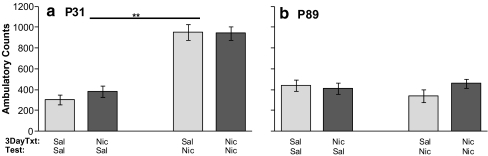
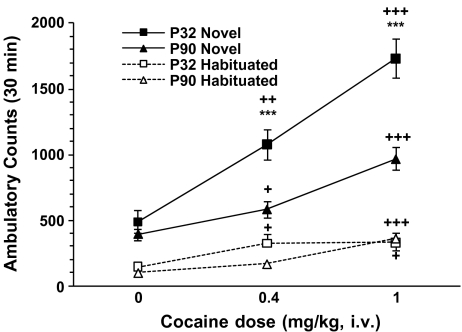
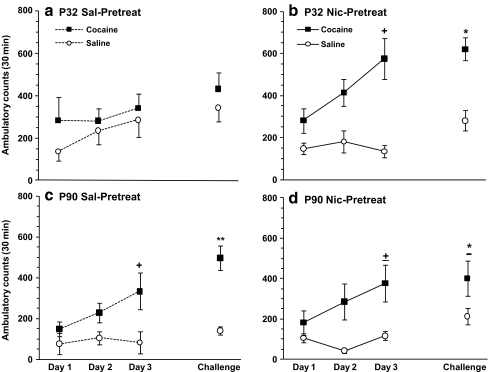
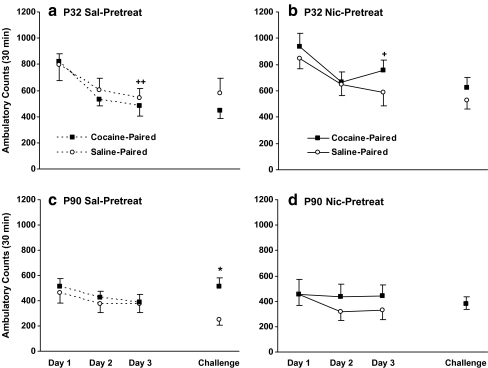
RATIONALE: Epidemiological evidence of early adolescent tobacco use, prior to that of marijuana and other illicit drugs, has led to the hypothesis that nicotine is a "gateway" drug that sensitizes reward pathways to the addictive effects of other psychostimulants. OBJECTIVE: To test this hypothesis, we have compared the effect of a brief, low-dose nicotine pretreatment of adolescent and adult rats on subsequent locomotor response to acute and chronic cocaine. MATERIALS AND METHODS: Adolescents, aged postnatal day (P) 28, and adults, aged P86, were given four daily injections of saline or nicotine (0.06 mg/kg, i.v.). At P32 and P90, rats were given acute injections of cocaine (0, 0.4 or 1.0 mg/kg, i.v.) and monitored for locomotor activity in either a habituated or novel test environment. To examine cocaine sensitization, rats were treated for 3 days with saline or cocaine (0.4 mg/kg, i.v.), and, after 1 day of withdrawal, were given a challenge dose of cocaine (0.4 mg/kg, i.v.). RESULTS: Nicotine pretreatment did not affect acute, drug-induced locomotor activity at either age. However, age differences in cocaine response were observed, with adolescent animals showing enhanced locomotor activity in the novel environment. Adolescent controls did not exhibit cocaine-induced locomotor sensitization, whereas adults did. Nicotine pretreatment during adolescence promoted the development and expression of a sensitized response to repeated cocaine exposure similar to that observed in saline-pretreated adult controls. CONCLUSIONS: These findings show that brief pretreatment with nicotine, in a low dose comparable to that inhaled in 2-4 cigarettes, enhances cocaine-induced behavioral plasticity in adolescent rats.
Overview
The claims and statistics of this paper haven’t been checked yet.
Free: it reads the open-access text and checks the first 5 claims that cite a source we can check. Create a free account to check every claim.
Integrity signals
Registry
Cites
Statistics
Figures
Verification
Claims the paper makes
The claims and statistics of this paper haven’t been checked yet.
Free: it reads the open-access text and checks the first 5 claims that cite a source we can check. Create a free account to check every claim.
Claims other papers make about this one
Each is checked against this paper’s own text: does it say what the citing paper says it does?
The source backs part of the claim, not all of it — or backs it for a different population, condition or comparison.
In the citing paper
“Current data indicate that nicotine disrupts normative limbic development and primes behavioral susceptibility to drugs of abuse (McQuown et al. 2009; Dao et al. 2011).”
From Nicotine and the adolescent brain (2015) · cites this paper as McQuown et al. 2009
Experimental — accuracy not yet measuredThe source backs part of the claim, not all of it — or backs it for a different population, condition or comparison.
In the citing paper
“However, brief treatment of adolescent rats with a low dose of nicotine, equivalent to one to two cigarettes per day for 4 days, enhances acquisition of self-administration for cocaine, methamphetamine and alcohol, induces cocaine locomotor sensitization, and enhances sexual arousal (McQuown et al. 2007; McQuown et al. 2009; Dao et al. 2011; Figs 5 and 6).”
From Nicotine and the adolescent brain (2015) · cites this paper as McQuown et al. 2009
Experimental — accuracy not yet measuredThe cited source says what the claim attributes to it.
In the citing paper
“Nicotine treatment during early adolescence also increases subsequent cocaine-induced locomotor sensitization”
From Unique, long-term effects of nicotine on adolescent brain. (2020) · cites this paper as McQuown et al., 2009
The cited source says what the claim attributes to it.
In the citing paper
“Brief pretreatment of early adolescent rats (postnatal days (P) 28–31) with a low dose of nicotine that models smoking initiation significantly increases self-administration of cocaine, ethanol, fentanyl, and methamphetamine when compared to adults [146–151].”
From Nicotine on the developing brain. (2023) · cites this paper as [148]
The cited source says what the claim attributes to it.
In the citing paper
“However, brief treatment of adolescent rats with a low dose of nicotine, equivalent to one to two cigarettes per day for 4 days, enhances acquisition of self-administration for cocaine, methamphetamine and alcohol, induces cocaine locomotor sensitization, and enhances sexual arousal (McQuown et al. 2007; McQuown et al. 2009; Dao et al. 2011; Figs 5 and 6).”
From Nicotine and the adolescent brain (2015) · cites this paper as McQuown et al. 2009
3 more claims about this paper
Create a free account to see every claim other papers make about this one.
Self-check
Percentages, sums and reported differences re-computed from the paper’s own numbers.
The self-check needs the paper’s full text.
Citations
Cites
The neural basis of drug craving: An incentive-sensitization theory of addiction
Robinson, T. (1993) · Brain Research Reviews · doi:10.1016/0165-0173(93)90013-p · Cited by 7,346 · cited 1×
“Locomotor sensitization, a form of behavioral plasticity induced by repeated exposure to many classes of abused drugs, has been shown in rodents to be associated with augmented drug reward and increased vulnerability to relapse (Robinson and Berridge 1993; De Vries et al. 1998).”
BackgroundThe adolescent brain and age-related behavioral manifestations
Spear, L. P. (2000) · Neuroscience & Biobehavioral Reviews · doi:10.1016/s0149-7634(00)00014-2 · Cited by 5,433
Chambers, R. A., Taylor, J. R., & Potenza, M. N. (2003) · American Journal of Psychiatry · doi:10.1176/appi.ajp.160.6.1041 · Cited by 1,719 · cited 3×
“Corticolimbic systems and their monoamine projections have not yet fully developed by adolescence (Chambers et al. 2003).”
BackgroundRobinson, T. E., & Berridge, K. C. (2003) · Annual Review of Psychology · doi:10.1146/annurev.psych.54.101601.145237 · Cited by 1,509
Vanderschuren, L. J. M. J., & Kalivas, P. W. (2000) · Psychopharmacology · doi:10.1007/s002130000493 · Cited by 1,346
A circuitry model of the expression of behavioral sensitization to amphetamine-like psychostimulants
Pierce, R. C., & Kalivas, P. W. (1997) · Brain Research Reviews · doi:10.1016/s0165-0173(97)00021-0 · Cited by 1,239
Kandel, D. B., Yamaguchi, K., & Chen, K. (1992) · Journal of Studies on Alcohol · doi:10.15288/jsa.1992.53.447 · Cited by 1,039 · cited 2×
“Such findings have led to the hypothesis that early teenage tobacco use may be a “gateway” to later illegal drug use (Kandel et al. 1992).”
BackgroundCarr, D. B., & Sesack, S. R. (2000) · The Journal of Neuroscience · doi:10.1523/jneurosci.20-10-03864.2000 · Cited by 880 · cited 2×
“Projections from the prefrontal cortex regulate activity of the nucleus accumbens and its dopaminergic afferents (Carr and Sesack 1999, 2000), and this circuitry is vital for the development of sensitization to psychostimulants (for review, Pierce and Kalivas 1997).”
BackgroundThe natural history of drug use from adolescence to the mid-thirties in a general population sample
Chen, K., & Kandel, D. B. (1995) · American Journal of Public Health · doi:10.2105/ajph.85.1.41 · Cited by 857 · cited 1×
“Initiation of alcohol and tobacco use often occurs during the early teens, whereas first use of illicit substances arise later (Kandel and Logan 1984; Chen and Kandel 1995).”
BackgroundKandel, D. B., & Logan, J. A. (1984) · American Journal of Public Health · doi:10.2105/ajph.74.7.660 · Cited by 785 · cited 1×
“Initiation of alcohol and tobacco use often occurs during the early teens, whereas first use of illicit substances arise later (Kandel and Logan 1984; Chen and Kandel 1995).”
BackgroundBreslau, N., & Peterson, E. L. (1996) · American Journal of Public Health · doi:10.2105/ajph.86.2.214 · Cited by 684 · cited 1×
“Human studies show that teenage tobacco use is more likely to produce life-long addiction and greater difficulty quitting (Breslau and Peterson 1996; Chen and Millar 1998).”
BackgroundPierce, R., Bell, K., Duffy, P., & Kalivas, P. (1996) · The Journal of Neuroscience · doi:10.1523/jneurosci.16-04-01550.1996 · Cited by 623 · cited 1×
“Such changes include increased day 1 receptor responsiveness, as well as cocaine-induced increase in dopamine and glutamate release in the nucleus accumbens core (Pierce et al. 1996; Reid and Berger 1996; Li et al. 1999).”
BackgroundThe dynamic effects of nicotine on the developing brain
Dwyer, J. B., McQuown, S. C., & Leslie, F. M. (2009) · Pharmacology & Therapeutics · doi:10.1016/j.pharmthera.2009.02.003 · Cited by 559 · cited 1×
“Since nicotinic receptor stimulation has been demonstrated to regulate brain plasticity during sensitive developmental periods (Dwyer et al. 2009), repeated stimulation by nicotine may promote maturation and facilitate cocaine-induced plasticity of the mesocorticolimbic system.”
BackgroundSelf-citationPeriadolescence: age-dependent behavior and psychopharmacological responsivity in rats
Spear, L. P., & Brake, S. C. (1983) · Developmental Psychobiology · doi:10.1002/dev.420160203 · Cited by 539 · cited 1×
“In contrast to previous studies, we found adolescents to demonstrate similar or greater response to the acute locomotor effects of cocaine compared to adults (Spear and Brick 1979; Spear and Brake 1983; Cao et al. 2007b).”
ResultNeuroplasticity in the mesolimbic dopamine system and cocaine addiction
Thomas, M. J., Kalivas, P. W., & Shaham, Y. (2008) · British Journal of Pharmacology · doi:10.1038/bjp.2008.77 · Cited by 516 · cited 4×
“It is widely accepted that cocaine dependence results from drug-induced neural adaptations in mesocorticolimbic dopamine pathways and associated glutamatergic circuitry ( Thomas et al. 2008 ).”
BackgroundInfluentialCunningham, M. G., Bhattacharyya, S., & Benes, F. M. (2002) · Journal of Comparative Neurology · doi:10.1002/cne.10376 · Cited by 474 · cited 2×
“Contextual conditioning requires activation of prefrontal cortex and basolateral amygdala, connections that are still maturing during adolescence (Cunningham et al. 2002, 2008).”
BackgroundKalivas, P. W., & Alesdatter, J. E. (1993) · The Journal of Pharmacology and Experimental Therapeutics · doi:10.1016/s0022-3565(25)39530-3 · Cited by 367 · cited 1×
“Induction of sensitization is the progressive increase in locomotor activity during drug treatment, and requires both dopamine and glutamate receptor activation of the ventral tegmental area (Kalivas and Alesdatter 1993; Dunn et al. 2005).”
BackgroundDe Vries, T. J., Schoffelmeer, A. N. M., Binnekade, R., Mulder, A. H., & Vanderschuren, L. J. M. J. (1998) · European Journal of Neuroscience · doi:10.1046/j.1460-9568.1998.00368.x · Cited by 332 · cited 1×
“Locomotor sensitization, a form of behavioral plasticity induced by repeated exposure to many classes of abused drugs, has been shown in rodents to be associated with augmented drug reward and increased vulnerability to relapse (Robinson and Berridge 1993; De Vries et al. 1998).”
BackgroundAre adolescent smokers dependent on nicotine? A review of the evidence
Colby, S. M., Tiffany, S. T., Shiffman, S., & Niaura, R. S. (2000) · Drug and Alcohol Dependence · doi:10.1016/s0376-8716(99)00166-0 · Cited by 312 · cited 1×
“However, smokers aged 12 to 17 consume an average of 5.2 cigarettes per day (SAMHSA 2003) and progress to nicotine dependence even before daily smoking habits form (Chen and Millar 1998; Colby et al. 2000).”
BackgroundInfluentialBrown, E., Robertson, G., & Fibiger, H. (1992) · The Journal of Neuroscience · doi:10.1523/jneurosci.12-10-04112.1992 · Cited by 289
Brenhouse, H. C., Sonntag, K. C., & Andersen, S. L. (2008) · The Journal of Neuroscience · doi:10.1523/jneurosci.5064-07.2008 · Cited by 287
Age-dependent effects of nicotine on locomotor activity and conditioned place preference in rats
Belluzzi, J., Lee, A., Oliff, H., & Leslie, F. (2004) · Psychopharmacology · doi:10.1007/s00213-003-1758-6 · Cited by 280 · cited 3×
“In animals, nicotine is more rewarding and less aversive during adolescence than at later ages (Adriani et al. 2002; Belluzzi et al. 2004; O'Dell et al. 2006).”
BackgroundResultSelf-citationAge of smoking initiation: implications for quitting.
Chen, J., & Millar, W. J. (1998) · PubMed · Cited by 272
Benes, F. M. (2000) · Cerebral Cortex · doi:10.1093/cercor/10.10.1014 · Cited by 268 · cited 5×
“Dopaminergic innervations of the prefrontal cortex increases in density (Benes et al. 2000), and its control of prefrontal interneurons and pyramidal firing states matures during adolescence (Tseng and O'Donnell 2005).”
BackgroundInfluentialNicotine: from molecular mechanisms to behaviour
Wonnacott, S., Sidhpura, N., & Balfour, D. J. (2005) · Current Opinion in Pharmacology · doi:10.1016/j.coph.2004.12.002 · Cited by 263 · cited 2×
“Such low doses of nicotine stimulate nicotinic acetylcholine receptors which are found within reward circuitry, possibly altering development of the late-maturing mesolimbic dopamine system (Leslie et al. 2004; Wonnacott et al. 2005).”
BackgroundWolf, M. E., Dahlin, S. L., Hu, X.-T., Xue, C.-J., & White, K. (1995) · Neuroscience · doi:10.1016/0306-4522(95)00248-h · Cited by 261 · cited 2×
“Glutamatergic input from the prefrontal cortex and amygdala are important for this phase (Wolf et al. 1995; Pierce and Kalivas 1997).”
BackgroundEvidence for enhanced neurobehavioral vulnerability to nicotine during periadolescence in rats
Adriani, W., Spijker, S., Deroche-Gamonet, V., Laviola, G., Le Moal, M., Smit, A. B., & Piazza, P. V. (2003) · The Journal of Neuroscience · doi:10.1523/jneurosci.23-11-04712.2003 · Cited by 257 · cited 2×
“Animal models have clearly demonstrated that nicotine administration during adolescence causes distinct long-term neural adaptations compared to treatment in adults (Adriani et al. 2003, 2004; Abreu-Villaca et al. 2003).”
BackgroundAcetaldehyde Enhances Acquisition of Nicotine Self-Administration in Adolescent Rats
Belluzzi, J. D., Wang, R., & Leslie, F. M. (2005) · Neuropsychopharmacology · doi:10.1038/sj.npp.1300586 · Cited by 247 · cited 2×
“The injection interval is equivalent to the standard timeout interval used in nicotine self-administration experiments (Belluzzi et al. 2005).”
MethodSelf-citationAdriani, W., Chiarotti, F., & Laviola, G. (1998) · Behavioral Neuroscience · doi:10.1037/0735-7044.112.5.1152 · Cited by 247 · cited 1×
“…with earlier reports that adolescents have an enhanced sensitivity to novelty, as characterized by novelty-induced hyperlocomotion, increased time spent in a novel environment, and decreased latency to approach a novel object (Adriani et al. 1998; Douglas et al. 2003; Stansfield and Kirstein 2006).”
BackgroundPeculiar vulnerability to nicotine oral self-administration in mice during early adolescence
Adriani, W. (2002) · Neuropsychopharmacology · doi:10.1016/s0893-133x(02)00295-6 · Cited by 214 · cited 1×
“In animals, nicotine is more rewarding and less aversive during adolescence than at later ages (Adriani et al. 2002; Belluzzi et al. 2004; O'Dell et al. 2006).”
BackgroundThe association between cigarette smoking and drug abuse in the United States
Lai, S., Lai, H., Page, J. B., & McCoy, C. B. (2000) · Journal of Addictive Diseases · doi:10.1300/j069v19n04_02 · Cited by 212 · cited 2×
“Individuals who smoke cigarettes before the age of 15 are estimated to be 80 times more likely to use illegal drugs, such as cocaine, than those who do not (Lai et al. 2000).”
BackgroundCocaine sensitization in periadolescent and adult rats.
Laviola, G., Wood, R. D., Kuhn, C., Francis, R., & Spear, L. P. (1995) · The Journal of Pharmacology and Experimental Therapeutics · doi:10.1016/s0022-3565(25)12056-9 · Cited by 195 · cited 2×
“Given prior evidence that the mechanisms underlying this form of neural plasticity have not fully matured by adolescence (Laviola et al. 1995; Collins and Izenwasser 2002; Frantz et al. 2007), the aim of the present study was to determine whether adolescents might be uniquely sensitive to the effect of brief, low-dose…”
BackgroundEvidence for sensitization of cocaine-induced nucleus accumbens glutamate release
Reid, M. S., & Berger, S. P. (1996) · NeuroReport · doi:10.1097/00001756-199605170-00022 · Cited by 185 · cited 1×
“Such changes include increased day 1 receptor responsiveness, as well as cocaine-induced increase in dopamine and glutamate release in the nucleus accumbens core (Pierce et al. 1996; Reid and Berger 1996; Li et al. 1999).”
BackgroundLi, Y., Hu, X.-T., Berney, T. G., Vartanian, A. J., Stine, C. D., Wolf, M. E., & White, F. J. (1999) · Synapse · doi:10.1002/(sici)1098-2396(19991201)34:3<169::aid-syn1>3.0.co;2-c · Cited by 185 · cited 1×
“Such changes include increased day 1 receptor responsiveness, as well as cocaine-induced increase in dopamine and glutamate release in the nucleus accumbens core (Pierce et al. 1996; Reid and Berger 1996; Li et al. 1999).”
BackgroundLi, Y., Acerbo, M. J., & Robinson, T. E. (2004) · European Journal of Neuroscience · doi:10.1111/j.1460-9568.2004.03612.x · Cited by 180 · cited 1×
“Psychostimulant locomotor sensitization is tightly associated with structural plasticity, such that increase in dendritic spine density in the nucleus accumbens core correlates with degree of cocaine-induced sensitization (Li et al. 2004).”
BackgroundDouglas, L. A., Varlinskaya, E. I., & Spear, L. P. (2003) · Physiology & Behavior · doi:10.1016/j.physbeh.2003.08.003 · Cited by 173 · cited 2×
“…with earlier reports that adolescents have an enhanced sensitivity to novelty, as characterized by novelty-induced hyperlocomotion, increased time spent in a novel environment, and decreased latency to approach a novel object (Adriani et al. 1998; Douglas et al. 2003; Stansfield and Kirstein 2006).”
BackgroundResultPost-pubertal Emergence of Prefrontal Cortical Up States Induced by D1-NMDA Co-activation
Tseng, K. Y. (2004) · Cerebral Cortex · doi:10.1093/cercor/bhh107 · Cited by 169 · cited 4×
“2000), and its control of prefrontal interneurons and pyramidal firing states matures during adolescence (Tseng and O'Donnell 2005).”
BackgroundInfluentialBehavioral and Neurochemical Vulnerability During Adolescence in Mice: Studies with Nicotine
Adriani, W., Granstrem, O., Macri, S., Izykenova, G., Dambinova, S., & Laviola, G. (2004) · Neuropsychopharmacology · doi:10.1038/sj.npp.1300366 · Cited by 164 · cited 1×
“Animal models have clearly demonstrated that nicotine administration during adolescence causes distinct long-term neural adaptations compared to treatment in adults (Adriani et al. 2003, 2004; Abreu-Villaca et al. 2003).”
BackgroundEffects of novelty on behavior in the adolescent and adult rat
Stansfield, K. H., & Kirstein, C. L. (2006) · Developmental Psychobiology · doi:10.1002/dev.20127 · Cited by 163 · cited 2×
“…with earlier reports that adolescents have an enhanced sensitivity to novelty, as characterized by novelty-induced hyperlocomotion, increased time spent in a novel environment, and decreased latency to approach a novel object (Adriani et al. 1998; Douglas et al. 2003; Stansfield and Kirstein 2006).”
BackgroundResultBehavioral and Neurochemical Responses to Cocaine in Periadolescent and Adult Rats
Frantz, K. J., O’Dell, L. E., & Parsons, L. H. (2006) · Neuropsychopharmacology · doi:10.1038/sj.npp.1301130 · Cited by 156 · cited 5×
“…the mechanisms underlying this form of neural plasticity have not fully matured by adolescence (Laviola et al. 1995; Collins and Izenwasser 2002; Frantz et al. 2007), the aim of the present study was to determine whether adolescents might be uniquely sensitive to the effect of brief, low-dose…”
BackgroundResultInfluentialRiggs, N., Chou, C.-P., Li, C., & Pentz, M. A. (2007) · Nicotine & Tobacco Research · doi:10.1080/14622200701648359 · Cited by 155 · cited 1×
“Another group found that individuals smoking only two to four cigarettes per week in adolescence were at risk of becoming addicted in early adulthood (Riggs et al. 2007).”
BackgroundDiminished nicotine withdrawal in adolescent rats: implications for vulnerability to addiction
O’Dell, L. E., Bruijnzeel, A. W., Smith, R. T., Parsons, L. H., Merves, M. L., Goldberger, B. A., Richardson, H. N., Koob, G. F., & Markou, A. (2006) · Psychopharmacology · doi:10.1007/s00213-006-0383-6 · Cited by 153 · cited 2×
“In animals, nicotine is more rewarding and less aversive during adolescence than at later ages (Adriani et al. 2002; Belluzzi et al. 2004; O'Dell et al. 2006).”
BackgroundAbreu-Villaça, Y., Seidler, F. J., Qiao, D., Tate, C. A., Cousins, M. M., Thillai, I., & Slotkin, T. A. (2003) · Neuropsychopharmacology · doi:10.1038/sj.npp.1300221 · Cited by 151 · cited 1×
“Animal models have clearly demonstrated that nicotine administration during adolescence causes distinct long-term neural adaptations compared to treatment in adults (Adriani et al. 2003, 2004; Abreu-Villaca et al. 2003).”
BackgroundDevelopmental regulation of nicotinic acetylcholine receptors within midbrain dopamine neurons
Azam, L., Chen, Y., & Leslie, F. M. (2007) · Neuroscience · doi:10.1016/j.neuroscience.2006.11.011 · Cited by 138 · cited 1×
“Nicotinic acetylcholine receptors are expressed on the dopamine cell bodies in the ventral tegmental area and terminals of this actively maturing circuitry (Azam et al. 2007; Wonnacott et al. 2005), and thus, nicotine exposure in adolescence may have distinct behavioral effects.”
BackgroundSelf-citationLow dose nicotine treatment during early adolescence increases subsequent cocaine reward
McQuown, S. C., Belluzzi, J. D., & Leslie, F. M. (2007) · Neurotoxicology and Teratology · doi:10.1016/j.ntt.2006.10.012 · Cited by 117 · cited 6×
“…locomotor sensitization is a well established experimental model for drug dependence and relapse (Robinson and Berridge 2003), these findings provide further evidence for nicotine as a “gateway” drug which enhances adolescent susceptibility to other drugs of abuse (McQuown et al. 2007).”
BackgroundMethodSelf-citationRegulation of striatal dopamine receptors by estrogen
Lammers, C.-H., D'Souza, U., Qin, Z.-H., Lee, S.-H., Yajima, S., & Mouradian, M. M. (1999) · Synapse · doi:10.1002/(sici)1098-2396(19991201)34:3<222::aid-syn6>3.0.co;2-j · Cited by 107
Cocaine differentially alters behavior and neurochemistry in periadolescent versus adult rats
Collins, S. L., & Izenwasser, S. (2002) · Developmental Brain Research · doi:10.1016/s0165-3806(02)00471-6 · Cited by 103 · cited 1×
“However, smokers aged 12 to 17 consume an average of 5.2 cigarettes per day (SAMHSA 2003) and progress to nicotine dependence even before daily smoking habits form (Chen and Millar 1998; Colby et al. 2000).”
BackgroundInfluentialNeurobiology of Conditioning to Drugs of Abuse
Stewart, J. (1992) · Annals of the New York Academy of Sciences · doi:10.1111/j.1749-6632.1992.tb25979.x · Cited by 102 · cited 2×
“Contextual conditioning In adults, the positive effects of cocaine can quickly become associated with contextual cues in the salient environment, which gain secondary reinforcing properties (Stewart 1992).”
BackgroundCocaine-induced behavior in the developing rat
SPEAR, L. P., & Brick, J. (1979) · Behavioral and Neural Biology · doi:10.1016/s0163-1047(79)91410-9 · Cited by 95 · cited 1×
“In contrast to previous studies, we found adolescents to demonstrate similar or greater response to the acute locomotor effects of cocaine compared to adults (Spear and Brick 1979; Spear and Brake 1983; Cao et al. 2007b).”
ResultCunningham, M. G., Bhattacharyya, S., & Benes, F. M. (2008) · Cerebral Cortex · doi:10.1093/cercor/bhm183 · Cited by 93 · cited 1×
“Contextual conditioning requires activation of prefrontal cortex and basolateral amygdala, connections that are still maturing during adolescence (Cunningham et al. 2002, 2008).”
BackgroundDifferential behavioral effects of nicotine exposure in adolescent and adult rats
Schochet, T. L., Kelley, A. E., & Landry, C. F. (2004) · Psychopharmacology · doi:10.1007/s00213-004-1831-9 · Cited by 93 · cited 1×
“Consistent with a previous report (Schochet et al. 2004), we have found that adolescents are less sensitive than adults to contextual cues paired with a psychostimulant.”
BackgroundSchochet, T. L., Kelley, A. E., & Landry, C. F. (2005) · Neuroscience · doi:10.1016/j.neuroscience.2005.05.057 · Cited by 93 · cited 1×
“Nicotine has been shown to preferentially activate activity-regulated cytoskeletal-associated protein messenger RNA (mRNA), a marker of synaptic plasticity, in the prefrontal cortex of adolescents (Schochet et al. 2005).”
BackgroundBrielmaier, J. M., McDonald, C. G., & Smith, R. F. (2007) · Neurotoxicology and Teratology · doi:10.1016/j.ntt.2006.09.023 · Cited by 90 · cited 1×
“A single pairing with nicotine can elicit a conditioned place preference in early adolescent, but not adult rats (Belluzzi et al. 2004; Brielmaier et al. 2007).”
BackgroundAdolescent Development of Forebrain Stimulant Responsiveness: Insights from Animal Studies
LESLIE, F. M., LOUGHLIN, S. E., WANG, R., PEREZ, L., LOTFIPOUR, S., & BELLUZZIA, J. D. (2004) · Annals of the New York Academy of Sciences · doi:10.1196/annals.1308.018 · Cited by 81 · cited 1×
“Such low doses of nicotine stimulate nicotinic acetylcholine receptors which are found within reward circuitry, possibly altering development of the late-maturing mesolimbic dopamine system (Leslie et al. 2004; Wonnacott et al. 2005).”
BackgroundSelf-citationVulnerability to smoking after trying a single cigarette can lie dormant for three years or more
Fidler, J. A., Wardle, J., Henning Brodersen, N., Jarvis, M. J., & West, R. (2006) · Tobacco Control · doi:10.1136/tc.2005.014894 · Cited by 77 · cited 1×
“A recent study showed that students who have tried a single cigarette by age 11 remain susceptible to future smoking up to 3 years later (Fidler et al. 2006).”
BackgroundPrenatal nicotine exposure changes natural and drug‐induced reinforcement in adolescent male rats
Franke, R. M., Park, M., Belluzzi, J. D., & Leslie, F. M. (2008) · European Journal of Neuroscience · doi:10.1111/j.1460-9568.2008.06253.x · Cited by 71 · cited 1×
“The two intravenous injection procedure is similar to that used in earlier studies (Cao et al. 2007b; Franke et al. 2008), and is designed to model the initial phase of self-administration.”
MethodSelf-citationCao, J., Belluzzi, J. D., Loughlin, S. E., Keyler, D. E., Pentel, P. R., & Leslie, F. M. (2007) · Neuropsychopharmacology · doi:10.1038/sj.npp.1301327 · Cited by 67 · cited 4×
“The two intravenous injection procedure is similar to that used in earlier studies (Cao et al. 2007b; Franke et al. 2008), and is designed to model the initial phase of self-administration.”
MethodResultSelf-citationShram, M. J., Funk, D., Li, Z., & Lê, A. D. (2007) · Neuroscience Letters · doi:10.1016/j.neulet.2007.03.034 · Cited by 64 · cited 1×
“Another marker of neuronal activation, c-fos mRNA, shows adolescent-specific induction in the nucleus accumbens shell, ventral tegmental area, and basolateral amygdala after nicotine treatment (Shram et al. 2007; unpublished findings).”
BackgroundAdolescent Maturation of Cocaine-Sensitive Neural Mechanisms
Cao, J., Lotfipour, S., Loughlin, S. E., & Leslie, F. M. (2007) · Neuropsychopharmacology · doi:10.1038/sj.npp.1301349 · Cited by 63 · cited 5×
“In contrast to previous studies, we found adolescents to demonstrate similar or greater response to the acute locomotor effects of cocaine compared to adults (Spear and Brick 1979; Spear and Brake 1983; Cao et al. 2007b ).”
MethodResultSelf-citationBergstrom, H. C., McDonald, C. G., French, H. T., & Smith, R. F. (2008) · Synapse · doi:10.1002/syn.20467 · Cited by 60 · cited 1×
“In addition, chronic nicotine during adolescence can cause greater long-term changes in dendritic morphology in the nucleus accumbens (McDonald et al. 2005, 2007) and different structural effects in the prelimbic cortex than does treatment in adulthood (Bergstrom et al. 2008).”
BackgroundKelley, B. M., & Rowan, J. D. (2004) · International Journal of Developmental Neuroscience · doi:10.1016/j.ijdevneu.2004.04.002 · Cited by 59 · cited 2×
“Such findings have led to the hypothesis that early teenage tobacco use may be a “gateway” to later illegal drug use (Kandel et al. 1992).”
BackgroundMcDonald, C. G., Dailey, V. K., Bergstrom, H. C., Wheeler, T. L., Eppolito, A. K., Smith, L. N., & Smith, R. F. (2005) · Neuroscience Letters · doi:10.1016/j.neulet.2005.05.041 · Cited by 53 · cited 2×
“In addition, chronic nicotine during adolescence can cause greater long-term changes in dendritic morphology in the nucleus accumbens (McDonald et al. 2005, 2007) and different structural effects in the prelimbic cortex than does treatment in adulthood (Bergstrom et al. 2008).”
BackgroundTågerud, S., & Cuello, A. C. (1979) · Neuroscience · doi:10.1016/0306-4522(79)90073-3 · Cited by 49 · cited 2×
“Young rats, after weaning, and adult rats were group housed 3–4 per cage in temperature (21°C) and humidity (50”
MethodInfluentialD2 dopamine modulation of corticoaccumbens synaptic responses changes during adolescence
Benoit‐Marand, M., & O'Donnell, P. (2008) · European Journal of Neuroscience · doi:10.1111/j.1460-9568.2008.06107.x · Cited by 45 · cited 2×
“maturation of the prefrontal cortex and its connection with the nucleus accumbens is not complete (Benes et al. 2000; Tseng and O'Donnell 2005; Benoit-Marand and O'Donnell 2008; Brenhouse et al. 2008).”
BackgroundHandling alters cocaine-induced activity in adolescent but not adult male rats
Maldonado‐Devincci, A. M., & Kirstein, C. L. (2005) · Physiology & Behavior · doi:10.1016/j.physbeh.2004.12.007 · Cited by 40 · cited 2×
“This may result from the extensive prior handling of the animals, which has previously been shown to result in robust cocaine responses in adolescents (Maldonado and Kirstein 2005).”
BackgroundEvidence for elevated nicotine-induced structural plasticity in nucleus accumbens of adolescent rats
McDonald, C. G., Eppolito, A. K., Brielmaier, J. M., Smith, L. N., Bergstrom, H. C., Lawhead, M. R., & Smith, R. F. (2007) · Brain Research · doi:10.1016/j.brainres.2007.03.019 · Cited by 36 · cited 2×
“In addition, chronic nicotine during adolescence can cause greater long-term changes in dendritic morphology in the nucleus accumbens (McDonald et al. 2005, 2007) and different structural effects in the prelimbic cortex than does treatment in adulthood (Bergstrom et al. 2008).”
BackgroundTerminals from the Rat Prefrontal Cortex Synapse on Mesoaccumbens VTA Neurons
CARR, D. B., & Sesack, S. R. (1999) · Annals of the New York Academy of Sciences · doi:10.1111/j.1749-6632.1999.tb09299.x · Cited by 33 · cited 2×
“Projections from the prefrontal cortex regulate activity of the nucleus accumbens and its dopaminergic afferents (Carr and Sesack 1999, 2000), and this circuitry is vital for the development of sensitization to psychostimulants (for review, Pierce and Kalivas 1997).”
BackgroundJutkiewicz, E. M., Nicolazzo, D. M., Kim, M. N., & Gnegy, M. E. (2008) · Psychopharmacology · doi:10.1007/s00213-008-1159-y · Cited by 33 · cited 1×
“This finding contrasts with that of prior studies in which cross-sensitization of nicotine and cocaine-induced locomotion have been observed (Kelley and Rowan 2004; Jutkiewicz et al. 2008).”
ResultInitiation of Marijuana Use: Trends, Patterns, and Implications
Gfoerer, J. C., Wu, L.-T. T., & Penne, M. A. (2002) · PsycEXTRA Dataset · doi:10.1037/e440622005-001 · Cited by 30
Dunn, J. M., Inderwies, B. R., Licata, S. C., & Pierce, R. C. (2004) · Psychopharmacology · doi:10.1007/s00213-004-2054-9 · Cited by 29 · cited 1×
“Induction of sensitization is the progressive increase in locomotor activity during drug treatment, and requires both dopamine and glutamate receptor activation of the ventral tegmental area (Kalivas and Alesdatter 1993; Dunn et al. 2005).”
BackgroundNicotine metabolism in nonsmokers
Benowitz, N. L., & Jacob, P. (1990) · Clinical Pharmacology & Therapeutics · doi:10.1038/clpt.1990.177 · Cited by 16 · cited 1×
“The daily 60 μg/kg dose of nicotine used is comparable to the amount of nicotine inhaled in 3–4 cigarettes (Benowitz and Jacob 1990).”
Method
Cited by
Nicotine and the adolescent brain
Yuan, M., Cross, S. J., Loughlin, S. E., & Leslie, F. M. (2015) · The Journal of Physiology · doi:10.1113/jp270492 · Cited by 623
Self-citationA Molecular Basis for Nicotine as a Gateway Drug
Kandel, E. R., & Kandel, D. B. (2014) · New England Journal of Medicine · doi:10.1056/nejmsa1405092 · Cited by 353
The Gateway Hypothesis of substance abuse: developmental, biological and societal perspectives
Kandel, D., & Kandel, E. (2015) · Acta Paediatrica · doi:10.1111/apa.12851 · Cited by 254
“Indeed, pretreatment with nicotine has been reported to lead to enhanced cocaine-induced locomotor activity and increased initial self-administration of cocaine among adolescent but not adult rats (39,40).”
BackgroundEmergence of sex differences in the development of substance use and abuse during adolescence
Kuhn, C. (2015) · Pharmacology & Therapeutics · doi:10.1016/j.pharmthera.2015.06.003 · Cited by 179
“, 2012), and a third which reported comparable sensitization following adolescent or adult treatment (Adriani, Deroche-Gamonet, Le Moal, Laviola, & Piazza, 2006) Two studies reported increased cross-sensitization to cocaine (Santos, Marin, Cruz, Delucia, & Planeta, 2009) or amphetamine (McQuown et al., 2009) after ado…”
BackgroundUnique, long-term effects of nicotine on adolescent brain.
Leslie, F. M. (2020) · Pharmacology, Biochemistry, and Behavior · doi:10.1016/j.pbb.2020.173010 · Cited by 178
“Nicotine treatment during early adolescence also increases subsequent cocaine-induced locomotor sensitization (Kelley & Rowan, 2004; McQuown et al., 2009; Alajaji et al., 2016; Reed and Izenwasser, 2017).”
BackgroundSelf-citation
Metadata
- Authors
- McQuown, S. C., Dao, J. M., Belluzzi, J. D., & Leslie, F. M.
- Affiliations
- University of California, Irvine (US)
- Corresponding author
- McQuown, Susan C.
- ORCID
- Leslie, Frances M.
- Venue
- Psychopharmacology
- Published
- 2009-09-02
- Volume
- 207
- Issue
- 1
- Pages
- 143-152
- ISSN
- 0033-3158 (ISSN-L)
- 1432-2072
- PMC
- PMC2764852
- OpenAlex
- W2105607151
- Cited by
- 39
- References
- 70
- Citations by year
- 2025: 2 · 2024: 2 · 2023: 3 · 2022: 3 · 2021: 3 · 2020: 3 · 2019: 1 · 2017: 4 · 2016: 3 · 2015: 2 · 2014: 4 · 2013: 3 · 2012: 2
- FWCI
- 0.83
- Type
- journal article
- Language
- en
- Open access
- hybrid
- doi.org
- Licence
- cc-by-nc
- Locations
- Psychopharmacology (publishedVersion, cc-by-nc)
- PubMed Central (publishedVersion, cc-by-nc)
- PubMed (publishedVersion)
- eScholarship (California Digital Library) (submittedVersion)
- Funders
- Tobacco-Related Disease Research Program
- National Institute on Drug Abuse (DA 19138, R01DA019138)
- Topics
- Life Sciences › Neuroscience › Cellular and Molecular Neuroscience › Neurotransmitter Receptor Influence on Behavior
- Health Sciences › Medicine › Public Health, Environmental and Occupational Health › Smoking Behavior and Cessation
- Life Sciences › Biochemistry, Genetics and Molecular Biology › Molecular Biology › Nicotinic Acetylcholine Receptors Study
- Keywords
- nicotine, cocaine, adolescent nicotine exposure, age-dependent effects, locomotor sensitization, cocaine-induced locomotor activity, behavioral plasticity, gateway hypothesis, stimulant use disorder
- MeSH terms
- Adaptation, Physiological, Aging, Analysis of Variance, Animals, Animals, Newborn, Cocaine, Dose-Response Relationship, Drug, Exploratory Behavior, Locomotion, Male, Nicotine, Rats, Sprague-Dawley, Nicotinic Agonists, Dopamine Uptake Inhibitors, Rats
About these checks
Registry, retraction, Cites and statistics results are computed, not judged, with one exception: a printed reference that no index lists is read once by a model before it counts as a citation error. Claims are extracted by a model and kept only when their quote appears verbatim in the text; each cited source is then checked, with a model’s help, for whether it says what the claim relies on. Those verdicts can be wrong — read the claim’s quote and the cited source before relying on one.
Statistics and arithmetic are recomputed, not judged.
Confidence bands are shown only for fields calibrated on our annotated test set. None is calibrated yet, so no band is shown.
What counts as a claim ›How we measure confidence ›How we check this ›
Are you an author, or do you see a problem with this page? Request a review
Data sources
Bibliographic data: Semantic Scholar, OpenAlex, Crossref.
Contains information from the Semantic Scholar Academic Graph Datasets, made available under the ODC Attribution License (ODC-BY 1.0).
Semantic Scholar’s data is described in: Kinney, R., et al. (2023). The Semantic Scholar Open Data Platform. arXiv:2301.10140.
