

Reliance on habits at the expense of goal-directed control following dopamine precursor depletion
Open accessThe DOI matches its Crossref record; 54 of the 54 references it cites were found in a registry or an index.
Abstract
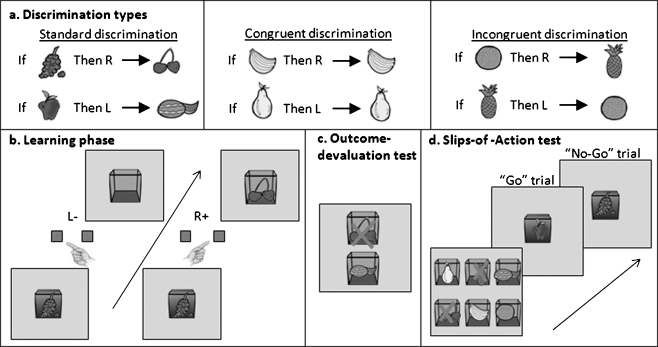
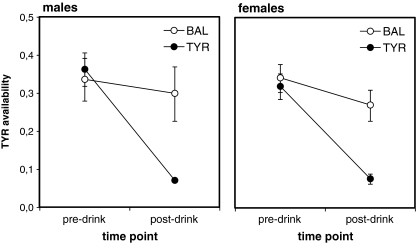
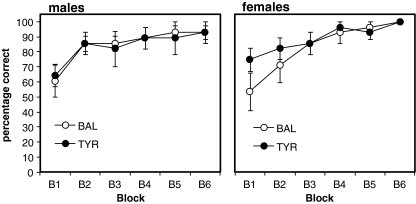
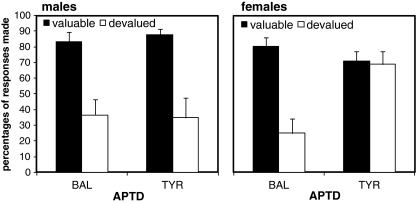
RATIONALE: Dopamine is well known to play an important role in learning and motivation. Recent animal studies have implicated dopamine in the reinforcement of stimulus-response habits, as well as in flexible, goal-directed action. However, the role of dopamine in human action control is still not well understood. OBJECTIVES: We present the first investigation of the effect of reducing dopamine function in healthy volunteers on the balance between habitual and goal-directed action control. METHODS: The dietary intervention of acute dietary phenylalanine and tyrosine depletion (APTD) was adopted to study the effects of reduced global dopamine function on action control. Participants were randomly assigned to either the APTD or placebo group (ns = 14) to allow for a between-subjects comparison of performance on a novel three-stage experimental paradigm. In the initial learning phase, participants learned to respond to different stimuli in order to gain rewarding outcomes. Subsequently, an outcome-devaluation test and a slips-of-action test were conducted to assess whether participants were able to flexibly adjust their behaviour to changes in the desirability of the outcomes. RESULTS: APTD did not prevent stimulus-response learning, nor did we find evidence for impaired response-outcome learning in the subsequent outcome-devaluation test. However, when goal-directed and habitual systems competed for control in the slips-of-action test, APTD tipped the balance towards habitual control. These findings were restricted to female volunteers. CONCLUSIONS: We provide direct evidence that the balance between goal-directed and habitual control in humans is dopamine dependent. The results are discussed in light of gender differences in dopamine function and psychopathologies.
Overview
The claims and statistics of this paper haven’t been checked yet.
Free: it reads the open-access text and checks the first 5 claims that cite a source we can check. Create a free account to check every claim.
Integrity signals
Registry
Cites
Statistics
Figures
Verification
Claims the paper makes
The claims and statistics of this paper haven’t been checked yet.
Free: it reads the open-access text and checks the first 5 claims that cite a source we can check. Create a free account to check every claim.
Claims other papers make about this one
Each is checked against this paper’s own text: does it say what the citing paper says it does?
The source backs part of the claim, not all of it — or backs it for a different population, condition or comparison.
In the citing paper
“Briefly, the instrumental learning task was developed to distinguish between goal-directed and habit-based learning,19 and has been used successfully in studies to establish habits in both animals and humans.24,41, 42, 43, 44”
From Behavioral and neuroimaging evidence for overreliance on habit learning in alcohol-dependent patients (2013) · cites this paper as [43]
Experimental — accuracy not yet measuredThe source backs part of the claim, not all of it — or backs it for a different population, condition or comparison.
In the citing paper
“Indeed, previous studies have demonstrated that both humans and animals adopt an S–R habitual learning strategy to solve this incongruent trial type.19,41, 42, 43, 44”
From Behavioral and neuroimaging evidence for overreliance on habit learning in alcohol-dependent patients (2013) · cites this paper as [43]
Experimental — accuracy not yet measuredThe cited source says what the claim attributes to it.
In the citing paper
“In these trials, goal-directed learning is disadvantageous, and performance relies solely on habitual control via direct S–R associations.”
From Behavioral and neuroimaging evidence for overreliance on habit learning in alcohol-dependent patients (2013) · cites this paper as [43]
In the citing paper
“The involvement of dopamine in goal-directed action is further supported by a study using an experimental dopamine depletion paradigm.43”
From Behavioral and neuroimaging evidence for overreliance on habit learning in alcohol-dependent patients (2013) · cites this paper as [43]
Self-check
Percentages, sums and reported differences re-computed from the paper’s own numbers.
The self-check needs the paper’s full text.
Citations
Cites
Manual for the Wechsler Adult Intelligence Scale.
Wechsler, D. (1955) · Psychological Corp. eBooks · Cited by 4,941
Predictive reward signal of dopamine neurons
Schultz, W. (1998) · Journal of Neurophysiology · doi:10.1152/jn.1998.80.1.1 · Cited by 4,564
Neural systems of reinforcement for drug addiction: from actions to habits to compulsion
Everitt, B. J., & Robbins, T. W. (2005) · Nature Neuroscience · doi:10.1038/nn1579 · Cited by 3,785
Self-citationWang, G.-J., Volkow, N. D., Logan, J., Pappas, N. R., Wong, C. T., Zhu, W., Netusll, N., & Fowler, J. S. (2001) · The Lancet · doi:10.1016/s0140-6736(00)03643-6 · Cited by 1,864
Balleine, B. W., & O'Doherty, J. P. (2010) · Neuropsychopharmacology · doi:10.1038/npp.2009.131 · Cited by 1,775
Dopamine-dependent prediction errors underpin reward-seeking behaviour in humans
Pessiglione, M., Seymour, B., Flandin, G., Dolan, R. J., & Frith, C. D. (2006) · Nature · doi:10.1038/nature05051 · Cited by 1,584
Why sex matters for neuroscience
Cahill, L. (2006) · Nature Reviews Neuroscience · doi:10.1038/nrn1909 · Cited by 1,540
Actions and habits: The development of behavioural autonomy
Dickinson, A. (1985) · Philosophical Transactions of the Royal Society of London. B, Biological Sciences · doi:10.1098/rstb.1985.0010 · Cited by 1,217
Dopamine responses comply with basic assumptions of formal learning theory
Waelti, P., Dickinson, A., & Schultz, W. (2001) · Nature · doi:10.1038/35083500 · Cited by 1,018
Toward a neurobiology of obsessive-compulsive disorder
Graybiel, A. M., & Rauch, S. L. (2000) · Neuron · doi:10.1016/s0896-6273(00)00113-6 · Cited by 864 · cited 2×
“Aberrant habit formation is also thought to play a central role in obsessive–compulsive disorder and Tourette syndrome (Gillan et al. 2011; Graybiel and Rauch 2000), which can be treated with DA receptor antagonists (McDougle et al.”
Research works printed but not linked: 1
- McDougle CJ Goodman WK Price LH Dopamine antagonists in tic-related and psychotic spectrum obsessive compulsive disorder J Clin Psychiatry 1994 55 Suppl 24 31 7521326
Cited by
Dolan, R. J., & Dayan, P. (2013) · Neuron · doi:10.1016/j.neuron.2013.09.007 · Cited by 977
Fineberg, N. A., Chamberlain, S. R., Goudriaan, A. E., Stein, D. J., Vanderschuren, L. J. M. J., Gillan, C. M., Shekar, S., Gorwood, P. A. P. M., Voon, V., Morein-Zamir, S., et al. (2014) · CNS Spectrums · doi:10.1017/s1092852913000801 · Cited by 488
Self-citationThe ubiquity of model-based reinforcement learning
Doll, B. B., Simon, D. A., & Daw, N. D. (2012) · Current Opinion in Neurobiology · doi:10.1016/j.conb.2012.08.003 · Cited by 380
de Wit, S., Watson, P., Harsay, H. A., Cohen, M. X., van de Vijver, I., & Ridderinkhof, K. R. (2012) · The Journal of Neuroscience · doi:10.1523/jneurosci.1088-12.2012 · Cited by 373
Self-citationSjoerds, Z., de Wit, S., van den Brink, W., Robbins, T. W., Beekman, A. T. F., Penninx, B. W. J. H., & Veltman, D. J. (2013) · Translational Psychiatry · doi:10.1038/tp.2013.107 · Cited by 312
Self-citationThe role of habit in compulsivity
Gillan, C. M., Robbins, T. W., Sahakian, B. J., van den Heuvel, O. A., & van Wingen, G. (2016) · European Neuropsychopharmacology · doi:10.1016/j.euroneuro.2015.12.033 · Cited by 292
Self-citationO’Hara, C. B., Campbell, I. C., & Schmidt, U. (2015) · Neuroscience & Biobehavioral Reviews · doi:10.1016/j.neubiorev.2015.02.012 · Cited by 274
Dopamine restores reward prediction errors in old age
Chowdhury, R., Guitart-Masip, M., Lambert, C., Dayan, P., Huys, Q., Düzel, E., & Dolan, R. J. (2013) · Nature Neuroscience · doi:10.1038/nn.3364 · Cited by 273
Action versus valence in decision making
Guitart-Masip, M., Duzel, E., Dolan, R., & Dayan, P. (2014) · Trends in Cognitive Sciences · doi:10.1016/j.tics.2014.01.003 · Cited by 270
Smittenaar, P., FitzGerald, T. H. B., Romei, V., Wright, N. D., & Dolan, R. J. (2013) · Neuron · doi:10.1016/j.neuron.2013.08.009 · Cited by 244
Carrots and sticks fail to change behavior in cocaine addiction
Ersche, K. D., Gillan, C. M., Jones, P. S., Williams, G. B., Ward, L. H. E., Luijten, M., de Wit, S., Sahakian, B. J., Bullmore, E. T., & Robbins, T. W. (2016) · Science · doi:10.1126/science.aaf3700 · Cited by 239
Self-citationCognitive deficits in Parkinson's disease: A cognitive neuroscience perspective
Robbins, T. W., & Cools, R. (2014) · Movement Disorders · doi:10.1002/mds.25853 · Cited by 235
Self-citationDeserno, L., Huys, Q. J. M., Boehme, R., Buchert, R., Heinze, H.-J., Grace, A. A., Dolan, R. J., Heinz, A., & Schlagenhauf, F. (2015) · Proceedings of the National Academy of Sciences · doi:10.1073/pnas.1417219112 · Cited by 233
On what motivates us: a detailed review of intrinsic v.extrinsic motivation
Morris, L. S., Grehl, M. M., Rutter, S. B., Mehta, M., & Westwater, M. L. (2022) · Psychological Medicine · doi:10.1017/s0033291722001611 · Cited by 226
Shifting the balance between goals and habits: Five failures in experimental habit induction.
de Wit, S., Kindt, M., Knot, S. L., Verhoeven, A. A. C., Robbins, T. W., Gasull-Camos, J., Evans, M., Mirza, H., & Gillan, C. M. (2018) · Journal of Experimental Psychology: General · doi:10.1037/xge0000402 · Cited by 214
Self-citationTwenty-Five Lessons from Computational Neuromodulation
Dayan, P. (2012) · Neuron · doi:10.1016/j.neuron.2012.09.027 · Cited by 190
Towers, E. B., Williams, I. L., Qillawala, E. I., Rissman, E. F., & Lynch, W. J. (2022) · Pharmacological Reviews · doi:10.1124/pharmrev.121.000361 · Cited by 174
Enhanced habit formation in Gilles de la Tourette syndrome
Delorme, C., Salvador, A., Valabrègue, R., Roze, E., Palminteri, S., Vidailhet, M., de Wit, S., Robbins, T., Hartmann, A., & Worbe, Y. (2016) · Brain · doi:10.1093/brain/awv307 · Cited by 154
Self-citationVentral Tegmental Dopamine Neurons Participate in Reward Identity Predictions
Keiflin, R., Pribut, H. J., Shah, N. B., & Janak, P. H. (2019) · Current Biology · doi:10.1016/j.cub.2018.11.050 · Cited by 142
Current limits of experimental research into habits and future directions
Watson, P., & de Wit, S. (2017) · Current Opinion in Behavioral Sciences · doi:10.1016/j.cobeha.2017.09.012 · Cited by 131
Model-Based Control in Dimensional Psychiatry
Voon, V., Reiter, A. M. F., Sebold, M., & Groman, S. M. (2017) · Biological Psychiatry · doi:10.1016/j.biopsych.2017.04.006 · Cited by 129
Watson, P., de Wit, S., Hommel, B., & Wiers, R. W. (2012) · Frontiers in Psychology · doi:10.3389/fpsyg.2012.00440 · Cited by 110
Guitart-Masip, M., Economides, M., Huys, Q. J. M., Frank, M. J., Chowdhury, R., Duzel, E., Dayan, P., & Dolan, R. J. (2014) · Psychopharmacology · doi:10.1007/s00213-013-3313-4 · Cited by 107
Habitual versus goal-directed action control in Parkinson disease
de Wit, S., Barker, R. A., Dickinson, A. D., & Cools, R. (2011) · Journal of Cognitive Neuroscience · doi:10.1162/jocn.2010.21514 · Cited by 116
Deep brain stimulation induces striatal dopamine release in obsessive-compulsive disorder
Figee, M., de Koning, P., Klaassen, S., Vulink, N., Mantione, M., van den Munckhof, P., Schuurman, R., van Wingen, G., van Amelsvoort, T., Booij, J., et al. (2014) · Biological Psychiatry · doi:10.1016/j.biopsych.2013.06.021 · Cited by 112
Habitual alcohol seeking: Modeling the transition from casual drinking to addiction
Barker, J. M., & Taylor, J. R. (2014) · Neuroscience & Biobehavioral Reviews · doi:10.1016/j.neubiorev.2014.08.012 · Cited by 88
Neurobiological basis of motivational deficits in psychopathology
Salamone, J. D., Koychev, I. G., Correa, M., & McGuire, P. K. (2014) · European Neuropsychopharmacology · doi:10.1016/j.euroneuro.2014.08.014 · Cited by 91
Stress-induced reliance on habitual behavior is moderated by cortisol reactivity
Smeets, T., van Ruitenbeek, P., Hartogsveld, B., & Quaedflieg, C. W. E. M. (2018) · Brain and Cognition · doi:10.1016/j.bandc.2018.05.005 · Cited by 83
Making habits measurable beyond what they are not: A focus on associative dual-process models
Watson, P., O’Callaghan, C., Perkes, I., Bradfield, L., & Turner, K. (2022) · Neuroscience & Biobehavioral Reviews · doi:10.1016/j.neubiorev.2022.104869 · Cited by 58
GABA and glutamate in children with Tourette syndrome: A 1 H MR spectroscopy study at 7 T
Mahone, E. M., Puts, N. A. J., Edden, R. A. E., Ryan, M., & Singer, H. S. (2018) · Psychiatry Research Neuroimaging · doi:10.1016/j.pscychresns.2017.12.005 · Cited by 77
Neurocognitive mechanisms of perception–action coordination: A review and theoretical integration
Ridderinkhof, K. R. (2014) · Neuroscience & Biobehavioral Reviews · doi:10.1016/j.neubiorev.2014.05.008 · Cited by 69
Self-citationTryptophan Depletion Promotes Habitual over Goal-Directed Control of Appetitive Responding in Humans
Worbe, Y., Savulich, G., de Wit, S., Fernandez-Egea, E., & Robbins, T. W. (2015) · International Journal of Neuropsychopharmacology · doi:10.1093/ijnp/pyv013 · Cited by 64
Self-citationDeVito, E. E., Babuscio, T. A., Nich, C., Ball, S. A., & Carroll, K. M. (2014) · Drug and Alcohol Dependence · doi:10.1016/j.drugalcdep.2014.10.007 · Cited by 64
Self-citationSjoerds, Z., Dietrich, A., Deserno, L., de Wit, S., Villringer, A., Heinze, H.-J., Schlagenhauf, F., & Horstmann, A. (2016) · Frontiers in Behavioral Neuroscience · doi:10.3389/fnbeh.2016.00234 · Cited by 52
A Metabolic Perspective on Reward Abnormalities in Anorexia Nervosa
Duriez, P., Ramoz, N., Gorwood, P. A. P. M., Viltart, O., & Tolle, V. (2019) · Trends in Endocrinology and Metabolism · doi:10.1016/j.tem.2019.08.004 · Cited by 62
Dopamine depletion effects on cognitive flexibility as modulated by tDCS of the dlPFC
Borwick, C., Lal, R., Lim, L. W., Stagg, C. J., & Aquili, L. (2019) · Brain stimulation · doi:10.1016/j.brs.2019.08.016 · Cited by 57
Stimulus Control Over Action for Food in Obese versus Healthy-weight Individuals
Watson, P., Wiers, R. W. H. J., Hommel, B., Gerdes, V. E. A., & de Wit, S. (2017) · Frontiers in Psychology · doi:10.3389/fpsyg.2017.00580 · Cited by 56
Chen, J., Liang, J., Lin, X., Zhang, Y., Zhang, Y., Lu, L., & Shi, J. (2017) · The Journal of Neuroscience · doi:10.1523/jneurosci.1612-17.2017 · Cited by 50
Webber, H. E., Lopez-Gamundi, P., Stamatovich, S. N., de Wit, H., & Wardle, M. C. (2021) · Neuroscience & Biobehavioral Reviews · doi:10.1016/j.neubiorev.2020.11.004 · Cited by 53
Realigning Models of Habitual and Goal-Directed Decision-Making
Miller, K. J., Ludvig, E. A., Pezzulo, G., & Shenhav, A. (2018) · Elsevier eBooks · doi:10.1016/b978-0-12-812098-9.00018-8 · Cited by 57
Voon, V., & Dalley, J. W. (2015) · Current topics in behavioral neurosciences · doi:10.1007/7854_2015_5013 · Cited by 54
The Cognitive Drivers of Compulsive Eating Behavior
Kakoschke, N., Aarts, E., & Verdejo‐García, A. (2019) · Frontiers in Behavioral Neuroscience · doi:10.3389/fnbeh.2018.00338 · Cited by 52
Schaefer, L. M., & STEINGLASS, J. E. (2021) · Current Psychiatry Reports · doi:10.1007/s11920-020-01213-9 · Cited by 52
Dopamine Depletion Reduces Food-Related Reward Activity Independent of BMI
Frank, S., Veit, R., Sauer, H., Enck, P., Friederich, H.-C., Unholzer, T., Bauer, U.-M., Linder, K., Heni, M., Fritsche, A., et al. (2016) · Neuropsychopharmacology · doi:10.1038/npp.2015.313 · Cited by 48
The Role of Tryptophan and Tyrosine in Executive Function and Reward Processing
Aquili, L. (2020) · International Journal of Tryptophan Research · doi:10.1177/1178646920964825 · Cited by 48
Translational Research on Habit and Alcohol
McKim, T. H., Shnitko, T. A., Robinson, D. L., & Boettiger, C. A. (2016) · Current Addiction Reports · doi:10.1007/s40429-016-0089-8 · Cited by 41
Lloyd, E. C., Frampton, I., Verplanken, B., & Haase, A. M. (2017) · Medical Hypotheses · doi:10.1016/j.mehy.2017.09.001 · Cited by 39
Gera, R., Or, M. B., Tavor, I., Roll, D., Cockburn, J., Barak, S., Tricomi, E. M., O’Doherty, J. P., & Schönberg, T. (2023) · NeuroImage · doi:10.1016/j.neuroimage.2023.120002 · Cited by 50
Role of dopamine and clinical heterogeneity in cognitive dysfunction in Parkinson's disease
Cools, R., Tichelaar, J. G., Helmich, R. C. G., Bloem, B. R., Esselink, R. A. J., Smulders, K., & Timmer, M. H. M. (2022) · Progress in brain research · doi:10.1016/bs.pbr.2022.01.012 · Cited by 44
Goal-Directed and Habitual Control in Human Substance Use: State of the Art and Future Directions
Doñamayor, N., Ebrahimi, C., Arndt, V. A., Weiß, F., Schlagenhauf, F., & Endraß, T. (2022) · Neuropsychobiology · doi:10.1159/000527663 · Cited by 46
Linnebank, F. E., Kindt, M., & de Wit, S. (2018) · Learning & Behavior · doi:10.3758/s13420-018-0313-6 · Cited by 48
Impaired acquisition of goal-directed action in healthy aging
de Wit, S., van de Vijver, I., & Ridderinkhof, K. R. (2014) · Cognitive, Affective, & Behavioral Neuroscience · doi:10.3758/s13415-014-0288-5 · Cited by 41
Self-citationDopamine Modulates the Neural Representation of Subjective Value of Food in Hungry Subjects
Medic, N., Ziauddeen, H., Vestergaard, M. D., Henning, E., Schultz, W., Farooqi, I. S., & Fletcher, P. C. (2014) · The Journal of Neuroscience · doi:10.1523/jneurosci.2051-14.2014 · Cited by 38
The neurochemical substrates of habitual and goal-directed control
Voon, V., Joutsa, J., Majuri, J., Baek, K., Nord, C. L., Arponen, E., Forsback, S. J., & Kaasinen, V. (2020) · Translational Psychiatry · doi:10.1038/s41398-020-0762-5 · Cited by 40
Hartmann, H., Pauli, L., Janssen, L. K., Hühn, S., Ceglarek, U., & Horstmann, A. (2020) · Journal of Neuroendocrinology · doi:10.1111/jne.12917 · Cited by 40
Lower dopamine tone in the striatum is associated with higher body mass index
Lee, Y., Kroemer, N. B., Oehme, L., Beuthien‐Baumann, B., Goschke, T., & Smolka, M. N. (2018) · European Neuropsychopharmacology · doi:10.1016/j.euroneuro.2018.03.009 · Cited by 40
Kalanthroff, E., & Wheaton, M. G. (2022) · Journal of Clinical Medicine · doi:10.3390/jcm11247379 · Cited by 35
O'Hara, C., Keyes, A., Renwick, B., Leyton, M., Campbell, I. C., & Schmidt, U. (2016) · PLoS ONE · doi:10.1371/journal.pone.0145894 · Cited by 34
General Habit Propensity Relates to the Sensation Seeking Subdomain of Impulsivity But Not Obesity
Dietrich, A., de Wit, S., & Horstmann, A. (2016) · Frontiers in Behavioral Neuroscience · doi:10.3389/fnbeh.2016.00213 · Cited by 33
Goal-directed action control in children with autism spectrum disorders
Geurts, H. M., & de Wit, S. (2014) · Autism · doi:10.1177/1362361313477919 · Cited by 28
Resolution of outcome-induced response conflict by humans after extended training
de Wit, S., Ridderinkhof, K. R., Fletcher, P. C., & Dickinson, A. (2012) · Psychological Research · doi:10.1007/s00426-012-0467-3 · Cited by 29
Self-citationBogdanov, M., Timmermann, J. E., Gläscher, J. P., Hummel, F. C., & Schwabe, L. (2018) · Scientific Reports · doi:10.1038/s41598-018-27678-6 · Cited by 26
Gruszka, A., Hampshire, A., Barker, R. A., & Owen, A. M. (2017) · Cortex · doi:10.1016/j.cortex.2017.05.020 · Cited by 25
Demonstrating and disrupting well-learned habits
Ceceli, A. O., Myers, C. E., & Tricomi, E. M. (2020) · PLoS ONE · doi:10.1371/journal.pone.0234424 · Cited by 26
Succumb to habit: Behavioral evidence for overreliance on habit learning in Internet addicts
Zhou, B., Wang, W., Zhang, W., Li, Y., & Nie, J. (2018) · Computers in Human Behavior · doi:10.1016/j.chb.2018.08.030 · Cited by 23
Wong, S., Balleine, B. W., & Kumfor, F. (2018) · Brain · doi:10.1093/brain/awy123 · Cited by 22
Understanding the ADHD-Gut Axis by Metabolic Network Analysis
Taş, E., & Ülgen, K. Ö. (2023) · Metabolites · doi:10.3390/metabo13050592 · Cited by 18
van Ruitenbeek, P., Quaedflieg, C. W. E. M., Hernaus, D., Hartogsveld, B., & Smeets, T. (2021) · Journal of Psychopharmacology · doi:10.1177/02698811211044679 · Cited by 17
Motivational modes and learning in Parkinson’s disease
Foerde, K., Braun, E. K., Higgins, E. T., & Shohamy, D. (2014) · Social Cognitive and Affective Neuroscience · doi:10.1093/scan/nsu152 · Cited by 17
Sanchez, C., Biskup, C. S., Herpertz, S. C., Gaber, T., Kuhn, C., Hood, S. D., & Zepf, F. D. (2015) · The International Journal of Neuropsychopharmacology · doi:10.1093/ijnp/pyv050 · Cited by 15
An experimental investigation of breaking learnt habits with verbal implementation intentions
Verhoeven, A. A. C., Kindt, M., Zomer, C. L., & de Wit, S. (2017) · Acta Psychologica · doi:10.1016/j.actpsy.2017.05.008 · Cited by 15
Dopamine-mediated improvements in dynamic balance control in Parkinson’s disease
Kuhman, D. J., Walker, H. C., & Hurt, C. P. (2020) · Gait & Posture · doi:10.1016/j.gaitpost.2020.08.132 · Cited by 15
Blatt, J., Vellage, A., Baier, B., & Müller, N. G. (2014) · Neuropsychologia · doi:10.1016/j.neuropsychologia.2014.06.013 · Cited by 14
Macaques fail to develop habit responses during extended training on a reinforcer devaluation task.
LaFlamme, E. M., Ahmed, F., Forcelli, P. A., & Málková, L. (2022) · Behavioral Neuroscience · doi:10.1037/bne0000503 · Cited by 13
Nigral grafts in animal models of Parkinson's disease. Is recovery beyond motor function possible?
Lelos, M. J., Dowd, E., & Dunnett, S. B. (2012) · Progress in brain research · doi:10.1016/b978-0-444-59575-1.00006-5 · Cited by 13
Rock, P. L., Harmer, C. J., McTavish, S. F. B., Goodwin, G. M., & Rogers, R. D. (2013) · Journal of Neuroscience · doi:10.1523/jneurosci.5721-11.2013 · Cited by 12
Addiction as Maladaptive Learning, with a Focus on Habit Learning
McKim, T. H., & Boettiger, C. A. (2015) · Wiley eBooks · doi:10.1002/9781118472415.ch1 · Cited by 12
Genes and Specific (Related) Proteins in Neurodevelopmental Disorders
Nisar, S., Haris, M., & Fakhro, K. A. (2022) · Nutritional neurosciences · doi:10.1007/978-981-15-9781-7_2 · Cited by 8
Recław, R., Chmielowiec, K., Suchanecka, A., Boroń, A., Chmielowiec, J., Strońska-Pluta, A., Kowalski, M. T., Masiak, J., Trybek, G., & Grzywacz, A. (2024) · Genes · doi:10.3390/genes15030299 · Cited by 8
Daood, A., Calluso, C., & Giustiniano, L. (2020) · New horizons in managerial and organizational cognition · doi:10.1108/s2397-521020200000004004 · Cited by 9
Dixon, L., Bartel, S. J., Brown, V., Ali, S. I., Gamberg, S., Murphy, A. L., Brewer, K. L., McElroy, S. L., Kaplan, A. S., Nunes, A., et al. (2023) · Journal of Eating Disorders · doi:10.1186/s40337-023-00796-x · Cited by 8
The relative contribution of goal-directed and habit systems to psychiatric disorders.
Woodhead, S., & Robbins, T. W. (2017) · PubMed · Cited by 9
Self-citationConsidering the Influence of the Pavlovian System on Behavior: Appraisal and Value Representation
Sennwald, V., Pool, E. R., & Sander, D. (2017) · Psychological Inquiry · doi:10.1080/1047840x.2017.1259951 · Cited by 8
An Investigation into the Psychological Determinants of Health Habit Formation
Judah, G. (2015) · LSHTM Research Online (London School of Hygiene and Tropical Medicine) · doi:10.17037/pubs.02121556 · Cited by 8
Electrophysiology of goal-directed versus habitual control during outcome devaluation
Yousuf, M., Heldmann, M., Münte, T. F., & Doñamayor, N. (2019) · Cortex · doi:10.1016/j.cortex.2019.08.002 · Cited by 6
Gera, R., Or, M. B., Tavor, I., Roll, D., Cockburn, J., Barak, S., Tricomi, E. M., O’Doherty, J. P., & Schönberg, T. (2022) · bioRxiv (Cold Spring Harbor Laboratory) · doi:10.1101/2022.12.12.520188 · Cited by 5
Duriez, P., Tolle, V., Ramoz, N., Kimmel, É., Charron, S., Viltart, O., Lebrun, N., Bienvenu, T., Fadigas, M., Oppenheim, C., et al. (2024) · BMJ Open · doi:10.1136/bmjopen-2023-077260 · Cited by 4
A Cognitive Perspective on Knowledge How: Why Intellectualism Is Neuro-Psychologically Implausible
Stephens, A., & Felix, C. V. (2020) · Philosophies · doi:10.3390/philosophies5030021 · Cited by 4
DeVito, E. E., & Sofuoglu, M. (2022) · Current Behavioral Neuroscience Reports · doi:10.1007/s40473-022-00251-2 · Cited by 3
Self-citationCan cell and gene therapies improve cognitive symptoms in Parkinson’s disease?
Lelos, M. J. (2022) · Journal of Integrative Neuroscience · doi:10.31083/j.jin2103078 · Cited by 3
Breaking bad habits - a meditation on the neurocognitive mechanisms of compulsive behavior
Janssen, L. K. (2017) · MPG.PuRe (Max Planck Society) · Cited by 3
Habitual control of instrumental behaviour requires conscious stimulus perception
Höhmann, J.-D., Jocham, G., & Skora, L. I. (2025) · Consciousness and Cognition · doi:10.1016/j.concog.2025.103937 · Cited by 2
Impact of binaural beat stimulation on working memory: a graph theory network approach
Mujib, M. D., Rao, A. Z., Hasan, M. A., Alokaily, A. O., Shaikh, F. Z., Aldohbeyb, A. A., & Qazi, S. A. (2026) · Frontiers in Neuroscience · doi:10.3389/fnins.2025.1705210 · Cited by 1
The prefrontal–striatal signatures of reduced model-based learning in depressed patients
Wang, X., Zhou, X., Zhang, D., Zhang, Z., Gong, Y., Feng, Z., & Hou, J. M. (2026) · Annals of General Psychiatry · doi:10.1186/s12991-026-00630-z · Cited by 1
Zhu, T., Syan, R., Vejandla, S., Gallivan, J. P., Wolpert, D. M., & Flanagan, J. R. (2026) · bioRxiv (Cold Spring Harbor Laboratory) · doi:10.64898/2026.03.02.709046 · Cited by 1
Approche translationnelle du concept de rémission : le modèle de l'anorexie mentale
Duriez, P. (2021) · theses.fr (ABES) · doi:10.70675/b67c086fzb96cz490bza284zeebc3b22e364 · Cited by 1
Uruena-Agnes, A. R. (2014) · Digital Commons - University of South Florida (University of South Florida)
Action control in uncertain environments
Smittenaar, P. (2015) · UCL Discovery (University College London)
From outcomes to actions: Fundamental mechanisms in reward seeking
Watson, A. J. B. (2016) · UvA-DARE (University of Amsterdam)
Modulation pharmacologique du raisonnement et de la prise de décision : apports pour la psychiatrie
Salvador, A. (2017) · theses.fr (ABES) · doi:10.70675/95432a09zf3c7z4293zb08fze282047ef9b0
Metadata
- Authors
- de Wit, S., Standing, H. R., DeVito, E. E., Robinson, O. J., Ridderinkhof, K. R., Robbins, T. W., & Sahakian, B. J.
- Affiliations
- University of Cambridge (GB)
- National Institutes of Health (US)
- University of Amsterdam (NL)
- ORCID
- Venue
- Psychopharmacology
- Published
- 2011-12-03
- Volume
- 219
- Issue
- 2
- Pages
- 621-631
- ISSN
- 0033-3158 (ISSN-L)
- 1432-2072
- PMC
- PMC3249188
- OpenAlex
- W2162158577
- Cited by
- 105
- References
- 54
- Citations by year
- 2026: 5 · 2025: 1 · 2024: 4 · 2023: 3 · 2022: 11 · 2021: 3 · 2020: 10 · 2019: 7 · 2018: 10 · 2017: 10 · 2016: 5 · 2015: 10 · 2014: 11 · 2013: 8 · 2012: 6
- FWCI
- 3.31
- Type
- journal article
- Language
- en
- Open access
- hybrid
- doi.org
- Licence
- cc-by-nc
- Locations
- Psychopharmacology (publishedVersion, cc-by-nc)
- Europe PMC (PubMed Central) (publishedVersion, cc-by-nc)
- PubMed Central (publishedVersion, cc-by-nc)
- PubMed (publishedVersion)
- UvA-DARE (University of Amsterdam) (publishedVersion, other-oa)
- UvA-DARE (University of Amsterdam) (submittedVersion, other-oa)
- UCL Discovery (University College London) (submittedVersion)
- Data Archiving and Networked Services (DANS) (submittedVersion, other-oa)
- Funders
- Wellcome Trust (076274/Z04/Z, 076274, 093875)
- Nederlandse Organisatie voor Wetenschappelijk Onderzoek
- National Institutes of Health
- Medical Research Council
- National Institute on Alcohol Abuse and Alcoholism (T32AA015496, AA015496)
- National Institute on Drug Abuse (K12DA031050)
- Topics
- Life Sciences › Neuroscience › Cellular and Molecular Neuroscience › Neurotransmitter Receptor Influence on Behavior
- Life Sciences › Neuroscience › Cognitive Neuroscience › Neural and Behavioral Psychology Studies
- Social Sciences › Psychology › Applied Psychology › Behavioral Health and Interventions
- Keywords
- dopamine, goal-directed behavior, habitual behavior, action control, acute dietary intervention, outcome devaluation, stimulus-response learning, gender differences, healthy volunteers
- MeSH terms
- Adaptation, Psychological, Adult, Amino Acids, Conditioning, Operant, Dopamine, Female, Habits, Humans, Male, Middle Aged, Phenylalanine, Tyrosine
About these checks
Registry, retraction, Cites and statistics results are computed, not judged, with one exception: a printed reference that no index lists is read once by a model before it counts as a citation error. Claims are extracted by a model and kept only when their quote appears verbatim in the text; each cited source is then checked, with a model’s help, for whether it says what the claim relies on. Those verdicts can be wrong — read the claim’s quote and the cited source before relying on one.
Statistics and arithmetic are recomputed, not judged.
Confidence bands are shown only for fields calibrated on our annotated test set. None is calibrated yet, so no band is shown.
What counts as a claim ›How we measure confidence ›How we check this ›
Are you an author, or do you see a problem with this page? Request a review
Data sources
Bibliographic data: Semantic Scholar, OpenAlex, Crossref.
Contains information from the Semantic Scholar Academic Graph Datasets, made available under the ODC Attribution License (ODC-BY 1.0).
Semantic Scholar’s data is described in: Kinney, R., et al. (2023). The Semantic Scholar Open Data Platform. arXiv:2301.10140.
