

Reliance on habits at the expense of goal-directed control following dopamine precursor depletion
Open accessThe DOI matches its Crossref record; 54 of the 54 references it cites were found in a registry or an index.
Abstract
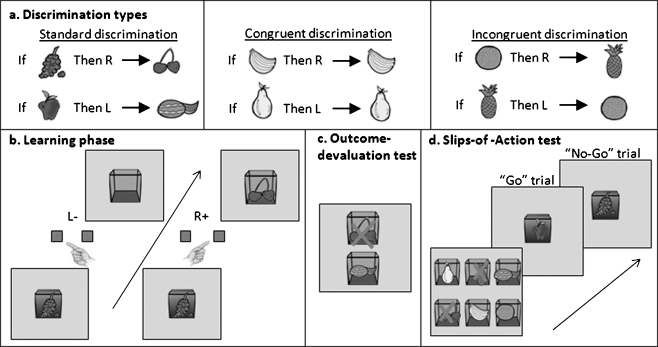
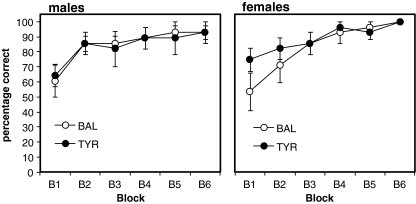
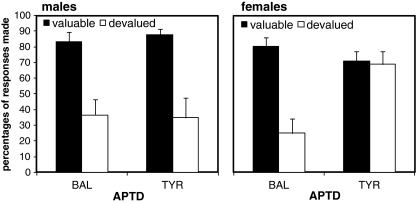
RATIONALE: Dopamine is well known to play an important role in learning and motivation. Recent animal studies have implicated dopamine in the reinforcement of stimulus-response habits, as well as in flexible, goal-directed action. However, the role of dopamine in human action control is still not well understood. OBJECTIVES: We present the first investigation of the effect of reducing dopamine function in healthy volunteers on the balance between habitual and goal-directed action control. METHODS: The dietary intervention of acute dietary phenylalanine and tyrosine depletion (APTD) was adopted to study the effects of reduced global dopamine function on action control. Participants were randomly assigned to either the APTD or placebo group (ns = 14) to allow for a between-subjects comparison of performance on a novel three-stage experimental paradigm. In the initial learning phase, participants learned to respond to different stimuli in order to gain rewarding outcomes. Subsequently, an outcome-devaluation test and a slips-of-action test were conducted to assess whether participants were able to flexibly adjust their behaviour to changes in the desirability of the outcomes. RESULTS: APTD did not prevent stimulus-response learning, nor did we find evidence for impaired response-outcome learning in the subsequent outcome-devaluation test. However, when goal-directed and habitual systems competed for control in the slips-of-action test, APTD tipped the balance towards habitual control. These findings were restricted to female volunteers. CONCLUSIONS: We provide direct evidence that the balance between goal-directed and habitual control in humans is dopamine dependent. The results are discussed in light of gender differences in dopamine function and psychopathologies.
Overview
The claims and statistics of this paper haven’t been checked yet.
Free: it reads the open-access text and checks the first 5 claims that cite a source we can check. Create a free account to check every claim.
Integrity signals
Registry
Cites
Statistics
Figures
Verification
Claims the paper makes
The claims and statistics of this paper haven’t been checked yet.
Free: it reads the open-access text and checks the first 5 claims that cite a source we can check. Create a free account to check every claim.
Claims other papers make about this one
Each is checked against this paper’s own text: does it say what the citing paper says it does?
The source backs part of the claim, not all of it — or backs it for a different population, condition or comparison.
In the citing paper
“Briefly, the instrumental learning task was developed to distinguish between goal-directed and habit-based learning,19 and has been used successfully in studies to establish habits in both animals and humans.24,41, 42, 43, 44”
From Behavioral and neuroimaging evidence for overreliance on habit learning in alcohol-dependent patients (2013) · cites this paper as [43]
Experimental — accuracy not yet measuredThe source backs part of the claim, not all of it — or backs it for a different population, condition or comparison.
In the citing paper
“Indeed, previous studies have demonstrated that both humans and animals adopt an S–R habitual learning strategy to solve this incongruent trial type.19,41, 42, 43, 44”
From Behavioral and neuroimaging evidence for overreliance on habit learning in alcohol-dependent patients (2013) · cites this paper as [43]
Experimental — accuracy not yet measuredThe cited source says what the claim attributes to it.
In the citing paper
“In these trials, goal-directed learning is disadvantageous, and performance relies solely on habitual control via direct S–R associations.”
From Behavioral and neuroimaging evidence for overreliance on habit learning in alcohol-dependent patients (2013) · cites this paper as [43]
In the citing paper
“The involvement of dopamine in goal-directed action is further supported by a study using an experimental dopamine depletion paradigm.43”
From Behavioral and neuroimaging evidence for overreliance on habit learning in alcohol-dependent patients (2013) · cites this paper as [43]
Self-check
Percentages, sums and reported differences re-computed from the paper’s own numbers.
The self-check needs the paper’s full text.
Citations
Cites
Manual for the Wechsler Adult Intelligence Scale.
Wechsler, D. (1955) · Psychological Corp. eBooks · Cited by 4,941
Predictive reward signal of dopamine neurons
Schultz, W. (1998) · Journal of Neurophysiology · doi:10.1152/jn.1998.80.1.1 · Cited by 4,564
Neural systems of reinforcement for drug addiction: from actions to habits to compulsion
Everitt, B. J., & Robbins, T. W. (2005) · Nature Neuroscience · doi:10.1038/nn1579 · Cited by 3,785
Self-citationWang, G.-J., Volkow, N. D., Logan, J., Pappas, N. R., Wong, C. T., Zhu, W., Netusll, N., & Fowler, J. S. (2001) · The Lancet · doi:10.1016/s0140-6736(00)03643-6 · Cited by 1,864
Balleine, B. W., & O'Doherty, J. P. (2010) · Neuropsychopharmacology · doi:10.1038/npp.2009.131 · Cited by 1,775
Dopamine-dependent prediction errors underpin reward-seeking behaviour in humans
Pessiglione, M., Seymour, B., Flandin, G., Dolan, R. J., & Frith, C. D. (2006) · Nature · doi:10.1038/nature05051 · Cited by 1,584
Why sex matters for neuroscience
Cahill, L. (2006) · Nature Reviews Neuroscience · doi:10.1038/nrn1909 · Cited by 1,540
Actions and habits: The development of behavioural autonomy
Dickinson, A. (1985) · Philosophical Transactions of the Royal Society of London. B, Biological Sciences · doi:10.1098/rstb.1985.0010 · Cited by 1,217
Dopamine responses comply with basic assumptions of formal learning theory
Waelti, P., Dickinson, A., & Schultz, W. (2001) · Nature · doi:10.1038/35083500 · Cited by 1,018
Toward a neurobiology of obsessive-compulsive disorder
Graybiel, A. M., & Rauch, S. L. (2000) · Neuron · doi:10.1016/s0896-6273(00)00113-6 · Cited by 864 · cited 2×
“Aberrant habit formation is also thought to play a central role in obsessive–compulsive disorder and Tourette syndrome (Gillan et al. 2011; Graybiel and Rauch 2000), which can be treated with DA receptor antagonists (McDougle et al.”
The neuropsychological basis of addictive behaviour
Everitt, B. J., Dickinson, A., & Robbins, T. W. (2001) · Brain Research Reviews · doi:10.1016/s0165-0173(01)00088-1 · Cited by 808
Self-citationGender differences in Parkinson's disease
Haaxma, C. A., Bloem, B. R., Borm, G. F., Oyen, W. J. G., Leenders, K. L., Eshuis, S., Booij, J., Dluzen, D. E., & Horstink, M. W. I. M. (2007) · Journal of Neurology, Neurosurgery & Psychiatry · doi:10.1136/jnnp.2006.103788 · Cited by 741
Belin, D., & Everitt, B. J. (2008) · Neuron · doi:10.1016/j.neuron.2007.12.019 · Cited by 697
Gillan, C. M., Papmeyer, M., Morein-Zamir, S., Sahakian, B. J., Fineberg, N. A., Robbins, T. W., & de Wit, S. (2011) · American Journal of Psychiatry · doi:10.1176/appi.ajp.2011.10071062 · Cited by 609 · cited 5×
“For detailed descriptions, we refer the reader to previous publications: learning stage and outcome-devaluation test (de Wit et al. 2007) and slips-of-action test (Gillan et al. 2011).”
InfluentialSelf-citationDopaminergic modulation of limbic and cortical drive of nucleus accumbens in goal-directed behavior
Goto, Y., & Grace, A. A. (2005) · Nature Neuroscience · doi:10.1038/nn1471 · Cited by 576
Eagle, D. M., Bari, A., & Robbins, T. W. (2008) · Psychopharmacology · doi:10.1007/s00213-008-1127-6 · Cited by 548
Self-citationPsychopathology in Women and Men: Focus on Female Hormones
Seeman, M. V. (1997) · American Journal of Psychiatry · doi:10.1176/ajp.154.12.1641 · Cited by 534
Amphetamine Exposure Enhances Habit Formation
Nelson, A., & Killcross, S. (2006) · The Journal of Neuroscience · doi:10.1523/jneurosci.4305-05.2006 · Cited by 445
Associative theories of goal-directed behaviour: a case for animal–human translational models
Wit, S., & Dickinson, A. (2009) · Psychological Research Psychologische Forschung · doi:10.1007/s00426-009-0230-6 · Cited by 424
Self-citationLesion to the nigrostriatal dopamine system disrupts stimulus-response habit formation
Faure, A., Haberland, U., Condé, F., & Massioui, N. E. (2005) · The Journal of Neuroscience · doi:10.1523/jneurosci.3894-04.2005 · Cited by 402
Involvement of the dorsal striatum in cue-controlled cocaine seeking
Vanderschuren, L. J. M. J., Di Ciano, P., & Everitt, B. J. (2005) · The Journal of Neuroscience · doi:10.1523/jneurosci.0925-05.2005 · Cited by 393
Frank, G. K., Bailer, U. F., Henry, S. E., Drevets, W., Meltzer, C. C., Price, J. C., Mathis, C. A., Wagner, A., Hoge, J., Ziolko, S., et al. (2005) · Biological Psychiatry · doi:10.1016/j.biopsych.2005.05.003 · Cited by 361 · cited 2×
“…disorder and Tourette syndrome (Gillan et al. 2011; Graybiel and Rauch 2000), which can be treated with DA receptor antagonists (McDougle et al. 1994), and in anorexia nervosa (Steinglass and Walsh 2006), a condition that has been associated with increased DA receptor activity (Frank et al. 2005).”
Dopaminergic Mechanisms in Actions and Habits: Figure 1.
Wickens, J. R., Horvitz, J. C., Costa, R. M., & Killcross, S. (2007) · The Journal of Neuroscience · doi:10.1523/jneurosci.1671-07.2007 · Cited by 271 · cited 1×
“Future research is required to investigate whether in humans, as in animals, low DA levels prevent the development of behavioural autonomy as a consequence of over-training (Wickens et al. 2007).”
The Nucleus Accumbens and Pavlovian Reward Learning
Day, J. J., & Carelli, R. M. (2007) · The Neuroscientist · doi:10.1177/1073858406295854 · Cited by 238
Involvement of basal ganglia and orbitofrontal cortex in goal-directed behavior
Hollerman, J. R., Tremblay, L., & Schultz, W. (2000) · Progress in Brain Research · doi:10.1016/s0079-6123(00)26015-9 · Cited by 221
Coordinated Accumbal Dopamine Release and Neural Activity Drive Goal-Directed Behavior
Cheer, J. F., Aragona, B. J., Heien, M. L. A. V., Seipel, A. T., Carelli, R. M., & Wightman, R. M. (2007) · Neuron · doi:10.1016/j.neuron.2007.03.021 · Cited by 204
Sex differences in striatal presynaptic dopamine synthesis capacity in healthy subjects
Laakso, A., Vilkman, H., Bergman, J. Ö., Haaparanta, M., Solin, O., Syvälahti, E., Salokangas, R. K. R., & Hietala, J. (2002) · Biological Psychiatry · doi:10.1016/s0006-3223(02)01369-0 · Cited by 203
de Wit, S., Corlett, P. R., Aitken, M. R., Dickinson, A., & Fletcher, P. C. (2009) · The Journal of Neuroscience · doi:10.1523/jneurosci.1639-09.2009 · Cited by 200
Sex differences in vulnerability to drug self-administration.
Lynch, W. J. (2006) · Experimental and Clinical Psychopharmacology · doi:10.1037/1064-1297.14.1.34 · Cited by 199
Risk of Becoming Cocaine Dependent: Epidemiological Estimates for the United States, 2000–2001
O'Brien, M. S., & Anthony, J. C. (2005) · Neuropsychopharmacology · doi:10.1038/sj.npp.1300681 · Cited by 198
Habit learning and anorexia nervosa: A cognitive neuroscience hypothesis
Steinglass, J., & Walsh, B. T. (2006) · International Journal of Eating Disorders · doi:10.1002/eat.20244 · Cited by 170
Roth, M. E., & Carroll, M. E. (2004) · Psychopharmacology · doi:10.1007/s00213-003-1670-0 · Cited by 168
Giladi, N., Weitzman, N., Schreiber, S., Shabtai, H., & Peretz, C. (2007) · Journal of Psychopharmacology · doi:10.1177/0269881106073109 · Cited by 164
Taylor, P. C. J., Nobre, A. C., & Rushworth, M. F. S. (2007) · The Journal of Neuroscience · doi:10.1523/jneurosci.2877-07.2007 · Cited by 159
Tyrosine depletion attenuates dopamine function in healthy volunteers
Harmer, C. J., McTavish, S. F. B., Clark, L., Goodwin, G. M., & Cowen, P. J. (2001) · Psychopharmacology · doi:10.1007/s002130000613 · Cited by 158 · cited 2×
“action by reducing global DA synthesis and transmission through acute phenylalanine and tyrosine depletion (APTD) (Harmer et al. 2001; Montgomery et al. 2003; Robinson et al. 2010; Vrshek-Schallhorn et al. 2006) before testing healthy volunteers on a novel instrumental paradigm (de Wit et al.”
Effect of a tyrosine-free amino acid mixture on regional brain catecholamine synthesis and release
McTavish, S. F. B., Cowen, P. J., & Sharp, T. (1999) · Psychopharmacology · doi:10.1007/s002130050823 · Cited by 151
Bidirectional modulation of goal-directed actions by prefrontal cortical dopamine
Hitchcott, P. K., Quinn, J. J., & Taylor, J. R. (2007) · Cerebral Cortex · doi:10.1093/cercor/bhm010 · Cited by 143
Are dopaminergic neurons selectively vulnerable to Parkinson's disease?
Agid, Y., Ruberg, M., Javoy-Agid, F., Hirsch, É. C., Raisman‐Vozari, R., Vyas, S., Faucheux, B. A., Michel, P. P., Kästner, A., & Blanchard, V. (1993) · PubMed · Cited by 127
The effects of tyrosine depletion in normal healthy volunteers: implications for unipolar depression
McLean, A., Rubinsztein, J. S., Robbins, T. W., & Sahakian, B. J. (2004) · Psychopharmacology · doi:10.1007/s00213-003-1586-8 · Cited by 125
Self-citationCombined SSRI-moclobemide treatment of psychiatric illness.
McDougle, C. J., Goodman, W. K., & Price, L. H. (1994) · PubMed · Cited by 124
Cholinergic deficiency and frontal dysfunction in Parkinson's disease
Dubois, B., Pillon, B., Lhermitte, F., & Agid, Y. (1990) · Annals of Neurology · doi:10.1002/ana.410280202 · Cited by 124
Habitual versus goal-directed action control in Parkinson disease
de Wit, S., Barker, R. A., Dickinson, A. D., & Cools, R. (2011) · Journal of Cognitive Neuroscience · doi:10.1162/jocn.2010.21514 · Cited by 116
Montgomery, A. J., McTavish, S. F. B., Cowen, P. J., & Grasby, P. M. (2003) · American Journal of Psychiatry · doi:10.1176/appi.ajp.160.10.1887 · Cited by 112
Leyton, M., Dagher, A., Boileau, I., Casey, K., Baker, G. B., Diksic, M., Gunn, R., Young, S. N., & Benkelfat, C. (2004) · Neuropsychopharmacology · doi:10.1038/sj.npp.1300328 · Cited by 95
Stimulus-outcome interactions during instrumental discrimination learning by rats and humans.
de Wit, S., Niry, D., Wariyar, R., Aitken, M. R. F., & Dickinson, A. (2007) · Journal of Experimental Psychology: Animal Behavior Processes · doi:10.1037/0097-7403.33.1.1 · Cited by 93
Sex-gender differences in drug abuse: A shift in the burden of proof?
Wetherington, C. L. (2007) · Experimental and Clinical Psychopharmacology · doi:10.1037/1064-1297.15.5.411 · Cited by 72
Mehta, M. A., Gumaste, D., Montgomery, A. J., McTavish, S. F. B., & Grasby, P. M. (2005) · Psychopharmacology · doi:10.1007/s00213-004-2128-8 · Cited by 67
Use of a dietary manipulation to deplete plasma tyrosine and phenylalanine in healthy subjects
Sheehan, B. D., Tharyan, P., McTavish, S. F. B., Campling, G. M., & Cowen, P. J. (1996) · Journal of Psychopharmacology · doi:10.1177/026988119601000309 · Cited by 54
McTavish, S. F. B., Callado, L., Cowen, P. J., & Sharp, T. (1999) · Journal of Psychopharmacology · doi:10.1177/026988119901300408 · Cited by 52
Robinson, O. J., Standing, H. R., DeVito, E. E., Cools, R., & Sahakian, B. J. (2010) · Psychopharmacology · doi:10.1007/s00213-010-1880-1 · Cited by 47
Self-citationResponse Style Theory Revisited: Gender Differences and Stereotypes in Rumination and Distraction
Strauss, J., Muday, T., McNall, K., & Wong, M. (1997) · Sex Roles · doi:10.1023/a:1025679223514 · Cited by 46
The Interaction between Discriminative Stimuli and Outcomes during Instrumental Learning
Dickinson, A., & de Wit, S. (2003) · The Quarterly Journal of Experimental Psychology Section B · doi:10.1080/02724990244000223 · Cited by 26
Munafó, M. R., Mannie, Z. N., Cowen, P. J., Harmer, C. J., & McTavish, S. B. (2007) · Journal of Psychopharmacology · doi:10.1177/0269881107077216 · Cited by 25 · cited 2×
“Previous publications have also pointed at gender differences in cognitive performance following APTD treatment (e.g., Munafo et al. 2007; Robinson et al. 2010).”
InfluentialAffective Bias and Response Modulation Following Tyrosine Depletion in Healthy Adults
Vrshek‐Schallhorn, S., Wahlstrom, D., Benolkin, K., White, T. J. H., & Luciana, M. M. (2006) · Neuropsychopharmacology · doi:10.1038/sj.npp.1301172 · Cited by 24
Research works printed but not linked: 1
- McDougle CJ Goodman WK Price LH Dopamine antagonists in tic-related and psychotic spectrum obsessive compulsive disorder J Clin Psychiatry 1994 55 Suppl 24 31 7521326
Cited by
Dolan, R. J., & Dayan, P. (2013) · Neuron · doi:10.1016/j.neuron.2013.09.007 · Cited by 977
Fineberg, N. A., Chamberlain, S. R., Goudriaan, A. E., Stein, D. J., Vanderschuren, L. J. M. J., Gillan, C. M., Shekar, S., Gorwood, P. A. P. M., Voon, V., Morein-Zamir, S., et al. (2014) · CNS Spectrums · doi:10.1017/s1092852913000801 · Cited by 488
Self-citationThe ubiquity of model-based reinforcement learning
Doll, B. B., Simon, D. A., & Daw, N. D. (2012) · Current Opinion in Neurobiology · doi:10.1016/j.conb.2012.08.003 · Cited by 380
de Wit, S., Watson, P., Harsay, H. A., Cohen, M. X., van de Vijver, I., & Ridderinkhof, K. R. (2012) · The Journal of Neuroscience · doi:10.1523/jneurosci.1088-12.2012 · Cited by 373
Self-citationSjoerds, Z., de Wit, S., van den Brink, W., Robbins, T. W., Beekman, A. T. F., Penninx, B. W. J. H., & Veltman, D. J. (2013) · Translational Psychiatry · doi:10.1038/tp.2013.107 · Cited by 312
Self-citation
Metadata
- Authors
- de Wit, S., Standing, H. R., DeVito, E. E., Robinson, O. J., Ridderinkhof, K. R., Robbins, T. W., & Sahakian, B. J.
- Affiliations
- University of Cambridge (GB)
- National Institutes of Health (US)
- University of Amsterdam (NL)
- ORCID
- Venue
- Psychopharmacology
- Published
- 2011-12-03
- Volume
- 219
- Issue
- 2
- Pages
- 621-631
- ISSN
- 0033-3158 (ISSN-L)
- 1432-2072
- PMC
- PMC3249188
- OpenAlex
- W2162158577
- Cited by
- 105
- References
- 54
- Citations by year
- 2026: 5 · 2025: 1 · 2024: 4 · 2023: 3 · 2022: 11 · 2021: 3 · 2020: 10 · 2019: 7 · 2018: 10 · 2017: 10 · 2016: 5 · 2015: 10 · 2014: 11 · 2013: 8 · 2012: 6
- FWCI
- 3.31
- Type
- journal article
- Language
- en
- Open access
- hybrid
- doi.org
- Licence
- cc-by-nc
- Locations
- Psychopharmacology (publishedVersion, cc-by-nc)
- Europe PMC (PubMed Central) (publishedVersion, cc-by-nc)
- PubMed Central (publishedVersion, cc-by-nc)
- PubMed (publishedVersion)
- UvA-DARE (University of Amsterdam) (publishedVersion, other-oa)
- UvA-DARE (University of Amsterdam) (submittedVersion, other-oa)
- UCL Discovery (University College London) (submittedVersion)
- Data Archiving and Networked Services (DANS) (submittedVersion, other-oa)
- Funders
- Wellcome Trust (076274/Z04/Z, 076274, 093875)
- Nederlandse Organisatie voor Wetenschappelijk Onderzoek
- National Institutes of Health
- Medical Research Council
- National Institute on Alcohol Abuse and Alcoholism (T32AA015496, AA015496)
- National Institute on Drug Abuse (K12DA031050)
- Topics
- Life Sciences › Neuroscience › Cellular and Molecular Neuroscience › Neurotransmitter Receptor Influence on Behavior
- Life Sciences › Neuroscience › Cognitive Neuroscience › Neural and Behavioral Psychology Studies
- Social Sciences › Psychology › Applied Psychology › Behavioral Health and Interventions
- Keywords
- dopamine, goal-directed behavior, habitual behavior, action control, acute dietary intervention, outcome devaluation, stimulus-response learning, gender differences, healthy volunteers
- MeSH terms
- Adaptation, Psychological, Adult, Amino Acids, Conditioning, Operant, Dopamine, Female, Habits, Humans, Male, Middle Aged, Phenylalanine, Tyrosine
About these checks
Registry, retraction, Cites and statistics results are computed, not judged, with one exception: a printed reference that no index lists is read once by a model before it counts as a citation error. Claims are extracted by a model and kept only when their quote appears verbatim in the text; each cited source is then checked, with a model’s help, for whether it says what the claim relies on. Those verdicts can be wrong — read the claim’s quote and the cited source before relying on one.
Statistics and arithmetic are recomputed, not judged.
Confidence bands are shown only for fields calibrated on our annotated test set. None is calibrated yet, so no band is shown.
What counts as a claim ›How we measure confidence ›How we check this ›
Are you an author, or do you see a problem with this page? Request a review
Data sources
Bibliographic data: Semantic Scholar, OpenAlex, Crossref.
Contains information from the Semantic Scholar Academic Graph Datasets, made available under the ODC Attribution License (ODC-BY 1.0).
Semantic Scholar’s data is described in: Kinney, R., et al. (2023). The Semantic Scholar Open Data Platform. arXiv:2301.10140.
