

The first NINDS/NIBIB consensus meeting to define neuropathological criteria for the diagnosis of chronic traumatic encephalopathy
Open accessThe DOI matches its Crossref record; 48 of the 49 references it cites were found in a registry or an index.
Abstract
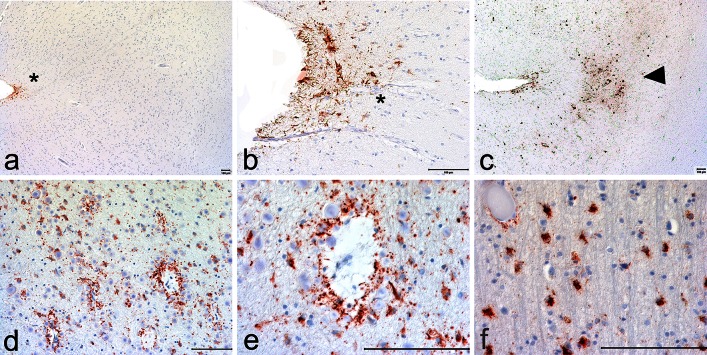
Chronic traumatic encephalopathy (CTE) is a neurodegeneration characterized by the abnormal accumulation of hyperphosphorylated tau protein within the brain. Like many other neurodegenerative conditions, at present, CTE can only be definitively diagnosed by post-mortem examination of brain tissue. As the first part of a series of consensus panels funded by the NINDS/NIBIB to define the neuropathological criteria for CTE, preliminary neuropathological criteria were used by 7 neuropathologists to blindly evaluate 25 cases of various tauopathies, including CTE, Alzheimer's disease, progressive supranuclear palsy, argyrophilic grain disease, corticobasal degeneration, primary age-related tauopathy, and parkinsonism dementia complex of Guam. The results demonstrated that there was good agreement among the neuropathologists who reviewed the cases (Cohen's kappa, 0.67) and even better agreement between reviewers and the diagnosis of CTE (Cohen's kappa, 0.78). Based on these results, the panel defined the pathognomonic lesion of CTE as an accumulation of abnormal hyperphosphorylated tau (p-tau) in neurons and astroglia distributed around small blood vessels at the depths of cortical sulci and in an irregular pattern. The group also defined supportive but non-specific p-tau-immunoreactive features of CTE as: pretangles and NFTs affecting superficial layers (layers II-III) of cerebral cortex; pretangles, NFTs or extracellular tangles in CA2 and pretangles and proximal dendritic swellings in CA4 of the hippocampus; neuronal and astrocytic aggregates in subcortical nuclei; thorn-shaped astrocytes at the glial limitans of the subpial and periventricular regions; and large grain-like and dot-like structures. Supportive non-p-tau pathologies include TDP-43 immunoreactive neuronal cytoplasmic inclusions and dot-like structures in the hippocampus, anteromedial temporal cortex and amygdala. The panel also recommended a minimum blocking and staining scheme for pathological evaluation and made recommendations for future study. This study provides the first step towards the development of validated neuropathological criteria for CTE and will pave the way towards future clinical and mechanistic studies.
Overview
The claims and statistics of this paper haven’t been checked yet.
Free: it reads the open-access text and checks the first 5 claims that cite a source we can check. Create a free account to check every claim.
Integrity signals
Registry
Cites
Statistics
Figures
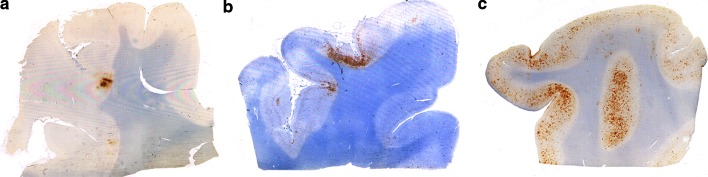
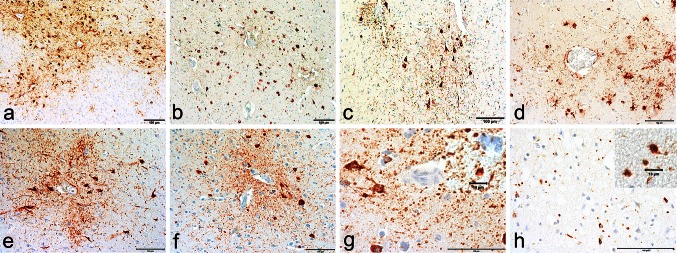
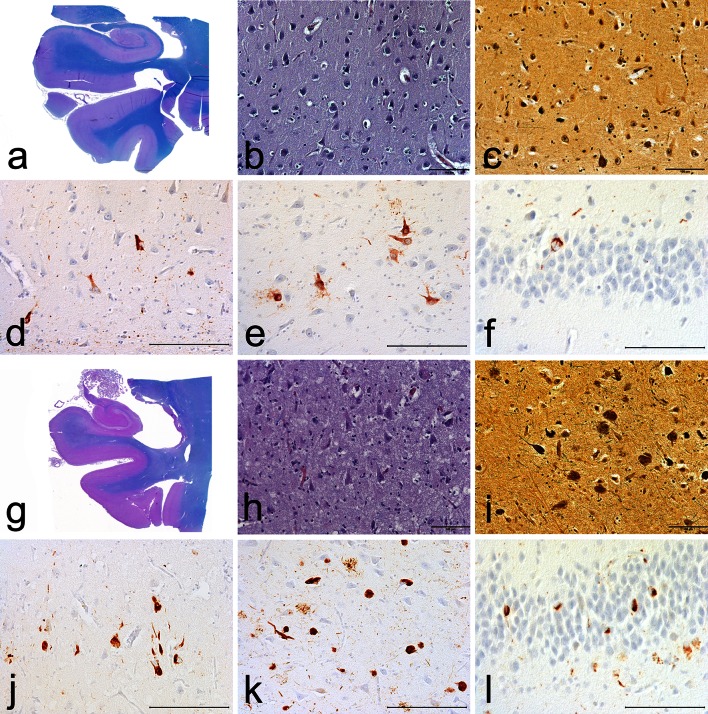
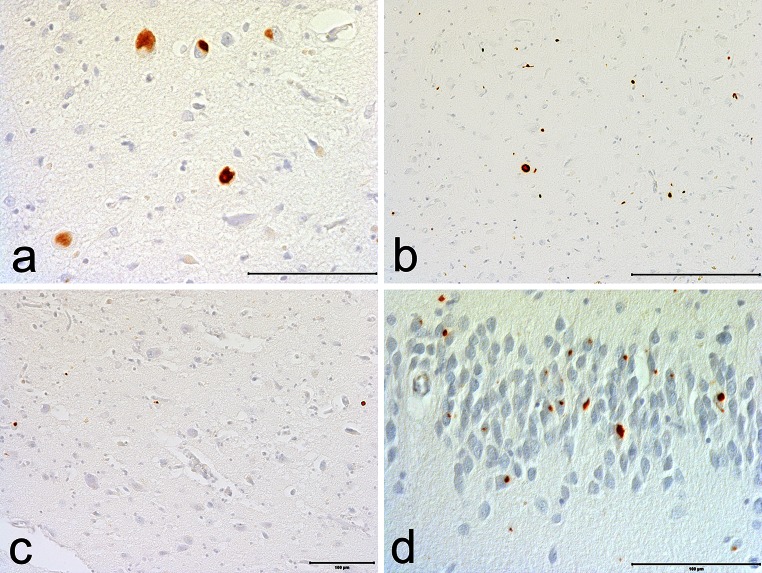
Verification
Claims the paper makes
The claims and statistics of this paper haven’t been checked yet.
Free: it reads the open-access text and checks the first 5 claims that cite a source we can check. Create a free account to check every claim.
Claims other papers make about this one
Each is checked against this paper’s own text: does it say what the citing paper says it does?
The cited source doesn’t support the claim as written.
In the citing paper
“Unlike Alzheimer's, beta-amyloid plaques are uncommon in CTE.191,192”
From 2023 Alzheimer's disease facts and figures (2023) · cites this paper as [192]
Checked by a reasoning model — may be wrong.
Experimental — accuracy not yet measuredThe source backs part of the claim, not all of it — or backs it for a different population, condition or comparison.
In the citing paper
“Most of the above-mentioned gross and microscopic features have not, as yet, been independently verified as specific to CTE [27–30], and virtually all are associated with aging, other neurological diseases, or both.”
From The Need to Separate Chronic Traumatic Encephalopathy Neuropathology from Clinical Features (2017) · cites this paper as [30]
Experimental — accuracy not yet measuredThe source backs part of the claim, not all of it — or backs it for a different population, condition or comparison.
In the citing paper
“The diagnostic criteria for CTE has no lower bound, meaning that one focus of p-tau is sufficient for a diagnosis [100].”
From DNA repair deficiency and senescence in concussed professional athletes involved in contact sports (2019) · cites this paper as [100]
Experimental — accuracy not yet measuredThe source backs part of the claim, not all of it — or backs it for a different population, condition or comparison.
In the citing paper
“It has been reported that this technique may detect CTE pathology in 20% of cases that is otherwise not detectable by routine histopathological and immunohistochemical methods for dementia diagnosis (15).”
From Mild Chronic Traumatic Encephalopathy Neuropathology in People With No Known Participation in Contact Sports or History of Repetitive Neurotrauma (2019) · cites this paper as [15]
Experimental — accuracy not yet measuredThe source backs part of the claim, not all of it — or backs it for a different population, condition or comparison.
In the citing paper
“In 2015, preliminary consensus criteria were developed for defining the neuropathology of CTE, which substantially narrowed the pathology previously reported to be characteristic.”
From The Need to Separate Chronic Traumatic Encephalopathy Neuropathology from Clinical Features (2017) · cites this paper as [30]
Experimental — accuracy not yet measured
13 more claims about this paper
Create a free account to see every claim other papers make about this one.
Self-check
Percentages, sums and reported differences re-computed from the paper’s own numbers.
The self-check needs the paper’s full text.
Citations
Cites
Statistical Methods for Rates and Proportions
Fleiss, J. L., Levin, B., & Paik, M. C. (2003) · Wiley Series in Probability and Statistics · doi:10.1002/0471445428 · Cited by 18,646
Montine, T. J., Phelps, C. H., Beach, T. G., Bigio, E. H., Cairns, N. J., Dickson, D. W., Duyckaerts, C., Frosch, M. P., Masliah, E., Mirra, S. S., et al. (2012) · Acta Neuropathologica · doi:10.1007/s00401-011-0910-3 · Cited by 2,894 · cited 7×
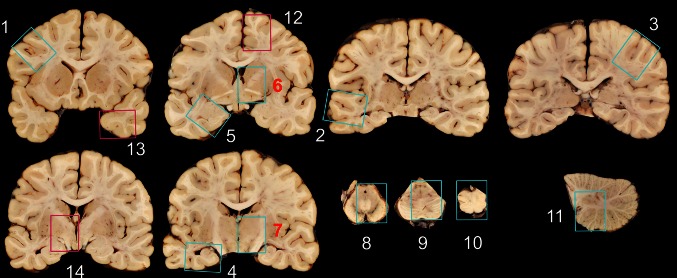
“Of the NIA-AA sampling guidelines, the following blocks are most valuable for detecting CTE: sulcal depths of the superior and middle frontal gyrus, superior and middle temporal gyrus and inferior parietal gyrus (Fig.”
BackgroundMethodInfluentialSelf-citationChronic traumatic encephalopathy in athletes: Progressive tauopathy after repetitive head injury
McKee, A. C., Cantu, R. C., Nowinski, C. J., Hedley-Whyte, E. T., Gavett, B. E., Budson, A. E., Santini, V. E., Lee, H.-S., Kubilus, C. A., & Stern, R. A. (2009) · Journal of Neuropathology & Experimental Neurology · doi:10.1097/nen.0b013e3181a9d503 · Cited by 2,295 · cited 2×
“Although 9 of the 10 subjects diagnosed with CTE in this study were former American football players and only one was a former professional boxer, previous data has shown that the pathological features of CTE associated with boxing (often referred to as “dementia pugilistica”) are similar to the pathological features…”
ResultSelf-citationThe spectrum of disease in chronic traumatic encephalopathy
McKee, A. C., Stein, T. D., Nowinski, C. J., Stern, R. A., Daneshvar, D. H., Alvarez, V. E., Lee, H.-S., Hall, G., Wojtowicz, S. M., Baugh, C. M., et al. (2013) · Brain · doi:10.1093/brain/aws307 · Cited by 2,098 · cited 7×
“Although 9 of the 10 subjects diagnosed with CTE in this study were former American football players and only one was a former professional boxer, previous data has shown that the pathological features of CTE associated with boxing (often referred to as “dementia pugilistica”) are similar to the pathological features…”
BackgroundMethodResultInfluentialSelf-citationPrimary age-related tauopathy (PART): a common pathology associated with human aging
Crary, J. F., Trojanowski, J. Q., Schneider, J. A., Abisambra, J. F., Abner, E. L., Alafuzoff, I., Arnold, S. E., Attems, J., Beach, T. G., Bigio, E. H., et al. (2014) · Acta Neuropathologica · doi:10.1007/s00401-014-1349-0 · Cited by 1,467 · cited 1×
“The neuropathologists were given a tauopathy criteria guide that provided the provisional criteria for CTE [32] as well as published criteria for the other tauopathies (See supplementary material for full tauopathy criteria guide) [4, 7, 11, 21, 25, 34, 40, 47].”
MethodSelf-citationCairns, N. J., Bigio, E. H., Mackenzie, I. R. A., Neumann, M., Lee, V. M.-Y., Hatanpaa, K. J., White, C. L., Schneider, J. A., Grinberg, L. T., Halliday, G., et al. (2007) · Acta Neuropathologica · doi:10.1007/s00401-007-0237-2 · Cited by 1,110 · cited 1×
“The neuropathologists were given a tauopathy criteria guide that provided the provisional criteria for CTE [32] as well as published criteria for the other tauopathies (See supplementary material for full tauopathy criteria guide) [4, 7, 11, 21, 25, 34, 40, 47].”
MethodSelf-citationGoldstein, L. E., Fisher, A. M., Tagge, C. A., Zhang, X.-L., Velisek, L., Sullivan, J. A., Upreti, C., Kracht, J. M., Ericsson, M., Wojnarowicz, M. W., et al. (2012) · Science Translational Medicine · doi:10.1126/scitranslmed.3003716 · Cited by 958 · cited 1×
“Recent neuropathological studies have identified CTE in athletes who played soccer, baseball, ice hockey and rugby, as well as in military personnel exposed to explosive blast [15, 29, 31, 32, 36, 45].”
BackgroundSelf-citationChronic Traumatic Encephalopathy in a National Football League Player
Omalu, B. I., DeKosky, S. T., Minster, R. L., Kamboh, M. I., Hamilton, R. L., & Wecht, C. H. (2005) · Neurosurgery · doi:10.1227/01.neu.0000163407.92769.ed · Cited by 894
Hauw, J.-J., Daniel, S. E., Dickson, D., Horoupian, D. S., Jellinger, K., Lantos, P. L., McKee, A., Tabaton, M., & Litvan, I. (1994) · Neurology · doi:10.1212/wnl.44.11.2015 · Cited by 852 · cited 6×
“In the 15 other tauopathy cases (cases submitted for review with diagnoses other than CTE) (Supplementary Table 2), the reviewers generally agreed with the submission diagnoses of AD (97.1 % of responses), CBD (92.8 %), and PART (78.5 %); however, there were frequent discrepancies in cases with the presumptive diagnos…”
MethodInfluentialSelf-citationCorsellis, J. A. N., Bruton, C. J., & Freeman-Browne, D. (1973) · Psychological Medicine · doi:10.1017/s0033291700049588 · Cited by 836 · cited 2×
“While initial reports of boxers with CTE described cerebellar scarring, atrophy and loss of Purkinje cells [5], recent studies of pugilists find that cerebellar pathology is rare aside from p-tau NFTs and neurites in the dentate nucleus, Purkinje cells and roof of the 4th ventricle [28, 32].”
Result
Research works printed but not linked: 2
- Darby A, Adams J, Babcock K, Avarez V, Stein T, McKee A (2015) Detection of CTE in autopsy cohorts using restricted cortical sampling. In: Journal of Neuropathology and Experimental Neurology, vol 6. Lippincott Williams and Wilkins Two Commerce SQ, 2001 Market ST, Philadelphia, pp 615–615
- Millspaugh J Dementia pugilistica US Naval Med Bull 1937 35 297Y303
Cited by
Items 801–886 of 886
Bromberg, M. B. (2022) · Journal of Clinical Neuromuscular Disease · doi:10.1097/cnd.0000000000000399
Brain trauma and neurodegenerative diseases
Růžička, F. (2021) · Neurologie pro praxi · doi:10.36290/neu.2021.104
A review on shared clinical and biological aspects of bipolar disorder and frontotemporal dementiaPreprint
Nascimento, C. F., Nunes, P. V., Rodriguez, R. D., Takada, L. T., Suemoto, C. K., Grinberg, L. T., Nitríni, R., & Lafer, B. (2018) · OSF Preprints (OSF Preprints) · doi:10.31219/osf.io/7gjzn
Mistry, A. D., McCabe, T., & Currie, A. (2020) · Cambridge University Press eBooks · doi:10.1017/9781108767187.014
Wibawa, P. (2017) · Radiopaedia.org · doi:10.53347/rid-54132
Oakley, B. R. (2019) · Faculty Opinions – Post-Publication Peer Review of the Biomedical Literature · doi:10.3410/f.735362312.793564554
Hainline, B. W., & Stern, R. A. (2018) · Handbook of clinical neurology · doi:10.1016/b978-0-444-63954-7.00043-4
Josephs, K. A., Rodriguez‐Porcel, F. E., Shatz, R. S., Weintraub, D. A., & Espay, A. J. (2020) · Cambridge University Press eBooks · doi:10.1017/9781108355841.024
Havlicek, D. F., Furhang, R., Nikulina, E., Smith-Salzberg, B., Lawless, S., Sevarin, S. A., Mallaboeva, S., Nayab, F., Seifert, A. C., Crary, J. F., et al. (2022) · bioRxiv (Cold Spring Harbor Laboratory) · doi:10.1101/2022.05.19.492705
Self-citationThirty years post-injury: Impact of traumatic brain injury on later Alzheimer’s disease
Takashi, H., & Hanayama, K. (2022) · Elsevier eBooks · doi:10.1016/b978-0-12-823347-4.00022-1
Transmissible human proteopathies: an expanding field
Jaunmuktane, Z., & Brandner, S. (2022) · Diagnostic histopathology · doi:10.1016/j.mpdhp.2022.07.002
Aranha, M. R., Coutinho, A. M., Carneiro, C. D. G., Pastorello, B., Studart‐Neto, A., Guariglia, C., Tsunemi, M. H., Moreira, E. L. S., Ianof, J. N., Anghinah, R., et al. (2022) · Research Square · doi:10.21203/rs.3.rs-1378031/v1
Neuroimmune proteins can differentiate between tauopathiesPreprint
Cherry, J. D., Baucom, Z. H., Eppich, K. G., Kirsch, D. A., Dixon, E. R., Tripodis, Y., Bieniek, K. F., Farrell, K. W., Whitney, K. R., Uretsky, M., et al. (2022) · Research Square · doi:10.21203/rs.3.rs-2092813/v1
Self-citationKawamura, L. R. D. S. M., Mota, I. F. L., Vasconcelos, A. S., & Mortari, M. R. (2022) · Brain Research · doi:10.1016/j.brainres.2022.148176 · Cited by 1
Promotion of Brain Health Through Prevention: The Case of Sports Concussion
Echemendía, R. J., & Bailey, C. M. (2022) · Springer eBooks · doi:10.1007/978-3-031-11389-5_10
Monsour, M. A., Wolfson, D. I., Jo, J., Terry, D. P., & Zuckerman, S. L. (2023) · Journal of Neurosurgical Sciences · doi:10.23736/s0390-5616.22.05895-7 · Cited by 1
Langetermijngevolgen en neurodegeneratie
Vijverberg, E. G. B. (2021) · Bohn Stafleu van Loghum eBooks · doi:10.1007/978-90-368-2659-4_13
Neurodegenerative Langzeitfolgen
Gänsslen, A., Schmehl, I., Wieckhorst, B., & Kringler, W. (2023) · Springer eBooks · doi:10.1007/978-3-662-65600-6_38
Prior Axonal Injury Can Facilitate Future Traumatic Brain Injury – a Computational StudyPreprint
Bakhtiarydavijani, A., & Stone, T. W. (2023) · SSRN Electronic Journal · doi:10.2139/ssrn.4513482
Chronic Traumatic Encephalopathy (CTE) - An Update and Overview
Mobbs, R. E. (2023) · Advances in Clinical Neuroscience & Rehabilitation · doi:10.47795/qhph3169
Lloyd, R. V. (2023) · Springer eBooks · doi:10.1007/978-3-031-39554-3_12
Medico-legal implications of dementia following concussion in rugby football
Todd, N. V. (2024) · Medico-Legal Journal · doi:10.1177/00258172231184550
Domestic violence and chronic traumatic encephalopathy (CTE) – a forensic perspective
Tiemensma, M., & Byard, R. W. (2024) · Forensic Science Medicine and Pathology · doi:10.1007/s12024-024-00856-x · Cited by 1
“As it is also recognised that the majority of victims do not report histologically as neurofibrillary tangles and pretangles in the depths of the cerebral sulci [10, 11], and later spreading to other parts of the brain [12].”
Head Impact, Concussion, and Salary in the NFL: Is There a Compensating Wage-Risk Premium?
Walia, B., Owora, A. H., Kmush, B. L., Ehrlich, J. A., & Sanders, S. D. (2024) · American Behavioral Scientist · doi:10.1177/00027642241260774
“Especially in stages 3 and 4, CTE presents as a visible, whole-brain disease in which pTau protein tangles accumulate (McKee et al., 2016).”
Metabolic Surgery and Chronic Traumatic Encephalopathy: Perceptions of Former NFL Players
McGlennon, T. W., Roberts, A. J., Buchwald, J. N., Pories, W. J., Ahnfeldt, E. P., Perryman, S. V., Greimel, S., & Buchwald, H. (2024) · Obesity Surgery · doi:10.1007/s11695-024-07475-z
“Using these predictors, with CSS as the target variable, a multivariate analysis was performed and a significant regression model was found (F[3, 39] = 4.721, p = 0.005; R = 0.420, R2 = 0.177; Durbin–Watson = 2.180).”
InfluentialCapacci, A. G., & Paras, N. A. (2024) · Medicinal chemistry reviews · doi:10.1021/mc-2024-vol59.ch02
Other Tau-Related Parkinsonisms
Buciuc, M., & Josephs, K. A. (2025) · Cambridge University Press eBooks · doi:10.1017/9781108989855.035
Selmanovic, E., Pruyser, A., Seifert, A. C., Delman, B. N., Thorn, E. L., Folkerth, R. D., & Dams-O’Connor, K. (2025) · medRxiv · doi:10.1101/2025.02.24.25322800 · Cited by 1
Self-citationMarkowitz, J. S. (2025) · Frontiers in Neurology · doi:10.3389/fneur.2025.1566819
“These concussive and sub concussive exposures can result in long-term neurodegenerative issues including chronic traumatic encephalopathy, or CTE (3, 4).”
7 Concussion: Long-term Sequelae Concussion
(2025) · Thieme Medical Publishers eBooks · doi:10.1055/b-0045-209379
Bigard, X. A., & Vital, J.-M. (2025) · Bulletin de l Académie Nationale de Médecine · doi:10.1016/j.banm.2025.04.013 · Cited by 1
Jak, A. J., & Lopez, F. (2025) · Springer eBooks · doi:10.1007/978-3-031-87228-0_4
Adamovych, I. M., & Kostenko, V. О. (2025) · Актуальні проблеми сучасної медицини Вісник Української медичної стоматологічної академії · doi:10.31718/2077-1096.25.2.141 · Cited by 1
1970 to 2000: transitioning to an immunohistochemistry-only diagnosis
Castellani, R. J. (2025) · Elsevier eBooks · doi:10.1016/b978-0-323-99651-8.00002-8
The modern chronic traumatic encephalopathy era
Castellani, R. J. (2025) · Elsevier eBooks · doi:10.1016/b978-0-323-99651-8.00020-x
Castellani, R. J. (2025) · Elsevier eBooks · doi:10.1016/b978-0-323-99651-8.00008-9
Castellani, R. J. (2025) · Elsevier eBooks · doi:10.1016/b978-0-323-99651-8.00018-1
Biomechanical Considerations of Concussion
Nyaboga, A. A., & Choe, M. C. (2025) · Clinics in Sports Medicine · doi:10.1016/j.csm.2025.05.009
Neuropathologie et physiopathologie
Joyon, N., Leclerc, J., Derkinderen, P., Meissner, W. G., & Duyckaerts, C. J. (2020) · Elsevier eBooks · doi:10.1016/b978-2-294-76802-6.00003-7 · Cited by 1
Degeneffe, C. E., Magat, K. A., & Constein, A. (2025) · Rehabilitation Counseling Bulletin · doi:10.1177/00343552251349508
“Symptoms (McKee et al., 2016) can include dementia, movement disorders, executive functioning deficits, depression, and suicidal ideation, among various other types of possible impairments.”
Mohammadifard, F., Aghajanian, S., Mohammadi, I., Firouzabadi, S. R., Bagheri, A. B., & Elsamadicy, A. A. (2025) · Neurosurgical Review · doi:10.1007/s10143-025-03874-7
“Additionally, the distinct subfields of the hippocampus were involved during CTE in comparison to AD [ 30 , 87 ].”
Ashworth, B., Godley, J., & Daykin, A. R. (2025) · Research Square · doi:10.21203/rs.3.rs-8056734/v1
Kim, E., Vatsavayai, S. C., & Seeley, W. W. (2025) · Cambridge University Press eBooks · doi:10.1017/9781108985055.004
Ashworth, B., Godley, J., & Daykin, A. R. (2025) · Research Square · doi:10.21203/rs.3.rs-8056734/v2
Ortiz, C., Pearson, A., McCartan, R., Roche, S., Carothers, N., Browning, M., Perez, S., He, B., Ginsberg, S. D., Mullan, M., et al. (2024) · Figshare · doi:10.6084/m9.figshare.25834283
Additional file 1 of Neuroimmune proteins can differentiate between tauopathies
Cherry, J. D., Baucom, Z. H., Eppich, K. G., Kirsch, D. A., Dixon, E., Tripodis, Y., Bieniek, K. F., Farrell, K. W., Whitney, K. R., Uretsky, M., et al. (2022) · Figshare · doi:10.6084/m9.figshare.21592576
Self-citationAlosco, M. L., Mariani, M. L., Adler, C. H., Balcer, L. J., Bernick, C. B., Au, R., Banks, S. J., Barr, W., Bouix, S., Cantu, R. C., et al. (2021) · Figshare · doi:10.6084/m9.figshare.15162156
Self-citationGutierrez-Quiceno, L., Dammer, E. B., Johnson, A. G., Webster, J. A., Shah, R., Duong, D., Yin, L., Seyfried, N. T., Alvarez, V. E., Stein, T. D., et al. (2021) · Figshare · doi:10.6084/m9.figshare.14850628
Self-citationOrtiz, C., Pearson, A., McCartan, R., Roche, S., Carothers, N., Browning, M., Perez, S., He, B., Ginsberg, S. D., Mullan, M., et al. (2024) · Figshare · doi:10.6084/m9.figshare.25834136
van Amerongen, S., Kamps, S., Kaijser, K. K. M., Pijnenburg, Y. A. L., Scheltens, P., Teunissen, C. E., Barkhof, F., Ossenkoppele, R., Rozemüller, A. J. M., Stern, R. A., et al. (2023) · Figshare · doi:10.6084/m9.figshare.22792784
Asken, B. M., & Rabinovici, G. D. (2021) · Figshare · doi:10.6084/m9.figshare.14651208
Rosen, G. A., Kirsch, D. A., Horowitz, S., Cherry, J. D., Nicks, R., Kelley, H. J., Uretsky, M., Dell’Aquila, K., Mathias, R., Cormier, K. A., et al. (2024) · Figshare · doi:10.6084/m9.figshare.26606581
Self-citationStern, R. A., Trujillo‐Rodriguez, D., Tripodis, Y., Pulukuri, S. V., Alosco, M. L., Adler, C. H., Balcer, L. J., Bernick, C. B., Baucom, Z., MAREK, K. L., et al. (2023) · Figshare · doi:10.6084/m9.figshare.24257416
Self-citationKahriman, A., Bouley, J., Smith, T. W., Bosco, D. A., Woerman, A. L., & Henninger, N. (2021) · Figshare · doi:10.6084/m9.figshare.14880618
Ortiz, C., Pearson, A., McCartan, R., Roche, S., Carothers, N., Browning, M., Perez, S., He, B., Ginsberg, S. D., Mullan, M., et al. (2024) · Figshare · doi:10.6084/m9.figshare.26721285
Additional file 3 of Neuroimmune proteins can differentiate between tauopathies
Cherry, J. D., Baucom, Z. H., Eppich, K. G., Kirsch, D. A., Dixon, E., Tripodis, Y., Bieniek, K. F., Farrell, K. W., Whitney, K. R., Uretsky, M., et al. (2022) · Figshare · doi:10.6084/m9.figshare.21592582
Self-citationCherry, J. D., Meng, G., Daley, S. A., Xia, W., Svirsky, S. E., Alvarez, V. E., Nicks, R., Pothast, M. J., Kelley, H. J., Huber, B. R., et al. (2020) · Figshare · doi:10.6084/m9.figshare.13337689
Self-citationAdditional file 2 of Neuroimmune proteins can differentiate between tauopathies
Cherry, J. D., Baucom, Z. H., Eppich, K. G., Kirsch, D. A., Dixon, E., Tripodis, Y., Bieniek, K. F., Farrell, K. W., Whitney, K. R., Uretsky, M., et al. (2022) · Figshare · doi:10.6084/m9.figshare.21592579
Self-citationRosen, G. A., Kirsch, D. A., Horowitz, S., Cherry, J. D., Nicks, R., Kelley, H. J., Uretsky, M., Dell’Aquila, K., Mathias, R., Cormier, K. A., et al. (2024) · Figshare · doi:10.6084/m9.figshare.26606587
Self-citationStopschinski, B. E., Tredici, K. D., Estill-Terpack, S.-J., Ghebremedhin, E., Yu, F. F., Braak, H., & Diamond, M. I. (2021) · Figshare · doi:10.6084/m9.figshare.16786942
Ortiz, C., Pearson, A., McCartan, R., Roche, S., Carothers, N., Browning, M., Perez, S., He, B., Ginsberg, S. D., Mullan, M., et al. (2024) · Figshare · doi:10.6084/m9.figshare.26721288
Rosen, G. A., Kirsch, D. A., Horowitz, S., Cherry, J. D., Nicks, R., Kelley, H. J., Uretsky, M., Dell’Aquila, K., Mathias, R., Cormier, K. A., et al. (2024) · Figshare · doi:10.6084/m9.figshare.26606584
Self-citationCommotion cérébrale du sportif
Brauge, D., Pariente, J., Chermann, J.-F., & Lagarrigue, J. (2020) · Elsevier eBooks · doi:10.1016/b978-2-294-76248-2.00032-0
Mechanisms of Dural Involvement in Cerebral Amyloid Angiopathy
Zedde, M., Piazza, F., & Pascarella, R. (2025) · Cells · doi:10.3390/cells15010026
“In CTE, tau pathology is predominant, with deposition of other neurodegeneration-related proteins, including A β [132,133,135].”
Epilepsy and Neurodegeneration
Thom, M., & Koepp, M. J. (2026) · Epilepsy · doi:10.1002/9781394340064.ch22
Mirza, M., & Ahmed, Z. (2026) · Frontiers in Neurology · doi:10.3389/fneur.2026.1720290 · Cited by 1
Dong, X., Su, Y., Li, C., Ma, X., Zhu, Z., Yang, J., Luo, Z., Gao, J., Ma, Y., Yao, S., et al. (2026) · Journal of Proteomics · doi:10.1016/j.jprot.2026.105656
The Pharmacology and Dual Role of Proteostasis in Amyloidoses
Albanese, A., Natu, M. M., & Seidler, P. M. (2026) · Biophysica · doi:10.3390/biophysica6020031
Traumatic Brain Injury in an Elite Adolescent Soccer Goalkeeper: A Case Report
Drummond, A., Patel, H. C., Jackson, R., & Carlos, W. (2026) · Cureus · doi:10.7759/cureus.109088
“…is growing evidence base regarding the long-term neurological consequences of repetitive head trauma, which has highlighted the risk of developing chronic traumatic encephalopathy (CTE), a progressive neurodegenerative condition associated with repeated concussive and subconcussive injuries [7].”
Iverson, G. L., Jamshidi, P., Deep‐Soboslay, A., Hyde, T. M., Kleinman, J. E., Shepherd, C. E., Hazrati, L., & Castellani, R. J. (2026) · Journal of Neuropathology & Experimental Neurology · doi:10.1093/jnen/nlag032
Polet, K., Aeschlimann, Y., Deslauriers‐Gauthier, S., Hesse, S., Morisot, A., Pesce, A., Chanalet, S., Liberatore, M., Faraggi, M., Scarlot, R., et al. (2026) · Sports Medicine - Open · doi:10.1186/s40798-026-01036-7 · Cited by 1
“This is primarily linked to conditions, such as chronic traumatic encephalopathy [76] and motor neuron disease [83, 84], likely due to the cumulative effect of repetitive SRCs and rSHI sustained throughout their careers [79].”
Miner, A. E., Kmiecik, M. J., Namburi, N., Dunckley, N., Adler, C. H., Driver‐Dunckley, E. D., Nowinski, C. J., Gottesman, J., Tripodis, Y., Stern, R. A., et al. (2026) · Movement Disorders · doi:10.1002/mds.70380
Self-citationWiegand, T. L. T., Rubinski, A., Jung, L., Franzmeier, N., Arciniega, H., Ravanfar, P., Dewenter, A., Alosco, M. L., Tripodis, Y., Su, Y., et al. (2026) · Alzheimer s & Dementia · doi:10.1002/alz.71503
“1,5,6 The progressive nature of CTE is characterized by a distinct spatial pattern of NFT progression across the brain.”
Self-citationChronic traumatic encephalopathy: A devastating legacy of repetitive concussion
Jun, S., Arrasmith, C., & Liaudanskaya, V. (2026) · Neurobiology of Disease · doi:10.1016/j.nbd.2026.107508 · Cited by 1
“In early-stage CTE, hyperphosphorylated tau is found in clusters of perivascular neurons and glia, concentrated at the depths of cortical sulci (McKee et al., 2023; McKee et al., 2016b).”
InfluentialMiner, A. E., Aaronson, A., Trujillo‐Rodriguez, D., Groh, J. R., & Alosco, M. L. (2026) · Seminars in Pediatric Neurology · doi:10.1016/j.spen.2026.101318
Ethan, D., Basch, C., & Hillyer, G. C. (2026) · Journal of Community Health · doi:10.1007/s10900-026-01594-7
Garza, T. N., & Abisambra, J. F. (2026) · Cells · doi:10.3390/cells15151365 · Cited by 1
“Specifically, tau in CTE is irregularly distributed, and it appears as hyperphosphorylated aggregates in neurons and astroglia at the cortical sulci [77].”
Mayilsamy, K., Patel, P. B., Green, R. J., Bikkasani, S., Tosi, K., Majumdar, S., Prajapati, S. K., Markoutsa, E., Wolf, T., Guergues, J., et al. (2026) · Molecular Therapy · doi:10.64898/2026.09.04.748639
“9 These findings align with reports that primed microglia maintain prolonged cytokine, chemokine, ROS, and complement production [7, 44], contributing to maladaptive synaptic pruning and diffuse axonal injury [45, 46].”
Miner, A. E., Naeve, E., Rivers, J. L., Aaronson, A., Groh, J. R., Tripodis, Y., Roebuck, M., Schneider, G., Palmisano, J. N., Martin, B. M., et al. (2026) · Journal of Psychiatric Research · doi:10.1016/j.jpsychires.2026.09.008
Self-citationTraumatic Brain Injury and the Road to Alzheimer’s Disease
Kaveh, R., Kamari, F., Høilund‐Carlsen, P. F., Blaabjerg, M., Christensen, A. A., Poulsen, F. R., Ghaedi, S., Alavi, A. A., & Andalib, S. (2026) · Biomedicines · doi:10.3390/biomedicines14092056
“CTE is neuropathologically defined by consensus criteria as hyperphosphorylated tau accumulation within neurons and astrocytes, distributed irregularly near the small blood vessels at cortical sulcal depths [13].”
Casson, I. R., & Viano, D. C. (2026) · Journal of Alzheimer s Disease Reports · doi:10.1177/25424823261489698
The Adult Neurogenesis Theory of Alzheimer’s Disease Predicts Where Tauopathy Develops in the Brain
Abbate, C. (2026) · International Journal of Molecular Sciences · doi:10.3390/ijms27198776
“Moreover, surprisingly, the same neurogenesis-migration system appears capable of explaining the distinctive localization of tauopathy in a disease other than AD, such as CTE [311,313,317–321].”
Path-dependent viscoelastic–hyperelastic response of brain tissue under multistage shear loading
Nosrati, H., Shafieian, M., & Darvish, K. K. (2026) · Medical & Biological Engineering & Computing · doi:10.1007/s11517-026-03692-z
Zhao, R. T., Fischer, J., Babikian, T., LoBue, C., Darby, A., Giza, C., Nowinski, C., Ismail, R., Stein, T. D., & Bickart, K. C. (2026) · Case Reports in Neurology · doi:10.1159/crn/abyag012
Self-citationMeabon, J. S., McEvoy, C., Crabtree, A., Ditzel, R., Benedict, B. A., Ivory, R. A., Hebert, J. R., Flarity, K. M., Buckey, J. C., Geimer, S., et al. (2026) · Neuroscience & Biobehavioral Reviews · doi:10.1016/j.neubiorev.2026.107052
Metadata
- Authors
- the TBI/CTE group, McKee, A. C., Cairns, N. J., Dickson, D. W., Folkerth, R. D., Dirk Keene, C., Litvan, I., Perl, D. P., Stein, T. D., Vonsattel, J.-P., Stewart, W., Tripodis, Y., Crary, J. F., Bieniek, K. F., Dams-O’Connor, K., Alvarez, V. E., & Gordon, W. A.
- Affiliations
- Boston University (US)
- Mayo Clinic (US)
- Brigham and Women's Hospital (US)
- Uniformed Services University of the Health Sciences (US)
- Columbia University Irving Medical Center (US)
- VA Boston Healthcare System (US)
- Icahn School of Medicine at Mount Sinai (US)
- Corresponding author
- McKee, Ann C.
- ORCID
- Venue
- Acta Neuropathologica
- Published
- 2015-12-14
- Volume
- 131
- Issue
- 1
- Pages
- 75-86
- ISSN
- 0001-6322 (ISSN-L)
- 1432-0533
- PMC
- PMC4698281
- OpenAlex
- W2217184110
- Cited by
- 885
- References
- 49
- Citations by year
- 2026: 36 · 2025: 75 · 2024: 69 · 2023: 68 · 2022: 60 · 2021: 108 · 2020: 110 · 2019: 109 · 2018: 93 · 2017: 96 · 2016: 56 · 2015: 1
- FWCI
- 64.34
- Type
- journal article
- Language
- en
- Open access
- hybrid
- doi.org
- Licence
- cc-by
- creativecommons.org/licenses/by/4.0 (tdm)
- creativecommons.org/licenses/by/4.0 (vor)
- Locations
- Acta Neuropathologica (publishedVersion, cc-by)
- Europe PMC (PubMed Central) (publishedVersion, cc-by)
- PubMed Central (publishedVersion, cc-by)
- PubMed (publishedVersion)
- ENLIGHTEN (Jurnal Bimbingan dan Konseling Islam) (acceptedVersion)
- Digital Access to Scholarship at Harvard (DASH) (Harvard University) (submittedVersion, cc-by)
- Digital Commons@Becker (Washington University School of Medicine) (submittedVersion, cc-by)
- eScholarship (California Digital Library) (submittedVersion, cc-by)
- Funders
- National Institute of Neurological Disorders and Stroke (U01NS086659-01, R01NS078337, R56NS078337, R01NS095252)
- National Institute on Aging (P30-AG13846, P50 AG05681, P01 AG03991, 0572063345–5, R01AG1649)
- U.S. Department of Defense (W81XWH-13-2-0064, W81XWH-14-1-0399)
- U.S. Department of Veterans Affairs (CSP 501)
- Veterans Affairs Rehabilitation Research and Development Traumatic Brain Injury Center of Excellence (B6796-C)
- Department of Defense Peer Reviewed Alzheimer’s Research Program (DoD-PRARP #13267017)
- Andlinger Foundation
- National Football League
- WWE
- Topics
- Health Sciences › Medicine › Clinical Neurology › Traumatic Brain Injury Research
- Life Sciences › Neuroscience › Cellular and Molecular Neuroscience › Alzheimer's disease research and treatments
- Health Sciences › Medicine › Psychiatry and Mental health › Dementia and Cognitive Impairment Research
- Keywords
- chronic traumatic encephalopathy, hyperphosphorylated tau, tauopathy, neurofibrillary tangles, TDP-43 inclusions, hippocampus, cortical sulci
- MeSH terms
- Alzheimer Disease, Autopsy, Humans, Neurons, United States, Neurofibrillary Tangles, tau Proteins, Brain Injury, Chronic, Tauopathies, National Institute of Biomedical Imaging and Bioengineering (U.S.), National Institute of Neurological Disorders and Stroke (U.S.)
About these checks
Registry, retraction, Cites and statistics results are computed, not judged, with one exception: a printed reference that no index lists is read once by a model before it counts as a citation error. Claims are extracted by a model and kept only when their quote appears verbatim in the text; each cited source is then checked, with a model’s help, for whether it says what the claim relies on. Those verdicts can be wrong — read the claim’s quote and the cited source before relying on one.
Statistics and arithmetic are recomputed, not judged.
Confidence bands are shown only for fields calibrated on our annotated test set. None is calibrated yet, so no band is shown.
What counts as a claim ›How we measure confidence ›How we check this ›
Are you an author, or do you see a problem with this page? Request a review
Data sources
Bibliographic data: Semantic Scholar, OpenAlex, Crossref.
Contains information from the Semantic Scholar Academic Graph Datasets, made available under the ODC Attribution License (ODC-BY 1.0).
Semantic Scholar’s data is described in: Kinney, R., et al. (2023). The Semantic Scholar Open Data Platform. arXiv:2301.10140.
